fortissimo EXS//Akkord:nächsten Phase Review
fortissimo: When It Gets Hype, Who Cares About the Details
fortissimo EXS//Akkord:nächsten Phase is a visual novel developed by la’cryma…
I’ve played la’cryma’s early games! I even own physical copies! I’m talking about this one!
But then this company called la’cryma apparently took something weird, because they suddenly cranked out a game absolutely dripping with chuuni energy, and they’ve been milking that one game for years.
I looked it up—this studio has ties to Circus… so of course they inherited the fine tradition…
First came the all-ages fortissimo//Akkord:Bsusvier Then fortissimoEXA//Akkord:Bsusvier, which added two routes and a final boss fight Then fortissimo EXS//Akkord:nächsten Phase, which took the previous version and added 18+ content And recently there’s the PSV version, Kadenz fermata//Akkord:fortissimo, which throws in artificial science-magic and what’s probably new story content
Pit after pit, and I should mention I’m the type who gets suckered in by game OPs. If an OP looks good, it’s love at first sight with a girl. So when I saw fortissimo’s absolutely banger OP, I jumped right into this pit.
First, a bit of an aside: if you’ve been listening to a lot of music like a masochist, you’ve definitely seen the name fortissimo…
Like this:
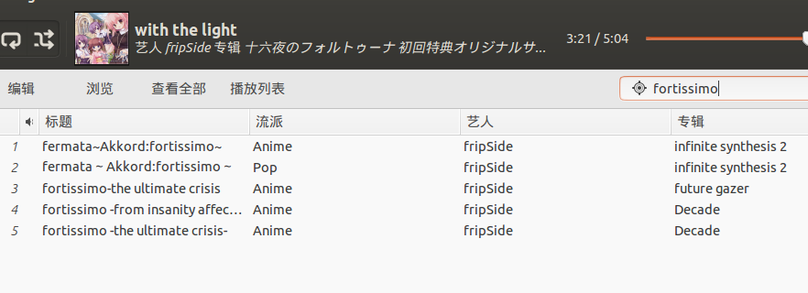
There’s even a rumor going around that it’s the theme song for Railgun. Sure, it’s in the chorus of Railgun OP2, but it’s actually from the game.
Let me give you my impression of this game upfront: one word—hype!
But after the hype wears off, I have to be honest. Looking at the story, which is what I care about most, this thing is absurd in way more ways than usual. I’ll get into exactly how absurd later; first, a rough summary of the plot.
The story is simple: the protagonist’s father met the protagonist’s mother on a small island, fell in love, and had the protagonist. But soon a large-scale war broke out on the island, and the mother died right in front of the father.
The father had enormous latent potential as a mage, but the prerequisite for awakening that power is “the death of a loved one.” So yeah, mom died, dad awakened…
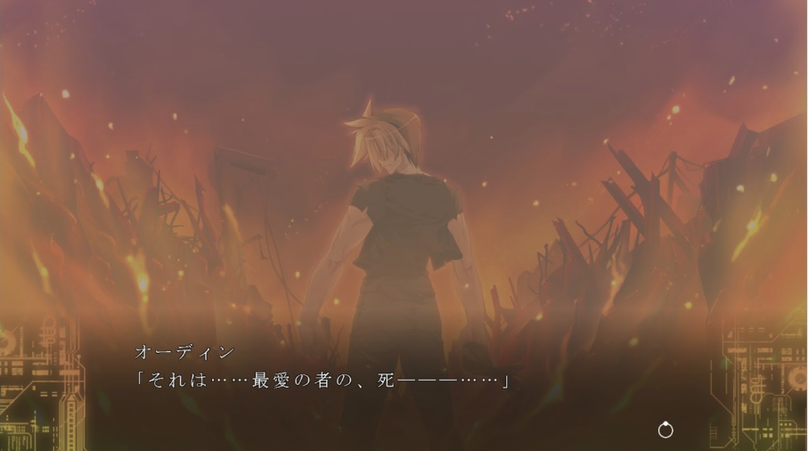
After awakening, the dad’s power was completely broken. But what’s the point of being broken when your loved one is already dead? So he decided to use his immense potential to resurrect his beloved—the protagonist’s mother.
So he summoned twelve of the world’s rarest mages to the island where the war once took place and activated a Reality Marble, forcing the twelve mages to fight inside. Each time the Marble opens, the mages can fight freely; killing another mage grants you all of their mana. Each time it opens, as soon as one mage dies, that round ends and everyone waits for the next. Each round lasts thirteen hours; if nobody dies within thirteen hours, the entire island explodes and goes up in flames…
Why force them to fight? So the twelve mages can devour each other, survival of the fittest, until only one remains. That last one gets killed by the father, who absorbs the mana of all twelve and uses it to cast the ultimate causality magic to resurrect his beloved—the protagonist’s mother.
Lots of holes in this setup? You bet… I won’t even bother pointing them out… because if you don’t accept these rules, there’s basically no story to watch.
The protagonist is also a mage, but his father was believed to have died in the ten-year war, making him a war orphan. He was adopted and somehow ended up on this island. The early story is wholesome—meeting classmates, Satomura Akane’s confession, and so on—but everything changes the moment the first Reality Marble activates…
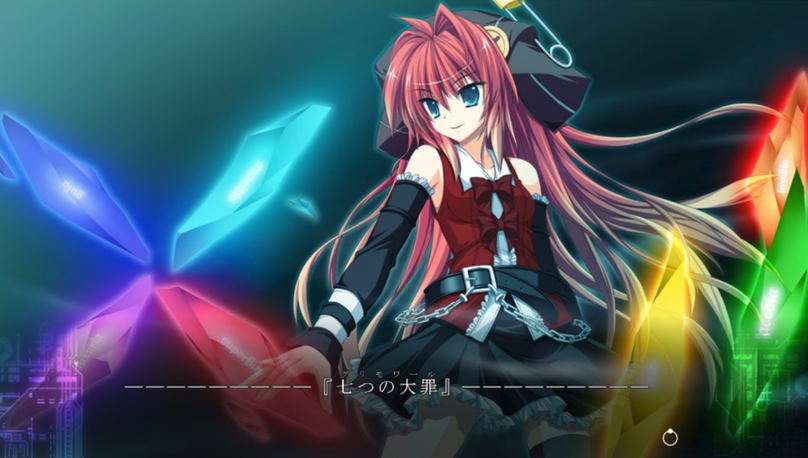
One second Satomura is confessing to the protagonist, the next she’s gone berserk and attacking him. She’s a mage; if nobody dies, the whole island dies, so the unawakened protagonist becomes a punching bag. The protagonist’s stepsister is also a mage, and even when she shows up to save him, she’s no match for Satomura Akane and her Seven Deadly Sins weapons.
Just how bullshit is the power of this girl with the hairclip? I think I need to explain in detail. First, she possesses seven holy seals corresponding to the Seven Deadly Sins, and each seal can judge a target. If you possess one or more of the sins, you suffer the judgment’s effects—slowed, attack reduced, accuracy lowered. Basically, you get a full set of debuffs. And after debuffing you, the seals can keep attacking. In short, seven seals attack you while stacking debuffs, and eventually they’ll probably cripple you.
Satomura Akane can also control the seals at a higher level—she can directly condense sound to fire rainbow cannons or something… But overall her ability is just too broken. A skill that lets you attack infinitely while infinitely stacking debuffs on the opponent—I’ve basically never seen that in a game that cares about balance… (And no, Dota’s Outworld Destroyer and Slark aren’t that ridiculous, right?)
The protagonist is about to be killed by Satomura Akane when he awakens his own power and summons his magical weapon. And it turns out to be a girl… a thing calling itself Sakura, a magical humanoid weapon… At this point, one of the participants, someone at GameMaster level, tells the protagonist that only twelve mages are participating in this magical war. The final boss is called Odin (he doesn’t know yet that this is his father). To end the game, you either kill Odin directly or fight each other until only one remains. But the protagonist isn’t one of the twelve—meaning he’s extra, accidentally dragged in.
Okay… so since he’s accidentally involved, while everyone else’s magic summons weapons, this guy summons a girl as his weapon, and he has his own ability too.
What’s the protagonist’s ability? He can summon anyone he’s met within the last twenty-four hours to his side, and restore an object to any state it was in within the last twenty-four hours. (Think Dota 2’s Weaver ult, got it?) What’s his weapon girl’s ability? She can fire orbital rainbow cannons directly and analyze an opponent’s magical attributes, and her rainbow cannon deals S-rank damage…
So the cheat protagonist with his cheat weapon officially joins the war.
The game’s story is split into slice-of-life and battle sections. The slice-of-life parts are insanely trivial—mostly banter, watching hairclip girl Satomura Akane throw herself at the protagonist, and various skits. They have nothing to do with the main plot; it’s more like the studio’s earlier True Tears, with a four-panel manga vibe.

At this point you might think: the setup is full of holes, the daily life is predictable—so isn’t this game a complete disaster? Not so fast. The game’s real appeal is in the battle sections.
The battle plot is actually pretty dumb. Both sides often start fighting for no clear reason, with no proper buildup. Compared to similar works like Fate and 11eyes, which spend a lot of time on “why do we fight,” fortissimo doesn’t have time for that—it usually starts with fists and then talks. But you have to admit…
Fighting while trash-talking is hype as hell!
How hype can battle scenes in a visual novel get? I think fortissimo can serve as a benchmark. The OST style in battle sections is completely different from daily life. The daily BGM is garbage, but the battle tracks are handled by Yousei Teikoku—fierce and passionate. Combined with excellent voice acting and well-timed CG direction, I don’t think I’ve encountered a more hype game than this.
For this kind of battle game, a male protagonist’s voice actor is essential—shouting skill names, comparing cheats. It’s cliché, but you easily get swept up by the OST, the voices, and the CGs working together. You find yourself totally immersed. Apart from some early cannon fodder, the battles hit their climax starting with the glasses girl.
The glasses girl’s ability is magic theft—she can infinitely steal others’ magical weapons, and she can even take on four at once (think Dota 2’s Rubick if he could steal skills with no cooldown and no limit on stolen skills). The protagonist’s group gets stomped, but soon the glasses girl gets too cocky and has her glasses sniped off by the little sister, and in that instant of losing her power, she’s counter-killed.
Oh, I forgot to mention: the game actually has dual protagonists. There’s a male secondary lead, but his presence is so weak. In reality his power is strong—he can choose one out of nine world lines after you get hit and make it the outcome. In other words, when he throws a punch with his ultimate, there are countless possibilities, and one of them is you dying. He can directly select that future and make it inevitable—essentially a chance for a one-hit kill. So in the final showdown, the protagonist gets completely wrecked. But this poor male secondary lead has too strong a sense of justice; every time he knocks the protagonist down, he starts monologuing, trying to convince him. The protagonist counterattacks, gets knocked down again, and the monologue continues. This repeats until the very end, when the protagonist finally grasps the ultimate secret of his ability: formula fixation.
What does that do? He locks all his attributes—HP, MP, everything—to a state within the last twenty-four hours. Like full health and full mana…
What the hell, isn’t that just a god-mode cheat?
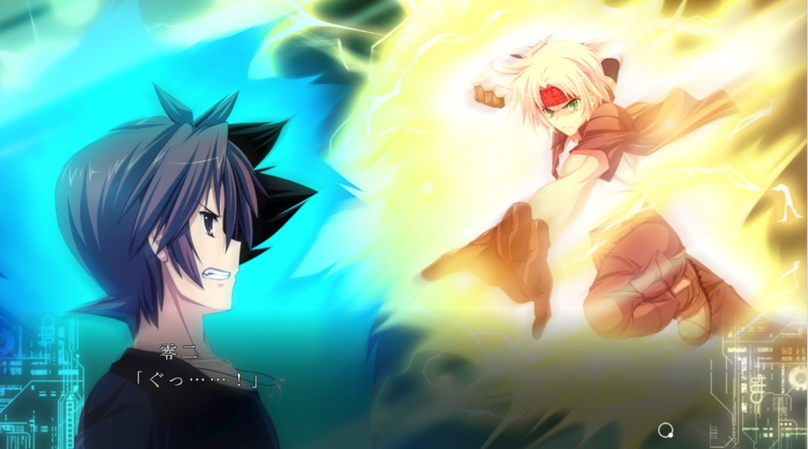
With his god-mode cheat, the protagonist defeats the male secondary lead. By then, only the protagonist, his humanoid weapon, the holy maiden Nagisa, and the final boss Odin—his old man—remain in the magical war.
At this point, the father recognizes the protagonist and is shocked he got involved. He also tells the protagonist a startling secret: the humanoid weapon Sakura he summoned looks exactly like the protagonist’s mother. They say summoned magical weapons are the materialization of the summoner’s heart. Maybe the protagonist missed his mother so much that he summoned her form…
The old man also tells the protagonist that he isn’t actually one of the twelve chosen mages, and reveals his final goal is to resurrect the mother:
“You’ve already won. Just wait for me to kill Nagisa and complete the final magic.”
The protagonist is disgusted by his father’s willingness to sacrifice others for his own selfish desires. He refuses and decides to throw down with his father head-on.
Meanwhile, the holy maiden Nagisa is left to the protagonist’s humanoid weapon Sakura.
Honestly, the fight between Sakura and Nagisa is brutal. Both are slinging ultimate skills—one is Excalibur, the other a sunlight cannon. Nagisa’s holy sword is too powerful; Sakura can’t win, and the sunlight cannon drains too much mana, so she’s quickly defeated.
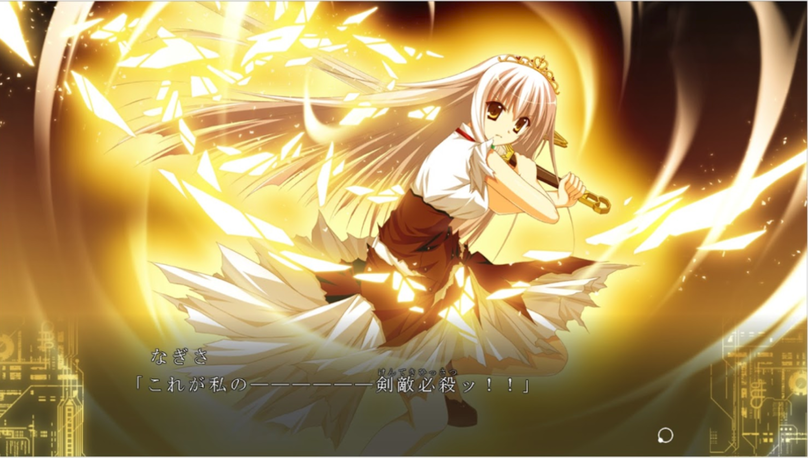
On the other side, the protagonist has no chance against his father either. His father says his state was locked years ago (same method as the protagonist), and that this magical barrier is his own creation—the protagonist has no reason to beat him inside his own Reality Marble. Soon the protagonist is knocked down too.
Just as both the protagonist and Sakura are losing, the cheat arrives… The protagonist left Sakura a thirty-second time-fixation window. Sakura fires her final sunlight cannon with all her power, and at that moment the holy maiden Nagisa unleashes her final holy sword slash. Naturally, the holy maiden loses because she ran out of mana without a cheat.
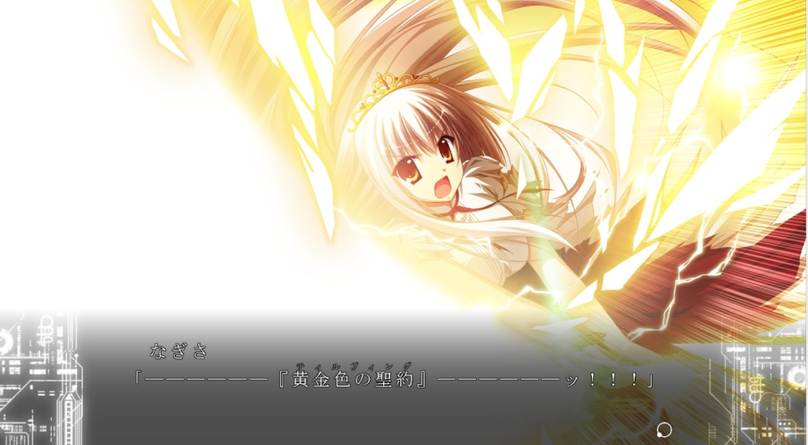
The holy maiden’s death makes the protagonist the final victor who obtains the mana of all twelve mages (like obtaining the Holy Grail in Fate). The protagonist instantly returns to full health and full power, summons the combined strength of all twelve mages to fight his father, but still can’t deal a single point of damage. He’s knocked down again.
On the brink of death, the protagonist hears his mother’s voice…
His mother gives him one last cheat, and the protagonist learns his father’s weakness…
Since his father locked his state years ago, the protagonist will use all his mana to revert his father’s state to before it was locked…
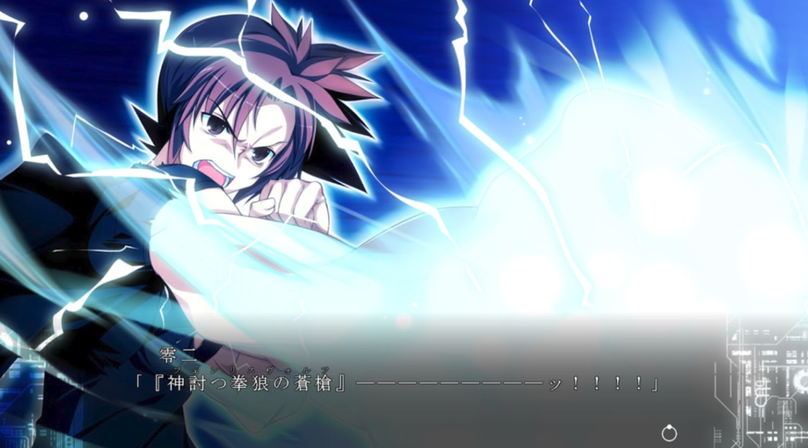
In the final fierce battle, the protagonist finally seizes the moment—in a tiny opening, he punches through his father’s chest.
The war is over. The protagonist wins, but twelve mages are dead. Sakura appears before the protagonist and tells him she can sacrifice herself to help him activate the final ultimate magic, fortissimo.
What does this magic do? It releases the accumulated mana to resurrect all the dead mages, and combined with the protagonist’s own ability, restores the original world…
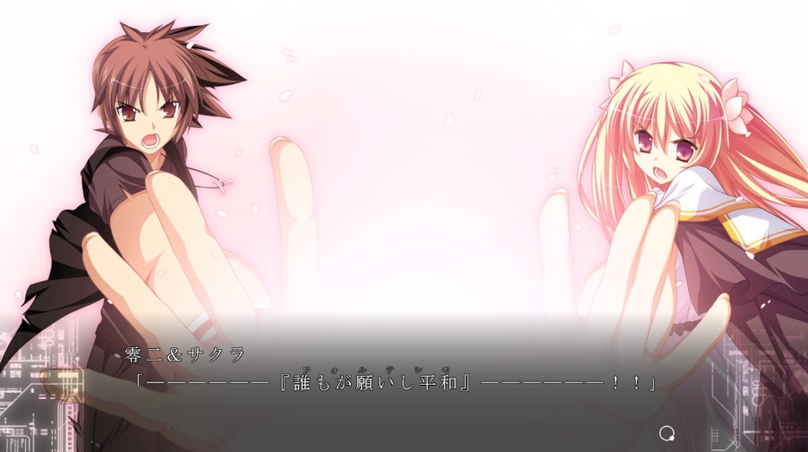
Of course, is it a happy ending? Did everyone come back to life? I don’t know, because the game hits the ED right there, and after the ED it’s over!
Looking at the whole game…
You’ll notice plenty of holes. For example, Satomura Akane is head-over-heels for the protagonist outside of battle, clinging to him everywhere, but the moment they enter the battle zone, she doesn’t hold back at all. Some of her lines contradict each other. And aside from Satomura Akane, the other characters aren’t fleshed out—they barely say a few lines before fighting and dying. Even Satomura Akane’s characterization isn’t successful; aside from the contradiction, most of the time she just shows off her little-devil traits.
Other characters include the self-proclaimed GameMaster, the knife-throwing guy from the beginning, and the berserker-like muscle man who gets one-on-one’d by the holy maiden—they don’t even get background introductions, making them even more baffling.
Fortunately, the scenario writer is a chuuni master who loves settings. Every character’s attributes, attack methods, and skills get detailed descriptions, filled in as the game progresses. If you’re confused about a battle, you can consult the setting materials for answers…
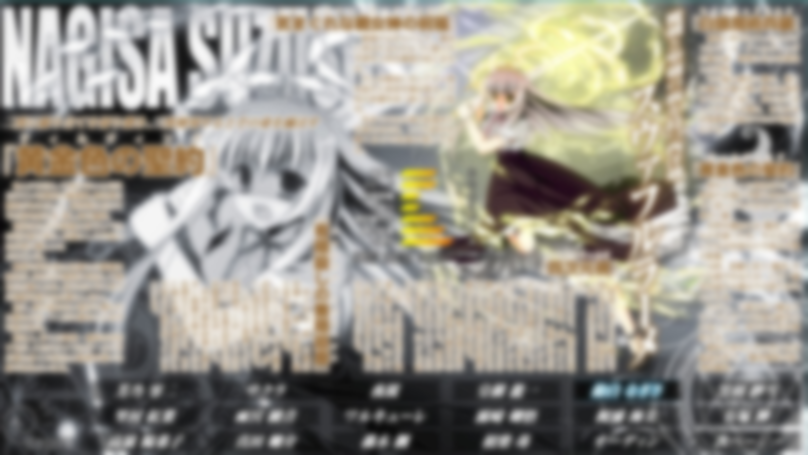
Of course, the setting book isn’t exactly accurate. For example, the holy maiden’s contracted Excalibur only has C-rank attack power, while Sakura’s sunlight cannon is S-rank, yet the two are evenly matched and the sunlight cannon is inferior to the holy maiden’s Excalibur… Obviously it’s just plot convenience.
But even so… we can still see that whether it’s the art, music, voice acting, or special effects direction, the entire budget was dumped into the battle confrontations!
I have to say, that was the smartest decision. Because no matter what language I use to describe the battle presentation, I can’t recreate that dying-from-hype feeling. You might think the plot is cliché, but you get swept up anyway. I practically binge-watched the final two consecutive boss fights in one sitting.
Worth mentioning: besides the in-game OST, the game’s OPs and theme songs are all excellent—every single one is a hype track!
I thought about it for two days, and I really don’t know how to rate this game. In terms of quality, it’s not great, but it has a hype toxin that once you’re addicted, you can’t stop. Maybe it’s also because I prefer stories with lots of battle elements.
At least for me, fortissimo gave me a lot of enjoyment. Even for someone as nitpicky as me, when it gets hype, I stop caring about those unrealistic details.
Comments are hosted on the Chinese main site. This mirror is read-only.