Pieces/Wataridori no Somnium (Pieces/渡り鳥のソムニウム) Review
I've Seen You in a Dream
Maybe everyone gets this illusion — that when you meet someone, or hit some particular moment, your brain flashes “wait, have I seen this scene/this person in a dream before?”
Plenty of people have researched and argued this phenomenon, and most land on a few possibilities: memory misplacement, an illusion of similarity between scenes, or some blurry subconscious memory of a scene. One of the Steins;Gate games even explains it as “déjà vu across worldlines.” And then there’s the one factor that’s never certain but can’t be ruled out: dreams.
Which is to say, it’s entirely possible that the familiar thing you just ran into really was something you saw in a dream.
Dreams are funny like that. Humans can never control their dreams, yet the dream is something the person themselves created. So when we go adventuring in a dream, the dream is something we wrote ourselves. There’s a bit of “playing with yourself” to it.
Some say a normal person creates one to three dreams every night, and over the course of growing up, all those assorted dreams pile up to a terrifying number. Among them, one or two scenes are bound to resemble something you run into in reality, and that produces the so-called “déjà vu.” This is probably the most reliable explanation for the “I keep seeing it in dreams” feeling — but compared to that cold reality, we’d rather accept the romantic explanation:
“You and I are connected by something heaven ordained, so we met in a dream long ago, and that dream scene guided us to meet in reality…”
Sounds romantic, doesn’t it? uh?
That’s why we see dream-related creations all over literature — not just because dreams are mysterious, but more because of the “romantic,” even slightly “fate” and “destiny” feeling that dreams bring. The once-huge 君の名は。 is exactly this, and it’s hardly rare in visual novels either, including キミトユメミシ, and this month’s new Whirlpool release, Pieces/渡り鳥のソムニウム.
Speaking of Whirlpool, a lot of people write them off as a moege studio — most of their games are pure moe fluff, coasting on in-house artist Mizukami Mamizu’s art to sell dirty pictures and get by. Even the decent early stuff like 操鲸鱼 and last year’s 初情スプリンクル only reached excellence at selling moe and cute heroines. Outside of washing machines and refrigerators, it’s hard to connect “Whirlpool” with the words “plot-driven.” So this time Whirlpool probably sold enough copies of that Steam cat ninja to get rich. But instead of milking it forever, they didn’t forget their roots — they brought in a scenario writer known for storytelling and started their own “plot-driven” route.
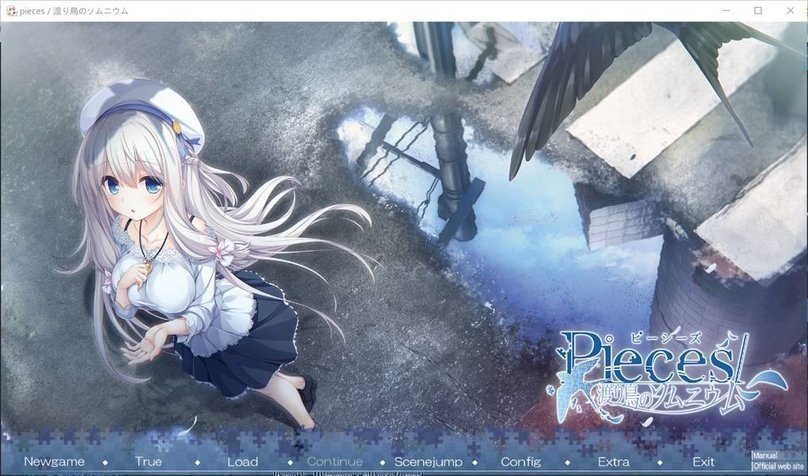
The title “Pieces/渡り鳥のソムニウム” doesn’t tell you much at a glance. The front is “pieces,” the back “wataridori” is easy enough — migratory bird. The hard part is “somnium,” which maps to the English word somnium, and in Latin means “dream.”
So the title should properly be “Pieces/Dream of the Migratory Bird,” which also tells you the game’s theme is dreams.
The game is set in a fictional world where there’s a legend: an angel once descended to earth, ordered by the gods to find the most “尊い” (noble, exalted) thing in the human world. But the angel had no idea how to look, searched forever and found nothing, and ended up banned from returning to heaven. Instead of doing anything good among humans, the angel turned everything upside down. But the human world only stayed calm while the angel slept, so to keep their lives peaceful, people sing a “lullaby to put her to sleep” in the center of the city every day, offered to the angel, so she keeps sleeping and doesn’t fucking wake up and make trouble for everyone. And so the town where the protagonist lives has a custom of singing a children’s lullaby every morning.
But a legend is a legend. The protagonist has never actually seen an angel in his life. He does, however, have a very unique superpower: he can peek into other people’s dreams.
It’s not free entry whenever he wants — if someone’s asleep and he’s asleep too, he can “sync” with that person’s dream, enter it, even interfere with it and change it. His power isn’t really useful; it’s just looking at dreams, big deal. But because of it he has a weird hobby: he likes sleeping.
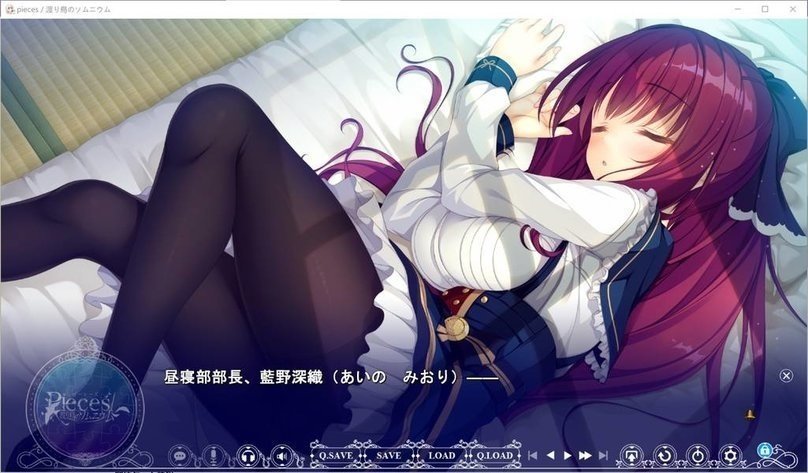
Sleeping in class, sleeping at home, sleeping whenever — small stuff. Not only does sleeping feel good, he gets to watch other people’s little dream theater. Why wouldn’t he?
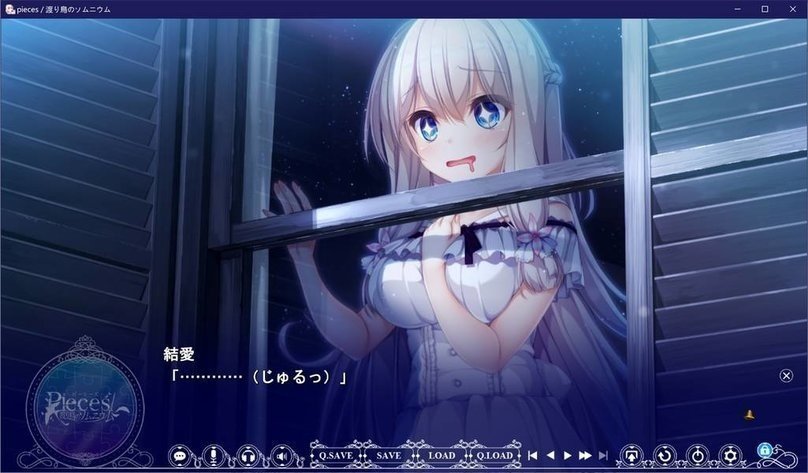
Then one day he hears a weird rumor: there’s a haunted apartment near the school with a female vampire inside, and some classmates went there for a courage test and all came back scared. He happens to end up there too, but sees a girl’s silhouette in the apartment window. Could she be the vampire?
After going home he’s bold enough to try entering that mysterious girl’s dream while asleep, but finds nothing. The next day he goes looking for her again, finally gets a connection through a ramen delivery, and tries to fish for information — only for her to instantly see through his “peek at other people’s dreams” ability.
Why couldn’t he see the girl’s dream last night? Because she wasn’t sleeping.
Why doesn’t the girl sleep? Because she has an ability similar to his, except hers is way worse to experience.
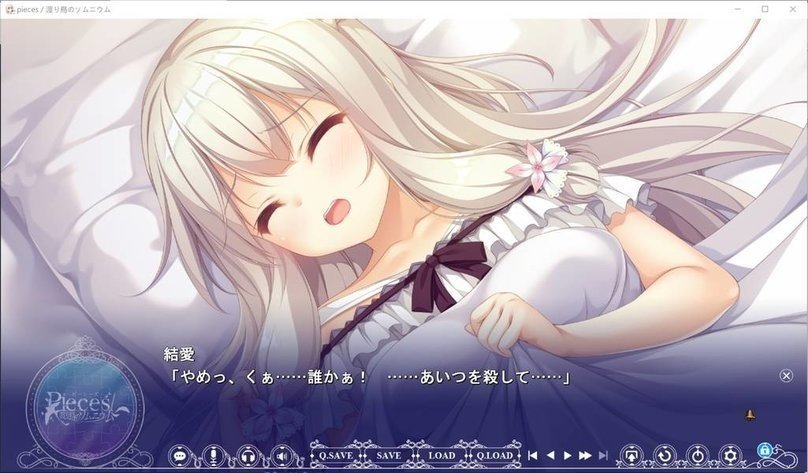
The girl is Kimihara Yua. Since childhood she’s had a strange condition: she’ll suddenly be drawn into nearby people’s dreams, fall asleep instantly, and be forced to experience another person’s dream while asleep. And there’s a filter, too — she only experiences nightmares.
Roughly: if someone near you falls asleep and has a nightmare, you suddenly pass out and start experiencing their nightmare.
That ability is terrifying as hell, but Kimihara Yua says there’s nothing to be done. She’s seen doctors, seen all sorts of other people, nothing works. She just has to live every day being tortured by other people’s nightmares — getting killed, getting crushed, getting gang-raped, all of it — leaving her mentally wrecked. All she can do is find ways to avoid being invaded by other people’s nightmares.
How? By not sleeping at night, and sleeping during the day instead. Everyone sleeps at night, so if you sleep then you’re likely to get hijacked by someone’s nightmare. Sleeping during the day is a little better. That’s also why the protagonist tried to look into Kimihara Yua’s dream and saw nothing — she wasn’t asleep.
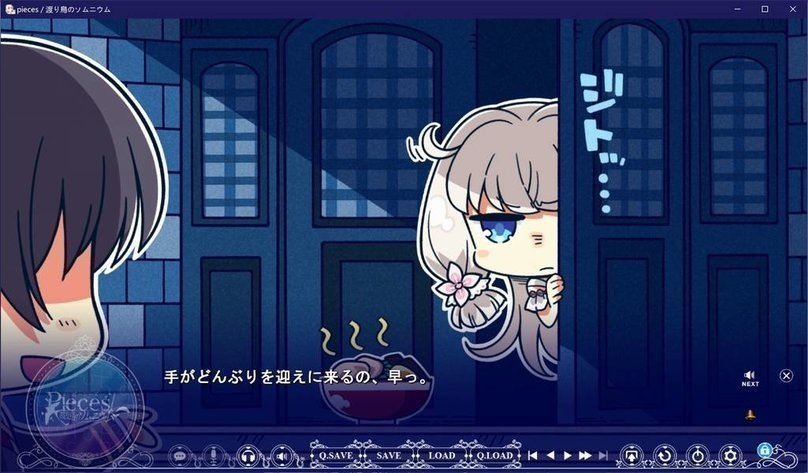
So the protagonist learns Kimihara Yua’s secret, their relationship advances, and he learns that because of her condition she doesn’t want to go to school — she just wants to stay in that apartment, holed up and rarely going out. Lots of people around assume it’s haunted, so Kimihara Yua uses her pet カステラ to scare off intruders, which only makes the outside world more convinced there’s a ghost…
As the protagonist spends more time with Kimihara Yua, he finds she seems to have a lot of unexplained secrets. For example, he often dreams of talking with a girl whose voice is a lot like Kimihara Yua’s, and he often has strange dreams — something like an angel-like person explaining things to him — but he forgets them on waking. All these questions are only explained in the game’s True End.
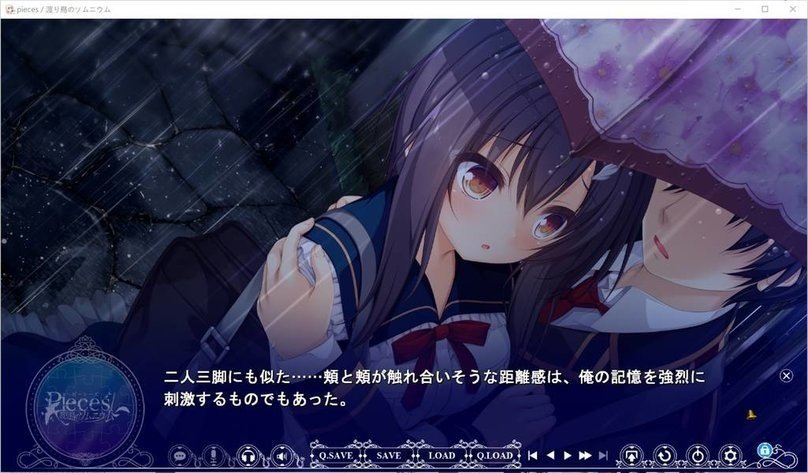
Yep, the game has a plot lock. You have to clear all the heroines before the final True End unlocks.
My personal recommendation is to do the other side heroines first, save Kimihara Yua for last, then go straight through the True End — that makes for the most coherent story.
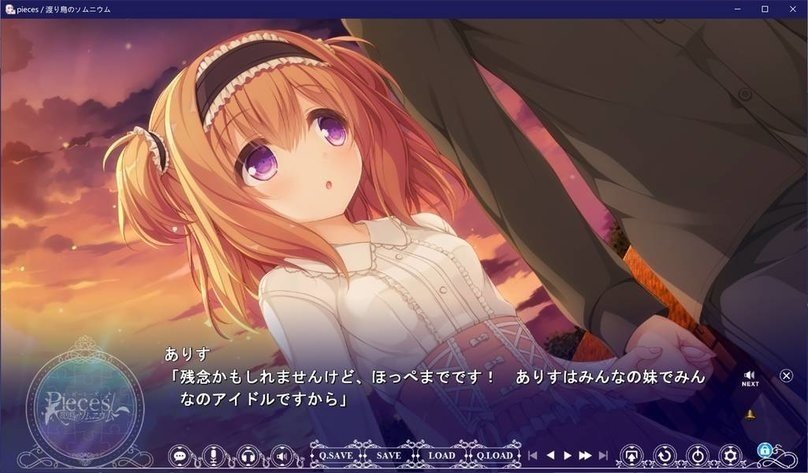
The other side heroines’ setups are the usual visual novel templates: childhood friend Kotori Yuu Tsumugi, the always-sleeping senpai Aino Miori, the kouhai Mishiro Arisu who keeps dreaming of another version of herself, etc. In each route these characters run into their own problems, the protagonist helps them solve them, and along the way finds their true selves.
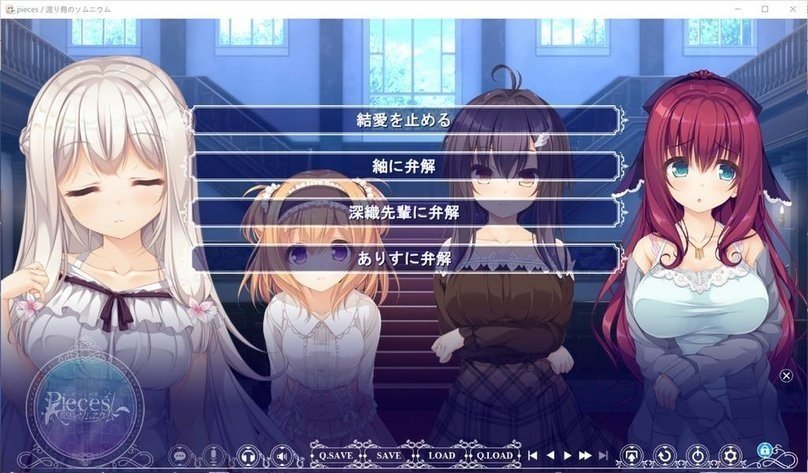
All the girls’ problems are related to dreams. Kotori Yuu Tsumugi can dream of future scenes; senpai Aino Miori is always sleeping and can “do things while asleep”; kouhai Mishiro Arisu keeps meeting another version of herself in dreams, one who’s “a little different” from the current her. Most of it points to “the heroine always sees another world in her dreams” — sometimes another version of herself, sometimes another world’s scenes and people. Their connection to dreams is always left with some mystery, because the one who discovered their dream problems is Kimihara Yua. That’s also where the game’s one and only choice comes in: the protagonist shows his liking for Kimihara Yua from the start, and everyone except the idiots can tell. Everyone’s egging him on, and the choice is “explain your relationship with Kimihara Yua” or “default to it.”
So from that one choice you can already tell who the true heroine is.
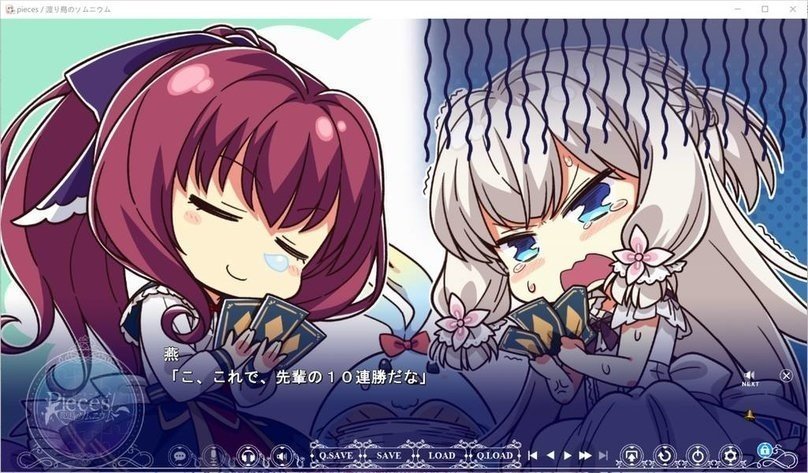
And of course you think getting onto Kimihara Yua’s route means you’re done? Naive!
Her route starts out pretty ordinary — all the heroines come to Kimihara Yua’s home, help her find joy in life and human warmth, become friends. The last part just explains why Kimihara Yua doesn’t want to go to school: it has nothing to do with her nightmare ability. When she had a nightmare, she found out that a classmate of hers was killing her (Kimihara Yua) in the dream. Willing to kill someone in a dream means hating them, right? So Kimihara Yua doesn’t want to see that person, feels hated, and hides at home…
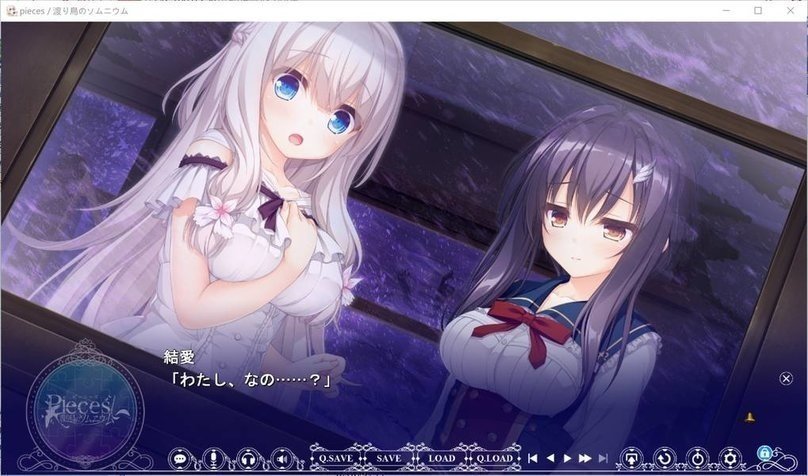
Of course it all gets resolved: the girl liked a boy, the boy liked Kimihara Yua, the girl got jealous, had an extreme thought in a dream — but she wasn’t really malicious, just thinking it.
Which incidentally shows that dreams are just a pressure release valve for real life. I don’t like you, I don’t want to hurt you, I don’t want to say it out loud — can’t I at least enjoy myself in a dream?
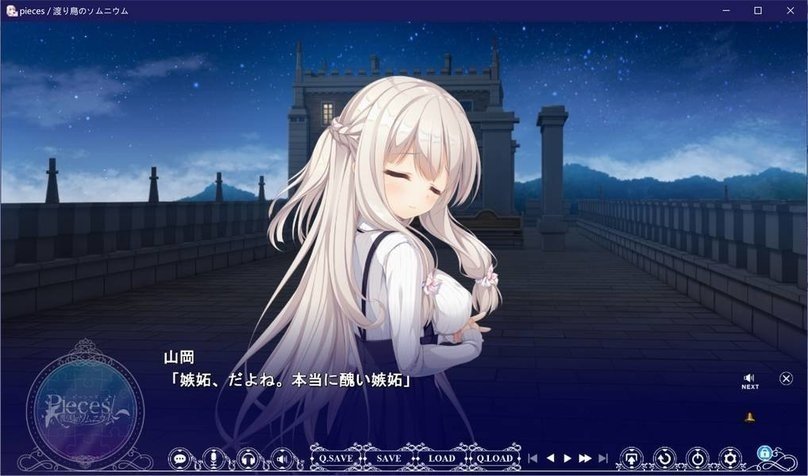
Kimihara Yua’s route ends with her back at school, living a shameless life with the protagonist — but this ending has no ED, ending abruptly with Kimihara Yua falling into a sleep she doesn’t wake from. Then comes the True End.
Before talking about the True End, the game has already laid out a lot of suspense, and I could pretty much guess where it was going.
Remember the legend about the angel at the start? In the individual routes, the town keeps having inexplicable “big earthquakes,” and the townspeople talk about the “sleeping angel.” The angel’s waking brings earthquakes and disaster; the angel’s sleep keeps the town peaceful. What’s interesting is that Kimihara Yua seems to know something, but she won’t say.
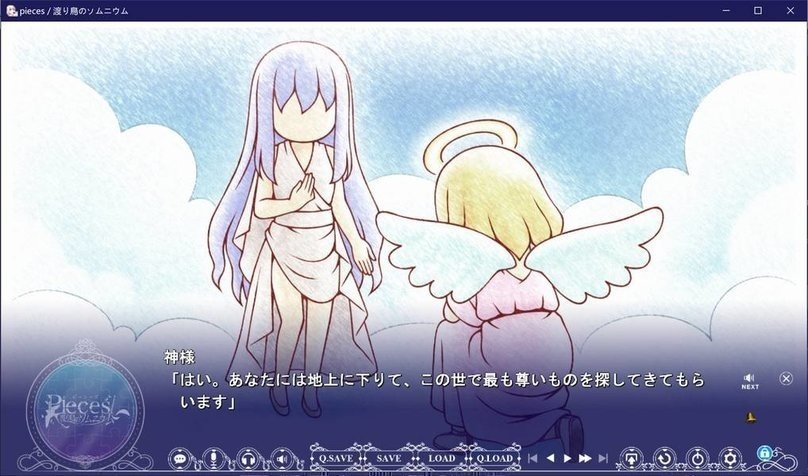
Wonder what you’d be thinking? At this point I thought of a game… the one in my blog icon…
すきま桜とうその都会
That game’s setup is that each individual route has its own problems, and at the end the heroine tells you the whole world is a lie. The protagonists who came to this world all fled the outside for various reasons. The heroine’s route also hides things at first, revealing the world’s secret only at the end.
Another reason I linked the two games is the SDCG — they look way too fucking similar! Checked, and sure enough, same artist.
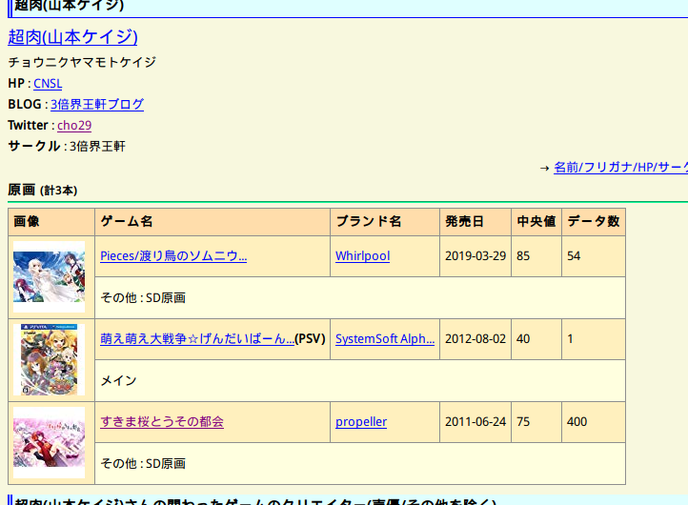
So at this point I had to suspect: the world the protagonist lives in is actually the dream the legendary “angel” created, and the most likely angel is Kimihara Yua.
Unfortunately, I got the front half right but not the back half. The True End slapped me in the face.
Shortly into the True End, the protagonist gets more information from the dreams. In the sleeping Kimihara Yua’s dream, he meets two beings who call themselves gods of the world. They tell him not only that this world is a dream created by someone, but also that the power to create dreams was “passed on to Kimihara Yua.”
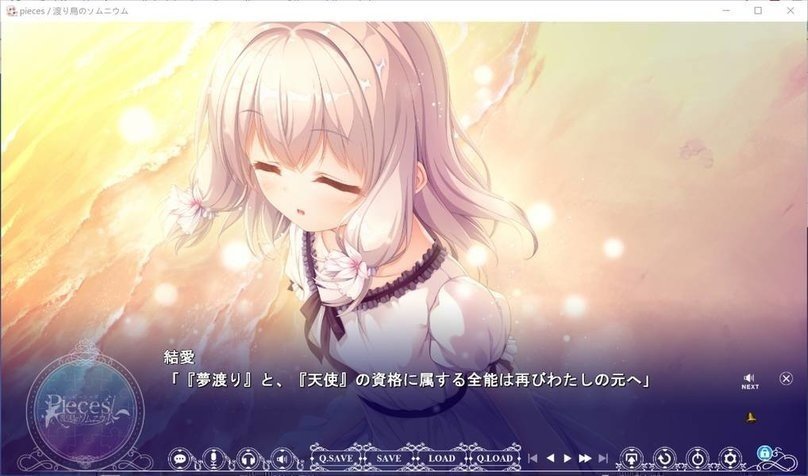
In other words, Kimihara Yua isn’t the angel — she’s someone connected to the angel, who transferred their duty to her. Possessing the angel’s power lets her see others’ dreams, but also makes her suffer more pain, and the dream strings many people’s dreams together to form a world — the world the protagonist lives in. If Kimihara Yua gives up the dream, the world disappears and everything returns to reality.
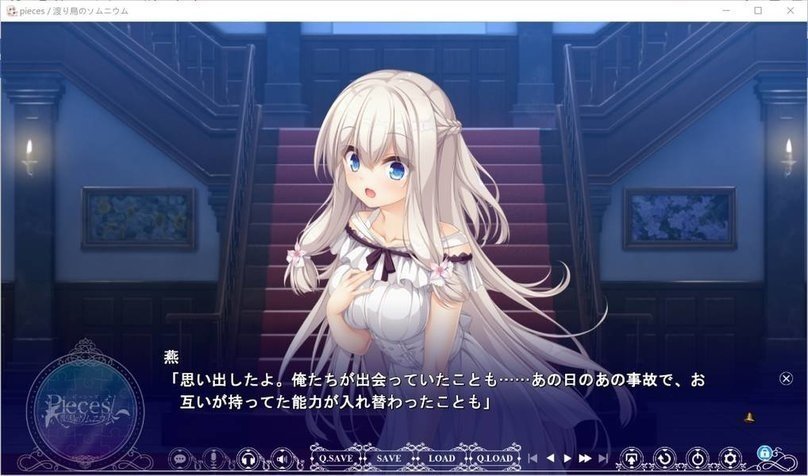
In the dream’s memories, the protagonist recalls a conversation with Kimihara Yua years ago, where it seems she and he made something like a deal, which is how things became what they are. He also remembers many strange things about this city — like how many people arrived by train, proving they came to this world from a dream, and that if they take the train out, they’ll wake up.
Simply put: the angel created a dream, handed it to a mortal (Kimihara Yua) to endure and operate, and the dream attracts many, many people; everyone lives in it, and once the dream’s operator leaves, the dream disappears and everyone returns to reality.
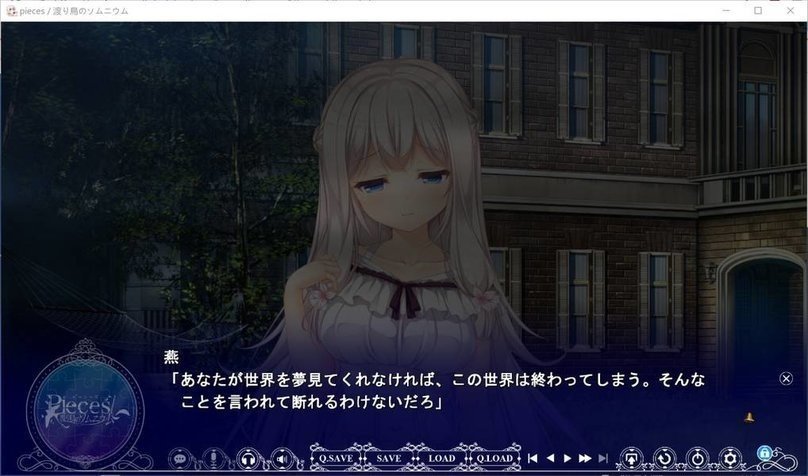
But Kimihara Yua feels a strange sense of responsibility and doesn’t really want to end the dream — abandoning it privately feels like betraying everyone living in it. So the protagonist holds a referendum in the dream, and finds most people want to wake up. Then the game gives you another choice:
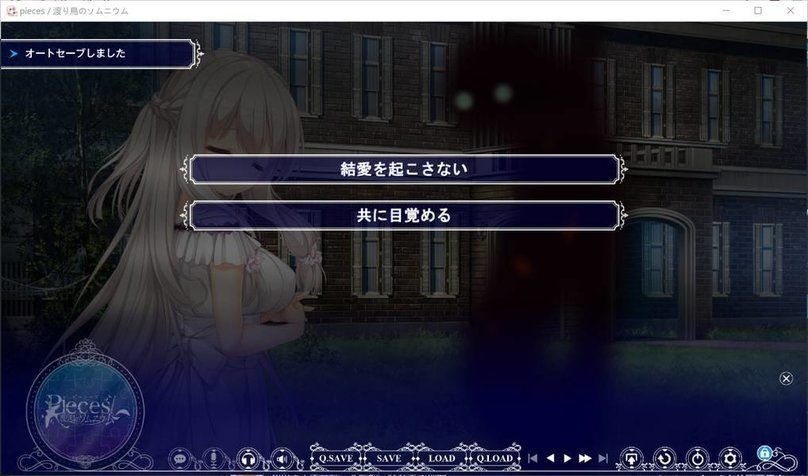
Keep living in the dream
Wake up from the dream
If you pick the first, the protagonist stays with Kimihara Yua in the fake dream and the game just stops. Pick the second, and the story continues.
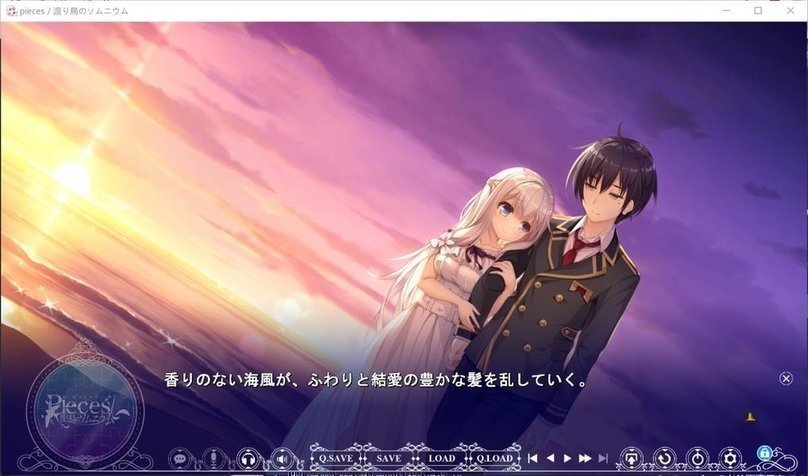
The second outcome: in the city center, the protagonist tells everyone this is a dream, that it will close in a few days, and they can take the train out and return to reality.
Returning to reality isn’t necessarily good, because the people in the dream aren’t necessarily the same in reality. The young man in the dream might be an old dude in reality; the handsome guy in the dream might be a fat loser in reality… but regardless, returning to reality is everyone’s decision, a done deal.
At the dream’s final moment, the protagonist sees off all his friends, each heroine says goodbye, and the bro’s line is the most thought-provoking.
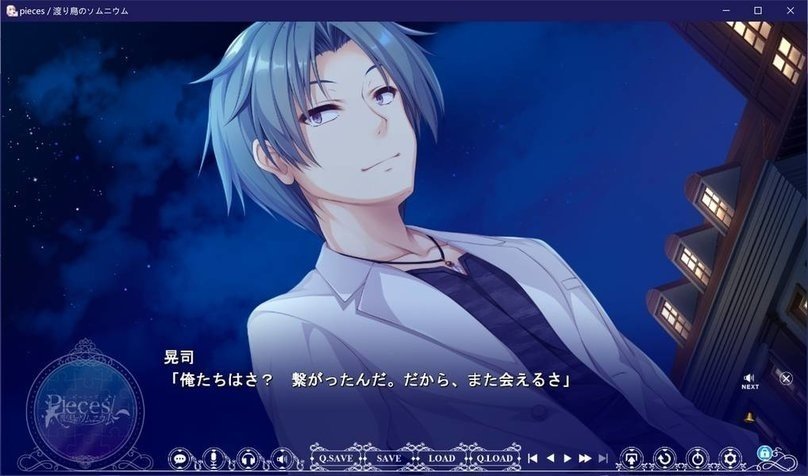
“You and I are already connected. Even after we wake from the dream, we’ll definitely meet again in reality.”
(Kind of reminds me of the moment Google+ shut down)
Just as Kimihara Yua is about to leave with the protagonist, he says to her: “Sorry, I can’t leave here.”
“Why?”
“Because I… am part of this world.”
Only then does the protagonist tell Kimihara Yua the bigger truth.
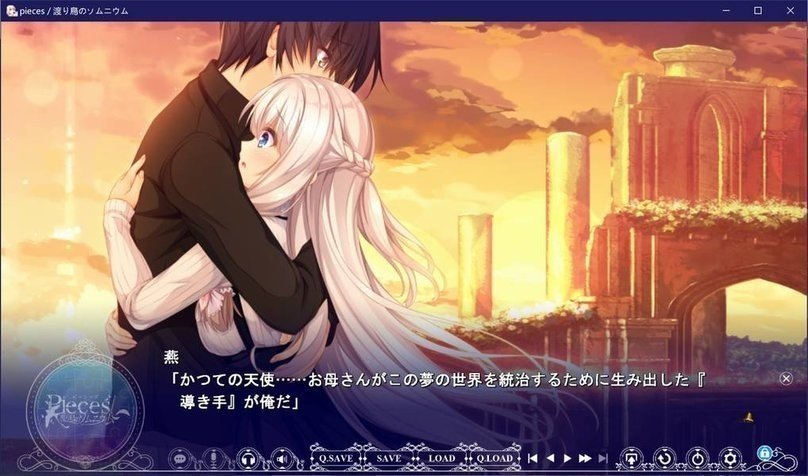
This world is a dream created by the angel and entrusted to Kimihara Yua. The reason for all of it is that years ago, the protagonist met Kimihara Yua by the sea.
Remember the “angel descends” thing from the start? The angel came down to find the most “noble” thing in the human world, couldn’t find it, and figured: why not create a dream, pull some mortals into it, then create an avatar (or proxy?) for herself in the dream, let the avatar mingle with humans, and maybe that way she’d learn what’s most “noble” in the human world. That “avatar” and “proxy” is the protagonist.
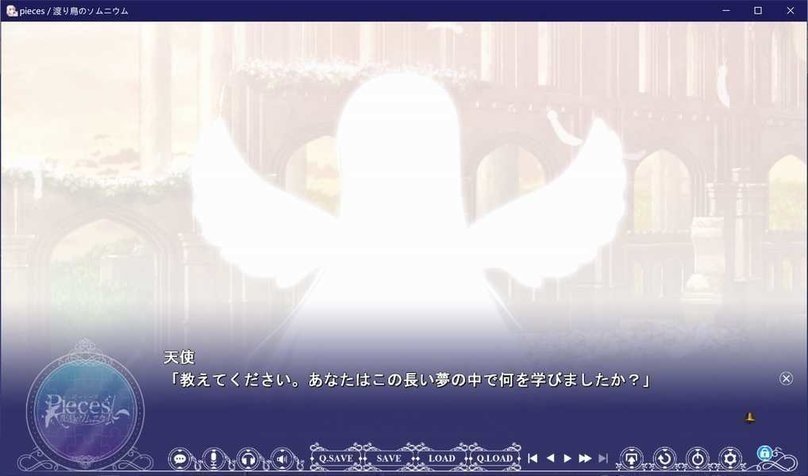
At first the protagonist was just a total idiot spouting angel chuuni lines, until he met Kimihara Yua, who had come to this dream, by the sea.
The two talked a lot, did a lot, and after a series of developments, Kimihara Yua gave the protagonist an independent personality, and she herself became the dream’s operator.
Kimihara Yua can abandon the dream and leave, but the protagonist is himself an NPC and admin of the dream world — he simply can’t leave. That’s also why he can see others’ dream contents, enter their dreams, modify their dreams… because, after all, he’s the admin.
By this point Kimihara Yua and the protagonist are already a couple, but he can’t leave — only she can. Once she leaves the dream, the protagonist and his beloved Kimihara Yua will be forever separated at opposite ends of the dream, never together.
It’s all too late. Kimihara Yua disappears in the protagonist’s arms, and the protagonist stays in the collapsing world.
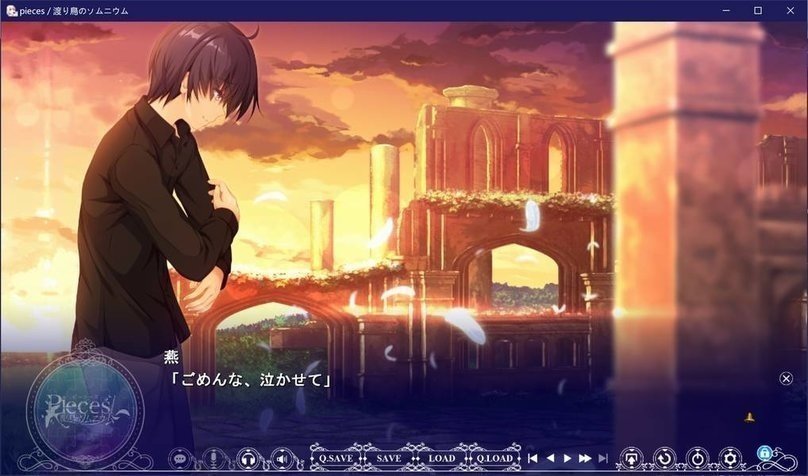
The angel appears again, says the protagonist did well this time. Hopes the next dream will continue learning as a human.
In fact, the protagonist has been the admin in the angel’s dream several times already — this world has been rebuilt many times — and he asks the angel a question:
“Repeating over and over in the dream like this, cycle after cycle — is there still any meaning to it?”
The angel asks him one back:
“Did you find the most ’noble’ thing in the human world?”
The protagonist gives his answer — maybe he has. It’s the “bond” between people, the line his bro said: “The good times we lived together have strung us together; even apart, we’ll never be separated, and one day we’ll meet again.”
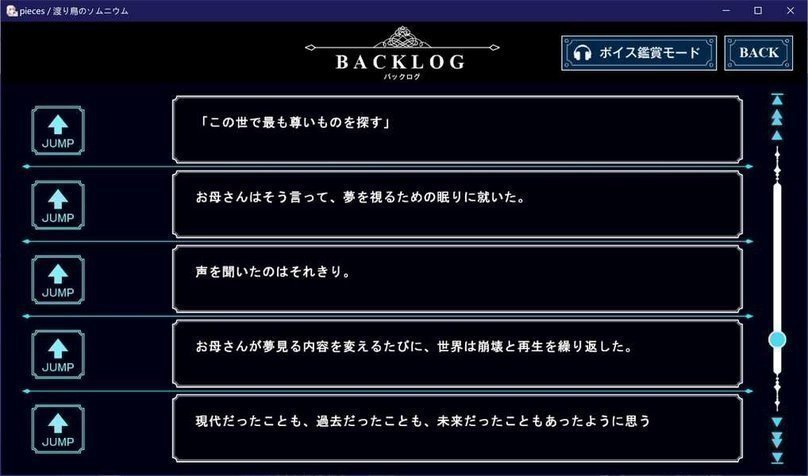
The angel smiles too.
The scene changes, and the game reaches its final ending.
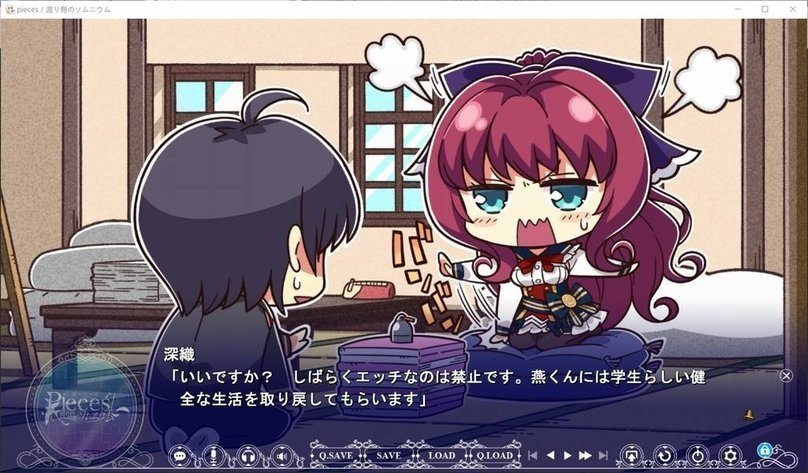
For Pieces/渡り鳥のソムニウム, I think it has to be judged in two parts. First, the individual routes in the front half — they’re no different from your average moege, and the jokes actually feel below average, barely passing. Many heroines’ routes clearly drift away from the True End’s main line, with no connection at all, and in the second half when things get dramatic, they suddenly throw in a bunch of awkward comedy bits, leaving the route story badly fragmented. I get that the writer wanted some comedy to lighten the mood, but that’s a cheap way to do it — instead of a buffer, it just makes the routes feel long and tedious…
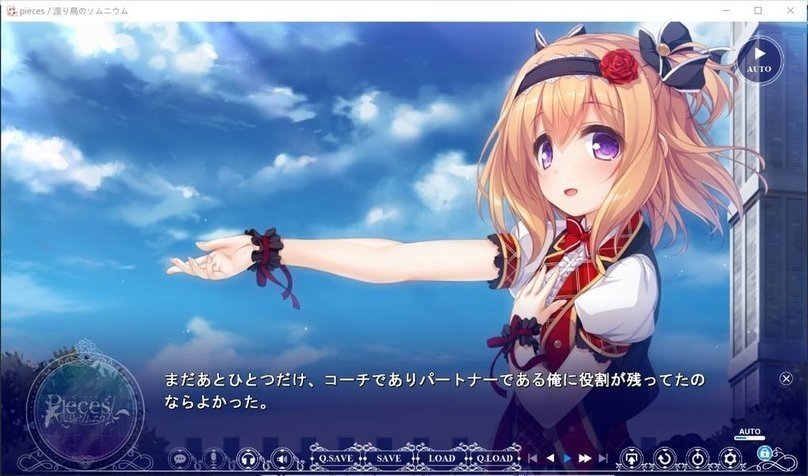
As for the True End, I’d say it raises the whole game’s writing level. We could already guess the world itself was a “dream,” but it still tricked the player’s expectations — the angel is the protagonist, not the heroine. And the part that elevates the game the most is the final stretch: after everyone returns to reality and loses their names, the protagonist runs into people he half-remembers from the dream and realizes every encounter was destined. And when the angel’s guidance brings the protagonist and his heroine together again, with the music cutting out and coming back in, the presentation peaks in emotional impact — I really, really, really recommend players watch that scene carefully, for a feeling on par with 5 Centimeters per Second.
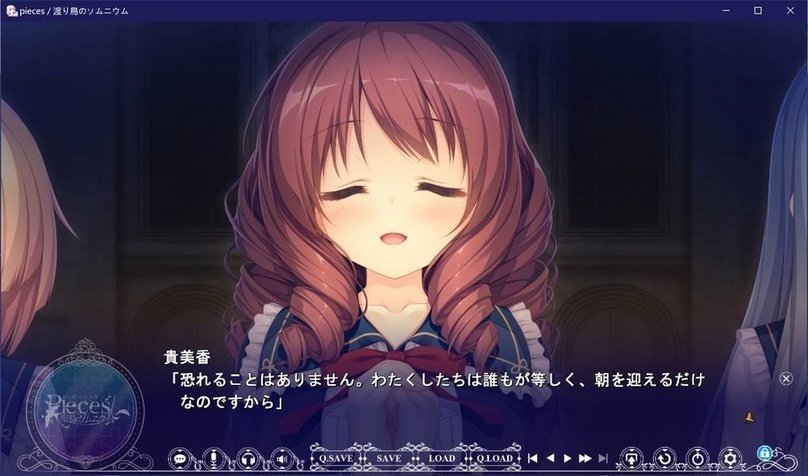
Beyond the story, the game’s visuals improved a lot. SDCG aside, Mizukami Mamizu’s art style evolved a great deal, much more comfortable to look at than before. The OST is neither great nor bad — not standout, but does what it needs to. If this game improved the common route and the non-heroine individual routes, it could be a game that surpasses Yuzusoft’s output. The voice acting is fine too — Nogami Natsuki’s kouhai was the first time I’d heard that voice from her, then Natsumi Kazuki as the heroine really steps up in the later scenes, carrying the atmosphere well. And the newcomer voicing the senpai shows a different voice than in 空に刻んだパラレログラム, showing more potential.
Overall, I’m still willing to rate this game highly. Sure, the front half is mediocre and the individual routes are full of filler, but the game has two writers — Oumiya Yuu handling daily life and individual routes, and Izumi Manya writing the True End — and Izumi Manya raised the whole thing. A lot of Japanese otaku complained before playing that Izumi Manya wrote all kinds of “dark” nukige, and all I can say is they’re being childish. My view: without tasting bitterness, how do you know why sweetness is so beautiful? Without having your heart broken, how do you know the value of real love? Without seeing the world’s darkness, how can you understand the preciousness of light? Only someone who’s written the darkest stories can truly write the beauty of light.
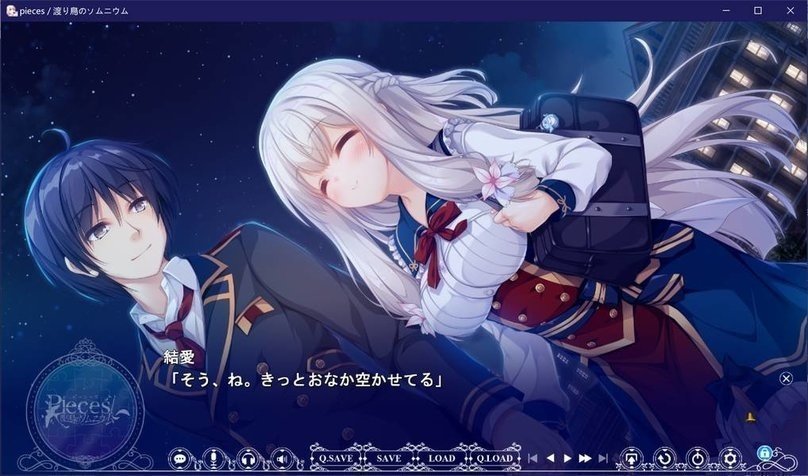
The meaning of the title is now clear too: “Pieces/渡り鳥のソムニウム.” “Pieces” represents the dream world pieced together from each person’s separate dream, and “wataridori,” the migratory bird, represents the protagonist — because his name in the game is Tsubame, the name the angel gave him, proving he’s a migratory bird cycling through dreams. The whole “Dream of the Migratory Bird” expresses the meaning of the angel’s dream: a dreamlike world pieced together from the fragments of everyone’s dreams.
The best part of this game is the final scene’s presentation. I don’t think anything’s beating it this year — I’d love to be proven wrong. Sometimes a work can have all the flaws in the world up front and still get elevated by sticking the landing. That’s how I felt about 5 Centimeters per Second, and about that short film Old Boys that blew up a few years back. Compared to the opening, a good ending is what really wins it.
The boy wakes from a dream, feeling like it went on for a very long time.
He gets up and heads out. No real reason — he just wants to walk.
While waiting for the bus, a black-haired girl next to him stares at him for no apparent reason, and he finds himself drawn to her too.
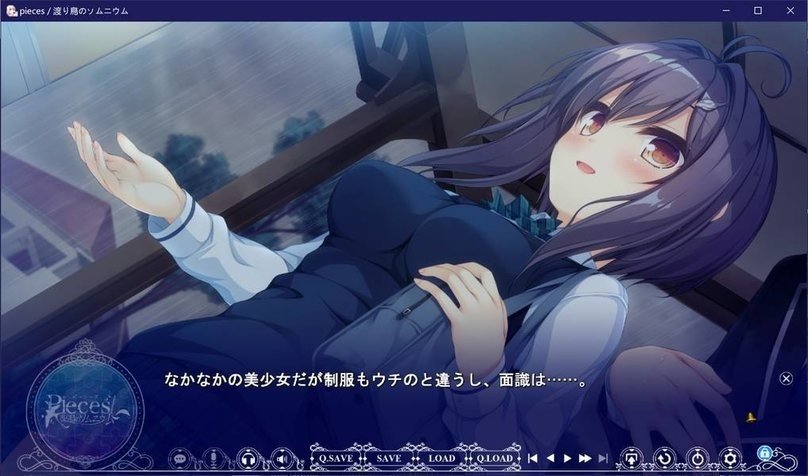
“Waiting for the bus?” The boy has no idea why, but he feels like he knows this girl well, so he says hi.
The girl answers him back, and the two of them keep getting this sense of familiarity.
The boy reaches an intersection and looks up at the big screen on a building. A new idol is doing a promo:
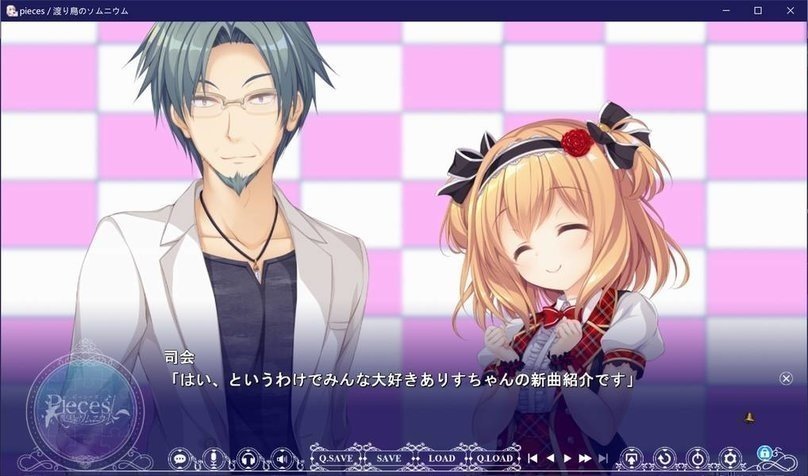
“Hi everyone, I’m Arisu~” The idol smiles on screen. Some guy next to her is her mentor, calls himself a rock youth.
While the boy is spacing out, a little girl bumps into him. He looks closer — it’s the idol from the TV.
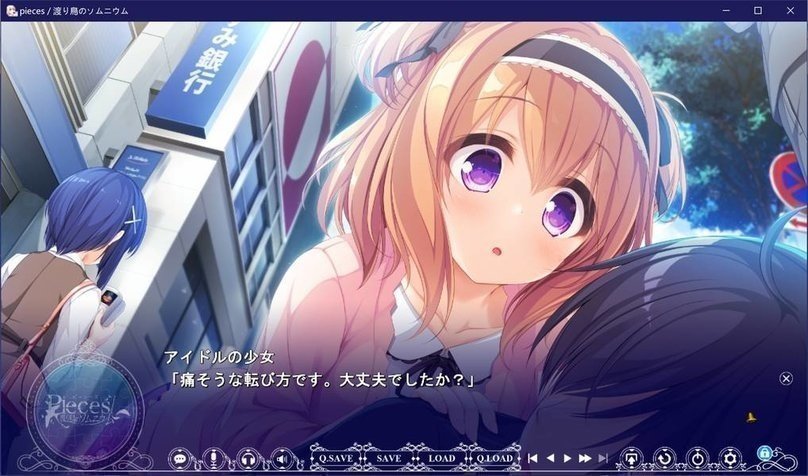
“Ohh, big bro~” the idol says.
“Why are you calling me bro?”
“I dunno why either. I just feel like I’ve seen you somewhere, bro~ And I feel like I’m supposed to be your little sister~”
The boy feels the same way. Like after one very long dream, he’s suddenly surrounded by people he knows.
He passes a hospital, and his eyes catch a figure by the lawn — a female doctor in a white coat, with her pet beside her.
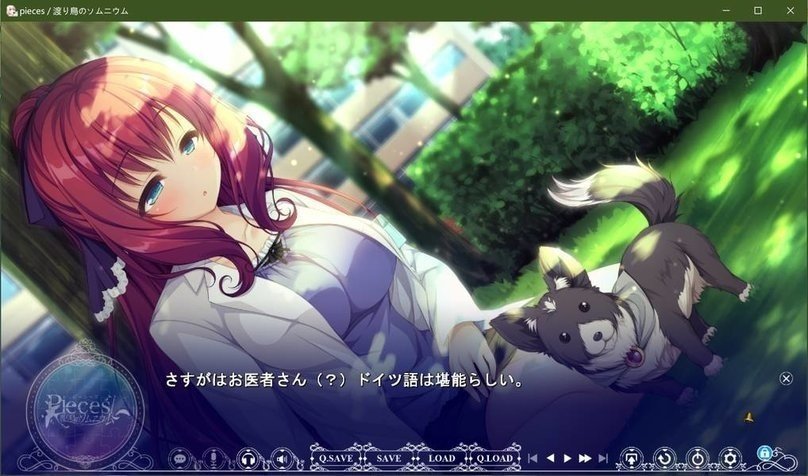
“She’s beautiful,” he mutters, and keeps walking.
…………
……
“I’m heading out~”
A white-haired girl waves goodbye to her friends and family and steps through the gate. Before that, she’d been asleep for a long time.
“So pretty~”
Looking at the sunset, she can’t help but sigh. She hasn’t seen a sky this beautiful in ages. This is what a lot of people call the golden hour.
“Maybe the most precious thing in this world is this one moment.”
She muses.
Just then, a feather drifts down from the sky, like a fragment of an angel’s wing, and lands before the girl.
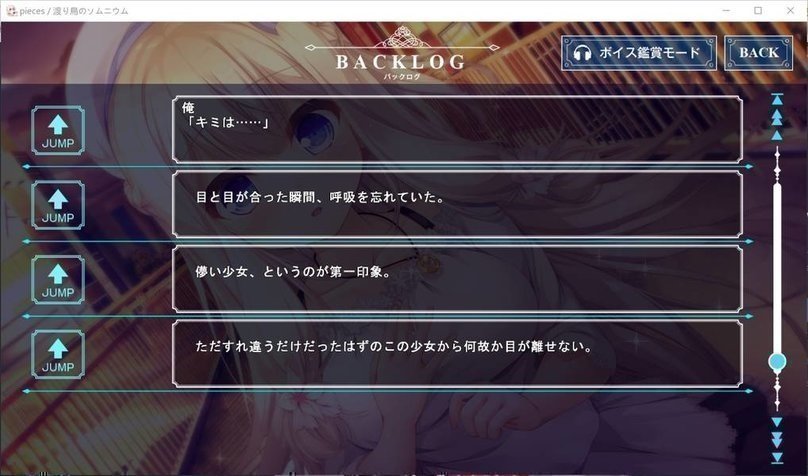
The girl reaches out to touch it, and finds another boy standing across from her, also reaching for it.
She stares at him, unable to look away. Like the two of them are meeting again after a very long time apart.
“Why… am I crying?” Tears well up at the corners of her eyes.
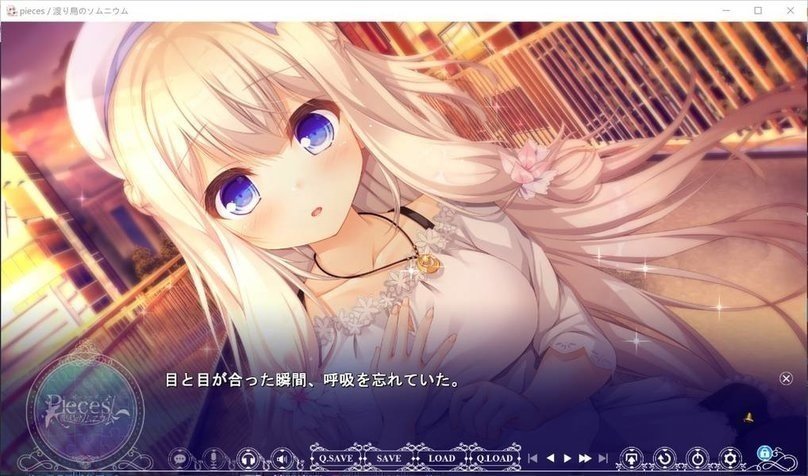
Where have I seen you before? I’ve seen you in a dream. I’ve held your hand in a dream — how could I mistake you for anyone else?
Then the boy says the line that makes her heart skip. “Hi. I think… I’ve seen you somewhere before.”
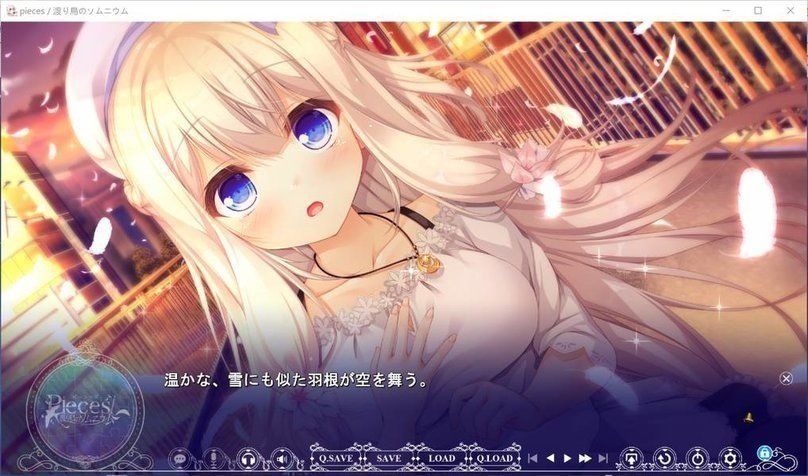
The two look into each other’s eyes. A story that was once cut off might be starting again right here.
(The End)
Comments are hosted on the Chinese main site. This mirror is read-only.