DEAD DAYS Review
CLOCKUP is back, and Kono Tatsuya is back too. After that last game about “wolves and sheep,” the two have joined forces again for a new title.
Though honestly I think CLOCKUP carries more weight here… Kono Tatsuya? Who even are you?
The game is called DEAD DAYS. The initial promo material reminded me of a certain well-known manga and its adaptation, “Highschool of the Dead” — my head was full of images of “zombies running wild in the streets while the protagonist and his group keep fleeing.” Then I opened the game and cleared it, and I had to slap my thigh and shout:
“Damn, I got played!”
Strictly speaking this isn’t a “zombie apocalypse survival game” at all. It’s more of a “petty thug goes straight” game, dressed up in a slightly sci-fi coat at most.
The game opens by introducing the protagonist’s childhood friend, “Mao” (真鱼). She seems to have feelings for him (well, duh — no eroge heroine ever hates the protagonist). Unfortunately, our protagonist is a piece of shit — a thug, a scumbag? Maybe “bully who picks on the weak and fears the strong” fits better. He coasts on his good looks, flirts around everywhere, doesn’t give Mao the time of day, and actually teases and humiliates her for fun.
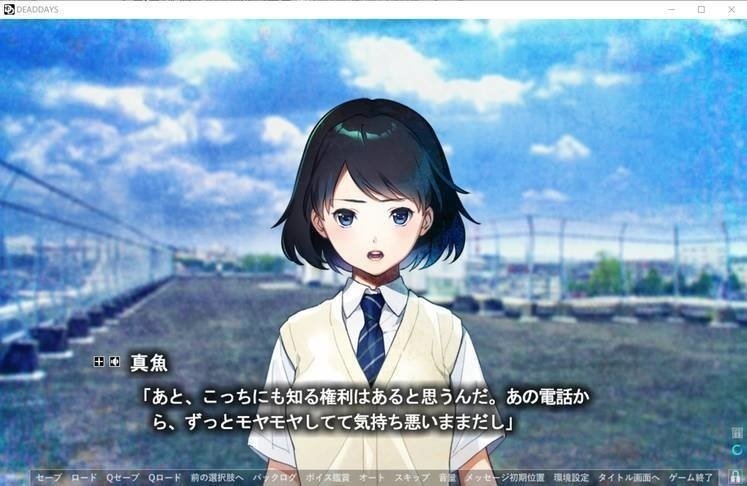
But karma comes around. Before long the protagonist pisses off what amounts to a yakuza-type thug organization. They grab him, torture him, and demand he introduce them to some girls to play with. They see Mao’s photo on his phone and slap their dicks and say: “Alright, her.”
The protagonist suddenly grows a conscience and decides he shouldn’t screw over his childhood friend, so he refuses — and gets beaten to death by the mob for it.
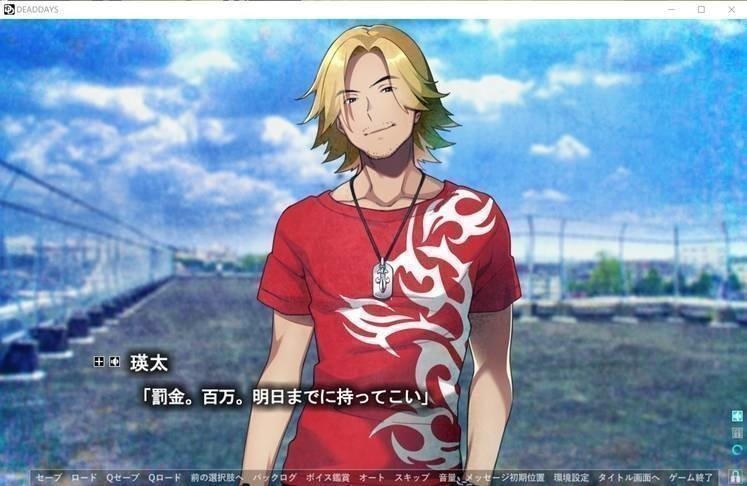
Yes, the protagonist dies at this point. But the game isn’t over.
When he opens his eyes again, he finds a ring of strangers standing around him.
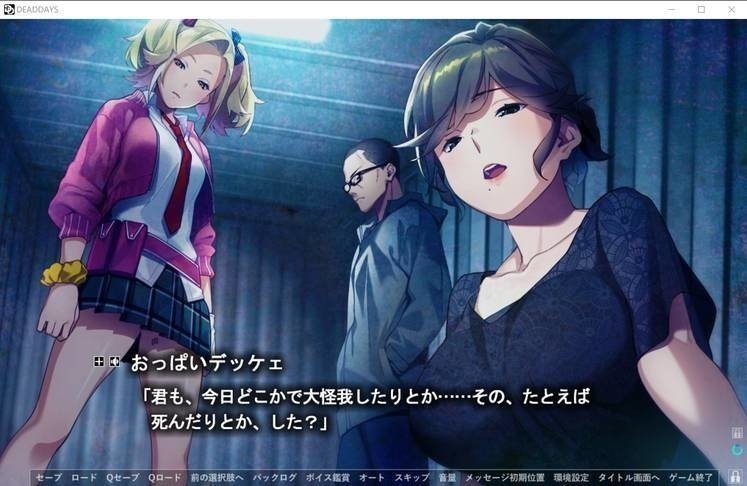
Through his own investigation, the protagonist learns that everyone around him is actually someone who “died” in real life. The reason this group can be “resurrected” is that they’ve been dragged into a “living dead game.”
- The living dead are already dead, but some special technology keeps them alive
- The living dead need electricity to stay alive; their wristbands show remaining charge, and the wristband is the key to staying alive
- A app is forcibly installed on the living dead’s phones; the group leader assigns them “missions” through it, and completing a mission earns them super-powerful “remote charging” to juice up their wristbands and extend their lives
- Since the living dead are already dead, their cells need periodic forced reactivation, so they occasionally go into a crazy “heat state” — all perfectly normal
- Most “missions” for the living dead involve taking up weapons (knives, guns, clubs) and hunting “ghosts” lurking among humans (things that look human but aren’t)
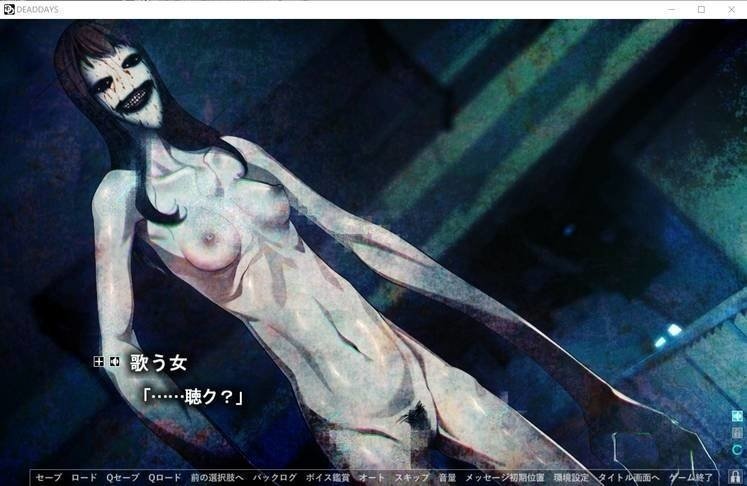
So to put it simply: our protagonist is dead but brought back, and to keep living he has to “do missions.” The missions are pretty much like an online game — they tell you where the boss is and who to kill… just follow along. And if you can’t win, you can “spend extra electricity to briefly enter EX mode” — exactly like a game. As for that “random heat state,” it feels like pure HCG service, so I can’t be bothered to elaborate.
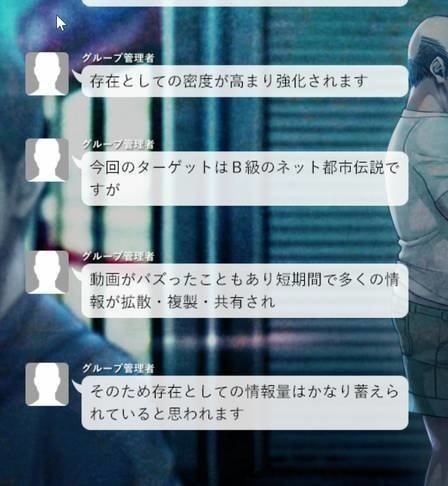
From start to the late game, it’s nonstop “doing missions.” It’s fun at first, then gets more and more boring. And the protagonists don’t succeed every time — there are two instances of getting their kill stolen.
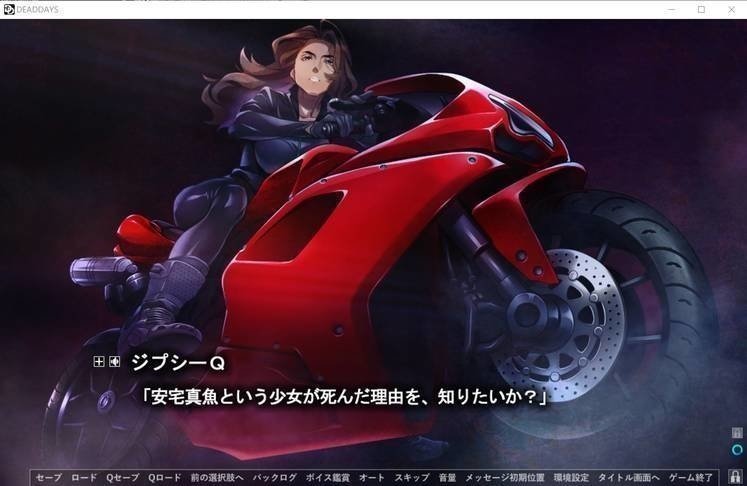
First is a dark-skinned woman on a motorcycle called “Something-something Q,” who claims to be a “third faction” — not with the protagonist’s living dead group, not with the shadowy hands behind the living dead. She shows up during one “mission” and kills the target boss, leaving the protagonists unable to complete the mission and thus unable to recharge.
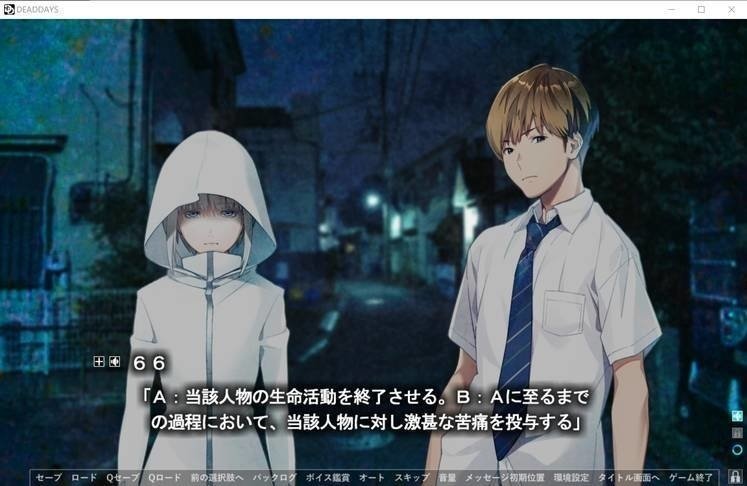
Second is a white-haired woman called “Nobody 66.” She claims to be an “artificial human ghost” who clones and learns ghost emotions by hunting other ghosts. During one “mission,” this “66” suddenly appears and, with something like a “absorbing star technique,” absorbs the target ghost the protagonist was after, leaving the group without a completed mission.
So after the “living dead hunting game” is introduced, the content just becomes a loop of “hunt” – “daily life” – “hunt” – “daily life.” It might feel fresh at first, but you get sick of it fast. Occasionally there’s some dialogue about “Q woman” and “66” in the loop, and you can pick up tidbits about the late-game masterminds, but the main plot stays murky.
The real turning point comes in the lead-up to the True End, but to get there you need to clear the other routes first — and really only two are worth mentioning.
One is the “married woman” route, the other the “gyaru” route; both are living dead members. In the married woman’s route, the protagonist learns that many people participate in this “living dead game,” but most end up truly dead. The biggest cause isn’t “insufficient charge” but “suicide” — because their living dead status makes their families unable to understand them, even misunderstand them, and eventually they can’t bear it and kill themselves.
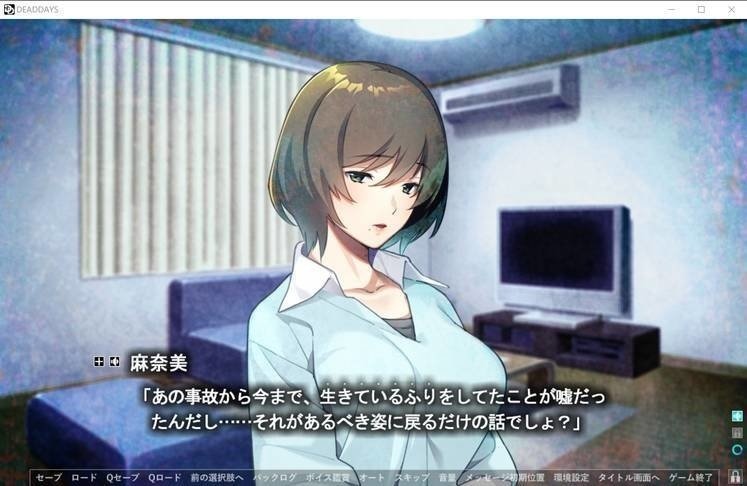
The married woman in the group is a typical case. She didn’t die for any other reason — she was trampled to death by a crowd surge in an elevator. She had a happy family, a child, a husband, but she died just like that. She was resurrected but forced to take part in all these “hunting” missions. It’s hard to imagine a married woman going out to kill people every night, so her husband soon noticed her strange behavior and suspected an affair. No matter how she explained the “living dead game” setup, he found it too fantastical to believe. She even thought about suicide. The ending, of course, is the protagonist swooping in to become her new emotional support, and the two of them just keep playing this living dead game without ever unraveling the mastermind’s scheme.
The “gyaru” route is even more straightforward: the protagonist finds he and the gyaru are kindred spirits. They figure, since they’re already living dead with a bit of superhuman power, why not go do some justice?
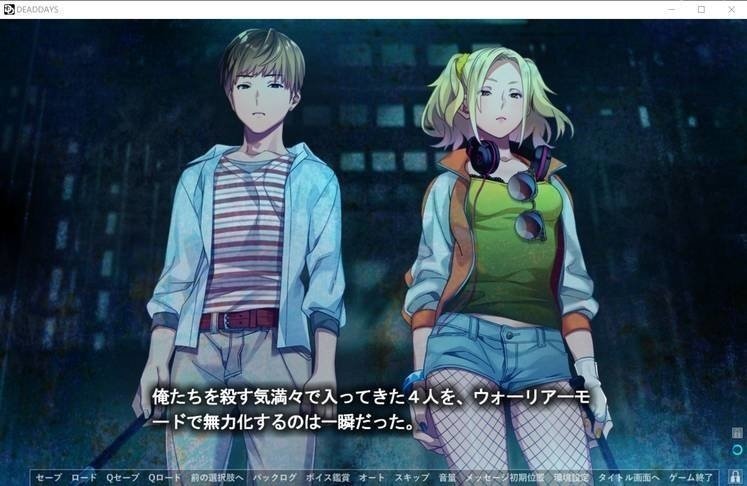
So they start hunting down scumbags and murderers in society, killing them while doing missions. Their living dead status has already been erased from the world, so killing people doesn’t matter.
Their first target is a “cat abuser” near the protagonist’s home — a pervert who tortures cats and uploads videos to a website. After that, they choose to keep going down this path, and the story ends with the mystery still unsolved.
Of course the mystery gets solved in the True End. Before you reach it, there are several key pieces of information in the common route I need to mention, most from that “Something-something Q” woman:
- In the protagonist’s resurrected group there’s a murderer, a death row inmate who apparently committed crimes and made money with a Japanese “Fujian gang,” but kept it all for himself and hid the money. He was caught by police, executed, and resurrected
- The person handing out missions in the protagonist’s living dead group is actually a living dead too — a female pervert named Kiruru, who also has feelings for the protagonist
- The so-called “Nobody 66” is actually an experiment by certain upper-class people, exploring the possibility of “immortality” and “resurrection,” using living dead test subjects like the protagonist to repeatedly experiment and improve this body technology that “keeps people forever young”
- The woman called “Q” is neither on the “upper class” side nor the protagonist’s side; her position is a third party, probably aiming to profit as the fisherman, and she has her own plans
- The protagonist’s childhood friend Mao keeps telling him there’s a “cat abuser” nearby who posts cat torture videos every day; Mao hates him because she loves cats
- Nobody 66, while collecting ghosts, discovers a cat ghost that died in great agony, so out of curiosity she starts tracking down the cat abuser
- Both Kiruru and the Q woman tell the protagonist that the higher-ups’ “perfect living dead” is about to succeed — one that doesn’t need charging and doesn’t get periodic heat, looking exactly like a normal human, essentially perfect resurrection. But once that experiment succeeds, the current test subjects will be discarded
So the True End begins with the protagonist discovering that Mao has suddenly been murdered.
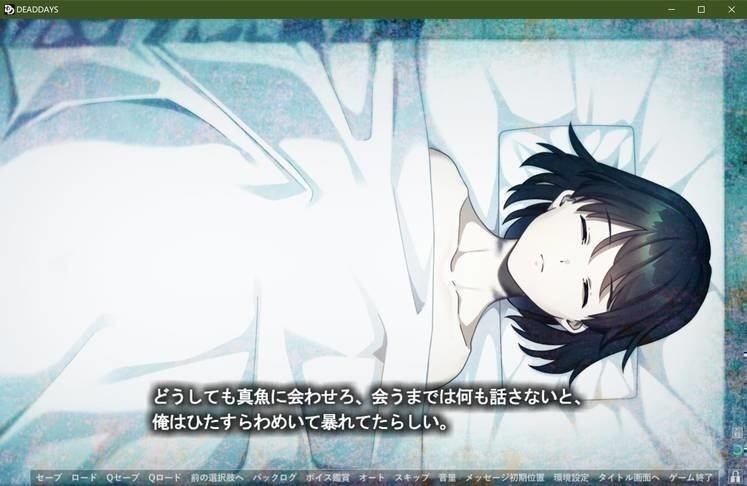
If I had to guess, the culprit is the cat abuser — the thrill from torturing cats isn’t enough anymore, so he’s started killing indiscriminately (?). In his grief, the protagonist remembers his own experience and goes to Kiruru, the group’s mission dispatcher, asking if Mao can be resurrected and join the living dead.
Kiruru eventually agrees. Dead is dead anyway, and what worries her more is whether their living dead group will soon be discarded — rumors say the experiment has succeeded, and missions and charging opportunities from above are becoming rarer…
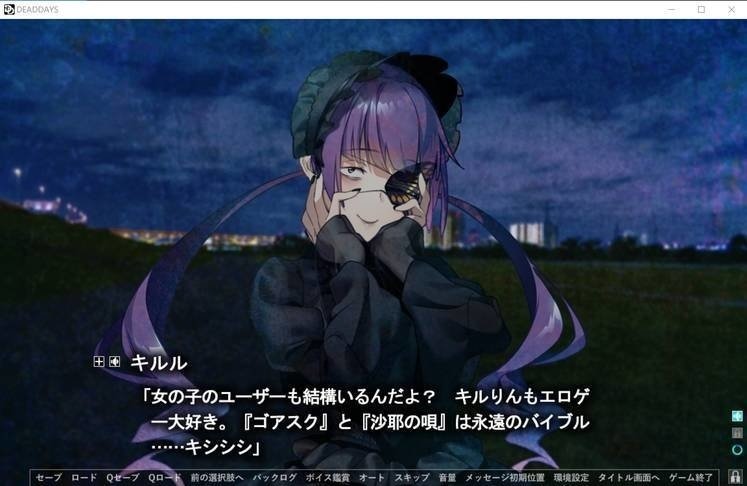
But the protagonist notices something strange: the “murderer” in the group has almost stopped joining their missions.
“He’s not doing missions yet he’s perfectly fine — doesn’t he need to charge?”
It turns out the murderer no longer needs charging and doesn’t get periodic heat… meaning he’s the successfully created “perfect living dead.”
The protagonist goes to confront the murderer, only to run into Q woman, who’s come to pick him up. If the murderer is taken away, the protagonist’s group of test subjects will be abandoned. The protagonist tries to stop it, but Q woman hits him with an EMP round and sends him flying.
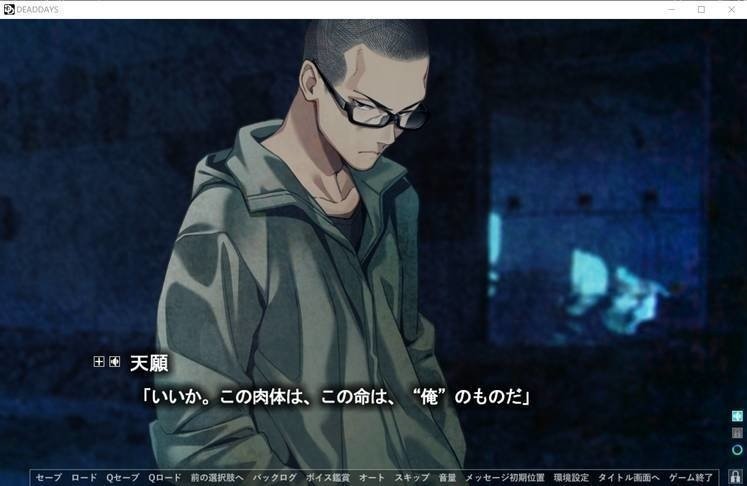
When the protagonist wakes up, he’s not dead, but he’s become a ghost — the kind of ghost the living dead hunt. But he meets a strange person: a ghost identical to the “murderer.” Upon asking, he learns that the resurrected “murderer” was a mistake — it was only one of the original murderer’s multiple personalities. The personality that truly wanted to be resurrected wasn’t revived and became a wandering ghost — and this ghost is a mad scientist holding the core of the “living dead technology.” The protagonist and the ghost reach an agreement: the protagonist will help it reclaim its rightful resurrected body, and in return, after resurrection, it will give all the protagonist’s friends (the heroines in the game) “perfect living dead” resurrection status.
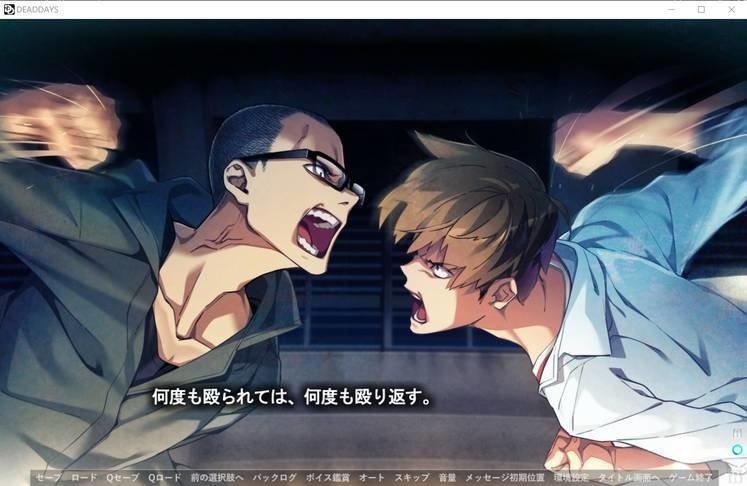
So our protagonist, in his ghost form, finds the fake “murderer” and has a 1v1, cheating his way to victory, while the “real murderer’s ghost” seizes the opportunity to slip in and get the body it wanted. And the guy actually keeps his word — he really gives the protagonist’s companions, all the living dead, “perfect bodies,” meaning they’re no different from living humans, never needing to charge or go into heat again.
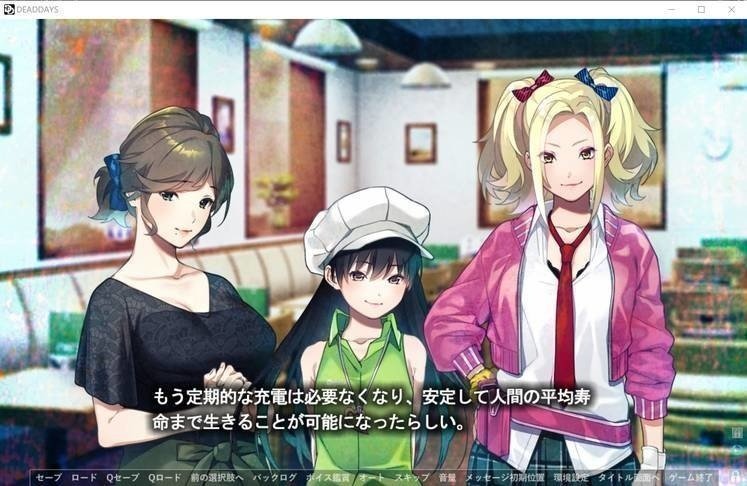
As for the protagonist, since his body was hit by the EMP round, without a body he can only wander forever as a ghost. The revived heroines still think fondly of the man who saved them, but alas, he can no longer be revived…
Just kidding!
The final ending somehow forces a Happy End out of it: the explanation is that the protagonist’s body wasn’t actually lost — the perverted Kiruru had stored it away. In the end the protagonist gets resurrected with an eternal body, the former living dead gather to reminisce about those unbelievable days, the revived murderer becomes a mysterious research doctor continuing similar research and making money, and everyone lives happily ever after…
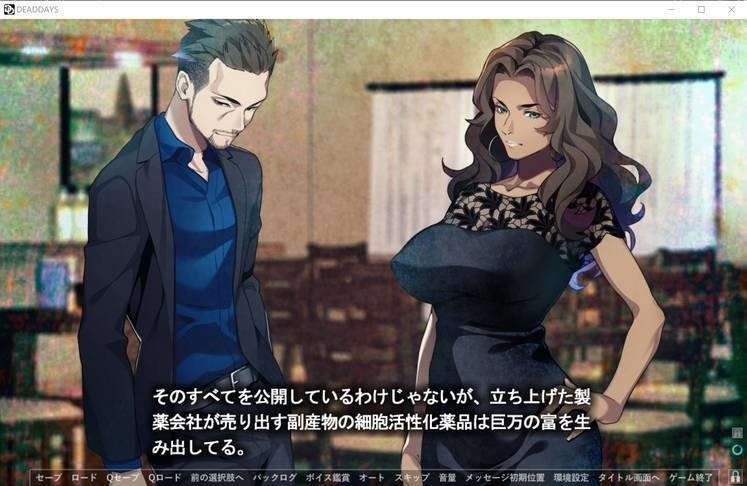
Even though the game ends here, I think this ending is really contrived.
First, let’s think about what this game is trying to say.
From the start, the game builds the protagonist as a “petty thug” — bullying the weak, cowardly, and very horny. If there’s a hole, he’ll poke it. The game explains it as living dead cells being unstable and causing sudden heat, but the protagonist hardly makes a good impression.
The real heroine is Mao. She’s always cared about the protagonist, while he ignores her and sometimes even deliberately insults her.
I can see what the writer is trying to do: portray a “playboy” protagonist who still has a bit of conscience reserved for the pure Mao, so Mao’s HCGs are always with the protagonist, and the two have a normal romantic relationship (?), creating a contrast.
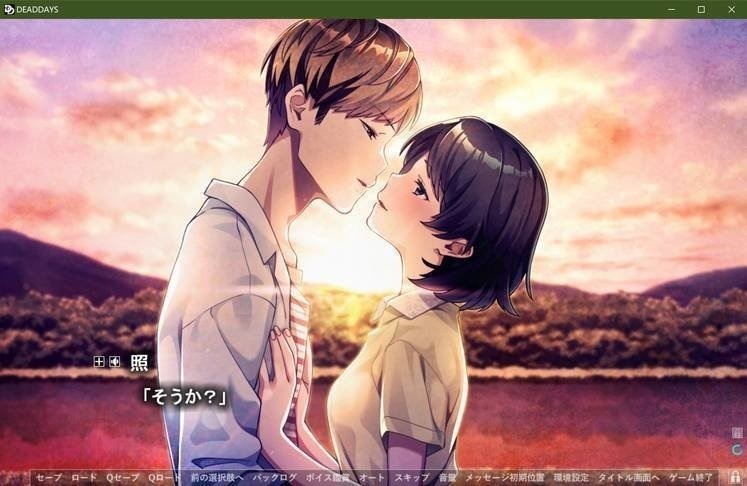
In the second half, after Mao dies, the protagonist decides to revive her, which shows his feelings. Although the game spends the most time on their relationship, and it’s not the usual Japanese “confession” routine, what I felt was more the protagonist’s “conscience awakening” — a kind of repayment to Mao — and the game doesn’t depict much actual romance.
Beyond that, the game has plenty of nonsensical setup. First, this “living dead” premise — was it really necessary?
The setting says the protagonist’s group are humans who died, were resurrected, and had their existence erased from society. But during the game, aside from the group gathering for missions, I can’t see how they differ from normal people. It reminds me a bit of that Sword Art Online movie setup. The game opens with corpses everywhere, creating a bloody “walking dead” feel, and then it disappoints me. This failure alone cost the game more than 50% of my goodwill.
And the game randomly adds a loli idol to the team late on. I can’t see any purpose for this character in advancing the plot. Aside from HCGs, she’s probably just there for fanservice. In the end the idol gets revived and becomes super famous, the protagonist teases her about her dark history of sleeping her way up, and she acts like she doesn’t care — pretty ironic.
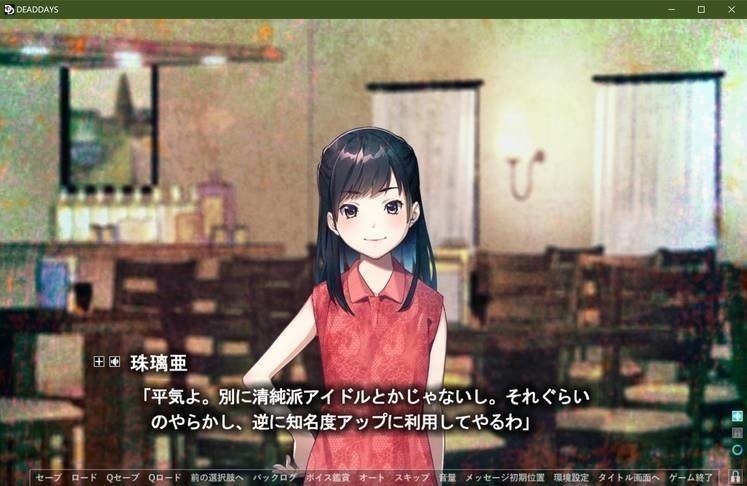
The game also lacks tension in the later parts. They’re all living dead, yet there’s nothing special about it. I never felt the characters facing “a test of humanity because the battery’s about to run out and it’s total Game Over.” In the end it’s just a clichéd story of a playboy reforming to save the heroine.
And as a CLOCKUP game, I can understand cutting corners on backgrounds, but some backgrounds even reuse images from the previous “wolf and sheep” game. I don’t know if that’s too much cost-cutting, but the game does have voice acting for the protagonist, so it doesn’t seem that broke. It’s puzzling.
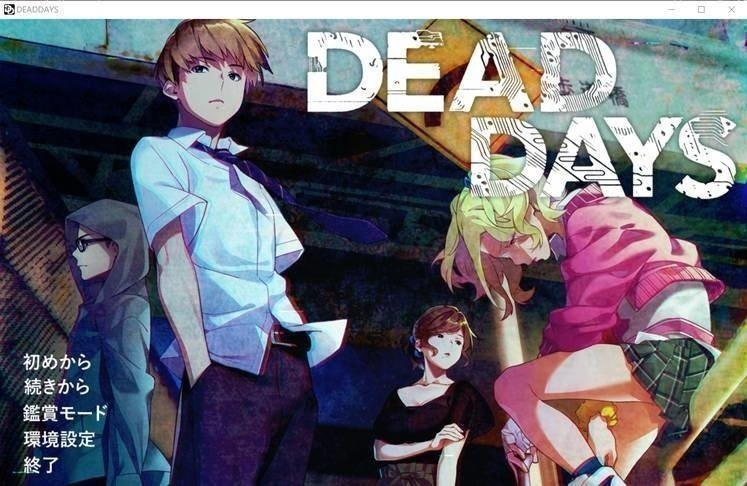
Actually the game’s theme is fairly clear: it depicts what a group of “living dead” go through in their half-dead days, hence the title DEAD DAYS. But the impact of “DEAD” isn’t strong enough — or maybe “DEAD” gave me too high expectations. The ultimately mundane, clichéd setup left me hugely disappointed.
I’m not saying the game’s story is broken. I’m saying it’s too generic — wrapped in a “living dead” skin but with a Sword Art Online-level story structure.
As an “adult game,” it really doesn’t pass.
Oh right, the game’s OP is very good — Liar Liar, absolutely killer.
By the way, there’s also a band called DEAD DAYS that performs a song called Liar Liar. I don’t know if it’s related to this game — maybe it was the inspiration during planning?
Comments are hosted on the Chinese main site. This mirror is read-only.