Sanoba Witch (サノバウィッチ) Review
Sabbat of the Witch: If Only It Had Tried a Little Harder
I haven’t played that many Yuzu (Yuzusoft) games. Counting on my fingers, just Tenshin Ranman and Natsuzora Kanata. Most of the others I’ve only glanced at — “oh, a Yuzusoft one, I remember that face” — and then never got around to them. Still, I owe Yuzusoft some thanks: Tenshin Ranman was the first 18+ game I ever touched. Sure, I played the PSP version, but up to then everything I’d played was Ever17, MO2, MO4 and other genuine all-ages stuff. Thinking back to the first time I imagined Chitose Sana’s H scene still gets me a little excited…
Ahem, that’s a bit off track. Actually I do have some feelings for Yuzusoft games, I just rarely play them. Mostly because I kept hearing people shit on them — that Yuzusoft games are pure moege, and trending toward nukige. And honestly, judging by the premises, that’s true. Whether it was the later vampire one or Sensei of the Sky Colors, the utilitarian angle got more and more blatant. Then at the end of 2014, a new title called サノバウィッチ just popped out of nowhere, and I didn’t read any of the intro — I just saw the word “heat.”
Then I looked at the plot summary… oh boy… have they completely thrown away all decency? The heroine goes into heat on a schedule, the protagonist secretly sees it, and the story builds from there… what else could it be but fucking?
A victory for the utilitarian crowd, a sob for the story crowd. For me, one glance at the premise and I’d already lost interest.
I can stage a little fantasy in my head anytime about fucking a girl, and each one would be better than this. Is there any need to play the game specifically for that?
But then I played the trial version and found it was nothing like that. The heat thing is just a gimmick; the story itself is actually decent… of course, I mean the trial version’s story. So after finishing the full game I figure I should seriously talk about a few things in this game.
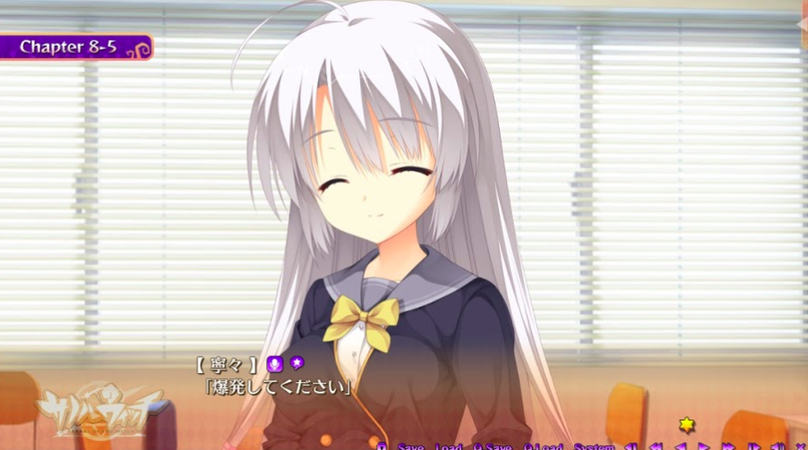
サノバウィッチ (sanobauichi) — the first time I heard it pronounced, I thought it was “son of the bitch.” The actual English title is Sabbat of the Witch. “Sabbat” refers to a witch’s or religious gathering or ritual, and “witch” means a witch or sorceress, so literally the game is about witches holding rituals and gatherings…
Of course the content isn’t like that at all. If I had to translate it, I’d rather call it “Witch Potluck.” Which makes sense — would Yuzusoft ever put out something dark?
The main story centers on the first heroine, Nene. Early on the game establishes that the protagonist has a special ability: he can sense the smell of people’s emotions. One day, bored in the library, he discovers Nene masturbating against the corner of a desk. And Nene is the school’s goddess — imagine seeing your goddess in such a lewd state; naturally you’d feel some surprise and lose control a bit. Soon the protagonist and Nene are interacting more and more, and gradually the secret of her grinding against desk corners comes out. Turns out she’s a witch who made a contract with a familiar (think QB or some lewd beast, whatever works). After signing, a witch must collect fragments of human hearts; once enough are gathered, one wish can be granted. But being a witch has a price — you lose something important to you.
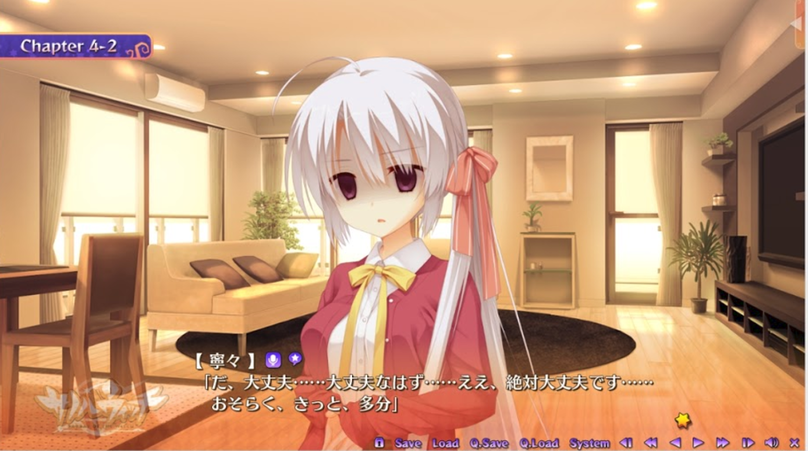
So the price for Nene, who seems gentle, kind and understanding, is that she goes into heat at unpredictable times…
Yeah, same logic as an otaku on the internet getting random boners, needing to find all kinds of porn and ero manga every night to lick the screen, and then posting long-ass感想 posts about it.
Here I have to emphasize that Nene’s CV is my goddess Kiritani Hana. Kiritani Hana is perfect at expressing Nene’s personality — gentle and polite when not in heat. And Yuzusoft deliberately set up the gap between goddess and slut: normally Nene’s hairstyle, speech, outfit, even her standing posture all give the impression of a refined young lady, but when she’s in heat, her voice is absolutely lethal — that helpless, uncontrollable emotion just gushes out and you can’t hold back.
By all rights, Nene’s character writing has no problems, the CV performance exceeds expectations, and Yuzusoft’s character design is high quality. So the Nene route can’t be praised to the heavens, but at least it shouldn’t be bad, right?
Wrong. The biggest problem with the Nene route is that it takes a perfectly good story and writes it badly.
The protagonist’s conquest of Nene is very orthodox — love grows over time (the dirty kind of “over time”), then confession, then dating. The dating scenes are sweet and long as hell, but the route’s biggest question never gets explored.
“Why did Nene become a witch? What wish does she want granted?”
I kept wanting to know, but the story kept leisurely showing sweet moments and feelings, the two of them lovey-dovey… until you’re about to lose it, then the plot turns. Suddenly Nene’s familiar tells you that Nene’s contract wish was to go back to the past, become a child again, and redo her life — with the added condition that in the new life, her parents don’t divorce.
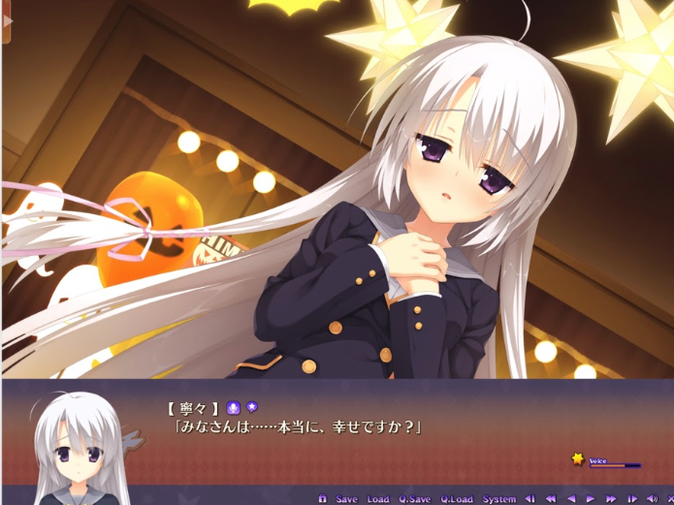
Then comes a flood of plot exposition. Nene’s parents divorced when she was little, she could never accept her stepmother, so she chose to live alone, and because she lived alone she came to this school… But now Nene is in love with the protagonist, and she’s collected more and more fragments, so the wish is about to come true.
If the wish comes true, Nene disappears, goes back to the past, and the lovers are separated. And the familiar explicitly says witch contracts cannot be revoked.
What to do?
Yeah, what to do? The protagonist once again gets into emotional entanglements with Nene, and the entanglements drag on and on and on. The two of them seem to never seriously think about it, never even try to find a solution, until finally Nene’s familiar says she can help — she pierces the protagonist’s heart, sends the detached fragments back to the past along with Nene, Nene’s wish comes true, and she disappears in the protagonist’s arms.
Then the ED plays…
Wait, don’t panic. After the ED, a new option appears on the main screen to continue. Continuing takes you back to child Nene — her parents didn’t divorce, but they’re just stiffly together, seemingly united but emotionally apart.
Nene crossed over carrying the protagonist’s fragment, so she has memories of him. After a brief struggle, she makes a decision:
“Mom, Dad, I have something to tell you.”
And the plot suddenly turns — Nene’s parents still get divorced.
By this point I was getting a little angry. If a little girl’s wish is for her parents to get back together, and she’s willing to cross over and change the world line, paying a huge price, going through untold hardships to finally get back — then the choice between “parents divorce and I meet the protagonist” versus “fake parents and I’m separated from the protagonist” should have gotten heavy emphasis. It’s supposed to be agonizing, but the whole game just breezes past it in one line, leaving you completely baffled.
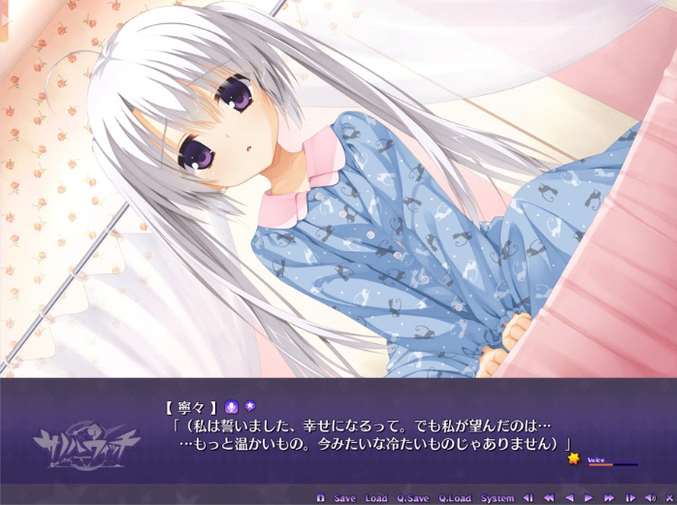
Soon Nene gives a monologue: since her parents are divorced, if she just follows the original world line, she might meet the protagonist again in the future. So according to Nene’s plan, the parents divorce, the father remarries, Nene pretends to dislike her stepmother and demands to live alone, deliberately chooses the original school for middle school, and finally reconnects with the game’s prologue. The perspective switches from Nene back to the protagonist.
And guess what? The game starts a massive copy-paste — basically rehashing the entire common route prologue and all the earlier content. Even if it’s a repeat of the world line, you can’t just copy-paste like that, can you? And here’s the funny part: occasionally there are variations interspersed in the copy-paste, like Nene seeing the protagonist for the first time as if seeing him again. This should have made players slam the table and yell “holy shit, what a twist,” but it’s ruined by the ultra-long copy-paste. The tiny bits of new content sprinkled in made me not know whether to skip or not.
Finally, near the end of this second playthrough common route, Nene returns the protagonist’s heart fragments to him, he regains his memories from the first playthrough, and the two are finally reunited. After a round of sex, the end…
Staring at the floating ED animation, my feelings were complicated. This should have been a great story. The original wish was for her parents to get back together, but she only met her beloved under the premise of their divorce. Giving up her original wish and making a second choice for the sake of her beloved, and then reuniting — that should have been very moving. But Yuzusoft, of all things, chose to breeze past the crucial “choice” part and chose copy-paste for the “reunion,” directly destroying the entire story’s expressiveness and plunging you intosnark hell.
Even more regrettable: this route has no arrangement that makes players go “ah, so that’s it.” For example, they could have used the second playthrough’s reunion as the prologue to create suspense, and then when it’s revealed again at the end, players would have that moment of realization. But Yuzusoft didn’t do that. You know, even Ushinawareta Mirai o Motomete, dumb as its story is, knows this trick raises emotional impact, okay?
Just as I was deeply disappointed with the main story, I played the other heroines’ routes and found the game wasn’t as bad as I thought.
The best is Meguru’s route. Meguru is the protagonist’s junior; she joins the supernatural research club just to solve her own life problems. She wants to become popular at school but doesn’t know how, can’t fit into the class, and always holes up alone playing games. (Monster Hunter, no less.)
Soon, as the protagonist interacts more with Meguru, he discovers she’s actually a lively, cute girl with absolute trust in others. The people around her aren’t deliberately distancing themselves from her — they think she’s the one distancing from them. Hard to imagine such a cheerful personality worrying about not being popular.
As the story unfolds, Meguru explains why she wants to be popular. She used to have a good friend, they told each other everything, until one day Meguru and her friend had a fight, and after that Meguru never saw her again. After getting into a new school, Meguru wanted to make new friends, but no matter how she interacted, she felt a wall between people, never reaching the level she had with that old friend. So she concluded it must be her own lack of charm, and that’s why she wanted to boost her popularity.
Later, through Nene’s witch, Meguru learns that her old friend was also a witch. Her friend had been secretly collecting fragments long before the fight with Meguru. According to the responsible familiar, Meguru’s friend’s wish as a witch was for Meguru to be more cheerful and lively, instead of always staying at home clinging to her alone.
“Meguru is a good girl. She should have more friends. I want her to go outside, away from this心病 of escaping the outside world.”
Meguru’s friend paid a lot for this wish, and a terrible price — forgetting, forgetting in all aspects. So on the day the wish came true, which happened to be the day Meguru fought with her, the friend quietly disappeared. Maybe now that friend doesn’t even remember Meguru. But thanks to that friend’s wish, Meguru met the protagonist and a bunch of new friends.
After that comes a super-long romance arc. Honestly, this romance is written pretty well. Meguru realizes she likes the protagonist and launches a massive offensive; their back-and-forth is genuinely fun, better than the Nene route’s sweetness-for-sweetness’s-sake romance by a factor of 100. After much hardship they finally start dating. Then at the story’s end, the protagonist’s body has a bit of a hiccup — the inner void has grown large. Nene’s familiar says such a big void needs to be constantly filled with love, and thanks to Meguru’s love, the protagonist’s health will last forever.
“Then we just never have to be apart, and your body will never have problems!”
And so the Meguru route ends.
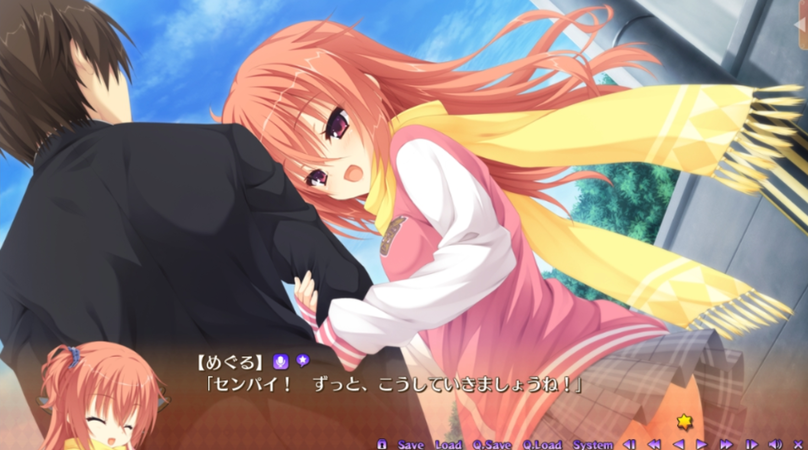
Meguru’s route has little to do with witches but everything to do with romance. The entire route showcases the writer’s skill at romance. I’m guessing it’s the same person who wrote White Eternity, because it’s way too similar to Yunagi Ichika’s route. Personally I think this route is high quality, paired with Meguru’s CV Sendai Eri’s excellent performance — a complete dessert.
By the way, Meguru + Sendai Eri + junior heroine + lively = literally Suzuki Kana 2.0, right? I was filled with that sense of déjà vu the whole time.
Shiiba’s route is a proper witch-plot route, since she is a witch. The story starts with the protagonist getting two amusement park tickets from the senior and inviting Shiiba.
The story covers three witch contracts: about Shiiba, the protagonist, and Shiiba’s familiar Akagi (hold on, not the carrier — the bird).
First, Shiiba’s contract. From the start Shiiba appears in men’s clothing, even though she’s a girl and really hates wearing men’s clothes. Midway through the route, she reveals the reason for her contract and its price. Turns out little Shiiba saw a piece of clothing she liked and really wanted to buy it, but had no money. By the time she saved enough, the clothes were no longer being sold…
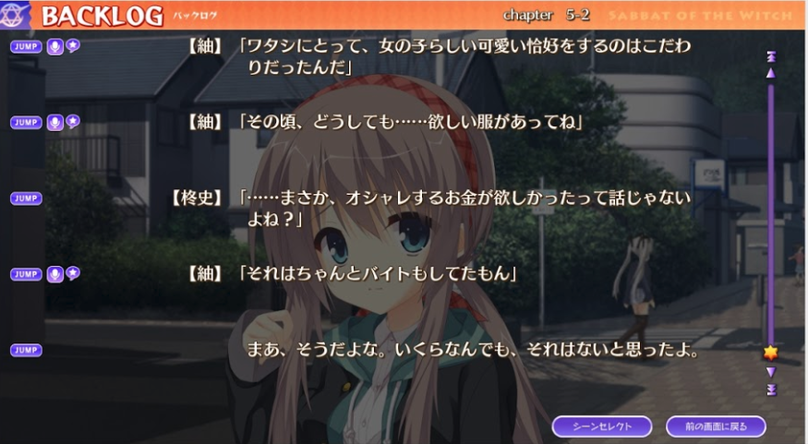
Then the familiar Akagi appeared, and Shiiba made a contract with it, wishing to obtain that clothing, with the price being that she couldn’t wear women’s clothes for a period of time. But because of Shiiba’s greed — she desperately wanted the clothes — she chose to overdraw the price.
Overdrawing means the familiar gives you the clothes directly, and you have to repay a much larger price — 20 times the cost. Shiiba was probably too young at the time to understand the consequences, and to this day she still can’t wear women’s clothes…
So Shiiba’s contract is that simple… I think she was completely scammed by the familiar.
Second contract, between the protagonist and the familiar Akagi.
Shiiba is actually happy to receive the protagonist’s amusement park invitation, but since she can’t wear pretty girls’ clothes for a date, she can only politely decline. The protagonist is naturally confused, thinks he’s been rejected, then after learning the truth decides to help her — collecting heart fragments for her on one hand to quickly pay off the debt, while on the other hand finding the familiar Akagi.
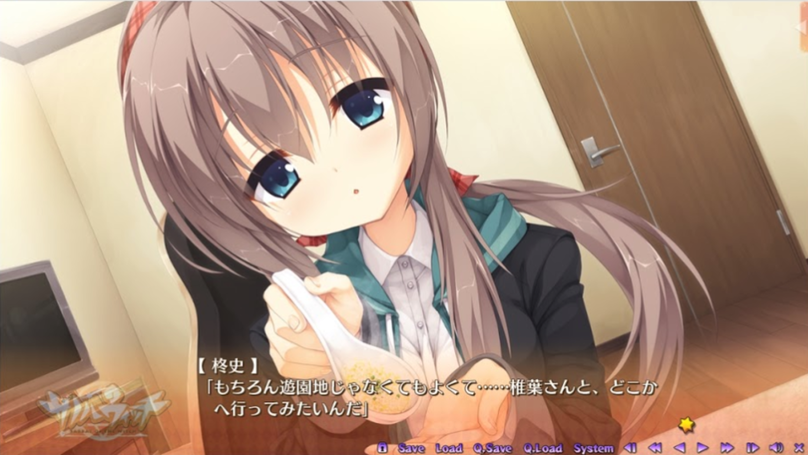
“I want to make a contract with you. My wish is for Shiiba to have two hours of women’s clothing time, and I’ll pay the price.”
“Paying the price for someone else is serious business, you know. It’s also 20 times.”
“No problem.”
So the protagonist deceives Shiiba, saying he begged the familiar for two hours of women’s clothing time. Shiiba happily wears pretty clothes and goes on a date with the protagonist at the amusement park, and at the end, the two finally become a couple.
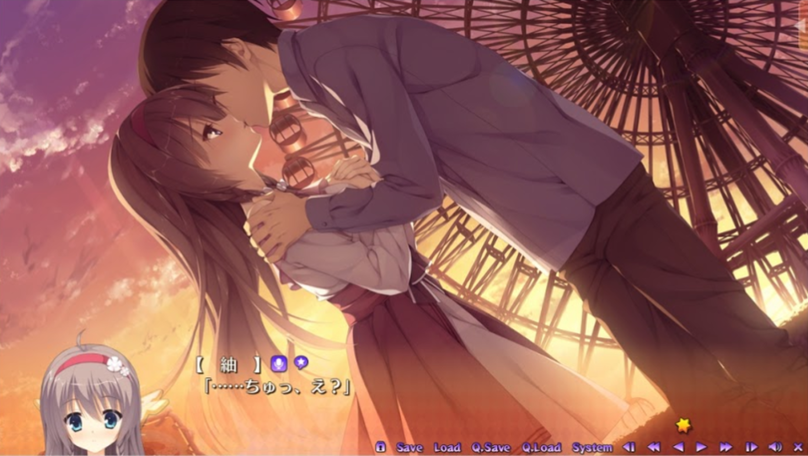
The price is severe: the next day, the protagonist becomes Shiiba’s teddy bear, with only one hour of human form per day. Shiiba is furious when she learns the protagonist used a contract to get her women’s clothing time, and this introduces the third contract — about the familiar Akagi.
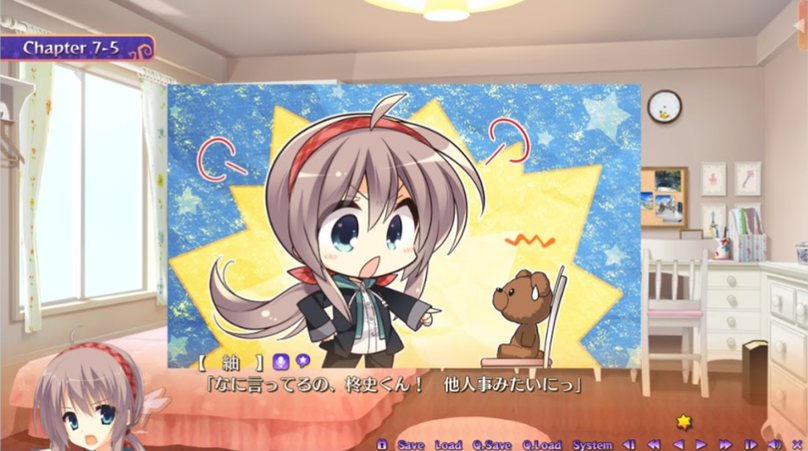
In the game’s setting, a familiar makes a contract with a human, fulfills their wish, and has them help collect heart fragments. The fragments the familiar collects can let it reincarnate as a human, or fulfill its own wish.
Akagi’s wish is to see a friend it met 50 years ago.
Akagi’s original form is a crow. 50 years ago it flew by a hospital window and saw a girl lying in bed, and soon became friends with her. Then one day, the girl’s curtain was drawn… The crow could never see the girl again, but still came every day, hoping the window would open one day. Finally one day the window opened, the girl was gone… replaced by a stranger.
That crow still went to the hospital every day, hoping to see the girl once more. It went for 50 years.
“Why doesn’t she come back? I go there every day hoping to see her. She’s my friend, so I want to use heart fragments to make this wish come true.”
Akagi tells the protagonist its wish, but the protagonist understands — 50 years, the girl is probably dead. Akagi just doesn’t want to accept it.
Meanwhile a third familiar appears in the city, appearing as a dog. It doesn’t take the route of contracting a witch to collect fragments; it personally goes around directly gouging out human hearts to plunder fragments. Not only violent, but seriously damaging human lives. With the combined efforts of the two familiars, the two witches and the protagonist, the dog is finally subdued. During the fight Akagi is badly injured and saved by Shiiba and the protagonist. Grateful, Akagi decides to repay the protagonist by taking on the contract price between the protagonist and Shiiba itself, permanently reverting to a crow and never being able to disguise itself as human again…
“I knew all along. I knew 50 years ago that my friend… was probably gone. I just didn’t want to believe it.”
Akagi decides it was wasting time collecting fragments for that meaningless wish, and chooses to sacrifice itself.
So at the story’s end, the protagonist and Shiiba become a couple and go together to visit Shiiba’s grandmother. A crow in the sky realizes the girl it searched 50 years for isn’t dead — it’s this old lady. Then a complete Happy END.
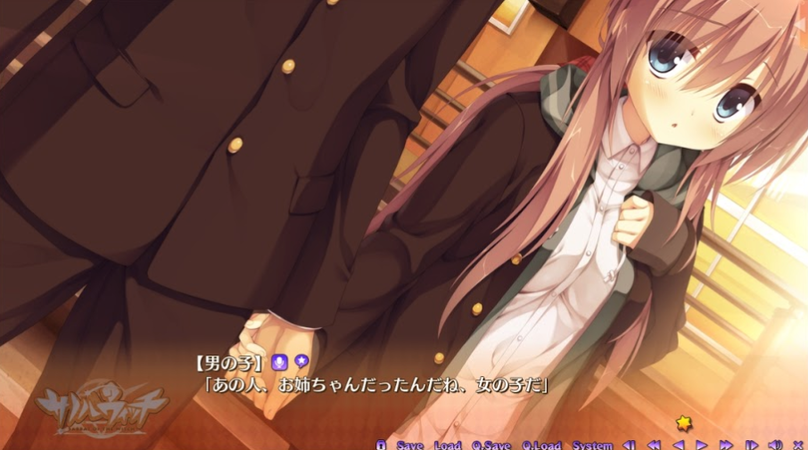
If Meguru’s route is entirely about love, then Shiiba’s route is entirely about witches and contracts. The two routes already express the game’s core thoroughly, so… the remaining senior route and Kazune route aren’t as strong.
The senior route is pretty facepalm. The senior was previously an older woman who’d crack dirty jokes at the drop of a hat, but one day says she doesn’t really understand what love is and wants to study love together with the protagonist. While studying, they end up as a couple. She even cooks a meal at the protagonist’s house, and his father praises it saying “it tastes like the protagonist’s mom.” The protagonist is curious and asks.
“Where is your mother from, senior? Do you know my mom?”
“I’m an orphan, you know.”
Then the senior’s appearance is seen by Nene’s familiar, who tells the protagonist that the senior’s past life was probably also a familiar, and connected to the protagonist’s mother. After some investigation the senior confesses: the protagonist’s mother was also a witch and made a contract with her (the familiar), her wish being to become human. After the wish was fulfilled, she reincarnated as the senior. As a former familiar turned human, she wanted to understand human emotions as much as possible, including love.
Here’s the problem: the senior actually has intermittent memory loss. The reason is that the senior’s past life — the familiar — didn’t want to completely give up its past-life memories when reincarnating, and sealed its familiar abilities inside her body. These abilities intermittently cause memory loss, and absorb others’ love and heart fragments as magical fuel. The protagonist’s supply is too abundant, so the familiar abilities inside the senior start going berserk, and the memory loss gets worse and worse.
So the senior, like the suffering heroine in Ef or One Week Friends, writes a diary every day and reads it the next morning. Finally the diary can’t save her either, the ability goes completely berserk, and the senior becomes a blank-eyed husk.
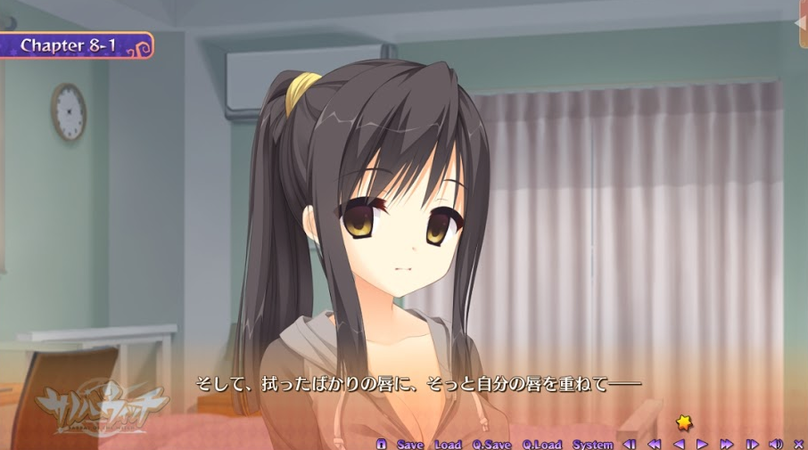
Then the plot goes full soap opera: with others’ help the protagonist enters the senior’s heart, directly punches through the dimensional wall inside her and talks to her heart, saving her. Everything ends.
After clearing any heroine you can enter Kazune’s route. Kazune’s route is even more casual — feels like a freebie thrown in.
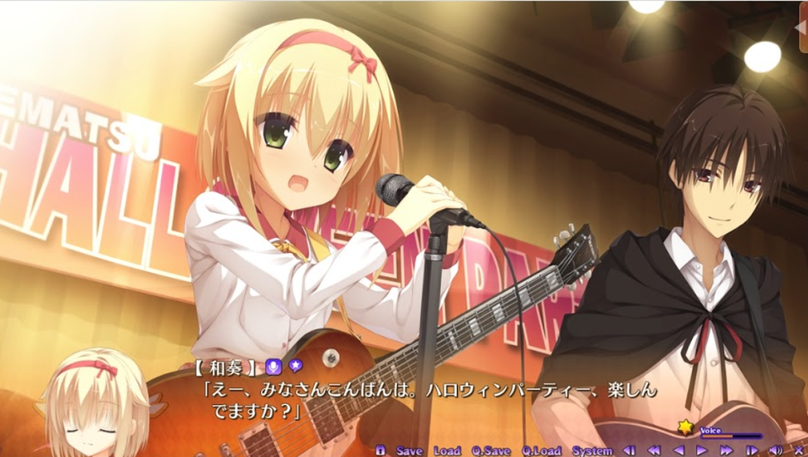
Basically Kazune wants to form a band, the protagonist helps out, practice practice practice, practice leads to hooking up, then confession, then couple. The only mention is that Kazune met the protagonist when she was little and fell in love then, which is why she confessed first…
That’s it…
Looking at the whole game, Yuzusoft has improved a fair bit in story development compared to Tenshin Ranman, which I played before. At least the slice-of-life isn’t so boring anymore, it’s actually fun, and it’s starting to have the flavor of August’s Daitoshokan. Even though the Nene route is badly arranged, the framework is there, and with some imagination it’s not unacceptable. Personally I think the Meguru route and Shiiba route are the best, the essence of the entire game; the other heroine routes are typical Yuzusoft quality, fine to casually play.
Worth mentioning here: the game’s comedy elements are absolutely worth savoring. In that department, Nene feels more like a comedy character.
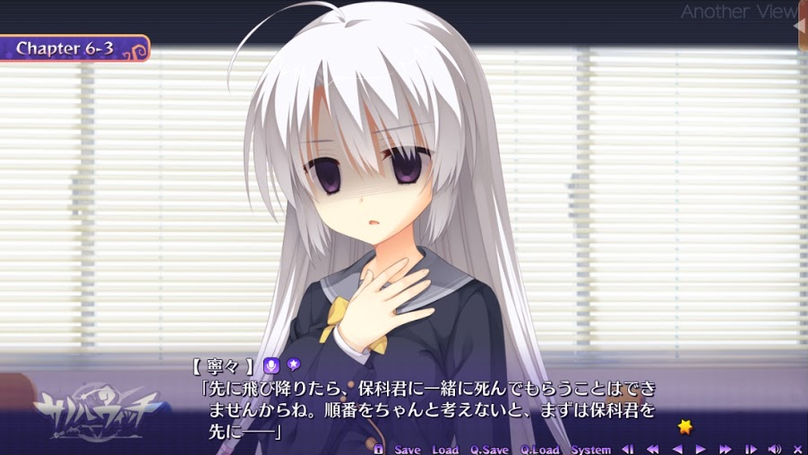
The game’s music is a bit of a rip-off — all the BGM are variations of each heroine’s character song. The OP is fully animated, showing sincerity, but the ED overuses 3D effects, and Kazune’s concert MV lacks sincerity. Other than that there’s nothing bad. All the CV performances are stellar: Kiritani Hana, Sendai, Yuyuki Ai, Mizuhashi Kaori, and Takamori Natsumi all deliver.
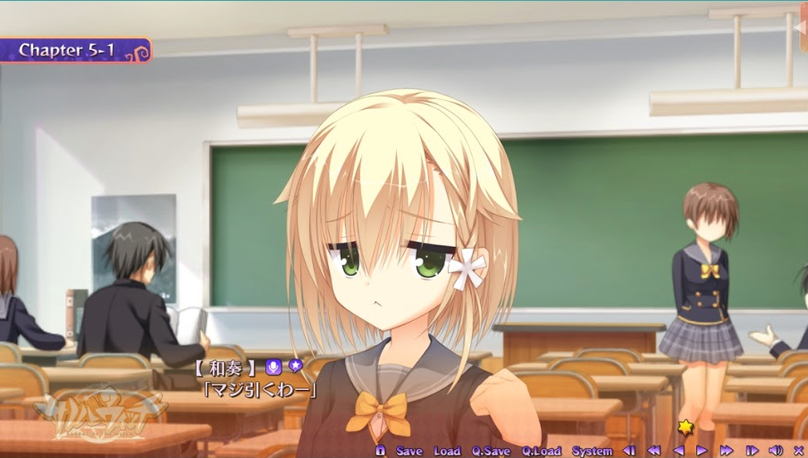
So how is this game, really? Here’s how I see it: Yuzusoft games previously gave the impression of pure moege — cute heroines, erotic H, shit story. The new title サノバウィッチ is, to some extent, an attempt to break away from that image. They also brought in new writers, and the premise and slice-of-life scenes improved substantially. The script arrangement is still lacking, but even so, it’s enough to be a pleasant surprise.
Thinking about it, Yuzusoft’s promotional tagline really strikes me as odd. How insecure do you have to be to use “heat” as the selling point? Whether it’s practical or not — just show some CG previews, that’s enough. There’s absolutely no need to debase yourself like that.
Last thing: the game’s only regret is that the Nene route didn’t deliver its full potential. It was originally a great script and premise. If only it had tried a little harder, this game might really have helped Yuzusoft turn things around.
Comments are hosted on the Chinese main site. This mirror is read-only.