Onaji Class no Idol-san. Around me is full by a celebrity. (同じクラスのアイドルさん) Review
My Classmate Is My Aunt
The Japanese eroge maker CUFFS has a whole pile of sub-brands — Sphere, CUBE, miniCUBE, SONORA, and HULOTTE, which looks unrelated but apparently isn’t. I hadn’t touched a CUFFS game in ages. CUFFS games are all basically the same: same engine, same font, same choice-navigation UI, same Duca songs covering everything, same marketing playbook, same coloring style, and… the only thing that really differs is the artist.
So CUFFS games get old fast, because there’s just too much that’s identical. Sure, sometimes they roll out a “story premise” that looks decent, but the actual execution always disappoints. Well, not disappoint exactly — it’s more that there’s just nothing interesting there. CUFFS announces a new title, you look at the character setup and you can already guess how the plot will unfold. Beat the game and sure enough, it played out exactly as you expected. No surprises. If anything it’s less exciting than what you imagined…
Which leaves you with disappointment… emptiness… and self-loathing for wasting your time on this game.
So why was I willing to waste time on a CUFFS game this time? Because some guy with a Shiromochi Sakura avatar told me this game was a landmine.
Which brings me to a little life advice:
If a moe-otaku tells you a game is a landmine, then that game is definitely gonna look great. (adjusts glasses)
The game is Same Class no Idol-san. Around me is full by a celebrity. — literally “the idol in my class” (my whole world is celebrities).
You can probably guess the setup just from the title and the promo art. The protagonist attends some arts school, surrounded by female classmates who are already young stars. His own grandfather is a famous celebrity too, and at his strong insistence the protagonist joins the school’s “arts program” and begins his star career… oh no wait, his manager career. The Japanese says Manager; in English I figure “manager” or “agent” works better.
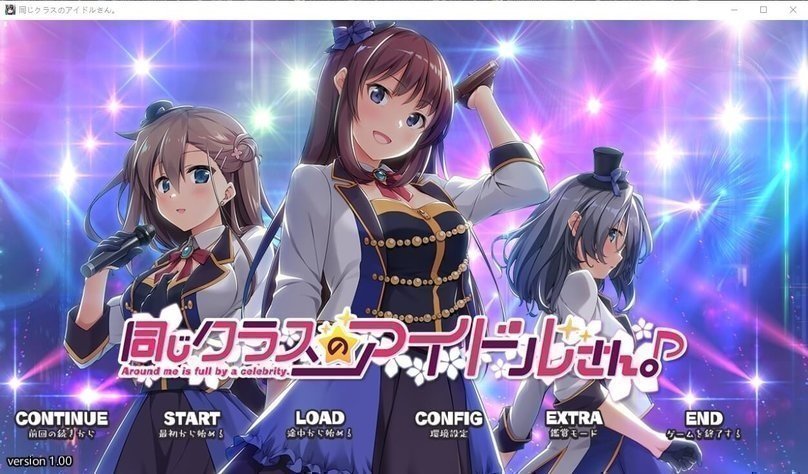
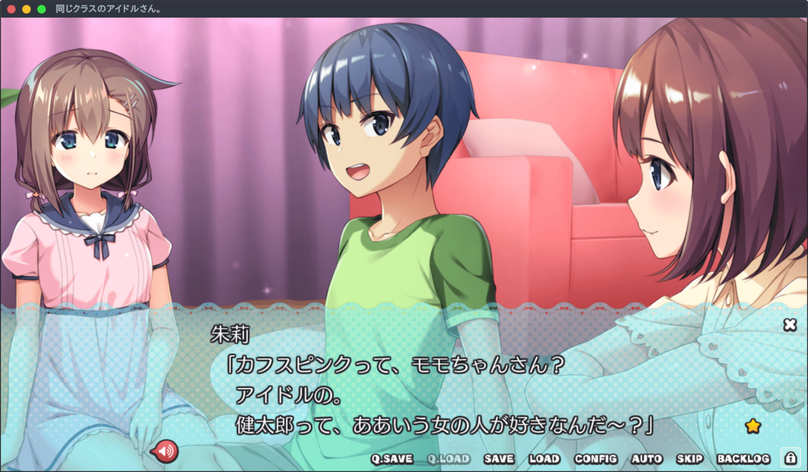
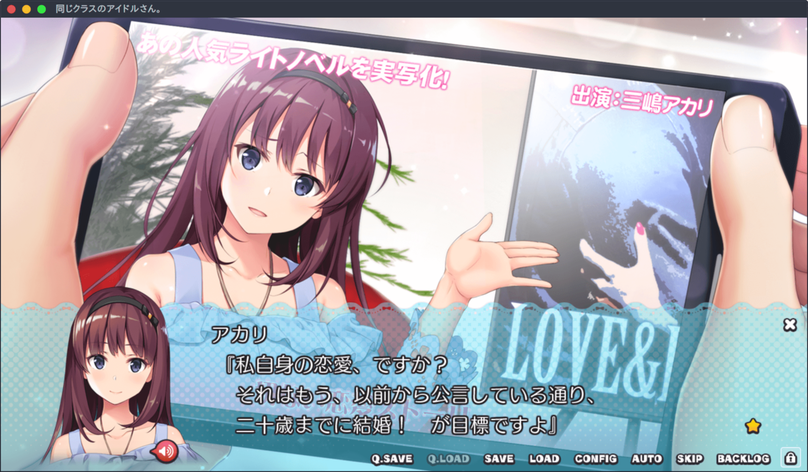
Time to introduce the three heroines. Heroine #1, Mishima Akari, is the protagonist’s childhood friend. As kids they watched TV together, and he let slip “man, I love that star” (I forget her name, Momo-chan or something). Akari heard it, and being a bit dense herself, concluded he liked stars like Momo-chan — so she grew up to become one. That’s the big motivation behind her becoming an idol.
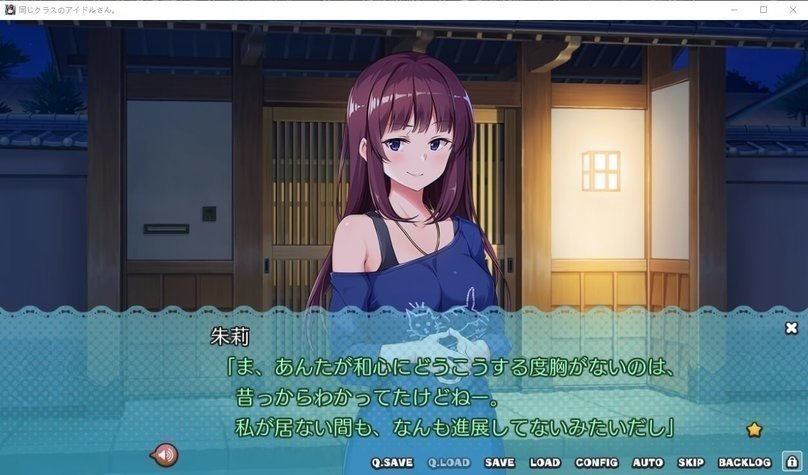
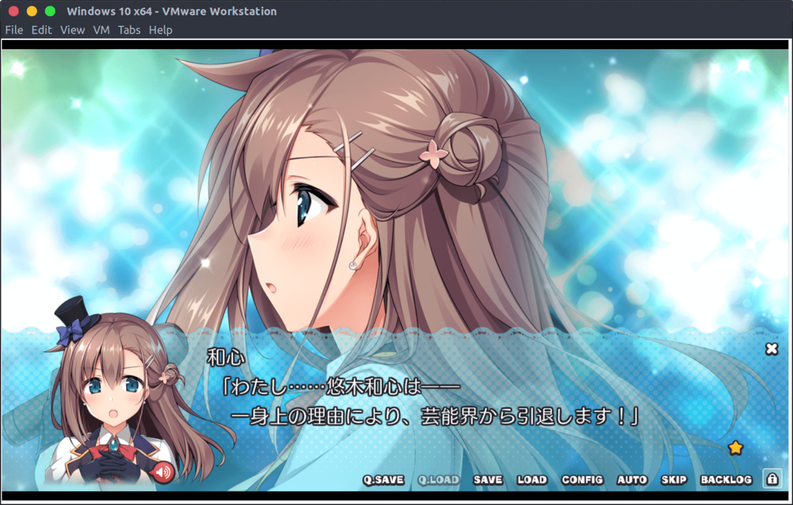
Heroine #2, Yuuki Nagomi, is also a childhood friend. She watched Mishima Akari bust her ass becoming a star to hook the protagonist, got jealous, and decided she wasn’t gonna lose — so she set off down the showbiz road too.
Heroine #3, Takanashi Ei, is someone the protagonist meets right after joining the arts program. She’s got real talent for singing and is working hard to become a singer. Her mother was a singer too, but she’s apparently dead.
The story starts with the protagonist being ordered by his grandfather to join the “arts program.” Grandpa, being higher-up at the school, also drags all three heroines into his house, declares it a “dorm,” and just like that the protagonist is living under one roof with three girls.
There’s not really a main plot — each heroine has her own route, so I’ll just go character by character:
Mishima Akari
Pretty obviously the “canon” route is heroine #1 Mishima Akari, since she’s front and center in the promo art and present throughout the whole game. Akari’s loved the protagonist since childhood; seeing him idolize that TV star as a kid, she decided to become the star he loves most…
And then she actually became one…
Then the protagonist becomes her exclusive manager, then the two of them start dating, and that’s basically the route.
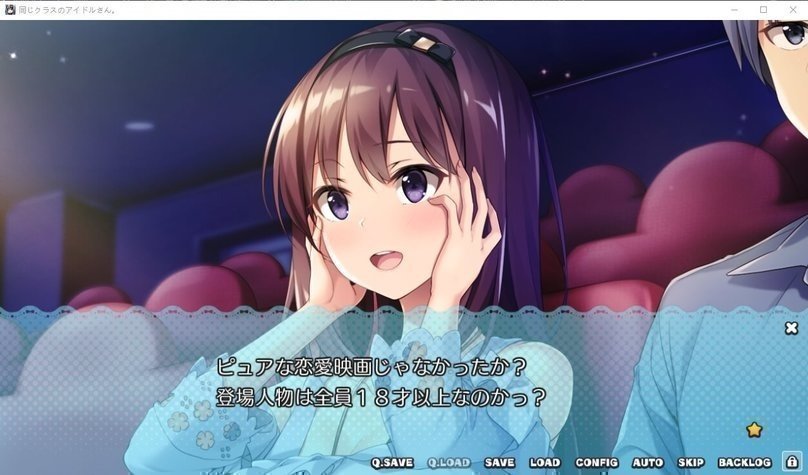
Not that I’m being lazy — the route really is just that “expected.” In the back half, Akari lands the lead in some hit movie and gets tons of attention, but during filming a scandal breaks, and once the scandal breaks their relationship gets exposed too. Before the movie even releases the internet is in a frenzy, and the distributor milks the controversy for all it’s worth, cranking the heroine’s stress through the roof.
Naturally the movie opens without a hitch, the heroine goes public with the relationship, the protagonist and heroine get past the hurdle, and they become the entertainment industry’s model couple or whatever.
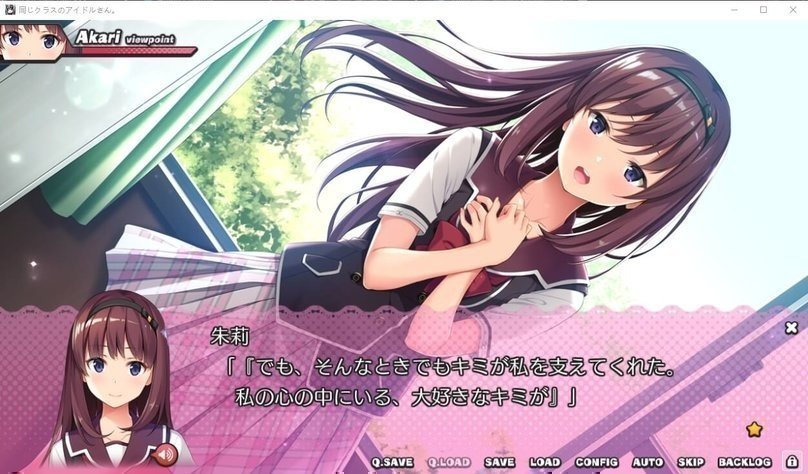
(Though everyone knows model couples in showbiz usually end up divorced.)
I wouldn’t call this route boring — the execution’s just too by-the-numbers. You know the ending from the opening.
Yuuki Nagomi
Yuuki Nagomi is heroine #2, and her story feels about the same as #1’s. We know Mishima Akari became a star because the protagonist adored stars, so Yuuki Nagomi is the one who watched Mishima Akari become a star… and wanted to be one herself.
Put bluntly: a bandwagoner.
So Nagomi the bandwagoner half-heartedly starts her idol journey. Her singing and dancing are pretty average, but she’s got big boobs, so she debuts as an idol anyway and even gets decent popularity… and also confesses to the protagonist along the way.
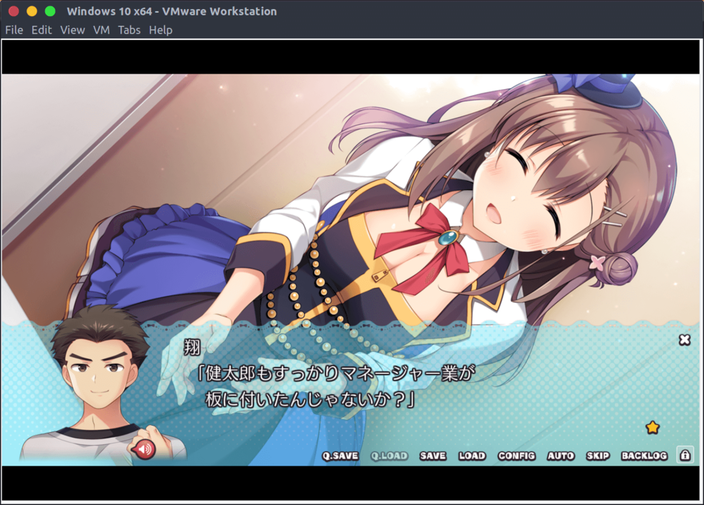
Then some agency manager from god-knows-where starts contacting Yuuki Nagomi, saying he’ll hook her up with more work.
This manager is a total creep, and says he’s actually a part-time photographer who wants to shoot private photos with Nagomi.
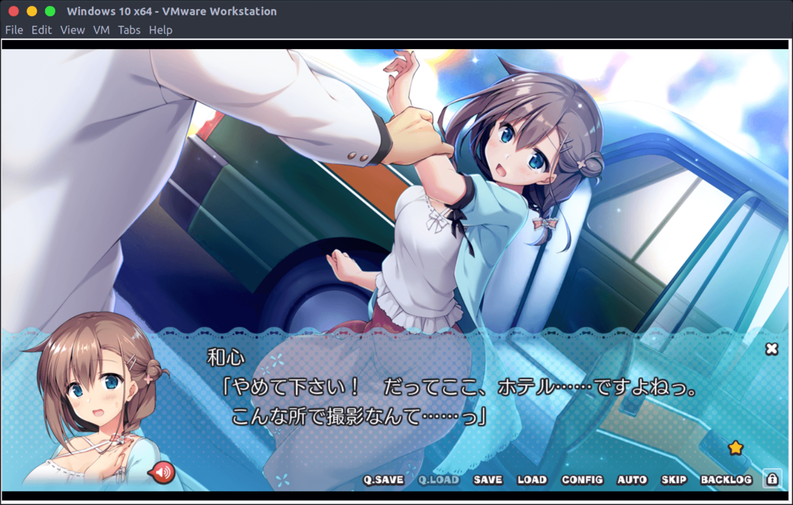
You’d think the protagonist, being Nagomi’s boyfriend, would firmly say no to this, right?
You’re dreaming. The protagonist instead earnestly starts investigating the agency manager and tells Nagomi to “be careful.” I’m sitting here like — this creepy old dude is obviously a villain, and the protagonist is fine sending his girlfriend into it? Is he into being cuckolded or what?
Then the creepy old man even gets a bit of a whitewash — industry word is he’s “pushy and has a so-so reputation, but his connections are insanely good.” I actually thought, wow, this game’s got balls, is there gonna be a twist?
Then the old man drags Nagomi off to a hotel.
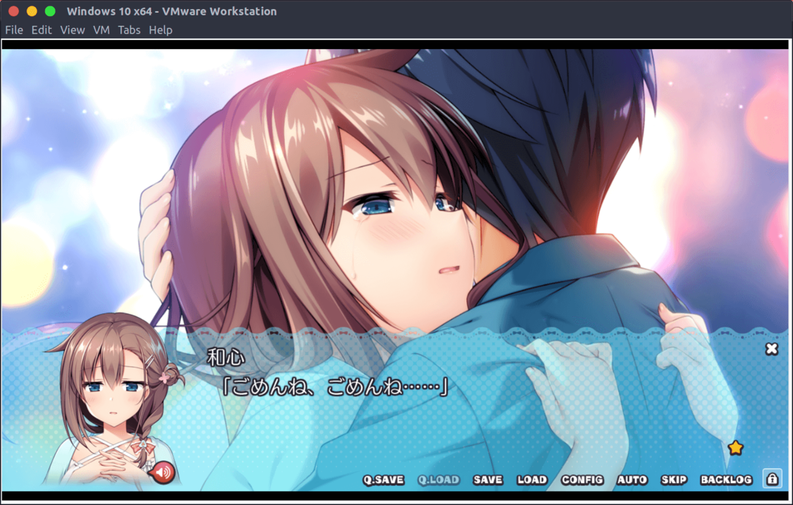
I have to rant about this hotel scene. The protagonist doesn’t even escort her personally — the heroine gets abducted starting at noon, and he runs around like a headless chicken searching, only intercepting the creepy old man and Nagomi at the hotel entrance at night.
In the end, Yuuki Nagomi finishes school, retires from being an idol, and goes off to live happily ever after with the protagonist.
And the route ends.
Takanashi Ei
If this boring game has any saving grace, it’s Takanashi Ei’s route. It rescues the whole game’s story and gives it an actual “highlight.”
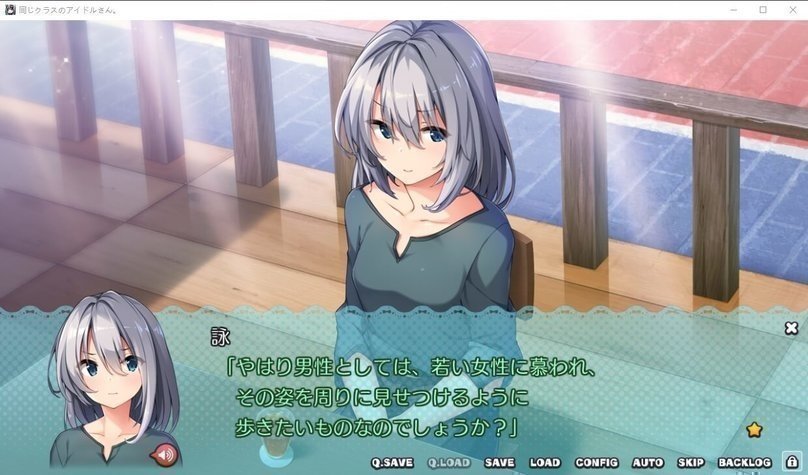
Takanashi Ei is a singer-type idol with a great voice. After meeting the protagonist by chance he finds her weird — she doesn’t talk much and is pretty aloof.
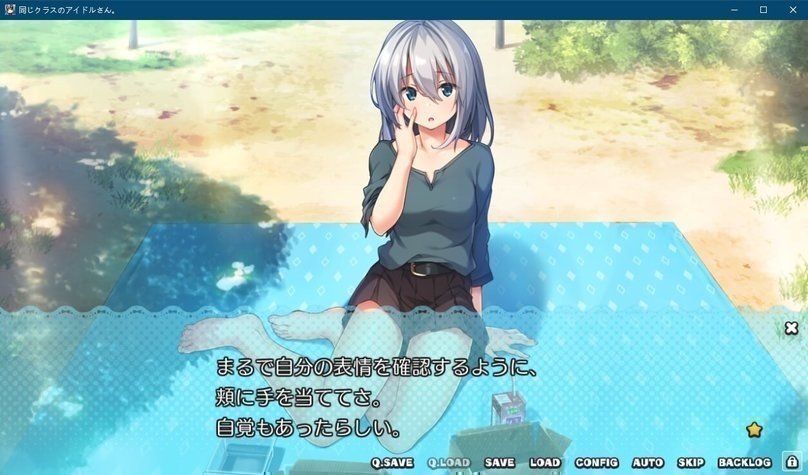
But Takanashi Ei keeps hitting a wall with her singing. Her instructor tells her, “You always sing love songs, but there’s zero emotion in them.”
Ei wants to get past this wall. After thinking it over, she goes to the protagonist:
“If my love songs have no feeling, then how about you pretend to be my boyfriend so I can find out what being a couple feels like.”
So the protagonist becomes Ei’s “fake boyfriend,” and the two start this weird pseudo-relationship.
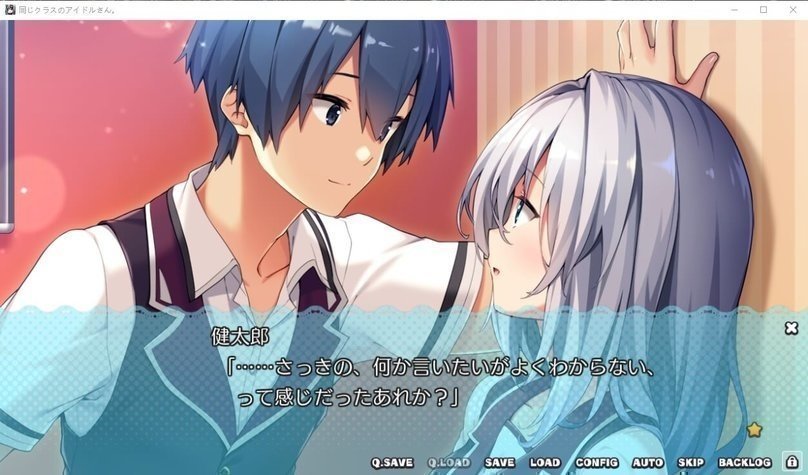
This “dating” is really just strolling around and eating together, nothing romantic, but Ei proactively offers to sleep with the protagonist, doesn’t much care about it either, and says “anything that helps improve my singing, I’ll do it.” The protagonist also picks up on a bunch of mysteries surrounding Ei:
- Ei’s mother was a singer too. Most people say Ei inherited her mother’s voice, but Ei hates that.
- Ei often visits a children’s care facility where two of her little brothers live — but they’re half-brothers, from her mother’s remarriage.
- Ei’s mother is dead, and her later adoptive father (the father of those two kids) is dead too. Ei is left alone caring for her two brothers.
- Who Ei’s biological father is, her mother never said. Ei doesn’t know either.
- The only thing Ei knows about her mother is that during her time as a star, her mother lived loosely, was very flirtatious, and loved stringing men along.
- Even though only Ei and her two brothers are left at home, some mysterious person keeps sending Ei money. She suspects it’s her biological father. Ei’s attitude toward this “mysterious person” is that she wants to break free from him and stand on her own.
Knowing all this, it’s not hard to see why Ei has such a jaded view of life — her life really has been rough. Part of why she wants to be a star is to earn more money and support herself and her two brothers. That’s why she works so hard at singing, and why she doesn’t care about her body — as long as she can make money and sing, anything goes.
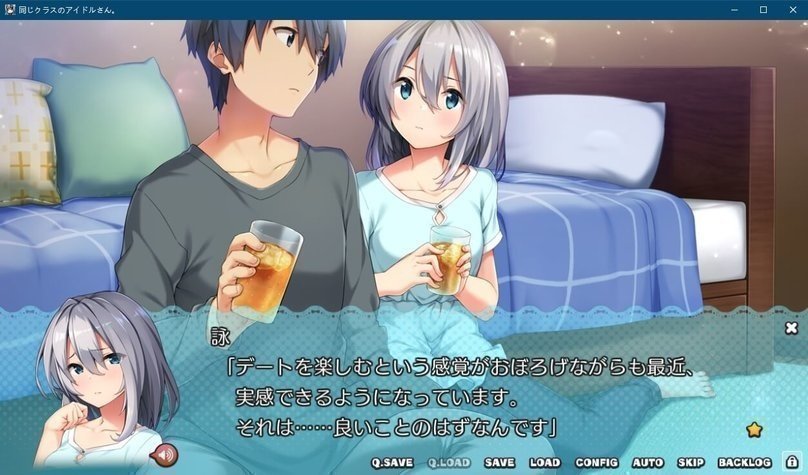
The protagonist sees how seriously Ei takes life and decides to help her, but Ei remains indifferent about her “relationship” with the protagonist. Subconsciously she feels the protagonist still belongs to the other two heroines.
“You’ve known them since childhood, and with me it’s just a partnership. Even if we sleep together, we’re just a fake couple. I’m the one asking you for this, I won’t cause you trouble.”
So even when the protagonist wants to confess to Ei, she dodges and keeps her distance, doesn’t want anyone else finding out. But eventually Ei is moved by the protagonist’s persistence, and the two secretly start dating for real.
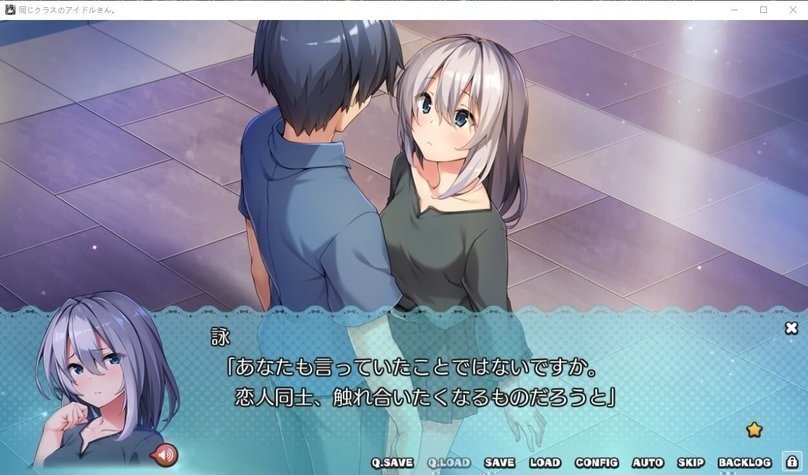
After becoming a real couple with the protagonist, Ei’s singing genuinely improves too, her love songs have more feeling, and she and the protagonist keep sneaking around while outwardly claiming they’re just classmates.
Naturally it all comes out, discovered by the protagonist’s grandfather.
Grandpa, upon finding out his grandson is involved with Ei, doesn’t object or lecture — he’s totally shocked, as if the protagonist did something unforgivable.
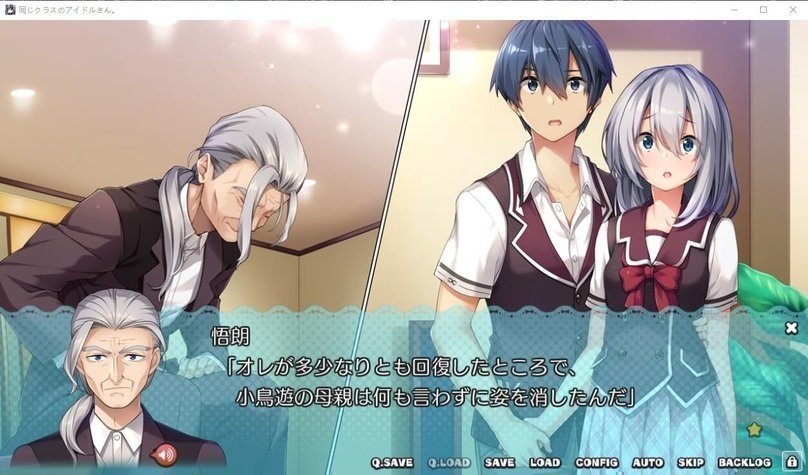
Then Grandpa finally explains why:
Turns out Ei’s mother, back when she was a singer, had an affair with the protagonist’s grandfather, who was also a star at the time. The relationship was brief, but apparently not long after, Ei’s mother got pregnant and gave birth to Ei.
In other words, the protagonist’s grandfather is very likely Ei’s biological father. And Grandpa had always believed this, quietly supporting his own daughter — sneaking her money and all. He was the “mysterious person” Ei talked about.
After learning this, Ei actually seems strangely calm. But the protagonist’s not calm — if his girlfriend is Grandpa’s daughter, doesn’t that make Ei his aunt? He screwed his own aunt? And this “aunt” is a year younger than him…
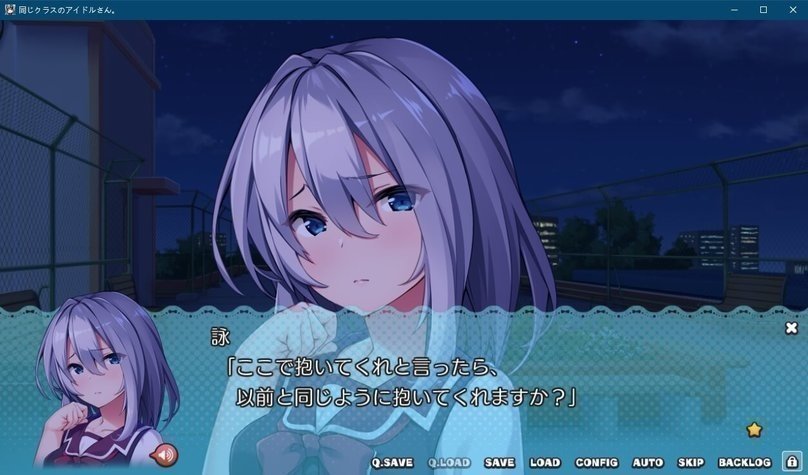
So that’s what shocked Grandpa — the messed-up family tree.
Ei learns all this, but doesn’t accept Grandpa’s belated apology. She also learns that after her mother got pregnant with her, Grandpa wanted to make amends and apologize, but lacked the courage because of his star status. So her mother bore all the judgment alone, a female star becoming a single mom. And whether it was her mother’s smoke screen or deliberate, afterward her mother behaved very flirtatiously, had many boyfriends, and that’s how the rumors of her being loose got started.
Eventually her mother did marry, and Ei got an adoptive father who completely accepted Ei’s identity and raised her as his own. Then both of them died, and Ei took on the family’s burdens.
Ei seems utterly unable to handle learning all this. She originally went into the “fake boyfriend” thing to “find what love feels like,” purely to improve her singing career, and never expected her own background to be this messed up. What hurts more is her relationship with the protagonist — they’d only just become a couple, and now this “weird blood relation” has to tear them apart. It feels like a forced breakup.
The heartache reminds Ei of the flavor of heartbreak in all those love songs. Sometimes, having been through more makes you understand what a song is trying to say.
With the protagonist’s encouragement, Ei decides to become strong on her own.
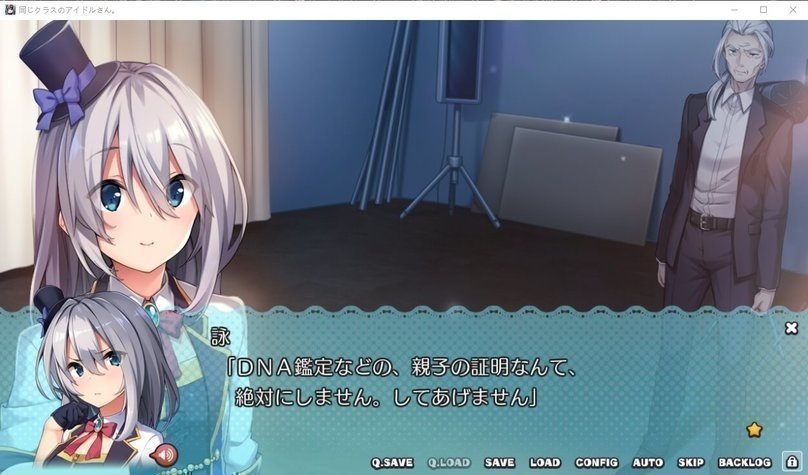
Ultimately, Ei chooses to let go of all the messy stuff about her family: let it go.
Yeah, let go of all the so-called identity and bloodline, focus single-mindedly on her art, and become a great singer.
Her relationship with the protagonist returns to being a normal couple, as if that “aunt” identity never existed.
Ei says: her mother, her adoptive father — neither ever said a word about the protagonist’s grandfather. Based on Grandpa’s word alone, you can’t prove she’s his daughter anyway, so might as well let it go. After all, Ei’s mother did have many boyfriends later, so who knows if her father is someone else entirely?
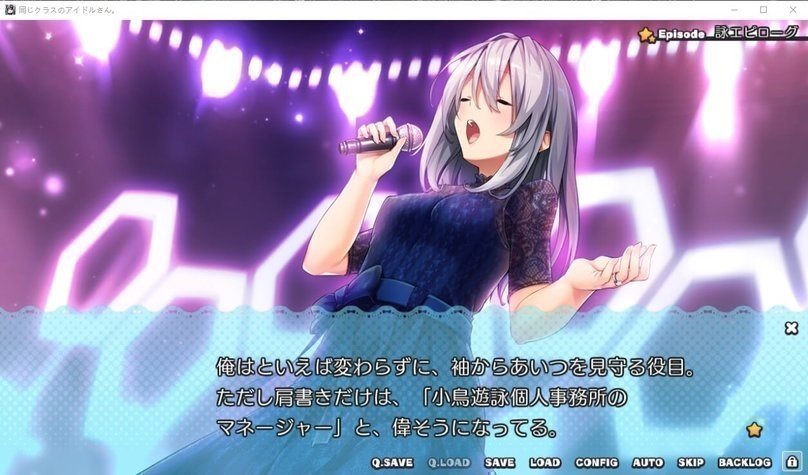
“More than all that, I care about myself — my future and my life.”
With that resolve, Ei continues her journey as a singer and turns to a bright new page in her life.
And the game ends.
Overall, Same Class no Idol-san. is painfully by-the-numbers. The premise and the common route have zero highlights, and there’s a lot of “borrowed” stuff — the idol costume designs are straight-up copied from The Idolmaster. The game’s “entertainer training course” barely explains anything useful; most of the time it’s just about the cohabitation setup.
The game’s scenario writers have done other games too, and mostly they “wander off-topic” — like a certain game where the content that’s actually about planes, despite the premise, is pitifully thin. These writers seem to really love writing “cohabitation,” so much that they forget what the game’s theme even is.
Luckily this game has the “aunt route” as a single-character story to fall back on, which keeps the whole thing from being that clichéd. A lot of moe-otaku call the “aunt route” a landmine — which is bullshit. If anything, the aunt route is the real main course. Ei and the protagonist’s fake-relationship-turned-real love, Ei’s tragic background, and her firm resolve in the face of hardship all make her a more complete character. Plus Ei’s CV is Mai Ishihara, and I have to say — Ishihara is perfect for voicing these sad girls with tragic backgrounds who go with the flow and can’t live without a man.
Also, the “aunt route” is the only route in the game with its own dedicated ED, which basically proves it’s the main line.
The game also has a “classmate route” — the voice actress character from the company’s previous microtransaction-themed game — but that “classmate” has such low presence I don’t even remember her lines. That so-called hidden route is probably better off staying hidden.
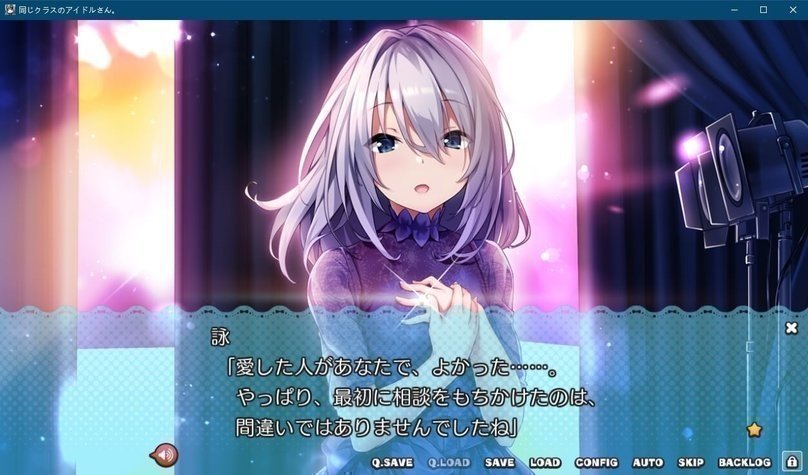
If you look at this game purely through the “aunt route,” it’s actually pretty inspiring. No matter how messy life gets, as long as you know your direction, block out the noise around you, and charge single-mindedly toward your ideal, you’ll eventually succeed. Just like Takanashi Ei — in the end she never settles whether she’s the protagonist’s “aunt” or not. So what if she is? So what if she isn’t? Neither changes her dream of becoming a singer.
Comments are hosted on the Chinese main site. This mirror is read-only.