Boku no Hitori Sensou (ぼくの一人戦争) Review
The Scenario Writer's Own One-Man War
Boku no Hitori Sensou (ぼくの一人戦争) is AB2’s new title, and the reason it caught my eye is simple: the writer and the artist had previously teamed up on two classics, Sharin no Kuni and G-senjou no Maou. I found both of those endings a bit of a stretch, but the good parts in between were genuinely excellent — the way the Higher Education exam fleshed out each heroine’s personality, the psychological showdowns in G-senjou no Maou. They still influence me today.
So when Boku no Hitori Sensou was announced, I couldn’t hide my excitement. I expected new scenes on that level…
No such luck.
Let me say this up front: today I’m going to criticize this game, carefully. Carefully because I only understood about half the Japanese — I got the gist, I followed the plot, but whether there are details and implications I’m missing, I can’t say. Still, in the parts I did fully understand, the game has plenty of flaws. All it gave me was confusion and endless disappointment.
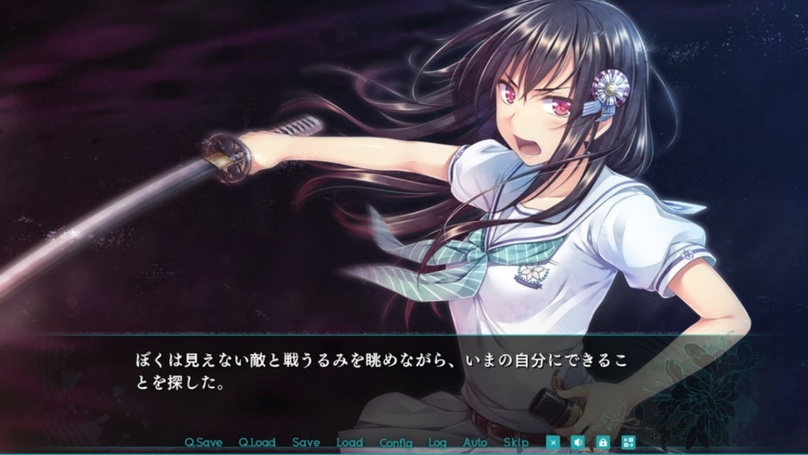
The game has no branches, just one route from start to finish, no choices either — same as SINCLIENT. But in terms of storytelling, it’s worse than SINCLIENT…
First up: the writer’s failed attempt at flexing.
The prologue uses third-person perspective, and the whole thing is in vertical text, which was painful to read. The prologue is about the younger brother of the disabled Rimi Renji — Rimi Eiji — returning from the big city to a small island village to attend school, living with his older brother as a new transfer student. He meets various people, including his brother’s girlfriend Inuzuka Rumi, plus assorted classmates, and then it’s endless, interminable slice-of-life. Slice-of-life, slice-of-life, more slice-of-life, until at the very end of the prologue, Eiji suddenly shows his true colors: he’s actually a delinquent and a thug who never straightened out, and even after transferring schools he doesn’t want to turn over a new leaf, etc. etc. His furious brother Renji locks him up, which doesn’t work either, and finally he just sends the kid back.
And then… the prologue’s over. Note that Renji has a voice actor in the prologue, Eiji doesn’t. So you’d assume Eiji is the protagonist. After the prologue ends, Eiji gets shipped off, and everything starts being told from Renji’s first-person perspective. Renji’s voice disappears, the vertical text disappears…
Then Eiji doesn’t show up again until the very end for a cameo. The entire game has nothing to do with Eiji…
What the hell was that prologue even for? Toying with the player? Making them think the protagonist is the little brother instead of the older one, then dropping a so-called shocking twist so they can slap their thighs in delight?
No twist, no delight. I just thought the writer was an idiot.
Fortunately it’s only a prologue, so the story continues. The protagonist and his girlfriend Rumi are lovey-dovey every day, until one night the protagonist gets pulled into another world. In that world, Rumi’s personality changes completely — she says the protagonist is the “King,” she’s a “Pawn,” and she has to protect him.
In the game’s setting this world is called the “Kai” world, the world of the “gathering.” What is it? In the real world time is frozen, and in the Kai world the protagonist as King doesn’t need to move — he just commands and summons his Pawns. The King can also see how many monsters remain in this Kai world, and those monsters line up and advance toward the King, so the Pawns pick up weapons and fight them, protecting the King, clearing out all the monsters in the scene. Then the Kai world ends and the real world resumes.
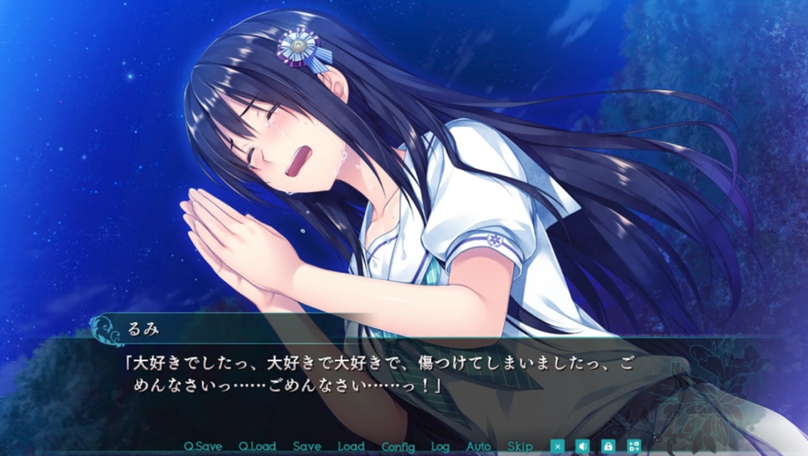
The game explains this Kai world very, very vaguely. I couldn’t understand what it actually was at all — though one of the protagonist’s snarks made it click…
Isn’t this literally the Warcraft 3 custom map “Defend Athena”?
Yes. The protagonist is Athena, his Pawns are the defenders.
Then to pile on tedious setting details, the game adds that every Pawn, in the Kai world, has their personality altered. Rumi becomes very manly, Kudo-sensei becomes all soft, Sashiro becomes timid, etc. And if a Pawn dies protecting the King — gets beaten to death by monsters — things may change in real life, but they won’t necessarily die. What’s certain is that in real life the Pawn forgets their King.
So basically: we’re co-oping a game, you suddenly die, and when you log out you lose all memory of me. Like that…
So in the middle of the story, when the first Kai incident begins, things get weird. First the protagonist leads Rumi in a desperate fight in the Kai world, then he summons more people — classmates, his teacher — as his Pawns. But the protagonist is too dumb, and they all die one by one, so one by one in reality they forget he exists. Former good friends become strangers.
The mid-game plot is a mess, scattered like loose sand. One thing here, another there, no idea what it’s trying to say, and you still can’t figure out what the Kai world is. Since there are no branches or routes, it uses chapter-style character narratives — meaning, like an anime, each person gets a segment. The teacher’s sibling feelings, Sashiro’s emotions, the class rep girl’s insecurity and her issues — each problem gets resolved one by one, and then suddenly you’re told the final battle of the Kai world is here.
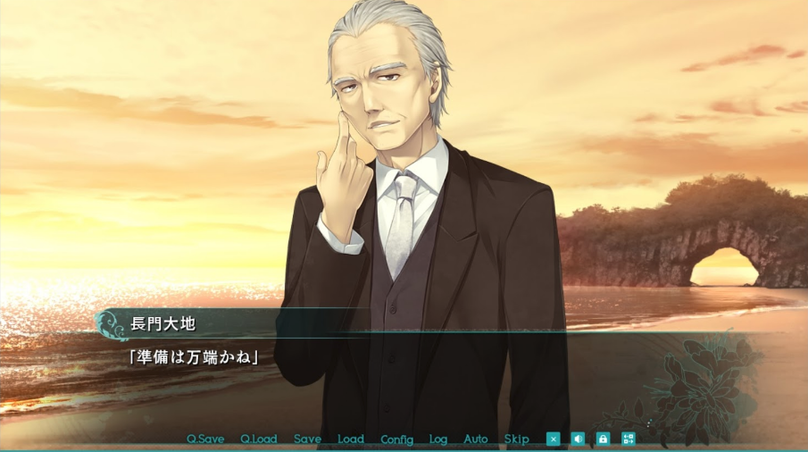
Forgot to mention the villain of the whole story: an old man named Nagato Daichi. He’s there from the start, says he’s a politician, and knows about the Kai. At first he’s sarcastic to the protagonist while also helping him. The protagonist asks multiple times what the Kai actually is, and he just circles around and never says. He’s also the one who tells the protagonist about the final battle.
So the protagonist gears up and takes his pals to fight the last wave of Defend Athena, and old man Nagato says, alright, alright, the final battle’s over, the Kai is gone too.
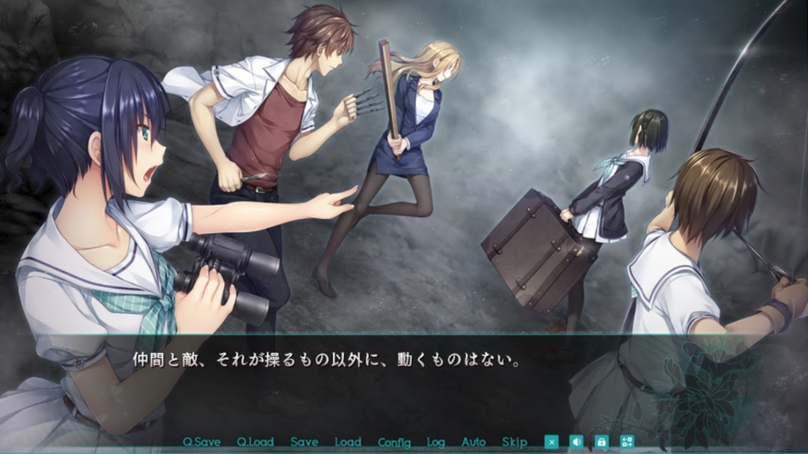
Then the story drags into more inexplicable slice-of-life. It drags on, and the protagonist discovers his girlfriend Rumi is caught up in the Kai world, suffering every day, having memory lapses.
Old man Nagato shows up again, tells the protagonist it’s all his fault — what exactly, he circles around so much I couldn’t understand (which is why I absolutely hate the way that old man talks) — and suggests the protagonist break up with his girlfriend.
The protagonist hesitates for ages but can’t break up. Rumi loves him too, they reconcile, and Nagato loses it. He suddenly kicks the protagonist flying, kidnaps Rumi, and tells him the Kai isn’t over — he needs the protagonist’s help to use the Kai world for his own benefit in reality.
“I will become the King of the real world, transcending the Kai world,” old man Nagato says, being a chuuni.
So in short, old man Nagato has been using and deceiving the protagonist all along, hoping he’ll cooperate and help him do evil, etc. When the soft approach fails he goes hard.
Since Rimi Renji is disabled and can’t beat the old man in any way, and the old man has money and power, he lays out terms: help me or I’ll kill your girlfriend and burn her, deadline tomorrow.
That’s when the protagonist’s brother Eiji comes back from off the island, saying he’s reformed and become a good kid, and hands over something their mother left behind. According to the old man later, this item is called a “Bone,” which can force oneself to become a new “King.”
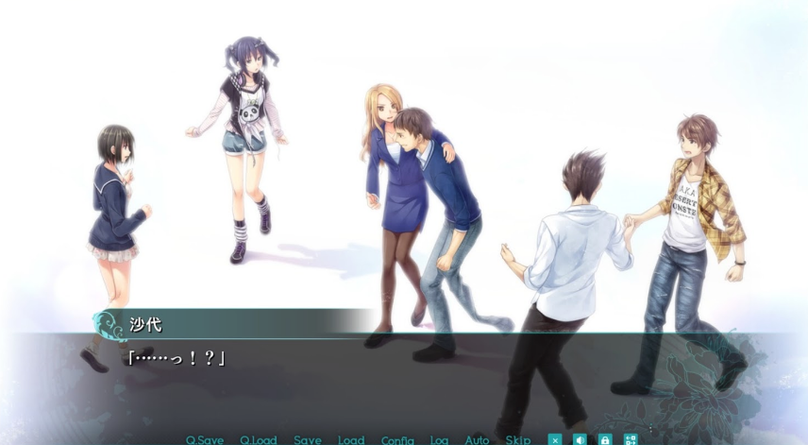
So the protagonist goes to face the old man one-on-one, uses the Bone in the Kai world to kill the “King” that is the old man under the name of a “Pawn,” and the old man vanishes. Then the protagonist, as “King,” awakens all the Pawns who sacrificed themselves, the story ends, and the protagonist and Rumi get married…
In short: the protagonist gets caught up in a mysterious incident on the island, the old man is the villain who wants to use his power for evil, the protagonist refuses so he kidnaps the girlfriend, and the protagonist awakens his power and crushes the boss. That’s the story.
So what’s wrong with the game?
The Kai setting is never properly explained. The old man skirts around it a lot, but there’s never a correct, complete explanation. I still don’t know what it is. At first I thought my Japanese wasn’t good enough, but I read other people’s impressions and they didn’t get it either…
The main plot is too messy. The main line is the protagonist defeating the old man while celebrating friendship along the way. But the friendship celebration is too scattered — the chapter-style storytelling makes it one thing here, another there, no sense of connection, and meanwhile the player is constantly annoyed trying to figure out what the Kai is, so they’re never going to settle down and watch your little friendship play…
Visual presentation is a problem. In the Kai world, the protagonist says he can see numbers, can see the summoned Pawns — but the game’s CGs show none of this. Even the so-called “invisible monsters” Rumi cuts down get no depiction. Even battles are just a single still image, which makes it more confusing. Did they just run out of money…
Slow at first, then rushed at the end. As I said, it’s all filler at first. The whole prologue and everything before the first Kai incident is filler unrelated to the main plot. I still don’t know why the brother Eiji was even put in the game. Then in the last hour, when the old man shows his true colors, the plot accelerates: suddenly the protagonist is an idiot, suddenly Eiji is back, suddenly the protagonist fights one-on-one, suddenly he wins… suddenly the game is over…
Of course, the game isn’t without highlights. Arima-sensei’s art is more mature, slightly more realistic, the women’s bodies fuller, the men more handsome — looks good. The OST is absolutely the biggest highlight, shockingly high quality — the piano pieces, the battle guitar tracks, all definitely worth repeated listening.
And finally the scenario. I remember Shoujo Shin’iki Shoujo Tengoku getting slammed as a landmine for unclear plot explanations, and in Boku no Hitori Sensou, the writer makes the same mistake with the Kai. Trying too hard to unfold the story from a third-person perspective without explaining it well.
I remember reading somewhere: a low-tier novelist explains the setting stiffly and then unfolds; an ordinary novelist explains the setting through characters’ mouths and then unfolds; a high-tier novelist doesn’t explain the setting and leaves the mystery to the reader. I can understand the writer wanting to take a more advanced approach, but that approach is very hard. Without the skill, all you do is leave the reader more confused…
The game is called “My One-Man War,” maybe to say this is the King’s solitary battle. For a writer who once produced Sharin no Kuni and G-senjou no Maou, this game’s scenario might be a new attempt for him too — his own war.
Unfortunately, from what I can see, the war ended in defeat.
Comments are hosted on the Chinese main site. This mirror is read-only.