Docchi no i ga Suki Desu ka? (どっちのiが好きですか) Review
That "i" Will Break the World
I remember shelving an article called something like “The Otaku’s Love Manual.” I had the concept worked out and everything, but never got around to writing it, because it’s just too damn complicated. Real love isn’t like an eroge — you’re dealing with an actual person, not a two-dimensional character with preset parameters on the other side of a screen. Real people have all kinds of personalities and traits, which means the “girl” you’re up against in reality might be a fusion of several dozen different heroines from different eroge, and the “events” you run into out there might be spread across different routes belonging to different heroines. Maybe only by improvising and piecing it all together can you keep up.
For most otaku, though, that’s not even the problem. The problem is their own emotional intelligence.
I’ve met some “otaku” who constantly complain that they can’t find a partner, that girls won’t talk to them. But honestly… it’s not just girls — guys don’t want to talk to them either. The moment they open their mouths it’s all about their own little world, and they refuse to engage with anyone outside it. They lock themselves inside their own bodies and then complain that nobody understands their heart.
Communication is a two-way street. If you won’t let anyone get to know you, but demand that they bare their souls for you to pick through — that kind of thing only happens in porn games for people with certain special interests.
Of course, not all eroge are “fantasy works” like that. Some are pretty grounded in reality — HOOK and SMEE, for instance.
There was a time when SMEE’s games were all about helping otaku leave the otaku life behind, while HOOKSOFT’s games were mostly traditional “school fantasy romance.” “Fantasy” because HOOK’s setups always had some wild idea — robots, virtual reality — and HOOK games always had an in-school chat system that live-roasted whatever the protagonists were doing.
These days, all of that is gone. HOOK’s signature touches have pretty much vanished, to the point where their games are indistinguishable from SMEE’s.
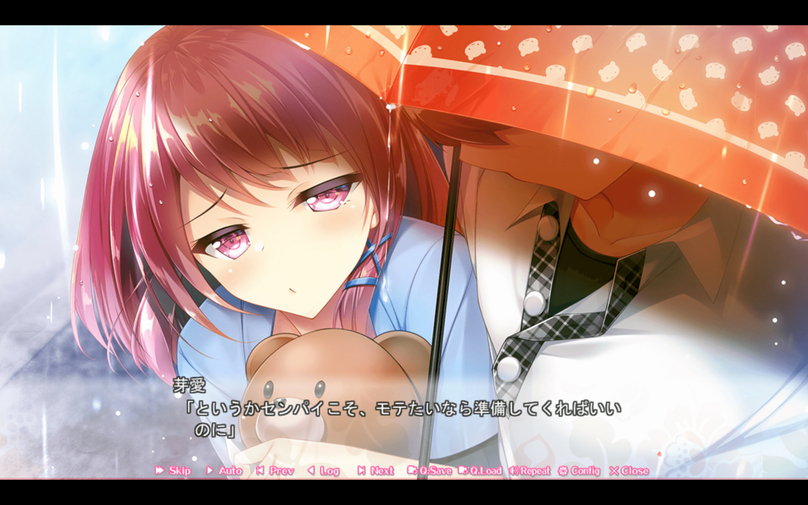
So HOOK’s latest release is a full-on SMEE-flavored game: Docchi no i ga Suki Desu ka? (Which “i” do you like?)
Because this game is so similar to SMEE in style, and the premise is dead simple: the protagonist is about to enter his second year of high school, but he’s still a virgin and it’s eating at him, so he decides to make a fresh start. Then while walking down the street he gets run over by a truck (along with another girl with long black hair), and a white-haired woman with a scythe saves him…
Sorry, wrong game. Let me start over.
The protagonist is about to enter his second year, but he’s still a virgin and it’s eating at him. So with summer vacation approaching, he decides to take the initiative, strike up conversations with girls, and take his first step toward romance.
This game offers four heroines to pursue. First up, front and center, is Tanemura Yuzu, voiced by Ishigure Shizuka — whom I hate. Then there’s Uenoyama Mea, a hyper bundle of energy who’s a lot like the female teacher. And then, added for Japanese national pride, is the foreigner Yotsuya Granger Hanna, voiced by Ayusara — whom I hate even more than Ishigure Shizuka. Finally, there’s Ema Maya, the sadistic student council president who radiates losing-heroine energy no matter how you look at her.
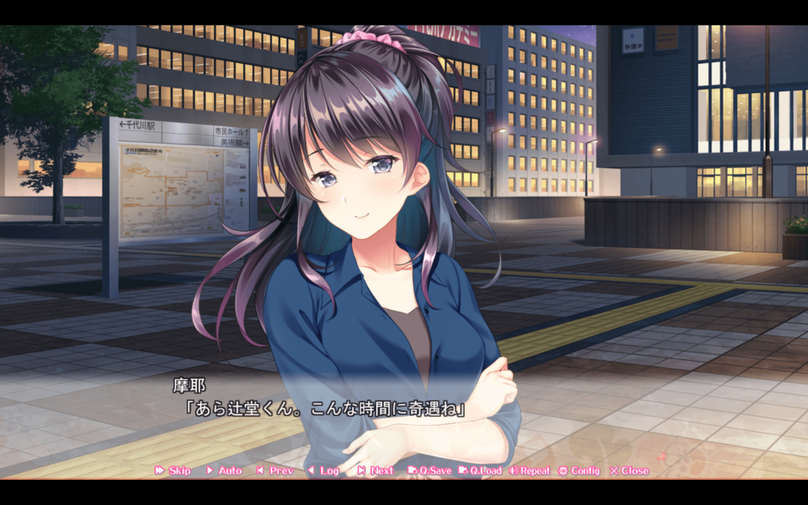
How you pursue them is a bit unusual — it’s kind of a guessing game. You choose to visit certain locations, and naturally you run into certain people. Once you’ve met someone enough times, you enter her route. The chapter structure is basically identical to SMEE’s too — common route, then individual routes.
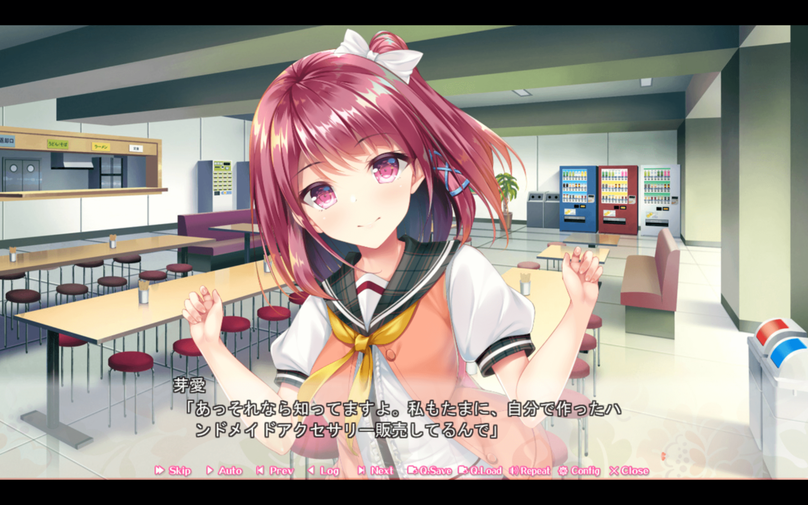
Since the story’s premise is extremely ordinary — no shinigami opening a café or anything — the appeal rests entirely on how the heroines perform. And frankly, the heroines do a solid job. Take the protagonist’s underclassman, Uenoyama Mea: she’s a clumsy chatterbox by design, and the story leans into her lively personality, with special events about her “love of making things by hand.” It also shows her making some life choices, and naturally the protagonist is involved in those choices too.
Which brings me to the protagonist. Whether it’s HOOK or SMEE, in these “help otaku find love” games the protagonist is consistently well-written. Think back on any SMEE/HOOK game you’ve played — isn’t the protagonist always emotionally intelligent, morally grounded, and someone who doesn’t run away when it matters, someone you can rely on? Without those qualities, of course girls wouldn’t give you the time of day, and you couldn’t be a “person” others actually like.
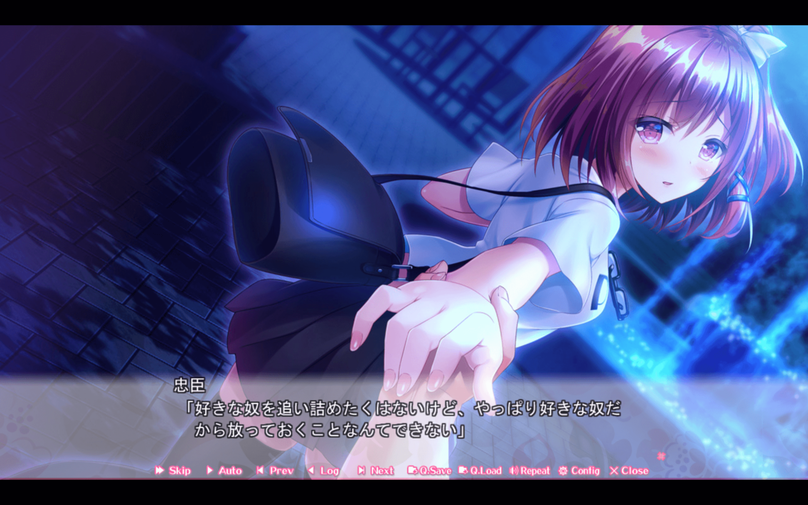
The thing that stuck with me most after all those eroge and all those romances was the impression the protagonists left. If every otaku used them as a role model, maybe romance wouldn’t be so hard.
Oh, and by the way, my favorite character in this game is Yotsuya Granger Hanna’s little sister.
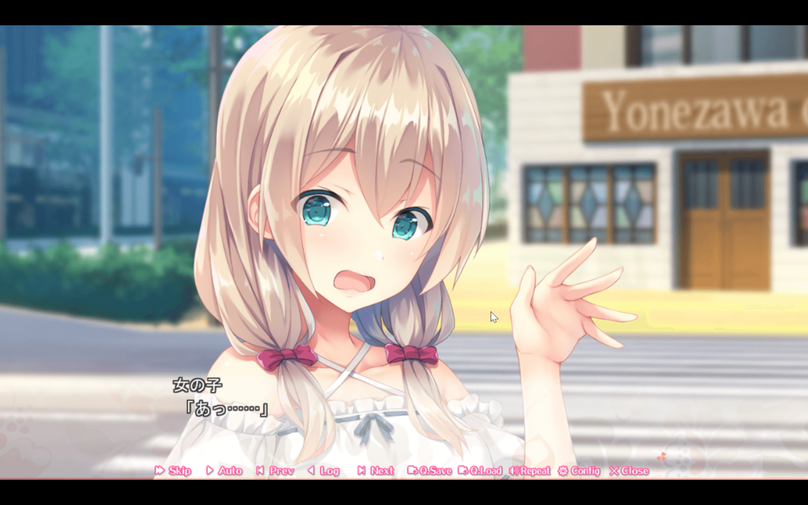
That little sister is cute enough to explode — cute enough to destroy the world. And she’s not even a romanceable heroine. The title of this post is dedicated to her.
Comments are hosted on the Chinese main site. This mirror is read-only.