Kissa Stella to Shinigami no Chou (喫茶ステラと死神の蝶) Review
Yuzusoft's First Crash: Cafe Stella to Shinigami no Chou
I’ve always been waiting for Yuzusoft to crash, but unfortunately their games have always been stable—it’s hard for them to crash because their production process is practically an assembly line.
- Pick a theme/setting for the game
- Design characters based on the theme
- Then get scenario writers to split the story, write each part, and stitch it together
- Start the hype campaign, release countdown animations every day
- Release character songs, keep building hype
- Remix the character song tracks and use them as the game’s OST
- Game ships
Also, Yuzusoft’s artists are almost always the same, so the art style is guaranteed, and the voice actors they hire are all competent. After playing, you basically never feel like it’s a “landmine”—at worst you think “the story is just okay,” “too formulaic,” “the setting is a bit childish”—not outstanding, but definitely not bad.
This level of quality has also bred a lot of “irrationally devoted Yuzu fans.” I vaguely remember saying on social media that Riddle Joker had a dumb story, and someone tracked me down on Telegram to rant at me, practically saying “I’m so mad I’m so mad I’m so mad.” That shows how powerful Yuzusoft’s magic is. But precisely because of the nature of their games, most Yuzu fans are quite young, many still minors. I remember seeing a post on Twitter about a minor who broke down after being rejected from a Yuzu live event. So I have mixed feelings about Yuzusoft:
I love them because they’re genuinely one of the benchmarks of the visual novel genre, and they always manage to cast voice actors I like, I hate them because they’ve always been an assembly line producing moe-feed with zero innovation.
The impact of Yuzusoft’s lack of innovation isn’t just on themselves. As a cult company where “every new release tops the annual sales chart,” if they can keep making easy money off the assembly line, other companies will inevitably copy them. I really don’t want every visual novel company to become like Yuzusoft—if that happens, the industry is truly doomed.
But this year’s Yuzusoft seems to have actually tried something different…
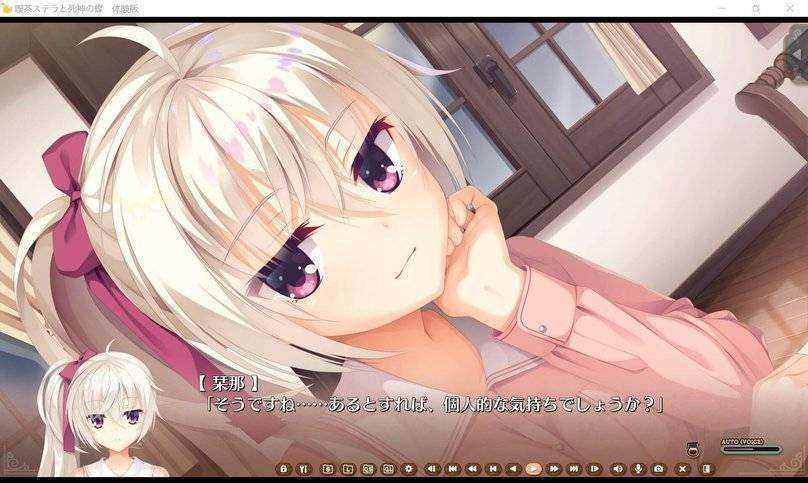
And they crashed…
“Cafe Stella to Shinigami no Chou”
Starlight Cafe and the Butterfly of Death—actually I’m not interested in cafes at all. What interests me is the “Shinigami no Chou” (Butterfly of Death). Plus they brought in Kazuki Fumi as a scenario collaborator. This guy has written a lot of dark and gory stuff, including the 9-nine- series and that “big-boob succubus” story or whatever. The fact that Yuzusoft brought in such a hardcore writer for the “shinigami” angle—maybe they really are determined to change?
Tōta-sensei, who has worked on Yuzusoft scenarios before, also stirred the pot on Twitter:
“Wow, the scenario lineup for the new Yuzusoft game is stellar. Is Amamiya Ritsu finally going to show her true abilities?”
That line is微妙 (subtle)… On one hand it sounds like praise for the strong scenario team, on the other it’s almost sarcastic, implying that Yuzusoft games without Tōta had no substance.
How it actually turned out—the game has to speak for itself…
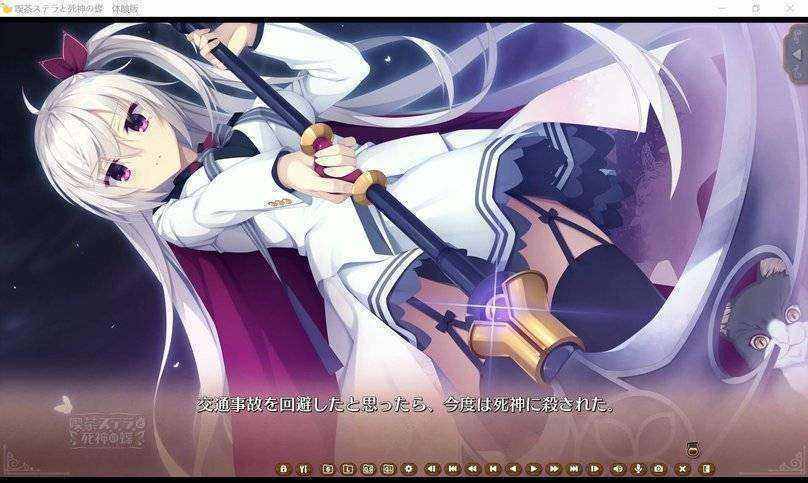
The setup: the protagonist is a college student, a virgin, who wants to start hitting on girls and lose his virginity ASAP. But unfortunately, while walking down the street, he gets hit by a car and dies.
Even though he dies, he’s quickly revived by a girl holding a scythe. After revival, he miraculously returns to the day before the accident, safely gets through the period when he should have been killed, and survives.
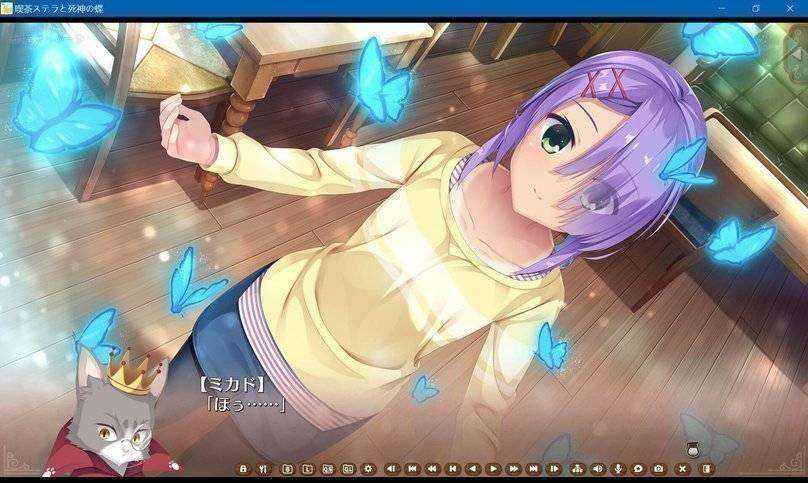
Later he meets the scythe girl again. She calls herself Akizuki Kanna, a shinigami, and beside her is a talking cat named Sugita Tomokazu… oh no, named Mikado. Kanna explains the secret of his “resurrection”:
The protagonist’s soul was originally unstable; after being hit by the car he should have been scattered and died, but because he had a “strong will to live,” his soul was able to return to his pre-accident body and revive with memories intact. Also, he seems to possess a powerful force that can “change the world,” which is why he could alter the world line and revive.
Kanna adds: human souls drift depending on whether they have a “strong desire to live.” If someone doesn’t really want to live, or finds life meaningless, their soul turns into butterflies and scatters. One of the shinigami’s jobs is to collect these butterflies—either store them or find a chance to return them, so the person’s soul becomes whole again for a proper reincarnation. Blah blah blah…
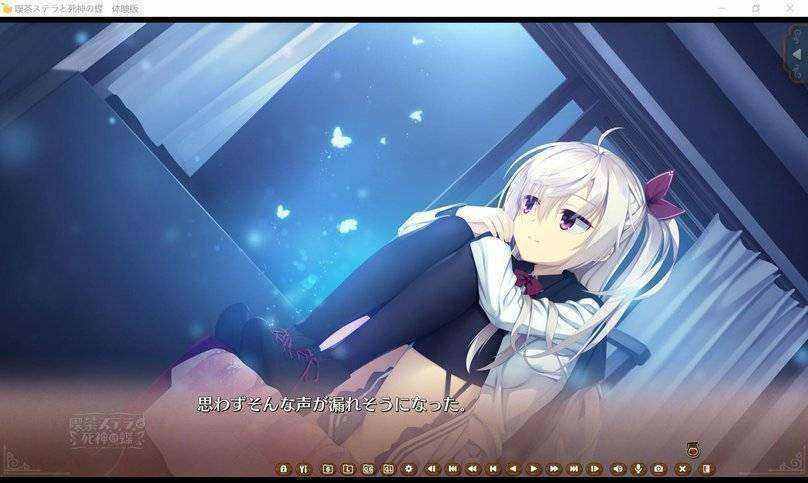
So that’s the “Butterfly of Death” in the title—the butterflies floating in the air are actually fragments of human souls.
And what is the protagonist’s “strong will to live”? It’s what he said at the beginning: he’s still a virgin, he doesn’t have a girlfriend yet, so he doesn’t want to die. He also seems to have gained a special ability to see the shadows of the “Butterfly of Death.”
I have to point out that the protagonist is very similar to someone from a certain other game.
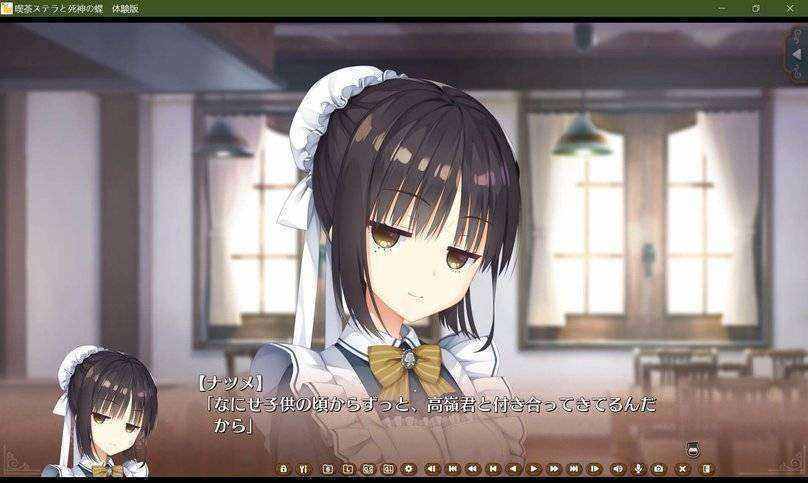
Later, in an empty cafe-like room where Kanna stays, the protagonist sees his college classmate: Shiki Natsume. Natsume is known as the “unreachable flower” of the university—countless confessions, all rejected. Here she not only knows Kanna’s identity as a shinigami but also says she’s planning to “open a cafe.”
She contacted the landlady, got maid-like uniforms, and says she wants to reopen this cafe together with the shinigami Kanna, and invites the protagonist to join.
The protagonist doesn’t refuse. But opening a cafe is no easy task—you need to learn to make coffee and prepare food. Kanna can only make omurice, and it’s not very good. Natsume can barely drink coffee. God knows where they got the confidence to open a cafe.
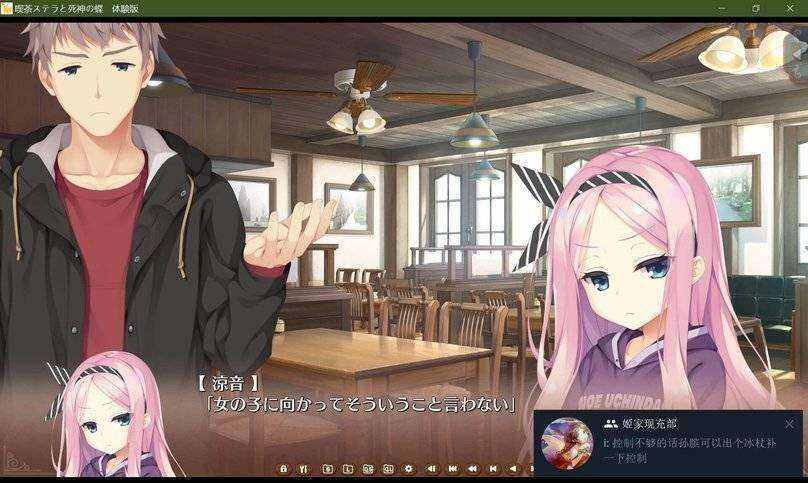
Then the protagonist’s college friend Shirayama Hiroto brings good news: his older sister Shirayama Suzune lost her job and is in a bad mood. She used to be a chef/pastry chef with decent skills, so he introduces her to help open the cafe.
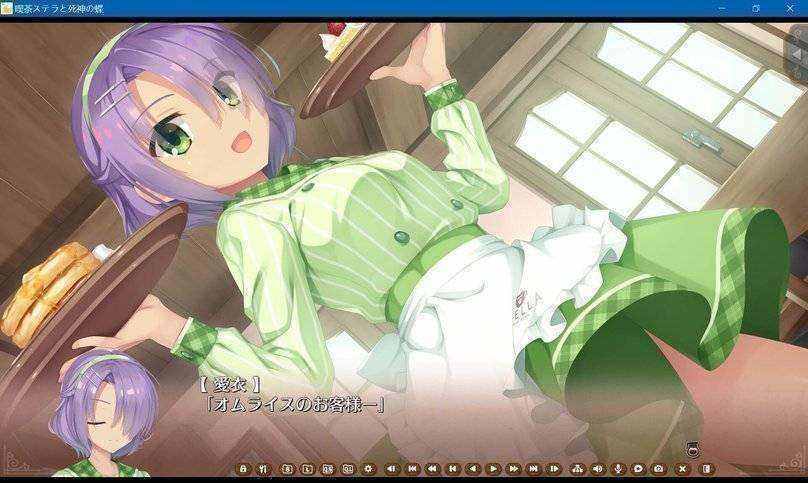
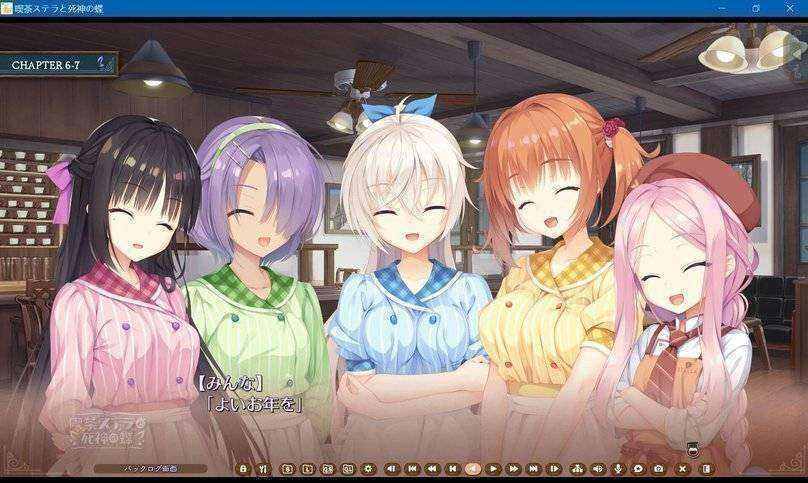
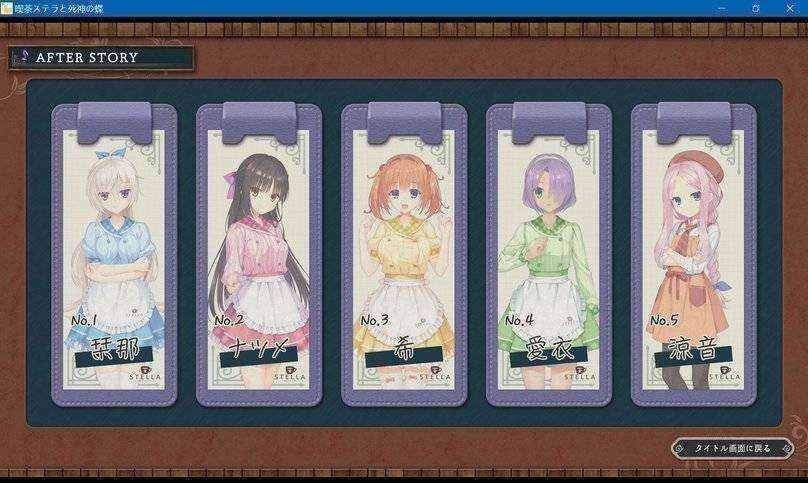
Hiroto also brings in the protagonist’s childhood friend Sumizome Nozomi as a waitress, and through hiring they get a dark-skinned girl Hiuchidani Ai. So the cafe lineup is set:
Head chef: Suzune; Cook: protagonist; Waitresses: Kanna, Natsume, Nozomi, Ai, and the cat…
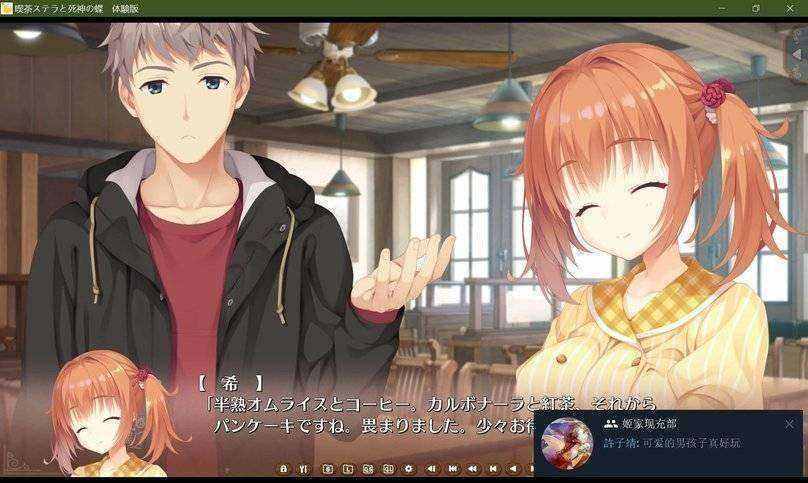
Eventually, under the head chef’s guidance and management, the cafe starts looking like a real cafe, the landlady agrees, and “Starlight Cafe” successfully opens…
Though the game never mentions the “Butterfly of Death” again…
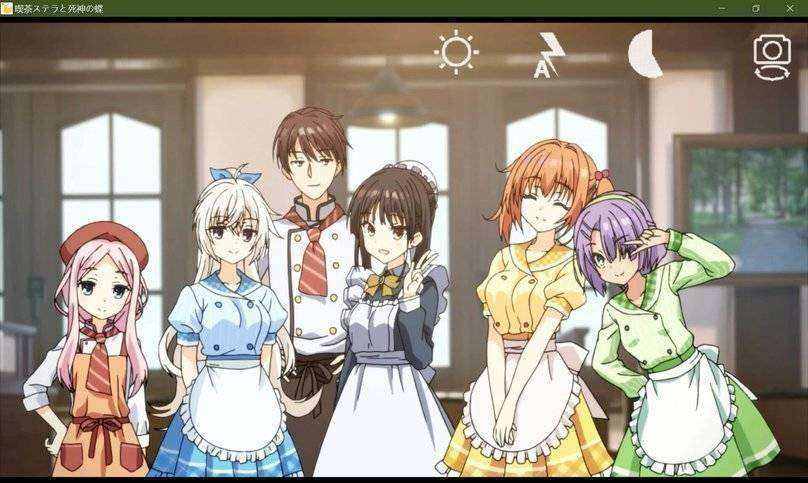
Shiki Natsume
Shiki Natsume is set up as the “unreachable flower,” and she and Sumizome Nozomi are the only two real plot drivers in this game. Simply put, only conversations involving these two are interesting; the rest are sleep-inducing.
Natsume is the main person behind the cafe proposal—without her persistence, “Starlight Cafe” wouldn’t reopen. But why she wants to open a cafe is a mystery for a long time. In fact, for more than half of her route, the game doesn’t mention it at all—just various clashes and dialogues between her and the protagonist, full of tsundere vibes.
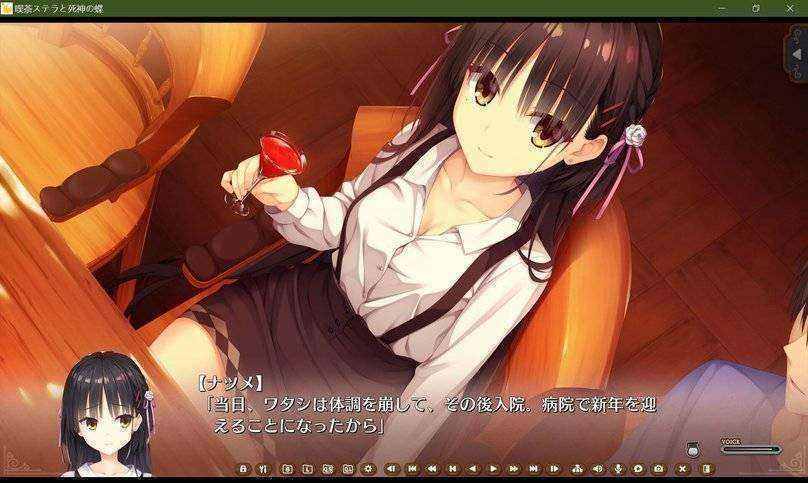
Only in the latter half of her route does the story clarify. It turns out Natsume, like the protagonist, has died once. In the same accident where the protagonist was hit by the car, there was another victim: Shiki Natsume. And because the protagonist’s revival changed the world line, Natsume was revived along with him.
Natsume’s childhood was plagued by poor health—frequent hospitalizations, missing chances to make friends, barely participating in school activities—which bred a withdrawn personality. Even after recovering, her condition wasn’t great, so she never really wanted to live, seeing herself as a burden. Also, her mother had always wanted to open a cafe, but later gave up because of Natsume’s hospitalization, which only added to Natsume’s guilt.
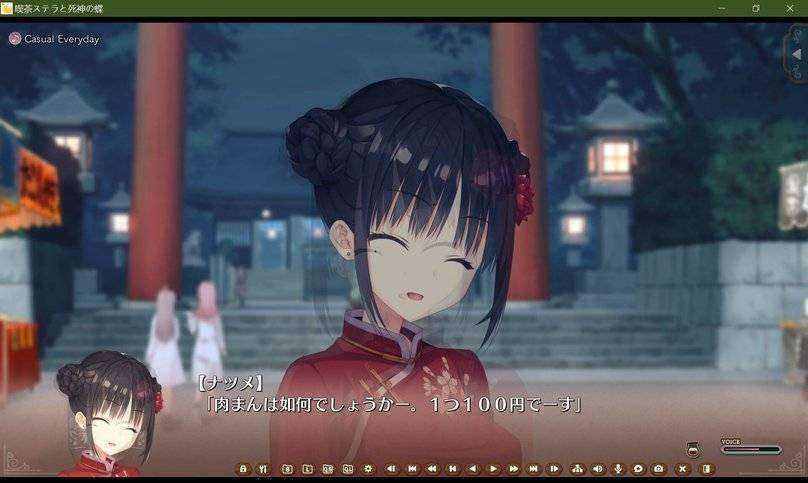
Natsume is world-weary, but the protagonist’s appearance gives her confidence in life. From selling dumplings at a New Year’s stall to drinking and chatting together, and the protagonist’s inexplicable affection and persistence, Natsume starts to feel needed and discovers joy in life.
Natsume always felt she should help her mother fulfill her dream—that’s the main reason she insisted on opening the cafe. Another reason is her own longing: during her hospital stays she saw the maids in cafes and thought they were beautiful, so she drew pictures of them and hung them in the hospital. The protagonist eventually finds them and learns about her hidden past.
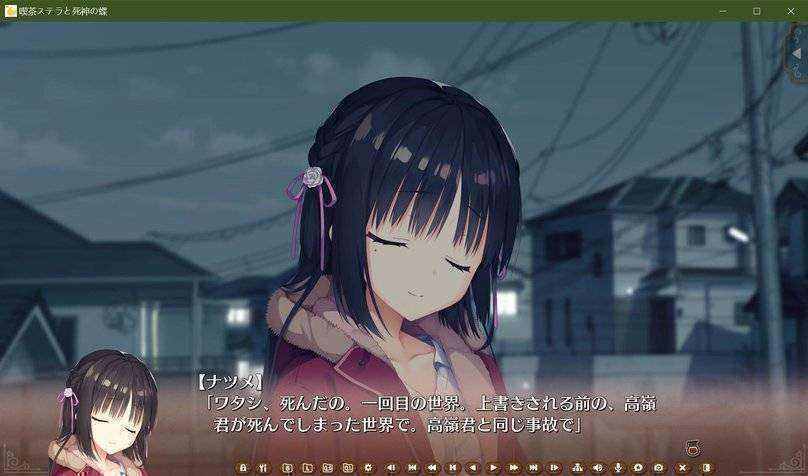
In the end, Natsume successfully opens the cafe, makes many interesting friends (including her idiot boyfriend, the protagonist), feels happy with life, becomes less world-weary, and her once-unstable soul stabilizes. Naturally, a happy life awaits them.

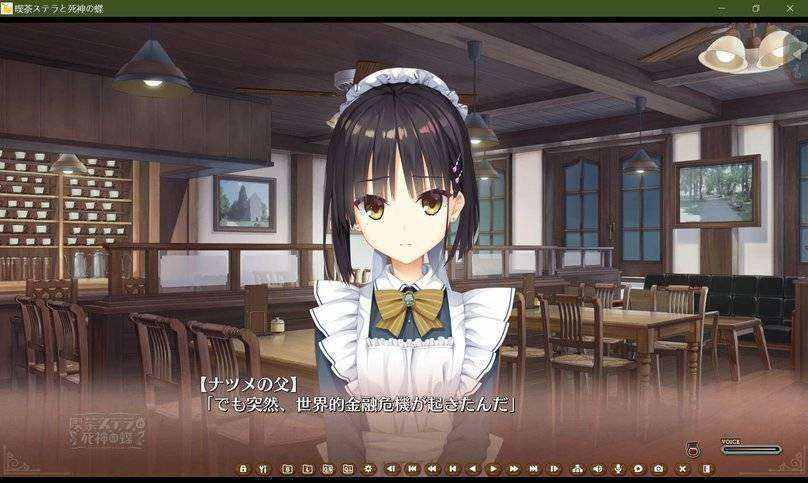
However, the real reason Natsume’s mother gave up on the cafe wasn’t because of her—it was because Japan got hit by the financial crisis, money ran out, and consumption downgraded…
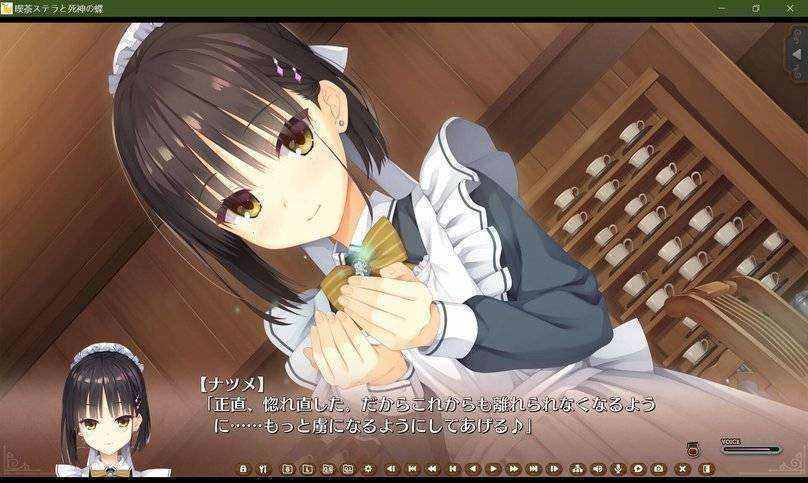
So it’s all the financial crisis’s fault!
Sumizome Nozomi
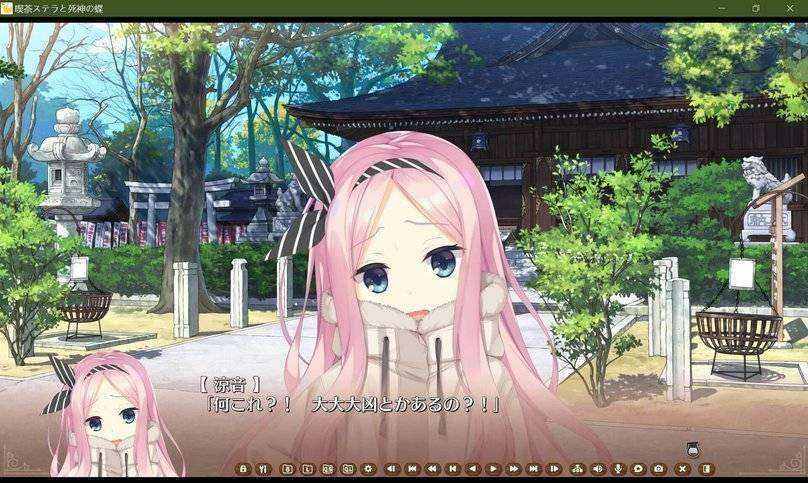
Sumizome Nozomi is the protagonist’s childhood friend. Her other identity: daughter of a shrine, her father is a priest, and she sometimes works as a miko during New Year.
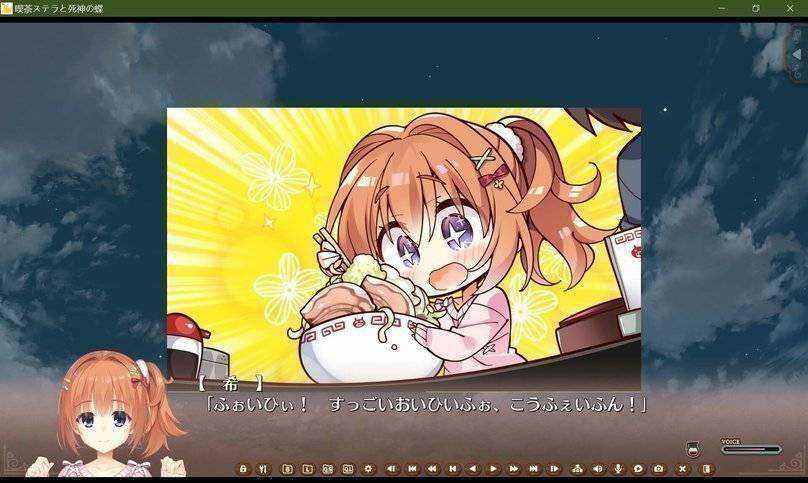
The Sumizome shrine is small—much smaller than the one in “X-koi*” (something like Koikari). During New Year they even have to borrow mikos from other shrines. Nozomi, despite being the shrine’s daughter, can only wear a miko outfit and act as a mascot.
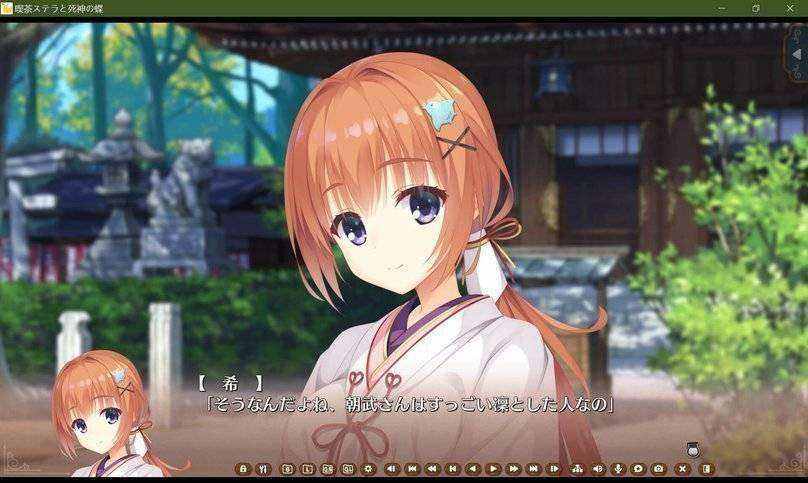
But this New Year, trouble arises at the Sumizome household. The shinigami Kanna sees a “giant red butterfly” at the shrine.
This “giant red butterfly” seems like a massive ghost hovering around the shrine. And the Sumizome family starts suffering misfortunes—the priest (Nozomi’s father) suddenly gets injured and can’t preside over the New Year ritual, and Nozomi herself almost has various accidents. Kanna says this “big red butterfly” is hostile and they need to perform a New Year ritual to pacify it, or it will bring more misfortune to the Sumizome family…
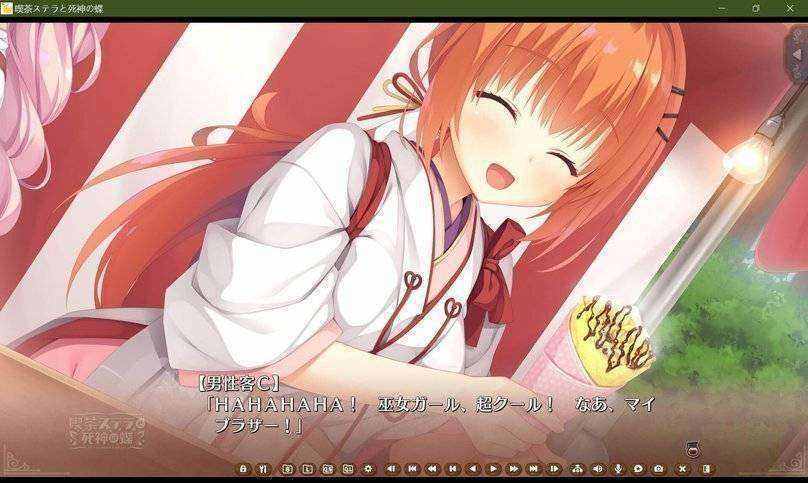
However, the Sumizome family has decided to cancel this year’s ritual—I mean, the priest is injured, so what’s the point? They didn’t even hire mikos this year. But Kanna insists on holding the ritual, or who knows what the red butterfly will do. Under Kanna’s persistence, Nozomi and the protagonist reluctantly decide to force the ritual through.
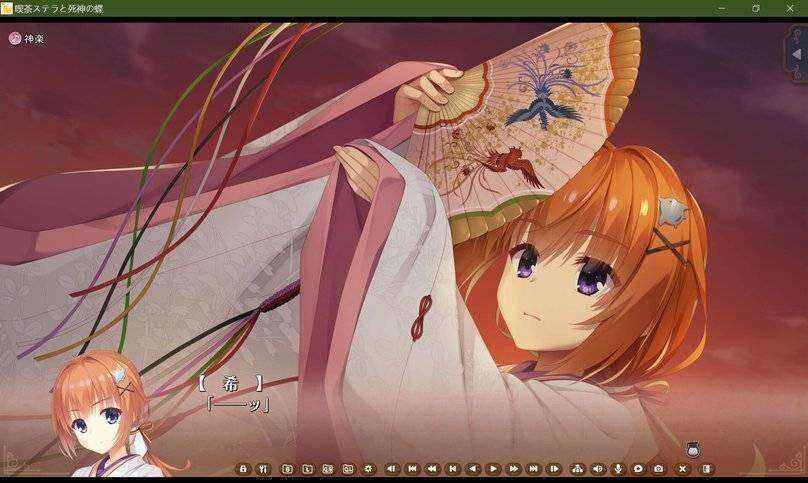
No miko? Use Nozomi! Can’t dance the miko dance? Learn on the spot!
Eventually Nozomi is pushed into performing as the New Year ritual miko. Theoretically, the red butterfly should disappear…
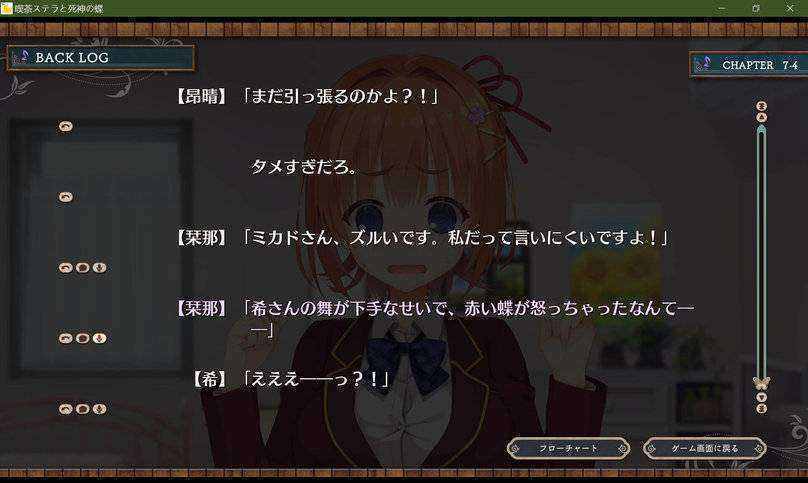
But it doesn’t!
Kanna finds the red butterfly still wandering, which is strange, so she starts investigating the shrine’s origins and legends. It turns out the shrine wasn’t founded for a deity but to commemorate a mortal. Long ago, a mother and daughter lived here. The mother was killed by other spirits while protecting her daughter, and the daughter died too. The mother made a deal with the gods to remain as a ghost protecting her daughter, while the daughter would reincarnate around this shrine forever. The daughter, in her first reincarnation, became a miko and built this shrine to pacify her mother’s ghost—that’s the shrine’s origin.
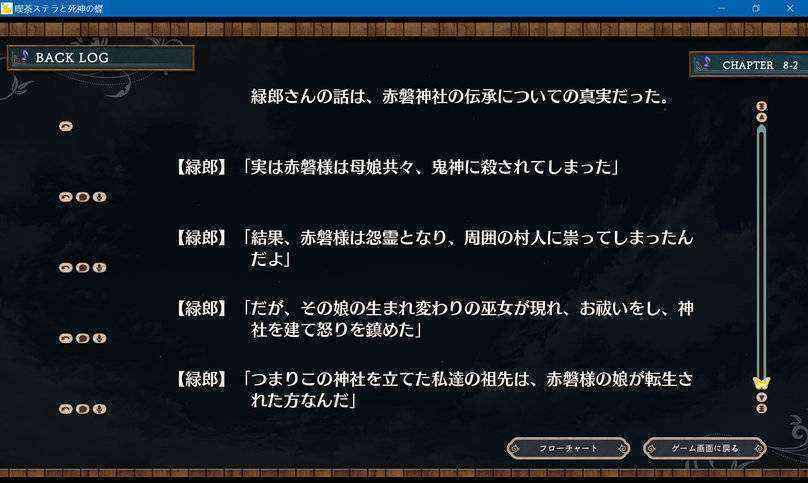
The daughter has reincarnated many times, but the mother’s soul still wanders—that’s the giant red butterfly. The red butterfly is angry because her “daughter,” despite many reincarnations, has never realized her “mother’s” existence. Players can basically guess that Nozomi is the “daughter” in this lifetime.
With Kanna’s help, the “daughter” and “mother” finally talk across centuries, resolve their lingering feelings, and Nozomi’s family finds happiness.
So in short, it’s all the ancestors’ fault!
Hiuchidani Ai
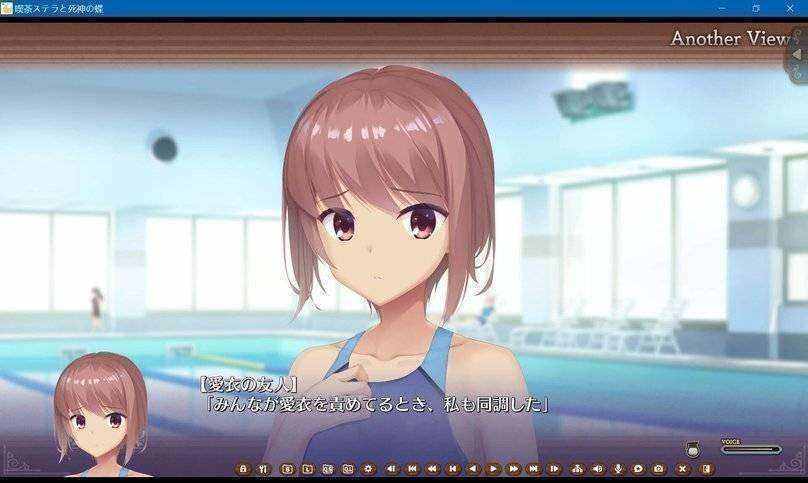
Ai is a young middle schooler who applies to work as a waitress at the cafe and seems happy with the job. But she never seems to have any friends. Appearance-wise she looks sporty, and indeed she is. The protagonist gets invited by her to go swimming—not at a pool, but competitive swimming.
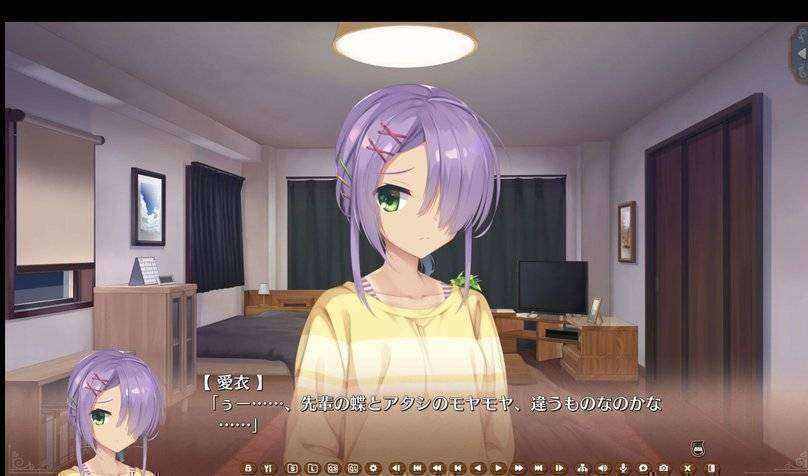
There Ai runs into a “classmate,” and the atmosphere between them is awkward—the classmate seems distant.
Later the protagonist discovers the reason: Ai has a “superpower.” Her left eye can see strange things, similar to how the protagonist sees soul fragments (Butterfly of Death). But through Ai’s left eye, the “Butterfly of Death” doesn’t look like butterflies—it’s “filth.” Even cooler, her left eye can “destroy filth”—staring at the soul fragments for a while makes them disappear. She’s been unknowingly helping people with this ability, but that’s exactly what made her relationship with classmates awkward. She relied too much on this “ability” to make friends; many people didn’t actually want to be her friend, they just wanted to use her power. If Ai refused requests to use her ability, she’d be seen as a “traitor.” Classmates secretly thought she was weird, even mocked her as a “witch” (the game uses another word—a derogatory term for possession, I forgot what it was, all kana). Including the “classmate” she thought she was close to.
So Ai couldn’t stand that environment, left the school swim club, escaped her old circle, started working at the cafe, made new friends, and became the protagonist’s girlfriend. But then her old classmates found out, which made things worse—they thought Ai not only “betrayed” them but also left the circle and got a man. In the world of young girls, things got even harder for her. This even caused angry Ai to lose control of her ability, spewing out all the “filth” she had absorbed…
Of course, the story ends with Ai’s “superpower” being controlled under Kanna’s guidance, some “treatment” with Kanna’s help, and Ai restoring her former relationship with the “classmate.” She no longer sees “filth” but “Butterfly of Death.” The story reaches a reasonably satisfying ending.
So in short, it’s all the left eye’s fault!
Shirayama Suzune
Shirayama Suzune is the protagonist’s best friend’s older sister. She used to work at a famous pastry shop and thought she was an excellent chef, but got chewed out by the owner, took the blow, and quit to mope at home.
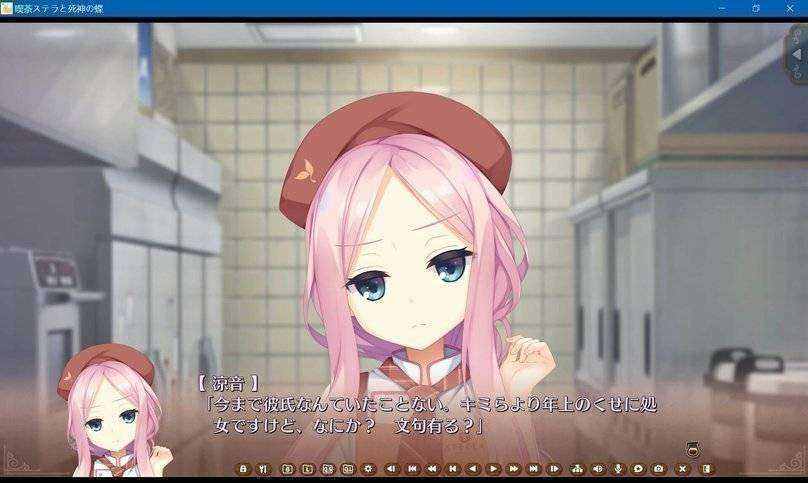
Later, because the protagonist and co. are opening a cafe, she’s brought out of retirement to work as head chef in the back kitchen.
Suzune’s route splits into two parts: career and romance.
Romance-wise it’s the very traditional “older sister can’t resist a younger guy” trope, same as Riddle Joker last time. Though Suzune’s body type doesn’t really scream “older sister”—maybe someone at Yuzusoft recently awakened a special fetish. The only noteworthy part of this route is her career arc.
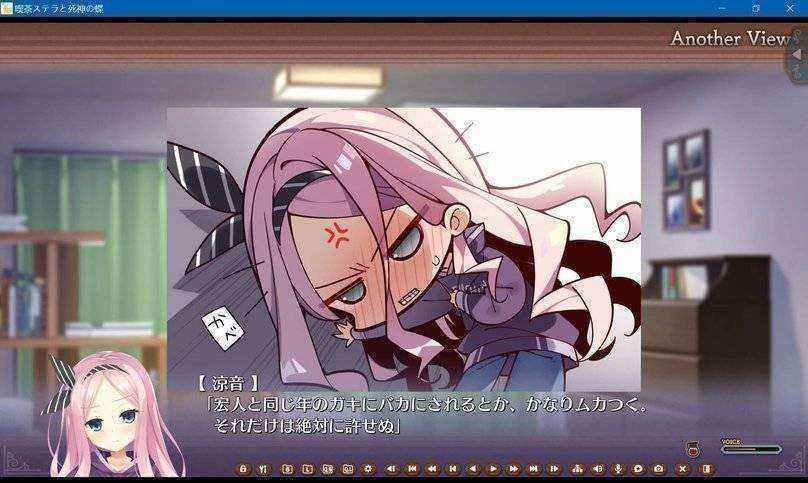
Suzune was a bit arrogant at her previous job, thought her cakes tasted great and got cocky, but ultimately wasn’t chosen by management, so she gave up on herself—so much that part of her soul scattered into butterflies and was discovered by the protagonist.
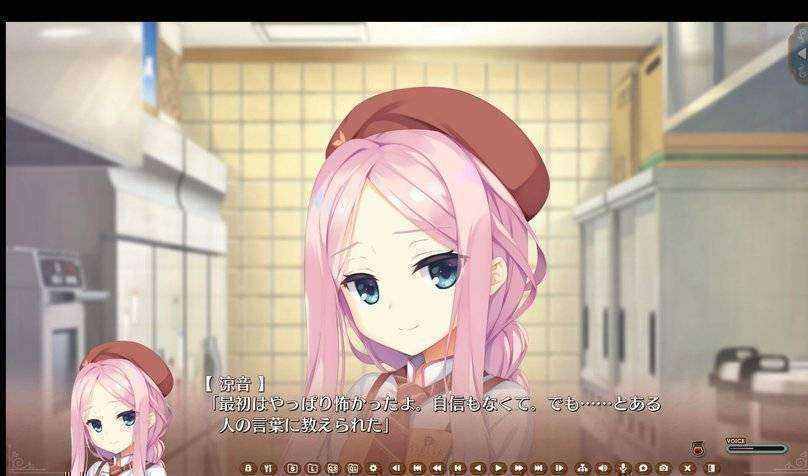
Later, through her own efforts, Suzune understands why her cakes weren’t chosen. The taste was fine, but the ingredients were too expensive. As a top chef, besides making good cakes, ingredient management is equally important—how to minimize costs while preserving taste is an essential skill for a high-class chef.
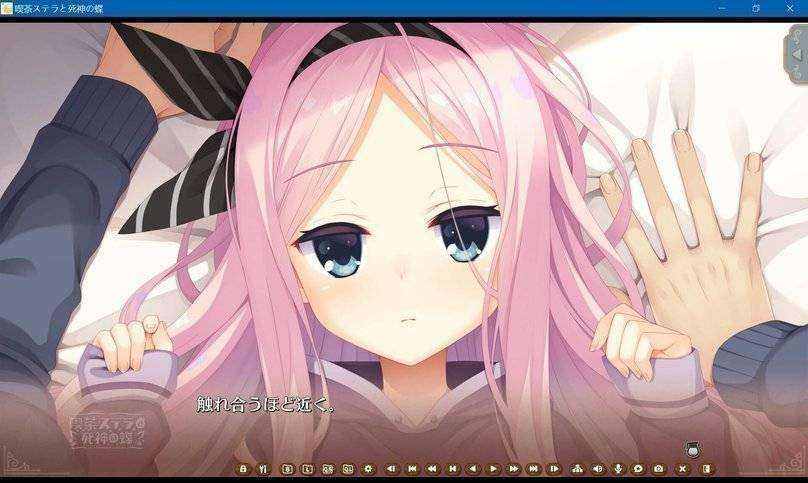
In the end, Suzune proves herself through effort. The game doesn’t say whether she actually gained her former mentor’s approval, but given her current confidence, becoming a top pastry chef seems inevitable.
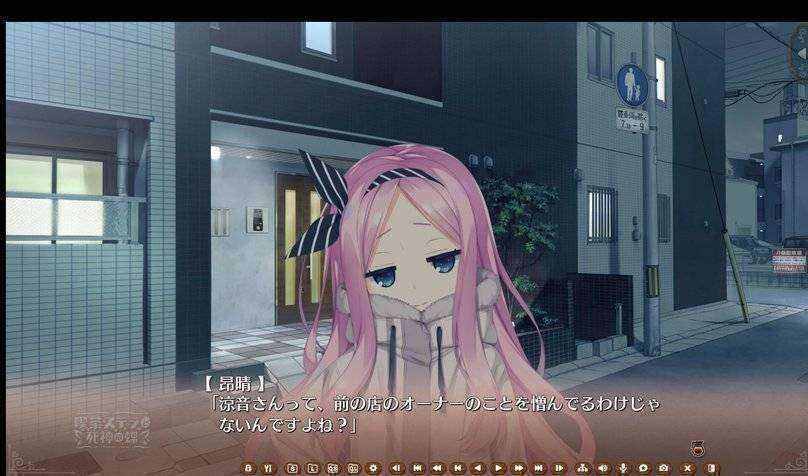
So in short, it’s all the cake’s fault for being too expensive!
Akizuki Kanna
Akizuki Kanna is a shinigami—but more precisely, a rookie shinigami.
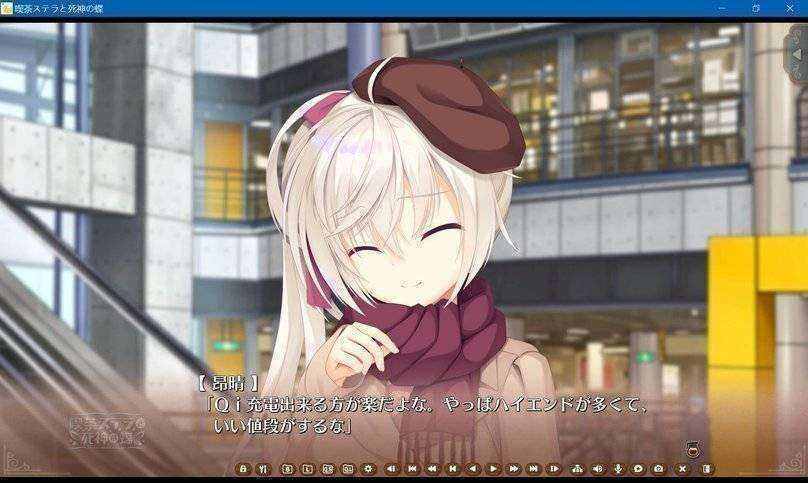
The protagonist is technically her first assignment as a shinigami. A shinigami’s job is to guide souls onto the right path—the living should live well, the dead should reincarnate promptly, etc.
After frequent contact with Kanna, the protagonist starts dreaming—dreams that seem to be about his past lives.
It turns out his previous three lives were all miserable. He grew up alone, abandoned by his parents, and in one life even starved to death. So his soul is filled with a craving for “love.” Kanna, as a shinigami, tries to save his soul—but as a shinigami, she shouldn’t interfere too much. Still, she couldn’t bear watching his three tragic lives, so she decided to intervene. With her help, the protagonist’s craving for “love” grew stronger, eventually giving him immense power (enough to change the world).
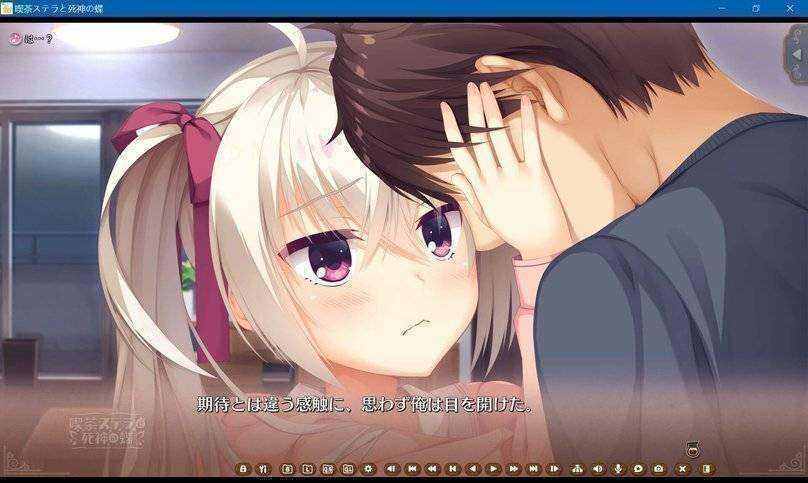
So in his current life, when he gets into the car accident, his intense desire for “love” lets him change the world and revive.
And Kanna, as a shinigami, is actually also being “tested.” A shinigami, while guiding mortals to rediscover the meaning of life, is supposed to understand the meaning of life and living themselves.
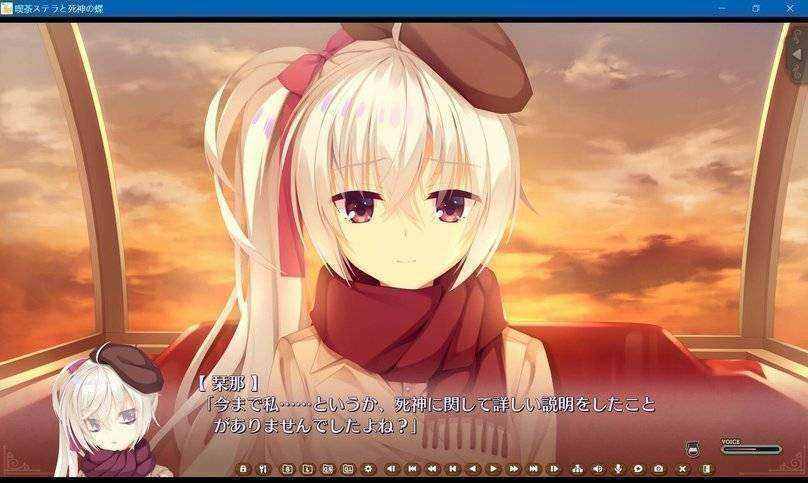
So at the moment the protagonist confesses to Kanna, through the whole process of saving him, Kanna herself understands the meaning of life.
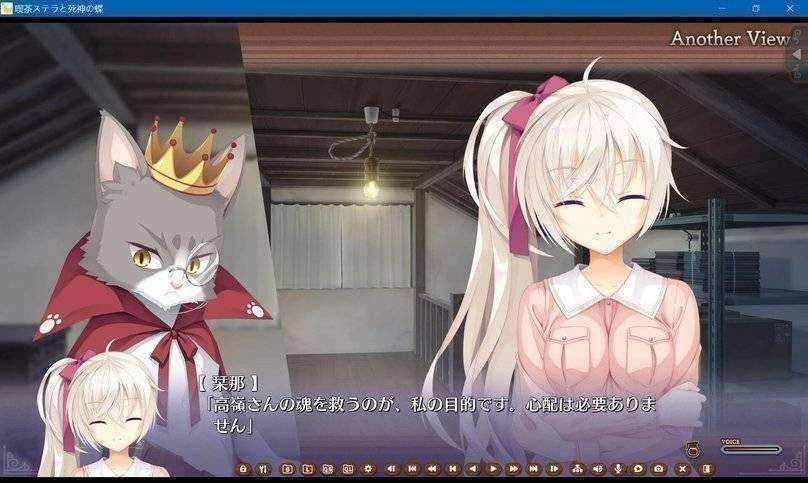
A “shinigami” is actually “a mortal waiting to reincarnate.” Kanna’s romance with the protagonist turns her back into a mortal, and they become an ordinary couple.
Another subplot in Kanna’s route is the mutual forgiveness between the protagonist and his father.
The protagonist never understood why his father stays abroad all the time, why his mother, bedridden, doesn’t hate her husband but seems happy.
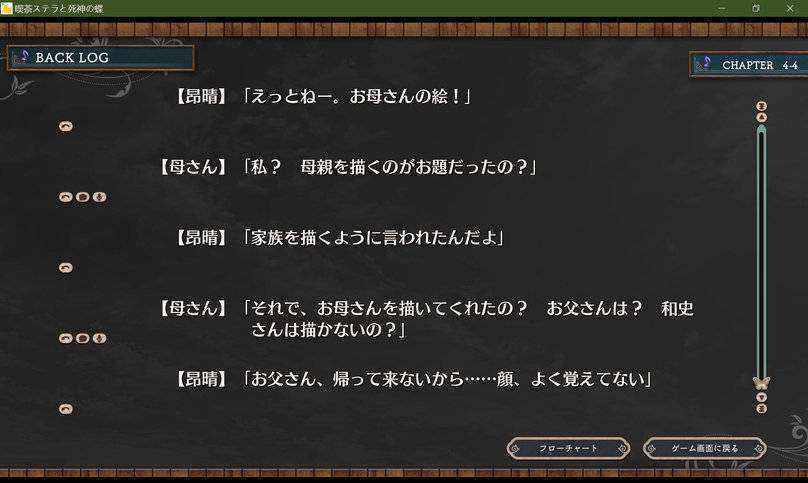
Actually, his father grew up under “strict control” and craved freedom, so he gave that “freedom” to his son. He also knew his wife loved landscape paintings, so he painted for her. The protagonist finally understands that his parents do have love—he just didn’t get it.
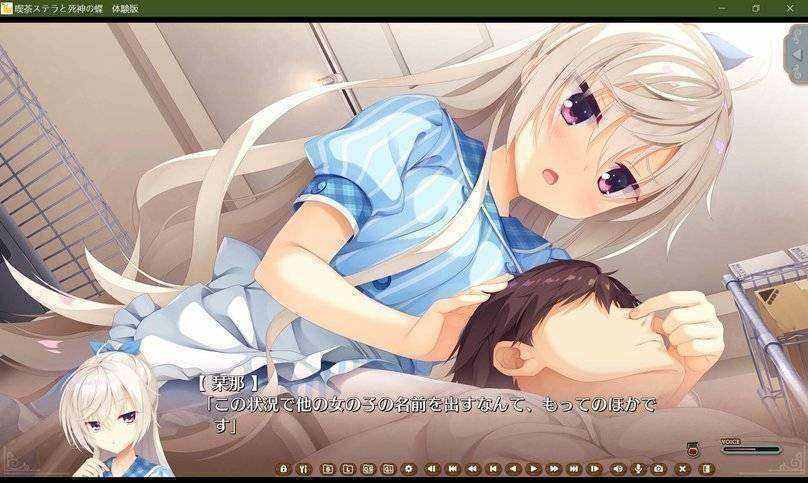
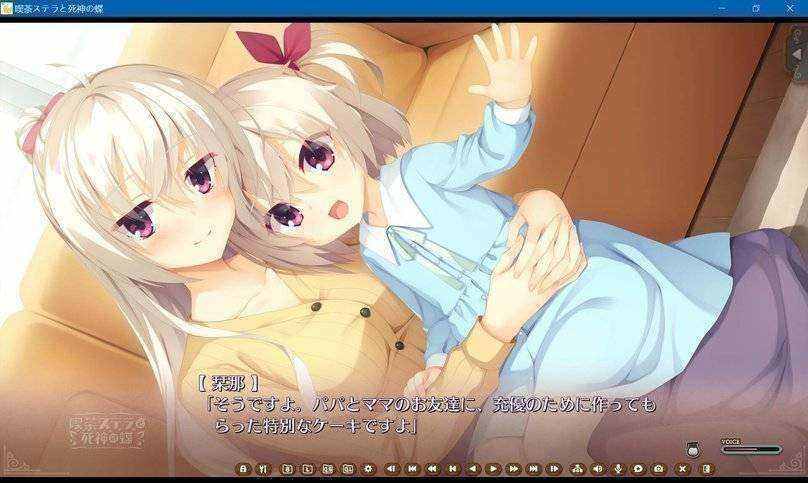
Ultimately, the protagonist marries Kanna (now mortal), has a daughter, reconciles with his father, and reaches a happy ending.
And the mastermind behind it all might be that talking cat, pulling strings from the shadows.
In short…
Is it all Sugita Tomokazu’s fault?
“Cafe Stella to Shinigami no Chou” has a decent premise—overall it wants to talk about “finding the meaning of living.” The so-called “Butterfly of Death” refers to the drifting soul fragments of people who’ve lost the will to live.
But remember what I said earlier? This game crashed.
Yes, “Cafe Stella to Shinigami no Chou” became a rare crash for Yuzusoft (excluding their mobile games) in recent years.
I know many aloof visual novel fans look down on Yuzusoft, thinking they just “sell moe.” But actually, whether it’s Sanoba Witch, Senren * Banka, or the mediocre-in-my-opinion Riddle Joker, even the worst-rated Amairo—their overall stories aren’t that problematic. They still tell a story; the story is just “a bit convenient, a bit dumb.”
But “Cafe Stella to Shinigami no Chou” is different—it barely tells a story at all.
You might think the individual route stories I described above sound good, but the actual game experience is completely different. Because those stories are pieced together by me from reading between the lines, scouring Japanese fan analyses, and picking up scraps from the game’s settings. If you just play through the game normally, you might not feel any “search for the meaning of life” at all. Because in all the individual routes, the “shinigami” content only takes about 20%—the remaining 80% is cafe slice-of-life and silly romance dialogue.
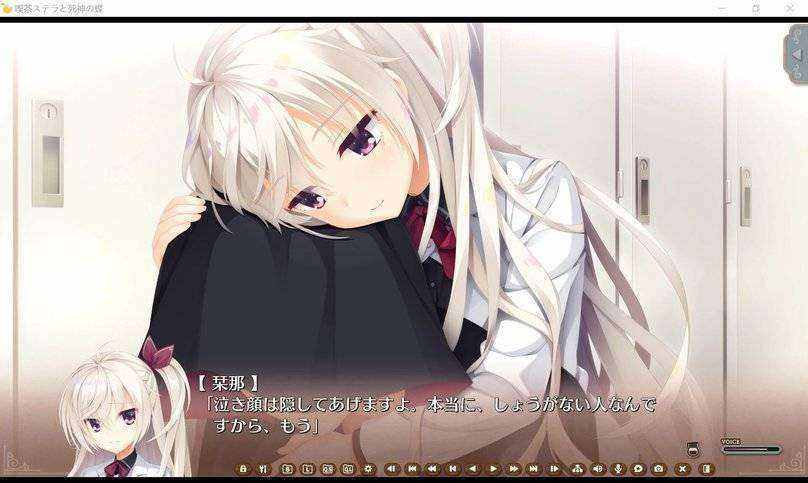
In other words, this game hardly describes the “Butterfly of Death” story in any detail. Most of the content goes to the “cafe.”
And even in that 20% of “reaper story,” I can see the scenario writer’s cautious “restraint”—not daring to write anything. Afraid to kill off the protagonist, afraid to make the heroine disappear, afraid to make her world-weary and sad, afraid to make her depressed from being ostracized.
So we get Natsume Yotsuba as just a plain tsundere, showing none of that “world-weary attitude,” so we get Hiuchidani Ai as just a simple underclassman romance, barely any pain from being bullied by classmates, so we get Akizuki Kanna spouting dirty jokes nonstop, buying a phone and chatting on LINE with the protagonist, with hardly a trace of their shared past.
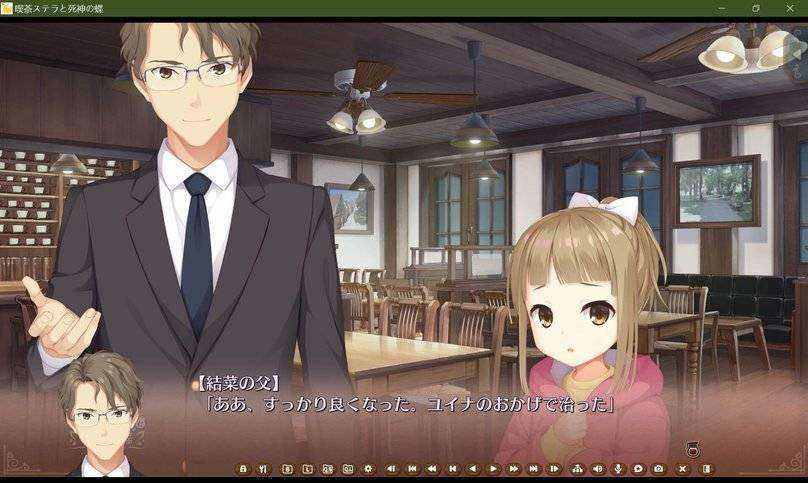
Do these core story elements exist? Yes! Just like Sumii Maki’s route—the story keeps flirting and avoiding the real issues, and only at the tail end does it hurriedly dump all the setup it’s been holding back, then straight to the ED, completely failing to tell a proper story within the individual route.
I’ve always thought that Café Stella and the Reaper’s Butterflies would be better off if they just cut out the “Reaper’s Butterfly” part entirely.
Yuzusoft’s game this time completely fails at storytelling, even a “stupid and convenient” story.
Why did Yuzusoft end up like this? I’m genuinely confused. Honestly, Café Stella and the Reaper’s Butterflies gave me a lot of weird feelings.
First, there’s a huge gap between the trial version and the final release. In the trial, several characters had no sprites, backgrounds were empty—probably unfinished art. The added characters in the final version look oddly colored, pale as death. The final version also has very few old characters appearing in backgrounds, and it’s different from the usual Neta style.
The story was also modified: the final version removed the scene from the trial where Natsume gets drunk and flirts. And overall, the game feels much more like running a café is the main plot, with the reaper setting tacked on later.
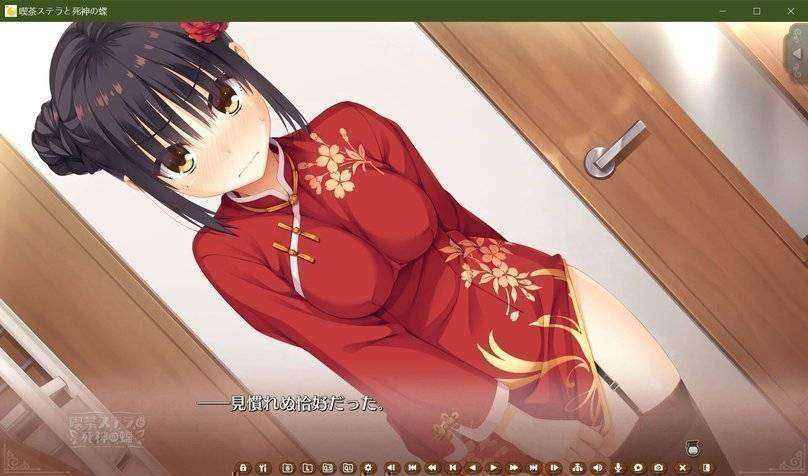
Could it be that the game was originally planned as just a café? But the producer thought it wasn’t COOOL enough and hurriedly had someone slap on a reaper setting?
Or maybe someone wrote the reaper story parts, but it was too dark, and the producer, afraid of offending fans, cut most of it and filled in with fluff?
And it’s worth noting that this game couldn’t be delayed—the end of December was the absolute deadline, because the game includes Christmas and New Year events. If delayed, it would miss that sales window.
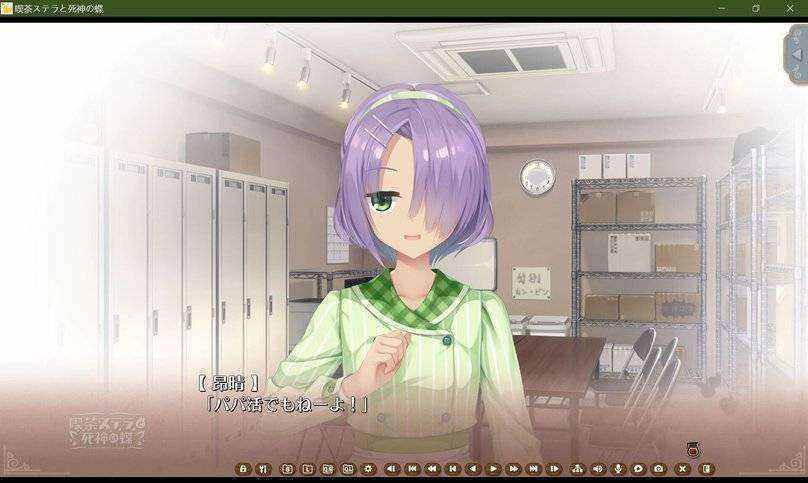
So in a rush, they cobbled together this result?
Of course, this is just my speculation. The truth is probably only known to Yuzusoft themselves.
Café Stella and the Reaper’s Butterflies disappointed many “Yuzu fans” because it added a lot of redundant setting descriptions; and it also disappointed many “plot-focused” players like me, because even with all those settings, the story still isn’t good. Maybe for “hardcore Yuzu fans” these aren’t problems at all, since they never care about the story—as long as the heroines are cute and pretty. Maybe that’s also the main reason Yuzusoft had the confidence to sell this “half-finished product.”
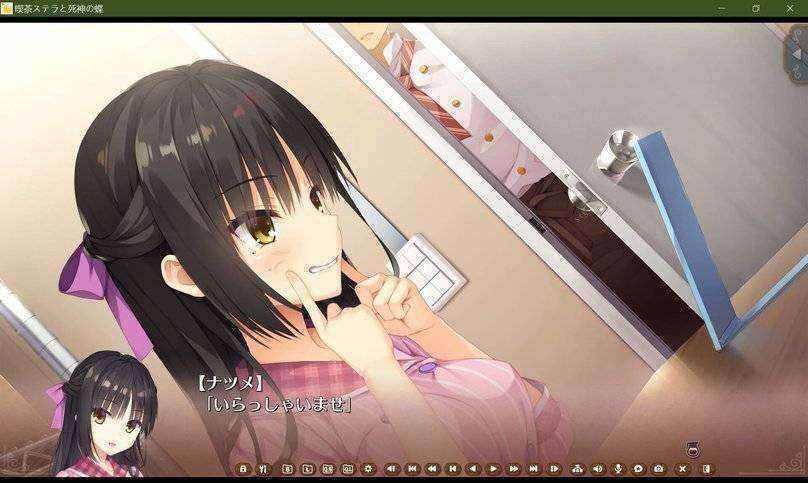
Of course, as Yuzusoft’s new game, Café Stella and the Reaper’s Butterflies isn’t unplayable—you just have to completely give up any expectations for its story. If you see it purely as a “café management” game, purely as a “romance” game, then it might still be satisfying. After all, Natsume Yotsuba is the best in the world, and Natsuwa Ko is invincible in the universe.
Comments are hosted on the Chinese main site. This mirror is read-only.