Railroa no Ryakudatsusha (レイルロアの略奪者) Review
It’s the year 2050. Plague, war, resources running dry, and a whole lot of infighting have humanity staring down extinction.
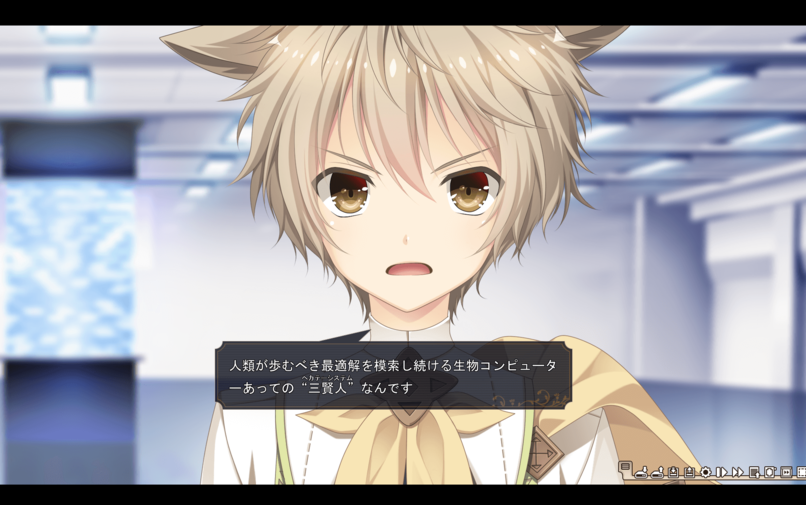
To head off the tragedy, humanity picks three representatives, forms the “Three Sages,” and hand-selects over a thousand genetically superior people to build a giant biological computer. Led by the Three Sages, the human gene modification project begins. Oh, right — it’s called the “Three Sages” and yes, there really are three people, but that’s just the name of the organization.
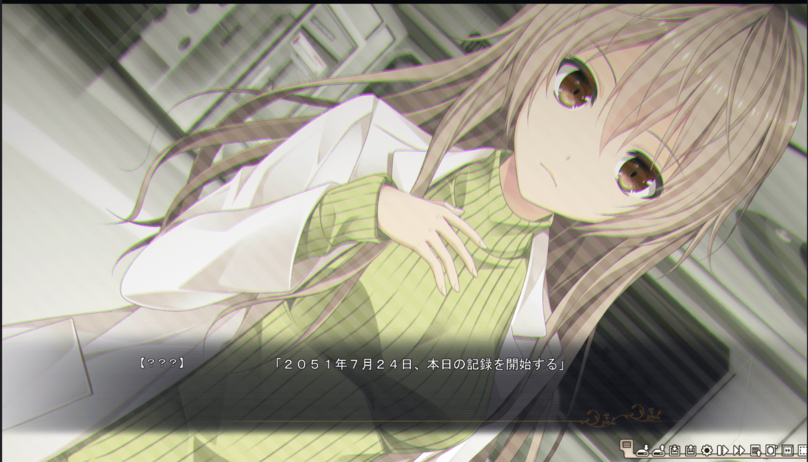
The modified “new humans” are immune to a ton of viruses and bacteria, their constitutions are way stronger, and there are some “side effects”… a good number of them end up with “superpowers.”
The Three Sages who improved the new humans also rewrote their own genes, gaining ageless, deathless lives along with monstrous physical ability and strength. But they chose to go into hiding, holed up in a secret underground base, quietly watching the new humans live. And so the world goes on for nearly 70 years.
By 2120, technology in the new humans’ world has regressed to roughly around the year 2000, and the world looks something like medieval Europe. Life with all these espers is actually pretty peaceful. But when the Three Sages modified the new humans’ genes, they left some flaws, and among the superpowered new humans, abnormalities start appearing… some develop a condition called “Error.” Their bodies do strange things — some sprout ears, others get weird physical phenomena. New humans with “Error” change after a while, or after coming into contact with certain “relics,” triggering horrifying events called “Heresy Refinement,” which cause all kinds of disasters in the cities.
To deal with this, the new humans establish the “Security Control Knights,” tasked with hunting down people with “Error” symptoms in the city, capturing them and putting them through “quarantine treatment” to make sure no “Heresy Refinement” ever happens. But as this force grows stronger, a lot of “Error” carriers start evading the hunt. They insist their “Error” isn’t a disease at all, just a special “ability,” and refuse treatment. They even set up a little base and start a resistance movement.
The Three Sages watching all this initially supported the new humans’ extermination of “Error” — after all, it was an unforeseen development — but then the resistance kept growing, kept getting stronger. And the resistance’s combat power was no less than the Security Control Knights’, leaving the two sides locked in a stalemate. That’s when the Three Sages split. One of them, an old man, gets a crazy idea: he wants to expand the Three Sages’ rule, tighten control, and become the leader of a new world.
Naturally the other two Sages oppose this. Under their guidance, a few of the new humans’ strongest fighters discover the secret of the Three Sages and the biological computer underpinning this world, and come to understand the history of human development. With the help of the other two Sages, they defeat the mad old man together — and then face a new choice.
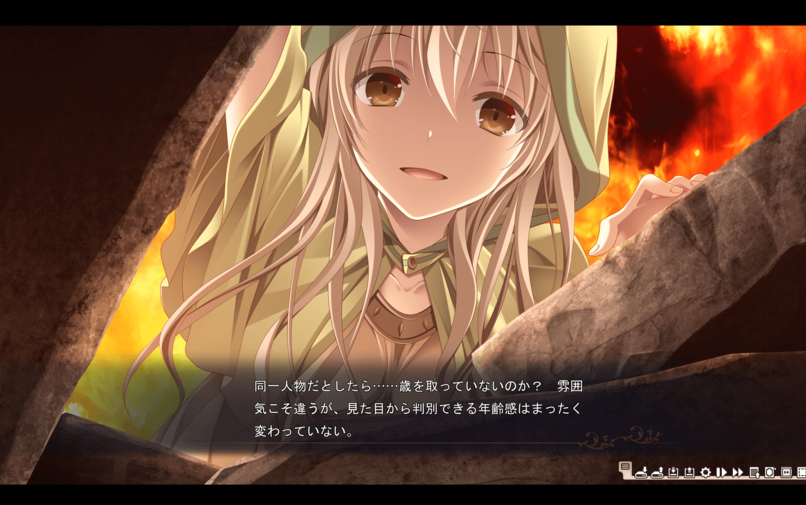
The remaining two Sages let the new humans decide their own fate. They can keep being ruled by the Three Sages and the biological computer — with their help, humanity’s future would be planned out, avoiding the old problems of “plague running rampant, war and infighting.” Someone would be coordinating things from a “god’s-eye view.” But the new humans would be under control, and that means not being free.
The other choice is to shut down the Three Sages and the biological computer behind them, and let the new humans decide their own future.
The ending, naturally, is the politically correct second option. The Three Sages exit the stage of history, and the new humans start writing their own story. The future’s uncertain, and humanity might repeat its mistakes, but a world in your own hands means more.
Q: So what the hell is all that about?
A: It’s the plot of a game called Railroa no Ryakudatsusha (レイルロアの略奪者).
Q: That doesn’t match what I’ve seen at all. Where’s the male lead? The heroine? Wasn’t there supposed to be dual protagonists? And combat? What are you even talking about?
A: I’m talking about the game’s True End. The game itself is a straight line — the first half is all about the entanglement between the male and female leads, but the real frame story is the final chapter, the reveal of this “new world’s” secret, which also spells out the story’s central theme.
Q: Well that sounds pretty cool. The story must be great.
A: The setting might be decent, but “great”… emmmm, I wouldn’t say that.
Q: What do you mean? The framework is solid. How is it not great?
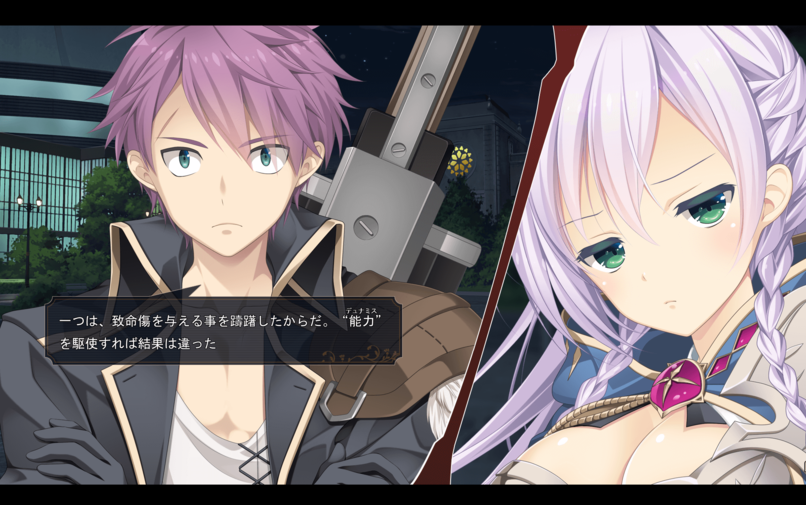
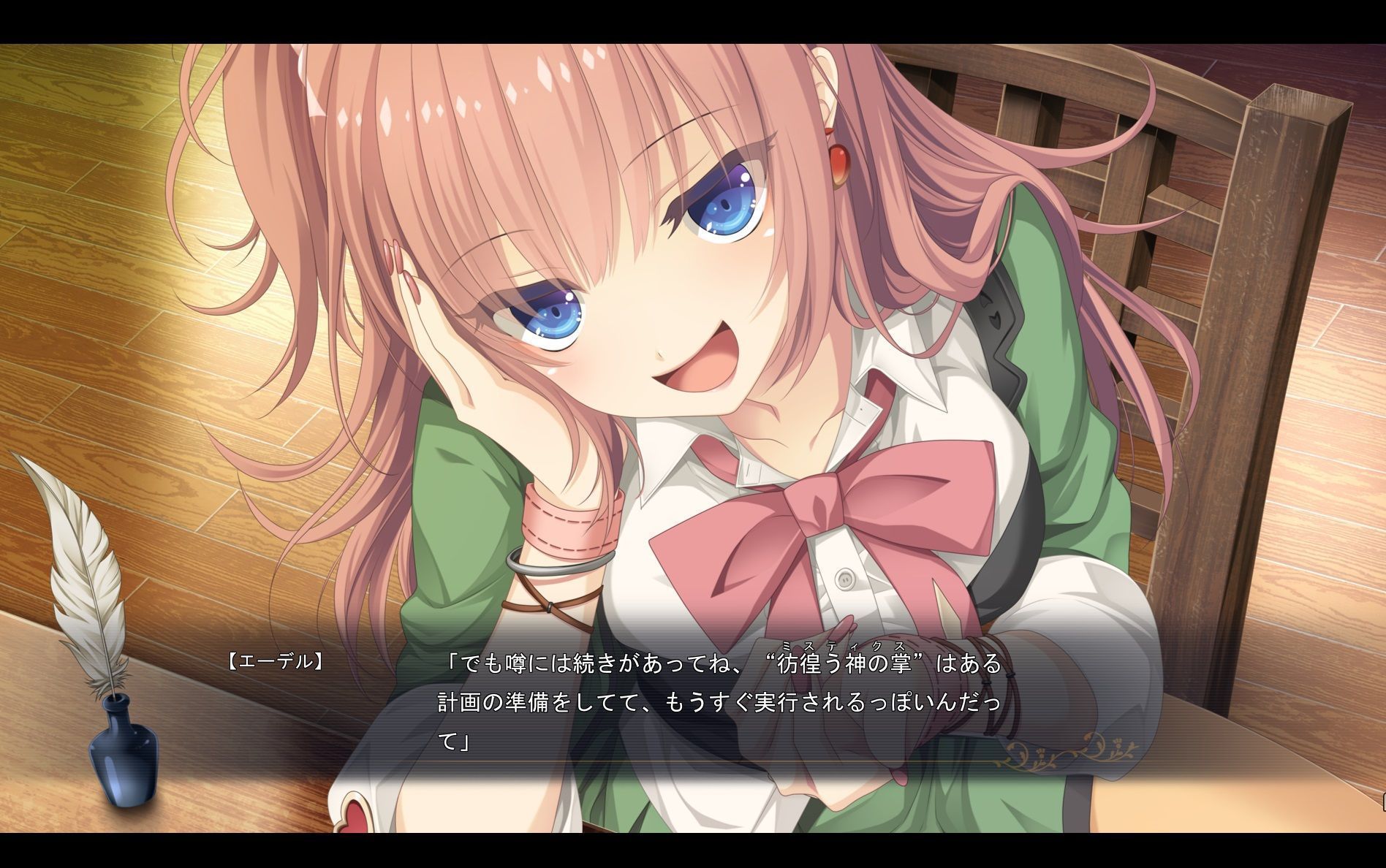
A: Because the first half is basically the male and female leads doing supernatural combat as new humans. Tons of fighting — the resistance vs. the government forces, the second male lead rescuing “Error” patients, the first male lead capturing “Error” patients, the first male lead’s betrayal, and more fighting. And with all that fighting, none of the core concepts get explained. Where “Error” comes from, how the two male leads’ power “Snatcher” even exists — nothing. All you see is daily life and brawling.
Q: Is fighting bad? I like fighting.
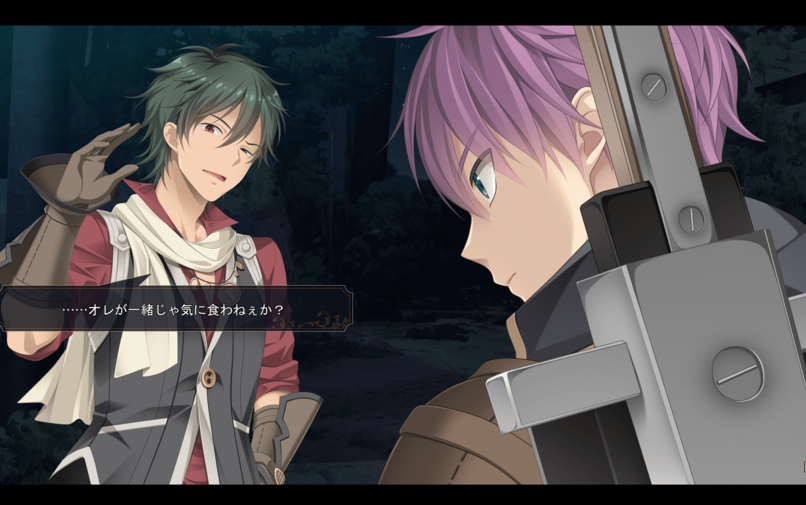
A: What a coincidence, I like fighting too. But in Railroa no Ryakudatsusha, the fighting is torture. First off, the game clearly wants to create “unique battle direction,” but they botched it like Warcraft 3 Reforged. The battle scenes are always a few simple CGs zooming in and out on repeat, plus a little debris effect. The characters barely have poses, and you can’t see any real back-and-forth. It’s several orders of magnitude worse than Deep One. Also, a lot of the voice lines and text during battle don’t display — you can only see them in the backlog. Probably the devs worried text would hurt the flow, but the battles don’t flow at all; they stutter like hell. Every time a fight came up I wanted to skip it fast, but the game is mostly fights, and by the midgame I’d broken down. I genuinely didn’t know if I should keep going. If I hadn’t seen the 80 score on ErogameScape, I’d have dropped it like Sakura Moyu.
Q: The way you’re talking, this game’s a landmine? No redeeming qualities?
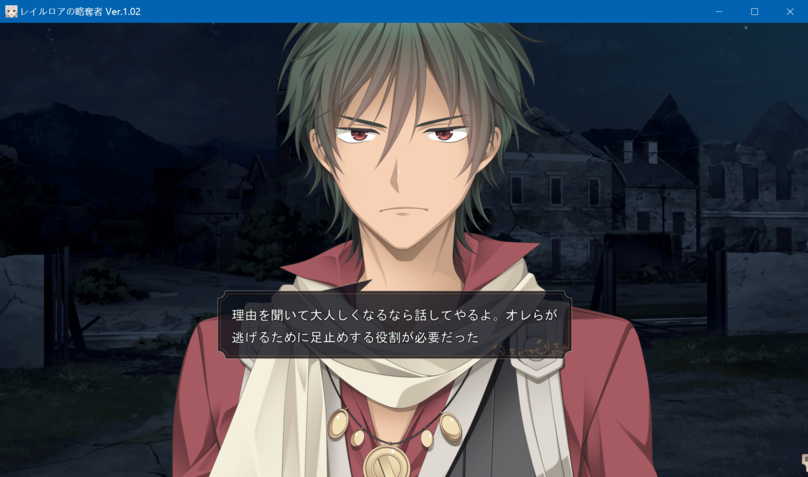
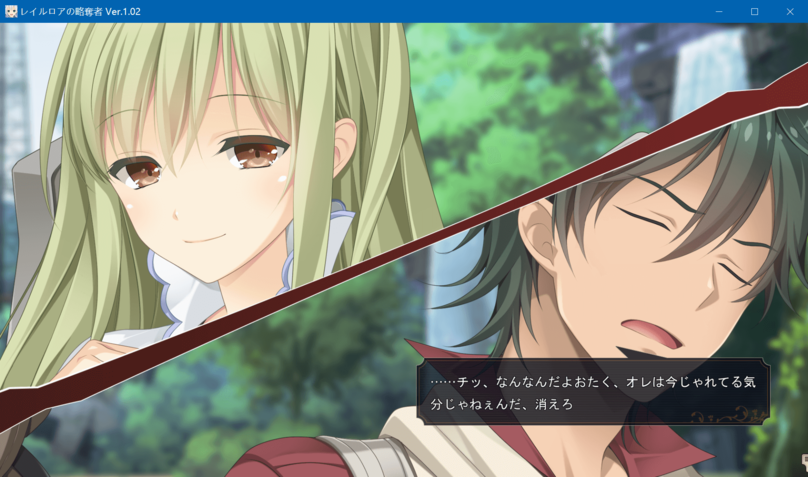
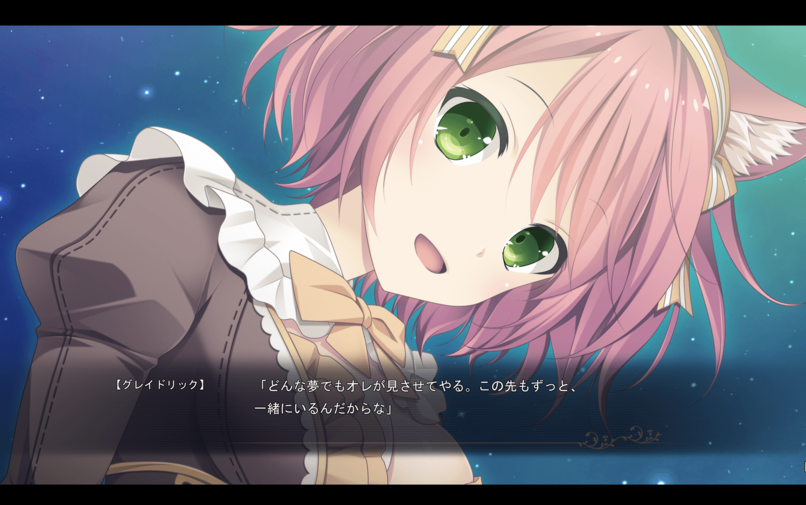
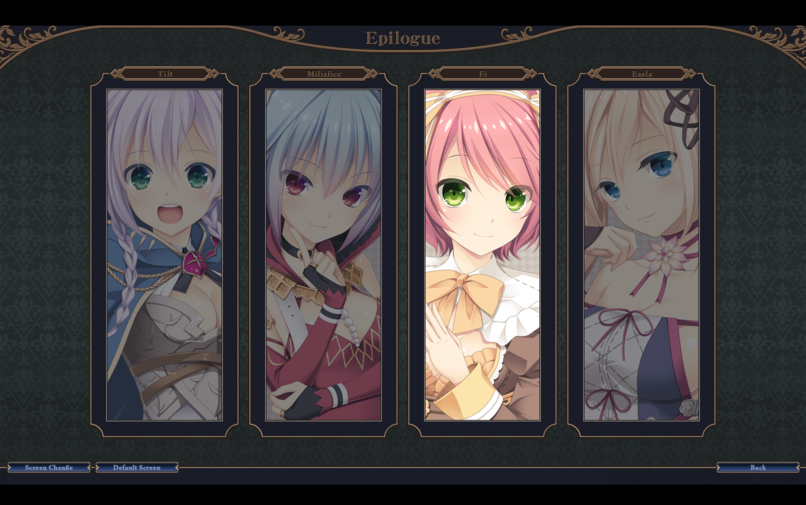
A: Objectively there’s plenty good. The ending makes you think, and the final chapter has a huge twist. Outside of combat, the daily-life direction is genuinely good — the pacing feels like watching a new anime episode, the voice acting lands, and the characters are handled well. You can easily grasp everyone’s personality; a bit stereotyped, but real. There’s also a romance line — the second male lead Grey and Phil’s love, Grey’s growth from a slacker to someone who takes responsibility, and the second heroine’s warmth and saintly heart. All worth seeing. As for the first male lead’s romance, I honestly think there’s almost none — he’s written as practically a cold-blooded robot who only follows orders. All in all, everything in this game except the fighting is good. The problem is that 80% of it is fighting. Each chapter has lots of sections, but the first three are daily-life scenes and it always ends with a fight. Chapter 5 especially goes on for nearly 45 minutes. Skipping is slow, and you can’t keep watching without skipping. It’s a goddamn ordeal.
Q: You’re really bitter about the combat. But don’t forget, this game was made by 3rdEye — isn’t superpowered combat their whole thing?
A: I’ve played 3rdEye games. Sorcery Jokers was actually pretty good — also fighting, but done way better. Fewer effects, but the battle dialogue really pulled you in. Maybe because Kiritsu Hua voiced the villain? With this game I can tell the devs wanted to “level up the combat.” Too bad they lack experience and didn’t learn from the successes, or maybe the budget was just too small. They turned what should be the highlight into a flaw, and it’s the wound this game suffers from. Makes me genuinely sad. The pacing’s off too — too many pointless fights, like every time two people meet they have to throw down no matter what. Feels like a 1970s Shaw Brothers movie. And what’s a shame is that the real main plot and the mysteries get unraveled way too late, while the fighting up front is so bad it’s hard to keep watching. There are two OPs, and weirdly the second one has no new content and gets shoved in awkwardly. No idea what the point was. Just to “hype you up”? Or to sell a song? I can’t understand it.
Q: Alright, give me your verdict on the game.
A: Railroa no Ryakudatsusha is a game that leaves you speechless. It has good voice acting, an excellent world setting, and daily dialogue direction that pulls you in — some conversations are genuinely moving. But it also has battle scenes that wear out their welcome fast and can’t be skipped, and there are far too many of them, all dragging. Plus plenty of dropped setups and plot threads, and a final secret that’s deliberately coy until the very last moment. Which means you have to grit your teeth through 20-plus hours before you get to understand why the world’s bizarre setting is actually wonderful.
For a long time I’ve had complaints about “popular games.” They tend to have “an amazing twist” but also “a long, boring buildup,” and the buildup gets to the point of being unbearable. A lot of people will tell you “just push through, push through, it gets good later.” I used to say that too, and I wouldn’t mark a game down for that “long” content. But I’ve made my peace with it. Getting the player invested in the story quickly is itself one of the qualities a good game should have. If your opening is long-winded, full of pointless drivel, and puts people to sleep, then even if the later parts are great, if I can’t push through, that’s not my fault — it’s your game’s fault.
And that’s before we even get to the fact that Railroa no Ryakudatsusha’s first half isn’t just long-winded — it’s also full of “intense battles” that make you suffer.
Think about it.
Comments are hosted on the Chinese main site. This mirror is read-only.