Salte (サルテ) Review
Saleté
When Saleté wakes up, she finds herself in a strange place that looks like a theater stage—except there’s no audience.
“Hello there, Saleté. You’re dead.”
A masked clown appears and breaks the news in a flippant voice.
“I’m dead?”
“Yes, more or less. Unfortunately, you don’t seem to know you died, or even how you died. So I prepared this place.”
The clown snaps his fingers and the stage lights come on.
“In life you were an actress, and also a princess of a kingdom. I’m going to give you a chance to come back. The condition is that you perform your entire life on this empty stage, up to your death. If you satisfy me, I’ll let you live again.”
“But I don’t remember how I died.”
“As your performance goes on, I’ll give you some hints. Maybe you’ll remember without even noticing. Or… do you want to give up this chance at resurrection?”
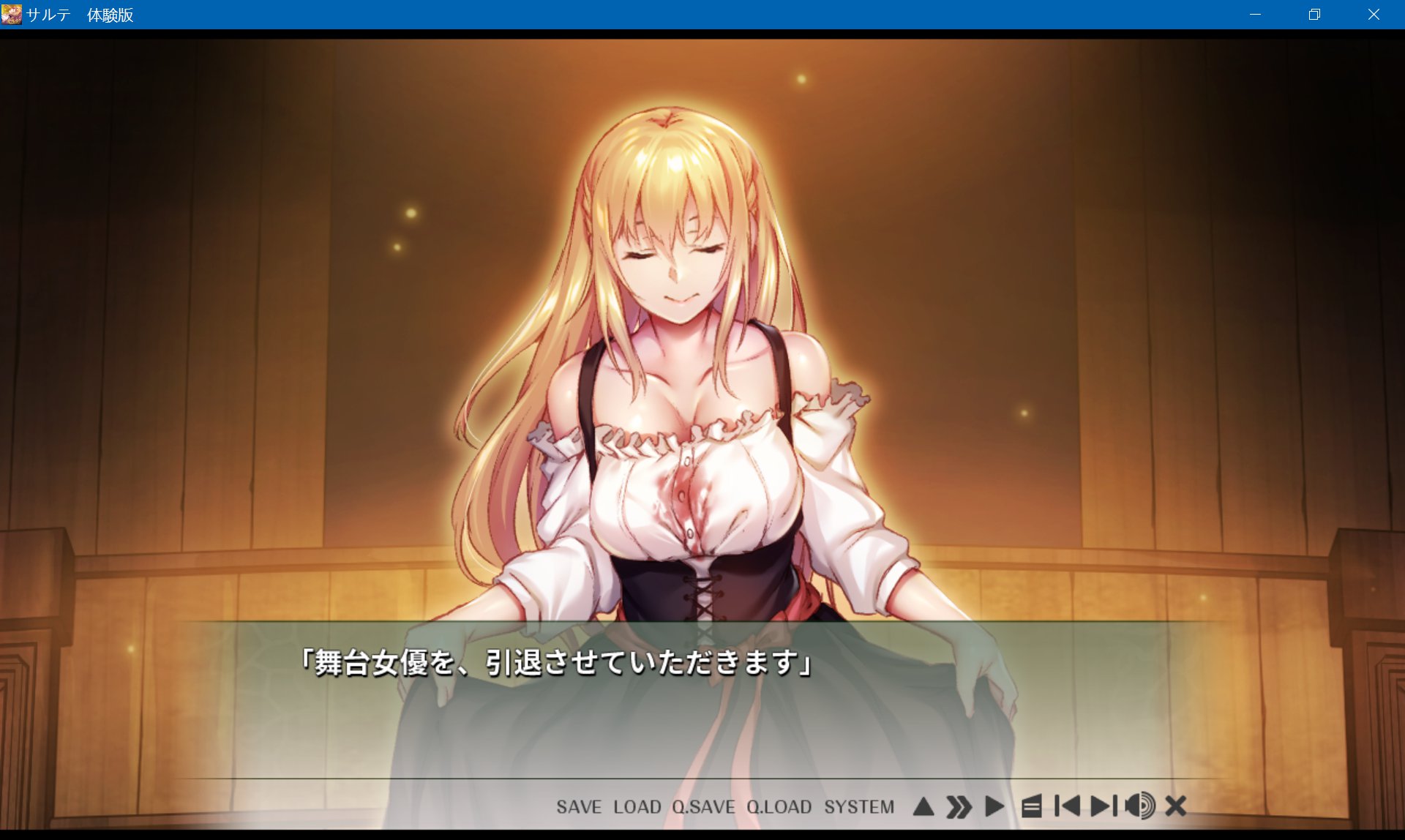
Saleté doesn’t want to give up. She decides to try, and with the limited memories in her head, she begins her monologue and performance on this stage—and begins recalling her life.
Saleté is a princess of a kingdom, and also a professional actress. The king suddenly dies, and state power falls to the chancellor Garnier, but Princess Saleté doesn’t care about any of that. Originally, she planned to take part in some world-class theatrical competition next month. For Saleté, acting is the only thing she truly cares about.
But before that performance, war breaks out. The chancellor says they need to send troops to help a neighboring country, or they’ll be next. Saleté can only agree, and she even sends her lover, Jean, as commander. After the army departs, all that’s left is to wait for good news—but then the unexpected happens.
Saleté wakes to commotion outside. She opens the window and sees the enemy army storming the palace. Just like that, she becomes a captive and prisoner for no clear reason.
The enemy soldiers begin to humiliate and torture Princess Saleté, hoping she’ll submit. They even bring out instruments of torture.
Saleté maintains her royal pride, preferring death to surrender.
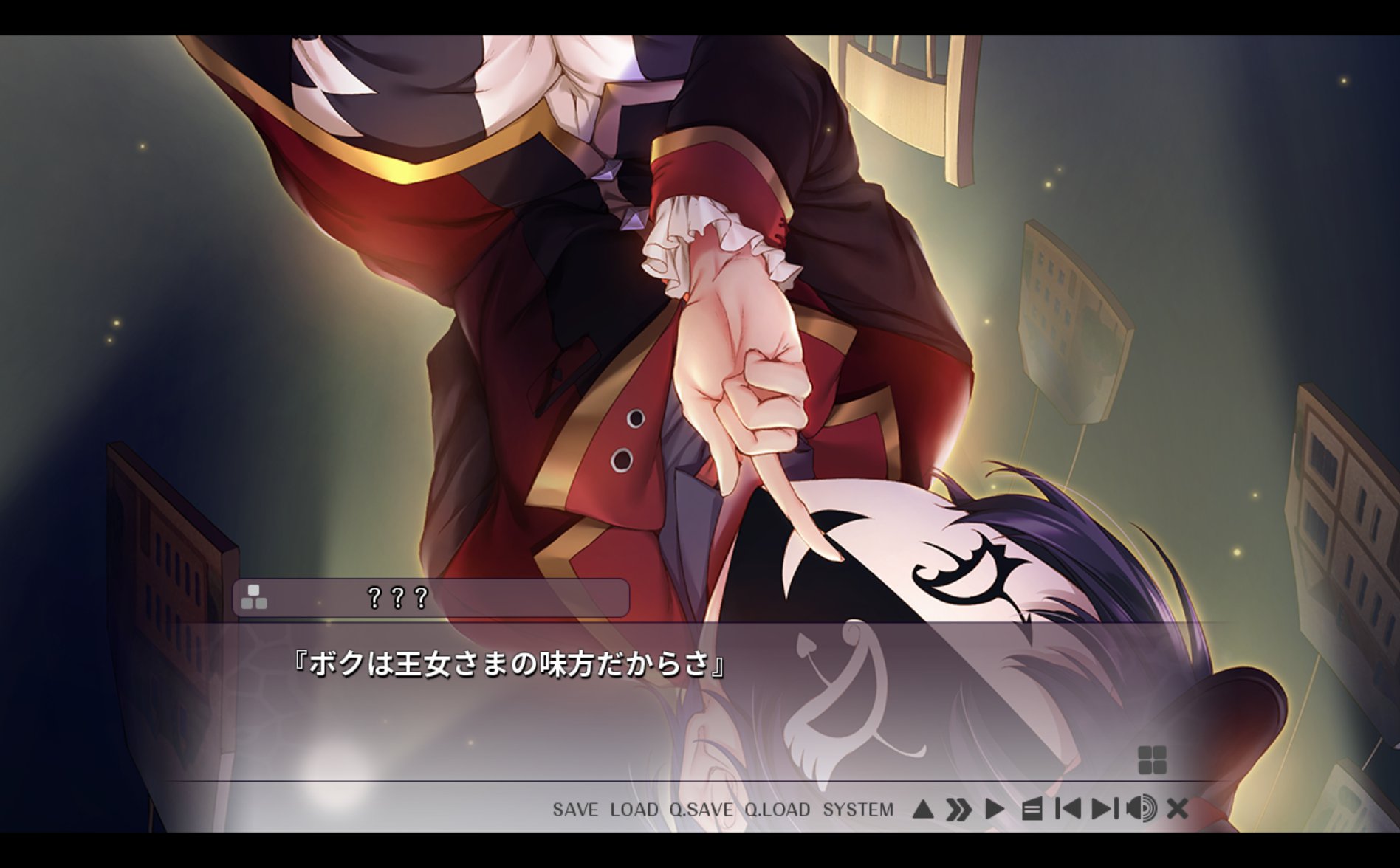
In the end, the enemy soldiers brutally kill the defiant Saleté, and her life reaches its end.
“How tear-jerking~” the clown watching from the side speaks up. “But this isn’t that kind of hackneyed trash story!”
“Think carefully. Were you really like that back then?”
The clown presses closer, and Saleté can only keep recalling, revising the story.
When Saleté faced the enemy soldiers’ torture, did she really prefer death to surrender?
No. She was cowardly, she chose to compromise, and in the end she even became the soldiers’ cum dump, locked in a lightless dungeon, subjected to every indignity.
“Hey, princess, don’t count on anyone saving you. Your subjects, your subordinates, your ministers, your troops—they all betrayed you.”
The soldiers’ mockery makes Saleté completely give up resistance.
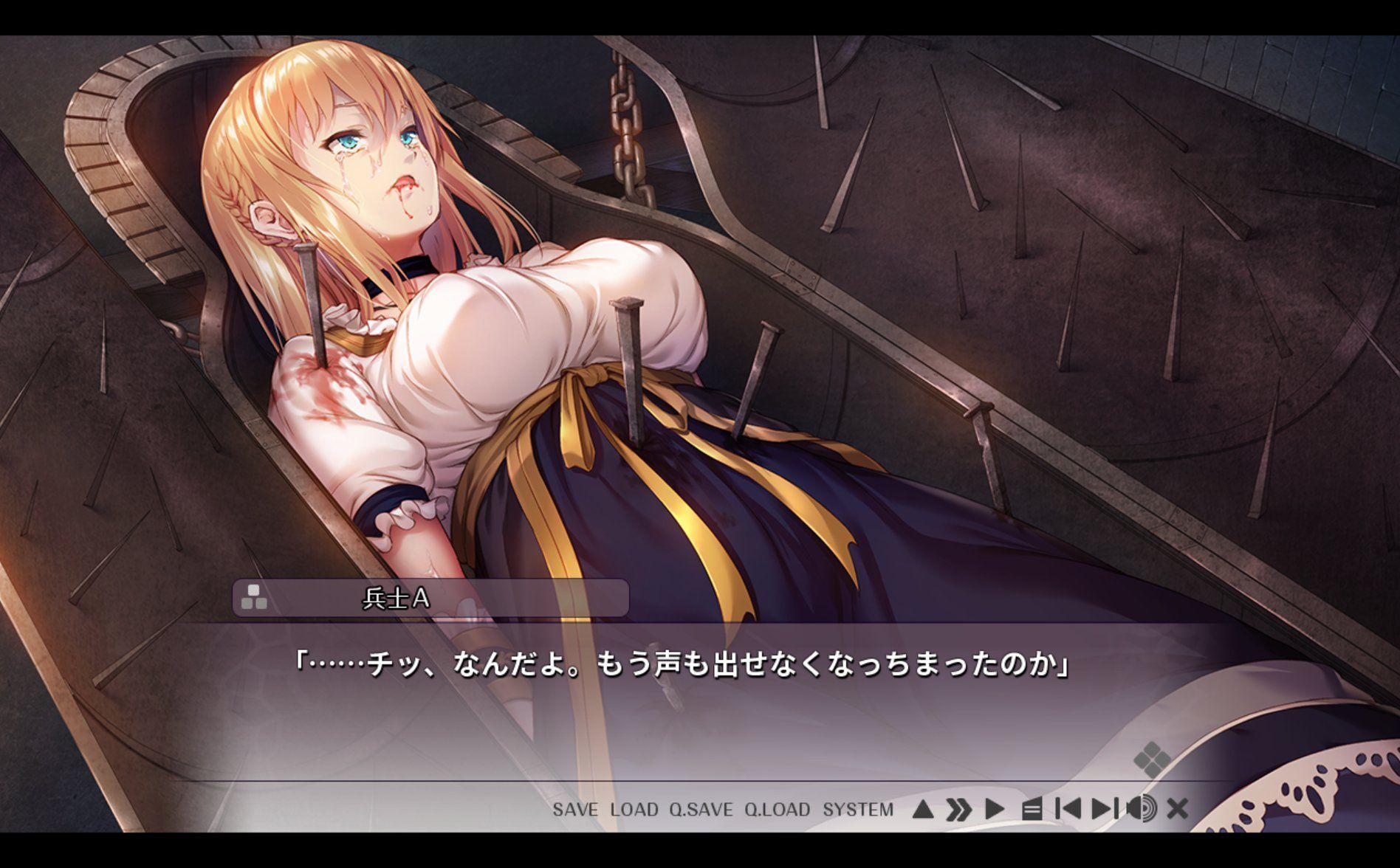
Then a soldier tells her that a nun named Marie is looking for her.
Saleté feels a little light in her life.
Marie is a nun at a church that has always taken in orphans. When Saleté was little, she once got lost and was taken in by that church, and she became friends with Sister Marie.
“Marie must be coming to save me!”
Saleté is full of hope.
But she soon falls into despair again.
Marie finds Saleté, but she too has fallen into the dungeon, locked up with her.

“Saleté, I wanted to save you, but I didn’t know what to do, and I got caught.”
Marie’s account makes it sound like she walked right into the trap.
And that’s exactly what happened. Marie, like Saleté, becomes a cum dump for the enemy soldiers.
“We can’t go on like this. Why don’t we…”
Saleté starts thinking about how the two of them can escape.
They try many things, but find the only thing they can use is their own bodies. Soon, through the guards’ chatter, they learn of an opportunity: in a few days the soldiers will gather the women plundered from the war for a “Party.” Saleté thinks that at that party, she can use her female body as a weapon to create a chance to escape.

Finally the day comes. The escape plan goes badly. Saleté sacrifices herself so Marie can get out alone, and she’s dragged back to the dungeon.
Saleté also discovers that the palace fell so quickly because the kingdom’s chancellor led the betrayal and became a collaborator. The troops had all been sent to support another country, so naturally no one was left to defend her palace. It was all the chancellor’s scheme.
But luckily, the dispatched troops soon return and begin attacking to retake the palace.
Hearing the fighting outside, Saleté escapes in the chaos and happens to see the traitorous chancellor directing her own men’s resistance.
Saleté has an idea. She stabs the chancellor in the back and pushes him off the building. He hits the ground hard and doesn’t move.
Seeing the moment is right, Saleté runs out and spreads her arms to welcome the attacking reinforcements.
The leader of the reinforcements is Jean, the one who went off to war. As the princess’s lover, he spots Saleté at once. Just as the two are about to embrace, Saleté suddenly feels a heavy blow to her head and falls unconscious.
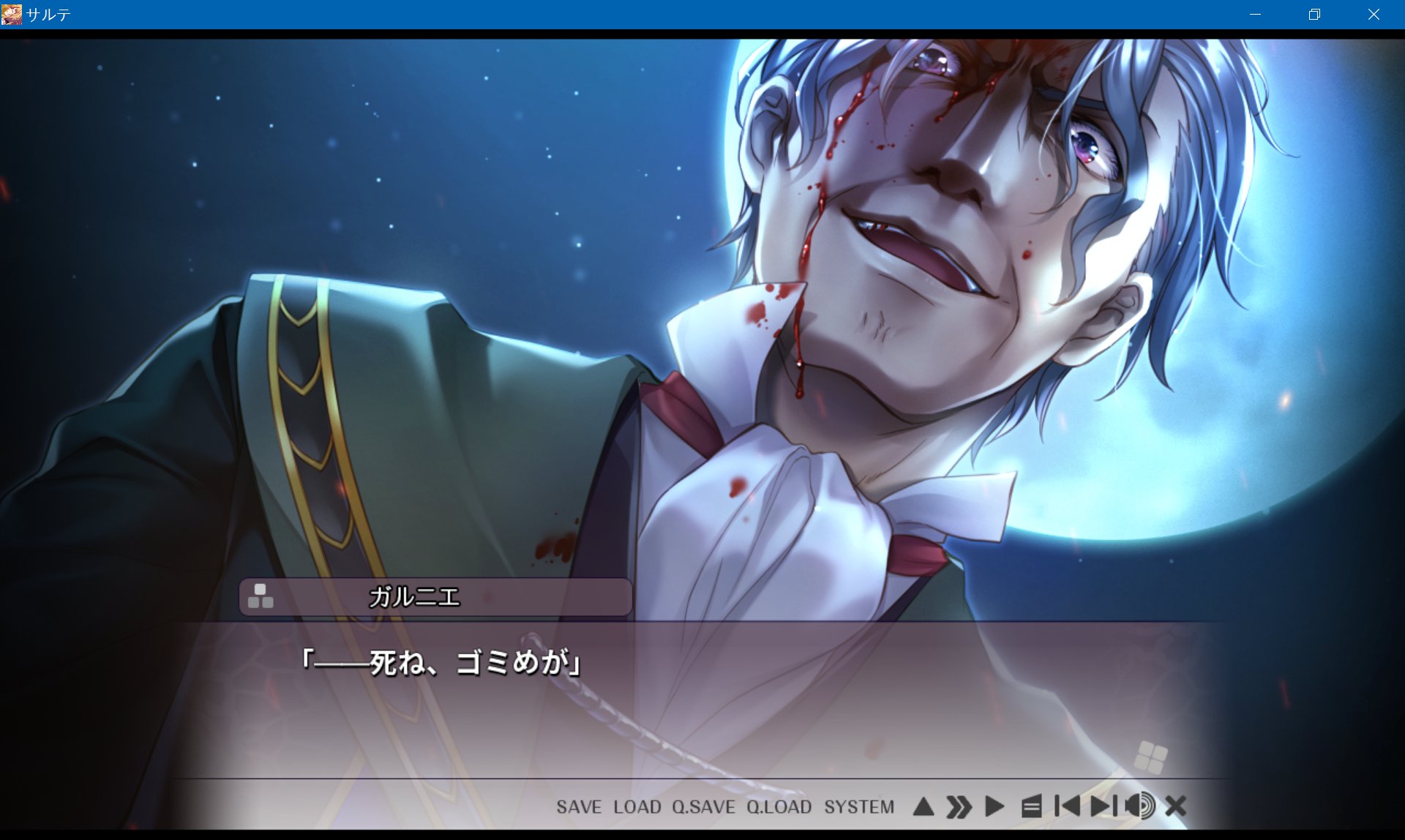
As she loses consciousness and closes her eyes, she sees her attacker: the chancellor, face covered in blood. He wasn’t dead after all.
And so Saleté’s life ends, at the very moment she was about to gain her freedom, full of regret.
The clown finishes listening to Saleté’s monologue performance and applauds.
“What a fine performance. And a fine life, too.”
Saleté feels the sarcasm and says coldly:
“So I’ve found how I died. Can I be resurrected now?”
“But of course. You may rise from the dead.”
With that, the clown snaps his fingers. Saleté sees white, and when she opens her eyes again, she’s standing in the palace courtyard.
Beside her lies the chancellor, face covered in blood. Just as she expected, she was killed by a surprise attack from the chancellor, who hadn’t actually died—and this time she’s successfully revived.
Saleté spreads her arms and runs toward her lover, Jean. He runs toward her too.
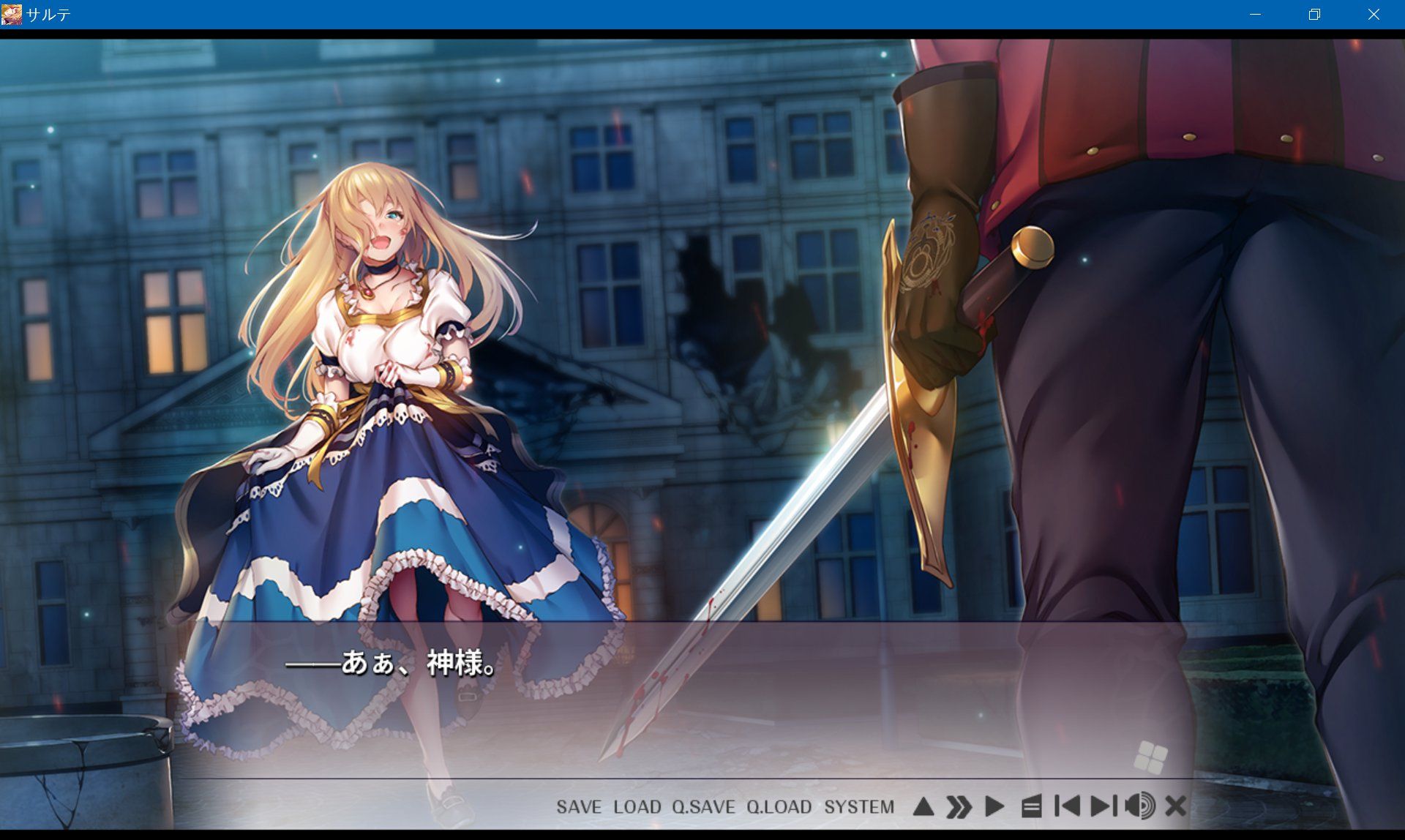
But strangely, her lover Jean doesn’t bring her an embrace. Instead, a sword pierces Saleté’s chest.
“You traitor!”
Jean’s roar stuns Saleté, and in an instant, her stunned face turns into a smile.
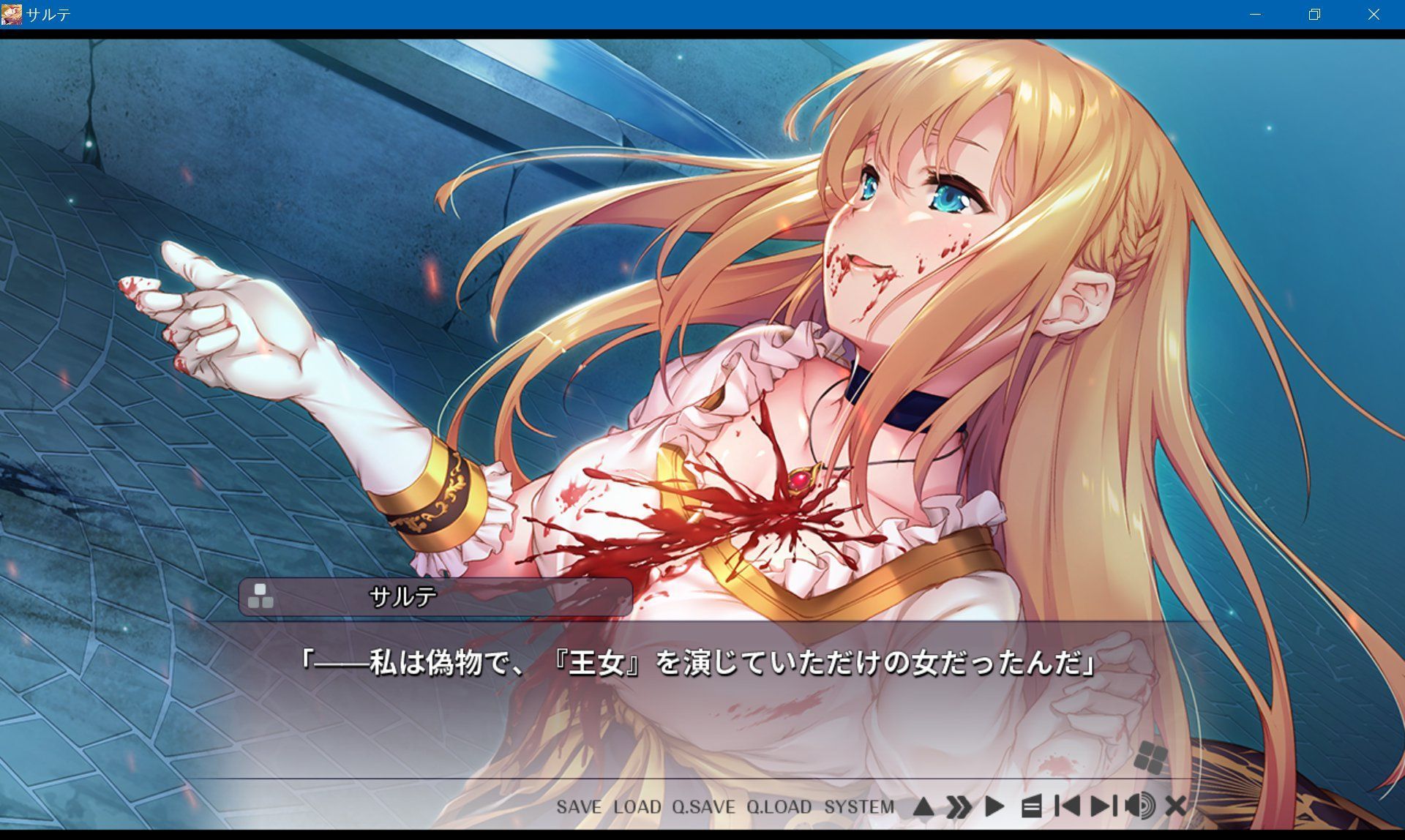
Saleté remembers. She remembers her true identity.
“So I wasn’t the princess after all… I never was.”
As her dream ends, Saleté closes her eyes once more.
When Saleté wakes again, she finds herself back in that familiar place—the empty stage—with that annoying clown waiting for her.
Obviously, she’s died again and returned here.
“What a fine performance. You’re back!” The clown applauds in welcome.
“So it was all in your calculations.” Saleté speaks with contempt.
“Well, it’s part of the show, after all.” The clown doesn’t stop clapping. “Now then, bring this great performance to its ending.”
“Fine!”
Saleté now understands the whole reason behind everything. She understands her true identity, she knows why she died, she knows everything—and she knows why she had to put on this play after death. All that’s left is the final performance statement.
Saleté stands center stage, faces the direction of the audience, bows deeply, and begins her monologue.
This is the story of the “false princess” Saleté and the “true princess” Salomé.
Saleté was an orphan with no name. She was taken in by the church from a young age, and a nun named Marie became her friend. By chance, one day the young Princess Salomé also got lost and was picked up by the church. Saleté and Marie met Princess Salomé as well. Later, when the royal family came to take the princess away, the chancellor saw Saleté in the church and noticed she looked extremely like the princess, so he brought her to the palace too.
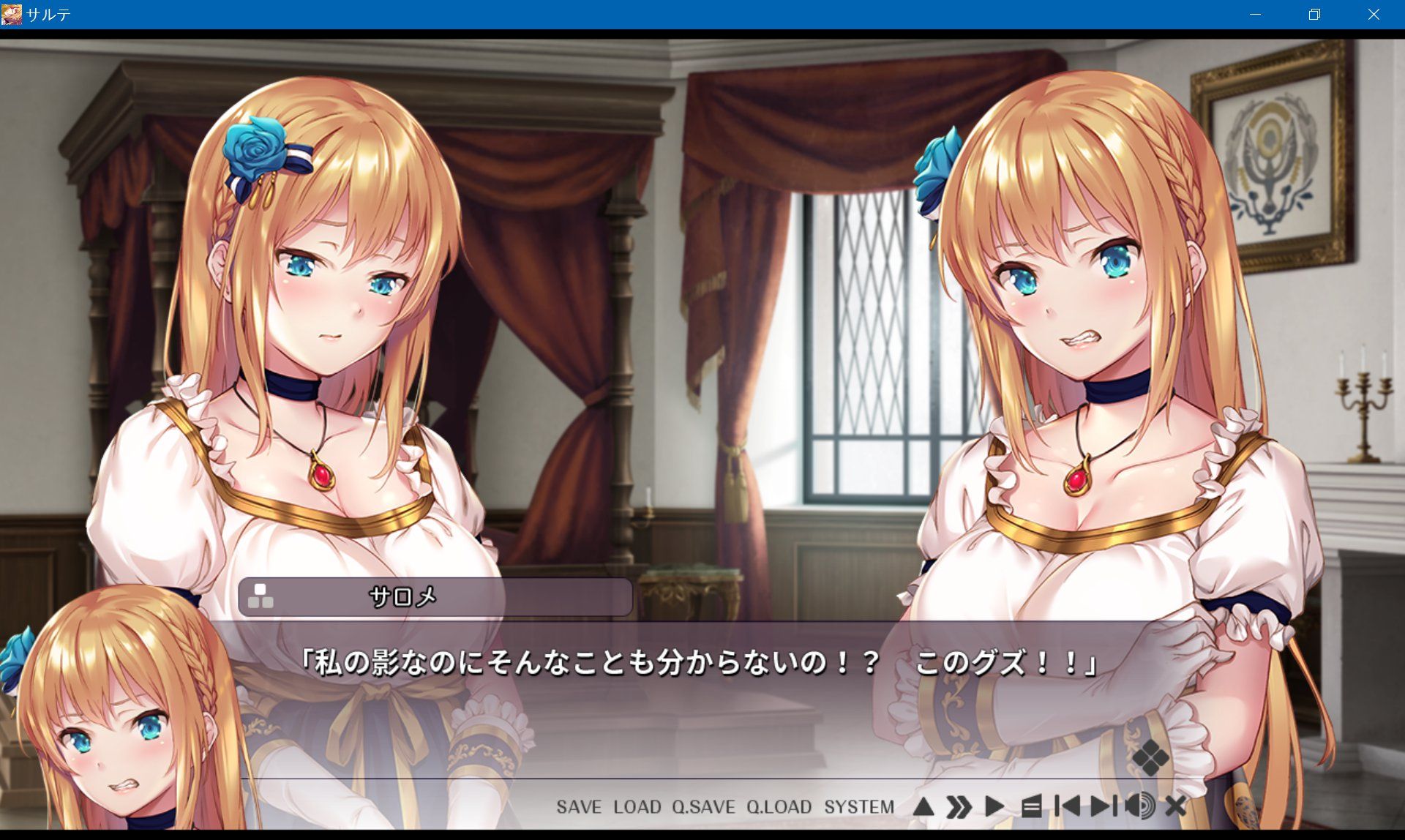
The chancellor’s purpose in taking Saleté was simple: train her as the princess’s “shadow double,” to protect the princess on one hand and to act in her place on the other.
Saleté’s training began, from basic etiquette to speech. Princess Salomé loved acting and often went to the national theater to play the lead, and Saleté also began acting training.
But soon a problem appeared. Princess Salomé was extremely arrogant and conceited. Her acting wasn’t good, yet she often hogged the lead roles. The others at the national theater gossiped behind her back, and eventually it reached Salomé’s ears. She was furious. But she also knew exactly how good she was.
One day the national theater was to go abroad to perform in a competition. Salomé called Saleté and told her to go in her place. She also made things difficult for her: “You must succeed. If you fail, I’ll make you pay when you get back.”
But the result shocked the princess. Saleté seemed to have a talent for acting—on her first trip to compete, she won first place.
Princess Salomé broke down. Jealousy, conceit, and arrogance sent her into a rage.

“Princess” Saleté winning first place with her performance meant that the real princess could never go out and perform again, because it would easily expose the fact that she’d used a double and that her own acting was terrible.
What made Salomé even angrier was that her “shadow double” Saleté seemed “more like a princess than she did.”
The fake princess was more of a princess than the real one. How ironic.
Not only Salomé but others in the palace noticed too, including Chancellor Garnier and the guard Jean.
The real princess Salomé was arrogant, conceited, and cruel.
The fake princess Saleté was calm, humble, and eager to learn.
And Salomé’s boyfriend, the guard Jean, actually fell for the gentle Saleté.
This led Salomé to envy Saleté intensely. She began bullying her like a madwoman—having guards rape her, putting a dog collar on her, making her bark like a dog, and even burning her face with a horseshoe.
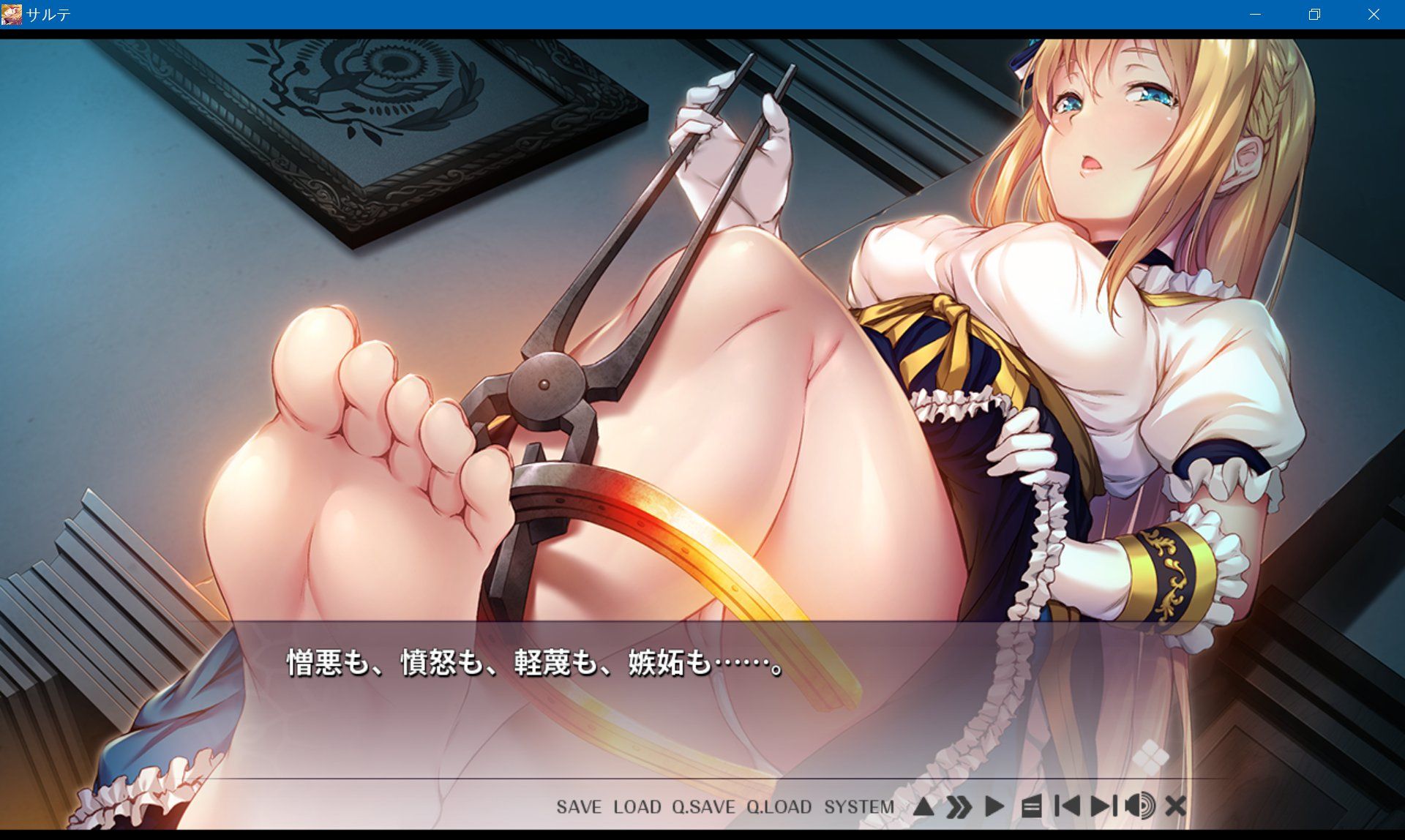
Saleté endured it all, because she had found meaning in life: acting at the theater. As long as she could act, nothing else mattered.
But one day, Chancellor Garnier came to Saleté and invited her to join a “coup.”
“This country’s leader is unfit to rule, cruel and heartless. He should be overthrown.”
Saleté didn’t understand why a minister would tell her about a coup.
“Because I need your help and cooperation.”
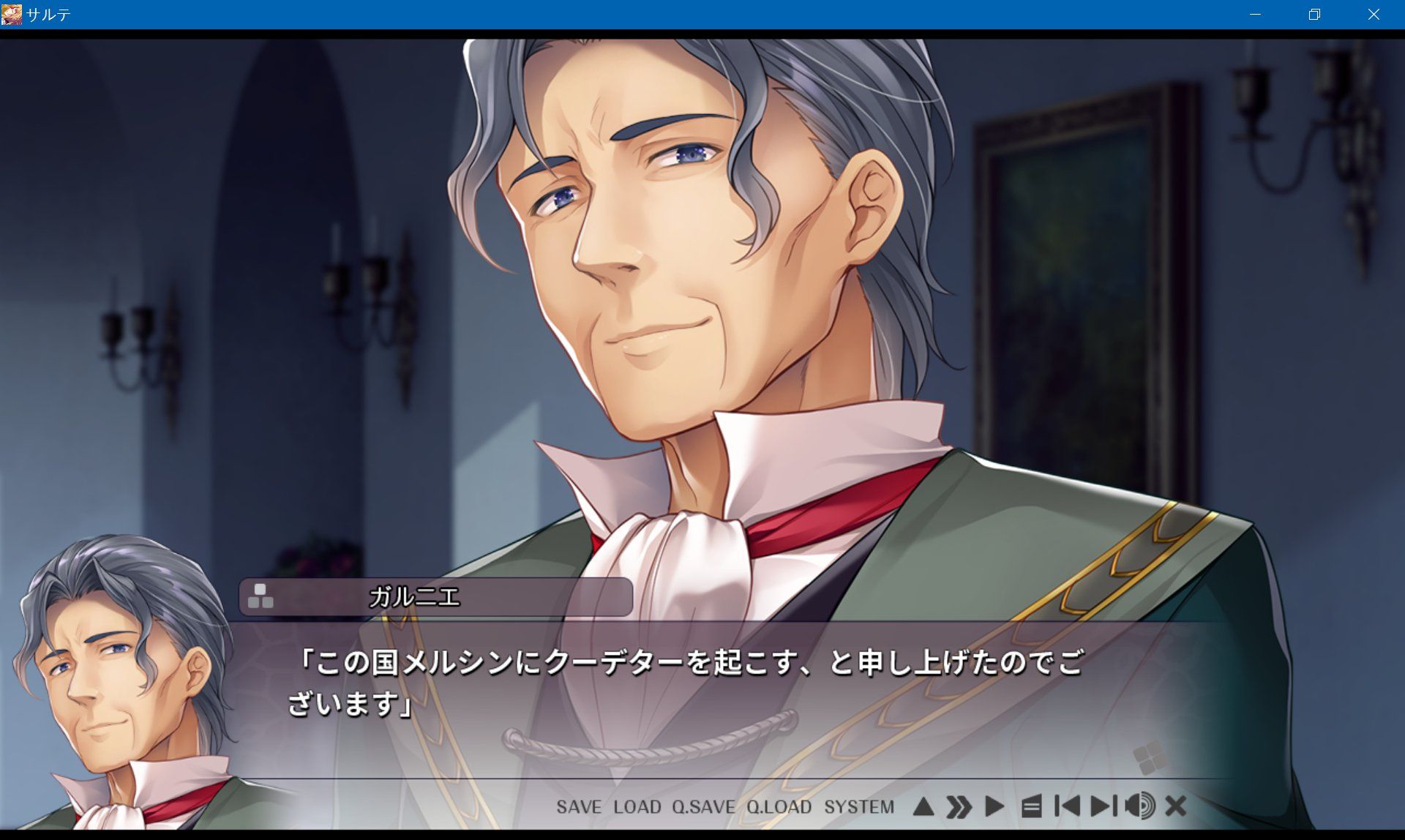
Saleté looks so much like the princess—more like a princess than the real one—that she could completely replace her.
“What, don’t you hate her? I hear she’s been humiliating you. And she wants to cut off the church’s funding, to let that nun friend of yours, Marie, die.”
Saleté won’t let her good friend suffer, so she agrees to cooperate.
With Saleté’s help, Princess Salomé sends the kingdom’s forces out, and the empty city is quickly breached by the enemy. Princess Salomé is captured by enemy soldiers and thrown into the dungeon, subjected to every humiliation.
Of course, naive Saleté doesn’t replace her and become princess—she’s thrown into the dungeon too, and she realizes the chancellor was never trustworthy. He was just using her.
Later Marie comes looking for Saleté and gets locked up too…
Later, Saleté sacrifices herself so Marie can escape…
Later still, the troops fight their way back. Saleté escapes in the chaos and pushes the chancellor down, leaving him half dead…
Then comes the familiar part: the dead Saleté meets the clown, and under the clown’s misdirection, she performs her life again, believing herself to be the princess, is revived, and is killed by Jean as a traitor.
In fact, Saleté really is a traitor. She betrayed Princess Salomé, sold her out, and got nothing good for herself in the end.
The “life memories” she first recalled to be resurrected were actually shaped from a fusion of the two princesses’ memories, true and false, not belonging to either one alone.
Saleté was always just a stand-in, never the real princess. The reason she thought so at first was nothing but the clown’s misdirection.
Saleté finishes stating everything on the empty stage and can’t help asking the clown:
“Why did you mislead me into thinking I was the princess?”
“Because that’s what makes this performance so dramatic!”
The clown answers without hesitation.
“By the way, who is this performance for, anyway?”
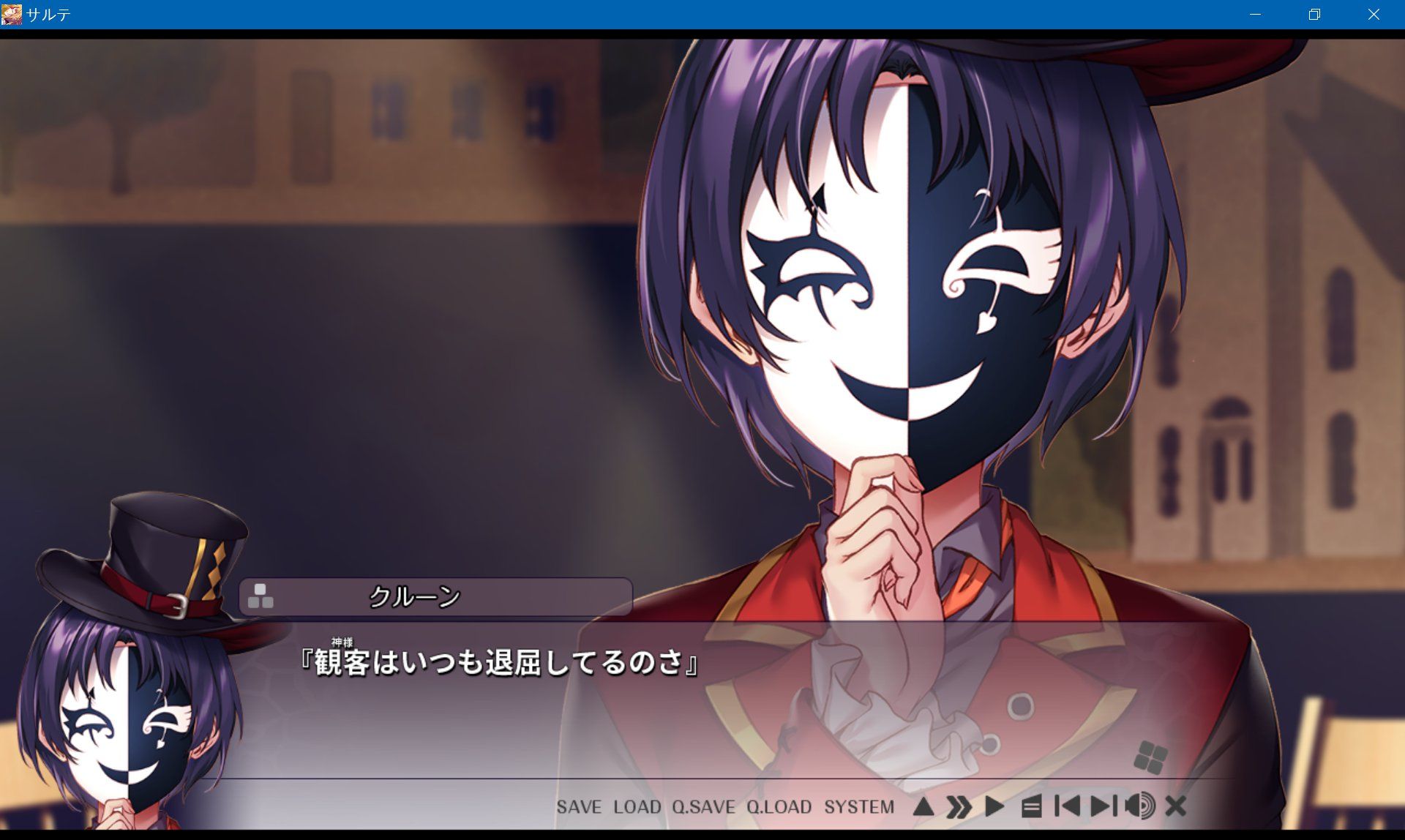
“For the gods, of course. They’re bored, you know. And…”
“And…”
“Before you died, your greatest wish was to go to that opera competition one more time, wasn’t it?”
Saleté remembers. She was originally supposed to go in Salomé’s place to that competition—world-class, something she longed for—but the coup came earlier than expected, and she lost her chance to go.
“Performing there was your life’s wish, so to grant it, I prepared this stage. To let you complete such a great performance.”
Saleté looks gratified, but the clown still has something to say:
“I have a few questions for you.”
“What?”
“Did you really consider Marie a good friend?”
“Not exactly. I was just using her. And I really didn’t like that saintly attitude of hers. When I learned she even sold her body to keep the church running, I wanted to give her a hard time when she came to save me, to show her how cruel people can be.”
“But you let her go in the end.”
“Maybe I still pitied her.”
“And did you love Jean?”
“No. I just used that soft-hearted man as a woman to achieve my own goals.”
“Do you hate Salomé?”
“Half and half. I hate her, but sometimes I hate myself too, pity myself, feel like my life is a clown’s.”
At that, the clown in front of her removes his mask. Beneath it is Saleté’s face. Two Saletés appear on stage.
Neither is surprised. Instead they look gratified, because this was always a perfect performance prepared by Saleté for Saleté.
Saleté died an unnatural death, leaving behind the regret of never giving a perfect performance. In the world after death, through her own arrangements, on this “stage watched by God,” she gave a perfect performance and received her own applause.
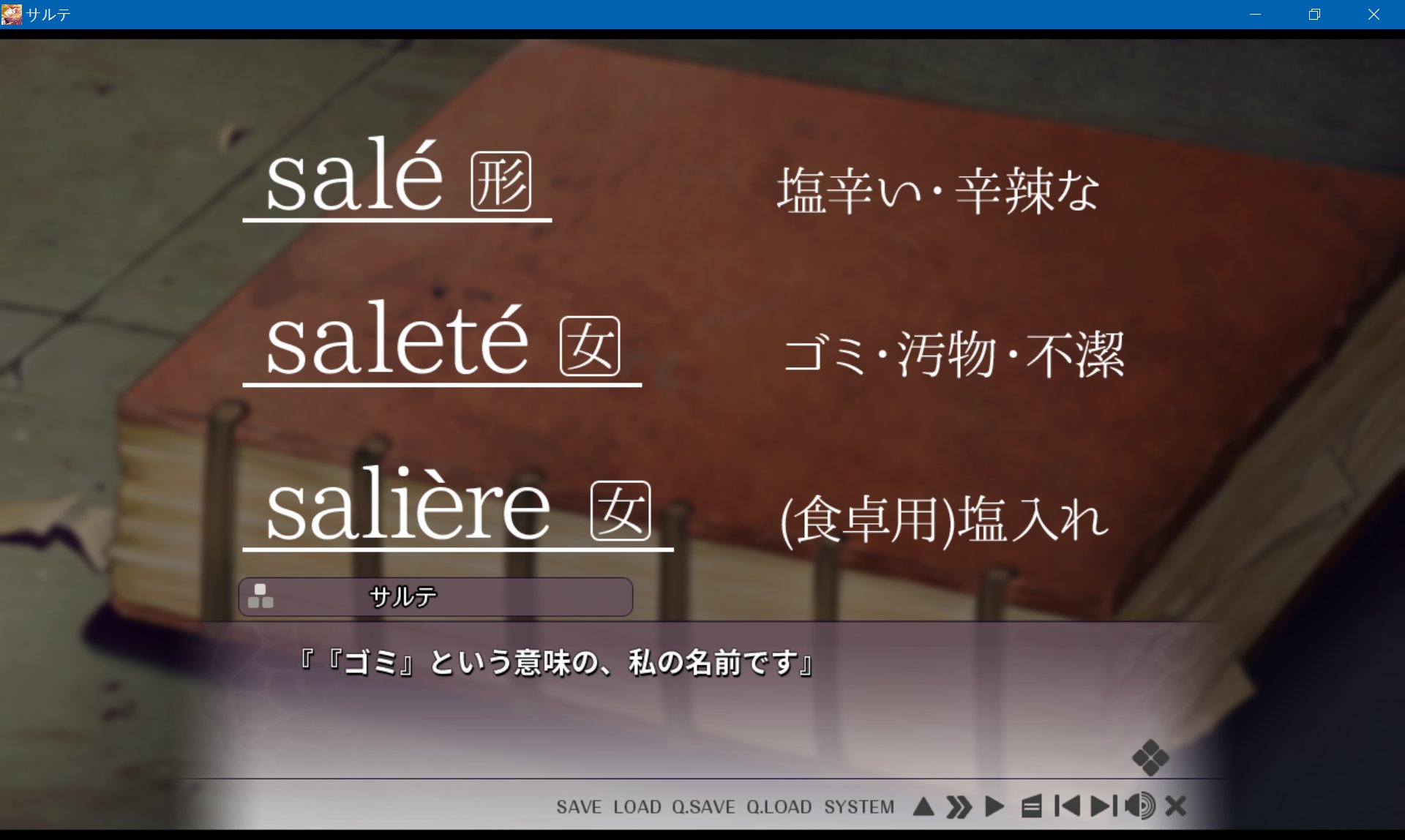
The name of this performance is Saleté—French saleté, meaning “dirt,” “dust.” In other words, Nothing.
Wasn’t Saleté’s life itself like “dust”? Born as someone else’s shadow, dying absurdly too. It looks like tragedy, yet also like comedy.
“A person’s life, seen from their own perspective, is a tragedy. But seen from others’, it’s a comedy.”
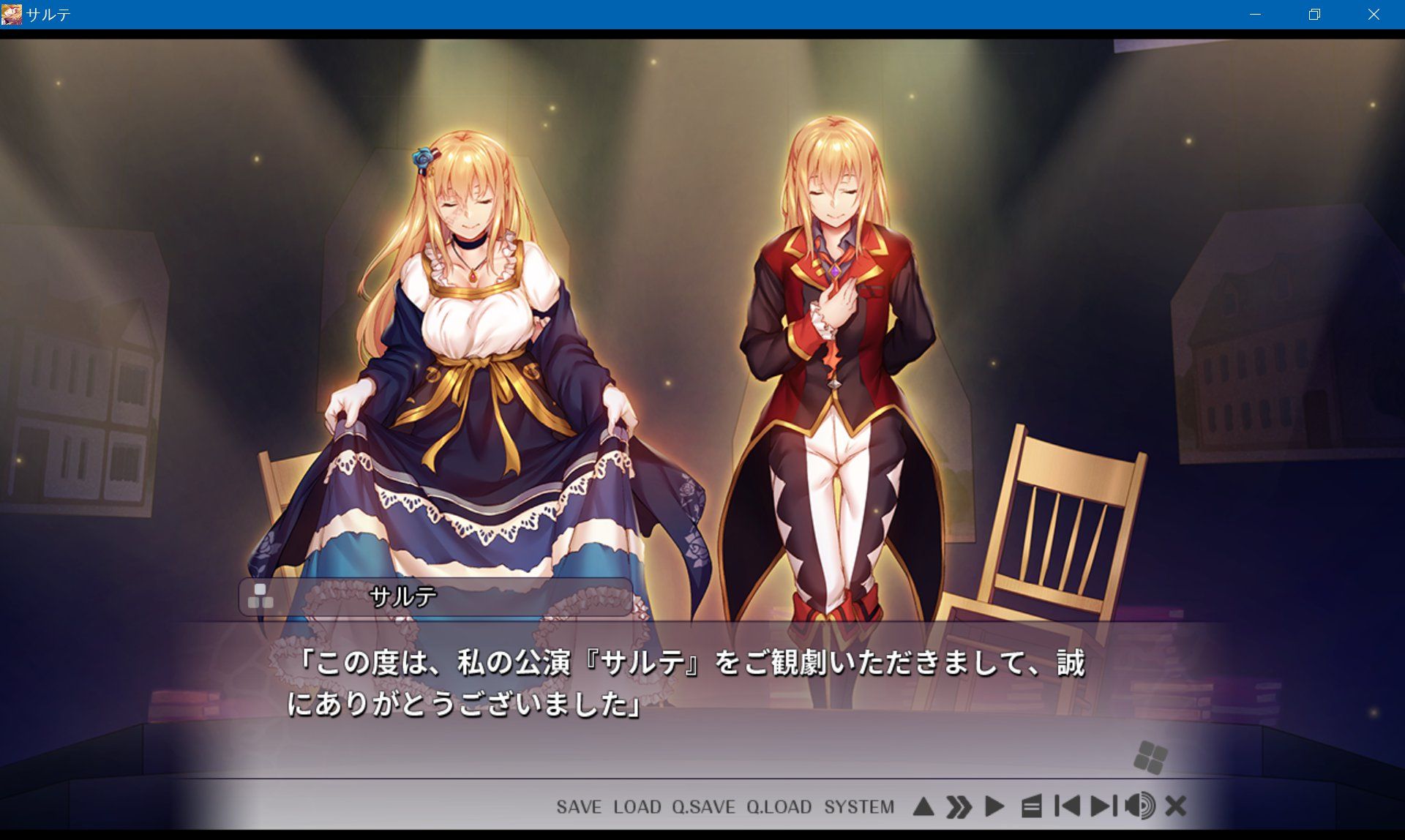
The curtain falls, and the comedy called Saleté comes to an end.
I’d been keeping an eye on Saleté for a while. My gut told me this game wasn’t simple.
But the game leaked really late, and I didn’t have the noble 300 mystery to crack the first batch, so I had to wait for the second batch to play.
The story itself is worth mulling over. It tells of Saleté, a girl from a poor family who, because she looks like the princess, is raised as a “stand-in” for a cruel and incompetent princess, then through twists and turns is used by others and becomes a pawn in a coup. In the end she’s discarded and dies a very pathetic death.
The protagonist Saleté ultimately calls herself Nothing and “dust,” which is clearly meant to echo the line the game keeps emphasizing in its title.
“人生は主観的にみると悲劇だが、客観的に見れば喜劇である” “Life is a tragedy when seen in close-up, but a comedy in long-shot.”
This line was also said by the famous mainland Chinese stage actor Chen Peisi, though his version is “the core of comedy is tragedy.”
It’s not hard to understand. When you see something funny or someone ridiculous, there’s usually some poor bastard behind it. From that bastard’s own perspective, it’s a tragedy, but to outsiders, that bastard creates the comedy.
Like how I often write self-deprecating and unlucky stuff on my blog, and many people say they enjoy reading it. Some idiots even go “hahahaha” at me on Twitter and Weibo, thinking I must be happy about it too. Same principle.
Saleté’s story highlight is depicting that sense of absurdity peeking through the tragedy of the heroine’s “one big mess, and in the end nothing.”
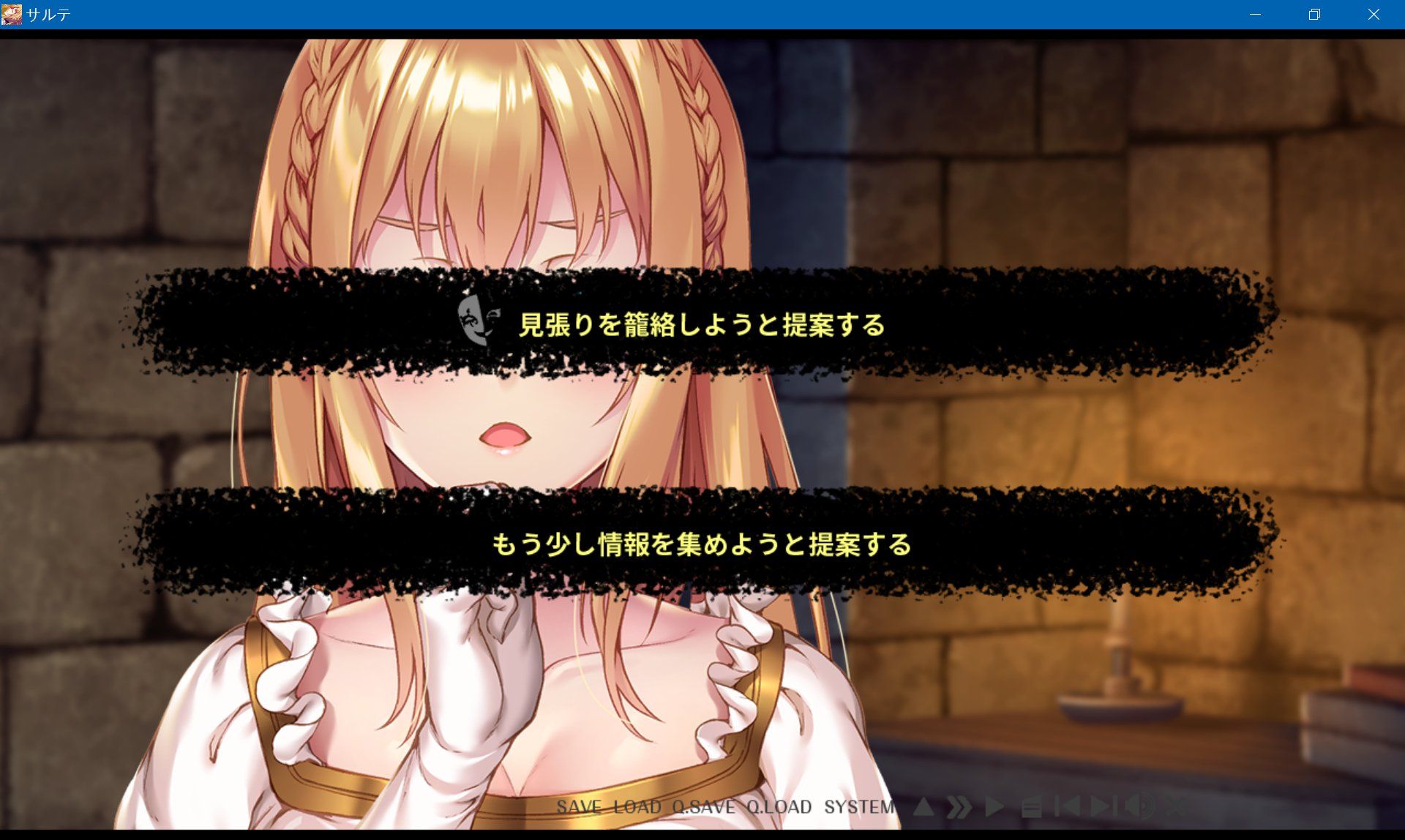
Of course, the game has plenty of flaws. Many details don’t hold up under scrutiny: the setting between countries is too hasty, the political intrigue too simple, the soldiers’ behavior too “below the belt,” the heroine’s emotional shifts too sudden, and the final dark turn utterly baffling. But then again, if we treat Saleté’s narrative style as simple “opera style,” it’s easier to understand. Except this is an eroge with mostly dialogue, and the dialogue style has no operatic flavor either, so overall it feels rather awkward.
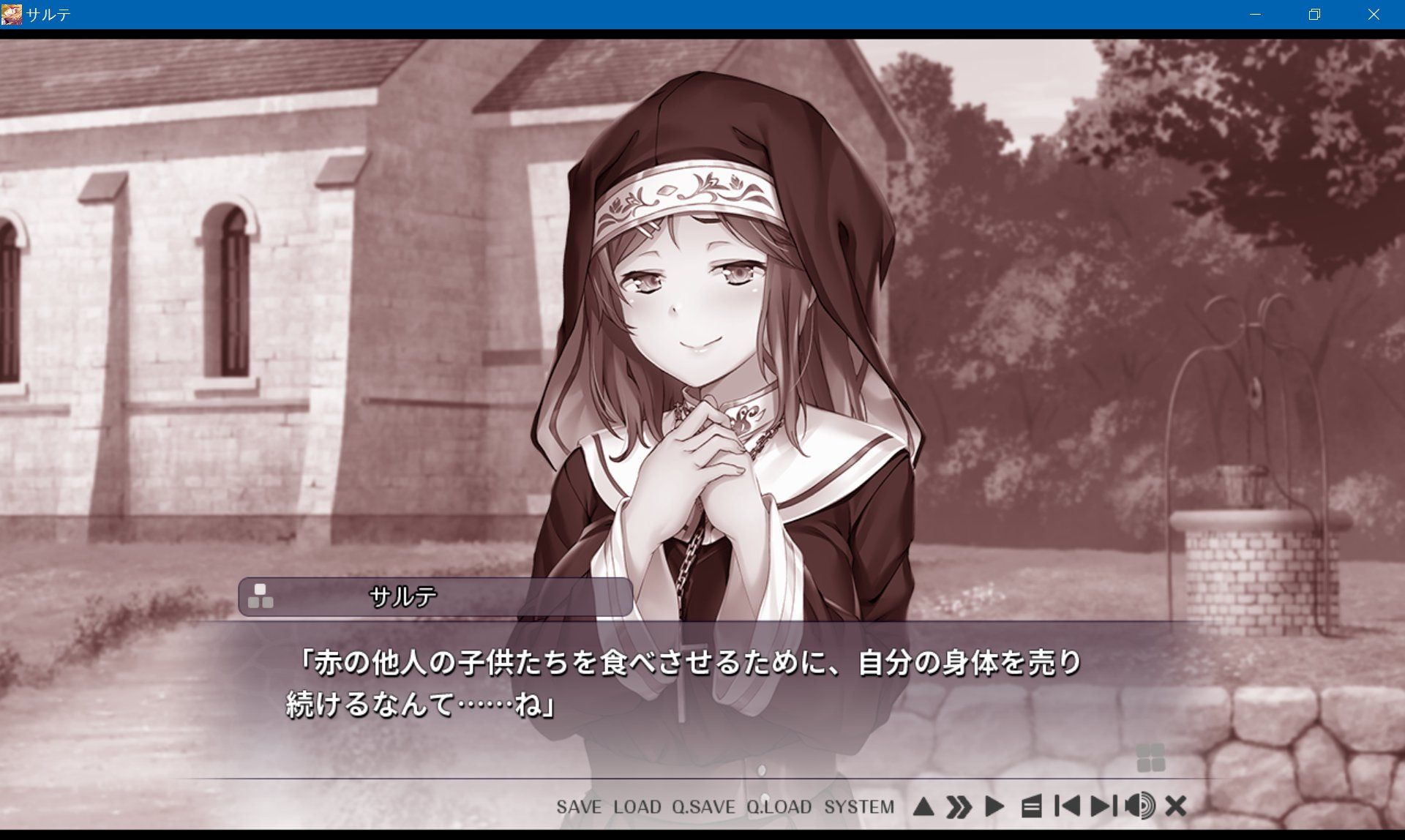
The story has imperfections, but overall the narrative flows very smoothly. This is thanks to the complete absence of “long stretches of daily banter and filler.” The plot is extremely tight, easy to read in one sitting, and the length is just right—not too long, not too short. The immersion is quite good.
In other words: “The story has plenty of holes, but it reads smoothly and feels good, so naturally you don’t notice them as much.”
The music is also spot-on. The person in charge is still Yukihito from Karenai Sekai to Owaru Hana. Both have the same feel—silence when it should be silent, music rising slowly when it should. It sets the atmosphere very well.
The heroine’s CV is the well-known Chinese-language pervert voice actress: Miyononei Mei. But her performance here isn’t actually that great. I don’t think she showed her full ability, but it’s not bad either—the type who does the job for the paycheck. Maybe the game really had a limited budget?
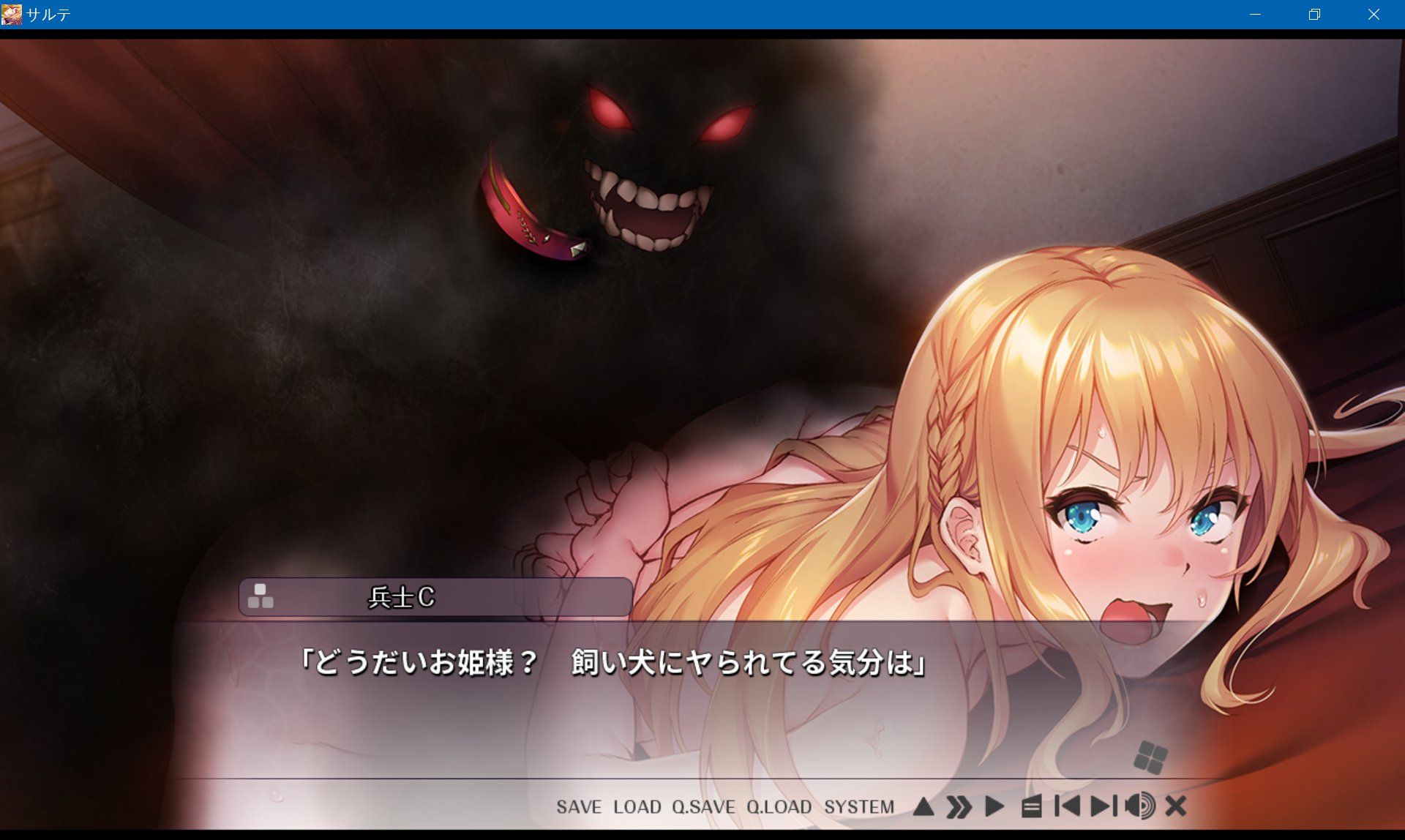
I don’t know how to evaluate the art style. It feels fairly standard. But the game has a lot of HCGs, and since the heroine suffers a lot of humiliation, most of the HCGs are humiliation scenes. They’re uncomfortable, but at least they’re tied to the plot and tightly integrated with it—you could say they’re an inseparable part of the game. Some say it’s very “practical,” but I’m asexual and wouldn’t know, so I can’t really comment.

All in all, for a game of Saleté’s caliber, it’s well worth a try—provided you don’t mind “rape CGs.” I’ve seen plenty of people online criticize it, calling it pretentious or saying it’s “written like shit.” But I say: no matter how many flaws it has, it’s far better than those traditional “watered-down daily life” games. How long has it been since I encountered such a direct storytelling work? The story isn’t perfect, but as long as it tells a story, that’s enough.
Comments are hosted on the Chinese main site. This mirror is read-only.