Panical Confusion (パニカル・コンフュージョン) Review
Let's Go Home, My Princess
My libido’s been through the roof lately, and on top of that it’s been ages since I played a game with a genuinely cute heroine. Everything on my plate lately has had art that doesn’t do it for me and plots that are aggressively stupid.
Then a thought surfaced: I wanna play a moe nukige. Like, right now.
So I dug through my abandoned-games folder and pulled out Panical Confusion (パニカル・コンフュージョン).
I’d actually downloaded this one ages ago and never touched it, because Japanese otaku didn’t rate it well. Most of what they said boiled down to “the art’s the only good thing about it,” so I kept bumping it down the priority list.
But I’m not the same person I was back then. What I need right now is exactly this kind of moe nukige where the heroine is cute and bonable and there’s nothing else going on — plus heroine #1 is drawn by 白もち桜, so, y’know.
So I opened it.
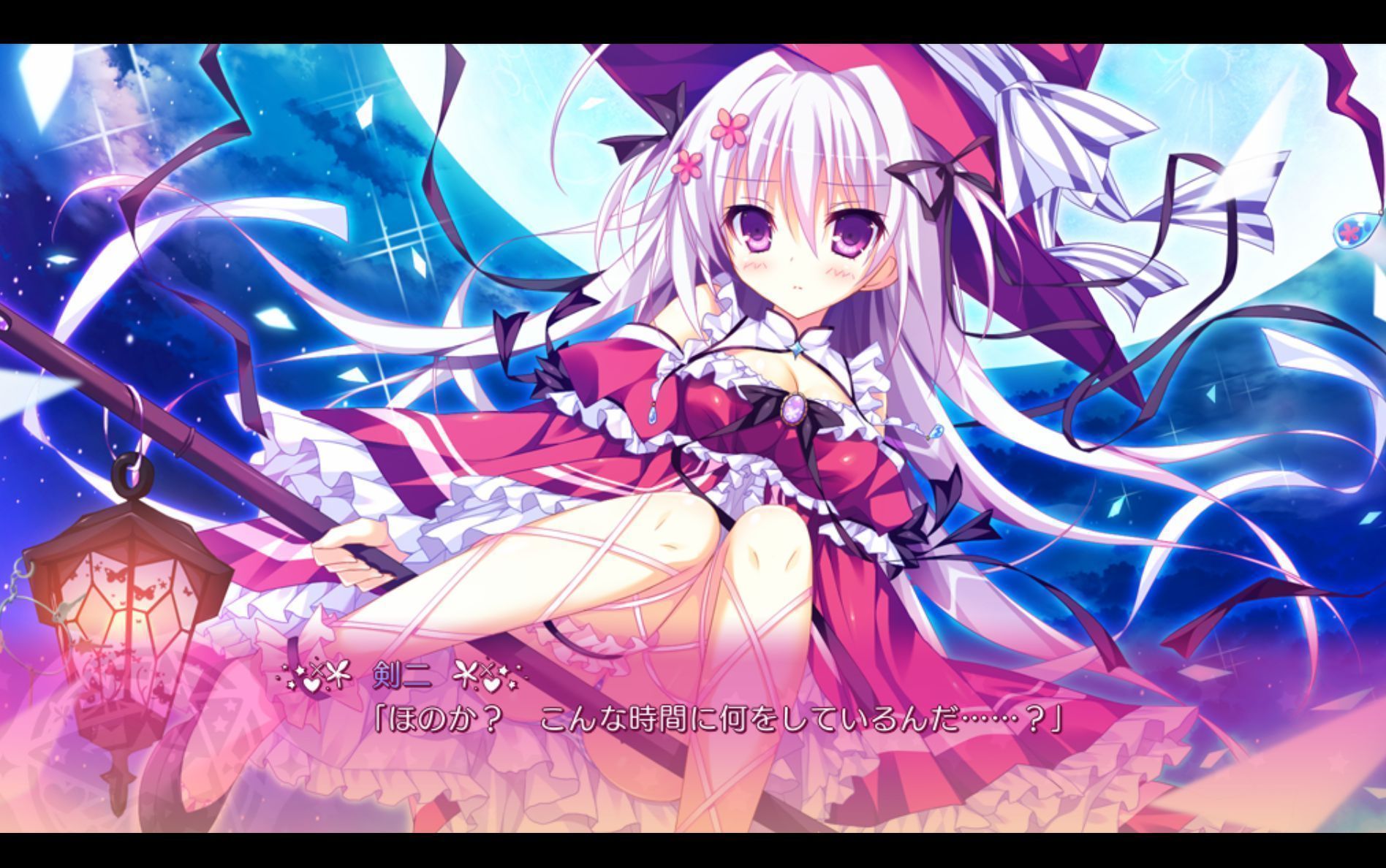
The game isn’t long, but it left me thinking. The reason’s simple: it’s way better than I expected.
Honestly, way, way better…
The main plot is pretty straightforward. The protagonist, Tsukahara Kenji, is a mage living in “the hidden world where mages exist.” His childhood friend Hanabishi Honoka was born with immense magical power — enough that she’s set to inherit the family title “Elmiscia.” But Honoka has zero confidence in that future burden, and she’s also kind of a brat who’d rather play. She dreams of doing normal girl things: going to school, making friends, wearing pretty clothes, going out together. Mage training is misery for her, so she decides to… run away from home.
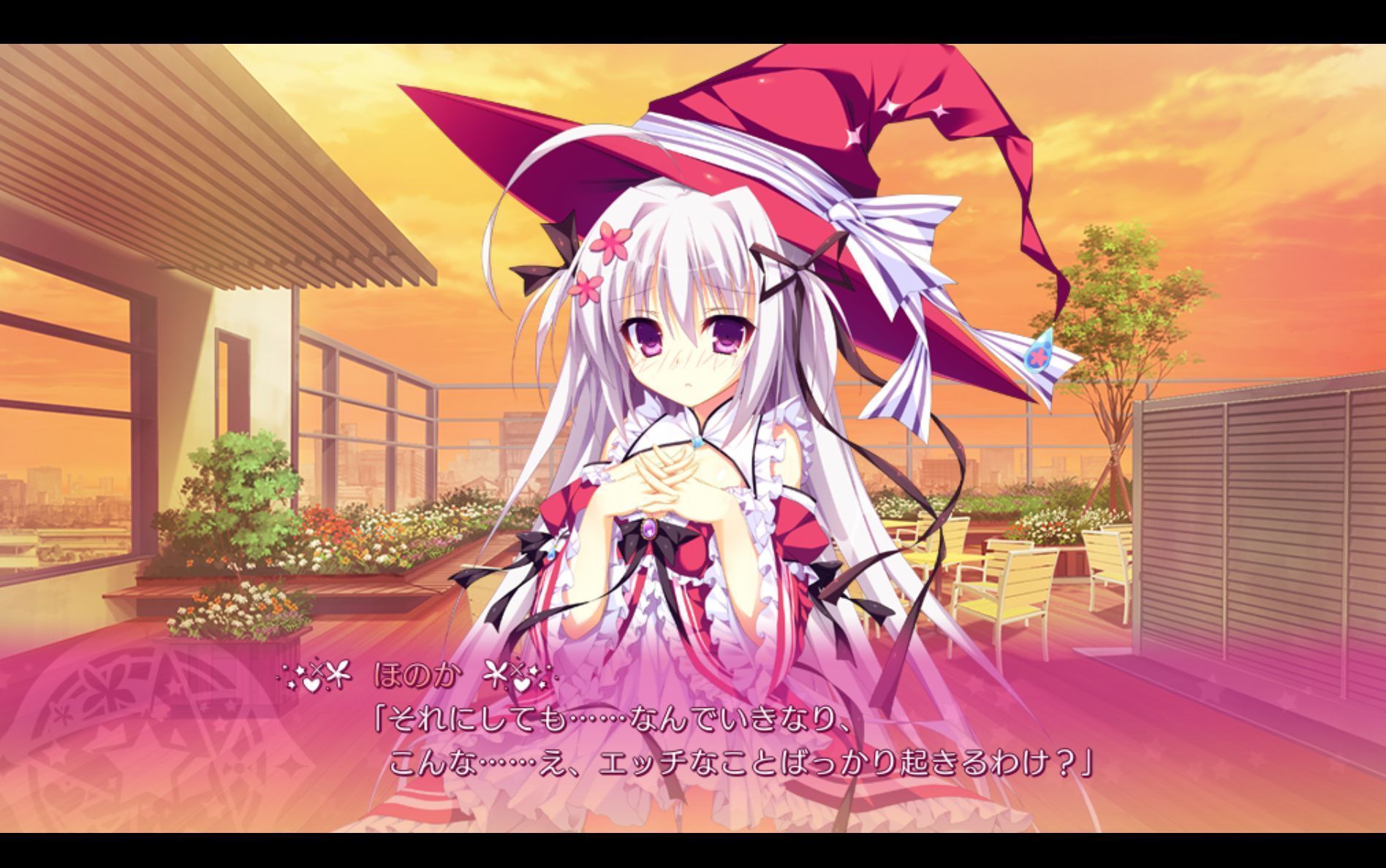
Honoka escapes the hidden mage world, goes outside, hides her identity, and blends into a school as an ordinary high schooler. Her bolting gets back to our protagonist, and he decides to represent the mage family and drag her home.
He finds her at school pretty quickly, of course, but she refuses to go back. She uses her magic to lob a bunch of giant fireballs at him and drives him off. In the end he can only give up on dragging her back and decides to stay, reasoning with her emotionally.
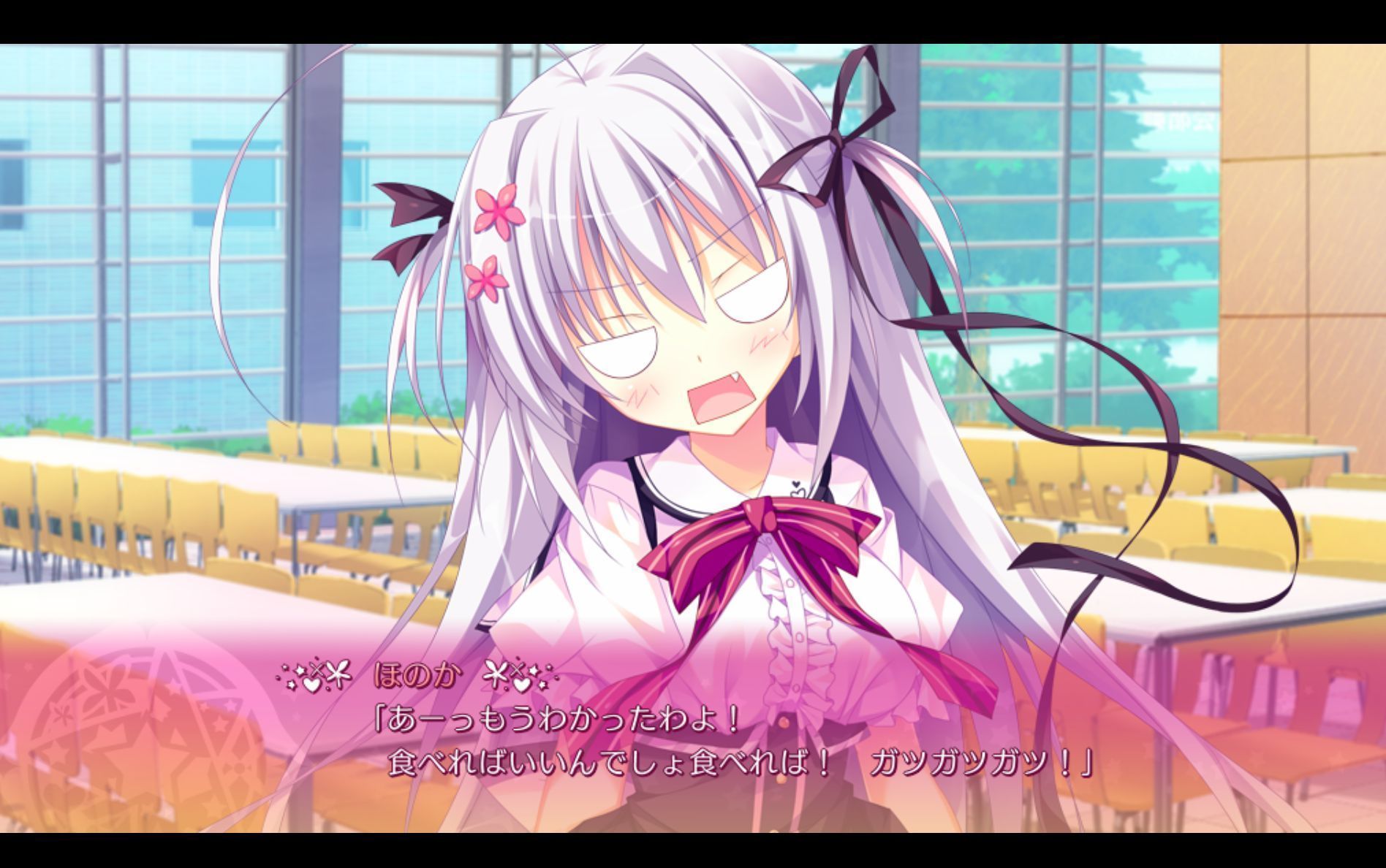
But Honoka’s little adventure quickly causes trouble. Her magic is so huge that it starts causing anomalies at the school — including the protagonist suddenly getting inexplicable luck with women. And Honoka herself keeps accidentally producing giant fireballs, which nobody can handle.
Eventually, to become a proper “ordinary girl,” Honoka — with the protagonist’s encouragement — decides to learn to control her magic under him, and she makes some progress. Then the protagonist’s mentor shows up and says that if Honoka fails to control her power, her running away this time will cause a magic imbalance — the protagonist might lose his magic, and the state of the hidden mage world could change as a result.
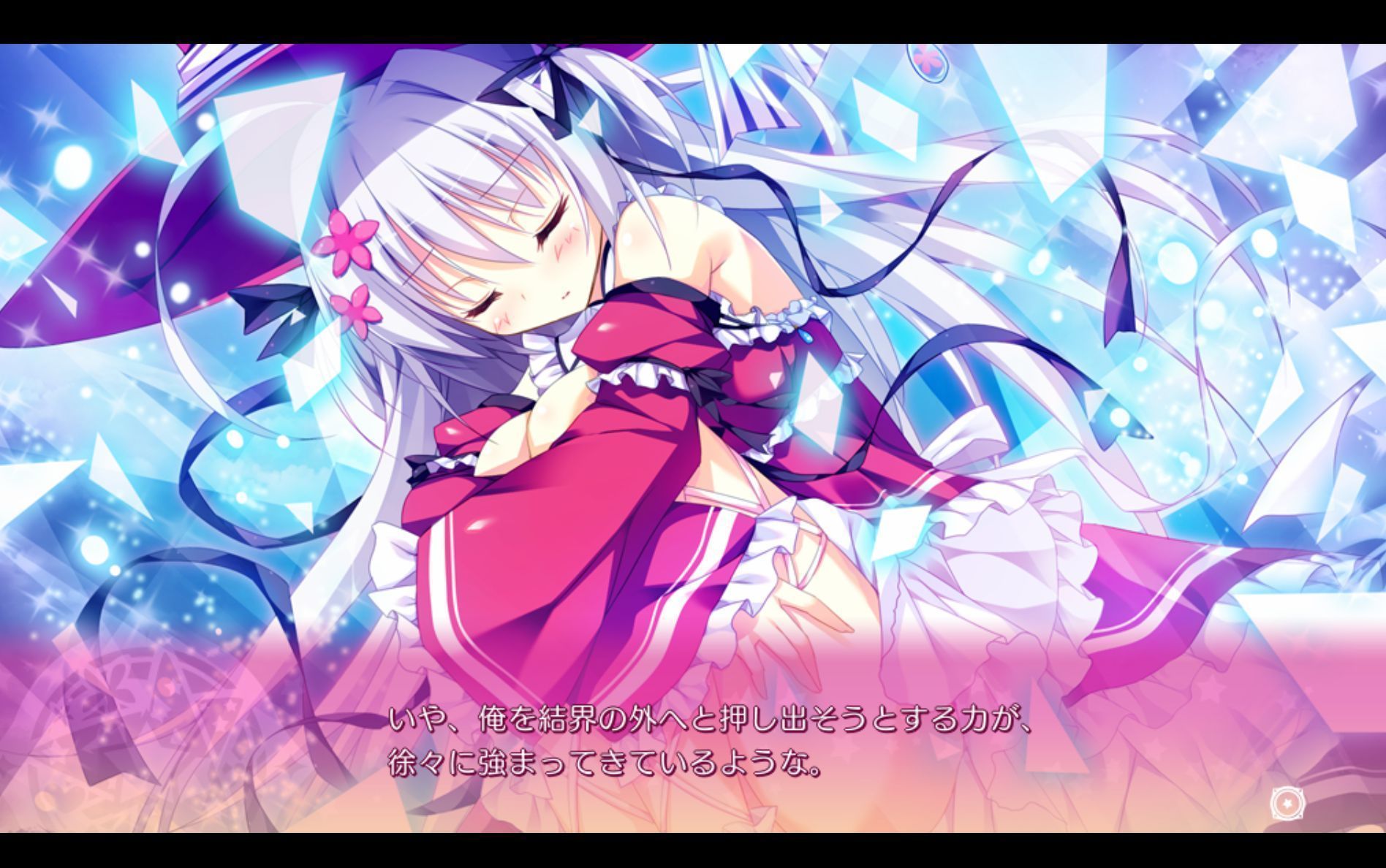
Honoka, who already had no confidence, realizes her running away caused this whole chain reaction, and the timid girl just shuts down. She gets so depressed she won’t even talk to the protagonist, and ultimately loses control of her magic again.
Of course our protagonist shows up again, saves the out-of-control Honoka, gives her confidence, and gets her back on her feet. He and Honoka successfully return to the hidden mage world, she becomes the heir, and they end up an enviable mage couple. Roll credits.
There are other heroines you can pursue, but they’re basically unrelated to the main plot. It’s just “the protagonist comes out to find Honoka but ends up banging some other girl and forgets what he was supposed to be doing.” Feels like routes existing purely to be routes.
The biggest surprise here wasn’t the plot itself — it was the heroine’s presence and the feeling of romance.
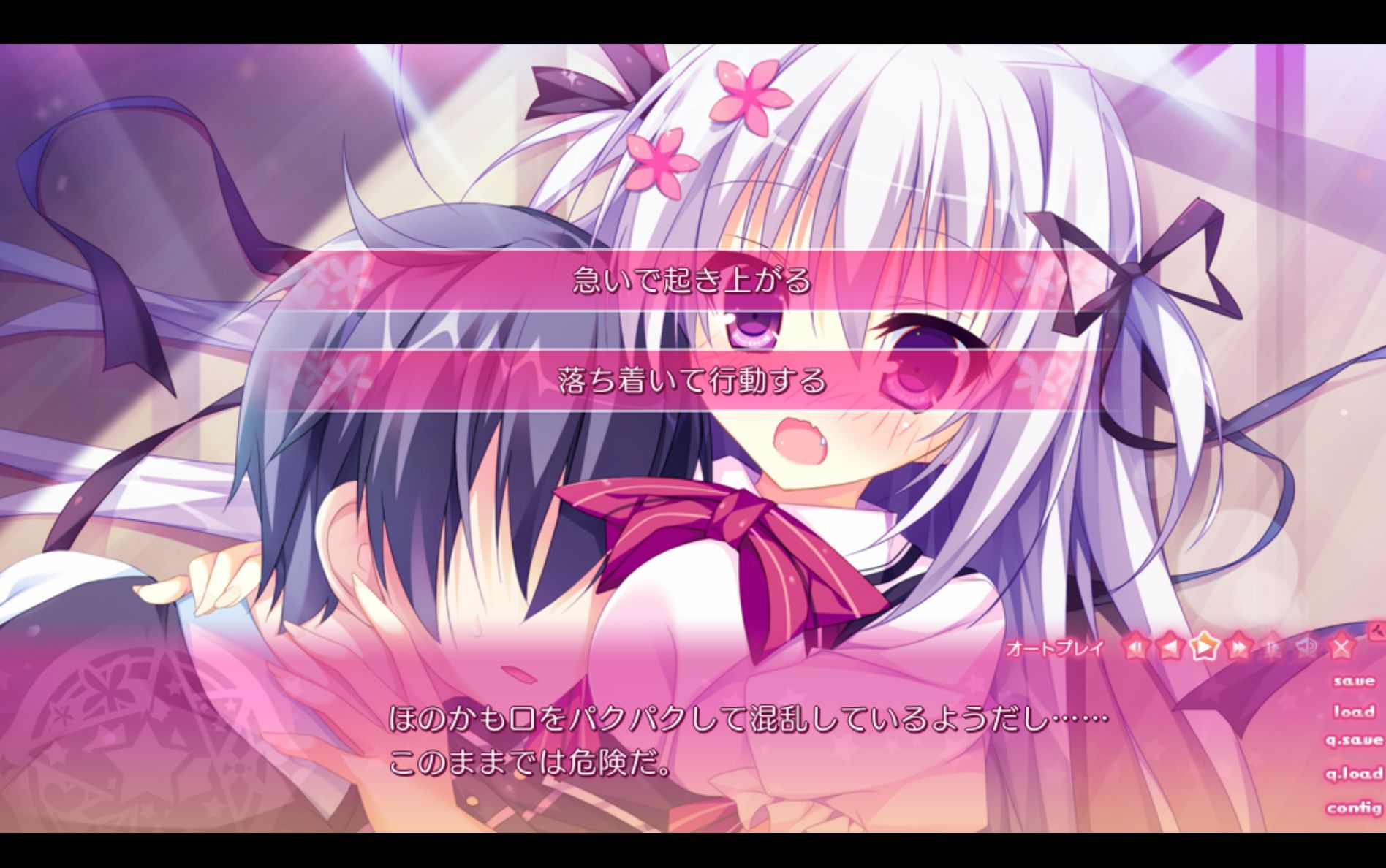
Unlike your typical moege nukige, the heroine here has a fairly complete personality. I mean Honoka specifically: she’s a girl who’s a bit prideful and a bit timid, and a little devil toward people she’s close to. Girls like that actually exist in real life, and Honoka’s portrayal is remarkably vivid — in the dialogue and in the CV’s performance alike. Even if Ogura Yui is an old lady now.
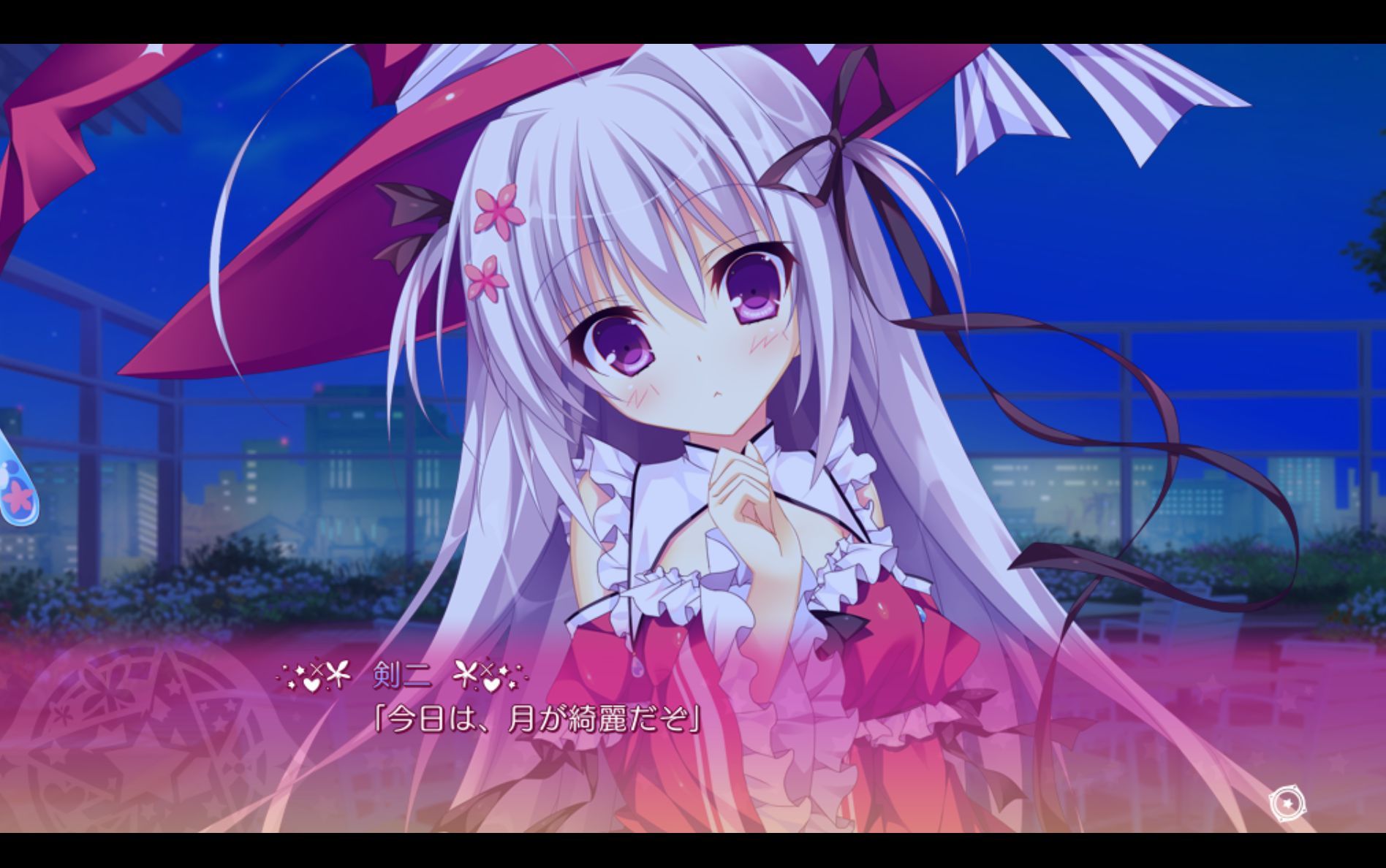
The conversations between the protagonist and heroine carry a thick “romance” feeling. The way Honoka acts spoiled with you, the way she gets angry — it’s almost identical to a real girl (don’t ask me how I know). The confession scene is even literary, busting out the “the moon is beautiful, isn’t it” line everyone loves. And the romance isn’t one-sided sweet talk from the protagonist either — Honoka interacts back.
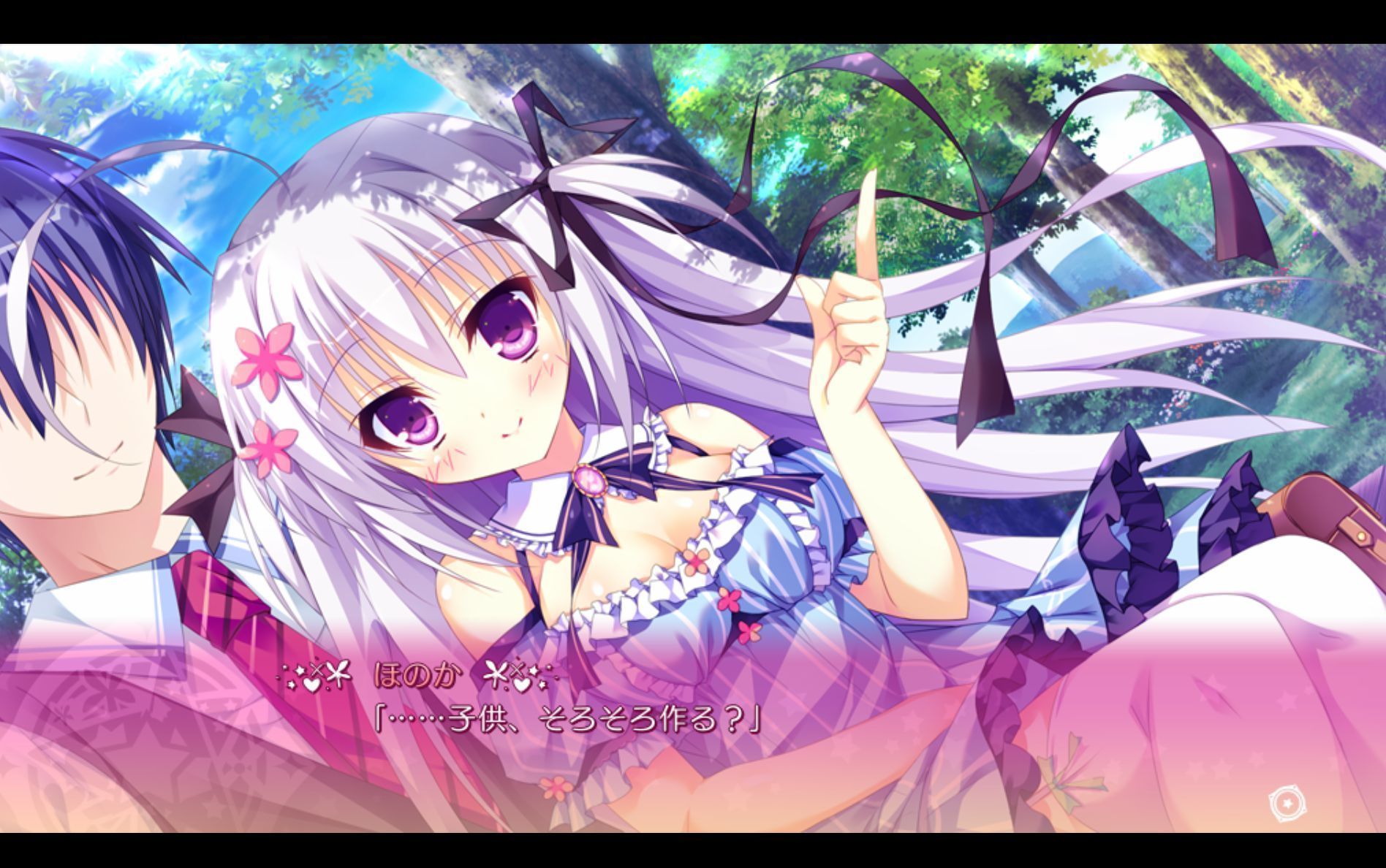
What stuck with me most is how the protagonist constantly encourages the timid Honoka — be strong, be confident, believe you can become a great mage — and tells her “Honoka, you’ve always been amazing in my eyes.”
And Honoka actually fires back: “Oh? Is that so? You say I’m amazing — so where exactly am I amazing?”
The protagonist was just tossing out a compliment and gets completely tongue-tied, and then Honoka flashes that little-devil smile. Interactions like that are exactly what I can’t get enough of.
Honestly, for a moe game, managing to make the characters cute and nail the “romance” content at the same time is already praiseworthy.
But that’s not all the game leaves you with. It was marketed as a nukige, and while the plot and characters reach mainstream-game levels, the nukige DNA is all over the thing. There’s also some bad-taste humor…
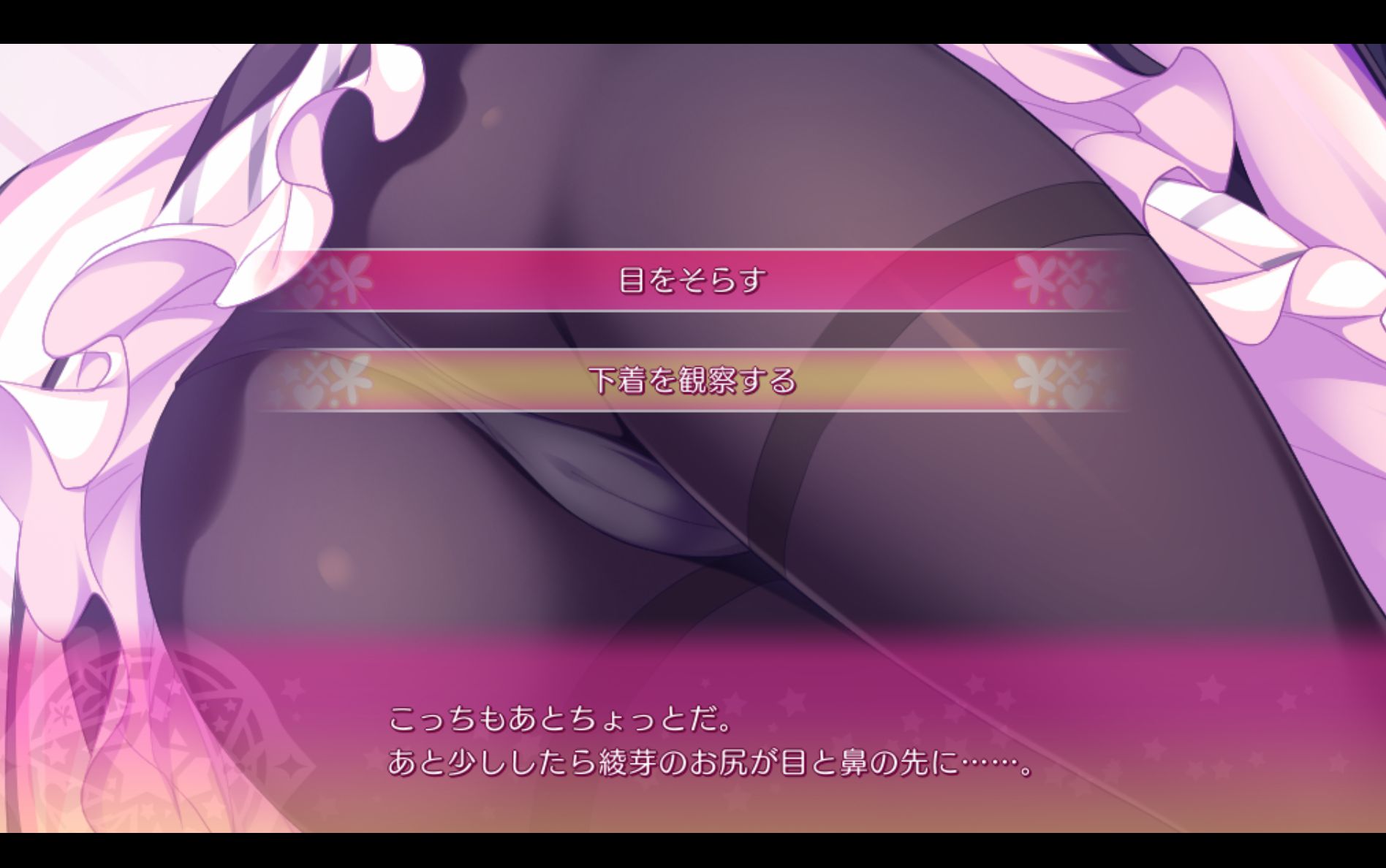
Every so often the game throws in an “erotic incident” for the protagonist — a girl’s panties showing, a black-tights wardrobe malfunction, that sort of thing. Then an option pops up, and the options are a joke. Most of the time it’s two flavors: be a “gentleman” or be a “hypocritical pervert.” Like, if you spot the heroine’s black tights showing, it’ll ask whether you “warn her” or “keep looking a while longer.” These choices don’t really affect the ending, but they’re fun to read. I won’t tell you which one I picked. (The pervert one.)
For a 2015 game, Japanese otaku seem to have expected a bit too much from it. If this came out in 2020, I’d say it’s an 80-point game at minimum. Sure, the heroines other than Honoka are weak enough to dock some points, but it’s absolutely not a 50-or-60-point game. Honoka’s route alone exceeds expectations.
Oh, right — the game’s OP is worth mentioning too. Besides the flashy effects and catchy melody, the lyrics are unusually tied to the game’s content. About Honoka, naturally.
こんなに遠くの街にやって来たんだから (We came all the way to such a distant town)
一緒に悩みを乗り越えて (Let’s overcome our worries together first)
帰りましょうよ、お姫様 (And then let’s go home together, my princess)
That song fills my head with Honoka. In the game she really does exist as “the princess.” It’s been a long time since a game made my heart skip. Getting to take Princess Honoka home with me really is a kind of happiness.
Comments are hosted on the Chinese main site. This mirror is read-only.