Aonatsu Line (アオナツライン) Review
The Youth You Want, Feat. Miss Wang / Pockies Wili
The word “youth” shows up everywhere. But what is it, really?
You see people saying this all the time:
“That TV drama ended, and my youth ended with it.”
“That anime finished, and my youth finished with it.”
“So-and-so got married, and my youth is over.”
If “youth” is just a state you’re in while you’re young, then it ends on its own as you get older. It doesn’t depend on some person, anime, or TV drama.
For different people, “youth” means different things.
For Mr. Po, youth is loitering around the stairways of an elementary or middle school in summer, glancing up now and then at the black tights under some JK’s skirt, then replaying the memory over and over while getting chewed out at the police station and the student affairs office, wearing a naive little smile.
For Miss Wang, youth is strolling through a rain-soaked campus with the warmth of Pigeon Girl’s lips still on her cheek, heart pounding with anticipation for the make-out session waiting in the lady teacher’s office.
For me, youth… is holing up in an air-conditioned room gaming, an endless supply of cola within reach, staring at my greasy gut, reluctantly opening MyIE2 to find a forum, and furiously hammering the keyboard to pick fights and flame people.
People at different levels express “youth” differently too. Yeah — how you lived when you were young is what your youth looks like. The “youth” you miss is just you wanting to be young one more time.
That’s why the youth theme draws in so many films, novels, anime, and games. A fantasy world can always satisfy your longing for a beautiful “youth.”
So what does a perfect “youth” look like?
Mr. Po would say “summer, JK, older women.”
Miss Wang would say “campus, night, younger girls.”
And I’d say “Natsuwa Kona, Natsuwa Kona, Natsuwa Kona.”
Take a balance point across those elements and you get this game called Aonatsu Line (アオナツライン).
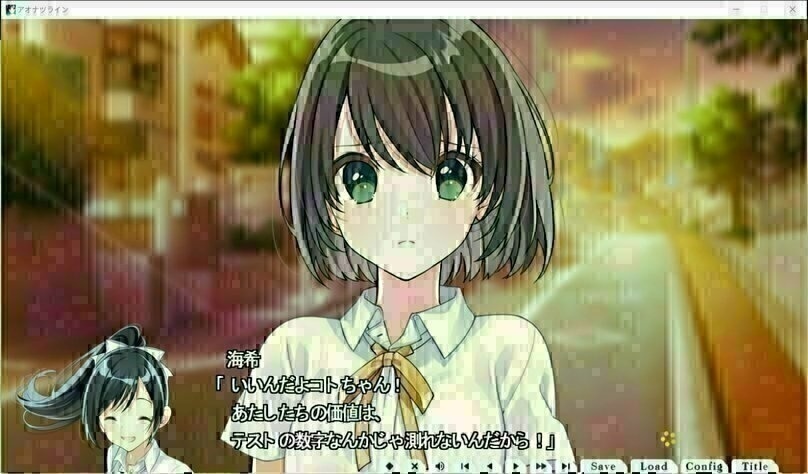
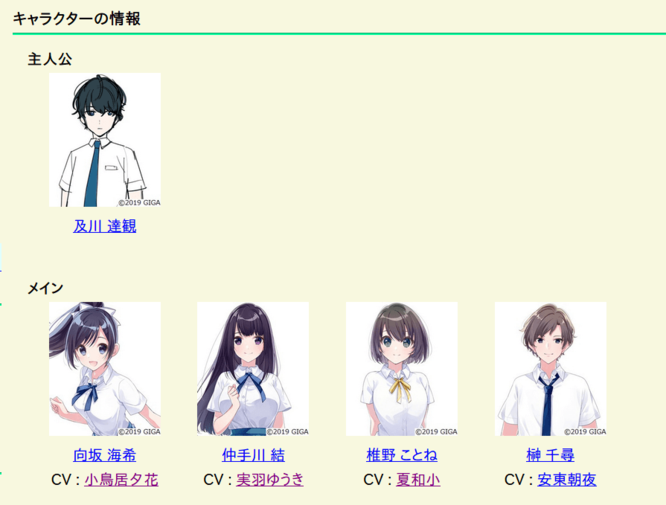
The story is simple enough. Our protagonist, his childhood friends Miki and Chihiro — one guy, one girl — all start at the same new high school, where they also meet an old-fashioned, mature-acting older girl, Nakategawa Yui, and a junior, Shiino Kotone, who’s being bullied by the school’s delinquent crew. They form a little group. Summer break is coming, so everyone plans a “summer project” — basically, do something with the summer vacation…
But of course it can’t be that simple.
First off, Kotone, the junior who joined the group last, comes with a pile of baggage.
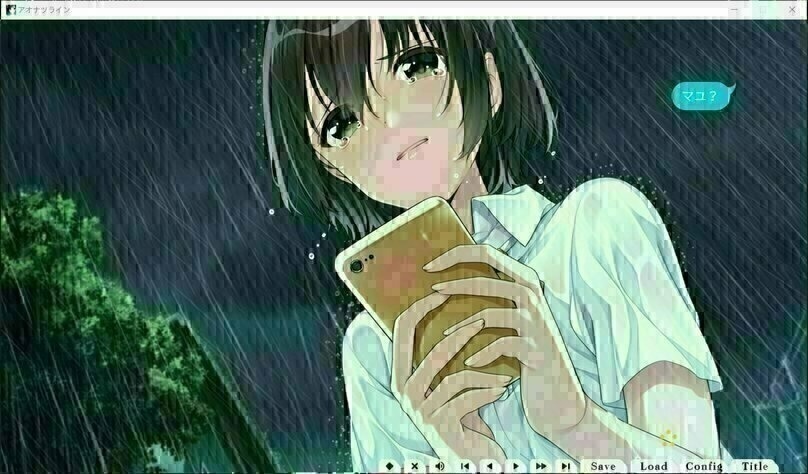
Kotone had planned to restart in high school, make a name for herself, but she quickly caught the eye of the school’s delinquent boss. The boss was very “kind” to Kotone, but you all know how this goes — it’s not about friendship or school spirit. He wants her body.
Kotone isn’t exactly a pushover either, and she dodges the boss’s advances by every means. The boss gets annoyed and pulls the classic “play hard to get”: kick Kotone out first, then have his underlings spread rumors so she can’t survive at school and naturally comes crawling back.
Then the protagonist swoops in and takes her, and she becomes a member of his little group. Naturally the boss is pissed and decides to keep making trouble.
So our protagonist, to win Kotone her freedom, goes to negotiate with the boss, and the boss proposes:
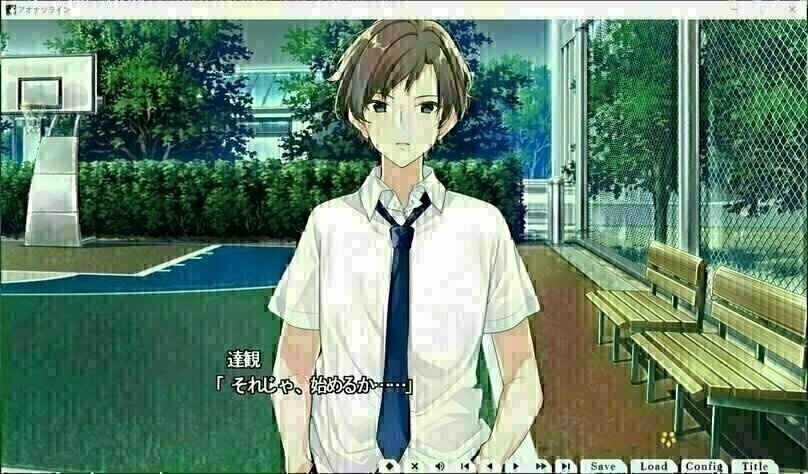
“You and your buddy Chihiro play a 1-on-1 basketball game. You win, I leave Kotone alone.”
And for the sake of drama, it starts raining, while the boss leisurely watches from a classroom window.
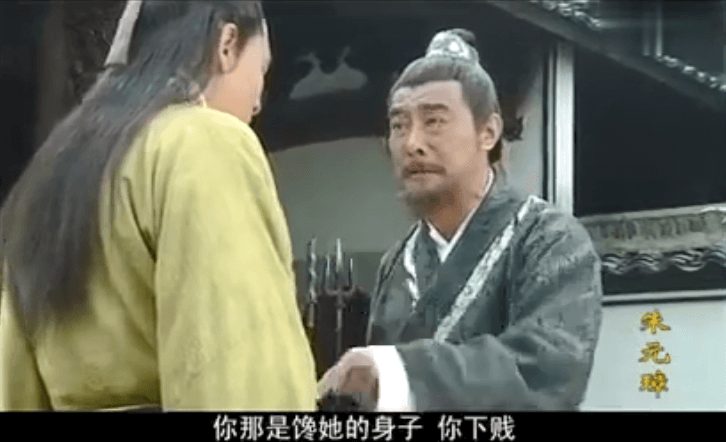
This scene always reminds me of this image:
Honestly, I don’t get this plot. They’re up against the boss — why does the protagonist have to fight his own buddy? Shouldn’t it be against the boss? And the buddy could just throw the game, problem solved. If he’s worried about hurting his buddy’s pride, the buddy could publicly humiliate the “boss” first and then lose in style — and tell Kotone that for her sake, basketball skill means jack. Flex and score with the girl at once, why not?
Of course, my confusion got questioned by Mr. Po. He told me a lot; I don’t remember the details, but roughly: “This is standard Japanese youth-literature plotting!” “The buddy carries a heavy past!” “The buddy’s personality absolutely won’t let him throw the game!” “This is way more meaningful than that shitty Whirlpool plot, you just don’t get it.” “Anyway, I can understand this plot.” “I told you to stop playing trash games, go play Chushingura.”
When I saw “Chushingura” I remembered I’d even received a Steam gift of Chushingura 46 from Mr. Po. Since I shouldn’t bite the hand that feeds me, and to avoid him endlessly pushing that game on me and forcing my medicine down my throat, I just accepted it.
Anyway, the protagonist and his buddy go one-on-one, the protagonist narrowly wins, the boss is a man of his word, and Kotone is free.
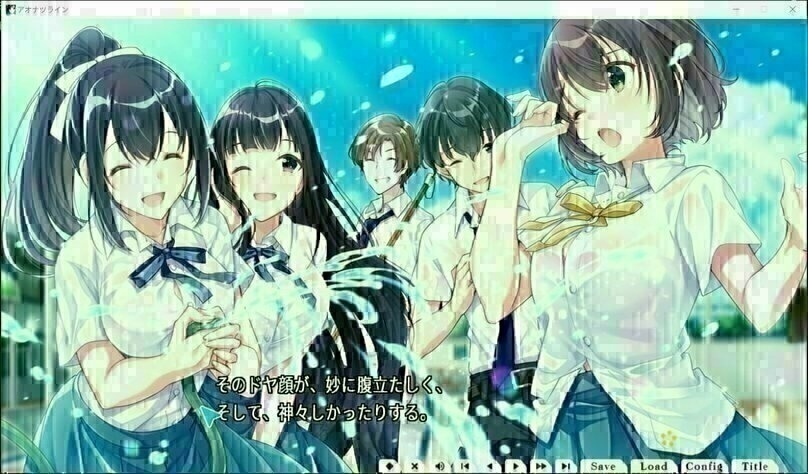
So Kotone officially becomes a member of the protagonist’s little group — and one of his harem.
The protagonist had had his eye on Kotone for a while. Me too. The moment I heard her CV I was thirsting for her. I kind of understand the boss now — maybe he’s a seiyuu nerd like me.
While the protagonist and Kotone are walking down the street, a scout spots her and asks if she’s interested in being an idol.
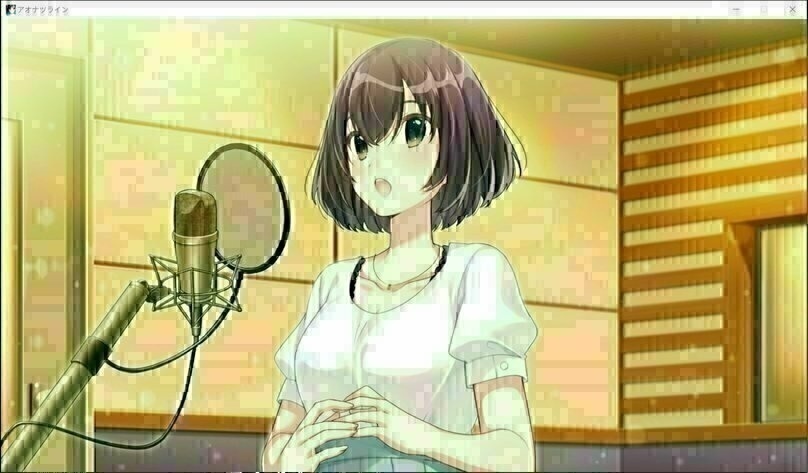
Kotone is actually pretty vain and loves singing karaoke, so an idol? Of course she wants it. So the “summer project” turns into everyone helping Kotone pass an audition.
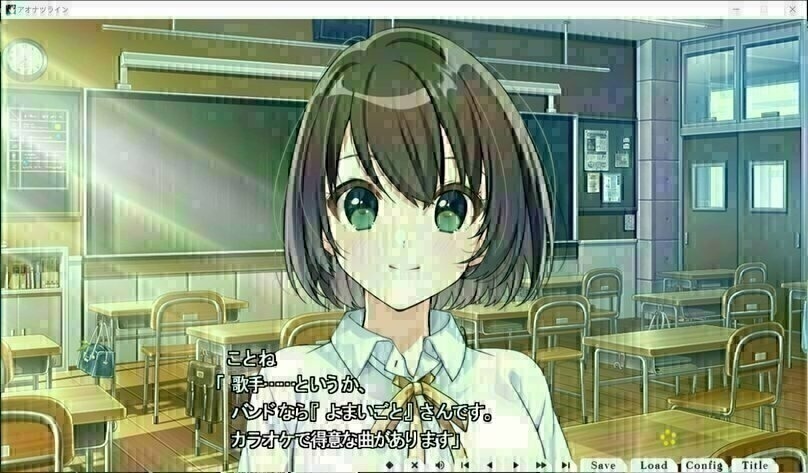
Kotone looks good (like Han Xue), sounds good too (angelic in a Shiki Natsume kind of way), and the scout says she could try the singer-idol route.
So with the protagonist and the group’s help, Kotone passes the audition, becomes a trainee idol, and will go on to be a full trainee. Apparently after two years of training she also has to learn basketball. That’s a story for later.
And the protagonist strikes while the iron is hot and takes Kotone. A great man once said, “In love, a senpai is a natural aphrodisiac.” So I find the protagonist’s behavior utterly contemptible — but what can I do, I can’t jump into the screen and hit him. I just have to watch him as a single man go at it with Kotone.
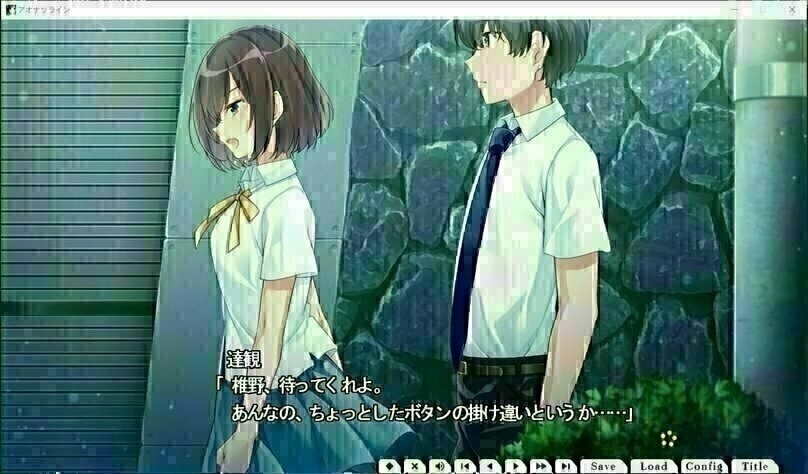
What I care about more:
Kotone’s going to be an idol. Can idols have boyfriends?
I firmly believe Kotone will definitely break up with this dumbass protagonist.
Then the scout and the agency manager say:
“Having a boyfriend doesn’t affect your idol career.”
Like hell it doesn’t.
Anyway, Kotone sets off on the idol path with the protagonist trailing behind like a lapdog. I don’t know if the cruelty of reality will corrupt her, or how far the protagonist’s feelings for Kotone will go. I can’t say.
Kotone’s story ends, and my youth ends with it.
But the game isn’t over — there are two more heroines.
And honestly, this “Nakategawa Yui” doesn’t feel like a real person at all. She talks slowly, always with a knife behind the smile, loves showing off her old memes nobody gets — an obvious losing-dog build. The last similar character was Kiba Mifuyu from Koi Senkyo Choco. I don’t really get why such a virtual character is in this story. Let’s talk about someone more real.
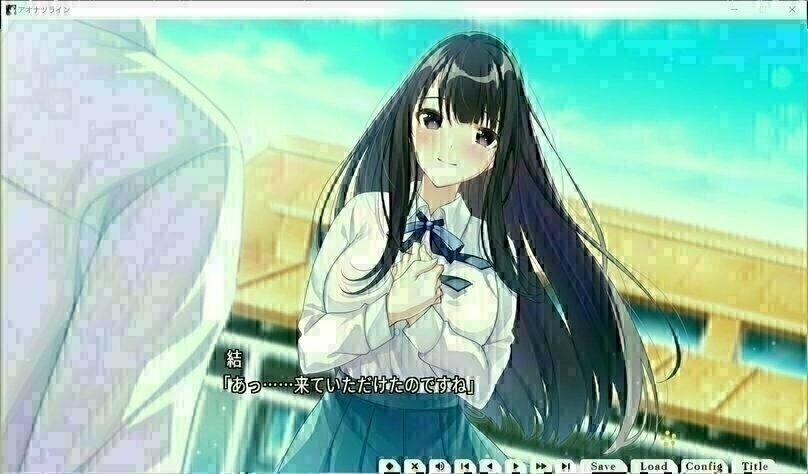
That is, the one standing center-stage in this game — Pigeon Girl — Sakisaka Miki.
Miki played with the protagonist since childhood, so naturally she has feelings for him. It was originally their two-person world, until a third party showed up: Chihiro, the second male lead, better-looking than the protagonist, richer, and more talented.
Normally you’d expect Miki to like Chihiro more, but remember this is a game — though many people are pushing Miki and Chihiro together, Miki still likes the protagonist. Chihiro, true to his “a losing dog should be a proper losing dog” good-guy nature, decides with an indifferent, flexing, aloof attitude to help Miki confess.
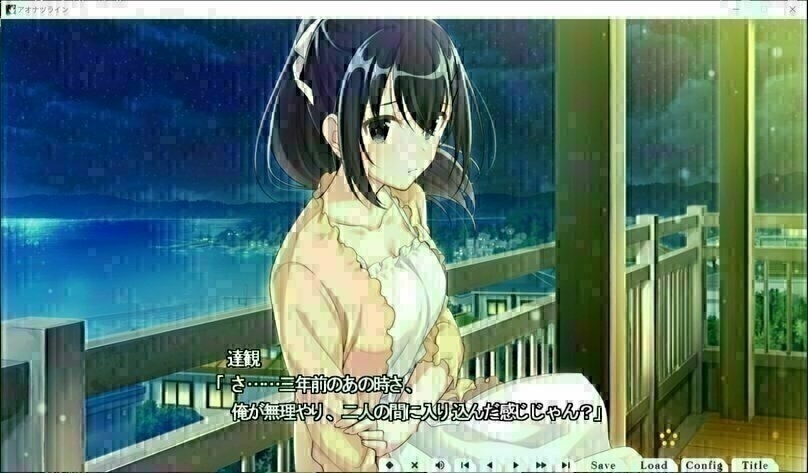
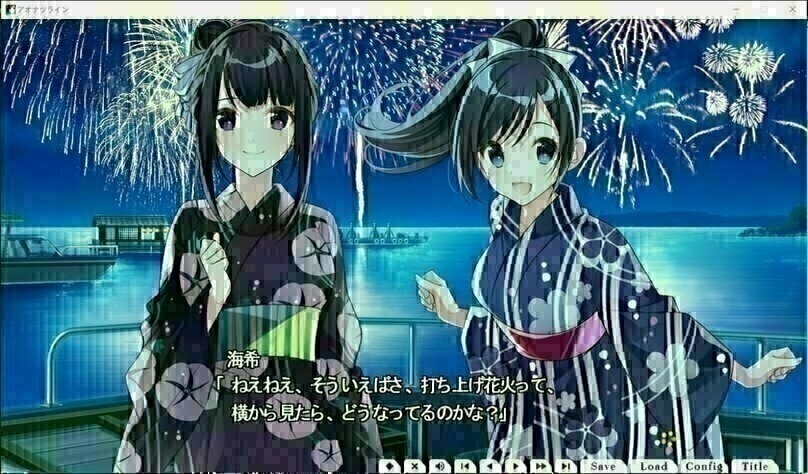
So one summer when they were little, Miki and the protagonist sneaked into the pool. They promised to watch the summer fireworks together, and Miki asked the protagonist: do you watch fireworks from the side, or from below?
And all the protagonist could think about was his buddy. He was sure Miki would like his buddy, not him.
So that childhood summer, Miki’s confession failed.
After that, Miki kept those feelings buried, faked her inner self, and acted like a dumbass… no, like a happy-go-lucky type. But inside she’s fragile — one tiny thing can send her into a long shut-in. At the new high school, rumors spread that she’s involved with Chihiro — pretty boy, pretty girl, after all. And our protagonist? He doesn’t even look good; they didn’t even finish his coloring. Clearly a cheap loser.
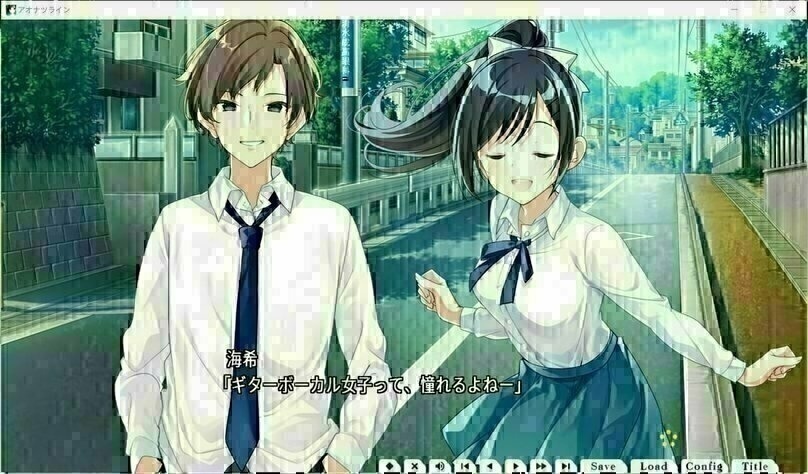
Eventually it all comes back to the little group’s “summer project.” Chihiro calls the protagonist out and asks if he actually likes Miki. And the protagonist actually says: “Doesn’t Miki like you?”
That kind of two-low EQ-and-IQ line, like something out of Takeshi Nihei, sends Miki into shut-in mode again.
Of course, after countless Qiong Yao-style dramas, Miki finally confesses again, making up for the regret of not saying it as a kid.

And our protagonist, following the principle of “never turn down a duck that lands in your mouth,” accepts the confession and becomes a normie. The childhood pair finally becomes a couple.
Overall, Aonatsu Line isn’t exactly well-produced.
First, only four characters have sprites — the protagonist isn’t even fully drawn — and other scenes cut every corner they can. The story isn’t long, and the choices are simple and crude. It cleverly uses all sorts of movie-like effects to save money, but ends up achieving more than many similar games.
The trick is that it hits most “galgamers’” “pain points.”
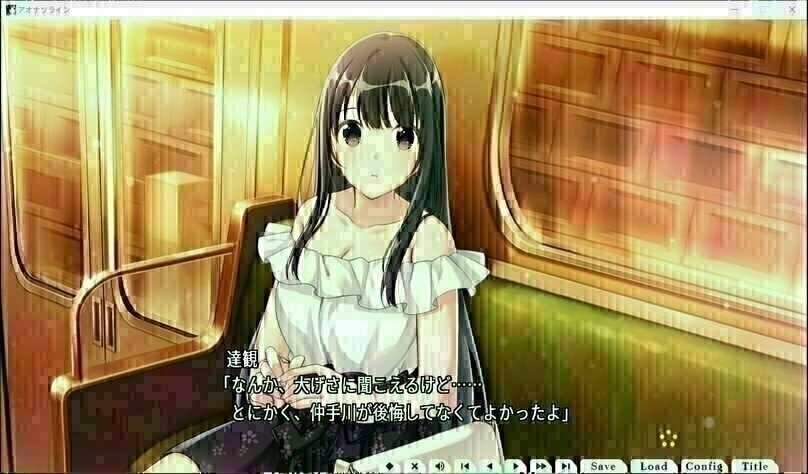
We’ve all seen too many boring “padded daily-life” games, and Aonatsu Line doesn’t pad its content. A lot of the plot feels stiff, unrealistic, or melodramatic, but the story really does keep moving. Its pacing matches a Taiwanese youth idol drama.
You know how many traditional “galgames” pride themselves on a “long enough common route”? A work that trims its common route down to the essentials like Aonatsu Line is genuinely rare. The result is that it feels comfortable to play, immersive — before you know it the story has gone far, and you’re not tired.
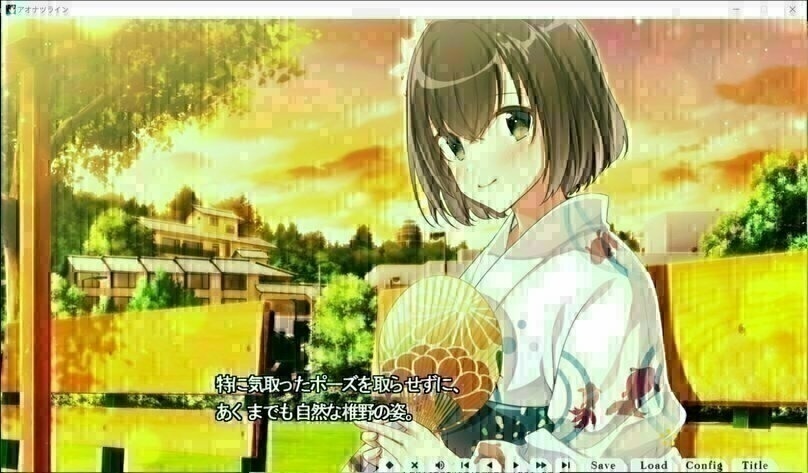
The material is the most common thing in Japanese youth literature: “summer’s bittersweet first love.” Honestly it’s not written that well. Grab any Japanese youth novel off a bookstore shelf and it’ll have more vivid imagery and deeper emotional storytelling. And I have to say, this game heavily “plagiarizes” (homages?) that movie about watching fireworks from below or from the side. The first heroine’s route overlaps with it by almost 70%, plus a lot of useless Qiong Yao drama.
Still, the game feels “comfortable.”
Because it hits “just right” on every front, including the soundtrack and art.
Yeah, the soundtrack may not be the best, the art may not be the most refined, but the two are the best “fit” for this game.
Likewise, even if the material and writing are the most clichéd, and it deliberately quotes all sorts of “memes” to raise its cred, and there’s a suspicion of copying a certain movie — put it all together and you get a strange chemical reaction.
So this game was called the dark horse of 2019’s first quarter, and otaku raved about it. Mr. Po even hyped it, saying it completely crushes “that garbage from Whirlpool.” I thought about it — I received a game he gifted me on Steam — and I also want him to shut up and stop chasing me with Chushingura recommendations, so I won’t argue.
But one thing I’ll admit: this game does represent a kind of “youth.”
Whether it’s your youth and mine — that I can’t say.
We miss youth because we miss the days when we were young. We all want to be young one more time.
But the cruel fact is: if we got to be young again, would our youth change because of it?
Like Mr. Po — even if he regained his youth, he’d still be dragged to the student affairs office as a delinquent.
Like Miss Wang — even if she regained her youth, she’d still be sighing between Pigeon Girl and the lady teacher’s love triangle, lamenting her giant dong has nowhere to go.
Like me — even if I regained my youth, I’d still be a cola-guzzling fat otaku hiding in an air-conditioned room, hammering a keyboard, gaming, and flaming people.
Someone said: “The shape of your youth is decided the moment you’re born.”
Someone said: “You only get one youth.”
If that’s so, then this kind of youth — “hang out with a rich, handsome buddy and three gorgeous girls as a little group, where the buddy doesn’t steal your girlfriend and actively sets you up so you lose your virginity in summer and become a winner in life” — whose youth is it, exactly?
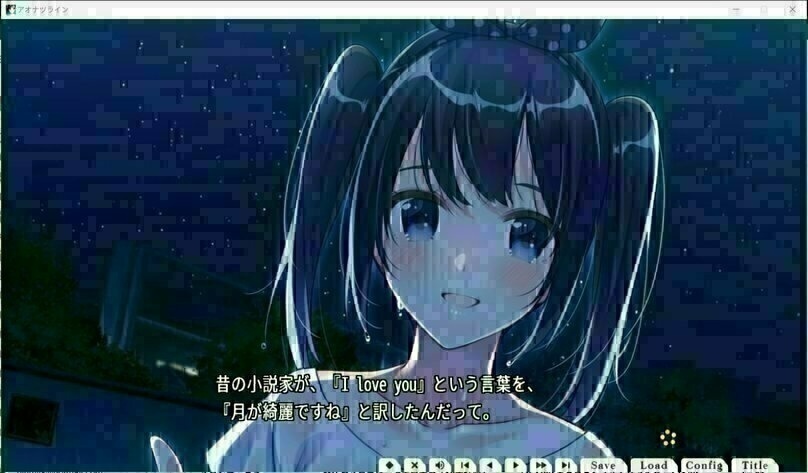
At the very least, someone with that kind of youth probably wouldn’t sink to playing this game, right?
Otaku sigh over this “perfect youth” simply because they’ll never have it.
After all, it’s someone else’s youth. Not yours, and not mine.
Comments are hosted on the Chinese main site. This mirror is read-only.