Juichigatsu no Arcadia (11月のアルカディア) Review
11月のアルカディア
11月のアルカディア was one of March’s new releases. I’d figured there was nothing worth playing that month, then I saw the OP — looked like a mystery/plot-driven thing — so I tried the demo. And surprise, the protagonist actually has a CV. No idea who it is, but he sounds a bit like Yuuichi Nakamura.
Going on the principle that “if an eroge bothers to voice its male lead, the story probably isn’t a total trainwreck,” I dove in without hesitation.
And sure enough, it didn’t let me down. This is the first thing since Paper no Ue no Mahoutsukai that I can praise without a single reservation.

11月のアルカディア is a very tightly paced story. Right at the start, the protagonist belongs to the academy’s “November” guard unit, whose job is to protect the Creation Festival on the last day of October. The festival’s purpose is to publicly display, atop the school’s clock tower, an orb capable of working miracles.
The orb is the treasure of this little island — of the whole world, really. The world has rare espers, and all of them draw their power from it. Word is that whoever obtains the orb not only gets a massive boost to their own ability but can have any wish granted.
The island deploys a whole pile of guard units to protect it, numbered by month. January is the strongest; November, where the protagonist belongs, is mostly student espers — their day-to-day is basically keeping an eye on the school and walking patrols.
The prologue takes place at the Creation Festival one year earlier. The protagonist, in the November unit, successfully stops an esper thief with Spider-Man-like powers from stealing the orb. He’s badly wounded but earns his superiors’ favor and gets promoted to November’s captain.
Then, on a clear, pleasant day, he visits a gravestone.
“Shion. My little sister. I came to see you.”
The protagonist’s ability appears to be “foresight for a set period,” but it’s actually time rewind: it triggers automatically every four weeks, sends him back three days, and can’t be controlled.
So how did his sister die? Her birthday had been a happy one — but right after it, the protagonist’s rewind kicked in and dropped him back before the birthday. Trying to be extra nice, he ran way off to buy her a present. She got worried and went out to look for him, and a car hit her.
“If I hadn’t gone off to buy that present, Shion wouldn’t have died.” He’s eaten up by regret — but the rewind has a four-week cooldown, and all he can do is watch her die.
Later he learns that the gem shown at the Creation Festival, the Orb, can massively boost an esper’s power. From the cubes the guard units hand out — cubes whose power is extracted from the Orb — he’s already figured this out. With a cube, he can ignore the four-week cooldown and freely rewind three days whenever he wants.
So he hatches a plan: collect as many cubes as possible, get into the Creation Festival guard detail, investigate over and over, steal the Orb, and use its power to amp his ability from a three-day rewind to a four-year one — back to before his sister’s death, enough to change history.
“I’m not going to be a hero of justice. I just want to save my sister.” With the protagonist’s plan laid out, the prologue ends. Carrying the eight cubes he’s collected — eight rewinds — he sets out to steal the very thing he’s supposed to protect.
Of course, it’s not going to go that smoothly. First I should explain the route structure.
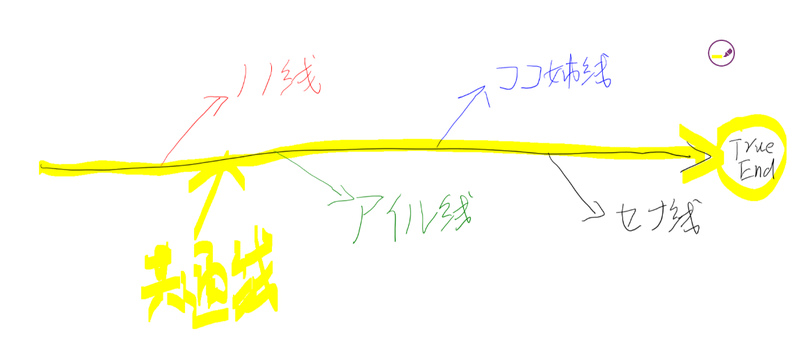
Like G-senjou, Sharin no Kuni, and Paper no Ue no Mahoutsukai, the individual routes branch off the main line. As a plot person, I skipped the individual routes and went straight for the main story. The heroines are all November unit members: Nono the werewolf girl, Isle the cursed girl who can see through lies, Coco the healing-type big sister, and lastly Sena the swordswoman.
On the first playthrough the protagonist isn’t going straight for the gem — he wants to use the chance to gather as much intel as possible, since the Creation Festival night is exactly when his forced four-week rewind will fire. But that night Nono confesses to him. His head full of saving his sister, he brushes her off — and then gets rewound three days anyway. Nono keeps coming back to him, and he acts a little ambiguous about it, because her temper and personality are so much like his sister’s that he can’t bring himself to reject her and hurt her. So on festival night he sends Nono away and goes to the base of the clock tower, where he finds a swarm of humanoid weapons — automaton puppets — guarding it. They’re stupidly strong. He can’t beat them, triggers an alarm, and runs for the forest to use a cube and rewind three days. But Sena spots him — and so does Nono. Unable to accept that he’s the thief, she loses control of her power and goes full werewolf, losing her human form… He has no choice but to rewind immediately.
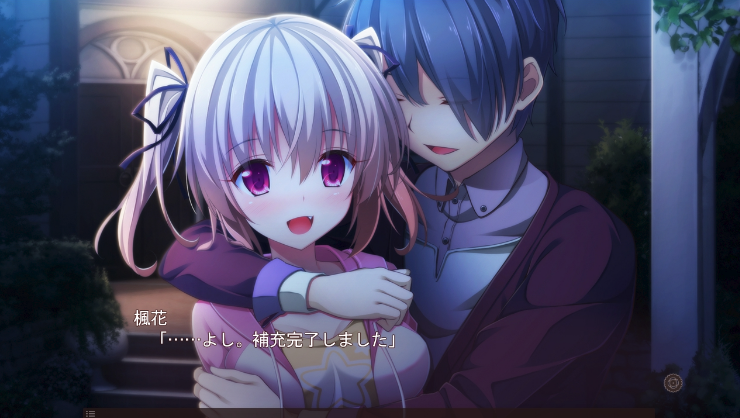
So on the second loop he’s painfully careful. When Nono confesses, he grits his teeth and rejects her coldly, not wanting to drag her into it again. Then he notices Isle keeps staring at him. One day she just asks him: “Are you trying to steal the Orb?” He freezes, says no.
Isle looks at him for a while and says slowly: “My ability is lie detection. I can see whether someone’s lying. And in exchange, I’m cursed — I can’t lie. Every time I lie, the black snakes attached to my body devour me.”
“I want that Orb gone. They say it’s the source of all espers in the world. If it disappears or breaks, my ability goes away too, and those snakes stop tormenting me.” So the protagonist and Isle team up, and he tells her about the humanoid weapons he ran into on the first loop.
“I remember the January unit had us haul some huge crates three days ago.”
After thinking it over, he uses another cube and rewinds to six days before the festival — the moment the crates were being moved. With Isle’s help, the humanoid weapons being delivered to January get their energy weakened. They’re no longer invincible, they move slower, and they don’t trigger alarms.
Isle also makes a pact with him: on the morning of the 29th — the start of each rewind — she’ll ask him how many cubes he has left, to confirm which loop they’re on.
The plan goes fine. He and Isle reach the festival night together, clear out the enemies, and get close to the clock tower — only to find there’s no way in from the outside, and far more humanoid weapons than expected. Isle is captured; the protagonist is hauled in for questioning by the January unit.
Under interrogation, Isle insists she planned the theft alone and the protagonist had nothing to do with it. It’s a lie — the curse hits her — and she’s devoured alive by the black snakes inside her.
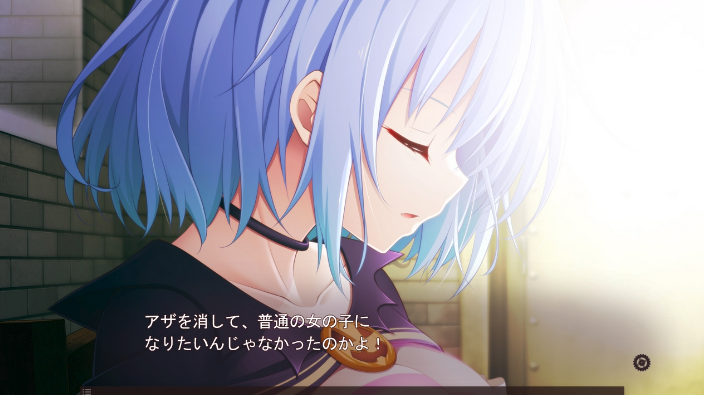
Devastated, he rewinds again. Three days. Isle asks him which loop this is; he answers honestly… She wants to help again, and he refuses, remembering how horribly she died.
Isle reluctantly gives up and tells him she’s noticed something off about Coco.
Coco was the November unit’s former captain. Isle says she found a map of how to get into the clock tower in Coco’s room, along with a handgun.
“I suspect she’s after the Orb too.”
Isle’s suspicion isn’t unfounded. The protagonist starts watching Coco as much as he can, which makes her suspicious in turn. On the final festival night, using Coco’s map, he reaches the door to the tower’s secret passage — and Coco shows up holding a gun…
So he goes all in, takes Coco hostage, drags her to the coded door of the passage, and demands the code.
She won’t cooperate, and warns him: “Your ability — it’s time travel, isn’t it? Take my advice: don’t use it so casually. In the end, you’ll lose more than you gain.”
Before she finishes, the January unit arrives and opens fire on both of them without asking questions. He’s hit. Coco uses her ability to heal him — and then he realizes his wound is gone, but Coco’s own injury won’t heal. That’s when he understands: Coco’s healing ability works by sacrificing her own body’s recovery to boost someone else’s. Healing others burns her own life.
Before the January unit can find him, Coco’s hands tremble and she bleeds to death. In agony, he uses a cube again.
By now he’s gotten three of his own squad killed across several loops. He’s drowning in guilt — next loop, he swears, he won’t involve anyone.
Of course it’s not that simple. Next loop, knowing how Coco’s healing works, he sees her throwing herself into healing people and tries to stop her everywhere — which only makes her suspicious of him.
Later he learns Coco used to have a little brother, and the healing ability was his. Her brother was just like her now — helping people, healing everyone, body getting weaker and weaker. Coco got anxious and angry, and eventually decided to steal and destroy the Orb so her brother would lose his ability and stop burning himself out saving others. That’s where the clock tower map came from. Naturally it failed; she took a bullet, and her brother sacrificed his life to save her. Afterward Coco found she’d somehow learned her brother’s spell, and she’s carried the guilt ever since — wanting to sacrifice herself through healing others to be free of it.
The protagonist doesn’t want to hurt Coco again, so he tells her the truth — and she rejects it. He ignores her and goes after the gem at the festival anyway. This time it ends even worse: Coco shows up again, trying to save him.
He knows what that means, shakes her off, and runs — and stumbles into the area beneath the clock tower, packed with humanoid weapons. Just as he’s given up, Sena the swordswoman appears and cuts them all down.
Sena then admits her ability isn’t “sixth sense” but power copying. On the first loop, while chasing him, she copied his constitution — so every time he rewinds, she rewinds with him. She understands exactly what he’s after and why.
“Well, if you don’t mind, let me help. You saw what I did back there — I’m a useful woman, right?”
Sena gets his situation and decides to help him convince the rest of the November unit.
Nono and his buddy Akira don’t care about the gem, and Isle wants to destroy it anyway. The only hard part is Coco — but after he talks her around, pointing out that rewinding four years would also bring her brother back, Coco throws her support behind him without hesitation. With Sena’s help, everyone in November gains the same constitution as him — when he rewinds, they rewind too.
The whole November unit gathers, and the plan to steal the gem from the clock tower is drawn up.
Unfortunately, November all huddled together planning was too conspicuous — January’s vice-captain overheard and figured out the whole thing. On festival night, November runs into massive resistance. Still, the protagonist and Isle make it inside the tower — where January’s captain is waiting.
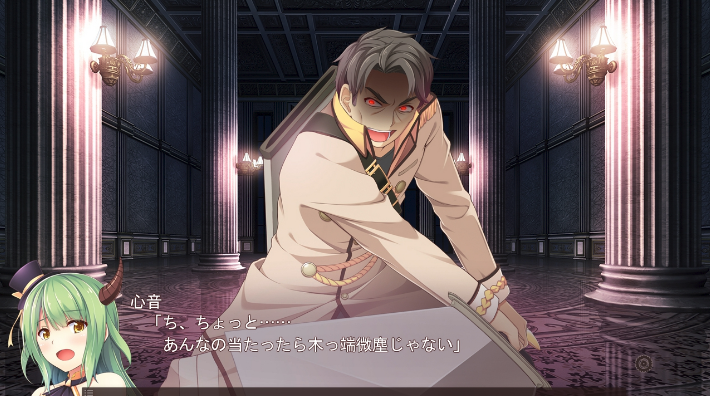
January’s captain is a monster in a fight, with a “combat insight” ability that predicts your next move. The protagonist can’t beat him at all, and even Sena gets cut down in one stroke. With everyone wiped out, he uses a cube to rewind again…
This next one is the last fight, because there are no cubes left. He and the whole November unit are painfully careful; nobody gets overheard this time, and they swipe January’s vice-captain’s gun in advance to delay her.
He even tells Alice, the puppet maid in the dorm. Alice understands, but warns him that January’s captain is too strong and he probably can’t win. She adds:
“Mr. Shidou… he’s always using cubes to strengthen himself, over and over, saying it’s to protect the gem. But he uses too many. If this keeps up, his mind will break.”
“If you can, please save Mr. Shidou.” With that, Alice sees him off.
The operation goes perfectly. They reach Captain Shidou — and find that he’s been pumping himself with cubes nonstop, and the whole group still can’t beat him…
Another total wipe. Coco uses the last of her strength to send the protagonist out of the tower; the rest are captured or beaten to death…
He hides in the forest, too cold and hungry to come out, and he has no cubes left. He can never go back…
Then the puppet Alice appears and saves him. She tells him Shidou used to be a gentle man, but at some point he became abnormally obsessed with protecting the gem…
“Please save him. I’ll be praying for you.”
And then the protagonist realizes he’s rewinding… back three days.
It turns out that across those eight cubes, he’d lived through 24 days — plus the initial four — and a full month had passed. The automatic rewind had fired.
By now he’s ready to give up. He’s tried so many times, and every time he hurts his friends, and one slip and they’re dead for good.
But November still supports him. They believe he’ll pull it off, and they want to try the festival heist one last time.
“But if you take the gem and go back four years, the gem won’t exist, the world will change, there won’t be any powers… Will we still meet?”
Everyone goes quiet…
The protagonist pulls out the gem pendants he bought each squad member at the Creation Festival a year ago. “Believe. Believe we’ll meet again.”
The final battle arrives.
I have to say, the last fight is ridiculously convoluted and goes on forever — Shidou is just too damn tanky. But long story short, the protagonist gets the gem and goes back four years, and finds his sister alive.
Then he’s delighted to find that although that world has no powers anymore, the Creation Festival still exists, and the custom of guard units protecting it has survived too.
The only regret is that the puppet Alice is gone. According to what Alice the puppet says, she and Shidou did have something between them once, though she doesn’t go into detail.
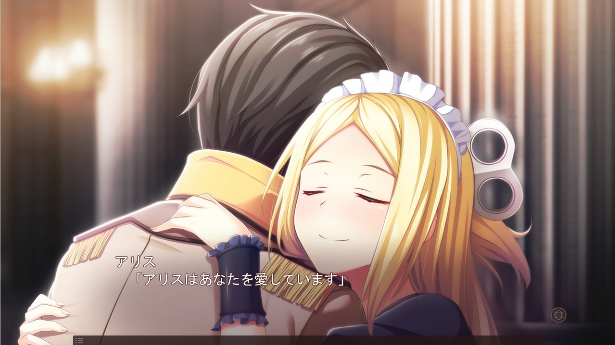
In the end the protagonist brings his sister to the November unit, and everyone comes together again. They’ve all lost their memories, but who cares? A good future is waiting for them.
“The Creation Festival is held on the last day of October, meaning November is a new beginning. Arcadia — that’s the name of the ideal land we hope to live in someday. And now, I’ve made it happen.”
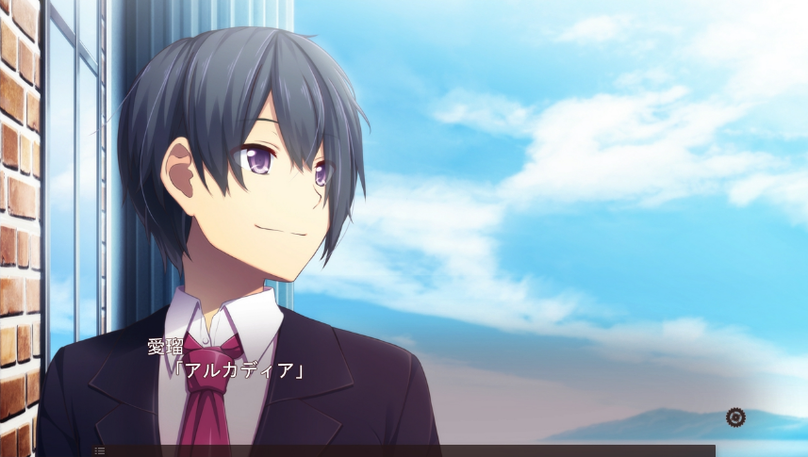
Game END.
The plot of 11月のアルカディア isn’t all that original — strip it down and it’s Steins;Gate without the science, only the protagonist isn’t named Okabe Rintarou. The highlight is the pacing: it’s genuinely tight, never once making you want to skip ahead or fall asleep. The foreshadowing is laid out cleverly too — the payoff makes you want to slap the desk. The art is by the Shoujo Shin’iki artist — serviceable, nothing special, though the breasts are too big. Worth noting: if you go straight down the True End, there are no 18+ scenes, which keeps the story coherent — no repeat of Eustia in Sharin no Kuni, where Tia’s practically dying and still gets dragged off for a sex scene out of nowhere. It shows a certain rigor.
The protagonist’s CV is on point. The heroines’ CVs aren’t especially standout, but Uii’s acting is still god-tier and carries the story fine. Plenty of people got diverted onto Isle’s route halfway through just because of Uii…
The OP and ED are absolute highlights. The BGM, though, doesn’t have much going for it — a real shame. If they’d put more work into the BGM, I’d rate the game higher.
I saw a take the other day that I strongly agree with:
When 11区 works tell stories, they’re better at small-scale ones — stories about people, about emotion and friendship. When they try to build huge worlds, politics, nation-against-nation scheming, it turns into shit.
I haven’t seen enough outside ACG to say, but at least in ACG it holds — plenty of people try to write grand stories and it all ends up as crap.
So in the Galgame world, because emotion is involved, most stories stay small, condensed down to the protagonist and the heroines around him.
So what makes a good story?
Every planted seed pays off. No botched ending.
The developments justify themselves. Nothing comes out of nowhere.
The length fits the pace. No dragging.
So when it comes to writing a story, you can absolutely play it safe. Nail those three things and you’ll find that even a premise that looks plain on paper becomes genuinely interesting — and if the premise is a little bolder, the whole thing will grab you completely.
11月のアルカディア succeeds exactly that way, steady and solid. At least for me.
As for the stuff that exists only to escalate, to flex, to manufacture buzz — all players can do is look at it afterward and sigh that they just ate another mouthful of shit…
Comments are hosted on the Chinese main site. This mirror is read-only.