Kamisama no You na Kimi e (神様のような君へ) Review
Kamisama no You na Kimi e
I vaguely recall that the last time I played a game with Kantoku art was years ago, and I ragged on it pretty hard. Honestly, looking back now…
Still deserves a good ragging.
Why? Because Kantoku always works with CUBE, and the heroines in CUBE games inexplicably turn into Easy Girls—like, they confess to the protagonist and before you know it they’re spreading their legs. Yeah yeah, I know it’s an eroge, but even for an eroge you can’t keep doing it so bluntly. Nobody watches porn for the plot anymore? Well, a little story goes a long way—it makes it tastier.
So after all these years, a new game with Kantoku art drops, and the title alone is high-tier:
Kamisama no You na Kimi e
I honestly don’t know how to translate it. I feel like in Japanese this kind of sentence could mean “to you, who is like a god,” but a direct translation would be “to you like a god.” The English subtitle is To you like goddess, so I guess it’s the first meaning.
But none of that matters. What matters is the scenario lineup—they brought in three guys who specialize in writing toilet paper… oh wait, I mean light novels. Looks like they decided to go all-in on the story.
But how did it actually turn out?
The game is set in the future. Our protagonist is an invincible hacker. One day, bored out of his mind, he breaks into the servers of the world-famous internet company Centre-AI (CAI for short—sounds like “cai” which means “vegetable” in Chinese, lol). He wants to use this high-end AI server to find out if there’s a girl out there whose fetishes perfectly match his own.
Of course, the answer is no.
He’s disappointed, but the next day brings a surprise.
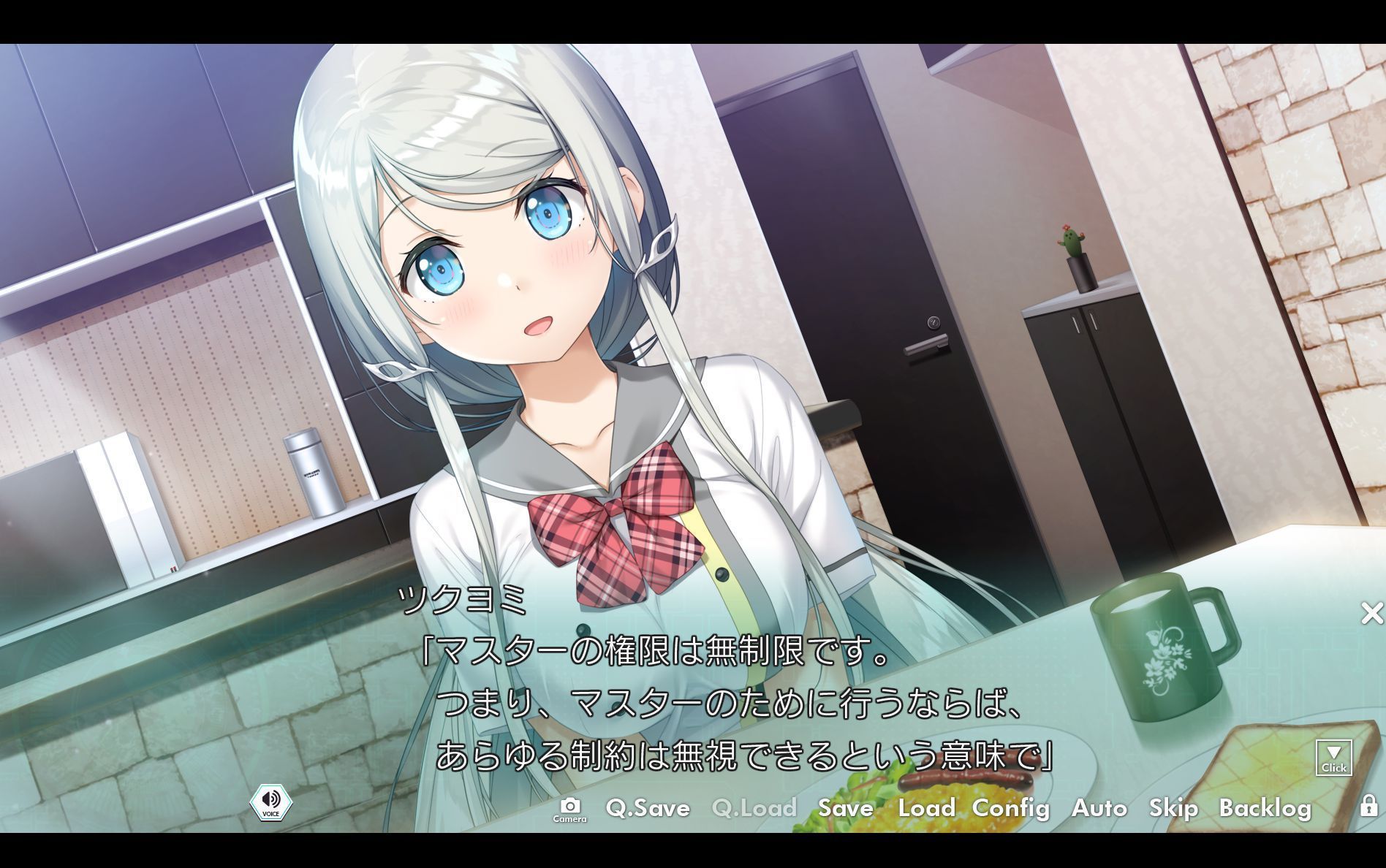
A white-haired female robot named Tsukuyomi shows up at his door, asks to call him Master, and moves in with him.
According to Tsukuyomi’s self-introduction, when the protagonist hacked into CAI yesterday and ran his “girlfriend query,” the result was empty. But CAI, in its infinite wisdom, decided to solve the hacker’s problem by automatically placing an order at a robot factory to produce a robot to his exact specifications… and shipped it straight to him. And so the protagonist begins living with Tsukuyomi.
Although our protagonist is a hacker, he’s met plenty of people at school: Nara, who claims to be a female detective; Kirika, who secretly works as a VTuber; Aisari, another VTuber like Kirika; and the mysterious student council president, Reon—who is also a hacker and knows the true identities of the protagonist and Tsukuyomi.
The game then proceeds through the protagonist’s daily life with Tsukuyomi and the other heroines, eventually branching into character routes.
Tsukuyomi
You’d think Tsukuyomi would be the main heroine, but she doesn’t have any route locks. Not that route locks are inherently good, but the way you enter this game’s individual routes is just too easy. How easy? Tsukuyomi sees the protagonist get a boner and asks if he wants a blowjob. He says yes.
Congratulations! You’re on her route!
After that, the protagonist gives up on all other heroines and continues dating Tsukuyomi. Even though she’s a robot, aside from needing to charge, she seems no different from a normal person. In fact, she’s even more skilled in bed than a human. The protagonist confesses to his robot girlfriend and they become a couple. But Tsukuyomi was produced through “unorthodox means,” so things quickly take a bad turn.
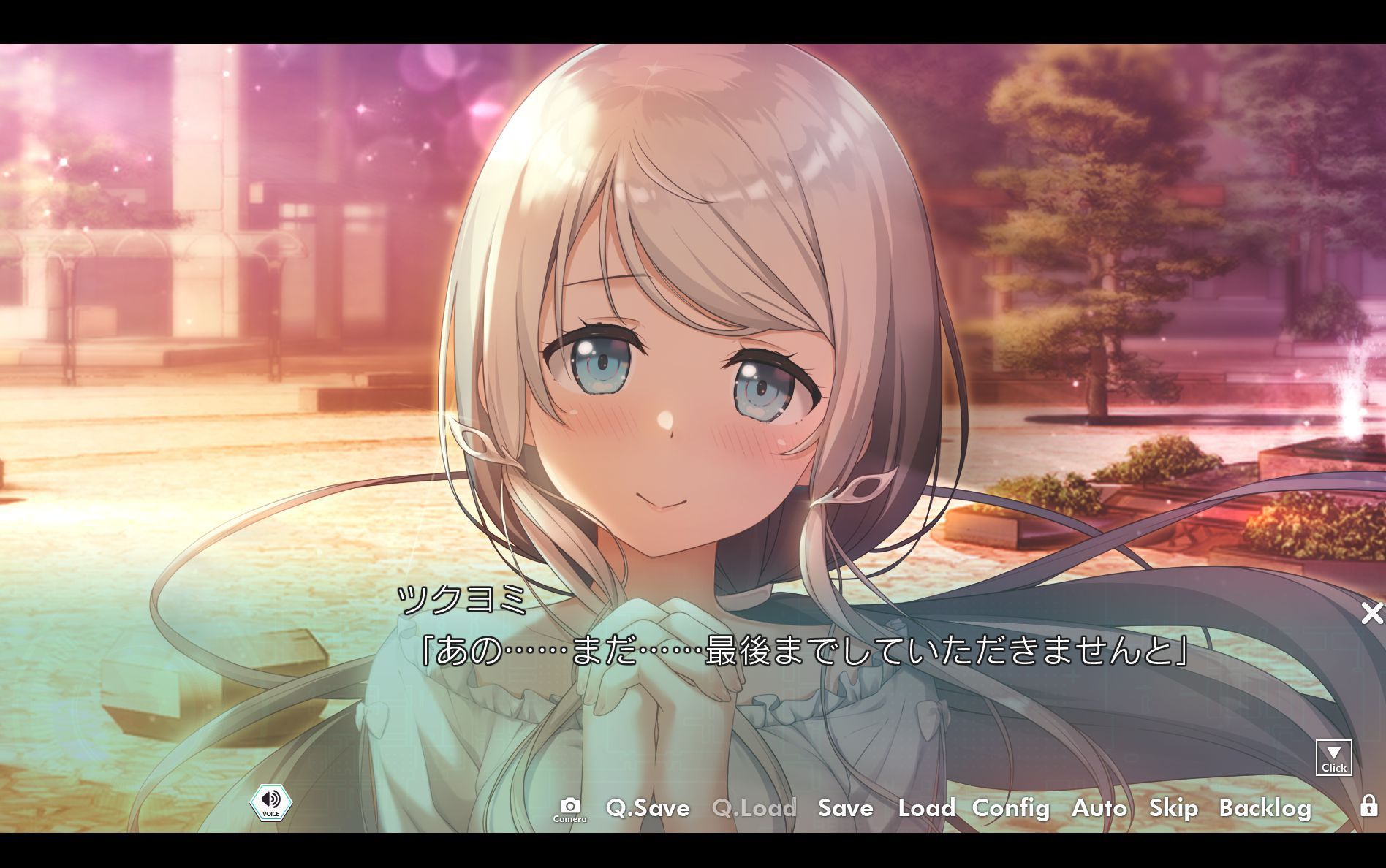
The protagonist and Tsukuyomi attend a VTuber offline meet-and-greet for Kirika and Aisari. I don’t really get why VTubers would have an offline event, but whatever. During the event, Kirika is harassed by a stalker, and Tsukuyomi—being a robot—switches to combat mode and drives the stalker off with terrifying efficiency.
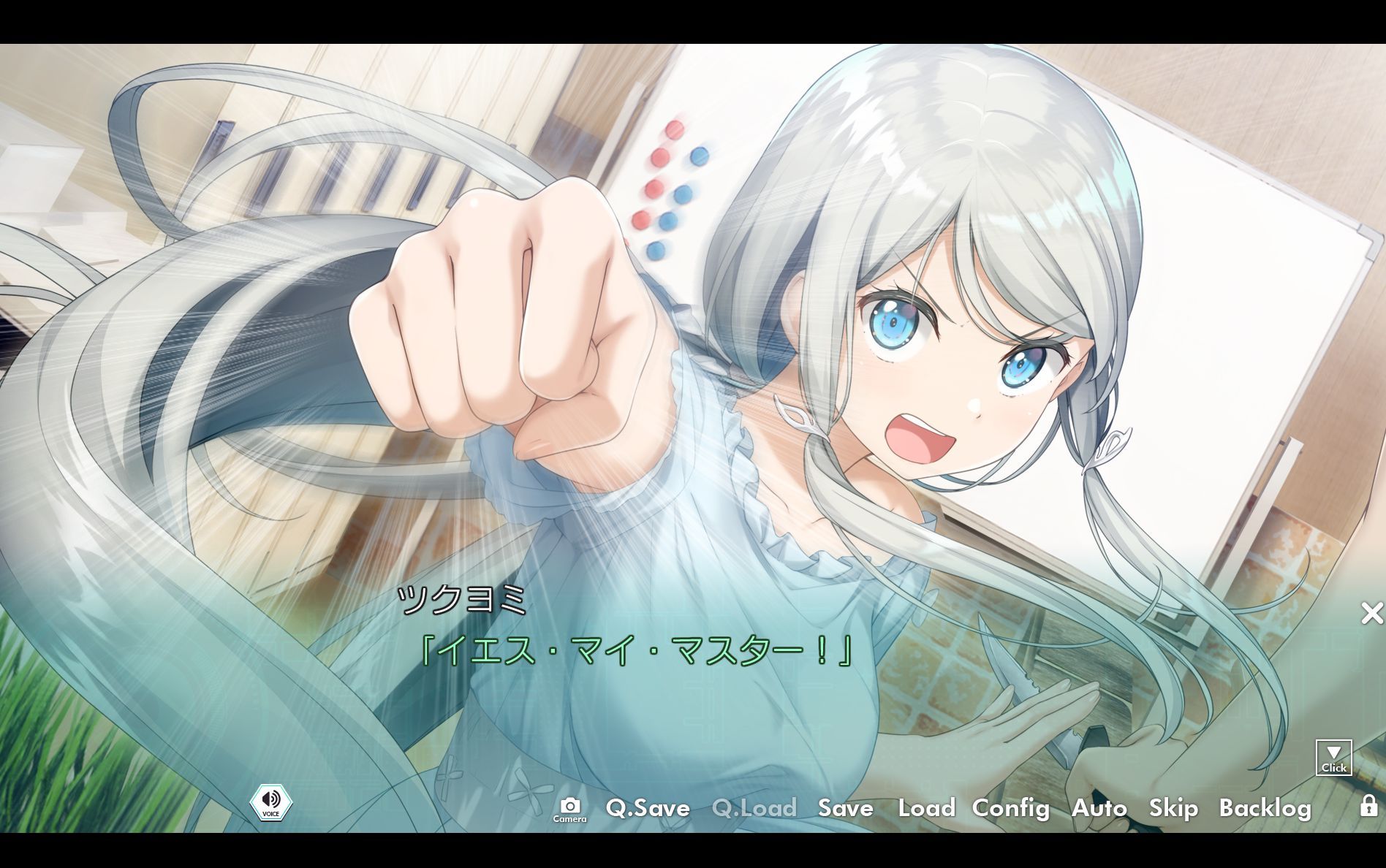
Someone in the crowd films this and posts it to TikTok… I mean, a short video on social media. Tsukuyomi’s bizarre behavior draws attention (how does a little girl have that kind of combat power?), and soon both CAI and its competitor Big SYS notice. They investigate and quickly determine that Tsukuyomi is a “new model robot” that somehow leaked out.
CAI is pissed and wants to recover the product.
Big SYS is thrilled and wants to use this to condemn CAI and maybe get their hands on the tech to tear it apart…
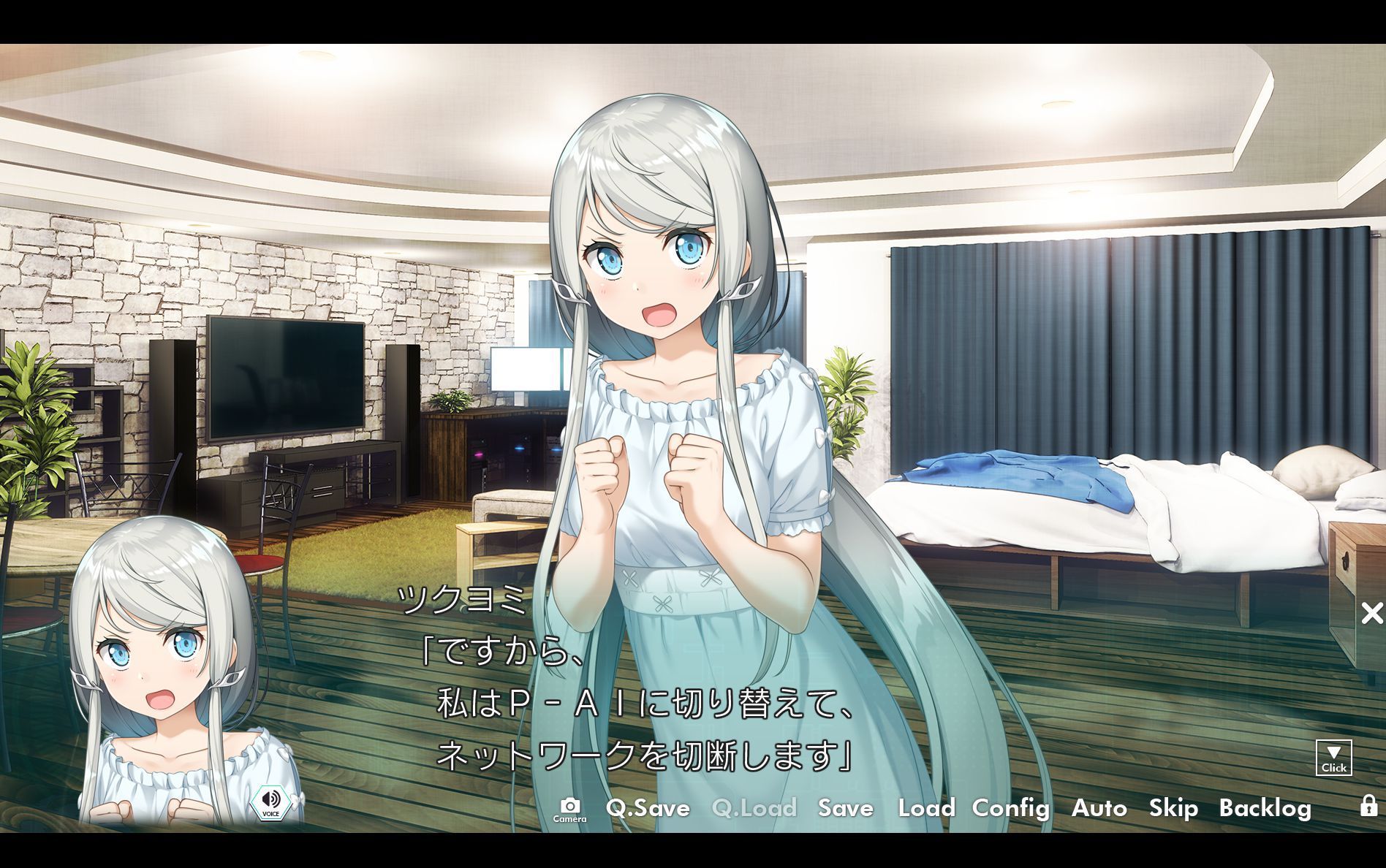
The protagonist is scared shitless because Tsukuyomi’s exposure means his hack into CAI will also be exposed, and he’ll be going to prison soon.
So he rushes home, destroys his computer and phone, unplugs Tsukuyomi’s network cable and switches her to an offline OS, and prepares to go on the run with her. Just then, student council president Reon appears and says that although she’s also a hacker, she can use her connections to help him out.
The protagonist has no choice but to agree. Reon takes him and Tsukuyomi to some ruined building in the mountains to hide out for a while. They’re about to settle in when things go wrong—the next day, CAI’s security robots show up. Turns out Reon sold them out to get information from CAI about her “hacker brother” who went missing after being investigated. Tsukuyomi fights a desperate battle against the security robots and barely wins.
But the victory leaves her heavily damaged and beyond repair. The next morning, while the protagonist isn’t looking, she jumps into a pit and self-destructs.
Yes, self-destructs. As in explodes.
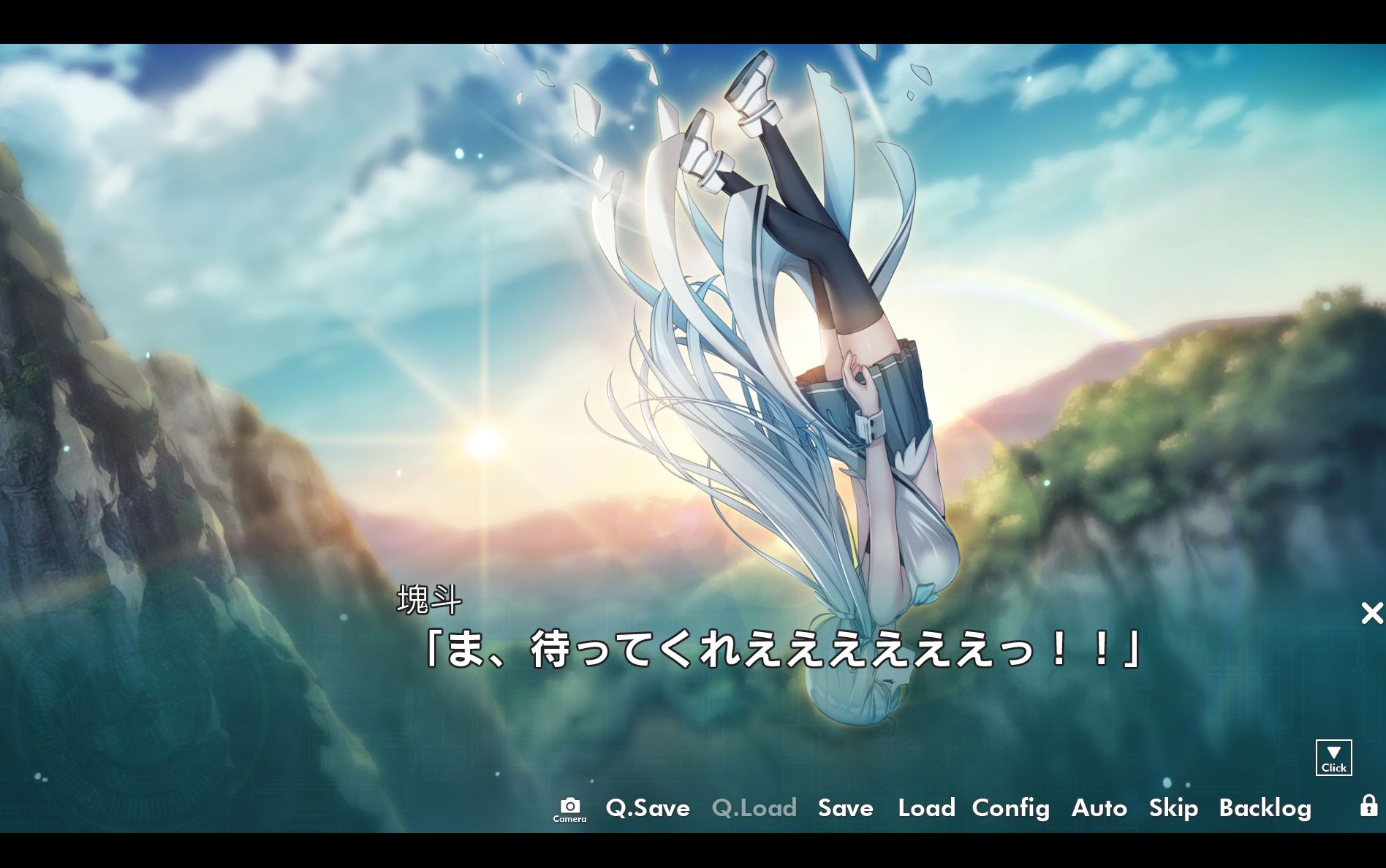
Our protagonist is devastated—his girlfriend literally blew up. But then a CAI security agent appears before him and lets slip that Tsukuyomi was actually created by a certain autonomous consciousness within CAI specifically for the protagonist. You see, CAI is a powerful AI, but it never understood “what love is.” So when the protagonist hacked in, it seized the opportunity to create a Tsukuyomi robot and send her to him, hoping to collect data about “love.”
And of course, it collected the data in the end, which naturally returned to CAI. In other words, even though Tsukuyomi’s body exploded, her consciousness might still exist within the CAI system. Of course, this was all done on the whim of a certain consciousness within CAI, and the operating company behind it wouldn’t allow such a thing—they’d want to isolate the system. CAI itself is also split, and needs to deal with the content of that consciousness. There’s also mention of CAI and robot manufacturing being involved in some kind of planetary exploration project…
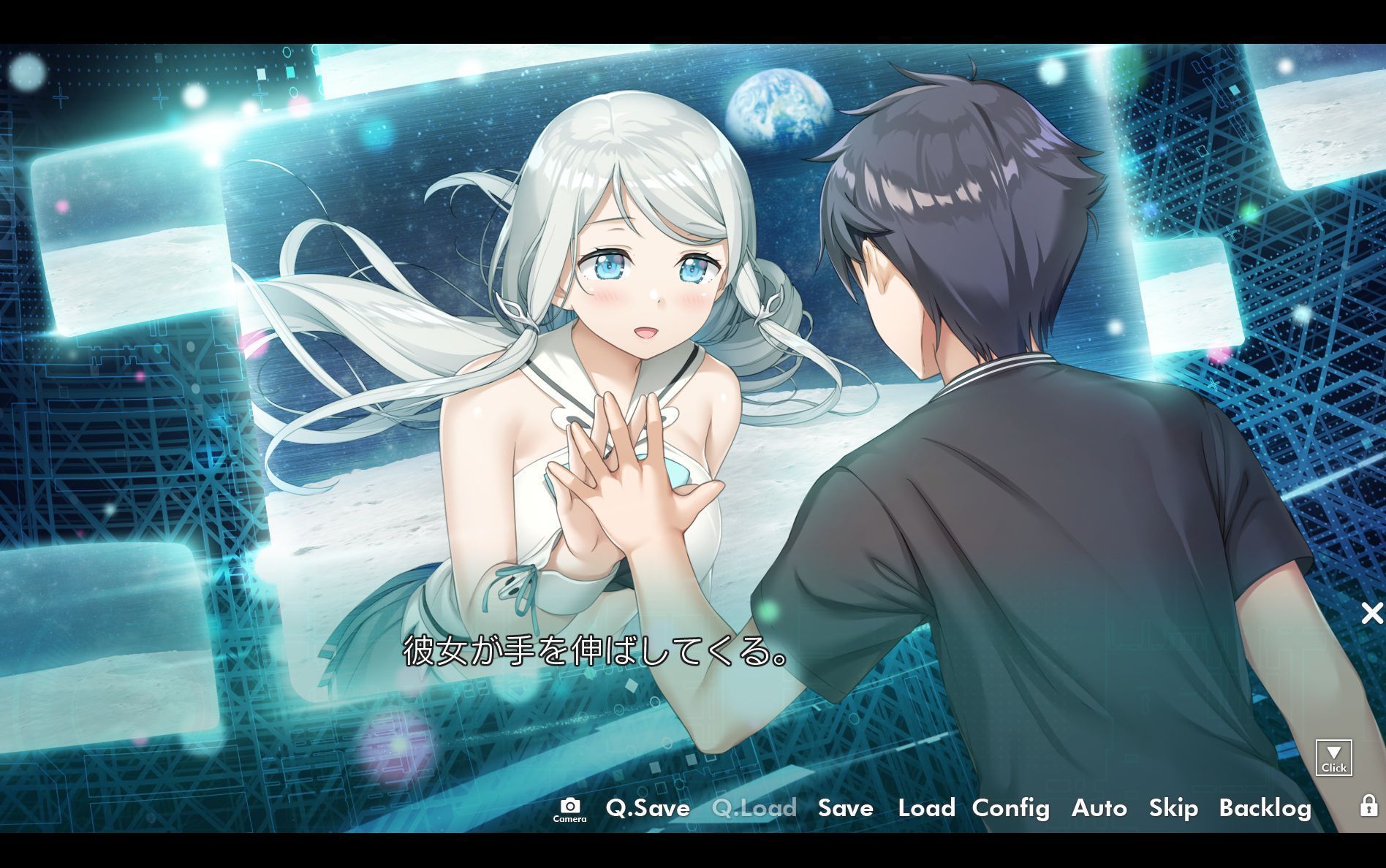
So the protagonist goes back and starts hacking into CAI to stop the isolation and see his girlfriend again.
Naturally, the great genius hacker breaks into CAI and finds Tsukuyomi within the system. But although her consciousness exists, she can’t be recreated for now because the raw materials for robots on Earth are gone—only the Moon has them. So the protagonist meets Tsukuyomi (who is now on the Moon) in cyberspace, and they promise to meet again someday…
And then… it’s over!
I know you think this ending is stupid. I think it’s stupid too. But life goes on, so let’s look at the other routes.
Kuroo Reon
Earlier we mentioned that Reon sold out the protagonist and Tsukuyomi to get information about her “missing brother.” Her route revolves around this “brother.”
Reon’s brother was a highly skilled hacker, and under his influence, Reon learned hacking skills and became a hacker herself. They weren’t blood-related, so she admired him—maybe even had romantic feelings for him.
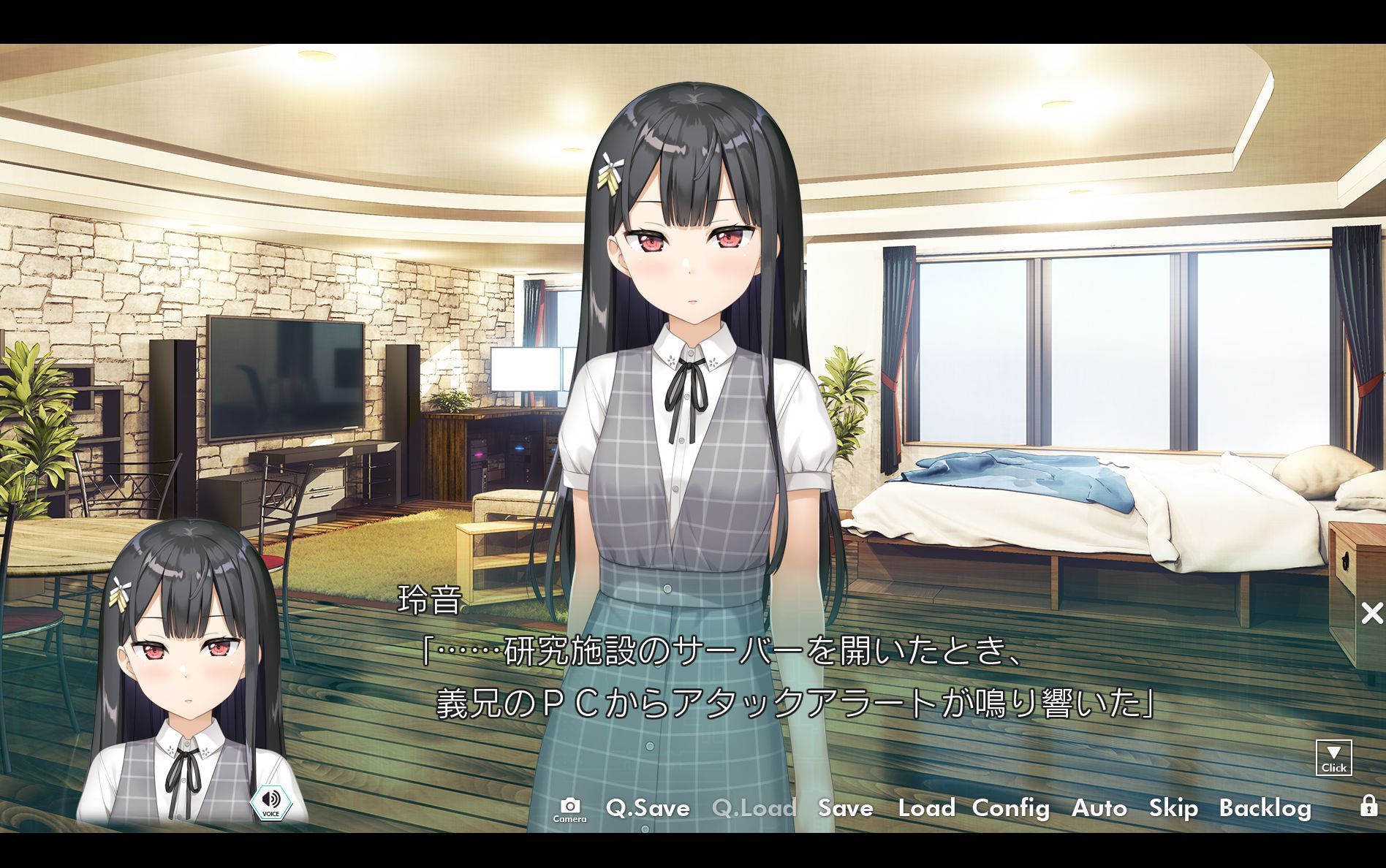
But one day, her “brother” hacked into CAI, obtained some sensitive data, and vanished without a trace. Reon always believed it was CAI’s conspiracy, so she inherited his ID online and continued researching how to hack CAI, hoping to find clues about him.
Her route begins when she discovers the protagonist also has strong hacking skills and decides to use him to help her hack CAI and find clues about her brother. She seduces him—and while seducing him, she ends up in bed with him. The seduction method? A contest to see who can last 120 seconds without cumming. Be a man and hold it for 120 seconds…
Later, Reon suddenly finds a clue about her brother and decides to leave the protagonist behind to face it alone. She confronts a CAI agent and does that thing that was all over Weibo a while back—those two CGs: first she points a gun at the other person, realizes they’re a combat robot she can’t beat, then points the gun at herself and threatens that she has CAI data, and if she dies the data will be lost.
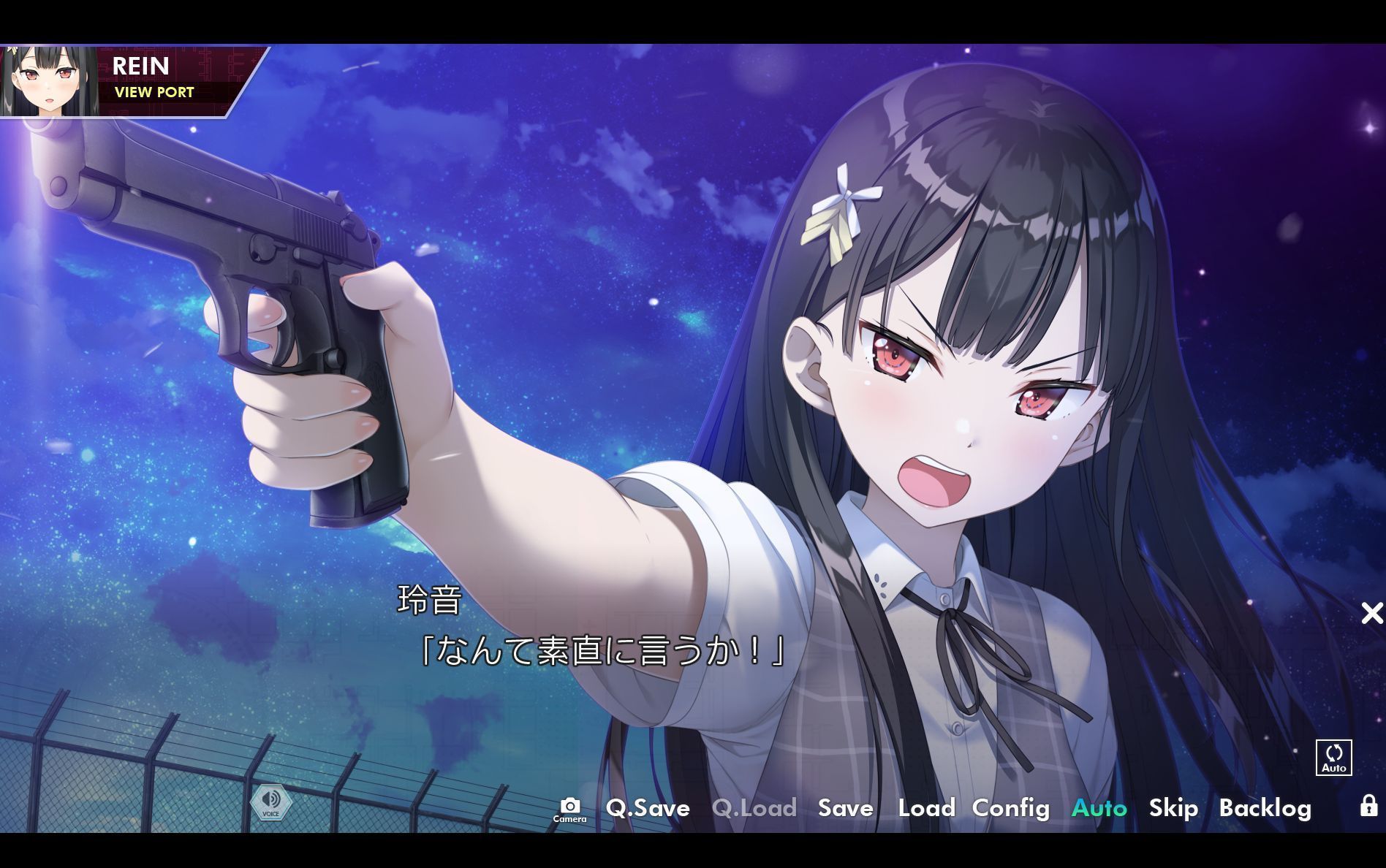
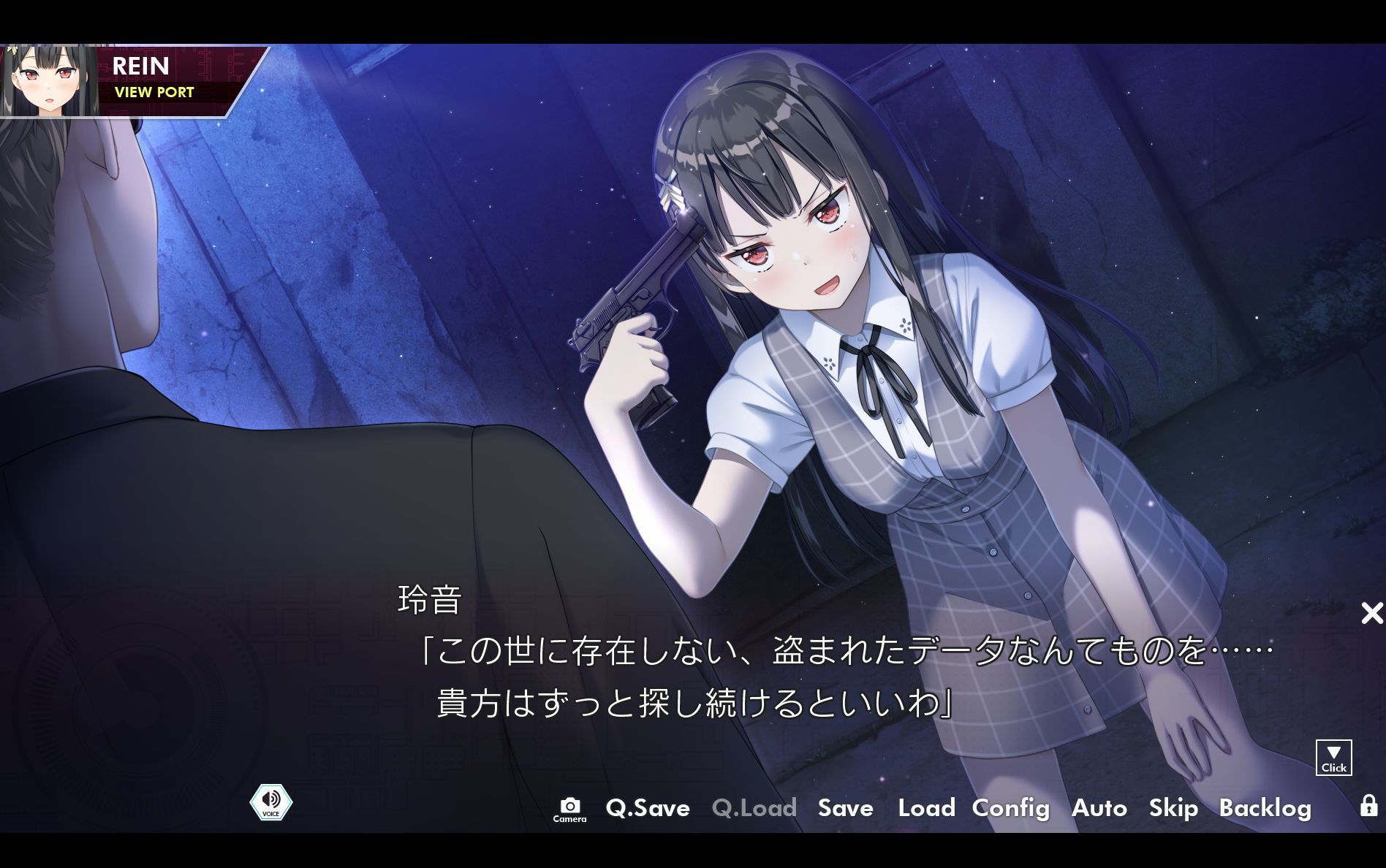
Truly the best display of “impotent rage”!
Of course, the protagonist arrives in time to save her from her own stupidity. Through various channels, Reon also gets news about her brother—he’s safe for now—and she finds meaning in living again. So she continues living with the protagonist, and they have 3P along the way.
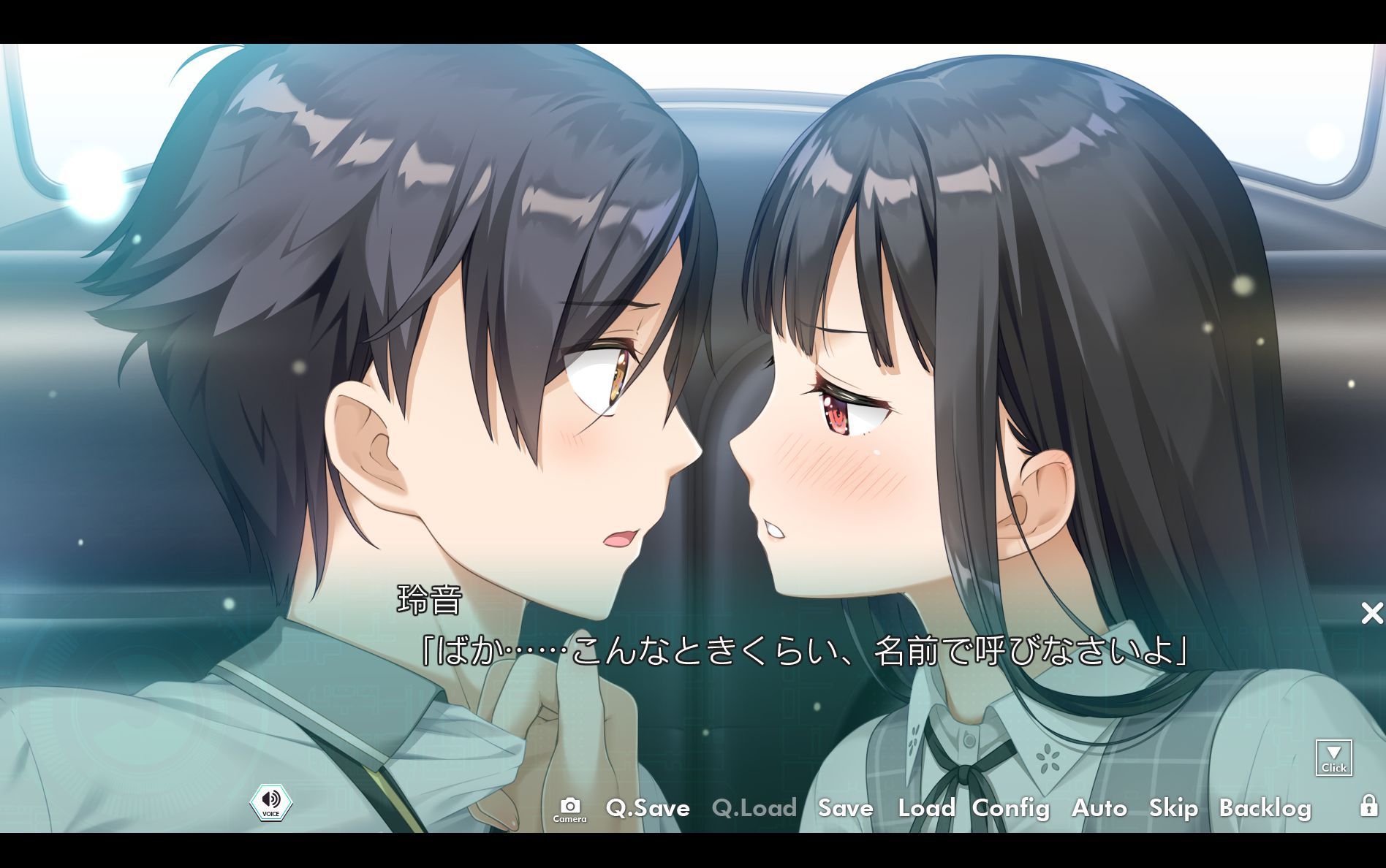
And then the route ends. Honestly, this character’s route is just a side dish to sell HCGs.
Asakura Kirika
Kirika is an underground VTuber idol. She’s inconspicuous at school, but boasts many fans online as a VTuber, and she’s skilled at music production. Few people know her identity—except the protagonist.
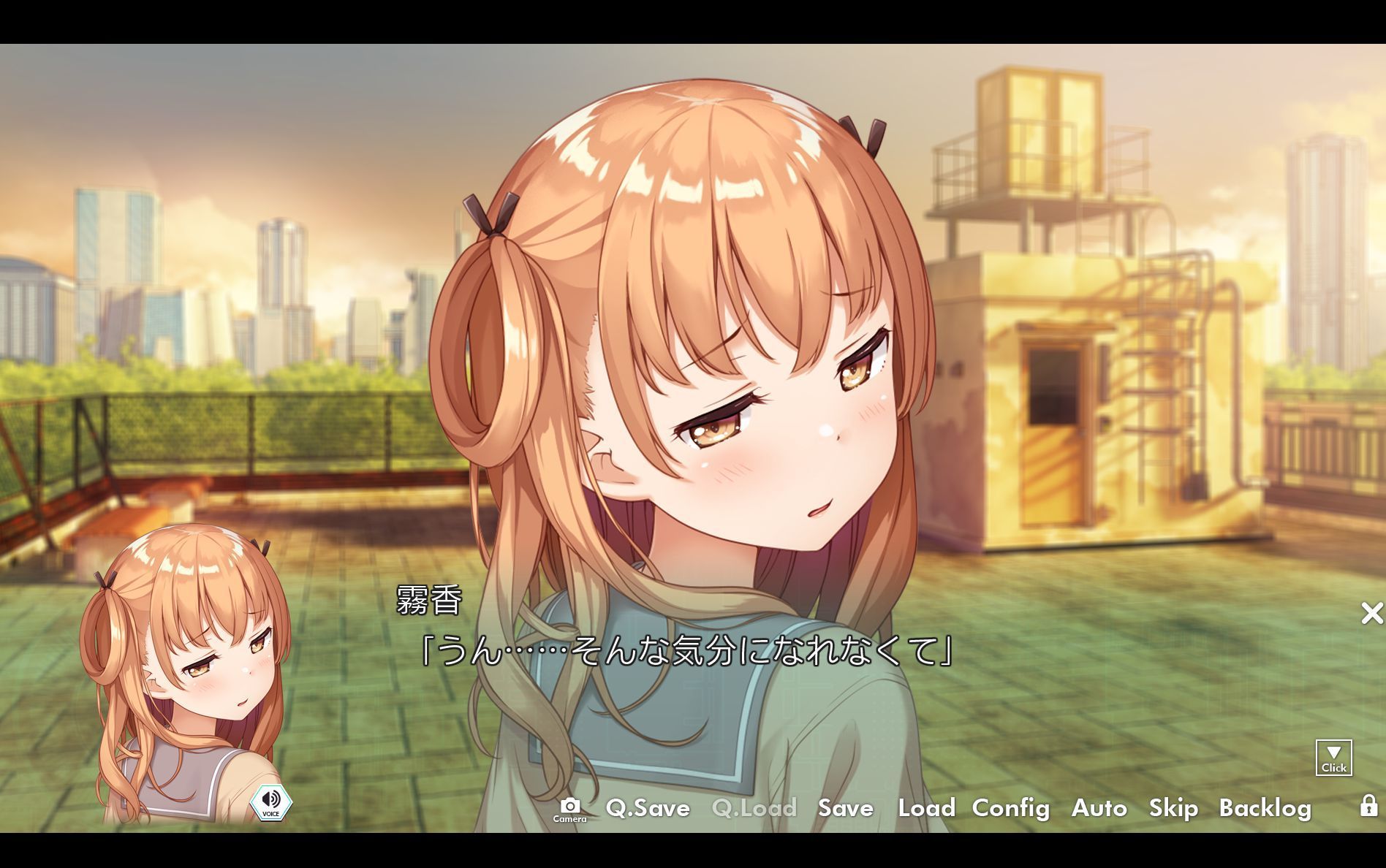
I’ve always wanted to poke fun at this “music VTuber” identity. As far as I know, most music VTubers have mediocre singing skills or rely on other producers to survive. Claiming to have creative ability… writing lyrics is already impressive, I guess.
Of course, Kirika’s admiration for the protagonist comes from discovering his true identity—she realizes he’s the hacker who, years ago, anonymously reported a certain official online and delivered justice. She falls for him instantly. She gets closer to him, and naturally offers her body, spreads her legs…
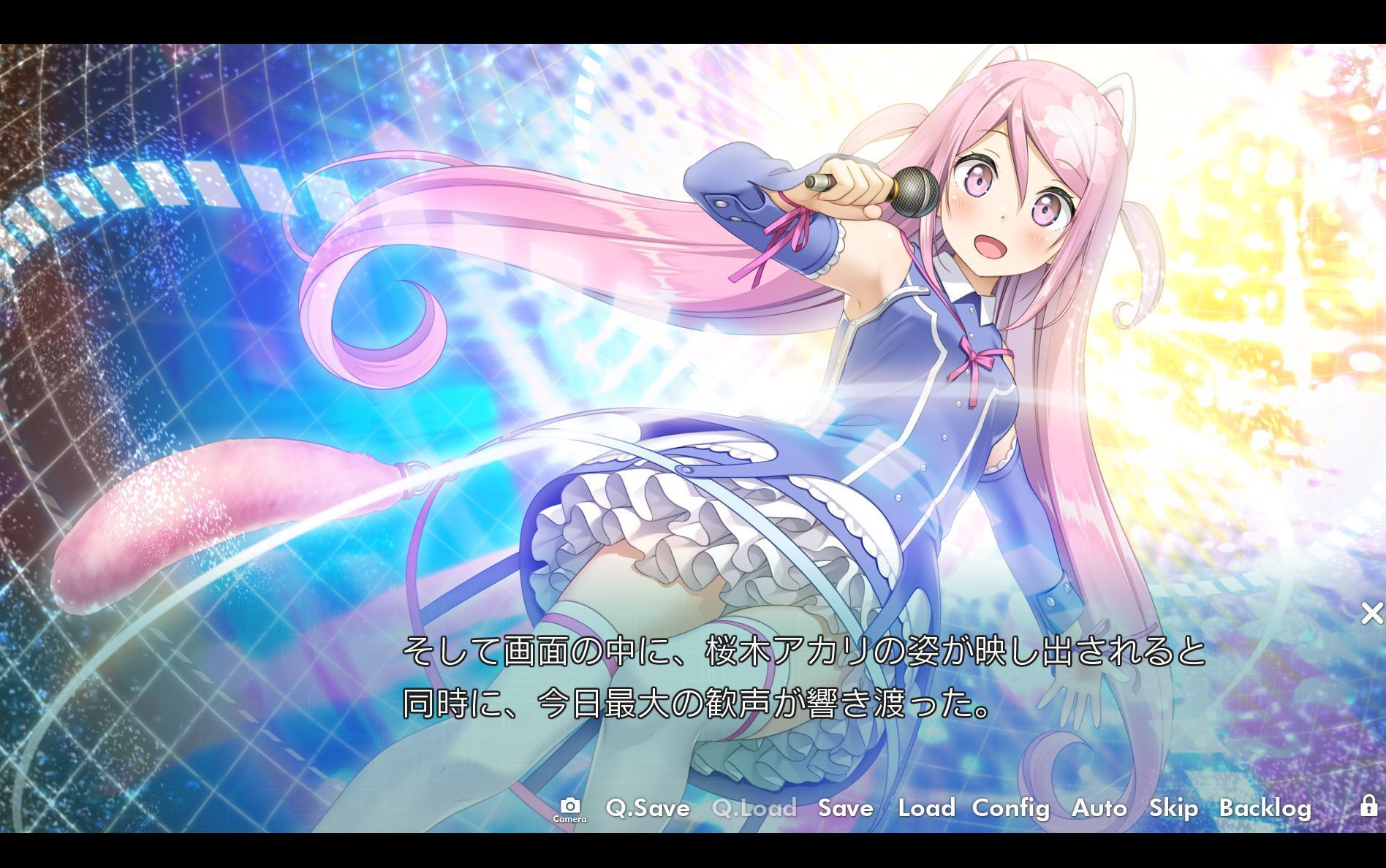
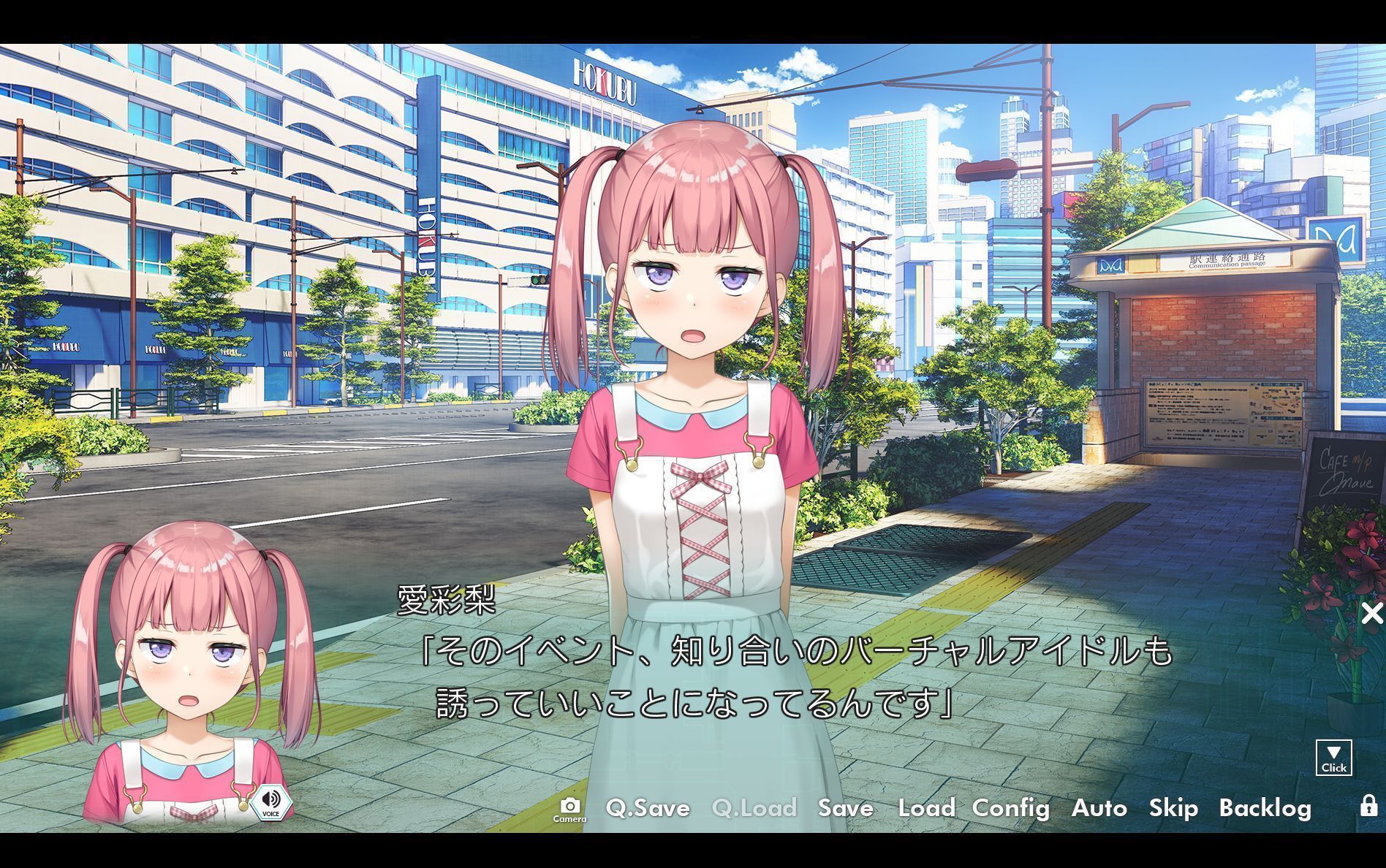
After they become a couple, Kirika faces a new crisis. A junior at school named Aisari keeps inviting her to VTuber offline gatherings. Aisari knows Kirika’s true identity and is jealous of her video view counts, always wanting to surpass her, so she figures she’ll collaborate with her first to ride her coattails. Kirika doesn’t care about that; what concerns her is a strange website that recently appeared called “Shared Life,” where various voyeur videos keep popping up—including content of her.
The protagonist is curious, Kirika is curious—who’s the pervert secretly filming her? But after investigation and counter-surveillance, the protagonist finds no cameras. Yet Kirika’s voyeur videos keep appearing on the site, and shockingly, most are from her first-person perspective.
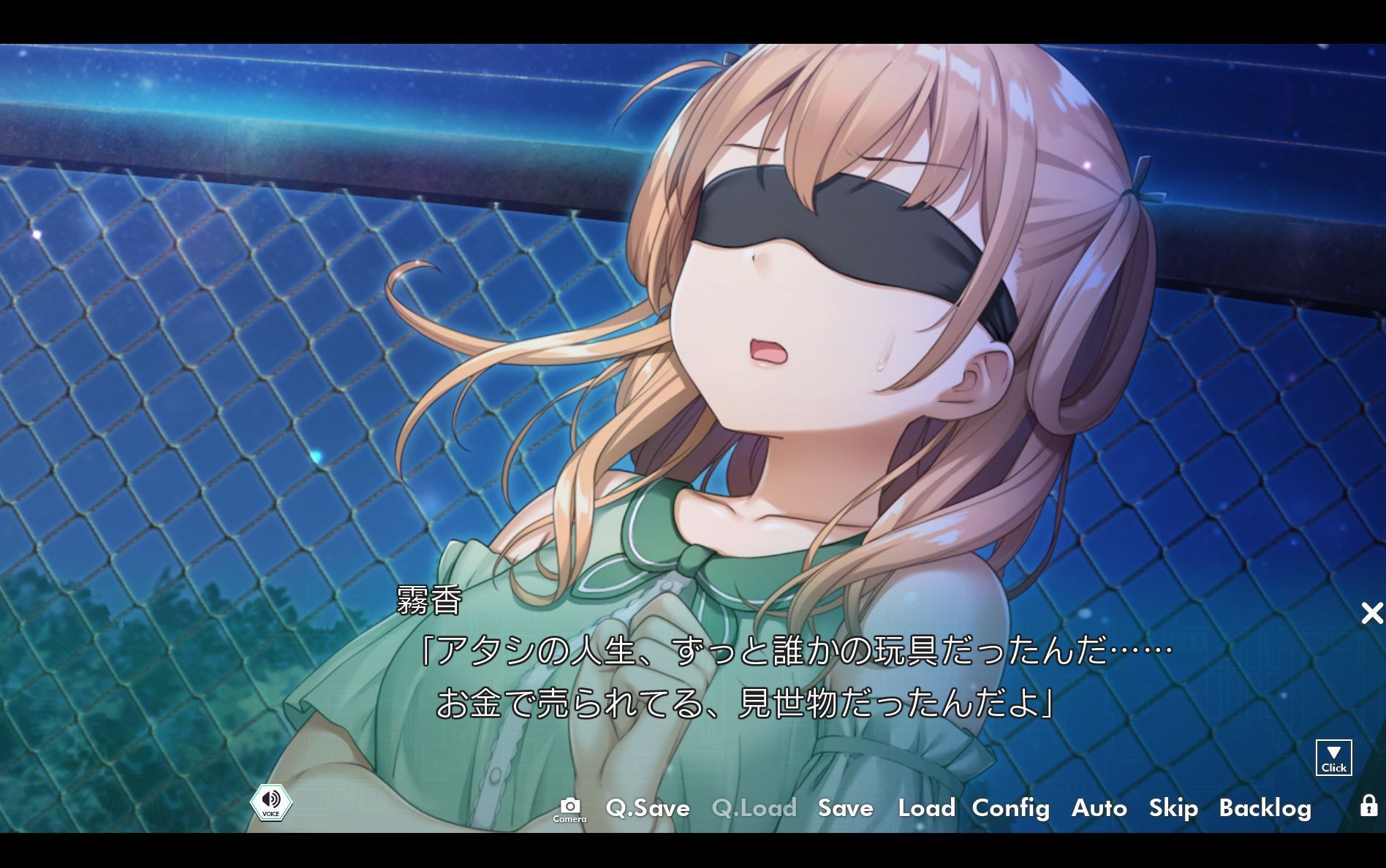
The protagonist is baffled, and Kirika is terrified—as if someone is watching through her eyes. She covers her eyes, flees to the mountains, and won’t even leave the house. Then the protagonist finds a crucial clue: Kirika once received “chip-assisted treatment” at a major hospital.
In this game’s world, medical technology has advanced by leaps and bounds, and many people receive “implant chips” to treat illnesses. Kirika apparently had some brain issue as a child and received “chip treatment.” The protagonist deduces that the doctor who implanted the chip might be using it to spy on her.
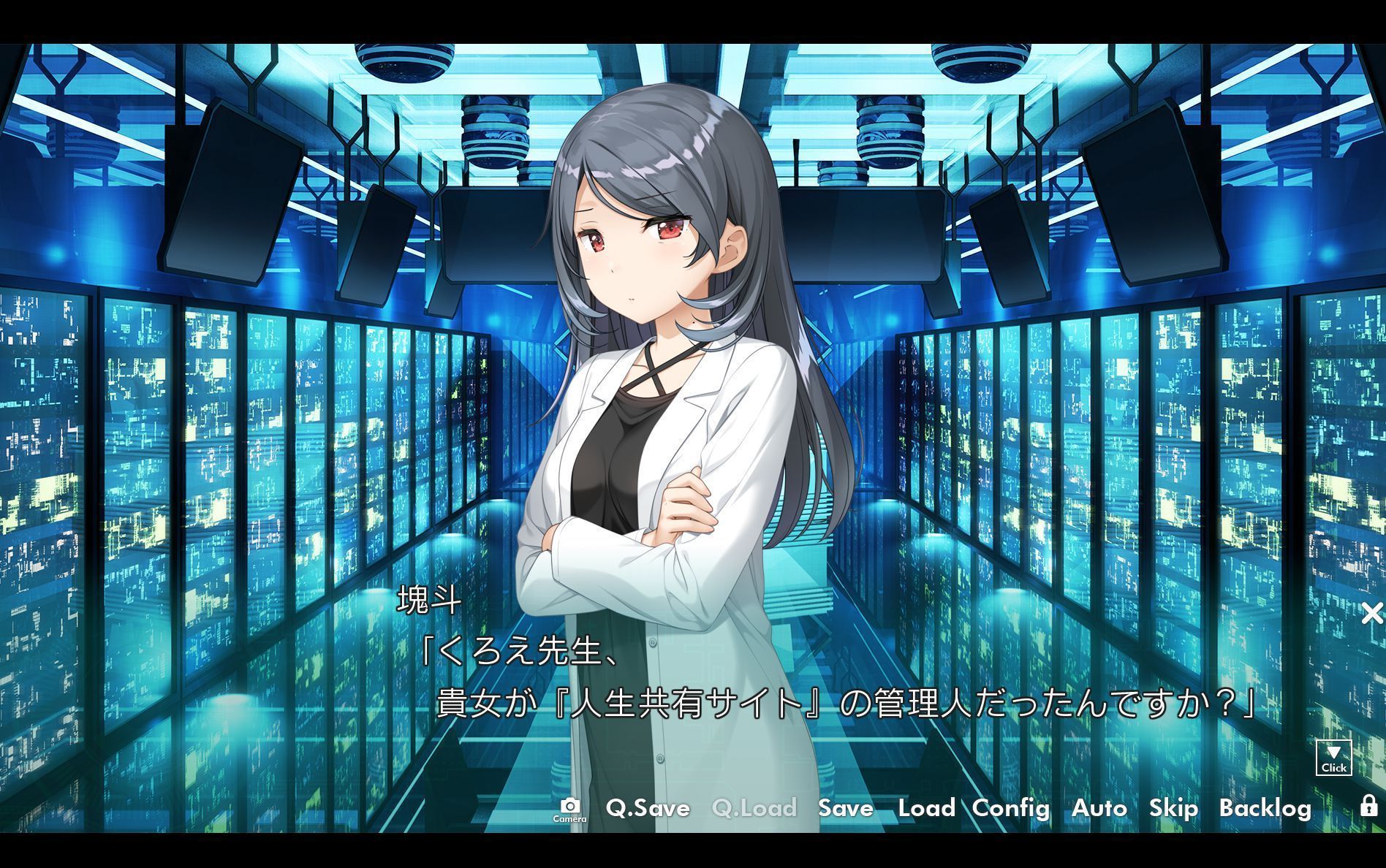
Of course, his deduction is correct. At first the doctor denies it, but eventually slips up. The protagonist destroys the doctor’s “Shared Life” server, which was built to steal people’s privacy via the chips, putting an end to the doctor’s twisted hobby. There’s a final showdown with the doctor, and naturally the protagonist wins.
With the mastermind defeated, Kirika’s life returns to normal. She later has surgery to remove the chip and recovers her health, and she and the protagonist reach their happy ending.
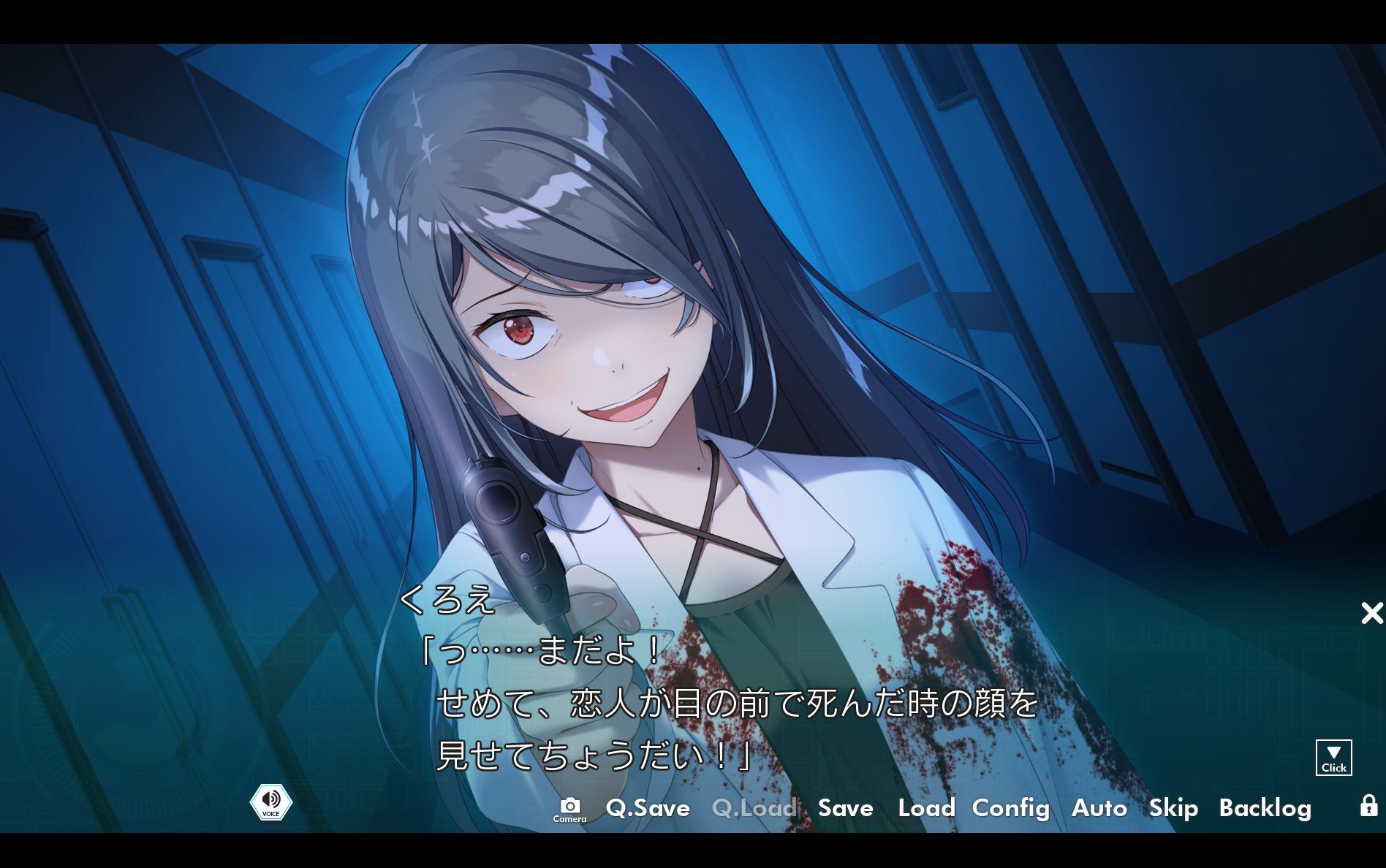
There’s also a Bad End where the doctor invites the protagonist to use the chips to steal privacy and harvest “big data” to build more advanced computers and AI. He agrees, moves into a big house with Kirika, and makes a ton of money—at the cost of dismantling his robot Tsukuyomi…
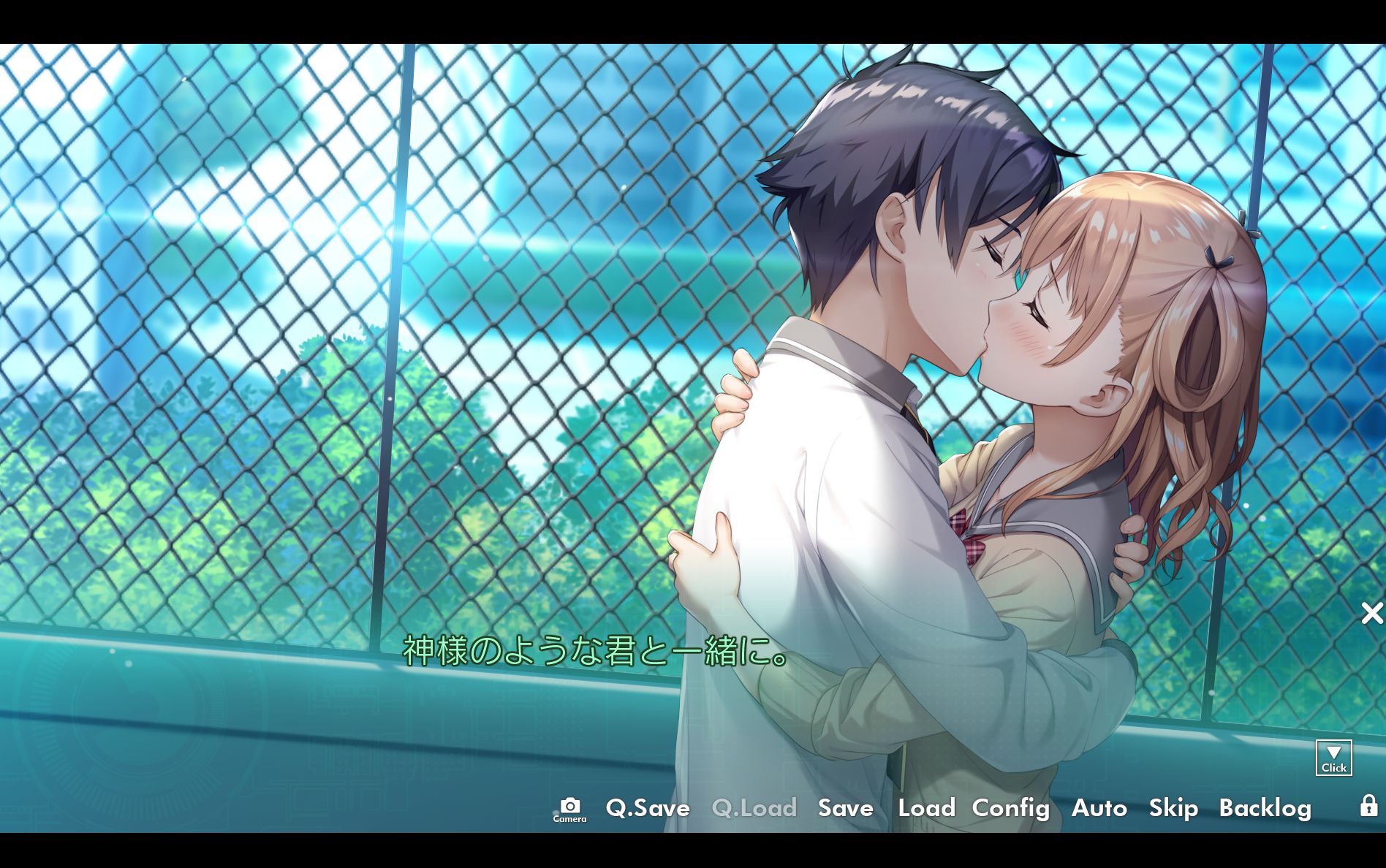
But honestly, that ending isn’t so bad.
Kannazuki Aisari
I’ve almost completely forgotten what Aisari’s route was about. Something like if the protagonist lets Kirika accept Aisari’s “offline invitation,” he can prioritize wooing Aisari, and then enters a love-triangle battle mode where Aisari and Kirika are jealous of each other, followed by endless 3P, and eventually the protagonist chooses Aisari (I think? I forgot), and everyone lives happily ever after.
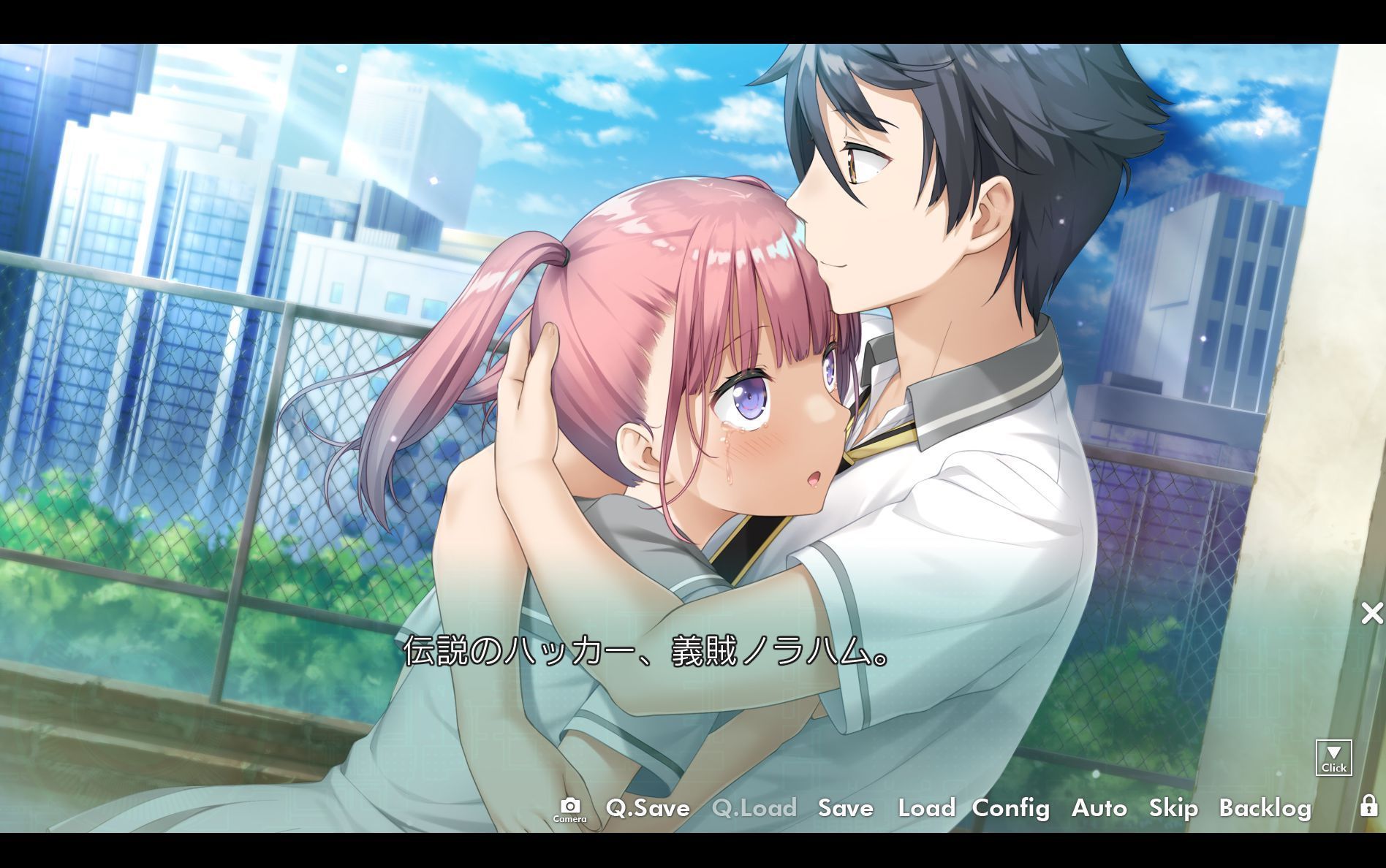
Lana Liddell Hart
I initially thought Lana’s route had nothing to do with the main plot, but later it turns out to be quite relevant. Lana claims to be a detective and often drags the protagonist into these really dumb “detective games.” She invites him to her house, they hook up quickly, and become a couple.
Lana also tells the protagonist that although she’s a foreigner, they’ve met before—when they were kids. The protagonist was playing outside a foreigner’s apartment and met a blonde foreign girl. That was Lana.
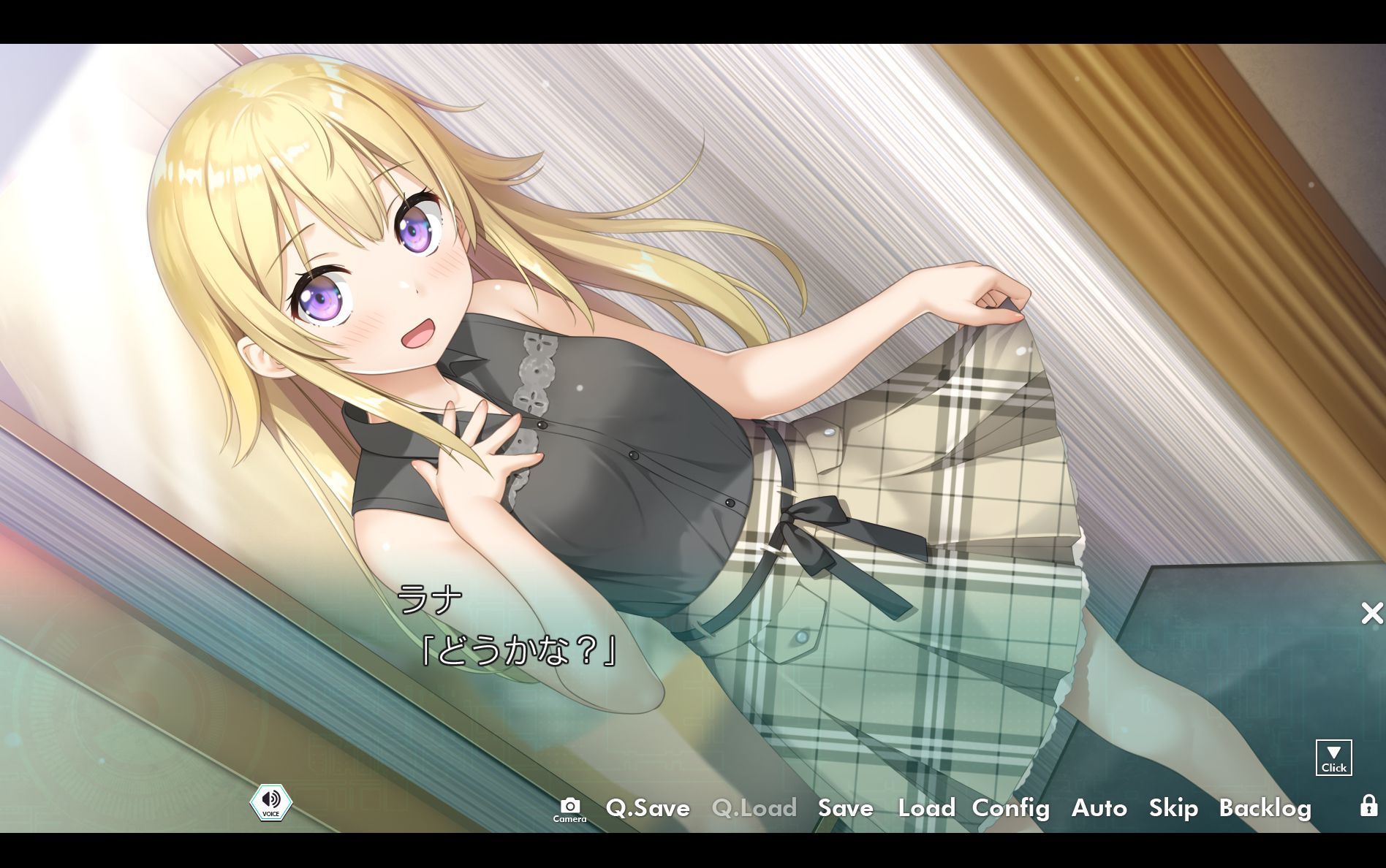
Lana explains that she had brain development issues as a child, so she came to Japan and received “S-Chip” implant treatment at a nearby hospital—a small computer implanted in her brain to upgrade it. That’s why she’s so smart and can work as a detective.
Later, Lana and the protagonist take on a strange case and discover that the hospital where she received the S-Chip treatment has been secretly conducting human experiments under the guise of “free chip treatment.” The company behind the experiments is the same one where Lana’s sister Sophia works. Sophia is shocked—she can’t believe her company is involved in human experiments with a hospital.
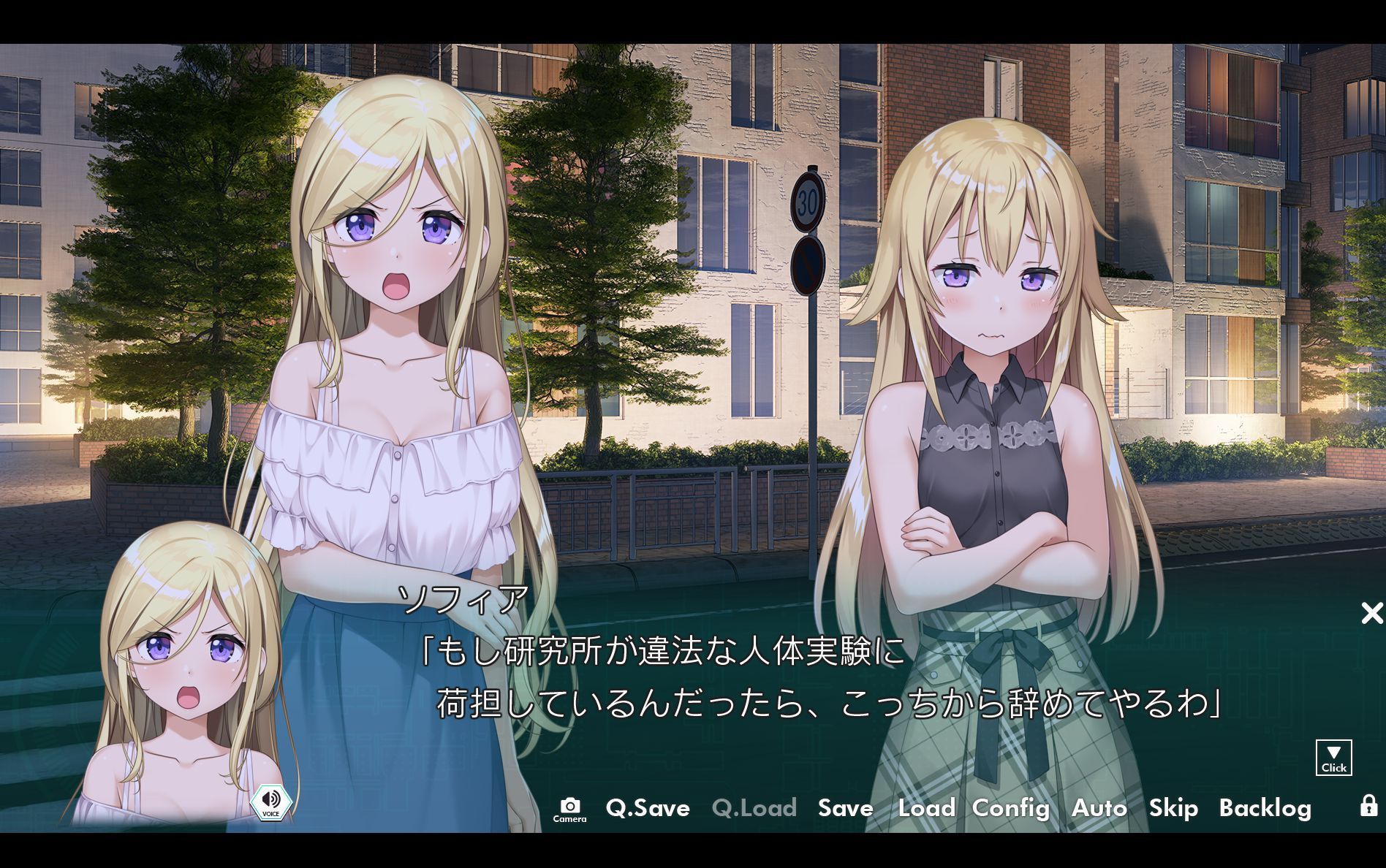
Lana, Sophia, and the protagonist start gathering clues about the “human experiments.” They soon meet Sophia’s company president, who warns Sophia and Lana to stay out of it. He also reveals that the chip in Lana’s brain is actually a product of the experiment, and if they interfere, he can shut down the chip’s functions at any time—which would likely turn Lana into a vegetable.
After careful consideration, Lana and Sophia decide to expose the human experiments, even if it means Lana might become mentally disabled. Lana even offers to let Sophia have the protagonist as her boyfriend, since she won’t be able to be a girlfriend anymore. Naturally, the protagonist refuses.
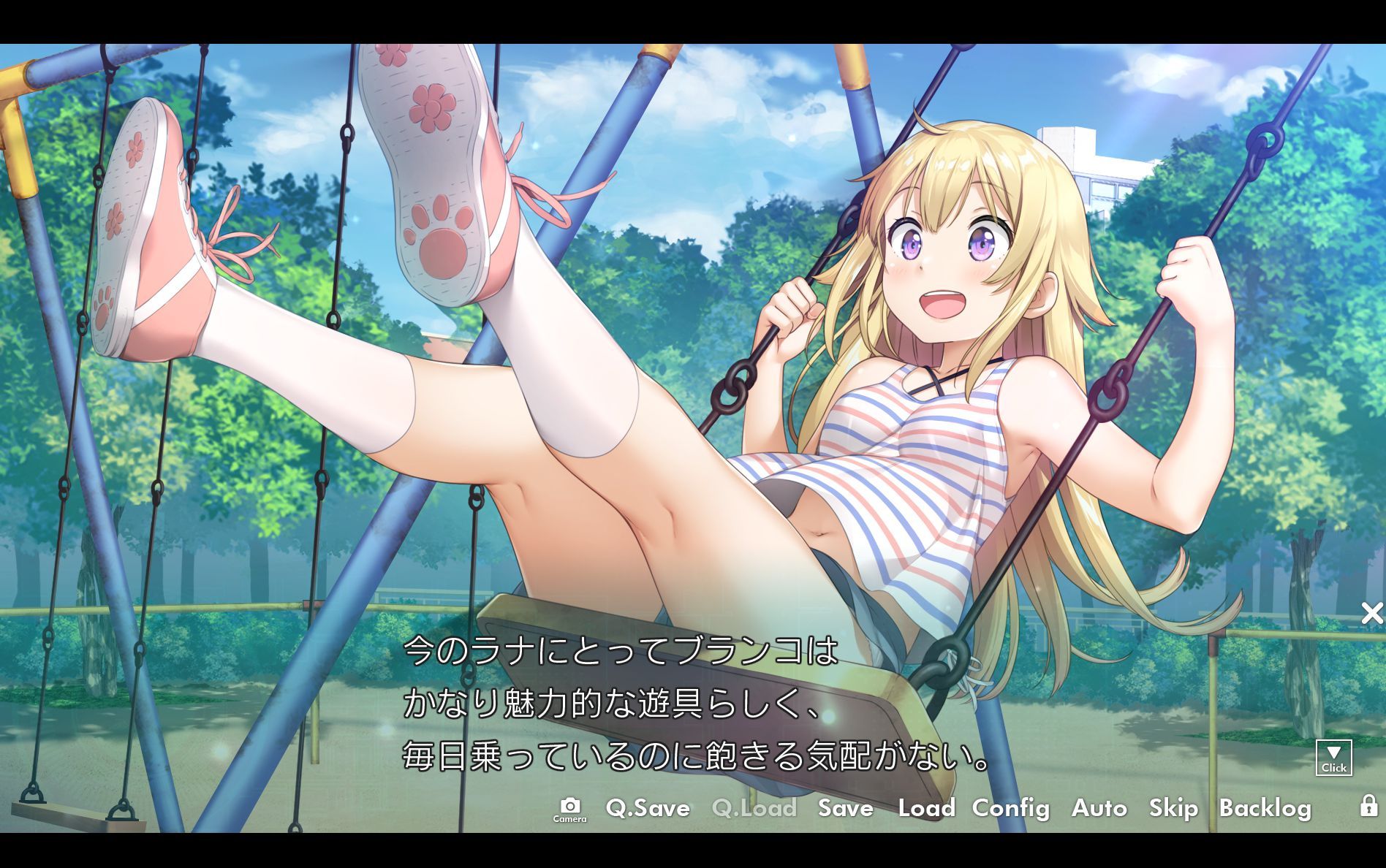
In the end, the masterminds behind the hospital are arrested, the experiments are stopped, and Lana’s intelligence begins to decline. When she decided to expose them, she offered to let Sophia have the protagonist, since she’d be mentally disabled and couldn’t be a couple.
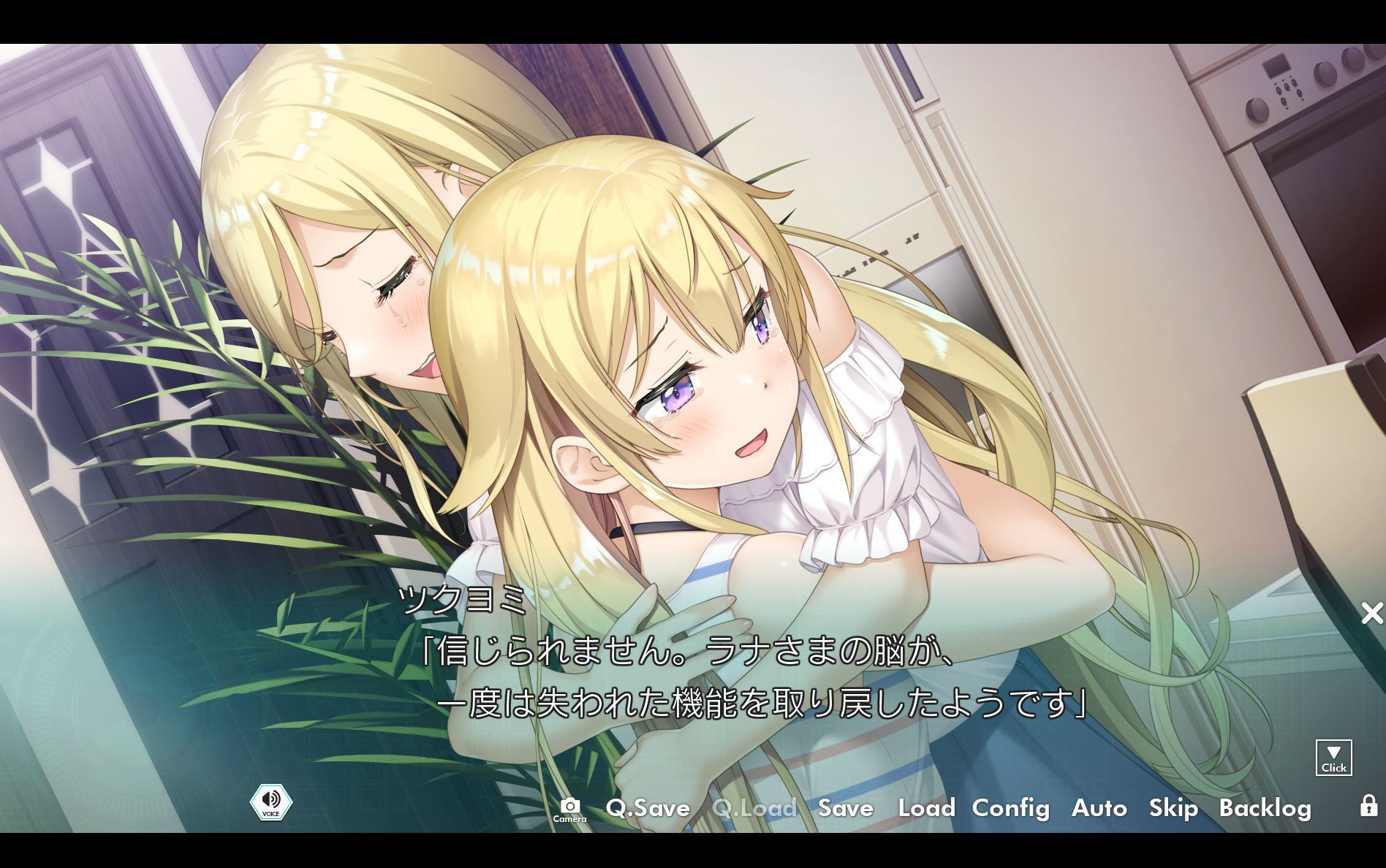
Without the chip’s support, Lana’s intelligence drops to that of an infant. The protagonist decides to retrain her brain and restore her intelligence, buying textbooks from kindergarten to university and teaching her everything. Finally, a miracle happens—Lana regains her intelligence without relying on the chip and becomes an independent person, living happily with the protagonist.
Sophia
In Sophia’s route, the protagonist accepts Lana’s suggestion and becomes her boyfriend. As Lana’s intelligence declines, Sophia and the protagonist get hot and heavy—they go at it who knows how many times. Eventually they realize there’s another way to solve Lana’s problem: with the protagonist’s help, steal the hospital and company’s software data and independently develop a chip OS to make Lana’s chip work again. They succeed, Lana regains her intelligence, and she remembers offering the protagonist to her sister. Anyway, the protagonist ends up with Sophia.

There’s also a Bad End here: when Lana is mentally disabled, she asks the protagonist to have sex with her. If you choose to creampie her, she gets pregnant. Since she’s mentally disabled, having a child is unrealistic, so they choose abortion. This infuriates Sophia. After the abortion, Lana is traumatized and doesn’t recognize the protagonist anymore. Sophia kicks him out, and he never sees the sisters again.
Thoughts
Kamisama no You na Kimi e leaves me with mixed feelings. The premise is solid—love with a robot, AI, brain chips, big data and privacy, and brain-chip surveillance are all thought-provoking topics worth reflecting on in the internet age. But the game has way too many flaws in the details, making it hard for me to get invested.
First, the protagonist’s hacker setup.
He’s a professional hacker who can break into the world’s leading company, yet when a mysterious robot like Tsukuyomi shows up, he just lets her live with him. He uses Line, hangs out on social media, casually fixes computers remotely, and his hacking scenes are presented like some VR world…
There’s too much to nitpick. Let me just make a list.
- A hacker would never allow a robot that’s constantly connected to the world’s top internet company to hang around him.
- Even if he did use the robot, he’d at least tape over its camera, block its microphone, and probably write custom firmware to replace the original system to avoid data collection.
- A hacker wouldn’t use Line for communication. I doubt they’d even use Telegram.
- A hacker wouldn’t plug in a USB drive and press one button to erase a virus.
- The student council president, also a hacker, asks the protagonist to help with student council paperwork—hello, a hacker would write a script to automate that.
- No idiot uses pure numbers for an important system password, no matter how long.
And the biggest issue: the game treats “hacking” as a form of entertainment. The protagonist even says to the president, “Let’s go hacking together!” Have you ever seen hackers greet each other like that? Is hacking basketball or Dota? They’re completely different things. Sure, in English “hacking” can mean “modding” or “tinkering,” but I honestly think the writer doesn’t understand hacking at all and just imagines it like some VR battle from an online game. Maybe they played too much Sombra from Overwatch…
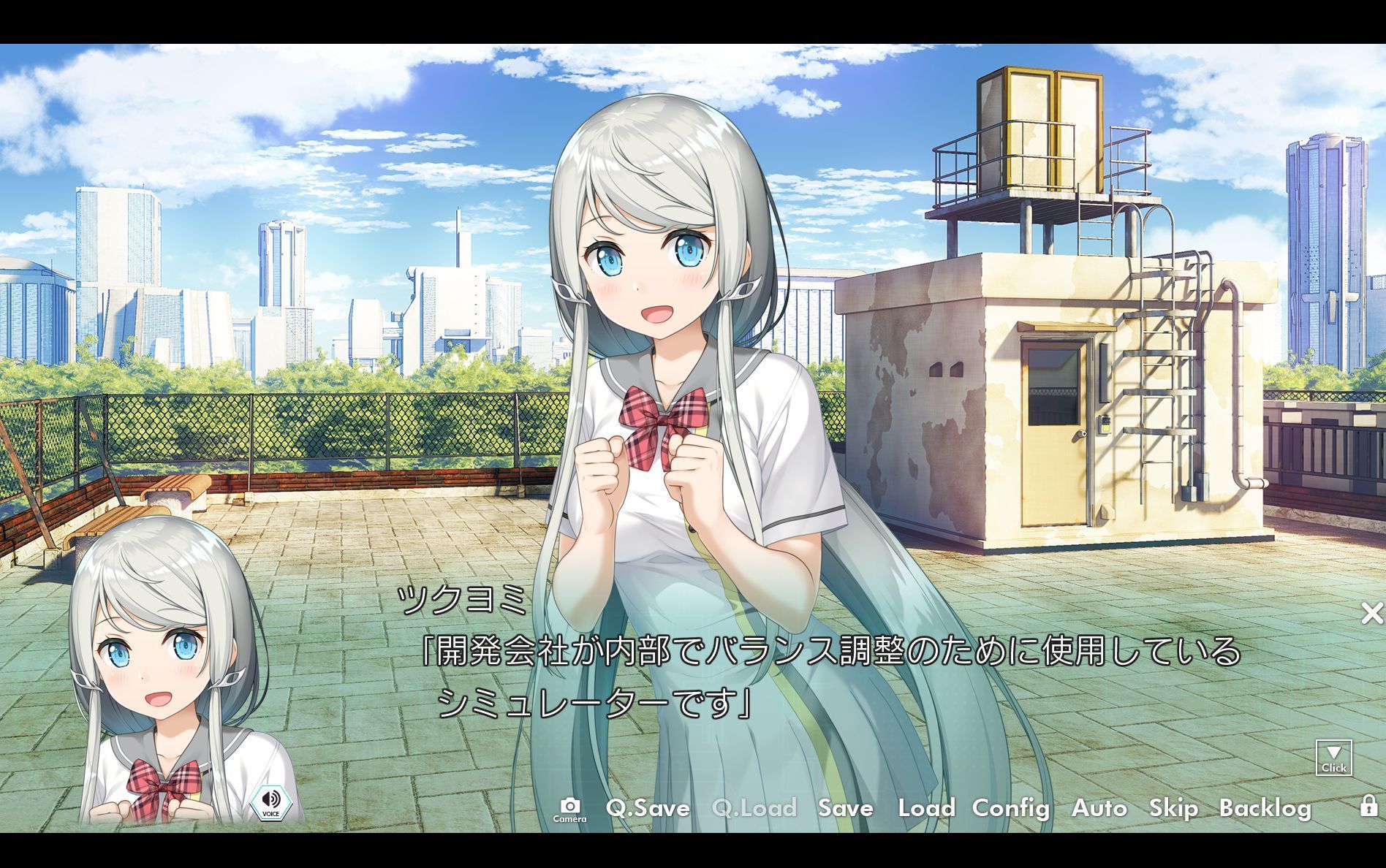
Besides the bullshit hacking, there’s the “AI” stuff. The game later introduces brain-chip treatment for diseases, which is actually a decent concept. But it keeps saying “implant an AI in the brain” instead of “implant a chip.” It keeps emphasizing “AI,” but AI isn’t a chip or a physical thing—it’s a technology. I suspect the writer thinks emphasizing “AI” sounds cool, or maybe they don’t even know what AI is and thinks AI equals chip… though that’s unlikely, since they eventually develop S-Chip software. Probably the former.
As for the usual stuff like “hacking looks like an online game” and “the protagonist types randomly and hacks stylishly,” people have already mocked that in other games and movies enough. I won’t waste more words.
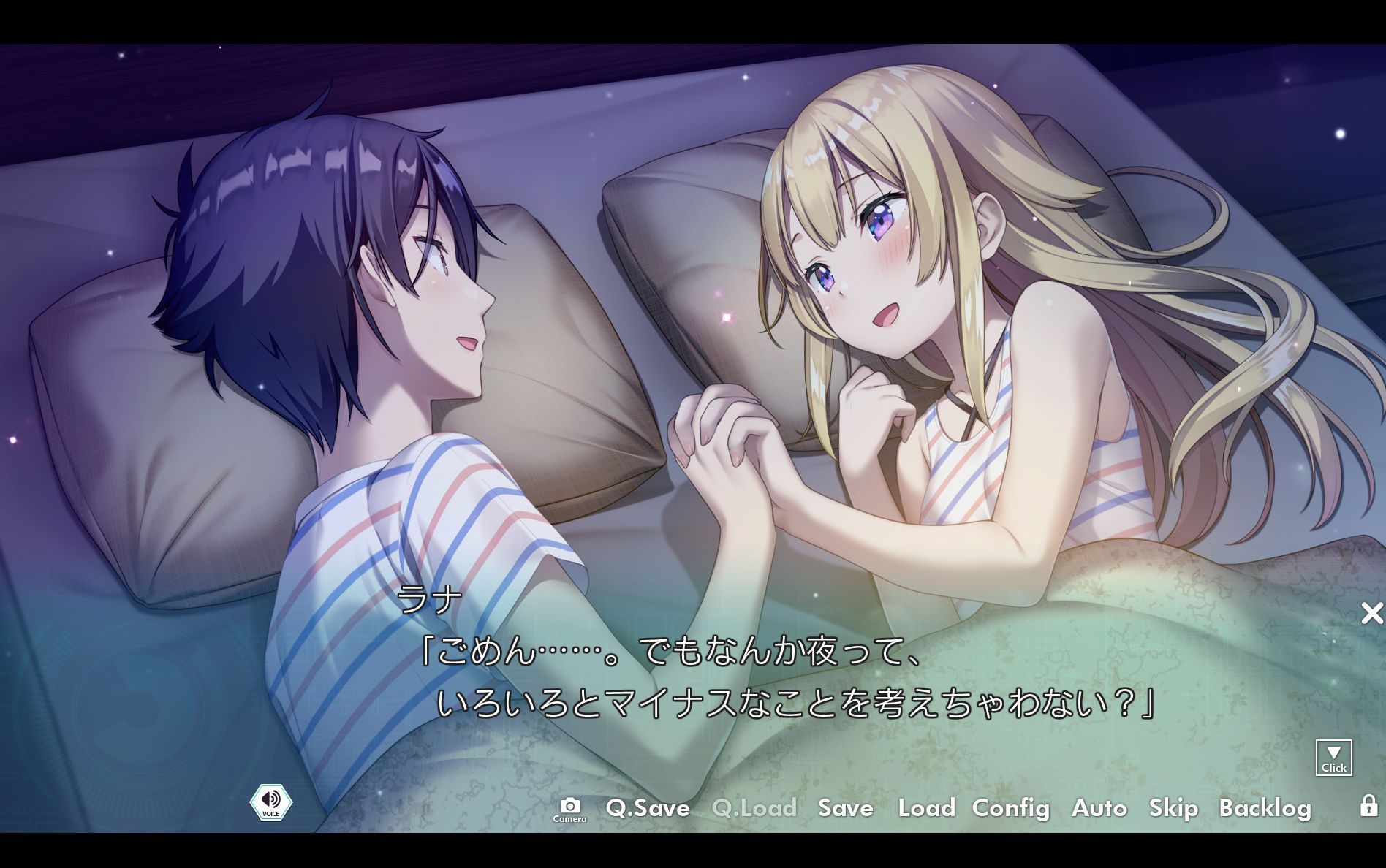
Honestly, leaving aside those setup flaws, the game itself is still pretty good. Several of its foreshadowing threads connect: the brain-implant AI chip treatment ties into the human experiments going on behind the hospital, the chip also ties into someone using it to harvest private data, and all that feeds into a cutting-edge AI built from big data and rendered through top-tier robots. A lot of the heroine routes play out in the interplay between these elements, which does build a small-scale worldview — and within it tells a story that more or less holds up.
But this story… no matter how I look at it, something about it just feels off.
At first I figured it was just “the writer doesn’t know computers and was making shit up.” But thinking it over, it’s not that simple. Take the “AI chip brain treatment” the game mentions — when I heard that setup, my reaction wasn’t “sure, obviously,” it was more like “holy shit, you can do that?”
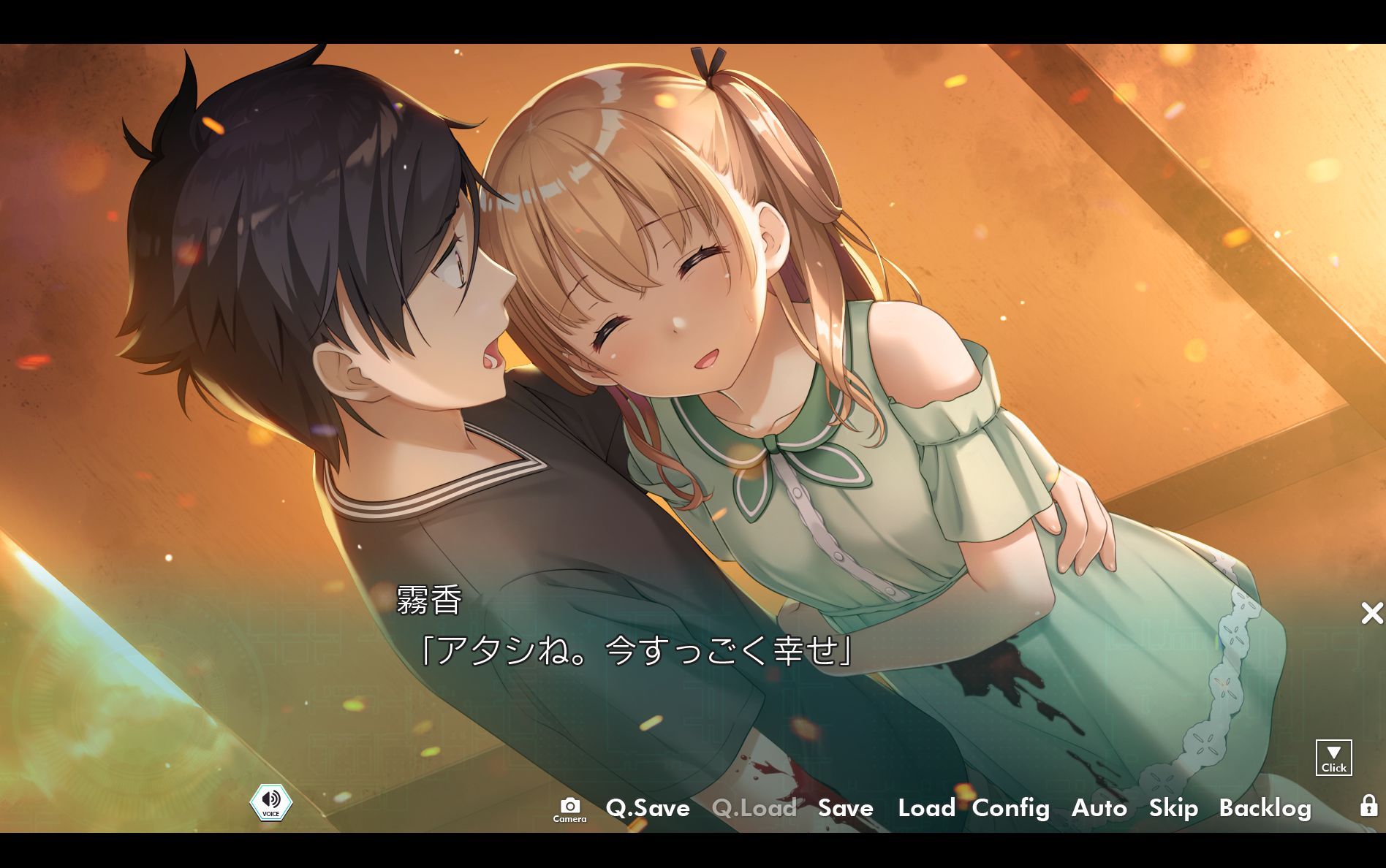
Why? Because the game is supposed to be set in the future, isn’t it?
Wait! This game is set in the future?
And that’s exactly the problem. Even though it’s set in the future, it’s very easy to forget that, because there’s way too much that isn’t “future” at all — the ancient classroom, the beat-up school rooftop, the ruins straight out of the last century, the old multi-monitor PC, the phones, the antique pistols. Pick any random game set in the “near future” and the classrooms are all VR touchscreens, tech vibes everywhere. This game is clearly still drawn from “the world as it is now.”
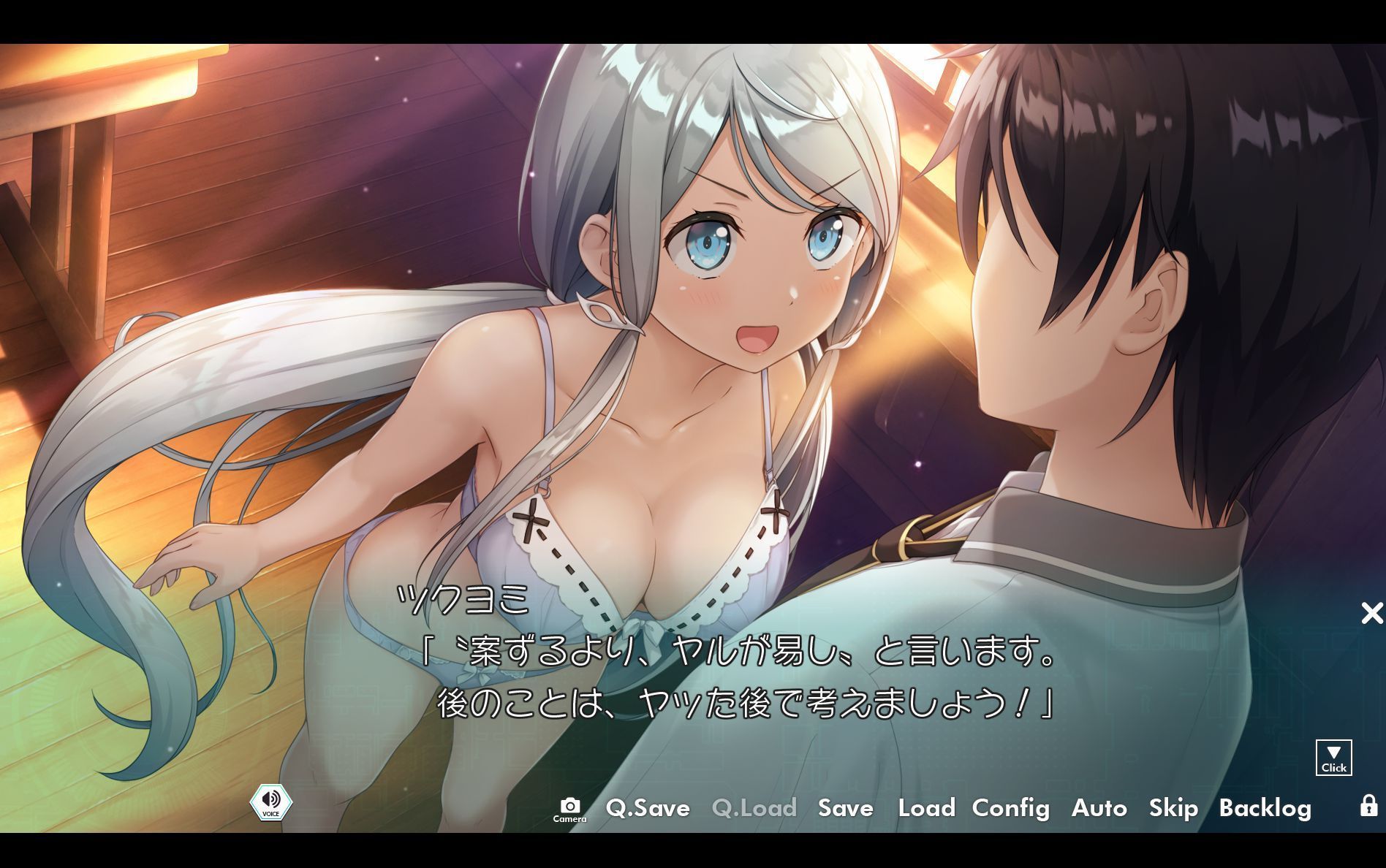
Beyond the elements not feeling futuristic enough, the game’s way of telling its story also left me baffled.
Take Tsukuyomi’s route. Honestly, I’d guessed the ending about halfway through.
Roughly: Tsukuyomi gets discovered by the big organization, the protagonist and she go on the run, and in the end Tsukuyomi sacrifices herself to protect him. In exchange, her data is handed over to the organization as research material. Eventually the protagonist finds that the core computer’s AI, CAI, carries a trace of Tsukuyomi. She didn’t die — she became part of CAI, everywhere at once, watching over him through the streetlights, computers, phones, and networks around him. In the online world, the all-knowing Tsukuyomi is basically a “god.” In the end the protagonist messages her through the network, which conveniently matches the game’s title, Kamisama no You na Kimi e, and the game ends.
My imagined ending was sort of like Hatsuyuki Sakura, and the actual final ending follows roughly that route — but then Tsukuyomi suddenly self-destructs out of nowhere, and at the end they randomly claim she was actually produced on the moon. What’s the point of any of that? Are you telling me that because Tsukuyomi’s name can be written with the characters for “moon” (月詠 or 月読) she had to go to the moon? And the route doesn’t even have an epilogue — it cuts straight to the ED. It doesn’t read like a Grand Ending at all. Is this really how you treat the central heroine?
Oh right, speaking of the title Kamisama no You na Kimi e — the game never really emphasizes how Tsukuyomi, as a networked AI, is “like a god.” The protagonist has one passing moment of awe in the common route and it’s never brought up again. Are you going to tell me that because Tsukuyomi is the name of a Japanese deity, that makes her “like a god”? Meanwhile the other routes force the word “god” into their final lines, like someone padding an essay to hit the prompt at the very end…
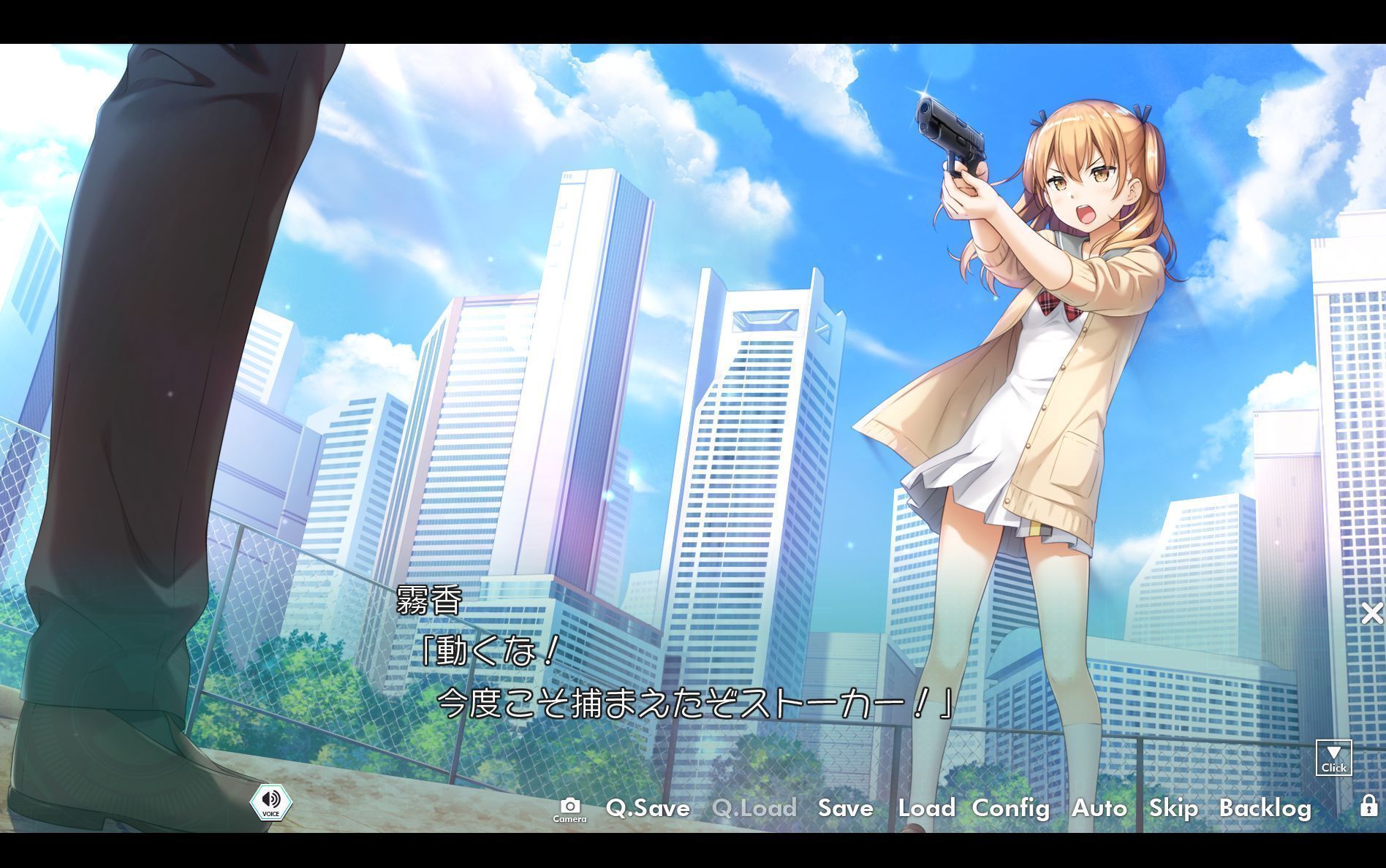
Aside from the story itself, I don’t have much issue with the rest of the game. Kantoku is still Kantoku, still hasn’t given up on plaid skirts. The music is still CUBE’s usual soundtrack, and the voice acting is solid. Apart from the story being hard to talk about, everything else is up to standard. As for the romance being shallow and every girl being an Easy Girl? Whatever, I’m used to it. Kantoku’s characters have all been typecast by CUBE at this point and I can’t be bothered to complain.
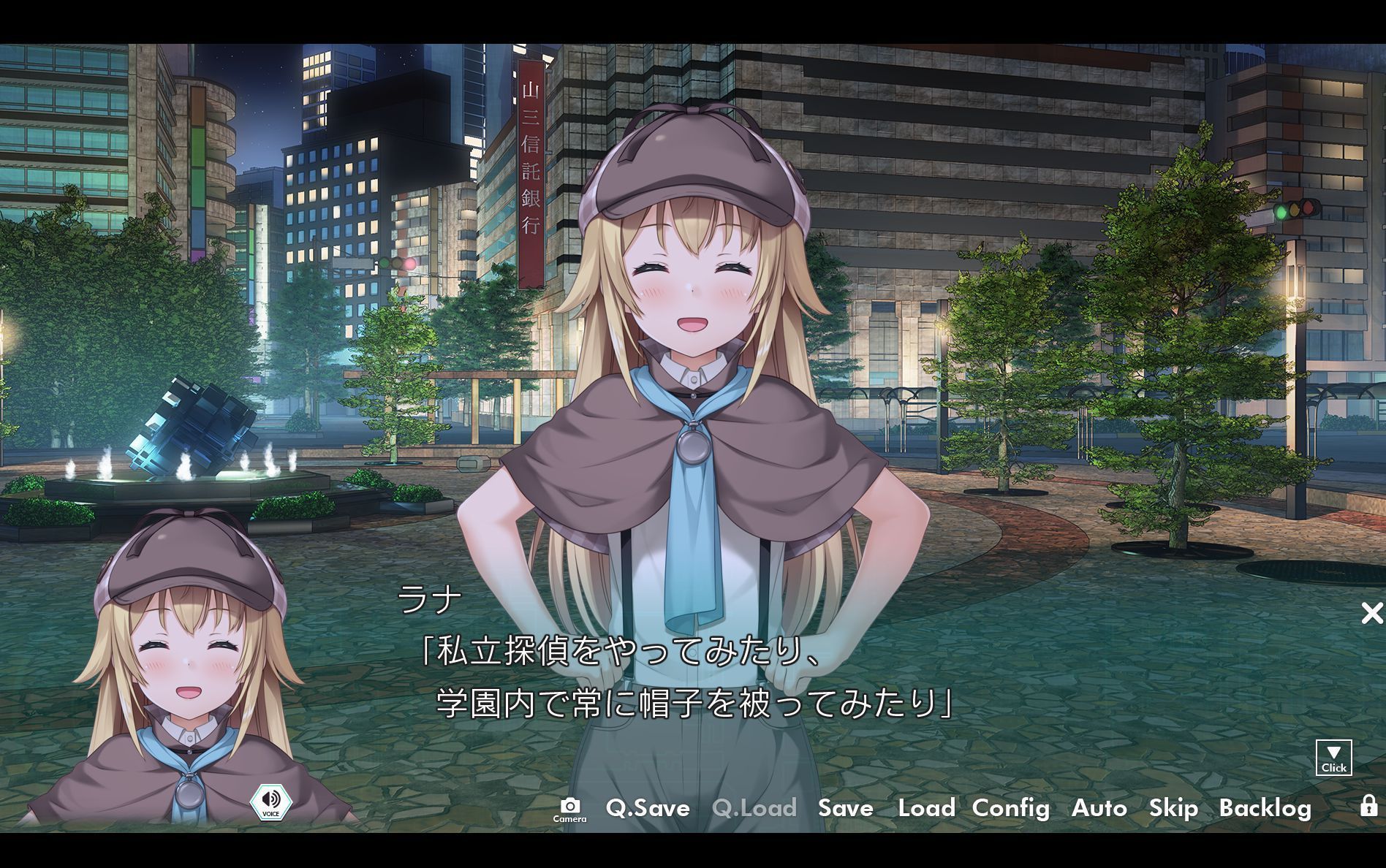
Oh, right — I’m not saying the story is bad. I’m just saying that for someone with my hang-ups about “hackers” and “medicine,” it reads as a bit of a stretch. That said, the three light novel authors’ script is still better than CUBE’s previous games, and at least the Tsukuyomi–protagonist banter in the common route is genuinely funny, with plenty of quotable lines. Overall it’s still worth a look.
If I were scoring this game, I’d give it 100 — even if the game itself is worth 1, Natsuwa would make up the other 99.
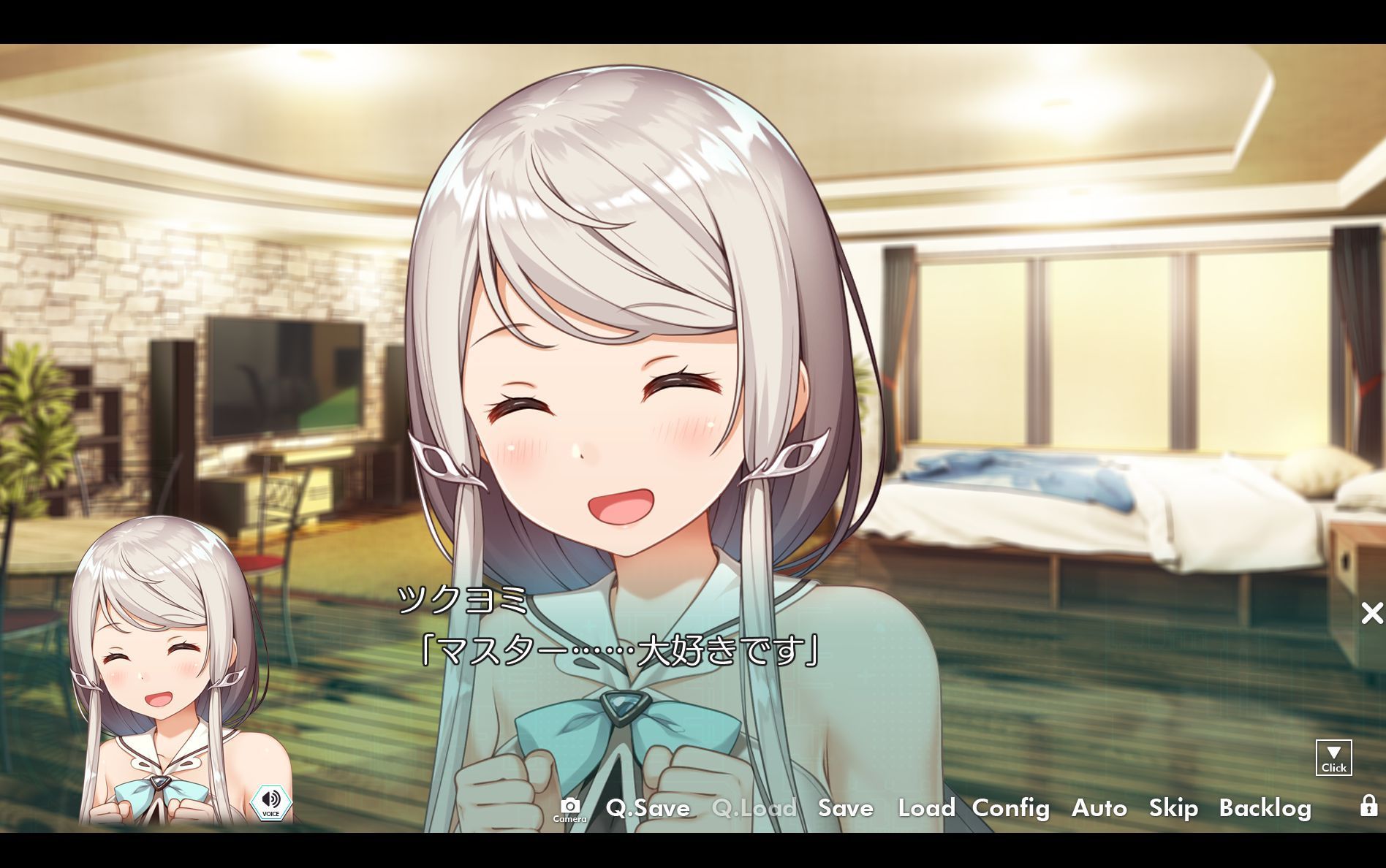
Yeah, I’m that straightforward: any game with Natsuwa in it, I’ll shill for. She’s my god. This post is my own “To a God-Like You.”
Comments are hosted on the Chinese main site. This mirror is read-only.