Sono Hana ga Saitara, Mata Boku wa Kimi ni Deau (その花が咲いたら、また僕は君に出逢う) Review
Sono Hana ga Saitara, Mata Boku wa Kimi ni Deau
So here’s the thing—this game has been sitting in my hard drive gathering dust for ages. I’ve always had mixed feelings about it.
- I want to play this game because its premise and art style are actually pretty good
- I don’t want to play this game because I already know how it plays out without even having played it
This game comes from Campus, a label that got shut down and sold off. Campus was actually a sub-brand of Light, set up specifically to crank out quick cash-grab mini-games. The formula was basically: find a decent artist, push out a single-route or two-route short game, keep the budget low, sell it cheap, and hope it pumps some blood back into the parent company Light.
Honestly, Campus’s intent to recoup some cash by selling these games is way too obvious. Just look—every single one of them is a “multi-platform release,” with iOS and Android versions and everything else they can slap it on, not a single one left out. There are also free non-18+ versions, and only the 18+ content costs money. It’s basically a “we’re not making games to make money, we’re just here to make friends” stance, as if they think their game quality is so solid that surely some player—or some otaku who wants to see the lewd art—will shell out for the physical edition, and then they can pull a reverse play and rake it in, revive the company, and return to the old capital…
Except that didn’t happen. Light still died, and Campus got sold off too.
So why is that, exactly? Actually I get it — the name Campus alone decides what kind of games the brand puts out. I dunno what kind of dumbass obsession the people at Light have, but they insist on stuffing incomprehensible setups into every game released under the Campus label:
- The story absolutely has to take place entirely on one school campus
- There absolutely has to be a concept of “magic”
- Absolutely one of the heroines, or something, has to be a “magic user”
- There absolutely has to be a whole pile of utterly dumb-as-shit “magic lore” concepts
Look — normally, when a game sets up some “superpower” premise, it’ll say the heroine or the protagonist happened to stumble into time-travel powers or whatever. Campus doesn’t do that. It just flat-out says the heroine is a magician, and it’ll even draw you a chart telling you she’s got “X-type, X-type, X-type” magic. It’s this close to handing you a rock-paper-scissors weakness table. Except you’re not making an RPG, so what the hell is any of this for? All it does is make the game feel nonsensical. Tell your story, man — why are you dumping a pile of useless-ass dry lore on me?
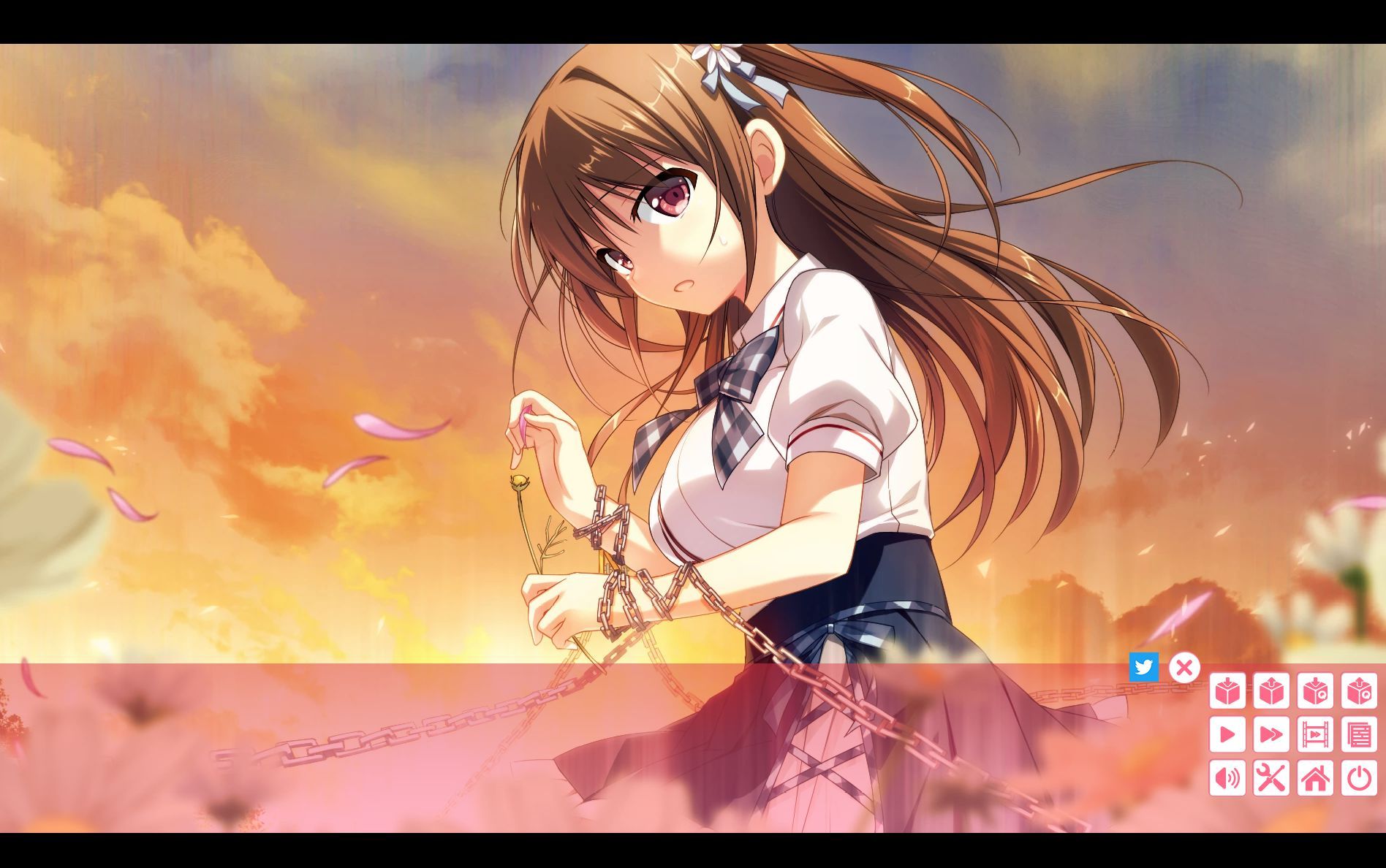
Earlier there was that Haruuso, Natsuuso, Akiuso, Fuyuuso four-part series whose magic-system premise already had me going bruh, and then they switched artists — and the damn thing came back for round two!
So with その花が咲いたら、また僕は君に出逢う, I’ve already braced myself for a “魔法使い” to show up at any moment.
But surprise — the game doesn’t start out with any of that……
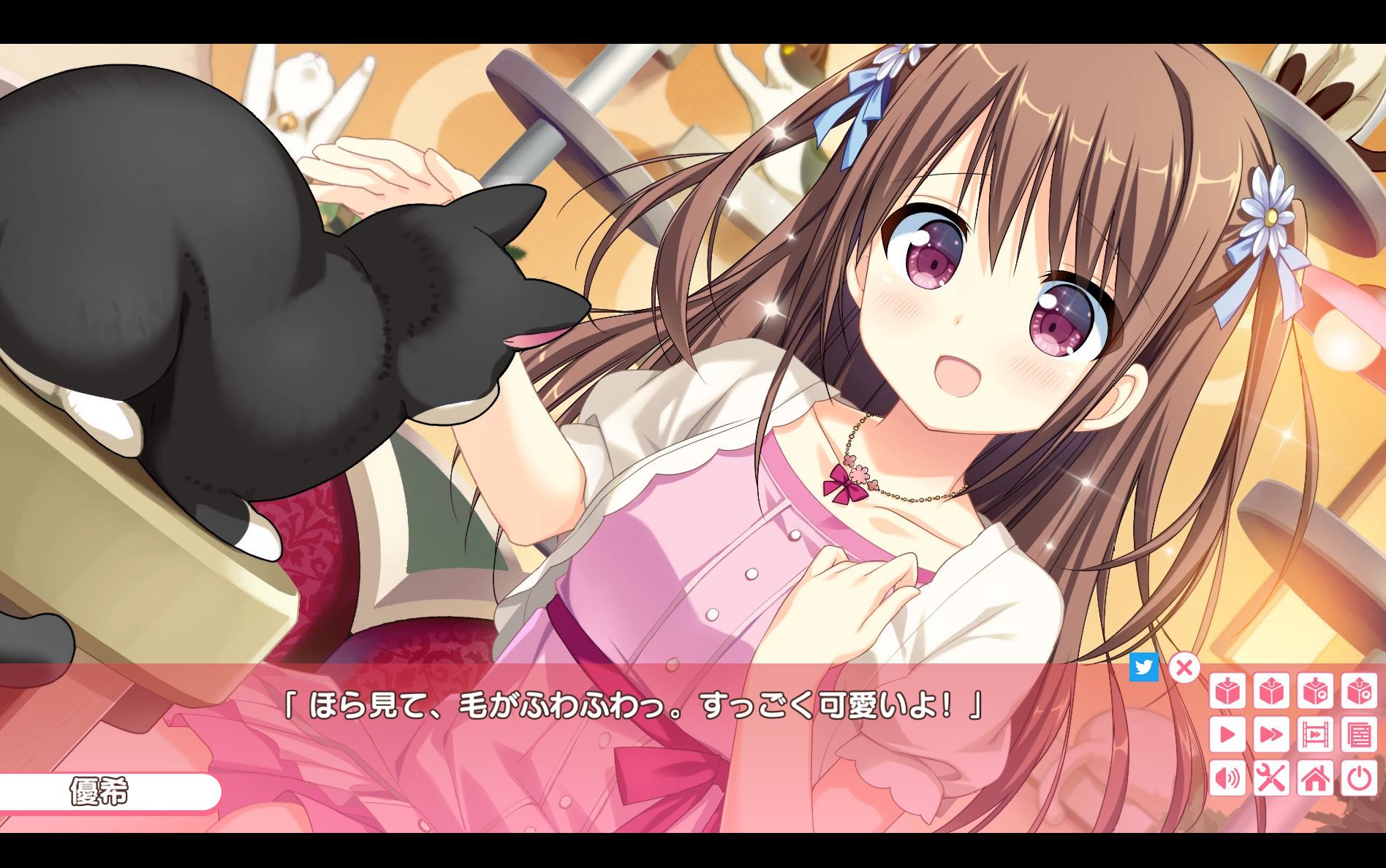
The story goes that our heroine, Nagase Yuki, meets our protagonist while at school and begins a 360-degree, seamless cling-fest aimed straight at him. And along the way, every night she sits down and reviews how it went, as if the whole swooning campaign were premeditated. Then, finally, when she and the protagonist are about to get somewhere, he suddenly discovers… our heroine is in some room chanting a spell…
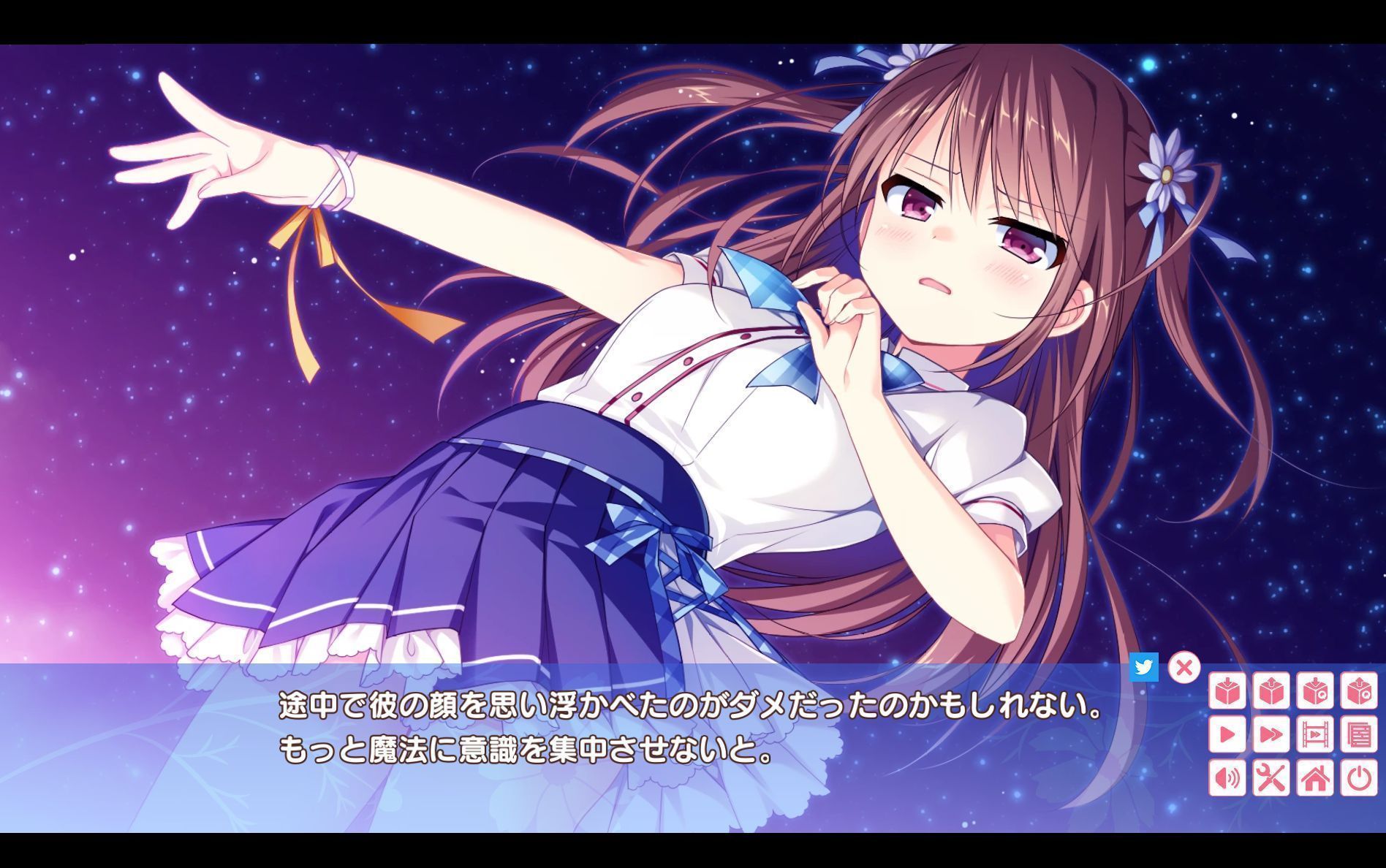
AAAAAAAHHHH, it’s here—the witch is back again!
Then the heroine acts like the protagonist just stumbled onto her secret, does a little spellcasting, and vanishes—along with the protagonist’s memories of her.
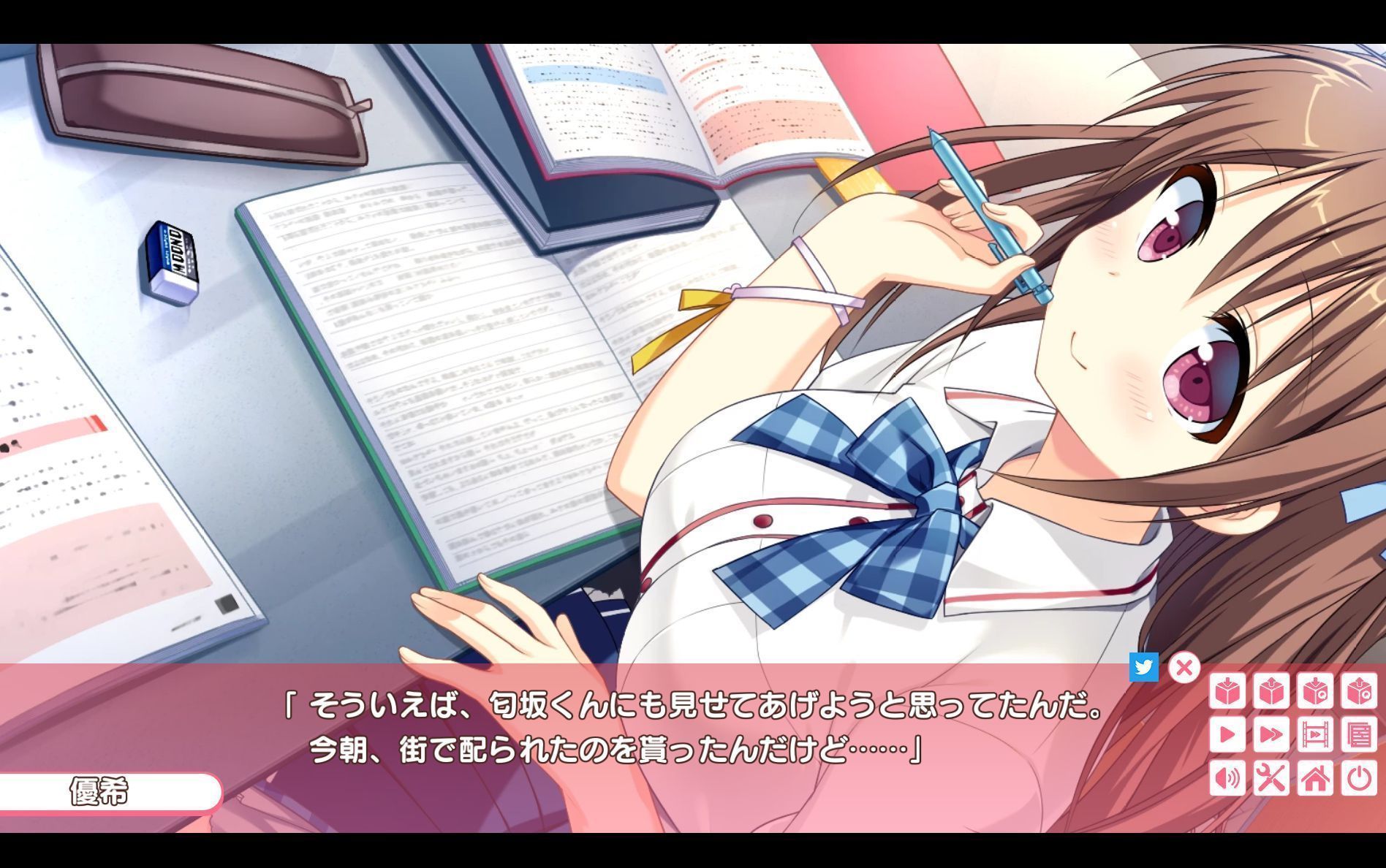
Then the protagonist goes to school like normal, but something feels off—because nobody, himself included, can remember that Yuuki Nagase ever existed.
But because the protagonist’s longing for Nagase Yuki was so overwhelming, he eventually broke through the dimensional wall and still saw the erased heroine, and the two became a couple again.
The game also takes a moment to explain why the heroine wants to erase herself: originally, as a kid, she was a shut-in apprentice witch. That’s when the protagonist, also a kid, hooked up with her—became her friend and basically cured her autism. But through her own screw-up (I honestly forget whether it was magic or what), the protagonist died. In the end, she traded away the protagonist’s memories of her to bring him back to life, and she herself got promoted to full-fledged witch in the process.
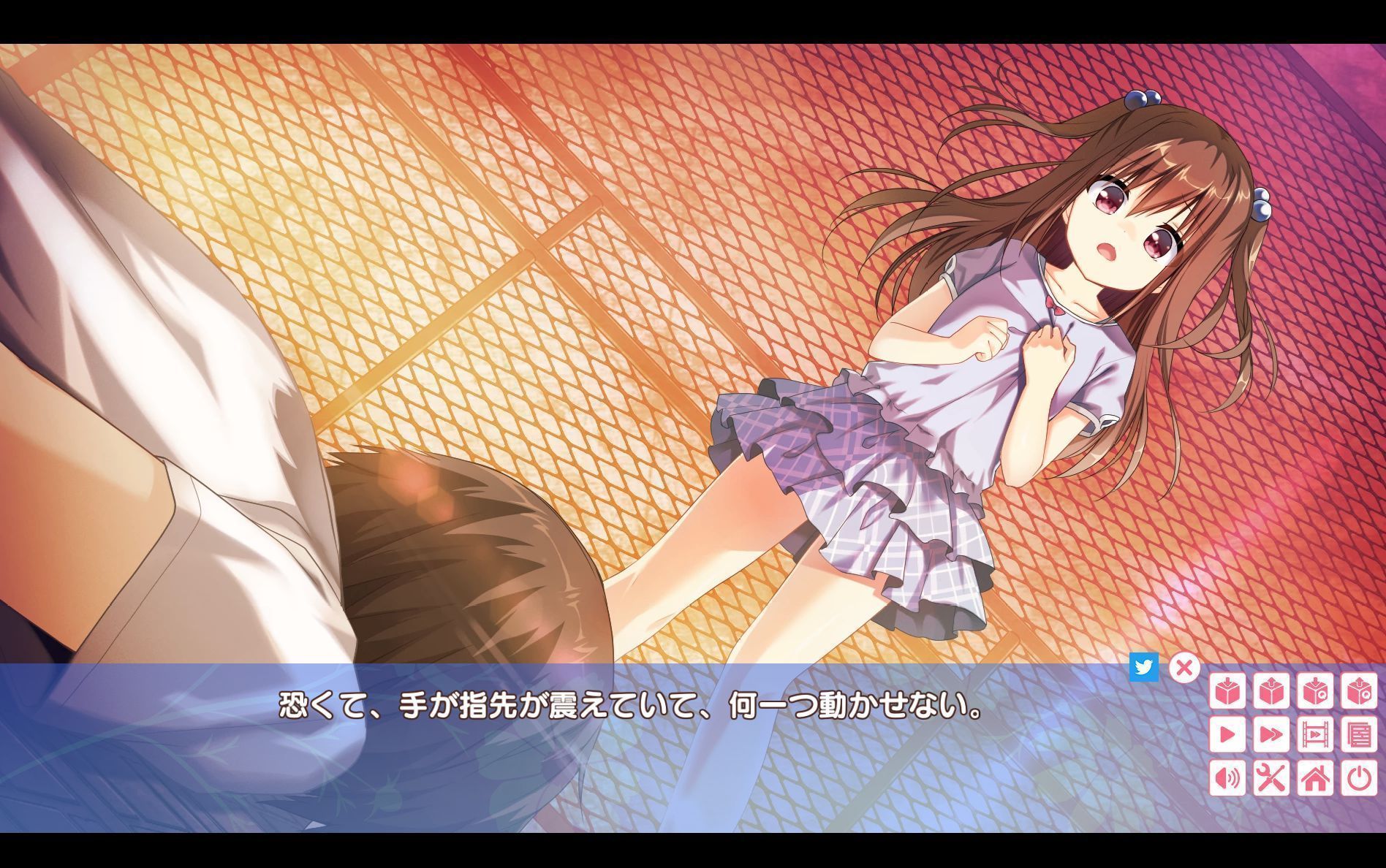
The protagonist has forgotten what happened between him and the heroine when they were kids, and then the two of them meet again at school. She figures, eh, he forgot, so whatever — let’s just start dating all over again. Except of course the worst possible thing happens: he finds out she’s a witch.
After all, the heroine ascended to witch by sacrificing the protagonist’s memories of her. The protagonist found out about this secret — maybe he’ll remember what happened when they were kids, and then the fact that he was resurrected gets exposed too, and everything might come undone. So the heroine chose to run away.
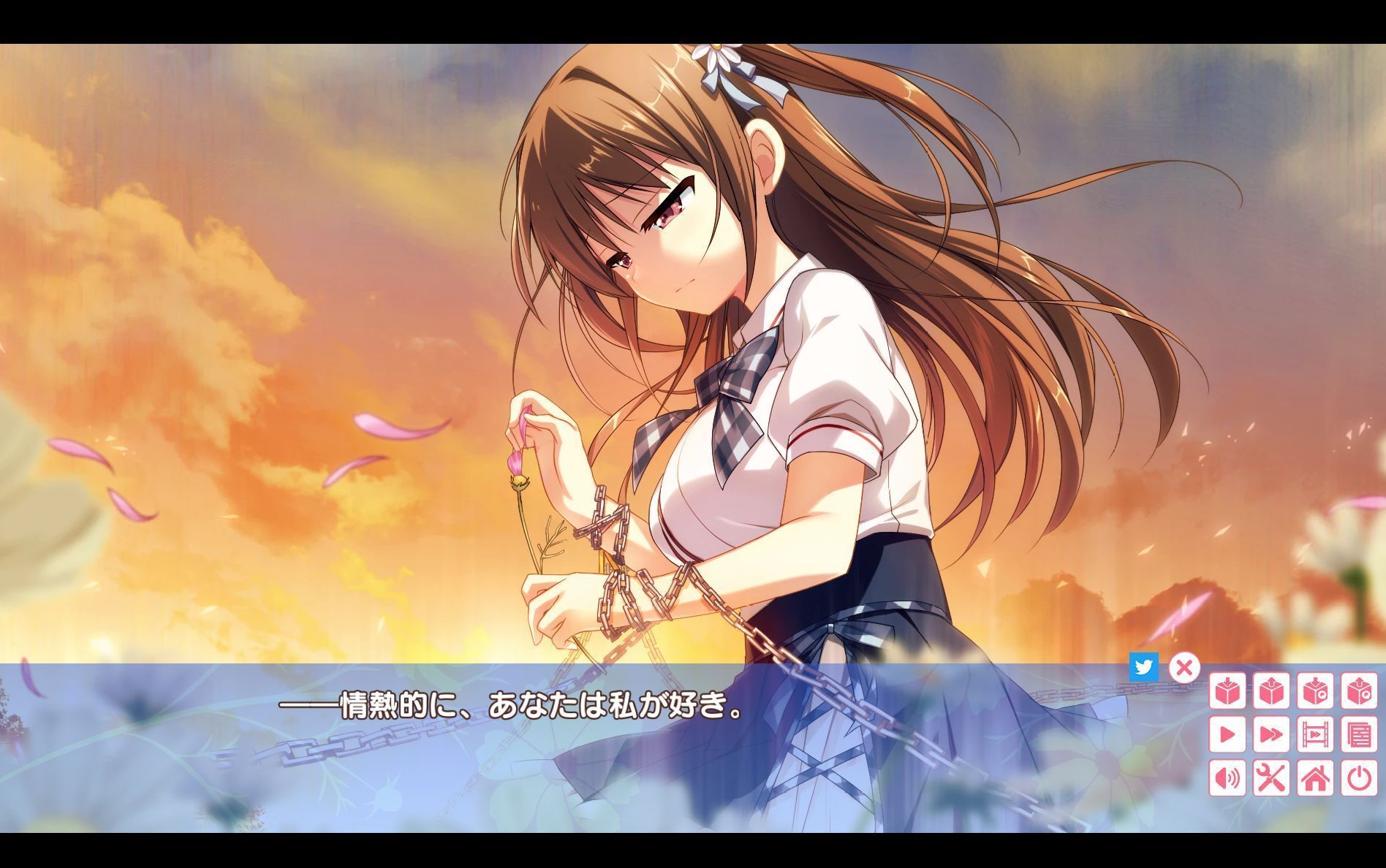
And of course, in the end love conquers all, and we get a Happy Ending.
The game also has a paid After Story that’s packed with NSFW art. You guys don’t want to see that stuff, so I’ll skip it.
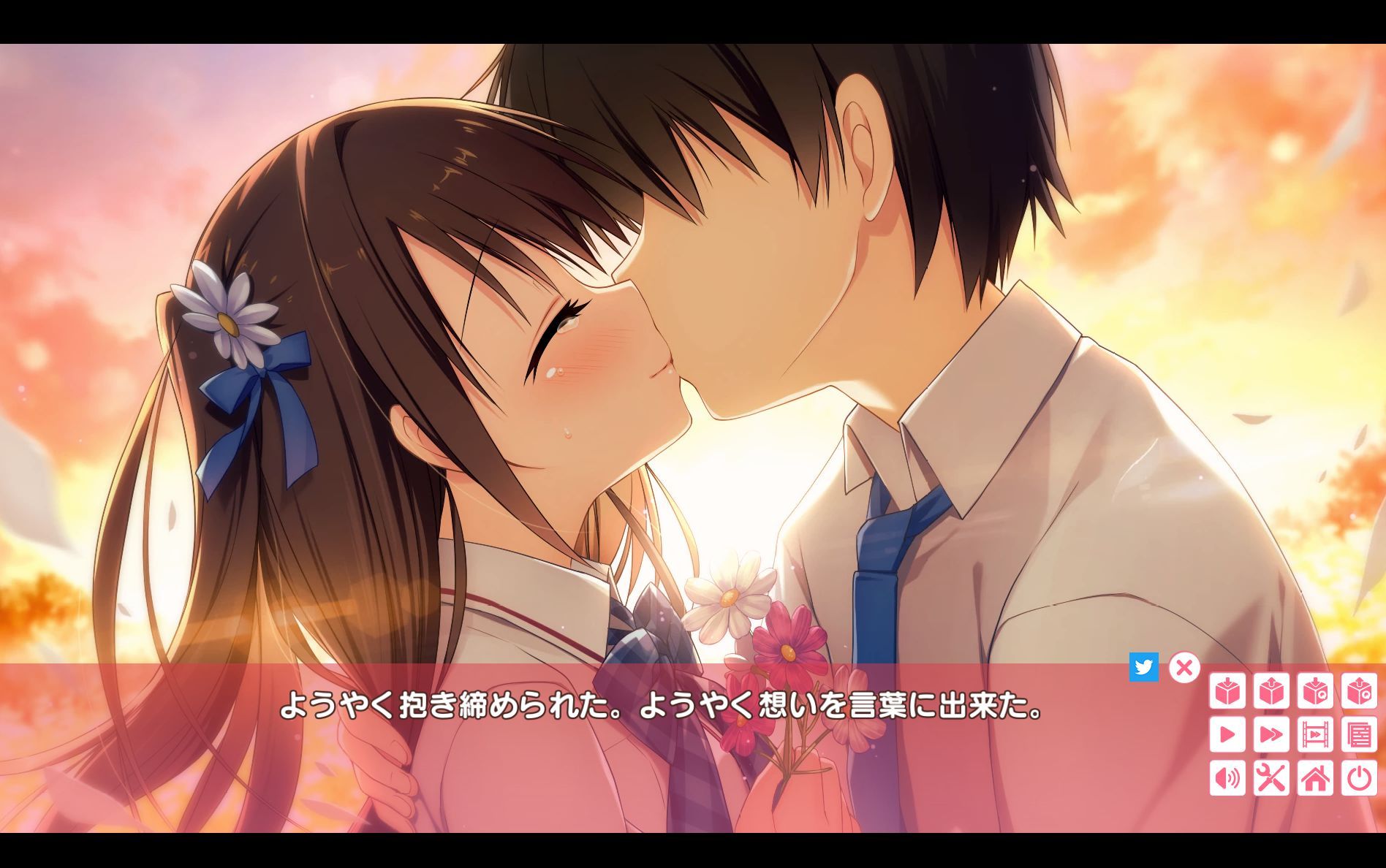
So how do you actually rate this game? All I can say is:
The heroine herself is drawn pretty well.
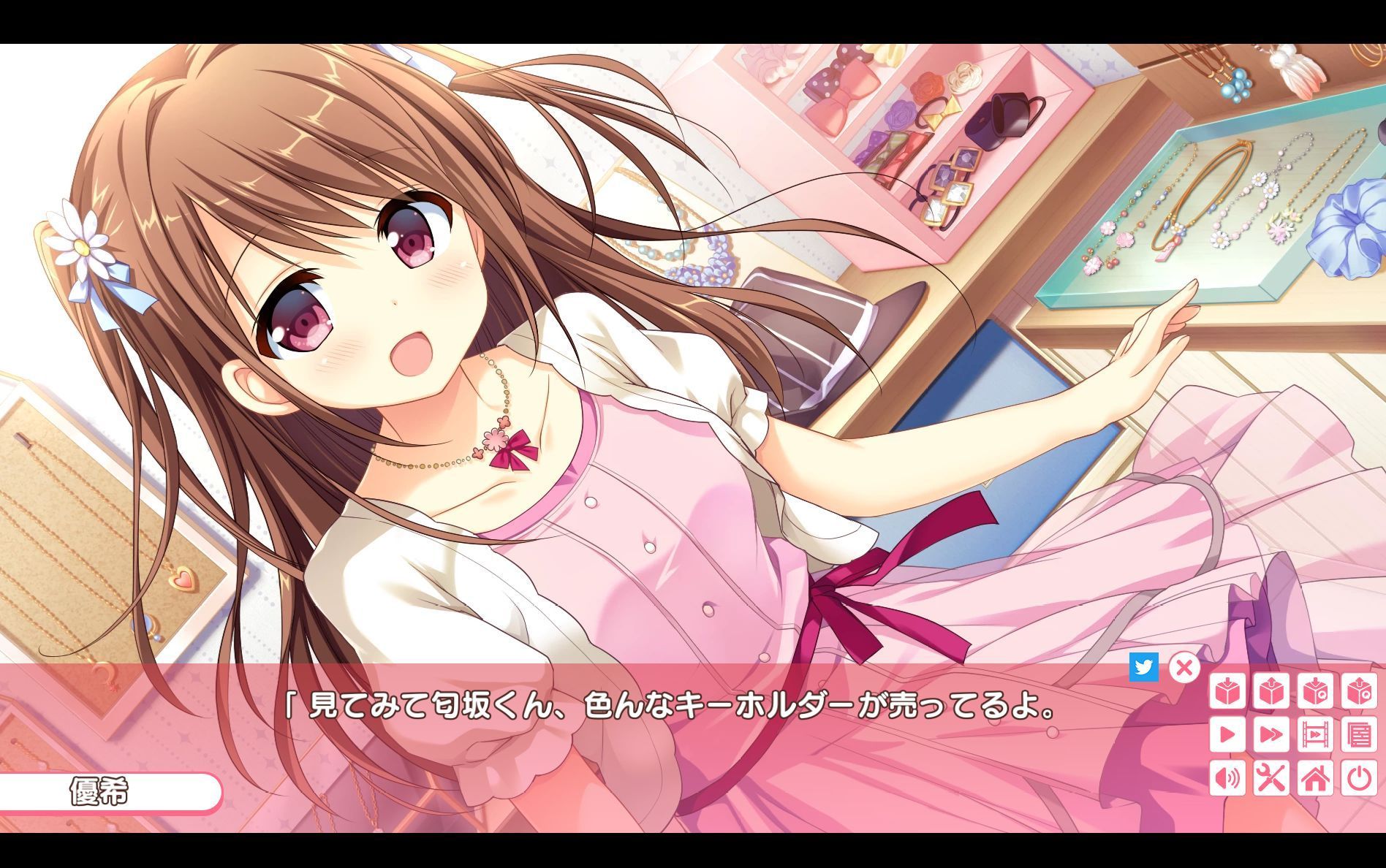
That’s all there is to it.
Because aside from the heroine, everyone else is drawn like a deformed freak. Don’t believe me? Take a look for yourself.
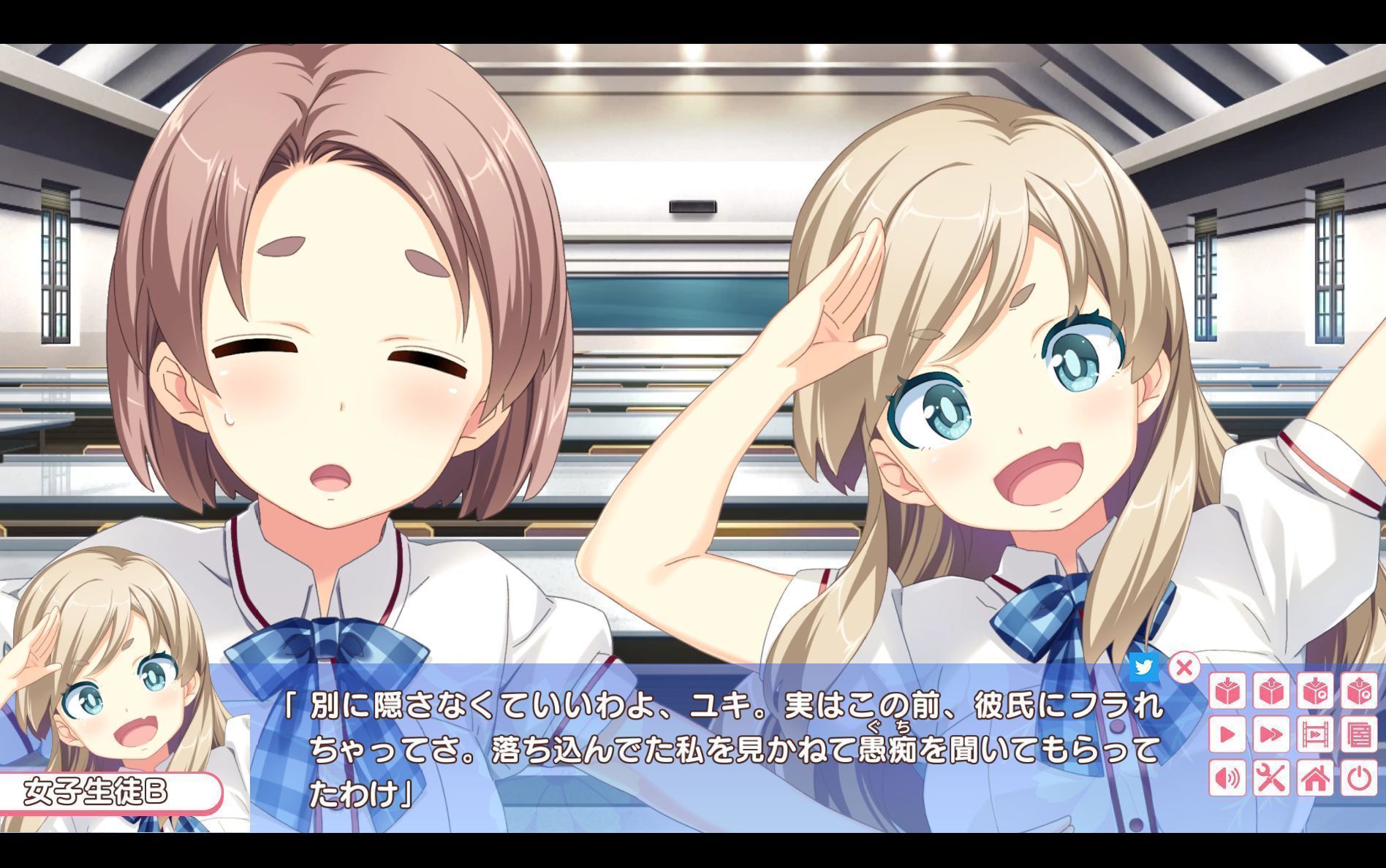
As for the whole “witch” setup in the game — honestly, I found it baffling, but when I looked into it, it turns out even these “baffling” bits actually have some pedigree behind them.
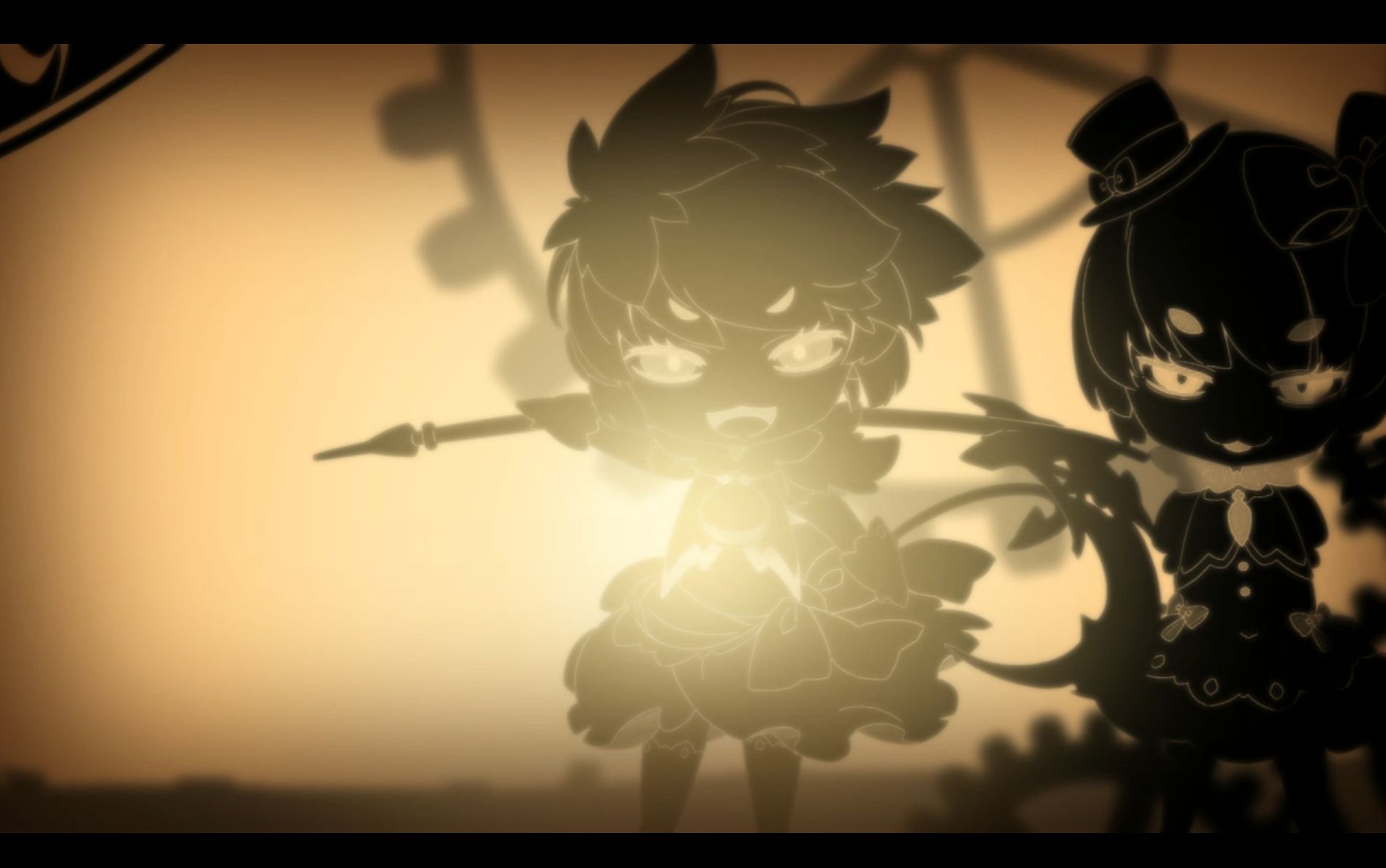
For instance, the game adds two “familiar” dialogue scenes during cutscenes, and the content is just mocking the heroine: “A beautiful romance is about to begin, and it’ll be over soon.” But this cutscene shows up two or three times, then vanishes… completely baffling. And the kicker: these two familiars actually appeared in a previous Campus game—they’re here purely as a Neta. I have no words.
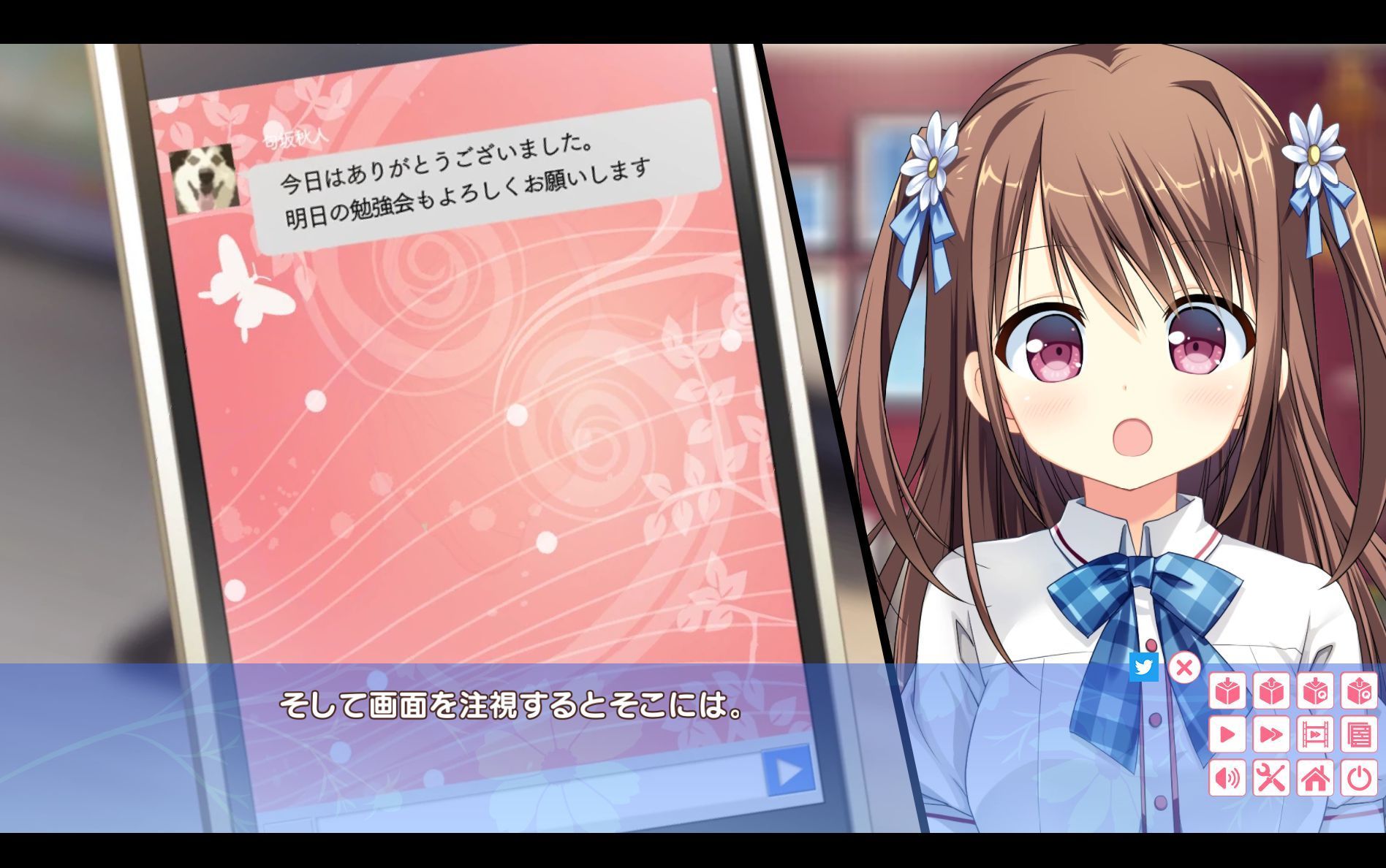
The game also says the price of the heroine being promoted to witch is “sacrificing the protagonist’s feelings for her,” but that’s not actually accurate — she becomes a witch because she gains “a broken heart.” This setup has shown up in Campus before too, like that “first-love syndrome” thing. That’s another Neta. I still have no words.
The game uses a mix of reverse chronology and flashbacks. It opens with the protagonist and the heroine as kids, visiting a field of cosmos flowers. She points out the cosmos haven’t bloomed yet, and then delivers the line the whole title hinges on:
“Once that flower blooms, I’ll be here to meet you again.”
The game’s endings tie back into this setup too, so it does come full circle — but something about it still feels off to me…
On paper this premise could’ve been told simply and movingly. Say the heroine and the protagonist were lovers as kids, and his death led her to sacrifice his love for her in exchange for the magic that brought him back. The catch: the magic fails if he ever falls for her again. So when they meet once more, she deliberately keeps her distance—but in the end love wins out, they become a couple again, and the curse breaks too.
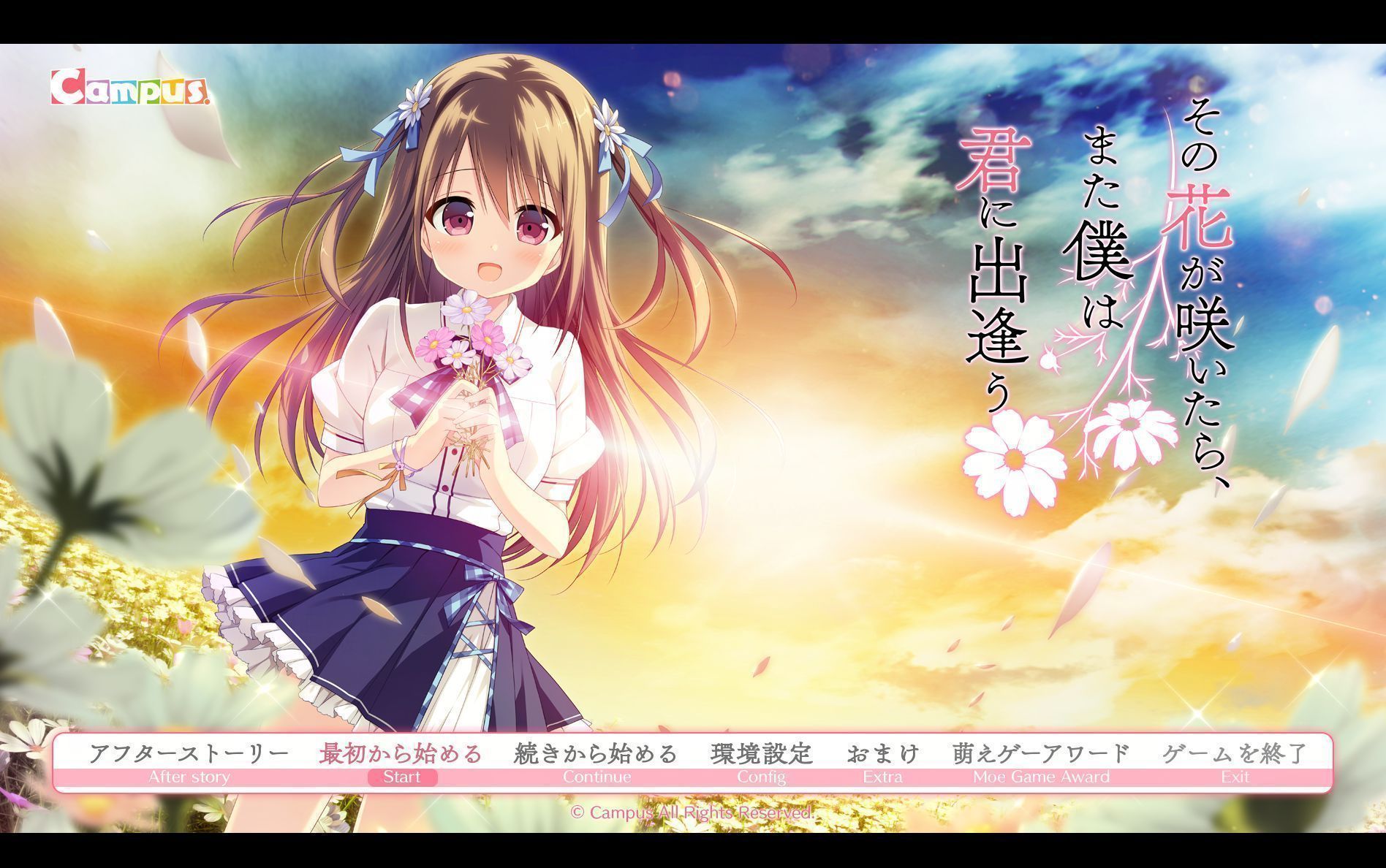
Such a simple, pure story — so why’d you go and slap a dumbass magician setting on it? Were you trying to boost sales for the other Campus titles or something? Sure, a story can have “magic” or “superpowers,” but most of the time they work as a catalyst: the protagonists stumble into some wondrous power and use it to change history and land a happy ending. That kind of power is usually uncontrollable, which is exactly what gives it that feeling of “fate” and “drifting with the current.”
Once the frail heroine herself turns into a world-defying archmage, the game starts to feel a little bland.
That said, the heroine is still drawn pretty well — worth a solid 60 points.
Comments are hosted on the Chinese main site. This mirror is read-only.