Adabana Odd Tales (徒花異譚) Review
When the Dream Ends
When ANIPLEX.exe was throwing money at visual novels, aside from ATRI -My Dear Moments-, they also put out Utsuro no Utage (徒花異譚), which has a seriously weird art style. It was made in collaboration with Liar-Soft, which immediately told everyone these people know what they’re doing, and plenty of eroge fans went “based.”
Also, you can pretty much guess that ANIPLEX.exe’s two releases were aimed at different audiences. ATRI -My Dear Moments- was clearly for the “casual moe-blob otaku,” while Utsuro no Utage comes off as a bit more hardcore.
Of course, that “hardcore” label is just my own wishful thinking. After finishing this fairly short game, all I can say is that Utsuro no Utage isn’t really a game so much as a genuine “short fantasy novel.” This “novel” won’t lecture you about life’s great truths; what it gives you is more of an emotional jolt.
I’m not going to go into detail about what Utsuro no Utage is actually about. Getting hold of the game isn’t that hard for most people, and although the scenario was written by Nozomu Kaihara, who previously wrote Uso kara Hajimaru Koi no Natsu (尋蝶者), once it steps outside the “romance game” frame, the story feels all the more comfortable in its own skin.
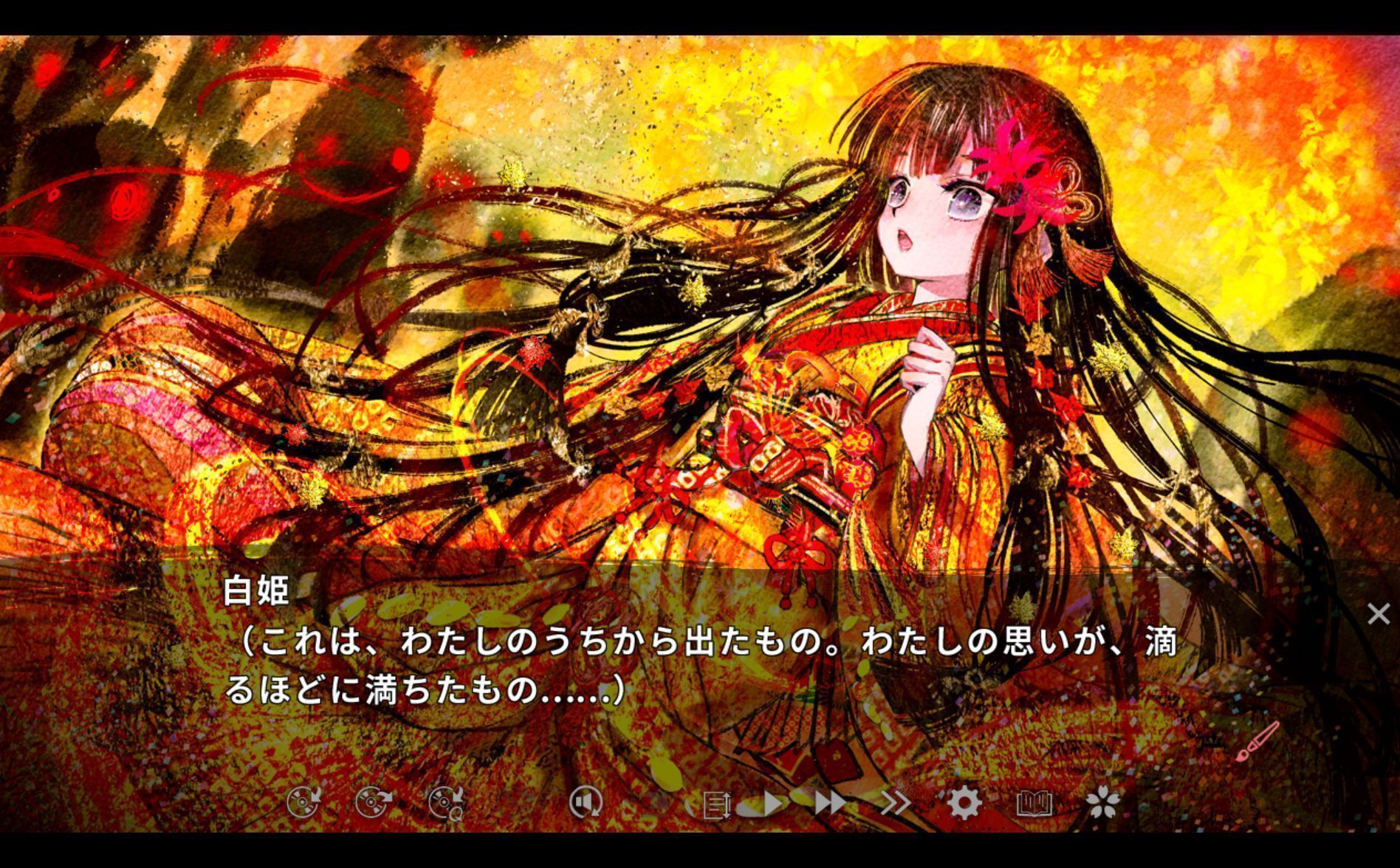
Utsuro no Utage is about a conversation “I” have on a train with someone carrying a strange book, which leads the odd stranger to tell the story contained in that book, also titled Utsuro no Utage. Similar to ATRI -My Dear Moments-, there are a lot of hidden threads behind the main line of Utsuro no Utage, but it pulls it off with more skill, splitting the storytelling into several layers. The first layer is “me” listening to the stranger across the way. The second layer is the story the stranger tells itself: the life of a woman, from her childhood days with a boy she grew up with, through the terror of being pushed around by a private tutor in her youth, into adulthood where she’s matched up with a man and starts a family, and then to being infected by him—losing her husband while her own life hangs by a thread. The third layer is the fantasy existing in the woman’s half-awake, half-dreaming brain as she lies gravely ill, and the fourth layer is the “otherworld inside the book” she enters within that fantasy.
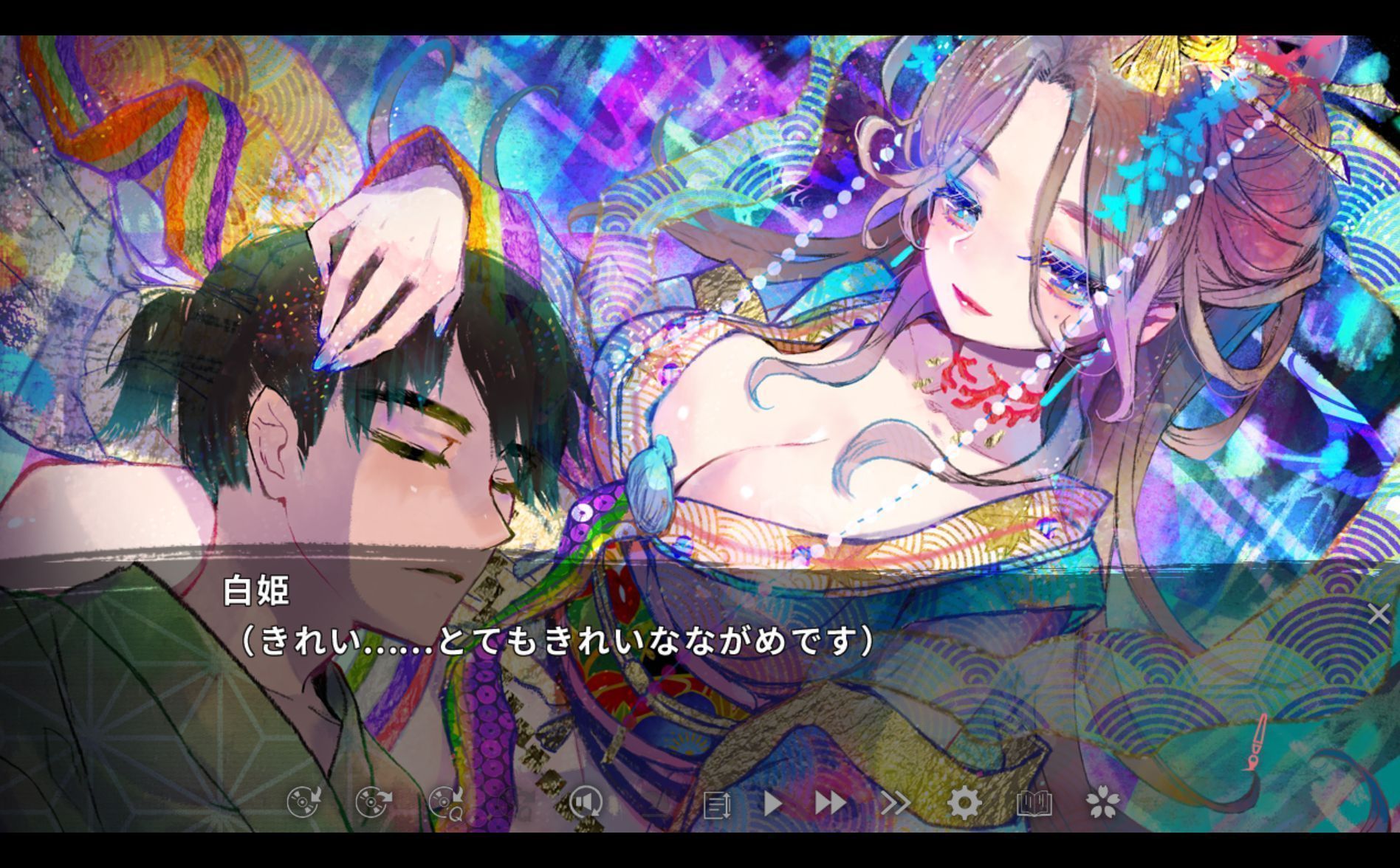
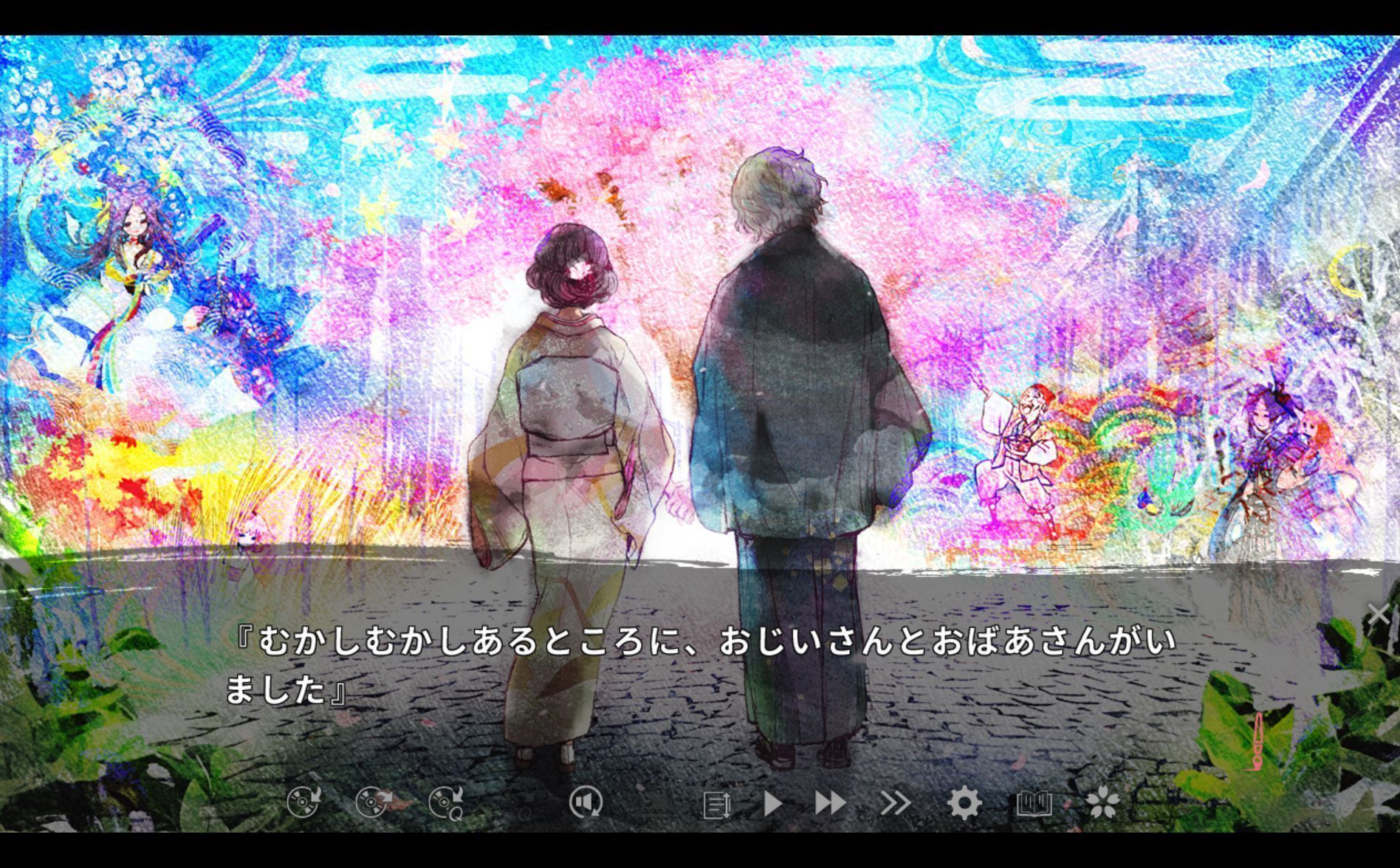
There was a game called Silent Hill, and its second entry is the peak of the series. The reason I bring it up is that the game used a lot of abstract and symbolic description to portray the protagonist’s inner thoughts. In Silent Hill 2’s world, those strange contents aren’t real—they’re a projection of the protagonist’s fear and disgust. Likewise in Utsuro no Utage, the heroine is initially set up as “Shirohime,” traveling through the world of “stories” with a boy called “Kurofude,” finding the odd spots in each tale and using her own power to “correct” them. That setup is identical to the earlier Girls Book Maker, but the strange thing is that these “stories” always have something off about them—the old man who makes flowers bloom goes inexplicably dark, Urashima Taro inexplicably falls in love with a turtle, the Momotaro story gets split into Momotaro and Princess Kuri, and every story has both a “healing ending” and a “dark ending.”
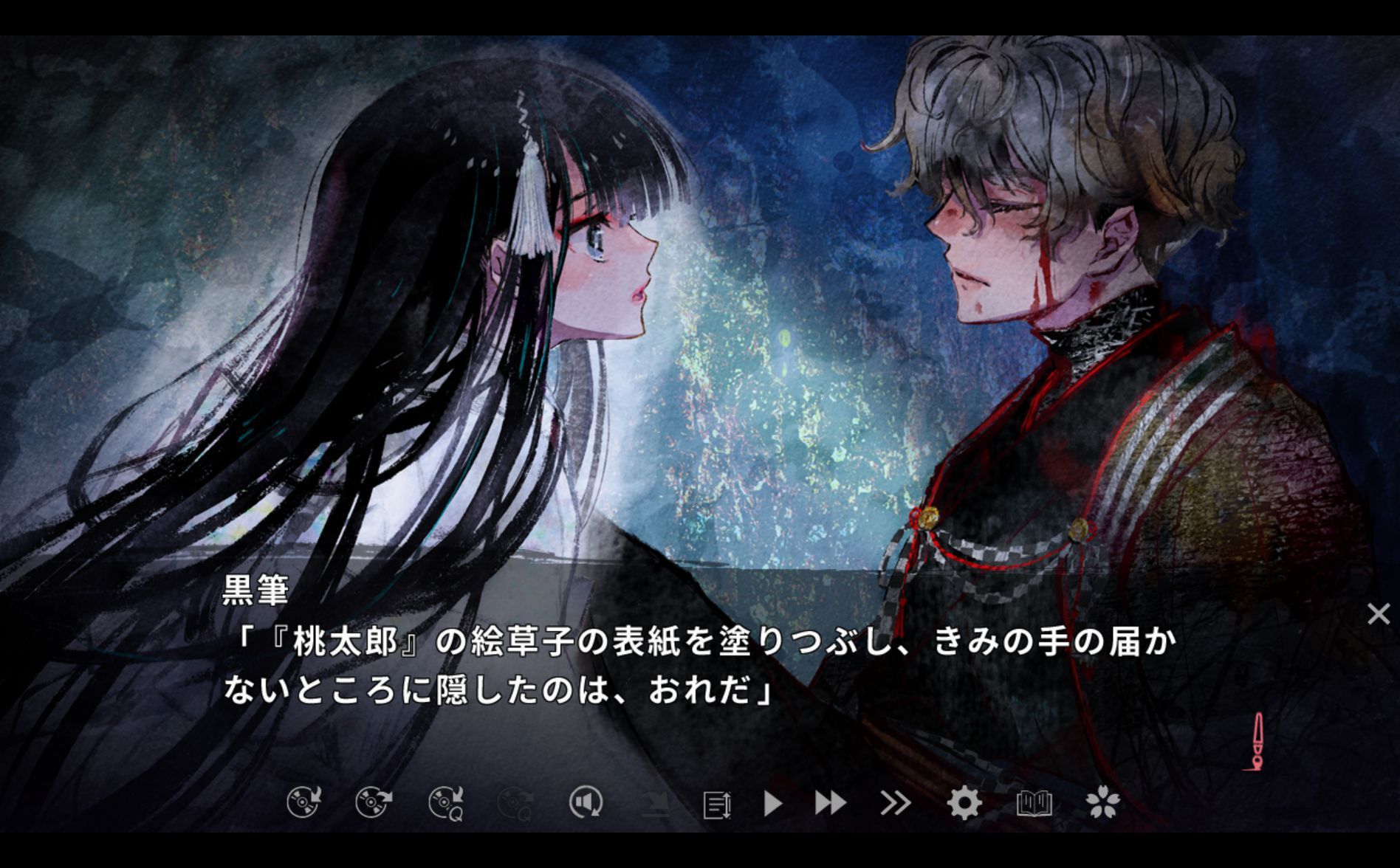
The key is where those “dark” turns come from. The characters who go dark aren’t being influenced by some outside force—they’re projections of the heroine’s own disgust and personality onto the people in her real life. The flower-blooming old man, the Dragon Palace princess, Princess Kuri’s little sister, Momotaro—all of them are people who exist in the heroine’s life. The same goes for the boy “Kurofude,” who was her first love as a child. The entire “repairing the books” story is the heroine’s hallucination and dream; in her half-conscious state, her scrambled brain projects this whole tale.
Untangling the story isn’t hard. As a girl, the heroine loved reading storybooks with a boy—books like The Old Man Who Made Flowers Bloom and Momotaro. She liked that boy a lot but never said so. Then the boy left without a word, she had her heart broken, and she was constantly ordered to study by the private tutor who’d been brought in, and she felt lonely. Later she was introduced to a handsome man, and she married before her little sister did. Then the man died of an infectious disease, leaving her a widow, and she caught it too, fell terminally ill, and lapsed into a coma. In that coma, out of the chaos of her mind, a dream took shape: a dream where she is “Shirohime” and repairs stories together with a boy called “Kurofude.”
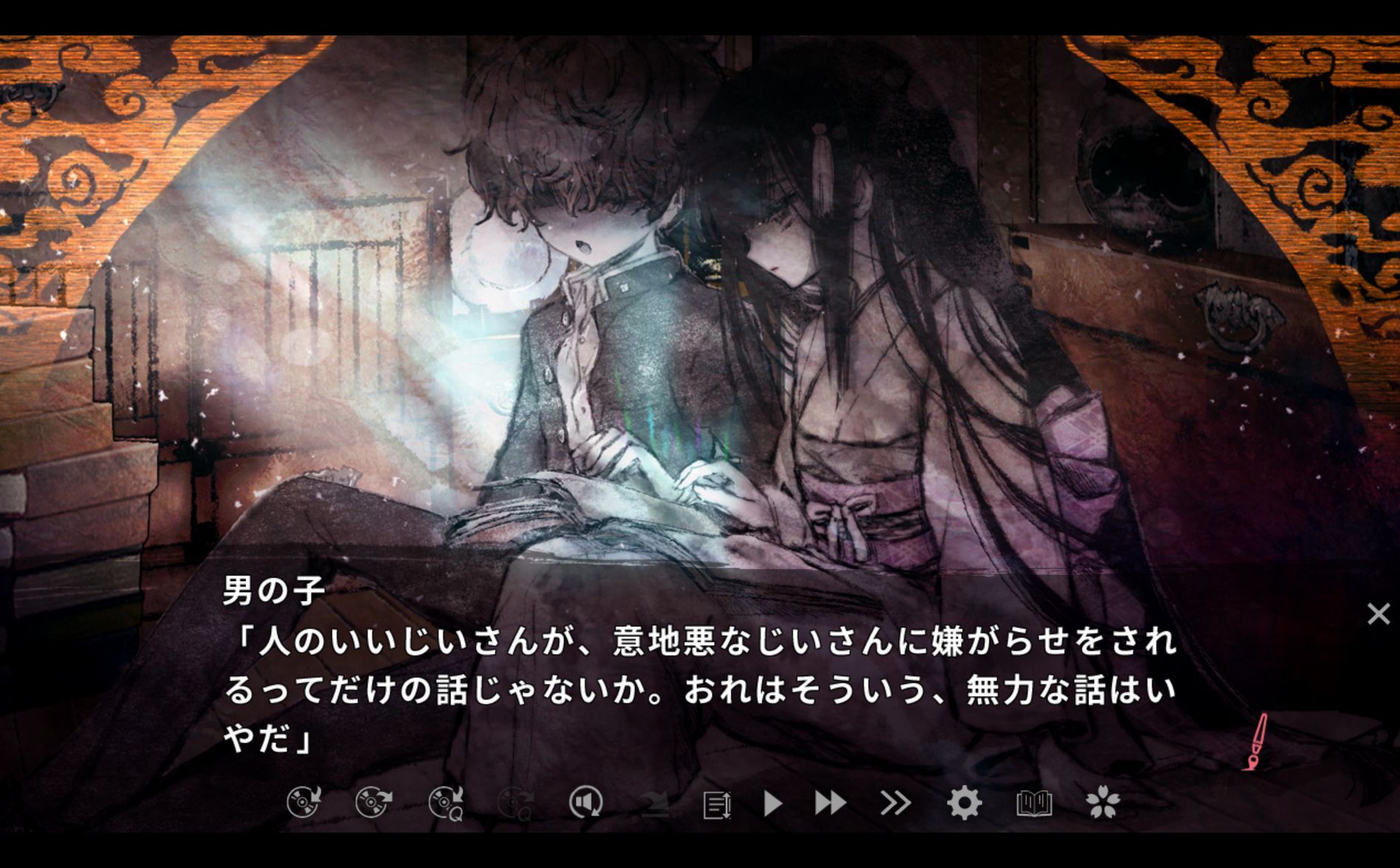
That kind of writing is hard to describe—something like “orderly within the chaos.” Frankly, this is very difficult to write, and just keeping it coherent is already impressive. Kaihara really pulled it off, carrying over the strong storytelling he showed in Uso kara Hajimaru Koi no Natsu: Chaos Nightmare and stretching the story’s tension as far as it will go.
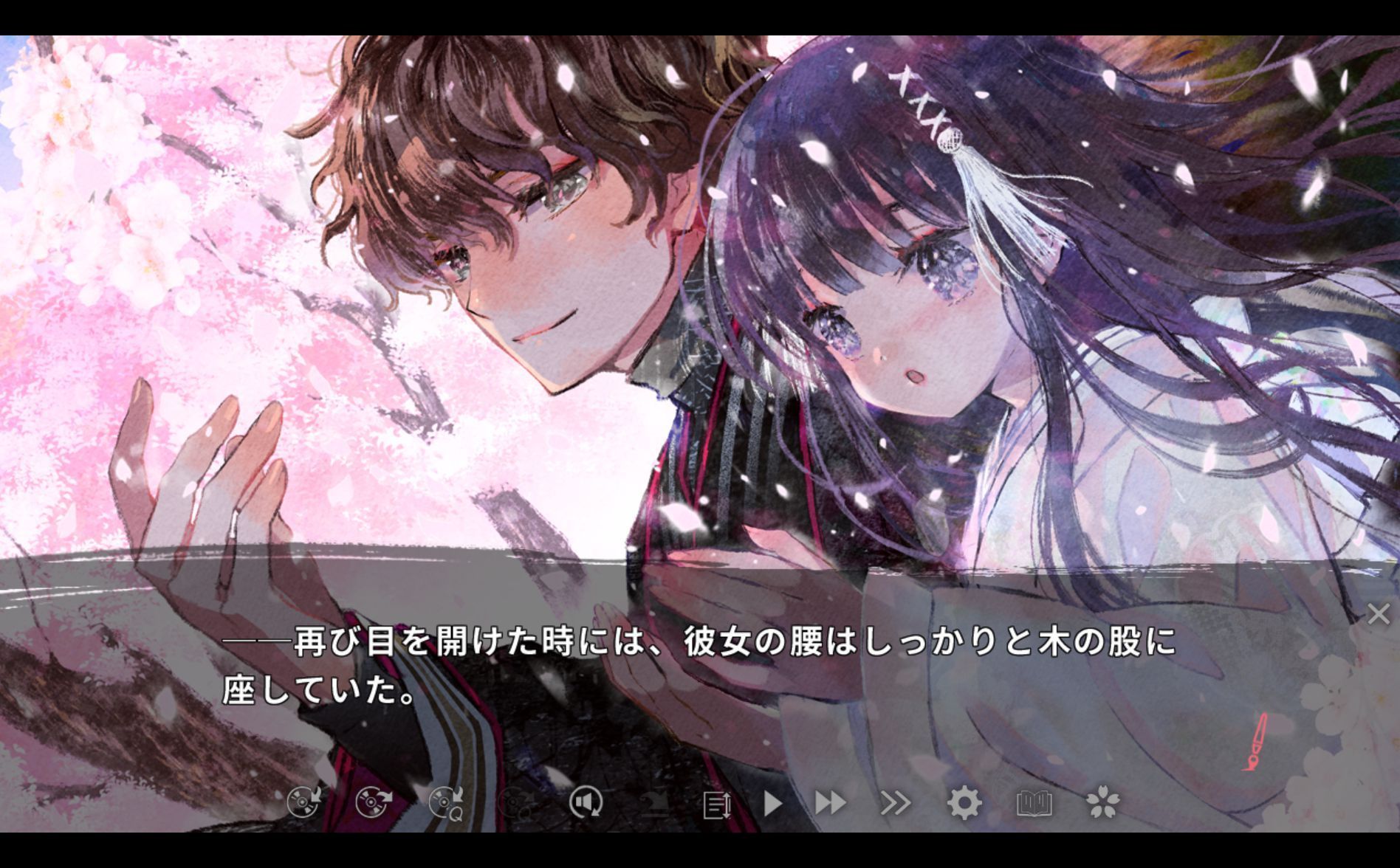
At the end, the player can choose between two endings. One is the heroine staying in the dream and never waking, possibly dying just like that in reality. The other is giving up the dream, returning to reality, opening her eyes, and seeing the real-world “Kurofude” who has been waiting by her bedside all along—and picking their relationship back up. Honestly neither ending is really a Bad End. The true Bad End might be the heroine trying to wake but dying anyway, and “Kurofude” sitting on the train clutching the story he and she wrote together, heading toward the sea to kill himself.
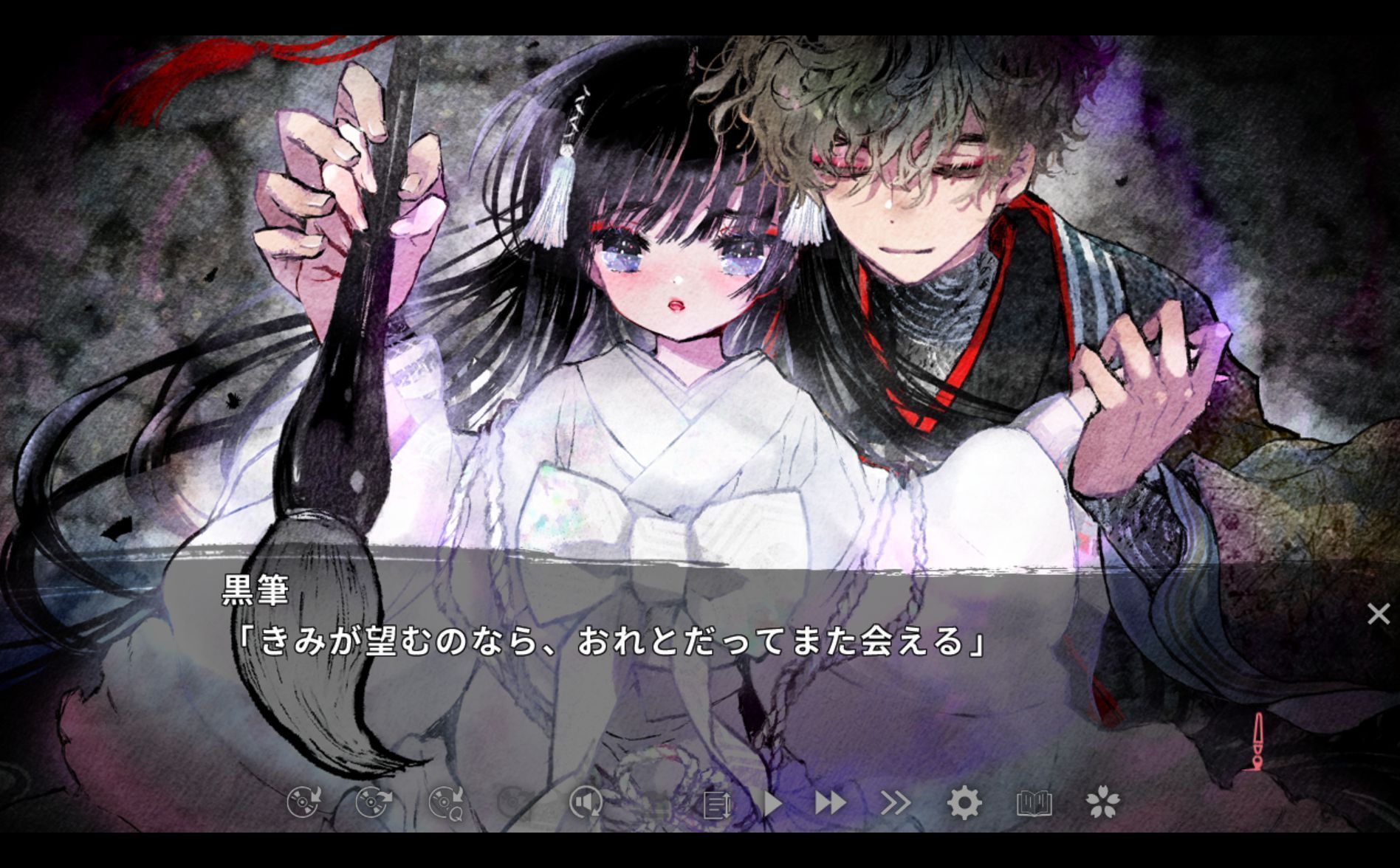
Personally I’m a bit unsatisfied with the game’s Happy End. After the heroine wakes and meets the real “Kurofude,” it says her lifespan was extended into her fifties by the power of love—that feels a little forced…
All in all, the flaws don’t ruin it. I’d call Utsuro no Utage a “short visual novel.” If ATRI -My Dear Moments- is an “excellent text-based romance game,” then Utsuro no Utage is good enough to stand as a fine piece of literature—a whole tier above the former.
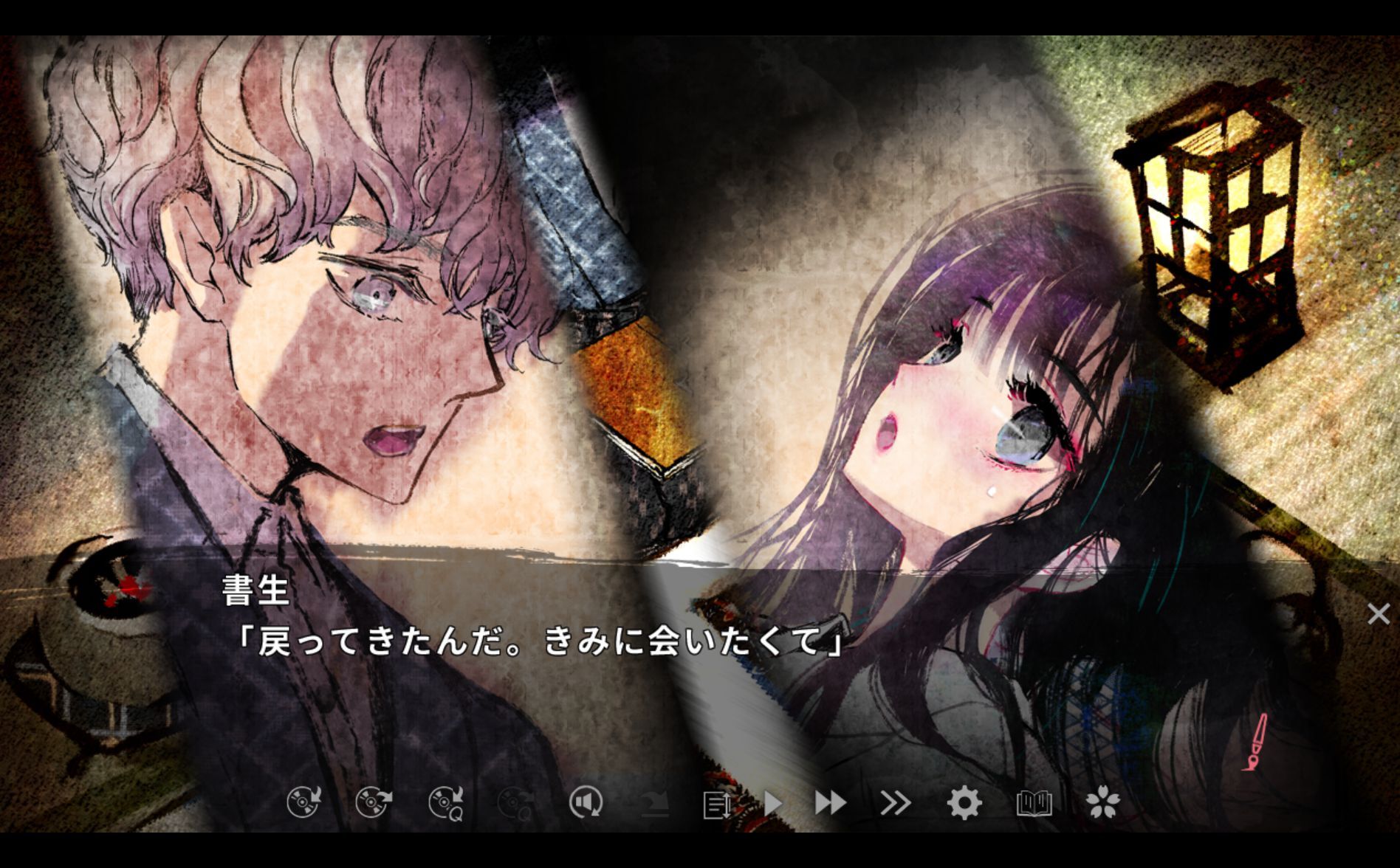
Actually, Utsuro no Utage could have explored “gameplay” the way Uso kara Hajimaru Koi no Natsu did. The heroine’s search for “ink” to repair stories could easily have been made into a spot-the-difference minigame, and the developer is Silky Plus, which absolutely has the chops—no idea why they didn’t do it. A real shame. Still, on the storytelling front, Utsuro no Utage is clearly the better experience than ATRI -My Dear Moments-. It has less “anime flavor” and more of that high-brow literary air. Even the character voice acting has no “moe” elements—everyone delivers in an “opera voice,” which says it all.
While playing Utsuro no Utage I kept thinking of a short story I read as a kid called Ren Dao Zhongnian (At Middle Age). That story also describes a heroine’s chaotic half-dreaming state near death, where every scene in the dream is a projection of her subconscious—chaotic but traceable, piecing together a complete life from fragmented bits. Utsuro no Utage is that kind of work. It doesn’t tell a linear story, yet after finishing it you feel you’ve experienced the heroine’s whole life. It’s hard to say whether her life was happy or lucky, but everyone’s birth dooms them to an extraordinary journey. “Stories” exist so we can live all kinds of lives and sigh over other people’s—and the word “utsuro” (徒花, an ephemeral flower that never bears fruit) in the title already spells out the heroine’s tragic nature. A flower destined never to bloom might just be the one that draws the most pity.
Comments are hosted on the Chinese main site. This mirror is read-only.