Houkago Cinderella (放課後シンデレラ) Review
Gojo no Cinderella: HOOK Teaches You How to Pick Up Girls
Originally I wanted to write something poking fun at the straight-guy Twitter guy, Awen, but then I figured he’s already pitiful enough and I shouldn’t pile on, so I deleted that and went back to the original format.
That said, this game is incredibly practical. I don’t mean that kind of practical. I mean the “teaches you how to fall in love” kind. HOOKSOFT and SMEE have always been solid at this, but unfortunately most otaku just use their games as joke-dispensers for rom-com sketches. Genuinely a shame.
In recent years HOOKSOFT and SMEE seem to have pulled off a weird identity swap: the former started doing SMEE’s “love simulation” thing, while the latter leaned into fantasy settings. Most people don’t care, since both brands come from the same daddy and their art styles are converging at a frankly alarming rate anyway. Nobody cares about brand purity — honestly they could merge into one label someday.
This time HOOKSOFT’s offering is Houkago Cinderella (放課後シンデレラ) — literally “After School Cinderella” — built on the premise of “romance through chance encounters depending on which route you pick on the way home after school.”

The common route states the theme pretty bluntly: the protagonist transfers in from out of town, starts a new semester, and gets ready for a fresh start. He runs into a childhood friend he hasn’t seen since they were kids, plus a bunch of new girls. During one random stroll he meets a whole pile of interesting people. Once all the heroine candidates have been introduced, the game has a heroine spell out the point:
Sometimes taking a slightly different route home leads to an unexpected encounter.
Still, I don’t get what the “Cinderella” in the title is supposed to mean. “After school” I get. But what does Cinderella have to do with chance encounters on the walk home? Cinderella’s a poor girl who gets temporary glamour via magic, and her signature items are a carriage and glass slippers. Does your after-school encounter have anything to do with poor people or magic? Maybe the only connection is that shoehorned glass slipper in the OP.
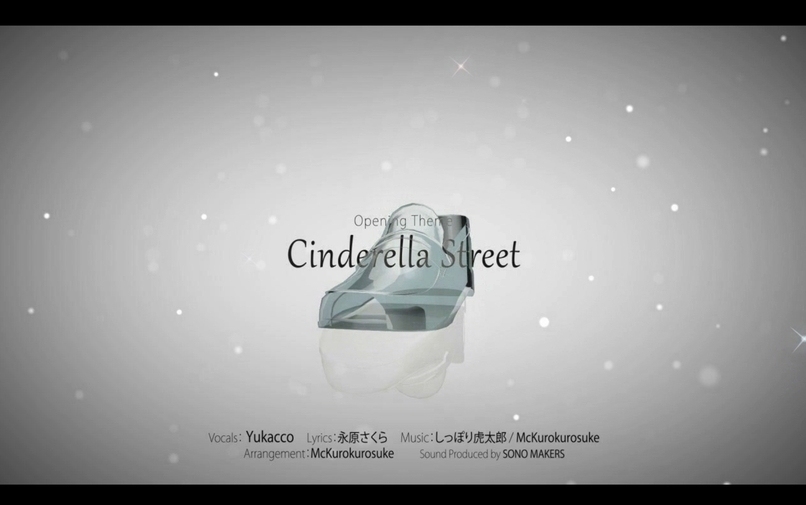
Or maybe they just couldn’t think of a word and thought “Cinderella” sounded coool?
Whatever, I can’t be bothered to dig into that. Let’s talk about the game itself.
To fit the “choose your route home” concept, the game has a flashy-looking “route planning system.” After school you freely plan out where you’ll go — which spots you’ll pass through — and only at those spots can you run into the heroine you want. To lower the difficulty, you can use your bro’s “fortune telling” to guess where each heroine might go after school. The locations aren’t stated outright; you have to deduce them from hints. Most are easy, some take a bit of thought, and it’s honestly pretty fun. The fortune telling also lets you check every heroine’s affection level and adjust accordingly, which gives the game more playability than your average visual novel of this type.

Even so, I still maintain this system is ultimately just “choices” in a different wrapper.
First off, the game gives you four route options after school, but it’s really just letting you pick four locations at random. The system won’t automatically chain them into a route based on your picks. And the order of the locations doesn’t affect encounters at all — as long as you picked a place where the heroine might be, it doesn’t matter whether you go there first or last. Pick wrong and you get some inconsequential NPC mini-events you can watch if you want, but once you’ve watched one you miss events at the other locations. I figure anyone with half a brain wouldn’t pick wrong.
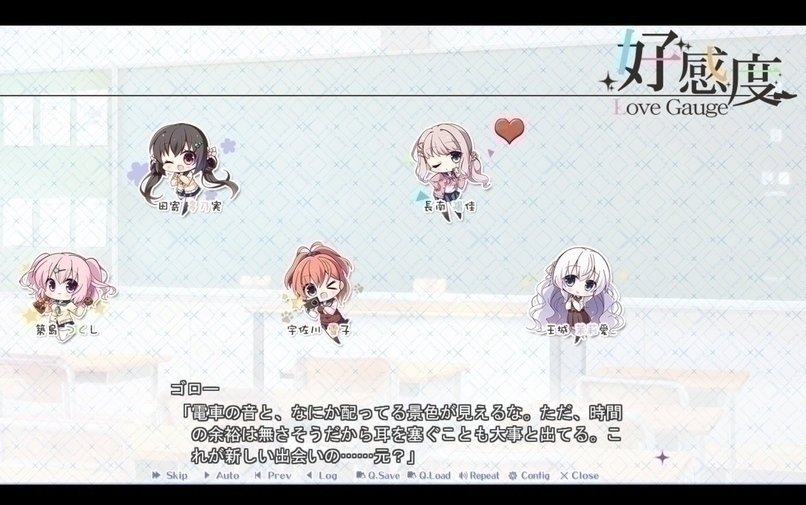
The story structure is extremely close to SMEE’s games from years back: common route introduces all the heroines -> daily-life skits -> bro’s fortune telling -> pick your route home (heroine’s personal route) -> more daily skits, rinse and repeat until you max out affection or burn through 20-some picks. It makes the story feel very “modular,” and the experience isn’t continuous. But if you’ve played enough SMEE games you’re used to it by now, and the correct way to experience these games has always been to read them like a 4-koma manga. Hardly anyone actually studies the story.
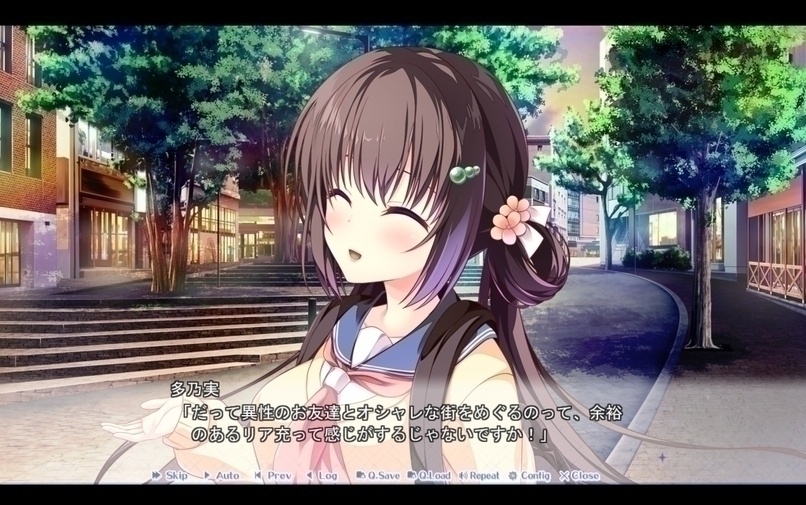
Having covered the system and structure, let’s talk about the game’s story. Honestly, as a standard SMEE-style story, there’s not much to say about the overall plot: you go from pursuing to dating, show off your love a bit, and it ends. But as an extension of the SMEE style, there’s still plenty here every otaku should earnestly study.
Take the currently most popular character, childhood friend Nanami Yuka (長南陽佳). Here’s her setup:
- The protagonist’s childhood friend from when they were kids, and back then she looked like a total “plain jane”
- After reuniting, the protagonist finds she’s changed a lot — very fashionable now, very gyaru, i.e. a total “gal”
- She loves makeup and nail art, and she hangs out around the little shopping streets in the city
Girls like this are everywhere in real life. If none are around you, you definitely see them on X (Twitter): the type who loves showing off her nails, drinking bubble tea, eating desserts, and obsessing over makeup. Basically what everyone calls a “pretty girl.”
How does our protagonist go about winning over a girl like this?
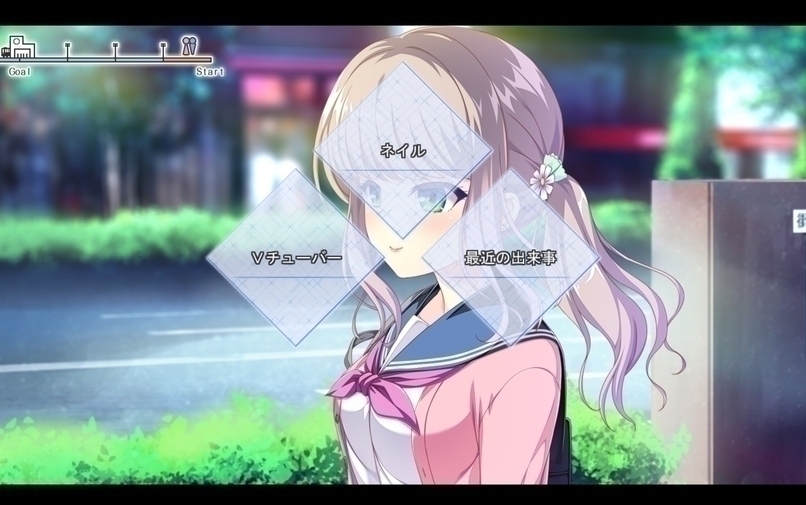
Here I need to explain the game’s dialogue-based dating mechanic. After “running into” a heroine, you chat on the walk home together, and during the chat you pick the right topics. Pick correctly and her affection goes up. This is the most interesting part of the game.
For Nanami Yuka, the protagonist follows basically three principles:
- Compliment her looks
- Compliment her nails
- Talk fashion, talk about what she likes, not what you like
- Regularly eat and go on dates with her around the shopping district, even treating her gal pals
Repeat a few times and things fall into place. Of course, the protagonist can’t be ugly — no gal is indifferent to looks.
Personally I think Nanami Yuka’s route feels the closest to “real-life romance.” Most people’s “pickup game” follows exactly this playbook. No saving anyone’s soul, no end-of-the-world flags, no weird special events — just shameless chance encounters after school and gradually winning her over through conversation. And remember, always compliment a girl on her looks. My biggest takeaway from these past few years:
A girl’s obsession with looking pretty surpasses everyone else’s. Maybe only some crossdressing bros can truly understand how much a girl pays to stay beautiful.
That pretty selfie you see on SNS is the result of half an hour of careful makeup and styling behind the scenes. The smartphone and 3080 Ti that most otaku obsess over are, for girls, SK-II Facial Treatment Essence and long-tube primers. Never say stuff like “why spend so much on nails” or “why is perfume and eye cream so expensive” — that’s basically the same as a girl telling you “aren’t you an idiot for spending that much on a graphics card?” Absolutely a landmine. So if you want to win over a girl you like, always compliment her looks. Don’t be like an eroge protagonist and stupidly call her “cute” — in Japanese, complimenting a girl as 可愛い already carries the meaning of pretty.
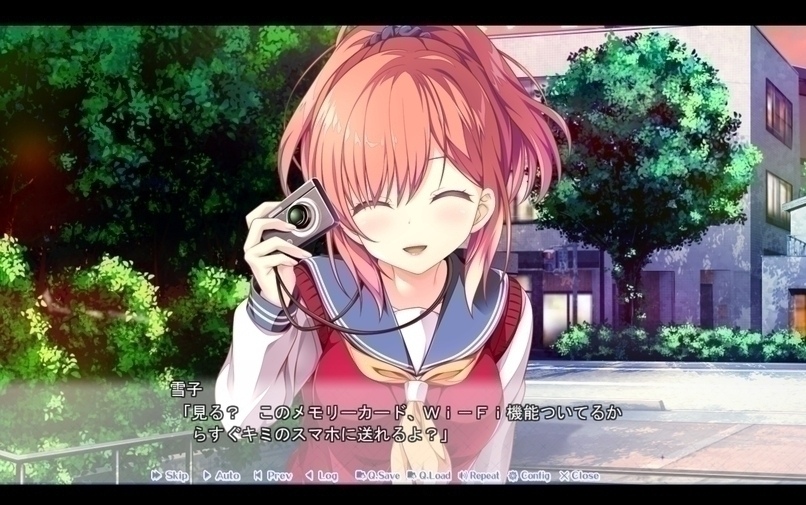
And don’t publicly declare “women are just being dramatic, they already get so many perks.” I can say this plainly: women carry way too much in this world. Even the “feminazis” everyone loves to hate only end up adding more pressure on women.
The protagonist and Nanami Yuka’s romance route is probably the most moving part of this game. It looks like an ordinary romance, with a formulaic and clichéd confession, but it’s also the most “realistic” and “true-to-life” thing in the game. The odds of meeting some weird girl in a white lab coat who ranks first in her grade are microscopic. The odds of meeting a big-breasted convenience store lady downstairs and, after you sexually harass her, her not calling the cops on you are basically zero. And the possibility of meeting a girl who falls in love at first sight and then tricking her into joining your brain-dead club only exists in dreams. If you haven’t given up all hope on “reality,” if you haven’t given up on yourself, and you still want to find a lifelong partner in the real world…

…then you’d better study Nanami Yuka’s route beforehand. If you master the essence of it, I can’t guarantee anything about blind dates or picking up girls…
But at the very least, you should be able to score a makeup-loving girl on X (Twitter).
Thinking about it carefully, HOOK/SMEE really do pour their blood, sweat, and tears into helping otaku escape their otaku ways…
Comments are hosted on the Chinese main site. This mirror is read-only.