Kakenuke Seishun Sparking! (かけぬけ★青春スパーキング!) Review
The Spark of Fleeting Youth
2020 was a rough year for the whole world. COVID hit a lot of industries hard, and that includes the Japanese visual novel business.
I say “even” because visual novels theoretically shouldn’t be affected by the pandemic. Selling software, collaborating online, selling through online stores, and the customer base is all otaku who can’t be bothered to go outside—by all rights, the industry should’ve been totally fine. Unfortunately, the actual visual novel market doesn’t work that way.
Because visual novels live and die by first-week sales, and first-week sales don’t depend on game quality at all—they depend entirely on the bonus merch driving purchases.
And bonuses are tied to specific retail stores, which means, surprise, you’re back to physical storefronts.
It’s 2020 and software sales still rely on brick-and-mortar. Only in Japan, I swear.
Saga Planets, though, doesn’t seem worried about money. Their previous title Kinkoi was a huge success and clearly raked in a mountain of cash. Rumor has it Saga Planets split from Visual Arts (Key’s parent company) and went independent. They’re really flying high now. My guess is they’ve gone back to the “money is no object” phase.
Remember what happened last time Saga Planets had money to burn? Yeah, you know where this is going.
Last time it was Karumaruka. This time, probably because Kinkoi did so well, they made Kakenuke★Seishun Sparking!
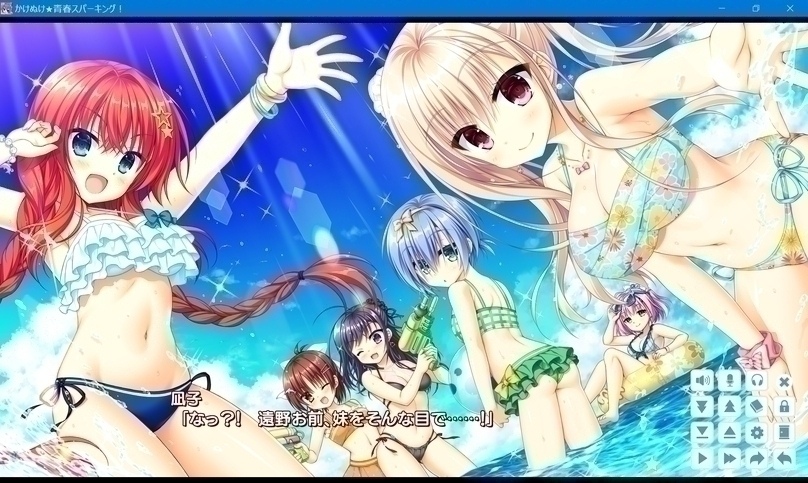
The title looks pretty out there, but the meaning is simple: fleeting youth, Sparking. It’s the same “celebrate your youth” thing everyone’s already sick of. The setup is equally cliché: the protagonist is squeezed by life, no time to enjoy his youth, working part-time every day to make ends meet, bent over by reality. The main story is obviously a bunch of heroines showing up, surrounding him, hoping he’ll “celebrate his youth” again.
Honestly, at that point my expectations for this game had completely shifted to “moege.” The writing staff has two familiar names: Kei Hojo and Jun Seo. Both are good at comedy and romance moege, which tells you there’s not much to look forward to beyond whether the girls are cute.
Then they released a trial version and common route, and after playing it, things seemed a little more complicated.
The protagonist really has no interest in youth, but because his mother had an affair and he cut ties with his original family to strike out on his own, he lives with his half-sister Tono Ritsu. To support them, he has no choice but to work nonstop.
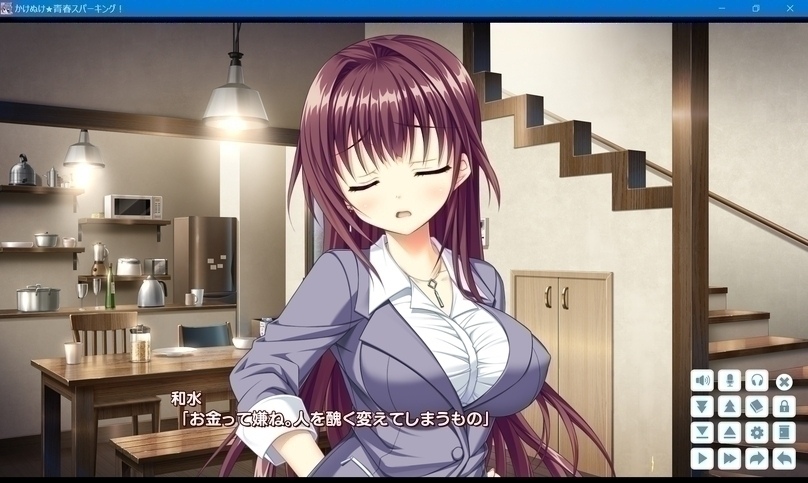
The protagonist has an aunt who keeps wanting him to come back to the family he’s owed (and inherit a sizable fortune). He keeps resisting and refusing (and flexing about not wanting the money). They were close when he was a kid—she even taught him card tricks—but they drifted apart because of his family situation.
He keeps a low profile at school, but two gorgeous girls keep trying to recruit him into their clubs. One is the redhead Kohinata Hibiki and her “Activity Club,” the other is the white-haired Kashima Riri and her “Volunteer Club.” The former just fucks around all day; the latter does actual volunteer work.
Years later, the protagonist’s aunt arrives as the school’s new principal and cracks down on all the messy clubs. She initially plans to abolish both the Activity Club and the Volunteer Club, but through the protagonist’s intervention, they get merged into the “Seishun Club.”
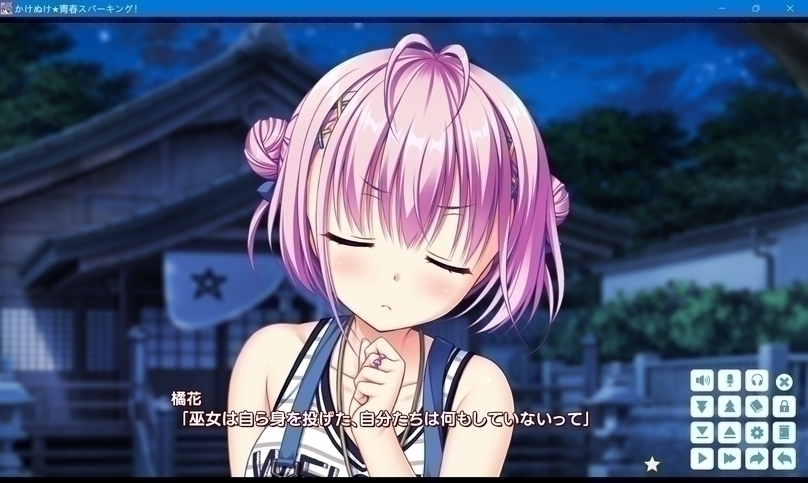
The club president ends up being a pink-haired girl named Sei Kikka, who the protagonist has no idea where she came from. She acts super familiar with everyone, so he just lets her be president.
And that’s where the common route ends. Despite that, you can see a lot of hidden threads—mostly the family feud between the protagonist and his aunt. When the aunt shows up, she feels like a straight-up villain, almost like a final boss. I was already picturing the ending where the protagonist defeats his aunt and achieves true independence…
But the game doesn’t do that. When the full version came out, I looked at the content and nearly spat out my drink.
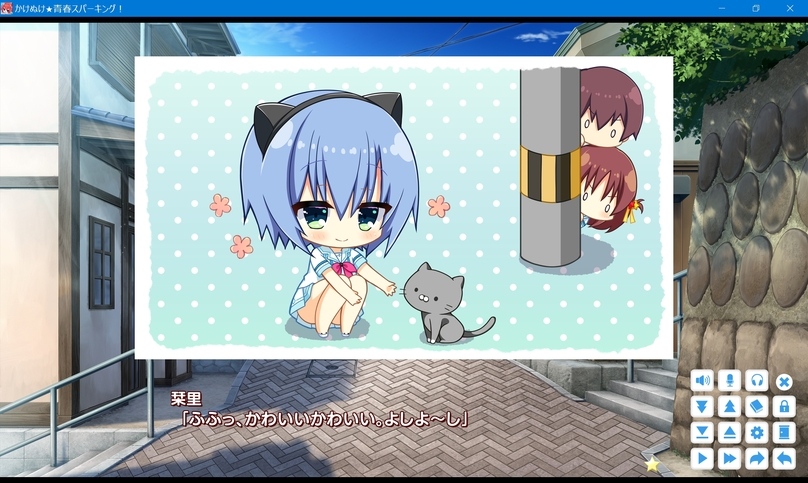
Turns out after the common route, the game just gives you a choice of all the heroines—pick one and you’re on her route.
What the fuck, that’s the whole common route? And the weirdest part is some heroines I hadn’t even met yet were already selectable?
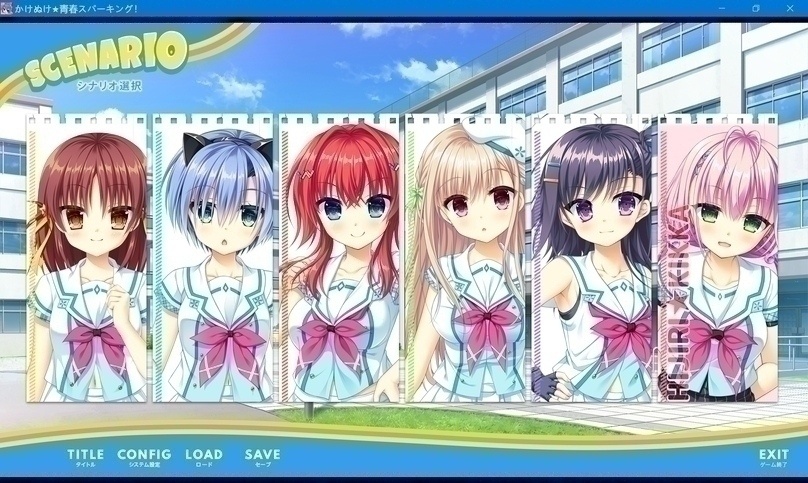
And the individual routes are… something else. Let me break it down:
Kashima Riri
One look and you know this is Kei Hojo’s route. It’s all about sweet romance, and Hojo is great at cranking up the sweetness when writing girls in love. You can see it in the heroine routes he did for Yuzusoft. So Riri plus Sawada Natsu’s art pushes the sweetness up several notches.
Sweet, sure… but the story is as hollow as ever. The plot-relevant part is that Riri is a rich girl who’s never known hardship and feels guilty about it, so she does as much social contribution as she can to ease her conscience.
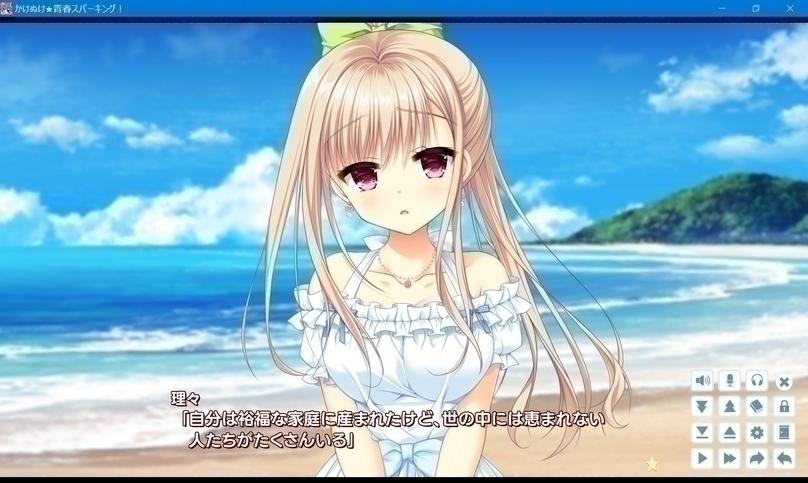
But as a rich person, is picking up bottles on the beach really social contribution? I guess technically, but it’s not nearly enough. If you really feel guilty about being rich, just donate money. Donating to broke bastards like me would be the best use of your funds.
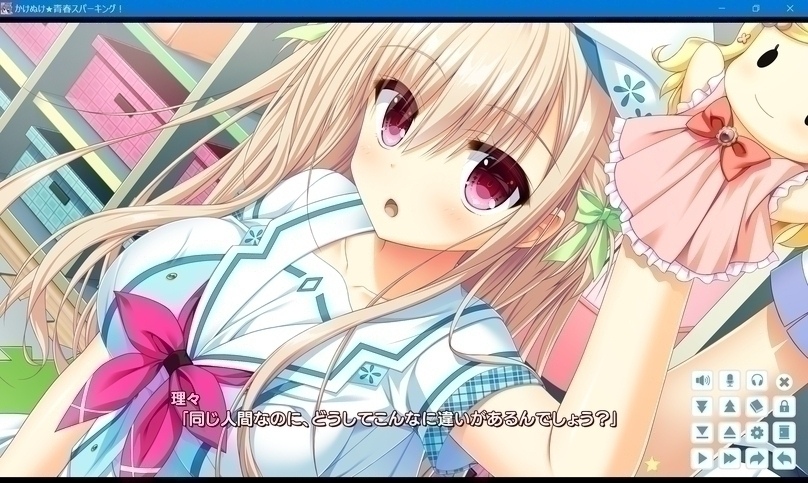
Also, Riri calls the protagonist “Master” because he did a card trick for her when they were kids, she was fascinated, and immediately became his apprentice.
Hiiragi Shiori
A new character voiced by Mai Goto. Her defining trait is that she has no opinions—she agrees with whatever anyone says, constantly saying “If XXX says so…” But on her route, the protagonist discovers another side of her: she runs a Vtuber channel, and the real her is a different personality.
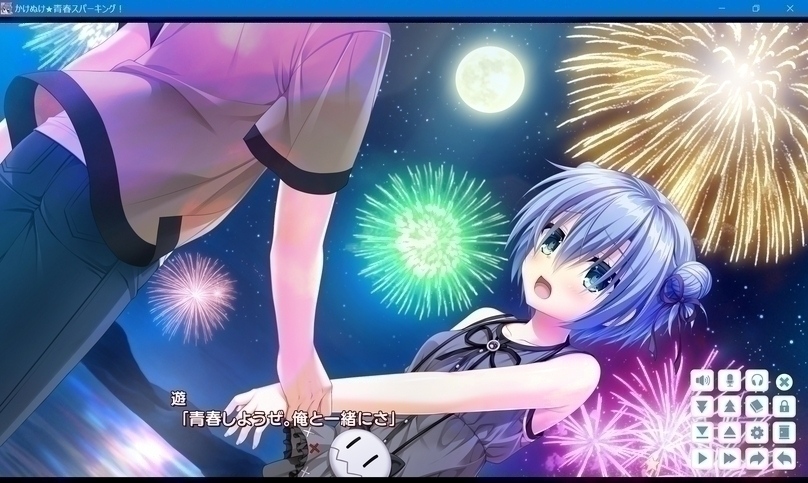
Then the story unfolds exactly as you’d expect. Why the two-faced act? Her parents’ fault, of course. They demanded too much of her, so she became obedient and lost her sense of self. She’s only happy when doing Vtuber activities, where she finds herself again.
Once you know that, the rest is predictable. I’ve seen this套路 in visual novels way too many times…
Kaidou Nagiko
Honestly, I don’t know why this character is even in the game. She has almost no connection to the main plot. In the common route she’s just a side character, yet she gets a whole route to herself. That surprised me.
And her route is pure template output, I have to say…
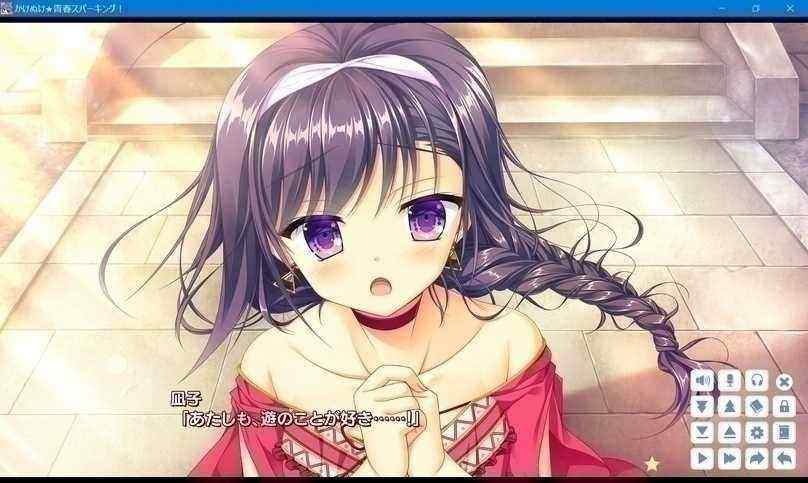
It’s just that Nagiko loves surfing, but her family wants her to inherit the family business—kendo or aikido or whatever the hell it was, I forget. Naturally she chooses her own path in the end, starts a surfing career, and achieves some success.
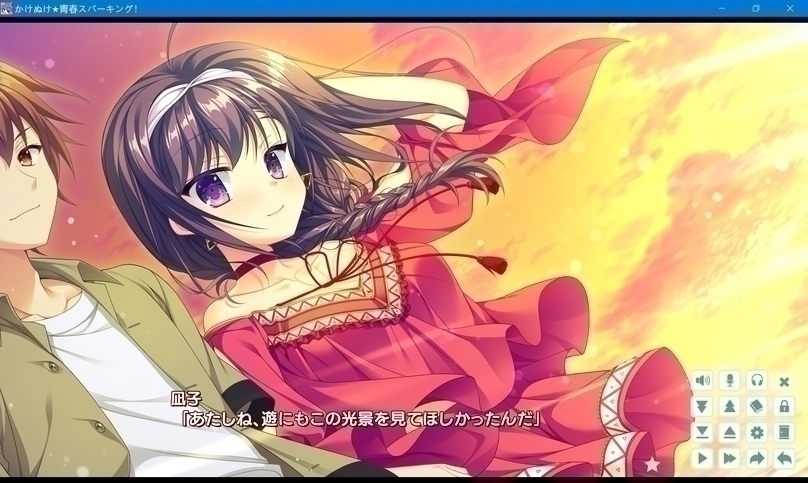
This kind of story shows up in plenty of visual novels, and most do it better than this. The character herself isn’t particularly charming, and her route isn’t short either. It’s a sleep aid, honestly.
Tono Ritsu
After you finish any heroine’s route, the little sister’s route unlocks. It’s split into two halves. The first half is the familiar comedy style—clearly Jun Seo’s writing. Anyone who’s played his games knows what to expect. The second half shifts into a melancholic tone.
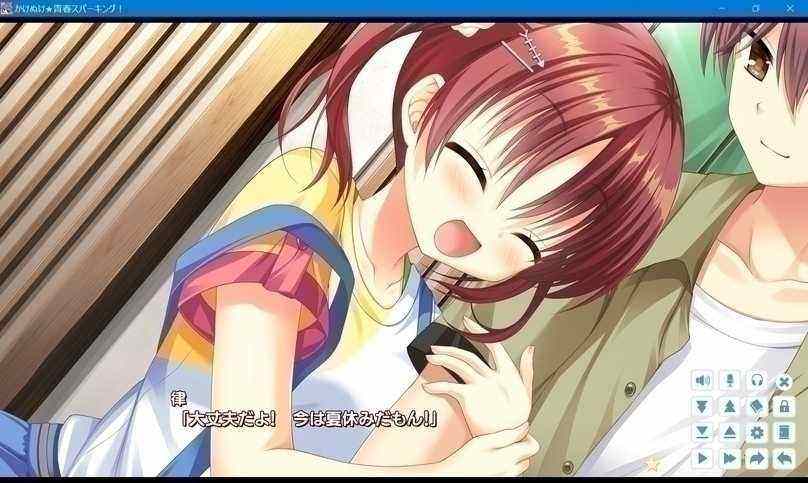
The second half naturally deals with the protagonist’s relationship with his mother. The aunt shows up again to tell him his birth mother might only have three months to live and that he should go see her.
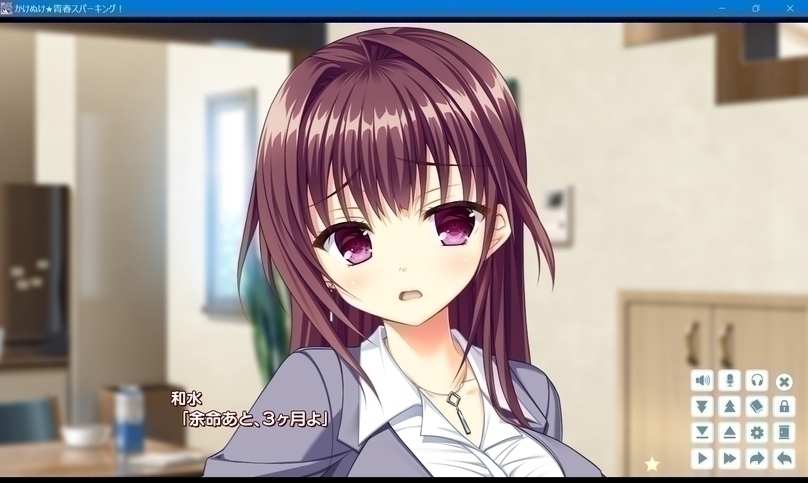
But the protagonist refuses to forgive his mother. She had an affair after remarrying, which made his life at home a living hell.
Eventually, though, he does go see her. They don’t acknowledge each other, but both know who the other is. And the most important part: he needs to tell his mother that he and his half-sister have become lovers. She’s shocked, but he tells her anyway.
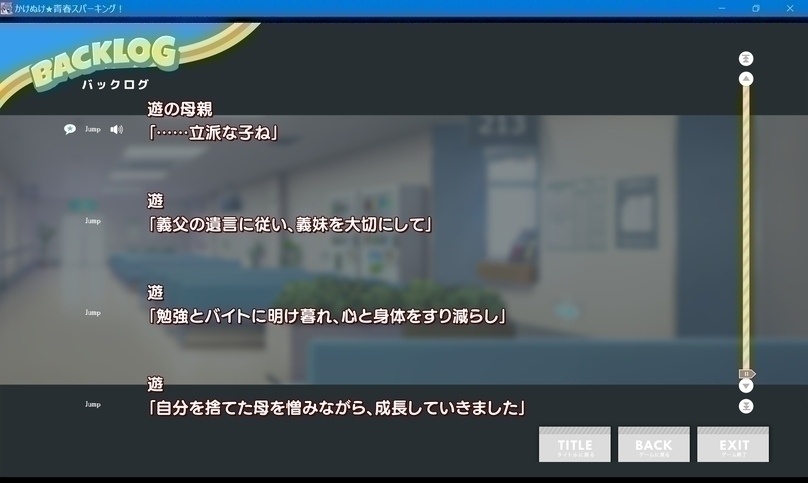
Honestly, this section is written pretty well—the prose quality spikes. But it’s only the last part, and what’s weirder… this is the protagonist’s own story. His sister barely matters; she’s just watching from the sidelines, unable to help.
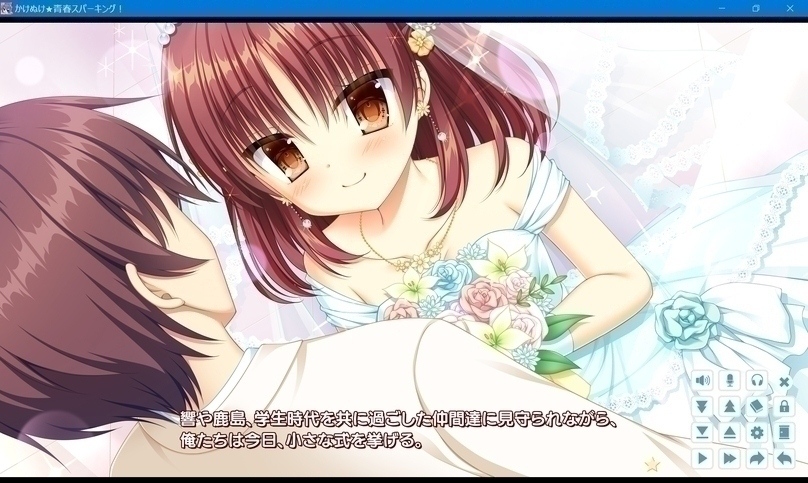
In the end, the protagonist chooses to stay with his sister, become husband and wife, and face the world’s judgment together. As a little sister route, that ending isn’t bad at all.
Kohinata Hibiki
The game’s anointed main heroine route. I expected something amazing, but the route left me disappointed.
This route reveals that Hibiki is a childhood friend, was the boss of the kids back then, played with the protagonist all the time, and even made a “marriage pact” with him as a kid. She dragged him to a shrine to “tie the knot,” but the shrine maiden told them this is a Shinto place, not a fucking church. If they really wanted to do it, they’d need a token—there’s a sunken shrine by the sea with a torii gate half-submerged. Supposedly there are “glowing stones” near that torii that can keep a couple’s love alive forever. So our dumbass protagonist swims out to the sunken torii to get the token, and drowns. He’s pulled out lifeless, but Hibiki cries and cries until he comes back to life…
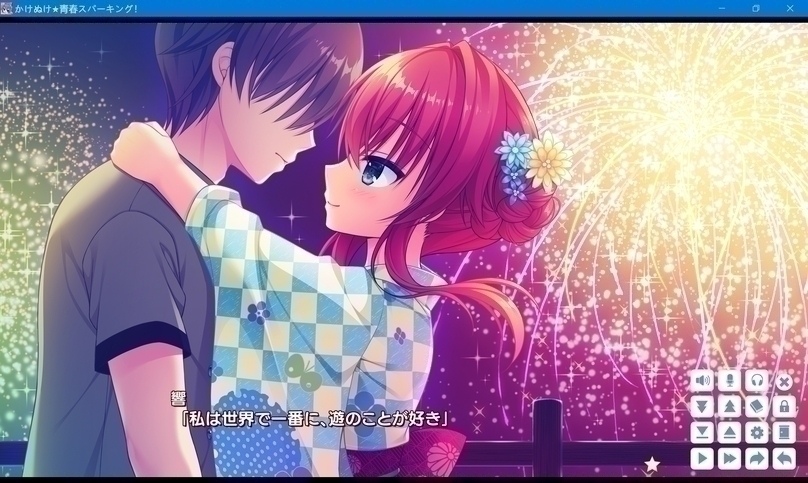
After that, the protagonist remembers the childhood “marriage pact” and his stupid near-death swim for a rock to marry a girl. Old flames reignite, and they naturally become a couple.
Then the story unfolds exactly as you’d imagine. For the anointed main heroine, that’s all the screen time she gets.
Sei Kikka (Rokudou Kikka)
After clearing all the other heroines, you unlock the Grand Ending route for Sei Kikka. Honestly, this route is the game’s proper main content, but due to certain compromises, it doesn’t fully deliver.
After being elected Seishun Club president, Kikka spends every day messing around in the clubroom—going out, having fun. She also actively tries to matchmake the protagonist with the other girls, nagging like an auntie introducing you to blind dates. But the protagonist rejects them all and instead becomes interested in Kikka herself.
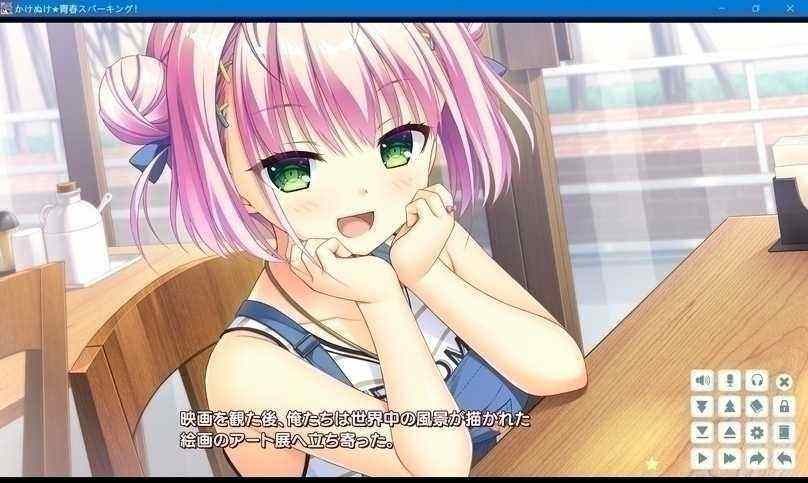
Fuck, this setup is so familiar! How many times has this been used?
Naturally, the protagonist wears her down, and they become a couple, even sleep together. But one day, after they have sex, Sei Kikka vanishes like she evaporated. That’s when the protagonist notices something odd about her—she’s too elusive, appears and disappears without a trace, and he’s never heard of any parents or siblings…
Then his aunt sees a photo he took of his “girlfriend,” points at Sei Kikka, and asks:
“Who’s this? Is her name Kikka?”
The protagonist thinks, no shit, Sei Kikka isn’t named Kikka? But his aunt takes him to an old photo album. In a photo from around when his aunt was in school, there’s a woman who looks exactly like Sei Kikka. The aunt says her name was also “Kikka.”
But she was “Rokudou Kikka,” not “Sei Kikka.” They look identical, though.
The aunt explains that Rokudou Kikka was her junior at school, from a family that ran a shrine. Then something happened to her family, she was severely injured, and she’s been in a coma ever since, in some unknown hospital. If she’s still alive, she’d be at least 30 by now.
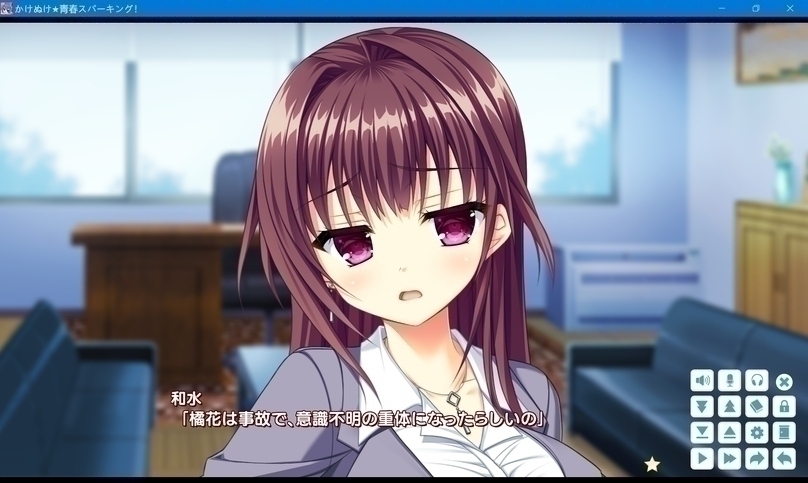
This gets the protagonist’s interest, and he starts digging through records to find traces of the past “Kikka.” He can’t believe Sei Kikka is over 30. He quickly finds a lot of material, and as Sei Kikka reappears, the past gradually surfaces.
It turns out the original Rokudou Kikka had a family of five, and she had the ability to see “life flames” from a young age. When someone is very happy, their “life flame” burns bright; when they’re depressed, it dims.
This “life flame” is essentially the fire of life. When someone’s flame starts to go out, their life will soon end.
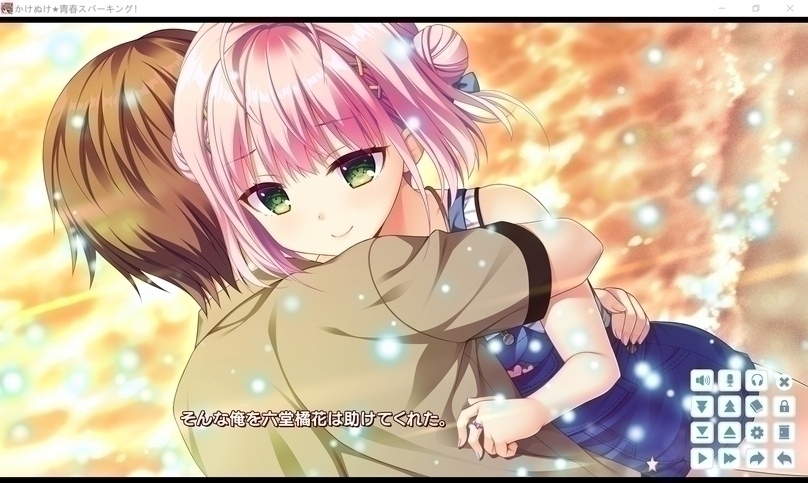
As a child, Rokudou Kikka saw her family planning a trip and noticed their life flames dimming. She sensed the trip would end in disaster, but she stayed silent.
Then the car crash happened. Everyone died except her.
Rokudou Kikka became an orphan and inherited the shrine’s assets. Her relatives took her in but treated her coldly because of the family tragedy, and classmates gossiped about her.
She barely spoke, because she always felt that surviving alone while her whole family died was a punishment—punishment for her sin of staying silent when she knew they might die.
One day, while working as a shrine maiden, Rokudou Kikka saw two kids doing a wedding ceremony. The girl told the boy she wanted to marry him; the boy said he had no token.
“There’s a shrine by the sea with a sunken torii. I hear there are glowing stones there that bring good luck. Of course, I don’t know if it’s true…”
As a shrine maiden, her words convinced the boy, who really did go to the sunken shrine to find the stone, and drowned.
Rokudou Kikka saw the drowned boy and felt she had to do something. She activated her ability, giving her own life flame to the boy. He revived, and she fell into a coma from which she never woke.
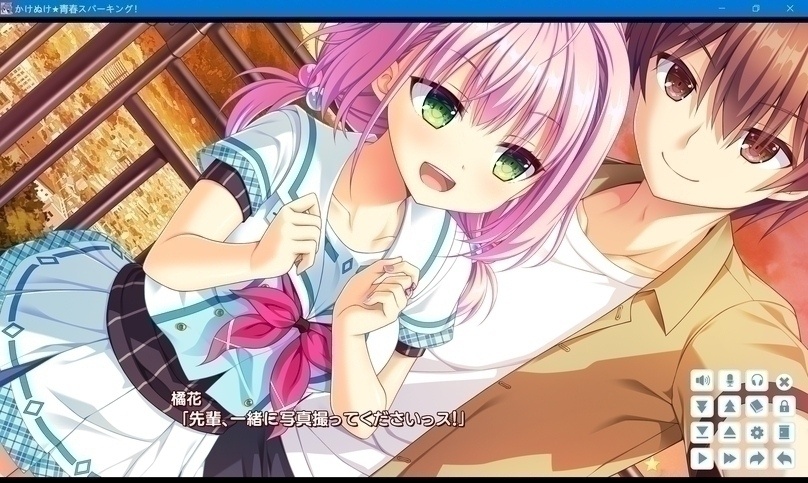
The newspaper at the time reported: a boy drowned, a woman fell into an irreversible coma trying to save him.
And the comatose Rokudou Kikka’s soul achieved out-of-body projection. Perhaps her desire to live was so strong that her spirit gained physical form—that’s how “Sei Kikka” was born.
Sei Kikka didn’t age with her comatose body in the hospital; she remained in her schoolgirl form. She saw the boy she’d saved living aimlessly, doing things he shouldn’t at an age when he should be enjoying youth, so she decided to help him understand how wonderful youth is.
Youth only comes once, fleeting, and once missed, it’s gone.
So Sei Kikka kept pushing the protagonist toward the other heroines, telling him not to work every day. But she was oblivious to the fact that she herself had lost her youth. She claimed she had no right to celebrate youth because she’d committed an unforgivable sin. The protagonist disagreed. He stubbornly fell in love with Sei Kikka and did many youthful things with her, filling in the youth she’d lost.
But this “Sei Kikka” is just a spirit; the real Rokudou Kikka has been lying in a hospital bed for a long time.
As Sei Kikka’s relationship with the protagonist deepens, the energy sustaining her spirit wanes, and Rokudou Kikka’s condition worsens. Perhaps “Sei Kikka” will disappear. Before she does, the protagonist tells her he loves her and promises to travel the world with her someday.
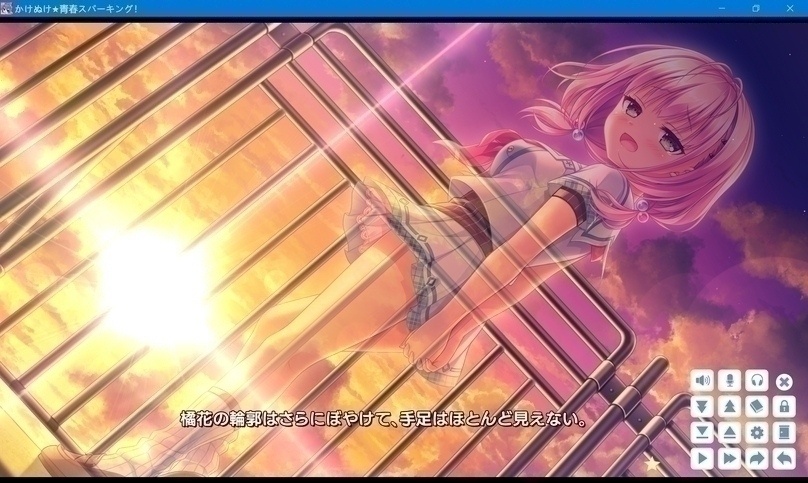
With that passion, Sei Kikka fades into the sunset.
Afterward, Rokudou Kikka’s body goes through multiple emergencies. It’s dangerous, but with the doctors’ help, she’s saved. While she’s in a coma, the protagonist travels the world with her photo, livestreaming on Instagram. Netizens send their support and blessings, knowing his girlfriend is critically ill, and wish her a speedy recovery.
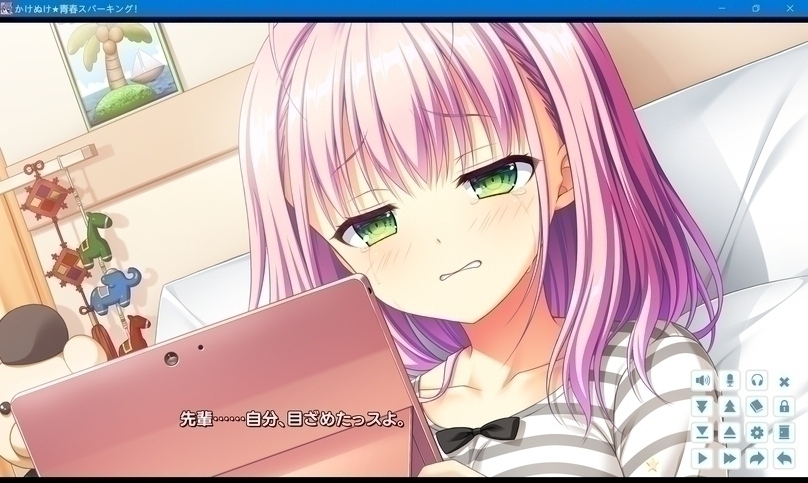
Finally, five years later, Rokudou Kikka wakes up. She’s nearly 40, but she’s amazed to find her bedside covered with souvenirs from around the world.
With the photo album the protagonist gave her, Rokudou Kikka remembers everything that happened during her out-of-body period and understands everything he did for her—inheriting the fortune, getting her treatment, finally achieving the miracle of her awakening.
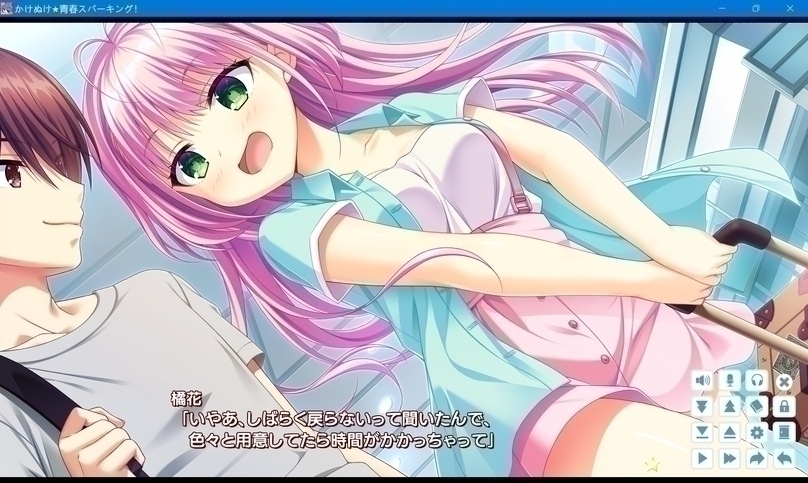
In the end, the protagonist and Rokudou Kikka come together again, and this age-gap older-woman-younger-man romance reaches a Happy Ending.
Rokudou Kikka may have lost her youth, but she never lost her youth.
Thoughts:
What can I say? This game leaves me conflicted. Hard to rate.
It does a lot right: Rokudou Kikka’s Grand Ending, the reconciliation between the protagonist and his mother in the sister route, the BGM in the latter half, and especially the character writing for Rokudou Kikka, which fits the title perfectly. “Kakenuke” means “dashing past,” and “Sparking” refers to the sparks—which ties directly into Kikka’s ability to see the “flames of life.” People with youth naturally have a life spark that shines.
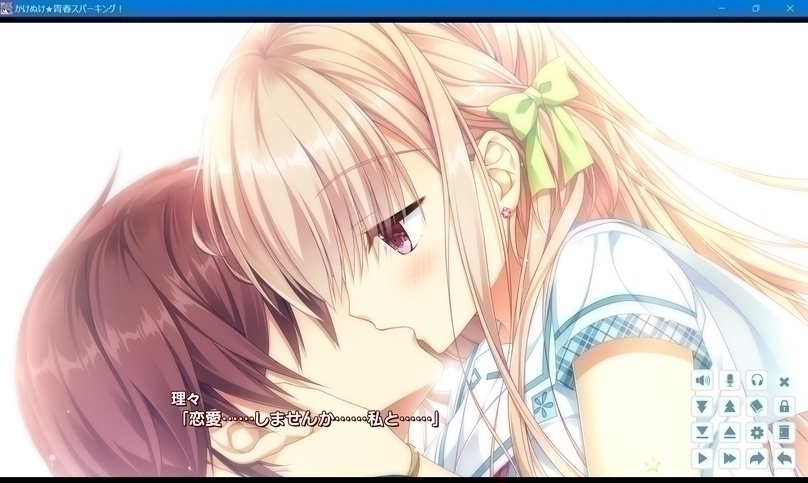
So I think the title should really be The Spark of Fleeting Youth. Through Kikka’s story, the game shows how important youth is to everyone, that everyone has the right to enjoy it, and no one should be deprived of it—even if you think you’ve sinned, that shouldn’t affect it.
And Kikka’s final chapter is the kind of writing that easily moves people—music, voice acting, CG, everything thrown at you. It’s hard to resist. The latter half of the Grand Ending is genuinely well done.
But… compared to those strengths, the game has too many flaws.
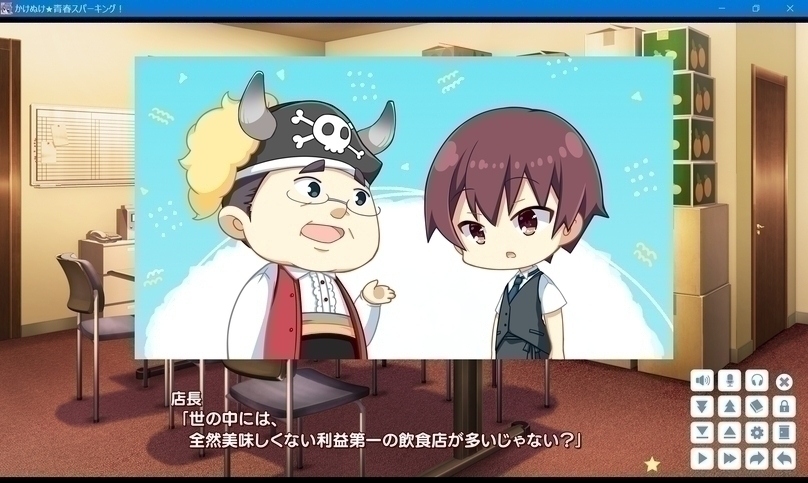
The biggest flaw is that everything outside the “Rokudou Kikka” part is just bad.
Looking at the common route, the protagonist’s aunt should be a major character, but throughout the whole game, her most impressive moments are only in the common route. In the individual routes, she suddenly becomes a gentle figure, a completely generic NPC. Beyond the aunt, the other heroines’ routes are forgettable and heavily formulaic. The surfing black-haired girl and the Vtuber girl have very by-the-numbers routes, the jokes aren’t fresh, and for veteran galge players, it’s not just ineffective—it’s a slog. The only one that holds up is Kashima Riri, and not because of the plot but because of how “cute” the heroine is written. Many people call Kei Hojo a moege factory, but you have to admit he knows how to write cute girls. Riri’s route is sweet, and the voice acting elevates it, making it not terrible. Kohinata’s redhead route feels like pure setup for the final Rokudou Kikka—it introduces the shrine maiden and the protagonist’s childhood drowning. Hibiki herself comes off as pretty average, though that’s partly because Yamamoto Nozomi’s performance is phoned in…
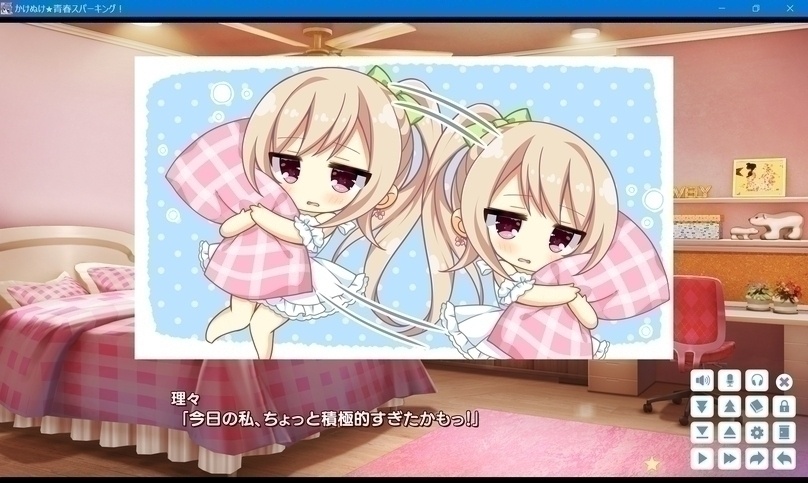
Overall, apart from the “Rokudou Kikka” final route, the rest is “as ordinary as it gets,” giving off a “filler” vibe. The game doesn’t have enough CGs, backgrounds are reused, and the presentation lacks key effects. The “shrine maiden,” a key connecting character, doesn’t even get a CG. The OP has Nayuta phoning it in and isn’t great, and I can’t even remember the ED. I’m still debating whether to buy the OST because it’s just that average.
Many people on ErogameScape give this game 80 points, citing how moving the “Rokudou Kikka” route is and insisting you have to clear everything to see the Grand Ending.
But honestly, clearing this game is a chore. The earlier parts are garbage and boring as hell. Giving it a high score just for the last emotional bit—what about all the boring content before? Overall, this game doesn’t deserve that kind of praise. It has six routes, and only the final one is worth a damn.
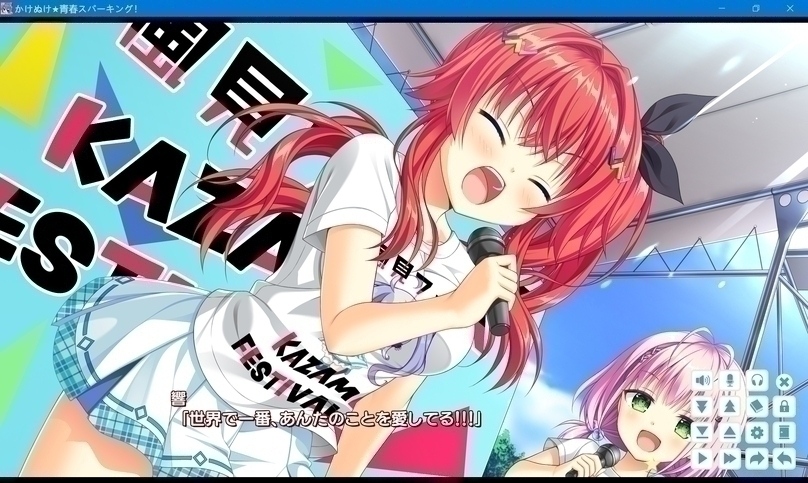
I think Saga Planets has fallen back into the same old path as Karumaruka—abandoning story-driven writing and just drawing heroines based on whatever elements are trending. Selling characters to get that first wave of sales from otaku, then relying on Rokudou Kikka’s sob story to sustain the rest. This game is basically “Karumaruka with the tragic flavor of Kinkoi,” except they didn’t have the guts to kill off the heroine in the end and went with the age-gap romance instead. Still a Happy Ending.
I kinda get why Shinjima Yu left Saga Planets now. Maybe this company’s whole culture is making “character games” — maybe they’ll toss in a Grand Ending to throw the scenario fans a bone, but wanting to weave every heroine into one story the way Shinjima Yu does? Too green for that.
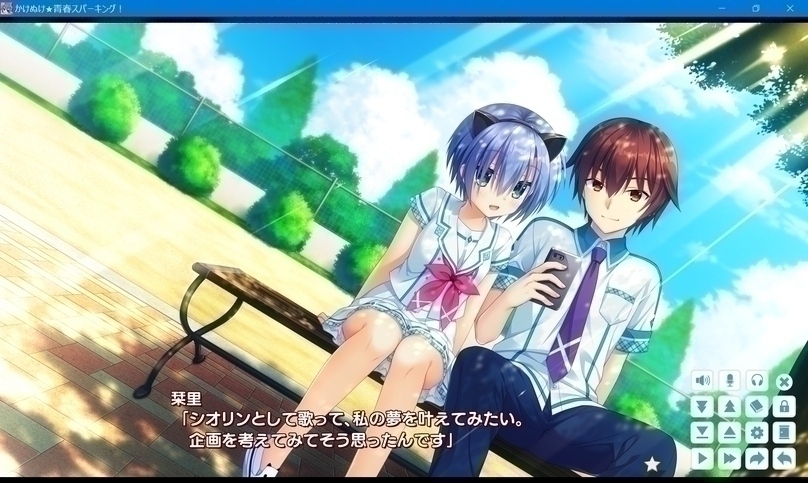
Maybe the Saga Planets everyone kept hyping up was just a beautiful mistake. This is the kind of game they wanted to make all along.
But you can’t out-まどそふと まどそふと, you idiots!
Oh right, this game had a magazine interview too, and it’s a fun read. Two questions stuck with me:
Q: Is that pink-haired Seika Kikka in the game a key character? A: Oh, she’s just a sub character. Don’t read too much into it.
Q: Mr. Scenario Writer, what was your youth like? A: (Jun Seo) I never had anything called “youth” either, but I wrote this game anyway!
Looking back at those two Q&As now, they sure mean a lot more than they did at the time.
Comments are hosted on the Chinese main site. This mirror is read-only.