Ano Hi no Tabibito, Fureau Mirai (あの日の旅人、ふれあう未来) Review
Tokyo Radio Love Story
Pulltop probably got paid off by some local government somewhere, because they’ve started pumping out a whole series of “tourism promo” games. The story is light, sweet, and most importantly, all-ages…
Last year they had Sora to Umi ga, Fureau Kanata, and this year they went and made a sequel called Ano Hi no Tabibito, Fureau Mirai. As expected, it shares the same world, the same staff, and even the same characters. Before release, this game had zero presence. I just remember Pulltop putting out a statement one day saying something like “Due to the pandemic, Ano Hi no Tabibito, Fureau Mirai has been delayed.”
Everyone was dumbfounded when they saw that. Not because of the delay itself, but because of something else:
Since when was Pulltop releasing this game?
We didn’t even know it existed!
And when they announced the delay, the game didn’t even have a proper website yet. Later on, the scenario writer plugged it while doing promo for ATRI, otherwise literally nobody would’ve cared.
Anyway, the game did come out. The previous title’s “Ogasawara Islands diving” story was actually pretty good, so how does this new one hold up?
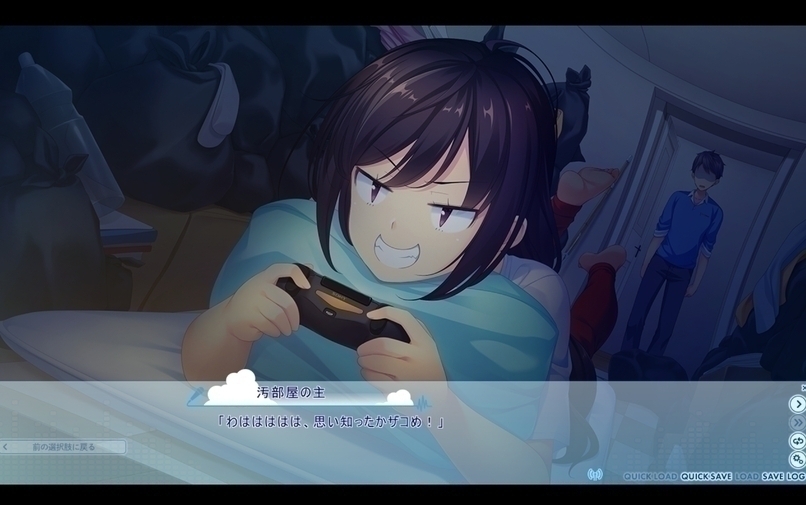
The new game, Ano Hi no Tabibito, Fureau Mirai, isn’t about diving anymore—it’s set at a radio station on Chichijima in the Ogasawara Islands. It’s about the protagonist’s high school girlfriend Tamaki, who was working as a film actress at the time. As her career took off, she and the protagonist drifted apart and lost contact. The protagonist assumes they’ve broken up. But years later, Tamaki suddenly retires from the industry and holes up at a radio station in the Ogasawara Islands, cutting off all contact. The protagonist takes a boat out there to win back his ex, and that’s how it starts.
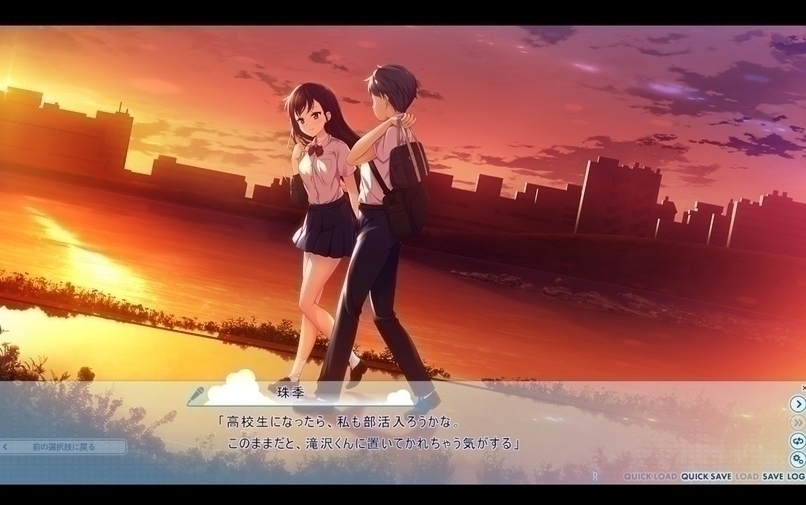
Now, the opening is fine, but the pacing gets bloated fast. After arriving on the island, the protagonist runs into Eri, a girl recruiting people for the island’s FM radio station, and gets dragged into guest-hosting at the local Ogasawara broadcast station. While there, he discovers his shut-in, game-addicted ex-girlfriend Tamaki, who’s been avoiding the world.
After some questioning, he learns that Tamaki suddenly retired after landing a film role, for some reason she won’t disclose, and hid away at this radio station. The station’s sponsor happens to be her agency, so she’s been mooching there without anyone saying a word. But the station is about to lose its sponsor and shut down, and nobody knows what Tamaki will do then.
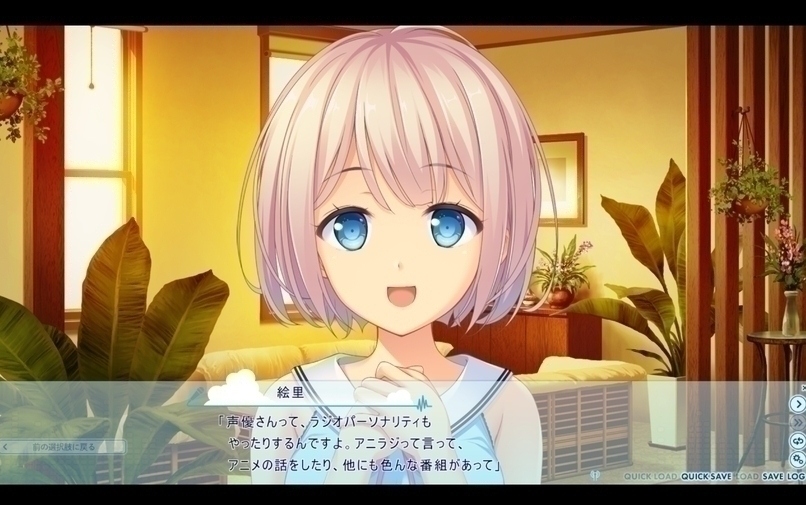
As for Eri, the one recruiting for the island’s FM broadcast, she just wants to be a voice actress and loves listening to radio, so she’s doing it purely out of love. The station can’t even pay wages anyway, so whatever goes.
What really shakes the protagonist is what his ex-girlfriend Tamaki looks like now. She used to be a fresh-faced young idol on screen—the kind you’d pop a boner over and jerk off to three times easy. Now she’s a dried-up shut-in, hair a mess, reeking all over. The goddess image in his head shatters completely, and he’s done, feelings gone.
So the protagonist decides to leave the island, but the boat back to Tokyo only comes once a week, camping outdoors isn’t allowed, and he has nowhere to stay. Eri suggests he crash at the radio station, finish the last broadcasts, and scram when the boat comes.
He’s got no choice, so he does the radio gig—and then this game’s passion kicks in. The protagonist learns that nobody listens to this station, like a 0% share. Eri desperately wants it to survive, and the station manager says if they hit 30% of the island’s listeners, maybe investors will come. The protagonist starts busting ass to raise the ratings: improving program quality, boosting interaction, and most importantly, adding a simultaneous online stream.
Holy shit, it took me until now to realize this station didn’t have an online stream?
It’s 2020! Radio stations stream online! You’re still on FM, and barely anyone on the Ogasawara Islands even owns a radio anymore!
Eventually they get the streaming gear set up and the content gets lively. Meanwhile, the protagonist notices his ex Tamaki gradually getting interested in radio and invites her to join, but she’s still resistant. So he starts working his route magic, learning that Tamaki quit acting because the pressure was too much—she’d stammer at crucial moments and gave up.
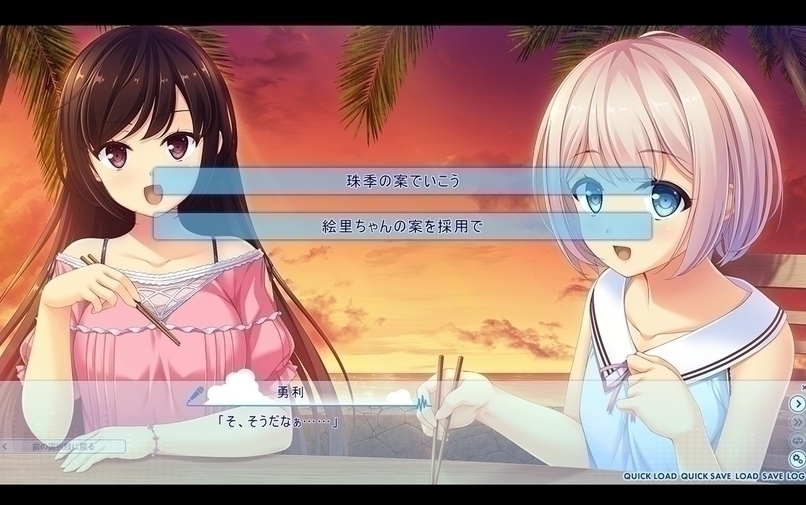
He talks her through it and helps her get over her hangup, but the day to leave the island arrives. Ratings have gone up but haven’t hit 30%. The protagonist hands the station to Eri, and after he leaves, Tamaki finally comes around and decides to take over his broadcasting duties.
So from way off in Tokyo, the protagonist hears his ex-girlfriend Tamaki’s voice from Ogasawara on the radio again. And Tamaki tells her own story on air, about her love for the protagonist, and says they never actually broke up—she just left, no explicit “we’re through.”
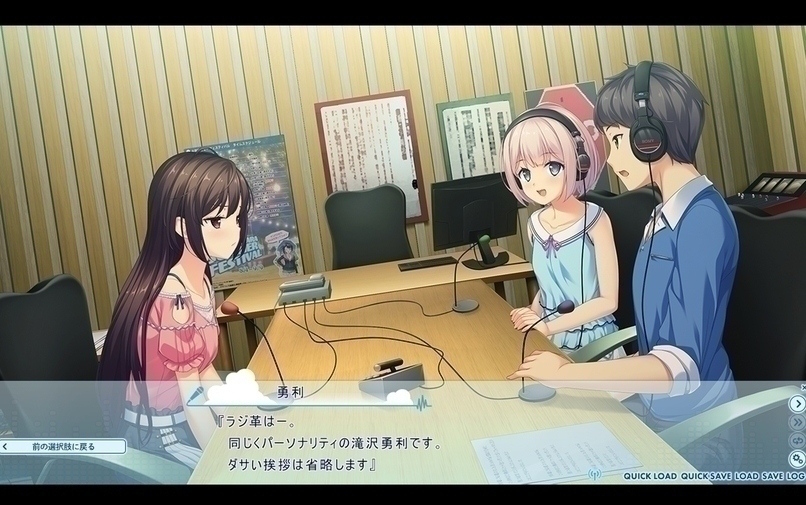
The protagonist confesses to Tamaki on air through a listener letter, and the couple rekindles their romance over the airwaves.
A few months later, the protagonist returns to Ogasawara, reunites with his girlfriend Tamaki, and starts a new radio show. Ratings keep climbing toward 30%, so at least the station survives. Years later, he and Tamaki return to Tokyo, start a new life, Tamaki goes back to acting, and the protagonist continues his track career. Everyone gets a happy future.
Honestly, Pulltop’s Ano Hi no Tabibito, Fureau Mirai as a sequel to last year’s Sora to Umi ga, Fureau Kanata is a downgrade in “material” terms.
First, the soundtrack is way too monotonous, and there aren’t any effects building the presentation. Look, I get it—radio station, no high-tech elements, not like last year’s diving with animated fish or whatever. But for a Pulltop strength, this game barely has any SDCGs, plenty of CGs look reused, at least half the backgrounds are from the previous game, and the BGM is all arrangements of the last game’s OP. I gotta say, a lot of this feels like a rush job.
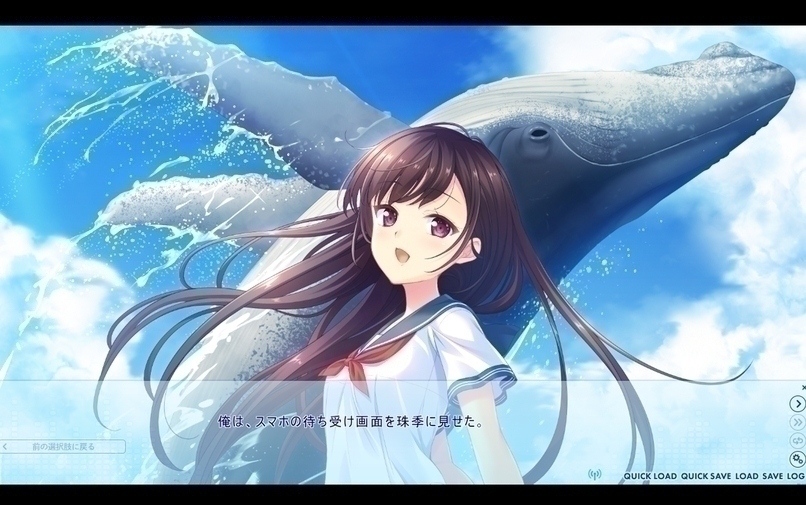
The story is passable but feels stretched thin for no reason. The emotional arc between the protagonist and his ex could unfold fast, but the game spends hours on slice-of-life filler with nothing special going on. Very Pulltop-style: too chickenshit for dirty jokes, too scared for dark humor, just bickering and moe pandering to pass the time.
The game introduces two new heroines: the ex-girlfriend and a loli native to the Ogasawara Islands. So naturally there are two routes, but “get back with the ex” is clearly the best one. Also, the two new heroines’ CVs are pretty low-profile. The ex’s CV has almost nothing to her name—maybe the most famous is Kamiyama Shiki from Summer Pockets Reflection Blue, but as a Key hater I’m never playing that game. Never. Even if I have to crossdress and eat shit, no…
A huge chunk of the game is spent interacting with the previous game’s main characters, and both of its heroines show up with sizable roles. Even though the “material” is thinner, the overall atmosphere is still on point. If you like a “steady and calm” romance game, this might be your thing.
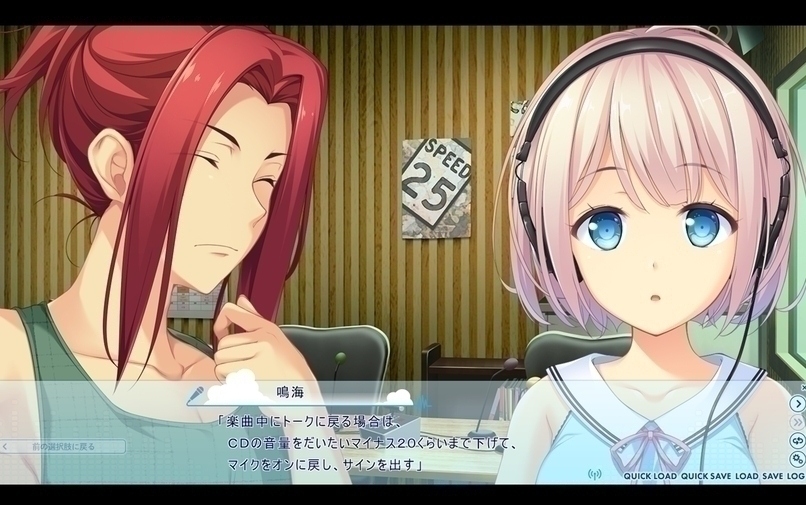
Lately I feel like I’m shitting on every game I play. Sometimes I calm down and realize a lot of the games I rag on aren’t unforgivably trash—they just leave me feeling “they could’ve done better and didn’t,” and that’s what stings. Same with Ano Hi no Tabibito, Fureau Mirai. Pulltop clearly has an edge in making this kind of “theme-style romance,” and they’ve made an excellent “countryside love story” before. But for some reason this game feels half-assed. The half-assedness even shows in the protagonist’s voice—the game is all-ages already, and most of the content is him being a broadcaster, so would it kill you to give the guy a CV?
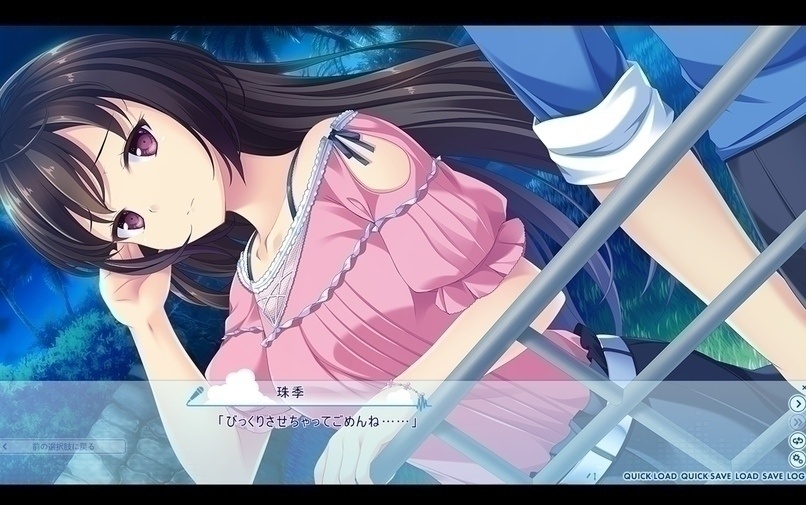
I hear this game was originally meant to promote tourism to the Ogasawara Islands. Well, tough luck—since COVID hit, the Ogasawara Islands have been refusing tourists entirely. So this game’s release is pointless and probably won’t boost local travel. The whole thing feels like “the project was always two games,” and this second one exists just to fulfill the investor’s checklist. I bet Pulltop has an 18+ title in production for the second half of the year—that one’s probably their real baby, though I doubt it’ll be much good either (just a hunch). And this game should hit Steam pretty soon, right?
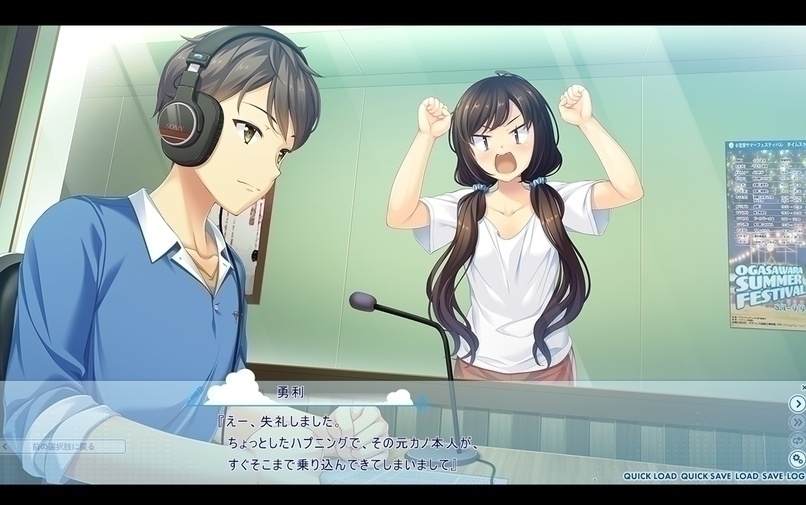
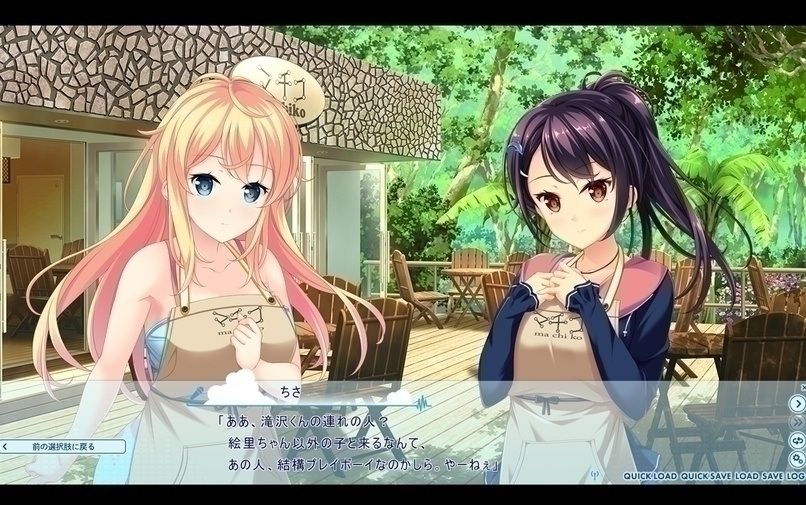
One last thing that pisses me off: the game’s timeline is after the previous game, Sora to Umi ga, Fureau Kanata. I always assumed the protagonist’s main girl there was Chisa, the dolphin girl. But this game tells me he ended up choosing the blonde Emily. What the fuck!
What’s so great about that idiot blonde? What’s wrong with Chisa?
I’ve always liked Chisa. Not that it has anything to do with her CV being Takada Yuuki. Really. Nothing.
Still, after playing this game, one non-game impression stuck with me:
The Ogasawara Islands are actually administered by Tokyo Metropolis?
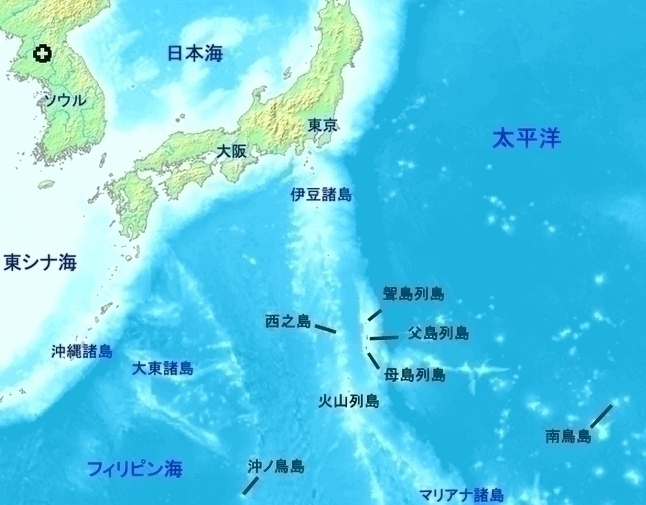
The Ogasawara Islands are a zillion miles from Tokyo!
It’s like someone telling me Putuoshan and Changdao are both under Beijing’s administration. Total nonsense.
Well, if you put it that way, the Ogasawara Islands are an inseparable part of Tokyo Metropolis, so let’s just call this game Tokyo Radio Love Story.
Comments are hosted on the Chinese main site. This mirror is read-only.