Einstein yori Ai o Komete (アインシュタインより愛を込めて) Review
From Einstein With Love
Niijima Yuu has a new game out. Out of nowhere in the back half of the year, he announced a new brand under Key called Glovety, teaming up with his old partners from Koi x Shin Ai Kanojo (恋×シンアイ彼女), Kimishima Ao and Shimizu Masatoshi, to put out the brand’s first new title (and I figure it’ll also be its last): Einstein yori Ai wo Komete (アインシュタインより愛を込めて).
アインシュタインより愛を込めて — what does that mean? It means From Einstein With Love. Except the game’s actual English subtitle isn’t that at all. It’s The only source of knowledge is experience. Sort of a “theory comes from practice” vibe, and that line also feels like a follow-up to Einstein’s famous quip: Information is not knowledge.
Anyway, Niijima Yuu is back, and this time he’s brought Kimishima Ao, the otaku favorite, along with a title so artsy it hurts. A whole bunch of otaku collectively lost their minds. The game wasn’t even out in trial form yet and people were already rushing off on “sacred site pilgrimages,” dissecting every element of the single poster that had been released and guessing what kind of story Niijima Yuu might tell. Coupled with the heroine’s “genius-level intellect” setting, everyone started speculating about the plot: would it be about a super-smart but emotionally clueless person slowly discovering love? Would it end with a science-minded boy and girl falling for each other and trying to prove it? The game hadn’t even shipped, and people were already working themselves into tears. Honestly, outside of Yuzusoft fans, I’ve never seen such a powerful capacity for self-induced emotion, and it made me a little less hyped for the game.
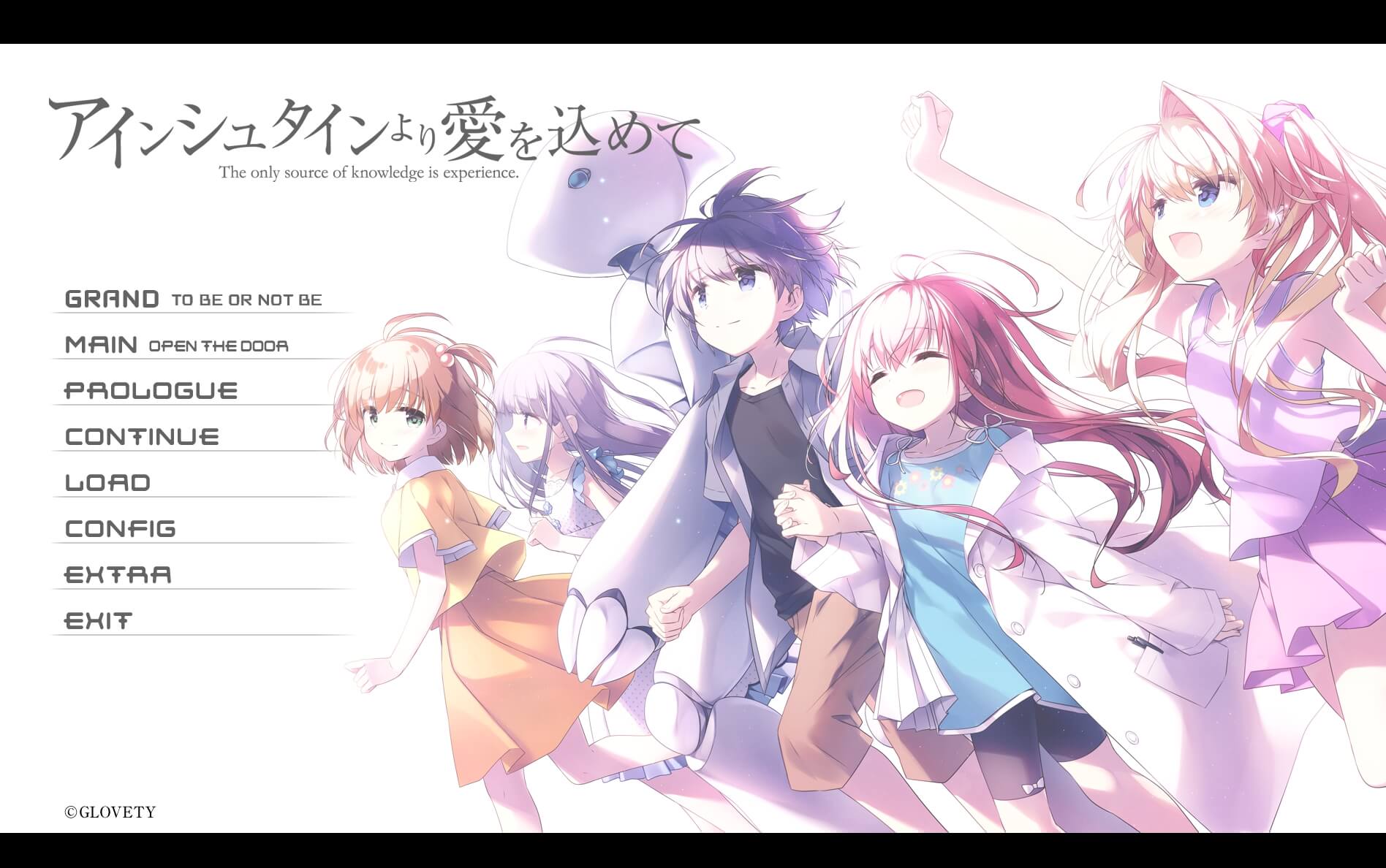
Why the downgrade? Because I also figured Niijima Yuu might pull this “low-EQ protagonist who doesn’t get love” kind of story. His games have always been like that, and the trial version gave me the same vibe. If that’s really what it is, then the game’s just “good” at best — maybe it’ll cap things off with an explosive self-destruct twist where the protagonist, too emotionally dense for his own good, ends up alone forever, just to get people talking.
Then the game came out. I really couldn’t push through that endless “Sakura no Kumo, Hiiro no Koi” anymore, so I just set it aside and played this one first, figuring it’d be a lighter ride. The more I played, the more something felt off. The common route started out fine, but once I hit the character routes, more and more baffling stuff kept getting piled on. And by the time I reached the Grand Ending, my face was straight-up the German Boy meme. Oh boy. This game was nothing like any of us had imagined. Hell, you could say the whole “common route” (the trial version) was a scam… no, wait, the character routes were scams too. The final twist has basically zero connection to everything that came before it…
The game opens in a pretty clichéd way. Our protagonist, Shūta, is a genius with a hell of a brain, always first in his grade on every exam. But one day his name suddenly drops to second place, and the top spot belongs to a girl named Arimura Romi. He doesn’t know her at first, but figures she must have something going for her and wants to meet her. Turns out she barely ever shows herself, and he finally tracks her down under the umbrella of some “Science Research Club” hobby group. Even then she won’t come out in person—she calls him and tells him that if he wants to meet her, he should do as she says. He agrees. Arimura Romi’s demands seem simple enough: find a few specific girls—the dumbest one, the prettiest one, a love-at-first-sight one… that kind of thing—and once he’s got enough of them, just form a “Science Research Club.” That’s it.
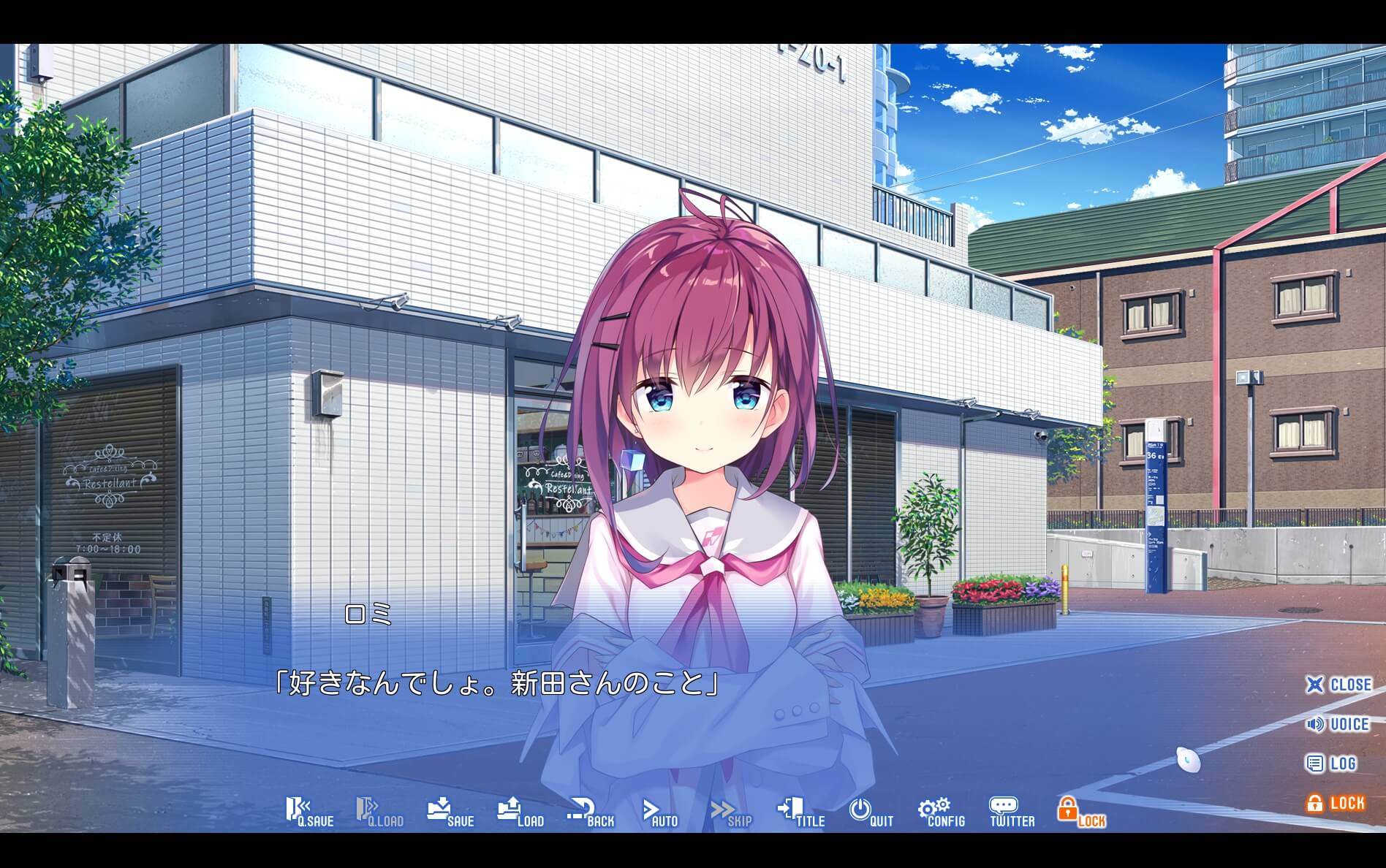
The protagonist has no choice, so he goes wandering around looking for people, and after a lot of wheedling and pestering he finally manages to rope in several of them—including Nishino Kasumi, who does boxing, his junior from the brass band club Sakashita Iinana, a kouhai who looks like a total dumbass, and Nitta Shinobu, the college girl who runs a convenience store downstairs from his place…
Anyway, they eventually got enough people together and the “Science Research Club” was officially founded. Arimura Romi showed up, congratulated them first, and then said: “Since it’s been founded, you should keep this club going from here on out.”
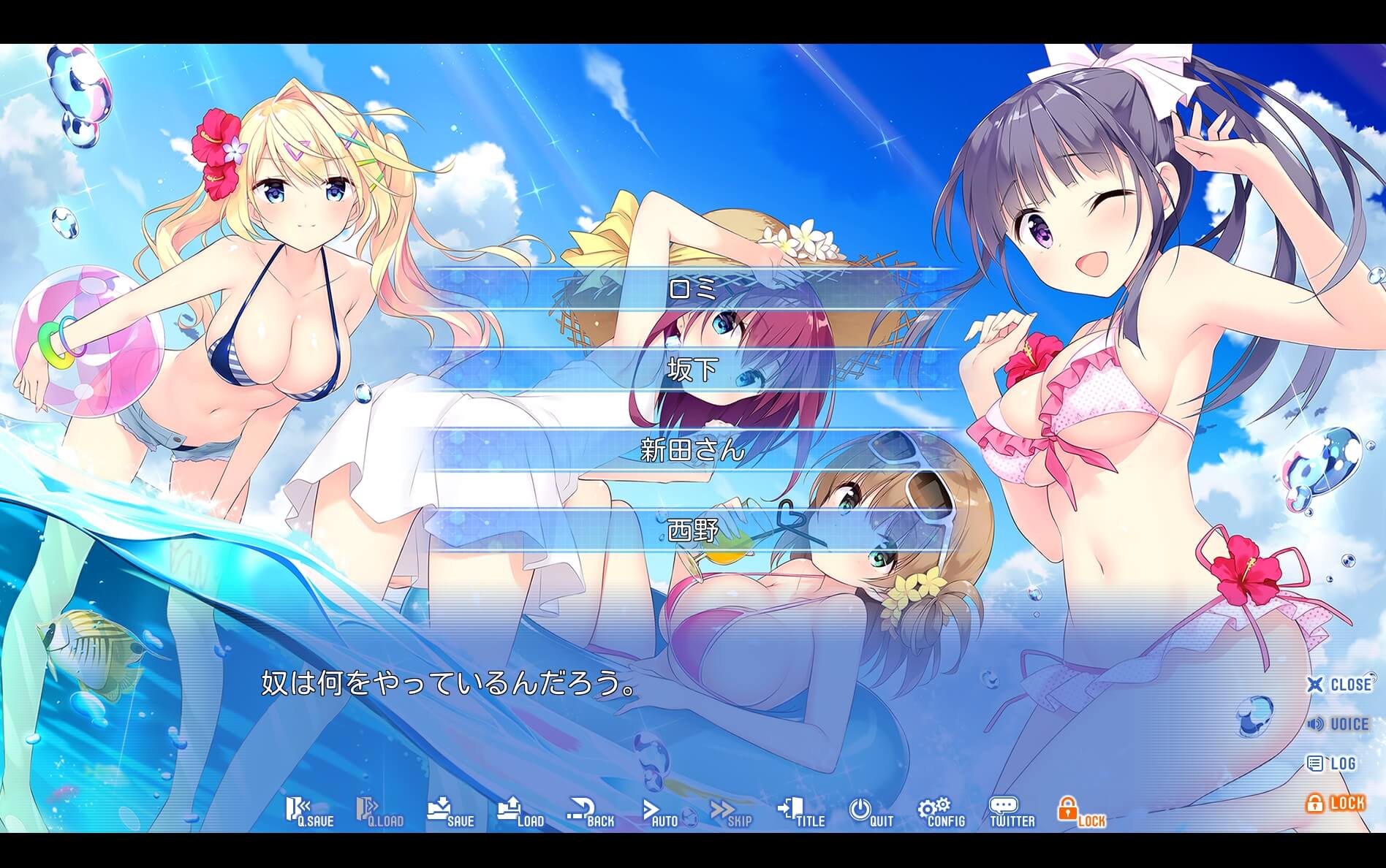
And then everyone just looked at each other, and from that moment on the meeting was dead in all but name.
The protagonist gets pissed and goes to ask Arimura Romi what the hell that was about — and that’s when he finds out this so-called “Arimura Romi” is actually someone he knew as a kid, a girl named Himura Akane. No idea why she changed her name. Romi also claims she did all of it for his sake, to cure him of the “meteor disease.”
The so-called “Meteor Disease” traces back to a giant meteor that struck the Earth several years ago. It affected certain people, causing their bodies to develop abnormalities of unknown origin as a result of the impact, and so the condition came to be called “Meteor Disease.” The protagonist himself is afflicted with it, and has been receiving treatment from his uncle, who happens to be his attending physician. The uncle tells him he doesn’t have long to live and that he should try interacting with more people to improve his condition. Maybe Arimura Romi’s approach to treatment is exactly that…
And then the common route just fucking ends. Pretty baffling, right? No — the baffling part comes after.
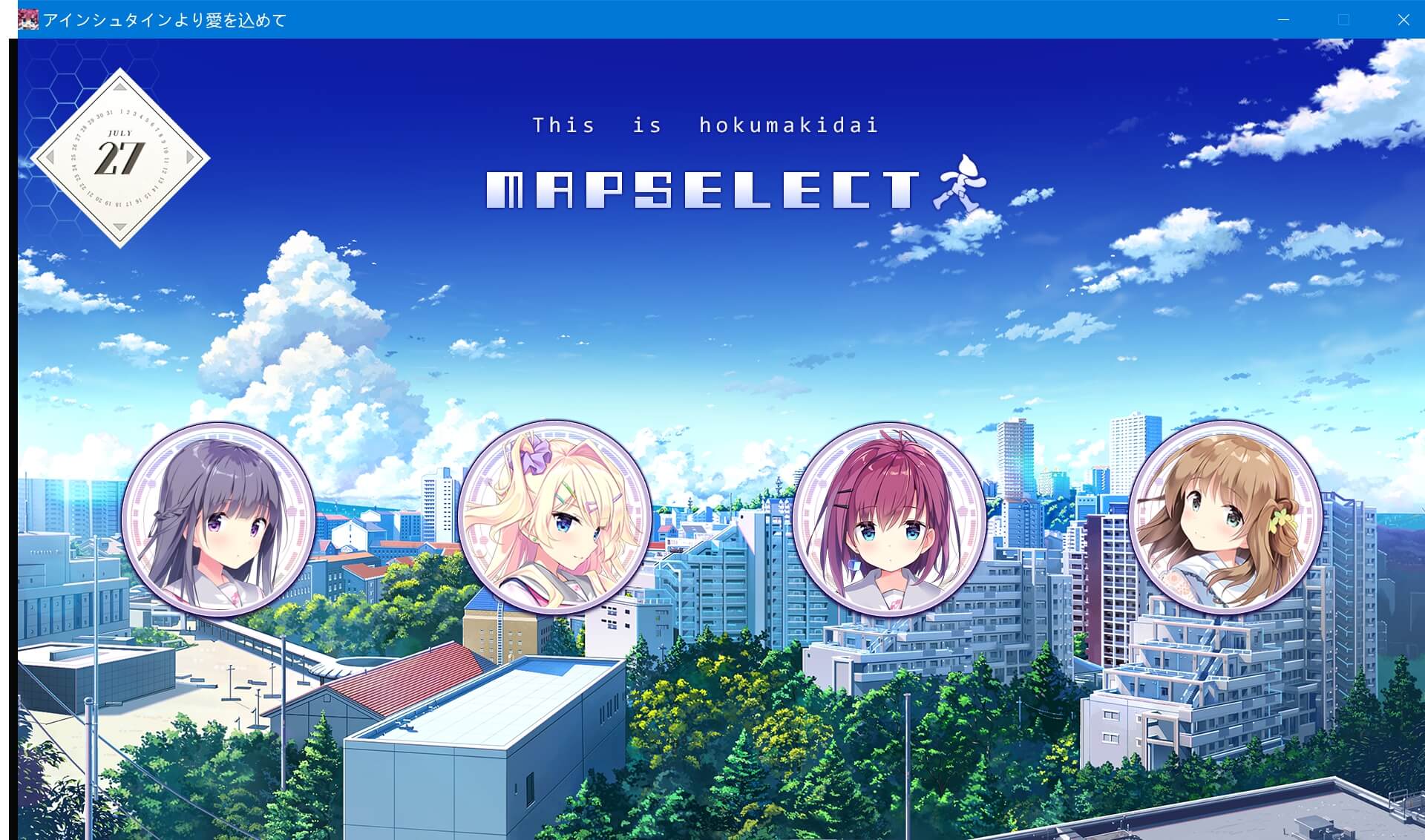
After the common route ends, the game should move into the individual routes. You need to clear the three heroines’ routes first to unlock Arimura Romi’s route, and only after finishing Arimura Romi’s route can you reach the final Grand Ending.
This route development feels really familiar—very “Hatsuyuki Sakura.” Only this game drops the traditional Saga Planets style of picking characters from a big map and goes with plain, direct character icons instead.
Nishino Kasumi
The story is straightforward: the protagonist helps the boxer girl Kasumi win her match. Kasumi trains hard at boxing but can never beat a certain well-known fighter from another school (even though she wins the championship every time). In the end, through the protagonist’s efforts, Kasumi casts aside her distractions, gives the match everything she has, and finally takes down that “runner-up champion,” breaking through her own limits.
But on the day of Kasumi’s match, the protagonist can’t make it to the venue — his “comet disease” acts up, and a mysterious “comet organization” whisks him away for a whole regimen of treatment and training. In the end his comet disease is cured, but he loses his original high IQ and his memories along with it.
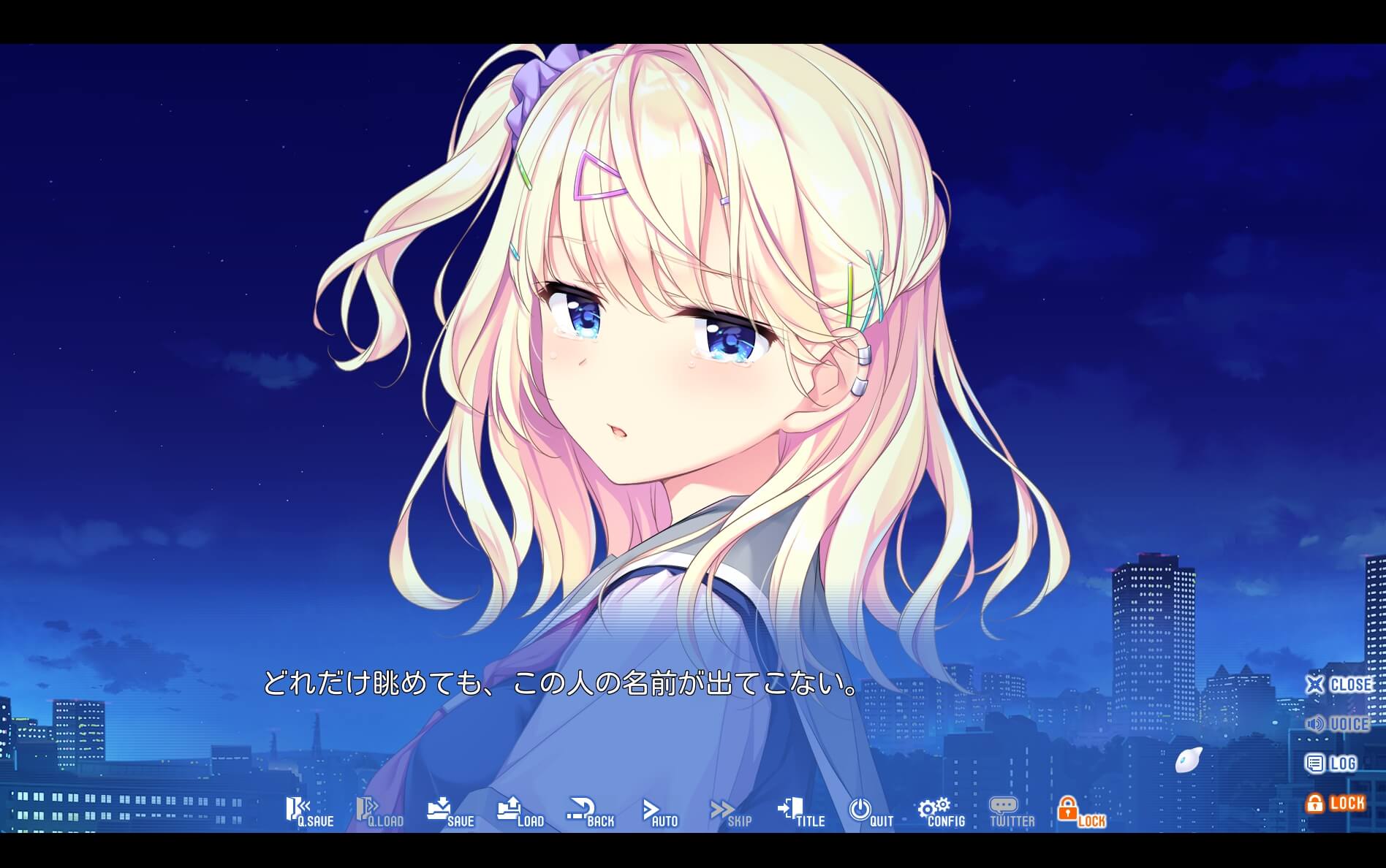
The amnesiac protagonist returns once more. He runs into Kasumi and doesn’t recognize her. But after a string of melodramatic plot twists, the two finally meet again, as if by fate…
That’s it.
I know this development makes no damn sense. Hold on, it gets even more nonsensical.
Sakashita Iinana
When the protagonist was choosing people to form the club, one of his requirements was to pick someone he’d fallen for at first sight (holy shit, Niijima Yuu really can’t let go of this “love at first sight” thing). And the first person he laid eyes on that way was this very girl, Sakashita Iina.
Sakashita Iinana is a junior in the school’s brass band club. She looks good, and she’s cute too, so the protagonist shamelessly camps out at her club activities to wait for her, until she finally can’t take it anymore and invites him out for ramen or something. The long and short of it is, the protagonist quickly realizes that the goddess he “fell in love with at first sight” is just an ordinary person after all, and he even starts to wonder why he fell for her in the first place. Still, the two of them hit it off fast, and Sakashita Iinana suddenly tells the protagonist about a problem she’s been having:
“My own sense of existence grows thinner by the day.”
It’s the kind of feeling where the people around you forget you every single day. Take Sakashita Iinana (坂下唯々菜) waking up in the morning—her own mother and little brother don’t recognize her, and they have to pause for a second before it clicks who she is. Most of the time the people around her just forget she exists. It feels completely absurd.
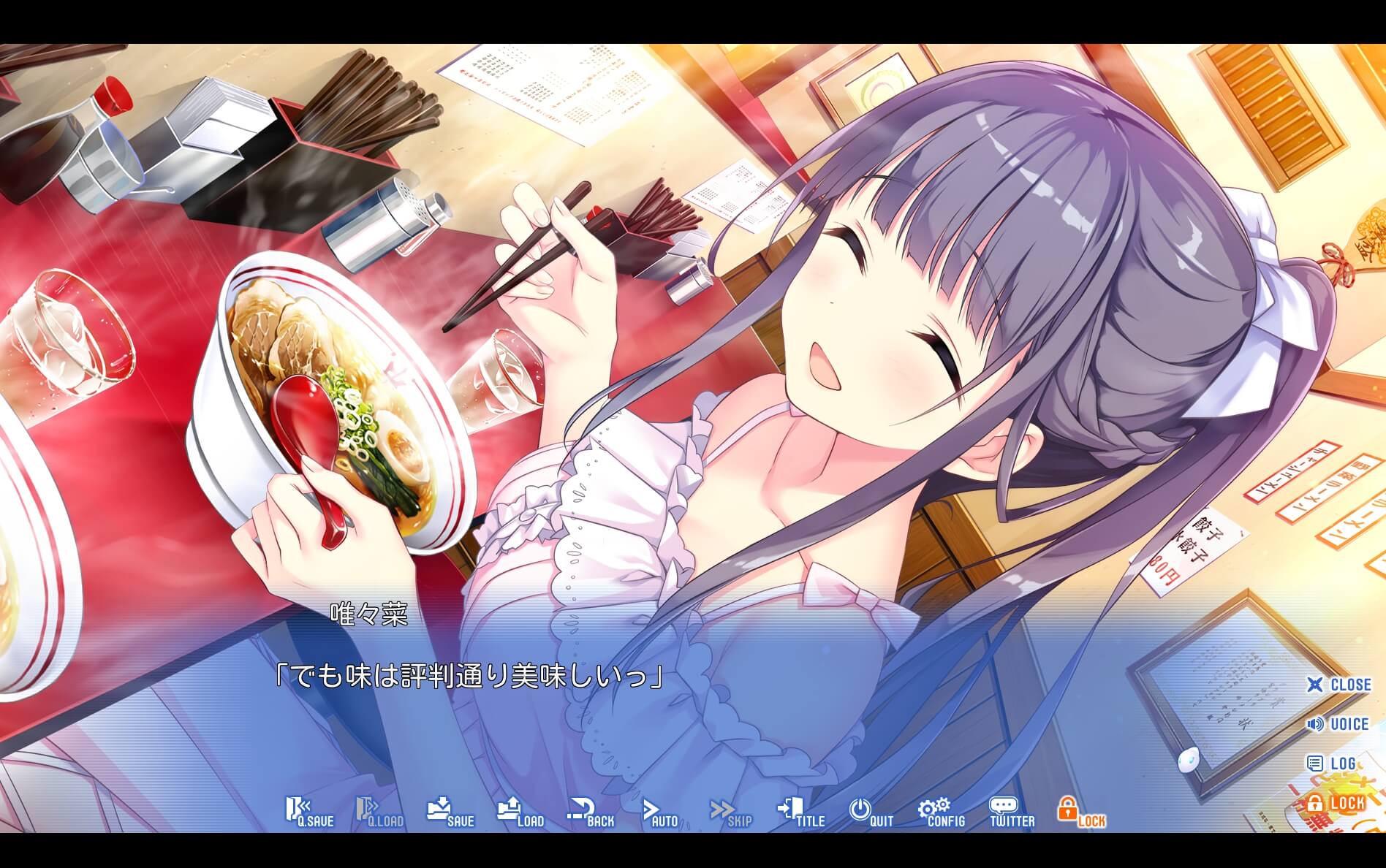
后来,经有村ロミ提醒,男主才明白:坂下唯々菜这种情况是「彗星病」的一种,叫做 Telepathy。你现在看到的那个「坂下唯々菜」其实只是幻影,真正的坂下唯々菜正躺在某处昏迷不醒。她用自己的 Telepathy 能力改写了大多数人的「集体记忆」,让大家以为她存在、承认有「坂下唯々菜」这个人。至于她为什么存在感这么薄弱,是因为一个本就虚无的家伙,会因为能力减弱而渐渐现出原形。最终,在答应和男主一起去小笠原群岛旅行的路上,坂下唯々菜莫名消失了。
Actually, Sakashita Iinana doesn’t exist as a person — she’s a phantom conjured by someone with Telepathy, and the real body behind that phantom is still God knows where.
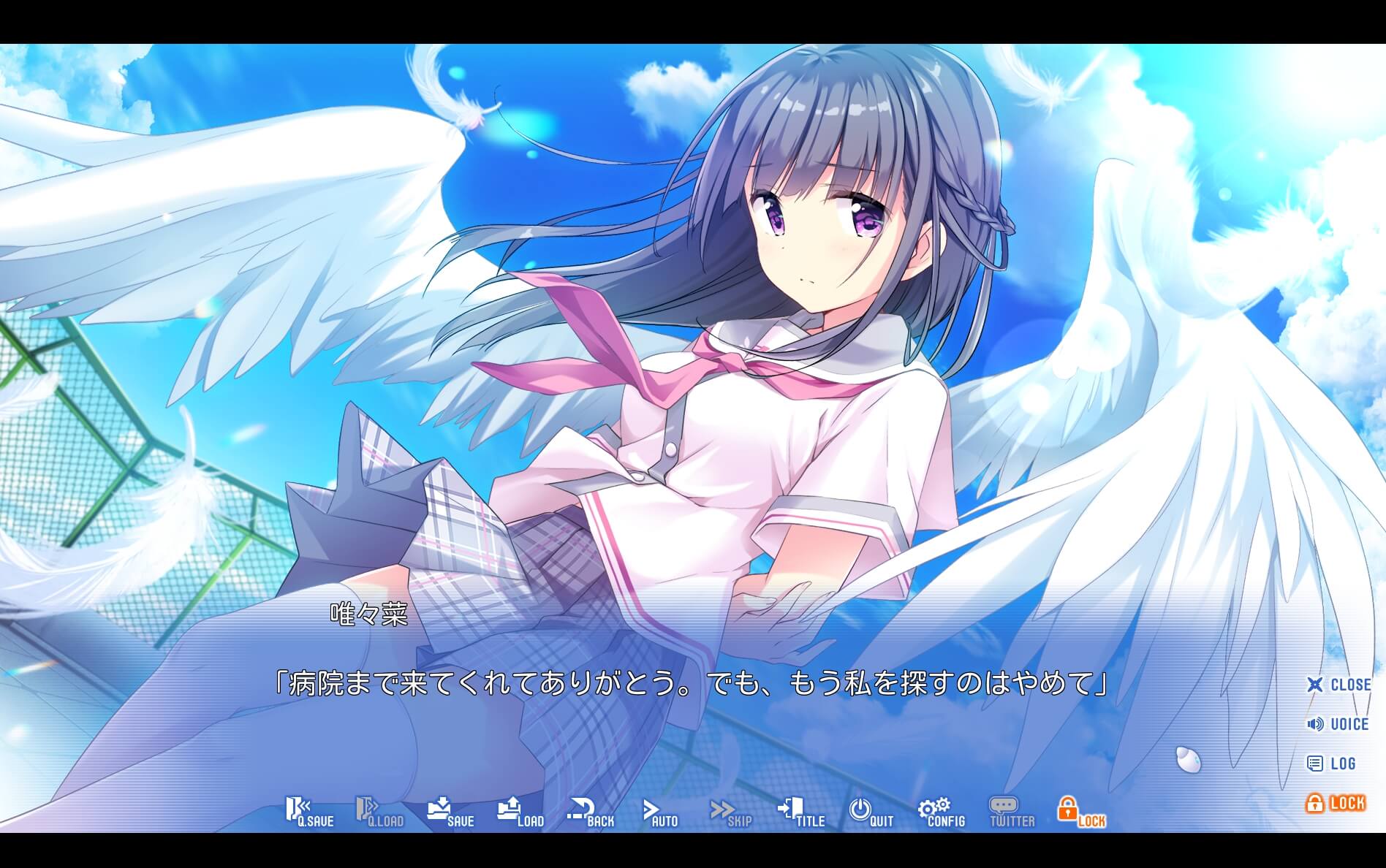
And then things get stupid. The protagonist suddenly gets taken hostage on the rooftop by a woman named “Hoshi,” who says he’s packing some kind of immense energy. Hoshi claims she’s from a “Comet Organization” and asks him to cooperate—come to their lab so they can study him. He refuses, more concerned about Sakashita Iinana. Later, Iinana unexpectedly shows up with an angel’s wings, and while hugging her, the protagonist copies her Telepathy ability…
And because of that, she pissed off the “Star” from the Comet organization, who had the protagonist abducted and taken to some unknown place.
And it seems Sakashita Iinina also awakened because of the protagonist’s disappearance. Later, in some year and some month, a girl came alone to the Ogasawara Islands, activated her Telepathy ability, rescued a boy named Shuta, and the two of them fled out toward the Pacific Ocean……
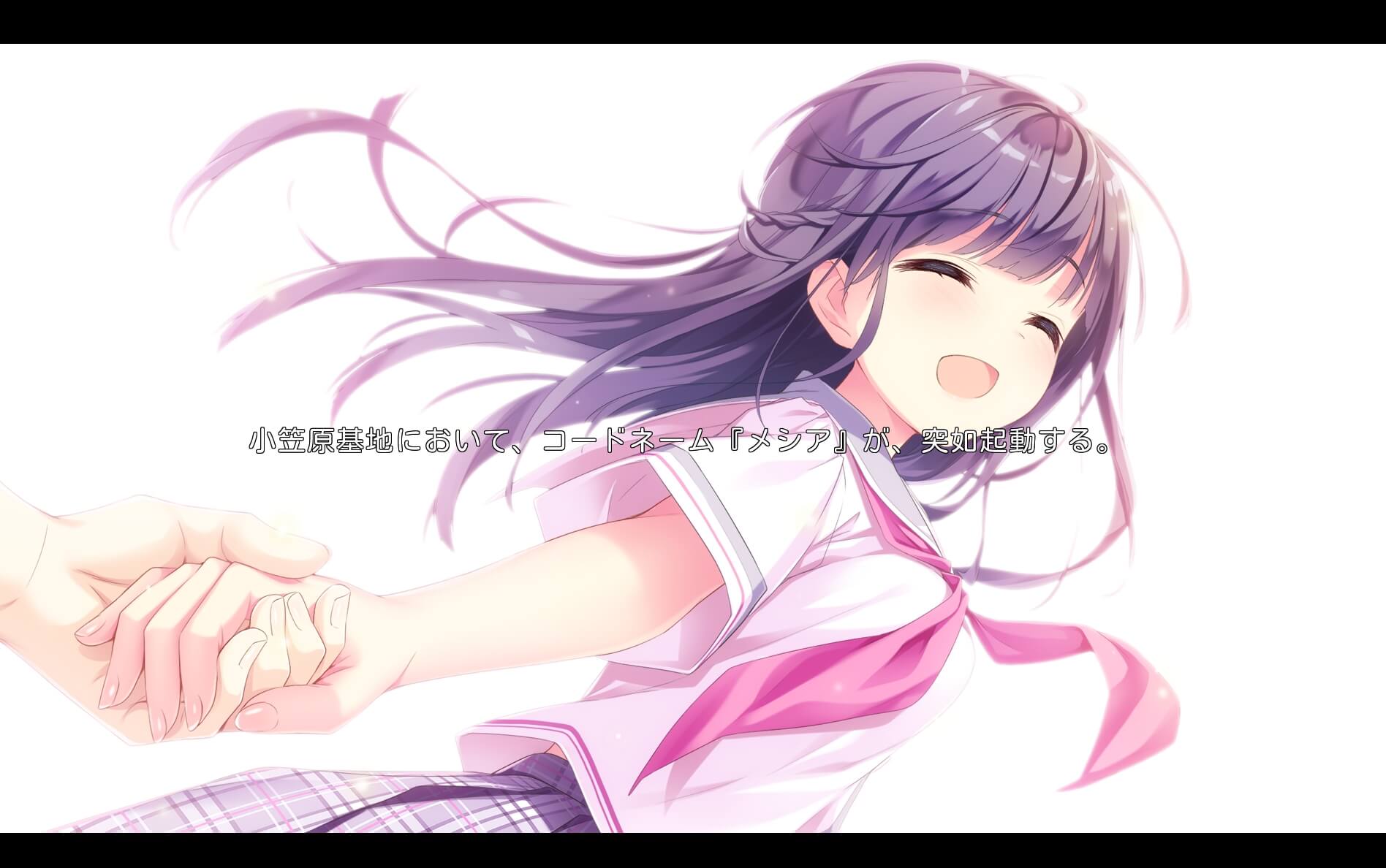
That’s it. That’s the whole thing.
Still sounds even more nonsensical? It’s fine, hold on tight, there’s more coming…
Shinoda Shinobu
After the protagonist founded the “Science Research Club,” it never actually did anything, so he gave up and went back to his place to resume his old otaku life.
Around that time, things finally went somewhere with Shinoda Shinobu, the older girl from the convenience store downstairs. She’s older than him, after all, so hooking up with a pretty-boy like the protagonist isn’t exactly a loss for her. The two of them finally went out on a wine date, and one thing led to another after the drinks — they ended up sleeping together.
After that, they settled into a vague, hard-to-define sort of couple-ish limbo. The protagonist also learns that Shinoda Shinobu only inherited the convenience store from her father, which is why she’s the manager there. Then he starts spouting off one dumb idea after another, and it ends up messing with the store’s supply chain, triggering a food safety incident that leaves the place staring down the barrel of closure.
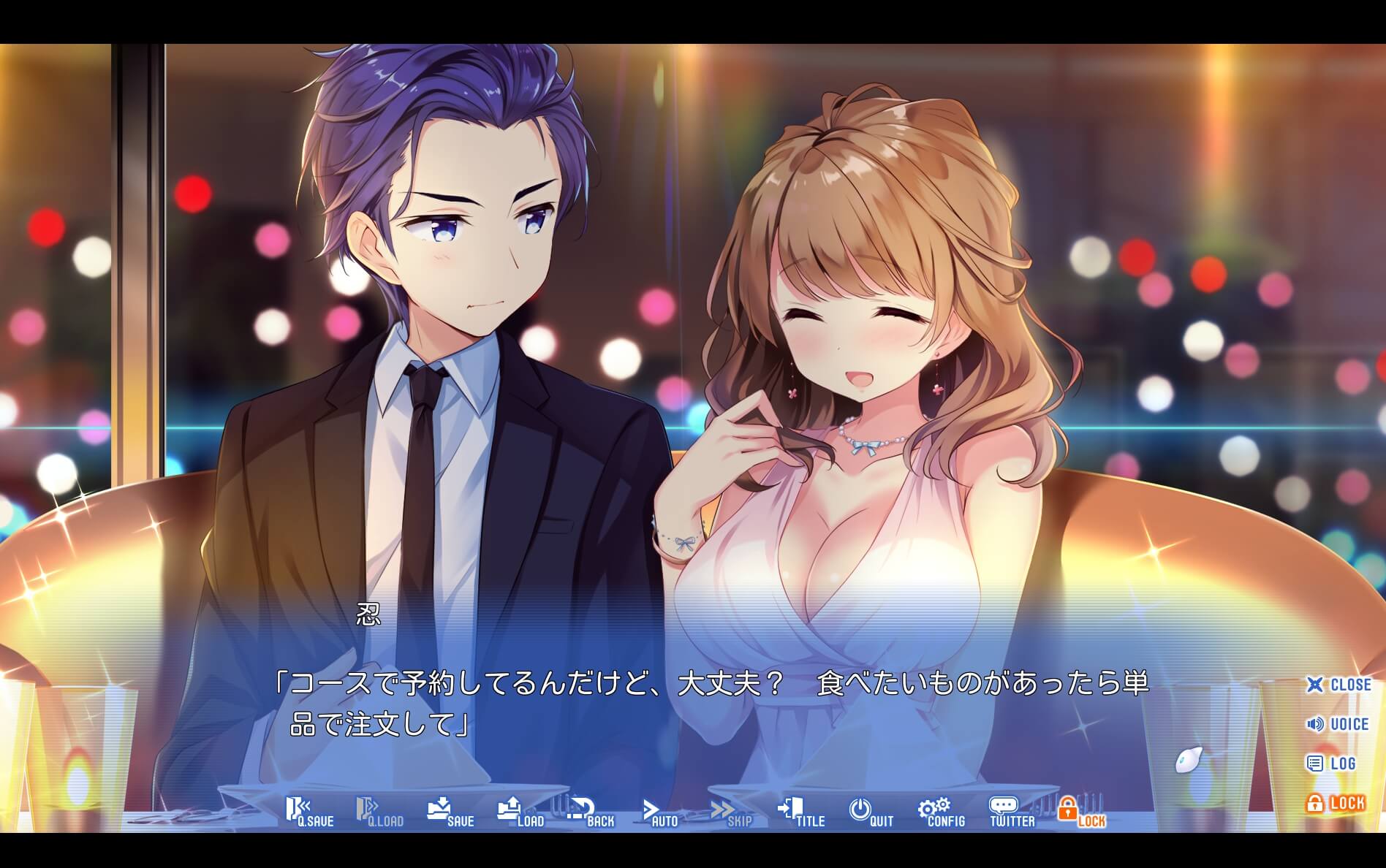
Shinoda Shinobu ran her family’s inherited convenience store into the ground, decided to just give up and head back to her hometown, but in the end the protagonist convinced her to stay, the two of them officially became a couple, and they decided to turn the store around together.
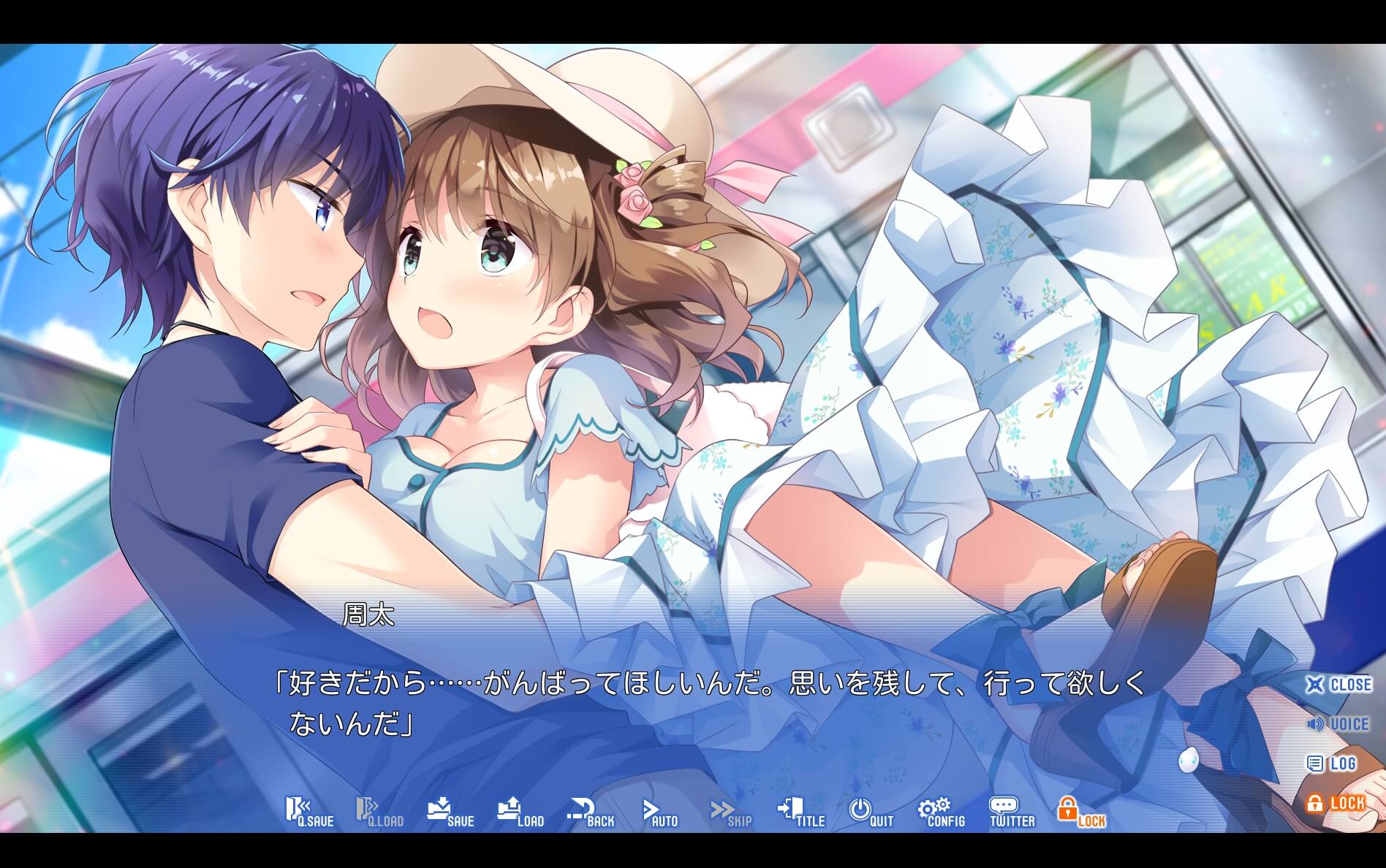
The protagonist’s arrival also brings Shinda Shinobu’s parents down from the countryside, and after a round of dealing with his in-laws, they too accept the guy as their son-in-law.
That’s when Oda Shinobu tells the protagonist: “I’m pregnant.”
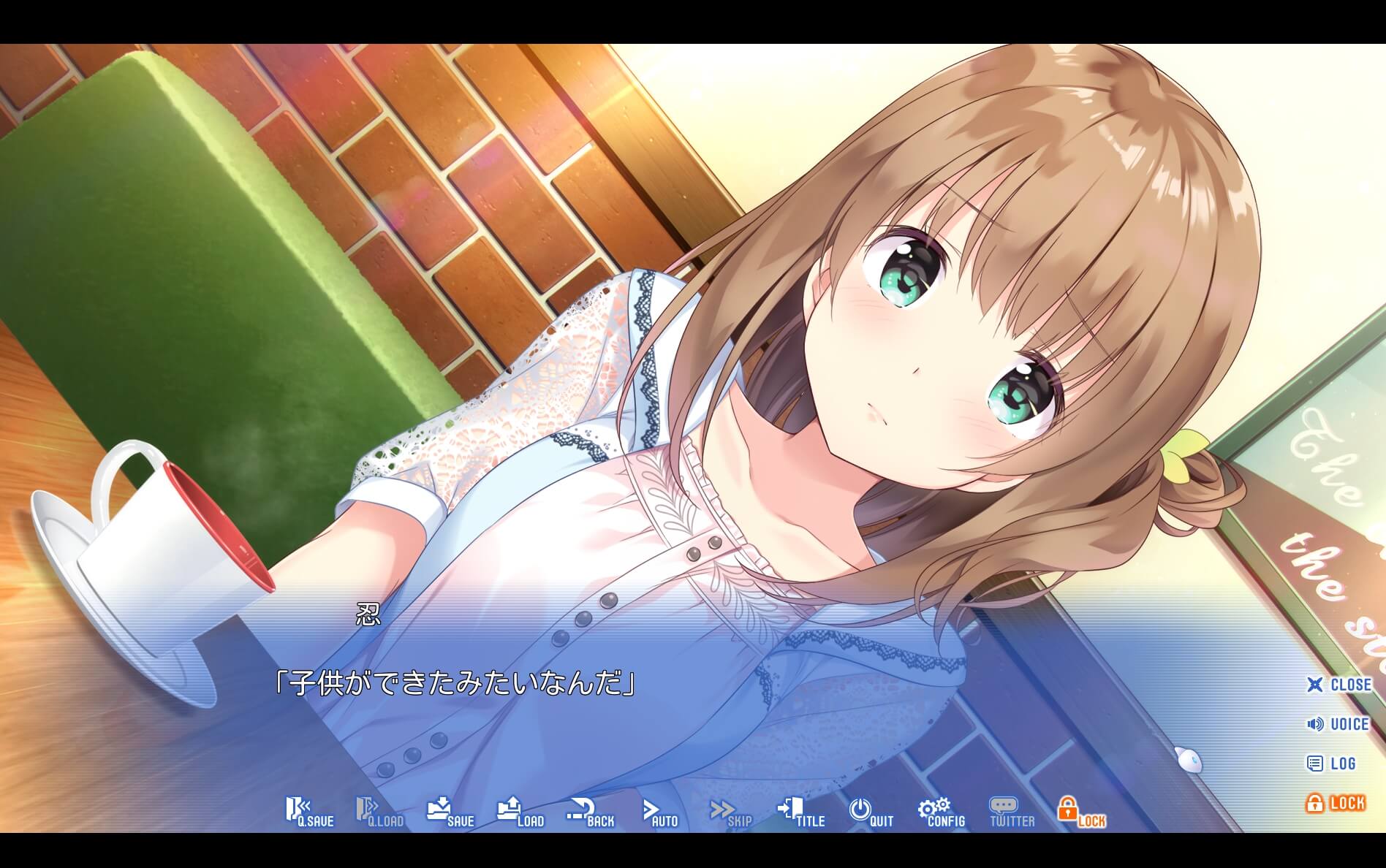
The protagonist decides to take responsibility as the father and let the child be born, so he starts working hard to figure out how to make money. Then that “Hoshi” girl shows up again, saying the protagonist is an “enemy of the world” and can’t be allowed to run around loose here. She tells him to make a decision: he has to go with her to the “Comet Agency Re-education Camp” for labor reform. Otherwise, she’ll humanely destroy him and everyone around him.
The protagonist really doesn’t want to leave Nitta Shinobu—especially since she’s pregnant—but he has no choice; they force him away.
Later, the protagonist undergoes modifications at some unknown “Comet Agency” and keeps taking part in these “combat tests,” helping out with troop combat training and whatnot — no real clue what they’re actually doing.
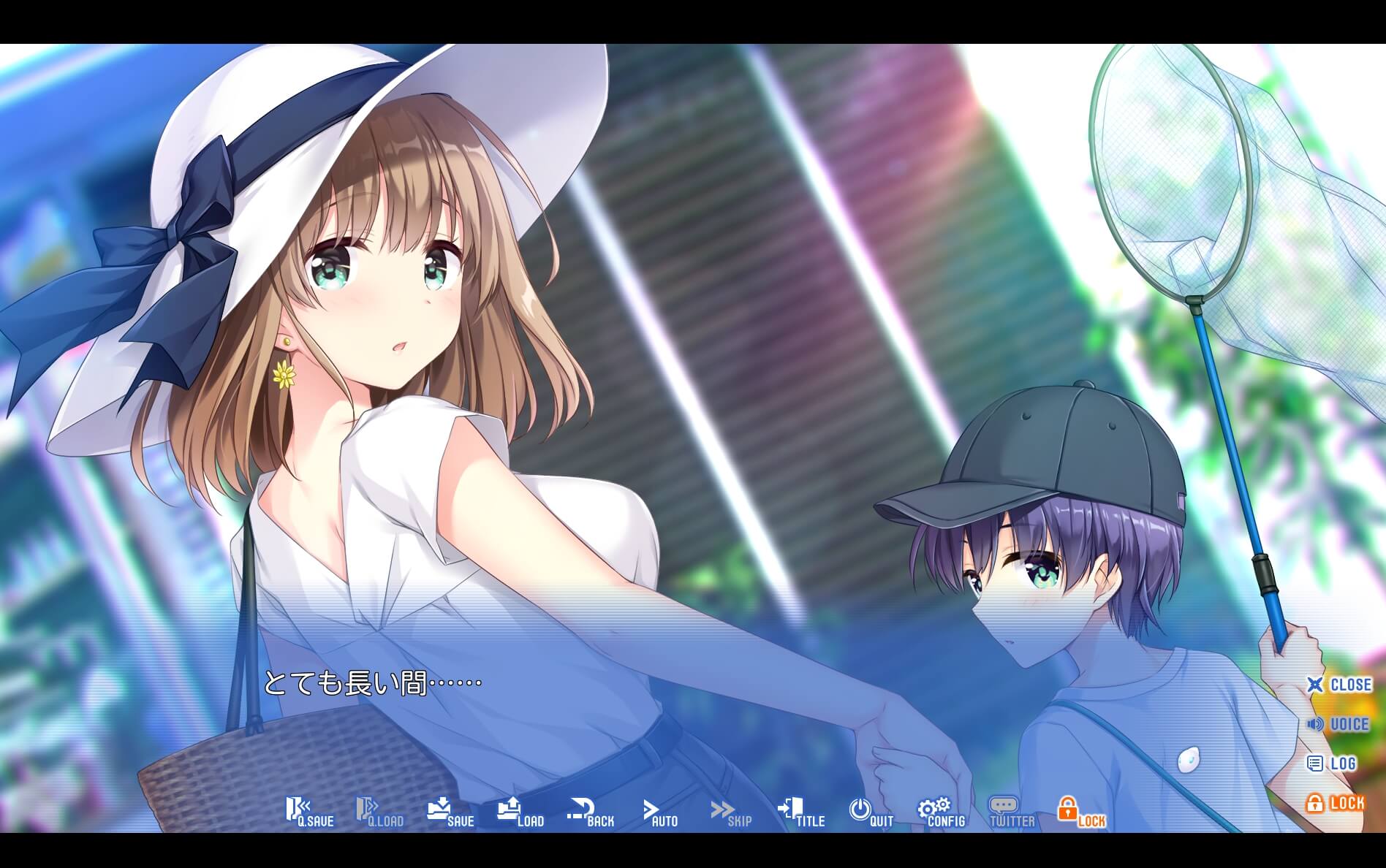
Anyway, who knows how many years passed, but the protagonist finally got let out, told he wasn’t the “enemy of the world” anymore. He goes back to the old neighborhood and finds Nitta Shinobu’s convenience store still open, with a little kid next to it—that’s probably his son, right.
Shinoda Shinobu still recognizes the protagonist, and says to him: “Welcome back.”
That’s it.
And with that, every character route without a story lock is done. Feel like it’s complete bullshit? Yeah, me too.
Me too!
And what the hell is this “Comet Organization” supposed to be?!
Since when did the protagonist become the “enemy of the world”?!
The fuck kind of telepathy is this?!
What the hell kind of girl uses superpowers to break into a military base on the Ogasawara Islands, spring the protagonist, and escape across the Pacific? What kind of Hollywood movie is this?!
That’s when Arimura Romi’s route unlocks. You’d think the truth is finally out, right?
You’re wrong!
有村ロミ
Arimura Romi is the main heroine, so you’d figure her story is deeply tied to the protagonist’s. Guess again — the plot unfolds just as flatly as before. The only difference is that the protagonist shifts all his focus onto Arimura Romi and starts pestering her nonstop.
But Arimura Romi instead turns into a matchmaker, starts introducing girls to the protagonist, constantly pushing him to go fool around with the other heroines. Those scenes are still there, but they’re at most a watered-down version of the earlier “individual routes”—a quick rundown of each heroine’s situation, especially the Telepathy ability that Sakashita Iina has.
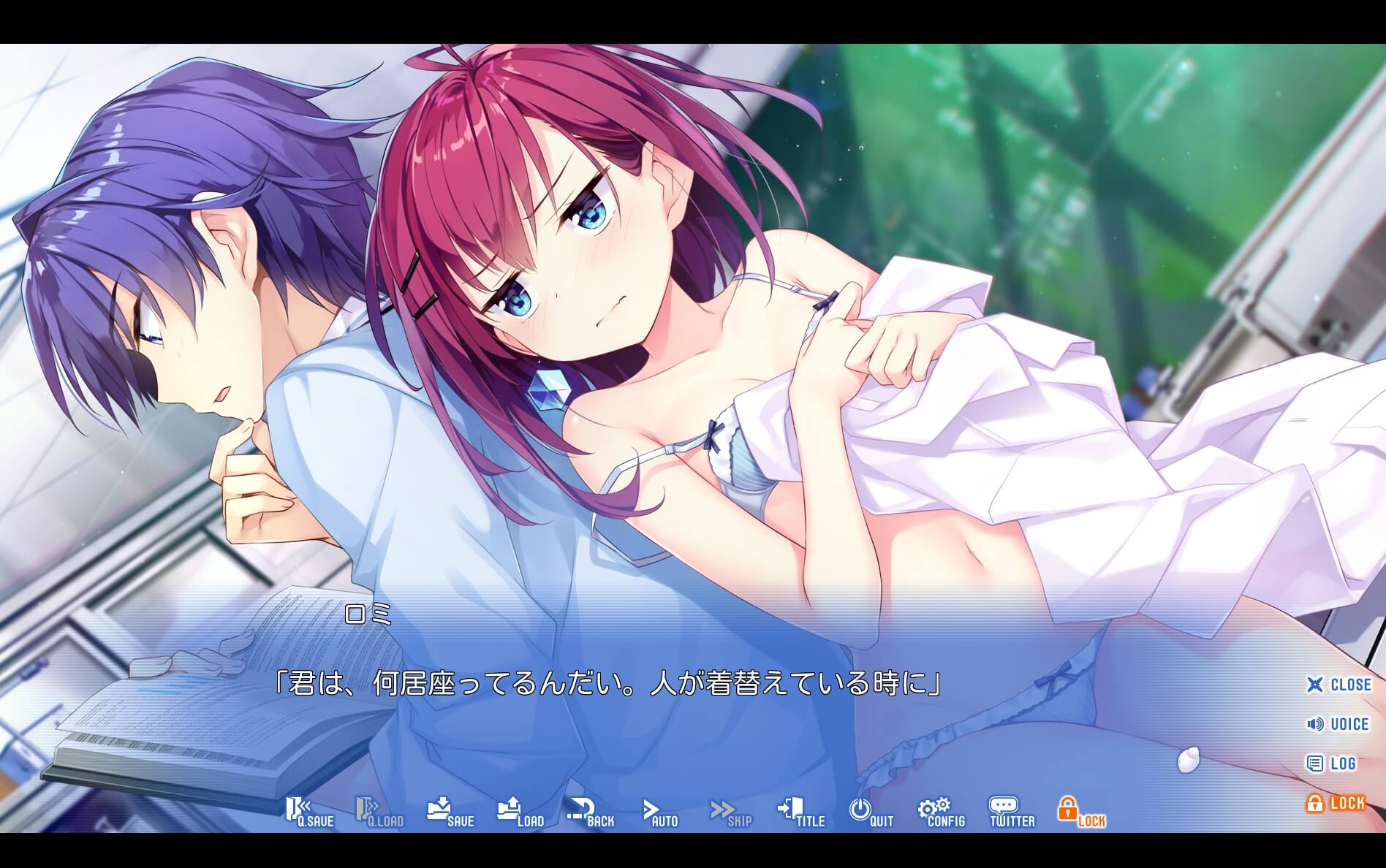
After that, the game enters its boring romance phase.
I say it’s boring because it really is boring. It’s been a long time since I’ve seen a Galgame where the romance is this awkward — most of it leans on forced saucy developments, and by the end the two of them still haven’t really established a relationship.
But what we do know is that the protagonist starts recalling some memories from childhood with Arimura Romi — like the two of them going to the Ogasawara Islands together, strolling along the beach, then accidentally witnessing an explosion, after which he has no idea what happened and ends up with “comet sickness.”
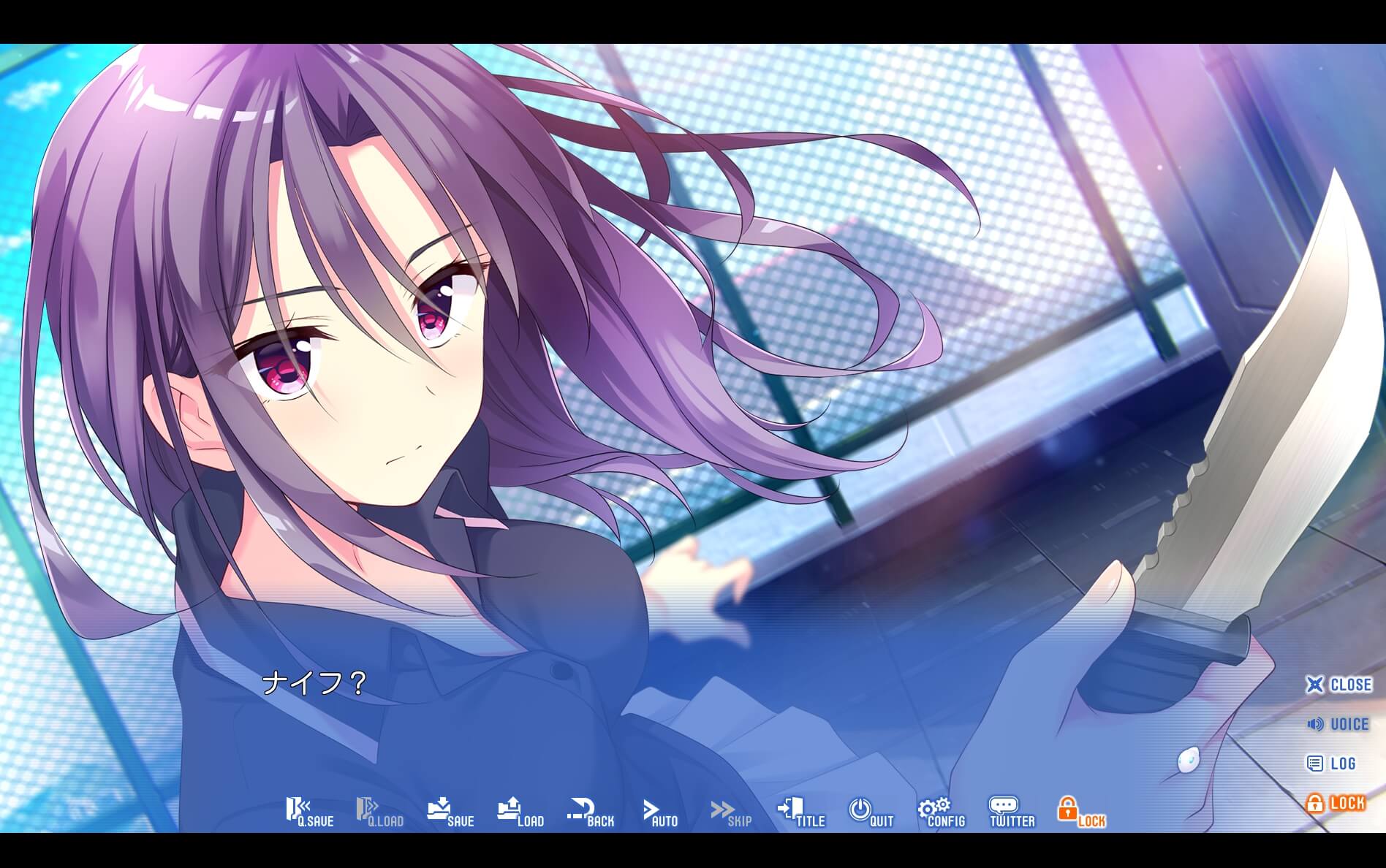
So to chase down the shadow of the past, the two of them head back to the Ogasawara Islands, where they find an underground research facility. And right then, those dumbasses from the “Comet Organization” show up again, decide the protagonist is an “enemy of the world,” and fire a guided missile to blow him up. The protagonist, not knowing what kind of bullshit superpower he’s triggering, burns himself up to save Arihara Romi.
And that’s it.
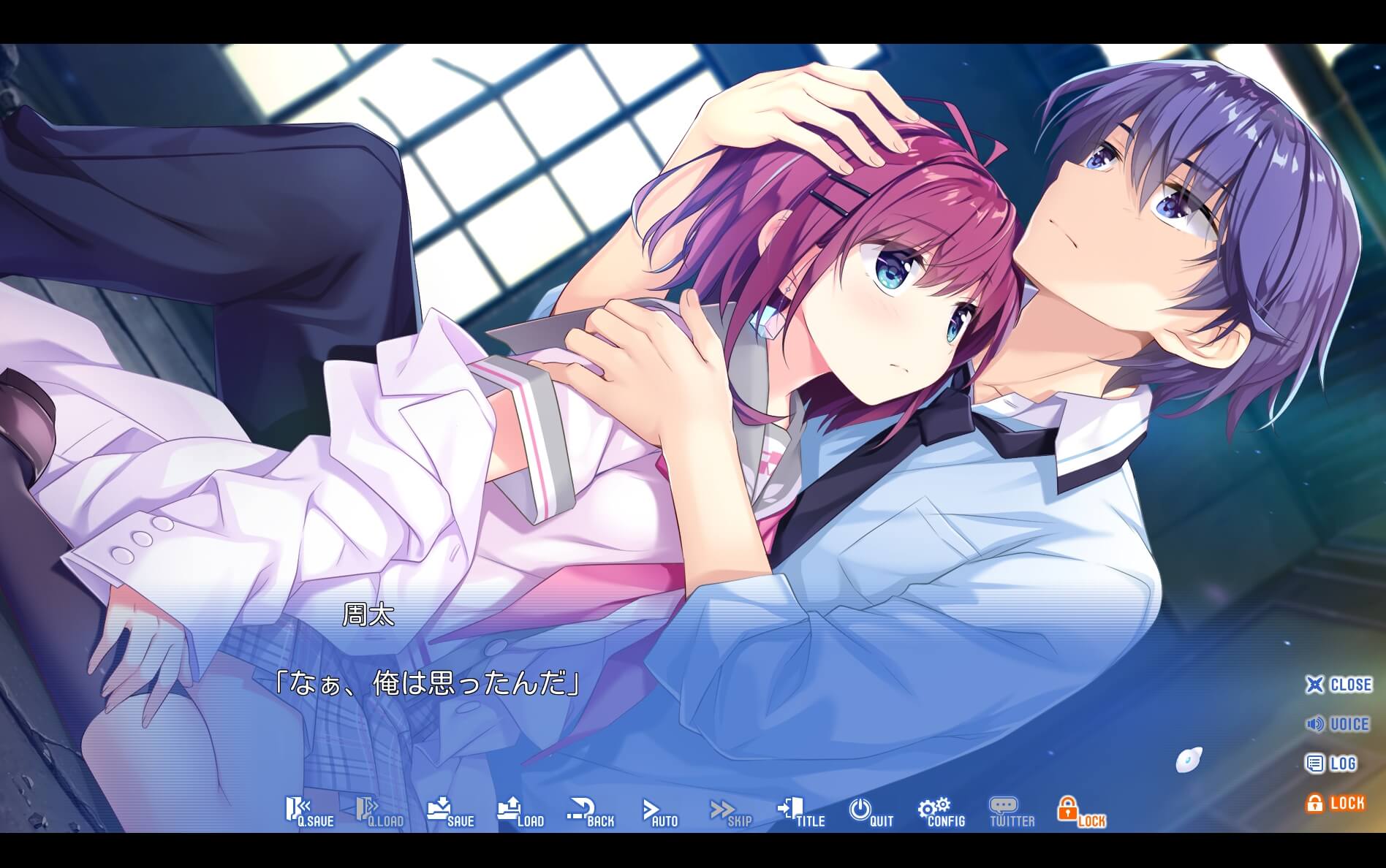
Yep. This is the dogshit Arimura Romi route Ending. The protagonist blows up, reduced to dust in the wind.
What awaits us next is the final Grand Ending.
Grand Ending
Rewind to seven years ago. Our protagonist is a bonafide genius — knows everything, understands everything. And naturally, he’s first in his year.
The protagonist’s father was also a famous scientist. He proposed the “theory of the existence of the soul,” arguing that the human soul is in fact real—that it can be viewed as separate from the body, and that the transfer of a soul is even possible.
But that sweet life doesn’t last. The protagonist gets knocked off the top of his year by a girl named Himura Akane, and then his father gets caught up in an “academic fraud” scandal.
The protagonist is not happy about this. Who the hell does Murakami Akane think she is? Why is she smarter than him? So he goes to challenge her, only to find out she isn’t actually that smart — she just works absurdly hard, grinding away at any problem she can’t solve until she gets it. In truth, her own mother considers Murakami Akane a bit of a “dumbass.”
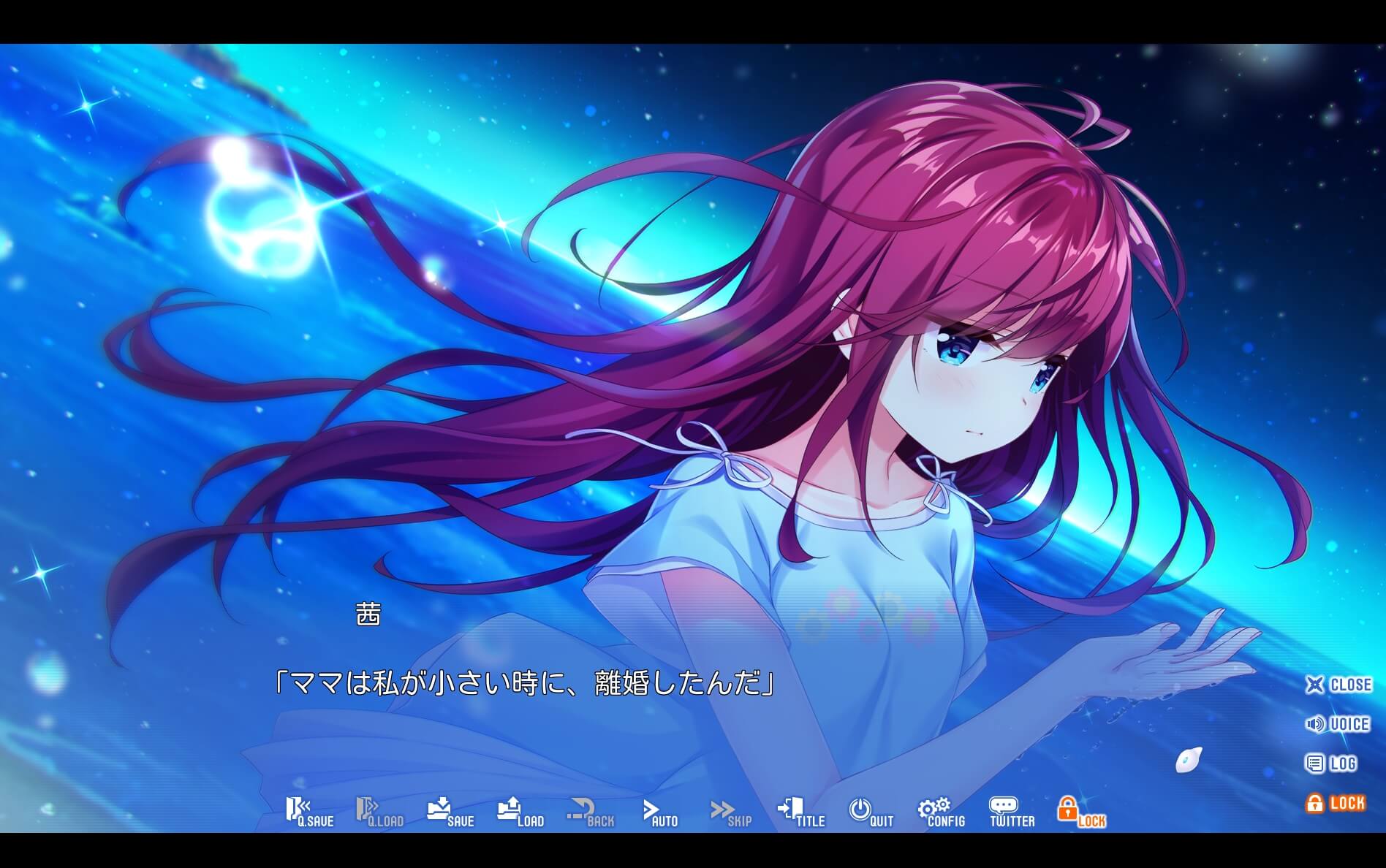
The protagonist comforts HIMURA Akane, telling her she’s not actually dumb — meanwhile, the protagonist’s father is facing a far bigger crisis. Reporters show up at the front door, classmates start whispering about what his father did, and they begin keeping their distance from the protagonist. Only Himura Akane stays by his side.
The protagonist can’t believe his father would fake anything—not after seeing how hard the man worked on his research. Then he remembers he has an uncle doing some kind of “comet disease” research out in the Ogasawara Islands, and figures the guy might be able to help. So he decides to head there. Hieda Akane hears about it and decides to tag along.
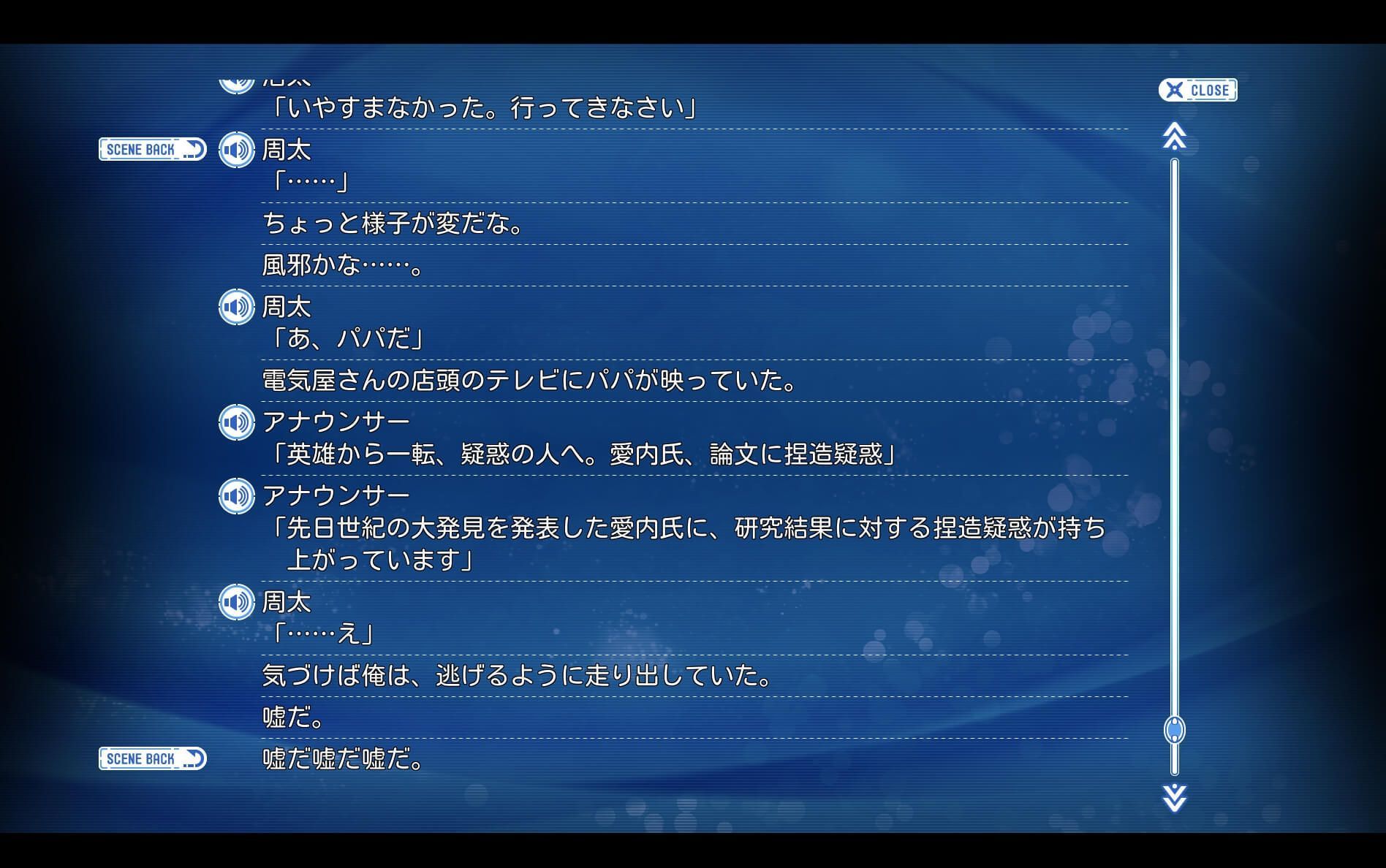
Turns out that after the two kids arrive at the Ogasawara Islands, before they even meet their uncle, they get caught in a huge explosion by the shore. The protagonist is blown away and sinks to the bottom of the sea, where he runs into a giant whale. The whale, of all things, can talk, and it says it’s handing him the “key to opening a new world.” Then a massive flood of civilization and knowledge pours into the protagonist’s brain—knowledge from a higher civilization beyond the universe—and just like that he becomes a super sage.
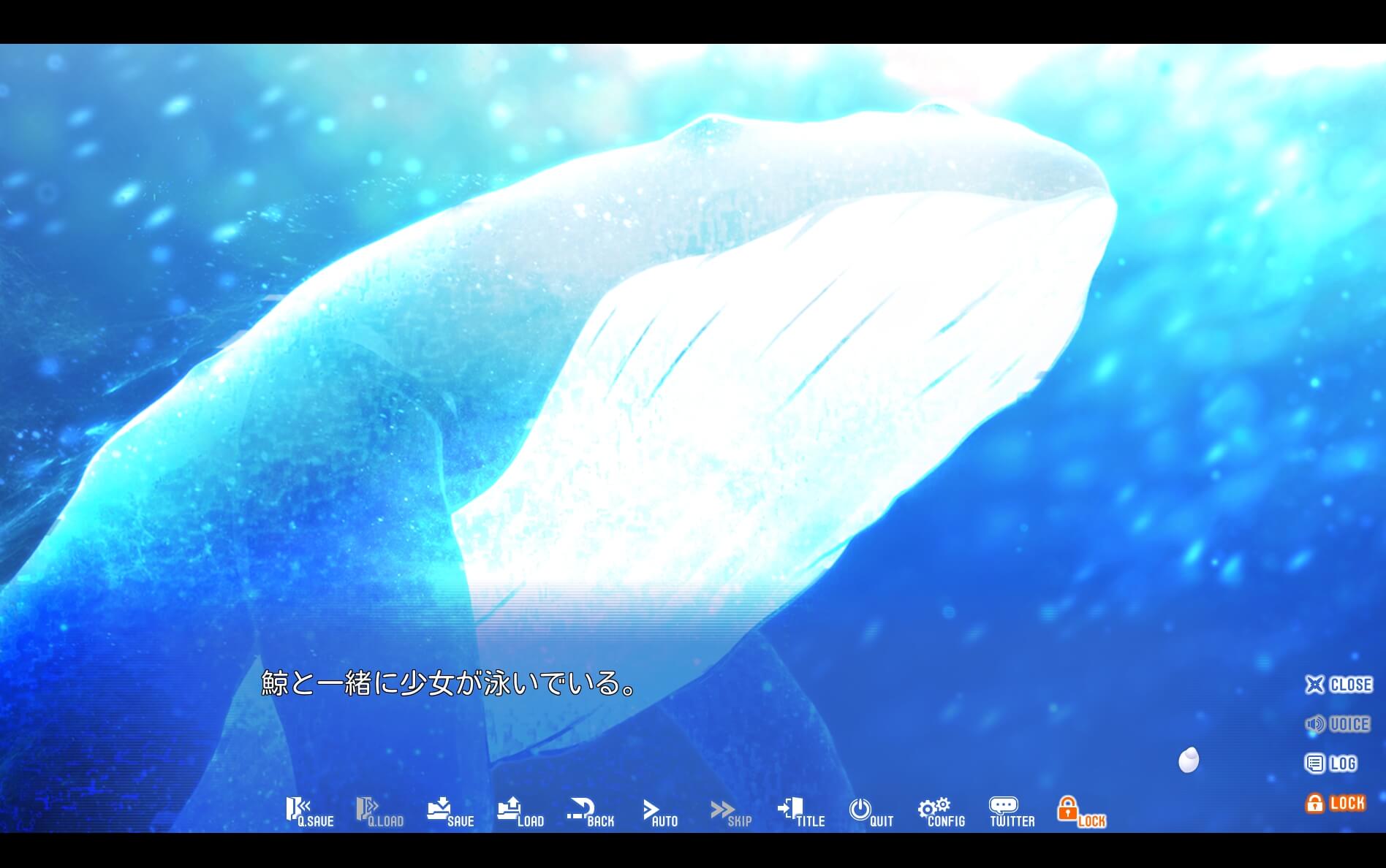
When the protagonist comes to, he finds himself lying on the beach, and decides to head home with Akane Hikomura instead of sticking around. But when he gets there, he discovers his father has hanged himself.
After that, the protagonist returns to reality from the dream of seven years ago.
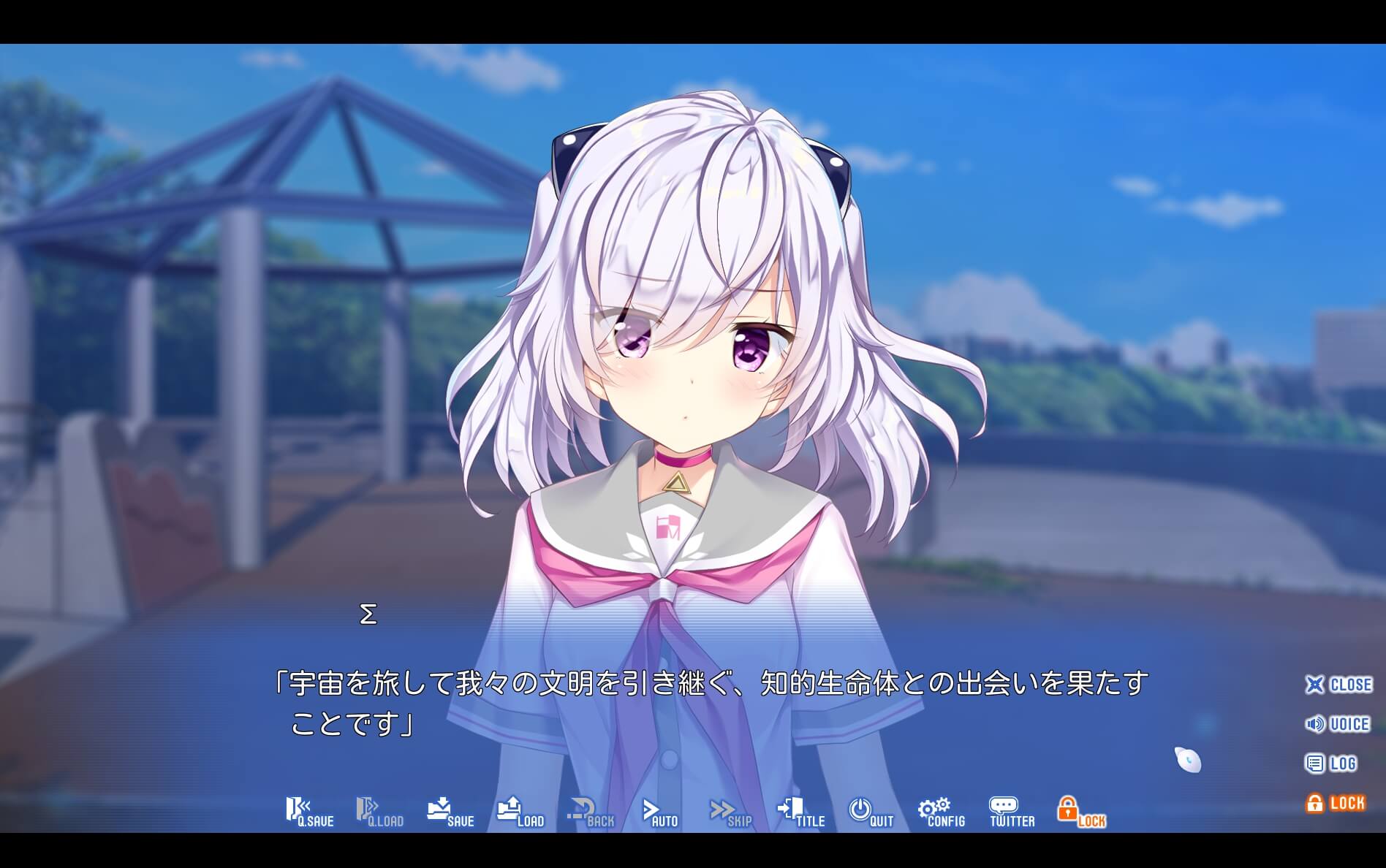
In reality, the protagonist is already dead. But a girl named Sigma appears before him, saying she’s actually the guide AI of some alien civilization. Their civilization was destroyed, so to preserve the seeds of their culture, they shaped the crystallization of their civilization into a whale and set it drifting to Earth, where it became a meteor years ago, fell into Earth’s oceans, hid itself away, and waited for the right person to find it.
That meteor’s fall also caused some of the energy to bleed away, affecting the humans nearby and granting them special abilities. People came to call it “Comet Sickness.”
Years ago, the protagonist found a whale at the bottom of the sea and got hold of the whale’s key. He had, in fact, already inherited everything from that civilization. Now all that’s left for him is to choose: “open the door to the new world, or don’t.”
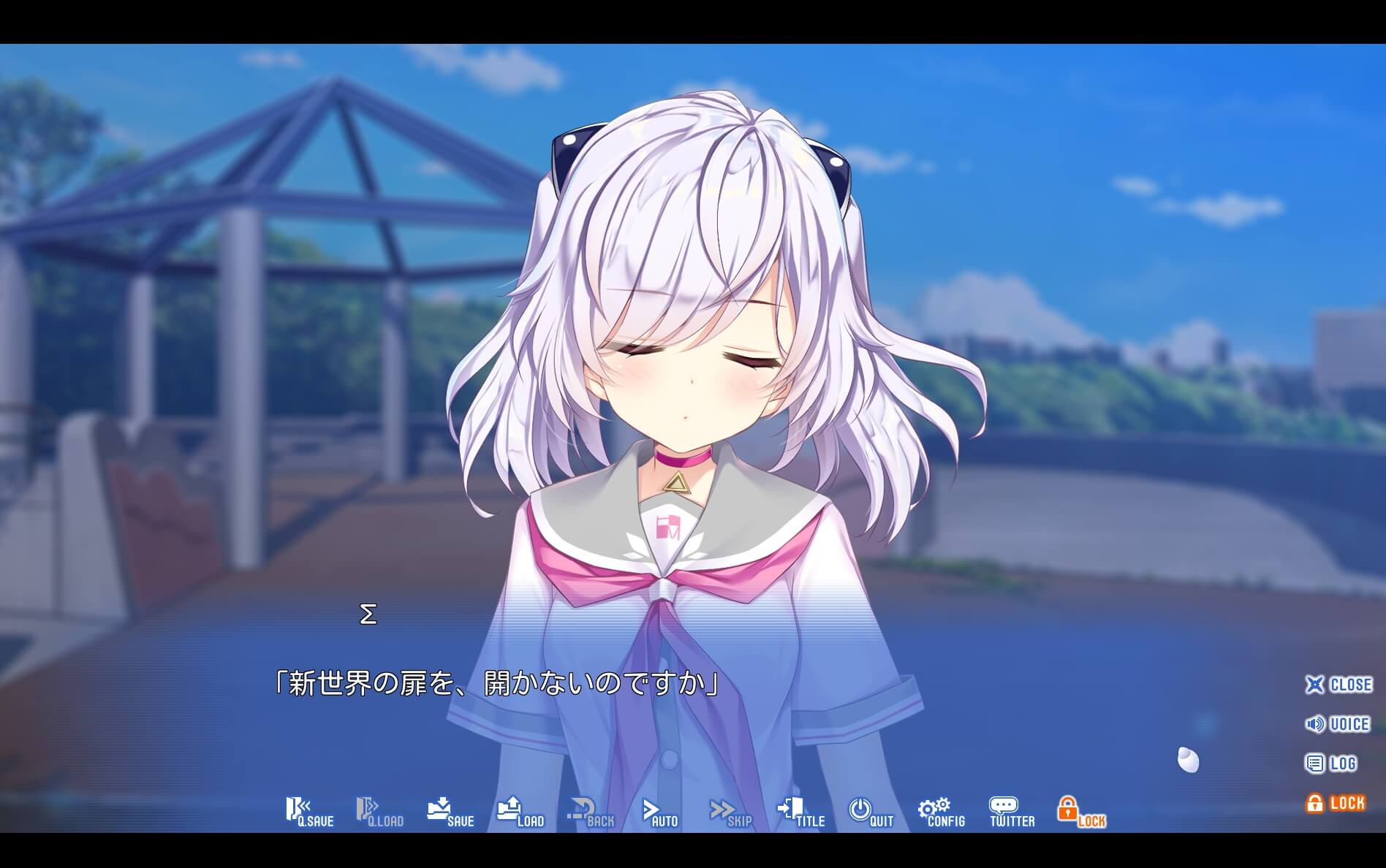
“Opening the door to a new world,” so to speak, means spreading the advanced civilization brought by this whale to every person on Earth. Most people will probably die, but those who remain will be “new humans” who carry a new civilization, and it could instantly speed up Earth’s civilizational development by several thousand years. Not opening it means sealing away that new civilization and keeping the status quo.
In the end, the protagonist decides not to open it for the time being—he’s too worried about Arimura Romi’s safety.
With sigma’s help, the protagonist injects his soul into a little robot at home called “Einstein,” and pilots it around. It just so happens to stumble onto “Comet Agency,” which is about to nab Arimura Romi on suspicion of being connected to aliens. The protagonist shows up in the nick of time and drives them off. But the other side recognizes him too: the guy inside the “Einstein” robot is none other than “Shuuta,” who got blown up a while back.
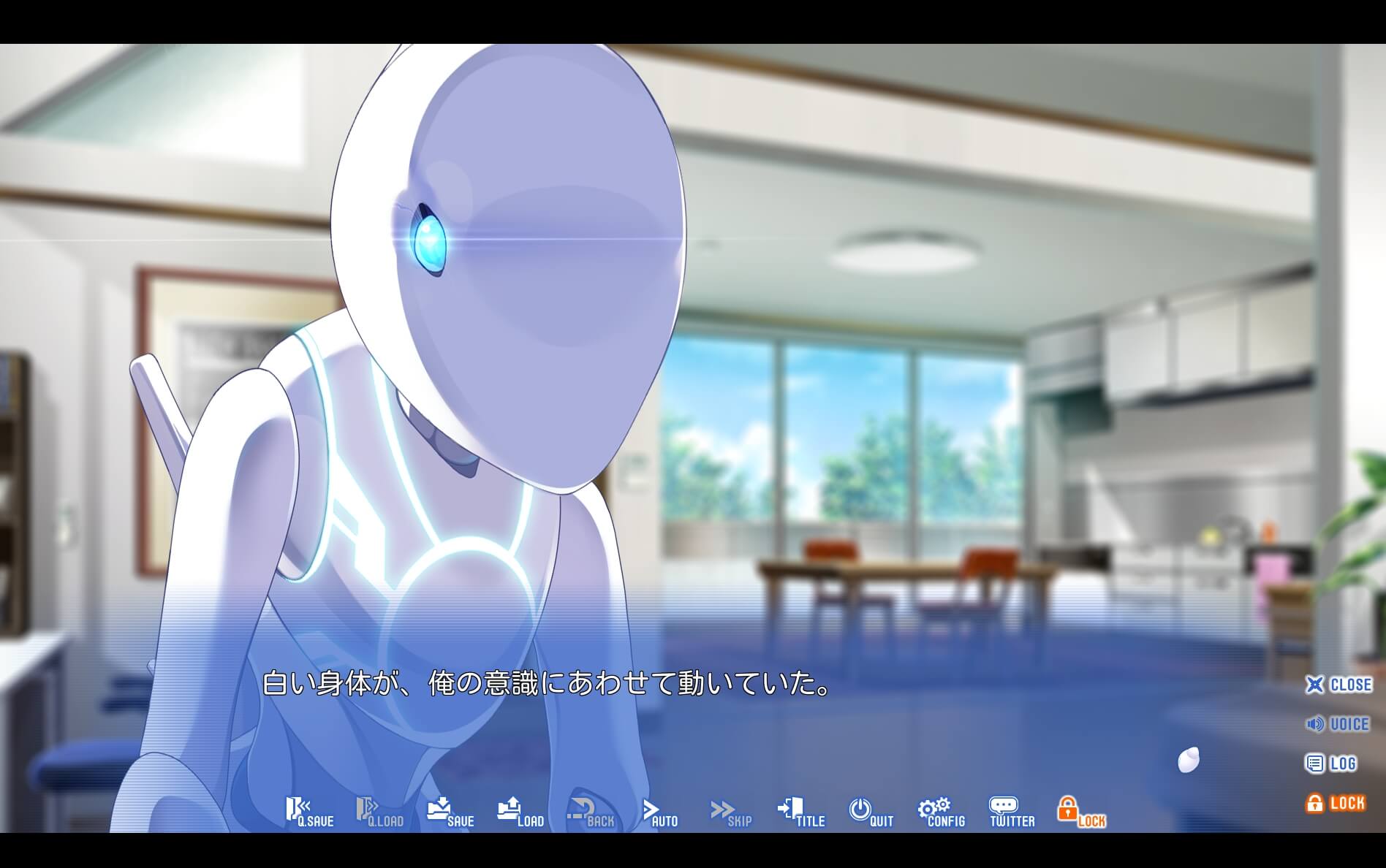
Next, the “Comet Organization” sends all sorts of people to fight him, trying to destroy the protagonist. They’ve decided he’s the “enemy of the world.” And honestly, fair enough—he’s got the key in his hands, and the moment he opens the door to the new world, the Earth gets rewritten and who knows how many people die.
The combat vanguard is a robot called メシア — checking it, it’s basically Sakashita Iinana after being brought over to the other side. The two of them fight for ages with no real result, and right when “Comet Organization” is about to send in more troops to finish off the protagonist, a message suddenly comes in from sigma: someone has opened the “Door to the New World.”
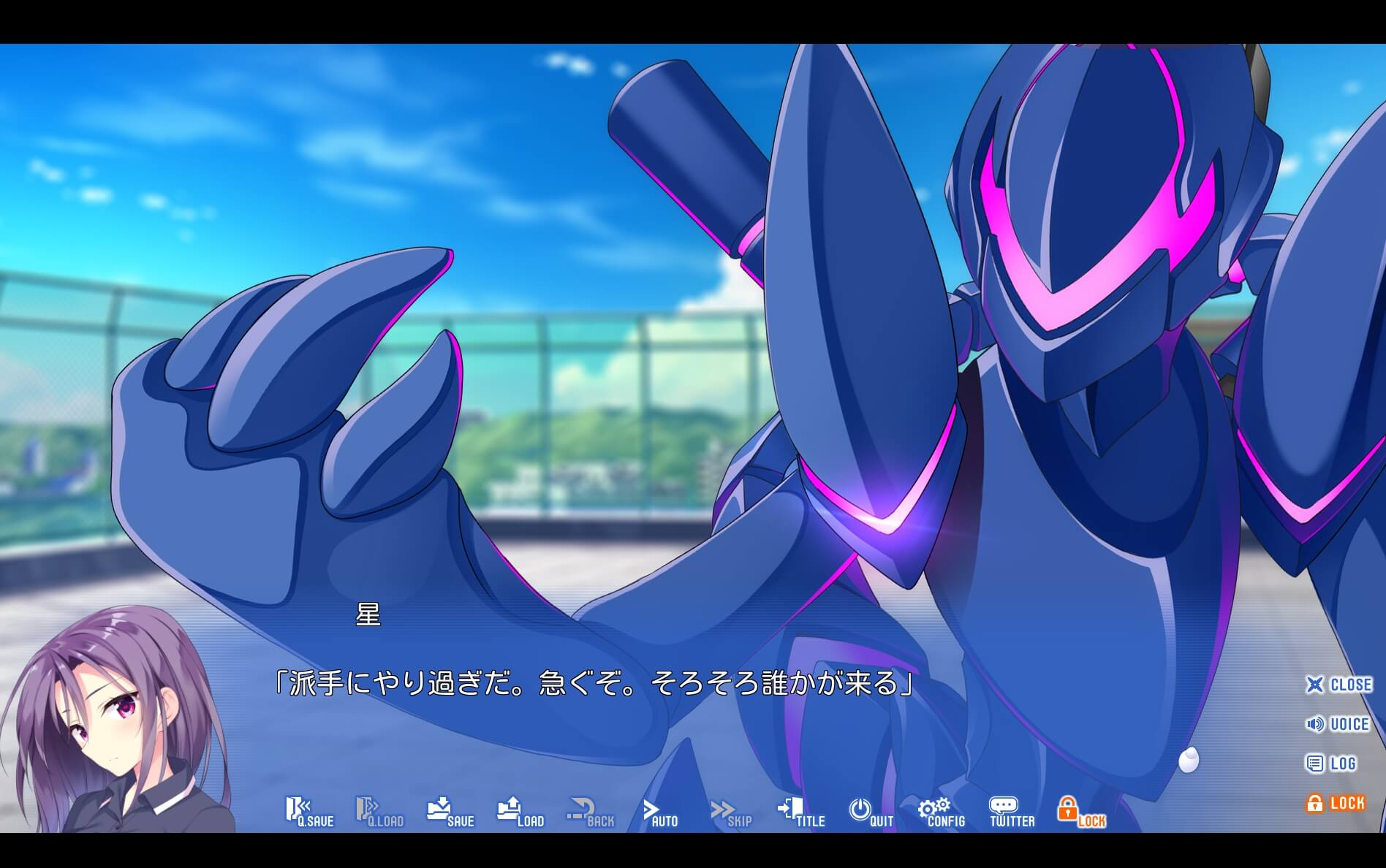
The protagonist is shocked, so he quickly follows the “Comet Organization” group to the Ogasawara Islands, and sees that the big boss who opened the “door to a new world” is none other than himself.
Turns out what was inside “Einstein” at that point was actually a split-off soul of “Shuuta,” and the real protagonist’s choice was to “open the door to a new world and rebuild the Earth.” He’d had enough of this ugly world and wanted to tear it down and start over. In the end, after a barrage of speeches and a combined assault from the split protagonist and the pile of heroines, the big-boss protagonist falls, and the “split” protagonist is what’s left.
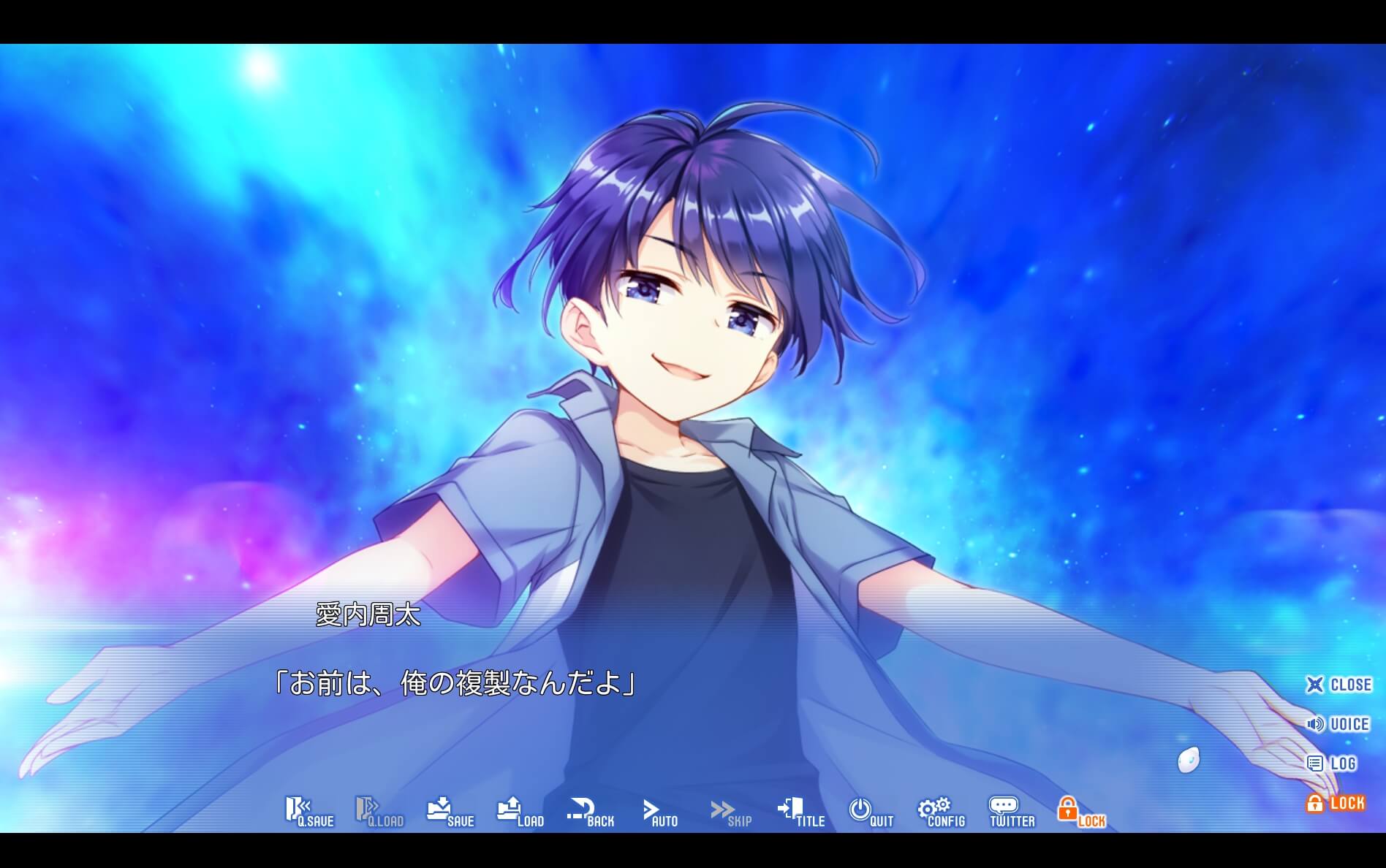
Finally, to show that the protagonist is actually a good guy, Arimura Romi says she could feel his goodwill all along — that he deliberately created a separate copy of himself, hoping that copy would lead everyone to stop him, and so on… blah blah blah. It’s kind of like the way Wrath of the Lich King redeems Arthas at the end: the protagonist still had one last sliver of conscience, and he gave everyone a chance to beat him.
Anyway, the protagonist’s clone sticks around, but the protagonist only exists as the clone’s soul — his body is already gone. That’s when the protagonist’s uncle shows up. He reveals that the body is still around — it wasn’t reduced to dust in the explosion back then; he’d collected and preserved it (what the hell kind of hobby is that). If the protagonist is willing, they can transplant the soul back into the body and he’ll be revived.
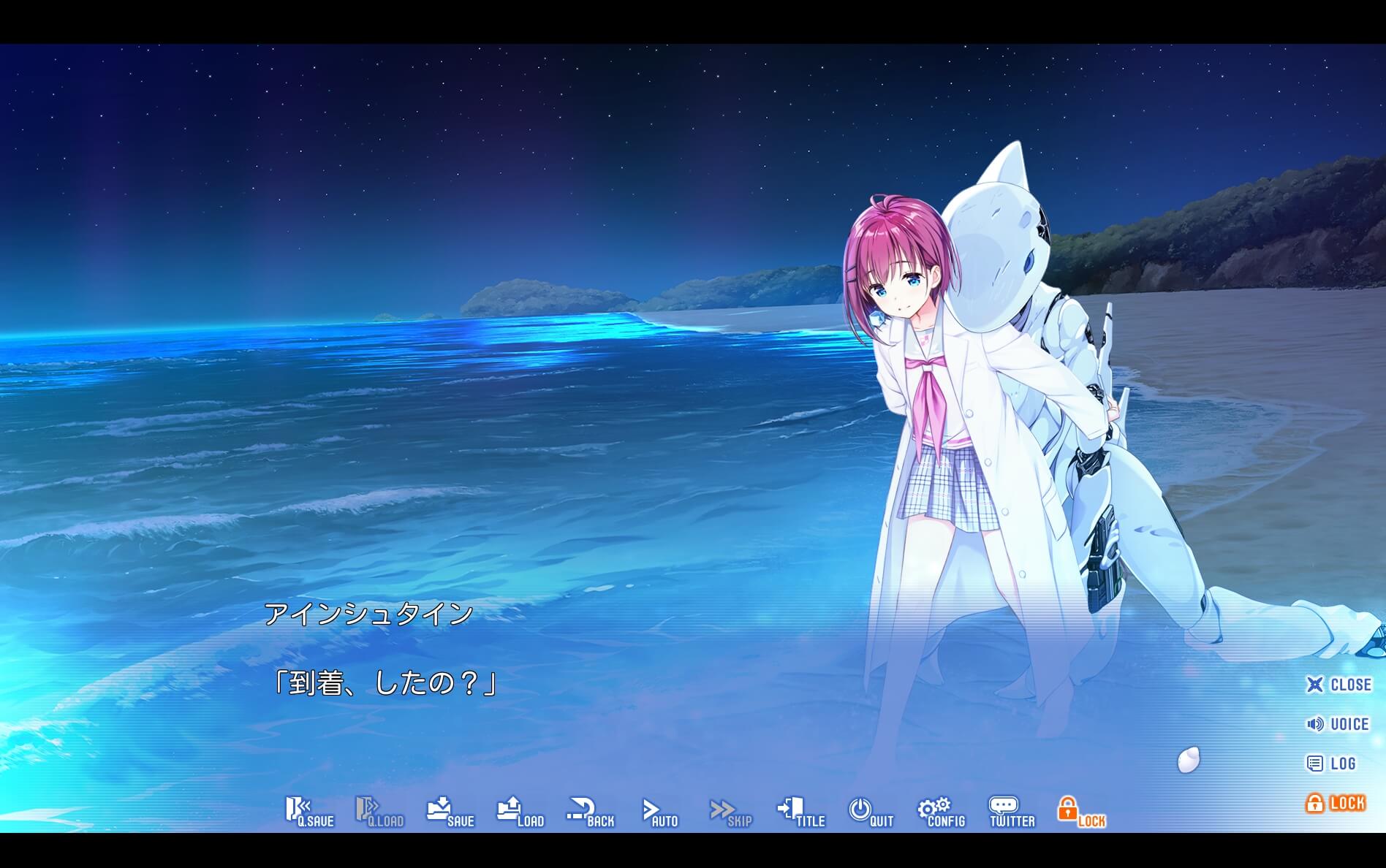
But the first thing the protagonist does after coming back is demand answers from his uncle: why did he kill his father back then?
So it turns out the father didn’t kill himself back then — he was murdered by the uncle. The uncle claims he was acting entirely under the guidance of something called the “Miko.” They originally founded the “Comet Organization” to solve the Earth’s “Comet Disease” problem, and along the way they discovered an alien civilization and felt its immense power. As the research went on, the Comet Organization built an AI to solve things, and that AI was the “Miko.” Eventually the Miko grew stronger and stronger, until it became the head of the Comet Organization itself, wanted to get out of the lab, and caused that explosion seven years ago (the one that blew the protagonist into the sea where he saw the whale). After that the Miko became the absolute ruler of the Comet Organization, and the protagonist’s uncle obeyed her every word. The Miko said the protagonist’s father was an enemy of Earth — because he’d discovered the existence of souls, he had to be eliminated — so the uncle went and did it…
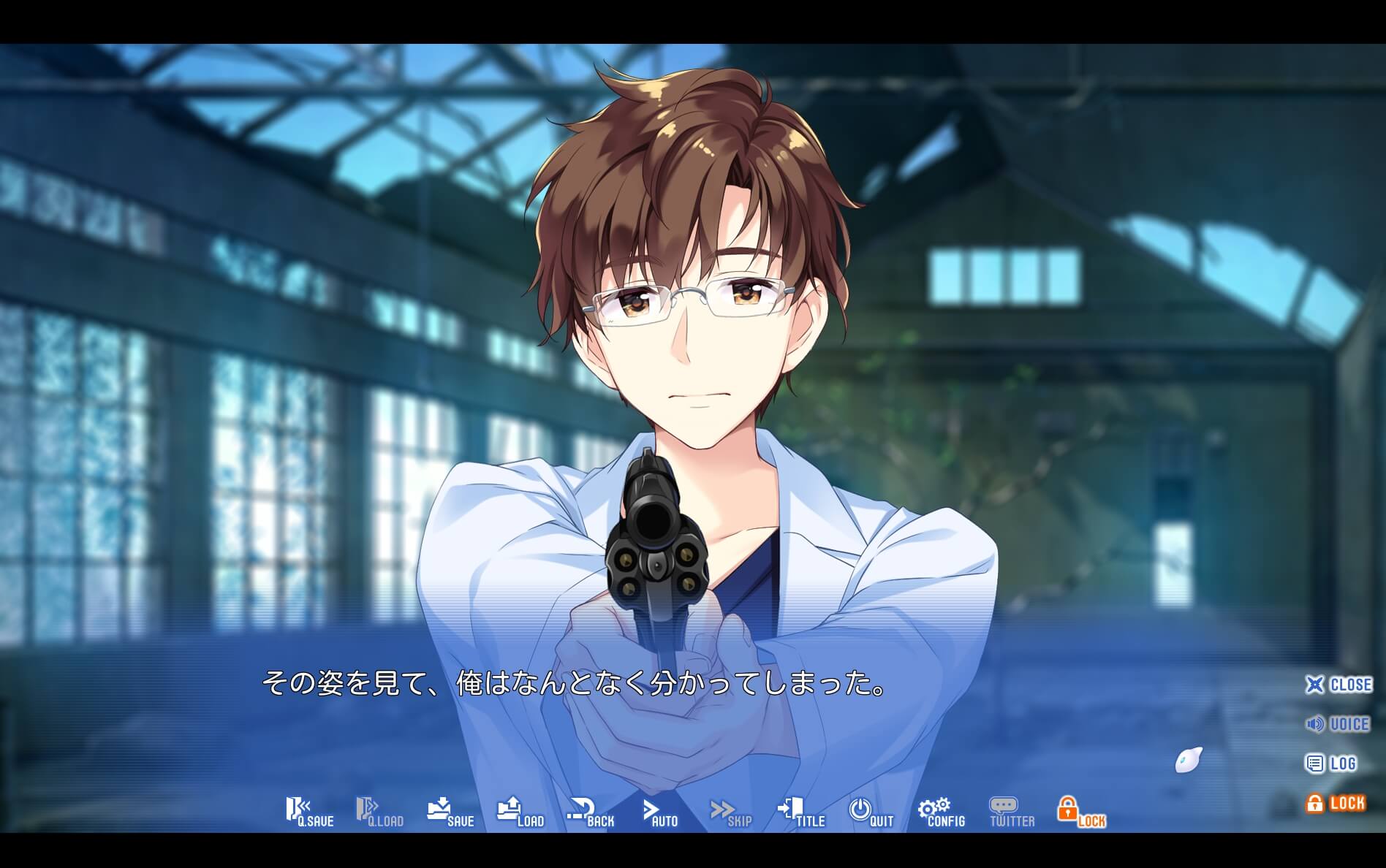
In the end the protagonist confronts his uncle, and then has to face off against the “shrine maiden” too. But that’s when the uncle realizes the protagonist’s father never fully died — his soul had been warning him all along: “Don’t lay a hand on my son.”
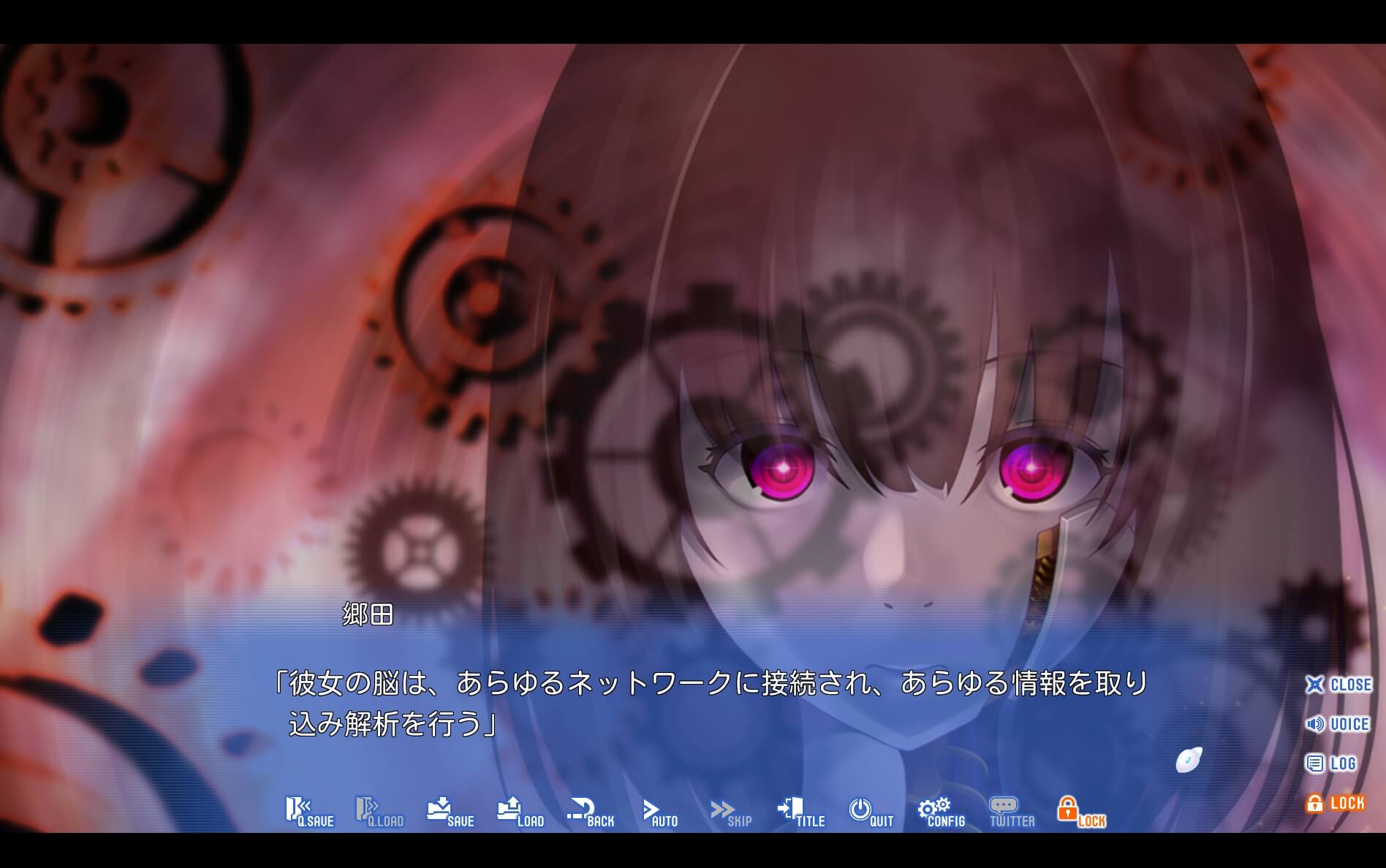
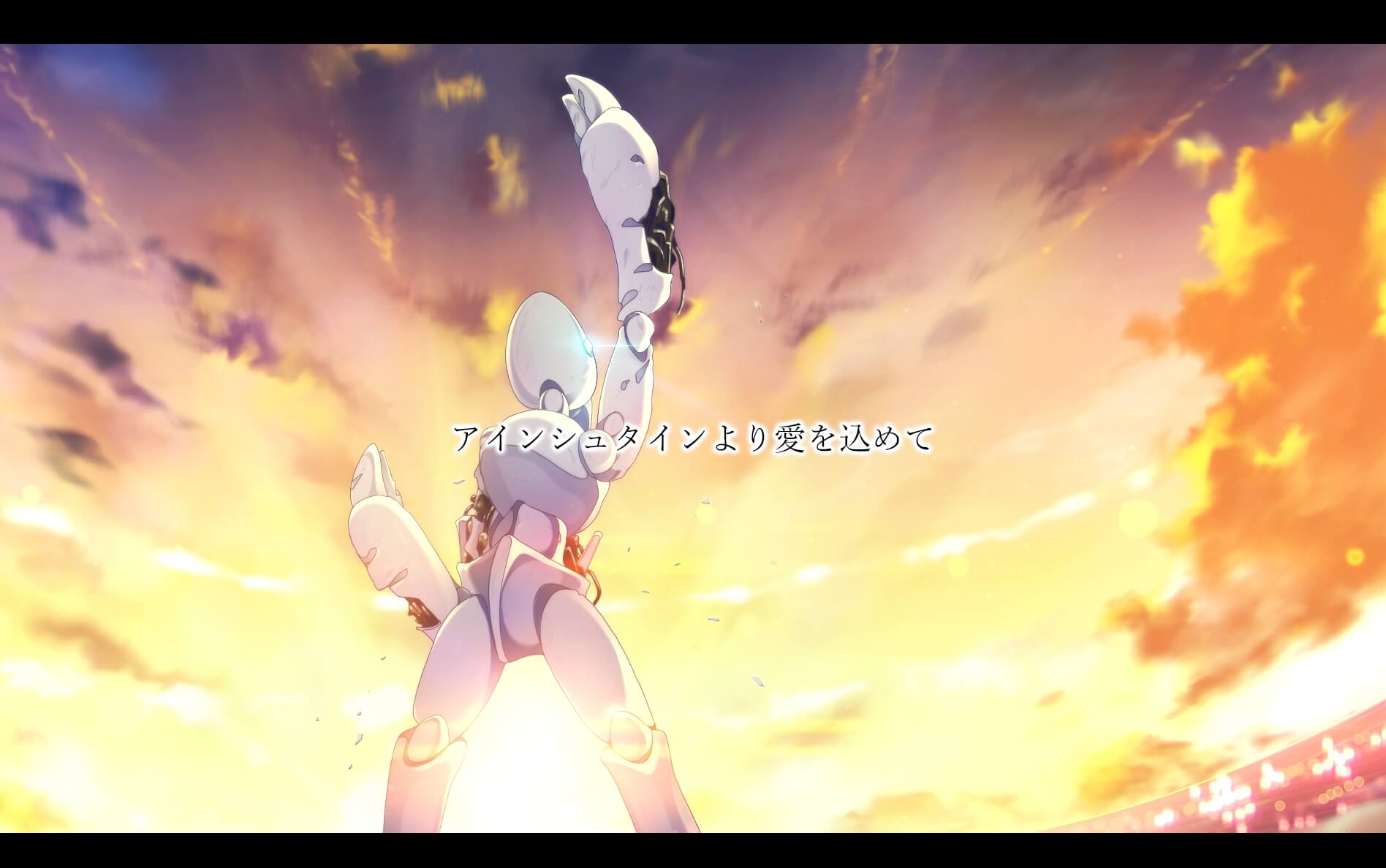
And that’s when the protagonist finally feels his father’s love too — the game caps it off with “Love, from Einstein,” which turns out to be good old paternal love, and then it just cuts to black.
In the end, the protagonist and Arimura Romi never actually became a couple, and the final letter Arimura Romi gives the protagonist expresses her gratitude to him—and also confesses her “love” for him.
And just like that, the whole game ended for no good reason.
Impressions:
Honestly, I have a hard time putting my feelings about this game into words.
Because it’s way too much of a Frankenstein’s monster. The common route straight out of Hatsuyuki Sakura, the individual routes from Majo Koi Nikki, and then… a Grand Ending that’s basically Steins;Gate’s cousin—I mean, Robotic;Notes.
The common route felt pretty good — there was a bit of that “high-IQ people don’t understand human feelings” vibe. Then the individual routes hit, and they were extremely half-assed. Every heroine route is short, and each one ends with something baffling. Like, one minute it’s a straight romance, then suddenly it turns into some chuuni-ass “underground organization saves the world” thing. The biggest takeaway is “this doesn’t feel like something Niijima Yuu would write” — it reads more like the usual tropes you’d expect from a science-fiction game.
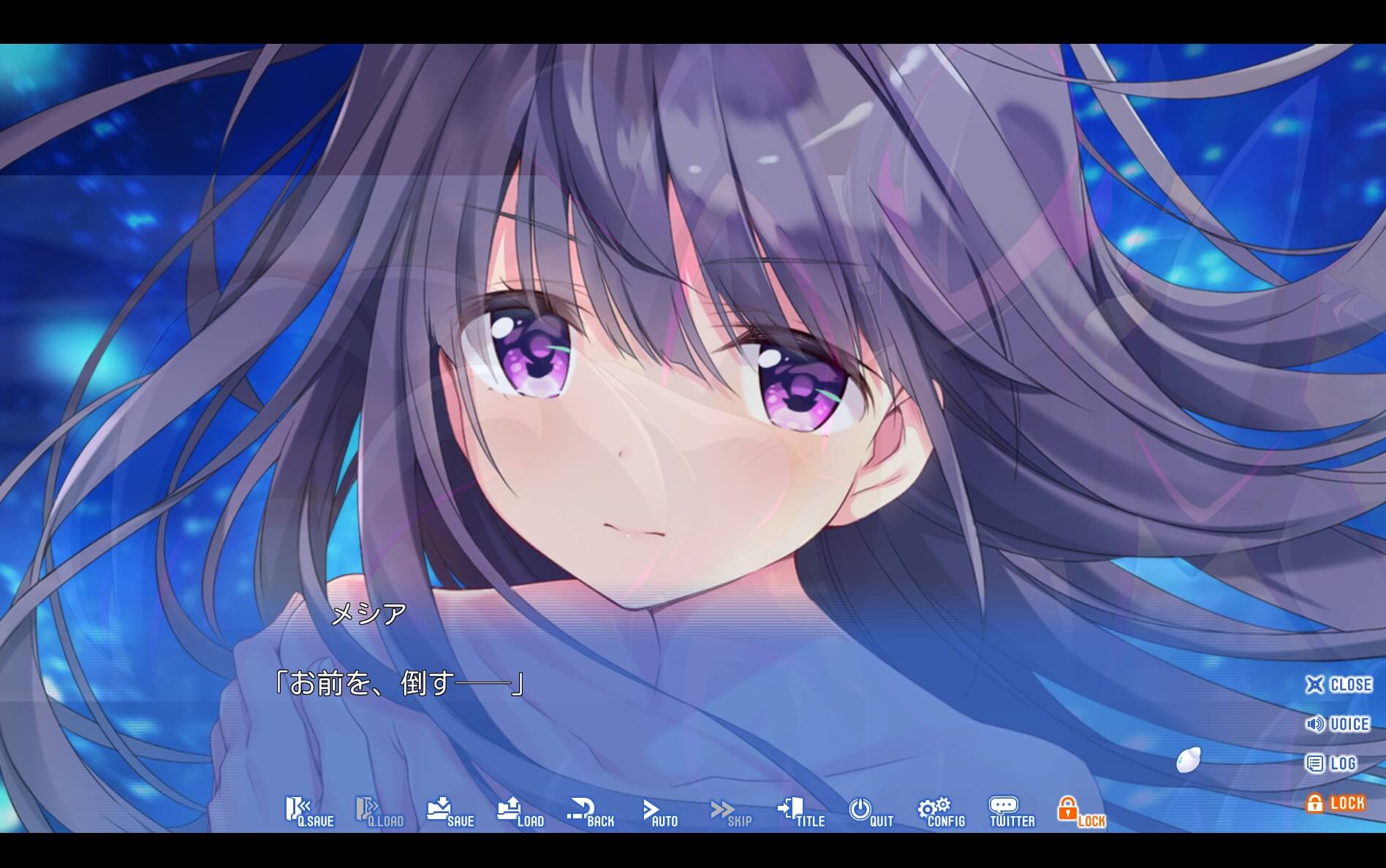
The game reaches its Grand Ending, and only then does the whole story finally come together — but by that point it’s clear the game has drifted miles away from that “geniuses who can’t understand the human heart” feeling it built up at the start. It’s turned into a straight-up inferior version of Robotic;Notes.
Why do I call it a degraded version? Because the fight scenes are flat broke, and cheap as hell on top of that! The mechs look like garbage too. What the hell were they even doing?!
Anyway, by the time I hit the ending, the story had completely drifted away from what I’d been expecting going in. No idea if the marketing was deliberate false advertising, or if Niijima Yuu himself was chasing that kind of “wild twist” on purpose. And even setting all that aside—look at the original promo copy for this game. Would you ever have guessed it’d end up feeling like aliens duking it out with robots?
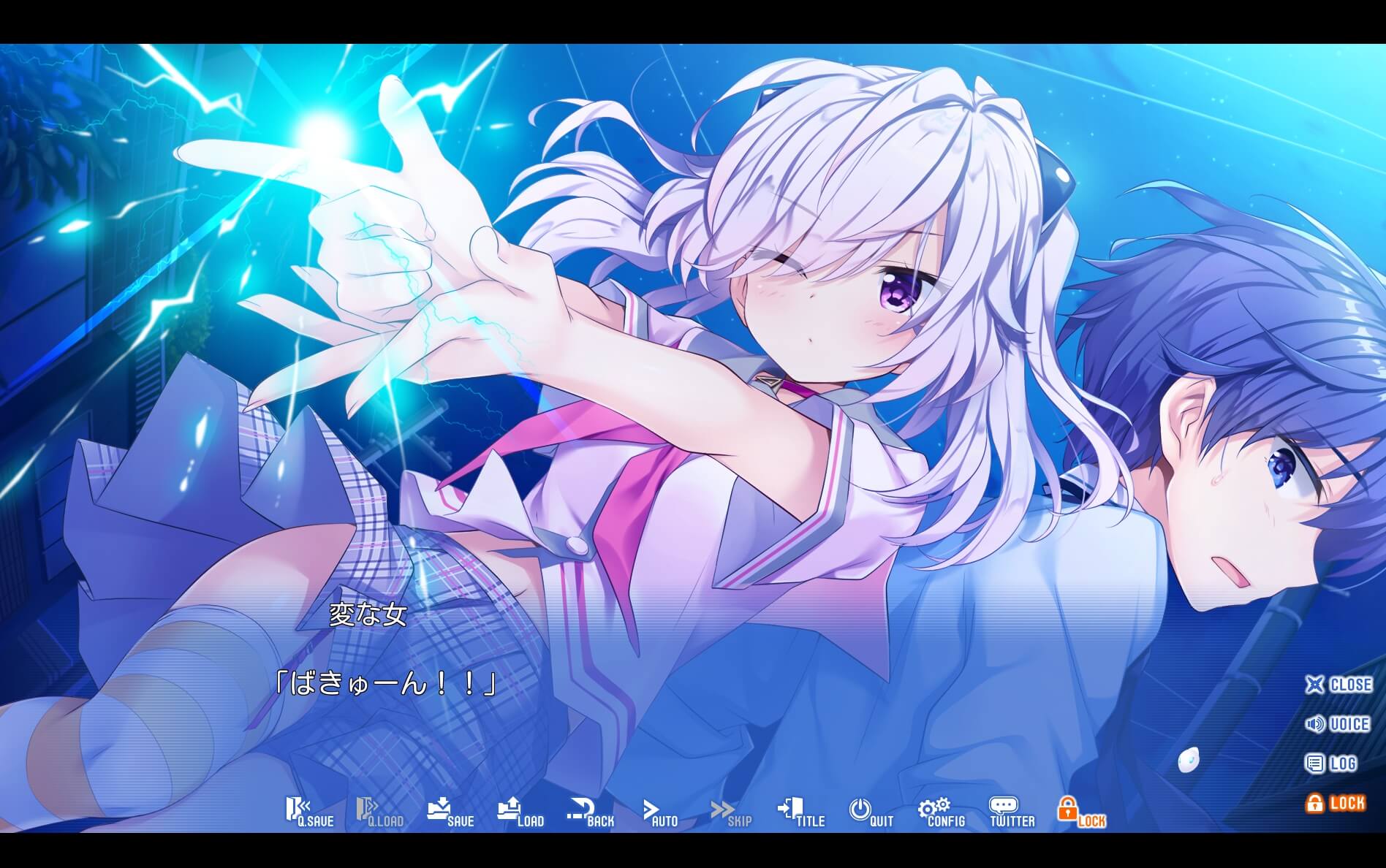
I figure Niijima Yuu probably wanted to break out of his own mold and write something more high-energy and sci-fi, but let’s not forget that’s not his strong suit. What he’s good at is still “emotional introspection between men and women”—like the heroine saving the protagonist in Hatsuyuki Sakura, the love at first sight and the mapping-and-satire of Galgame players in Majo Koi Nikki, and that final open-ended blank about the back-and-forth of feelings between a man and a woman in Shin’ai Kanojo.
Put simply, Niijima Yuu’s stories always leave you thinking about something, reflecting on something. And he doesn’t spell everything out at once—he leaves some blank space and lets you fill in the rest yourself. That’s been the appeal of his storytelling all along. The romance stories he writes never end as a 100% Happy Ending, but they’re a Good Ending that genuinely stays with you.
But then you look at this game, and what the hell even is this?
I won’t even get into the pileup of twists in the Grand Ending—it’s pure “twists for the sake of twists.” As a sci-fi story it also leaves a lot of blanks, but by this point those “blanks” have become a flaw: the story simply isn’t told completely. And even if you cut the blanks and told the whole thing straight, this kind of cheap development—“the protagonist suddenly becomes the god of the new world and has to destroy the Earth, final showdown, beats the Boss”—shows up in a few eroge every year. Everyone’s seen it. Afterward you feel at most “that was hype,” “that was a rush,” and then nothing actually sticks with you.
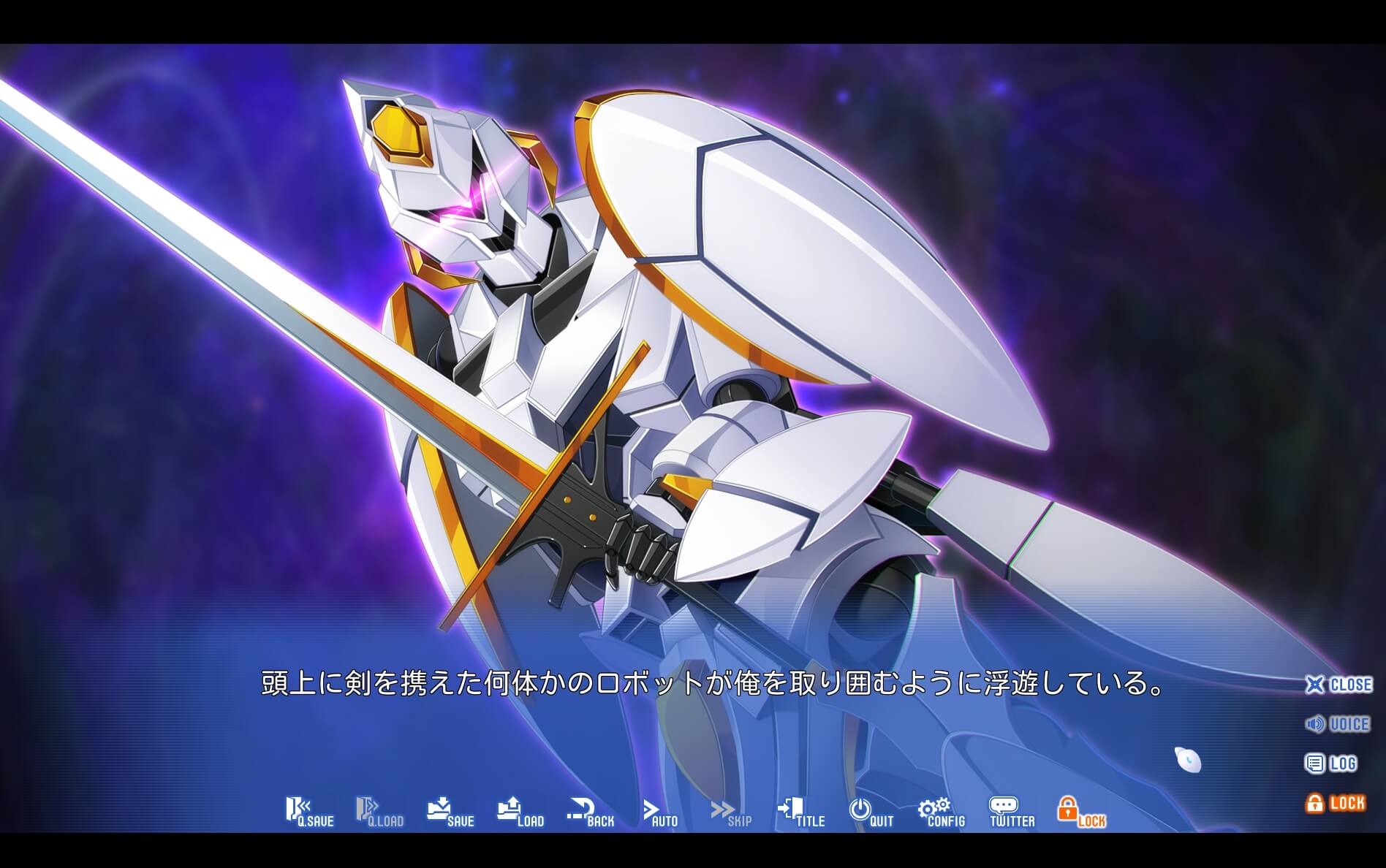
Going by Niijima Yuu’s own intent for this game, even if he’d pulled off exactly what he was aiming for, the best you’d get is a “hot-blooded movie, the anime-film kind.” At best it’s a “spectacle piece,” at worst it’s popcorn fare — the kind you forget the moment it’s over.
And on top of that, Niijima Yuu didn’t exactly make this game stand out, so let’s not even get into the romance and ero elements an eroge is supposed to have. There’s basically none.
Of course, Niijima Yuu’s “blank space” isn’t completely useless — a Japanese friend of mine saw the trick in it.
For example, in the letter the heroine gives the protagonist at the end, she writes:
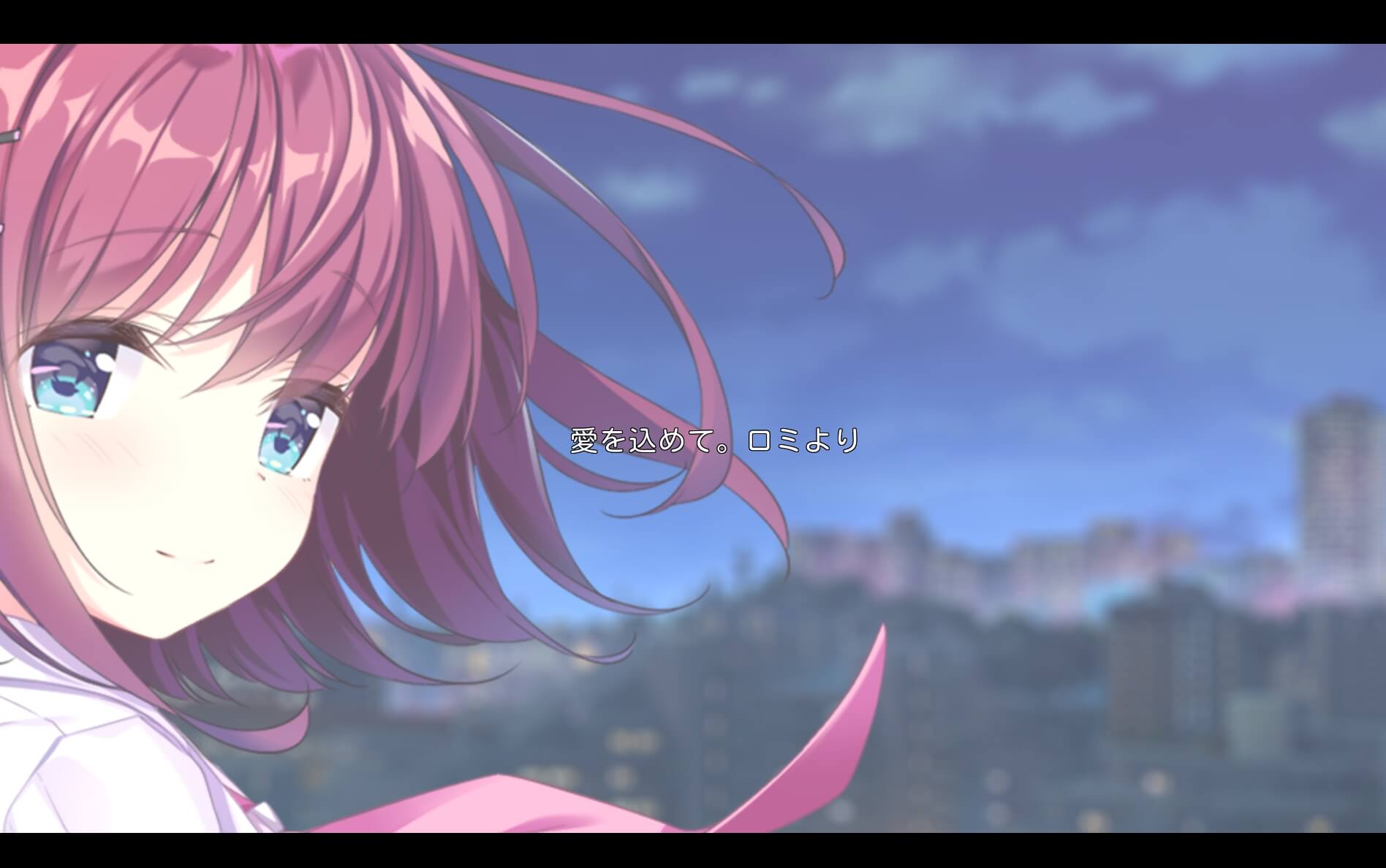
「君のありかたが、私は好きです」
Note that the “ga” here is emphasizing… probably just the preceding line, “kimi no arikata.”
Which is to say, “what I love is just the way you are.”
So the heroine never actually loved the protagonist at all — she was just repaying a favor.
And the real protagonist of this game, the one who saves the male lead, is nothing more than that “Einstein” robot carrying fatherly love. アインシュタインより愛を込めて — love, from Einstein. What it really amounts to is a father’s love.
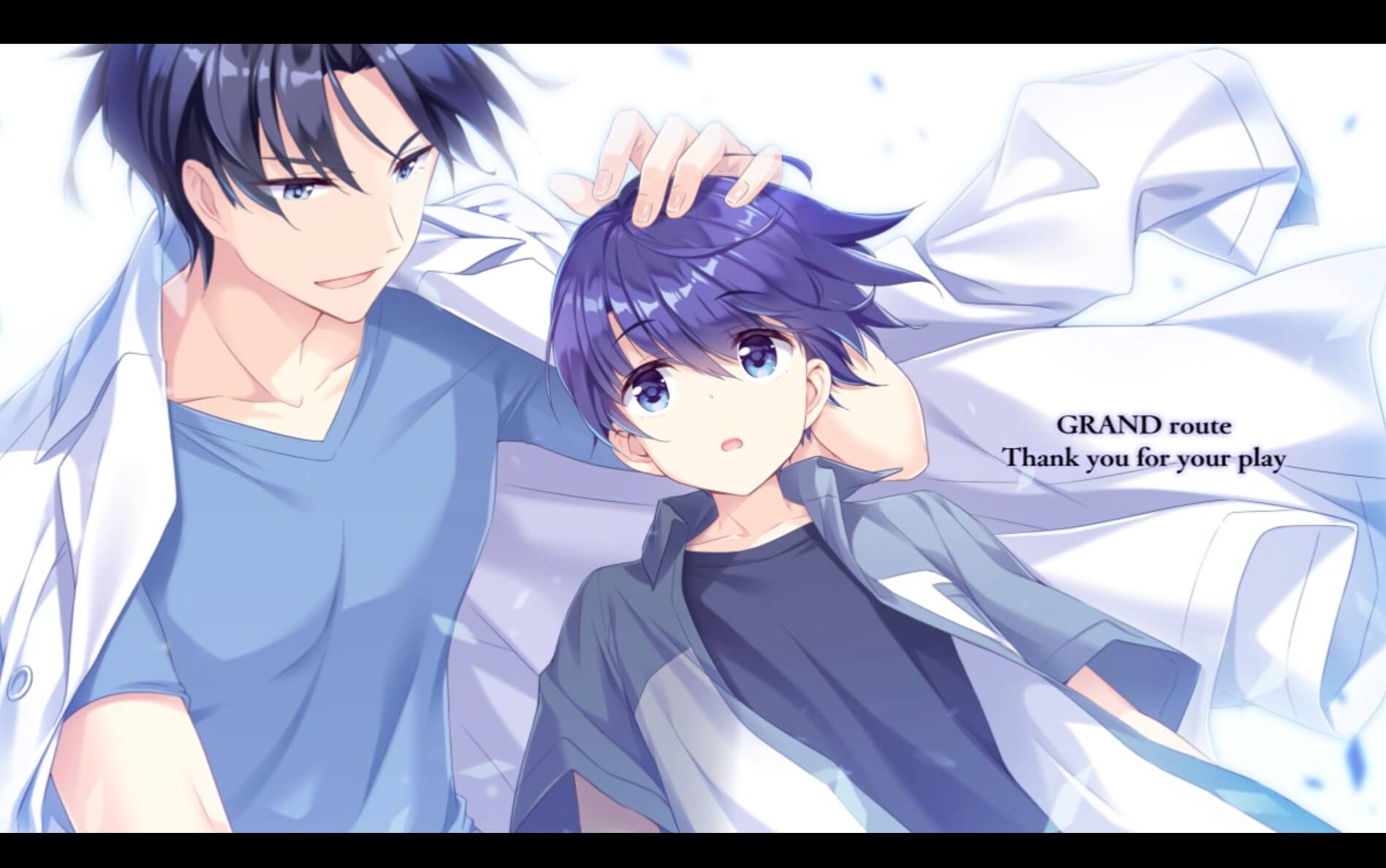
So much for the whole “人の気持ちはわからない” thing the game was pushing in its early promo — turns out it’s all bullshit.
Niijima Yuu’s peak so far is probably Majo Renai Nikki PSV (魔女恋爱日记 PSV).
Comments are hosted on the Chinese main site. This mirror is read-only.