Hoshizora Tetsudou to Shiro no Tabi (星空鉄道とシロの旅) Review
Starry Railway and Shiro's Journey
The protagonist is your average corporate drone slash illustrator. By pure chance he boards a steam train at night and sets off on a journey with no known destination.
He’s not alone on the train. There’s a foreigner from Sweden, a squinty-eyed guy, a pretty older sister type, a black cat loli, and of course a conductor who knows absolutely nothing about anything.
The trip passes through a lot of places. The dark forests of Northern Europe, an island in southern Japan, the Hakodate planetarium in Hokkaido, and the place where the protagonist used to live.
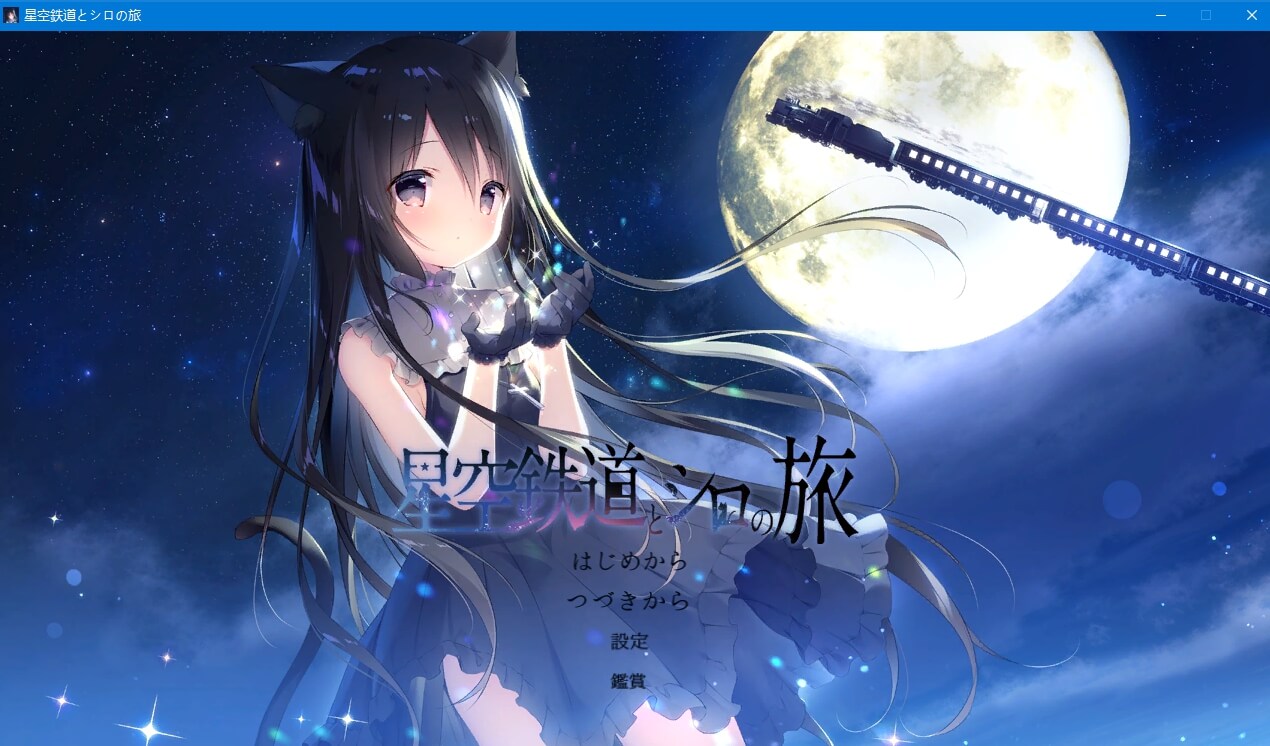
Yeah, you can guess where this is going. The train exists across time and space, and it carries its passengers to the place they once yearned for most. For the foreigner that’s the dark forests back home, for squinty-eyes it’s the island, for the pretty sister it’s Hokkaido, and for the protagonist it’s naturally his own place.
The protagonist then remembers he had a little sister named Neri. Unfortunately, she got hit by a truck and killed while saving a cat.
But during the journey he actually sees Neri, and Neri tells him she didn’t fully die — her heart was taken and transplanted into a critically ill patient named Yahagi Mashiro. Mashiro had been frail since childhood with albinism, pale skin, an inability to look at the sun, and severe heart disease that caused multiple organ failure. Right when she was at death’s door, Neri happened to die, and the doctor went ahead and transplanted Neri’s heart into Mashiro. Save whoever you can, right.

And then the protagonist discovers that he’s dead too. After his sister died he was so devastated he drank himself to death — heavy drinking plus heatstroke, died in his room. And after death he was apparently sent to the hospital for organ donation as well. Seems it went to Yahagi Mashiro too.

So now the guy freaks out. Are all the people on this train dead? And are they all people who donated organs to Yahagi Mashiro?
Later Yahagi Mashiro herself shows up on the train and basically confirms it. She’s not too keen on this whole organ transplant business either, because she feels accepting someone’s organ = robbing them of their life. That view comes from her mother, and Mashiro is the type to listen to mom.
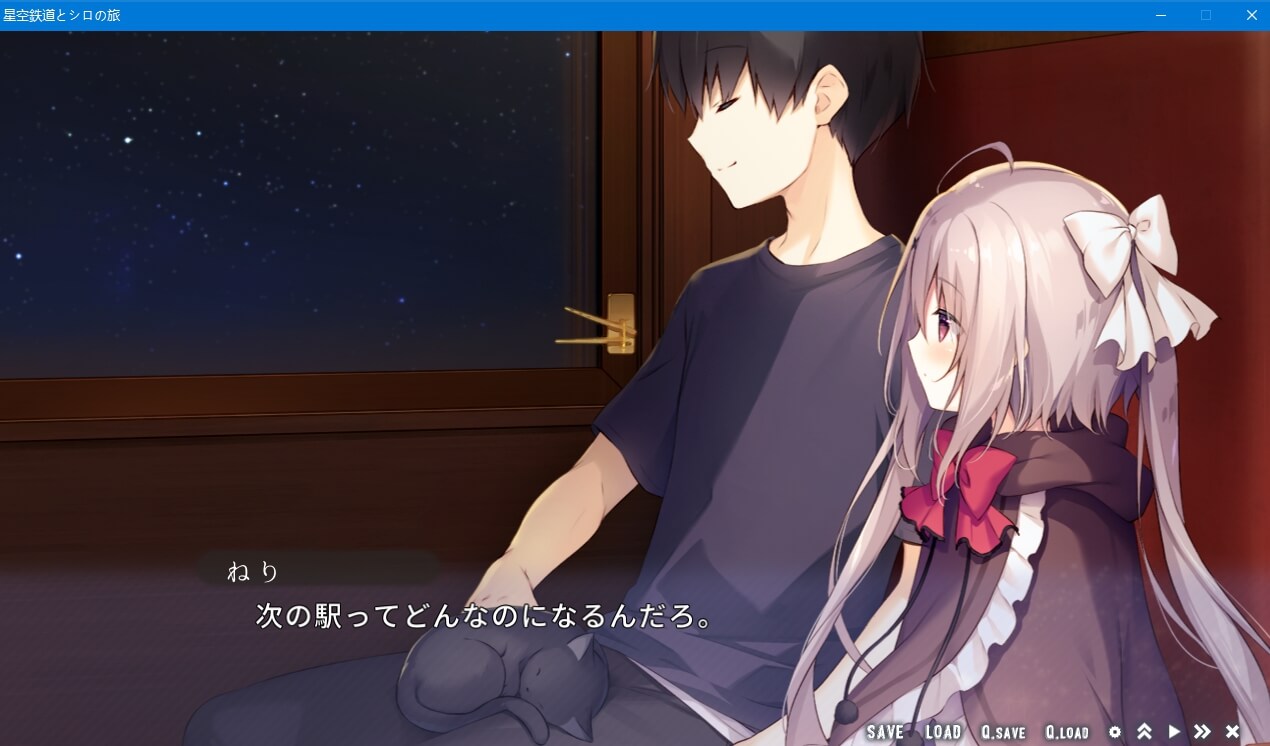
At this point the train is slowing down, and eventually stops.
So the situation’s clear now. This so-called Starry Railway is just a metaphor for Yahagi Mashiro’s life. As long as the train moves, Mashiro lives, and the passengers are all the people who donated organs to her — naturally they’d be riding the same train.
In the end the protagonist delivers a whole speech that thoroughly dunks on Japan’s “don’t cause trouble for others” value system. He tells Mashiro that being alive is everything, that all this bullshit about robbing people of their lives is just that, bullshit. As long as you’re alive it’s fine, dead people are dead, organs not put to use are wasted blah blah blah.
Naturally Mashiro, encouraged by the protagonist, chooses to keep living. The train keeps moving, and in the real world Yahagi Mashiro successfully fights off the rejection reaction from her immune cells and decides to face life.
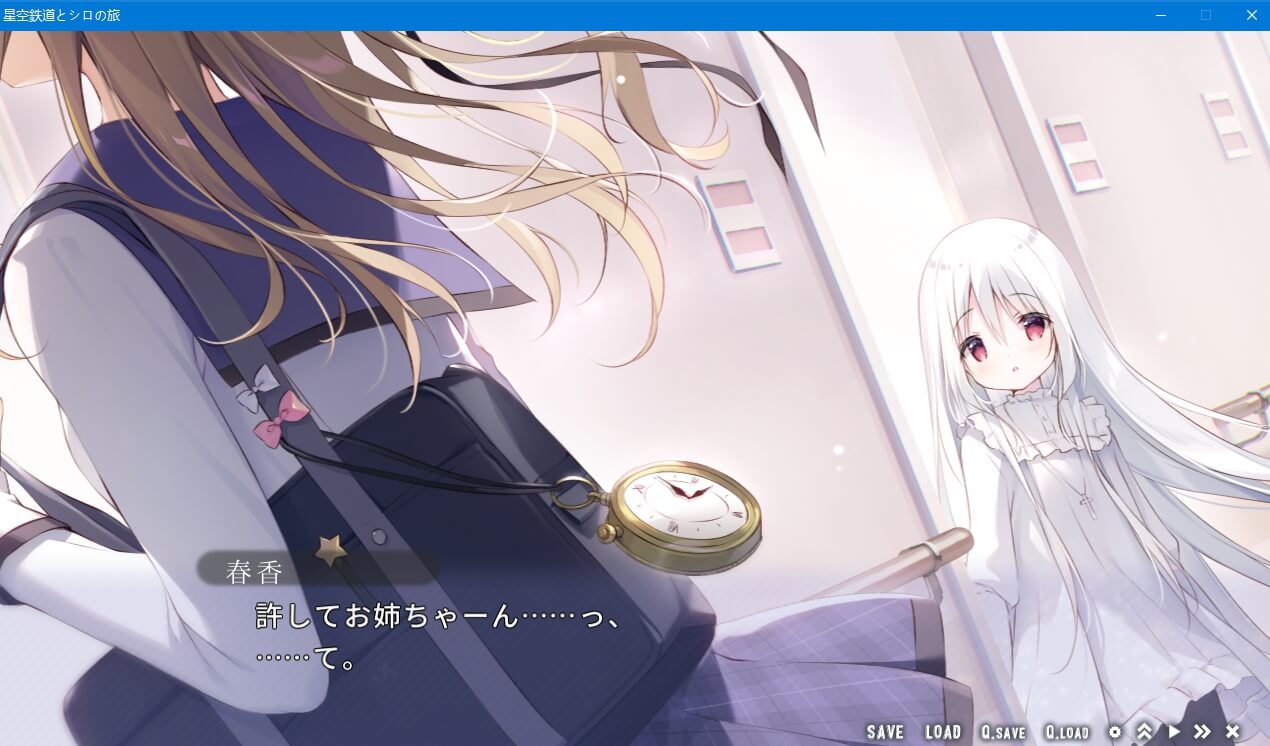
And at the end the game does a payoff. The conductor from the beginning, Karuha, wasn’t an organ donor — she was a blood donor, which is why she’s on the train too.
This game is absolutely packed with references, and most of them are tied to Night on the Galactic Railroad. Honestly the whole thing is written straight off the Night on the Galactic Railroad template, so a lot of the storytelling is vague and implied — the kind of thing that stubbornly refuses to spell anything out. To sort out the missing pieces I skimmed through the game again, and yeah, I really couldn’t find explanations for some of the foreshadowing, including how the other characters ended up donating organs. Maybe the writer did it on purpose, maybe it’s hinted at in some fine detail of a line. I checked Japanese reviews and there’s no clear answer either, but I don’t have the time to dig deeper.
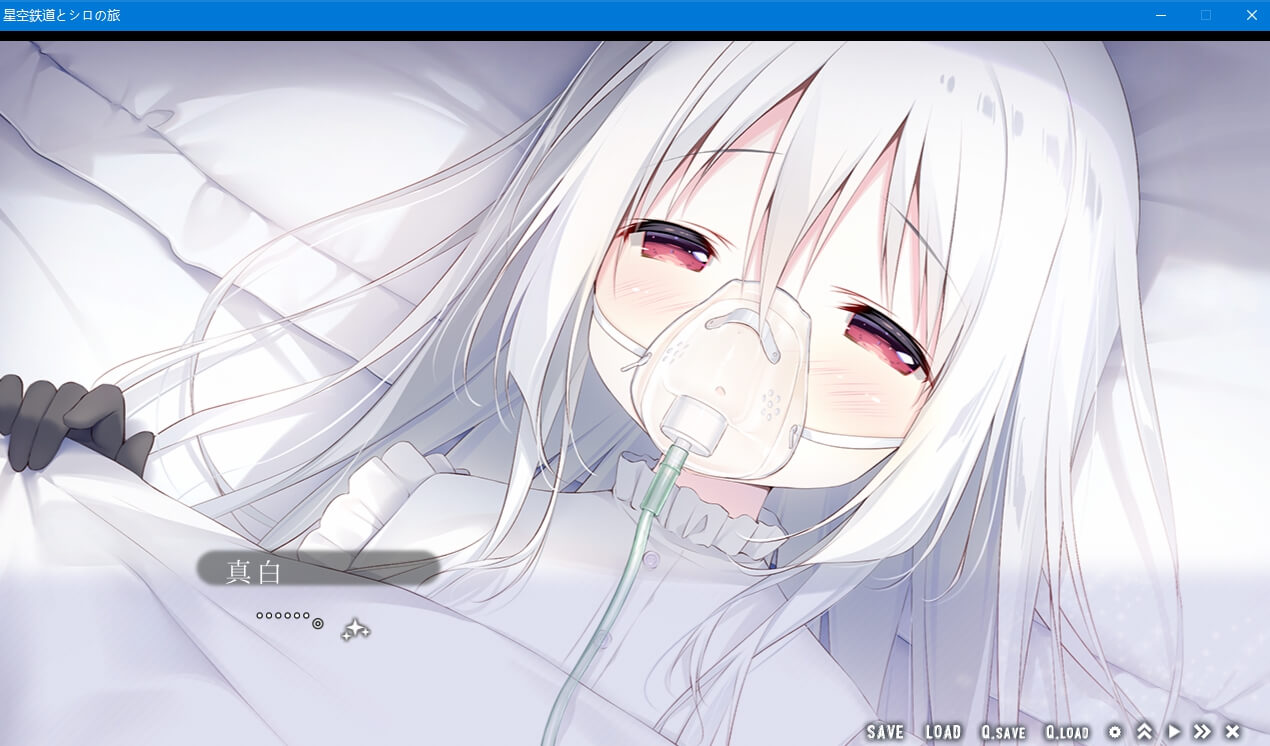
The plot is extremely fragmented, full of flashbacks and interjections. On a first read you’ll be lost. It only really becomes clear in the latter half. Put simply: it’s the story of a frail little girl named Yahagi who receives organ transplants, feels guilty about “taking someone’s organs without permission,” and even thinks her being alive means robbing others of life — until the donors talk her around, and she gradually calms down and decides to live on and face the future with some optimism.
The art is by Shiratama, and the quality is beyond question. Very good stuff — worth her streaming herself drawing live every day. The soundtrack is also surprisingly high-class, one of the few genuinely great scores in recent years. The game isn’t long, under ten hours if you count everything, and that’s impressive quality for a doujin work.
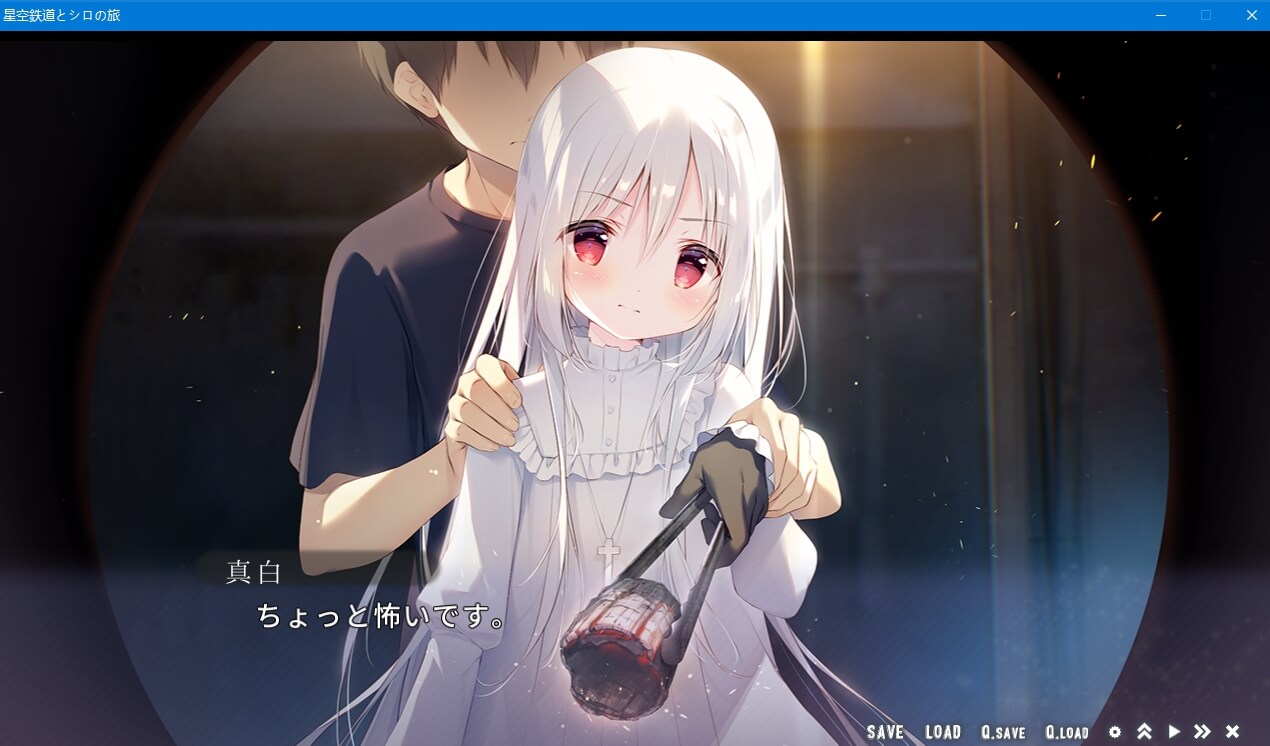
So the scenario is by Sakaki Kasa again, and it’s still on the tearjerker route, but a lot of the setup really makes me want to complain. Especially the “organ transplant” part. Neri’s organs apparently got transplanted on the doctor’s own authority — at minimum that’s a serious crime, at worst it’s organ trafficking. Having something the UN is strongly opposed to written into a game is genuinely hard for me to understand. And organ donation in Japan is something nobody cares about to begin with, yet the game has everyone donating organs to one person. It’s ridiculously convenient. Of course, most otaku with no medical knowledge are probably already bawling their eyes out, like with Ria’s brain tumor in Kin’iro Loveriche.
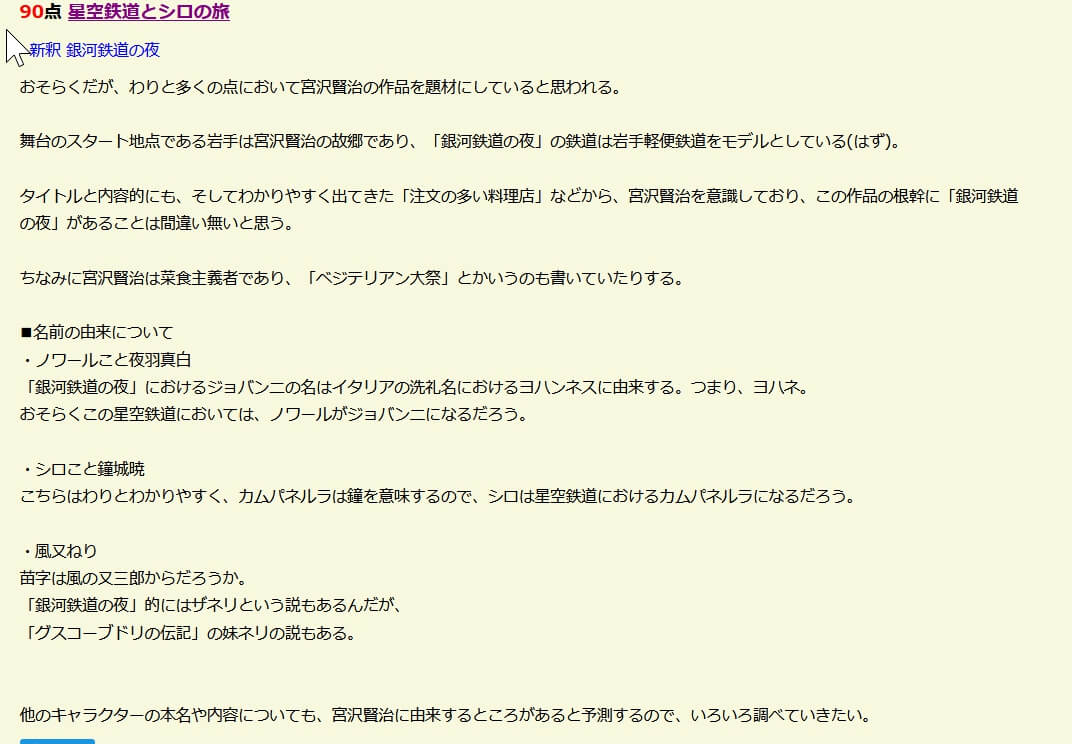
All in all this game is basically a Night on the Galactic Railroad doujin work — even the character names are references to it. If you read the original first, you’ll probably get more out of playing this.
Comments are hosted on the Chinese main site. This mirror is read-only.