Meikei no Lupercalia (冥契のルペルカリア) Review
冥契のルペルカリア
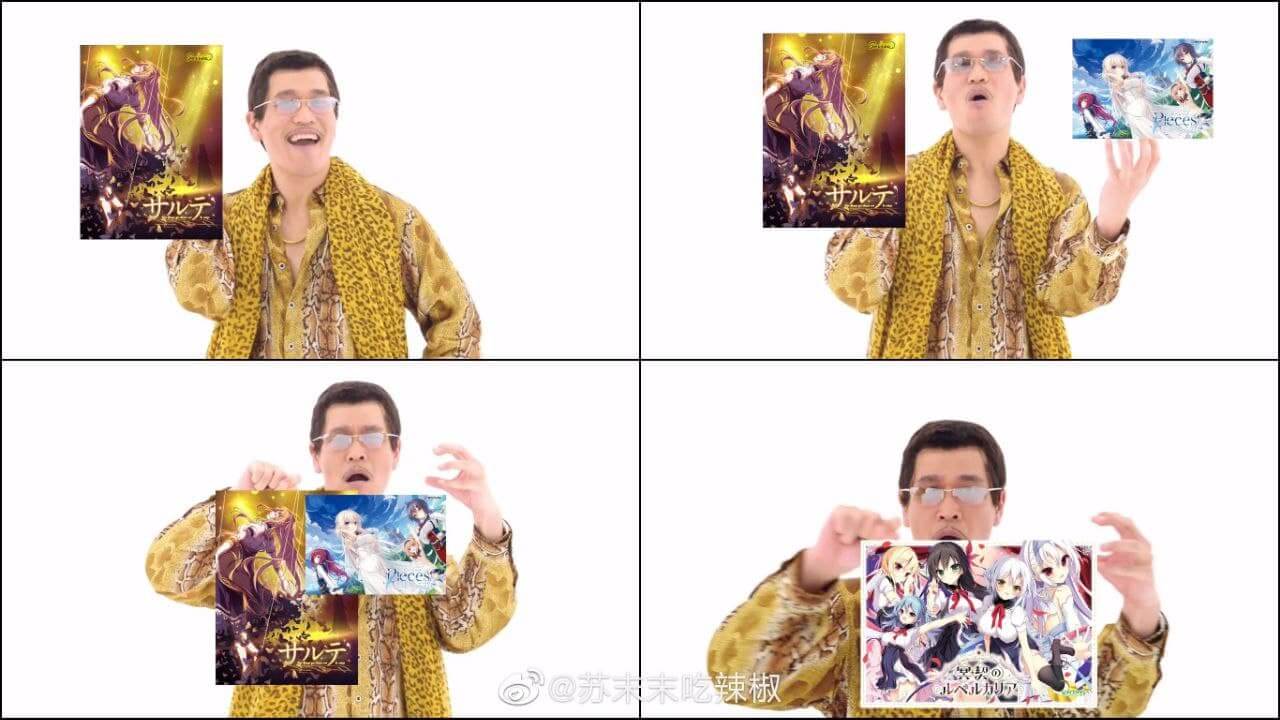
Rukuru’s first new game in two years, and honestly, from the moment 冥契のルペルカリア’s setting was announced, I felt very… uncomfortable.
First off, the title alone looks like people are going to die. Then the character designs straight-up contain elements from 紙の上の魔法使い, which had me suspecting the game was trying to coast on past glories. That said, neither the synopsis nor anything else explicitly states what 冥契のルペルカリア has to do with 紙の上の魔法使い — just a bunch of plausible-sounding edge-balling. Even the CVs don’t line up; I remember the witch being voiced by 小倉結衣, not メイ大姐. I took a look at the plot summary and it turned out to be stage-play focused, which killed my interest even more.
But the scenario writer’s skill is still there, and last year had basically nothing with a decent story, so I went ahead and played it on faith in Rukuru. The whole playthrough was a mess — at one point I lost my eroge machine, then it broke down again, and I finally stumbled my way to the end. Hmm… how should I put it. The quality was about what I expected, but there were some disappointing parts too. So let me just run through it briefly.
The game opens with our protagonist 環 wandering around school with his friend (a lesbian) 倉科双葉, checking out all the clubs recruiting new members. The two of them get drawn by chance to a theater club called ランピリス and go in to watch a performance. The play is “The Prince’s Revenge: Hamlet,” and the lead prince is played by a very tiny girl. The performance is actually pretty good, but most of the audience has little interest in such an old-fashioned form of theater. When it ends, only the protagonist and 双葉 are captivated, and they say they want to join and check it out.
To join this mysterious theater club ランピリス, they naturally have to go see the club’s “zacho” (basically the leader), a venomous tsundere ponytailed guy who looks exactly like Adam Queen no matter how you slice it, named 天樂来々. He says dismissively that the last recruitment performance was actually a failure, and that the fact it still drew people in means the two of them have no eye for talent. Still, he lays out conditions for the protagonist and 双葉: if they want to join the theater club, they have to put on a performance, and only if the zacho approves can they get in.
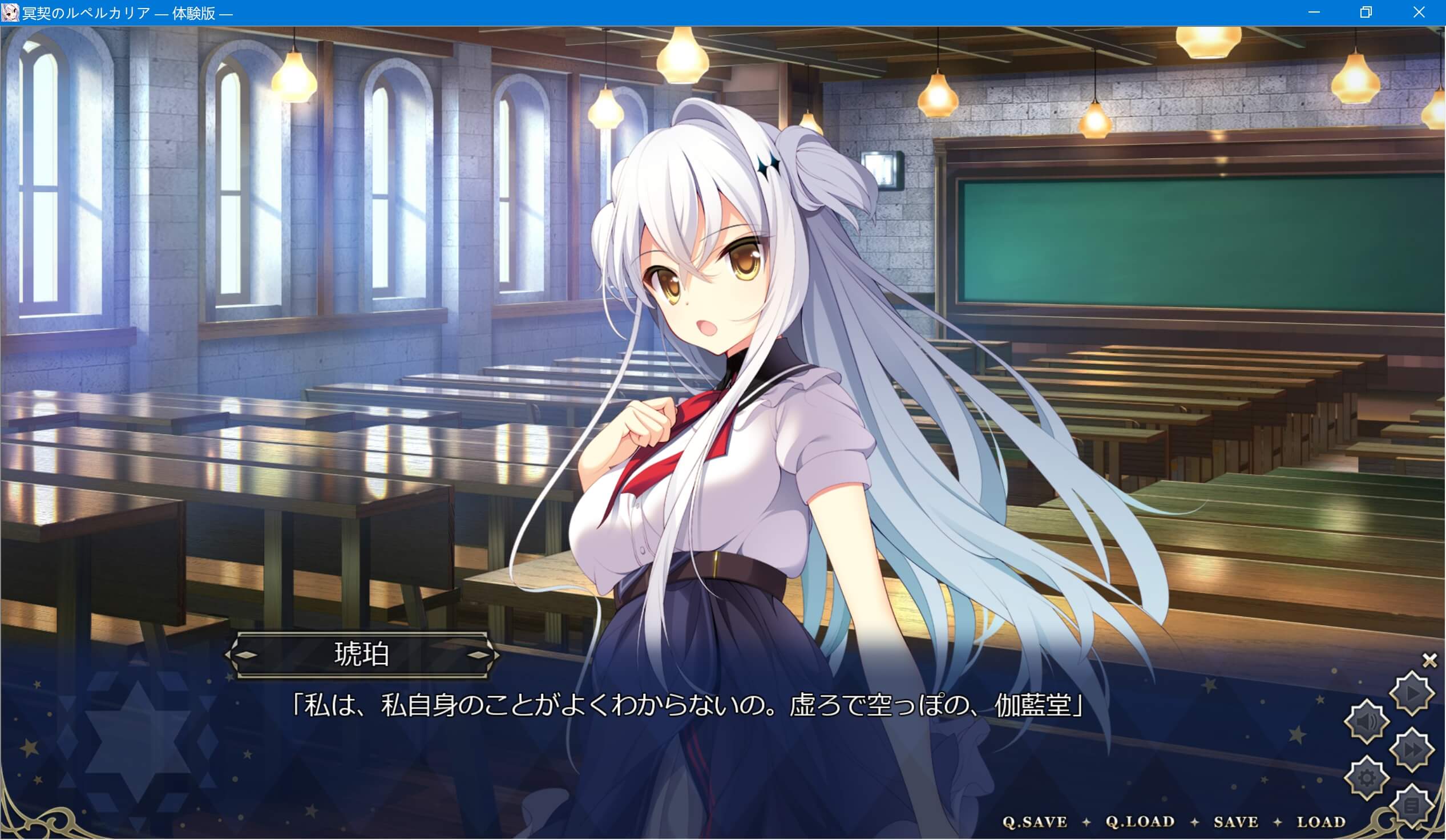
双葉 isn’t good at acting, and the protagonist doesn’t want to perform either. Getting that venomous guy’s approval is going to be seriously hard. But one night, the protagonist runs into a female classmate practicing a performance on her own, 架橋琥珀. Her powerful acting draws him in, and he figures that if he pulls her into the group, maybe her carry potential can produce a decent enough performance to get them into the club.
The protagonist eventually convinces 琥珀 to join the team. He writes the script, adapting Japanese author 江戸川乱歩’s “The Red Room,” with 琥珀 as the lead and 双葉 as a bit player — that way, 琥珀’s acting is so good that 双葉 can naturally slip in on her coattails.
The “Red Room” performance goes reasonably well. 来々 thinks 双葉 is coasting, but at least they pass, so he agrees to let the protagonist, 琥珀, and 双葉 join the club.
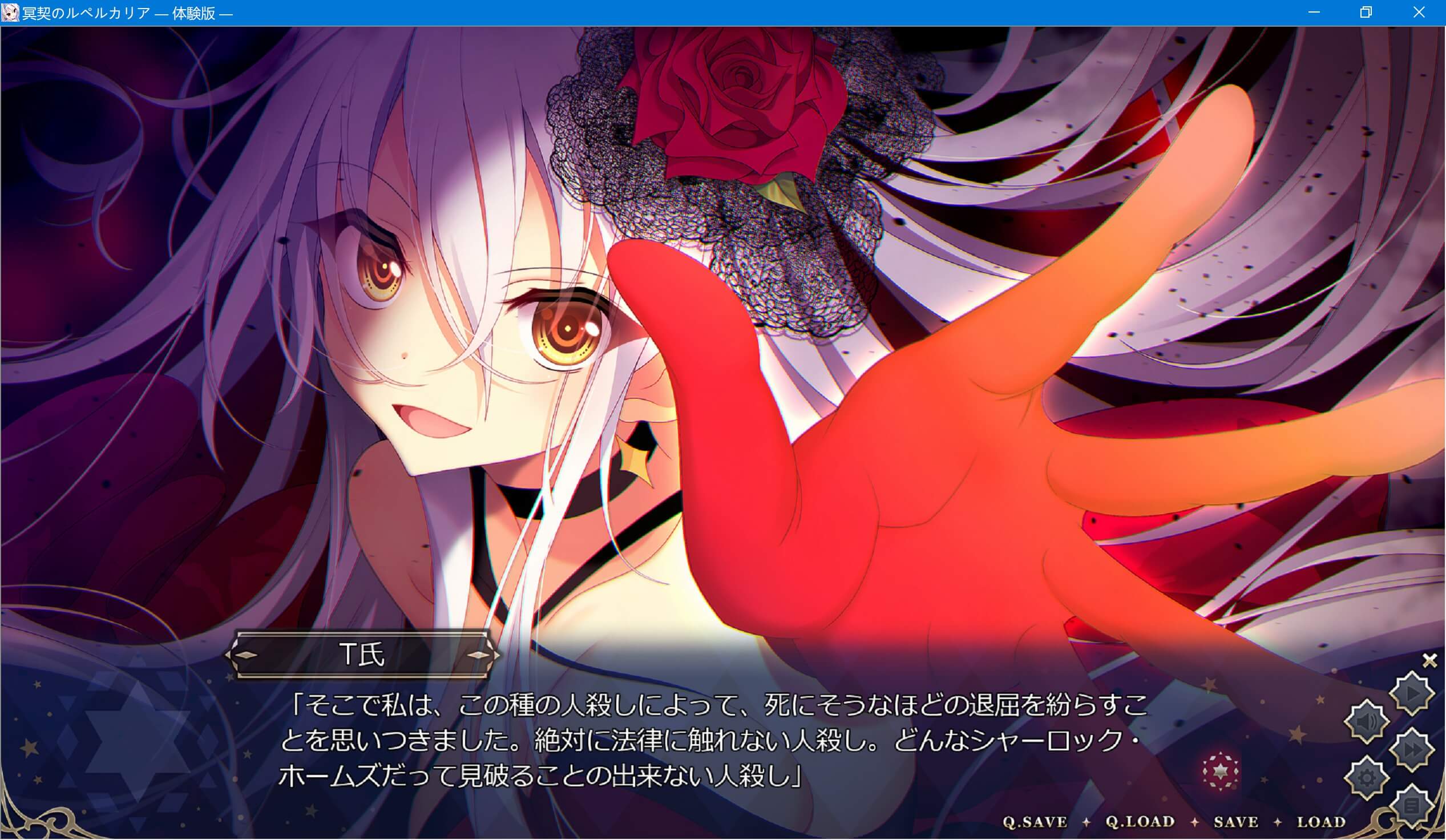
After joining, the protagonist runs into someone he knows: 箱鳥理世. She knows him, and she knows his past. From their conversation, we learn the protagonist was once a “genius actor” — “The Red Room” was his masterpiece — and then he inexplicably gave up acting. 箱鳥理世 was also once an actress who chose to quit, and both of them understand why: because of one person, 折原冰狐.
折原冰狐 is the protagonist’s own little sister: the stage name of 濑和未来. She had tremendous artistic achievements and powerful acting, and in the end she died on stage.
But the impression 冰狐 left on the protagonist and 理世 isn’t a good one. In their memories, 冰狐 was domineering and harsh. Her overwhelming acting and presence made everyone else feel inadequate, and she loved to criticize others’ acting to their faces, driving them off the acting path — the main reason the protagonist and 理世 left the industry. Just thinking about her gives both of them PTSD.
And then, damn it all, 折原冰狐’s figure appears before them again. She’s supposed to be dead, yet she shows up like a ghost. This time she calls herself “京子,” and she wears an expression toward the protagonist and 理世 that says “I seem to understand everything but also nothing.” A person who constantly flexes on you like that is naturally going to make both of them uncomfortable — and the bigger question is whether this “京子” really is the dead “冰狐.”
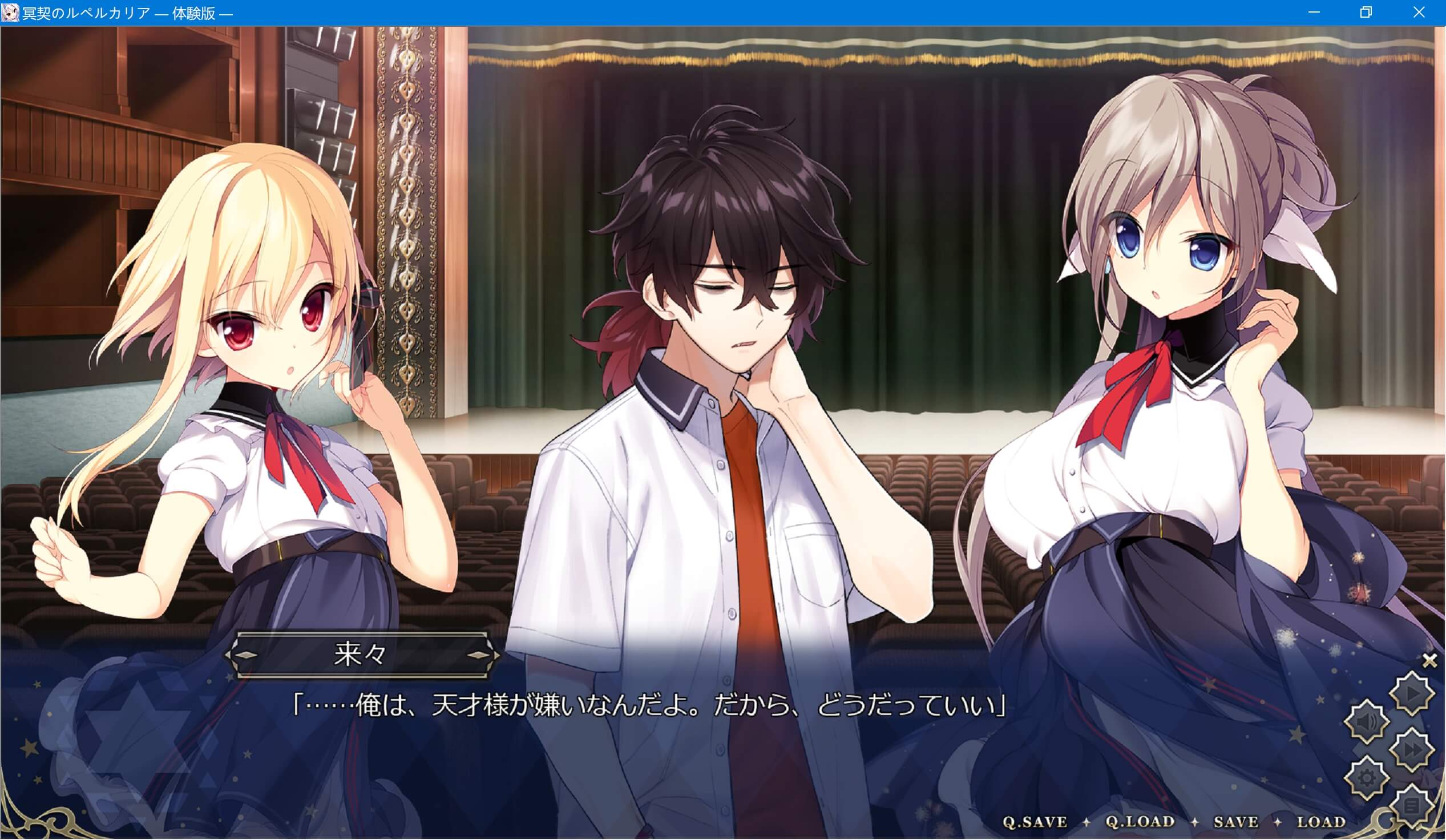
Naturally, this 京子 is bad news. Ever since she shows up, she keeps appearing out of nowhere in all sorts of scenes. Around this time, 双葉 happens to mention something: a female streamer she follows, called “Angel,” has suddenly gone missing from the internet. She wants to figure out what happened, because she heard the protagonist knows this “Angel.”
So the protagonist starts helping investigate, with no progress — until “京子” suddenly appears and, under her guidance, everyone finds the captive “Angel” in one of the protagonist’s secret rooms. So he’d secretly imprisoned her?
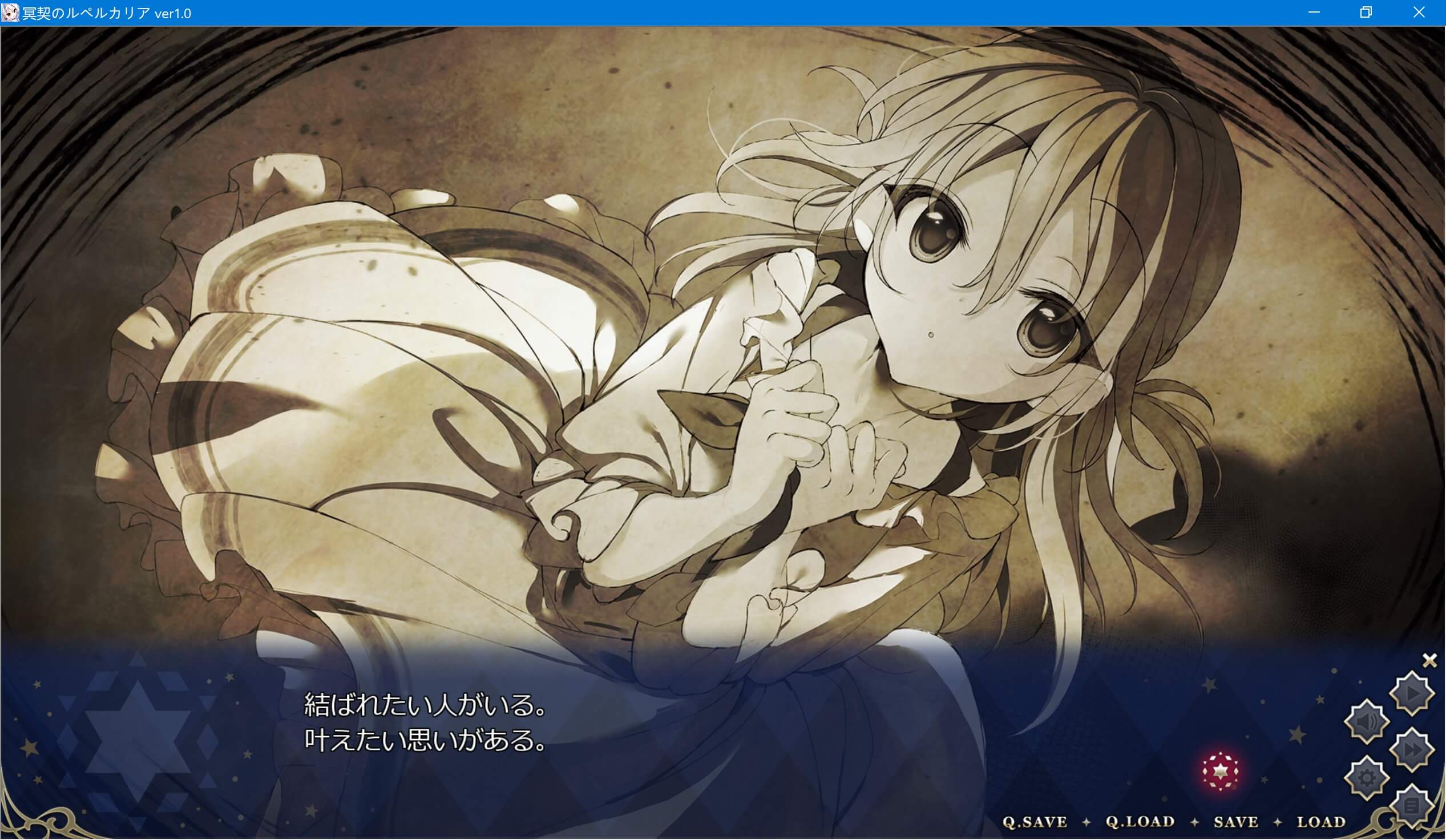
But the rescued “Angel” explains that she was there willingly. Her real name is 天使奈々菜, and she has a very strange background. Her mother, 天使美嘉, is a famous actress, but her marriage was a mess — her husband had an affair and even had an illegitimate daughter. For a normal wife, that would mean divorce. But 天使美嘉 forgave her husband; more than that, she took in the illegitimate daughter, treated her as her own, and taught her to become an actress and walk the acting path. That “taken-in illegitimate daughter” is 天使奈々菜.
天使奈々菜 has a beautiful face but no talent for acting at all. Her adoptive mother doesn’t care in the slightest — she pours all her resources into turning 天使奈々菜 into a star. Because she’s so beautiful, she gains a lot of fans, but unfortunately her flaws are obvious too: besides that pretty face, she has nothing. No acting skill, no ability, no special talent — a complete pretty vase. Yet 天使奈々菜 completely trusts her adoptive mother, 天使美嘉. She lives like 天使美嘉’s puppet: whatever her mother asks, she does. Her mother wants her to be an idol, so she becomes an idol without really knowing why. And 天使奈々菜, entering the entertainment world, meets the protagonist when he was just starting to make a name for himself in the industry.
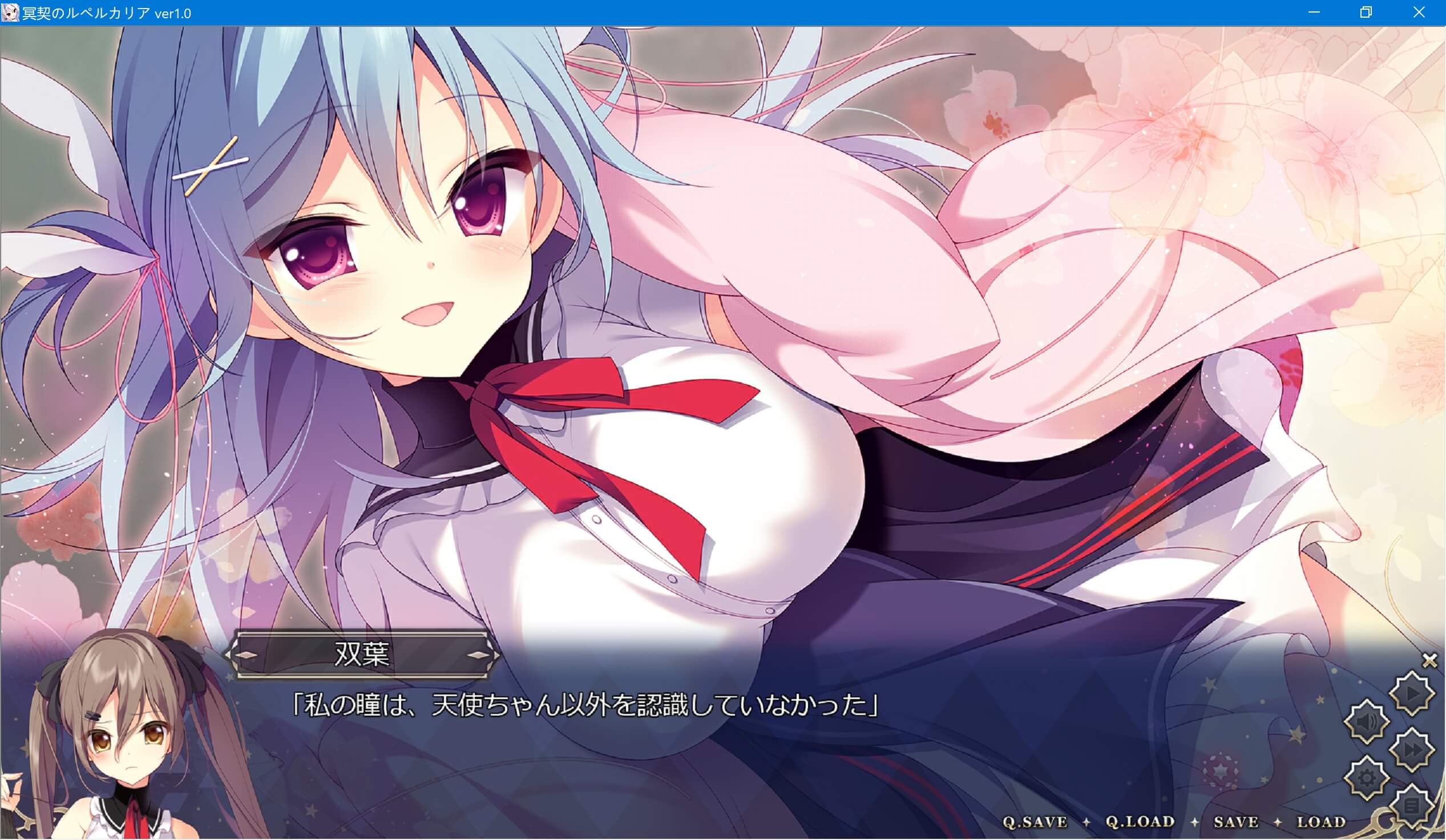
As 天使奈々菜’s own limitations catch up with her, her career soon hits a bottleneck. 天使美嘉 makes an even more outrageous demand: she tells 天使奈々菜 to do “pillow business” to get more screen opportunities. When the protagonist learns that 天使奈々菜 actually obeyed her mother and did pillow business, he can’t accept it, so he rescues her.
天使奈々菜 herself lives like a puppet — no will of her own, no idea where to go. And the protagonist makes a bold suggestion:
“Be my little sister. From today on, I’m your big brother.”
The protagonist does have his own little sister, 濑和未来. But 濑和未来 as a little sister disgusts him, and 天使奈々菜 fits his own desire for a little sister better. So the protagonist imprisons 天使奈々菜, and the two begin a brother-sister life in a hidden space. From that day on, the idol 天使奈々菜 vanishes from the world — until everyone breaks in and rescues her.
Afterward, 天使奈々菜 is invited to join the theater club ランピリス, doing odd jobs. But inside, the shadow of the protagonist still lingers. Freed, 天使奈々菜 doesn’t blame him — in fact, during the imprisonment she really developed “sibling feelings” for him, and even feelings beyond sibling affection…
Does she stay by the protagonist’s side and continue that twisted sibling bond? Or let it go and move forward? The story branches here.
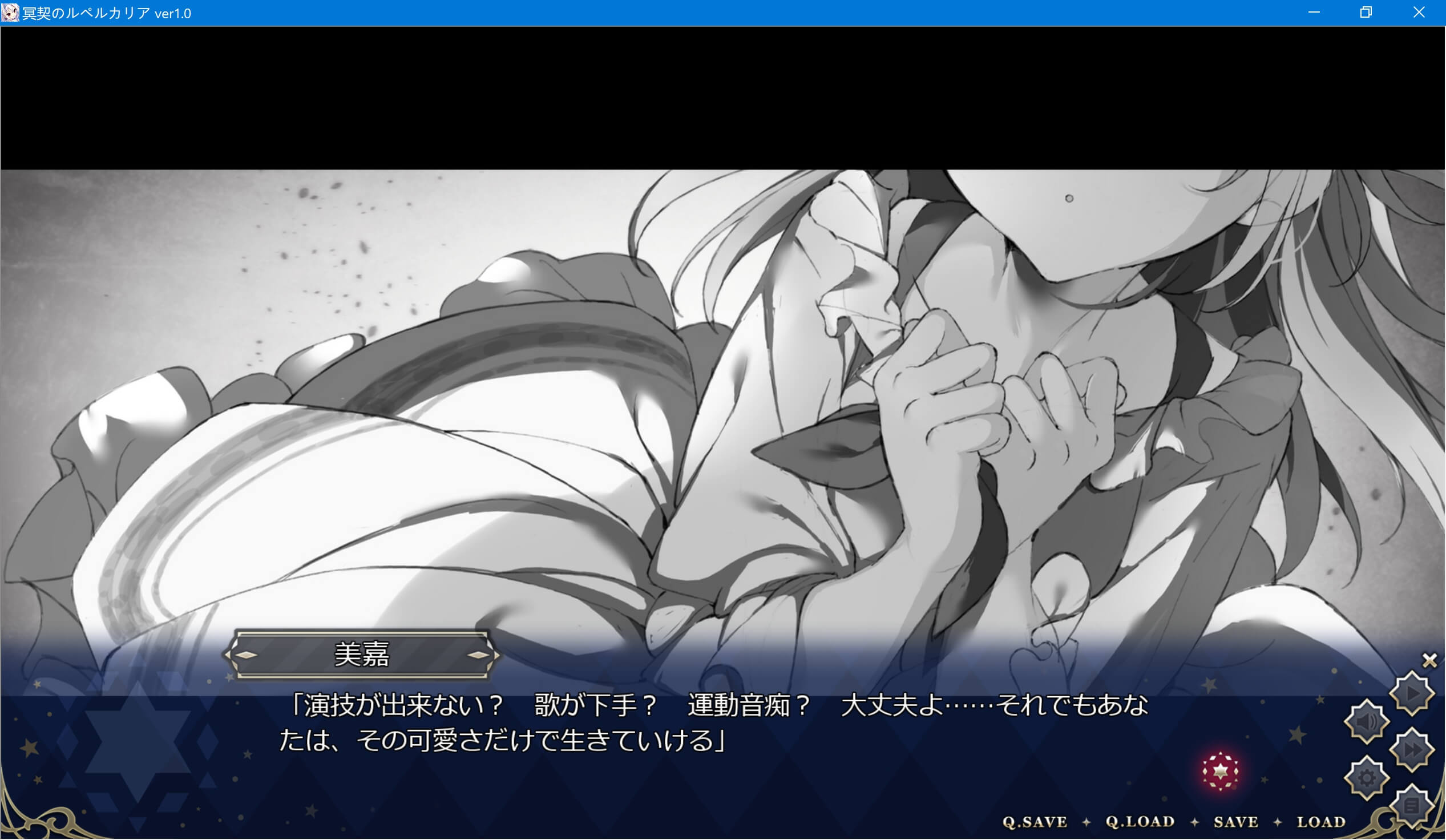
If she continues the sibling bond, 天使奈々菜’s adoptive mother reappears and demands she return to her side and work as an idol. 天使奈々菜 finds herself for the sake of her love for the protagonist, no longer a manipulated puppet, and tells her mother directly what she thinks: that all these years, her mother was just using her as a tool for venting spite. 天使奈々菜 has the same beautiful face as her mother, and it was precisely that face that destroyed 天使美嘉’s marriage. 天使美嘉 may have verbally accepted the illegitimate daughter as her own, but in reality she was raising her into a pretty vase to make her a laughingstock — even sending her to pillow business. A complete tool.
In the end, 天使美嘉 lets go and gives 天使奈々菜 her freedom, and 天使奈々菜 successfully ends up with the protagonist. The story reaches a reasonably happy ending.
Of course, that’s just “天使奈々菜’s own fantasy.” The real story naturally ends that twisted sibling bond and moves forward.
The theater club ランピリス begins rehearsing a new show. According to the zacho’s request, the new program’s style will be “Norse mythology” — Odin, Loki, Freya, that sort of thing. The protagonist writes the script again, and the zacho assigns roles to everyone. Both 琥珀 and the little girl who played the prince before, 匂宮めぐり, are made to play roles they aren’t good at. 琥珀’s role requires the emotion of “unrequited love that can never be returned,” while 匂宮めぐり’s role requires “deep, bone-carved hatred.”
They rehearse the play several times, and the zacho 来々 says he’s dissatisfied — everyone’s performance feels like it’s missing something. Then he proposes a series of measures to make the performance more real.
来々 notices 琥珀 has feelings for the protagonist, so he eggs her on to confess to him, then has the protagonist reject her. 琥珀, genuinely in love, gets dumped for real and tastes heartbreak.
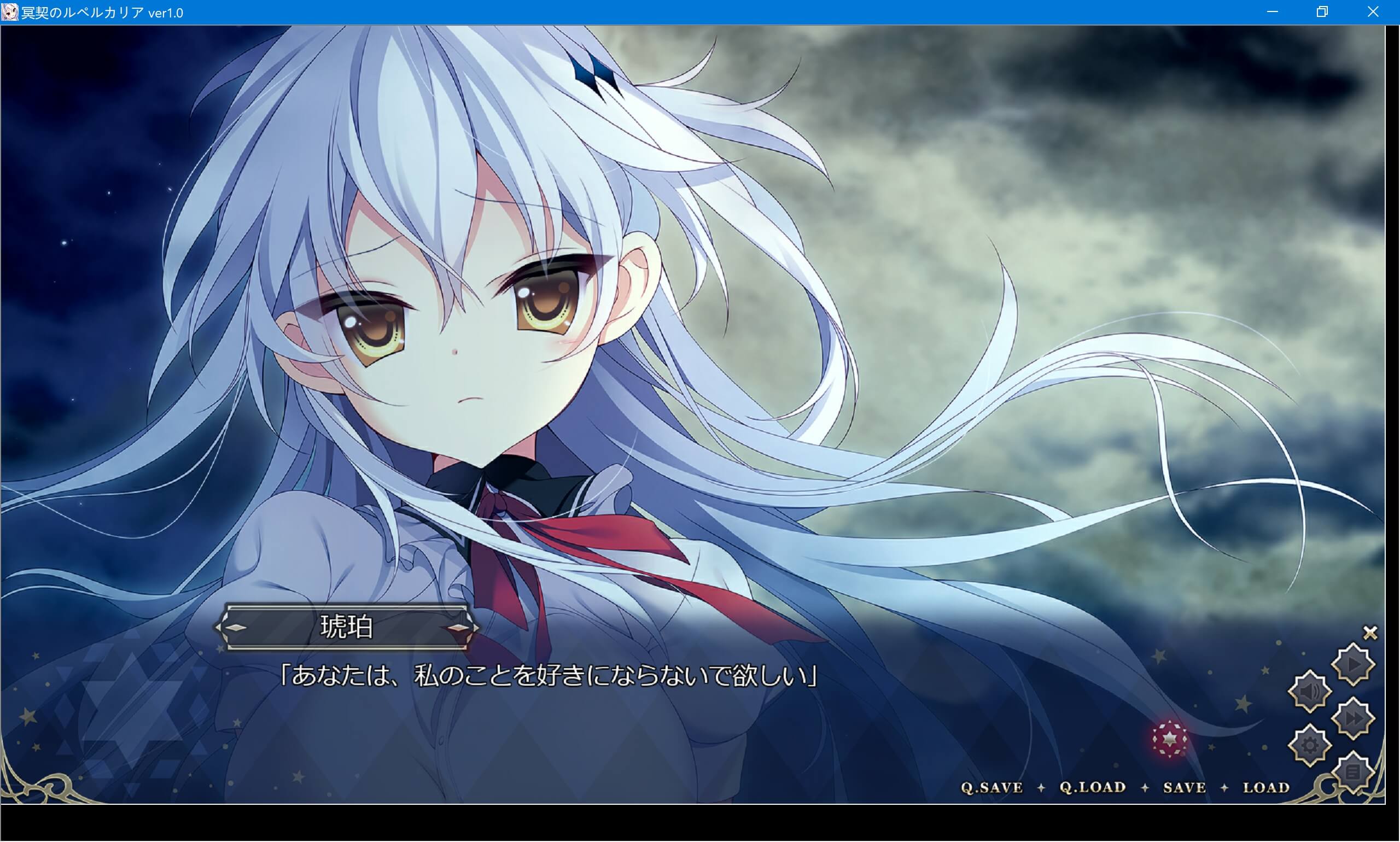
来々 also notices 匂宮めぐり has feelings for the protagonist, so he spreads rumors about her and the protagonist at school — nasty ones too (living together, buying condoms) — tanking 匂宮めぐり’s reputation at school. He even publicly says he did it all himself, and 匂宮めぐり is filled with hatred for 来々.
So through this string of pretty despicable moves, the zacho 来々 gets both actresses to find the feelings they needed, and the rehearsal improves a lot. 来々 explains it was all for the performance. Everyone thinks he’s a jerk, but he doesn’t seem wrong.
The day of the performance arrives quickly, and the final result is outstanding, stunning the whole audience. Everyone completes a brilliant show.
After that performance, though, multiple figures in the theater club ランピリス begin to fade out. 来々 and some other actors all leave, leaving only old members 匂宮めぐり and 箱鳥理世 — and the two of them… including the protagonist, start noticing something strange. He accidentally discovers that the theater club ランピリス was actually founded a very long time ago, and that he and the zacho 来々 don’t seem to be from the same generation, which contradicts the current situation.
The protagonist starts digging into the history of the theater club ランピリス, and the story traces back through 匂宮めぐり. It all comes down to the club’s founding, by 匂宮めぐり’s grandfather: 匂宮王海.
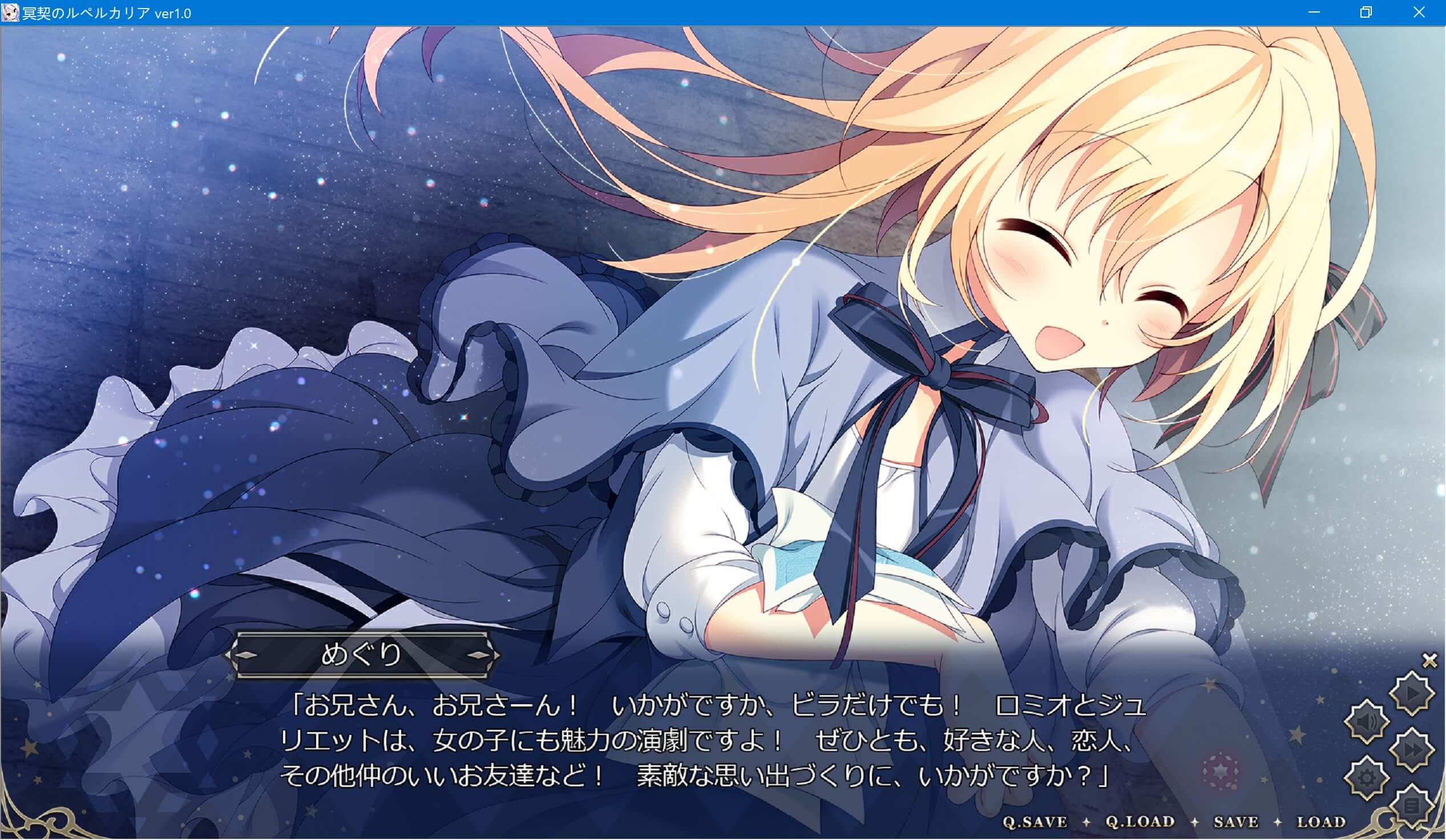
匂宮王海 was a master director. After becoming famous, he started coaching new actors, but his methods were too cruel and his demands too strict. Many students couldn’t bear it, and some even died. After that, 匂宮王海’s reputation collapsed, and he returned to the school and founded this theater club ランピリス. By then he had no demands for the club at all — a completely hands-off management style. The club came to be known as a special place that “houses self-satisfied types with some pursuit of acting.”
Because of that, the club took in a lot of “strongly self-aware” people, including that 天樂来々, and many washed-up actors who were “once talented but later faded into the crowd,” among them 箱鳥理世, 白坂ハナ, and 龍木悠苑.
白坂ハナ is someone who longs to act but truly has no talent for it. She got eliminated and eventually came to this club, where 王海 discovered her talent for prop-making, letting her stay in the theater she loves in another way.
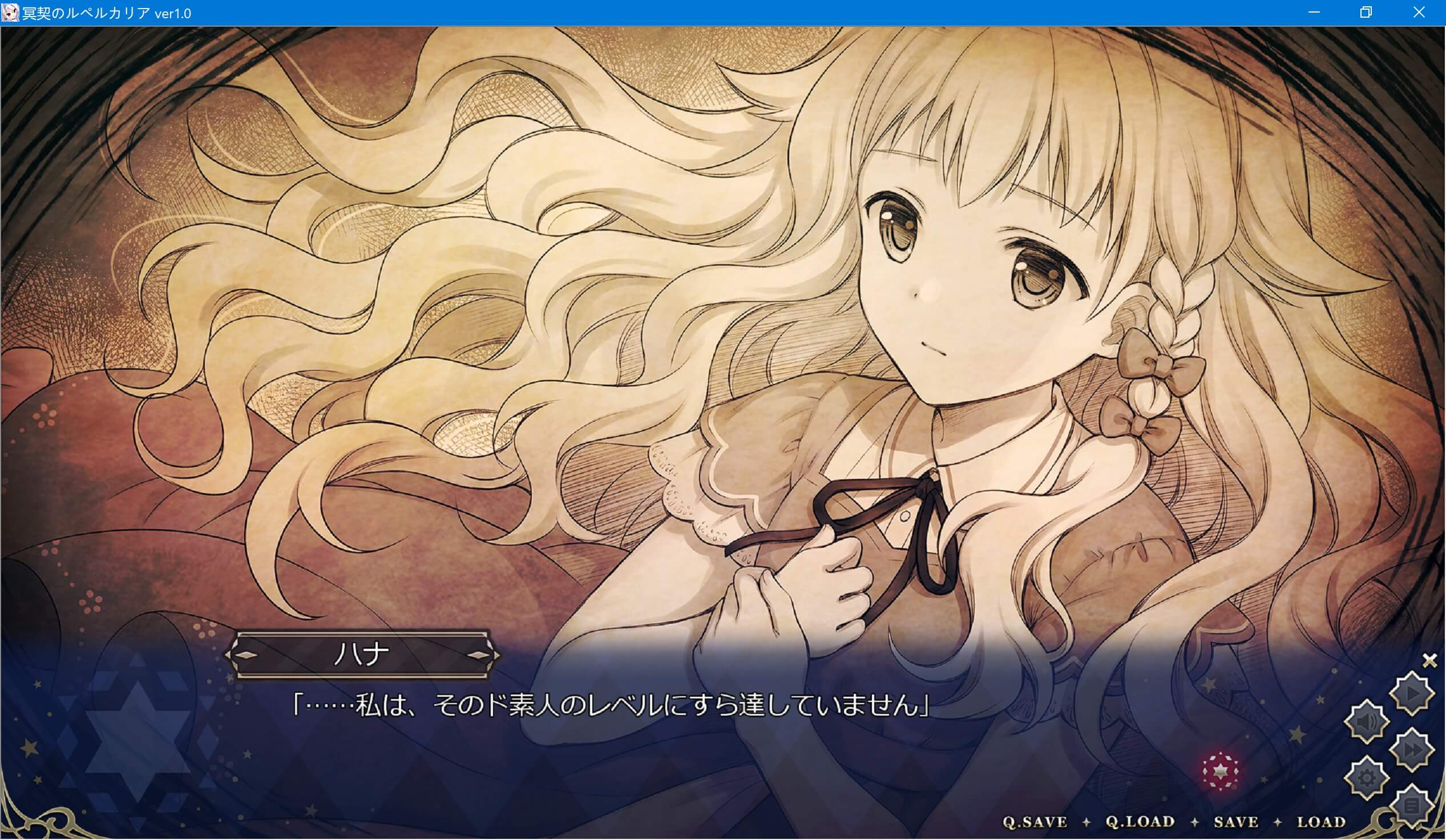
龍木悠苑 is a genius at theater, but soon enough, a genius loses her shine among true geniuses. At one point, 龍木悠苑 nearly accepted a director’s pillow-business demand to get a performance opportunity, but 天樂来々 deliberately interrupted it — and even spread the story of her pillow business everywhere, completely cutting off her future in film and TV. With no other choice, she came to this troupe and began studying acting, and because of her own scandal, she actually gained a huge advantage in playing “seductive roles.”
箱鳥理世 joined the club for much the same reason. She once had some love for acting, and through acting she met the protagonist’s sister, 濑和未来. They had a fairly good relationship, but for some reason, 濑和未来’s skill kept improving, and she took a new stage name, 折原冰狐. When they met again, 折原冰狐 had completely forgotten their old friendship and began mercilessly mocking 箱鳥理世, saying her level was far too low and she should just give up acting and go home. 箱鳥理世 realized the limits of her own ability, understood that 折原冰狐 had forgotten their old friendship, and came to this club in despair.
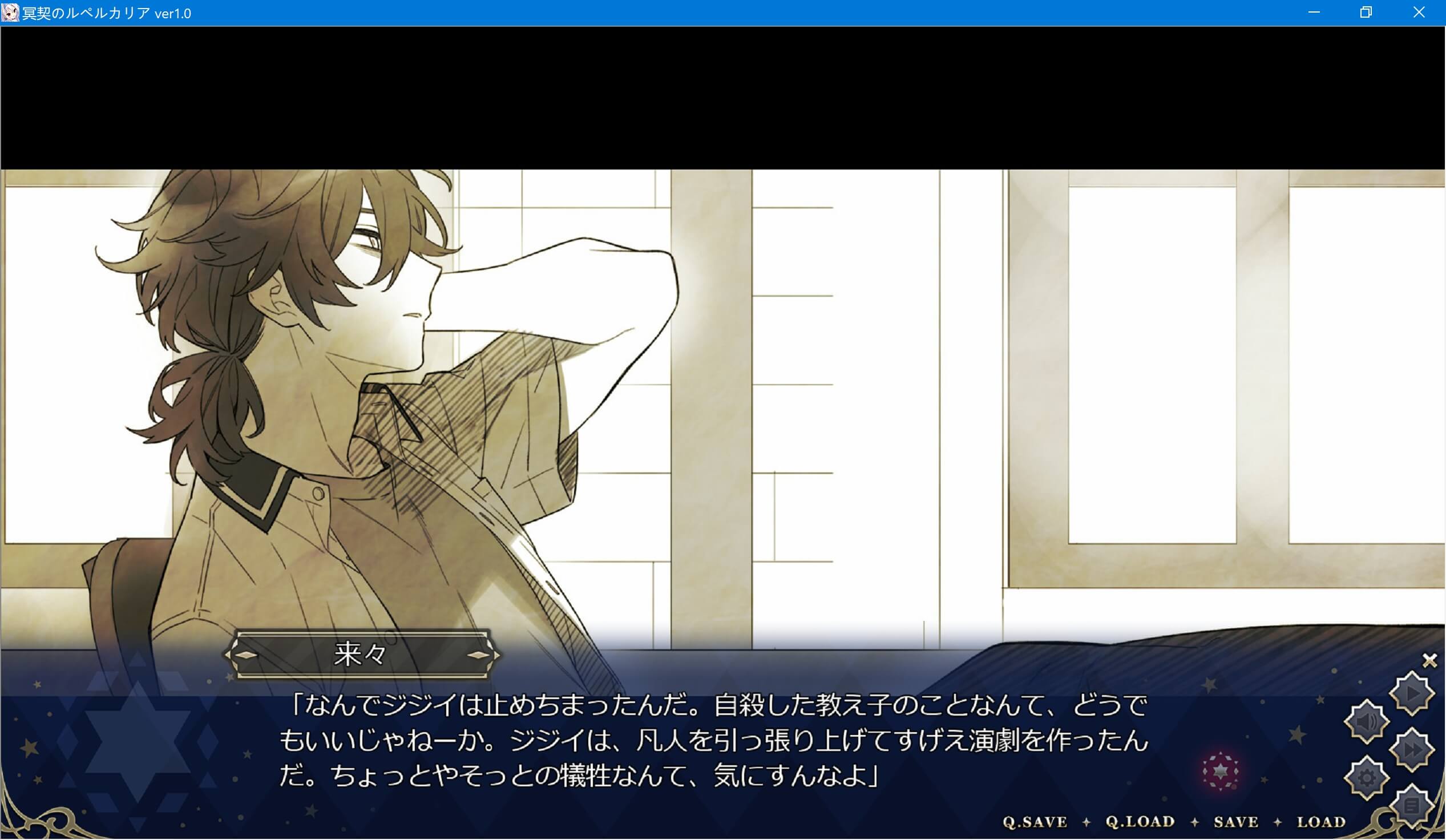
匂宮めぐり’s grandfather kept refusing to let her join the club, but she eventually wore him down and got in.
So this club is full of “down-and-out, self-satisfied weirdos with some pursuit of acting.” Together, these weirdos produce a strange chemical reaction, and the club grows a lot and starts rehearsing shows. The first show is The Prince’s Revenge, Hamlet. The first performance gets a big promotional push, and everyone prepares to make it a success.
Then, during the performance, the theater catches fire, engulfed in flames, and many people die in the disaster.
The death list afterward includes… 白坂ハナ, 龍木悠苑, 匂宮王海, 天樂来々 — and 匂宮めぐり is trapped in the flames, her fate unknown.
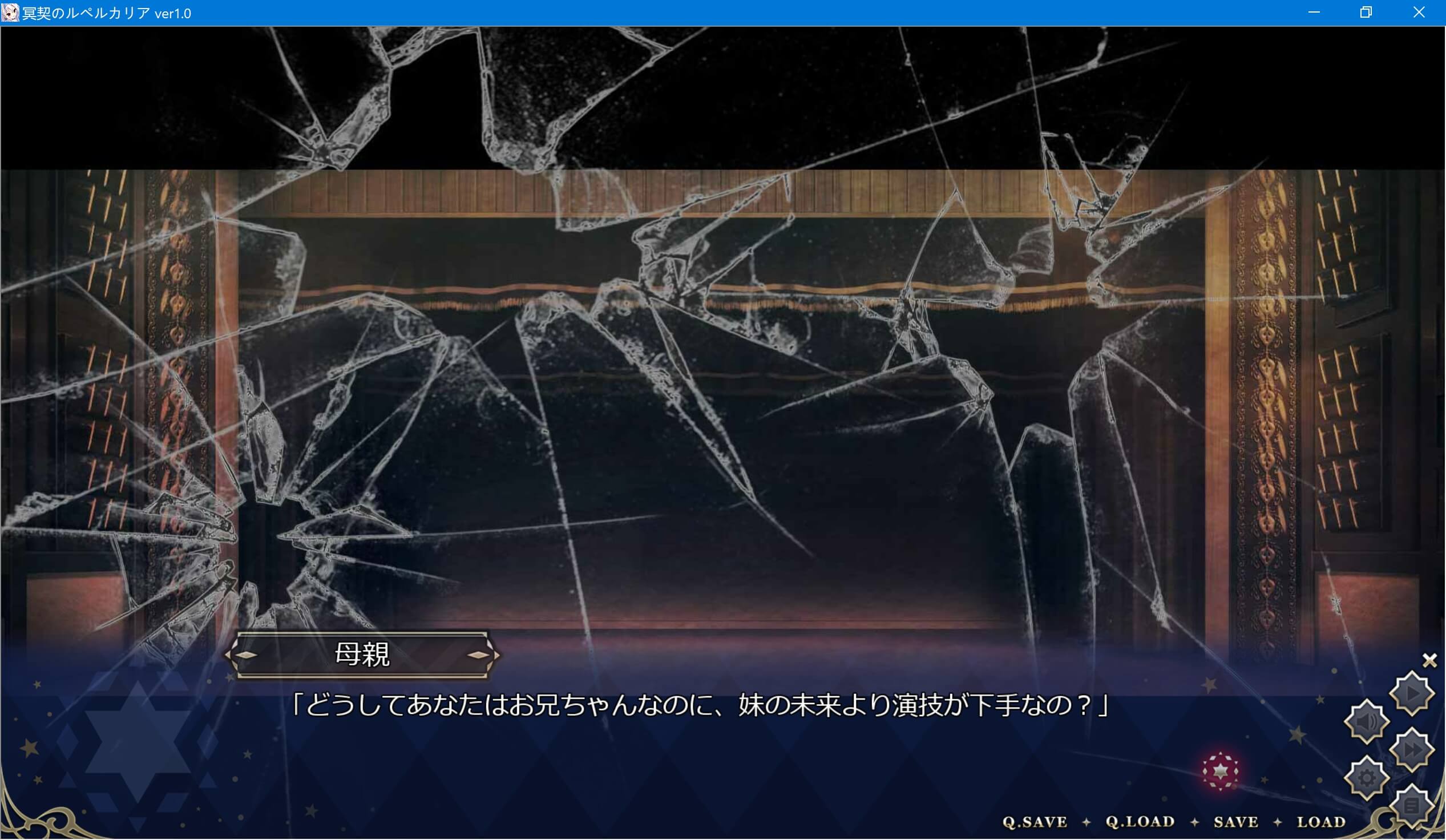
Through the memories, 匂宮めぐり finally remembers that fire, and becomes full of doubt about the current theater club ランピリス. If that fire was real, then so many people are already dead — so what is this club now? What was that club performance held a while ago?
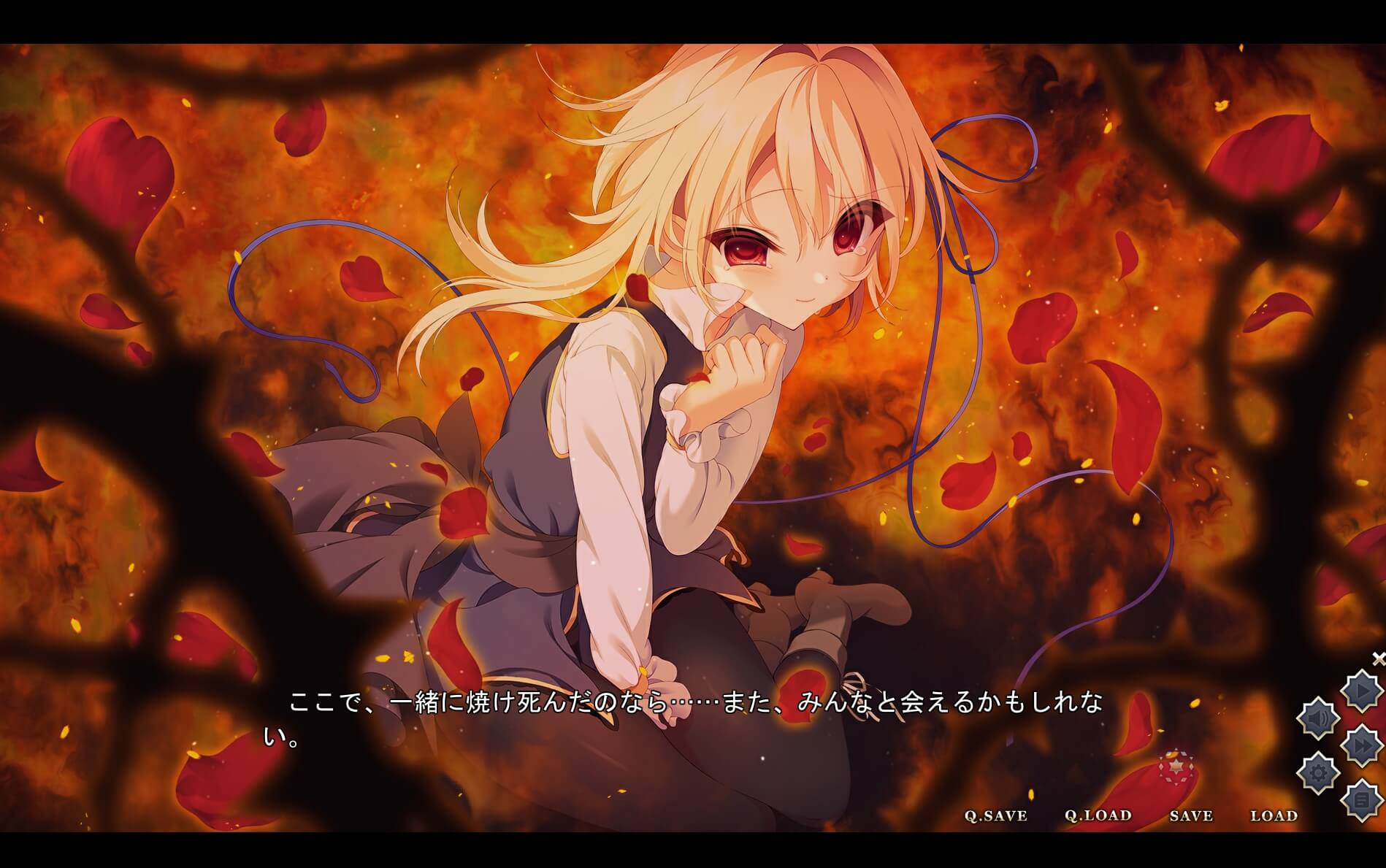
The protagonist faces a choice: he can tell 匂宮めぐり that everyone is actually alive, or tell her the truth — that everyone is dead, and the current world is an illusion.
In the end, 匂宮めぐり accepts reality and understands everything. The entire theater club ランピリス burned down in that fire years ago, and everything now is an illusion. The people who were once so active before her — 白坂ハナ, 龍木悠苑, 匂宮王海, 天樂来々 — are all ghosts from after that fire, and she herself may already be a ghost too.
One last mystery remains in this world: who created it? All suspicion points to that “折原京子” — that is, “折原冰狐.”
Confronted, “折原京子” finally admits the truth: she is “折原冰狐,” the protagonist’s sister “濑和未来,” and she slowly reveals the secret of this world.
The protagonist 濑和環 and his sister 濑和未来’s mother was also an actress once — somewhat famous, but not especially huge. Then the father had an affair with another actress who was better than the mother in both looks and acting.
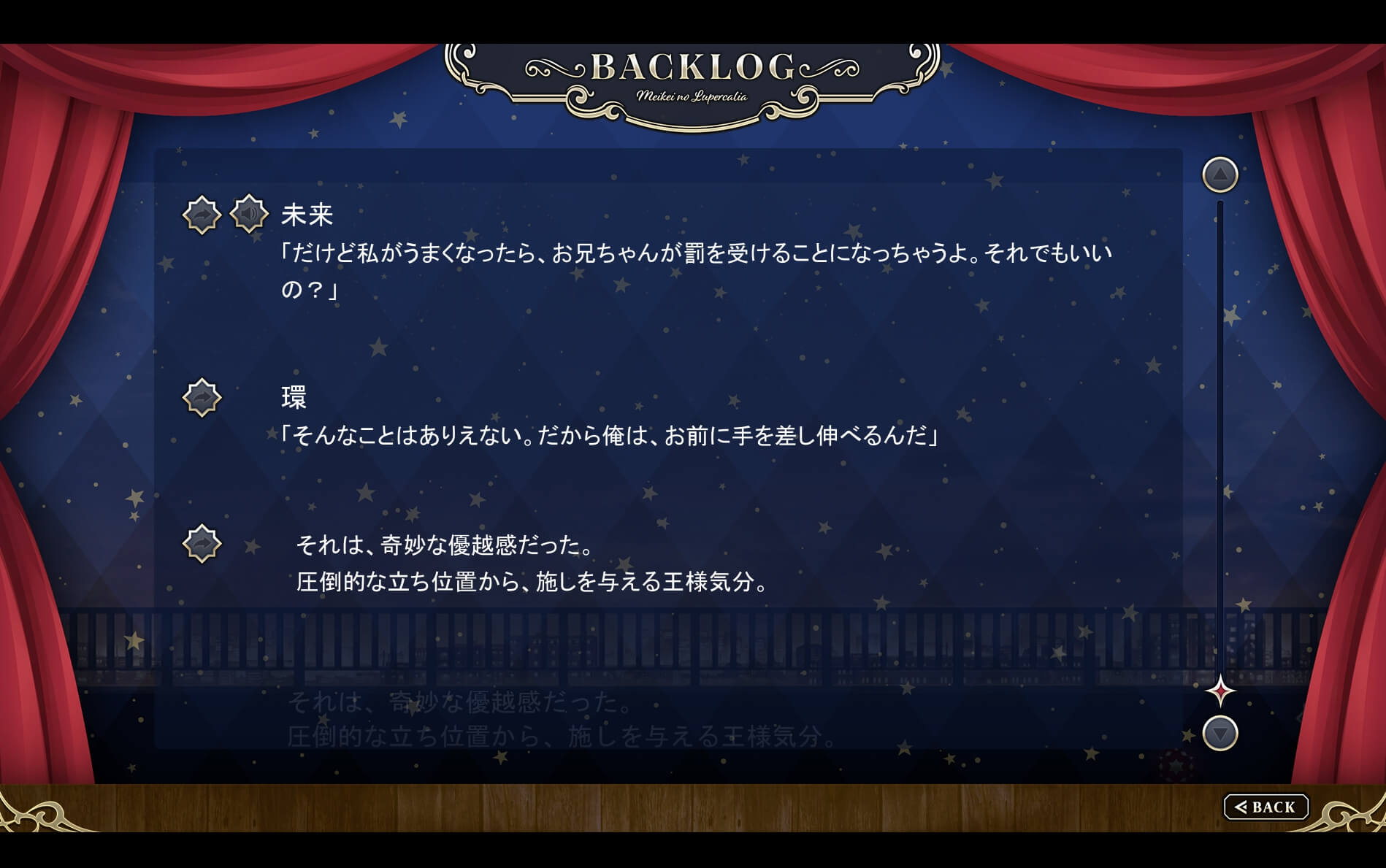
At that time, the mother was filled with hatred, the family fell apart, and the mother wanted revenge. She loathed the actress who destroyed her family, so she decided to raise her own children to enter the acting world — to raise children with perfect acting, surpassing everything about that fox of a woman.
Under their mother’s guidance, the protagonist and his sister began practicing acting. At first, the protagonist showed talent and was praised by their mother, while the sister wasn’t good at it, so the mother began hitting and scolding her. Over time, the protagonist received more and more praise, and the sister looked pitiful under their mother’s bullying. The protagonist grew more and more sympathetic toward her, so he tried to help her, attempting to teach her how to act — but with little effect. In the comparison between brother and sister, the protagonist’s acting was always excellent, he was always praised, and the sister only ever got criticism and beatings.
Later, the protagonist successfully debuted with “The Red Room” and received great acclaim, and their mother praised him highly. But soon the protagonist hit a bottleneck in his acting: he could only perform works like “The Red Room” and wasn’t good at anything else. His range was too narrow to become great, and their mother gradually grew dissatisfied with him.
Meanwhile, the protagonist偶然 discovered that his sister could actually act — and her skill far surpassed his. It turned out the sister had been pretending to be bad at acting so that her brother wouldn’t be scolded by their mother.
The protagonist instantly felt the irony, and understood that all along he’d held a sense of “superiority” over his sister — thinking he was the genius and she was just ordinary — and had even “taught” her out of condescension. Little did he know his sister was already playing the fool to eat the tiger, and her performance of “pretending she knew nothing about acting” was even more masterful.
The protagonist demands his sister stop pretending and act at her true level, because he doesn’t want to be looked down on.
But soon, in the comparison between brother and sister, the protagonist is instantly defeated and their positions reverse. The sister is praised by their mother, and all the scolding and beatings that once fell on her now fall on the protagonist.
Only then does the protagonist realize his sister truly is a genius at acting, and he can never catch up. Soon her acting far surpasses his, and he receives more and more beatings from their mother. He comes to hate his sister — why is she so strong, why did she make his life so miserable?
But his sister never thought that way about him. She even liked him a little, believing her efforts in acting were at her brother’s request, to earn his approval.
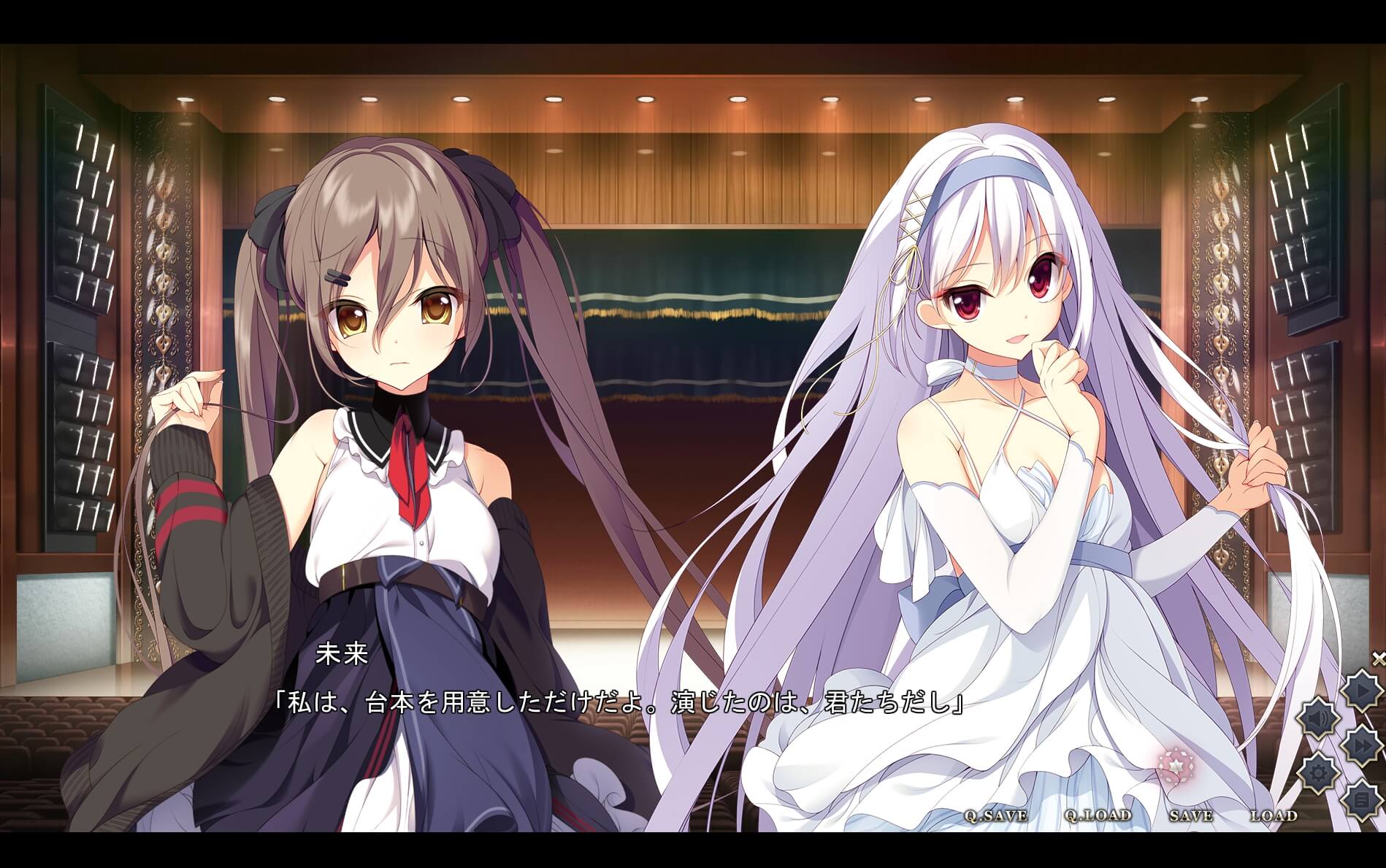
In the end, when his sister confesses to him, he coldly rejects her with hatred, and her heart dies. After that, the actress “濑和未来” disappears from the stage, and a new name, “折原冰狐,” appears in the entertainment world.
折原冰狐 abandons all her wishes for life and throws herself entirely into acting. She’s harsh, cold, and relentlessly perfectionist about acting, criticizing other actors mercilessly — including her former friend 箱鳥理世. She goes fully dark: she’ll self-harm to play a role, she’ll become a lunatic to play a lunatic. Over time, both her body and mind break down, and she becomes more like a madwoman who exists only for acting.
In her final performance, 折原冰狐 collapses on stage from physical exhaustion, ending her life.
At the same time, a performance by a theater club called ランピリス is engulfed in flames. The club members are in crisis, and the audience members on site are swallowed by the fire as well — including 天使奈々菜, 倉科双葉, 架橋琥珀, and her brother 濑和環.
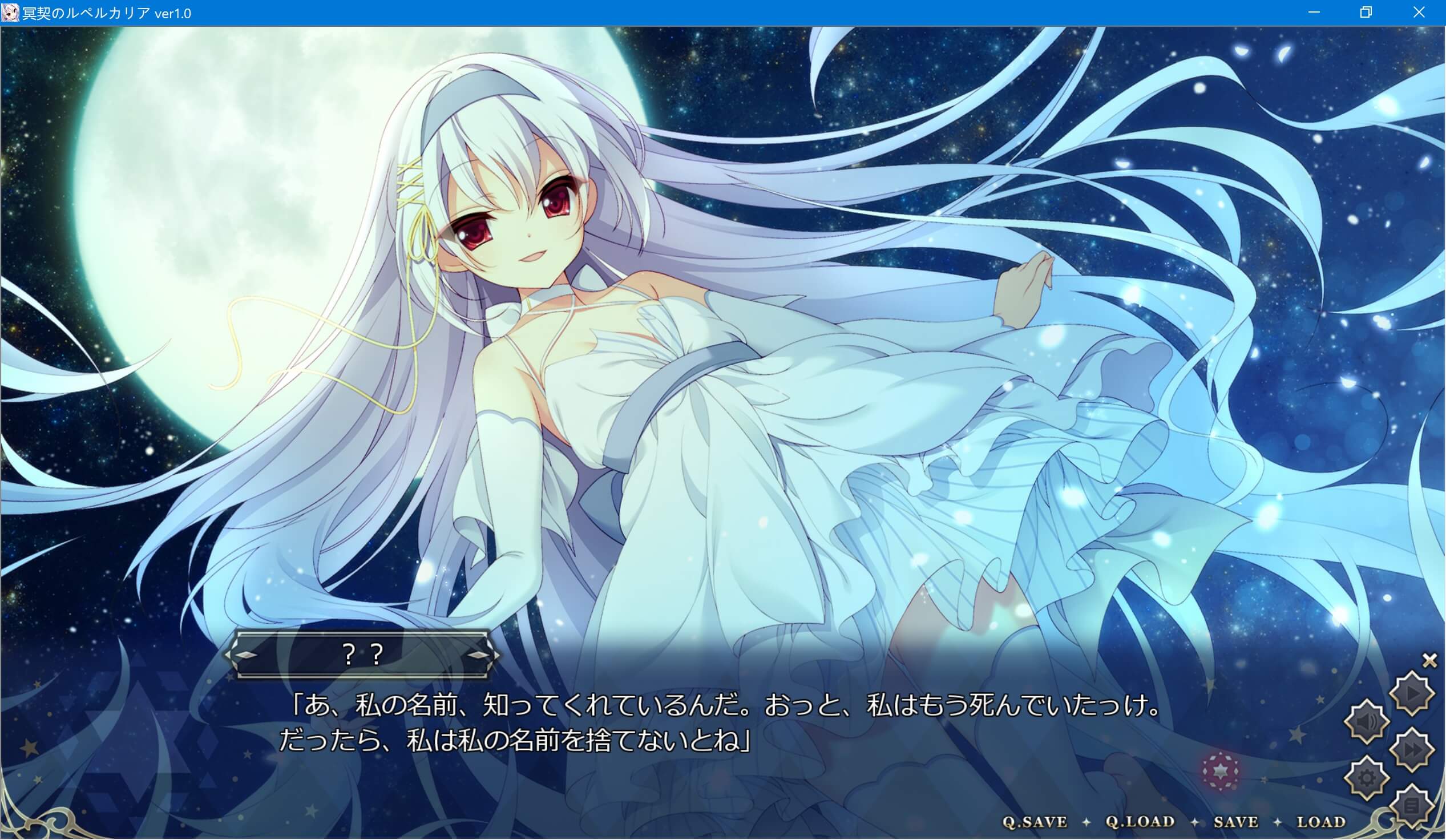
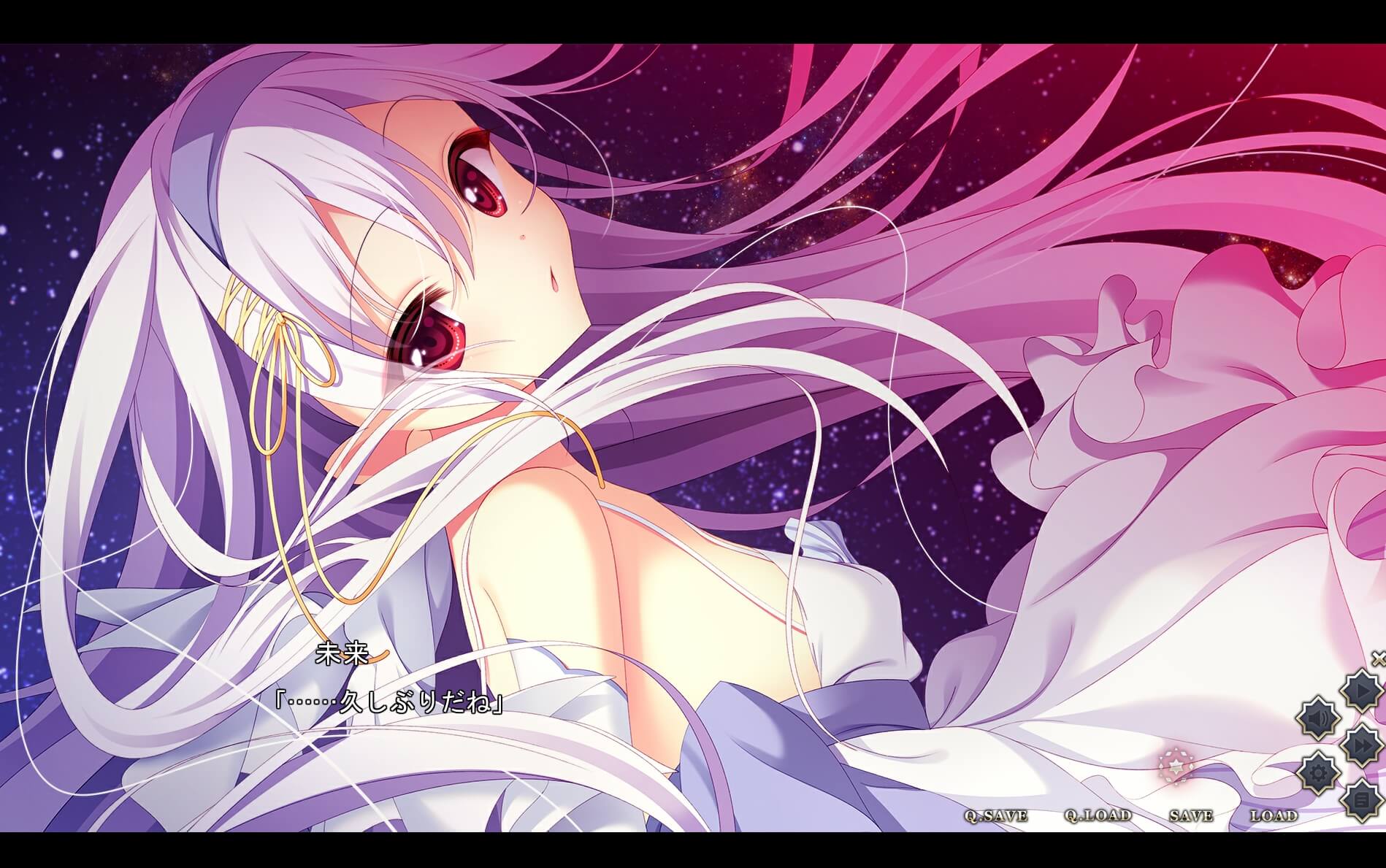
After death, 折原冰狐 sees another version of herself, who places a magic quill pen in her hand. The other self wears a witch-like, mysterious and eerie smile. The “witch” tells her that although she’s dead, she can still use this magic quill pen to write her own story in the “space between life and death” — and the story written with this pen “can become reality.”
“Didn’t you want to be with your brother? His soul happens to be on the edge of death too. Use this pen to write your story.”
In the end, 折原冰狐 takes the pen, gathers the souls of those who died that day at the theater club ランピリス, draws them into her script, and writes a story of a group of people creating performances together in the “theater club ランピリス.” The only difference is that she doesn’t write herself into the story — she uses the alias “折原京子,” and in the story she’s no longer the protagonist’s sister but someone who looks very much like her. 濑和未来 wants to give her brother happiness, but knows she no longer deserves it, so in the story she arranges various women to approach her brother — 天使奈々菜, 匂宮めぐり, 箱鳥理世. All these plotlines are 濑和未来’s arrangements in the story.
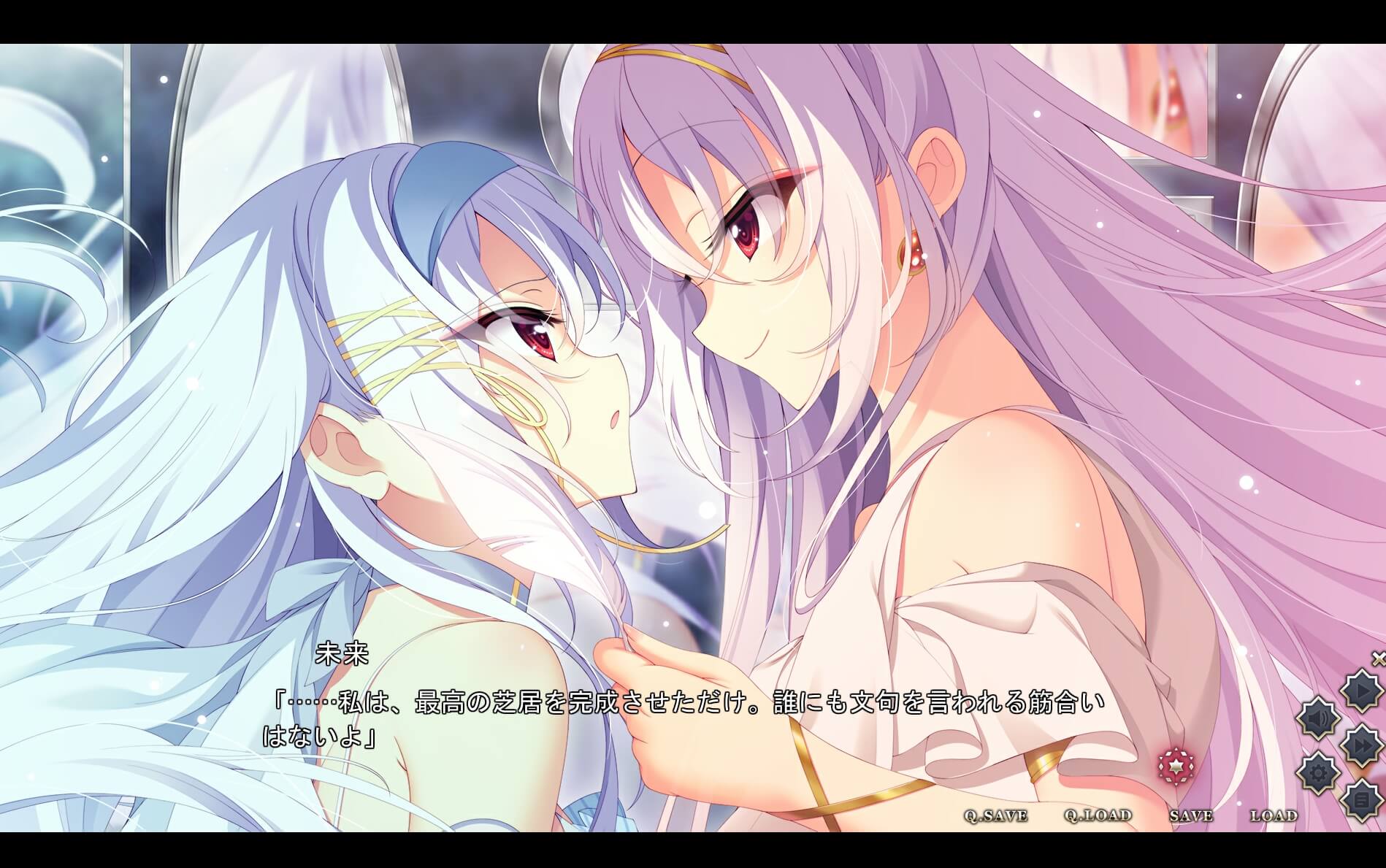
So simply put, the story from the beginning of the game up to now is all written by 濑和未来 with that magic pen. The people in the story are actually on the verge of death, and the real “theater club ランピリス” burned down long ago.
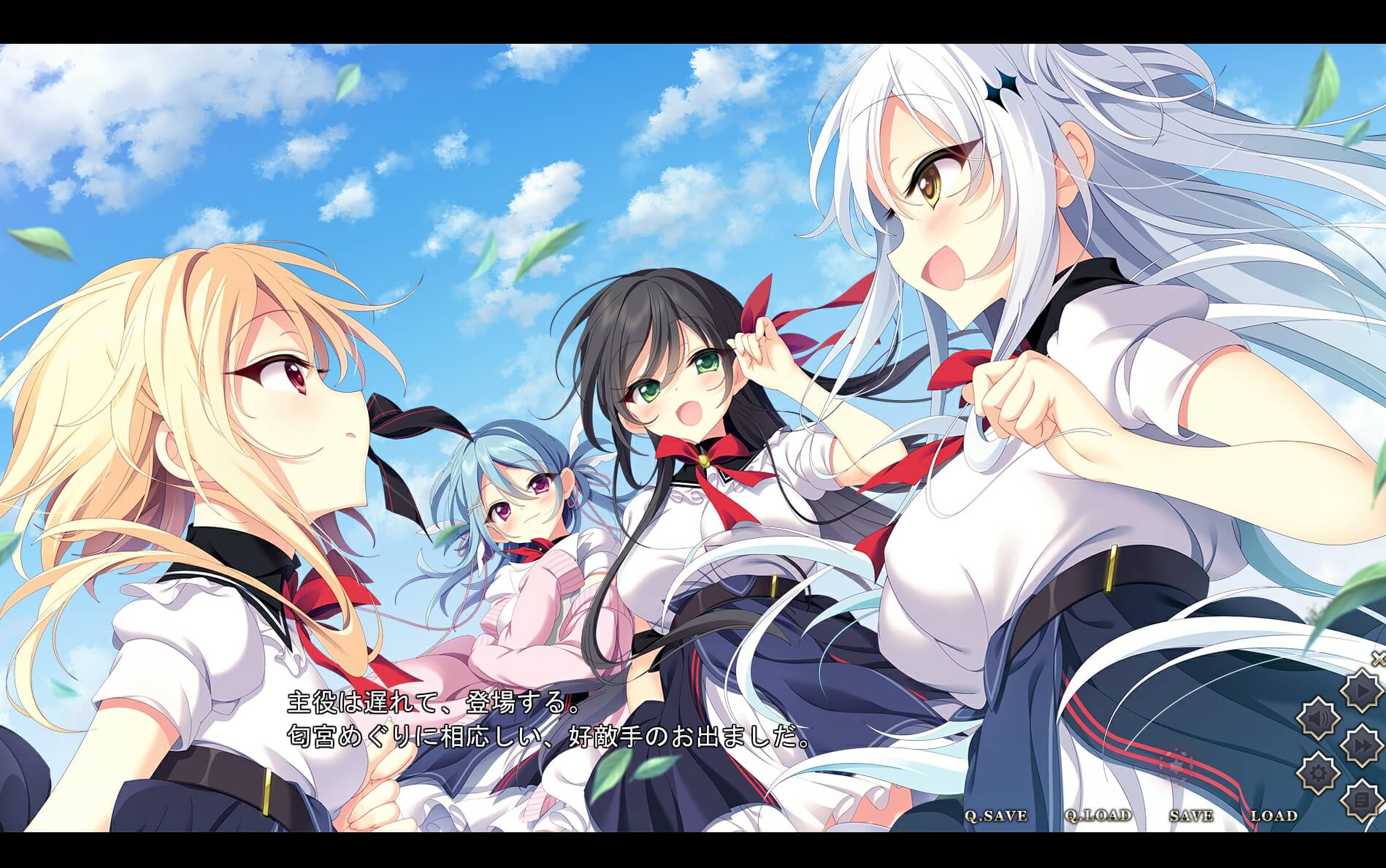
At the end of the game, the brother 濑和環 breaks through the false illusion created by his sister 濑和未来, and the whole fake story ends. After the illusion is broken, everyone returns to reality. Perhaps because of the magic pen in 濑和未来’s hand, time rewinds to the scene of the club fire, and everyone miraculously changes their fate, escaping the flames and avoiding death. Later, they rebuild the theater club ランピリス and return to a life centered on acting. But the difference is that 濑和未来 has already died forever in that performance, never to return.
The story ends there.
Compared to Rukuru’s previous games, I personally think 冥契のルペルカリア is a kind of “Frankenstein” combo punch. It fuses the dead people from 紙の上の魔法使い, the long flashback sequences from 水葬銀貨のイストリア, and the inferiority complexes toward geniuses from 空に刻んだパラレログラム — and overall it’s extremely depressive. That depression, amplified by the improved art and the atmosphere built by the music, reaches an extreme. So much so that while I was playing this game, my whole mood was bad the entire time. Also, the game doesn’t put much effort into “paying off foreshadowing” — most twists are easy to guess, and the text spoils way too much, especially that line during transitions:
“The story development you desire, guided by silver hair and red eyes~”
This already tells you from the sidelines that a “witch” is pulling the strings behind the story—the story’s writer and creator is the silver-haired, red-eyed girl, and she exists inside the story too. After certain chapters, there are conversations between Orikhara Hikitsune and others, and more than once they say:
“An actress with no story should take her bow and exit.”
Which is another way of saying these characters are just pawns she set up to build the plot. Some of the branches are full of hints too, telling you this is merely “one possibility,” “you write the ending you want,” not the real ending.
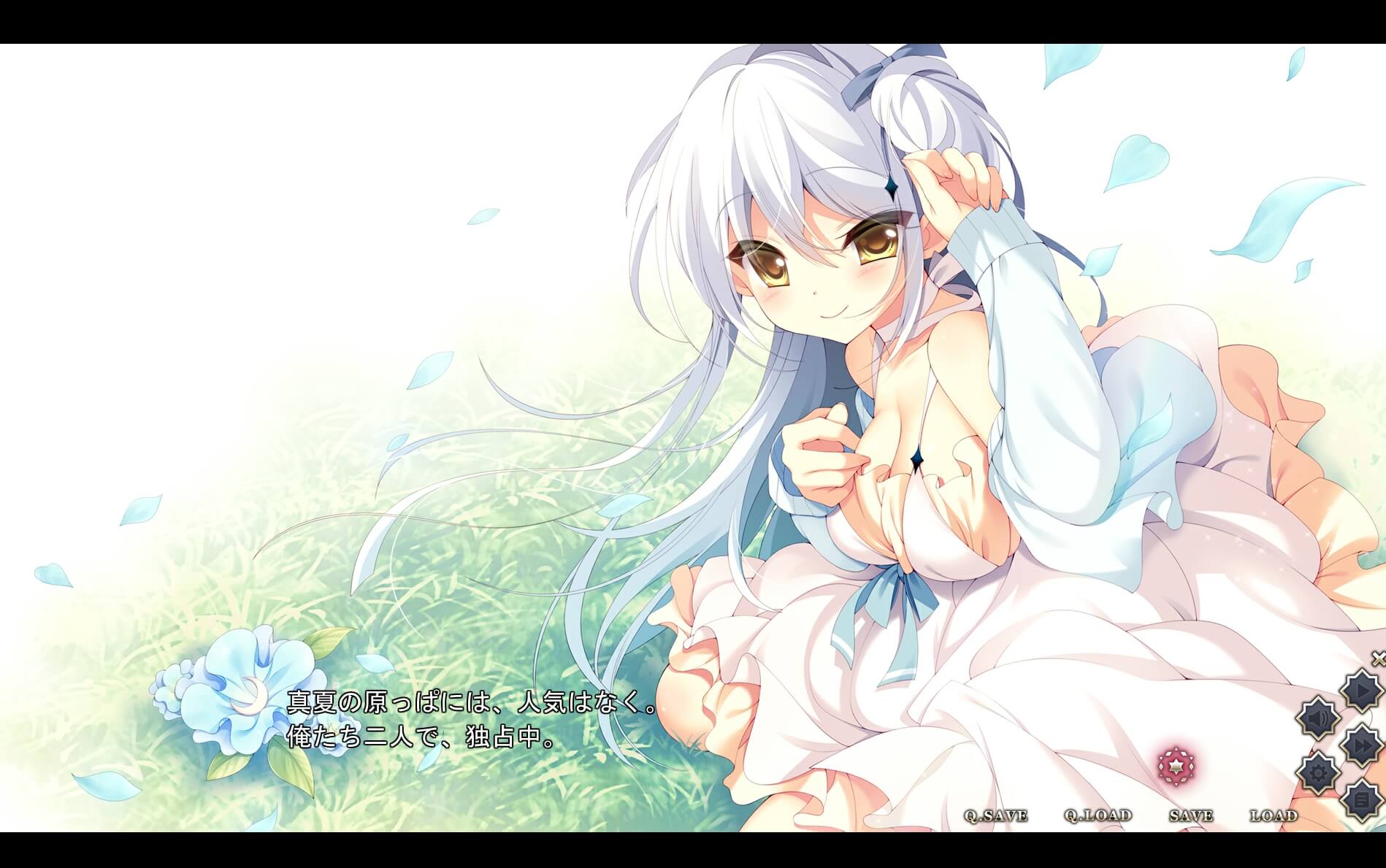
As for the game’s biggest foreshadowing—the drama club ランピリス and the fire during their performance—it’s already painfully obvious in the OP lyrics, the slogan, some of the dialogue, even the title. Everyone knows people are going to die. What nobody expected was that a whole nest of them would die. Maybe that’s the only real surprise.
The plot isn’t hard to follow: a brother-obsessed little sister dies and uses a magic quill to create a “dreamlike world” for her brother. Everyone who appears in it is already dead, and the sister even tries to set her brother up with a wife in this dream world so he can be happy. That’s it. If you insist on connecting it to 紙の上の魔法使い, the link is that magic quill—it’s the same thing that creates the magic books in 紙の上の魔法使い, where written stories become reality. The setting lines up.
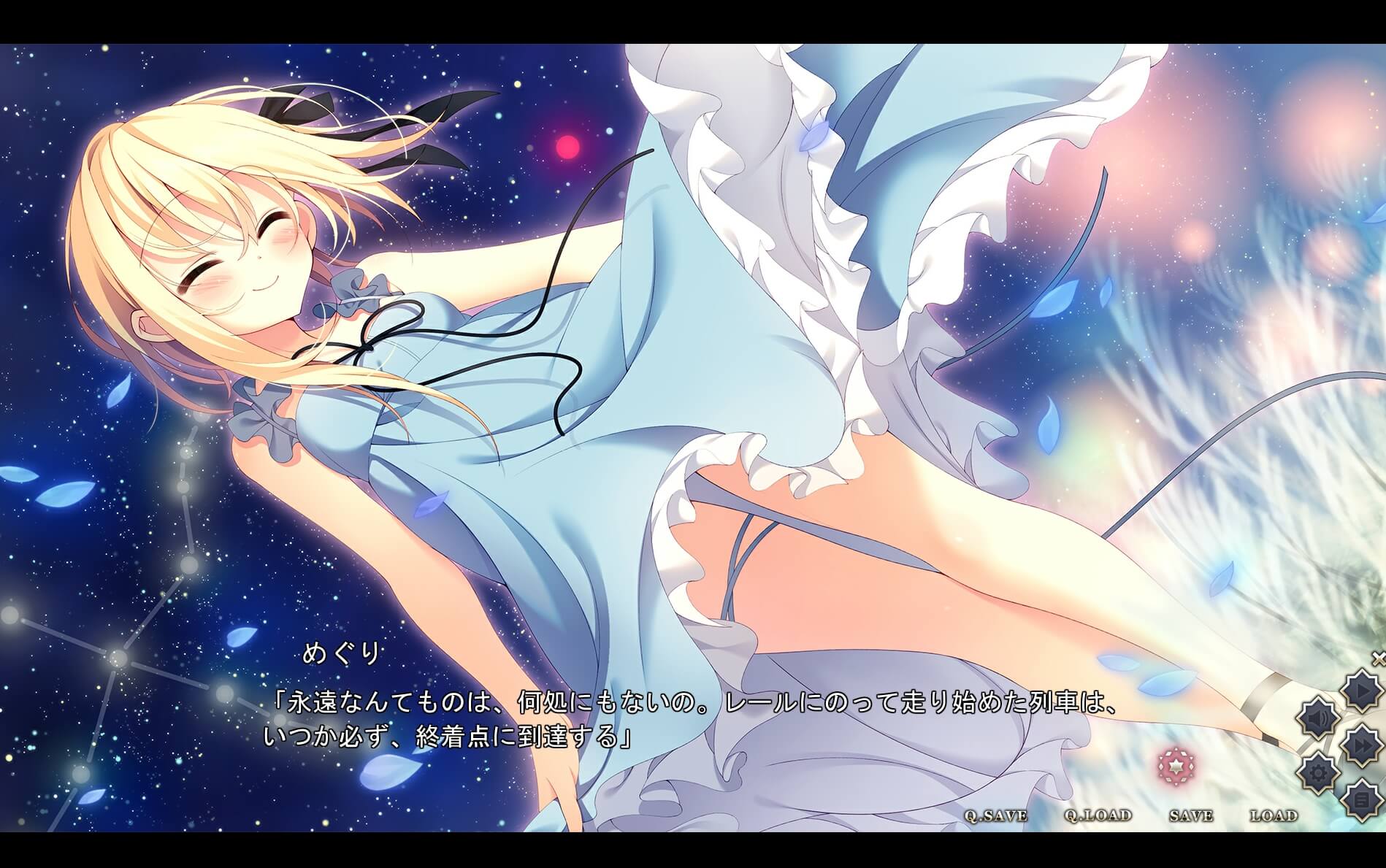
The ending is, frankly, dumb as shit. You could have gone with “let all the dead souls rest, the sole survivor lays flowers” or something. But no, they had to force a Happy Ending. Earlier they tell you the club president got a wooden stake through the chest, and then suddenly time rewinds and nobody died. I don’t know if Rukuru chickened out or caught pneumonia and fried his brain, but it’s completely out of character.
There’s a lot more I could say about 冥契のルペルカリア—the inner construction of each character, their individual stories. I’d call it more of an ensemble piece. Every character gets a little side episode, they even give two side characters a romance, and who knows if a ponytail guy can actually score a big-titted girl in real life. Some of the individual routes have interesting ideas too. Ninomiya Meguri’s route once again mimics the手法 of Night on the Galactic Railroad (why do I say “again”). I thought it was well written, but you Japanese keep writing about Night on the Galactic Railroad and Alice in Wonderland and I’m sick of seeing it. Can’t you write something else?
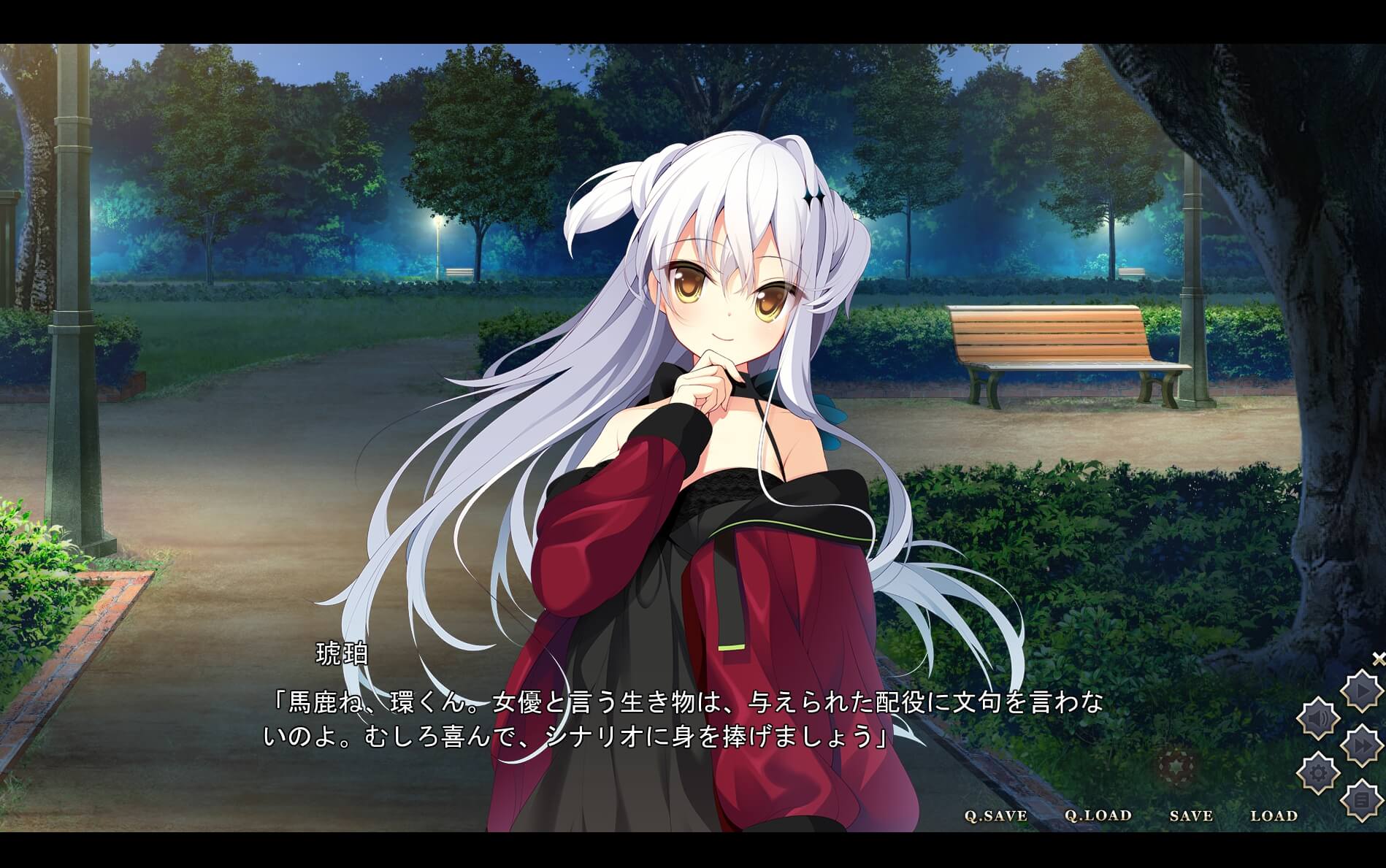
Meanwhile, some chapters are stretched out just to “sell characters.” The most obvious is Kakehashi Kohaku’s route—the protagonist plays a dating game with Kohaku in pursuit of his “ideal sister.” This route gets shoved in right before the final True End and feels like a gatekeeper boss, forcing the player through it. Sometimes you could cut Kakehashi Kohaku entirely. I don’t know why she’s even in the game. A smoke bomb for the plot? To make players think maybe Kohaku is the sister?
Overall 冥契のルペルカリア doesn’t have many real problems, but I can feel Rukuru hitting his limit. He’s used tricks from his previous works more than once here—you can see shadows of everything he’s written, including the earliest 恋愛予報. They even name-dropped his old works in the promotional material to stir up hype, which feels insecure. And some of the psychological descriptions are way too melodramatic. The typical example is the protagonist seeing his sister Orikhara Hikitsune appear and reacting like he’s facing the Demon King. She’s not that dark, she’s just better at acting than you, and she even has feelings for you. Why give up so easily? Can acting really put that much pressure on someone? I doubt it. It all comes down to one question: “Was it worth it?”
Of course, this game also made me realize where Rukuru’s writing style comes from. He really seems to love “drama” and “the theater.” Those long parallel-sentence dialogues and inner monologues are closer to opera and stage play language. Stage acting is different from film and TV—it demands huge presence and vocal range from the actor. That said, I think the game misunderstands stage acting a bit. It keeps treating “the voice actress can do different voices” as good acting, which is a big mistake. Voice matters, but it’s not the whole performance. I’m calling out Kakehashi Kohaku’s voice actress, Kanau. She sounds one way in normal conversation and another when acting, and it’s completely unnatural—fake.
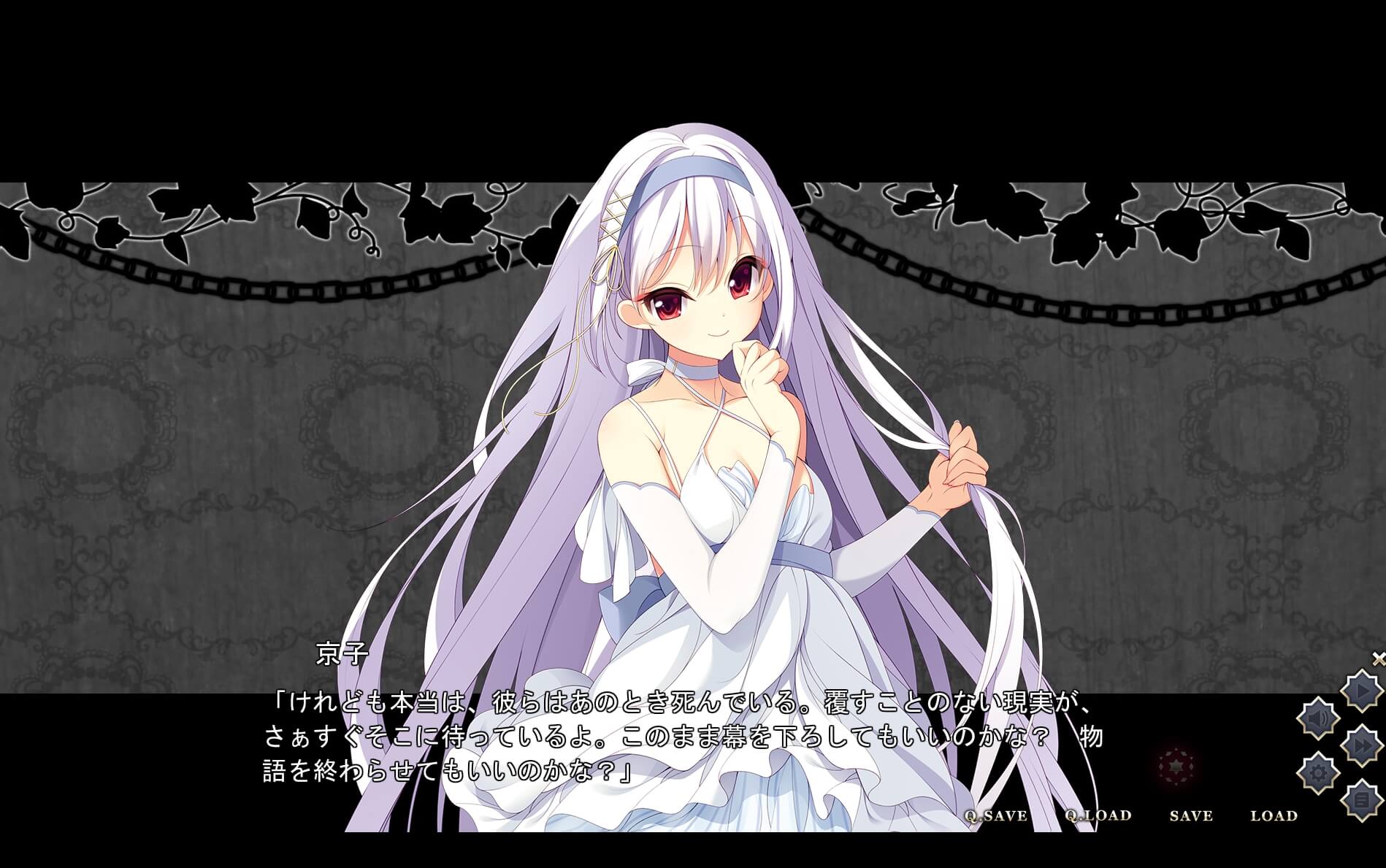
Lots of people complain that Kiriya’s art style is too wild, but it’s actually decent here. At least it’s way better than the twisted poses in 空に刻んだパラレログラム. Some CGs even feel like “world-famous paintings” (in a good way). That’s progress. Meto’s soundtrack quality has improved a lot too—some of the flashback scenes add an old-record distortion effect that maxes out the atmosphere.
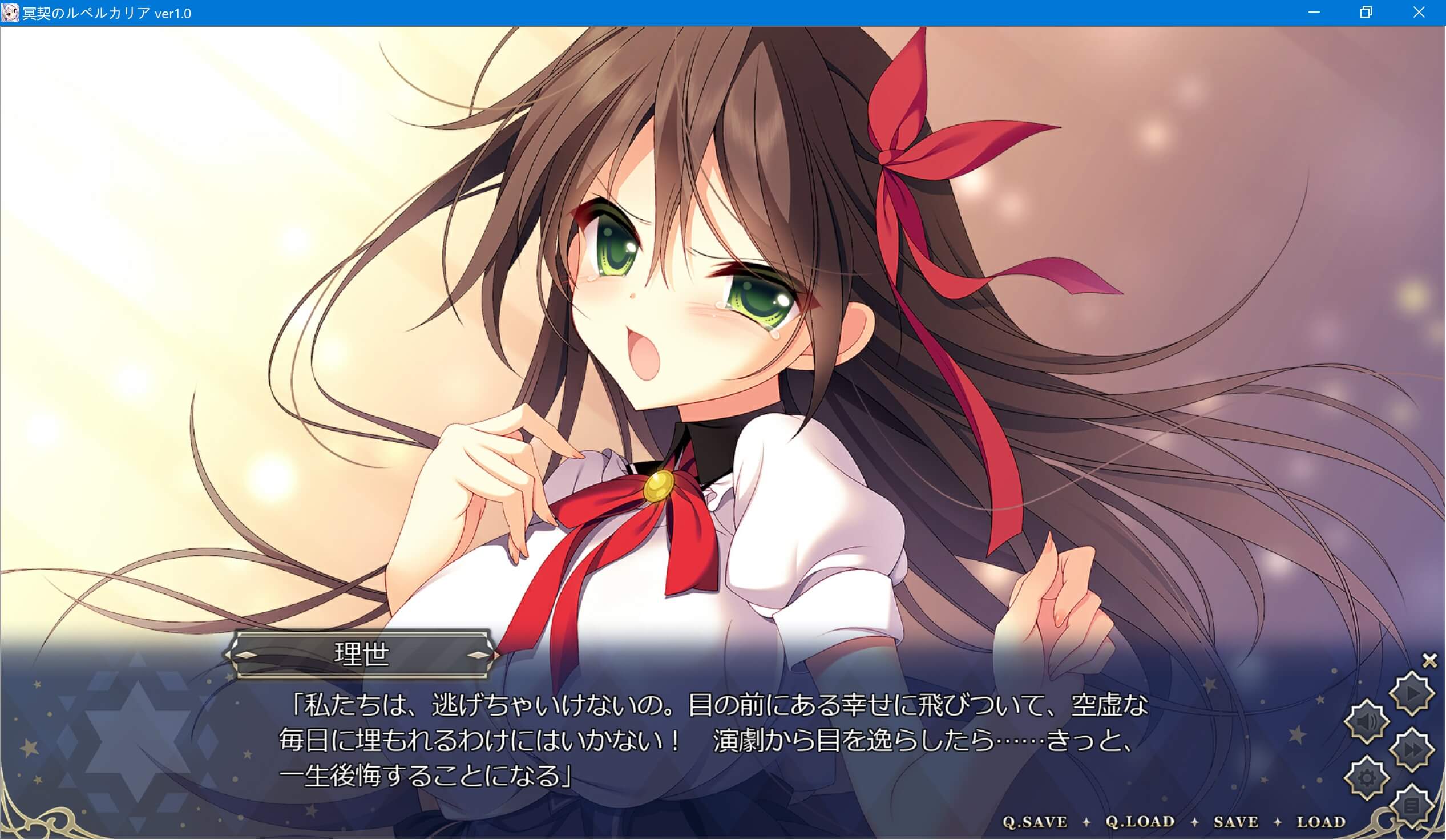
In short: Kiriya improved, Meto improved, only Rukuru is standing still. Sure, his screenwriting is already top-tier for a visual novel, but people need to move forward. If you keep relying on long “flashback” sequences, twisted sibling relationships, and “inferiority complex toward geniuses” as your themes, sooner or later you’ll end up like the protagonist in your own game—stuck at the Red Room and going no further. I don’t want to see Rukuru turn into FandC, where all he knows is dirty jokes, Cthulhu, and half-assed trivia. Maybe the answer will come in his next game.
Oh right—the bugs are fewer than before, but there are still plenty. The most obvious is the save system. The game only writes your save to disk after you completely quit. So you open the game, save, and if it crashes right then—sorry, your save is invalid.
Think about it: why do I save in the first place? So I can continue when the game suddenly crashes, right?
And your save only writes when you fully exit? What the fuck is the point of that save?
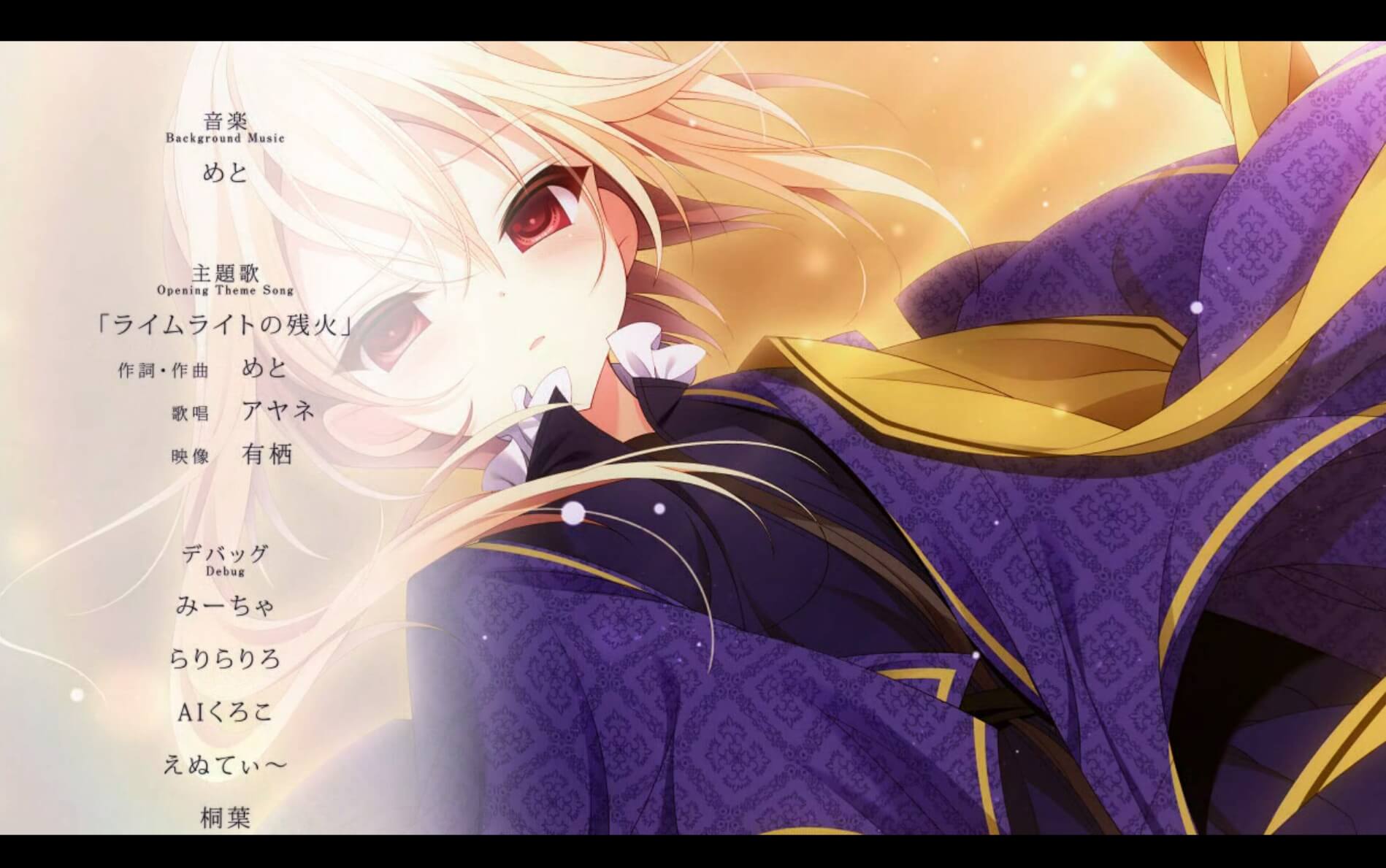
The game’s debug testers even include the artist Kiriya. That’s amazing. Are you really that short-staffed?
Comments are hosted on the Chinese main site. This mirror is read-only.