Madohi Shiroki no Kamikakushi (まどひ白きの神隠し) Review
The Day I Became a God
There’s this stock setup you see all the time in Japanese anime and games: the protagonist has no known origin, gets treated like a freak and pushed around, and then it turns out he’s actually some kind of savior. Of course Japanese works rarely say “savior” — nine times out of ten they call him a kamisama. Honestly, back when I first started consuming this stuff, hearing “kamisama” still commanded some respect from me. A god, right? Omniscient, omnipotent. Obviously possessed of a towering intellect, ample charisma, and virtues we mere mortals could never hope to reach — the kind of being who can look down on us and address us as “mortals,” bellow Die Mortal! and take a deep, smoldering breath.
But then I noticed how utterly saturated anime and games are with kamisama, and I finally wised up: the so-called “god” in Japan is about as valuable as a shared bike. Shrines dedicated to them are, by the Japanese’s own snark, as commonplace as public toilets (and in reality Japanese public toilets are not fucking commonplace at all — half the time I can only find one in a subway station). As for the “gods” set up in these stories, you don’t need to take them seriously at all. Most gods in anime and games are more useless than ordinary people.
And so along comes yet another game waving the “god” banner, from everyone’s old acquaintance Lump of Sugar.
Honestly, Lump of Sugar’s game last year was really not good. I went to the trouble of writing it up, even got invited to do a commercial piece, but that game was thoroughly mediocre. These past few years Lump of Sugar seems to have gotten stuck in a rut, settled into a “coast on by, lie flat” phase. Every game they set up a story backdrop, rationalize the kemonomimi heroine, and then under that framework they round up a bunch of outsourced scenario writers and slap something together. Overnight Lump of Sugar seems to have seen through human warmth and the state of the industry: what’s the point of story, what’s the point of gameplay? These days people buying a galgame are just here for the lewd art. Our studio’s biggest selling point was never the systems or the story — it’s Moekibara’s kemonomimi. So all you have to do is max out the kemonomimi’s appeal.
So I had zero expectations for this game from the start, despite the very cool-sounding title: Madohi Shiroki no Kamikakushi. I can’t even tell you how to translate that into Chinese — something like “the mysterious white kamikakushi?” I think some group picked up the Chinese version of this game, and the title they went with is probably one of those forced-literary deals.
So what story does this game actually tell?
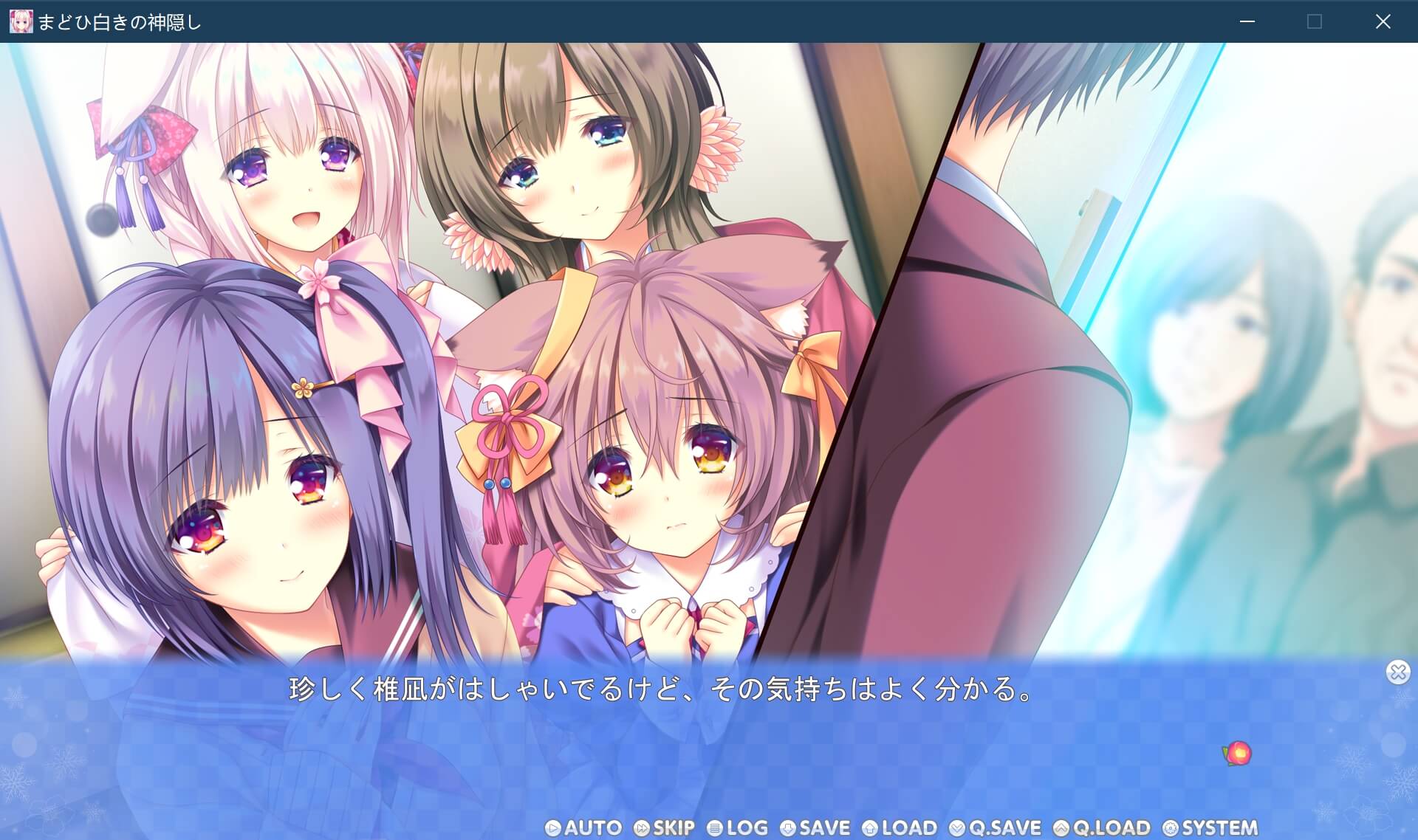
Mainly it’s about our protagonist and his biological little sister stumbling through the mirror in their room into another world. This world is called “the world where gods exist,” and it’s populated entirely by “gods.” The brother and sister then try to find a way home in this other world. Since the common route’s slice-of-life is so tasteless, let me just summarize the key points of the common route:
- This other world looks exactly like the original world — a mirror-image existence — only the residents are different.
- The residents are all “gods,” big and small, and the gods’ continued existence depends entirely on the faith of humans in the original world.
- The brother and sister need a god’s power to send them back, but not many gods can actually pull that off right now.
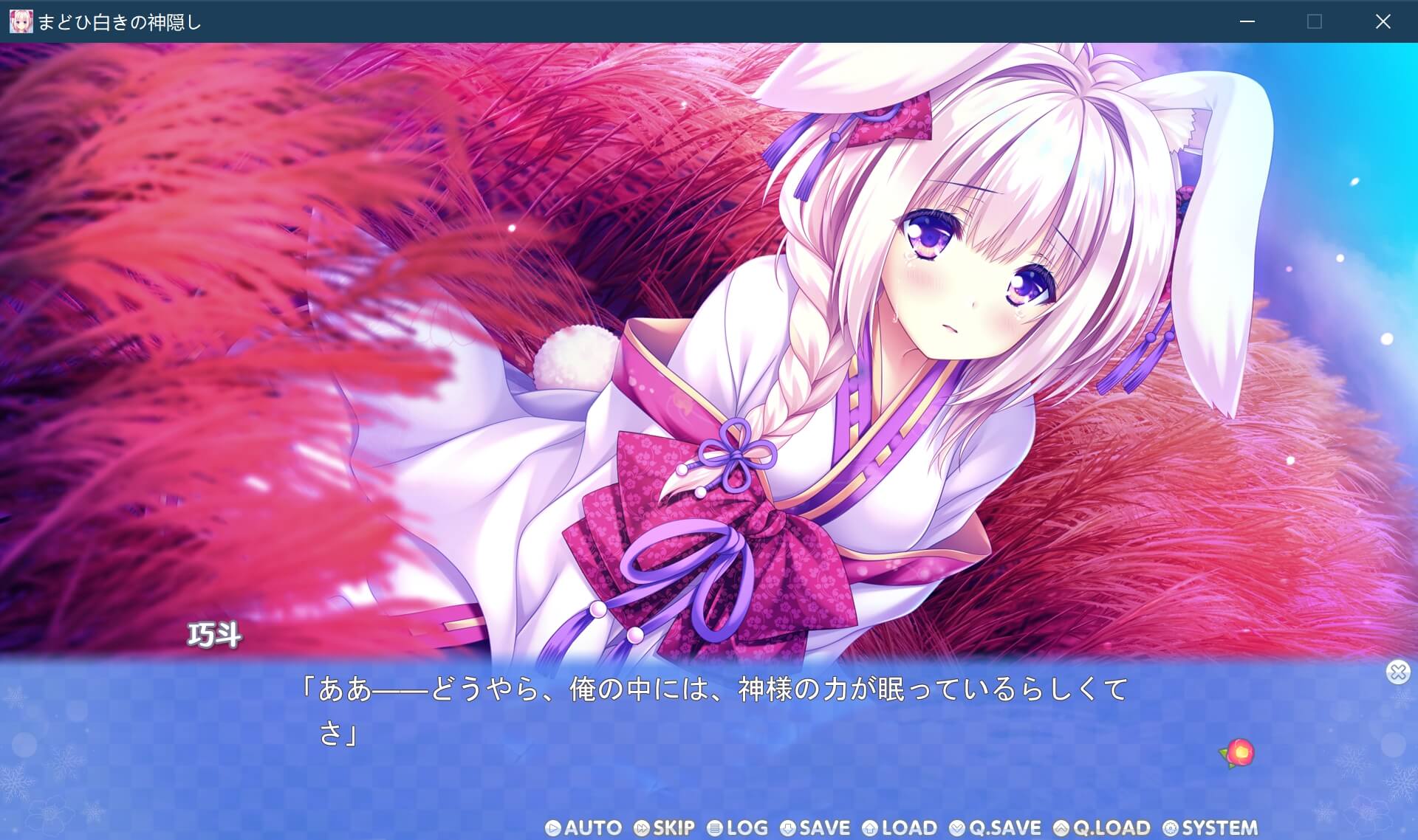
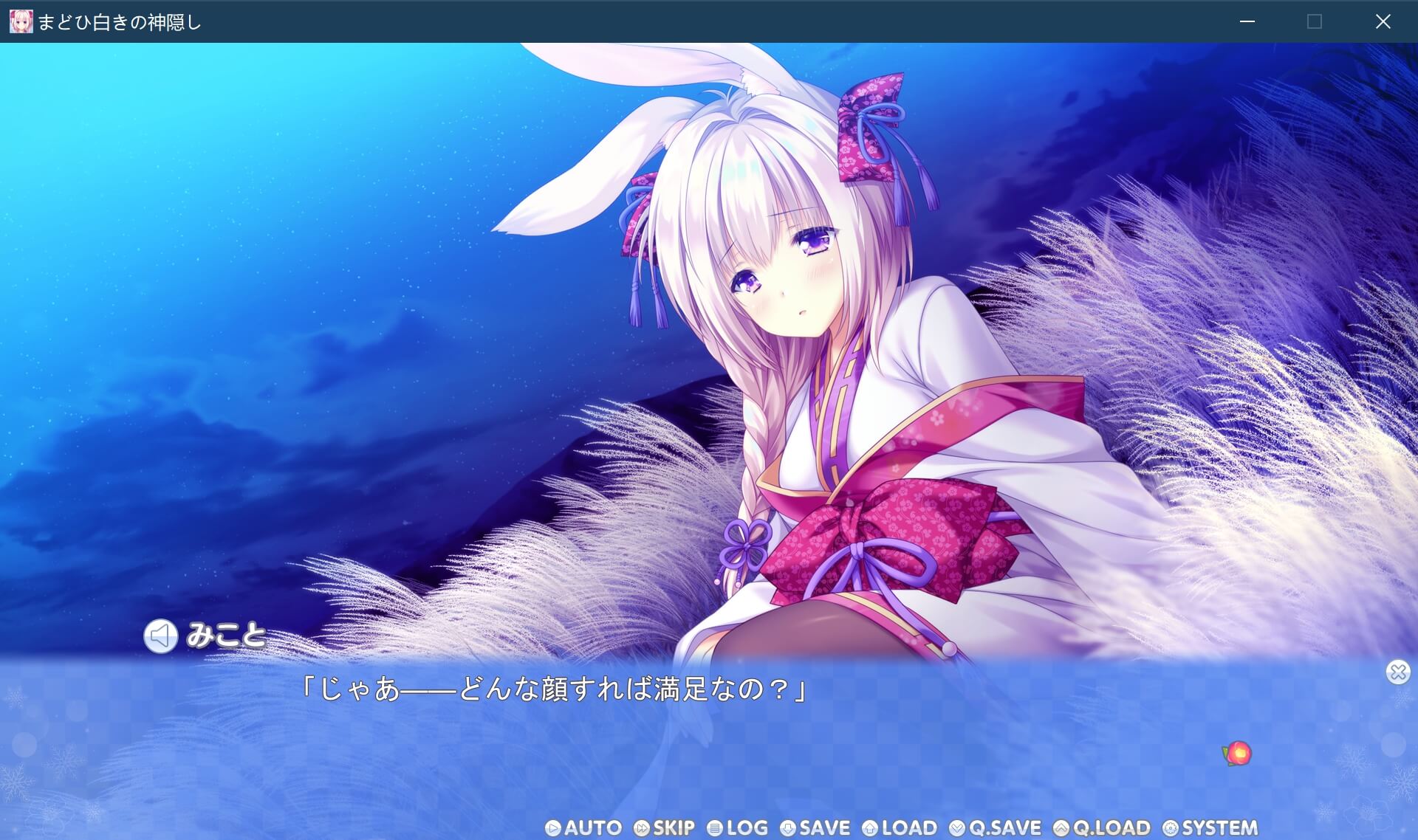
- On his first trip to the other world, the protagonist meets a “god with rabbit ears” who calls herself Inushiro Mikoto and claims to be Inaba no Shiro Usagi, though she’s later taken to be the Japanese god Tsukuyomi.
- In theory Tsukuyomi’s divine power could send the brother and sister home, but she tries and can’t do it. In the end it takes some tsundere god summoned by a tengu to get it done.
And then the most important point: when the brother and sister finally get the chance to go back to their original world, all they do is say hello to their “parents” over there and choose to stay, because there are mysteries about themselves they haven’t solved.
So what mysteries do the brother and sister have? Because the two of them are probably descended from the “god world” to begin with. The protagonist says he and his sister were found by their current adoptive parents at a shrine in the snow. The parents had been married for years without children, and finally picked up this pair of siblings, raised them as their own, and have cared for them ever since. And according to the gods here, if you can cross over, you must have some connection to this place — so the initial read is that the two of them were probably from this world originally, and their biological parents are here too.
So the siblings set out to find their biological parents.
Here the game splits into two main threads (at least I count two). One is the secret belonging to Inushiro Mikoto, and the other is the secret belonging to the protagonist and his sister.
Let’s start with the C-position heroine Inushiro Mikoto’s secret — basically her personal route. If you choose to pursue her, you quickly end up in bed with her, and then the protagonist soon discovers that this so-called Inushiro Mikoto wears the name of the god Tsukuyomi but is all show, with no actual Tsukuyomi power at all. After a stretch of agonizing flashback and romance drama, we finally understand: this Inushiro Mikoto isn’t Tsukuyomi at all. Her true representative deity is Inaba no Shiro Usagi, but because the gods of this other world are sustained by “human faith,” and practically no one in the human world remembers Inaba no Shiro Usagi anymore, she should have vanished from this place. To survive, she borrowed the name of Tsukuyomi, took over as the great god of the moon, and over time the pretense became real.
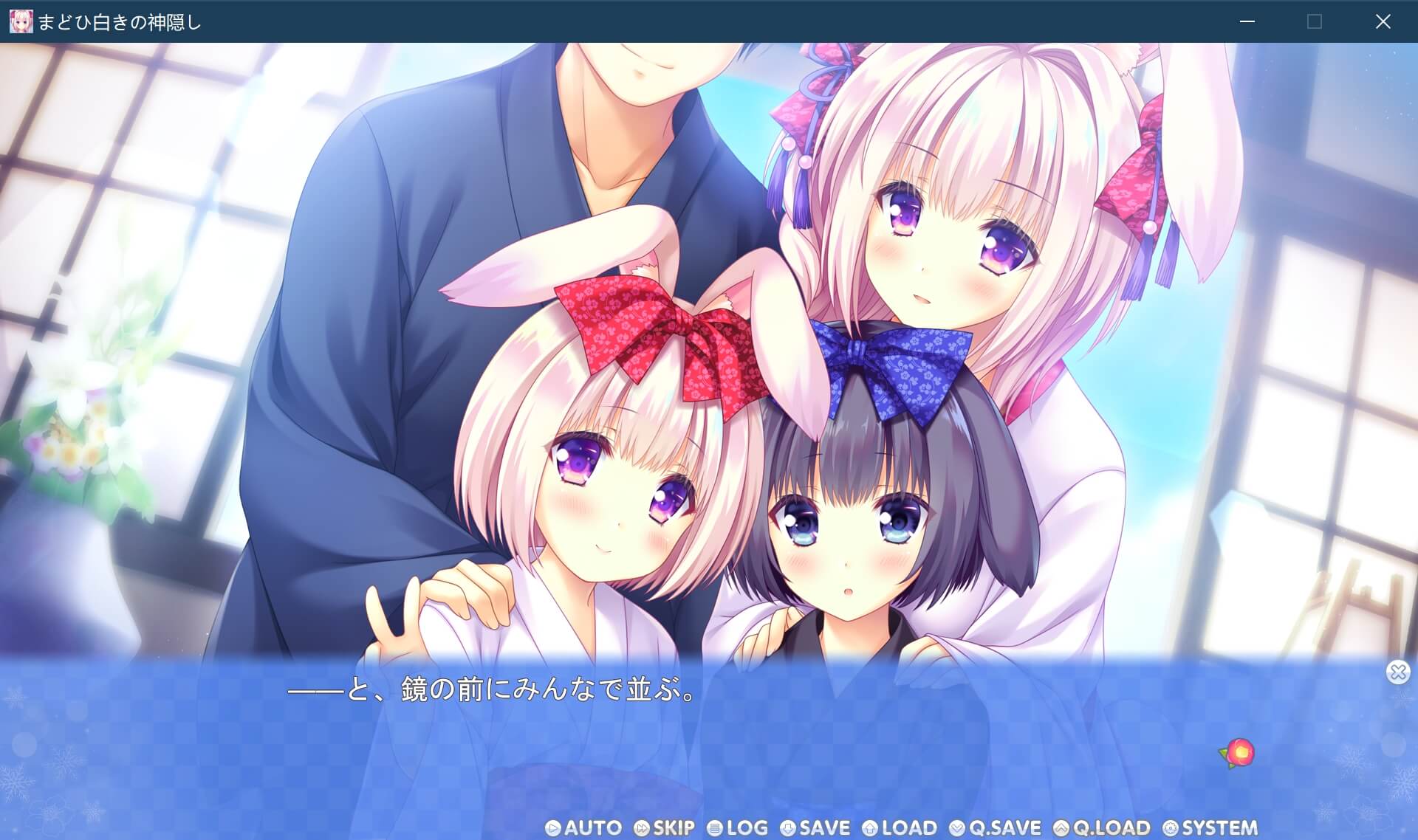
The ending, naturally, is Inushiro Mikoto reclaiming her own name, getting the genuine Tsukuyomi title, and living happily ever after with the protagonist.
The other secret, of course, is the one between the protagonist and his sister. From their investigation in this other world they turn up some leads:
- The gods of the other world are sustained by faith from the human world; if the faith disappears, the god disappears.
- Years ago this other world had an anomaly. Two gods were sent to deal with it. The problem was solved, and those two gods vanished.
- Those two gods were Izanami and Izanagi, the creator deities of Japanese Shinto.
- And now the other world is showing anomalies again, with parts of it rotting. The former Izanami and Izanagi are also gone, and it’s quite possible this god world will gradually die out as faith in the human world is lost.
And then… you can guess with your P-eye who the protagonist and his sister really are, right?
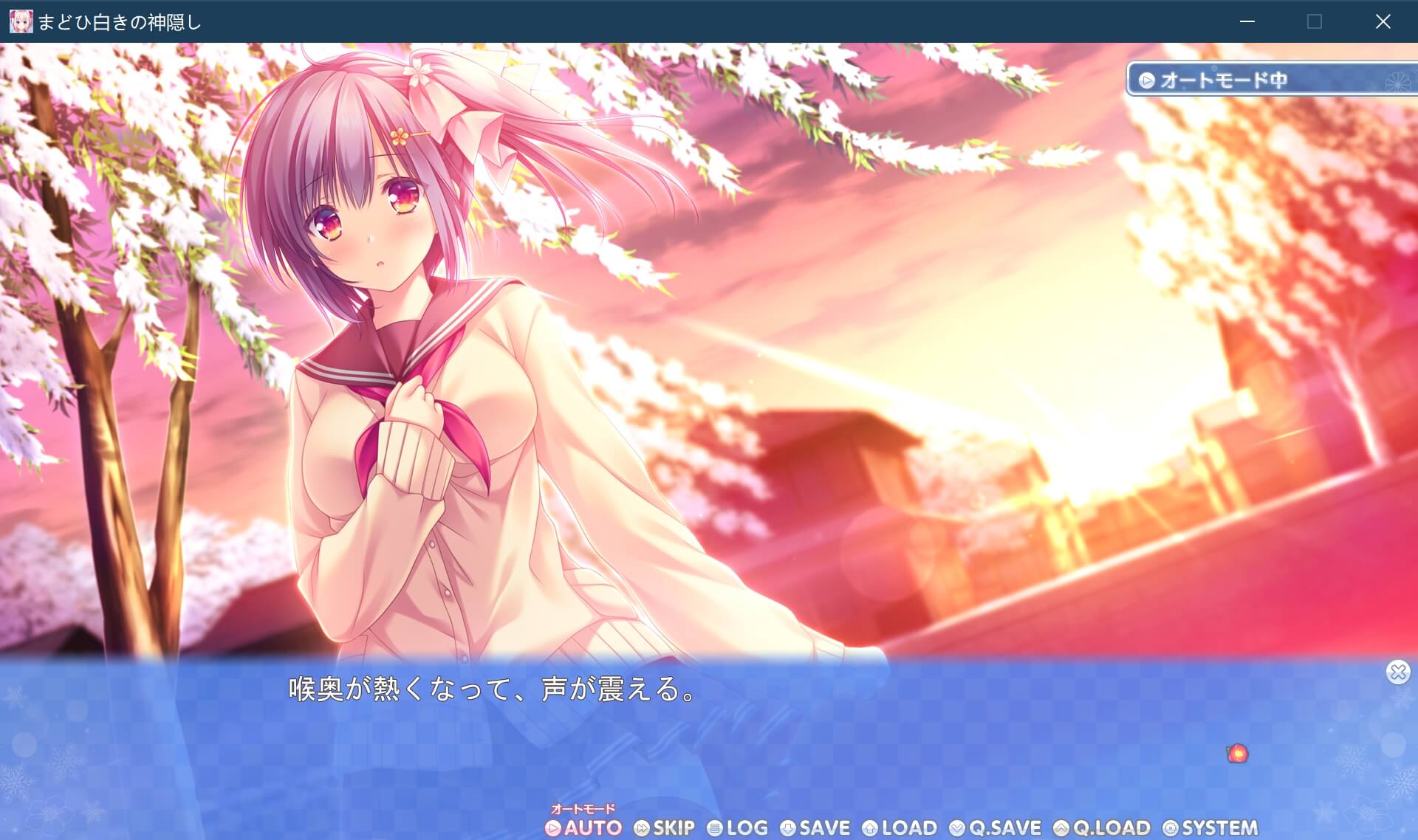
They’re Izanami and Izanagi, the brother and sister. Years ago, when the two of them dealt with the anomaly here, they lost their divine power, crossed into the human world, took the form of babies, lost their memories, and were taken in by their current adoptive parents.
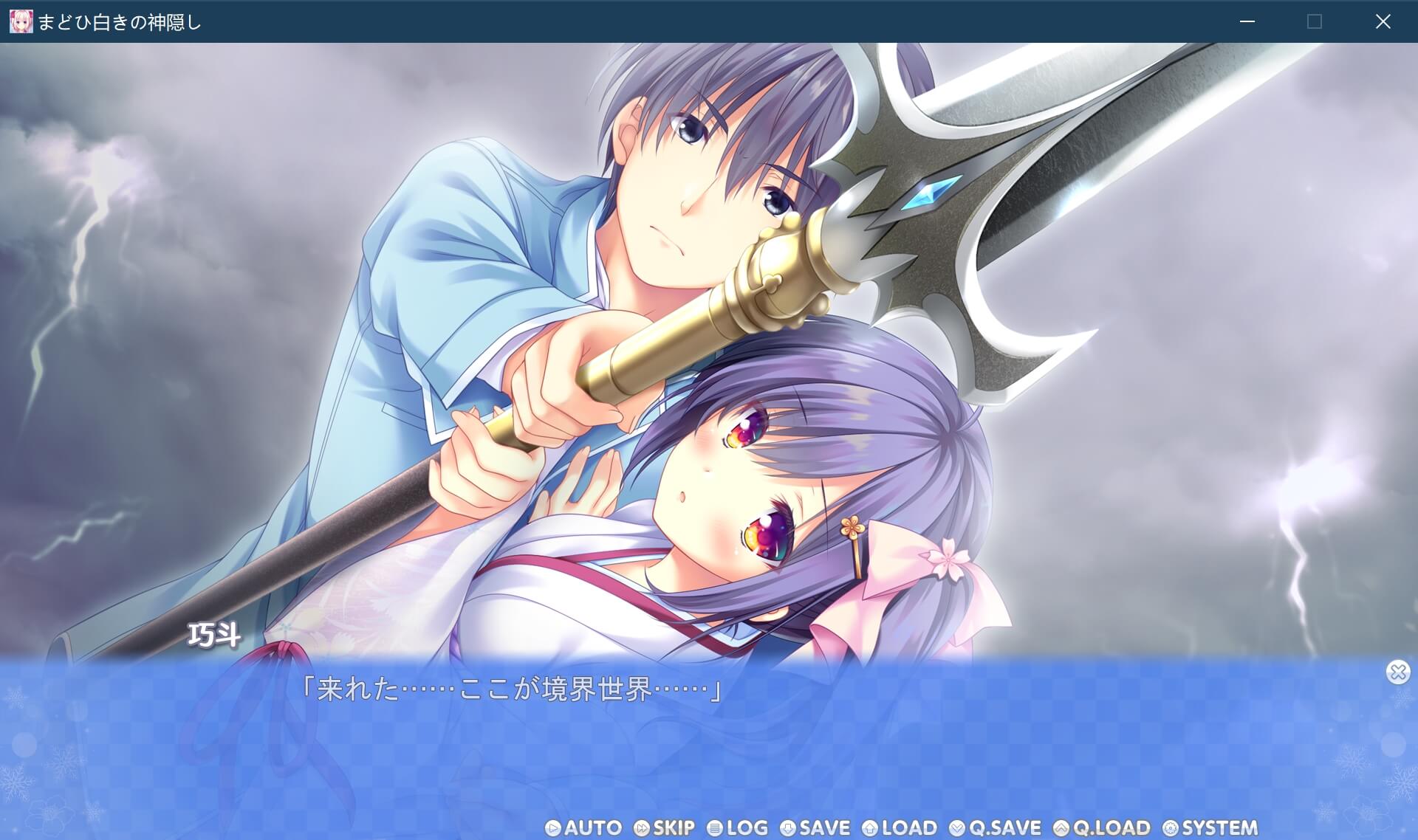
In the end, naturally, the brother and sister awaken their sleeping memories, recover their old weapons, regain their divine power, repair the corruption in the other world, and even gain the advanced ability to travel freely between the human and god worlds — dinner with the adoptive parents by day, sleeping in the god realm by night, banging across both worlds. Truly a divine couple.
Overall, this new Lump of Sugar release gave me the feeling of: no feeling.
Because they’ve been running this playbook for years. Mostly it’s: use the setting to build a kemonomimi world, then flood it with slice-of-life, then bring in a seemingly reasonable development, set up a happy ending, done. Same thing here. Zero surprises.
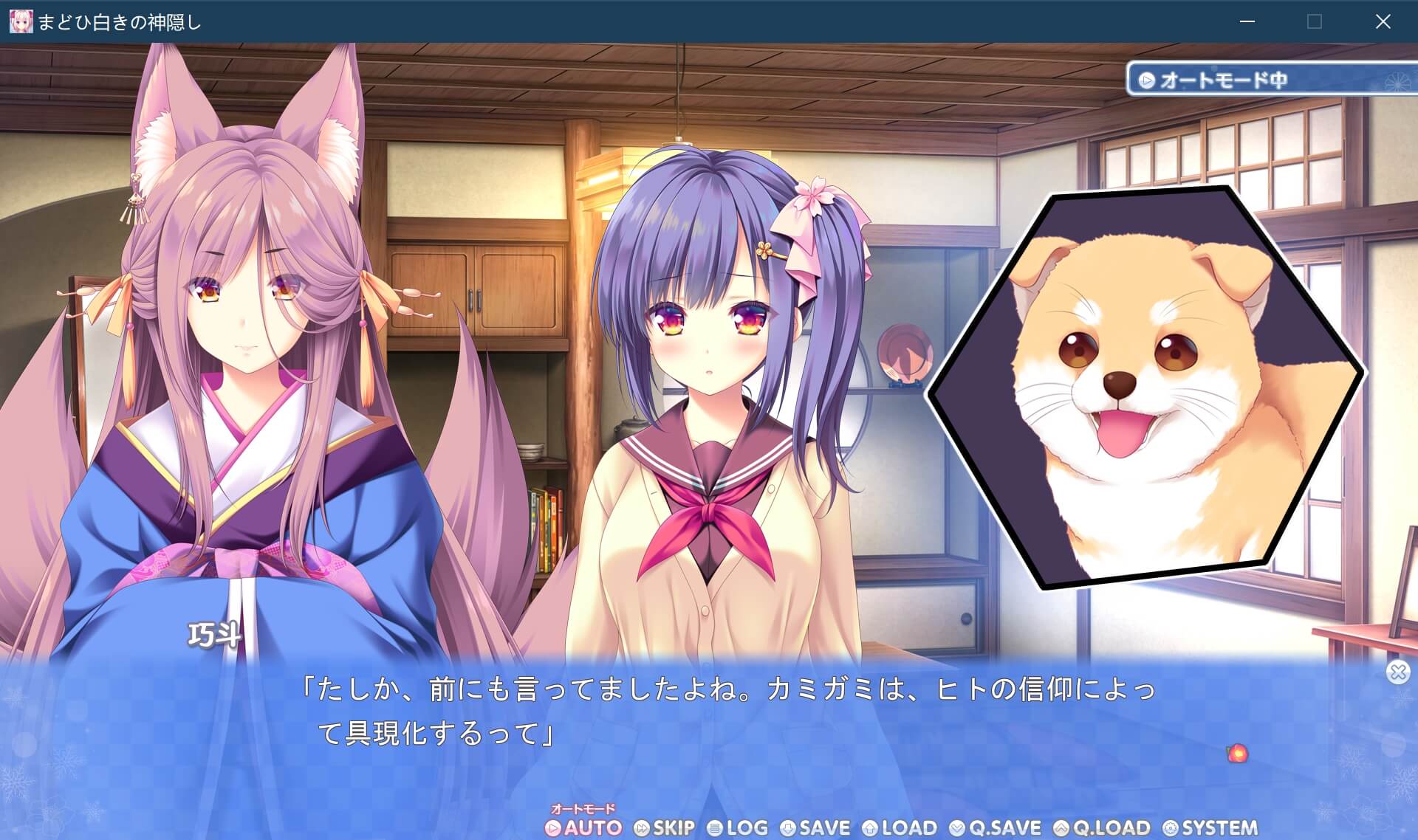
A lot of people probably think the story is sick this time, that the brother and sister being Izanami and Izanagi is so cool. But so what? The story of Izanami and Izanagi doesn’t actually manifest in this game at all — it’s just an “ultra-badass” label. You could say the brother and sister are Liang Shanbo and Zhu Yingtai and it’d work just the same. On top of that, the setting has a lot of stitch-together seams. The whole “cross into another world through a mirror” thing is lifted straight from Alice in Wonderland. The moon god Tsukuyomi having a rabbit-eared character design fits the Chang’e and moon rabbit legend. And the various gods in the god realm come from Japanese Shinto…
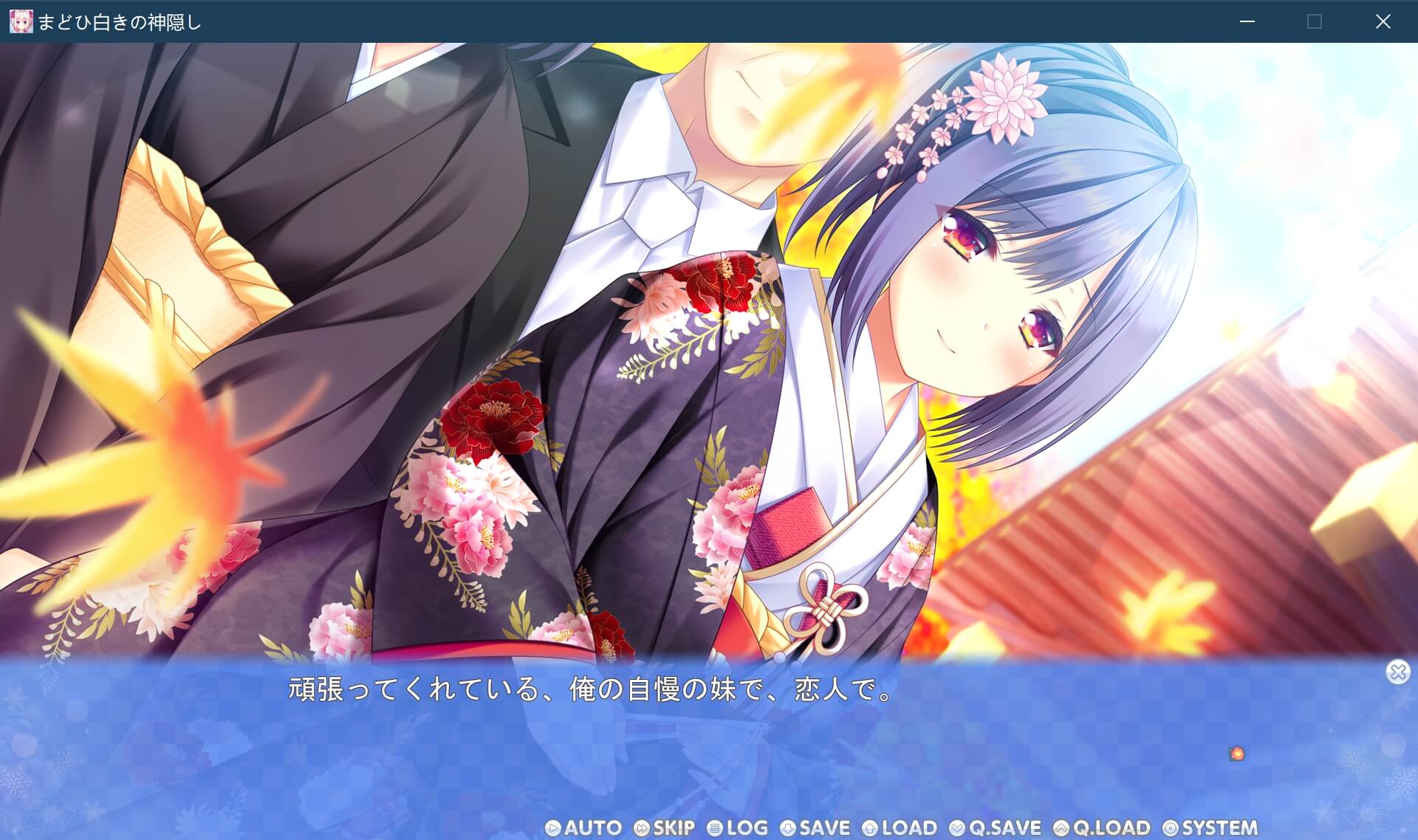
Come to think of it, this setting really does fuse Western, Chinese, and Japanese elements.
Anyway, all I can call this new release is “steady and safe” — no highlights, no real flaws. Lewd CGs show up when they should, OP shows up when it should, voice acting is neither good nor bad, art style is what it is, black tights and animal ears, and you get your fap material in. It feels like going through the motions. If you’re just a kemonomimi lover looking for something to kill time with, you could give it a shot. Though I still think the title is a bit boring. Considering the protagonist and his sister are such powerful gods, why not just rename it The Day I Became a God and ride some of the buzz.
Comments are hosted on the Chinese main site. This mirror is read-only.