Parquet Review
Does Sour Yuzusoft Deliver?
Back at the start of the year, someone told me Yuzusoft was putting out a new title this year.
Sure enough, it dropped a while ago — except nobody saw it coming that it would be an all-ages release. Yuzusoft launched a sub-brand called Yuzusoft Sour, i.e. “Sour Yuzusoft.” Which is a bit of a redundant name, honestly — yuzu is already sour…
And the important part: the game itself, Parquet.
Most Yuzusoft fans instantly lost their minds when they saw the new title was “all-ages,” but I’m fine with it. Yuzusoft can tell a decent story — Senren Banka alone proves that much. If they drop the low-effort “horny” and “fanservice” angle and go story-driven, that’s not automatically a bad idea. If the writing and direction are strong, this could be a good moment to pivot…
“If the writing and direction are strong,” though…
So is this game actually any good?
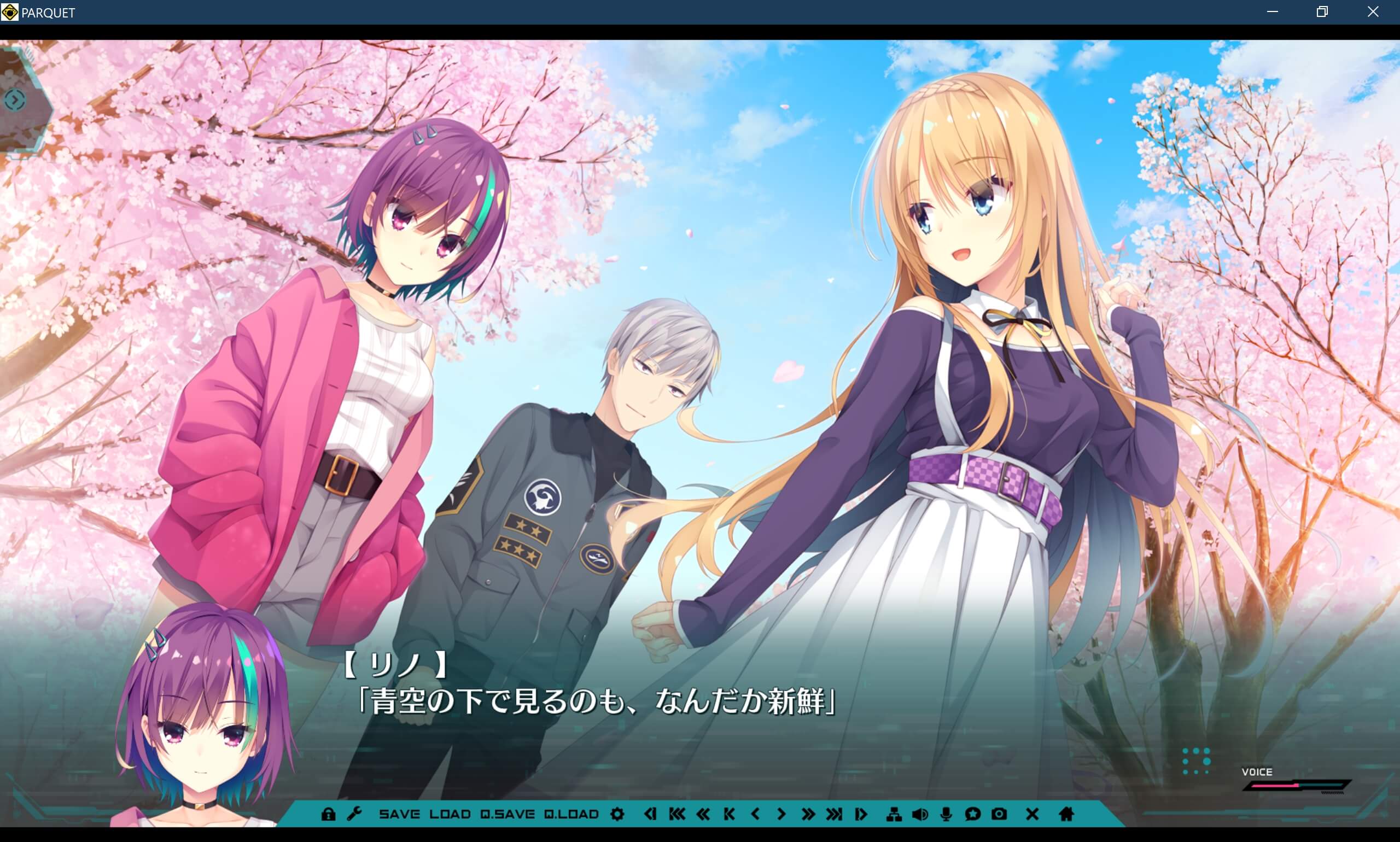
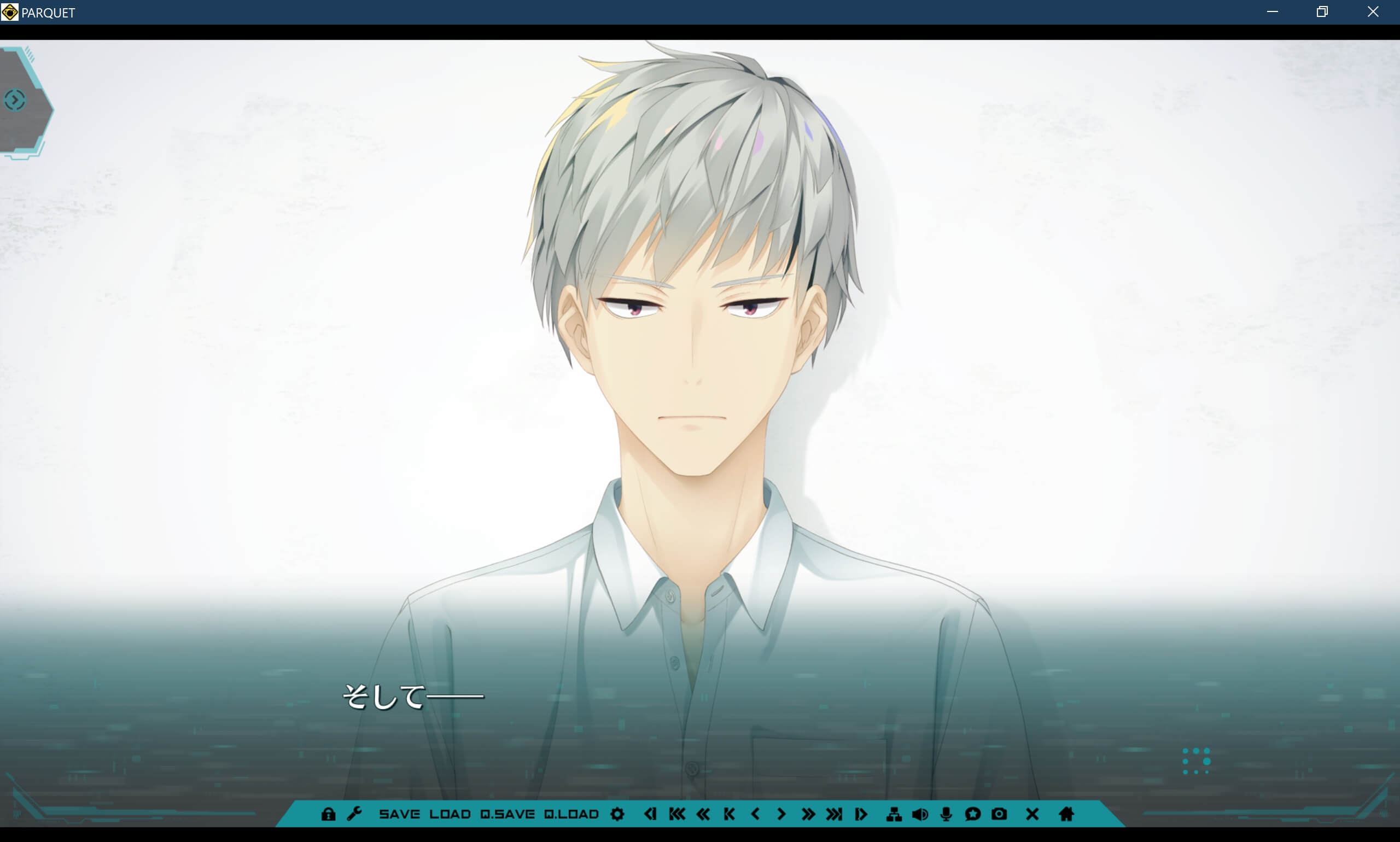
The game is set in a vaguely “cyberpunk” future where humans control their brains through a device called BMI (Brain Machine Interface). You can buy other people’s memories, skills, IQ, even their academic credentials to suit your needs. Our protagonist is a discarded experiment — supposedly his brain aggregates all the “genius memories,” and the plan was to turn him into a super-genius. That failed, obviously. He gets dumped on the market, bought by some company president hoping the kid’s big brain will turn the company’s finances around. The protagonist has the ability, sure, but he’s not exactly reliable, so he ends up getting left to roam the streets.
The early focus is just establishing what the protagonist is: a modified human stitched together from memories.
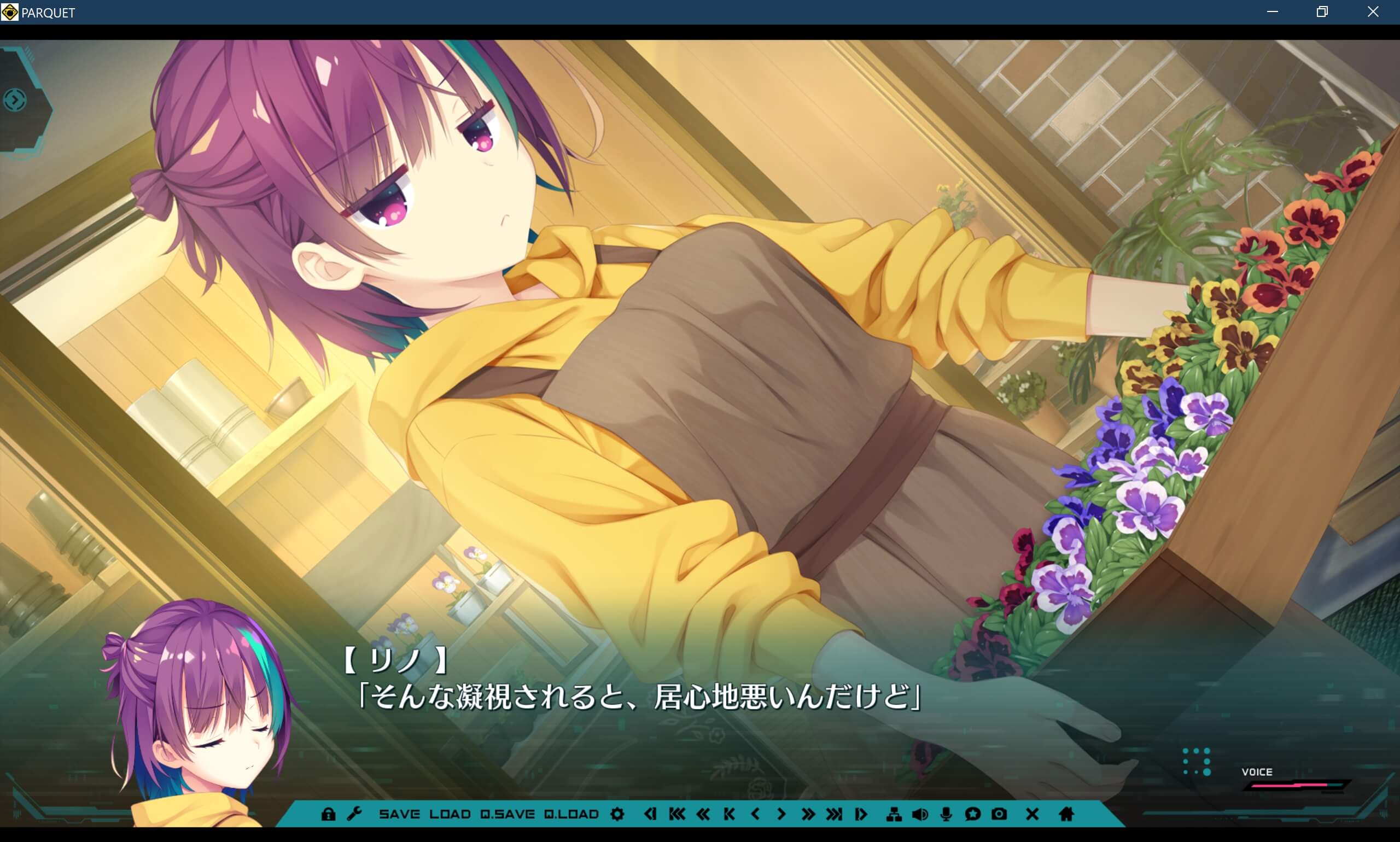
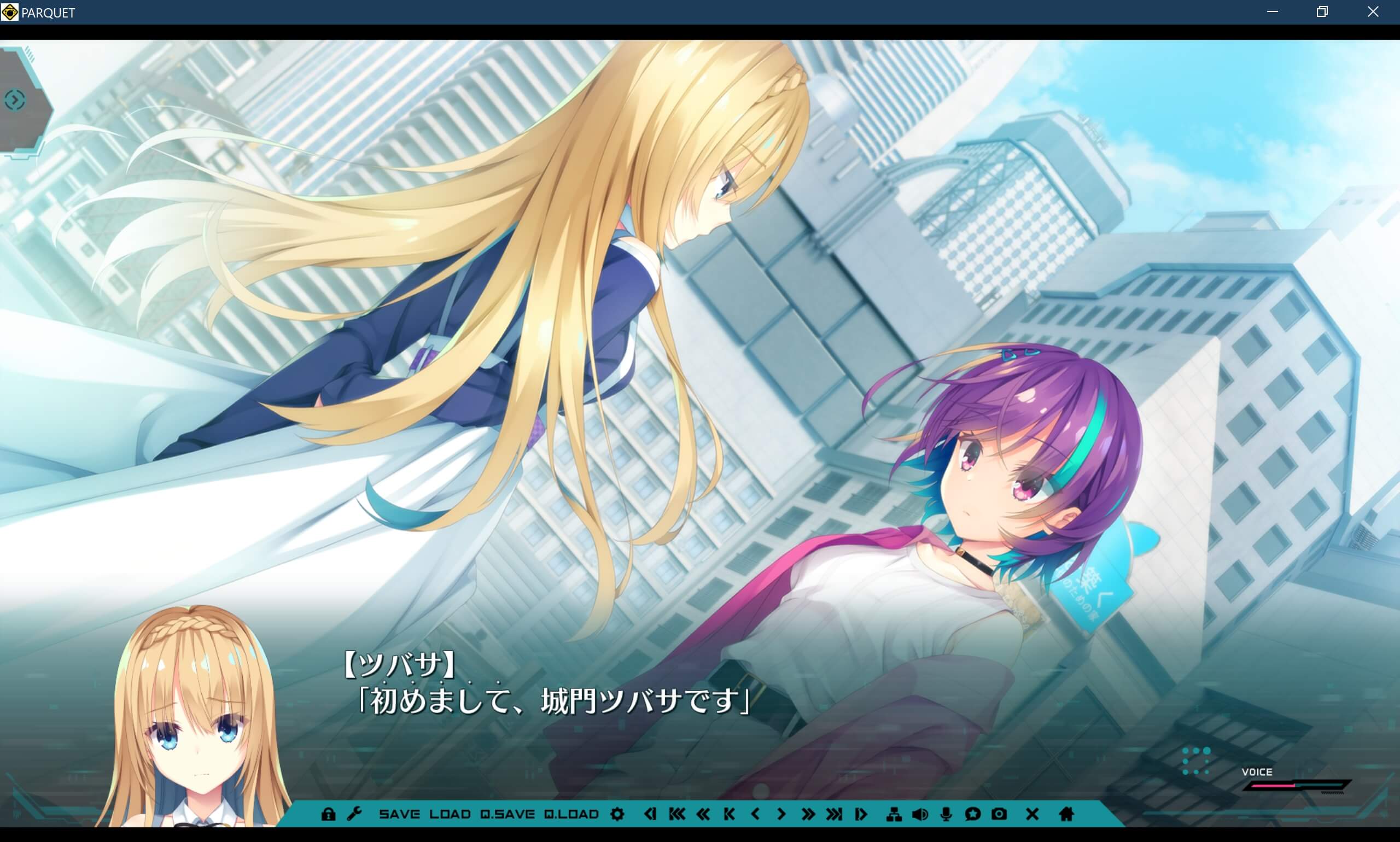
While wandering around he meets the heroine, Joumon Tsubasa. After spending time together, he learns that this blonde heroine turns into a different person at night: Ibaraki Rino. Her personality shifts completely, like a whole different person, and their memories don’t carry over. The protagonist eventually understands: two people are living inside one body. Joumon Tsubasa is active during the day, and at night it switches to Ibaraki Rino. The game later explains why, following the plot: Ibaraki Rino was poor and had no real skills, so she could only work odd jobs. Eventually she couldn’t make ends meet and sold her body to a research institute. What exactly they did to her is unclear, but after the experiment there was another personality inside her, and she lost her daytime hours — she only wakes up and acts at night.
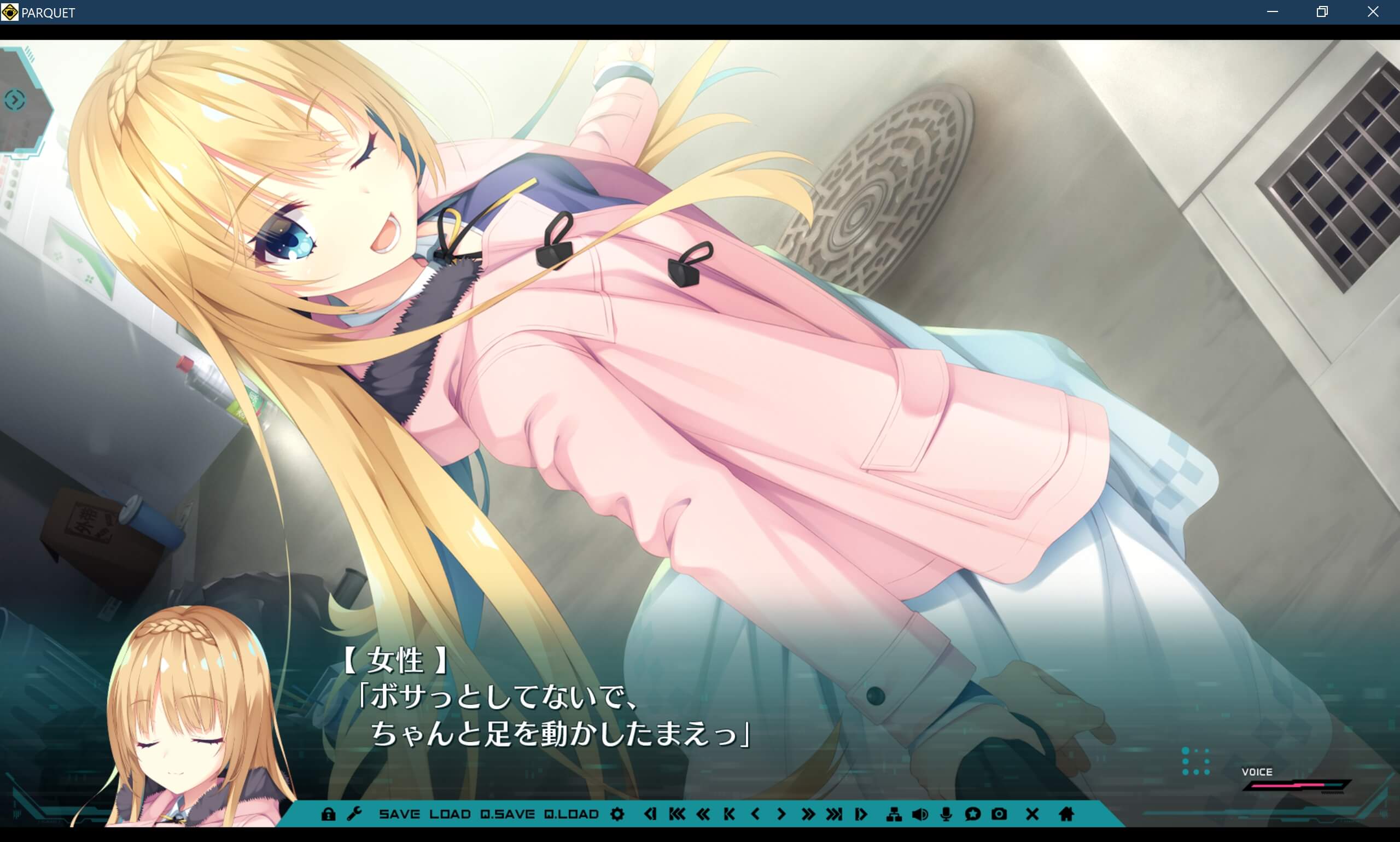
Joumon Tsubasa, for her part, says she doesn’t really know how she ended up in Ibaraki Rino’s body. All she remembers is that she used to work on BMI research, including memory transplantation, then something went wrong and she died — and she woke up alive in someone else’s body.

Then the game enters a long stretch of slice-of-life padding — the two heroines switching between day and night, and so on — before the plot moves into its final act. Someone in the city is selling a kind of BMI memory card called “Today’s Cutie,” and the content turns out to be voyeuristic footage of some cafe owner’s daughter going about her daily life. Stranger still, no one can figure out where the footage came from; judging by the content, it looks like first-person footage from the victim’s perspective, which strongly suggests her BMI data leaked. The protagonist insists the BMI device has no Wi-Fi, can’t connect to the internet, can’t install apps — so no malware could steal internal data. How could it leak? Even the investigating police are stumped. Then the protagonist has a sudden epiphany:
“Oh — the BMI also has a proprietary protocol network that needs to connect and communicate with a server. Maybe it leaked there.”
(God, it’s hard not to roast this.)
Investigation later reveals the mastermind is a black-haired woman, a former friend of Joumon Tsubasa’s — they both worked on BMI research. Bullied as a kid, she became twisted and started taking revenge on society, getting her kicks by tampering with people’s BMIs. Your classic “thrill offender.” She’s also the one who transplanted Joumon Tsubasa’s memories. According to her, Tsubasa was terrified when she died and desperately afraid of death, so she fell for the black-haired woman’s temptation and invaded someone else’s body via mind transfer. Everything was what Joumon Tsubasa herself wanted.
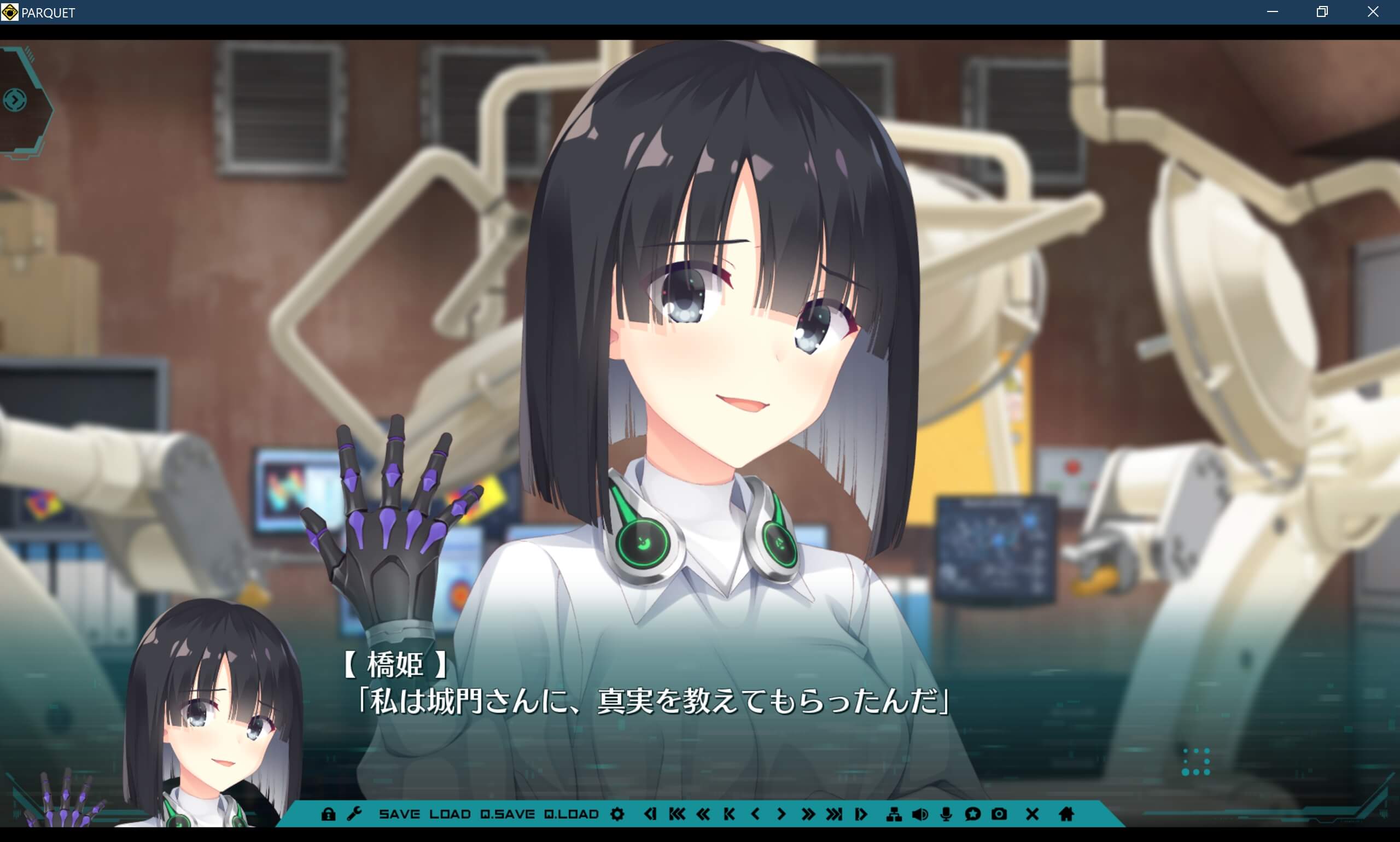
Of course, just as the black-haired woman is holding the protagonist hostage and monologuing, he suddenly flares up, remembers he’s a modified human, and goes into some kind of superpowered burst — controlling her BMI through some unexplained ability, making her prosthetic limbs punch herself. Once she’s down, the police arrive, and the problem is solved.
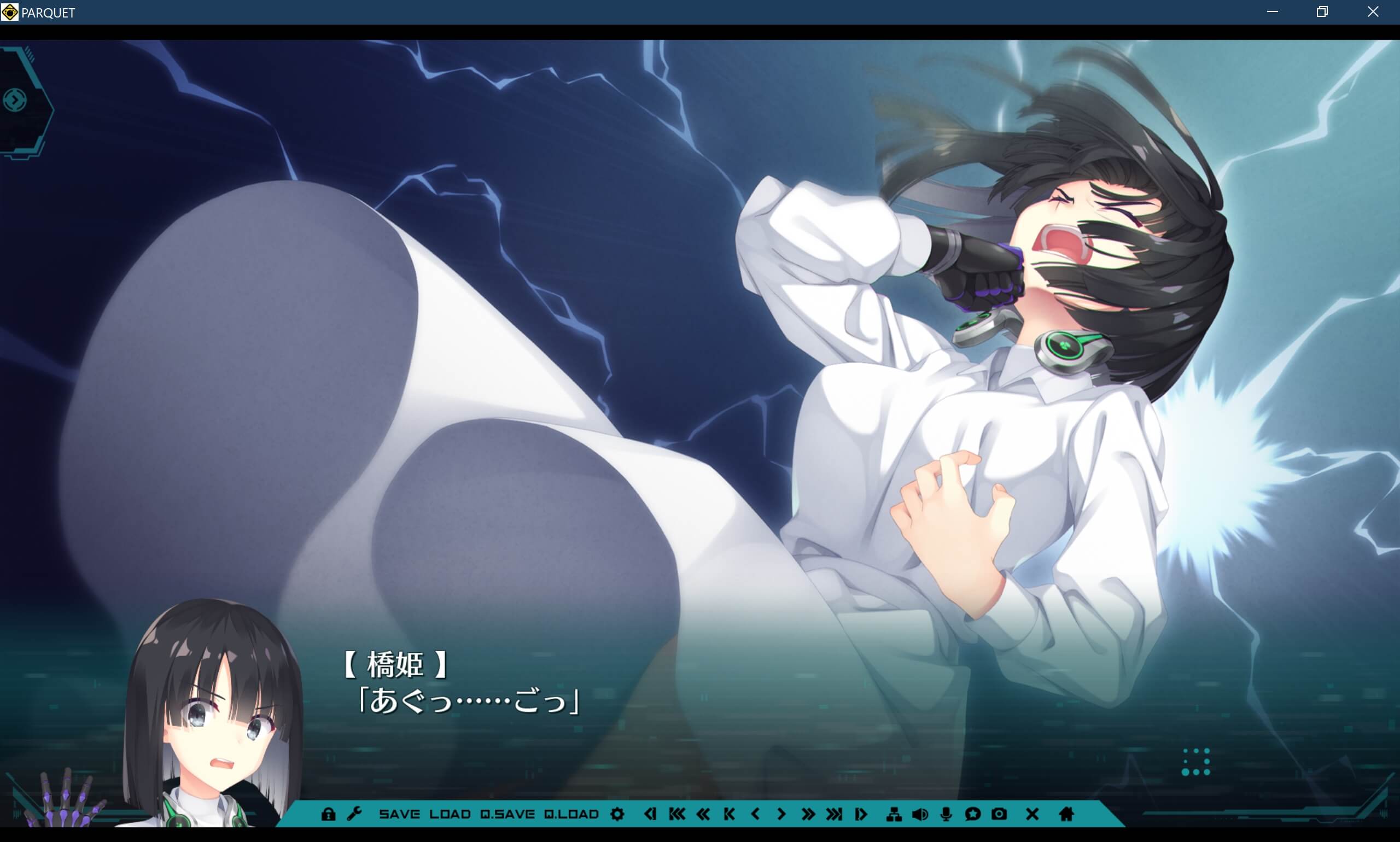
Joumon Tsubasa recovers her memories and regrets having taken over Ibaraki Rino’s body out of fear of death. The protagonist then goes on a haphazard search and finds another organization behind the black-haired woman — the very organization that created him, the stitched-together modified human. If he’s a failed product dumped on the market, there must be other failures. Eventually he finds another modified human and uses it as a vessel, transplanting Joumon Tsubasa’s memories out of Ibaraki Rino and into that body. The two heroines can finally talk face to face at the same time, and the game fucking ends.
Let’s start with this: the game has way too many problems to count.
- The pacing is bad. The opening is okay — it slowly builds the “two heroines” setup — but by the middle it devolves into clichéd “Christmas” slice-of-life padding. For a story-driven all-ages title, that’s just unnecessary. Maybe some people enjoy that kind of daily-life stuff, but even the slice-of-life isn’t well written, and there’s no scenario writer like Jun Segawa to steady things; compared to past Yuzusoft titles it feels flat. Then the ending stretch unfolds far too casually — especially the protagonist finding “another failed product,” which takes a couple of lines. So transplanting a personality is just that easy? And that boss battle — suddenly making the boss punch herself? Is this dumbass development for real?
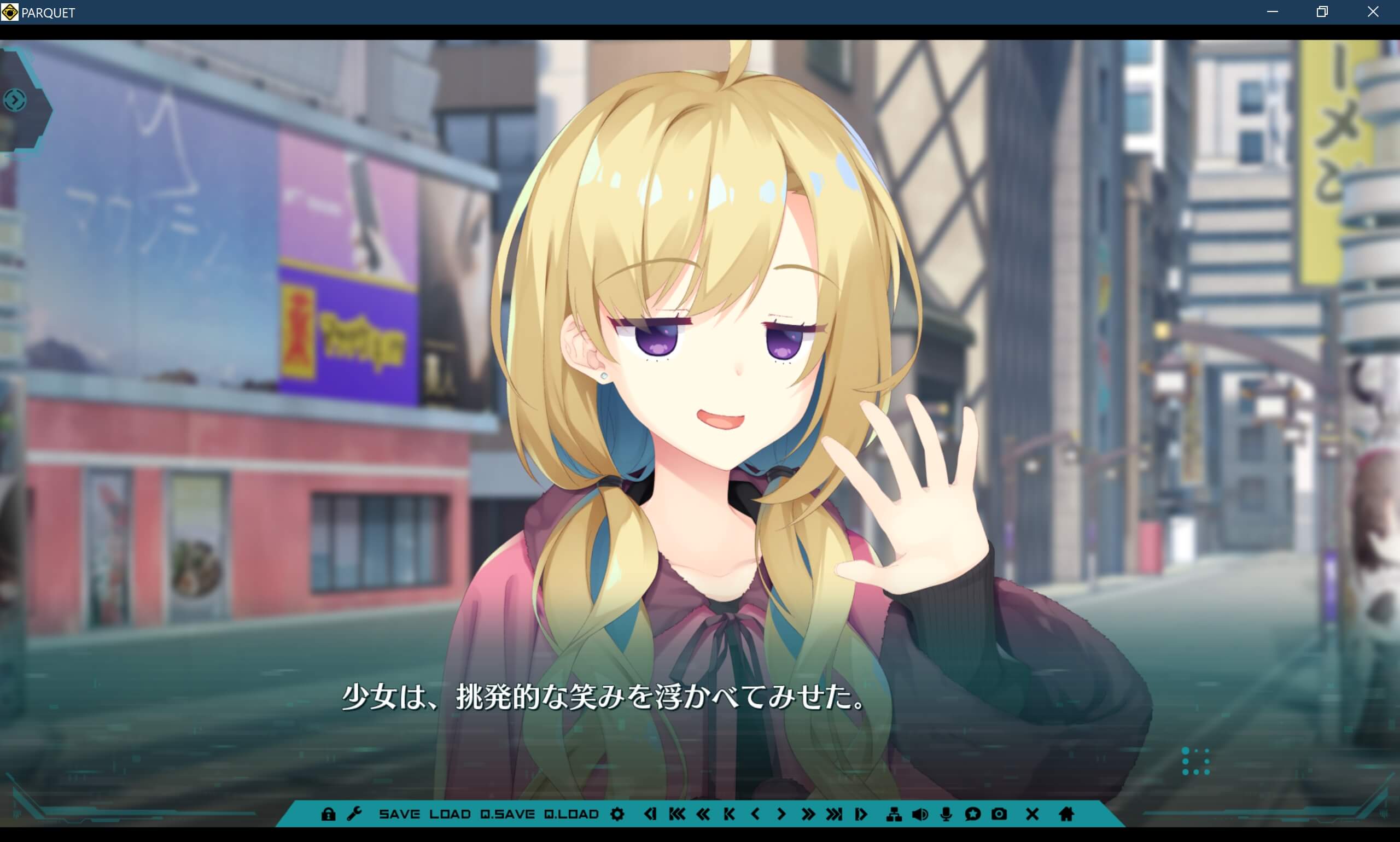
- The game has zero common sense. Never mind how stupid the name BMI (Brain Machine Interface) is — I assumed it was Brain Modification Interaction. The writer probably doesn’t know many English words. The second half, including the “how did the hacker get in” section, made me laugh out loud. For a modern AR device, it’s supposedly offline, and when it comes to how the hacker controlled the data, the protagonist’s theory is literally “there’s no app store, so you can’t install malware, so it’s impossible to hack.” Then he suddenly remembers there’s a proprietary network protocol, basically Bluetooth, that could also be hacked. You have to wonder whether the writer understands current tech at all. Meanwhile the two cops are peak idiocy — besides haphazard investigation, when faced with high-tech crime they want to hand it off to a random stranger like the protagonist, on the grounds that “we cops don’t understand this stuff.” Do you not have cyber police in Japan? Then how do you bust people downloading pirated anime and manga over P2P? Is that why the Osaka otaku can watch pirated anime every day and never get deported?

- The production feels aggressively lazy. Start with the animation: everyone knows past Yuzusoft OPs had 2D animation. That was the tradition. In this all-ages title, the “tradition” evolves — 2D animation becomes 3D, and really rough 3D at that. How to describe it… it feels exactly like something cobbled together in Custom Maid 3D. Actually, it probably was made in Custom Maid. I get that it’s a small-scale title and you could use a slideshow OP to save money, but you don’t have to gross people out with this crude 3D. Beyond the animation, being all-ages it won’t even give the protagonist a voice actor, and the backgrounds and character movements all look like leftovers from previous Yuzusoft games — like they tweaked some scrap and shipped it. Some heroine CGs also look like recolored versions of unused CGs from before. Anyway, I don’t believe for a second this game had a “big budget” — at 2500 yen, I bet they’re still making a profit.
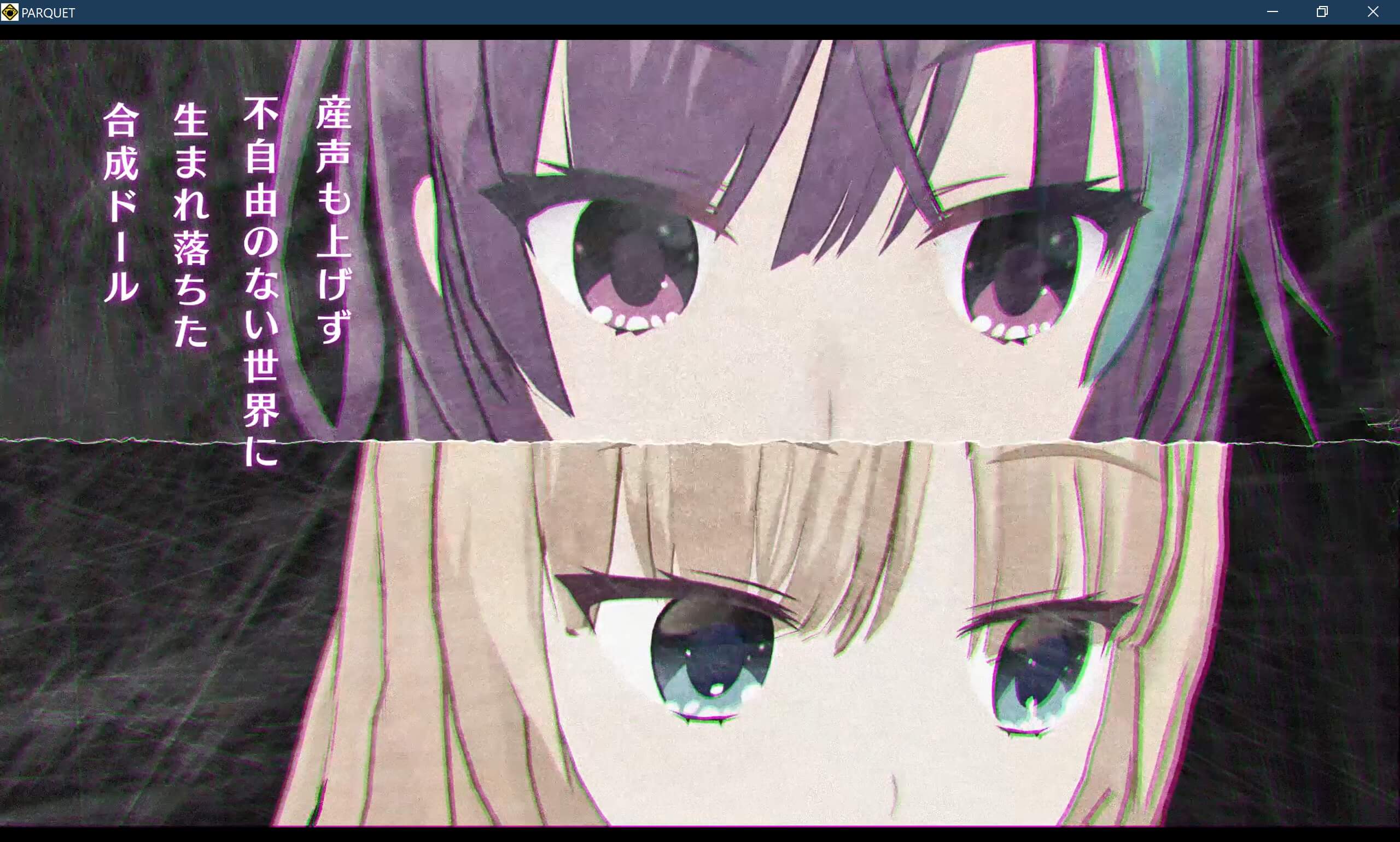
- The one place the game actually spends money is probably the heroine’s voice actress: they brought in Nao Toyama, Wakaki Tamiki’s favorite. Not that Nao Toyama is bad, but in this Galgame her voice has no character, and it doesn’t bring out the two heroines’ personalities at all — one person voicing two roles and you can barely tell them apart. What’s the point? Might as well have brought in the Sendai auntie who got COVID. Past Yuzusoft games relied on a heroine VA with a “really sexy voice” to build appeal; even if this game is all-ages, as long as the heroine’s voice is seductive enough, I think Yuzusoft’s firepower would still come through. But… this game is extremely wholesome. So wholesome it’s frigid. The story drags and isn’t compelling, the music is weak, the OP isn’t good either, and the one traditional strength — ero — is abandoned. So what’s even left in this new title?
Back to the title question: this isn’t Yuzusoft’s first all-ages attempt. Way back, Tenjin Ranman got an all-ages PSP version. No sex scenes, sure, but I have to say that game was still good — the VA performance alone didn’t need sex scenes to carry it. Not that I’d ever tell you I jerked off to that all-ages version. By contrast, this game is Yuzusoft “crippling its own martial arts” without showing any real skill. Even so, it’s not bad enough to be a “landmine.” It’s about the average level of those Steam cash-grab titles with Chinese support at launch — no special developments, nothing you actually want, just a bit of “Chinese support at launch.”
Yeah, you all know how it is: a Galgame on Steam with Chinese support at launch will get overwhelmingly positive reviews even if the plot is shit, like a certain trainwreck. Even the few negative reviews that slip through are just the result of some so-called Weibo influencer stirring things up. Most players are brainless zombies — everyone says it’s good, so I say it’s good; everyone says it’s bad, so I say it’s bad.
So does this Sour Yuzusoft “Yuzusoft Sour” deliver?
I say no — but a lot of people on Steam will probably say yes. And if it’s a bit cheaper, even more so.
Comments are hosted on the Chinese main site. This mirror is read-only.