Asagao wa Yoru o Shiranai (アサガオは夜を識らない) Review
Asagao wa Yoru o Shiranai
I thought about opening with a look at how this new MELLOW studio connects to the old MME, but the more I turned it over the more pointless it seemed. MME is dead. Better to just talk about the game.
The game comes from “Tareka,” the most shitpost-happy scenario writer MME ever had — the one who’d casually write orgies and compensated dating, though every now and then he’d turn out something decent. So even before release, this one reeked of “he’s doing a bit again.”
アサガオは夜を識らない。
The title reads downright literary in Japanese. アサガオ is written 朝顔 in kanji and refers to a purple… trumpet-shaped flower. In English, a morning glory. Literally translated, the title is “The Morning Glory Doesn’t Know the Night.” But the game reads 夜 as あい — the character for love, 愛. Which turns the title into “The Morning Glory Doesn’t Know Love.”
Conveniently, the heroine is also named Asagao, so the pun lands: on paper it’s “the morning glory doesn’t know the night,” in practice it’s “the heroine doesn’t know love.”
From the very first promo, the game kept insisting: this is a true “pure love” story.
Anyone with experience knows what it means when a writer keeps hammering on “pure love.” Didn’t Gen Urobuchi call himself the “warrior of love” while claiming he was writing pure love too?
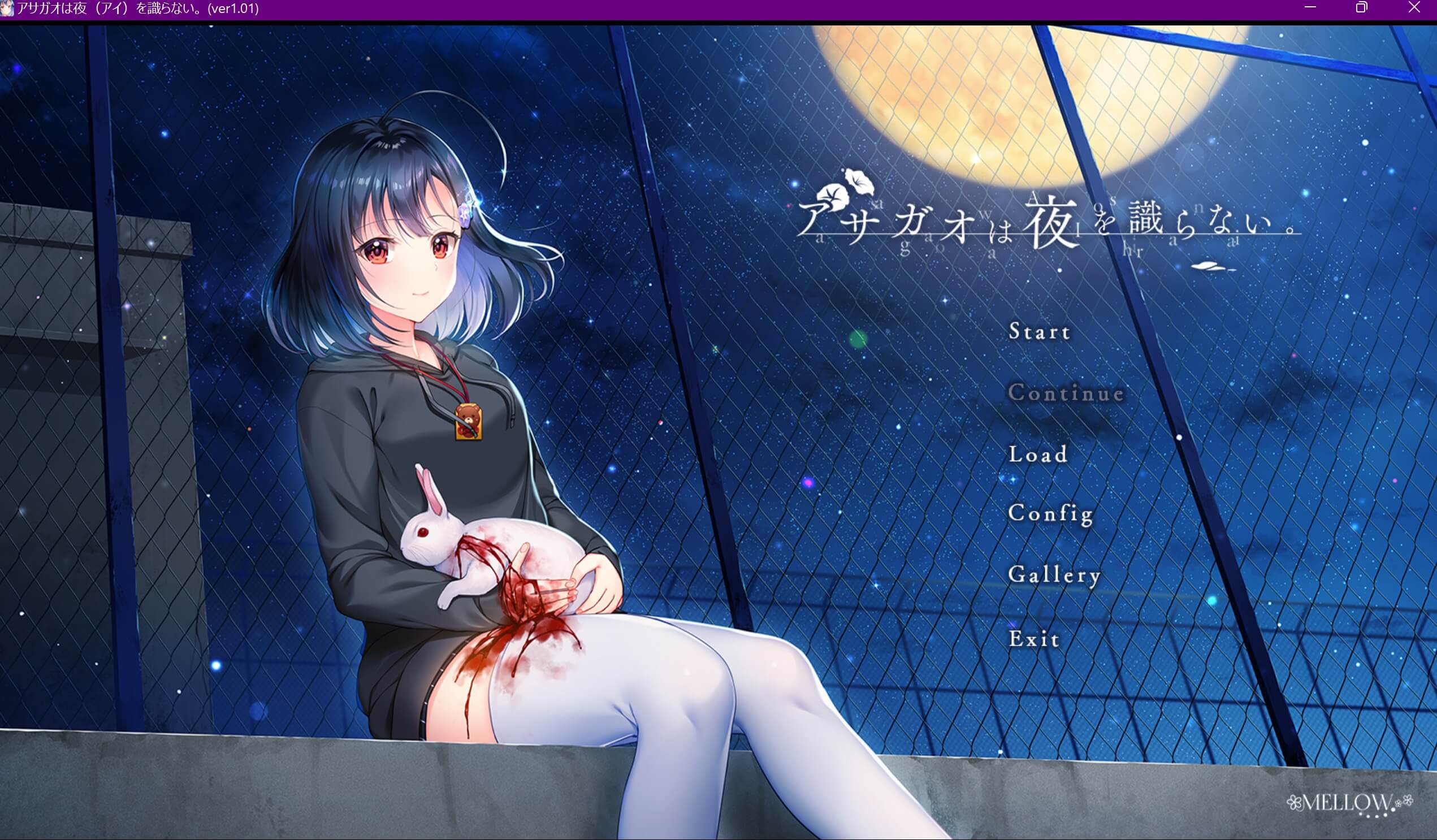
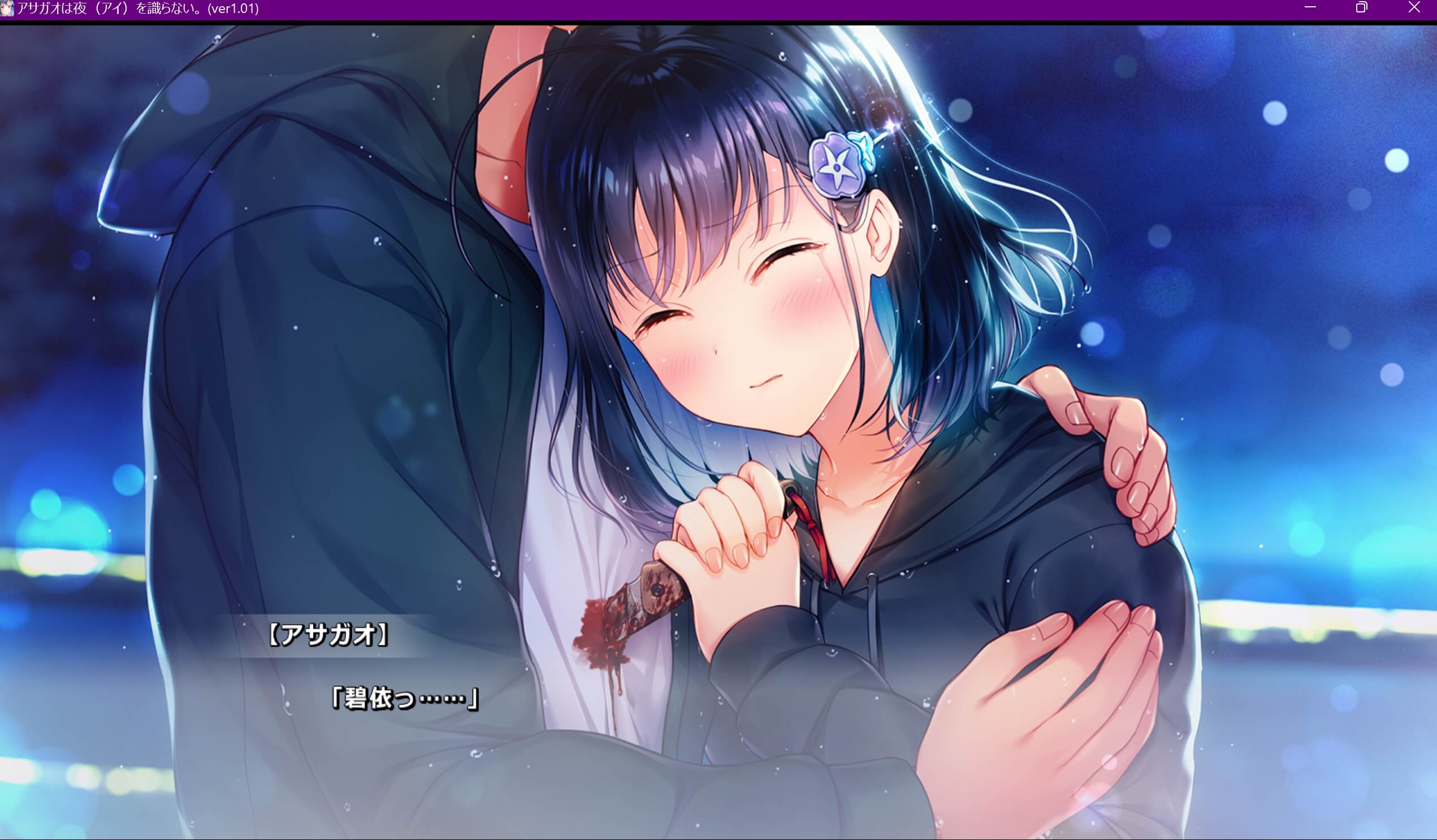
Looking at the key art — the heroine cradling a bleeding rabbit — I steeled myself, felt a flicker of anticipation, and opened the game.
Which, as it turned out, was the start of my disappointment.
Frankly, the plot is simpler than I ever imagined. It comes in three parts. Part one is worldbuilding, naturally. Our protagonist lives on an isolated island and studies there. There’s even a teacher who functions like a therapist. The game grinds through an endless stretch of slice-of-life filler, and right before the OP hits, the protagonist finally learns the truth: the island is a prison.
“Everyone studying here is a former criminal, exiled to the island for labor and reform.”
Then part two begins. More endless filler, with the odd hint sprinkled at the edges about what crime each heroine committed — some indirect harm, some drug trafficking? I honestly forget the details. At the end of it all, a baffling OP2 plays out of nowhere.
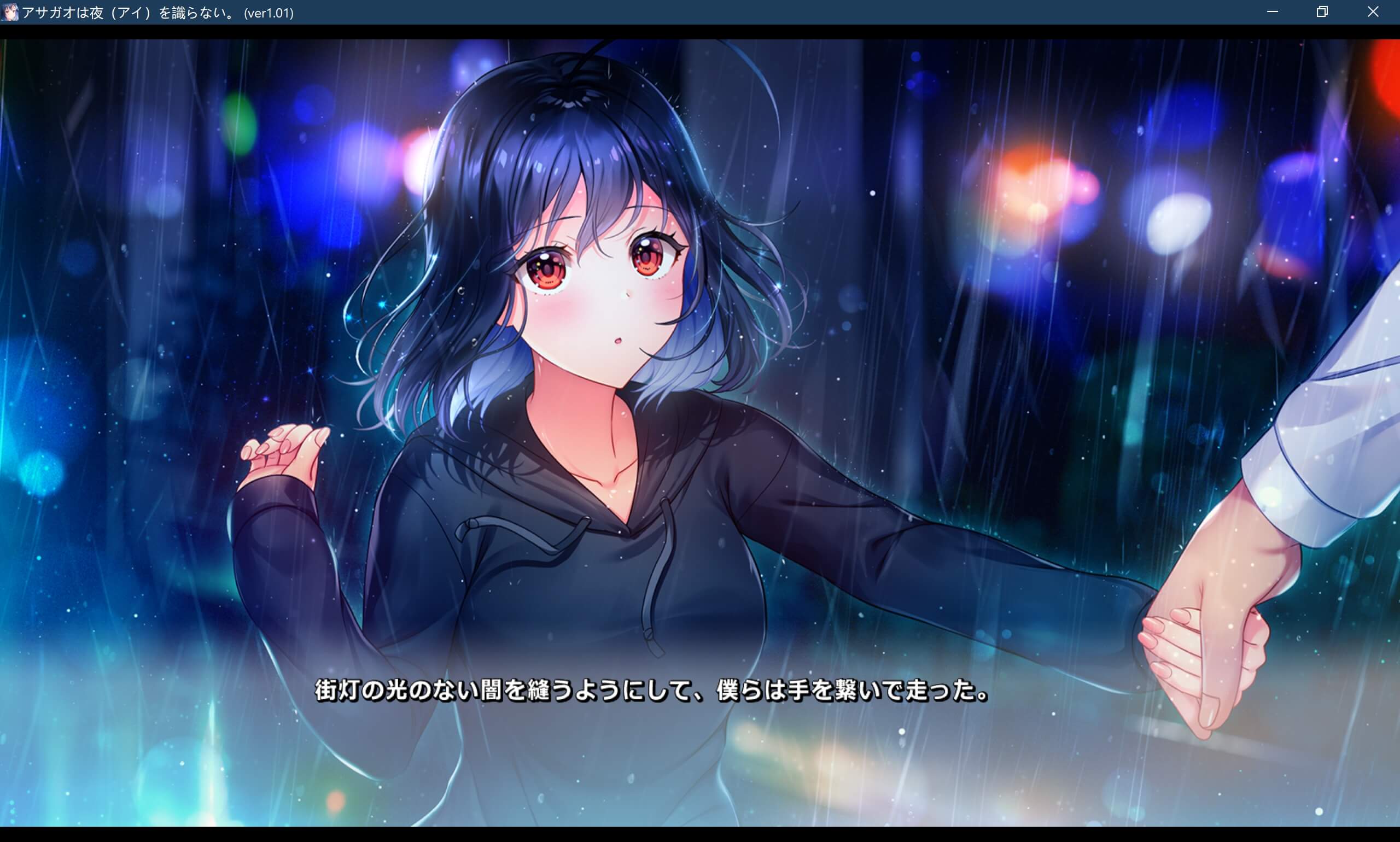
OP2 is nowhere near the end. Part three starts. Now we finally get to the sole heroine, Asagao. After a long, tedious slog of flashbacks, we learn she’s mentally ill and a suspected murderer: whenever she loves something, the urge to kill it surges up. She loves a little rabbit, so she kills the rabbit. So if she loves the protagonist, she’ll want to kill him.
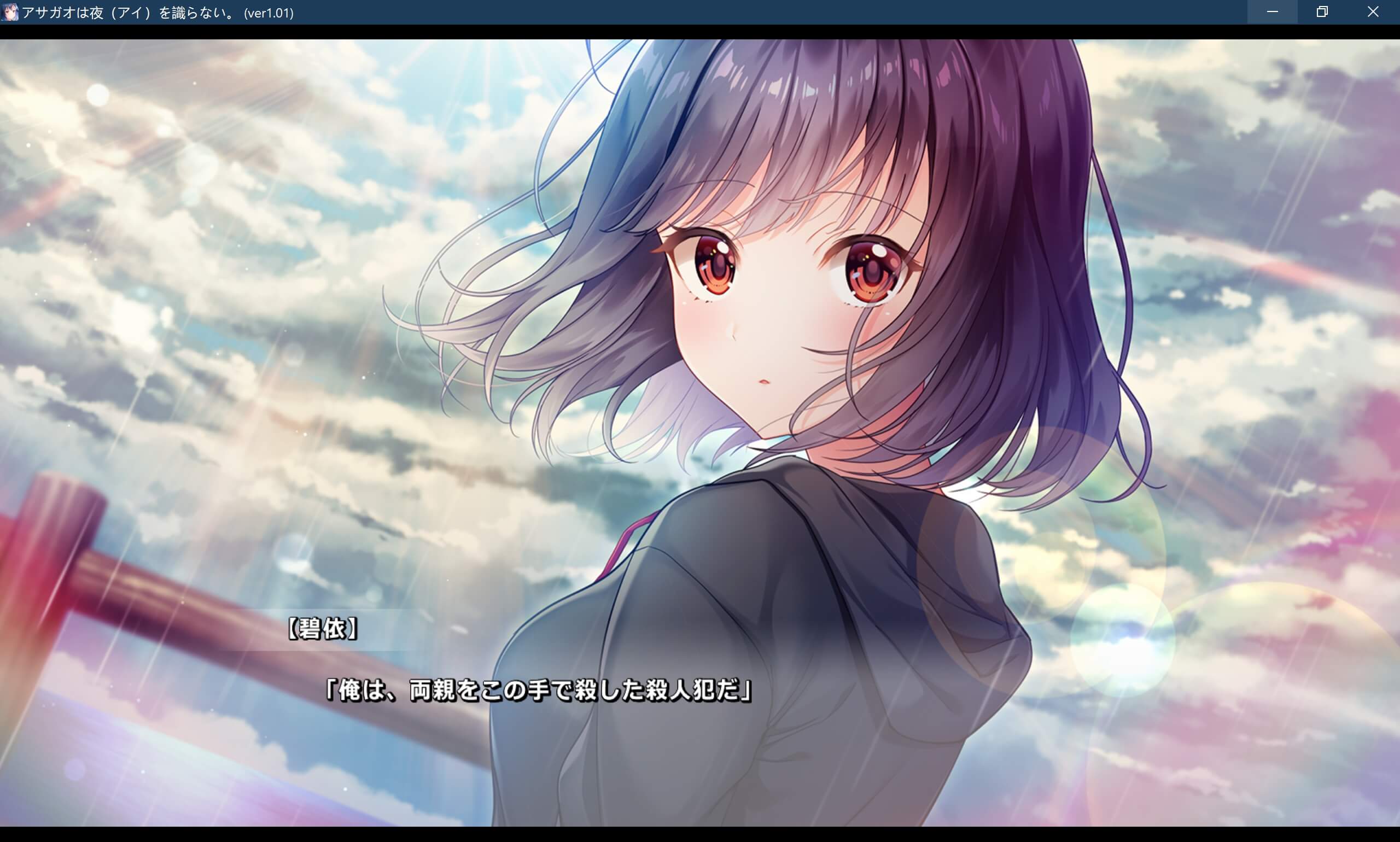
The protagonist is a murderer too. Unable to endure years of abuse from his parents, he killed them and got sent here. Though before that, while living on the streets, he’d already met Asagao.
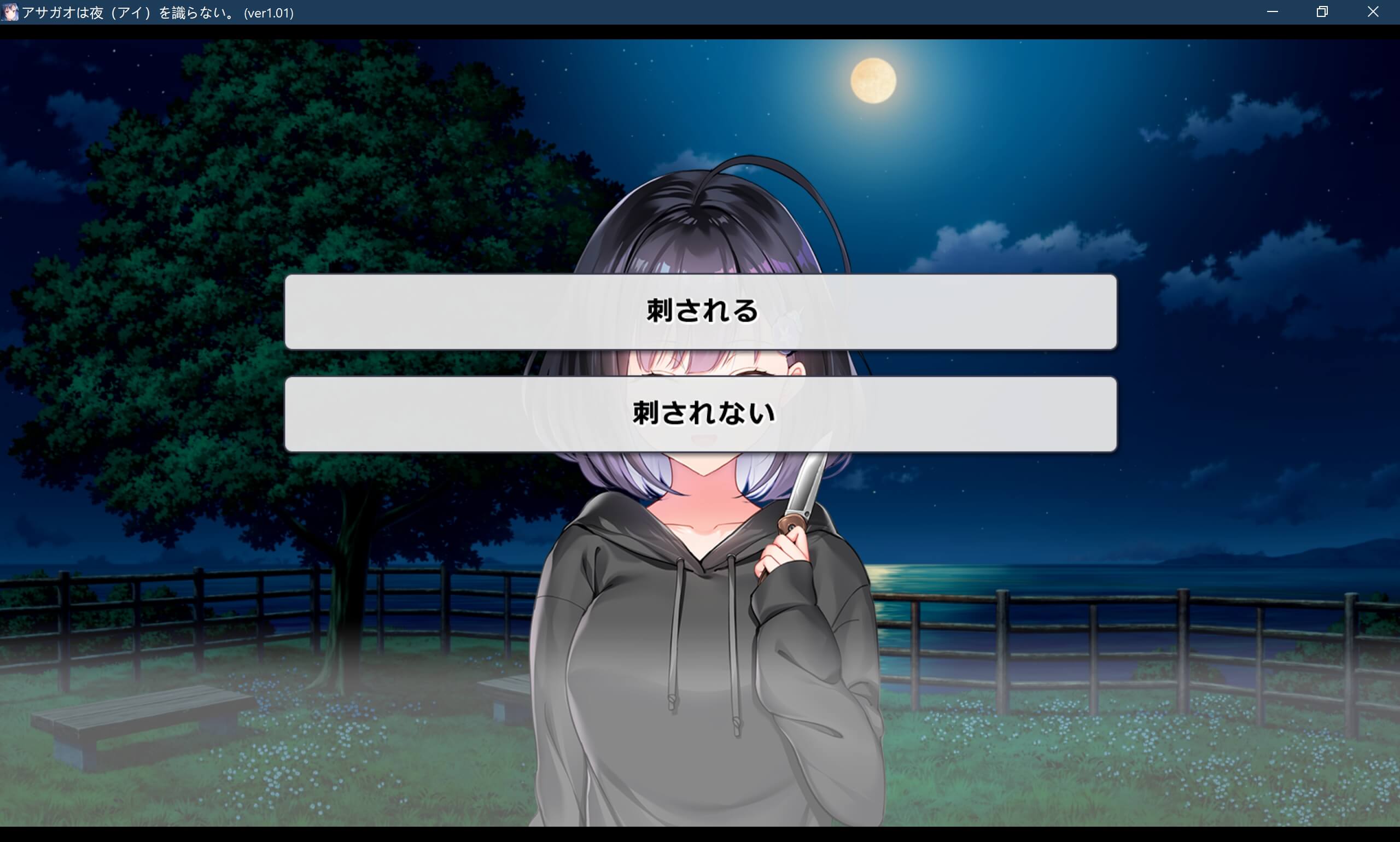
The ending, naturally, has the two of them confirming their love — except there’s a problem. Asagao is mentally ill. Whoever she loves, she wants to kill. She loves the protagonist now, so she’ll want to kill him. We get a choice: do we let Asagao kill us or not?
Say no, and the protagonist leaves alone while Asagao stays on the island to keep treating her illness. Say yes, and the ending is a goddamn mess: the protagonist gets stabbed to death, Asagao is cured, the reasoning being “after killing him I felt satisfied, so I won’t kill anymore,” and she goes to lay flowers on his grave with their unborn child in tow.
So the game amounts to: our heroine is mentally ill, loves whoever she loves to death, falls for the protagonist, kills him, gets better, that’s all.
And you’re telling me this counts as “pure love.”
I can see what the writer was going for. Pure love means loving someone enough to let them have their way — if Asagao’s love for the protagonist means killing him, then he’d rather be killed, fulfilling this grand love.
That theme is actually okay by me. The game’s real problem is that it’s stuffed with far too much unnecessary junk.
It adds several side heroines. They all have their own issues, but none of it has much to do with the main plot. Then, late in the game, it throws in a baffling villain — how baffling? Anyone who’s played it will understand.
Though I doubt many people could finish this thing easily, because it is so. Fucking. Long.
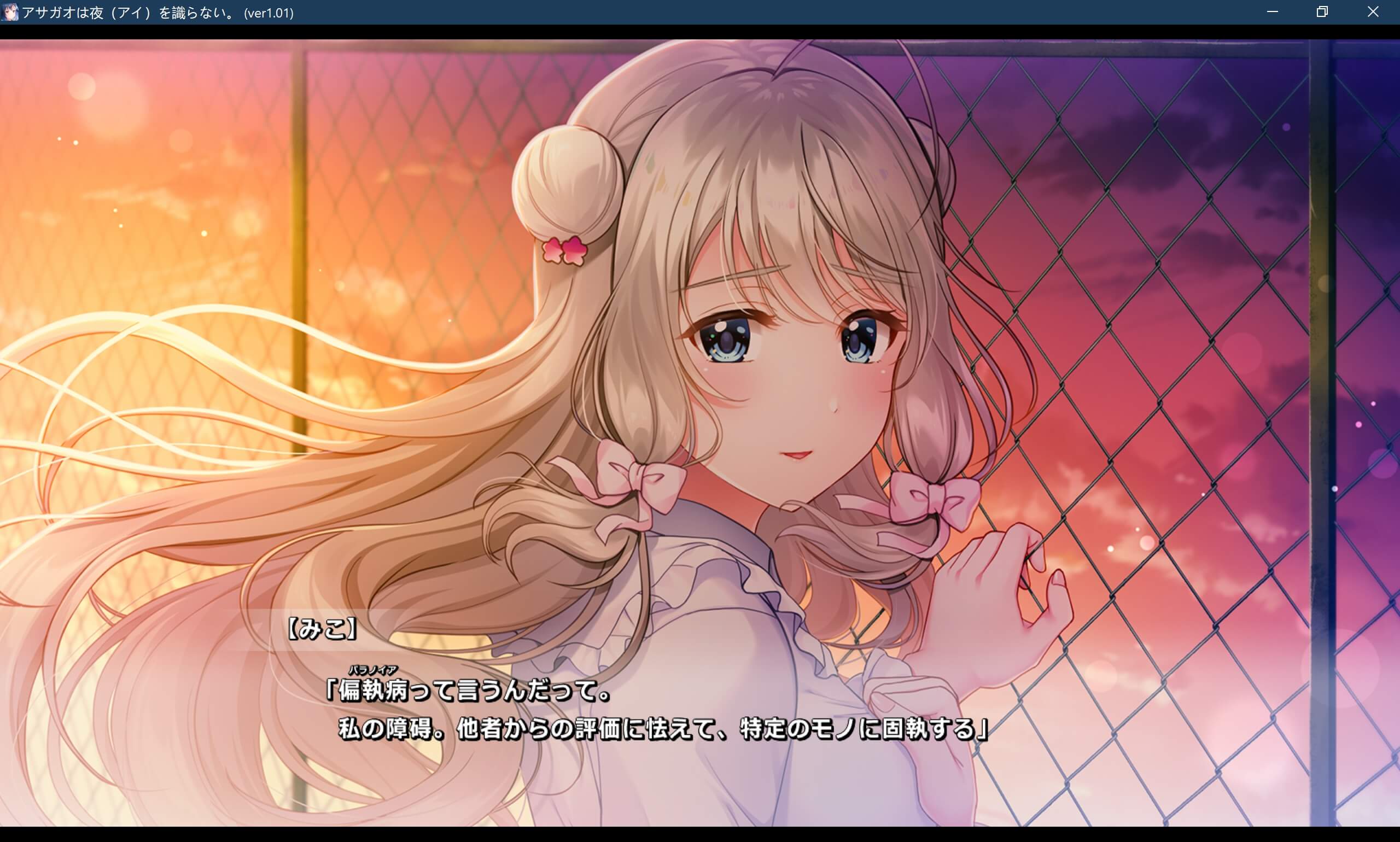
The story has two big reveals: the truth about the island, and the truth about the heroine’s mental illness — or rather, why she’s here. The first detonates before OP1. The second doesn’t show up until the very, very, very end. Everything in between is filler that goes nowhere.
The writer probably realized this, so he crammed the middle with HCGs. You’ll constantly see the protagonist and heroine talking, then suddenly undressing and going at it. For a game bragging about “pure love,” what does this livestock-grade behavior have to do with the pure love at the end? Especially since the designated True End is the protagonist rejecting every other woman for Asagao. Note that there are no routes for the other heroines. Just two endings, both Asagao’s.
So this game has no pure love and no plot. It feels like a slapdash nukige.
And even as a nukige it doesn’t really deliver. The art isn’t up to MME’s old style either. I really don’t recommend spending nearly 20 hours on this. If you’re curious, just watch the opening, hold Ctrl the whole way, and check the protagonist’s choice in the final chapter. That’s about all the point there is.
“アサガオは夜を識らない” is a genuinely great title. Shame that the one who doesn’t understand love isn’t just the heroine — it’s also the writer who doesn’t know how to write a game. Tareka did write Casablanca no Tsubomi, didn’t he? Was that just a blind squirrel finding a nut?
Comments are hosted on the Chinese main site. This mirror is read-only.