Ore no Koi Tenshi ga Ponkotsu Sugite Kowai (俺の恋天使がポンコツすぎてコワ~い。) Review
The World Only Angels Know
Sure, Akane Ikegami-sensei once reported my Twitter account and got it suspended, claiming I “spoiled” things and “leaked the protagonist’s dick length.” But considering how utterly moronic the Galgame industry has been lately, with each new release dumber than the last, by that horizontal comparison, Ikegami-sensei’s game here is still worth a look.
Ore no Koi Tenshi ga Ponkotsu Sugite Kowai (俺の恋天使がポンコツすぎてコワ~い。)
The こわ〜い here only really works if you drag out the vowel. The title follows the same pattern as that “yabai” series from before, just swapped to “kowai” this time. The meaning is dead simple:
My love angel Cupid is way too much of a klutz and it scares me.
Honestly, I knew exactly how this game was going to play out just from the title, and the opening had me spitting out my drink:
男主在路边捡到了一个“Love Note”,并且认识了一个自称是“丘比特”的天使,天使说只要在“Love Note”上写下你喜欢的人的名字,很快你就会和这个人产生邂逅。
Ah, wonder if the protagonist still has to hold onto this “Love Note” and become the god of the new world.
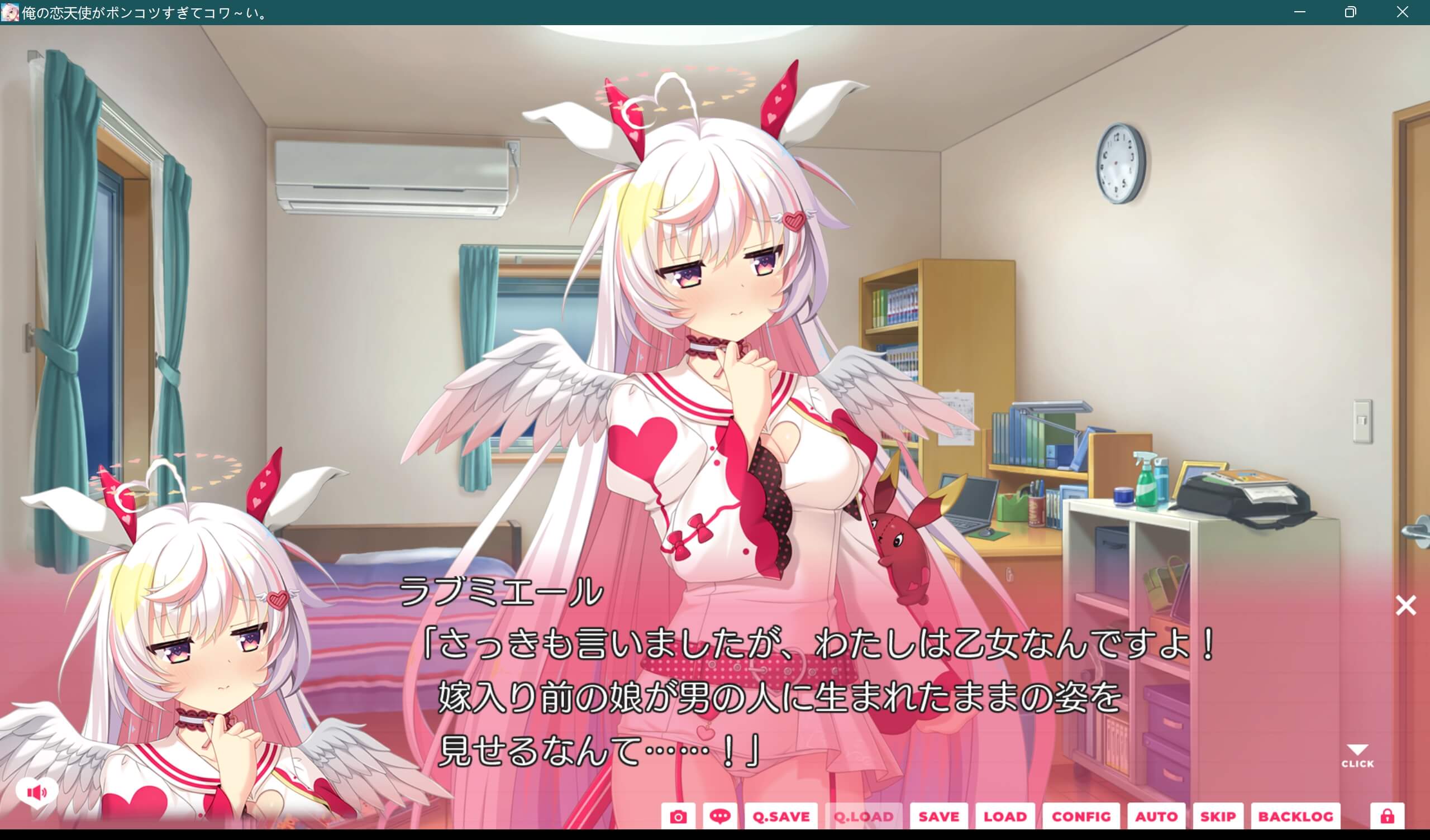
I originally thought this game was just one big meme, but the story turned out to be super old-school. The hero’s angel keeps prodding him to use the Love Note to get a girlfriend, and says that once he finds true love through the thing, she’ll be able to complete some task of her own.
Later, to keep a closer eye on the protagonist and help him out, the angel enrolls in his class as a transfer student under the name “Koimi Eiru” and starts assisting with his love life from there.
There are seven romanceable characters, and one of them is a cute boy. The lineup: the number-one heroine “Koimi Eiru”; the protagonist’s childhood friend “Inui Isuzu,” whose chest is big enough to leave you feeling “dry”; the school’s untouchable beauty “Nishijou Rinka”; his stepsister “Sakuma Shi” who’s constantly horny for him; “Kousaki Kiru,” voiced by Ishihara Mai, whose eroge work has gotten rusty after a long absence; the homeroom teacher “Minegoshi Koto,” forever in OL black tights; and of course the boy “Oki Tsune Masora,” who is infinitely cuter than Buki and Miss Wang.
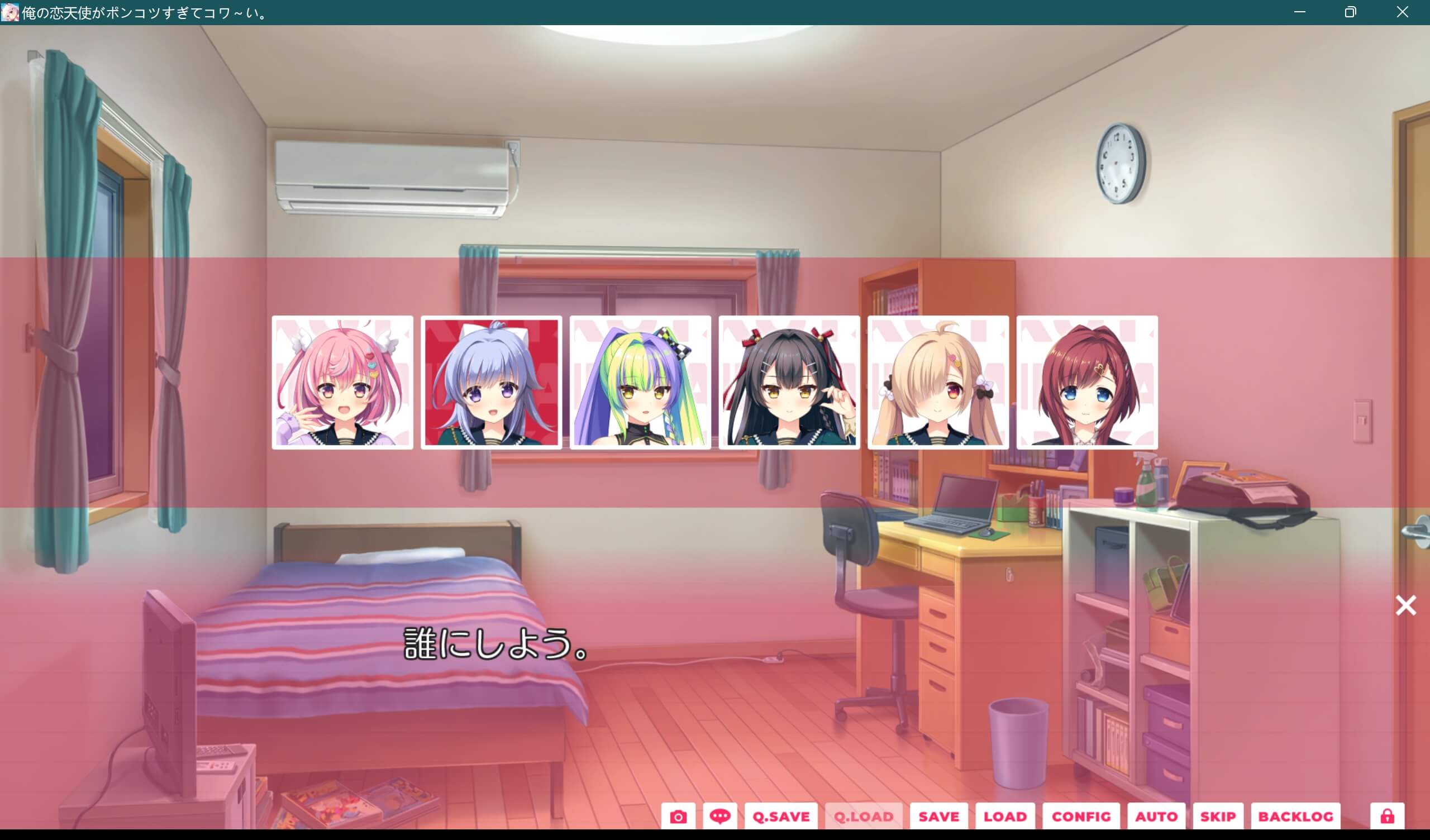
Route selection in this game is dead simple and blunt: every day you write the name of the corresponding heroine on the Love note, keep picking the same one for several days, and you’re in her route. There are two story locks. First, Ishihara Mai’s 「幸咲来瑠」 has to be chosen at the final branch inside the main heroine 「恋見エイル」’s route. Then the teacher 「峰越琴雛」’s route only unlocks after the main heroine 「恋見エイル」’s route is finished.
Honestly, at first I didn’t get why the lady teacher was saved for last. Of course, I understood later.
Let’s start with the individual routes:
Inui Isuzu
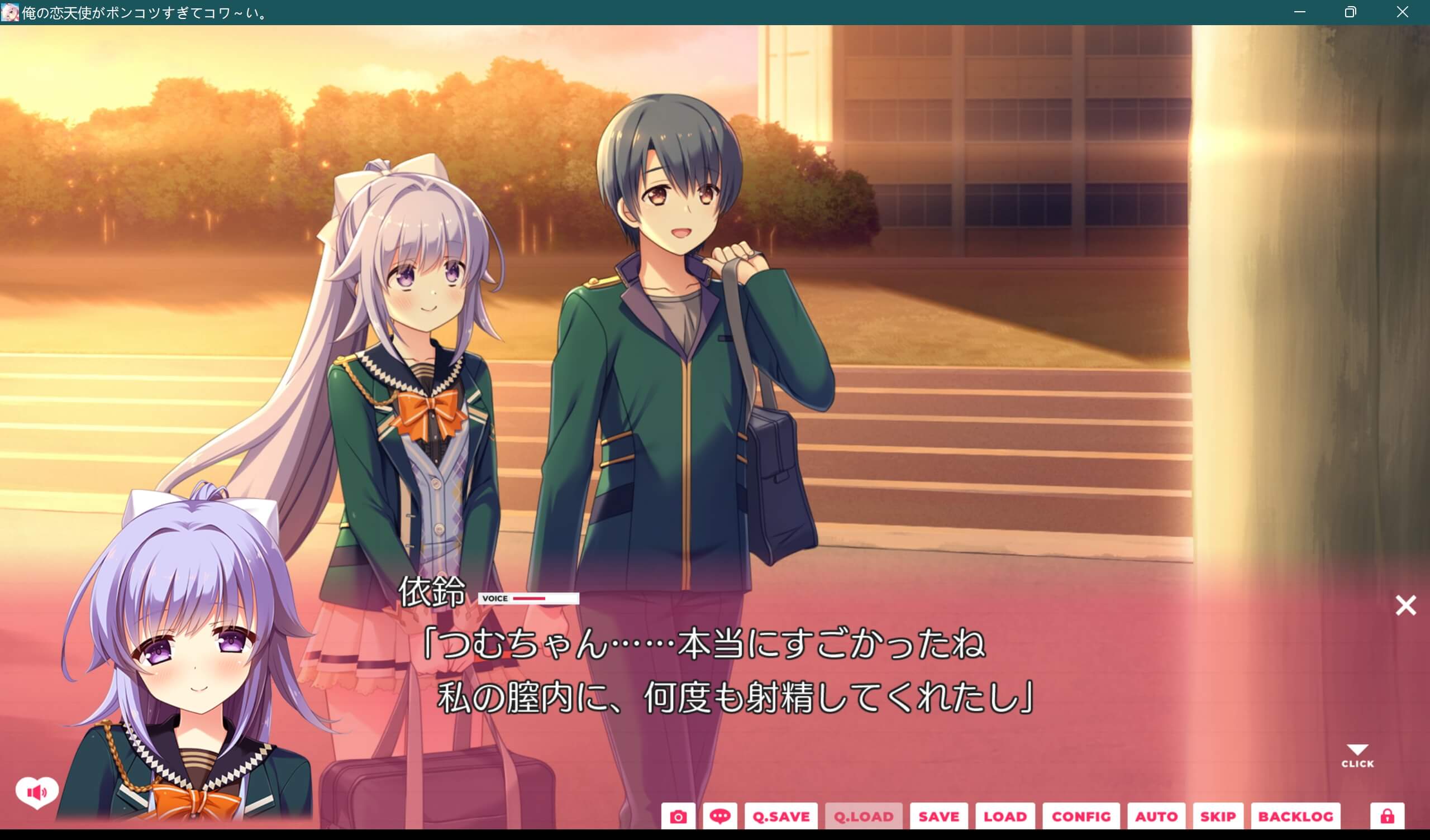
The childhood friend Itsurin Inui’s story is that she’s had feelings for the protagonist since they were kids, and if you enter her route and confess, she’ll turn you down — the reason being that a flashback reveals how the protagonist got injured as a kid while looking after Itsurin, and left sports for good. Itsurin feels she hurt him and doesn’t deserve him. Naturally this whole mess gets sorted out after a few more conversations, and the protagonist says that sure, he left the sports world, but he ended up in otaku circles, and every day at home he’s watching Vtubers and having an absolute blast, so he never really minded. In the end the two work through their hang-ups and become a couple.
Rinka Saijo
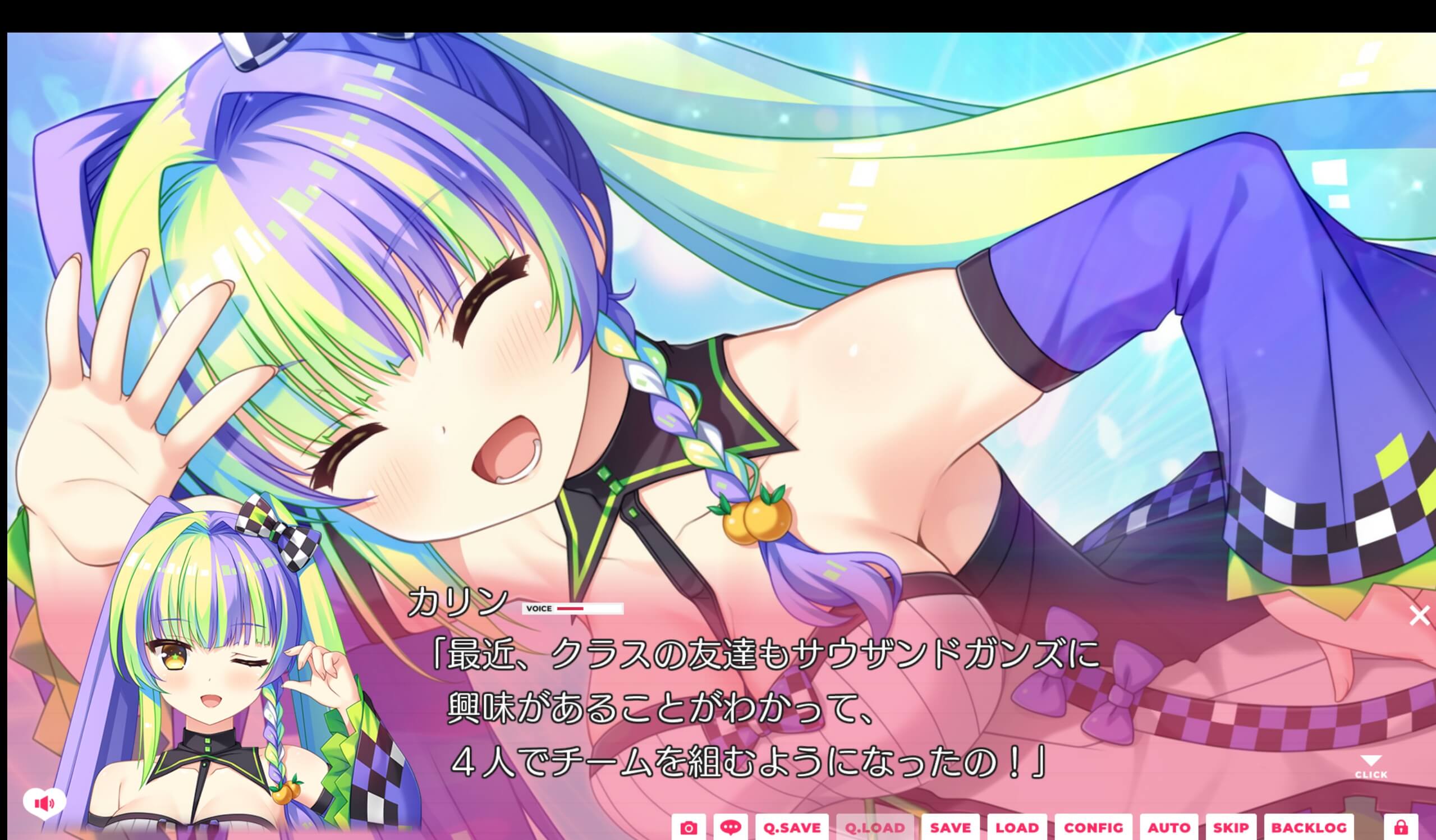
Takamine no Hana Nishishino Rinka’s route starts with the protagonist chasing a VTuber. He’s a hardcore fan of some VTuber named “Karen,” loves singing along with her to 金莎’s “Incredible” (《不可思议》), loves watching her dance, even writes her little essay-length messages, and wants to be her dog—except Karen-chan likes cats, and cries about it and stuff. Eventually, of course, the protagonist finds out that “Karen-chan” is worth jack shit, and her real identity is that quiet black-haired girl in his class, Nishishino Rinka. Gotta roast Rinka for being this careless: whatever happens in her daily life, she blurts out on her VTuber stream, which lets the protagonist confirm her identity on the spot. After that it’s smooth sailing—obviously he pursues her via the fan-effect route. Once he’s won her over, Rinka asks him whether he went after her because he liked the VTuber she plays. He acts all cool and says no, well, it started that way, but later he was drawn in by her charm and all that.
The final climax comes after the protagonist and Rinka start dating, when he learns that Rinka’s parents have always been against her beloved VTuber career, saying the whole thing has no future. Rinka fires back that VTuber work is her dream, that it’s where she found attention and a sense of accomplishment, and that it’s not some shady business. At first I figured her parents just didn’t get her, but then the story gets to the reason her father gives for objecting:
“VTubers are eating off their youth—you think you can stream forever?”
“VTubers are just a fad. They’ll be forgotten soon enough.”
“The current Vtuber boom is nothing but capital stepping in. If you don’t have a real skill to your name, capital will toss you out before long.”
“Without solid skills, once the market bubble bursts, you’re nothing.”
After hearing him out, I honestly felt this dad is goddamn right! But the plot still has the protagonist and Rinka meeting the future father-in-law together, where he declares he’ll take responsibility for Rinka’s future. The father-in-law scoffs and says you’re nothing, you can’t even afford her cosmetics, and the protagonist retorts that if he scores high on the next exam, that should prove he’s got talent or whatever.
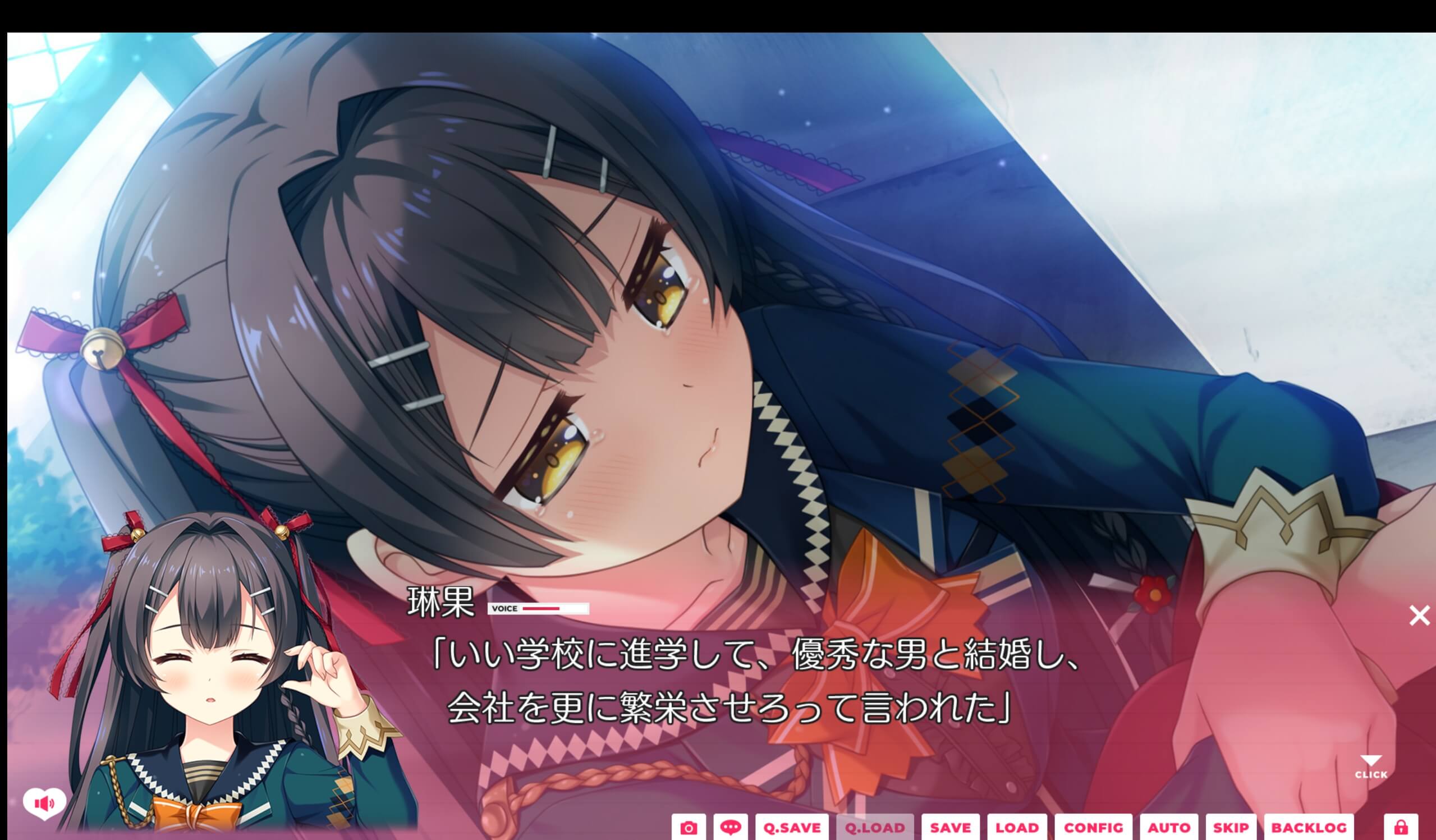
In the end, the protagonist succeeds, of course—he gets Rinka as his girlfriend, and she allows it. The ironic part is how their lives diverge afterward. He goes off to grind in his career, while Rinka gives up being a Vtuber and chooses to inherit the family real estate company, and they live happily ever after.
And in the end you totally gave in and loved it, huh — “choosing to be a Vtuber over the family fortune for the sake of my dream,” my ass!
Sakuma Uta
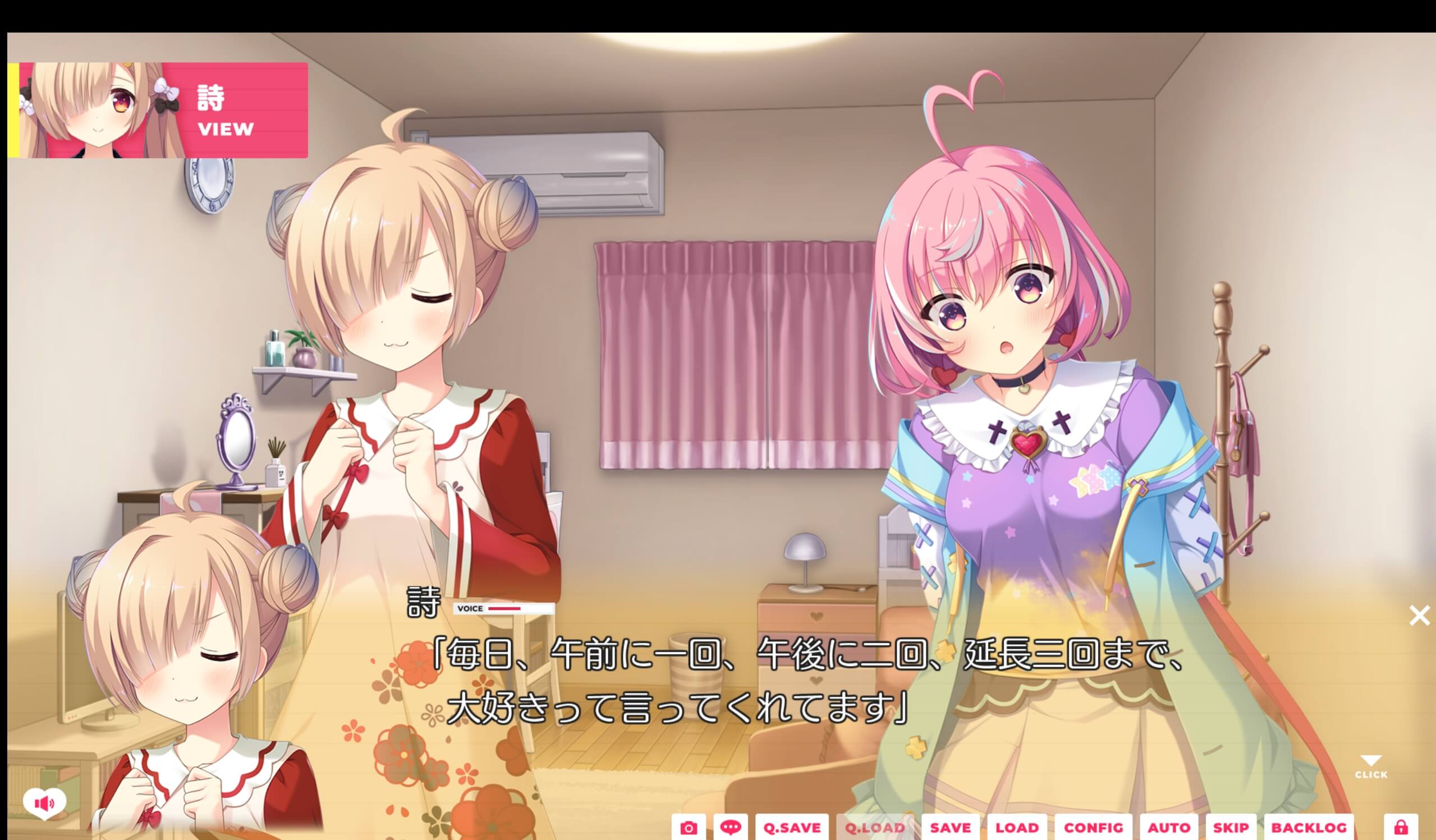
Sakuma Uta’s stepsister route is pretty by-the-numbers — the little sister throws herself at her brother from every angle. But considering how the voice actress goes absolutely full-throttle in this route, it’s surprisingly fun. The way the sister’s romance unfolds is the same overused shit: at first the two families merge and the two of them don’t talk, then some event makes her realize her brother’s actually hot, and then it’s full-on throwing herself at him, etc. etc. The final stretch has the protagonist and his sister’s relationship never quite hitting max score, and it only gets resolved after they pray in front of their dead relatives and report it to the heavens. Gotta say, for a brother-sister romance, writing it like this isn’t bad at all.
恋見エイル
So let’s get to the point: I want to talk about Koimi Eiru’s personal route. Before that, though, I should mention one thing—if you go down another heroine’s route, Eiru’s role in the story is basically support, always helping you with your love life (though she screws up constantly). And at the end of every heroine’s route, Eiru shows up and more or less hints to you that this “Eiru” isn’t an angel at all, but a real person existing somewhere, who apparently is even hospitalized for some kind of illness.
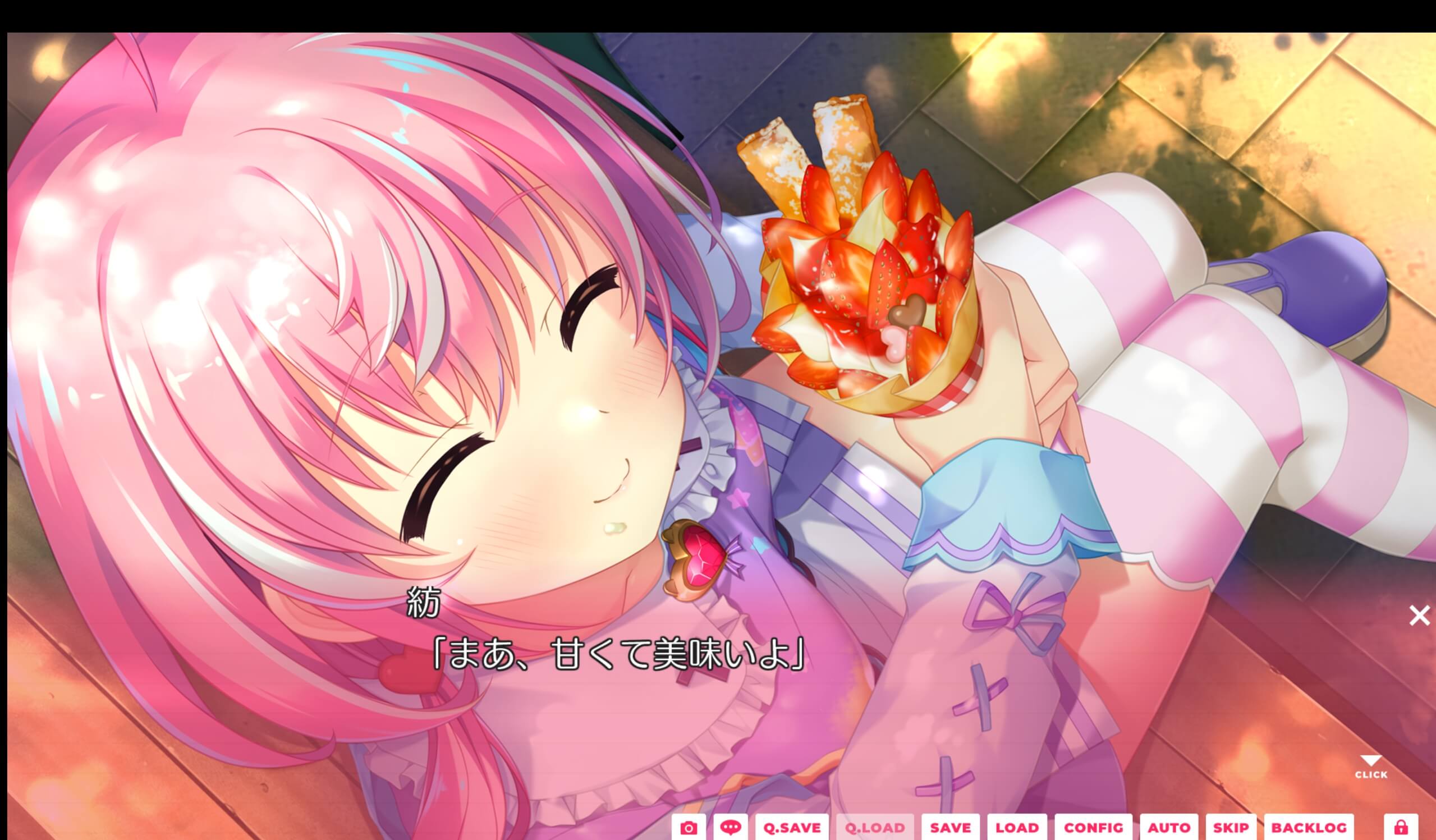
So the obvious next step is to expand on it — Eiru is definitely lying unconscious in some hospital, and her soul slipped out and became an angel.
Then Eiru’s route unfolds exactly as you’d hope, and it doesn’t disappoint. The protagonist doesn’t pick anyone else in the Love Note—he writes down Eiru’s name. Eiru says she has no choice and agrees to fake being a couple with him first, just to see what it feels like to be lovers. Naturally, the fake relationship turns real. Right when the affection meter on the Love Note is about to max out, Eiru realizes this won’t do—she’s supposed to be the support, so how can she step onto the field herself? And so she vanishes.
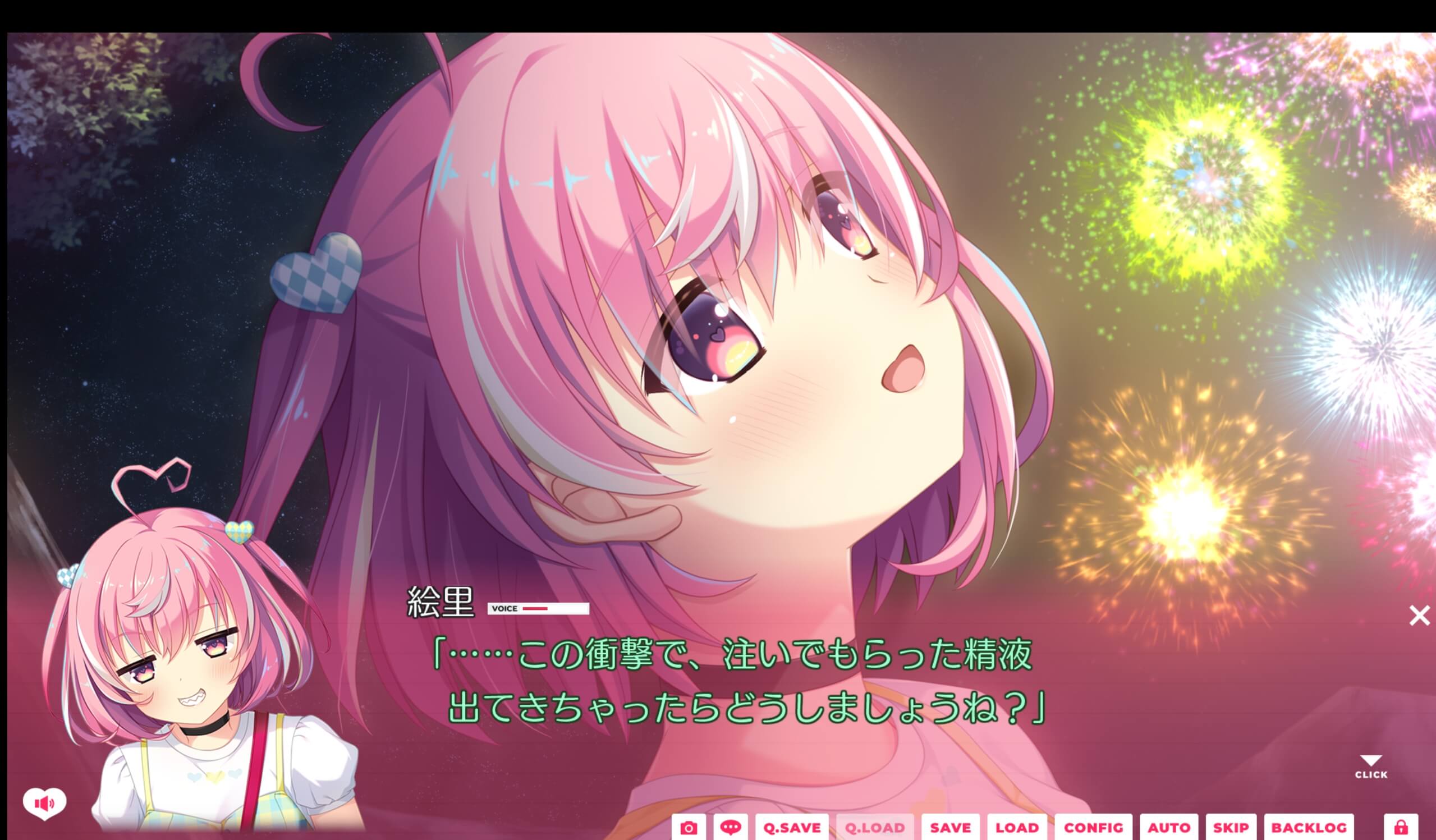
After that, the protagonist does some digging and finally tracks down Eiru’s real identity: a girl named Eri (thank god she’s not called Sendai Eri), a pink-haired girl who’s been comatose in some hospital for years. When he asks around, he learns she’s been out cold ever since a car accident all those years ago and never woke up.
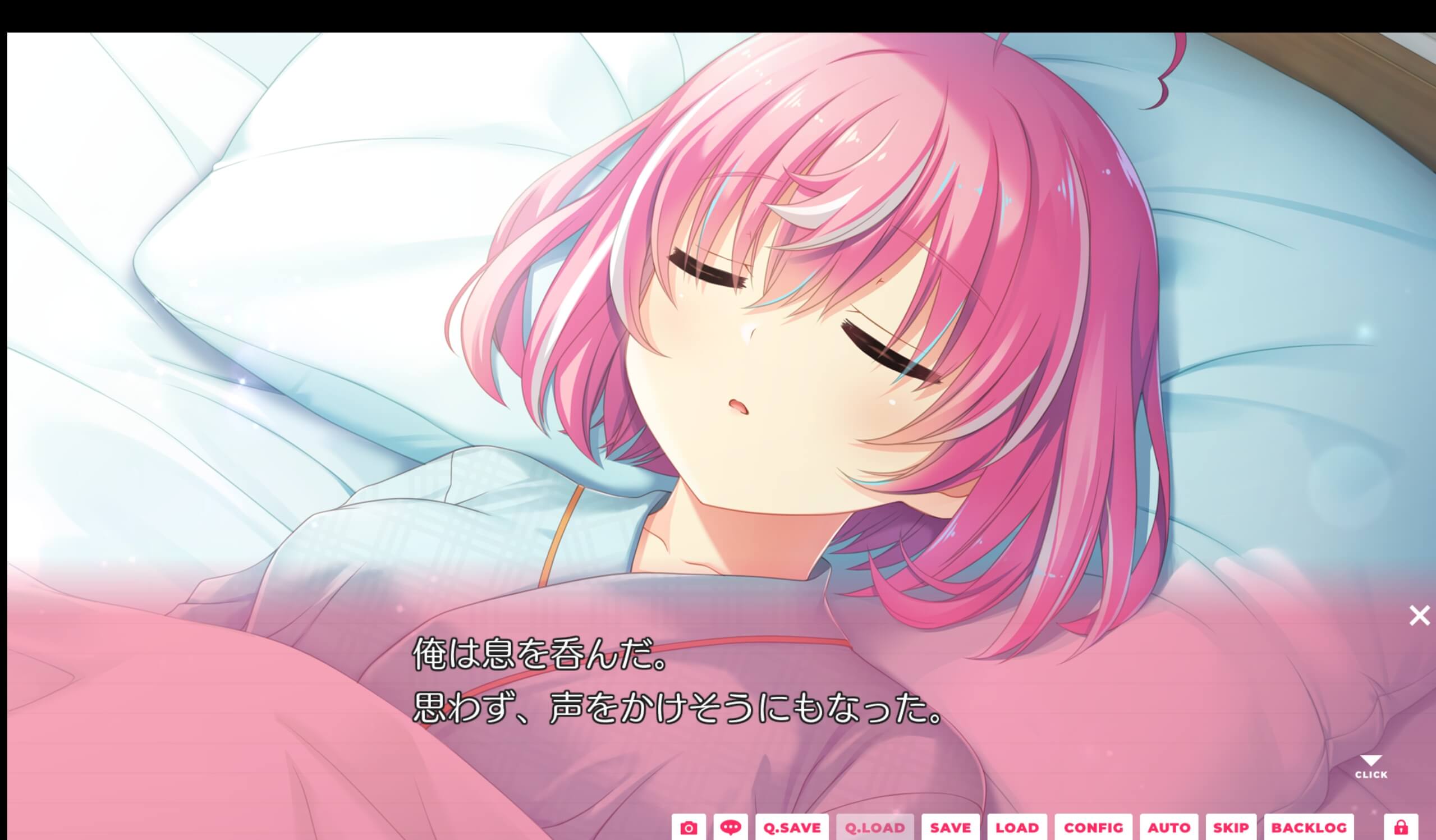
The later developments make it obvious, of course — that so-called angel “Koimi Eiru” is just the out-of-body spirit of the pink-haired girl lying in a coma after the car crash. For some reason, a certain “archangel” (who shows up in the game and is a total hunk) takes her under his wing, giving her one more shot at youth and at enjoying romance. By helping other people fall in love, or by falling in love herself, she can wake up again.
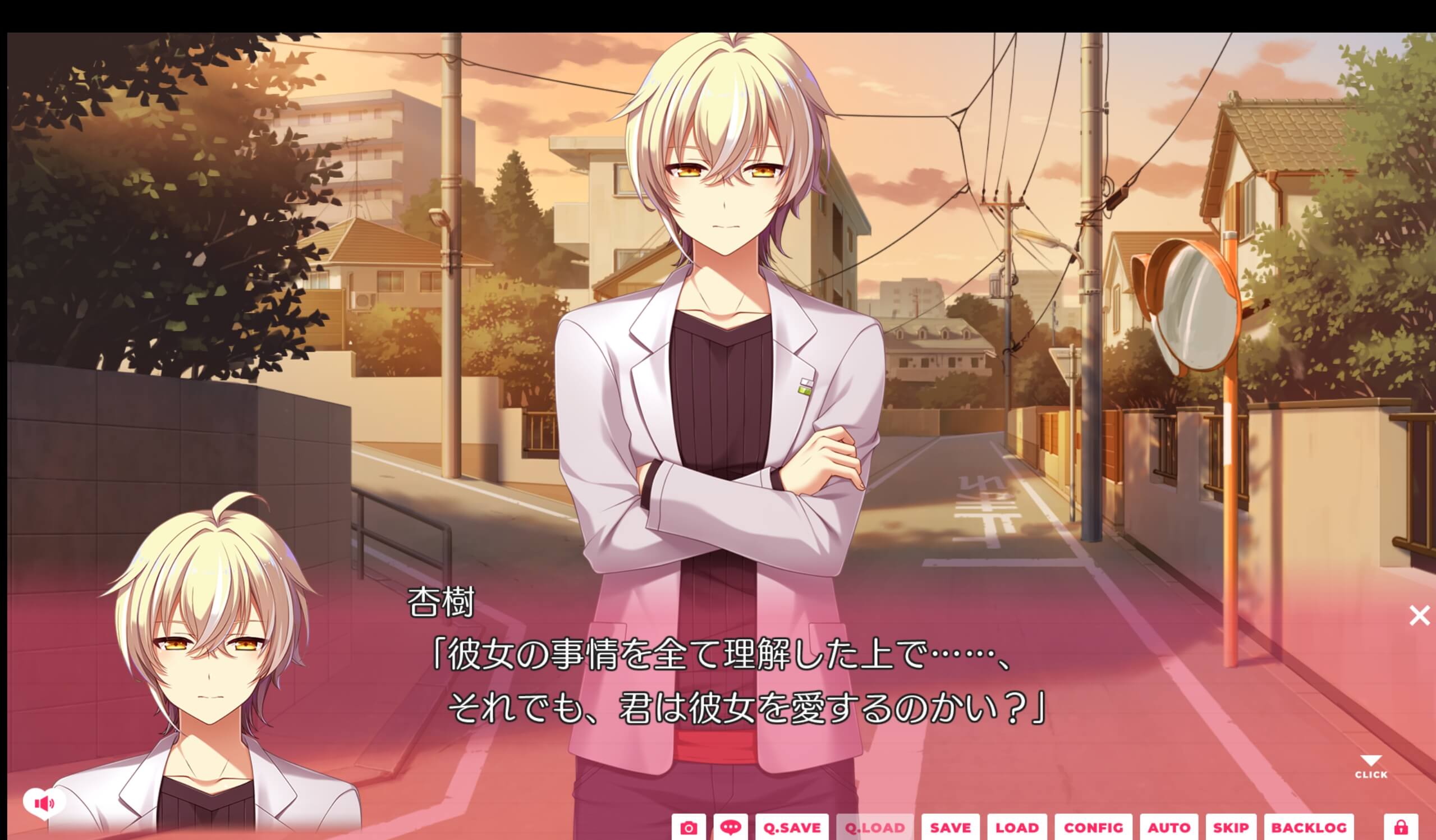
The ending is pretty easy to guess too: the real Eiru Koimi wakes up again and becomes the protagonist’s girlfriend.
Minagoshi Kohina
The schoolteacher route for Koto Hina only unlocks after you clear the personal route of Koimi Eiru. I couldn’t understand why at first, but later it clicked. I remember Eiru was in a coma from a car accident, and she’d actually been out for years. In Eiru’s own route, Hina is always very warm toward her, and she’s happy to see her fall in love, like she knows her or something.
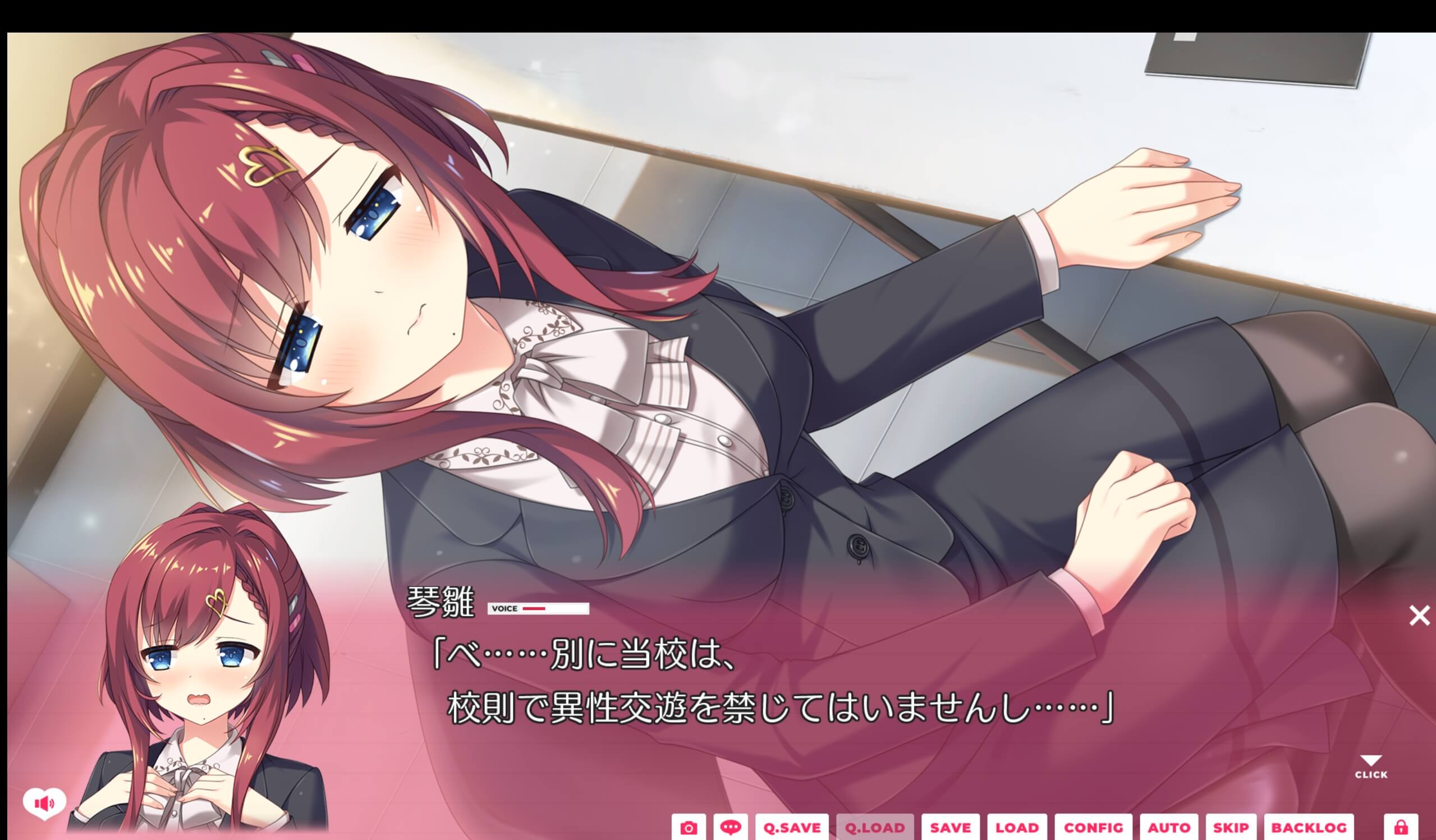
这个谜团在琴雛的路线得到解释。起初,男主只要一看到女老师就会主动出击,但女老师的朋友——也就是男主打工那家餐厅的老板——警告他:“琴雛不会谈恋爱的,因为她有更重要的事。”
What was this “more important thing,” then? Kotohina did end up telling him in the end. Back when she was still in school, she had a close friend — someone who wanted to become a teacher someday. The two of them got along really well. But then that friend was on her way to celebrate Kotohina’s birthday, and there was a car accident. She’s been in the hospital ever since, and never woke up again.
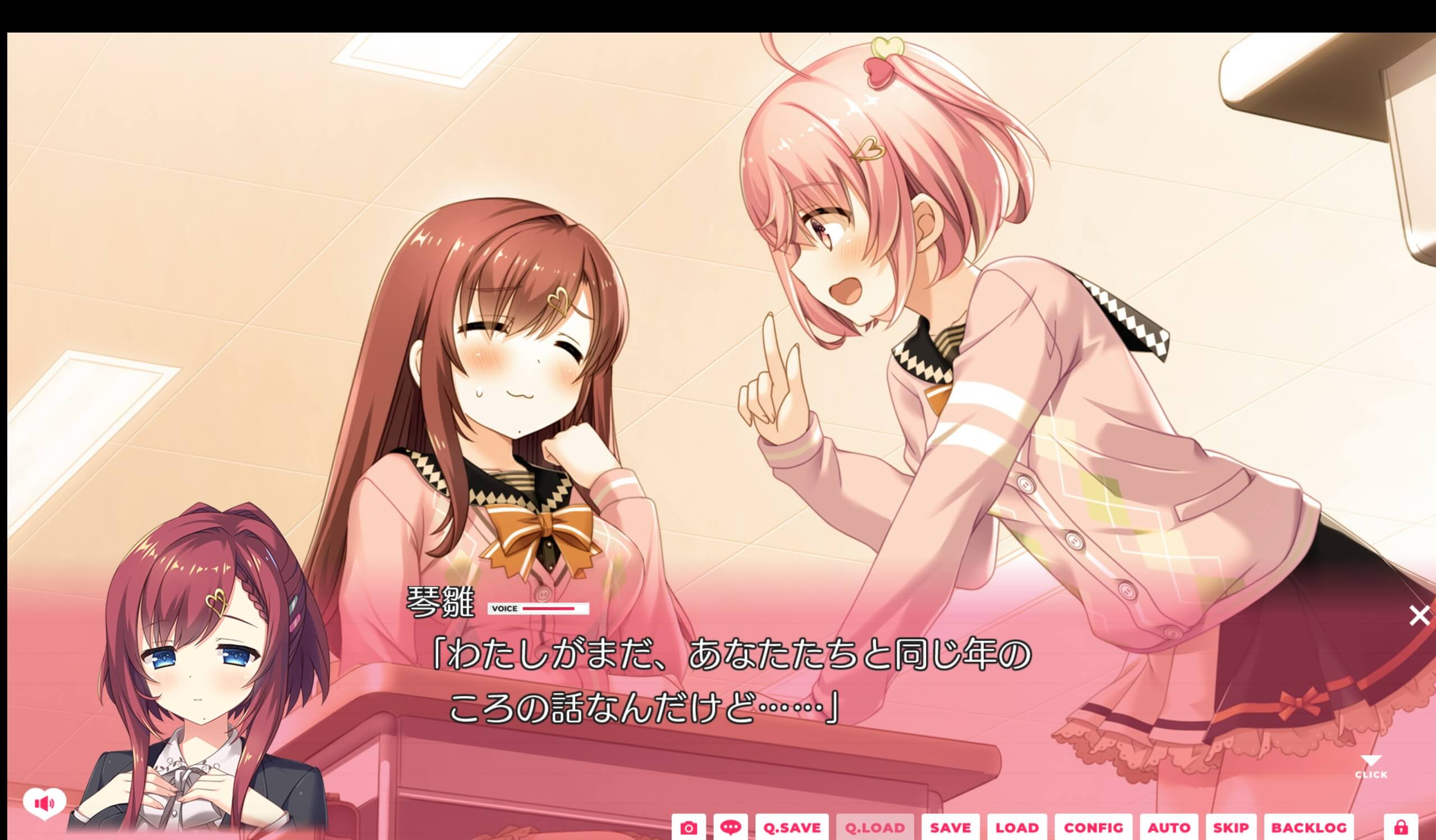
So Koto thinks it was her fault that her friend met such a tragic end, and she took her friend’s place as the teacher, spending all that time trying to atone or something……
So it’s pretty obvious who that “good friend” is — it’s the astral-projecting Eiru Koimi, of course.
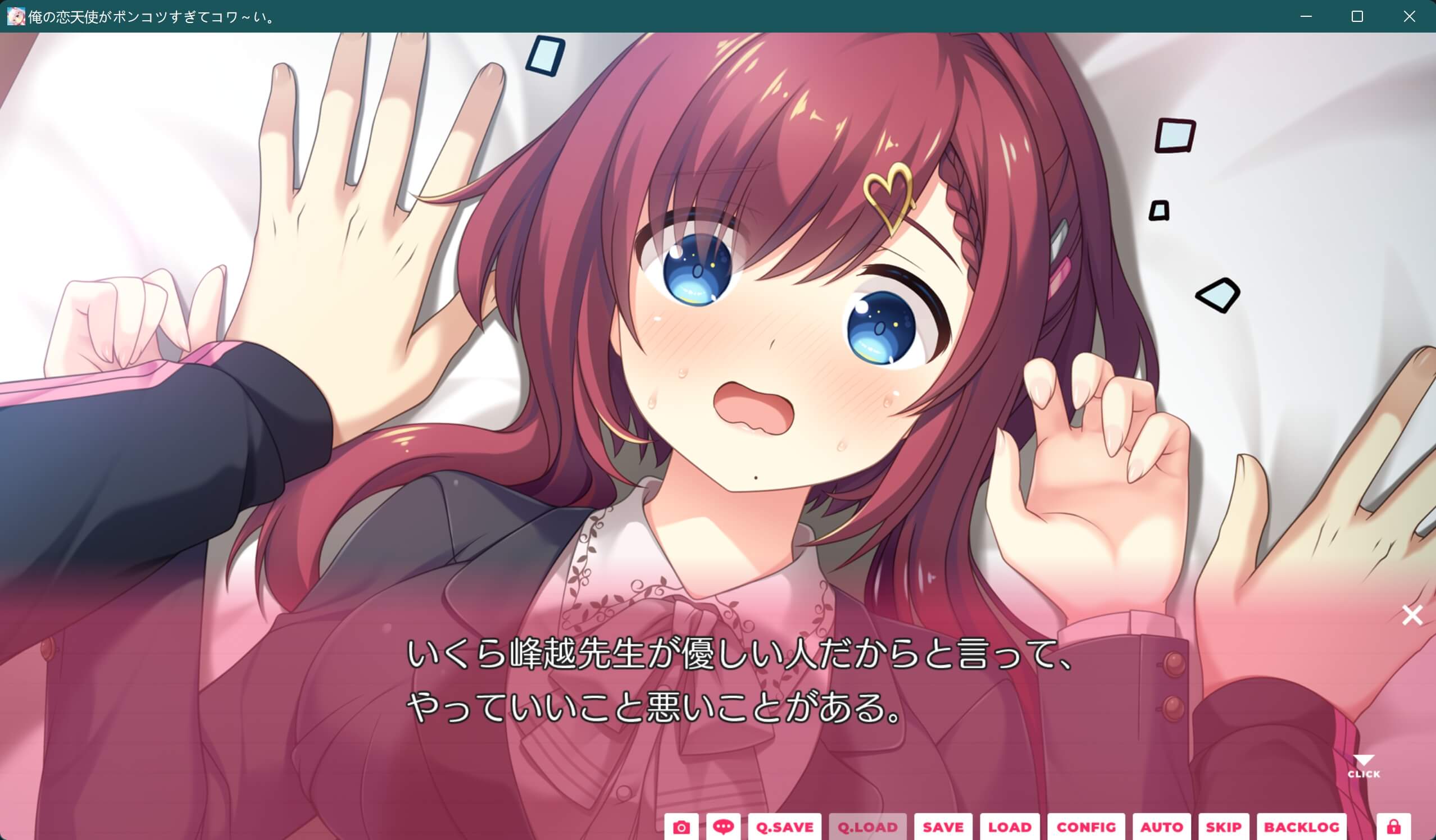
The ending is pretty simple too: Koimi Eiru and Koto Hina finally manage to communicate, Eiru says she never held a grudge, and the two of them sort out their hangups. The protagonist ends up in a good place with Koto Hina, and Eiru even wants to squeeze herself in for a threesome or something…
Kōsaki Kururu & Oki Tsune Masora
The game also has routes for two other characters. Ishiwara Mai’s Kosaki Ruru feels like a total freebie — honestly, I don’t even see why this character needed to exist. The other one, Okiwata Masora, is a trap: the character starts out dressed like a girl, voiced by a female VA, and the name doesn’t give anything away either. It’s only when you accidentally pick his name that you start getting hints from the little details in the dialogue that this person is actually a boy.
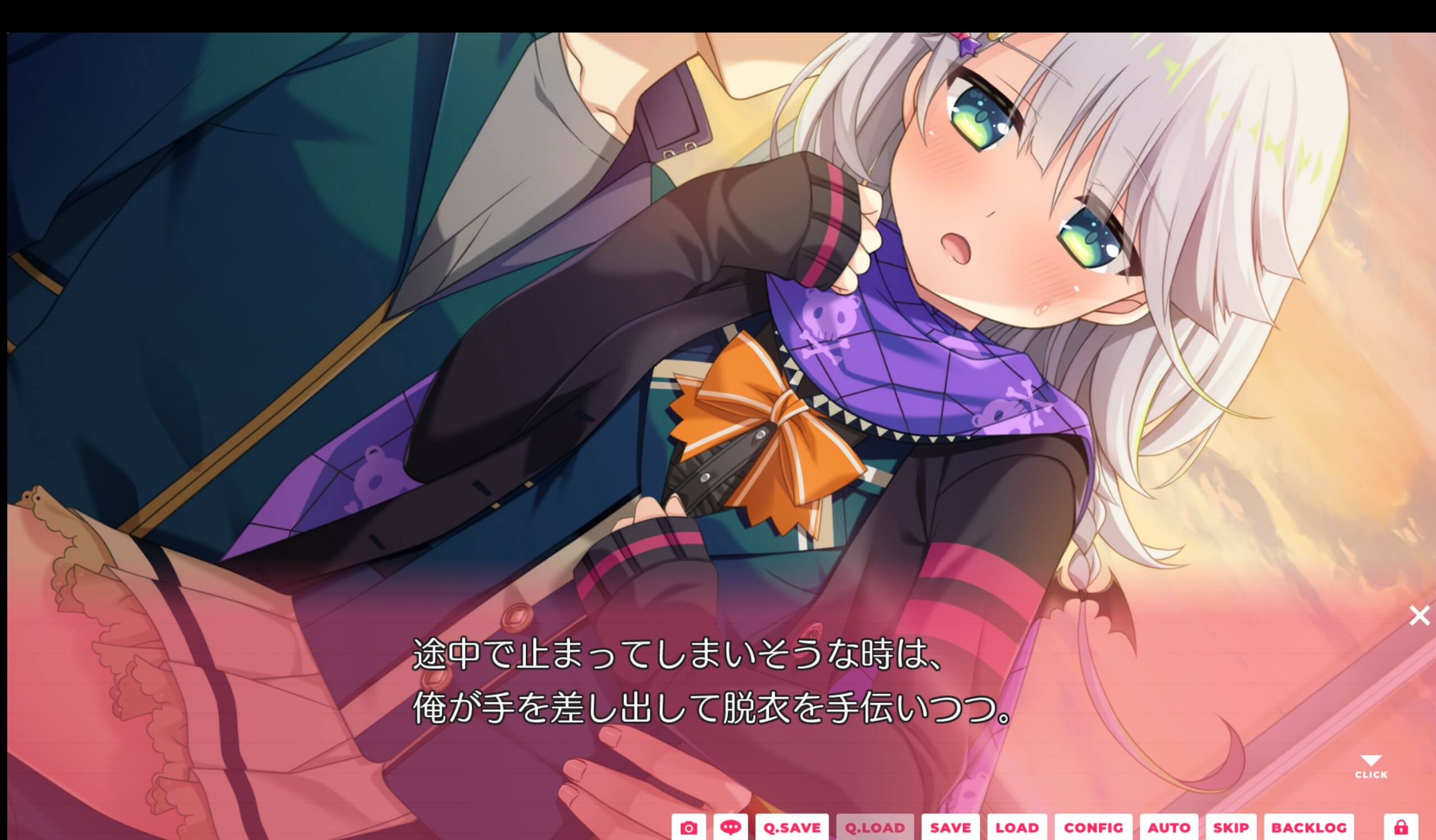
And you think the boys are safe from this? If you waffle too much on your route choices, or just don’t pick anyone, you’ll end up in his ending……
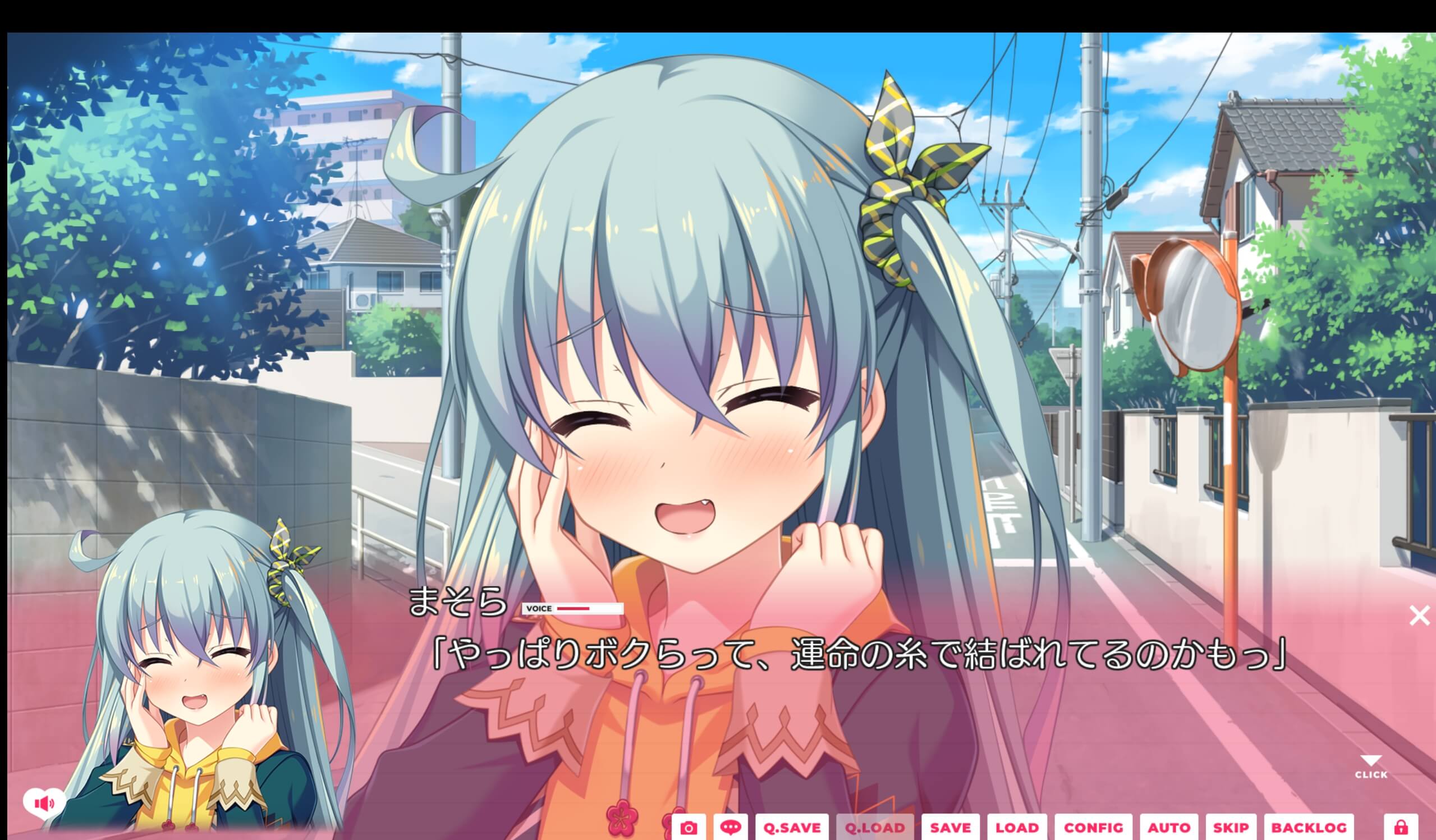
And he’ll tease you about it too, like, “I can see you’ve got no idea what you’re doing.”
Postscript:
Overall, Ore no Koi Tenshi ga Ponkotsu Sugite Kowai is a pretty by-the-numbers game — the developments kept hitting me with déjà vu. The Love Note at the start is straight-up a Death Note riff, and the whole thing where Koi-mi Eiru turns out to be a soul leaving the body to relive a youthful romance lines up one-to-one with that Saga Planets game from last year. Even the heroine’s hair color is the same. And that’s before we get into how many manga have used this exact type of story.
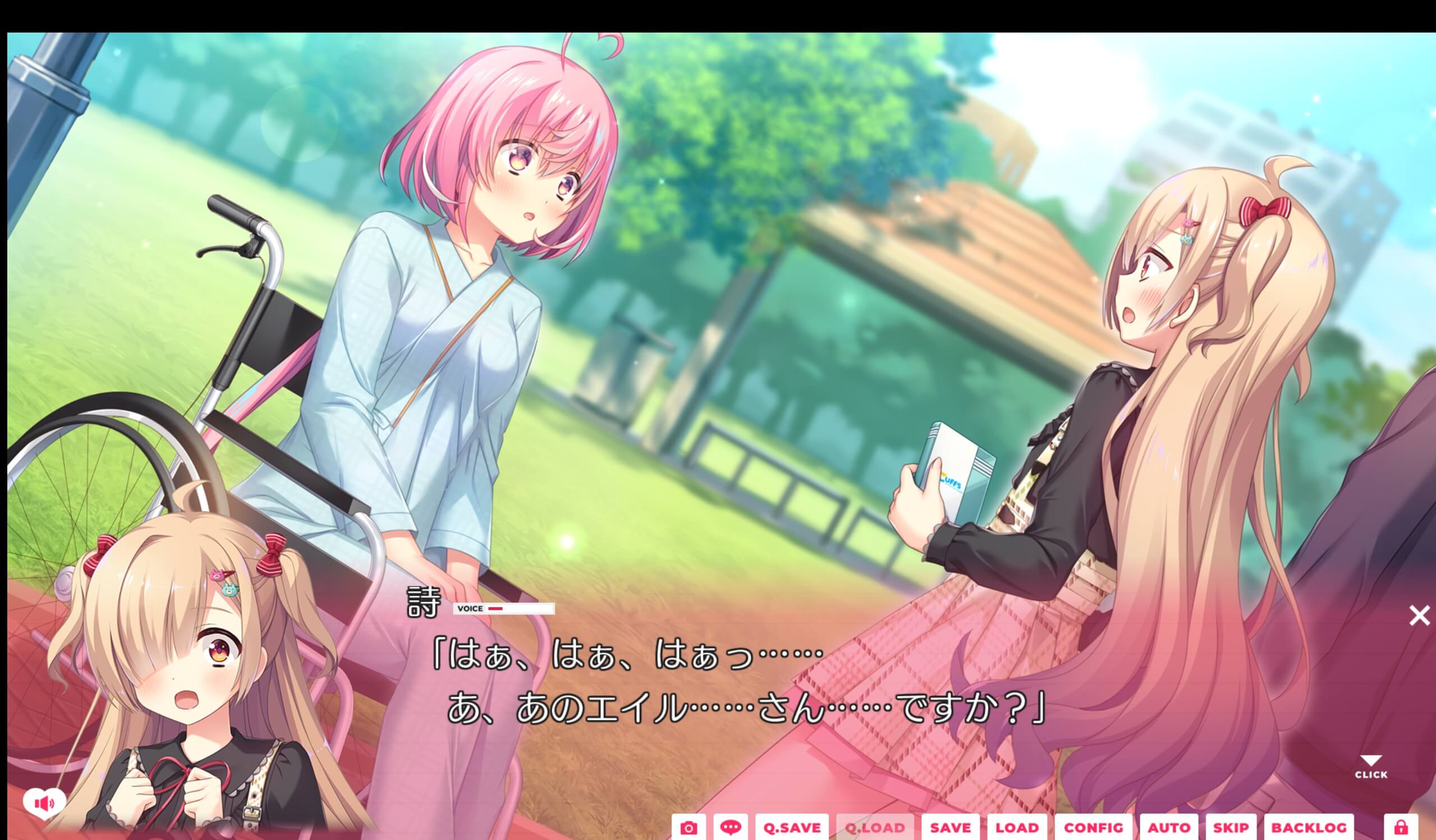
Still, I’d say this game is worth recommending. The reason is that it nails the appeal of cute girls. Akane Ikegami may have reported me before, and she’s got no shortage of dark history—no less than Ms. Cao Lu—but in this game I think her art is decent, and the dialogue plus the CVs’ full-throttle performances really push the game to the ceiling it was meant to reach. A character-driven rom-com only needs exactly that effect: the girls are cute and pretty, the CVs go all out, and aside from the OP being rough to listen to, the ED by Duca is actually pleasant. Story-wise there are touching moments and lewd segments too—something for both refined and vulgar tastes, refined in a vulgar way and vulgar in a refined way, and overall it comes off as cheerful. For a work like this, I think it’s already plenty good.
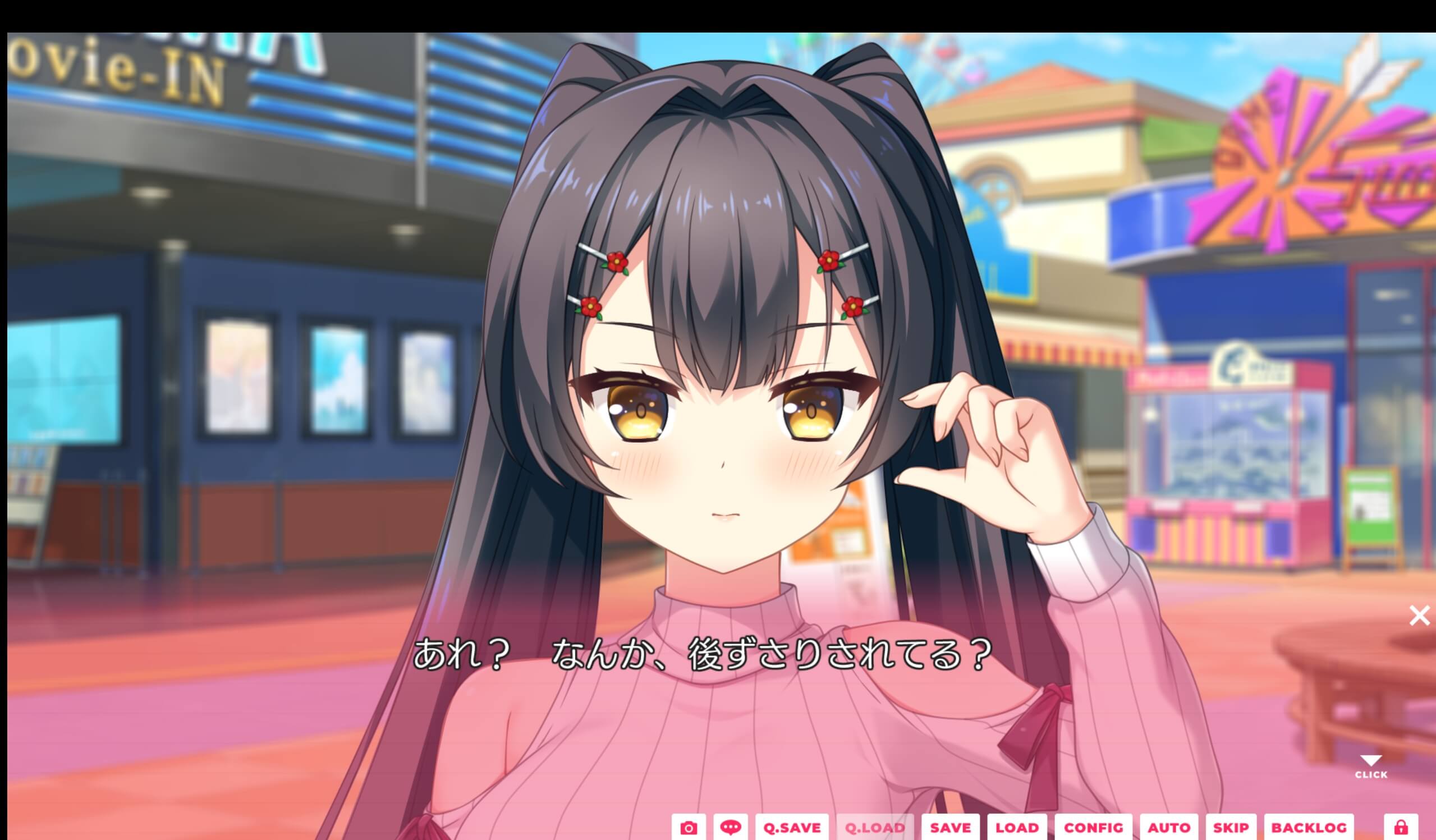
More importantly, the recent Galgame market has been so weak that this game’s strength stands out even more.
Speaking of this game, besides Death Note and Saga Planets, another title comes to mind. In it, Koimi Eiru descends before the protagonist and suddenly signs a contract with him, saying that if he can’t find a partner within three months, he’ll… never be able to get it up again.
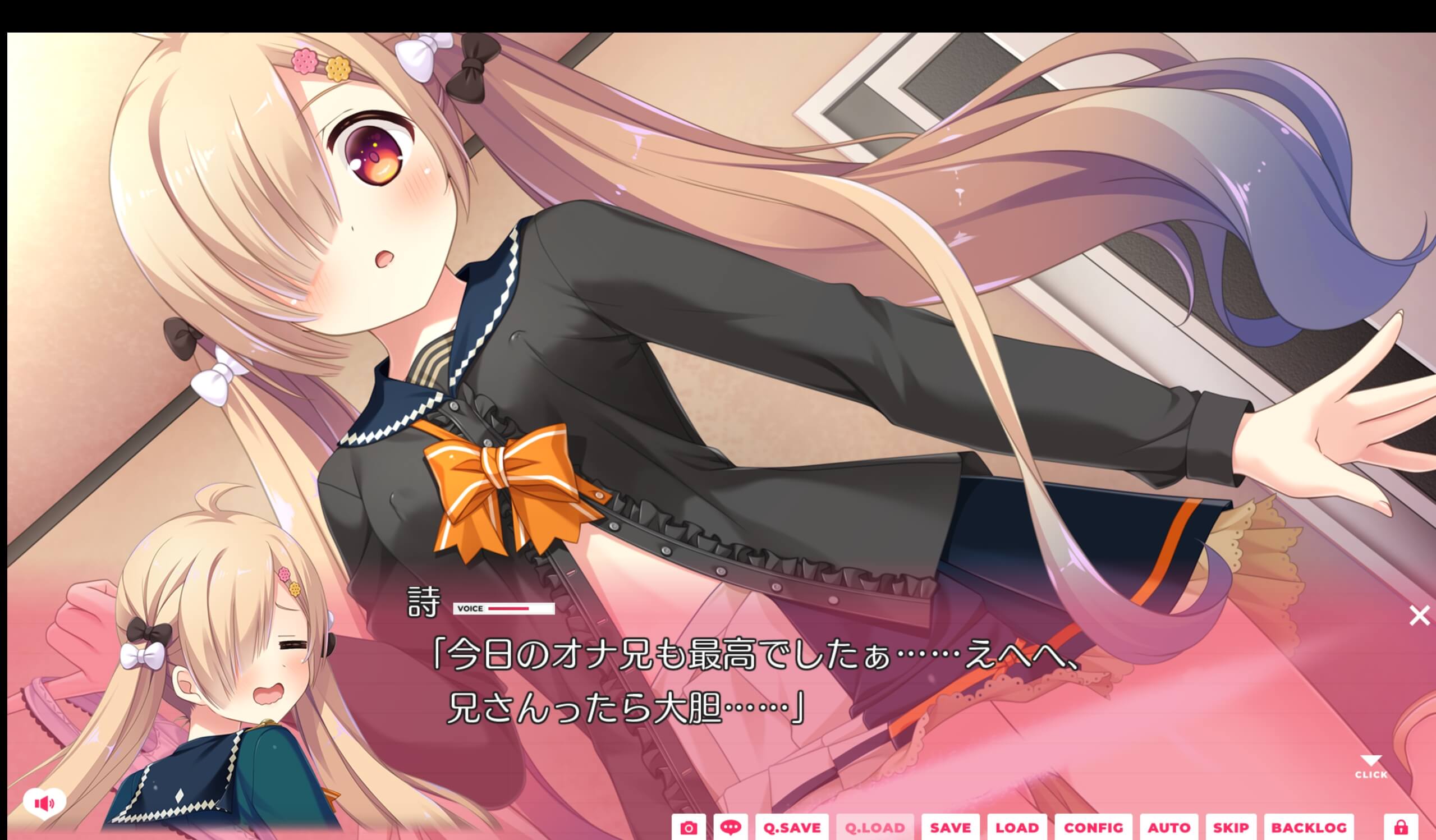
After that, Eiru Kōmi’s clumsy demeanor, plus the way she gets all dejected and flustered every time the protagonist wins over the corresponding heroine on each route, and that so-called archangel behind it all—it all kept reminding me of that manga by the Wakaki old bastard. Eiru Kōmi’s personality and her clumsy traits are also a dead ringer for Elsie. Come to think of it, Wakaki hasn’t drawn a school romance in ages, and his favorite Nao Tōyama even went off to voice a Galgame. The last time I read one of Wakaki’s manga was 10 years ago. After mulling it over, I figured I’d just use this article’s title to sum up this game.
Lastly: don’t let the lady teacher in this game fool you, even though she’s the True End.
Comments are hosted on the Chinese main site. This mirror is read-only.