Omoide Kakaete Ai ni Koi!! (思い出抱えてアイにコイ!!) Review
When Your Childhood Friend Has Split Personalities
So here’s the thing: I didn’t even want to play this game. I’ve given up on Hook. The way they develop their scenarios like some high-cohesion, low-coupling assembly line pisses me off just looking at it, and paired with that eternal 720p max resolution, my blood pressure went straight through the roof…
But I heard there was a “landmine,” so I dove in. You know how it is. I really love playing “landmines.” No idea if that counts as a symptom of being a total M. And here’s the awkward part: I’d barely finished the game when I got a commission request.
So yeah, I already busted my ass writing a not-exactly-short commercial piece on this game, and now being asked to talk about it again is exhausting. Plus there’s honestly not that much to discuss story-wise. If I had to say something, let’s talk about the game’s “concept” and where it crashes and burns.
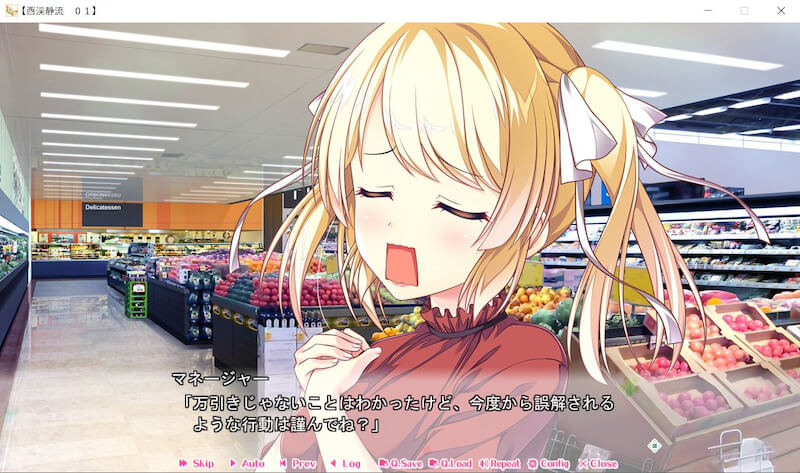
First off, Omoide Kakae te Ai ni Koi!! is all about the “osananajimi” — what we call childhood friends. Like most games, they pick a theme and then beat it to death, so all five of the game’s heroines are the protagonist’s childhood friends.
The story is straightforward: our protagonist played with these five girls as a kid, then moved away for family reasons, and years later comes back to his old stomping grounds, transfers back, and runs into the girls he once charmed. Sparks fly, old flames reignite, etc.
Probably to hammer home the “childhood friend” angle even harder, Hook went all out and gave you two common routes. Yes, you read that right — two common routes. The first covers the protagonist and the five heroines as kids; the second is the everyday life after he reunites with them as an adult.
You’d think a reunion story spanning that many years would have something to say, but nope, Hook produced nothing. Let’s start with the childhood part. Four words: long and fucking tedious. It’s supposed to be a chapter about kids saying whatever comes to mind, but it’s stuffed with painfully awkward gags, SMEE-tier background music, and tickle-level direction. At one point I genuinely couldn’t keep watching. Then the “reunion chapter” kicks in, and aside from showing how some heroines have changed since childhood (especially the formerly chubby girl who slimmed down), there’s nothing notable. It just turns into a “very ordinary school romance,” and you forget the whole childhood friend thing entirely.
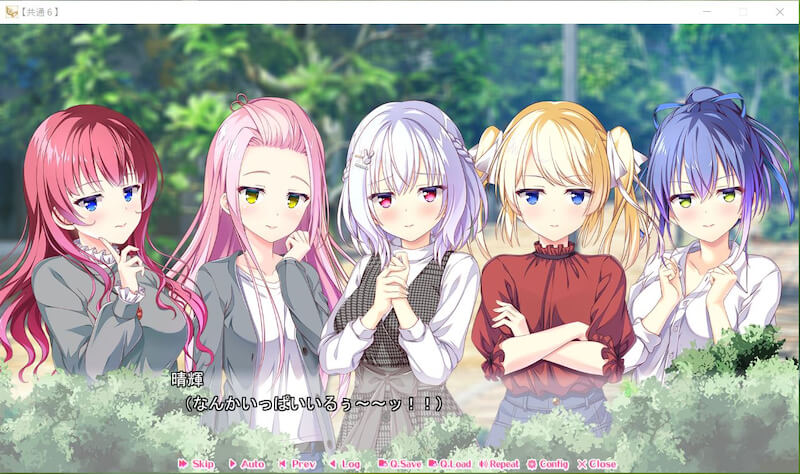
The individual routes are pretty flat too, though at least they tie back to the childhood friend trait somewhat — they’ll tell you “the heroine likes the protagonist because he said/did such-and-such as a kid.” Our protagonist is a master flag-planter, I gotta say. It’s a well-worn trope in visual novels, and given every heroine is a childhood friend, having each one go through it feels weird but understandable.
And that’s when one particular route sticks out: Kuriyama Uzuki’s story, which pulls the rug out from under you late in the game.
Now, Kuriyama Uzuki clearly holds a higher position than the other heroines. Strictly speaking, the game’s very first choice involves her. She’s the only heroine who seemingly confesses to the protagonist early on, and she’s the first to greet him when the reunion chapter starts. Plus that silver-white hair — she’s basically a textbook main heroine template from mainstream visual novels.
But the problem — the fatal problem — lies in this “anointed main heroine’s” route. You progress through her romance quickly enough, but in the latter half, you discover that Kuriyama Uzuki lost her childhood memories.
Turns out shortly after the protagonist moved away, Uzuki was in an accident and lost her memory, including all her childhood memories with him. When she reunites with him, she doesn’t actually recognize the guy, but she does her best to act like she knows him… until they fall in love.
So the game lands in an awkward spot. The protagonist loves Uzuki because he’s known her since childhood and has those memories, but the current Uzuki fell for him after meeting him again as a stranger. Their feelings aren’t symmetrical. So is Uzuki’s love for the protagonist real love, or just a phantom created because the protagonist loves her?
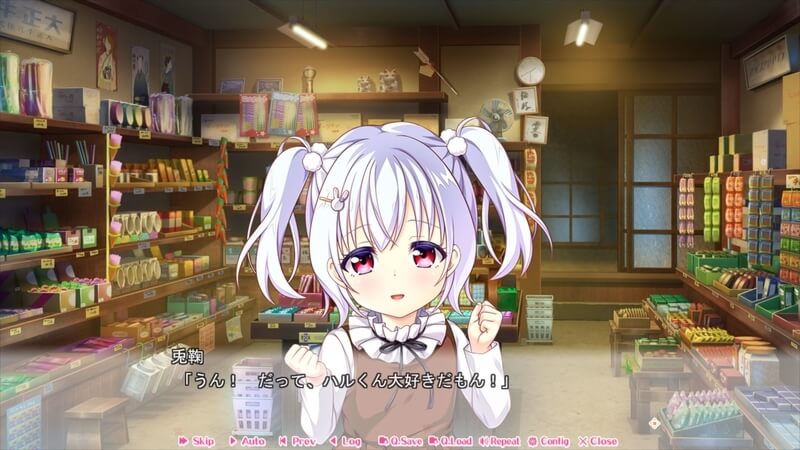
Just as the story starts getting philosophical, the game slams you with a monumentally stupid twist: Uzuki has two personalities inside her. One inherits the childhood memories, sealed away by amnesia and now awakened. The other is the current personality, the one who met him at the reunion and fell in love. And then it hands you a choice: do you pick the Uzuki with childhood memories, or the current one?
You’d think it’s a tough call, but you’d be wrong. No matter who you choose, the game overrides you and picks the current Uzuki anyway. The childhood Uzuki personality fades into nothing, and the protagonist chooses to look forward and stay with the present Uzuki.
Setting everything else aside, if the protagonist chooses the current Uzuki, what was the point of all that buildup about “childhood friends” and the “childhood chapter”? This is a game about childhood friends, and in the anointed main heroine’s route you write a story that has the least to do with childhood friendship. What the hell are you doing?
Not to mention this route made a lot of Hook fans blow up. Nobody expected Hook to pull something like this. Everyone assumed Hook games have no depth — just nonsense with a romance flavor. Why the hell are you suddenly doing “deep romance” now?
And the “deep romance” isn’t even fully realized. No matter which Uzuki personality you choose, Hook just smirks and says “I’m your daddy” and forces you down its preordained path.
So why give me a choice at all? To mock me?
Honestly, Omoide Kakae te Ai ni Koi!! doesn’t have much going for it. Everyone gets drawn in by the “childhood friend” and “childhood chapter” hooks, but the execution is terrible. In some ways I think they should’ve axed the childhood chapter entirely, kept only a few meaningful fragments, strengthened the bond between the heroines and the protagonist, and used the reunion chapter to give you more nostalgia. That would’ve made the characters fuller…
Not that there’s any point telling Hook this. Everyone knows their games are stitched together from “modular” plot pieces with no overall coherence. And as the differences between Hook and SMEE have blurred over the years… wait, actually, current Hook feels more like old SMEE, while current SMEE has wandered off in increasingly bizarre directions. Just look at the art style of their newly announced game…
Anyway, Omoide Kakae te Ai ni Koi!! is as ordinary as they come. Its only distinguishing feature is a heroine with literal split personalities — industry-leading stuff. As for how that turned out, at least Hook’s diehard fans got scared off. Maybe people like me who just want to watch the world burn are more willing to accept this kind of setup.
Oh right, this game has another significance: it might be the best game Hanazawa Sakura voiced before retiring. Shame we won’t hear her voice again anytime soon. Hope she’s happy after getting married.
Tail note:
I wrote a long commercial piece on this game. If you’re interested, go buy it. I ripped the game to shreds (more or less), and I can’t even be bothered to rip it again.
Purchase link: https://item.taobao.com/item.htm?id=666289601780
Comments are hosted on the Chinese main site. This mirror is read-only.