Hands-on: Wangxin Cloud
Can Wangxin Cloud Still Make Money in 2021?
Around early March 2021, I was broke enough to start thinking about making a little side cash — passive income, ideally. Mining was booming at the time, but I only had a 1070ti and wasn’t about to whore it out, so I never jumped into that pit.
Then something called “Xunlei Zhuanqianbao” caught my eye. By then it had already been renamed “Wangxin Cloud,” and the pitch was that you just run a little router-like box at home and make 100+ RMB a month. You could run several, some people supposedly pulled in over 1000 a month. Pretty tempting, I have to admit.
So I followed the project through 2021, used some idle hardware I had lying around, put in about 120 RMB, and ended up making over 1600. Honestly that’s way less than I expected, but at least it covered my internet “freedom” — all my broadband and phone bills, with a bit left over.
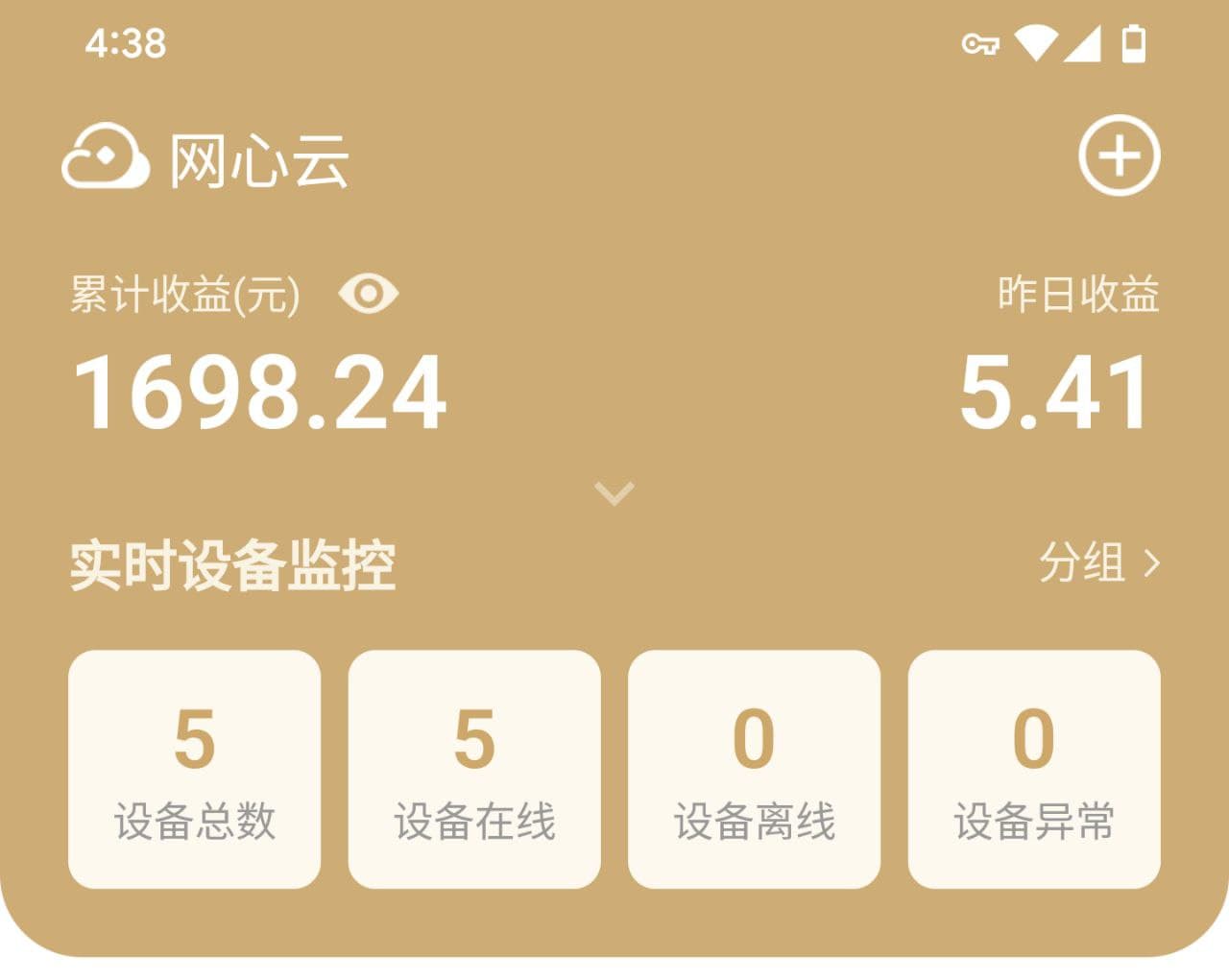
There’s a lot of talk online about Wangxin Cloud. Some say it’s a scam, some say it’s a goldmine, some say it’s mining, some say it’s a pyramid scheme. So let me go through my own experience and take on it.
What exactly is Wangxin Cloud? Is it mining?
Wangxin Cloud is essentially selling your bandwidth. It commandeers your home network as a CDN node to speed up delivery for video sites and other services, then pays you a cut. Put simply, it’s like running a torrent client 24/7, seeding for users all over the country.
From that angle, it has nothing to do with mining. Mining is about raw compute power; Wangxin Cloud needs almost no compute. What it wants is a good network — high upload speed, a public IP, that sort of thing.
What hardware and software do you need to make money with Wangxin Cloud?
First, you need a solid network, ideally with a public IP. Then you need a device to run it on, and the official options are:
- Grab a PC and run the “Wangxin Cloud X86” version on Windows — it’s basically an idle app, keep it running and you earn
- Buy the official “Zhuanqianbao” box, often on sale for around 49 RMB, plus a USB external drive. Plug the ethernet and drive into the box and you’re in business
- Take a PC and install the official ISO image directly, turning the whole machine into a “high-performance Zhuanqianbao” — boot it up and it starts earning
- Use the official virtual machine image and load it in your own VM
Lots of device options, but they’re all the same underneath: a Linux-like virtual system running a CDN node client. The “desktop version” is just a repackaged VirtualBox VM running the client, the Zhuanqianbao is an ARM client, and the official ISO is the client itself. From the user’s side, it’s just a machine running a client plus a big hard drive.
How much can you make, how do you make more, and does it slow down your internet?
Daily earnings are based on traffic. Someone crunched the numbers and it’s roughly 1 RMB per TB — pretty worthless, frankly. To earn more you need to push more upload traffic. First, make sure you have a public IP. The usual approach is UPnP mapping on your router, or just throw the device into the DMZ. I don’t really recommend the “Wangxin Cloud X86” version because that VM is locked down and hard to configure in detail. You’re better off installing VirtualBox yourself, loading the official VM image, setting the network adapter to Bridge instead of NAT, and using a DMZ on the router to expose the VM — saves you a lot of hassle.
Basically, for network setup you can borrow heavily from the High-ID strategies of early BitTorrent and later eMule days. Better network accessibility means noticeably better earnings.
Wangxin Cloud officially suggests faster drives and using an SSD as cache, but I honestly think that’s useless — an old drive is plenty.
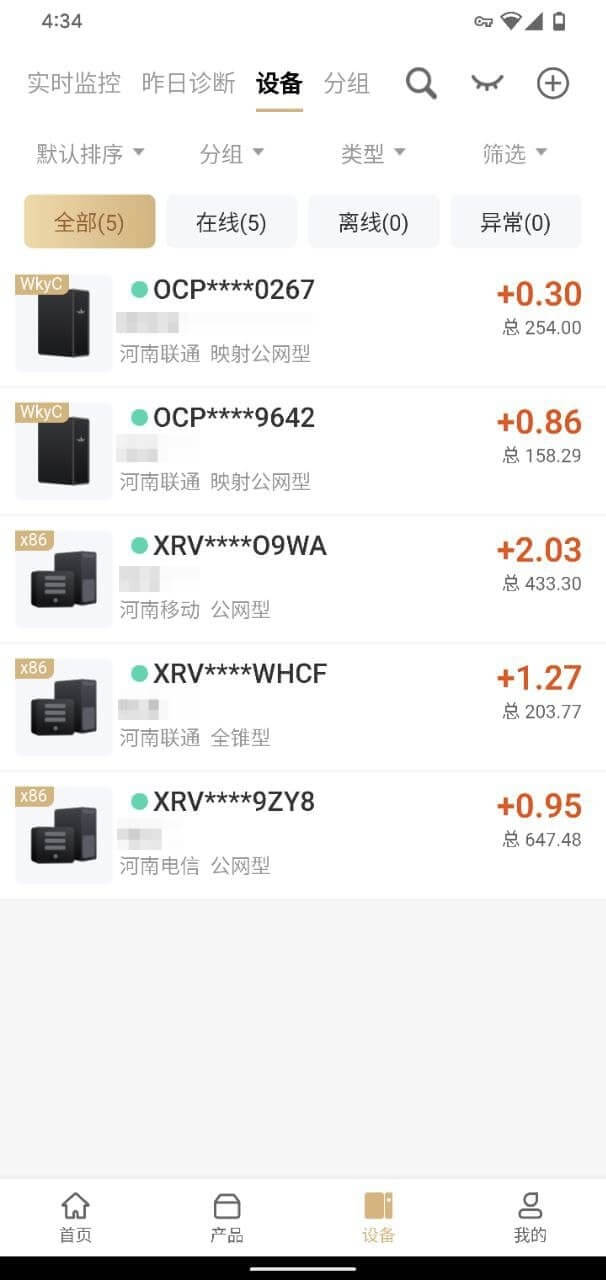
Wangxin Cloud pays bonuses depending on your ISP — sometimes China Telecom, sometimes China Mobile, rarely China Unicom. From what I saw, a standard Henan Unicom line with a 49 RMB Zhuanqianbao and an ordinary external drive pulled in 1–1.5 RMB a day, so 30–45 RMB a month, barely covering most of the internet bill.
With a bonus, you’d get about 2 RMB a day, 60 RMB a month, which covers the bill.
If you have idle fiber with big bandwidth, you can hit up to 5 RMB a day. Some absolute maniacs manage 10 RMB a day, which is actually decent.
Theoretically Wangxin Cloud goes nuts during peak hours (8–10 PM) and should slow your internet, but I never noticed. Maybe my connection is just good?
My advice if you actually want to make money: spread out. Use every bit of idle bandwidth you have, including networks at vacant properties. Don’t be like some people who hang several Zhuanqianbao boxes off a single line — the bandwidth on one line is what it is, stacking boxes just shares the same pipe and won’t fundamentally improve anything.
So can Wangxin Cloud still make money?
Simple answer: yes, but it’s not as rosy as it sounds. It’s fine as passive income.
The catch is you need multiple devices, you have to check for dropouts regularly, and you should test the waters rather than go all in. If you have a public IP, attach a big drive; if not, give it a shot anyway. As a CDN, maybe your local big LAN happens to need that CDN — then you’d be the only node, wouldn’t you?

One hard rule: only use old, idle hardware. Don’t spend money specifically for this. Keep costs as low as possible and your returns are maximized.
I ran Wangxin Cloud for a year with two 49 RMB Zhuanqianbao boxes and a 1TB external drive that had been gathering dust, and made a bit over 1600 RMB. That’s the whole result.
In some ways it beats Google AdSense. A lot of people worry Wangxin Cloud will run off with the money, but judging by how stingy they are — 1 RMB per TB — Xunlei is still making plenty. They’re not going anywhere for now.
Finally, an invite. If you’re curious and want to try it with your own junk hardware, you can register here: https://www.onethingcloud.com/acts/invite/v2?inviteid=b4badbf0
Comments are hosted on the Chinese main site. This mirror is read-only.