Red: Cherish (Red:Cherish) Review
Cyberpunk, but with Vampires
When Red: Cherish was announced I wasn’t exactly hyped. My first reaction was “what the hell is this?”
The legendary “cyberpunk” premise welded onto “running a restaurant day to day” — that reeks of a planning meeting where nobody had any ideas left and somebody just blurted out the first thing that came to mind.
Still, I was glad the studio managed to put out something new at all. I’d been convinced they were going to milk the white-haired Tsubaki from the previous game until the lights went out, so credit where it’s due for stepping out of the comfort zone.
I played the trial, and it was surprisingly good. Bought the full version too — and then the smile slowly slid off my face.
How do I put this. It’s not that the game is bad. It’s that it’s way too different from what I expected.

Our protagonist used to be a Japanese security contractor. On a job protecting a foreigner named “Alice,” the mission failed, the target was killed, and somehow he ended up the prime suspect. So he washes up on a small country that bills itself as the “Island of Freedom,” finds a few fellow countrymen landlords, and meets Yunica, who’s saving up to open a restaurant; Rouge, a rich girl who ran away after falling out with her mother; and “desperado,” a professional mercenary and assassin who runs with the gangs. Together, with the protagonist’s help, they reopen and run a restaurant called “DDDinner.”
Rouge
Rouge’s name is genuinely misleading. I’ve played World of Warcraft, so at first I read it as “rogue.” Turns out it’s a fancy French name pronounced “roo-zh,” with the proper transliteration being “Russo.” I actually really like this character — and not because her CV is Natsumi Koharu, but because she constantly pulls off that “incredibly capable but also incredibly dumb” gap, and she talks mad shit in the pettiest tone imaginable. She’s a lot of fun.
Rouge’s mother is a famous actress who runs a Western-style restaurant called “Yelaixiang,” but the two don’t get along. So when Rouge sneaks around at night stealing money and her mother catches her, she storms out in a rage, ends up taken in by DDDiner, and just sort of loafs around there every day.
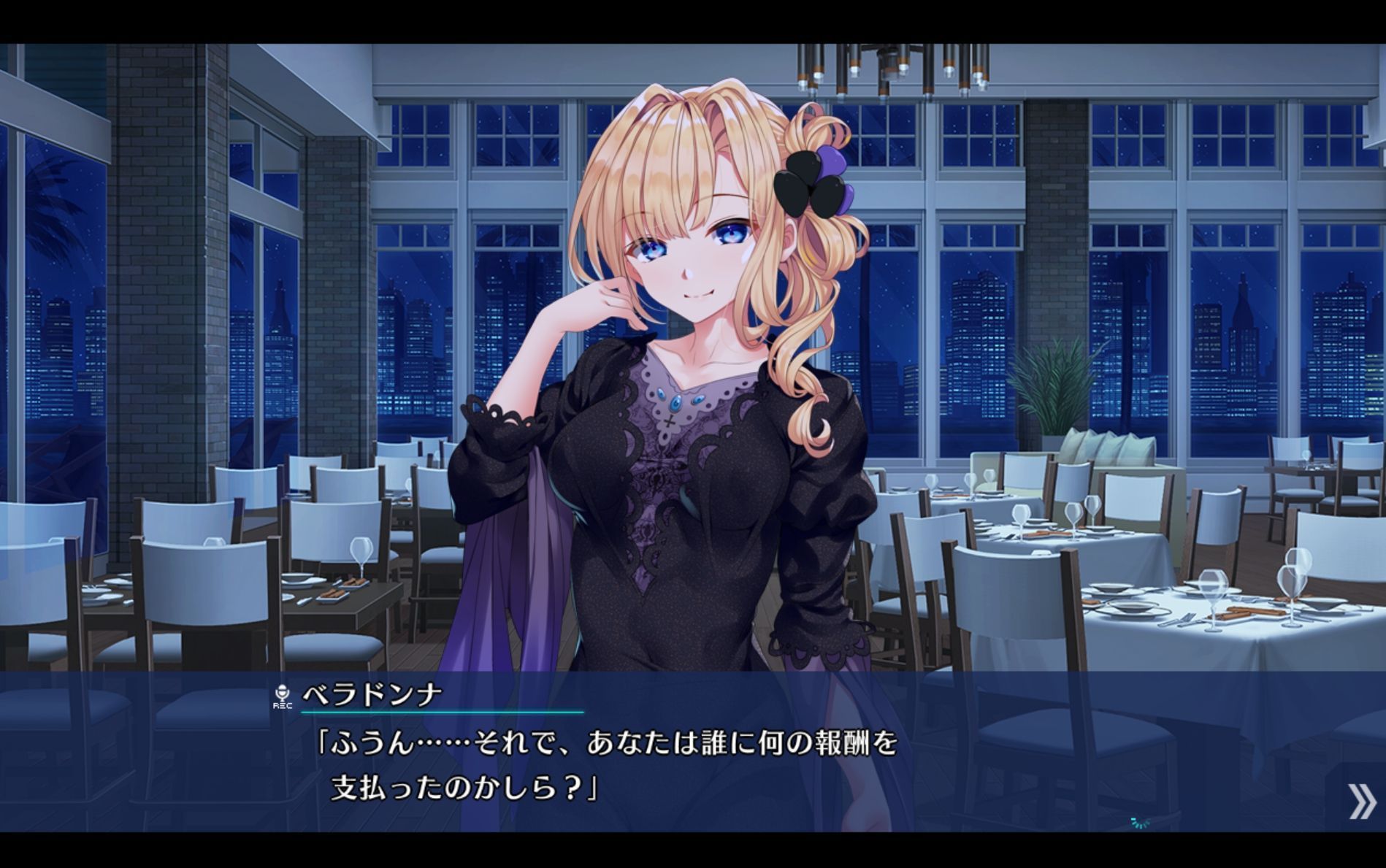
Later, as the plot demands, Rouge hooks up with the protagonist and conveniently tells him her secret: she’s ashamed to be a woman because she can’t bear children. In high-society circles, being unable to have kids means you have no human rights, so her mother abandoned her, mother and daughter are on terrible terms, etc. etc.
This whole spiel is aggressively patriarchal. If this game launched in China the feminists would have torn it to shreds — the last time I saw “no uterus, no human rights” was in Fujita-sensei’s Tamayura Mirai, and I can’t believe they’re still trotting it out as a plot point.

Rouge lost her reproductive ability because she got into a car accident as a child, her lower body was severed, and later, thanks to advances in technology, she rebuilt it with Cybog limbs. She’s fine now, but the uterus is definitely gone.
The protagonist is basically like “that’s it? couldn’t care less,” they bang happily, and the two get together. Just as everything’s coming up roses, Rouge’s mother gets into trouble. Turns out the old bat, still got it, hooked up with a mob boss — Curtis, head of Greedfox. He somehow fell for Rouge’s mother, learned she had a daughter who ran away and was working at DDDiner, and that one of DDDiner’s owners (our protagonist) had a somewhat flirty thing going with Rouge’s mom (in reality, Rouge’s mother flirts with any man who breathes, like some kind of Liyue brothel speedster). So this simp Curtis thinks: why not send some guys to kidnap Rouge and present her to my goddess? That way I suck up to my crush, solve her family problems, and get to stick it to the guy moving in on my woman. Two birds, one stone.

So Rouge gets kidnapped. The protagonist flips out — how dare they touch his girl, and she’s a store employee too, do you have any idea how annoying hiring replacements is? So he immediately mounts a rescue. Greedfox turns out to be embarrassingly weak: the protagonist plus two female sidekicks bust Rouge out with ease.
The ending is pretty dramatic: Rouge and the protagonist have a kid via cell cloning, solving the fertility problem, Curtis loses out in love because he kidnapped his goddess’s daughter for no reason, and Rouge reconciles with her mom. A world where only simp Curtis gets hurt is thus achieved.

Honestly, thank this mob simp Curtis. Without him I genuinely don’t know how this story would have moved forward. One man carried the entire plot.
Desperado
desperado’s story is even simpler. She’s an orphan who was taken in by Greedfox and worked as a mercenary and assassin. Then the person who raised her died in Greedfox’s internal power struggle, the company changed leaders, and Curtis took over. So desperado walked out and became a drifter.
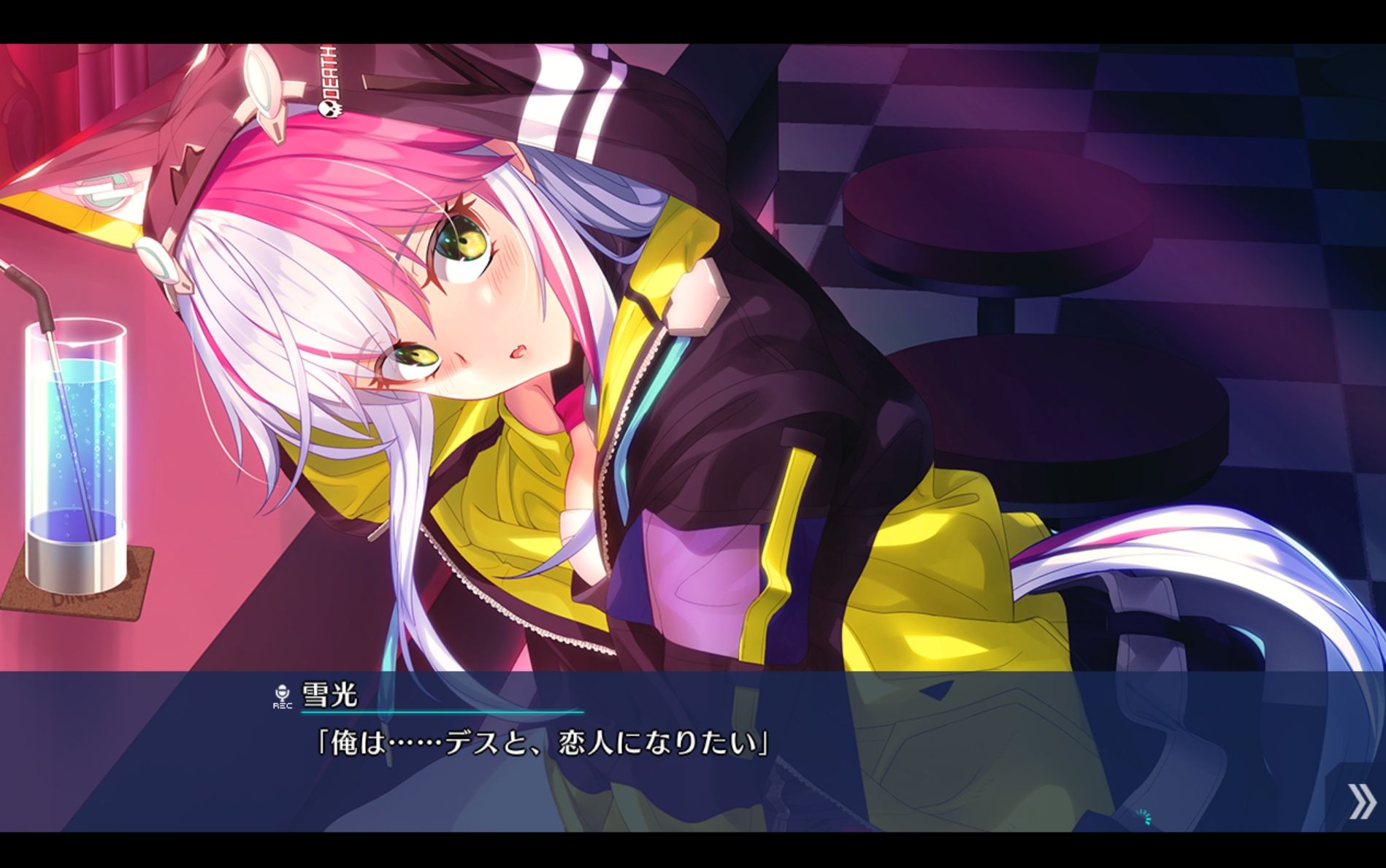
The name desperado literally means “outlaw,” very on the nose, and this route’s story is even more on the nose. desperado gets with the protagonist, tells him about her past, he investigates, and discovers that Greedfox’s internal struggle and the mysterious death of the original leader were all Curtis’s doing — a straight-up power grab.
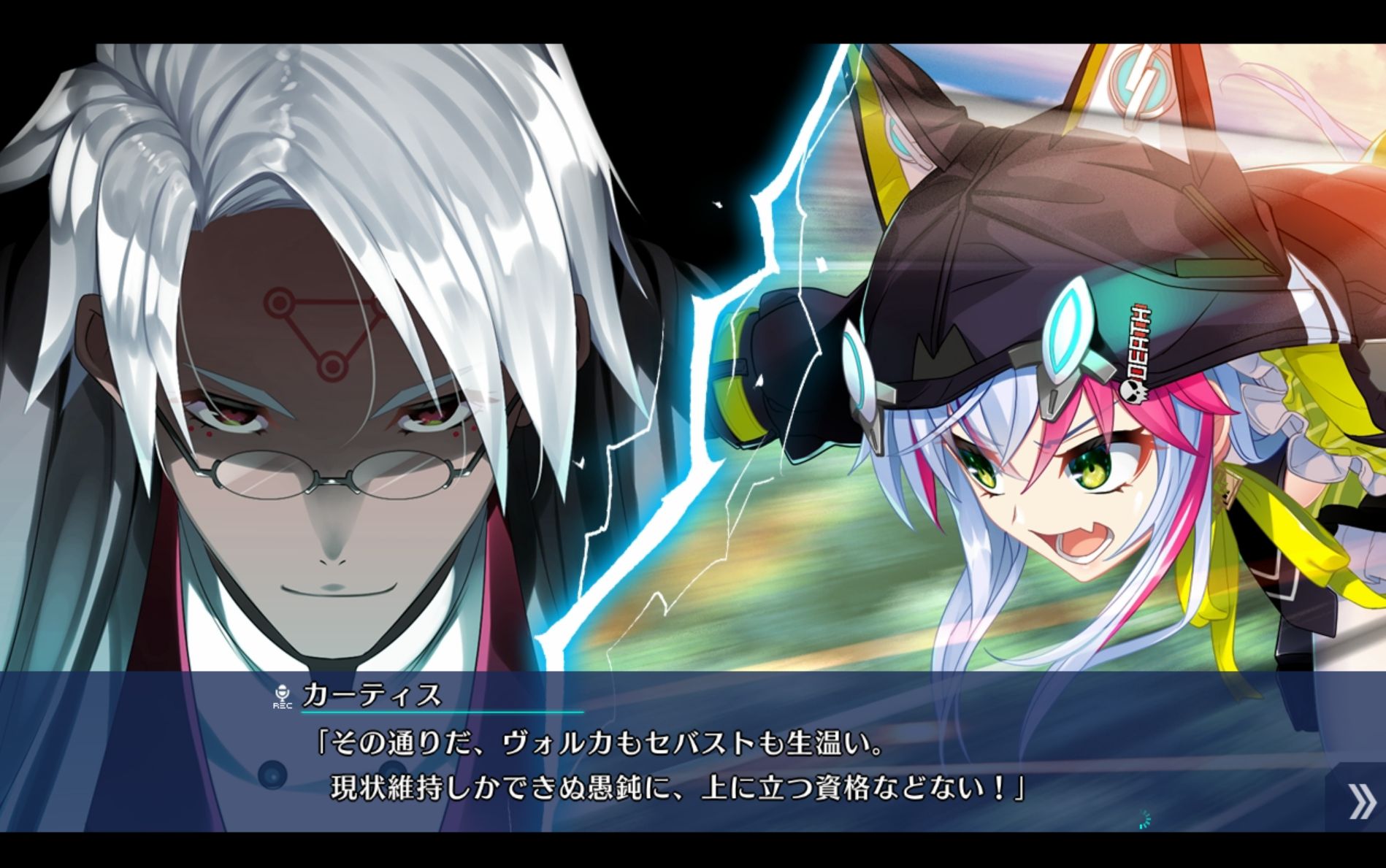
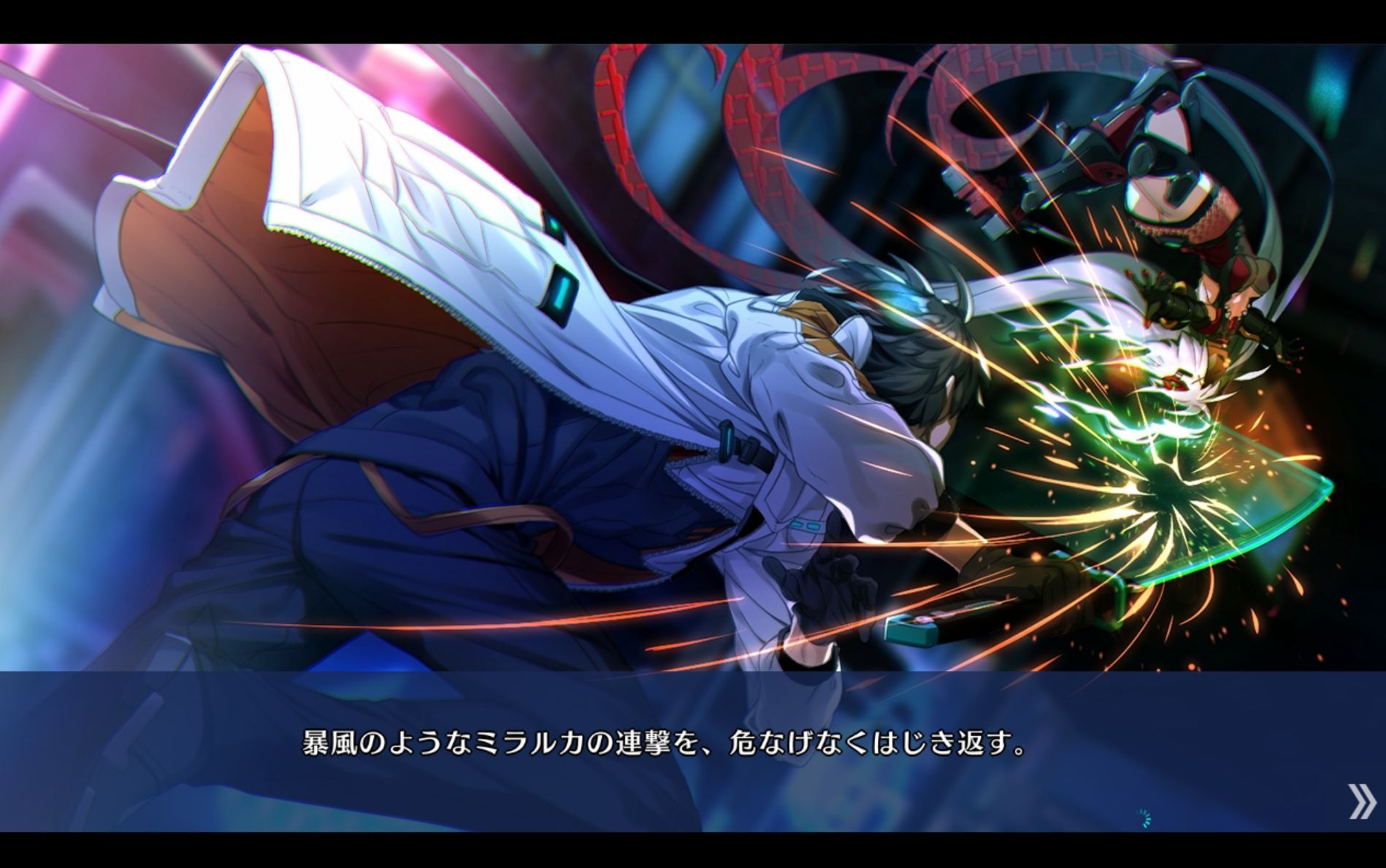
Once she learns the truth that her savior was killed by that sorry excuse for a man Curtis, desperado grabs a bunch of her boys and goes to settle it. Curtis busts out a combat robot, but it still can’t beat Rouge’s Junkrat grenade launcher, and he gets flattened. desperado then exercises political correctness, forgives Curtis, and immediately gets double-crossed by him…

Anyway, desperado gets her revenge, and once again a world where only the unlucky Curtis gets hurt is achieved.
Yunica
Yunica’s route is also pretty straightforward: the protagonist gets with her and starts digging into her past. Turns out she’s an orphan too, and she’s got a mysterious injection code called “DD-Mod.”
Time to explain DD-Mod. In the game’s setting, lots of people in the future have “cybernetic prosthetics,” and these artificial limbs can be programmed and controlled. At the very start of the game, the protagonist arrives on the island, gets into a fight with some weird female ninja, and is killed — Yunica shows up in time and uses DD-Mod to bring the dead protagonist back to life.

Yunica doesn’t actually know what DD-Mod is either. She says she found it by accident. It’s like rooting a smartphone — it unlocks hidden functions and restrictions in cybernetic limbs, granting omnipotence and infinite respawns…
Basically, it’s a cheat code.
But as Yunica investigates, it turns out DD-Mod isn’t so simple. Through the net, Yunica discovers that the country’s biggest “cybernetic prosthetics company” is shipping a heart, and the heart seems to belong to a woman named “Alice.” The company’s CEO, Blondie, is the man behind the shipment.

Yunica’s investigation of the company draws attention. The CEO personally visits, offering to hire Yunica and the protagonist. They refuse. Blondie says fine, then, don’t say I didn’t warn you — and just kidnaps Yunica.
So the protagonist goes to rescue her, only to learn something even more shocking: the CEO of this so-called “cybernetic prosthetics company” is a descendant of an ancient vampire. And even more shocking, “Alice,” the woman he once protected, is herself an ancient vampire.
Yunica isn’t actually human — she’s a test homunculus created by the company, with the goal of building a perfect “vampire” body. Alice was originally the ideal vampire familiar, but she was killed in an accident, leaving only her heart. So the CEO plans to create a body, use it as a vessel to resurrect Alice’s soul, and achieve the vampires’ ambition of controlling the entire world.

As for those “cybernetic prosthetics” — they’re actually made from vampire body parts. Vampires have infinite regeneration and immortality, and their limbs share that property. Blondie, the CEO, knows this full well, so he develops restriction programs on these vampire limbs, locking away their hidden functions so they look like normal “prosthetics,” and markets them as high technology. And the so-called DD-Mod is the root program (think Magisk) that breaks through those restrictions, unlocking the “immortality” function of vampire limbs. That’s how the protagonist got his new life.

So now it’s clear: Blondie and Alice are vampires. Blondie uses vampire limbs to manufacture so-called “cybernetic prosthetics,” expands the market until the whole world is using them, and plans to join forces with Alice to turn everyone using “cybernetic prosthetics” into vampires (or just kill them outright), achieving vampire world domination.
When the protagonist confronts Blondie, Alice has already been successfully resurrected inside Yunica’s body. But the protagonist exploits the vampires’ vulnerability to sunlight, plus some good old-fashioned trash talk, and takes Blondie down. Yunica is saved, and Alice is set free.
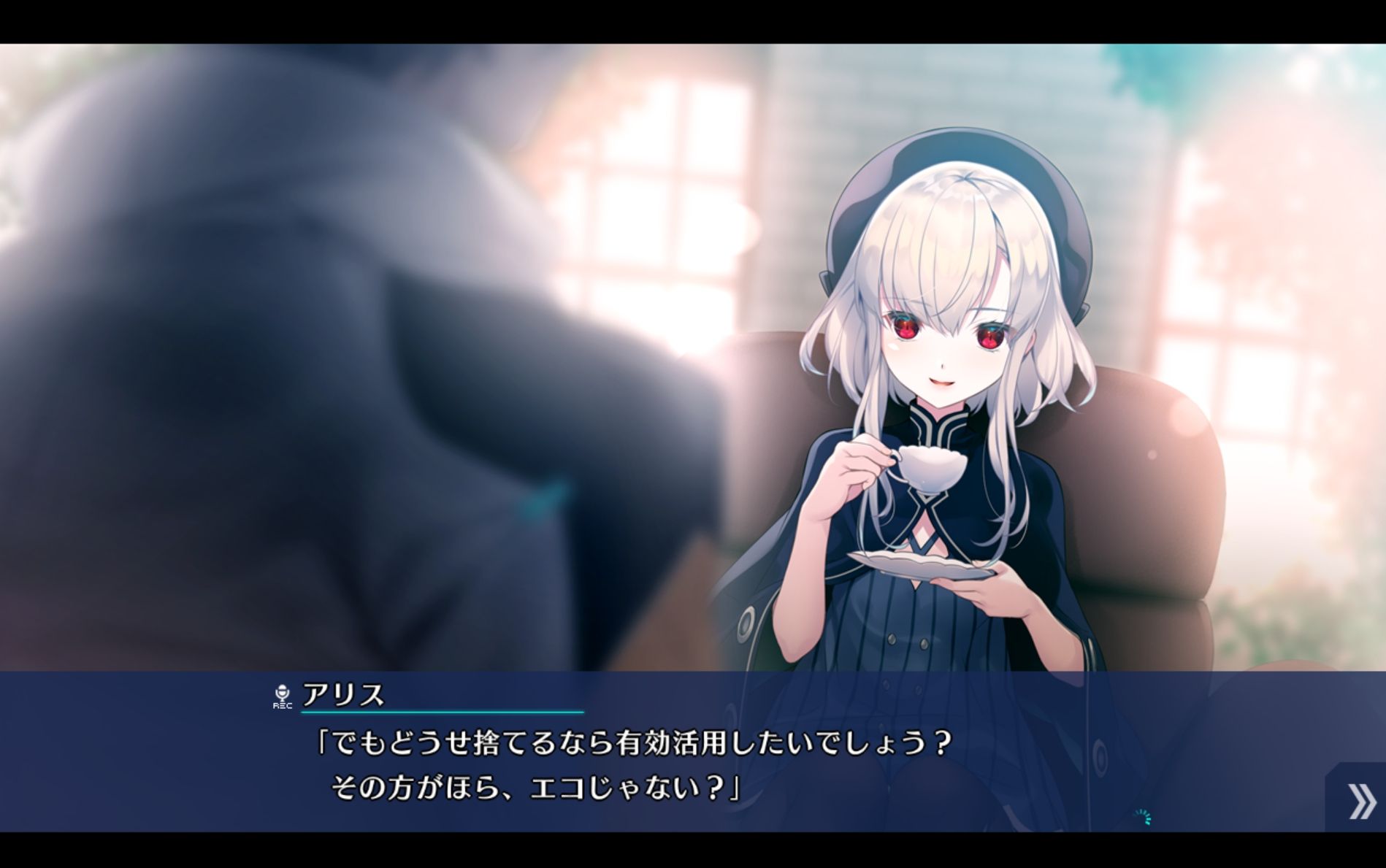
In the end, Blondie’s vampire scheme is crushed, and Alice admits that as a vampire she never wanted to rule humanity anyway — Blondie’s failure was within her expectations. She also says she hopes to find a new home for the vampire family, like parasitizing the network and becoming Cyber vampires of the new era or something.

The protagonist and the rescued Yunica choose to keep running DDDinner, and that’s the end of the story.
Frankly, this game’s plot left me not knowing what to say. Yunica’s route especially — I’d have a hard time even retelling it, because it looks incredibly complicated. Every side character is involved to some degree, different threads intersect, and the whole thing has that “payoff” flavor.
But on the other hand, those “payoffs” feel utterly meaningless, because the core of the story is just the cliché “vampires want to rule humanity.” It doesn’t even give the villain a rousing speech that might shake the player’s convictions — it just says flatly “vampires are a superior race, humans are garbage,” and then the final battle starts.
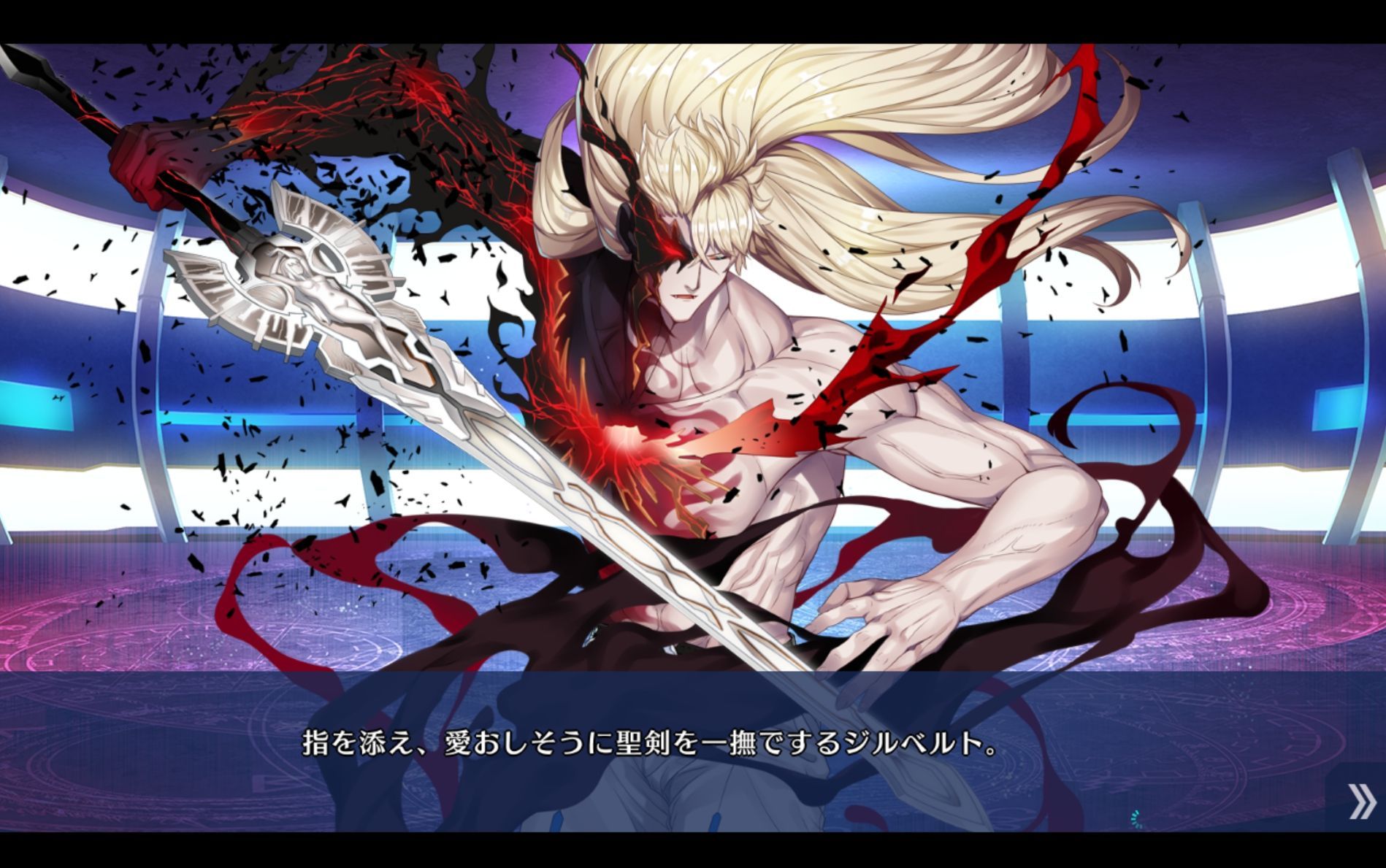
The final boss fight is hilarious too. At first Blondie is described as invincible, a vampire who can even wield the holy sword specifically designed to hunt vampires, driving our protagonist back again and again. But who would’ve guessed that a boss who looks “magic immune” would die from exposure to sunlight?
I think the best part of the game is the opening prologue, which does a great job of creating that “welcome to Night City” feeling — cybernetic limbs everywhere, heavily futuristic architecture, street graffiti, trap-style music. It’s easy for the player to believe this really is an anarchic state full of East Coast gang vibes, full of freedom and hidden danger.
To emphasize the “futuristic” feel, the game crams in lots of references — Daft Punk, Cyber Food (digitally stimulating taste buds to change how food tastes), Cybog (mechanical prosthetics), and so on. The character names are all obvious hints too: the so-called “Island of Freedom” is just the Greek word for freedom, and the title “Red: Cherish” is a nod to “blood money,” since Cherish is the in-game currency. There’s also a ton of the letter “D” scattered throughout, all hinting at the existence of “vampires” — i.e., “Dracula.” But against all these details, the production has plenty of corner-cutting: lots of background art reused from Witch’s Love Diary, and the soundtrack reuses tracks from the previous game. Can’t tell if it’s a budget issue or just a lack of care.
Once the story settles into running DDDinner, it gets boring. I never imagined the game would actually make you “run a restaurant” — that repetitive open-shop-close-shop grind, right up until you enter a heroine route, at which point the game reverts to its true form…
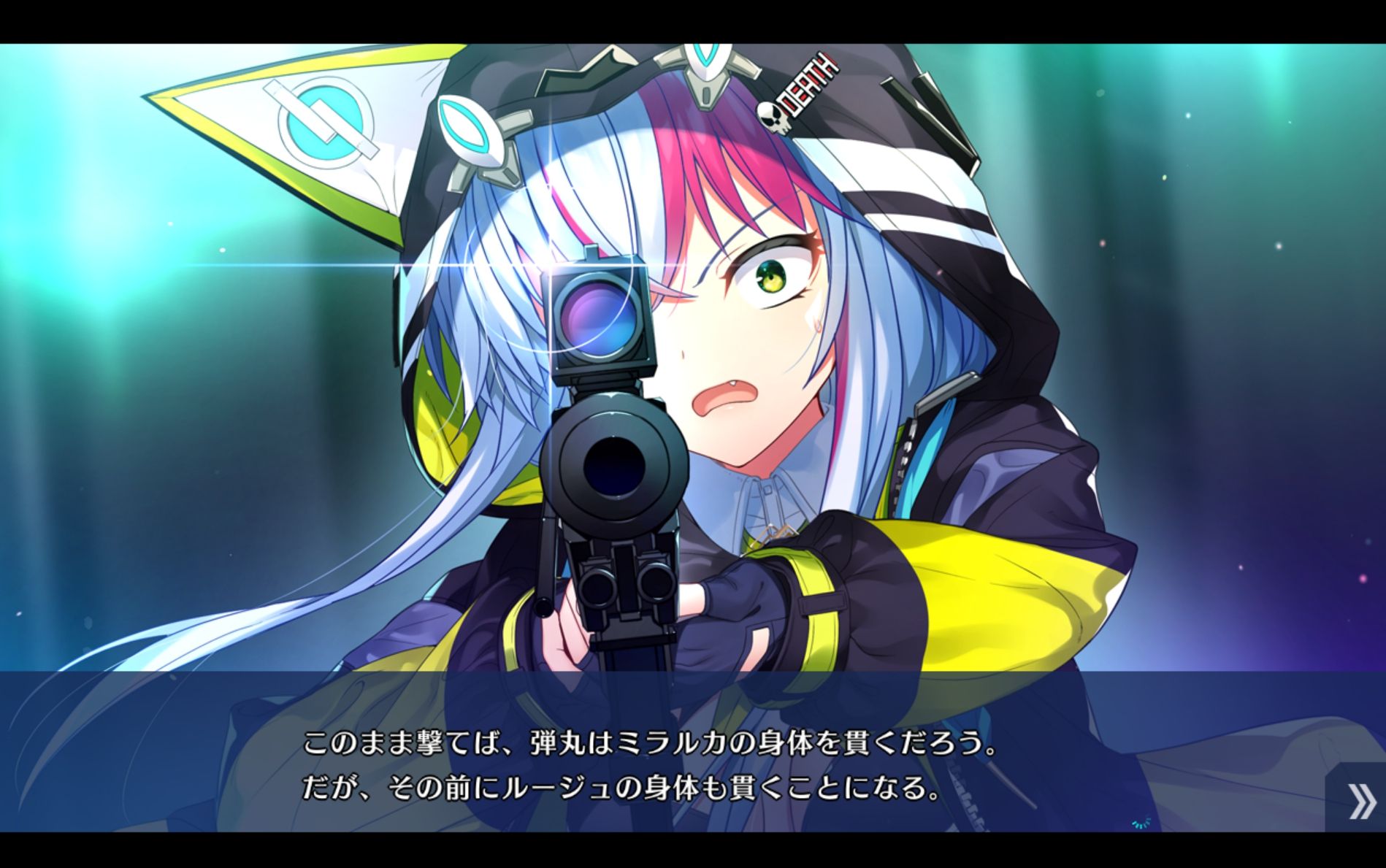
Rouge and Desperado’s stories are just getting revenge on the boss of that greedy fox company, and that boss is not only a simp but a cowardly, conceited loser. Both stories had me cracking up. The final Yunica route is genuinely decent, but it still raises an important question for me:
If, according to the game’s story, all the “future technology” actually depends on “vampire bloodlines,” then doesn’t that render a huge chunk of the game’s worldbuilding meaningless?

I don’t know if this is some trend or value system in sci-fi, but a lot of “sci-fi” stories ultimately circle back to “religion,” “alien life,” and “life-breeding” — primitive stuff. They tell you that technological progress ultimately doesn’t rely on technology itself, but on genetic mutation, or religion, or some mysterious unknown force. That always feels lame to me. If the core of a story is still a warrior with a demon-slaying sword cutting down the Demon King, why go around in such a huge circle and slap a “cyberpunk” skin on it?
Are vampires and “cyberpunk” really a good match?
Maybe some work can pull it off, but at least in this game, it’s badly disjointed.
Oh, right — in the game’s setting, the protagonist seems to have a connection to characters from the Kizuna Kirameku Koi Iroha series. He keeps mentioning that his “aunt” or “great-aunt” is from a family of demon-sword wielders and taught him all his martial arts. The game doesn’t say exactly who; it mostly just hints.
Which raises the question: who exactly is the protagonist’s master? Could it be the invisible heroine from the previous game?
Comments are hosted on the Chinese main site. This mirror is read-only.