Anres Terminaria (アンレス・テルミナリア) Review
"Idiot" and "Philosopher"
I remember a few years back, before Google+ shut down, some helpful guy online told me the thing he hated most was when a character in certain anime/game works says one specific line — the moment that line comes out, he instinctively writes the whole thing off as garbage.
“Humans, huh~ they’re just that kind of creature”
其实一开始我不能理解这种想法,直到我后来玩的 Galgame 越来越多,接触的所谓“神作”越来越多,我也就开始越来越明白,这样开口闭口都是“人間とは……”的角色……
I fucking hate this!
What I hate isn’t the line this character says, it’s the tone he says it in—all high and mighty, like he’s above it all. He’s still a “human” himself, yet he’s always judging humans from God’s-eye view. You could call it self-mockery, but that air of superiority doesn’t look like it. What annoys me even more is that everything he does fits the mold of the “complainer who never offers a solution” type. For example, this kind of character always rants like a lunatic about how ugly humans are, how selfish humans are, how goddamn stupid humans are—and then goes right on doing ugly, selfish, goddamn stupid things himself, while never once advocating truth, goodness, or beauty. It looks more like he’s making excuses for his own stupid behavior than actually criticizing anything.
What I can’t wrap my head around is that these dumbass characters are actually insanely popular with the Galgame market. The moment a scenario writer cooks up one of them, you get a ton of players singing its praises and flocking to it, slapping the “kamige” label on it too. The way I see it, calling it a “kamige” is way off—“con game” fits better. As I got older, I gradually came to understand why these “characters” are so popular: it’s decided by the audience the work is aimed at.
Most galgame players are students, or just out of school and into the workforce, disconnected from society, with a bit of chuuni in their heads — and they tend to carry an indescribable sense of “moral superiority.” If a game happens to cater to that superiority, then of course these otaku whose chuunibyou never got cured will be shouting about how based it is.
Honestly, I’ve got nothing against this kind of “human dissection literature.” Plenty of philosophers throughout history, and Lu Xun too, have voiced the same sort of thing. But once that style became the standard kit for “masterpiece galgames,” it starts to feel a little boring.
So what situation does this lead to? When a company wants to put out a Galgame with “acclaimed story,” the easy go-to is crafting a pretentious tale stuffed with every kind of “chuuni Style”—multiple parallel worlds, time travel and reincarnation, hope and despair, life and the future, and on and on. The dialogue has to cram in as much miscellaneous trivia and deep philosophical references as possible to crank up the “chuuni density,” and thus a “masterpiece that makes players reflect and changes every Galgamer’s life” is born.
And yet, this trick might have worked like a charm a decade ago—now it’s become a “sales trap.” After all, not every writer can pull off a story like this without it collapsing. Sometimes a solid school romance is all you need; there’s really no point dragging in “the world’s conspiracy” or whatever. Most of the time it just backfires—trying to paint a tiger and ending up with a dog.
That’s exactly how it is with Ameless Terminaria (アンレス・テルミナリア) this time.
Whirlpool’s Pieces series from last year was a solid enough work. Sure, the common route was way too wordy, but the final True End still felt pretty meaningful. The follow-up Fandisk filled in some story gaps too, though I’d rather call it a needless sequel that ruins a good thing.
As this year’s commemorative release for Whirlpool’s 15th anniversary, Anles Terminaria (アンレス・テルミナリア) brings back almost the exact same creative team as Pieces, minus Natsuwako — though at least Kitakoji Yuki is still there as a safety net. Story-wise, the game also takes a shot at “suspense-driven plot,” following life at a fictional academy populated by people with all sorts of special “abilities” or “sins.”
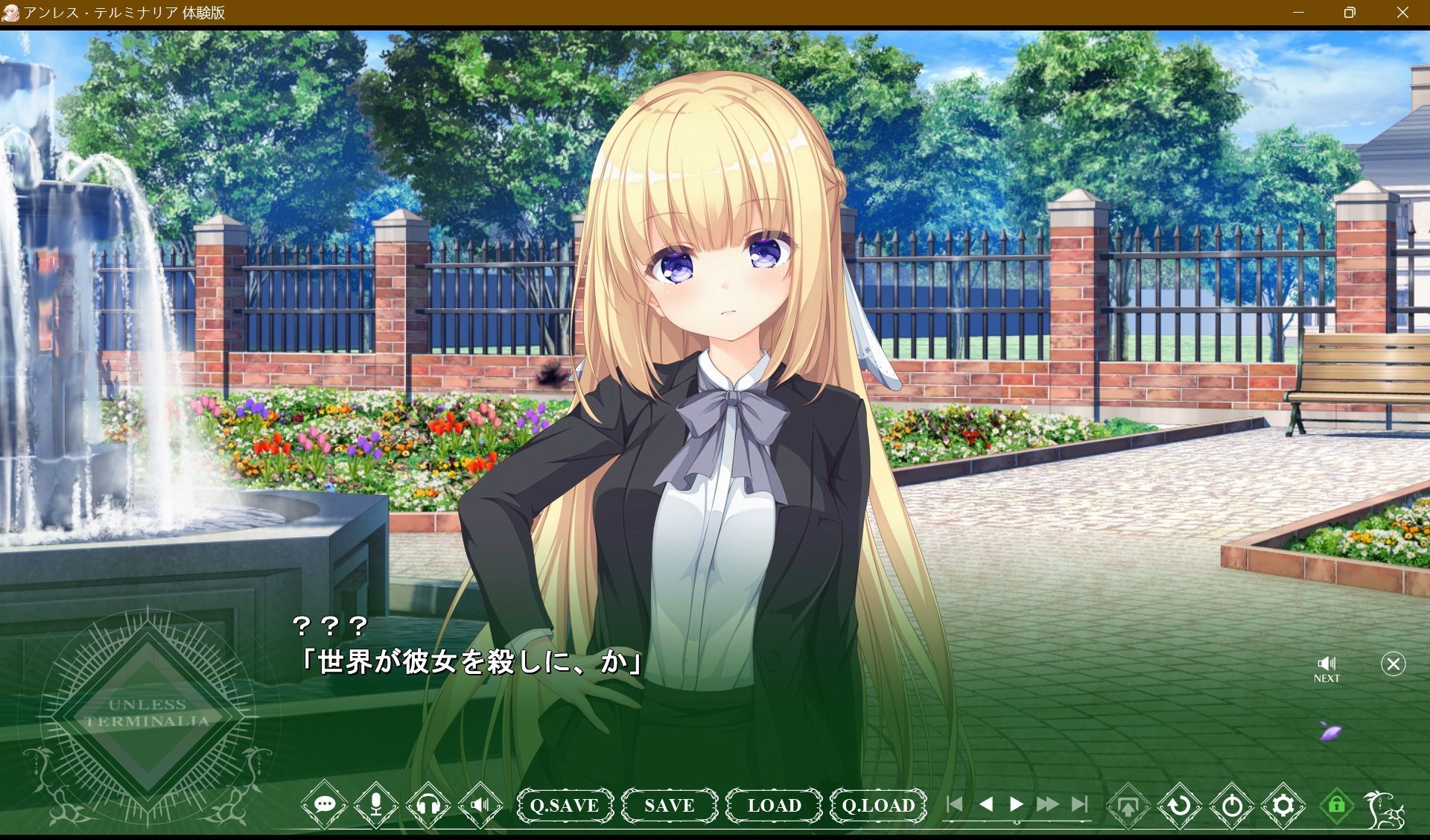
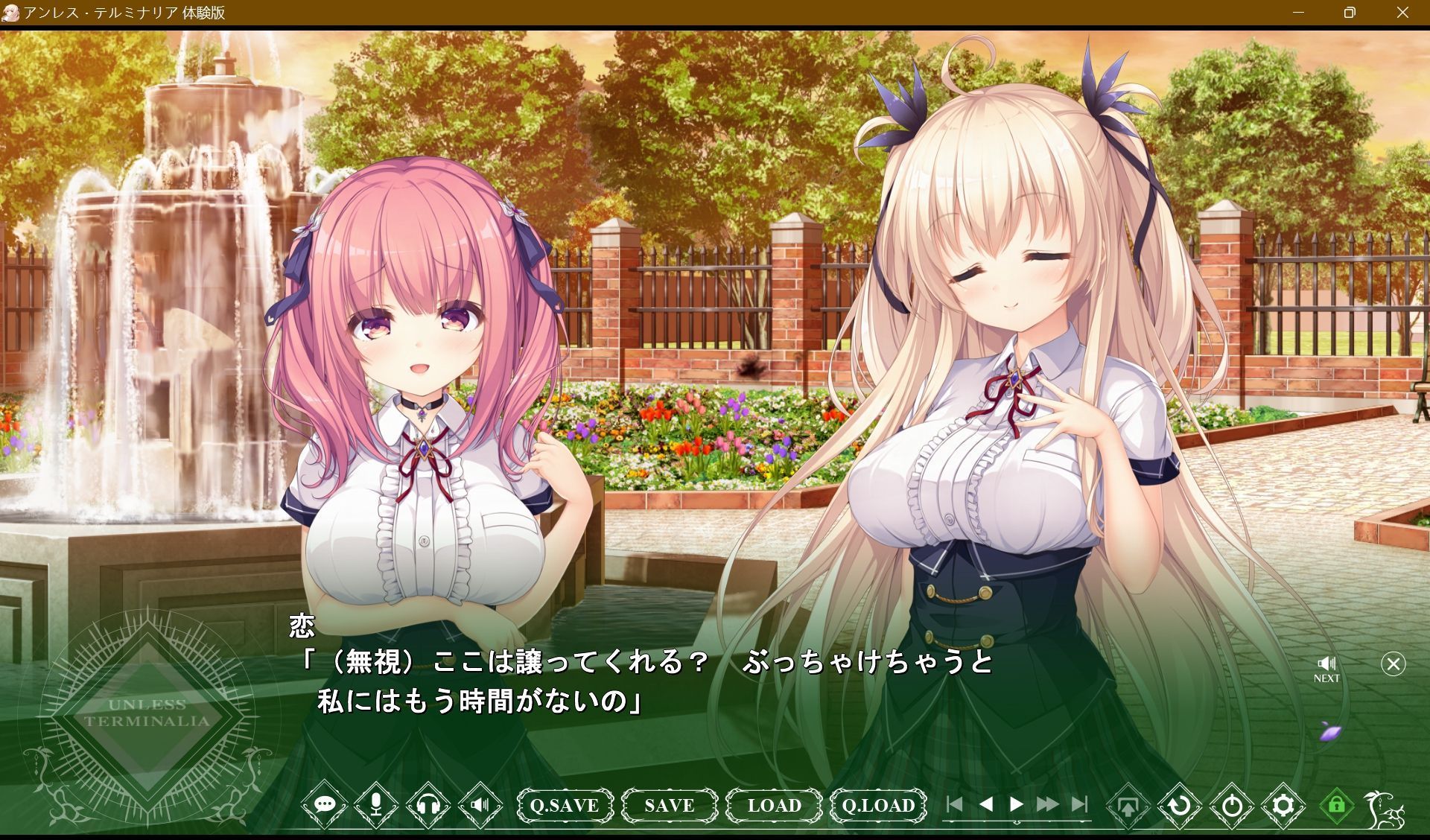
The game’s setup says the protagonist has a problem with his memory: each day he can only remember one or two things, and everything else gets forgotten. So every morning after he wakes up, he reads his diary to recover the memories from before and start the new day. The school he lives at is one that specifically takes in these kids with “special abilities and defects,” and the center-position heroine, “Mikuriya Ren,” is one of them too. She claims she’s going to die soon, but never explains why she’d die. Later, her own “special power” sets off an explosion, showing off some serious destructive force, and then the school principal, Ishihara Mai, shows up and says that “Mikuriya Ren” is going to be killed by the world…
Then the game headed off in a direction I couldn’t make sense of…
Put plainly, I had no idea what this game was even talking about until I finished the final True End.
游戏剧情分为两部分:校园日常,以及触及故事核心的内容。
Let’s start with the school slice-of-life stuff. It’s dumb. Like, aggressively dumb. No jokes, no gags, not even any fanservice. If I had to score it out of 100, I’d give it 10 at most, and 5 of those points are just for Kitaoji Yuki mindlessly acting cute. And it goes on forever. So long you start questioning your own existence. At this point I’m fully convinced the daily-life segments are pure garbage time.
And the stuff that gets to the core of things—to use a phrase that’s popular right now, it’s “riddle-speak.” Most of the NPCs will come out and tell you stuff about the “世界の真実,” but they never just say it. They use every kind of pronoun, they say “あれ、あのこ,” they won’t tell you who it is, they won’t advance the plot in any way, and every time it’s two lines and then nothing, no follow-up. It drives you up the wall. It’s even more riddle-speak than that famous riddle-speak dumbass Dainsleif from Genshin Impact. I’ve seen games that plant foreshadowing and build suspense, but a game where the entire common route is nothing but “riddles” the whole way through—that’s a first for me. I’ve truly seen it all now.
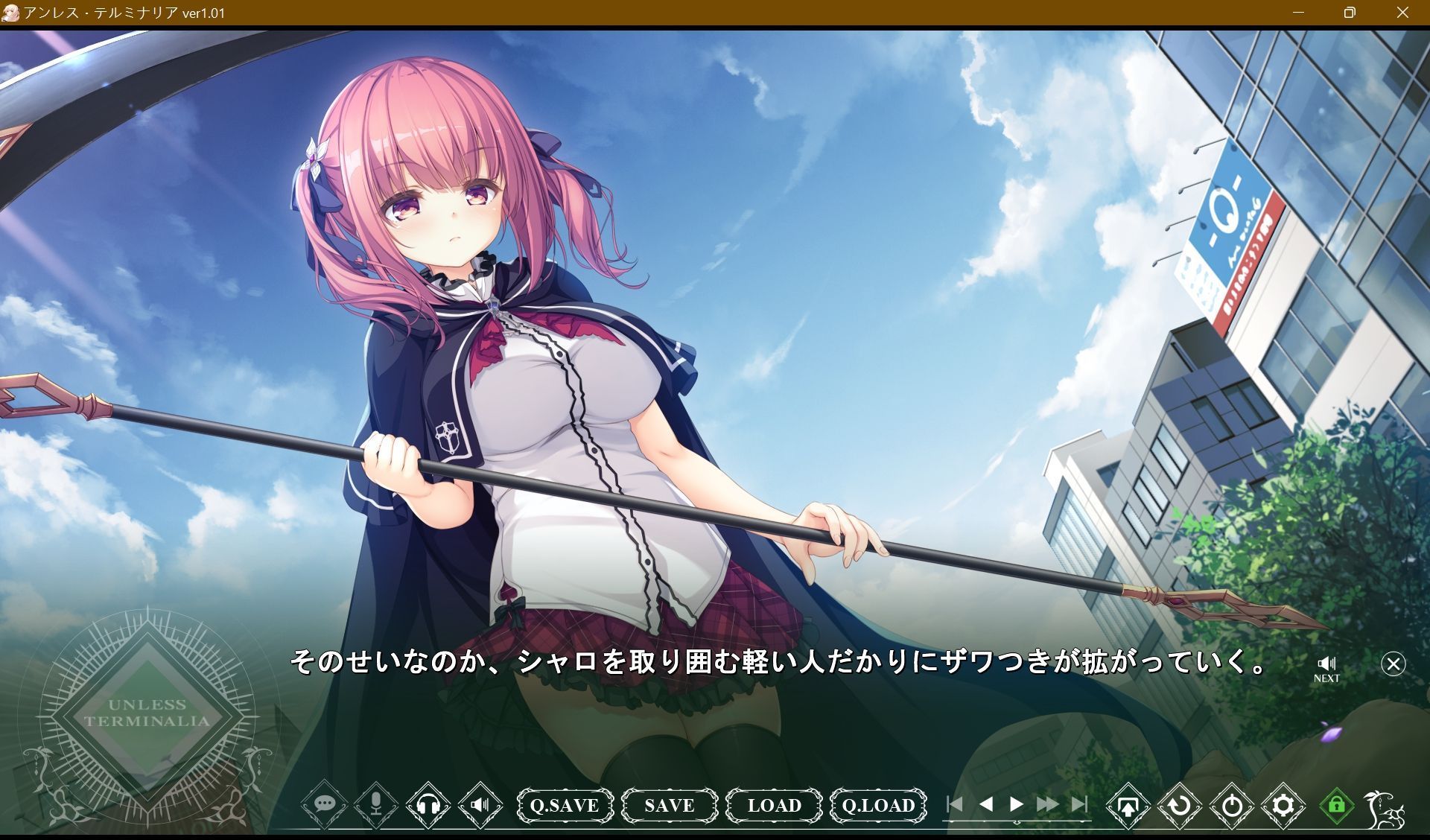
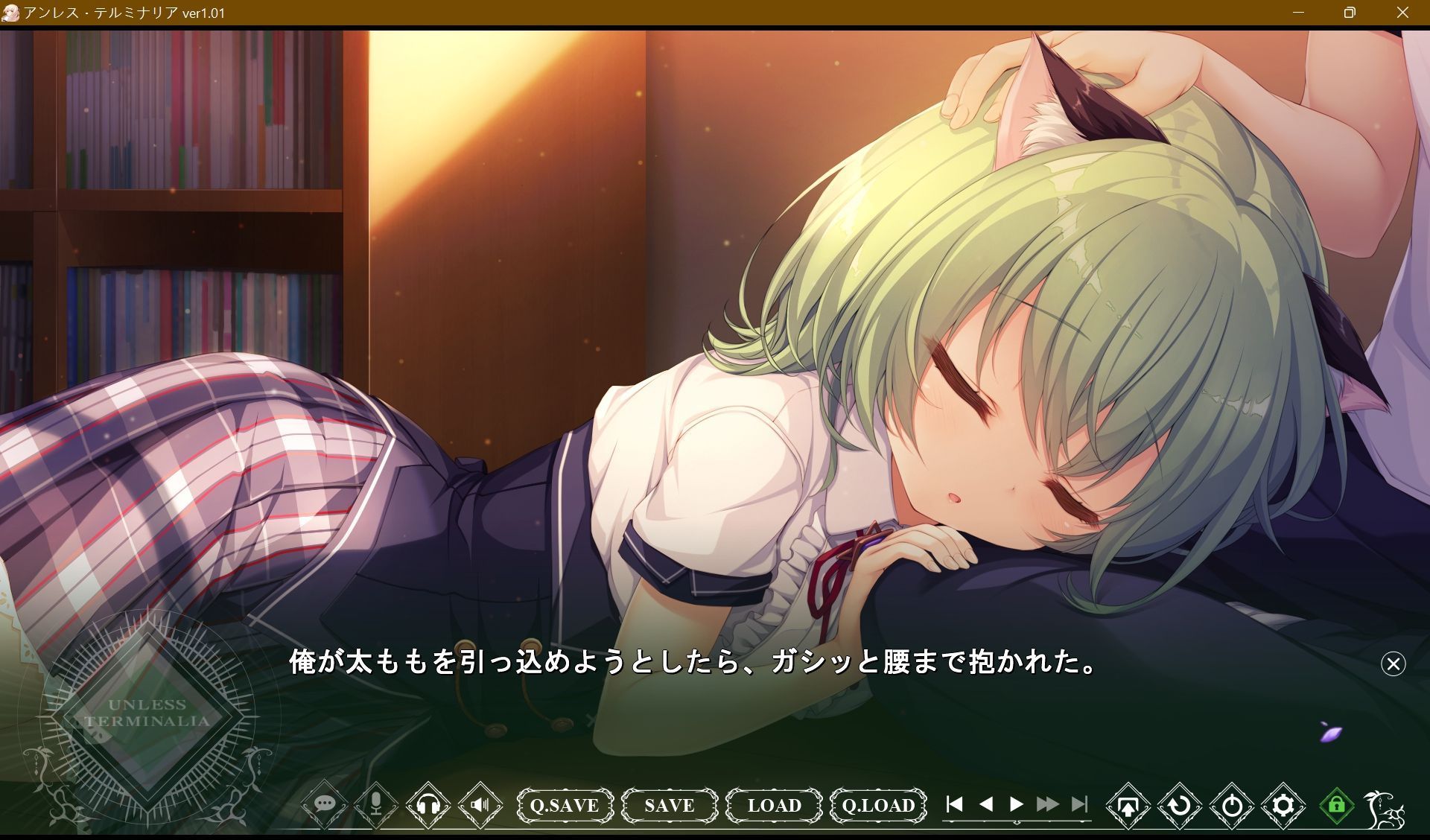
Sure, the individual routes tell me that one green-haired girl is possessed by a cat, that one archbishop really is an archbishop, and that one grim reaper really is a grim reaper — but how the hell these random, scattershot bits of lore are supposed to connect, I still have no idea. At first I was genuinely curious, but as the scenario kept spouting riddles, I stopped caring: you can keep talking in riddles, and I can keep hitting Ctrl.
Right up to the True End, when the game finally lays its “truth” bare, that long-absent feeling of getting completely wrecked hit me, and I sank into it and couldn’t pull myself out.
Why. Why did I spend this much time on such a fucking stupid story?
The so-called “truth of the world” is that this world itself is fabricated — an “observation room for human behavior” created by the “principal” of this so-called school. And who is this “principal”? The CV tells us the truth: it’s the “angel” from the previous work, Pieces.
That “angel” created a dream-driven world in search of “the most sublime thing in the human realm.” Now, here, she’s made yet another new world—one driven by “Gift”—just so she can stand back and watch what kind of tricks these humans, affected by the power of “Gift,” can pull off…
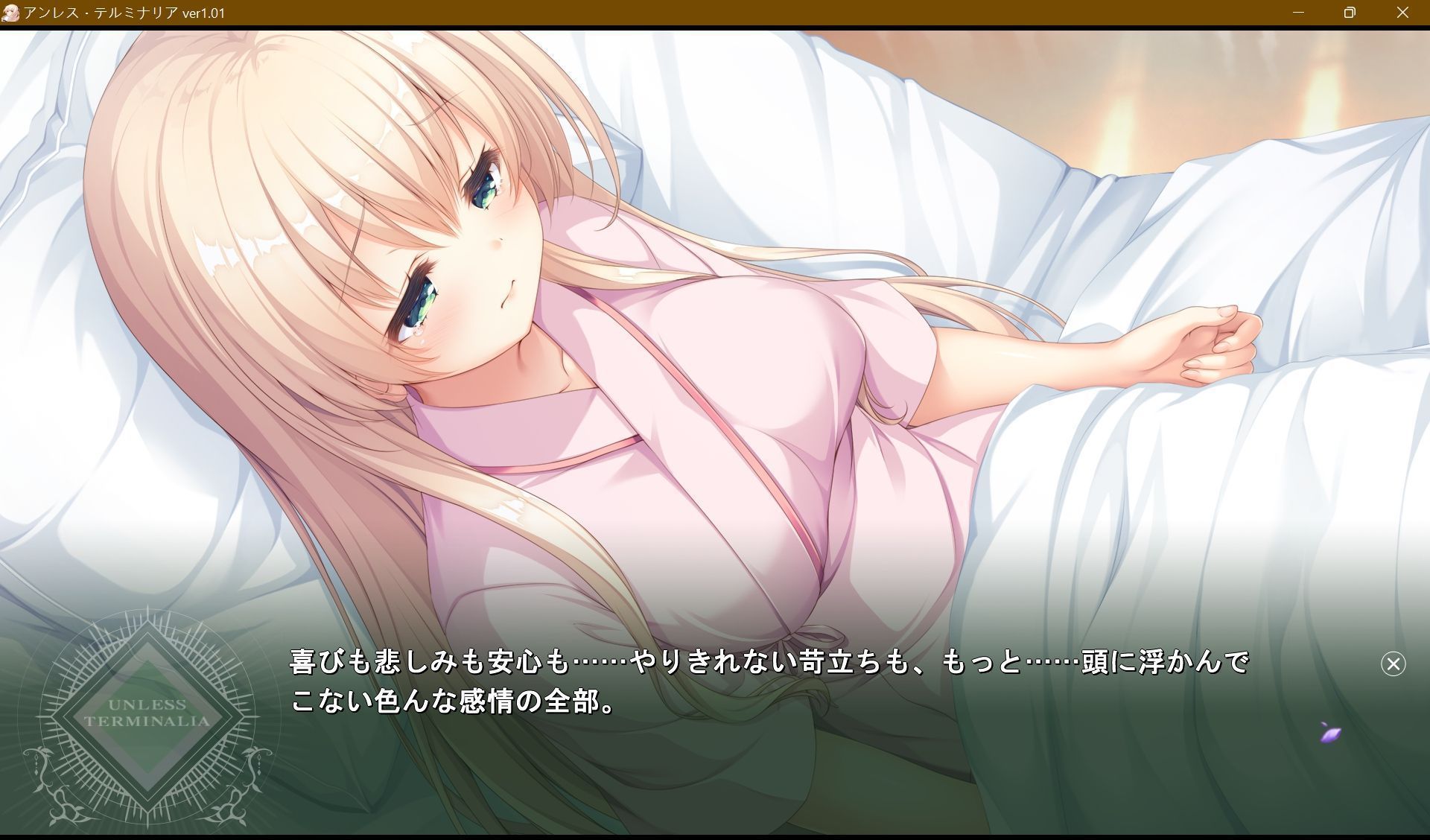
What the protagonist calls his “ability to remember only one or two things a day” isn’t amnesia at all — it’s a kind of “choice.” Whatever he chooses to remember becomes the truth of the world, and whatever he forgets gets wiped from it.
So that “Mikuriya Ren” or whatever should’ve already been dead and gone, but because the protagonist “chose” her, she gets to stay alive and date and screw the guy……
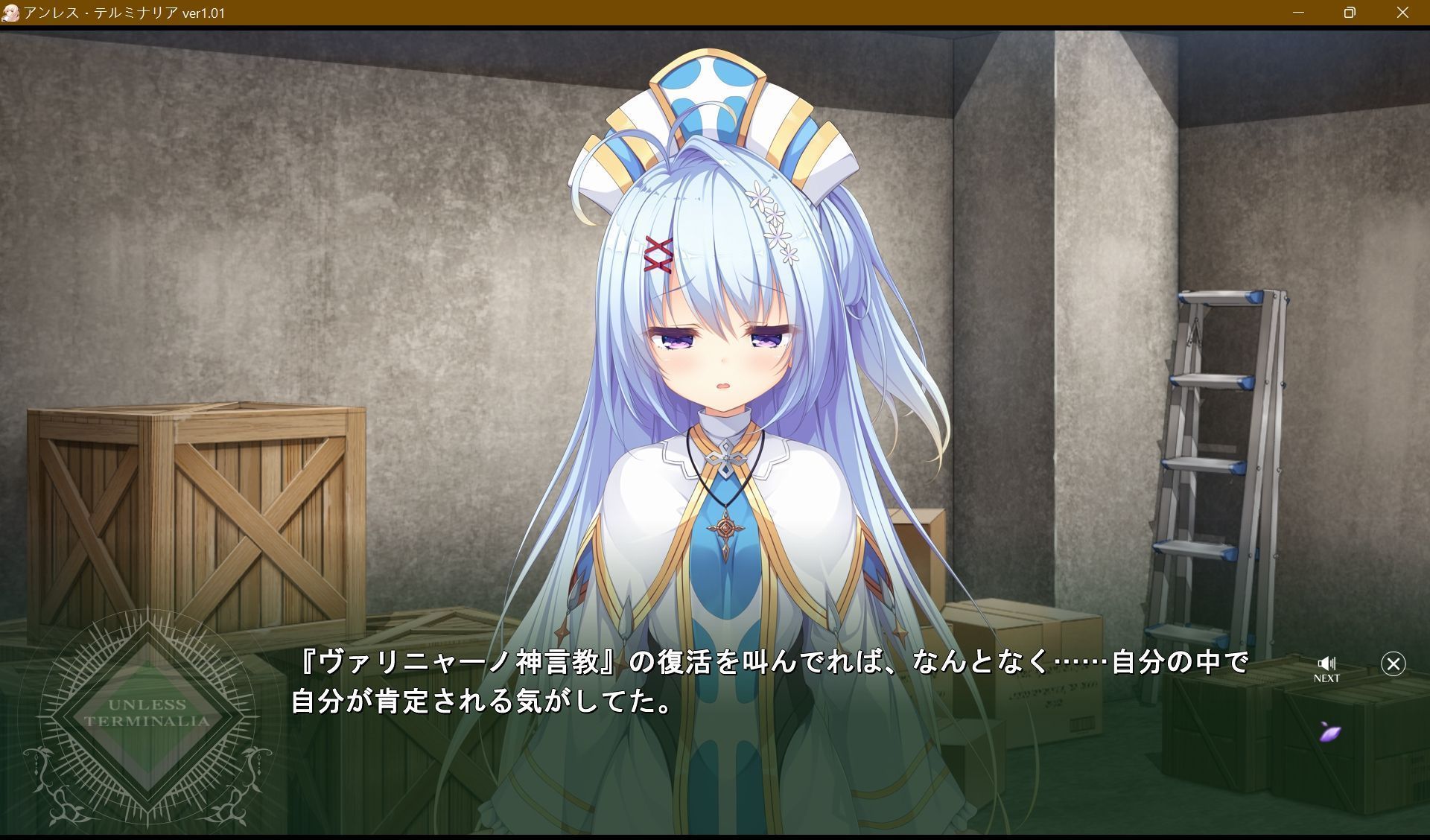
In the end, the so-called “angel” decides she’s had her fun and hands the reins to the protagonist, leaving him to end up with Mikuriya Ren — while the angel herself just bails, probably off to create some new world for kicks…
As for the other heroines, they’re obviously just trying to survive, desperately propping up the protagonist—the “world core” who holds the decision-making power. To the angel, this world is nothing but a toy. To the other heroines, it’s everything.
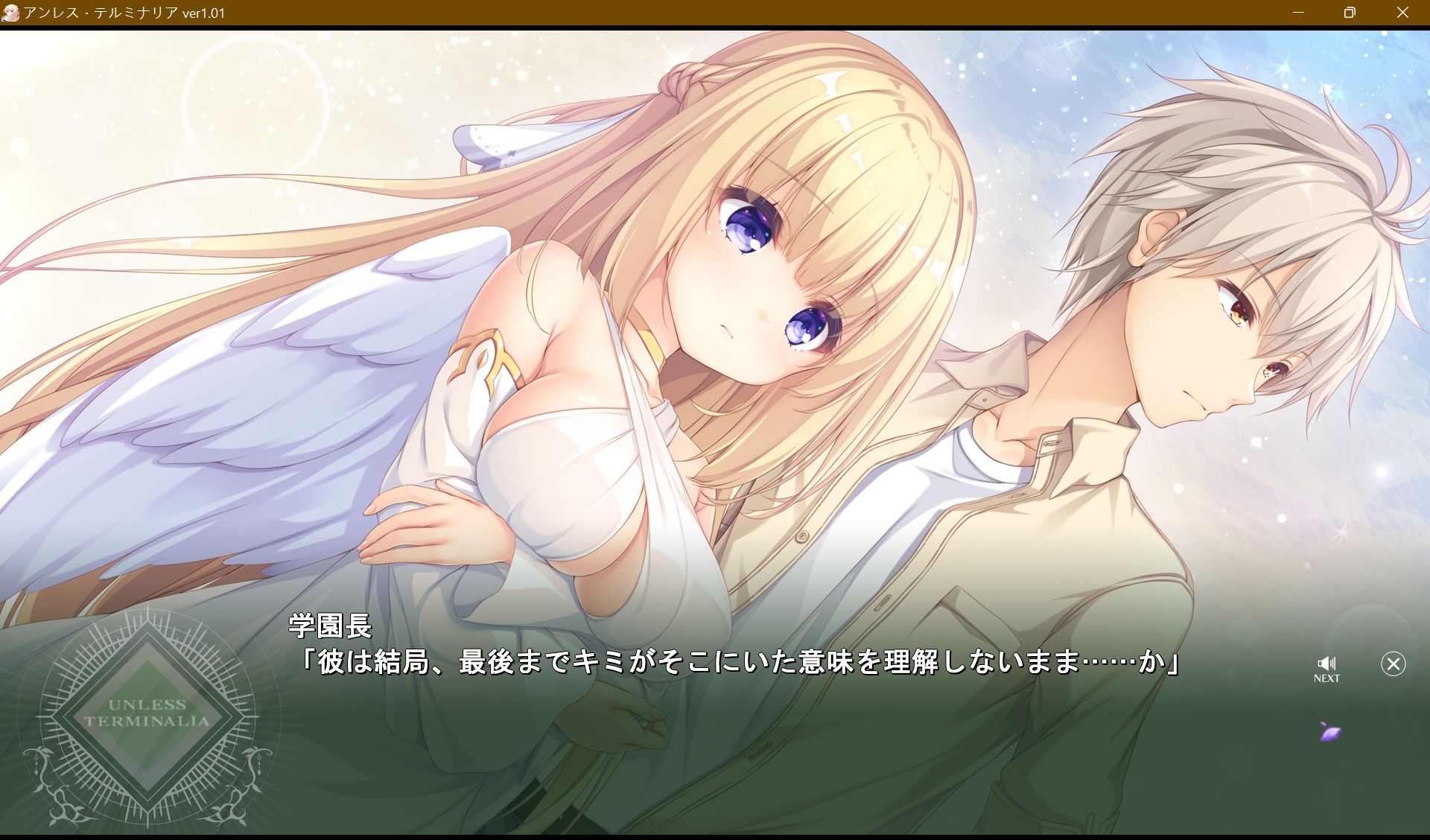
“An angel got bored, made a world just to watch for fun, and then when the angel had had enough, packed up and left.” That’s roughly what this game’s story is. Feels a lot like the earlier Pieces, but the difference is that in this angel-made world, there aren’t any interesting stories.
Like I said earlier, this game gets stuck in a weird loop. The writer probably figured Pieces 11 was such a hit that they’d try to recreate it, so they set up something similar—but they missed the point. What made the previous work click wasn’t some “angels building a world” gimmick; it was the reunion between dream and reality. The scenario writer is way too desperate to make the game look “highbrow” and “deep,” so when building suspense they just refuse to speak plainly, drowning everything in riddles that mean nothing. They think this elevates the whole thing, but the common route’s slice-of-life content already exposes how shallow their literary sense and storytelling really are. Think about it—someone who can’t even write an engaging everyday conversation, what the hell kind of profound plot are they gonna produce? It’s just the writer jerking off, isn’t it.
So the game ends up being an extremely disjointed experience story-wise. The slice-of-life parts? Absolutely brain-dead — even dumber than most moege. And then the plot parts try to look all highbrow, stuffed with religious “references.” Even the “Terminalia” in the title is a Roman festival honoring the god of boundary stones, and the principal’s statue at the school in-game backs up what the word is hinting at — the thing looks almost identical to the Roman god Terminus.
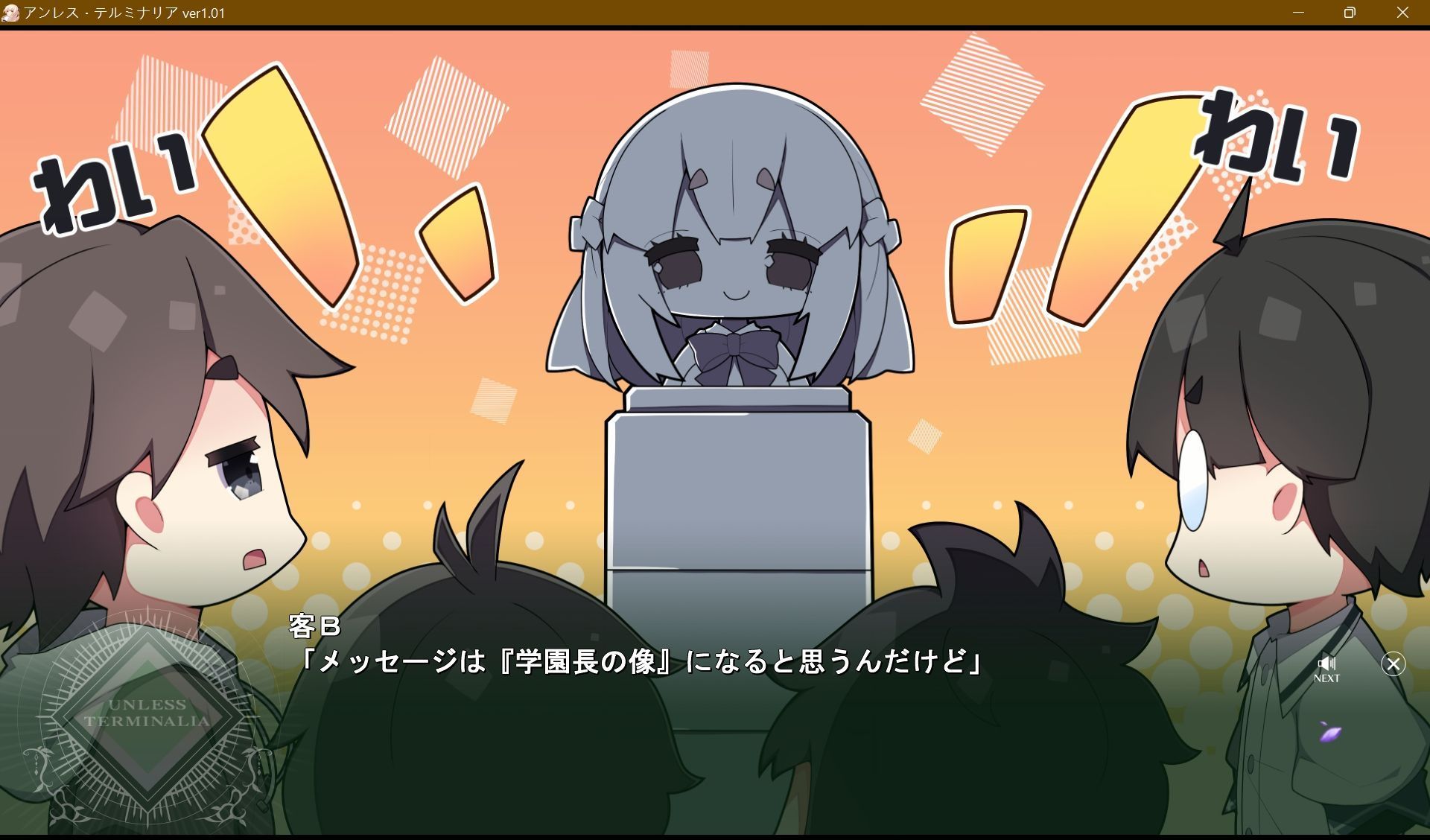
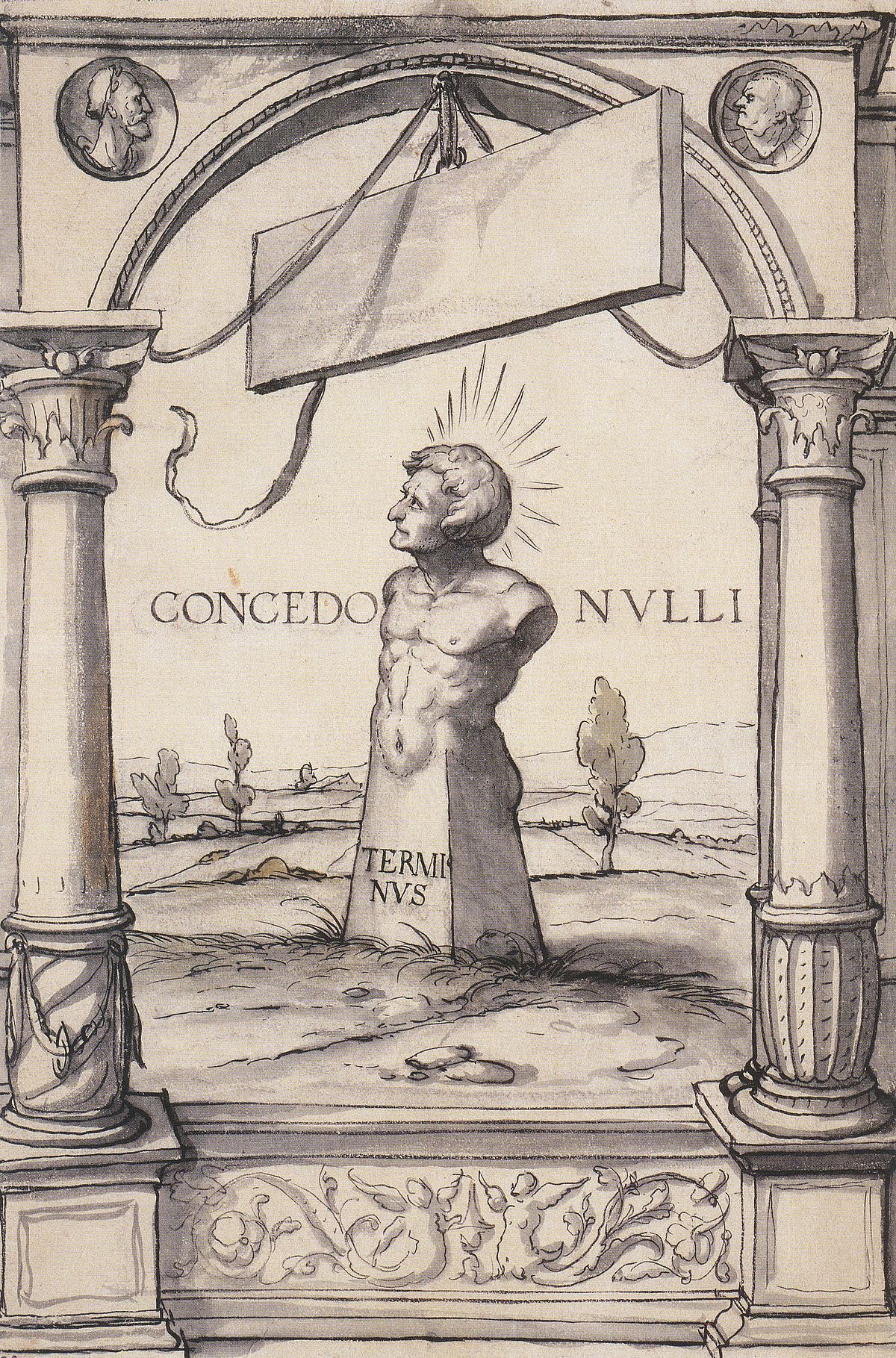
But so what if it’s packed with references and religious trivia? Does any of that fix the absolutely moronic letdown this game hits you with at the True End? All that world truth they’d been hiding and teasing for so long — and it turns out to just be some bored creator messing around?
And this so-called angel voiced by Ishihara Mai is such a poser, and you can’t even fuck her — how is that supposed to make sense? Are you worried that Fuck Angel might piss off some religious believers?
Especially Ishihara Mai’s constant “human~,” “ano ko,” — after a while I genuinely wanted to reach through the screen and smack her. And I’ve come to understand that feeling I mentioned at the start of this piece even more.
So how do you actually rate Anres Terminaria (アンレス・テルミナリア) at the end of the day? My take: not worth playing, not worth wasting a single minute on. You’d get more out of watching Doraemon: Nobita’s Genesis than this. The game takes two things that don’t mix — “brain-dead” and “philosophy” — and fuses them in a way that’s stiff yet weirdly harmonious. Reading the common route made my IQ drop to zero; reading the True End felt like my brain got an upgrade. What doesn’t change is that you feel played either way once it’s over. Maybe only someone who’s truly given up on using their brain could have fun with this.
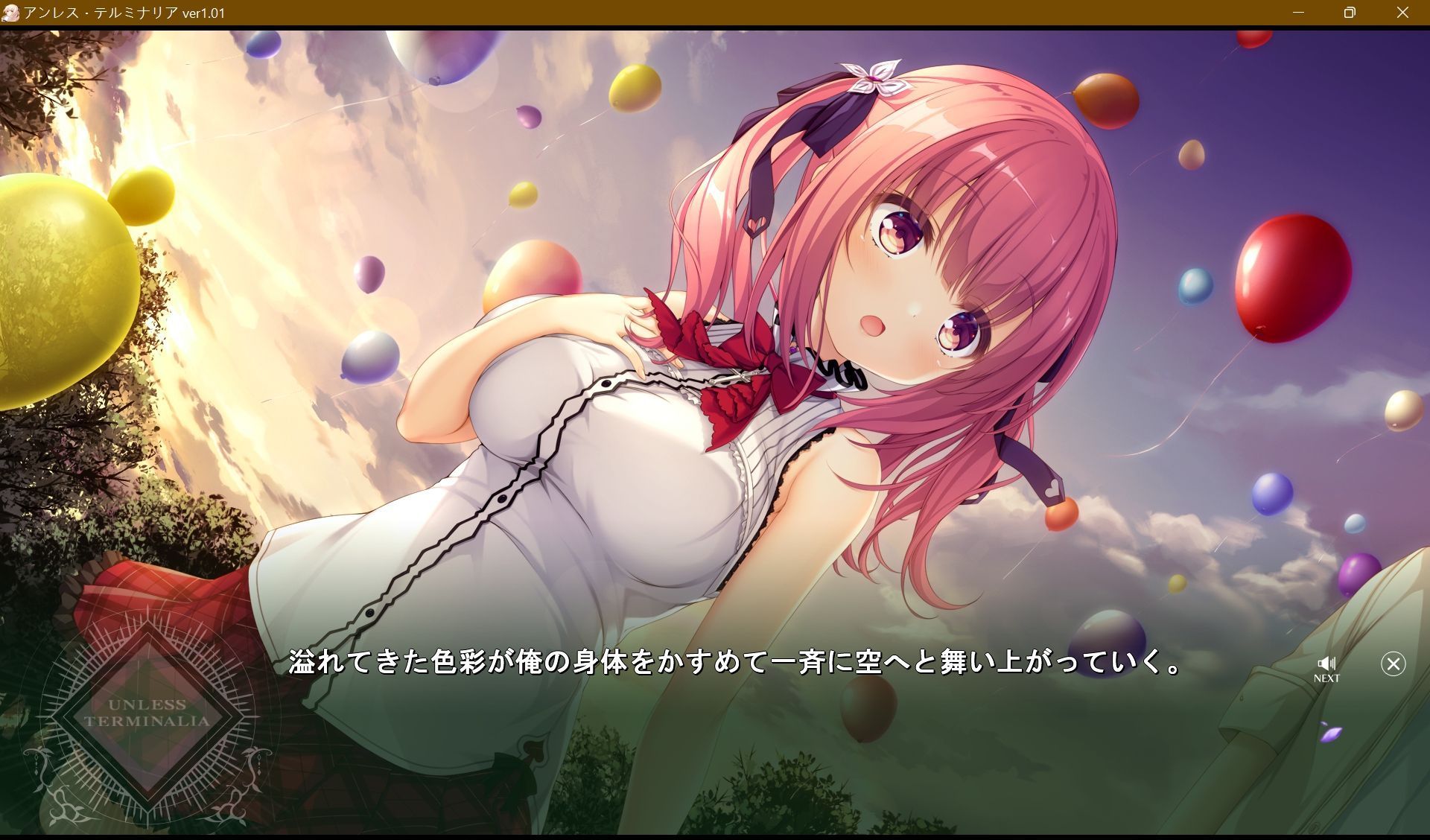
Come to think of it, it’s not so much that I hate this game — it’s that I hate the whole “riddle-speak” style of storytelling. It’s 2022, and the tricks from ten years ago stopped being cool a long time ago. Just say what you mean. If your narrative only works because you keep holding things back, either you haven’t figured out how the rest of the story goes and you’re stalling for time, or you simply don’t have the chops to write a good story and you’re just a plain fucking idiot.
Comments are hosted on the Chinese main site. This mirror is read-only.