Yumahorome: Toki o Tometa Yakata de Asu o Sagasu Maigo-tachi (ゆまほろめ 時を停めた館で明日を探す迷子たち) Review
Why I've Grown to Hate Eroge
Years ago, when I first started playing eroge, I had plenty of reasons for it. I was sick of light novels, anime, and manga dragging their “serials” on for years without end, and sick of their bloated, convoluted stories. So I went with galge. One of the reasons that satisfied me most back then was this:
“Visual novels are different from other ACG works — in a single game, you always get to see the story’s ending.”
But times change, and that line has drifted further and further from reality. My view of visual novels has swung to the opposite end too — from weariness to outright hatred.
Never mind that visual novels have all learned the light-novel “split-volume” sales model. What wears on me most is the “advance or regress” market development of the genre over the years.
Visual novel players always call themselves “subculture enthusiasts” and take pride in their supposedly niche hobby. They’re always finding ways to recommend visual novels to others, or personally jumping into making them, or introducing their favorites in ACG discussion forums. Most of these so-called “enthusiasts” will admit it’s a niche market, in a gray zone, not something you can show in broad daylight — but they keep praying that one day the market will evolve and become accepted by more people. And as a niche game category, visual novels have far too many flaws that most people clearly reject, yet the so-called enthusiasts ignore and tolerate them, year after year for over a decade. That’s what I never expected.
But the facts are cruel. From 2013, when I started playing visual novels en masse, to now — nearly 10 years — this market has made almost no progress, and in many ways has regressed. So let me lay out the things I hate most about visual novels:
1. Crude systems
Like most people, I once had high hopes for visual novel game systems. I thought it might really be a god’s-eye view where “different choices” decide different characters’ fates. But after playing enough games I realized I was dreaming. Most games have fewer and fewer choices, and even the ones with plenty of choices only have a few key points that actually determine the story’s direction. All the other options are like dialogue choices in Genshin Impact — pulling down your pants to fart.
Fundamentally the story still comes down to just a few branches. If you get a good scenario writer, maybe those branches can be woven together. If you get a bad one, it’s a mess of mismatched parts.
The game’s so-called “system” is really just a bookmark function in an e-reader app. Sometimes adding a few features and a bit of “gameplay” would make visual novels far more playable, but nobody does it. Most studios cling to Kirikiri and milk it to death, and refuse to use native 64-bit builds.
Sometimes I flip through visual novels from around 2003 and am amazed to find those old games had plenty of “affection point” options, complex interlocking branches, even “item collection” systems. Visual novels as a genre have developed for so many years, and they’ve gone backwards.
2. Endless, boring “daily life”
I don’t know how many people feel the same, but I’ve grown to hate the “daily life” portions of visual novels. I understand why they exist — early on they were all “school romance stories,” so naturally you need day-to-day school life to establish character relationships. What’s strange is that later more and more visual novels moved away from school settings, yet still stubbornly insisted on adding “daily life” sections. Most scenario writers aren’t good at writing these “daily life” scenes either, and most visual novels’ core plots are extremely simple. So many games become a torment to play: the story is simple, but progress keeps getting stuck in the “daily life arc” with nothing happening, and you just watch the protagonist and a bunch of heroines who think they’re funny trade stupid lines every day. I don’t know if it’s an industry consensus, but most visual novels’ daily life content is especially, especially long. To put it bluntly, “stinky and long.” I don’t understand why so many games insist on producing such long stretches of garbage. The scenario writer knows “the good part comes later,” the player knows “the real developments are in the heroine routes” — so why make everyone endure this idiotic daily life content?
3. Forced happy endings
A certain company that has since driven itself to ruin once used this slogan to promote a game: “Not every story has a good ending.” I deeply agree. Many stirring, memorable stories are actually flawed. Take the original Chinese Paladin, for example — it was the deaths of the two heroines that elevated the ending and highlighted the game’s theme of “fate.”
But the visual novel scene isn’t like that. Remember New Shimauta, the one who sang a contrary tune? In the end he just wrote the heroine’s soul ascending to heaven, and boom, a bunch of people joked he was “handing out knives.” So most game studios got spooked: no matter how tragic the heroine, no matter how bad things get, there must be a “turn it all around, everyone lives” happy ending. The stupidest example is that Secret Game series from back in the day. You could plainly see that no “main heroine” ever dies — the ones who die are either mob characters or men. The story setup is supposed to be a battle royale, where everyone kills each other until one is left. Yet the game always hilariously keeps all the heroines alive, and even brings the dead ones back, just for that especially “convenient” happy ending.
Not every story has a good ending, and not every story with a good ending is a good story. When will these eroge writers break out of this boring framework? That’s when most visual novel stories will start to look good.
4. Unwavering sexual relationships
There are countless ways to create an appealing woman in a visual novel, but if she’s a “non-routeable character,” it brings a flood of bad reviews.
So what does it take to make a character “routeable”? You don’t need to write a convincing romance arc — you just need to arrange a sex scene, have the protagonist sleep with her. No matter how forced, no matter how abrupt, as long as the protagonist gets to “fuck her,” that character gets her own dedicated “personal route.”
It sounds funny, but that’s the truth. Many times when visual novel players demand a character be “routeable,” they don’t actually want to romance her — they just want to fuck her. This twisted demand creates a lot of twisted game plots. The protagonist’s only way of expressing love for the heroine is through the vagina. I don’t know if this is a renaissance of Eileen Chang literature.
That’s roughly the points. Maybe some will sympathize, some will have other objections, but they’re just my personal views. The reason I’m bringing this up today is mainly that a recent game hit almost every one of these “most hated visual novel points” perfectly.
That’s right — Lump of Sugar’s “annual blockbuster,” Yumahorome: Mayoi Go-tachi Searching for Tomorrow in the Time-Stopped Manor.
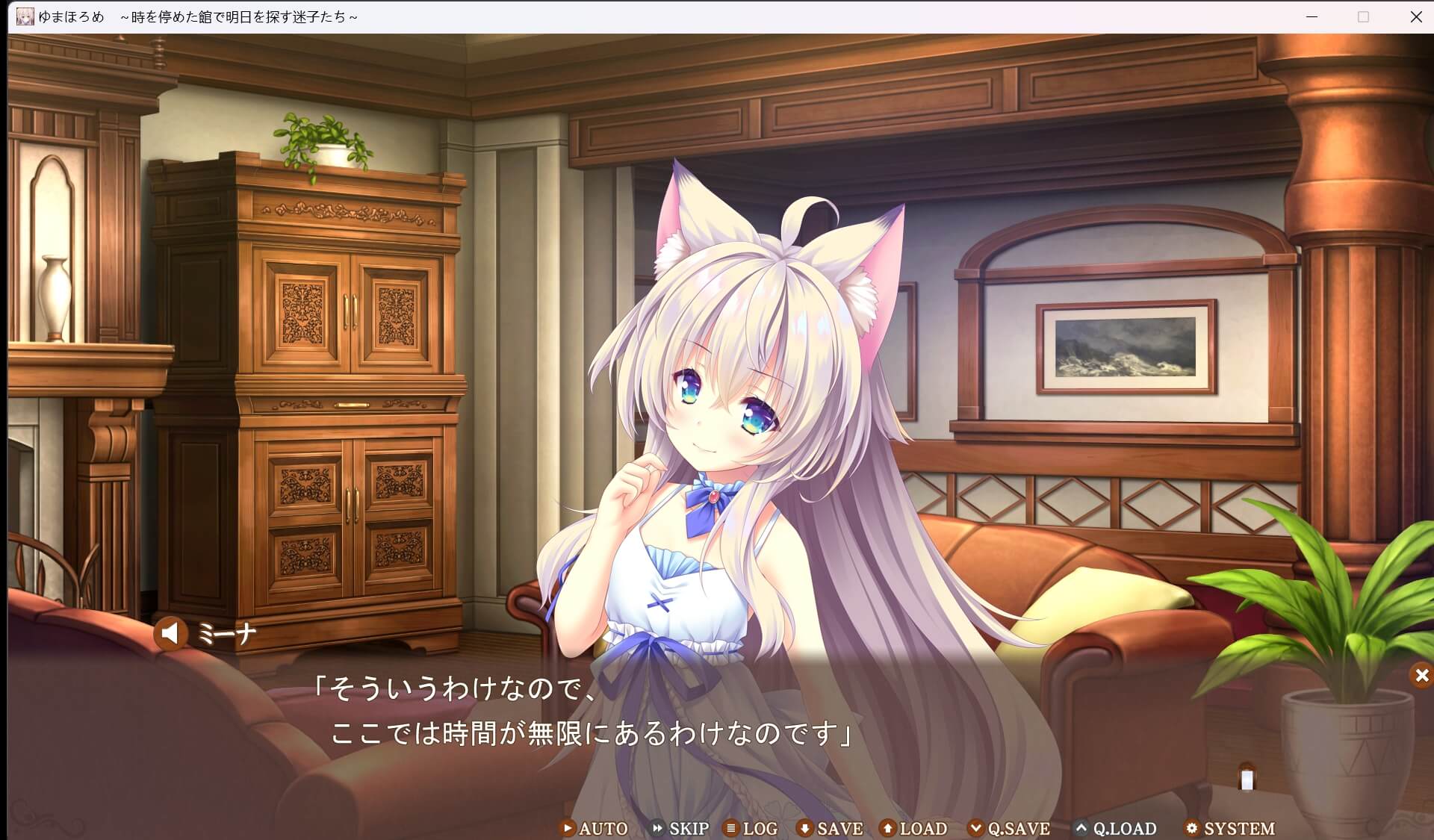
So what’s this game about? It’s about our protagonist, who inexplicably gets pulled into a mysterious Japanese-style mansion and can’t get out no matter what. Several girls he knows get pulled in too, and there’s a girl with animal ears named Miina in the mansion. The group starts exploring the mansion to find a way out, and eventually discovers that “time is frozen” inside it, and the way out is actually “facing your inner fears.” So our meddling protagonist starts helping each person face their inner fears. One girl was bullied at school and is too scared to go back, so he helps her overcome her psychological barrier; another girl messed up a piano performance and has been unable to touch the piano since, so he helps her regain her confidence; another cares too much about what people around her think and has developed a shut-in personality, so he counsels her and helps her find her true self…
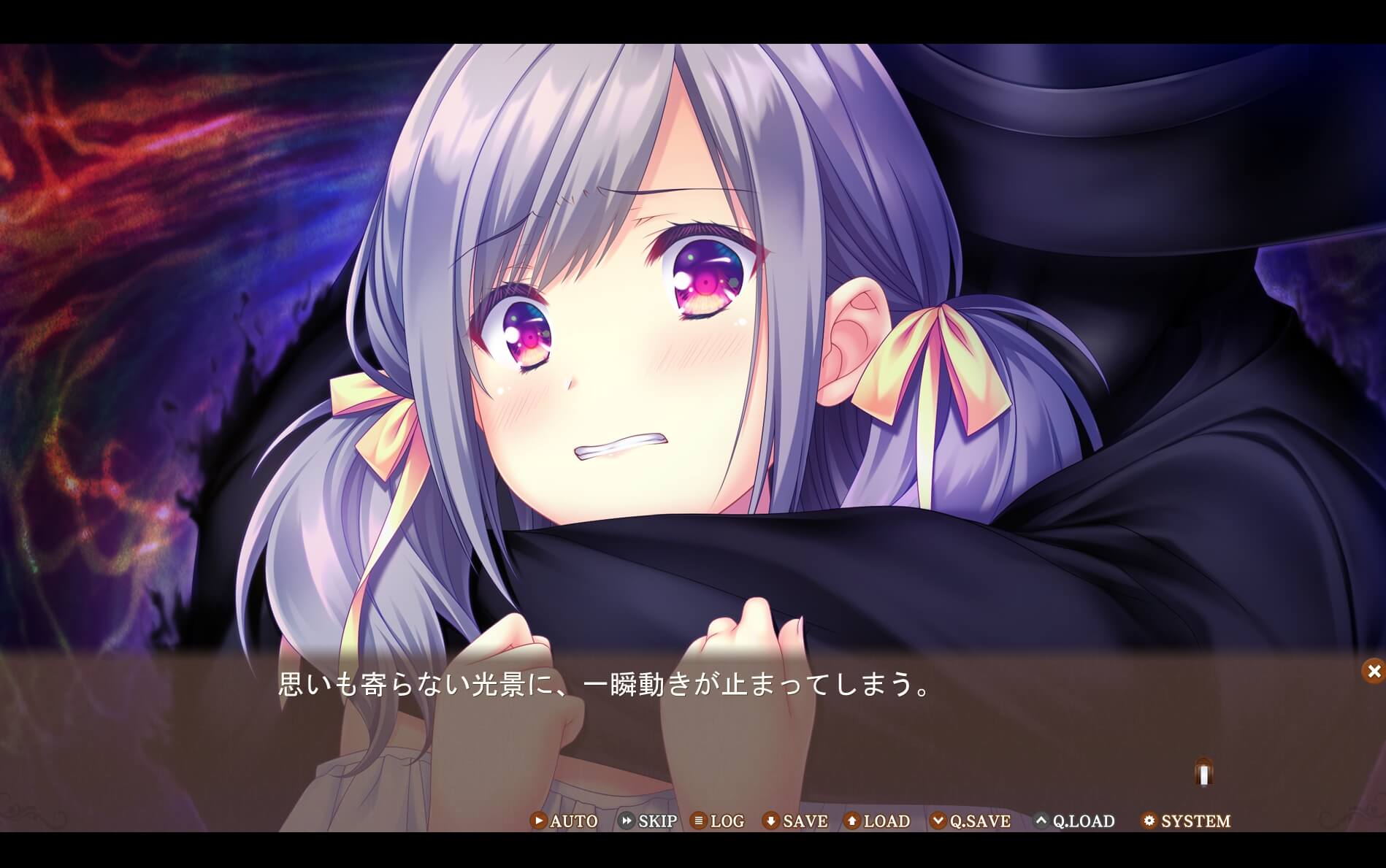
But in the end, what is the protagonist’s own “inner fear”? Naturally it has to do with Miina. The protagonist suddenly gets a memory flashback, remembering something from his childhood. As a kid he played with a little girl, and they promised each other to run away from home together. They got on a bus heading far away, but the bus crashed. The protagonist was lightly injured, but the little girl was badly hurt and lay in the hospital, never waking up. The protagonist wanted to visit her, but her father refused and kicked him out, convinced the protagonist was the one who caused the girl’s suffering.
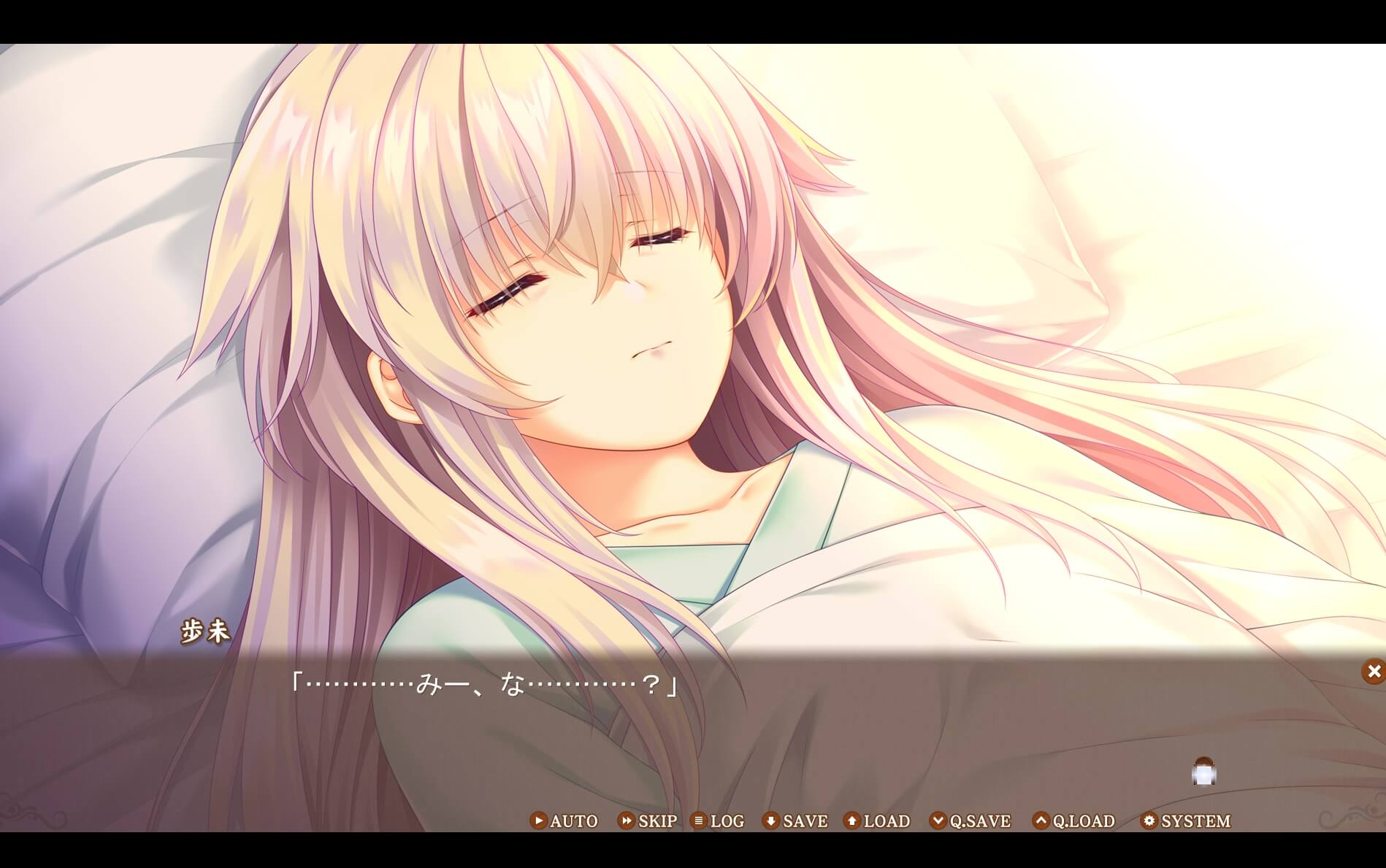
Maybe you can guess — that little girl is Miina in this mansion. While in a coma, Miina saw the protagonist blaming himself for her, so she asked a god to let her soul leave her body and created this time-stopped mansion, hoping to be honest with the protagonist there and help him out of his guilt and face his fears.
In the end, the protagonist apologizes to Miina, receives her forgiveness, and leaves the mansion.
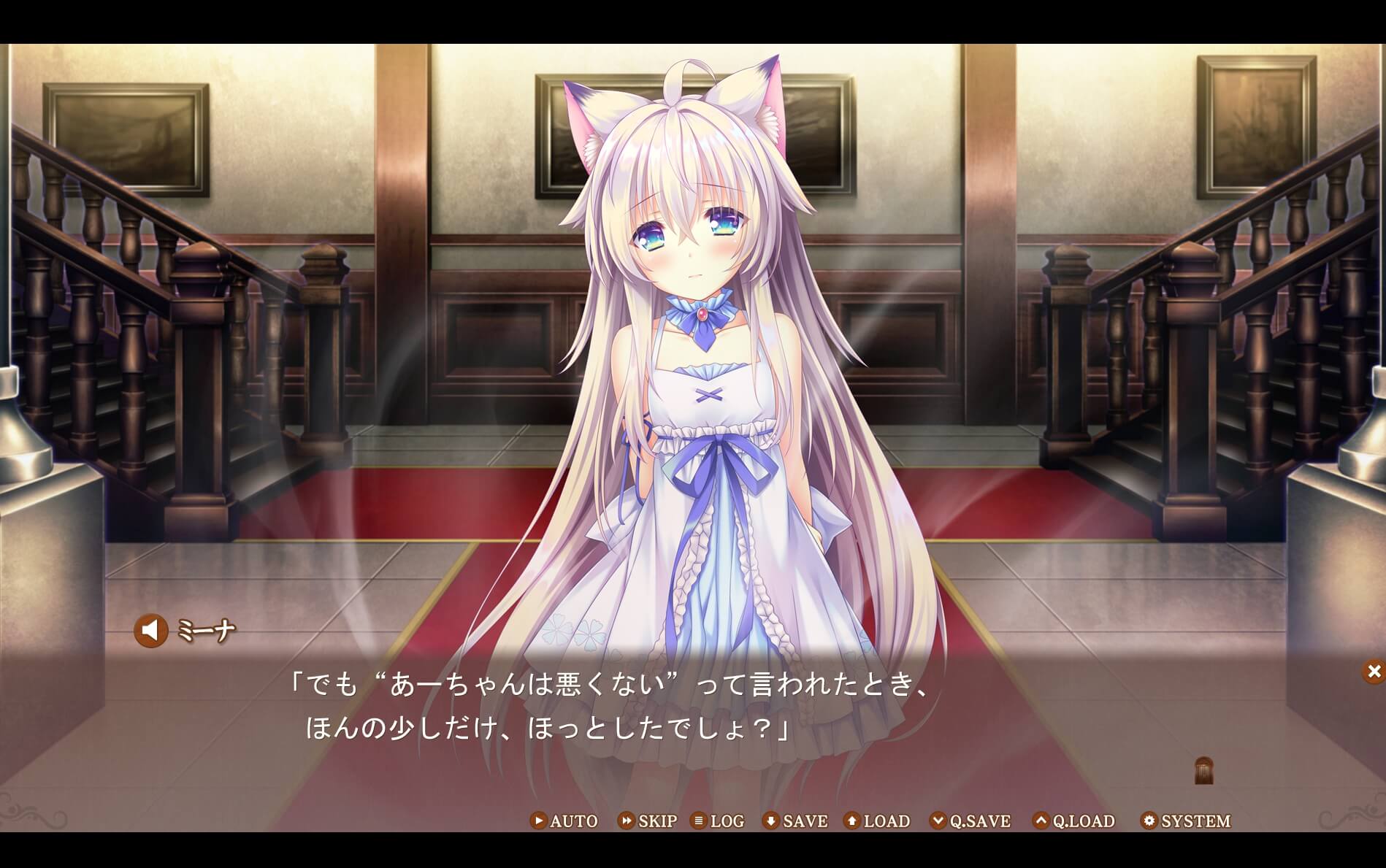
You thought the story was over? No. After the protagonist leaves the mansion, he finds Miina is still in a coma, and actually goes back to the god who created the mansion, returns to it, and insists on taking Miina out of there. What follows is a pile of clichéd nonsense: the mansion is destroyed, Miina and the protagonist escape together. The protagonist returns to reality, Miina’s soul returns to the little girl’s body, a miracle happens, the girl who’d been in a coma for years wakes up, and she starts dating the protagonist.
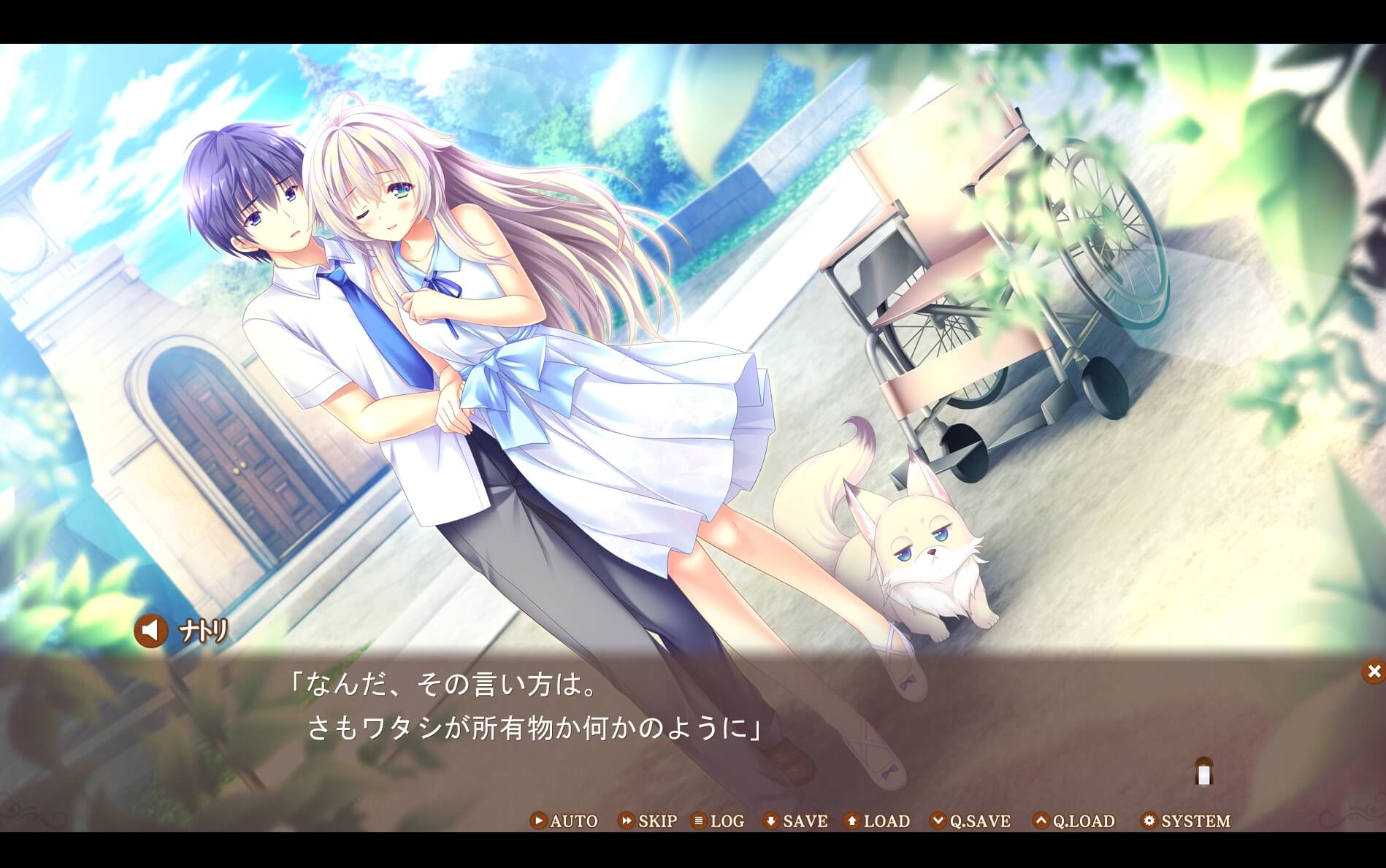
Remember the points I said I hate most about visual novels? Let’s compare.
In the middle of this game, when the protagonist and the group are trapped in the mansion, they start exploring it. But the way this exploration is presented is incredibly stupid — copy-pasted dialogue and a few fixed backgrounds switching back and forth. I can’t understand it: is it so hard to make a dungeon-crawl map on the level of RPG Maker? If that’s too much, you could learn from the Danganronpa series and present “exploration” in some other way. But this game chose the stupidest, crudest method: describing the “exploration” process purely in text. Occasionally it gives you a choice of route, but the choice UI is hideous and the content is boring.
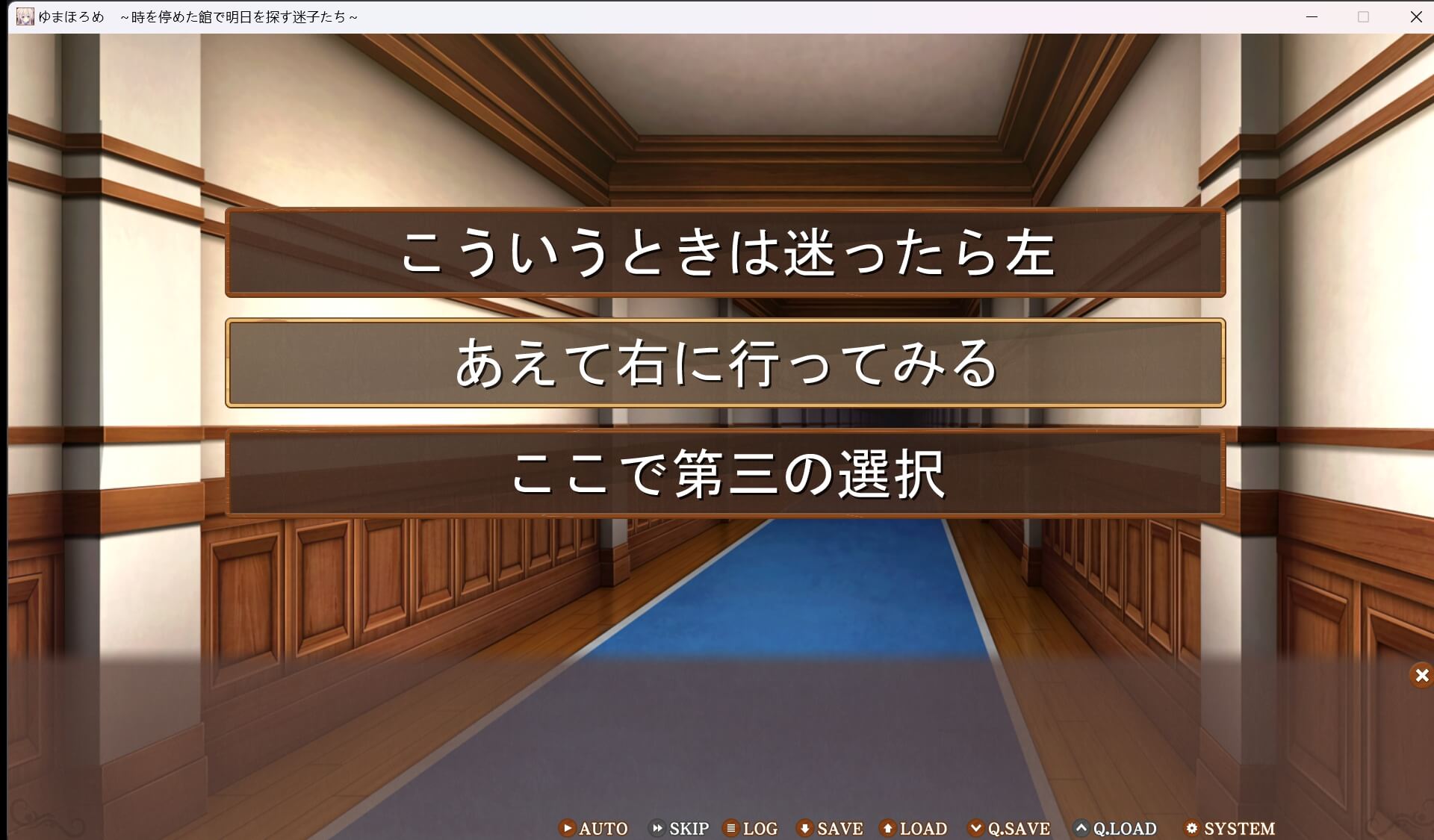
If you don’t have the ability to make a system that presents “exploration” well, then cut the stupid “exploration” section.
The game’s main story content isn’t much, but the game spends nearly 20 hours describing “exploration” and “daily life.” That’s the “water padding” I mentioned earlier. You’re the protagonist, suddenly locked in this oppressive place like a makeshift hospital — what you’d think about is getting out as fast as possible. Yet the game makes you start happily playing around in this unfamiliar place, dragging it out for a full 20 hours. Good grief. You know what it felt like watching the common route? Like being in prison. Worse than staying in a makeshift hospital.
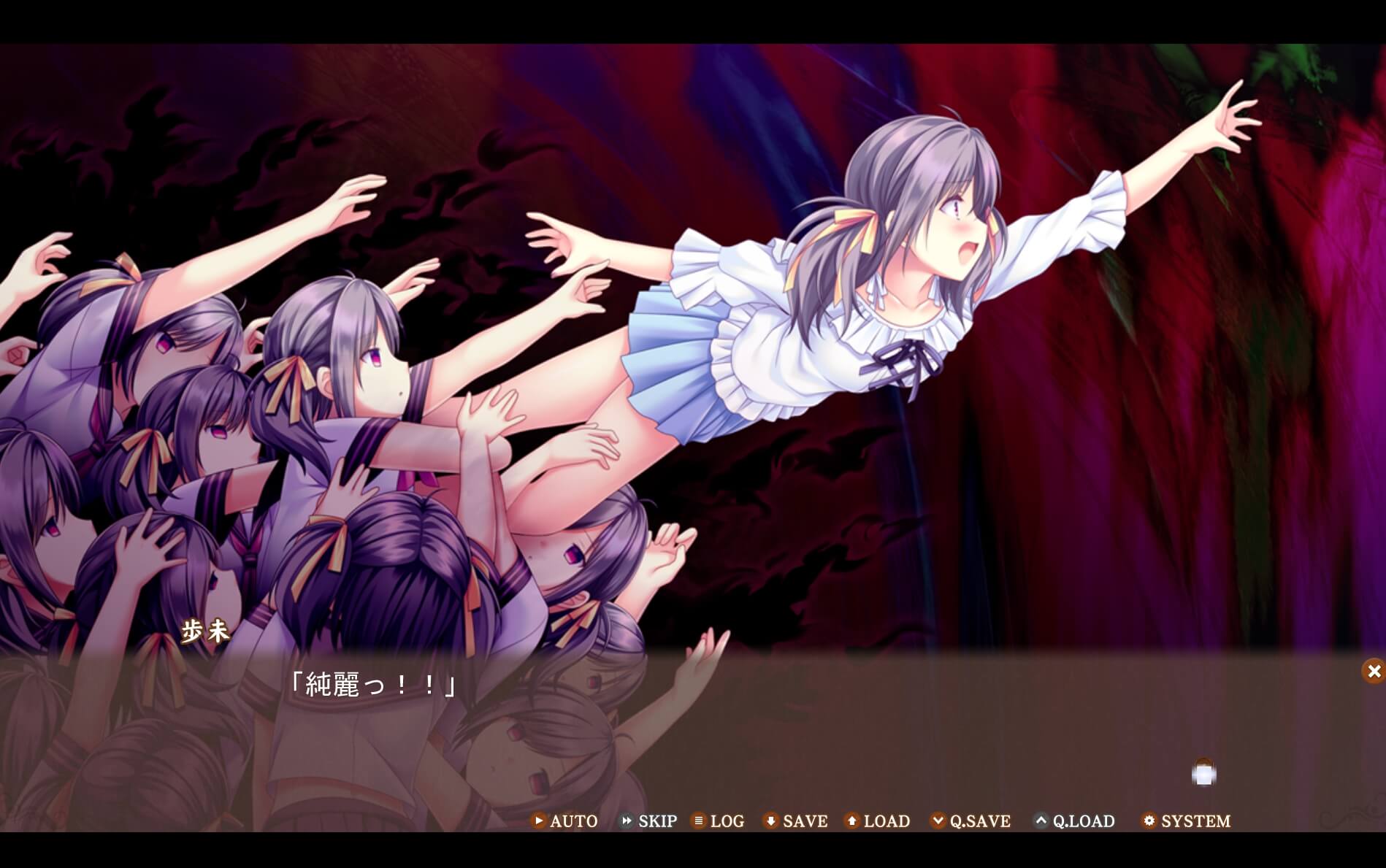
Setting aside that stinky, long common route, the game’s final True End route is actually fairly standard. The protagonist feels guilty, the heroine dissolves his guilt through her out-of-body experience, he finds release and leaves, she completes her task… wouldn’t it be nice if the story ended there?
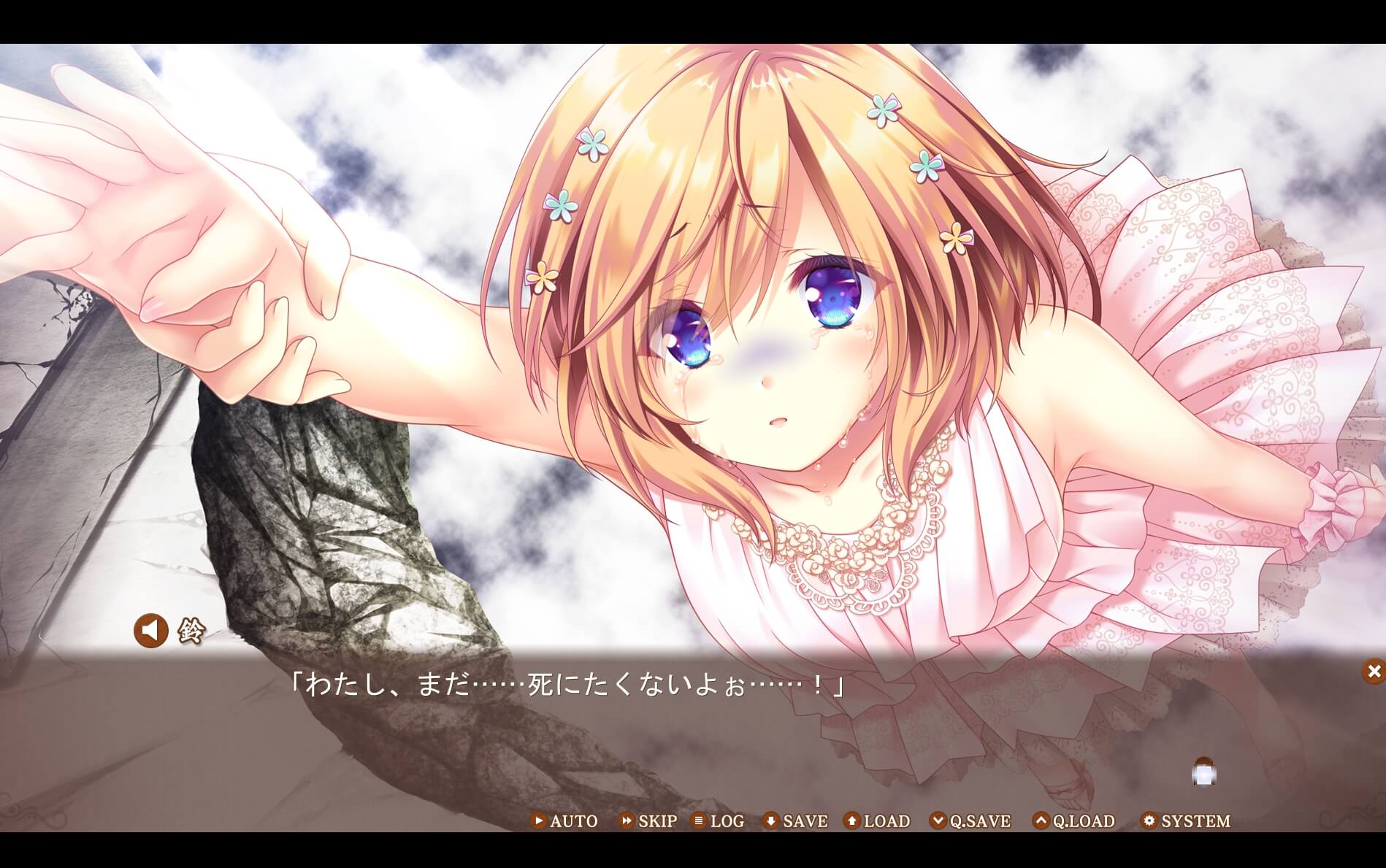
Why insist on dragging in a protagonist who charges back into the mansion, insists on gathering all the heroines together, and stages a so-called “grand rescue” that looks more superfluous than anything? All for the sake of that “everyone gets a happy ending” obsession? And how do you know that pulling an out-of-body soul out of that mansion will wake a vegetative patient? Talk about forcing it.
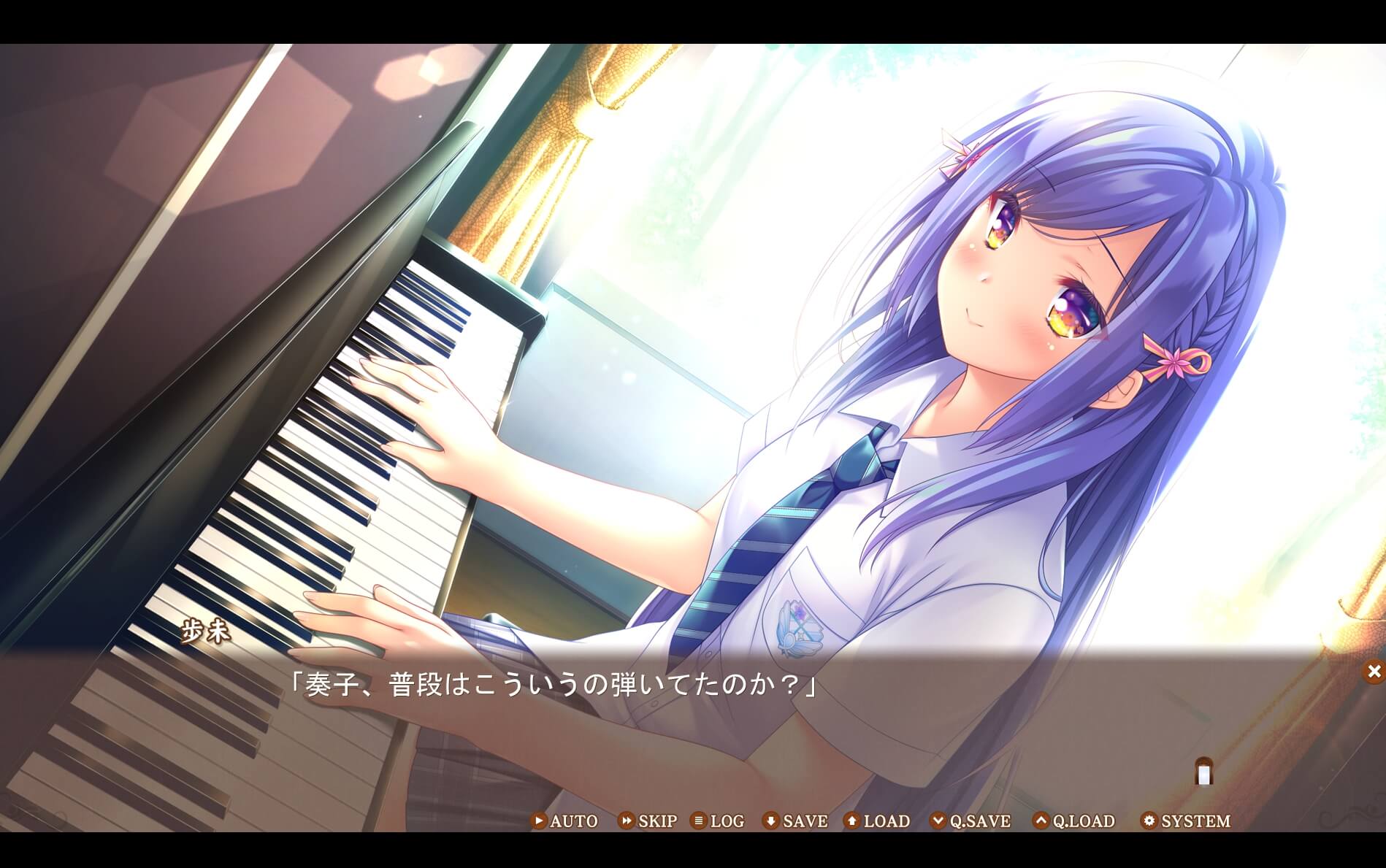
Finally, the game’s real story is only about Miina. What are the other heroines for? Frankly, they’re there to sell fetishes. Their personal routes and their inner obstacles have nothing to do with the main story. Even Miina complains that the mansion was created mainly for the protagonist, and the other heroines were just summoned along the way to solve some minor problems.
When I read that explanation in the game, I didn’t even know what to say…
So how do I evaluate Yumahorome: Mayoi Go-tachi Searching for Tomorrow in the Time-Stopped Manor?
It has a stinky, long common route that feels like prison, an extremely crude and ugly system, multiple heroine routes unrelated to the main story, and an ending that destroys an otherwise decent main plot for the sake of a so-called “grand happy ending.”
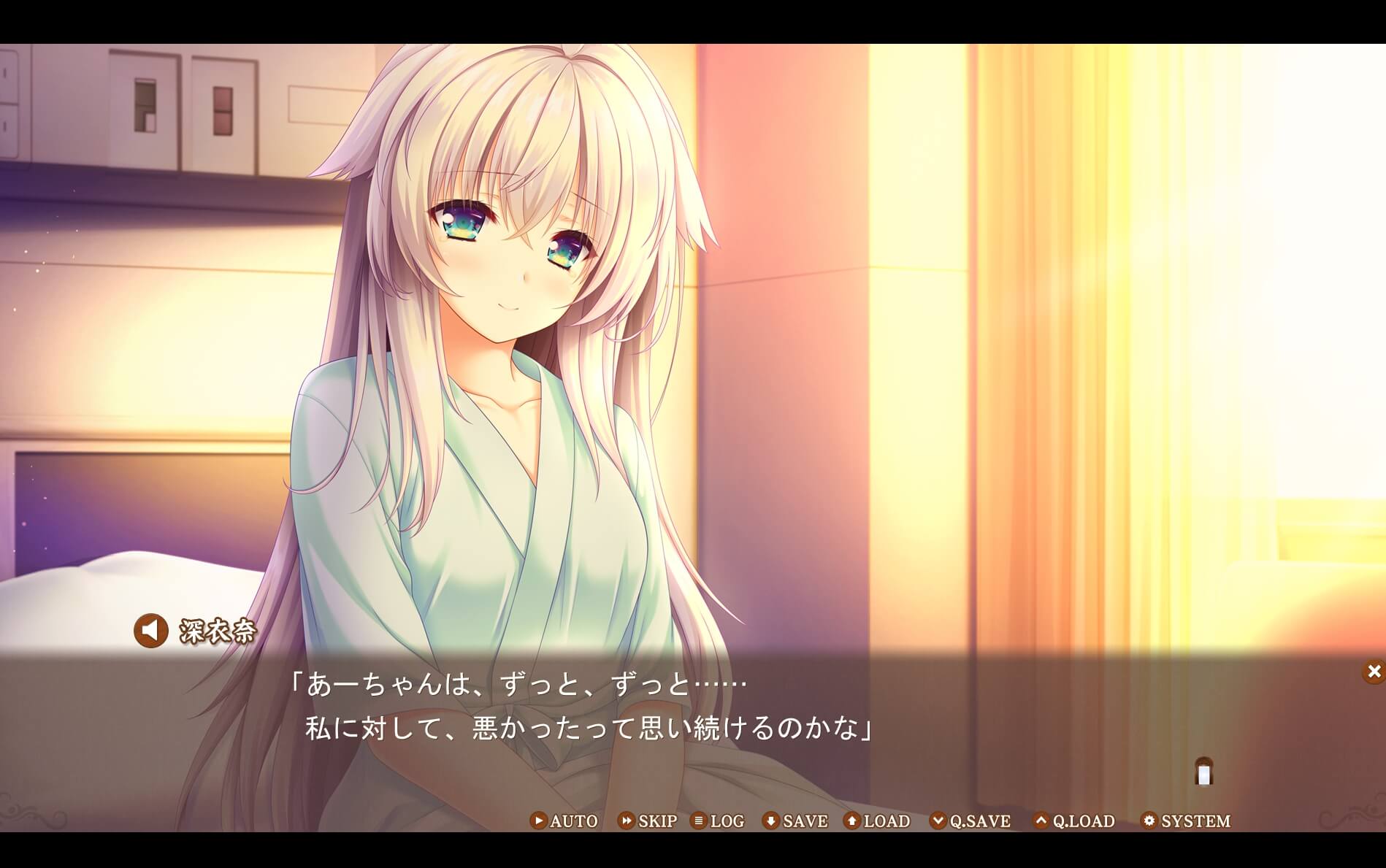
Such an awkward game that steps on every landmine with precision. I heard it even got a simultaneous Chinese release, and someone even did an interview with the scenario writer. I read it and threw up…
If I needed one reason to hate eroge, this game would be the perfect example.
By the way, my commercial write-up of this game has been published in 2D Fanatic issue 160. https://item.taobao.com/item.htm?spm=a1z10.3-c-s.0.0.73d755cbisbuVq&id=687300464136
Comments are hosted on the Chinese main site. This mirror is read-only.