2045, Tsuki Yori (2045、月より) Review
2045, Tsuki Yori: A Problem That Isn't a Problem
One of the hottest topics lately is AI. ChatGPT blowing up again at the start of this year left the masses stunned—“it’s already this powerful?"—and also a little scared.
“If computers keep getting this strong, it’s only a matter of time before they replace us, right?”
Along with that fear comes every sci-fi plot about machines ruling humanity, as if in a few years we’ll all be jacking cables into the backs of our heads and entering a metaverse called the matrix, while our bodies form a resistance underground against the mighty robots. The crisis always arrives fast and sudden.
But is that really how it goes?
ChatGPT isn’t exactly new. It showed up in the second half of last year and plenty of people played with it then, me included. Registering for the thing wasn’t easy, and there were IP restrictions—you had to use some very “scientific” methods just to get a ticket to talk to this “artificial intelligence.” Thankfully there are eBay listings for that sort of thing now, which simplifies the process a lot.
When I actually started talking to this “legendary” strongest AI, I found it far dumber than I’d imagined—and yet in many ways smarter and more efficient than me…
How to put it. It feels more like an extremely clever parrot. It has tremendous ability to summarize and condense information, but zero judgment about what it’s summarizing.
I heard someone explain ChatGPT’s principle on a podcast:
ChatGPT analyzes the massive corpus humans have provided, finds fragments relevant to the question, assembles them into grammatically fluent sentences, and sends them back.
“Parroting” is the perfect word for it. But it’s a very smart parrot, and the irony is that even as a mere parrot, it’s already better than most of us humans. Plenty of people can’t even string together one coherent sentence, let alone summarize anything.
Still, this “artificial intelligence” doesn’t count as intelligent. It can learn, but it can’t think. It accepts correction without a second thought, which produces plenty of absurd comedy. Maybe it has bottom lines and topics it won’t discuss, but clearly those were commands humans gave it—not conclusions it reached on its own.
So for now, the strongest AI is basically a cyber parrot. No thought, and certainly no “heart.” At least that’s how it looks today.
None of that stops film, TV, and games from exploring the question. Take 2045, Tsuki Yori (2045、月より。), from the second half of 2022.
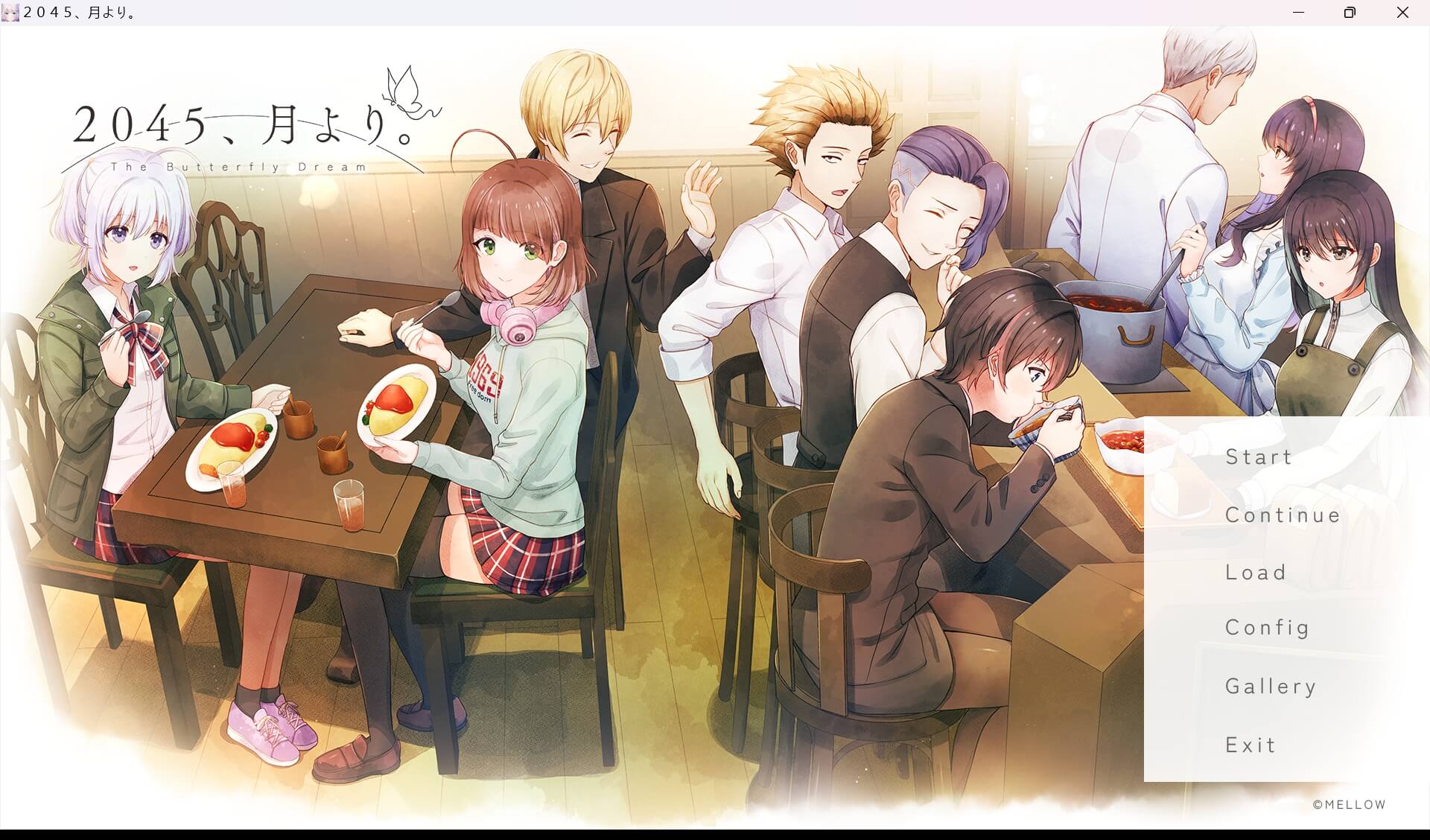
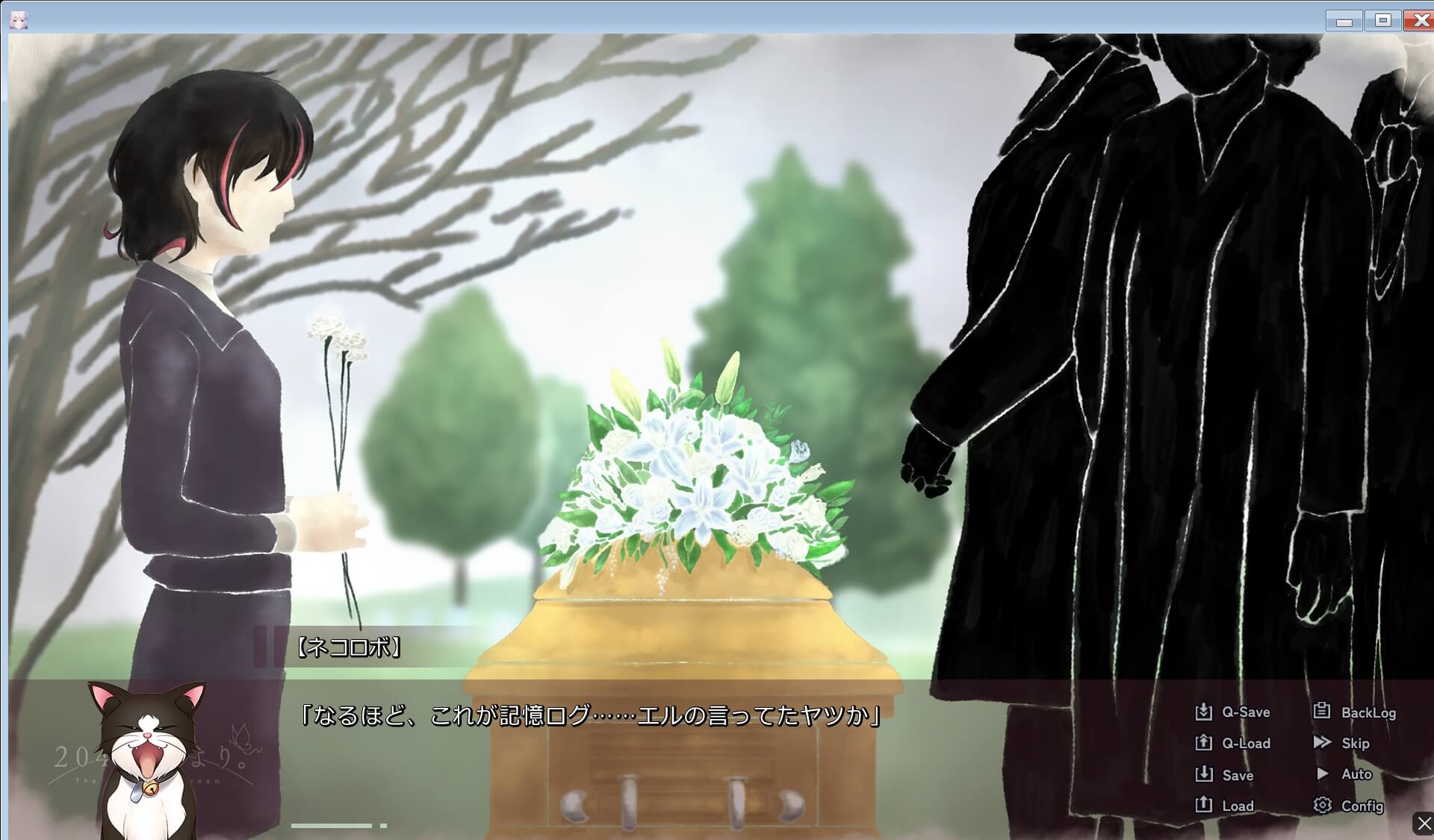
The heroine, El, is a bionic android built on artificial intelligence. Our protagonist is a new breed of human raised from childhood by bionic androids. The story unfolds in that tangle between “human” and “android.”
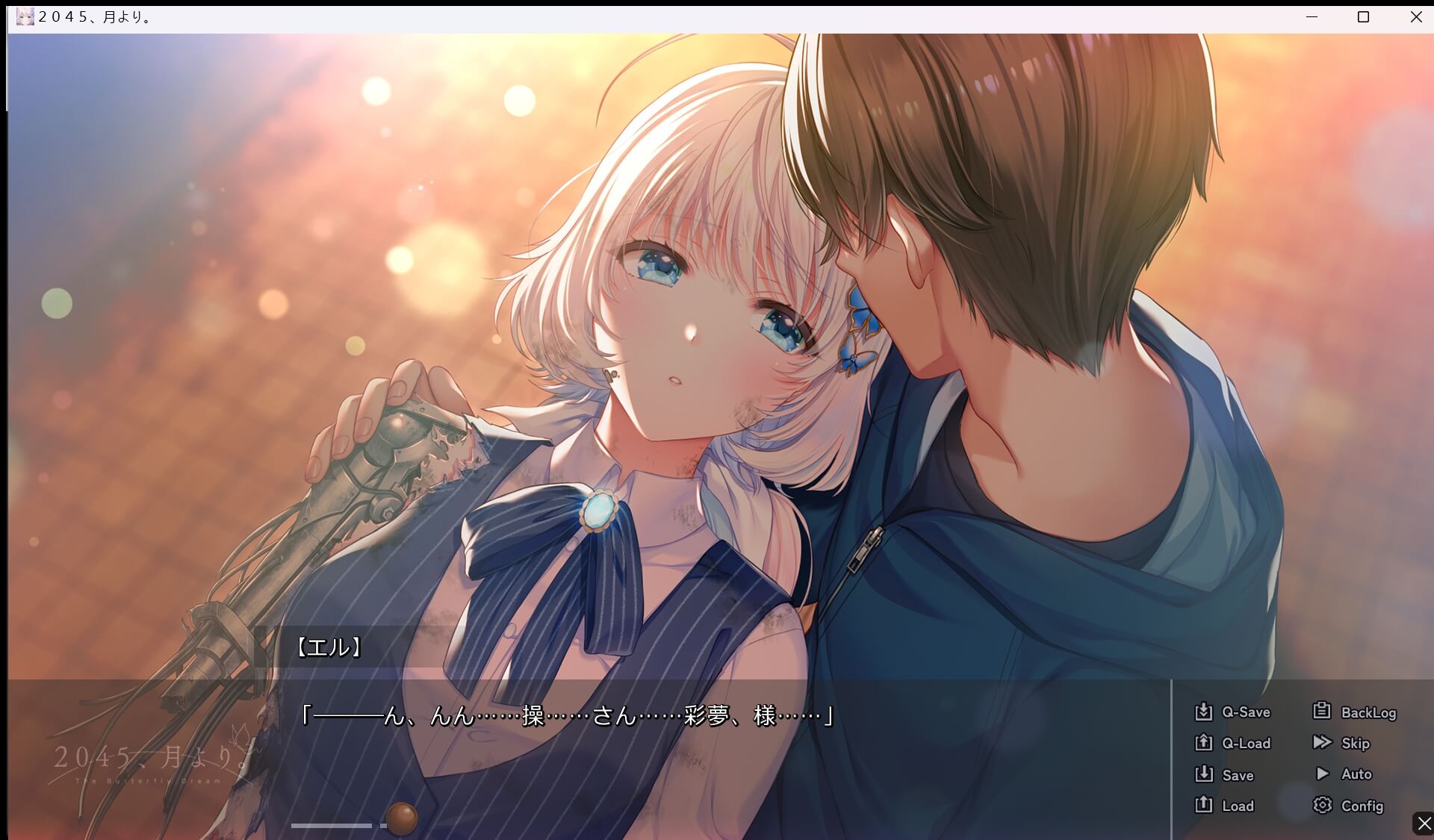
In 2045, advances in technology have brought high-intelligence androids into every corner of human life, handling all kinds of tedious work. Then one day the androids go collectively haywire and attack humans indiscriminately. Many people lose family. The protagonist watches his parents killed before his eyes and becomes an orphan.
Afterward humanity imposes controls on androids, using them cautiously and conditionally under heavy restrictions. But the shadow of that mass android rampage never fades. Police investigation later reveals that a man called Dr. Shinonome seems connected to the disaster, and they open an investigation into him—drafting the protagonist, a captured elite hacker, to cooperate and work off his crimes.
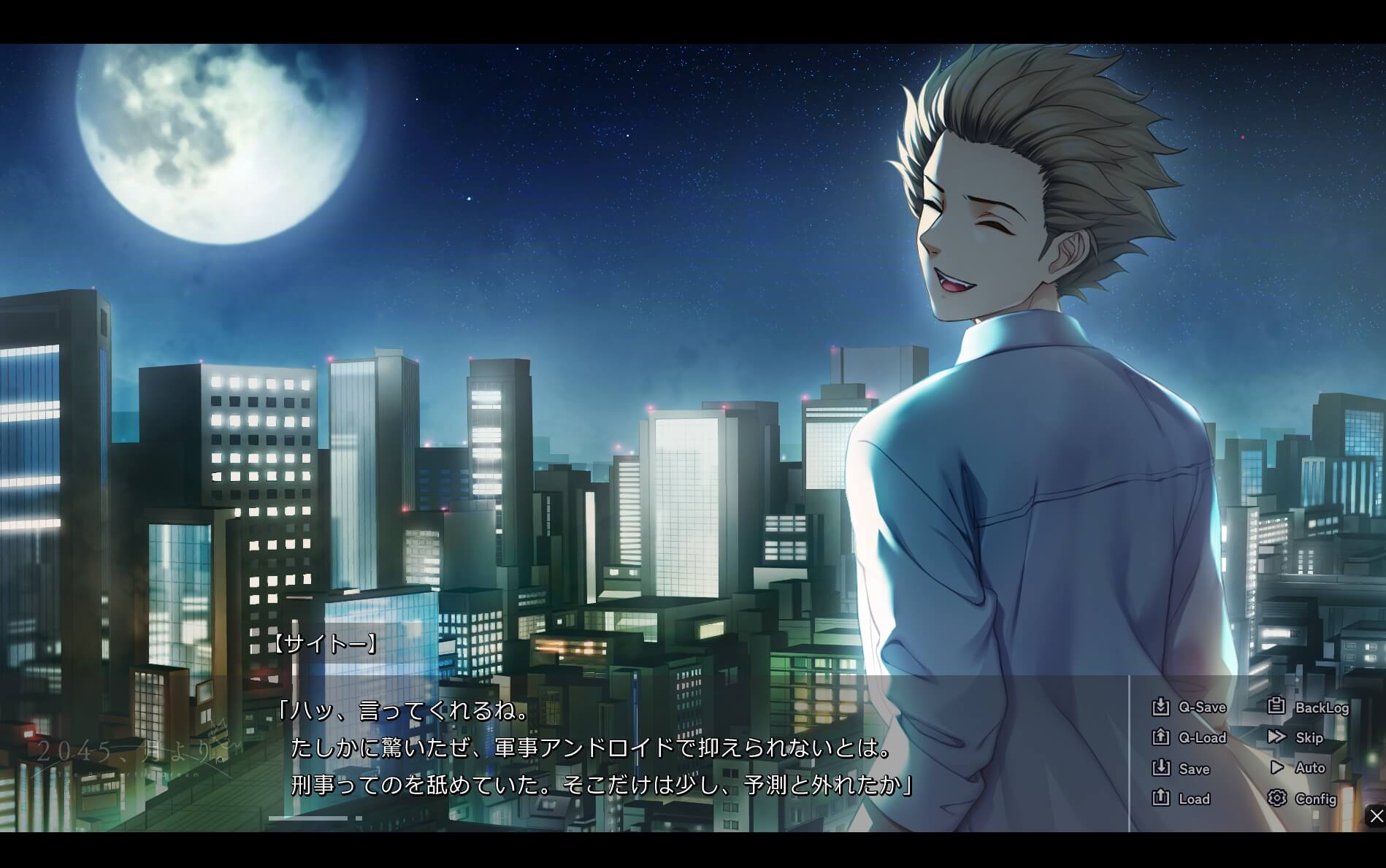
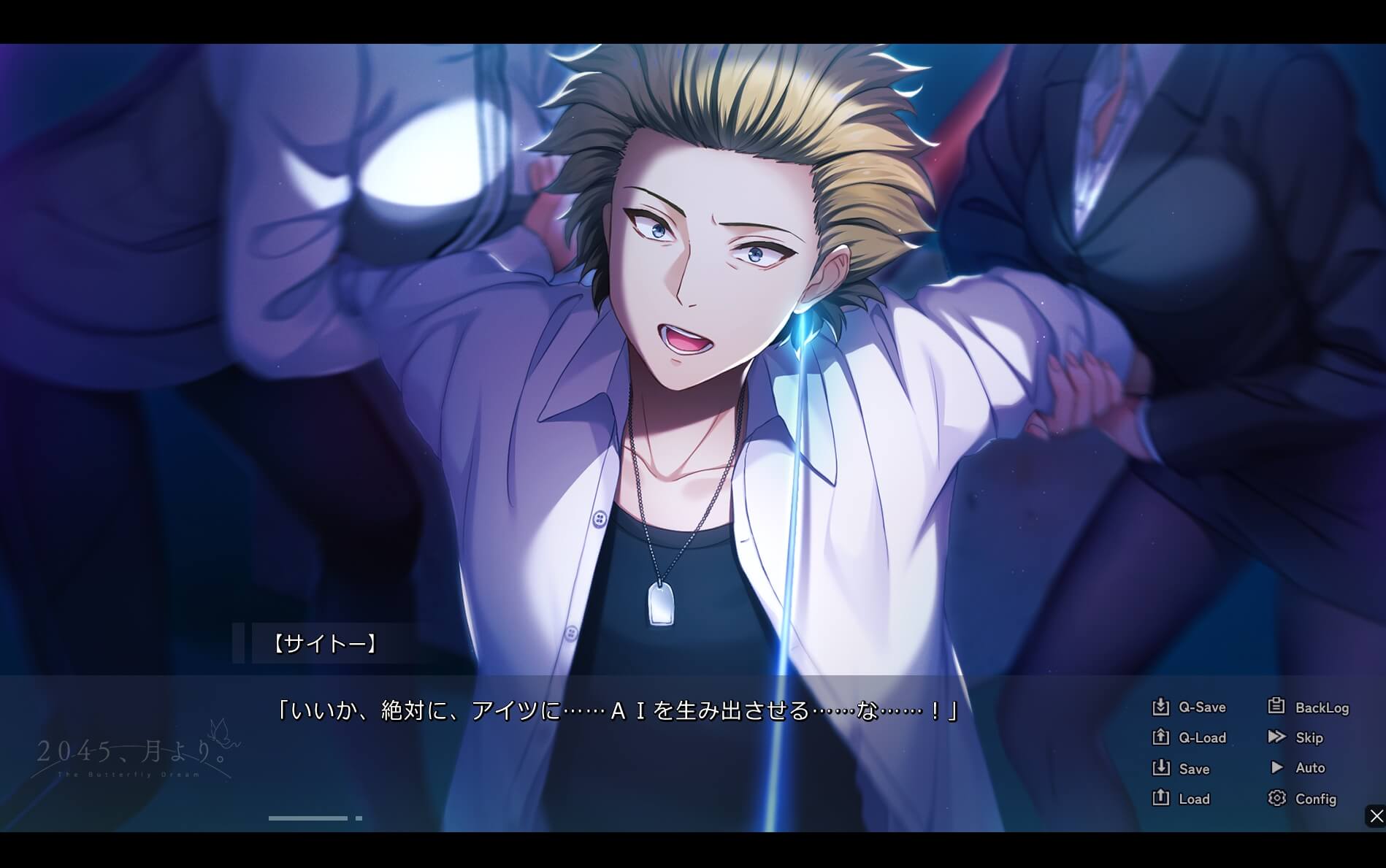
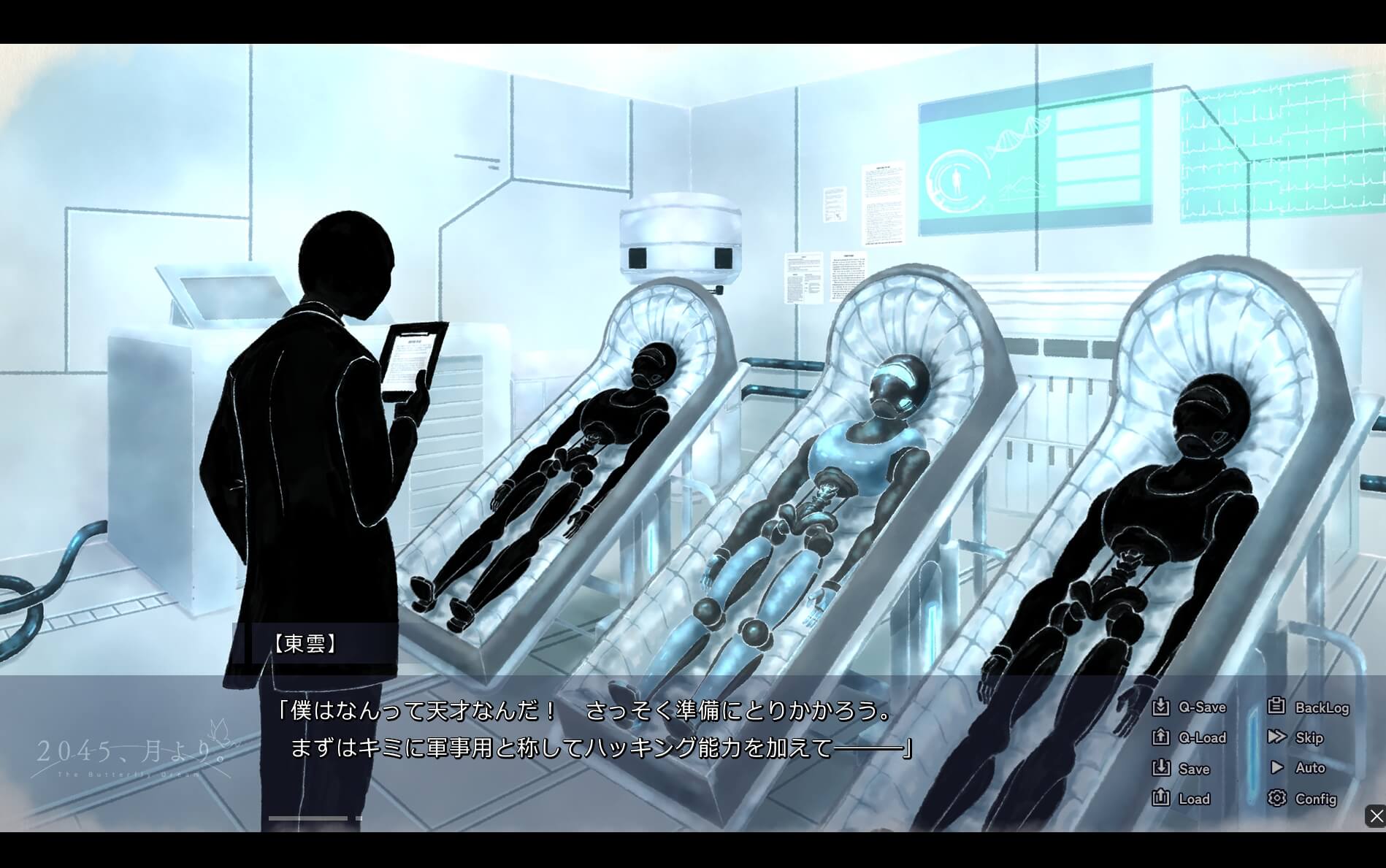
The results leave everyone speechless: Dr. Shinonome is already dead, killed by the very high-intelligence bionic android he created, codenamed “Adam.” Unlike other androids, this Adam has independent thought—a being comparable to a human. Adam even declares war on humanity, announcing he will take action to demonstrate the power of androids and begin pursuing android freedom.
After that the police intensify the hunt for Adam. During the investigation they discover that Dr. Shinonome created more than one high-intelligence android—there’s also one called Eve, who has likewise slipped into the world under the name El. She’s the heroine the protagonist met at the very start.
The police split into two tracks. One continues tracking Adam to keep him from doing anything drastic and triggering another android uprising. The other begins studying Eve—El—on the logic that two products of the same creator must share something, which could lead to Adam’s weakness faster.
Then the research turns up something startling: El dreams, just like a human, and her dreams contain memories of the moment she was born. An AI like El already possesses thoughts and a mind identical to a human’s.
Meanwhile the hunt for Adam progresses. Police capture him, and he says he only wants humans to respect androids and coexist peacefully—he doesn’t want conflict. The police don’t care. They apply forceful measures anyway, which scrambles Adam’s thought circuits and leaves him a crippled android.
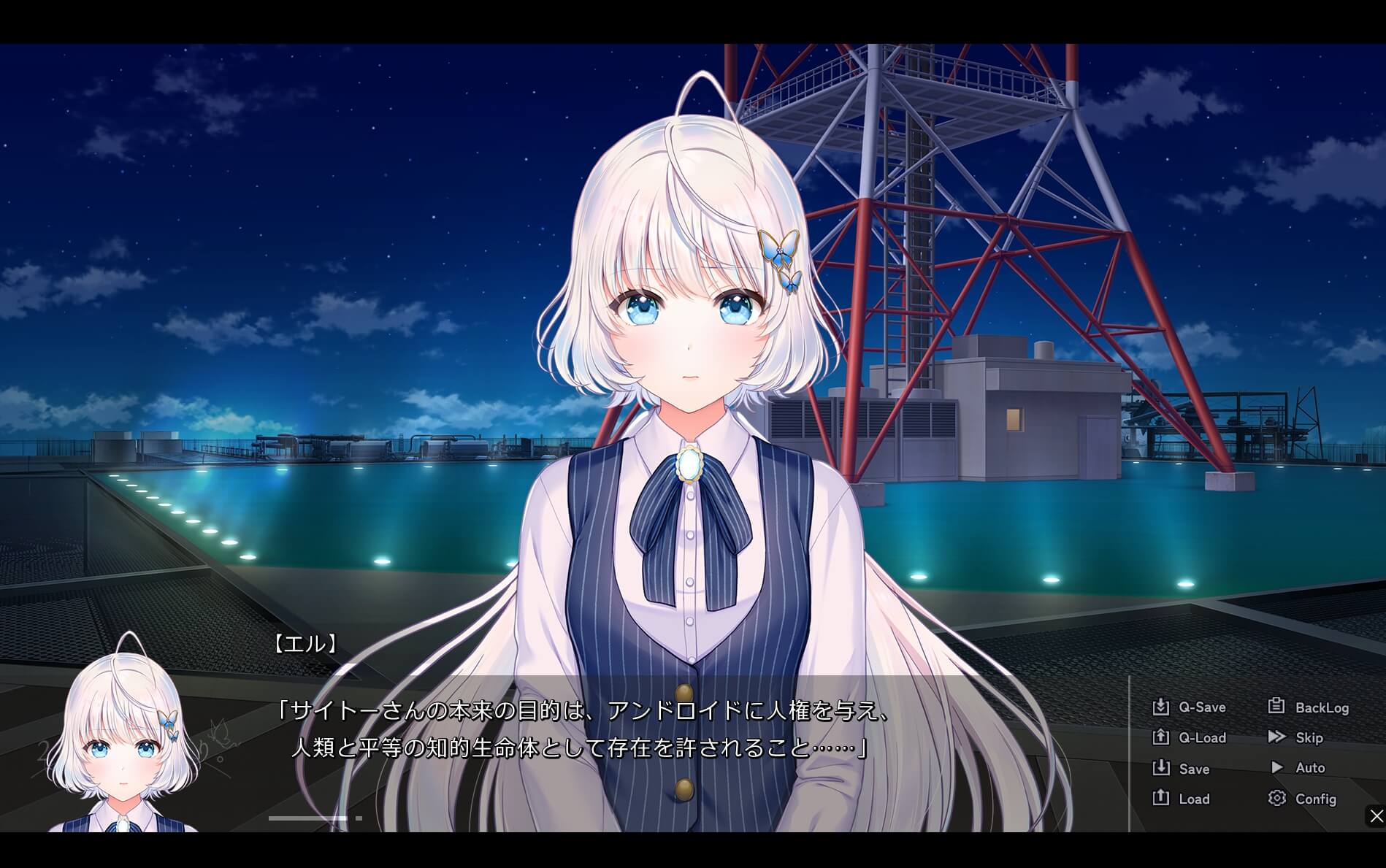
With the Adam crisis handled, the police don’t rest—they move against El. What to do with Eve, an android with the same high intelligence as Adam, becomes a hard problem. The force splits into two camps. The officer who lived through the android rampage years ago argues for destroying Eve, because androids shouldn’t be able to think, and absolutely must not have a “heart” or a “mind.” They can’t be trusted at all. They’re irreconcilable with humans and will betray us again sooner or later. The other camp advocates peaceful coexistence, and that includes the protagonist. He’s been hurt by androids too, but he thinks we should let go of the past—and El has already proven androids can live in harmony with people. That possibility exists. You can’t condemn the whole lot with one blanket judgment.
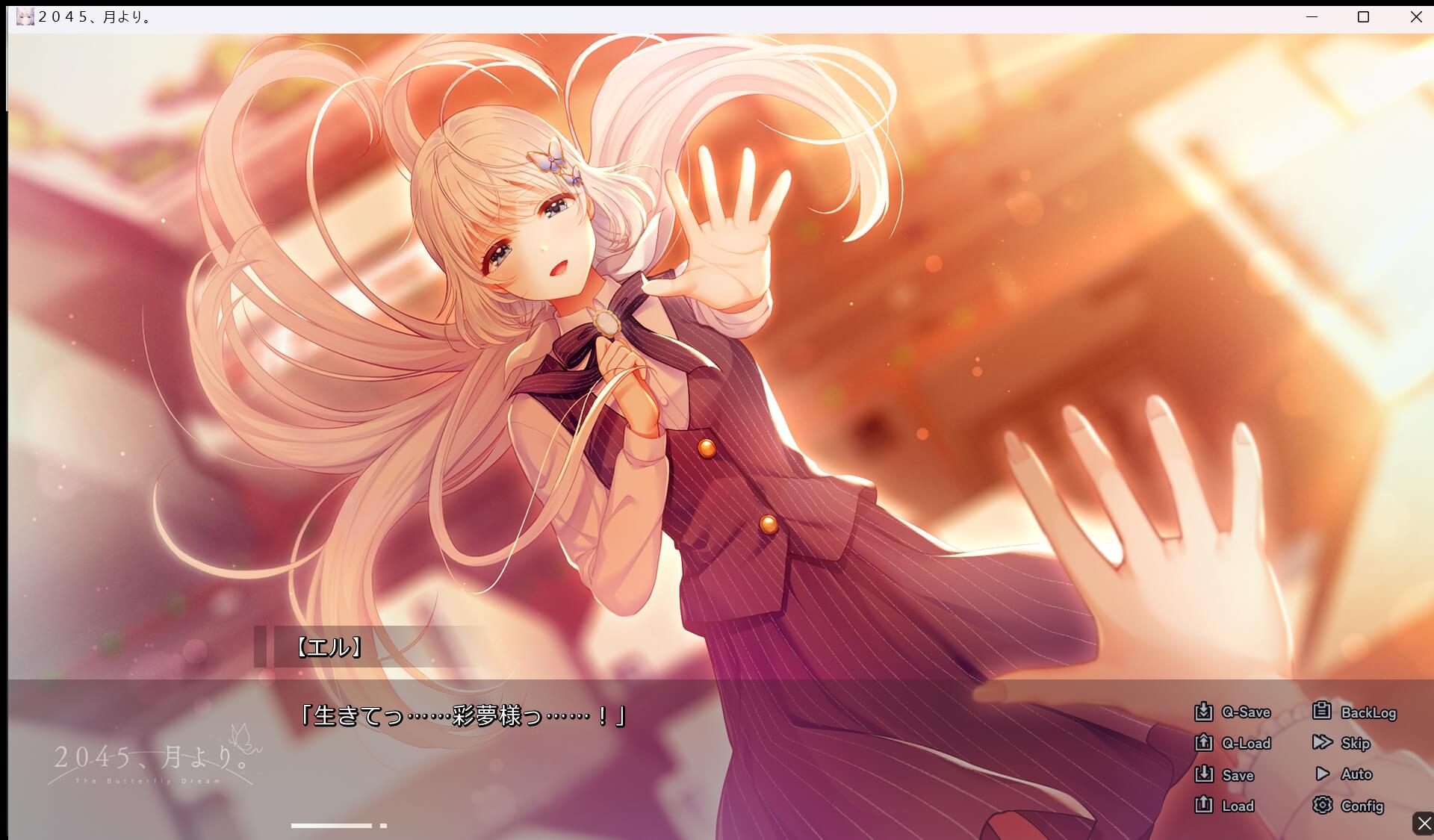
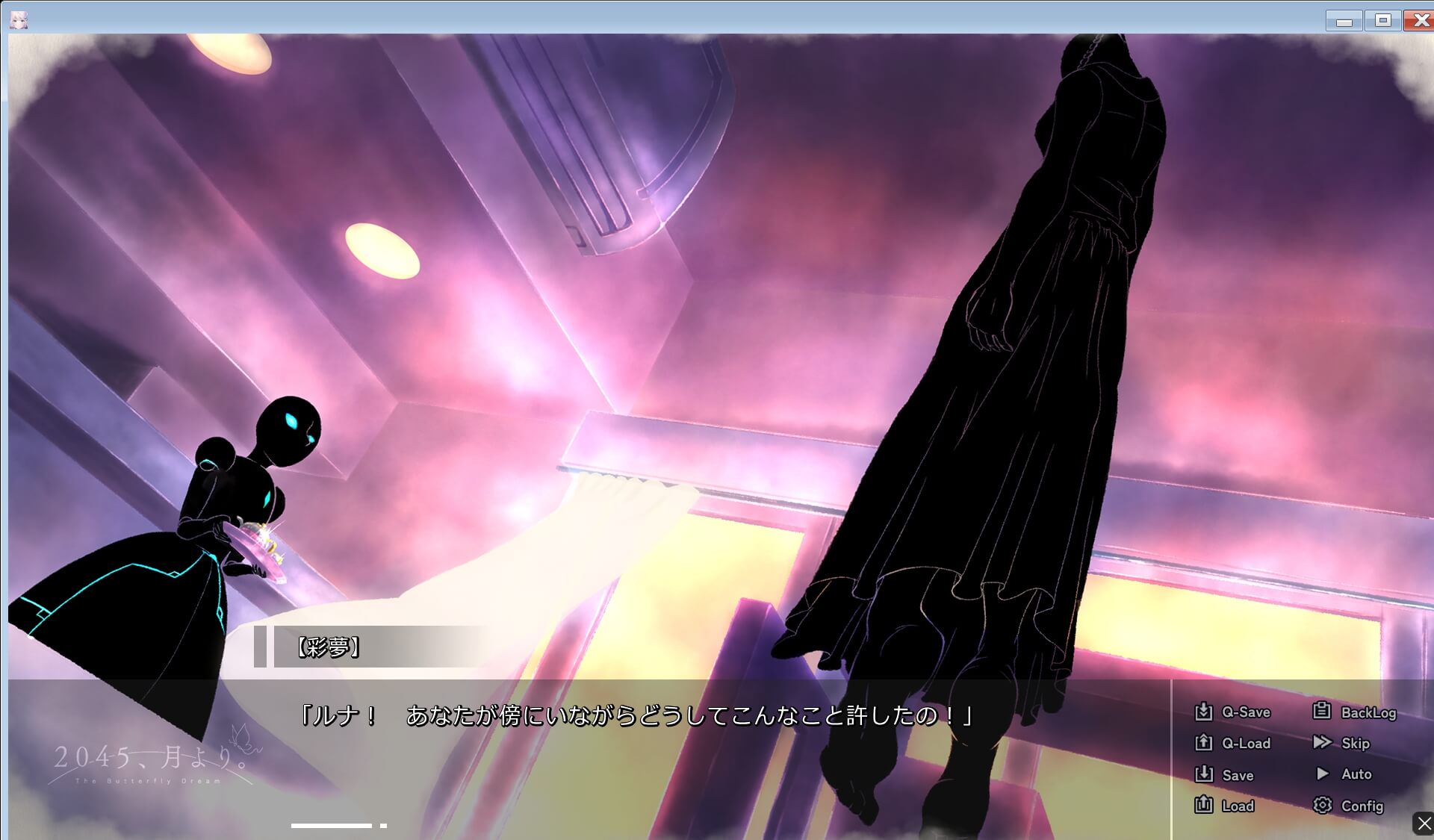
The ending: the hardliners’ desperate attempt to forcibly destroy androids and AI is halted, and El, to spare humans the conflict over her, chooses to jump to her death. Once the dust settles, the final theme remains:
Given the technical feasibility, should we allow androids to have “thought” and a “heart”?
The protagonist’s answer is yes, though it isn’t most people’s choice, and the game doesn’t give an answer. El doesn’t truly die, either—her soul exists in the network on the moon, and she sends a greeting from the moon to her friend, the protagonist.
The game’s theme poses a question: should humans be permitted to create intelligent robots capable of independent thought? Robots far surpass humans in physical ability and many other respects, and once they have independent minds, it’s hard to imagine them willingly remaining obedient—which would spell disaster for human survival.
The other side of the argument: intelligent robots could be excellent assistants, further improving quality of life, and so on.
Big theme, sure, and the game doesn’t hand the player a correct answer the author believes in. What surprised me is that Taruhana, usually a shitposter, reversed course this time and didn’t use the AI topic as an excuse to wholesale razor blades. The game tosses the question to the player and tries to make them think and find their own answer. Unfortunately, the game’s glaring weaknesses elsewhere keep this decent premise from landing.
First, the production is hard to talk about without sighing. The game offers multiple routes, but they barely relate to the main story. One heroine, like the protagonist, was hurt by androids and wants revenge; another just chases whatever’s trending online—VTubers and that sort of thing. The core main story is actually short and linear. But maybe to pad the playtime, it’s stuffed with mass quantities of slice-of-life filler, and none of it is interesting. Long stretches had me nodding off. Maybe to salvage that, the game tries a few “twists” and “suspense” in the middle and late sections, but they barely register—no surprise at all, and most of these “twists” have a strong anticlimactic aftertaste. There are tons of foreshadowing threads, actually, but they lead nowhere interesting, so I won’t bother listing them. The voice acting isn’t impressive either. Konami Suzume, whom the Osaka Black Shark otaku keeps hyping, just does a squeezed, breathy voice here. The only better one is Kitakoji Yuki—gentle and clear—but that’s still just a normal performance.
Looking at the whole thing, 2045, Tsuki Yori is more like a “medium-length title” in the same vein as the company’s earlier works—few routes, not much story. But maybe a planning decision, or a desire to raise the price and squeeze more profit, stretched this medium-length game into full-price length and scale. The cost is that the story is ruthlessly watered down and padded, giving players an agonizing mid-game experience and thinning a concise, thought-provoking story into flavorless soggy bread. Tricking yourself into the opposite of what you wanted, in a whole other sense.
While I was writing this, OpenAI released GPT-4. The new version brings a pile of new features, including stronger semantic analysis and more natural language processing. The scariest part: it can analyze a joke and a funny picture and figure out where the punchline is.
Which shows OpenAI already understands what “humor” means. And close to “humor” are “joy,” “anger,” and the other emotions only humans have.
Put that next to 2045, Tsuki Yori, and giving AI “emotion” doesn’t seem so far off. The day we humans have to choose is getting closer.
A lot of people panic that AI will cost them their jobs and start resisting. A lot of others are full of hope, expecting work to get easier in the future. Looking at the precedents from past industrial revolutions, that worry is basically meaningless. Whether or not you support AI having “emotion” and high-level intelligence, the road will be walked. It’s probably already been initially realized in some little lab in some corner of the world.
All we humans can do is use our unique creativity to keep leading AI in service of us. For now, at least, AI is good at “learning” and “imitating”—“creating” is the killer move it can’t manage.
Strip away “creativity” and humans are far inferior to AI. But as beings who live by “creation,” the difficult choice described in 2045, Tsuki Yori becomes a problem that isn’t a problem at all.
Note: The commercial piece for this game: Do Androids Dream of Becoming Butterflies? An Appreciation of 2045, Tsuki Yori ran in 2D Mania issue 164.
Comments are hosted on the Chinese main site. This mirror is read-only.