Hamidashi Creative Totsu (ハミダシクリエイティブ凸) Review
Sweet Otaku Happiness Fantasies
Honestly, when I first played Hamedashi Creative, I was completely baffled.
First off, the story made no sense. The game is packed with “instantly fake” elements: a little sister who’s deep into 2D culture, a brocon, and loaded enough to support her worthless older brother; a 2D artist who loves drawing lewd art, enjoys hanging out with fat otaku without being gross like them, and is willing to date one; a cold, sharp-tongued, self-absorbed black-haired beauty who flip-flops between tsundere and queen just to throw herself at a fat otaku; and a Vtuber who looks totally ordinary—the kind who’d graduate in a month in the V-tuber world—yet somehow becomes a top earner without relying on insults or dirty jokes, and still falls for the otaku…
In this game’s world, it’s as if every woman sees the protagonist and wants to sleep with him. Their insults are just tsundere, their rejections are just playing hard to get, their “NO” actually means “YES,” they say one thing but mean another, and deep down they’re always craving to be conquered by him… Unless you tell me the setting is that only one man is left in the world and women can only survive by mating, I still can’t buy into this story.
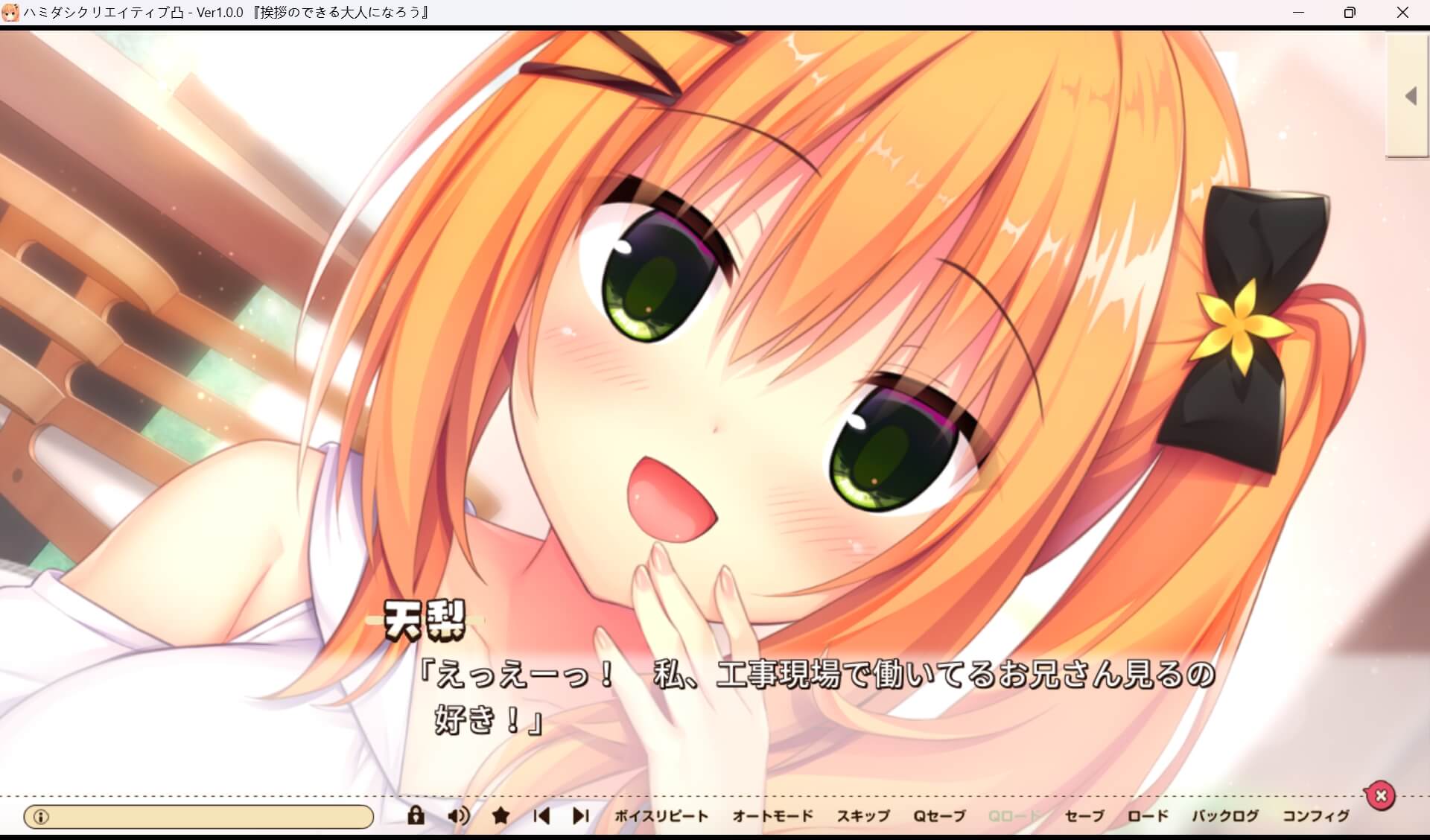
You know, other romance games might be harem too, but at least they throw in some flashbacks and plot twists to soften it. Hamedashi Creative doesn’t even pretend—it just directly writes out all the ridiculous fantasies of otaku. No wonder so many fat otaku love the previous game’s story.
Then I got curious: who wrote this script? So unconventional, so insane. Later I found out it was a disciple of the famous lunatic Ou Kajisun… Well, that explains it.
Even though the story and dialogue constantly made me uncomfortable, Madsoft’s production quality is still there. Whether it’s the art style of their lead artist (who thankfully hasn’t dropped dead yet) or the game’s soundtrack, it’s all top-tier in the industry. This game at least has solid quality, especially for those living in Osaka who jack off 24 hours a day.
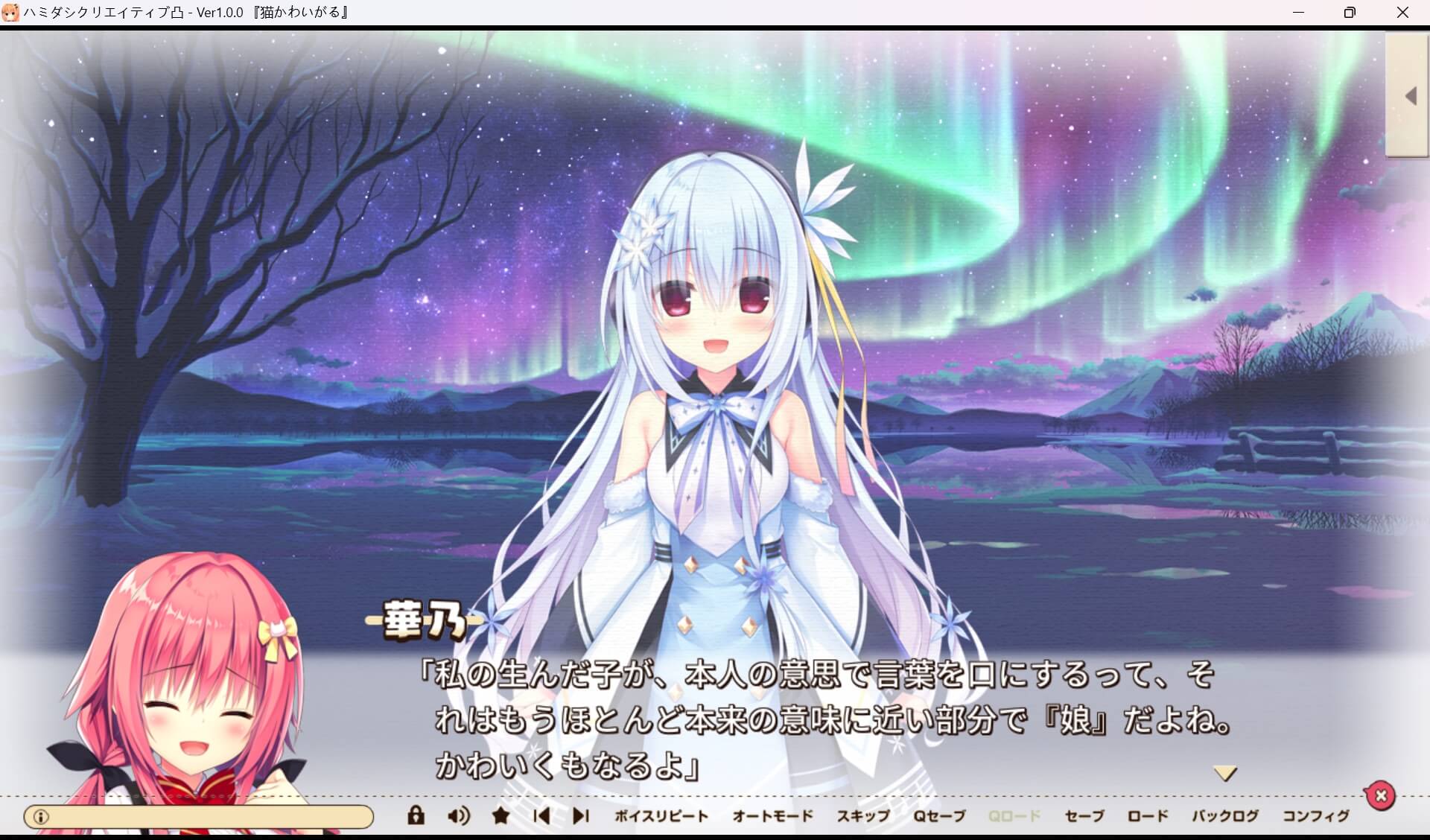
Thanks to good sales of the previous game, a sequel to Hamedashi Creative was put on the schedule. But it’s not the kind of “sequel” most people think—it’s just a fandisk, and the name is very much in the company’s style: Hamedashi Creative Totsu. I have to say, this fandisk was probably part of the plan from the start, since the original left several characters without routes, including the only seemingly normal one, the “blonde Tenri.”
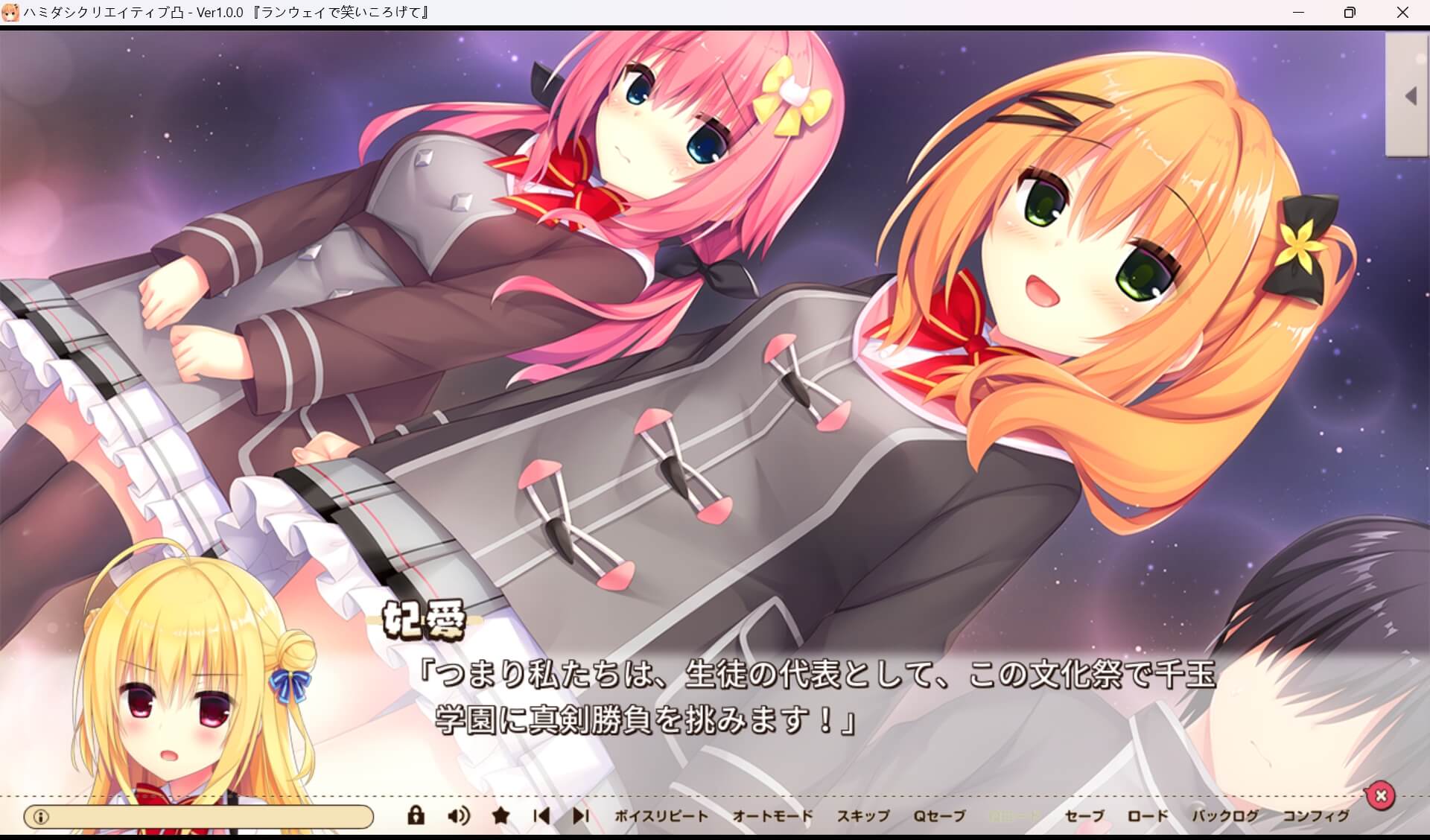
Tenri’s personal route is like her personality: normal. So normal that it feels unrealistic to me. As I said before, the game’s story is just too “fake,” so having a conventional romance game heroine like Tenri actually made me extremely uncomfortable. But it turns out I was overthinking it—the weirdness in Tenri’s route soon showed its true colors.
Tenri is a girl who loves studying architecture, and she’s especially into civil engineering.
Holy shit, can you believe it? A girl who likes civil engineering! The last time I saw a woman in civil engineering was in a porn video, where the heroine, because women in civil engineering are so rare, ended up as a helmet-wearing cum dump on a construction site.
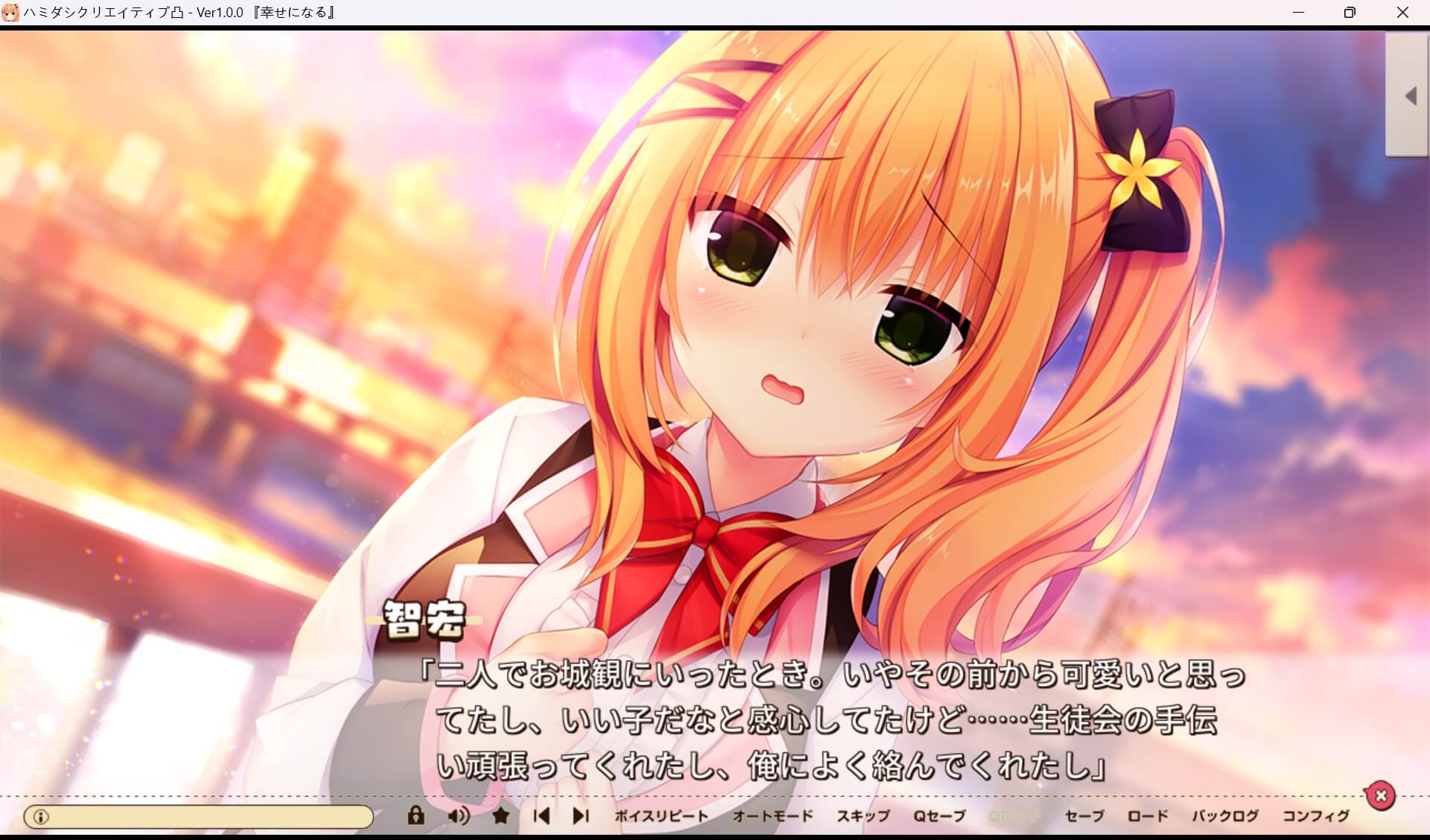
So the plot unfolds in a totally surreal way: our protagonist goes on a date with Tenri to a castle keep, and the two have a lively discussion about architecture.
And this “architecture talk” is all vague—you barely see any actual content about architectural design in the dialogue. Clearly the writer doesn’t know much about it either; they just forced it in to match the character’s persona.
In fact, these two “architecture enthusiasts” talk less about it than I did with my female teacher when we went to Osaka Castle. I’ve also been inside old Japanese buildings, and a lot of the promotional stuff inside left me confused—not that the content was bad, but it felt exaggerated.
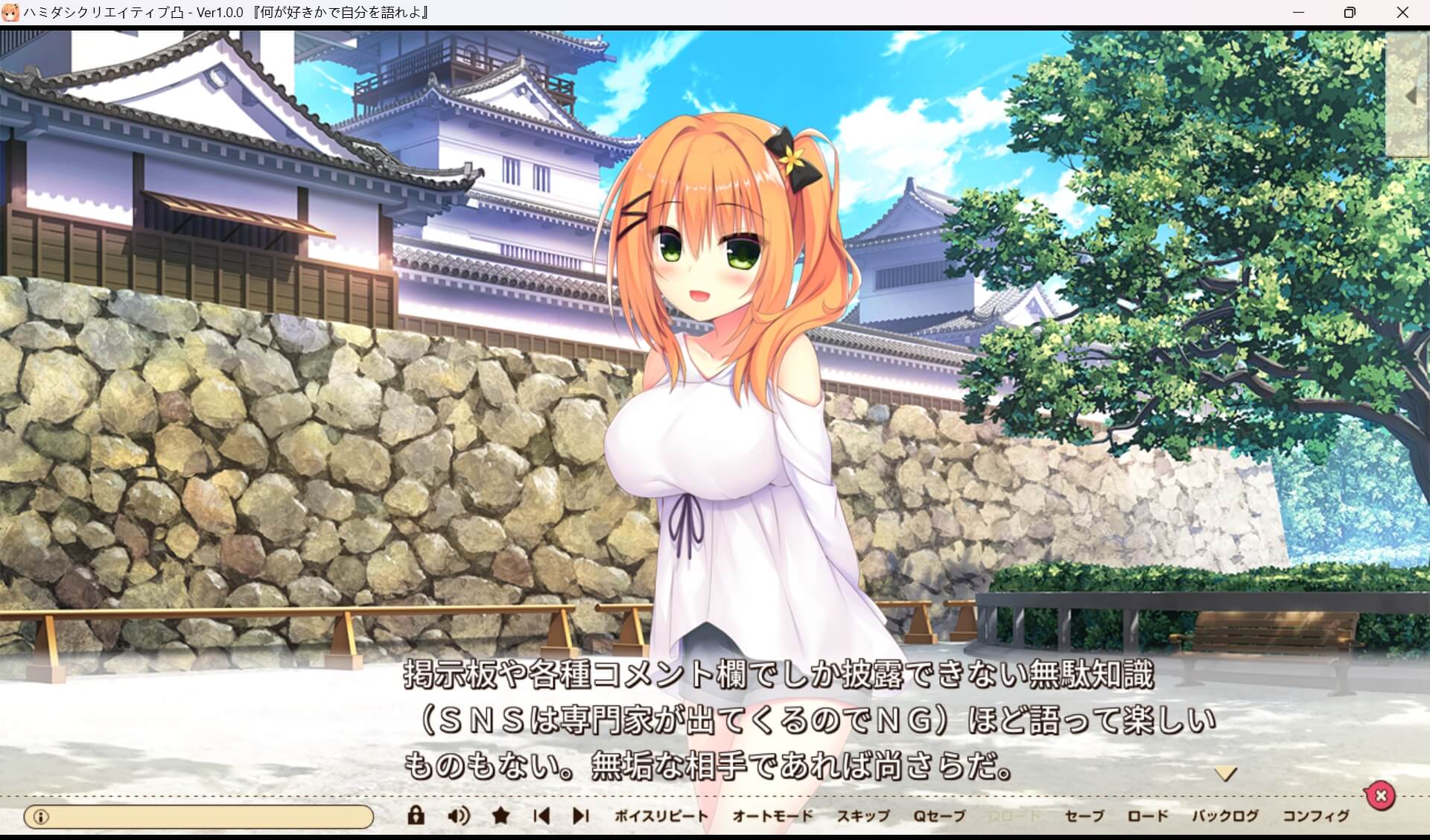
Then our protagonist uses “talking about architecture” as an excuse to hook up with Tenri, and they become a couple. But after a few sex scenes, the route ends abruptly.
Yes, I know it’s a fandisk, but this story is just too half-assed.
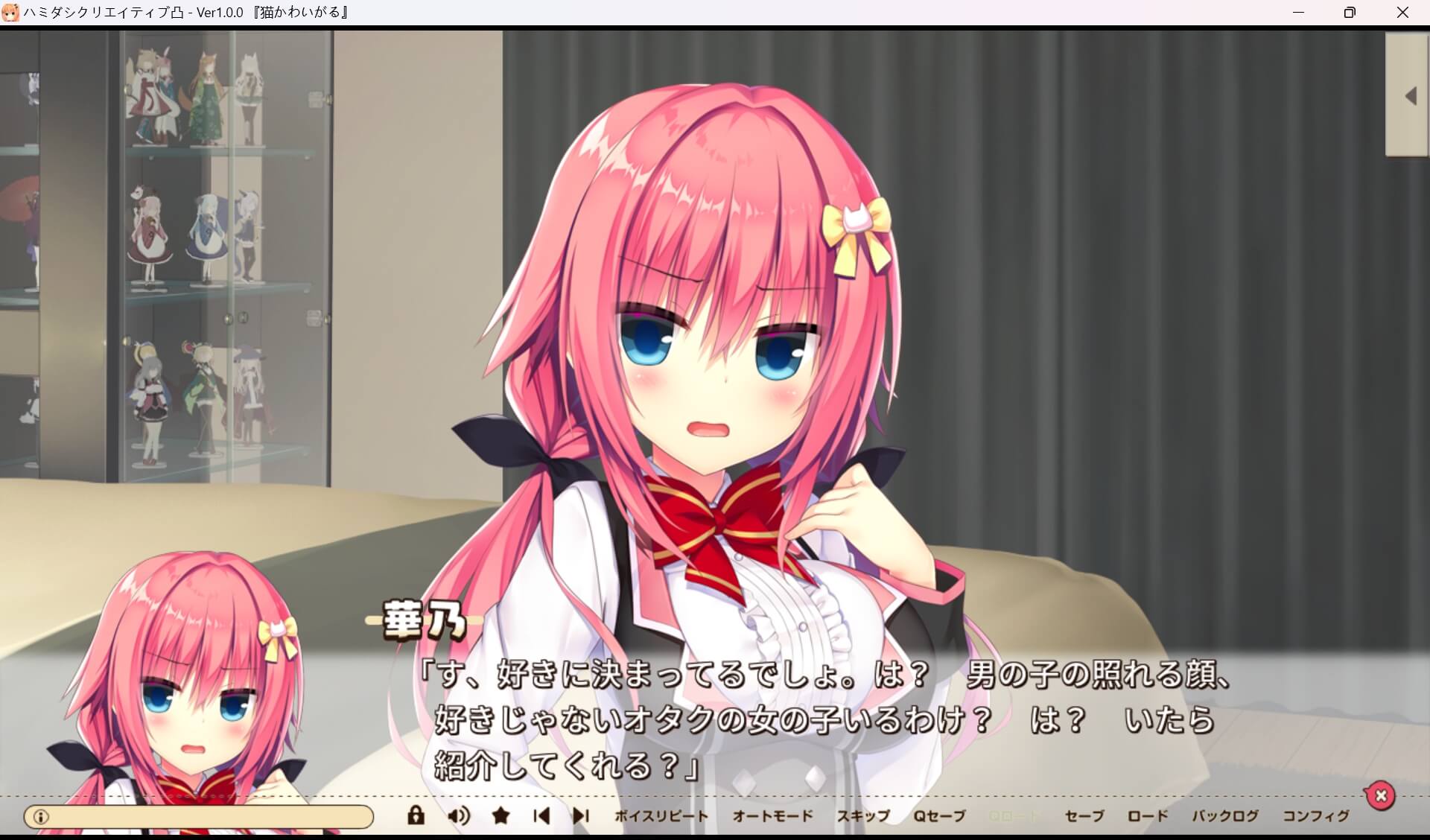
So besides the new characters, what about the original routes? I took a look at my favorite Akino Hana’s route, and it blinded me.
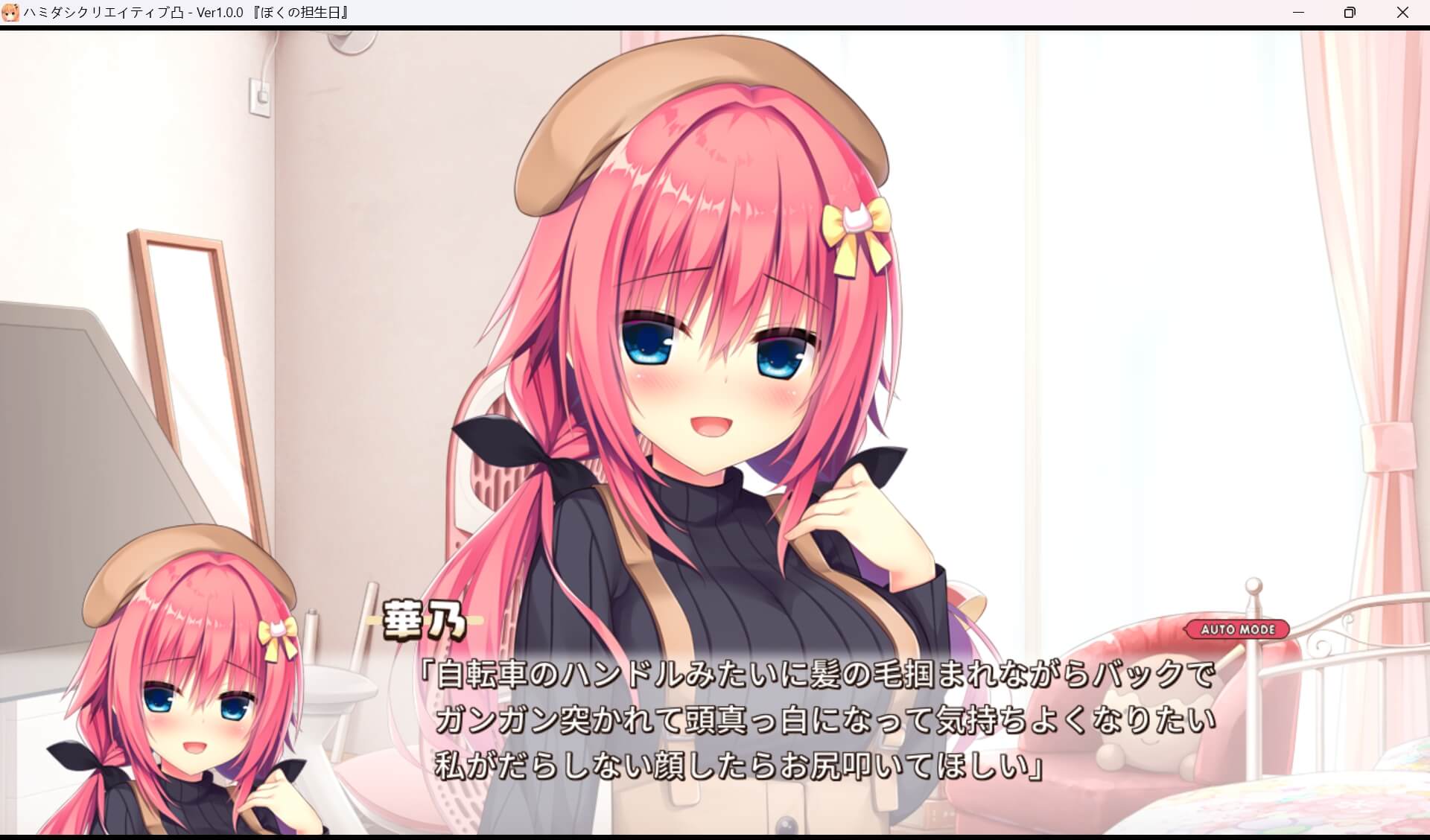
What kind of high-level move is this “grabbing her braid from behind and fucking her like riding a bike” position? Are you playing Thai massage here? Yeah, the other character routes still have that familiar insane flavor, full of exaggerated fantasies and nonsense, preserving the original taste without any fix—clearly intentional, not accidental.
My personal experience with Hamedashi Creative Totsu ends here, because I already know what this game is like. Just like the original, written by Ou Kajisun’s disciple, it pours all the disgusting otaku fantasies about women’s white浊 into those cute-looking girls’ bodies, and through the voice actors’ mouths, they moan it out in seductive voices.
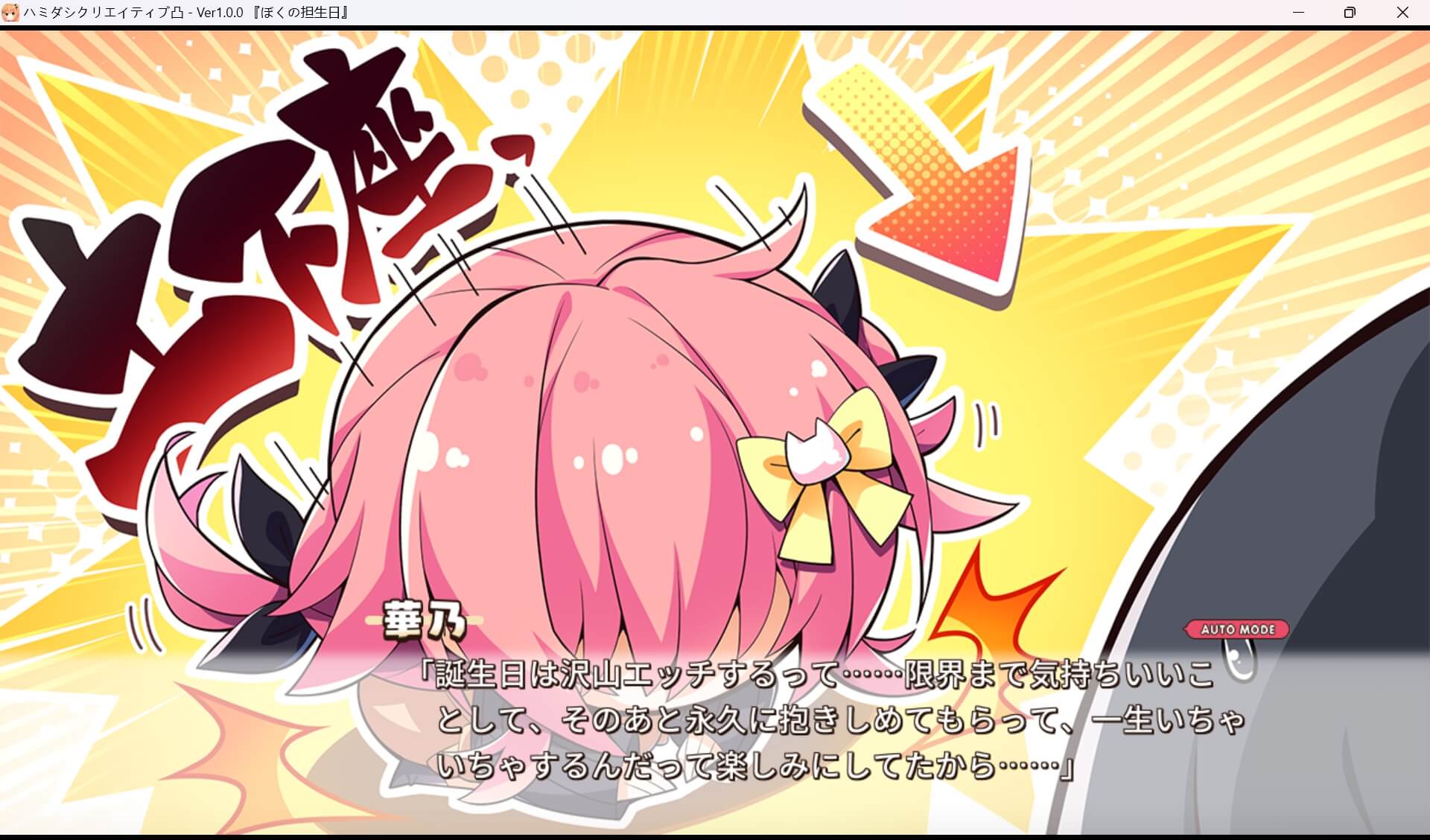
And the “Totsu” (凸) added to the title is just an erect cock shown for you to see—compared to the previous “Over Clock” or whatever, it’s low as hell.
Otaku who identify with the heroines in this game probably don’t get any female attention in real life. And one of the most popular heroines’ voice actress, Yanagi Hitomi (Toda Megumi), is a feminist on Twitter who occasionally spouts controversial takes. In short, this game is abstract through and through.
Another thing worth complaining about is the Chinese translation by domestic fan translation groups. I don’t know if the idiots at Mingshi started this trend, but many Chinese titles of galgames have a greasy feel that oozes through the screen. Hamedashi Creative was called “灵感满溢的甜蜜创想” (Inspiration-Overflowing Sweet Fantasy).
I really fucking want to complain: “ハミダシクリエイティブ” can also be written as “ハミダシ Creative,” which fits Madsoft’s naming convention—a Japanese colloquialism paired with a loanword. And “ハミダシ” in Japanese actually means “someone who leaves an organization, unwilling to follow group life,” which perfectly matches the heroines’ personas—all “problem children” who refuse to go to school. The game is precisely about the lives and states of these “problem children” as “creators.”
The Chinese title “灵感满溢的甜蜜创想” made me think the translator interpreted the title as “Honey Dash.” Fortunately, the official Steam translation, 常轨脱离 Creative, finally set things right.
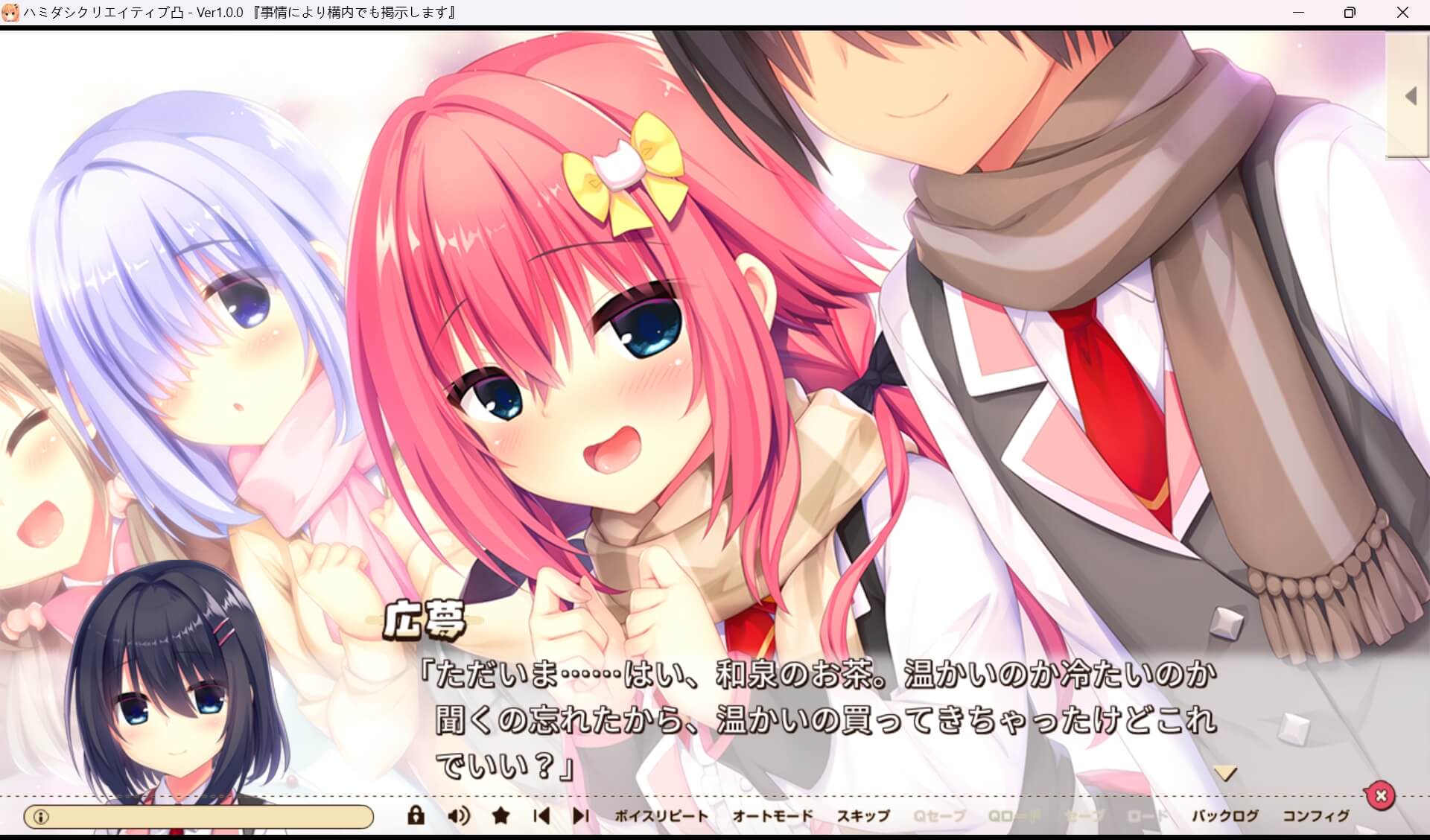
But then I thought about it—maybe that translation isn’t wrong, just needs a few words changed. Sweet Otaku Happiness Fantasies would be more fitting. Maybe because I’ve grown up, or maybe because I’ve actually interacted with real women, this game no longer resonates with me. Compared to the absurdly unrealistic heroines in the game, a girl who likes civil engineering actually seems more real.
Comments are hosted on the Chinese main site. This mirror is read-only.