Lian'ai Qitan: Bucunzai de Zhenxiang (恋爱绮谭:不存在的真相) Review
A Dream You Only Have at Eighteen
I started building websites back in middle school.
I remember it clearly — the summer of eighth grade. I applied for a free forum and domain and threw together an extremely crude “class website.” I figured it was just for fun, but it somehow took off across the whole class, then the whole grade.
It wasn’t just my own class. Kids from the neighboring classes signed up and started posting too, and all kinds of conversations got going. That chatter later moved to the school’s official forum, and after that to the class Discord group. I think I was the one who created and ran that Discord group, for the simple reason that I was one of the few users who had permission to create Discord groups at the time. So I made the group for the class, and I’m still listed as admin to this day, even though nobody’s said a word in it for years.
Later I went to college and started making all kinds of websites and forums again, but honestly nothing ever took off the way it did, and I could never recapture that middle-school glory. In one of the forums I’d rebuilt God knows how many times, I once wrote this line:
“Some dreams you only dream at eighteen, and some dreams you only understand once you’ve grown up…”
There were a few more lines after that, I don’t remember them now — something with that whole “forcing yourself to feel sad for the sake of a poem” vibe. I didn’t really know what I was trying to say. I just thought it sounded cool, so I went with it.
Sure enough, a classmate came along and criticized it right away, saying I’d taken the wrong medicine and that it was so pretentious it gave him goosebumps.
I thought he had a point, so I made that line my Discord signature so he’d have to see it every day.
Years later I thought of that line again, and I have to say, I now think it actually makes sense. Because there really are things you only do when you’re young, and dreams you only understand when you’re young at heart.
Late last year I saw Ms. Wang playing Love’s Tale on Twitter. Honestly, I’d lost interest in Chinese visual novels a long time ago, but if Ms. Wang could actually keep playing it, there had to be something to it.
Wanting to have something in common to talk about with Ms. Wang, I got carried away and bought the game — and my Steam Deck arrived right around then too, so I started playing it on that.
Then I discovered something curious: there were actually two of them. I’d bought Love’s Tale: The Nonexistent Summer, and there was a just-released sequel, Love’s Tale: The Nonexistent Truth. So I got carried away again and bought both. Not long after, Steam ran a sale on the game and I missed the discount. Of course I did.
It took me less than a day to finish The Nonexistent Summer. Frankly, the game gave me severe physical discomfort — I genuinely can’t say anything nice about its story. But considering that the production team’s “director” (which I assume means “planner”?) is a superior at the magazine I regularly write for, I couldn’t really say anything, so I just quietly complained on Twitter — and got caught by my editor.
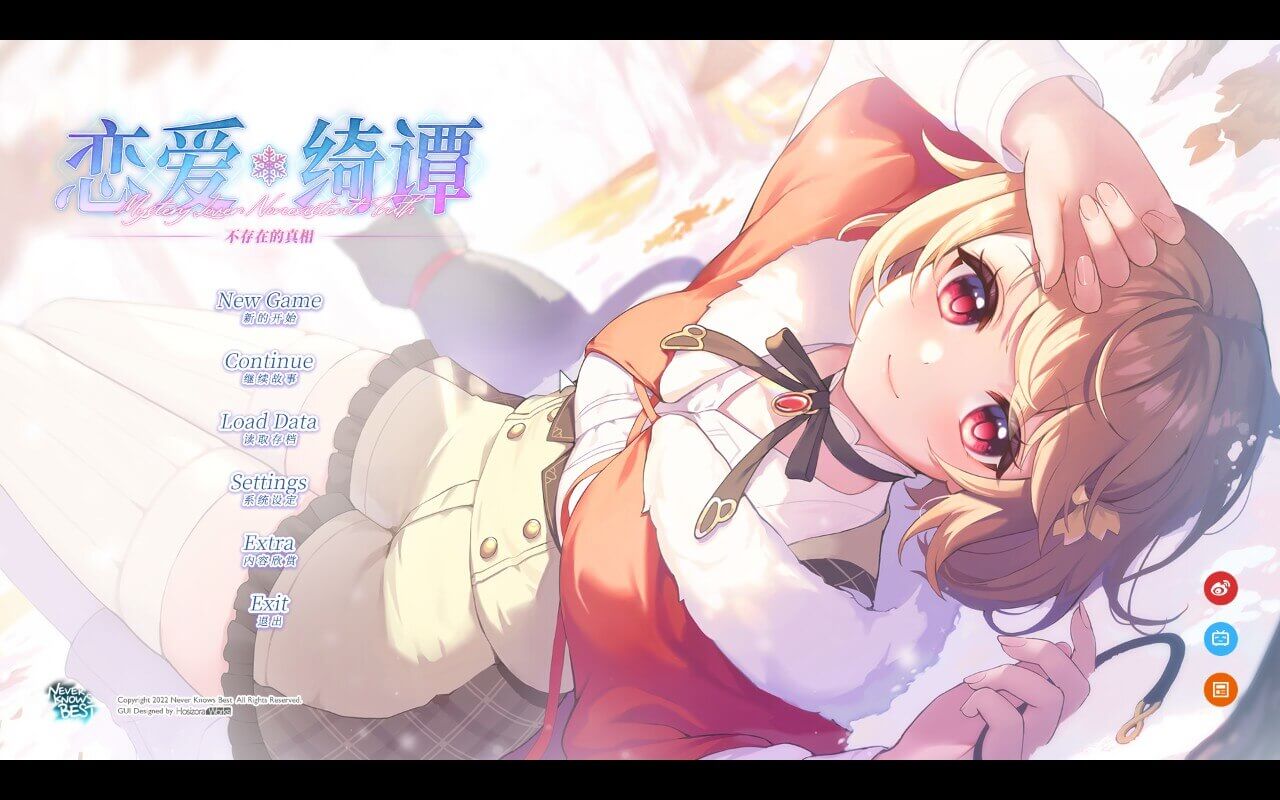
Then I saw the production team saying the sequel, The Nonexistent Truth, had a massively improved story. I’d already bought it anyway, so I decided to give the game another chance. I ended up playing it on and off for several months before finishing it — got all the achievements, more or less.
Why several months? Because every time I played for a while, the cringe-inducing story would make me physically uncomfortable, and I’d have to put it down and play something else…
Having gone through both games, I figure I’ve earned the right to judge them. And actually, in terms of overall quality, the Love’s Tale series isn’t bad. The UI design is fairly thoughtful, the art has real style — not fully Japanese, retaining a hint of something Chinese, probably on purpose. The voice acting is awkward, but just like with Genshin Impact, I don’t think that’s the voice actors’ fault; it’s the lines. The marketing and the built-in meme references are cleverly done, and some passages are genuinely well written. The engine’s even been optimized properly — no fan-spinning-up garbage power draw.
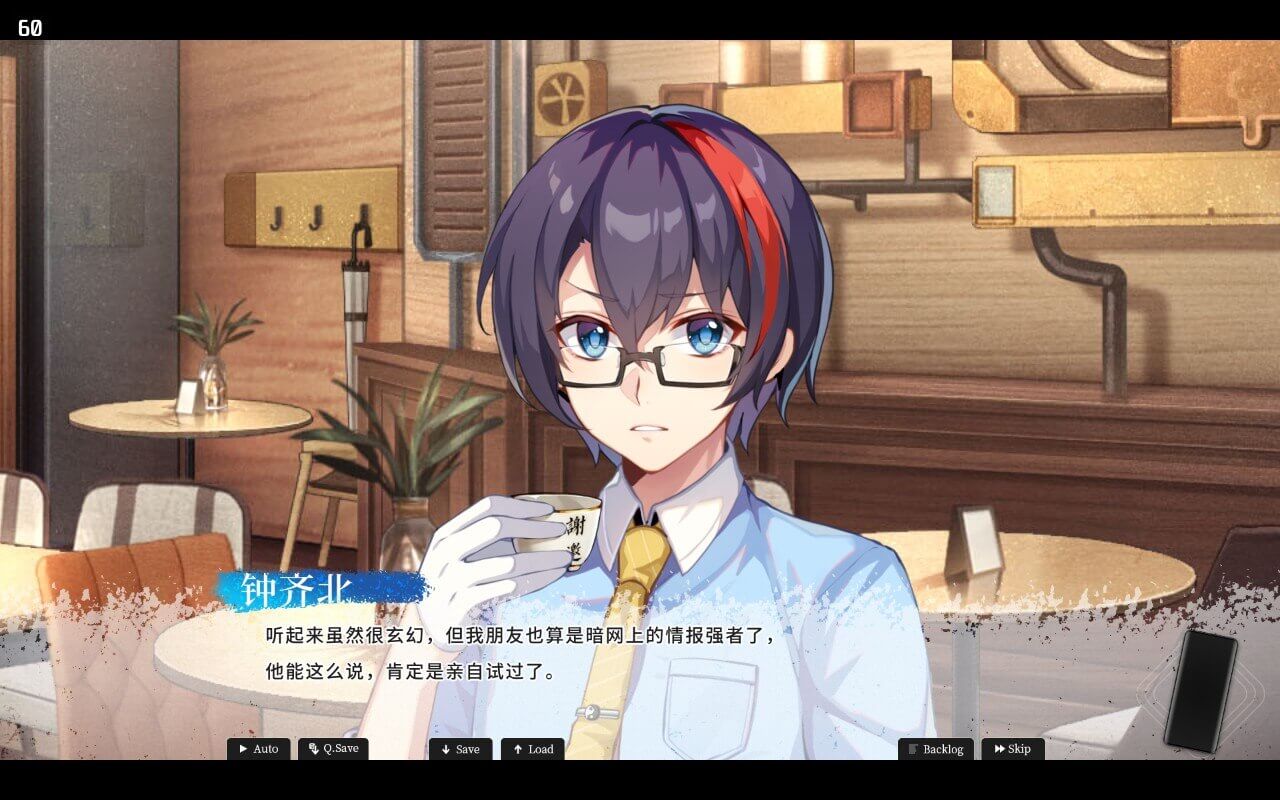
If I had to name the game’s biggest flaw, it’s that there are far too many places where the story just doesn’t make sense.
And at this point, anyone who knows me understands: when I say a Chinese visual novel’s story “doesn’t make sense,” it usually means the game is a “translated Japanese story.”
The game casts a heavy shadow of Nisioisin’s Monogatari series — the main plot is the protagonist and friends encountering various “oddities” in the city and investigating and resolving them. But even in Japan, Nisioisin’s work isn’t exactly highbrow; it’s more “extreme chuunibyou packed with wordplay.” Readers have to get on the same wavelength and step into the worldview he’s built to appreciate its charm. People who love Nisioisin love him to death; people who can’t get him think he’s insane.
Back to Love’s Tale, then — clearly the scenario writer doesn’t have Nisioisin’s creative ability, and all they could copy was the “oddities” framework. But the funny thing is, I searched every Chinese dictionary I could find and I’ve never once seen an actual Chinese person use the word “oddity” like that. Even “supernatural” would’ve been better.
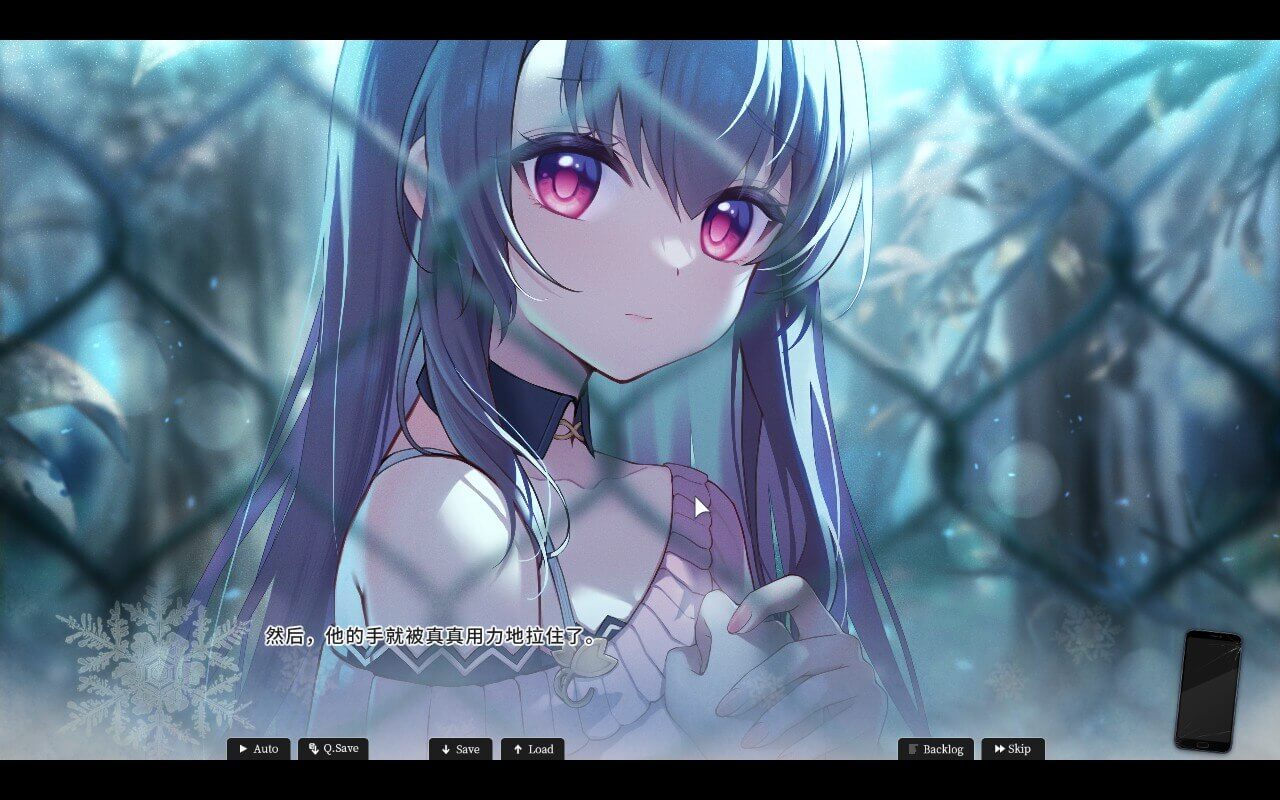
And looking at the whole game, I think the writer’s biggest problem is a lack of observation of the world around them — not just real life, but even online life. For instance, the game is full of traditional “Japanese phrases,” and the everyday dialogue between characters reads like a subtitled anime. The game tries to ground itself by hinting heavily that the city it’s set in is actually Wuhan, and even giving some characters Wuhan dialect voice lines, but the huge amount of painfully awkward “anime-speak” still ruins the everyday dialogue — and it even keeps the voice actors from performing properly.
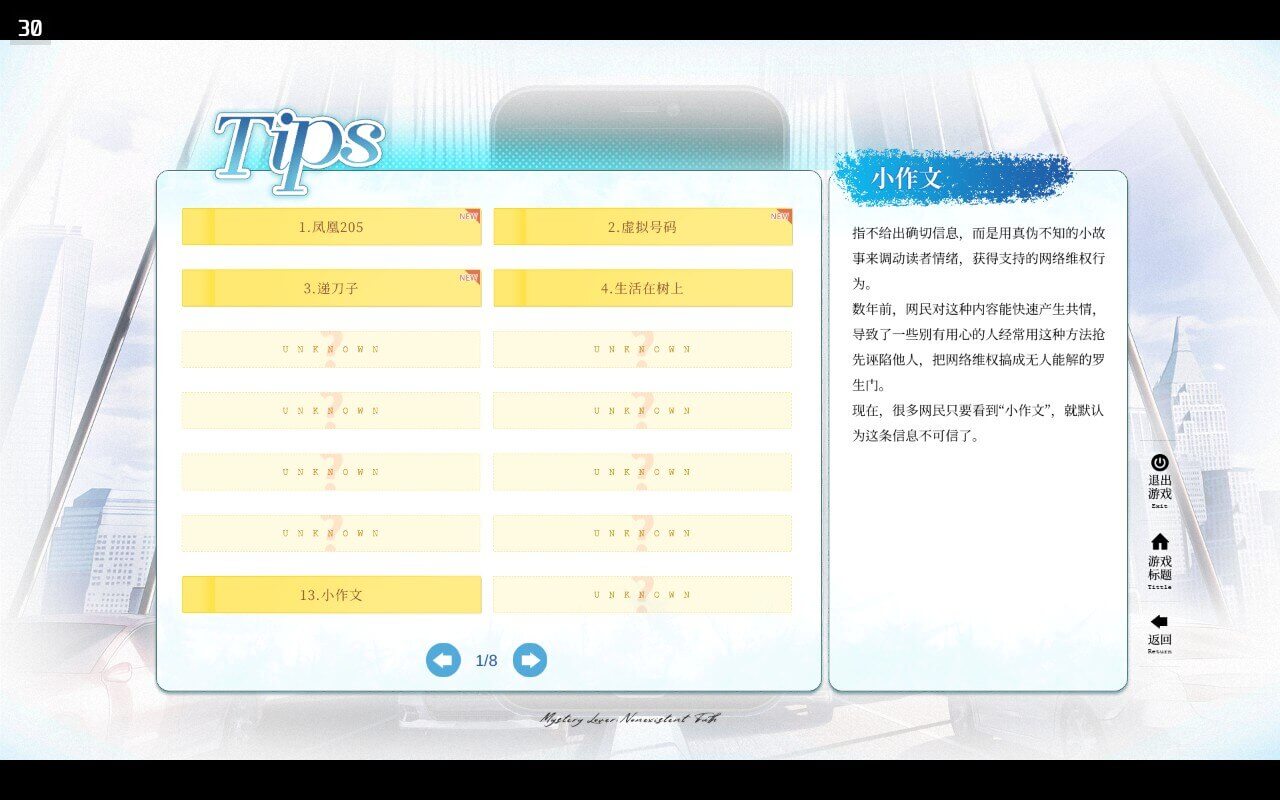
There’s a Tip system in the game, which you see in plenty of Japanese visual novels — mostly to explain in-game lore, occasionally with scenario writer snark mixed in. But in this game the Tip system is purely the writer’s “look how clever I am.” I can tell the writer basically lives on Quora and knows every meme on there by heart, but they’re all memes everyone already knows. I couldn’t even be bothered to open the Tips — I knew exactly what meme you were doing. But when it comes to the actual “lore” stuff in the mid-to-late game — say, things about Taoist priests — the game doesn’t explain them at all. So the Tips are purely meme-dropping, not actually meant to help the player understand the story.
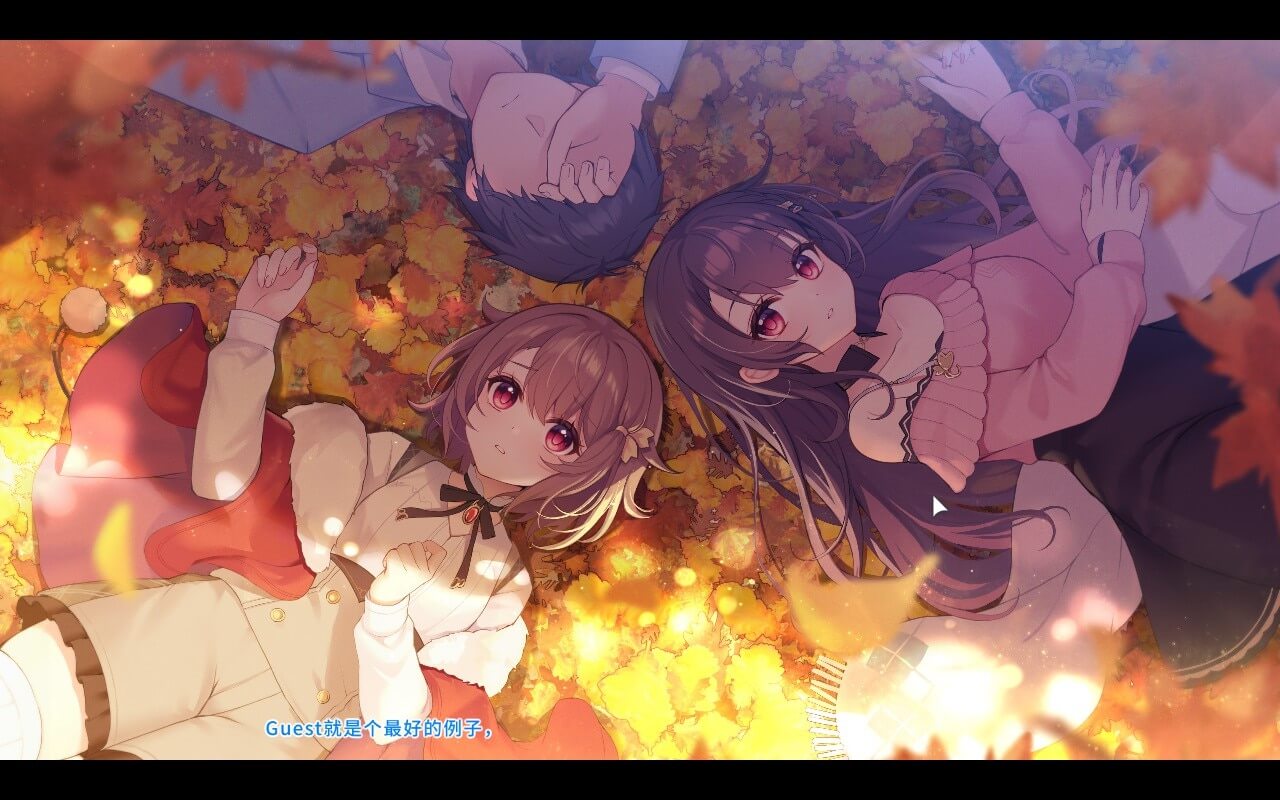
Another way the writer’s lack of observation shows is the virtual YouTuber added to the game, named “Yumeno Hitomi.” In the setting she’s supposed to be Chinese, and she’s actually one of the key characters who drives the plot forward — but whether she’s telling ghost stories or just talking, she’s got nothing to do with a real “VTuber.” I’ll just say this: basically no Bilibili VTuber refers to themselves by name as the subject of every sentence. “Little Hitomi knows…” “Little Hitomi wants to say…” “Little Hitomi, well…” — the only ones I’ve seen do that are Japanese VTubers, and only a few, like Shirogane Noel calling herself “Hakusai.” Nobody else. The VTuber setup is a complete failure. I can tell the writer wanted to use her as a hook for the sequel, but she’s just too fake. What are real VTubers’ catchphrases? “Classic, truly classic.” “Q your M’s mouth.” “This is the ugly state of XXX.” “Do you even understand Chinese? I’ve checked your background!” “Who are you calling rare?” “The sandwich candy is nothing.” “My real-life self is my servant.” “Follow meow, thank meow”… Even if you just imitated the style of a talk-stream VTuber like hanser, it’d be way better than this.
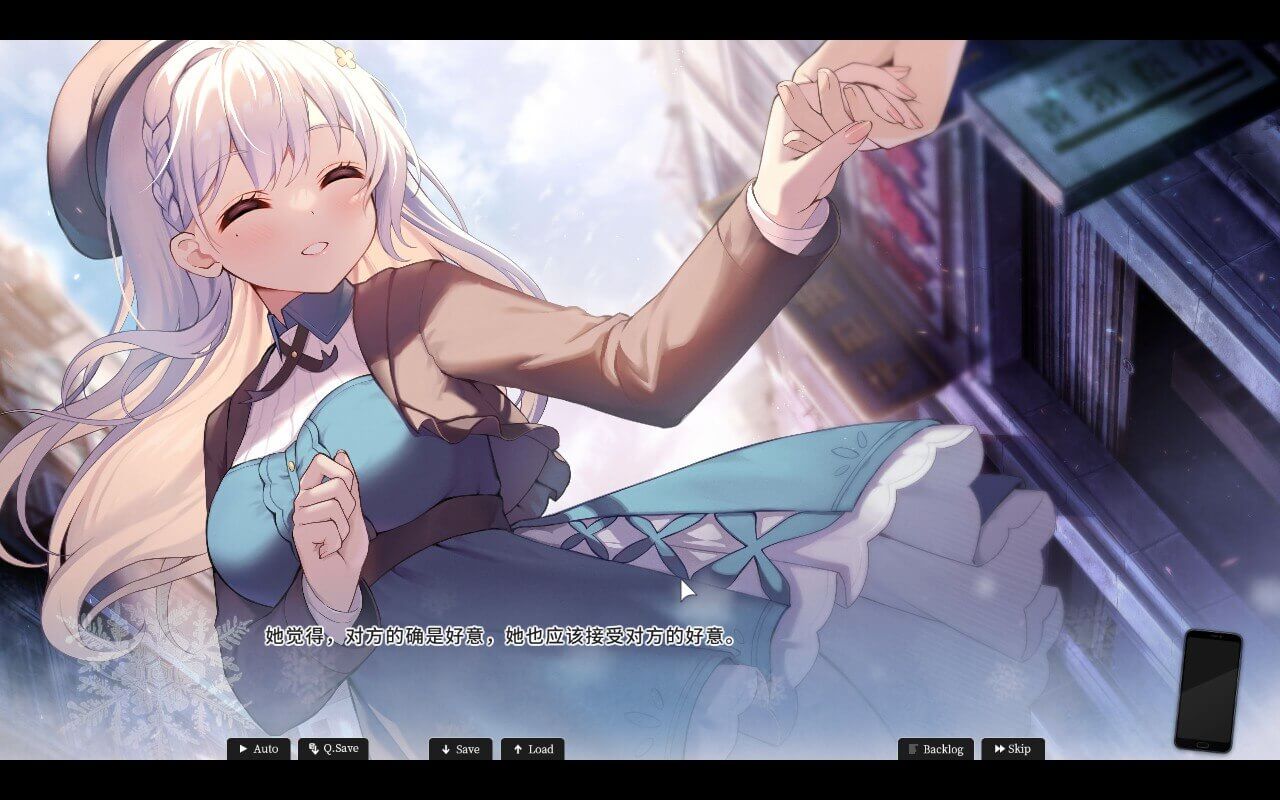
As for all the “romance” and “wild twists” in the story, I really couldn’t connect with any of it. I barely made it through the first game’s arc about the medicine girl, but by the late part of the second game I couldn’t even tell what it was trying to say — it’s just so full of “nobody talks like this” translated-from-Japanese-style ACG writing. But if you said the writer’s prose is bad, I wouldn’t agree, because some passages are genuinely good — like the male lead’s memories in the second game, written elegantly and profoundly, and it made me envious. It’s just that there aren’t many of those passages; most of it is still toe-curlingly awkward dialogue. And it wasn’t until the very end that I realized what the game’s biggest problem is:
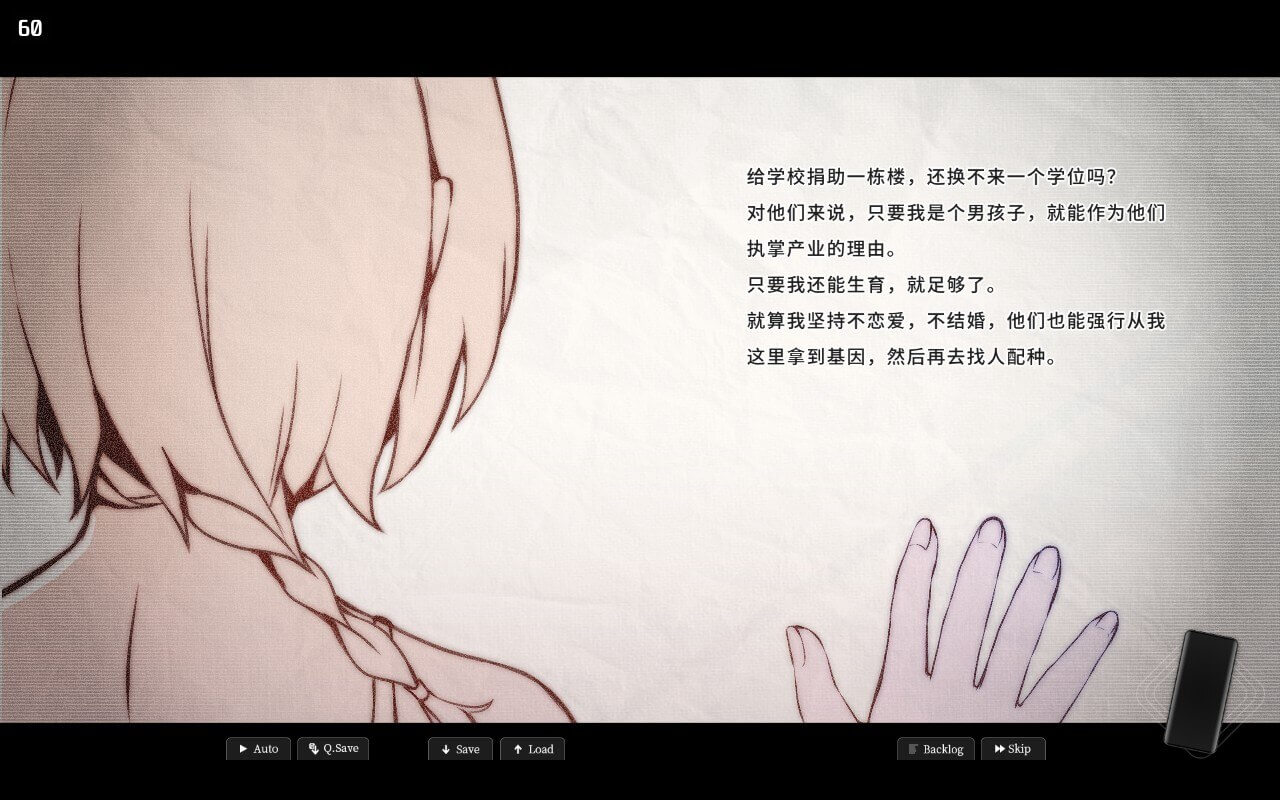
He has never tried to observe what the real world is like. He’s just willfully describing a world that exists inside his own head — even if that world is completely disconnected from reality.
The writer himself thinks that’s how high school girls should talk, thinks a “VTuber” should be like Yumeno Hitomi, thinks his story is cool, and gets lost in his own self-satisfaction, convinced he’s written something profound — even if everyone else is cringing, even if an old guy like me can’t get through it at all and just finds it childish.
If anyone can think a story like this is good, they must be able to accept the writer’s chuunibyou setup and lose themselves in it…
And honestly, there seem to be quite a few players like that. Just look at the game’s good reviews.
All in all, the Love’s Tale series is a clumsy imitation of the framework of Japan’s Monogatari series. The character designs and dialogue are all steeped in the shadow of Japanese ACG works, and they clash badly with the game’s “Wuhan, China” setting — it’s completely ungrounded. As I’ve always said, “Chinese visual novels shouldn’t copy Japanese content — they need to make their own thing.”
Just when I was about to write this game off entirely, a question suddenly hit me.
If Chinese visual novels are ungrounded because they just copy Japan — then are Japanese visual novels grounded?
From years of playing games and my own trips to Japan, I can only say: No.
Japanese visual novels are equally detached-from-reality nonsense. There are no student councils with that kind of power, no activity clubs that bizarre, no high schoolers saving the world, and no packs of beautiful girls swarming around you every day.
So why doesn’t playing Japanese visual novels make me feel that same discomfort? They’re just as full of nonsense as the Chinese ones, aren’t they?
Right — that’s a question I’ve been chewing on, until someone gave me a vague answer:
“Maybe… your Japanese is exactly at the elementary/middle-school level? So you can only understand that tier of stuff?”
It stung, but after thinking it over carefully for a long while, I had to admit it made a lot of sense.
I can’t read Haruki Murakami in the original, and I can’t follow a fast-paced Japanese drama without subtitles. Only visual novel stuff — “with subtitles,” “with readings,” with settings that are all “middle-school” stories — is what I can handle most comfortably…
To prove this point, I deliberately found a “Best of Japanese Literature” collection and tried to read real Japanese youth literature in the original. And one afternoon later, I realized something profound:
The stories written in Japanese visual novels really are shit. Any random Japanese literary work beats them by two blocks.
And with that I felt at peace. I think Chinese visual novels are trash because I’ve read more sophisticated things. Back in middle school I read a lot of realistic work by Han Han and various young writers, and I only got into ACG later out of boredom — which is why I’ve always been hard to “assimilate” into ACG-speak, always insisting on writing in “human language,” something that’s even become a style of my blog.
And my Japanese… I learned it purely to play visual novels. I’ve never touched serious Japanese literature. To me, Japanese is the stuff in visual novels, so I don’t see anything wrong with it. But from a normal Japanese person’s perspective, the dialogue in visual novels is probably as cringe-inducing as Chinese visual novels are to me — enough to make you dig a three-room apartment with your toes.
And then I thought of the line I opened with…
Love’s Tale may strike me as fake and overblown, very Japanese, very chuunibyou — but maybe for students who’ve been surrounded by this stuff since childhood, it’s just right?
But once those people grow up and encounter more sophisticated literature, they’ll surely find the story in this game unbearably awkward too…
“Some dreams you only dream at eighteen, and some dreams you only understand once you’ve grown up…”
People grow. People have their young and foolish moments. And as for awkward stories like Love’s Tale — I’ve written them too. Probably worse than this game, honestly.
Comments are hosted on the Chinese main site. This mirror is read-only.