RG35xx and Miyoo Mini Plus: First Thoughts
Two Retro Handhelds Compared: RG35xx and Miyoo Mini Plus
In recent years the term “open-source handheld” has basically drifted away from what it originally meant.
Originally “open-source handheld” referred specifically to retro handhelds running open-source systems. Some were commercial products flashed with third-party firmware, like the early Subor RG97; others were open by design from the start, like the later Odroid Game series.
But what comes to mind now when someone says “open-source handheld”? Generic molds, RK3566 SoCs, and a pile of messy emulators. Lately Android comes standard.
Never mind whether the shell infringes on anyone’s design—the SoC’s own attitude toward the open-source community is questionable. That’s why overseas these products were never called “Opensource Handheld” but “Retro Handheld.”
A handheld for playing retro games, so retro handheld. Makes sense.
Today I’m talking about two retro handhelds you could call “closed-source handhelds”: the RG35XX from Anbernic (Zhou-ge), and the Miyoo Mini Plus from Miyoo, Zhou-ge’s nemesis.
1. Why I bought it
The point of buying this was to give the elderly folks at home something to kill time with—something they could pick up and play NES Tetris or Contra on. The requirements were simple:
- Big screen, old eyes aren’t great
- Simple controls—adjusting filters, save states, digging through menus, they won’t remember any of it
- Long battery life; they might play a bit then leave it on standby, so standby had better last a while at minimum
- Controls feel fine
- As cheap as possible, mostly for NES
At the time the only choice meeting all that was Anbernic’s RG35XX. Cheap, capable enough, vertical orientation—nothing better for an NES handheld.
2. The RG35XX, not as nice as imagined
Based on my past experience buying “Zhou-ge” handhelds, Anbernic machines are mostly well-built, well-optimized, and no big problems anywhere (except the price). Honestly Anbernic has never let me down on the “works out of the box” front.
But the RG35XX is an exception.
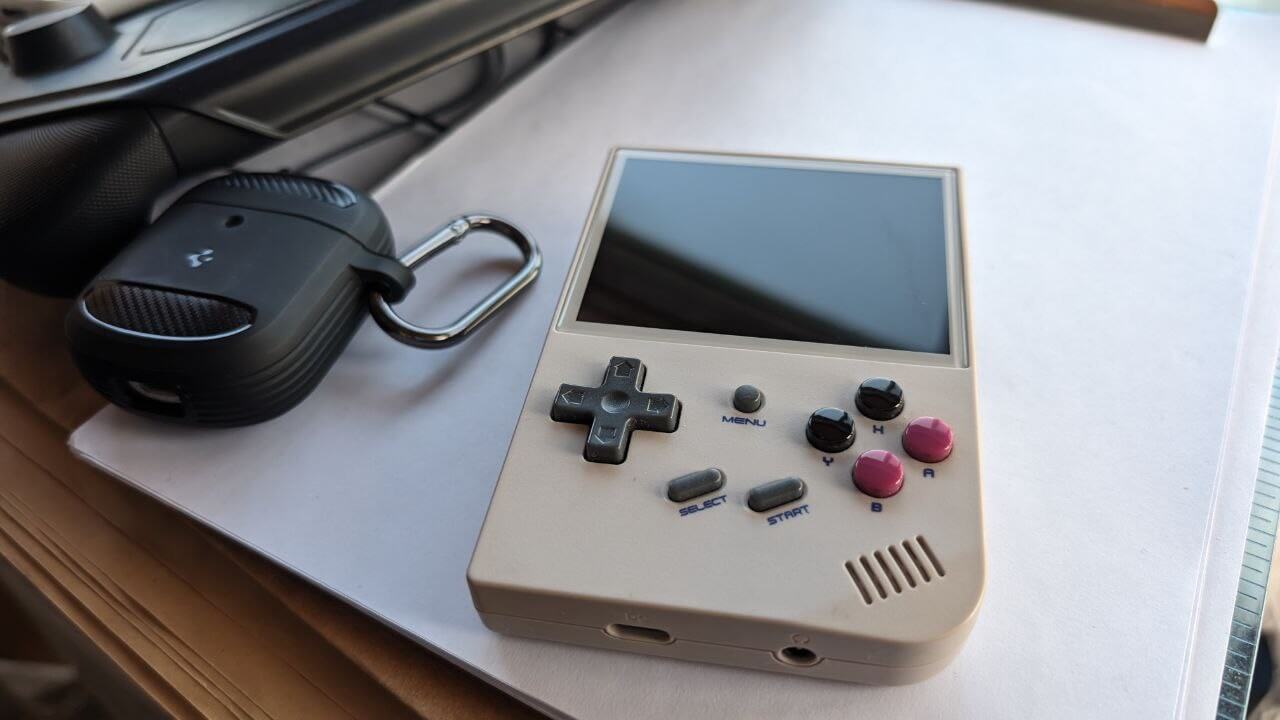
First, whoever designed the default UI—probably Anbernic themselves—made it extremely hard to use. The icons are ugly, the font is tiny, and for the elderly at home it’s basically illegible. Adding games to favorites is easily undone by accident, and the settings options are sparse. This is completely inconsistent with the system style of earlier Anbernic models.
Not just the controls—the whole machine drains battery fast. Battery life is only 2–3 hours. I mean playing NES, the Famicom, and battery life is only 2–3 hours. That’s unacceptable. It also doesn’t support long standby; you have to manually long-press to shut down or it’ll just die.
Going by Anbernic’s usual playbook, when the stock system is bad you flash a third-party open-source project. Unfortunately, as I said, this machine is a “closed-source handheld”—its SoC doesn’t have public driver source code, which makes porting third-party systems very difficult.
Of course the problems above aren’t unsolvable. Over time, even without SoC drivers, you can still change the interface and controls—which led to Garlic OS (Onion OS’s sibling), giving the RG35XX a Miyoo-like interface.
As for the battery, you can buy a larger-capacity battery on Pinduoduo for about 10 yuan and swap it in directly, greatly improving battery life.
Later Anbernic officially integrated Garlic OS. I really don’t like that version’s UI—it reeks of Genshin—but at least the machine is usable now.
3. The Miyoo Mini Plus, looks great on paper
Not long after the RG35XX launched, the Miyoo Mini Plus was announced. It competes with the Anbernic RG35XX on every front, but looks better—it’s an enlarged Miyoo Mini.
This one still requires a scramble to buy. I finally got a purple transparent version, quite pretty, though I don’t know if it’ll develop cracks.
The Miyoo Mini Plus itself isn’t much to talk about—it’s an enlarged Miyoo Mini. Bigger screen, bigger body, bigger battery, and still a narrow bezel.
The system UI remains its biggest advantage, and standby/sleep is the best in its class.
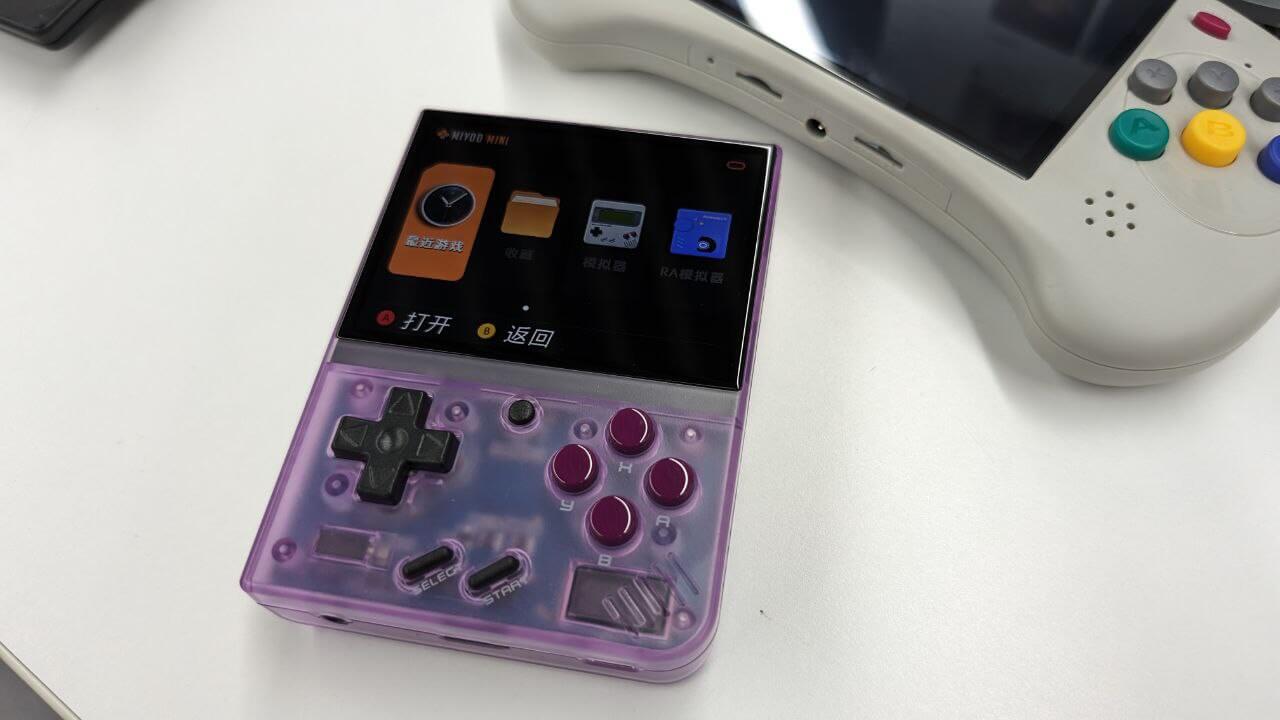
But that doesn’t mean the Miyoo Mini Plus has no problems. Actually its problems are fairly serious.
First and foremost is the screen. It’s equipped with a “flicker screen”—low-frequency PWM dimming. You’d think PWM dimming would be hard to find on an IPS screen this size, but the Miyoo Mini Plus’s screen is exactly that.
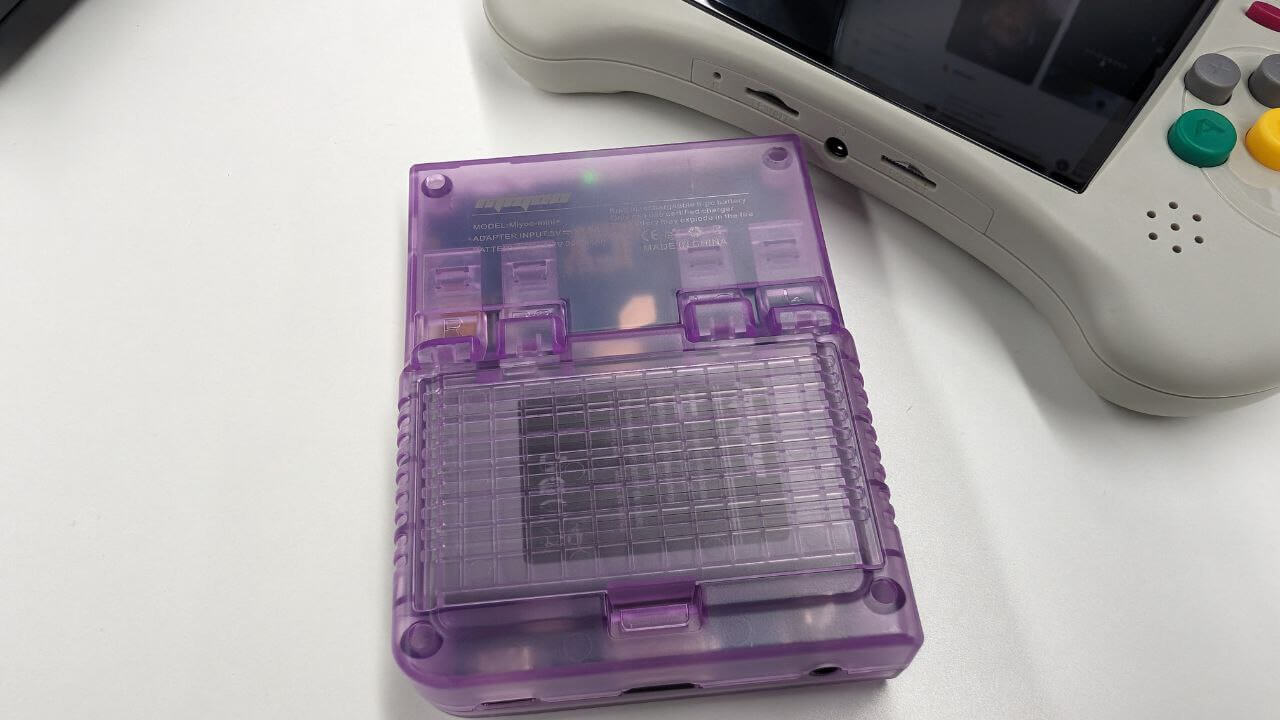
Another point is the controls feel bad. It looks nice, but the conductive rubber’s hardness is poorly tuned—too stiff—and the shoulder buttons on the back feel mediocre. The screen size is the same as the RG35XX, but because the bezel is so narrow the body is a size smaller, and holding it feels weird.
The stupidest thing is that even now, you still have to scramble to buy this machine. Even if you, like me, suddenly notice it’s in stock, you’ll find the best-looking colorway is unavailable…
Oh right, this machine recently got a new version with a new screen model, and it turns out it’s not 4:3 but a downscaled higher resolution—for a retro handheld that’s a step backward.
4. How to choose
The RG35xx and Miyoo Mini Plus are in direct competition, but after trying both I found choosing between them isn’t hard.
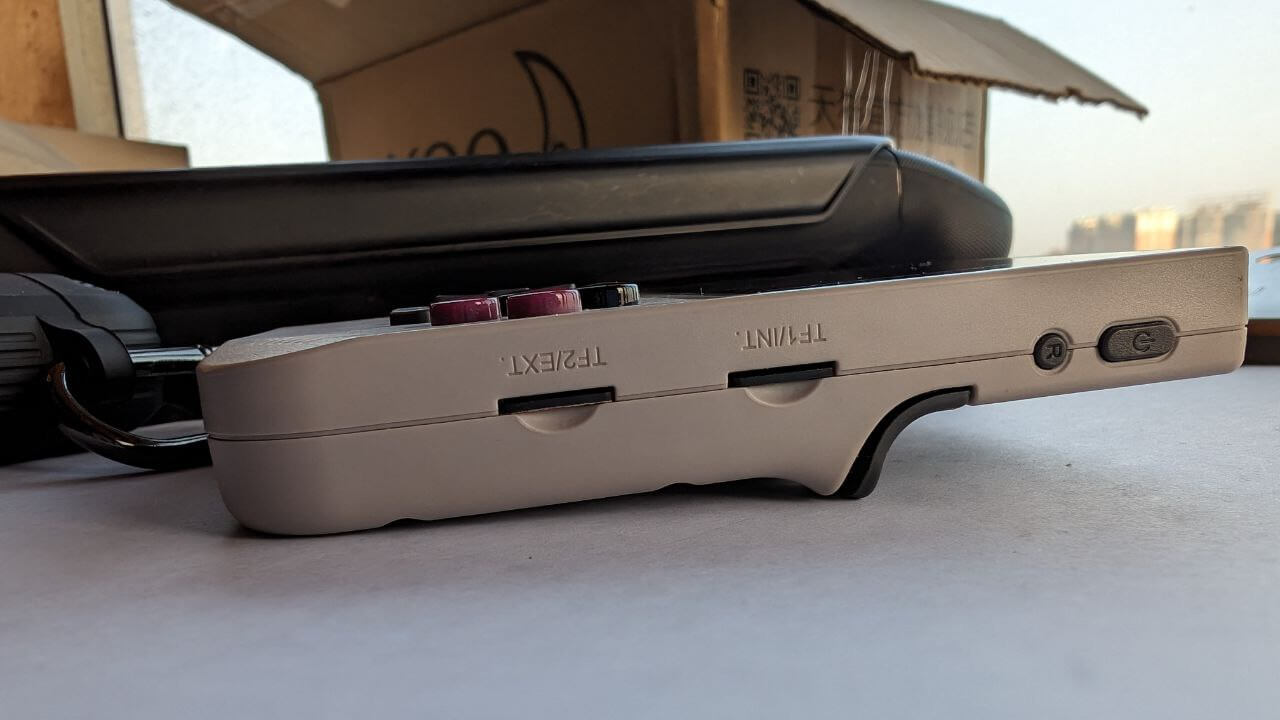
First, if you’re a heavy gamer, the RG35xx is your only choice. It has a better screen, better controls, easier expansion (dual TF card slots), and more open system resources (plenty of official Discord groups). Even if the UI is poor, you can make up for it by installing Garlic OS. It’s cheap, has room for mods, can take a bigger battery, and is always in stock.
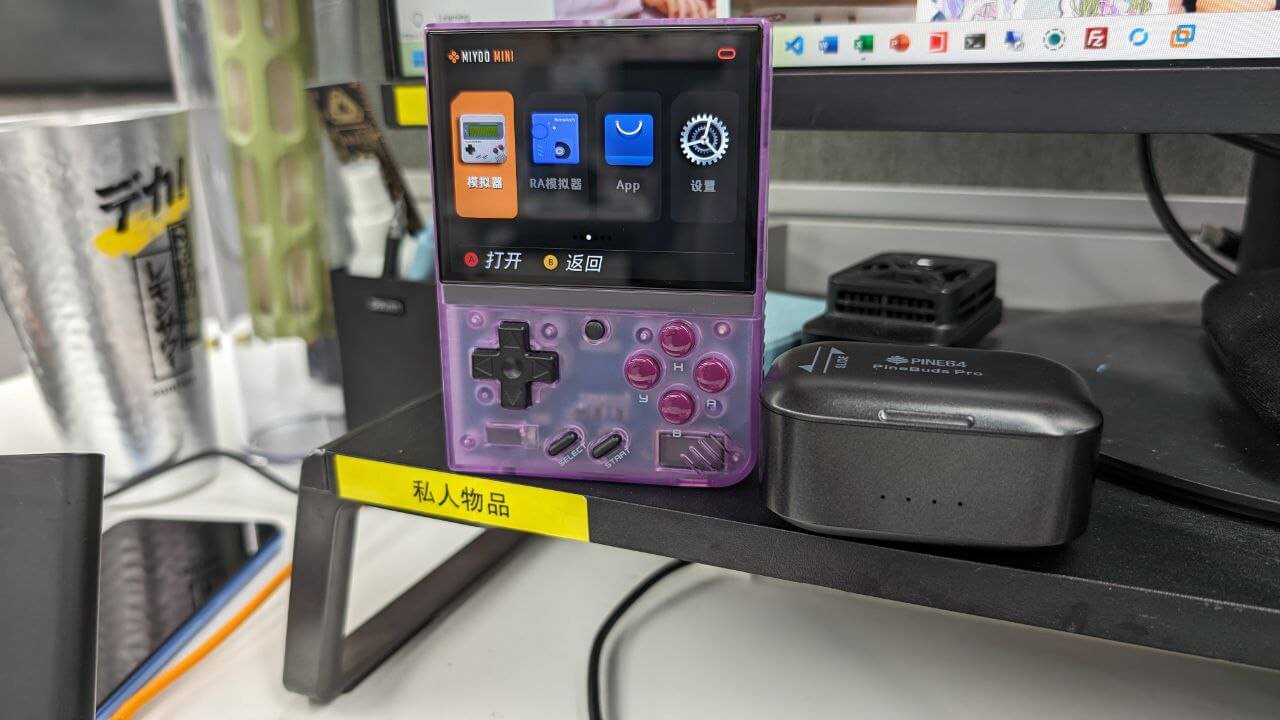
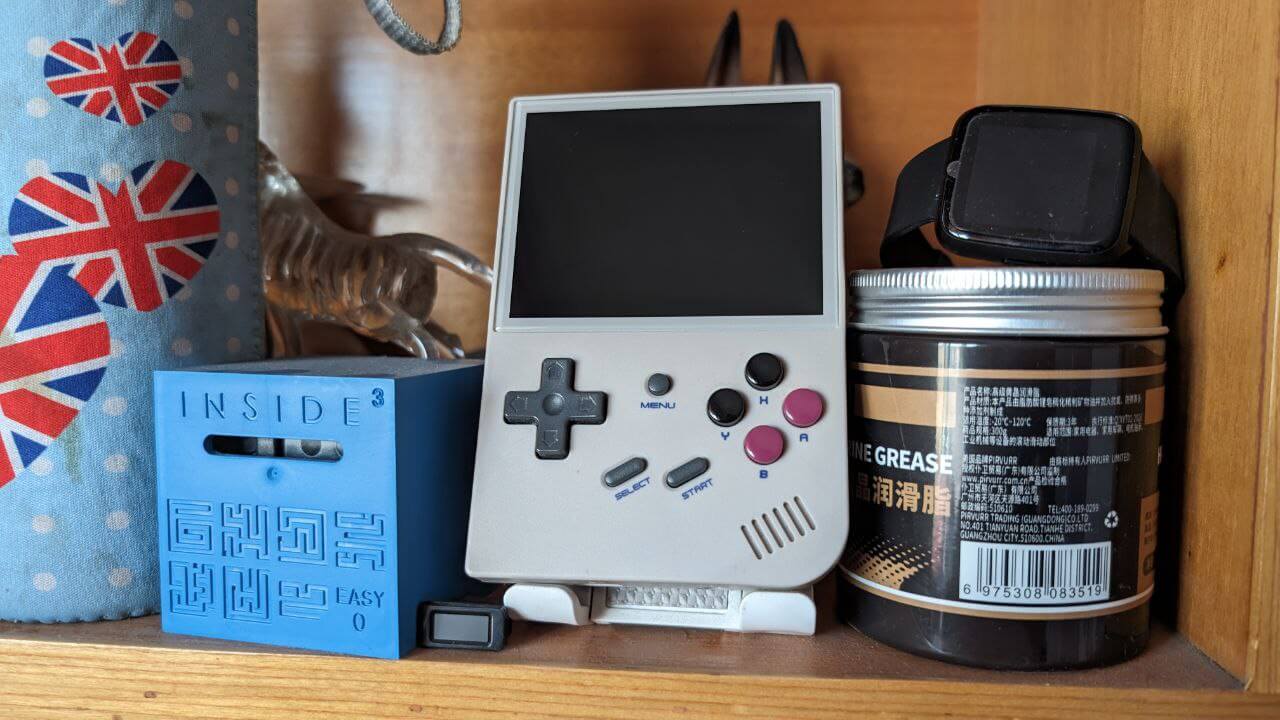
If you really don’t have time to game and just want to fiddle occasionally, the Miyoo Mini Plus is worth considering. First, it’s good-looking—narrow bezel with excellent colorways and front effect, no problem getting that “Deutsch” look you want in photos. Second, the Miyoo Mini Plus’s UI and long standby are genuinely good, better suited to occasional play after long neglect. But the single TF card design makes transferring games and flashing systems a pain, and that inexplicable low-frequency PWM dimming sentence this handheld to death on “practicality.” As a display piece it’s actually not bad.
5. Conclusion
I bought both machines and had the elderly folks at home try them. Strictly speaking they prefer the RG35xx because it’s bigger and feels good. Even though the system is harder to learn, they still prefer the RG35xx.
As for the Miyoo Mini Plus, it’s not entirely useless—as a “console” figurine its positioning is clear enough. If you can get one, it’ll let you show off that Deutsch vibe on Instagram for half a month. If you want to seriously game, forget it.
Simply put: want substance, choose the RG35xx; want looks, choose the Miyoo Mini Plus. Both are on sale right now, so interested folks can buy according to their needs.
Comments are hosted on the Chinese main site. This mirror is read-only.