GINKA Review
Your Desperate Attempt to Be Praised Really Makes It Hard for Me to Praise You
Your Desperate Attempt to Be Praised Really Makes It Hard for Me to Praise You
Years ago, when ANIPLEX.EXE entered the Galgame market as a Sony brand, a bunch of people were shouting “the big one is coming.” I sourly wrote a piece for Dimensional Fanaticism, roughly arguing that Sony was just dabbling and never had much expectation for this market anyway—that the day ANIPLEX.EXE stops putting out products purely through outsourced white-labeling and actually becomes a so-called “first-party developer” is when “the big one” truly arrives.
And you’ve seen the results. “The big one” never came, and ANIPLEX.EXE went nearly two years in obscurity, until this year it started rolling out new titles again—still “outsourced” and “white-labeled,” except this time the label says “Looseboy.”
The most famous title under ANIPLEX.EXE is of course ATRI (ATRI -My Dear Moments-). The game is a thoroughly formulaic Japanese sci-fi-future work—which doesn’t mean it’s bad. Clichéd stories can still land well, just like how we keep getting moved by formulaic hot-blooded action.
Maybe to replicate ATRI’s success, the original team regrouped outside ANIPLEX.EXE and put out GINKA (GINKA). The art style, the scenario writer, the studio, even the title all scream “tribute to the predecessor.”
So does GINKA deliver the same feeling as ATRI?
Objectively speaking, yes—it even delivers far more content than ATRI.
But is “more” good? That I’ve always doubted, and it’s exactly what I find most baffling and worth criticizing about this game.
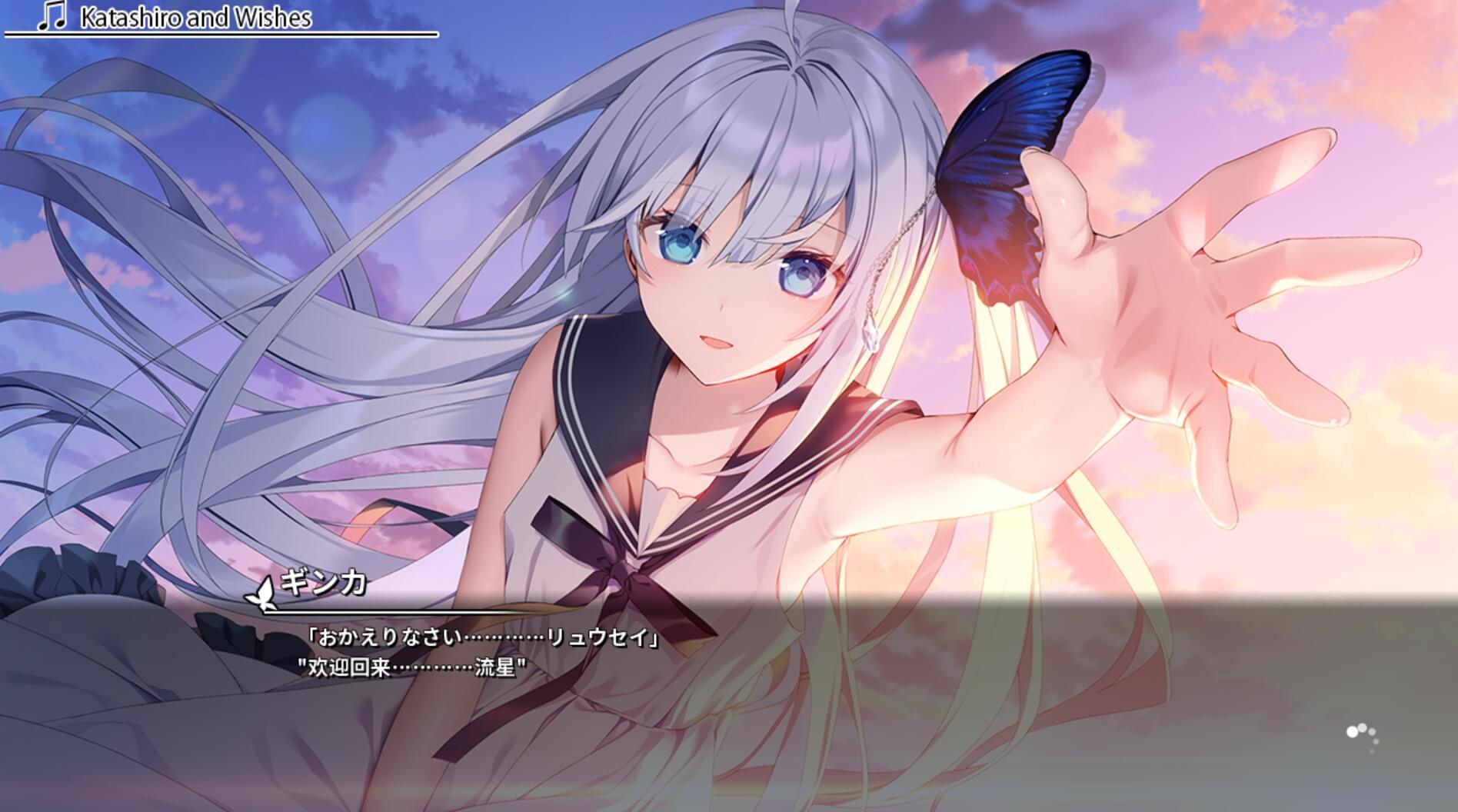
Let’s talk about the game itself first. The story is fairly clear: the protagonist lived on an island as a child and happened to meet Gin’ka, the shrine maiden in charge of the island’s rituals. The two became not just good friends but developed feelings for each other. Then on the night he was about to confess, Gin’ka was struck by “kamikakushi”—spirited away—and never returned; most people believe she died. The protagonist later left the island and returned to the mainland.
Years later he comes back to the island and meets a little girl who looks just like the vanished Gin’ka. She doesn’t remember her name but calls herself “Ginka” (same pronunciation as Gin’ka in Japanese). The girl clings to the protagonist constantly and even wants to marry him.
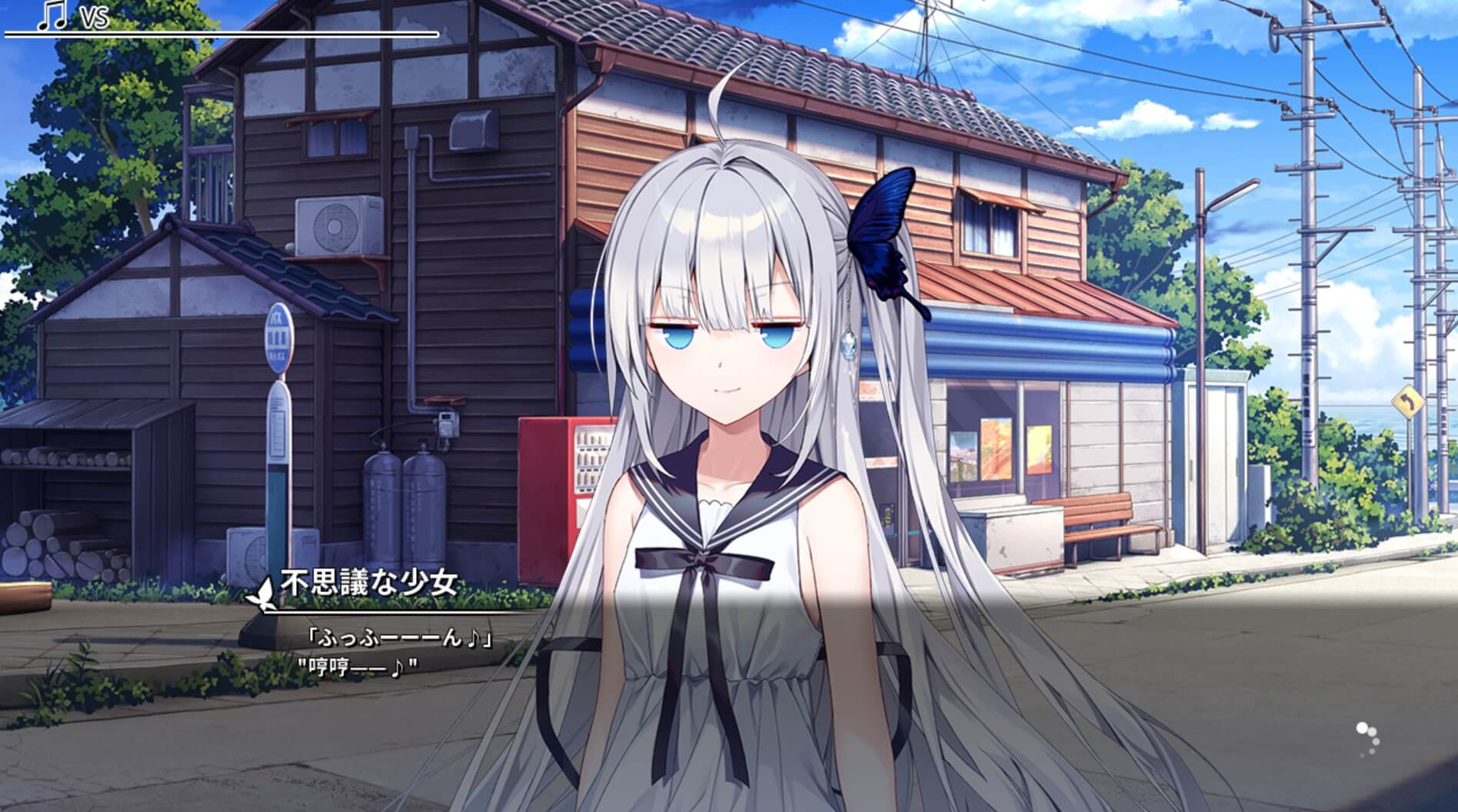
Just as the protagonist starts wondering if this “Ginka” is the Gin’ka who disappeared, a much older “Gin’ka” appears—from inference, she’s the real Gin’ka. Then after a whole mess of plot developments and explanations, we learn the truth behind Gin’ka’s disappearance: to save the protagonist, she made a wish before the god, chose self-sacrifice, and gave up her feelings for him. Those feelings were later materialized by the protagonist years on, mapped into the little girl “Ginka,” and because of that choice, two parallel worlds split apart.

The final resolution is simple too: the so-called “god” of the island is fed up with living and chooses to end itself for everyone else’s sake. Both Ginka and Gin’ka get a happy ending with the protagonist.
Overall, GINKA’s narrative is considerably more complex than ATRI’s, and its themes are closer to native Japanese culture—the “god” and “shrine maiden” setup even has a whiff of Your Name. The game’s CV is the currently rising amphibious performer Meiu Kyouko (another aside from Natsuwa Koto), and her performance is decent. Many call her Kiritani Hana’s successor, but I clearly only recognize Natsuwa Koto for that title. The visuals are fine too, though I have to gripe: despite the “original team” billing, only the heroines Gin’ka and Ginka were drawn by ATRI’s artist—the rest, the supporting cast, are all handled by Watanabe Akio. And Watanabe Akio is legitimately goated; after all these years his character expressiveness has improved massively over the Grisaia series, and in this game the supporting cast can even steal the spotlight from the leads.
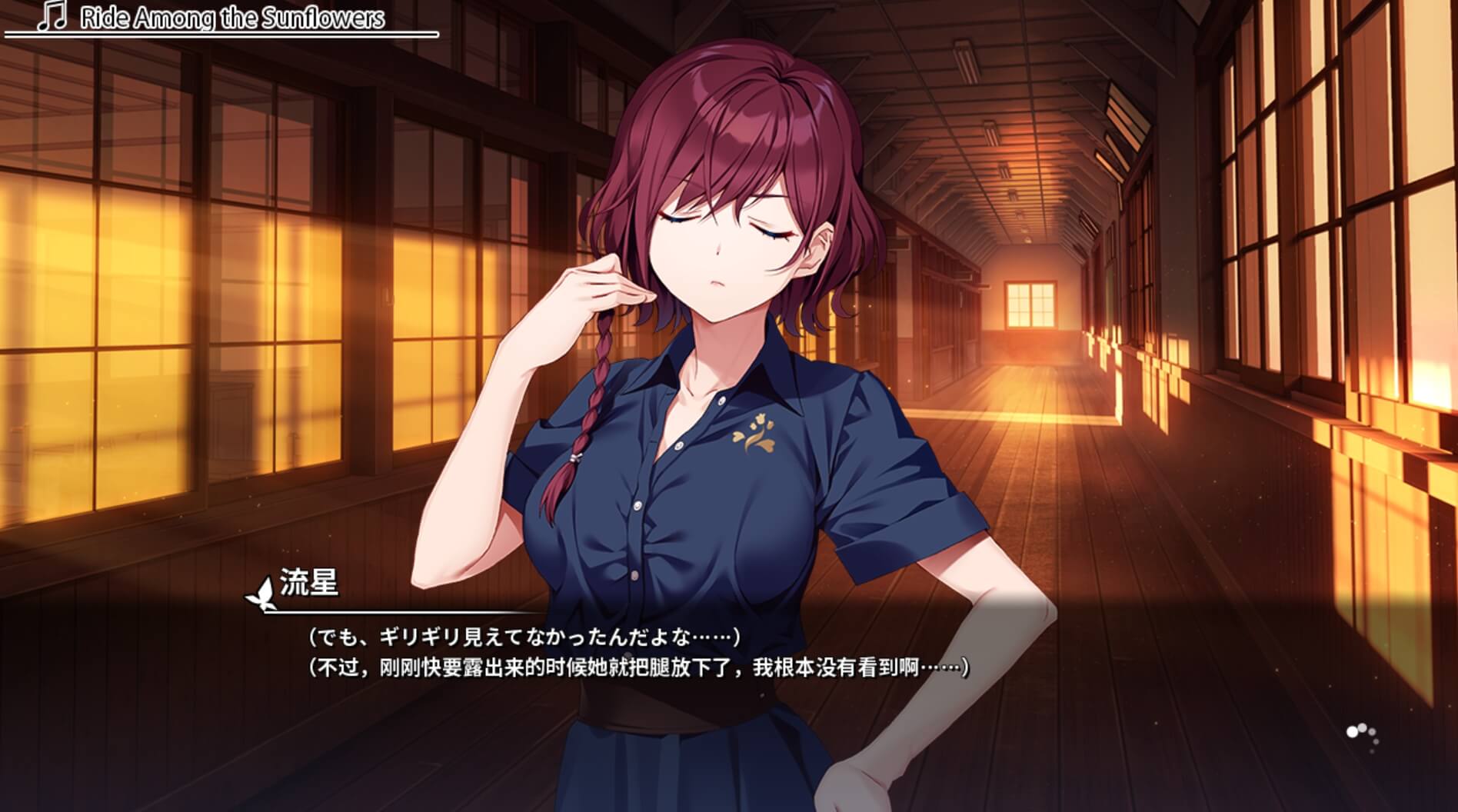
As an international release debuting on Steam, it naturally comes with “Chinese” as standard. Some complain the localization quality is poor, but maybe because I played it late, I think the Chinese translation is actually a benchmark for recent Galgames. It avoids the heavy “translated-from-Japanese” stiffness, and even Japanese wordplay gets rendered into terms that fit Chinese context better—credit to the localization team. I saw the game had updates fixing the Chinese text, so maybe the current quality came from those patches? At least in the latest version, the multilingual support is completely fine.
Which brings us to the most “awkward” part of the game: trying too hard.
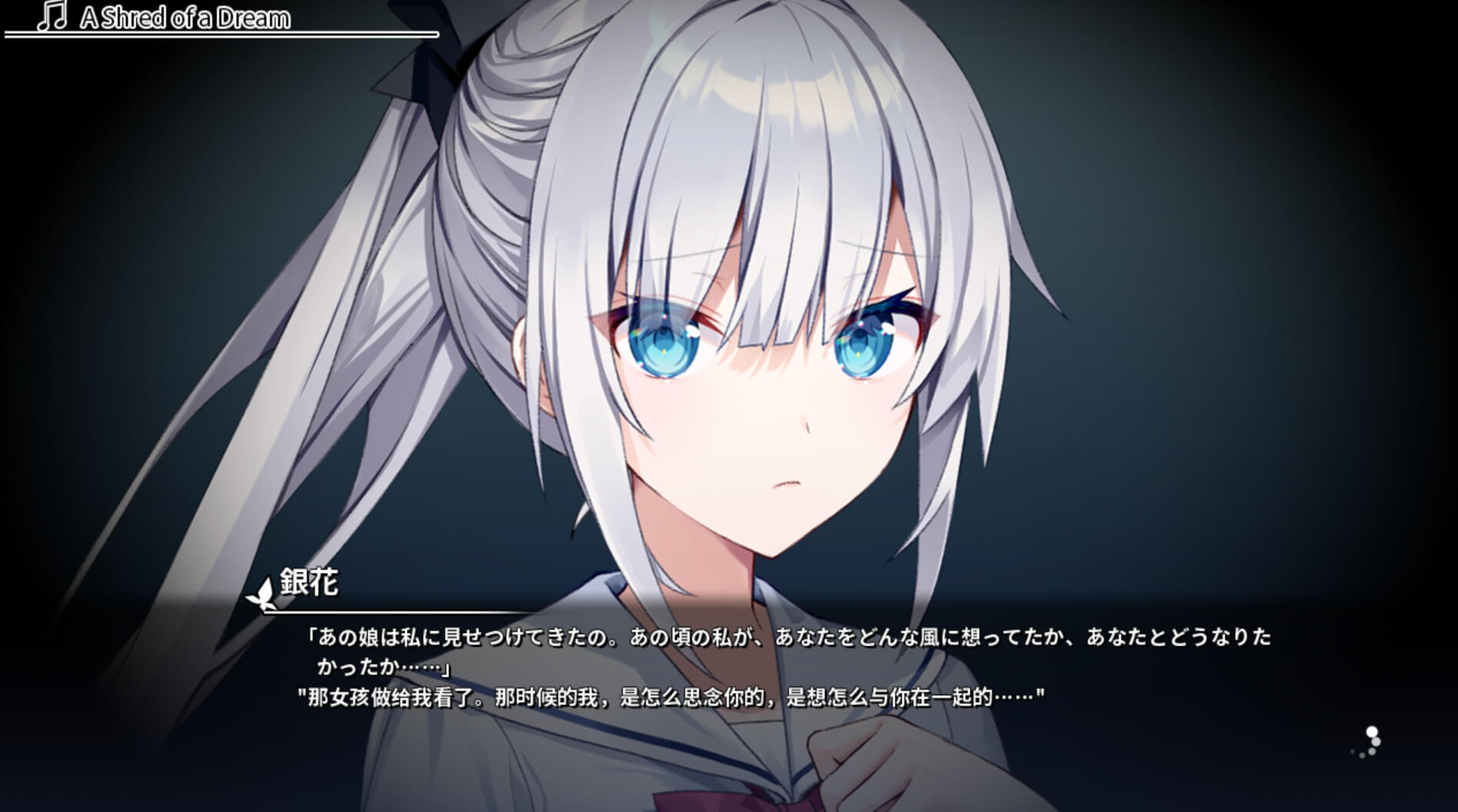
You can tell GINKA is desperate to succeed. It doesn’t just absorb every successful element from ATRI and build on them—it multiplies them and throws them at the player in the hope of a bigger response. But haste makes waste. The most confusing part of the game for me is the True End and the villain segment. A story that could be resolved with a simple “wish to the god”—why tack on a villain arc involving the teacher?
I can sort of understand the intent: stretch the runtime, give players that “you think it’s over but it’s not” surprise, the so-called “super twist.” But the story could have ended already. Expanding for the sake of expanding, adding battles for the sake of battles—it really doesn’t have the intended effect. After all, ATRI’s final ending didn’t have the protagonist, now old and gray, meeting ATRI again and fighting a new Boss, right? A story should end at the right place. It’s as if the team believed that only by stretching the playtime long enough, filling the content thick enough, and stacking enough elements could they get more recognition and praise from players.
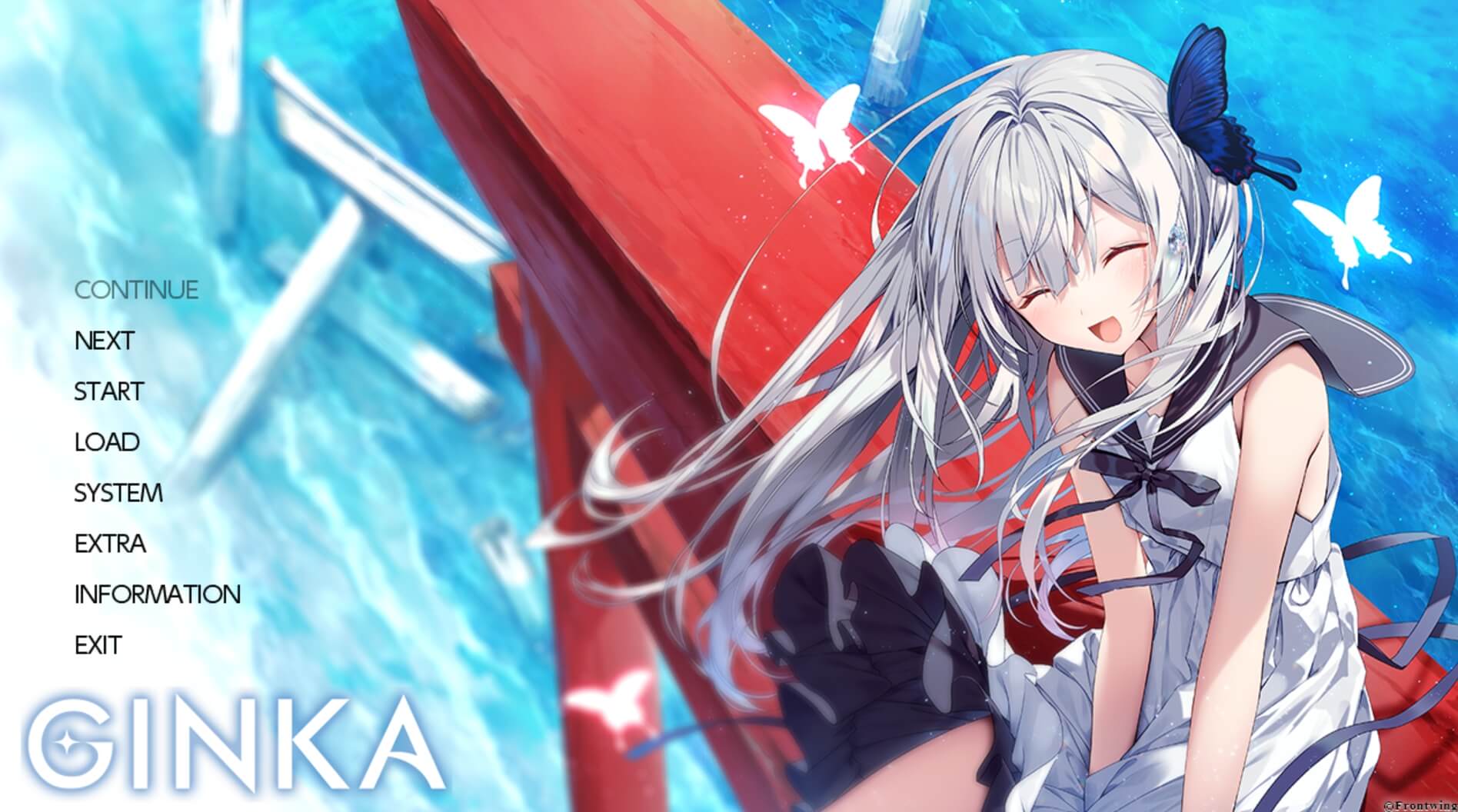
But as my title says—“Your desperate attempt to be praised really makes it hard for me to praise you.” Making games isn’t like making phones; brute-force content stacking doesn’t always produce positive results. GINKA is exactly that: a game where trying too hard leaves it just shy of great.
Comments are hosted on the Chinese main site. This mirror is read-only.