Bokutachi ga Shinu made Ato Nanoka (距离男主自杀还有七天) Review
I Really Wanted to Write a Story Like This
Around 2016, I think. Google+ was still alive back then, and I had this massive urge to express myself—I just really wanted to write something. I was super active in a Google+ community that had these “three-topic snacks” prompts, where they’d give you three related or unrelated words and you’d write a story around them.
Eventually I got it into my head to write this insanely badass novel, serialized. I was still deep in my chuuni phase, and I’d played way too many visual novels, so the stories in my head naturally took on that shape. The idea was a story about an edgy male lead and a heroine at school. Students start dying mysteriously, but it turns out they all killed themselves, and the mastermind behind it is the cute, cheerful, harmless-looking heroine who has a hidden dark side. Using her secret identity, she lures students online, draws out their inner darkness, and talks them into suicide or into hurting each other—all for fun. She keeps her identity perfectly hidden, and since she never directly kills anyone, she can’t really be held responsible. The male lead keeps investigating because of a friend’s death, and the heroine hides who she is and investigates alongside him. The final boss is right next to you—that kind of feeling.
Looking back now, that story is chuuni as hell, and a lot of it is immature and childish. But I still don’t think the subject matter is bad. If anything, it’s something you can always write, because I firmly believe that so-called “demonic whispering” really can drive a person to death. Everyone in modern society is under a ton of pressure, facing all kinds of pain, and it’s not uncommon to be unable to take it and momentarily lose hope.
But what I want to talk about isn’t the story itself. Recently I realized that someone actually wrote the story I wanted to write back then, and turned it into a game… It’s this Steam hit, Seven Days Until the Protagonist Dies.
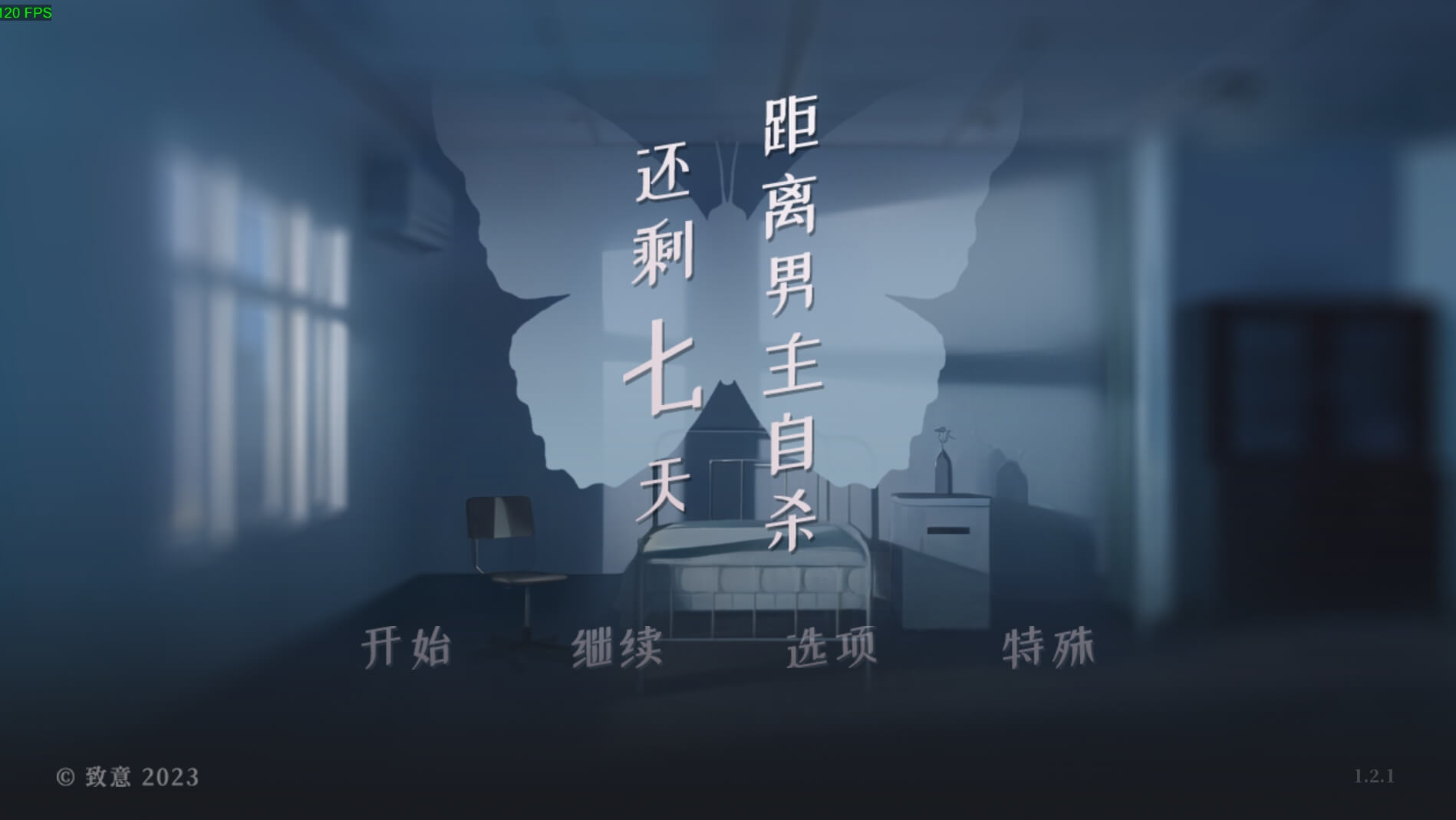
The plot of this game follows basically the same logic as the game I imagined back then. But the game itself—from the color palette to the atmosphere—is draped in this eerie vibe the whole time, and combined with the title, it can’t help but make you feel creeped out. Yet the first playthrough is remarkably mundane. The male lead, as class president, just lives out each day plainly. The game’s timeline is exactly seven days, but there’s no sign of anyone “dying” or “wanting to die.”
It’s only in subsequent playthroughs that the story’s outline gradually becomes clear. The male lead actually has schizophrenia and a split personality. His other personality, “White Wolf,” goes online and brainwashes people by luring them, driving them to suicide. And the final day of the game’s countdown—the seventh day—is the day the male lead’s other personality “White Wolf” gathers everyone to die together.
Of course, the heroine in the game also has a similar schizophrenic condition, also with a split personality, and one of them even tries to stop the male lead’s scheme. The female teacher who appears in the game also has a crazy side. She knows full well the male lead is the culprit, yet she fans the flames and shows no sign of stopping him.
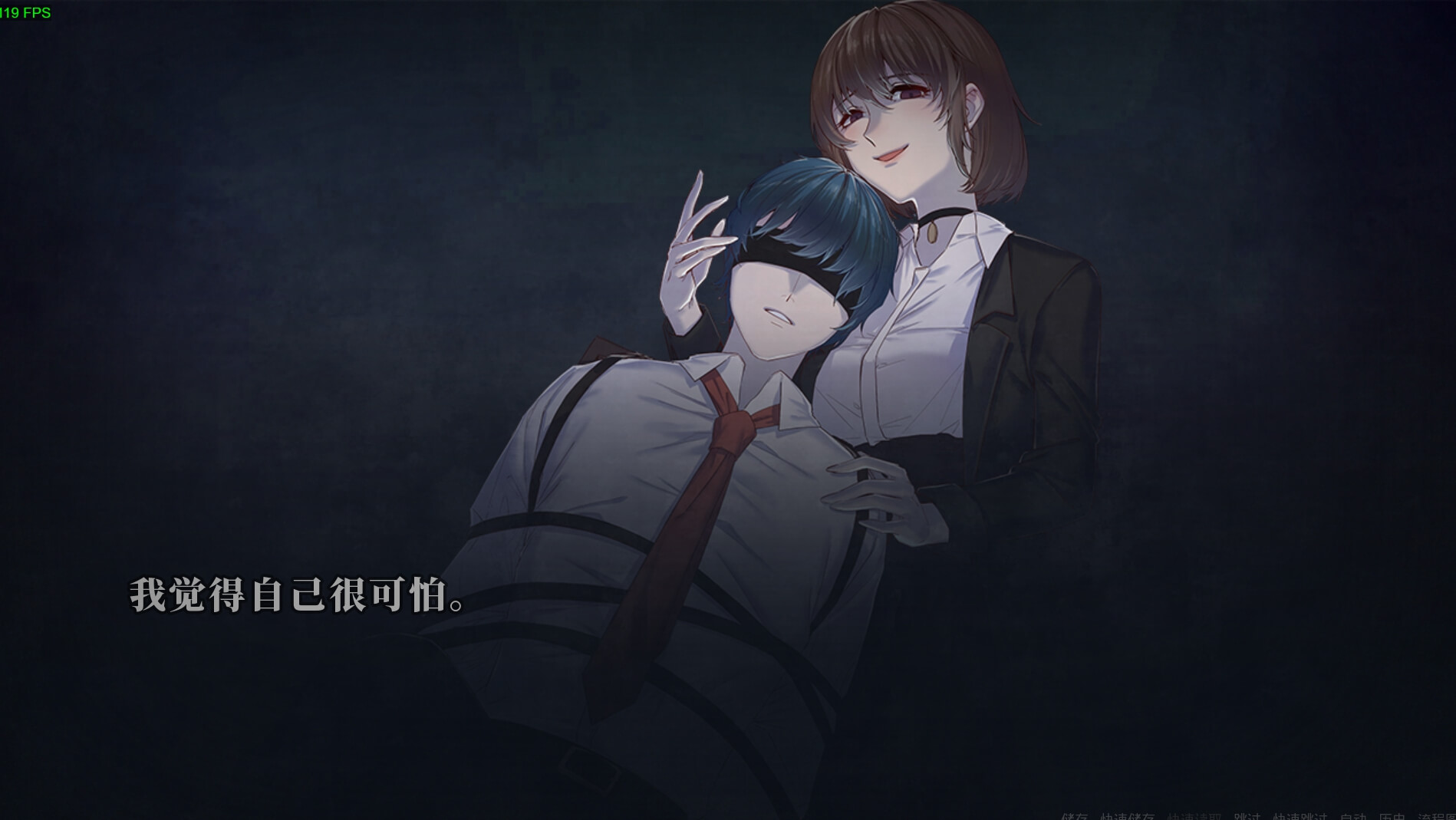
So this “seven-day death countdown” is a simple story: the male lead’s dark personality lures a group of people online into killing themselves seven days later, and the game opens from the perspective of his normal personality, so the player can’t see anything off.
A lot of people compare this game to Japanese works in the same style—Tsui no Sora, Subarashiki Hibi, and Sayonara o Oshiete—calling it “denpa,” but to me that’s complete bullshit. This game is more like the framework I came up with in my chuuni phase. It doesn’t come close to the heights of those Japanese works, and it can’t even be called an imitation. The biggest problem with this game is that it’s deliberately mysterious but never actually clarifies the real cause and effect behind everything. It can’t even make you feel anything after finishing the story—it just leaves you with a sense of “what the hell was that.”
The whole story has this “hazy” quality. I don’t know if the scriptwriter did it on purpose or if the budget ran out and the story just got abandoned.
As for the game’s production, I personally give it positive marks. Plenty of people have complained that the game uses a lot of synthesized voice acting and has super low-quality, distorted character sprites, but the developers fixed these shortcomings one by one through repeated updates. The sprites have been upgraded several times, and the latest version has reached mainstream aesthetic standards—a world of difference from those early “scratch-paper” art styles. They’ve also brought in relatively reliable voice actors, which is at least much better than the previous synthetic voices. The game doesn’t have many presentation effects, but the cutscenes are pretty cool. Each day’s countdown has its own dedicated video, and there’s even a separate one for each language—you can’t say they weren’t dedicated. The game engine is Python’s Ren’Py, with solid multi-platform support. For a small team (rumor has it there’s only one person behind the whole thing), that’s already impressive. Even if the story gets a bit abandoned at the end, the game isn’t expensive and the story isn’t long, the flowchart is straightforward, and at least the experience is good.
Of course, that’s not the end of the story. Maybe a lot of people haven’t noticed, but this game hides a mystery I still haven’t solved to this day.
The key to this mystery lies in the “multilingual” aspect. Because it’s on Steam, the game supports Simplified Chinese, Traditional Chinese, English, Korean, and Japanese. That’s pretty common, but the strange thing is that the Japanese version feels like a completely different game from the original. There’s plenty of discussion about this game online, but nobody ever mentions this.
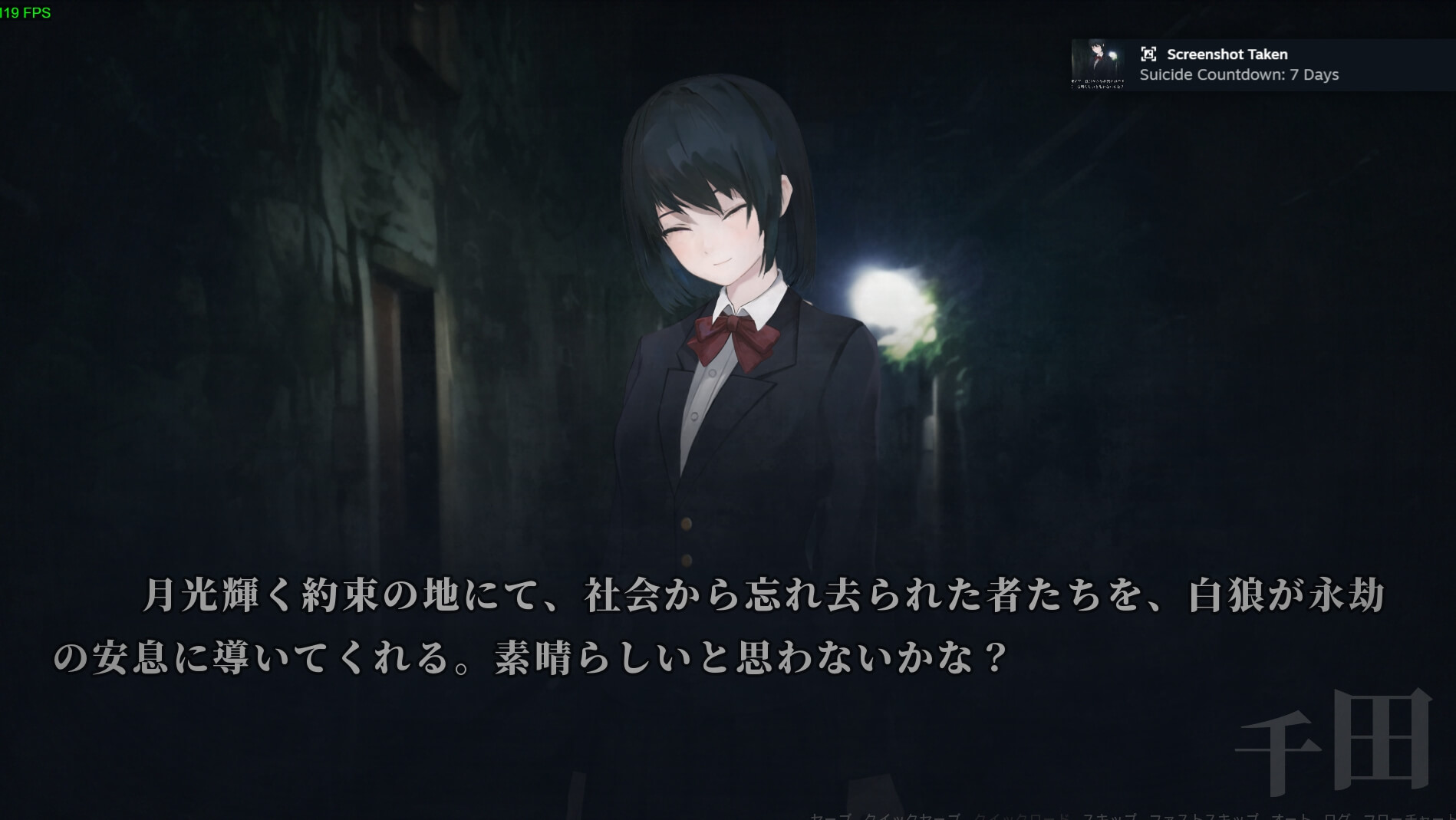
First, the game’s title, Seven Days Until the Protagonist Dies, is translated into Japanese as Boku-tachi ga Shinu Made Ato Nanoka—“Seven Days Until We Die.” Given the “group suicide” plot, the Japanese version is clearly closer to the game’s core theme.
And even weirder, the character names in the game have all been replaced. The female teacher, “Tao Rong,” was changed to “Seto Ren,” and even the subjects taught in the story were changed to Japanese-style content—the subjects themselves were altered.
Actually, I don’t have a problem with the Japanese translation. If anything, the game’s story feels more like a Japanese-style story. Many characters’ speech patterns and styles don’t fit a Chinese school atmosphere. Chinese schools do have student suicide issues and psychologically twisted teachers, but they wouldn’t be depicted like they are in this game. This game’s story feels more like a Chinese person imitating a Japanese style.
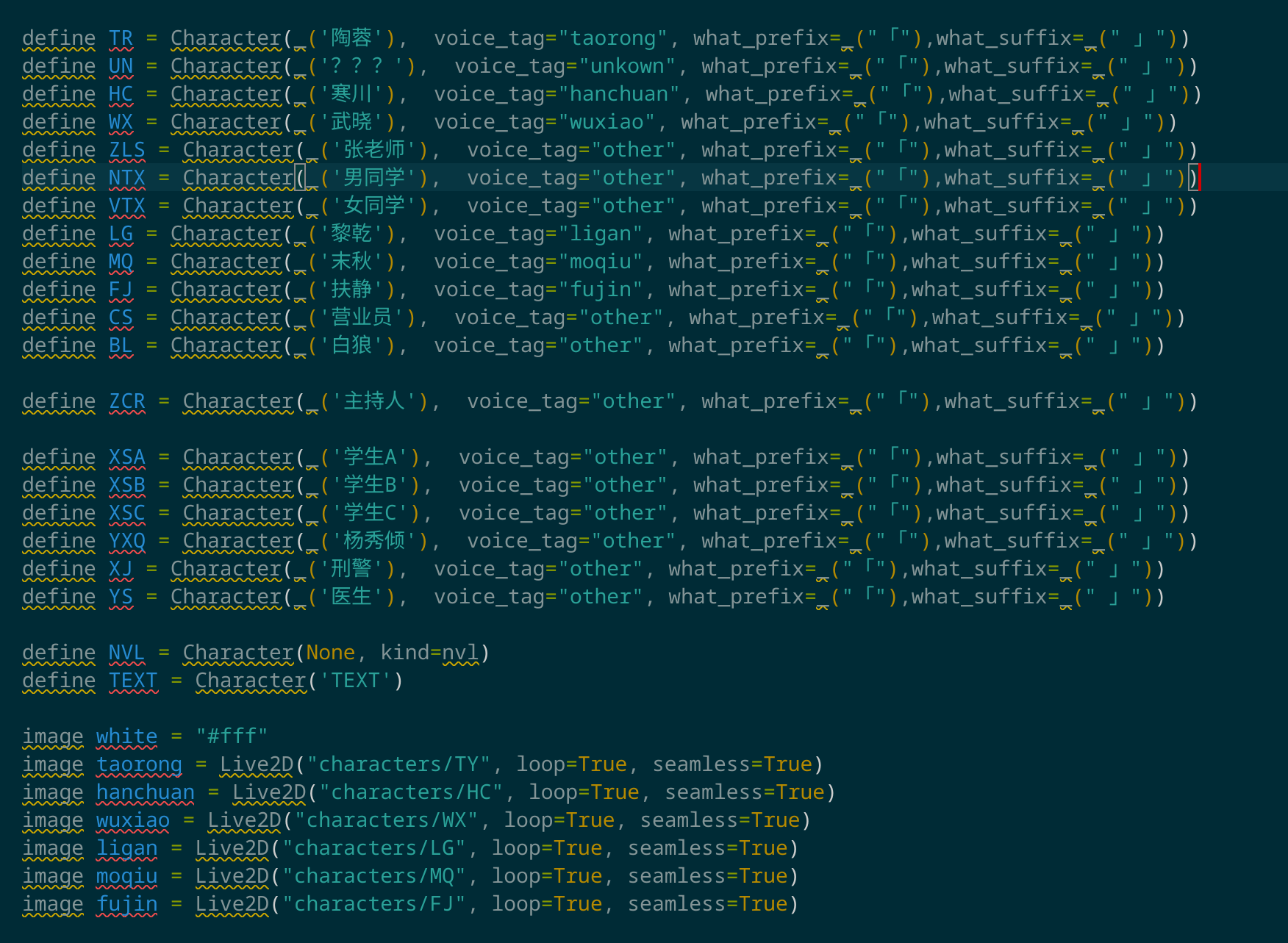
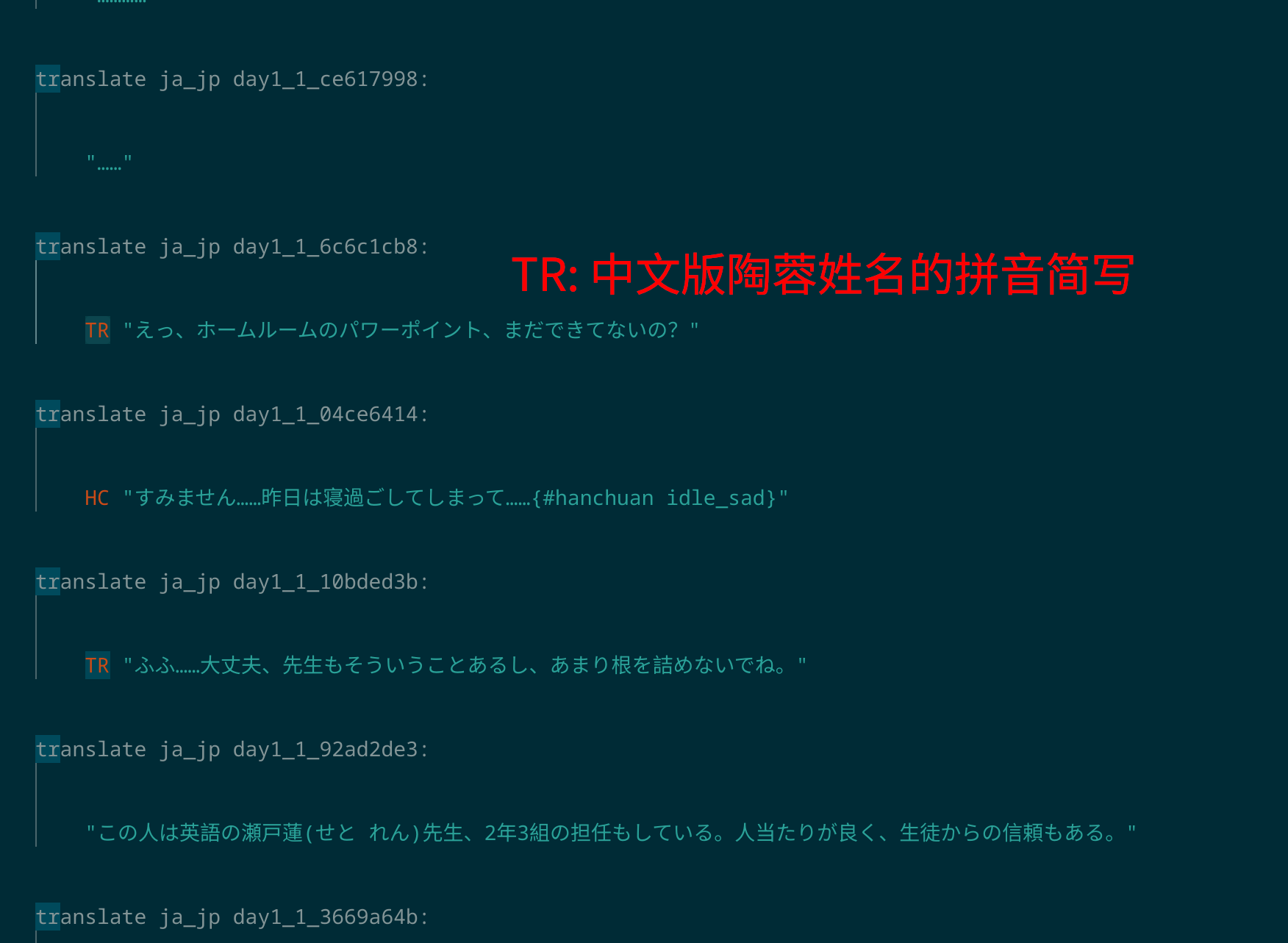
But what I’m curious about is: were these drastic changes requested by the developers, or were they the Japanese translator’s own ideas? At first I thought it might be the developers’ intent, and I even wondered if the game was originally a Japanese-style game but had all the characters changed to Chinese for release in China. But then I looked into the game’s production materials, and even reverse-engineered some of the character naming in the game files. I found that the character variables during production were all named using pinyin of Chinese names. In other words, the game was built with Chinese names from the start, the character voices are only in Chinese, and only the Japanese version changed the character names—the English version didn’t. And when you run the Japanese version, the Chinese names spoken in the voice acting don’t match the Japanese names at all, which feels really weird.
Looking into this, I found the Japanese translator: Kagero. I also saw his promotion for the Japanese version, and I sent him an email asking about it, but I haven’t gotten any response to this day.
Comments are hosted on the Chinese main site. This mirror is read-only.