Kami no Kuni no Mahoutsukai (神之国的魔法使) Review
The only reason this game didn't get ratio'd is that nobody played it
Kamigami no Kuni no Mahoutsukai (神の国の魔法使い)
Another China-Japan co-produced visual novel, another Nekoneko Soft, another Kataoka Tomo. Nothing about its existence surprised me. Honestly, I half-wondered if Kataoka Tomo and his company had run out of ways to survive in Japan and now had to lean on Chinese money to keep making games.
The premise didn’t grab me at all — a Chinese brother and sister go sightseeing in Japan, get swept up in some incident or other. At one point I was convinced this was basically Toshimaen Winter Scenery Mark II. And the weirdest part: the first release wasn’t even the full game. The story got pushed out in episodes. I still can’t understand that decision, and I think it’s one of the reasons the game flopped.
Anyway, after half a year of stop-and-start updates the story was finally complete, and reading it straight through, it’s not as low as I expected. Plenty of it is actually pretty creative, and it overturned my fixed impression of Kataoka Tomo as a scenario writer who likes to whine for no reason.
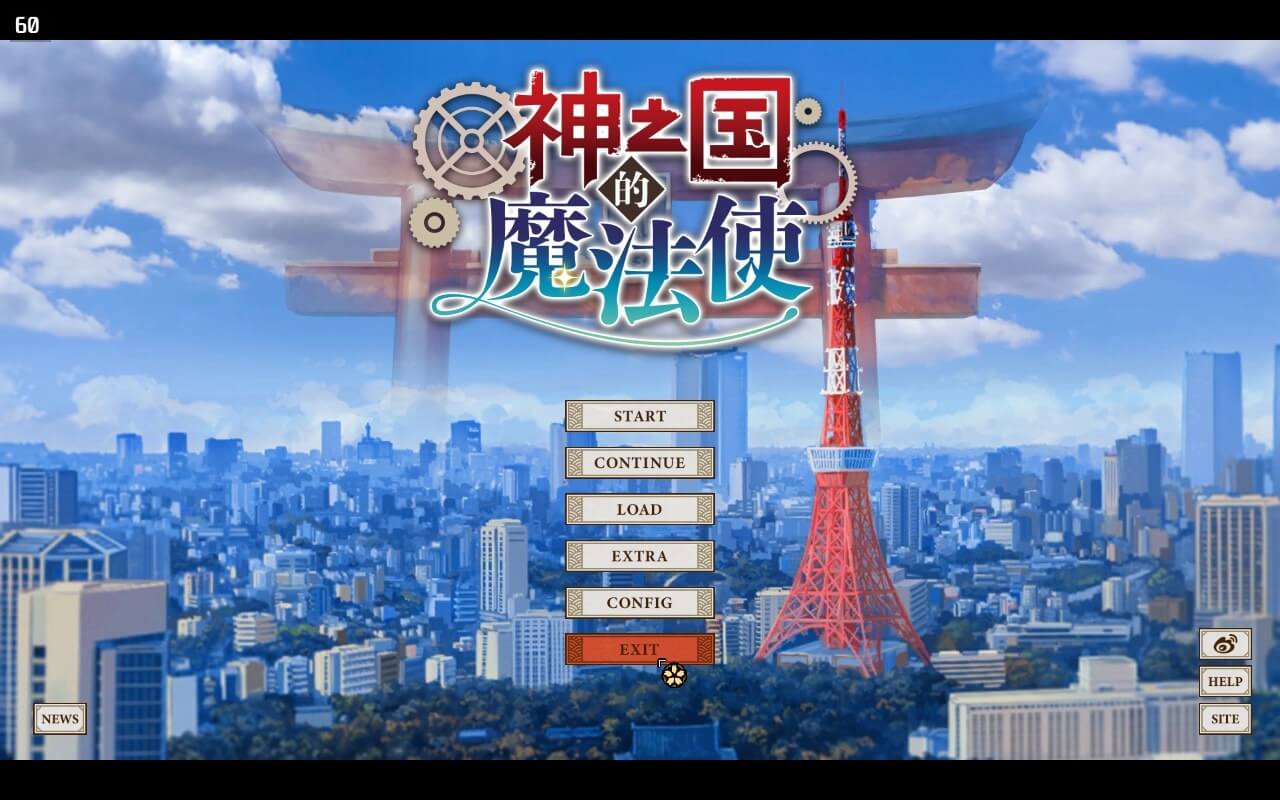
The opening is cliché enough: the siblings end up in Japan by accident, get caught in a war, and while hiding they stumble on a magic circle under a shrine. It sends them back 1,000 years into the past. They use the circle to keep shuttling between past and present, trying to develop modern science in ancient Japan, becoming “magic users” and local leaders, dragging modern tech back with them. To the ancient locals, modern tech looks insane, so they figure the two came from the “Land of the Gods” and call them “magic users of the Land of the Gods.” That’s where the title comes from.
Of course, this kind of history-meddling makes you worry — me included. Doesn’t all this recklessness change history?
The game gives an answer I found pretty clever: no.
The reasoning is genuinely fun. People like the male and female leads are just ordinary folks in the crowd. They don’t have the power to change history. Even if crossing over gives them immortal, unaging bodies and all the time in the world; even if they bring lighters, water pumps, and modern medicine back 1,000 years — none of it changes history, because none of it has the supporting conditions to work. Use it up and it’s gone. It’s like taking an iPhone back to the Song dynasty: no offline apps, nowhere to charge it, and to the locals it’s just scrap metal. You can’t expect ancient people to reverse-engineer an iPhone.
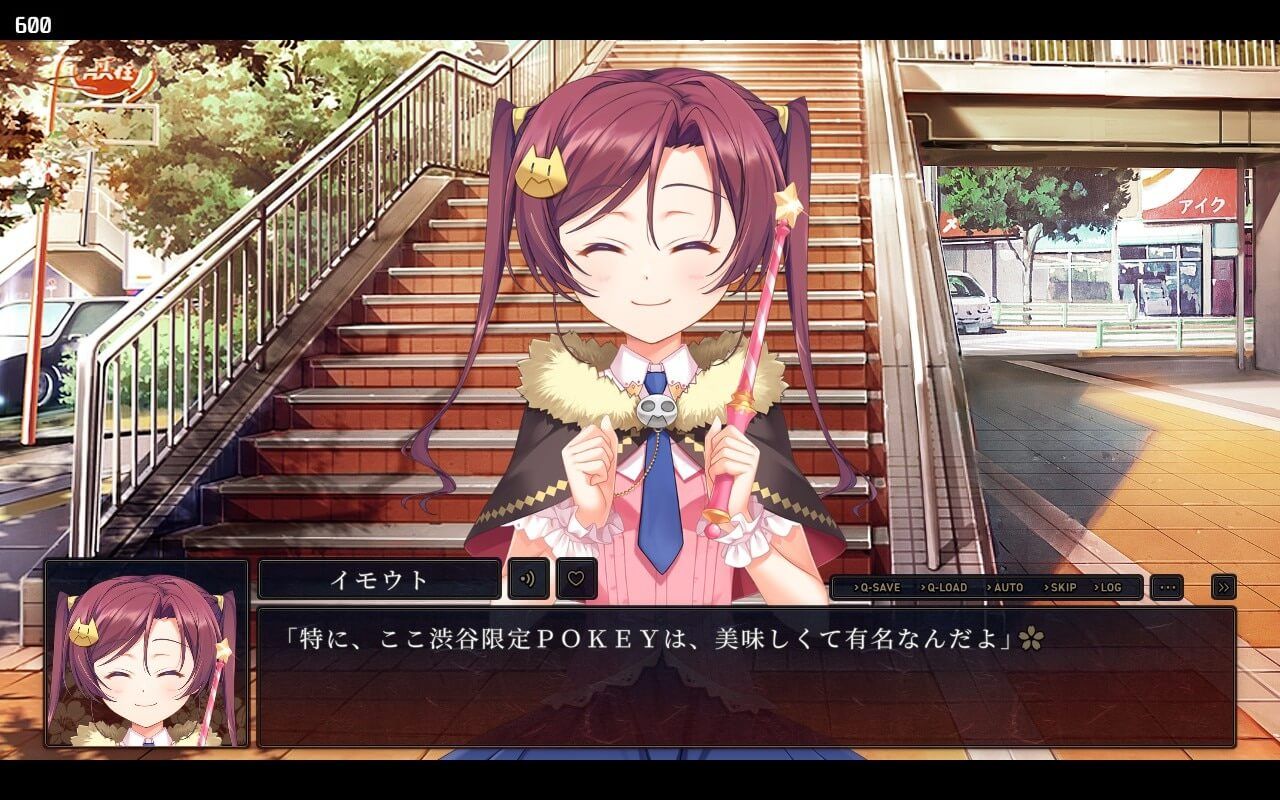
Later the siblings each do two things: they bring a modern person, a female doctor, back to the past, and they bring an ancient person, the village chief’s daughter Satsuki, to the present. The doctor tries to use her foreknowledge to change history, and she fails too — not enough power. Satsuki, following along on the crossings, doesn’t affect the course of history either.
The siblings aren’t the only ones crossing over. There’s also a pair of Chinese middle schoolers who go back to ancient China and survive by hauling modern tech around the same way. One of them even meets the siblings and instantly pegs them as time travelers.
As the siblings keep going back and forth, the time gap widens: at first 1 hour in the present equals 10 days in the past; later 1 day in the present equals 100 years in the past. That’s when the game drops what I consider its most controversial plot point: divergent history.
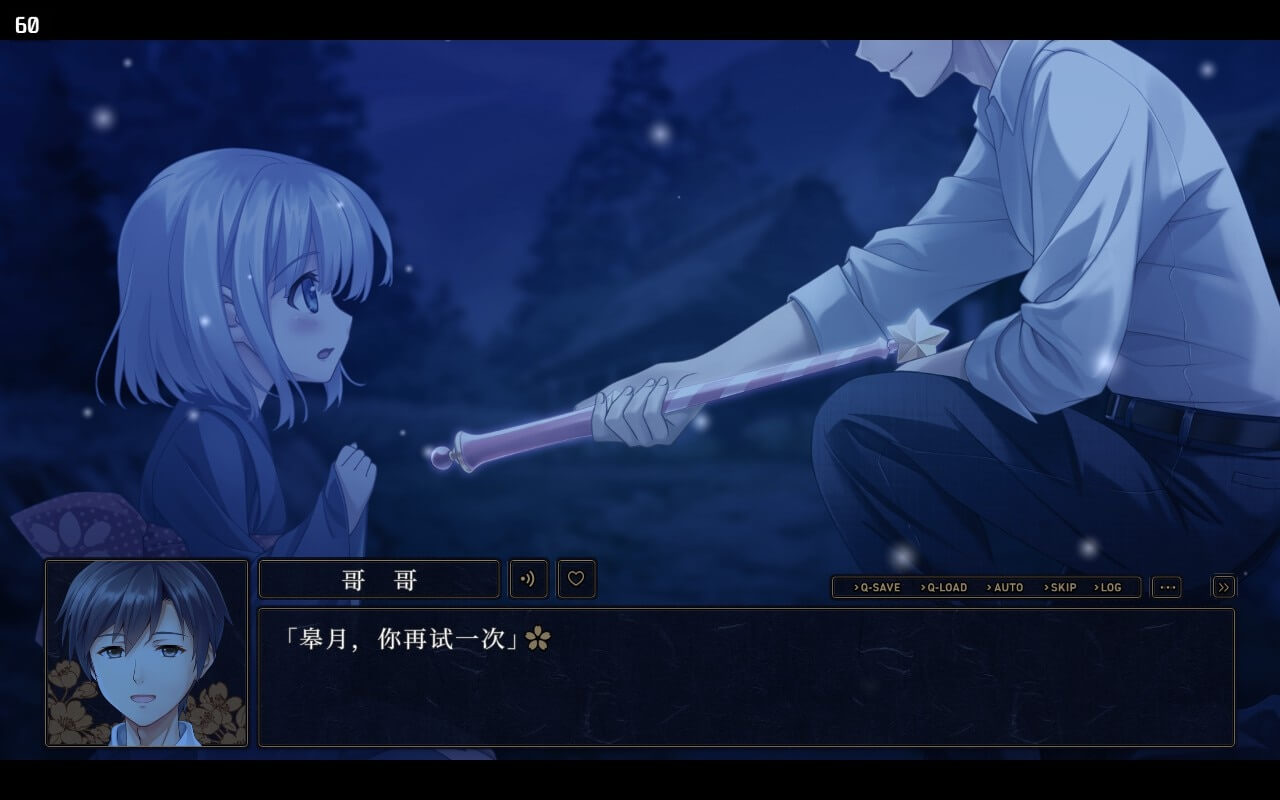
First: the siblings were touring Japan, hit a war, and while hiding found the circle back to the past.
Then: the two Chinese schoolgirls hit a war on Chinese soil, and while hiding found the circle back to the past.
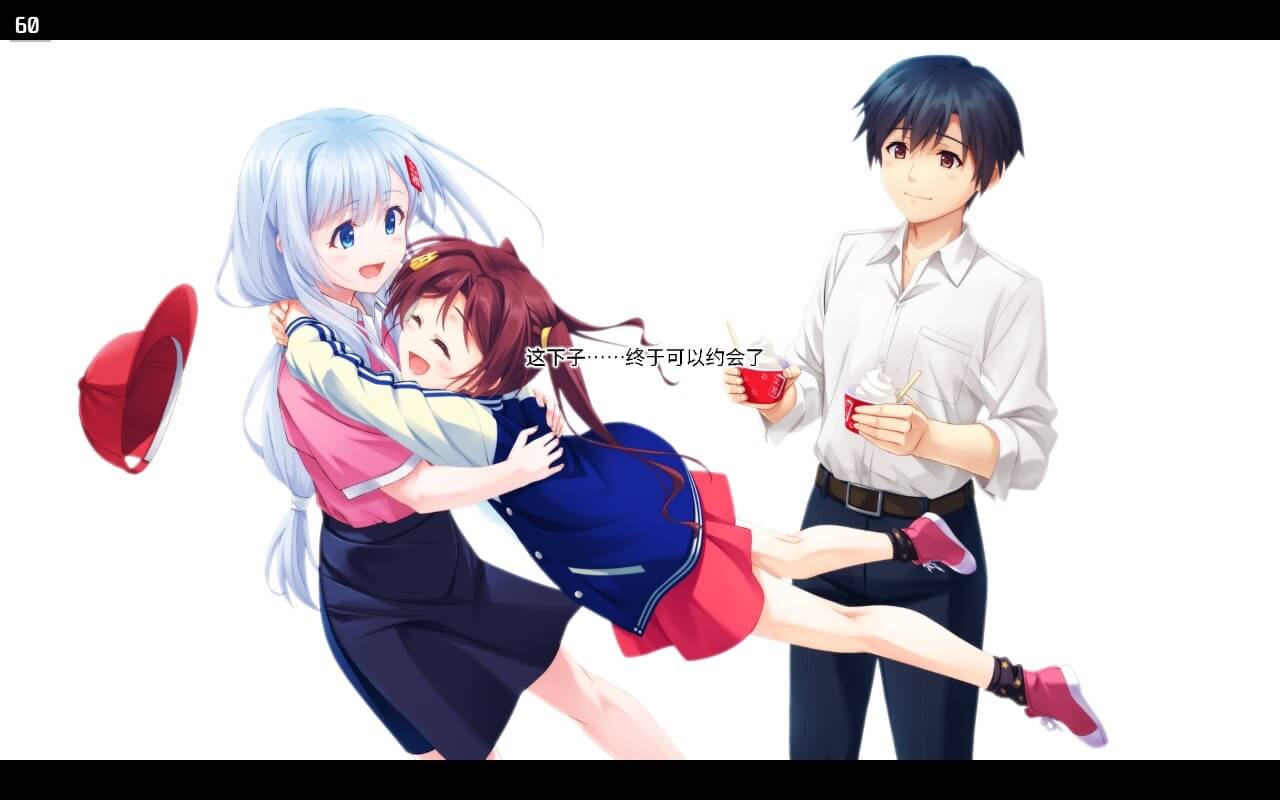
But the two groups of time travelers are in different histories. In the siblings’ history, China invaded and annexed Japan; Japan became a Chinese province, and the war is Japan trying to secede and China crushing it.
In the schoolgirls’ history, Japan invaded China, occupied the coastal regions as colonies, and the war is China resisting Japan.
Which is genuinely interesting. In the actual past, China and Japan weren’t that hostile; the war came later. The siblings and the schoolgirls both only act because they’re fleeing war. And the siblings, the schoolgirls, and even the Japanese female doctor all try to change history, and all of them fail. Meaning: no matter how much you cross back, you always arrive at a future where China and Japan go to war — either you invade me or I invade you.
In the end the siblings hand the job of preventing the war to Satsuki, a Japanese person from 1,000 years ago. She can change history, maybe because she’s an ancient person moving from past to future, a reversal of the usual direction. And she does pull it off, sort of: Japan does invade China, China wins the resistance war, but neither ends up annexing the other. China-Japan relations are sometimes good, sometimes bad, but there’s always economic and cultural exchange. That’s the timeline we’re in now, and the story ends there — with the hint that the real “magic user of the Land of the Gods” was Satsuki all along.
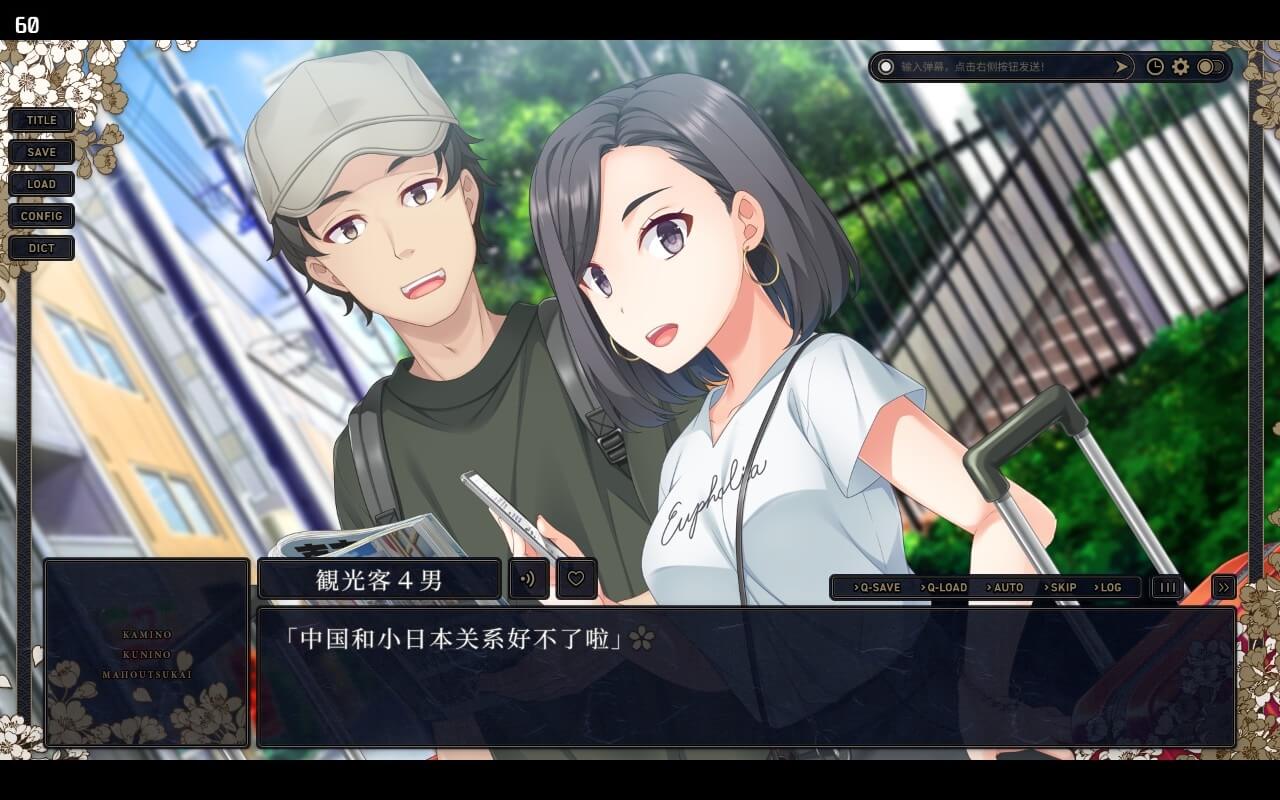
For me there are a lot of inspired touches here, enough to make me think Kataoka Tomo finally got some brains. The most interesting is the bit about changing history.
Usually time-travel stories have the protagonist go back, do something by accident, trigger a butterfly effect, and alter history. This game does the opposite: it tells you ordinary people can’t change history, and you’ll feel powerless inside it — nothing you do reverses the tide. That’s actually a very sound argument. Plenty of people have tried to defy heaven or roll history backward, and every single one of them failed. And the final successful change is convincing enough, for the reason I said earlier: the person who changes history is herself a reverse traveler, coming from the past to the future. That makes her more capable and more likely than someone who crosses back. The game never says exactly what Satsuki did, but her special position at least leaves room to imagine.
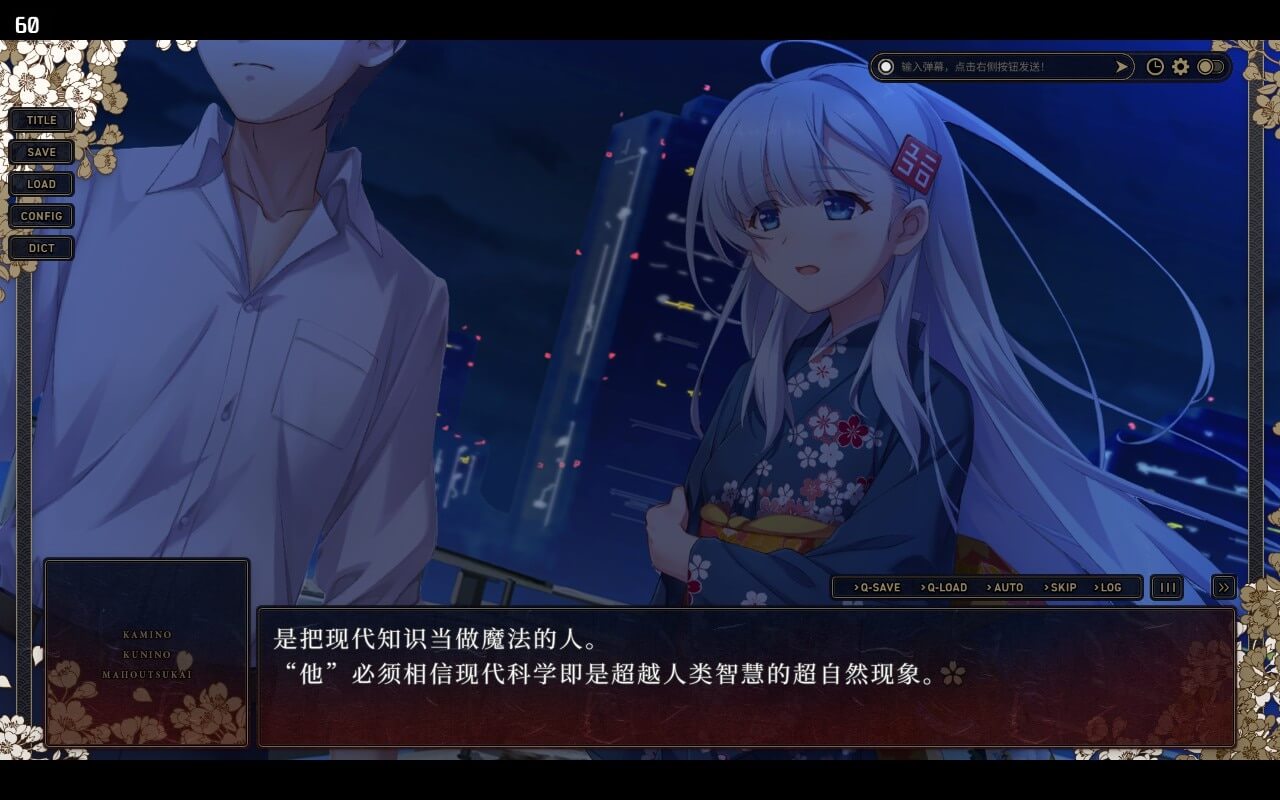
The game itself is a better experience than most so-called Chinese-made visual novels, at least. The Chinese script sticks to writing like actual speech, and nothing sounds off. That directly affects the voice acting. I never had anything nice to say about the CV 可可味 — especially in that one train game, where her reading was painfully flat, and later she got propped up by a single “clang clang” line. That’s hard to take seriously as proof of skill. But she’s very good here. As a rare bilingual CV she plays to her strengths, and the expressiveness is there too. Which proves most of the “mother-tongue cringe” excuses from Chinese CVs are nonsense — the real reason is lines that don’t sound like human speech. On the system side they added a gimmick “danmaku” comment feature. I turned it off pretty fast.
The art is obviously by that one person at Nekoneko Soft, just with more people helping on the coloring — the characters look way healthier than in something like Sumire. The soundtrack is lazy: old OSTs from Nekoneko Soft and related companies, recycled. The game calls it an anniversary nostalgia trip. Not much to say to that.
All that said, the game has plenty of flaws, and a lot of them are amateur-hour mistakes.
First, way too many punctuation errors. Look closely and the quotation marks are frequently pointing the wrong way, in both the Chinese and Japanese text. Clear proofreading failure. The game supports real-time Chinese/Japanese switching, but after switching, the backlog keeps the old language — so if you heard a Chinese line and want to check the Japanese original, switching languages and opening the backlog won’t help. You also can’t set bilingual display. The system is all flash and no substance, way less practical than Frontwing’s setup.
Because the game released in episodes, whether from schedule pressure or heavy cuts, the latter half clearly shows rushed work. The two time-traveling Chinese schoolgirls exist mainly to introduce the alternate-timeline twist; they don’t really affect the main plot. Was it to force a “China-Japan collaboration” feel, or were the Chinese travelers supposed to influence the war? The real letdown is that the game never says how Satsuki actually changed history. I think the writer had ideas — probably the schedule ran out, or the content didn’t fit — so it’s unwritten, and the ending just feels like a rushed, botched wrap-up. It even made me wonder if they borrowed the ending trick from Sakura no Kumo, Koi no Kumo.
But the most absurd thing is how many landmines this game steps on for mainland China. For example, having China colonize and invade Japan, with Japan trying to secede, reads like a jab at certain geopolitical situations. Two Chinese people going to ancient Japan to help the Japanese trade with the Song dynasty will offend some nationalists. The ancient-China chapter is dark blood-soaked conflict while ancient Japan is a peach-blossom utopia — a stark contrast. The biggest one is a line from the writer’s interview at the end: “I’m not necessarily the type who opposes war…” That’s one step away from being slapped with the militarist label.
But I want to clarify: that label shouldn’t go to the writer. It should go to the translator. Kataoka Tomo’s Japanese original means roughly: I don’t want to have characters in the game shouting “anti-war” slogans on cue. The world itself is boring and fucked-up, and slogans mean nothing. Whether a war starts isn’t up to little shrimps like you and me anyway…
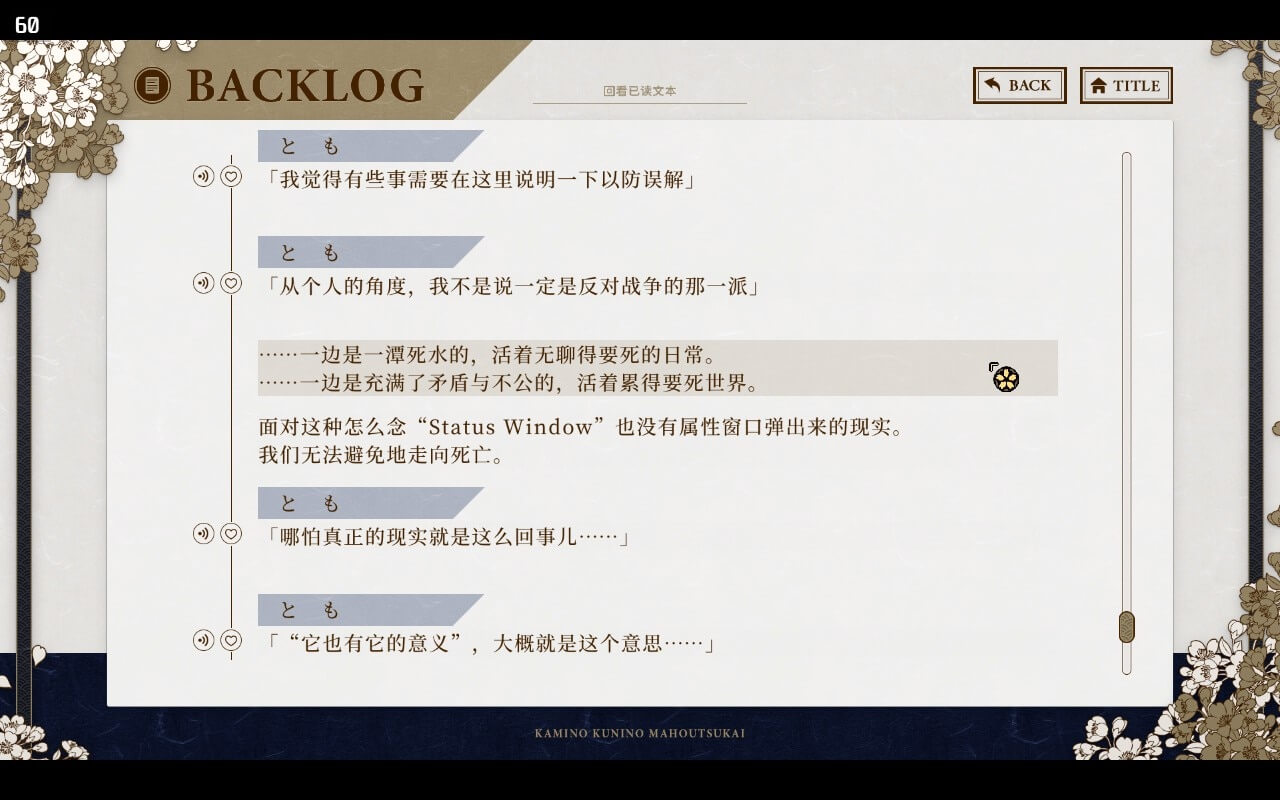
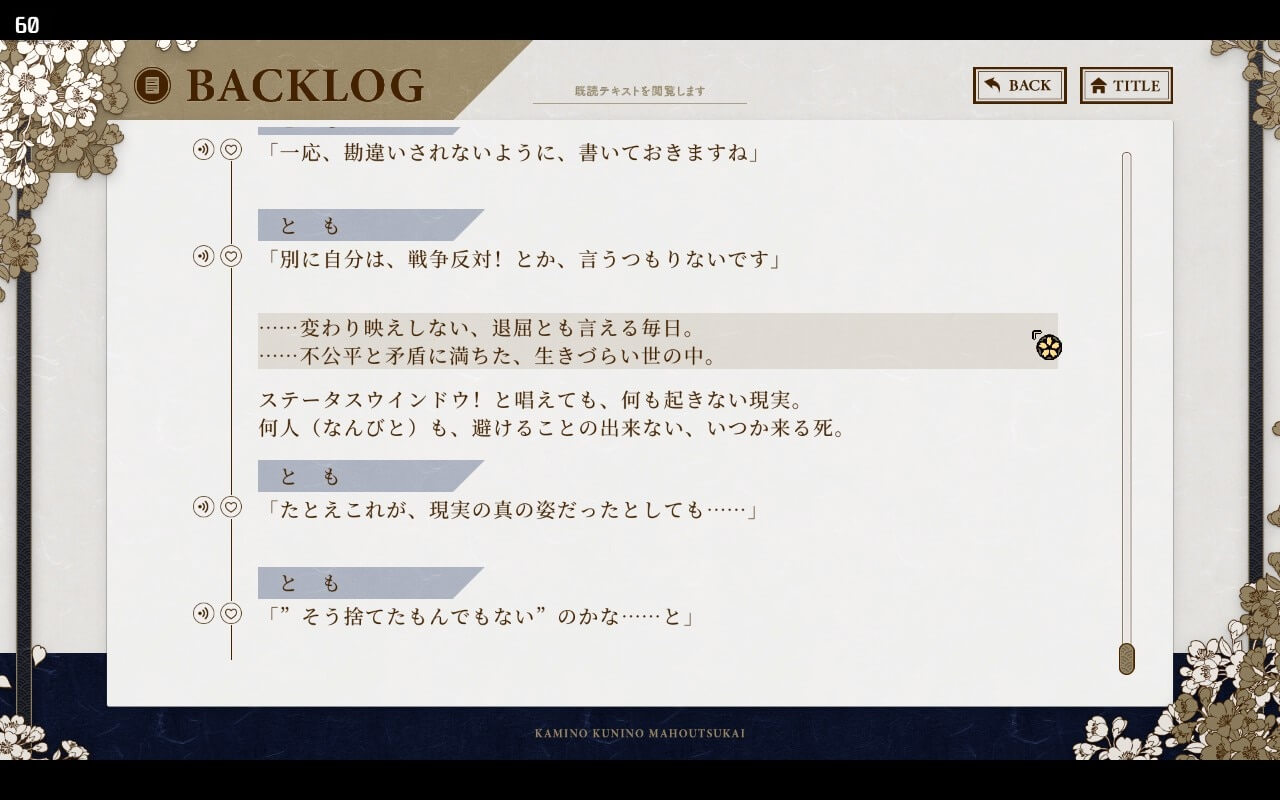
Though I don’t know if anyone will bother reading the Japanese original. The translation in the second half is genuinely bad, with lots of bizarrely flowery phrasing. Take this line — do you think it’s a good translation? I think a literal one would be better.
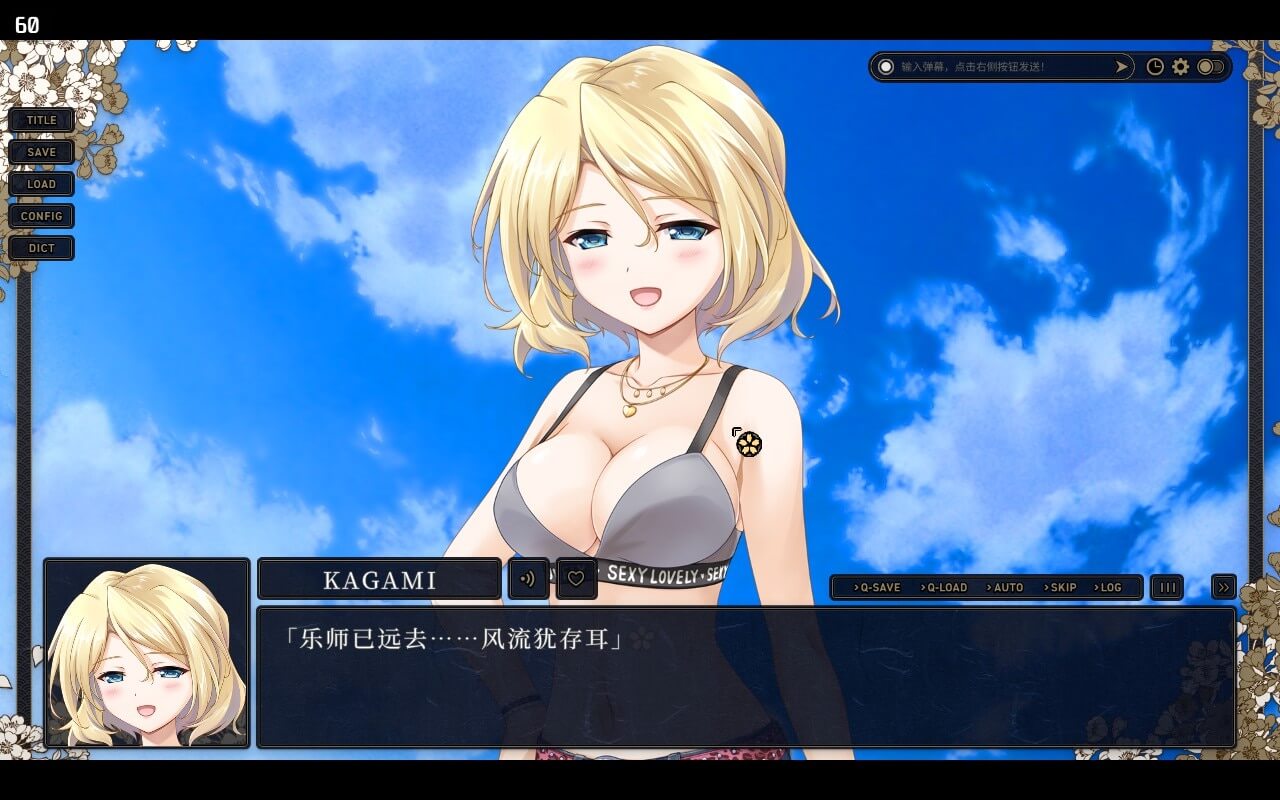
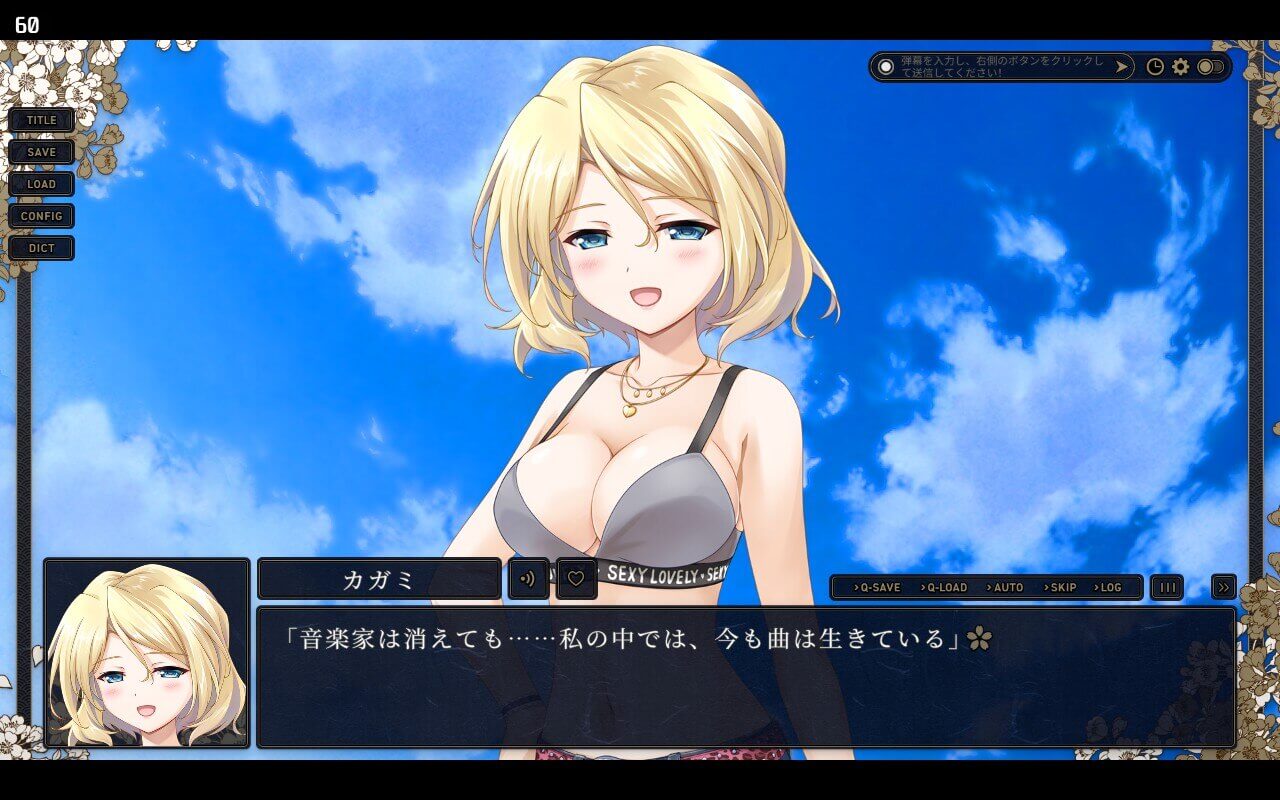
And with this many landmines in the content, I still haven’t heard any big drama about it. There’s only one explanation: nobody’s been ratio-ing this game because it’s just too unpopular, too little attention, dead in the water.
Comments are hosted on the Chinese main site. This mirror is read-only.