Kanata no Ningyo Hime (彼方の人鱼姫) Review
The Mermaid Princess Far Away and the Depressed Girl of Youth
As most people probably expected, the staff behind Kanata no Ningyo Hime (彼方の人魚姫) is the same crew carried over from Yukiiro Sign and even further back, Aonatsu Line—same artist, same writer. So naturally this one inherits that same “youthful air.”
Though “youthful air” isn’t quite the right phrase. Starting with Yukiiro Sign, this little lineage shifted from “youth” to “melodrama.” When I heard Kanata no Ningyo Hime was coming out, I had a bad feeling—I figured that melodrama would carry right on over. But this time the setting had moved from “school” to “fantasy,” so maybe it wouldn’t be so bad.
Turns out I was wrong.
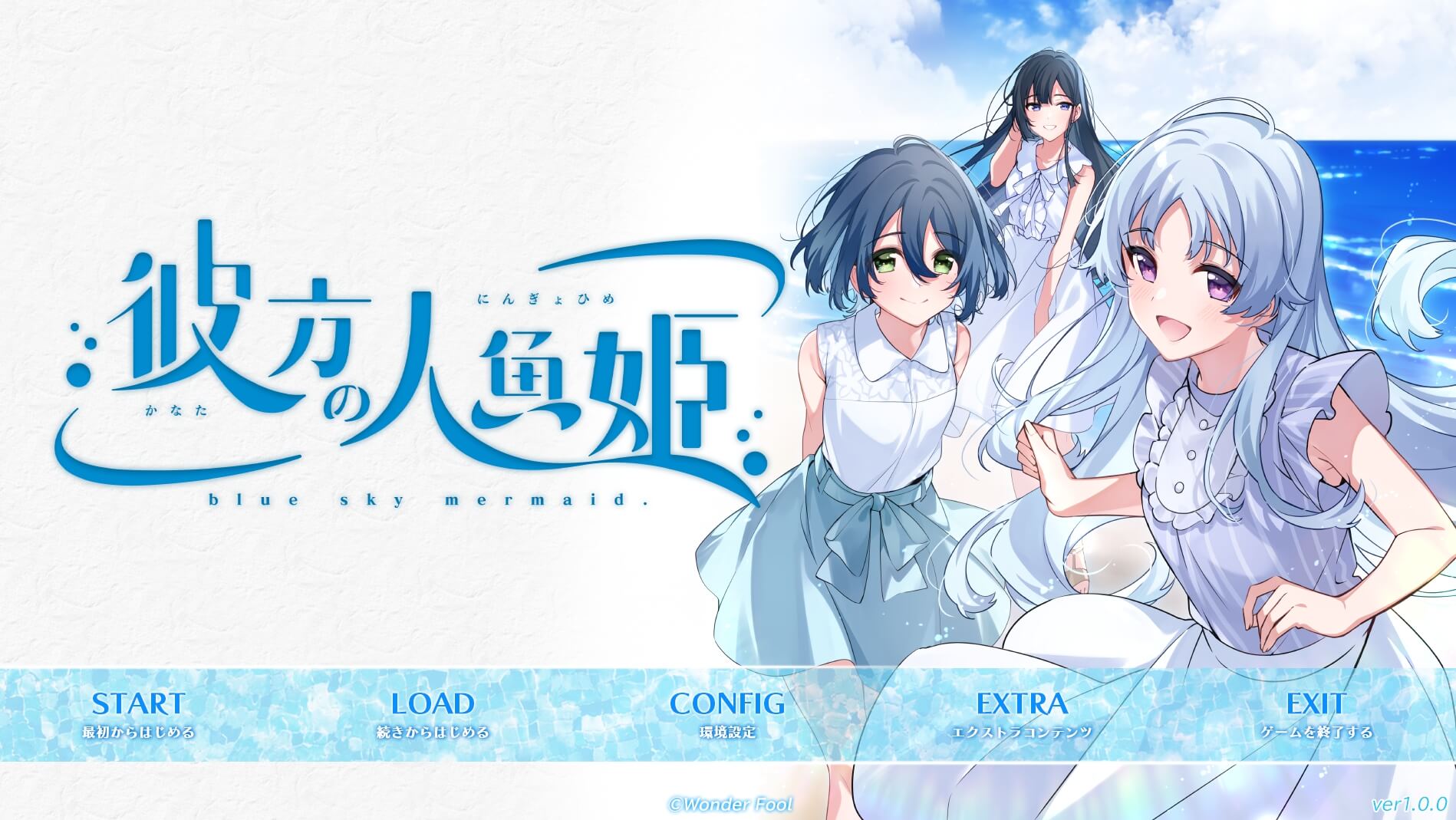
The story of Kanata no Ningyo Hime is way simpler than I expected. There are three heroines: Aoi, Hina, and Aoi—wait, no, Aoi, Hina, and Aoi again, that’s not right either. Fine: Aoi, Hina, and the mermaid. The game drops the premise “Aoi is the mermaid princess” right at the start, and I had no idea where the suspense was supposed to come from anymore.
Normally a “heroine is secretly a mermaid” setup should be hidden until the end, ideally with a twist or two to make it interesting. Instead this game just tells you upfront. Very disorienting. Not a shred of mystery left.
In practice the game doesn’t really want to keep you guessing anyway. The whole common route is just: Aoi, as the mermaid princess, comes to land and starts living with everyone. That’s it. In the endless day-to-day slice-of-life, I couldn’t see where the story was going. And the daily scenes keep deliberately hinting that each heroine is carrying some secret burden, as if every one of them is weighed down by an unforgivable sin. But what that sin actually is, the game stays shut-mouthed about.
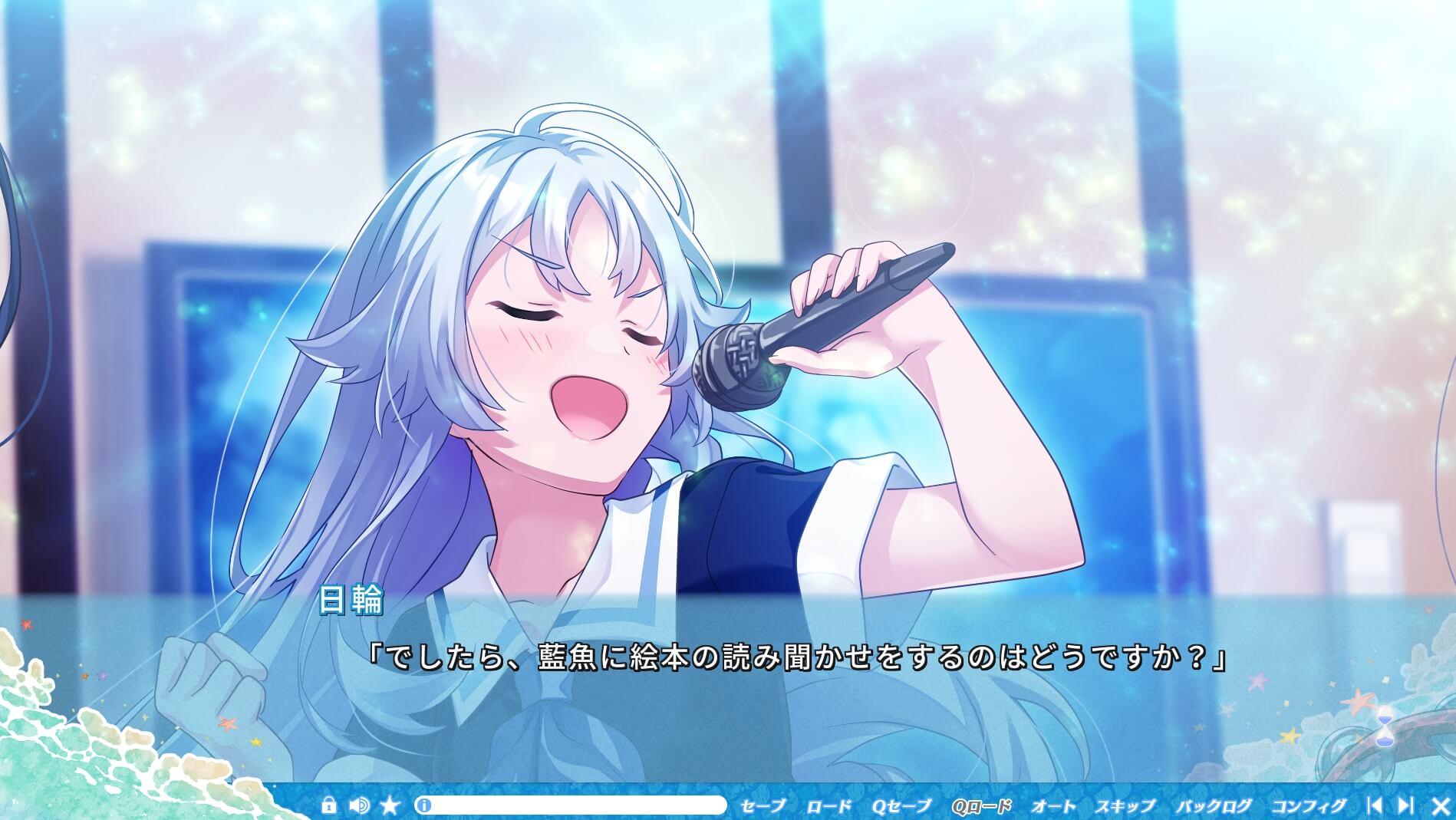
Only at the very end of the common route did I get it: ten years ago a girl named Ayane, who’s currently friends with all three heroines, was the first to meet the mermaid and was about to introduce her to everyone—but then drowned in an accident. Aoi, trying to save Ayane, got dragged under herself, gradually lost the ability to survive on the seafloor, and had to come onto land and start living in Ayane’s place. As for Hina and Aoi, they’ve each convinced themselves, through their own personal headcanon, that they’re responsible for Ayane’s death, so they mope around constantly—even though in reality they had jack shit to do with it.
You’re probably wondering where the story goes from here. Whether it fills in Ayane’s details, whether it completes this ten-year-old unfinished thread.
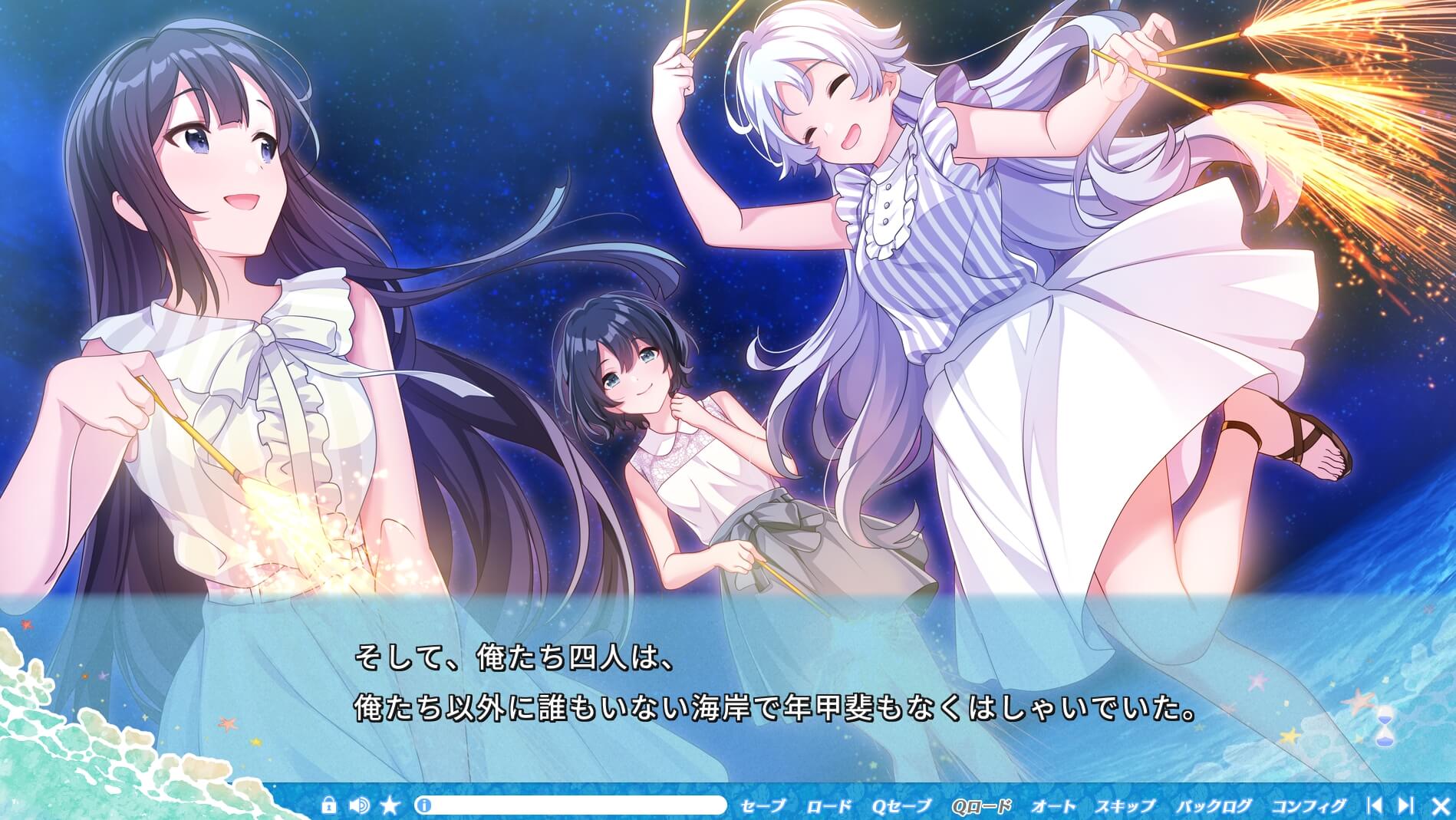
Yeah, no. That’s basically where the plot ends. After that you just pick a heroine to pursue, and the individual routes have almost nothing in them.
For instance, Aoi’s route pays lip service to her guilt over Ayane early on, then turns into Aoi wanting to make picture books and become a teacher. Hina’s route is even more of a stretch—she suddenly starts frantically playing matchmaker for the protagonist and the mermaid, purely because she likes him herself but can’t confess, and only after the mermaid calls her out does she end up with him.
The only route with any real connection to the main plot is the mermaid princess’s own. It starts as a normal romance, but the protagonist’s confession gets rejected by Aoi—she thinks she doesn’t deserve love because of what happened to Ayane. Then, at the convenient moment, Ayane suddenly telepathically reaches out from beyond and tells Aoi to let go of her baggage, so the protagonist and the mermaid get together. They try every position in the book, and he knocks up the princess.
Then, for the emotional finale, the game throws in a “the mermaid princess must return to the sea” tearjerker—but once the ED animation finishes, the protagonist’s daughter just shows up. What does that tell you? The mermaid’s departure was temporary, not a final goodbye. She came back soon after.
So the entire plot can be summed up in one sentence: a girl drowned ten years ago, one mermaid, two other girls, each convinced it was their fault and full of guilt. But once they bang the protagonist, all that guilt evaporates and everything reaches the best possible ending.
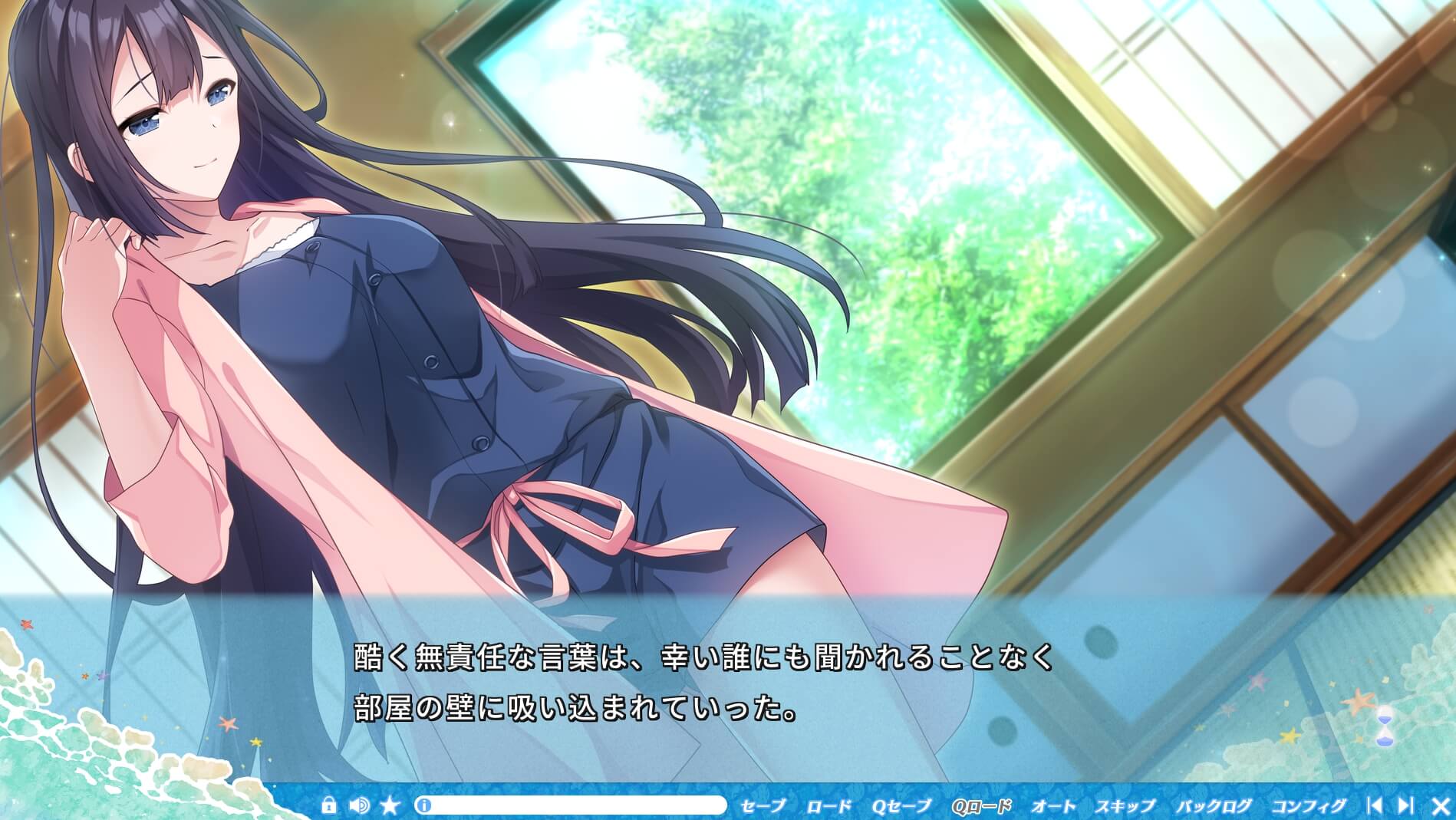
Sometimes I genuinely wonder if the protagonist’s dick is blessed, capable of curing all ailments—including ailments of the mind.
The biggest problem with this game is that it’s too melodramatic. The story is hollow, padded out with nothing but daily-life filler, and even so, each heroine’s route is pitifully short—you can tell the writer had run out of things to say. I can understand why each heroine feels guilty; a sensitive girl’s emotional overreactions, that kind of thing. But the writer clearly doesn’t have the skill to actually put that psychology into words. The end result isn’t resonance—it’s comedy. Reminds me of that heroine in Yukiiro Sign who inexplicably starts smashing doors. If I didn’t know better, I’d think a Xiaohongshu princess had descended to earth.
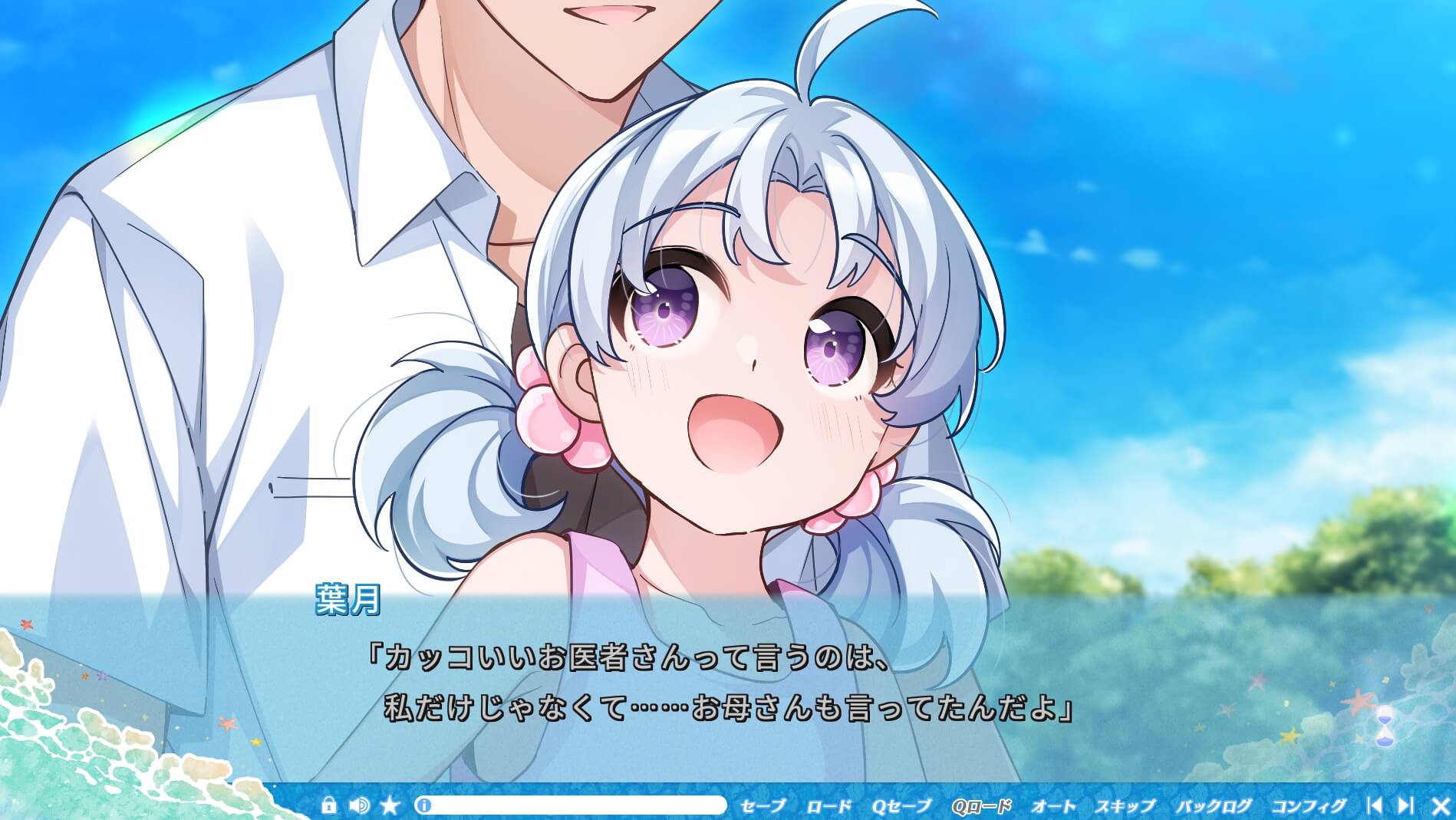
Actually, understanding these heroines’ delicate little feelings isn’t hard. Just treat them all as severe depression patients. The defining trait of depression is an inability to let things go—a tendency to spiral into intense inner agony at the drop of a hat. That perfectly matches how these heroines get randomly, pointlessly melancholy all the time. If they were normal people, you’d figure either they or the writer must be an idiot. But if they’re depressed, you can only look at the writer and the heroines with pity. They’re depressed! Anything bizarre they do is understandable. Emotional outbursts, overthinking, impulsive self-harm—it all makes sense now.
Next time, U35-sensei, please stop collaborating with this depressed scriptwriter. You’ll catch it.
Comments are hosted on the Chinese main site. This mirror is read-only.