Natsuiro Recipe (なついろレシピ) Review
The Two of Us, as Seasoning
Honestly, Natsuiro Recipe (なついろレシピ) wasn’t the game I was most looking forward to this month. I’d originally planned to play Pure X Connect and Sumire first, but Natsuiro Recipe leaked early, so I had no choice but to play it first—and what a surprise it turned out to be.
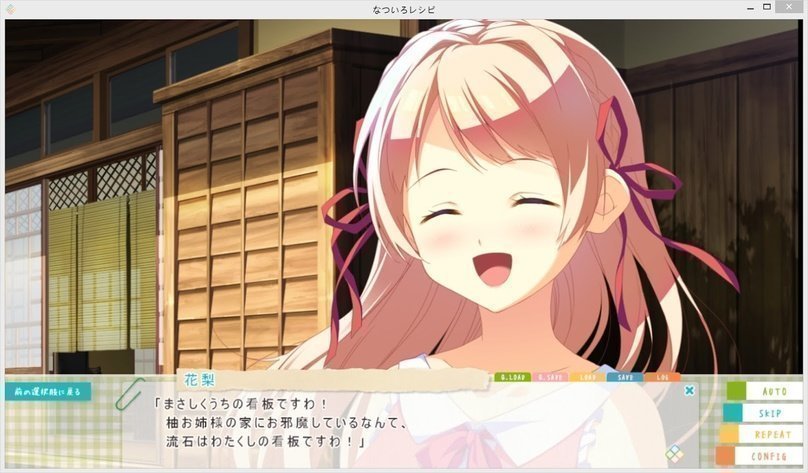
In its marketing, the game seemed to push “girls doing cooking” as its theme—hell, even the title is Natsuiro Recipe (夏色recipe, summer-colored recipe)—but that’s not what the story is actually about. It starts with the protagonist moving to the countryside to take care of his half-sister Yuzu. Yuzu had long been cared for by their grandmother, who ran a small diner in the village. When the grandmother dies, the diner falls into disrepair, and the story kicks off with Yuzu determined to revive it… together with the protagonist.
From there it unfolds very steadily. Yuzu can’t cook at all at first; the protagonist, as her older brother, supports and encourages her the whole way, and the other villagers gradually come by to help—mostly out of respect for Yuzu’s grandmother, though by the end more and more people start recognizing Yuzu as the diner’s new head. There’s a bit of a twist in the middle, and at the end Yuzu learns she and the protagonist aren’t actually blood-related—not even half-siblings; her real mother and father are other people entirely. The grandmother opposed the relationship, and as for how Yuzu later ended up tied to the protagonist’s dad—whether he was picking up a ready-made family, I couldn’t tell you. The letter the protagonist’s father wrote in the game is genuinely impossible to parse. I clearly need to keep working on my Japanese…
As a galgame, the most successful thing it does is tell a good story and build good characters. Natsuiro Recipe’s story is simple and told reasonably well, but the more obvious highlight is the character work—especially Yaehara Yuzu.
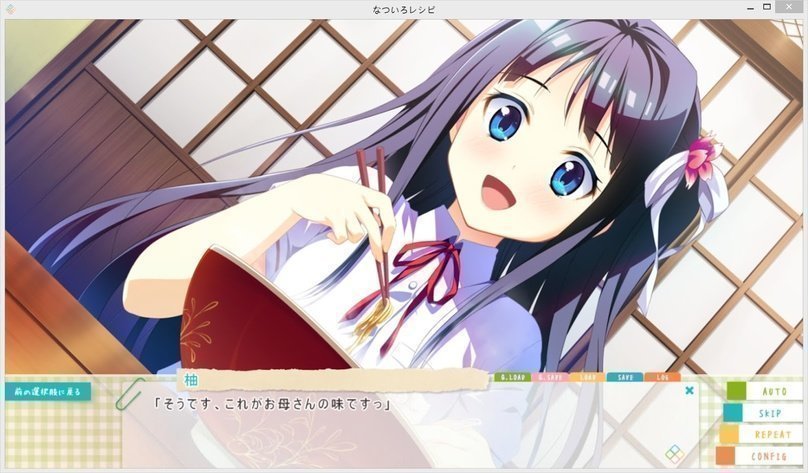
What does it even mean for a character to feel alive? Broadly, it’s when you feel like this person actually exists, that someone like her is really out there—her personality follows its own logic, her actions make sense, and she has a sense of reality inside a work that’s otherwise nothing but fiction. That’s what it means.
“Oh, I’ve met someone like this! I’ve got a friend with the exact same personality!”
That feeling. The people you want to get close to in real life but can’t, and in the game they’re all lovey-dovey with you—that’s the appeal of a galgame right there!
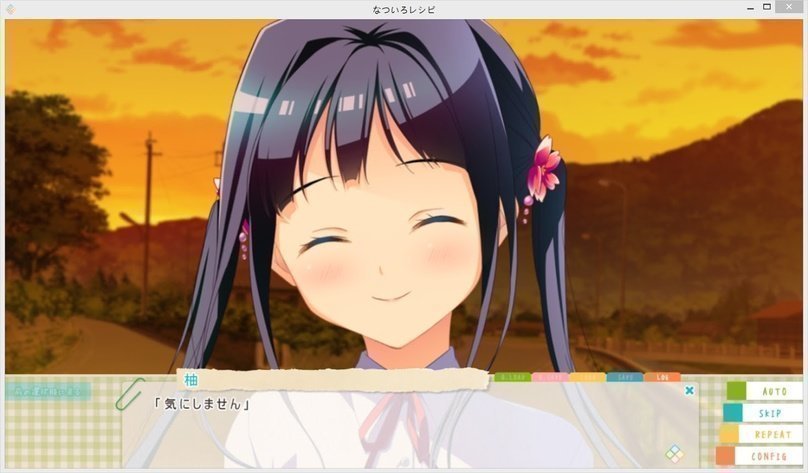
Yaehara Yuzu is kind-hearted, a little stubborn but deeply dependent on her brother, clumsy yet earnest, and she writes everything down on paper whenever something happens—even after she switches to a tablet. She loves her grandmother and the village enormously and genuinely wants to revive the diner. When she messes up a dish, the pitiful look she gives you when asking for help is impossible to refuse, and the care she puts into the vegetable garden makes it impossible for you to just leave her be.

“Ahhhhhh, I want to marry Yuzu!"
Most ACG works build personality through signature gestures—simple, blunt characterization. Natsuiro Recipe goes for daily life instead, stretching that daily life across three whole years to show it. Year one: Yuzu develops a vague feeling for the protagonist and eventually learns he isn’t her blood brother. Year two: Yuzu finally confesses to the protagonist in a roundabout way, he understands her feelings, formally confesses right back, chooses to stay in the village instead of going back to Hong Kong to find his father, and they become a couple. Year three: the two of them work together to revive the village diner’s future, and it all ends in a Happy End.
The game puts real care into its small details. The classic one: in year two, at the village festival, when people misunderstand her relationship with the protagonist, Yuzu doesn’t explain—she cheerfully admits he’s her boyfriend, then has no choice but to deny it afterward.
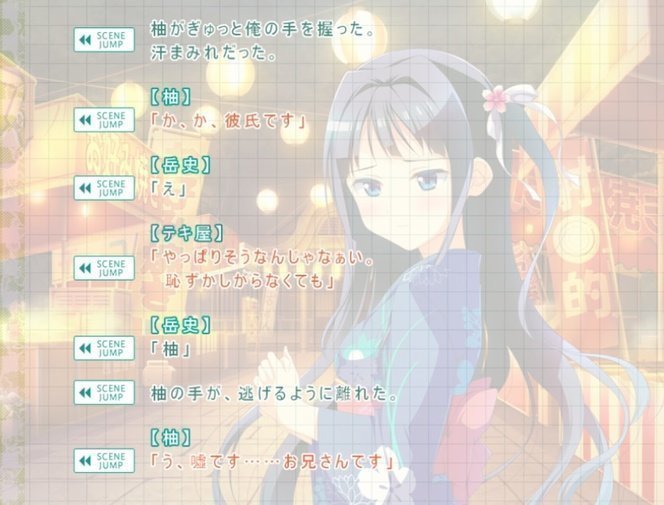
That hit me right in the heart!!!!!!
There are other moments too—Yuzu watching the protagonist cook, and the confession scene. It doesn’t go for the clichéd “好きです”; the protagonist just says “I want to be with Yuzu forever,” and even so, it’s more than enough of an answer from Yuzu. Sweet enough to melt—!!!
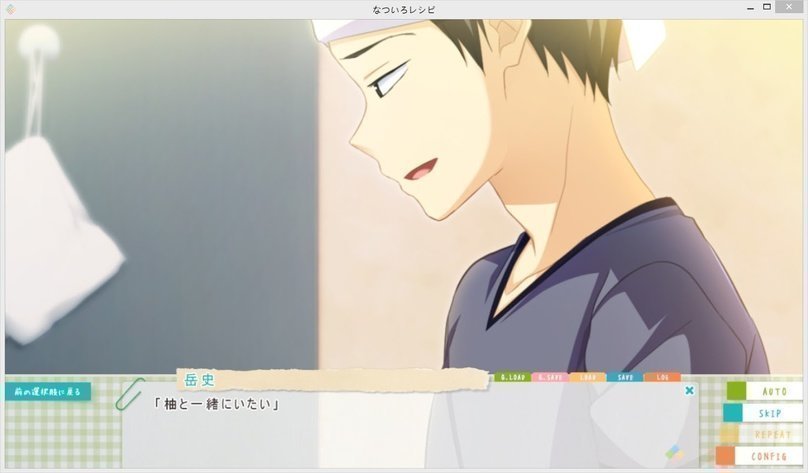
Details like this run through the whole game. The daily-life scenes absolutely deserve careful reading, and every one of those hack scenario writers ought to take notes on how to build a vivid, gentle little sister. The last time I felt this way was with Tsukiko in Himawari no Kyoukai to Nagai Natsuyasumi. Getting the same feeling from a game a year later—is this fate?
The game is long, and Yuzu’s route is a slow, gentle romance. Yuzu is written so perfectly that the other heroines are reduced to background decoration—I had zero interest in playing their routes. Suzumi is a funny character, sure, but she has no presence at all under Yuzu’s shadow, and that goes double for her little sister and the quiet girl helping out at the village shop.
The BGM is a highlight. The last track on the OST—an upbeat rhythm stitched together entirely from cooking sounds—made my ears perk up. Way better than the grandiose scoring you get on food shows. That’s the kind of background music a daily-life cooking galgame ought to have.
And sure, the game advertised “girls doing cooking,” but by the end Yuzu still can’t handle the kitchen on her own. She doesn’t even cook that many times in the game, and the few dishes shown are just CGs edited from real photos. But who cares? As a galgame, Yuzu is fleshed out enough—she’s become the core of the game. The theme is “summer-colored recipe,” and in the end Yuzu finds the flavor and recipe of the ramen her beloved grandmother made, and steps little by little toward her grandmother’s wish. The closeness between brother and sister becomes the best seasoning between them, turning into a delicious recipe carrying the scent of summer, making one good meal. That’s what the game is really after, isn’t it…
Comments are hosted on the Chinese main site. This mirror is read-only.