Houniao (候鸟) Review
I Can't Relate, but It's Still a Good Game
I don’t know when I bought a Chinese-made galgame (for lack of a better word) called Migratory Bird on Steam. I strongly suspect I meant to buy Qingxiang and misclicked, but whatever — it’s bought, no refunds, might as well take a look.
From top to bottom, the production values on this thing are relatively “serious.” The whole work gives off this dead-earnest vibe. That’s not a dig, and it’s not a joke — I mean it in a mostly positive way.
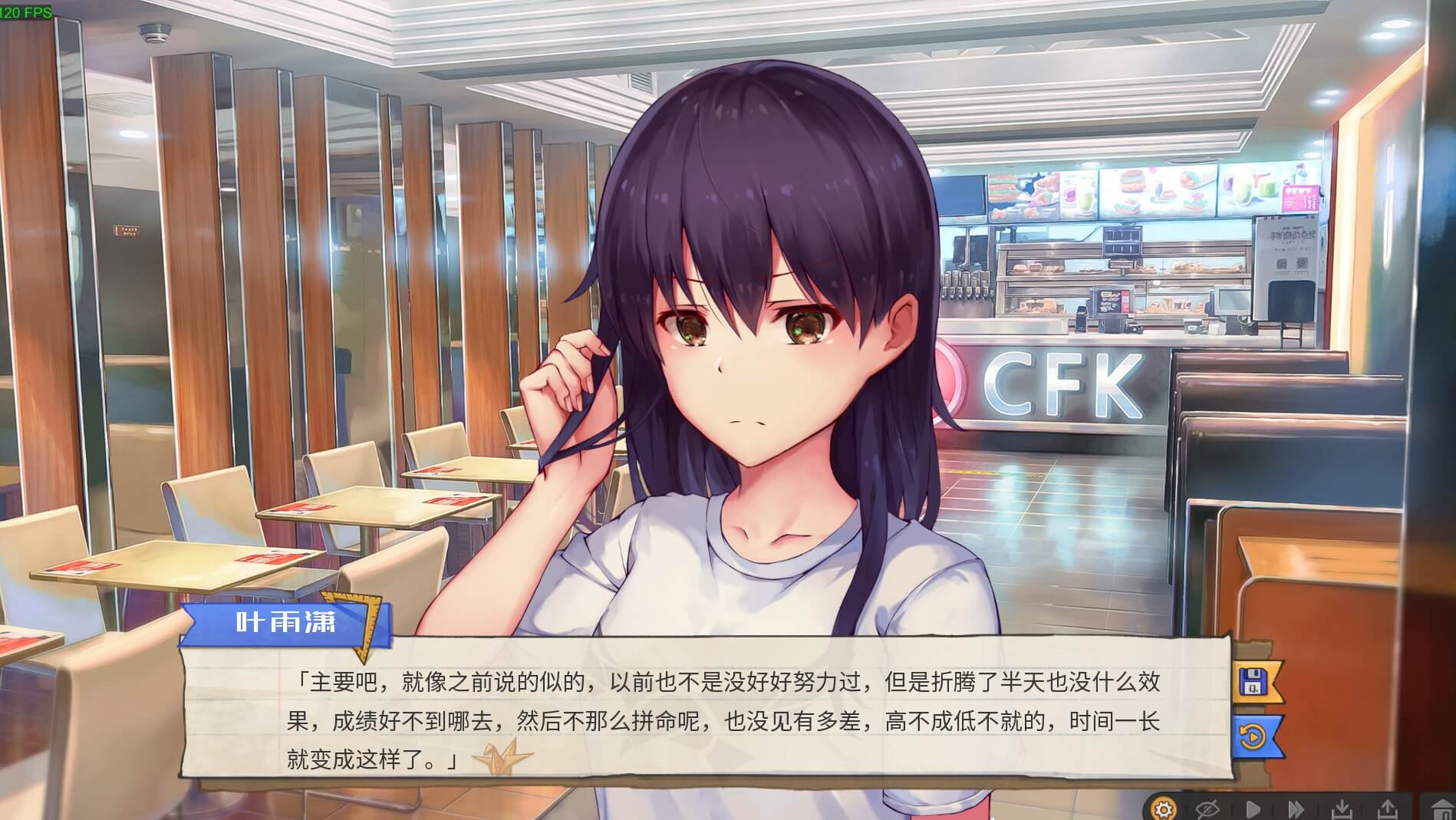
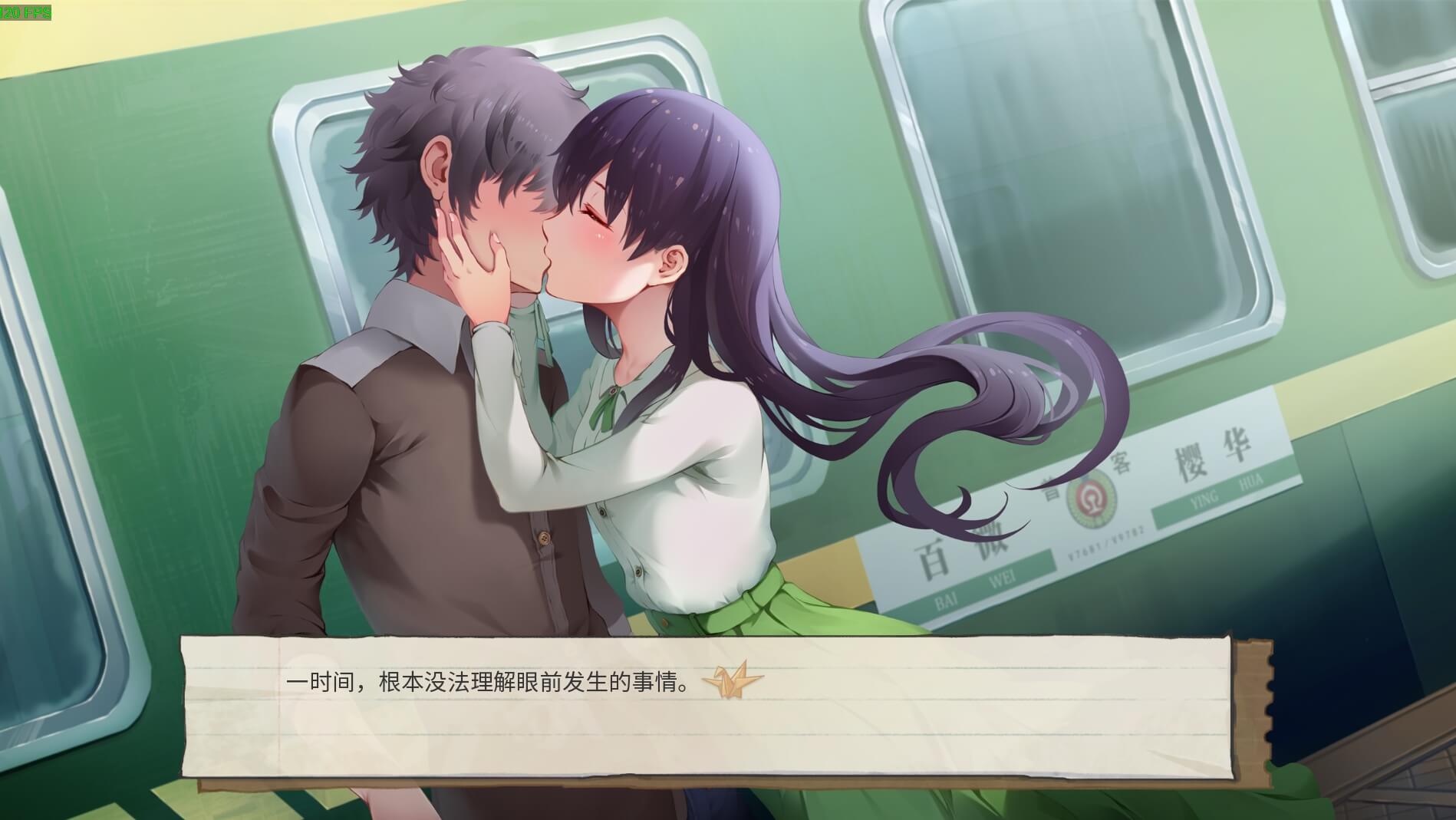
The story’s theme is the one we always see when former high schoolers look back on the Gaokao years: the Gaokao sucks, but youth is forever. It follows an utterly unremarkable male student who loses his sense of direction, meets the top-of-the-class heroine, finds a reason to try, grinds through high school, watches his grades climb, and promises her they’ll get into the same school. He fails the first Gaokao, but resolves to repeat the year for her sake and his own future — and it works out.
Let me get the noteworthy points out of the way:
First, the depiction of high school life is pretty true to life. You can tell it’s set at a school in Yinchuan — there’s a scene like the “Wetland Bridge” in there. I’m not from Yinchuan so I don’t know if I guessed right, but at least you can tell the dev team did their homework and shot on location.
Then there’s the character art, the soundtrack, the fonts, the whole system — you can see traces of careful polish everywhere. It’s genuinely pleasant to look at. At minimum you can tell the dev team actually plays galges: everything you’d expect is there, so you never get that awkward “missing feature” feeling.
There are still some rough spots. Take the UI text, for instance — they wanted a “scratch paper” aesthetic, but didn’t nail the typesetting. Once a text box goes past three lines, the vertical spacing stops being even. This gets really obvious in the mid-to-late game and often sticks out like a sore thumb. Kills anyone with OCD.
No problems with the story or writing. The dialogue is warm and natural, which in turn makes the voice acting flow smoothly — no awkward stiff reading. The atmosphere is more localized, with a lot less “anime” flavor, and that’s probably why the dev team had to force in some anime-ish elements — maybe to remind players this hasn’t strayed from its galgame roots?
Of course, what I really want to talk about separately is the story. Honestly, I’ve seen more than enough stories like Migratory Bird. Online, in classmates’ Discord Zones, on the old Renren network — most of them run the same line: “School life was rough, but no regrets.” I’ll say it flat out: I feel zero resonance with this kind of story. Personally I can’t understand why anyone would look back on their high school days with that attitude. I used to think it was because my own high school experience was unusual, but after playing this game I’ve actually come around to a different view.
Let me start with my own high school history. On the high school entrance exam I did about average, and barely scraped into the city’s first-tier high school — and that school was last among the first tier. In high school I studied even less diligently than in middle school, at one point dropping to second-from-last in my grade. Thinking about the coming Gaokao, I’d sometimes feel lost the way the protagonist does.
What’s the protagonist’s deal? He starts doubting himself, gives up on himself, figures this is his level and this is how his whole life will go. Then some external stimulus (romantic feelings for the top-of-the-class girl) fires up his fighting spirit, and his grades shoot up fast.
And what was my deal? First of all, when I was near second-from-last on exams, I still didn’t think anything was wrong with me. I never thought I was stupid or incapable of learning anything. I knew perfectly well I hadn’t been studying seriously, and that if I did, these exams would be nothing.
And all the way to the final Gaokao, I never once truly “studied my ass off.” Occasionally I’d put in real effort in the middle, and sure enough, just as I’d predicted, my grades would shoot up — I once got a perfect score in biology, when I’d failed biology on the previous exam, to the point the teacher double- and triple-checked that I hadn’t cheated. And of course, after that brief “serious” stretch I’d start slacking again, and the grades would plummet right back.
The thing that stuck with me most was my English teacher. She flat-out said she couldn’t figure me out. When the English test was dead easy and everyone else was scoring 140-plus, I’d get 100. When the test was brutally hard and everyone else was clawing for 90, with plenty crashing to 70, I’d still get 100.
Once my English teacher asked me, genuinely curious: “Do you actually know English or not?”
“I do!” I said. “I understood all the reading passages.”
“Then why do you get so many reading comprehension questions wrong?”
“I assumed the questions had some hidden meaning. How was I supposed to know they’d be that literal?”
The English teacher made a complicated face and went silent.
Looking back, I’ve had this “never bow my head” attitude since I was a kid. I’ve never felt anything was “too high to reach, out of my grasp” — including the Gaokao.
Confidence in my own ability is probably one of my strengths. I always figure most things aren’t that hard; once you find the trick and the knack, you can pick them up easily. And I did try it a few times, and sure enough the results were striking.
But don’t forget I have my flaws. I know I’ve got the ability, yet I always slack off instead of using it. That’s what sank me on the Gaokao in the end — and thanks to my strengths, I didn’t think failing it was that big a deal either.
So my high school years passed in a haze of slacking off and the occasional spur-of-the-moment grade spike. My grades were bad most of the time, but teachers and classmates always seemed to think there was some hidden brilliance in me, which kept me from being looked down on too much.
So I can’t understand the protagonist’s despair at “exam-oriented education” at the start, because I never took exam-oriented education seriously in the first place. All that “I’m ordinary, this is probably as far as I’ll get no matter how hard I try,” “no matter how I struggle I’ll never reach the top-student level,” “I’m just a kid from a rural town, how could I ever get into Beijing, Shanghai, Guangzhou, or Shenzhen” — to me that’s all completely baffling, because I’ve never had those give-up-on-myself thoughts. Even now as a father, my thinking on my kid’s education skews positive. I don’t think the endless rat race through elementary, middle, high school, and even college is that despair-inducing. A few days ago I even felt the Gaokao is bullshit — it’s the internet age now, people with real skills make money on their own.
Given that long-held view of mine, I really can’t resonate with the scenes Migratory Bird depicts. If I were to write about my own life before the Gaokao, I’d probably write about skipping class to play games, watching porn with my classmates, watching one of them crush on some pretty girl in the class across the hall, a bunch of us snarking about which teacher was more of an idiot… feels more like the style of Grass Years.
The story Migratory Bird tells is unquestionably positive, upbeat, uplifting, and it ends well — lovers end up together, and dreams open their doors to those who fight for them. But for me the story is still too “positive,” like the life reflections a dutiful top student would write. Maybe we’re from different eras, maybe the study culture was different. In the end I just can’t muster any particular feelings about a story like this.
But that’s not the author’s fault. Even if I can’t relate, Migratory Bird still tells a very complete story, and the game’s production clearly had a lot of thought put into it. It’s worth a try for any player who likes youth-campus literature.
Comments are hosted on the Chinese main site. This mirror is read-only.