Hands-on: Playdate
Playdate: Overpriced, but Not E-Waste
The Playdate is a handheld made and sold by Panic, the studio behind the well-known game Firewatch — or rather, that game is exactly what gave the team the starting capital to build this thing.
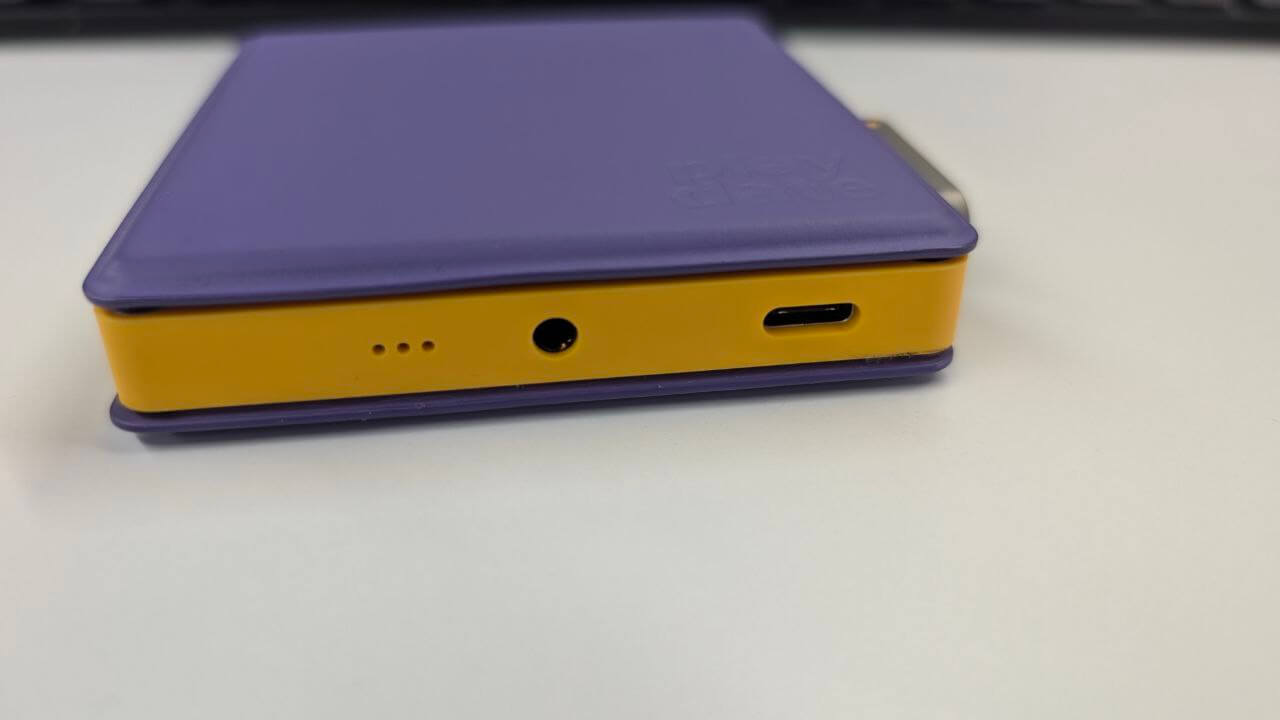
As a handheld, the Playdate has a grayscale reflective display that’s supposedly on par with e-ink (no backlight), a small enough size, a yellow shell, and a button layout reminiscent of retro handhelds.
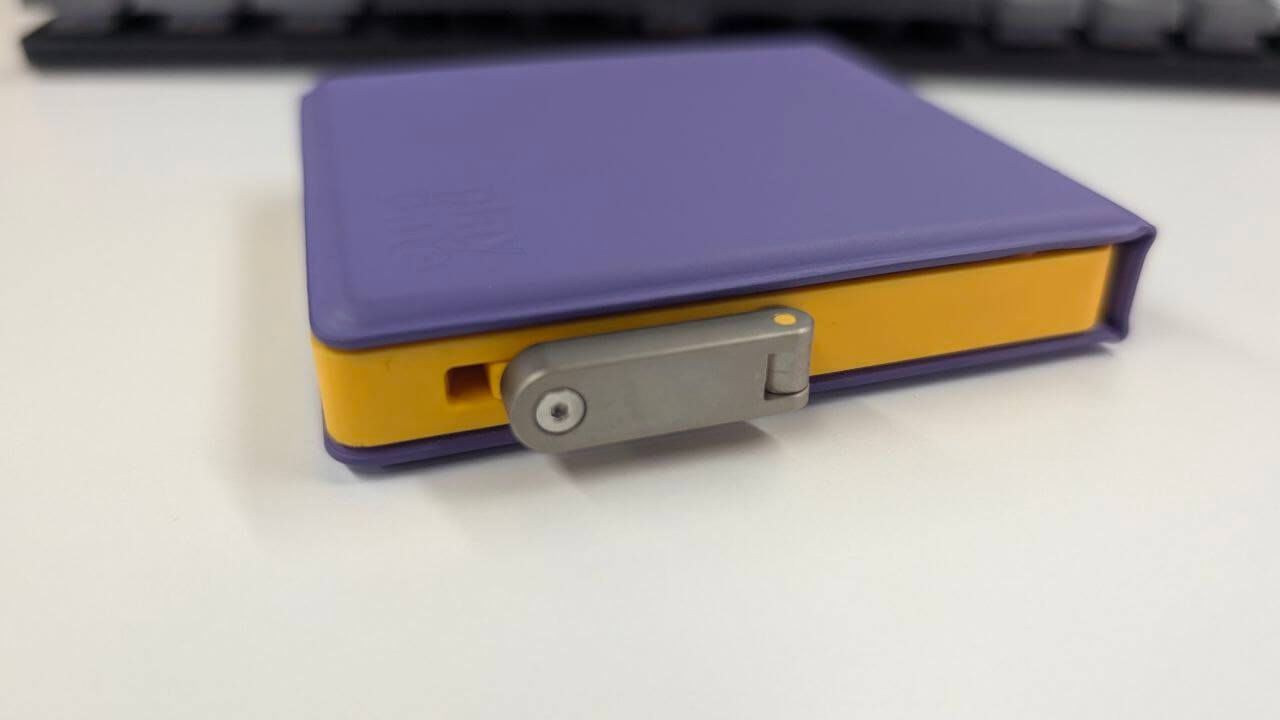
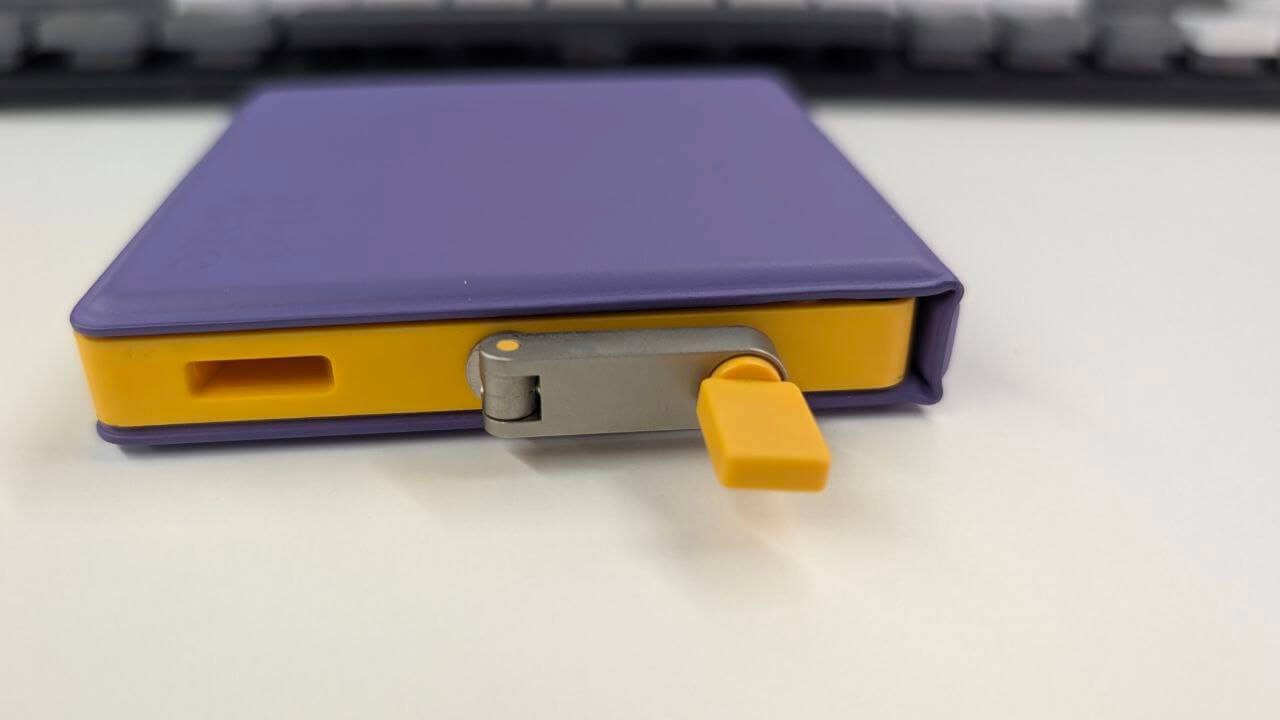
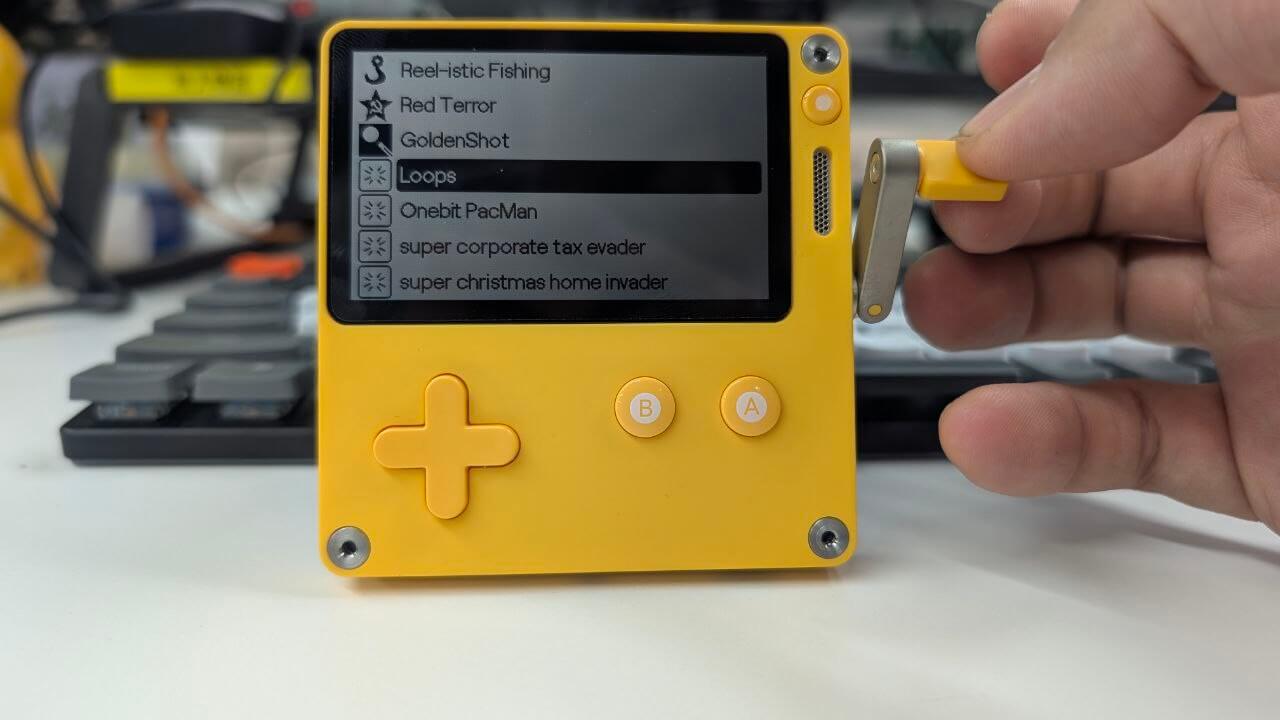
It looks very refined at first glance, but the real standout is the “crank” on the side that tucks in and pulls out. This kind of control device is probably the first I’ve seen in the “handheld” category.
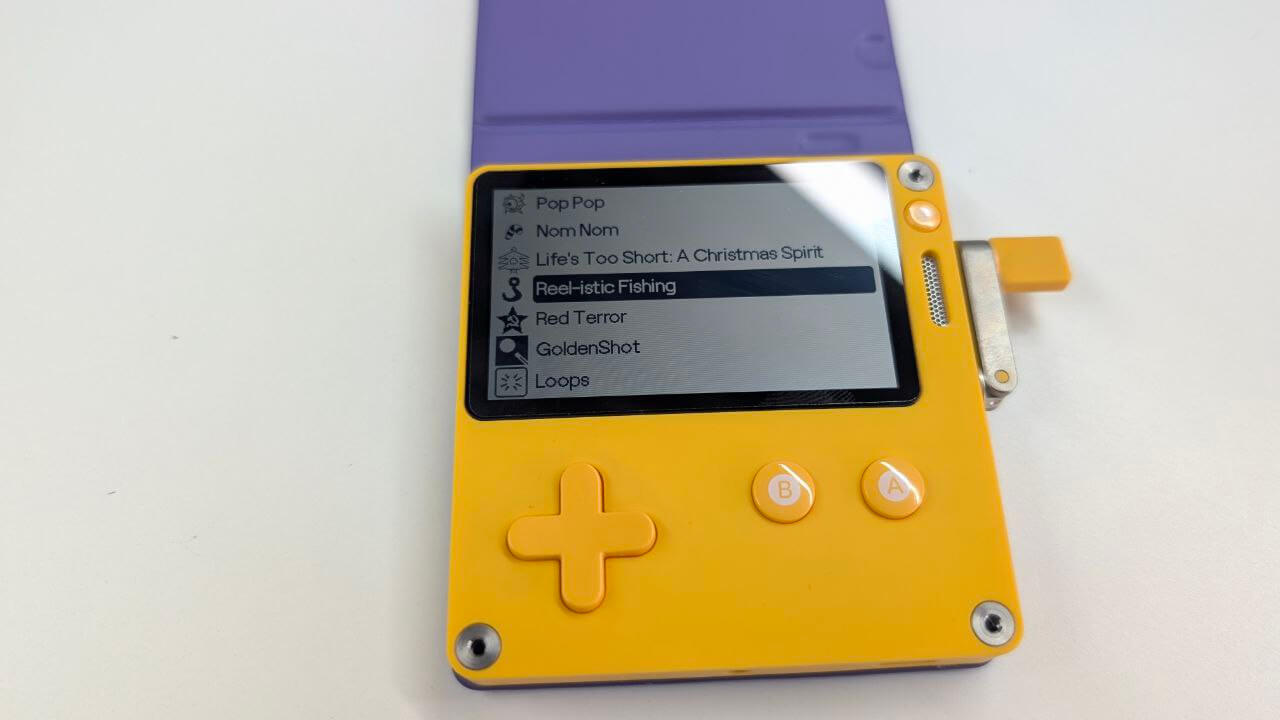
The Playdate isn’t cheap. It starts at $199, and the game lineup isn’t large. It relies on the official store and third-party itch sideloading. Out of the box you get a free game pack — 24 free games delivered via monthly pushes. Beyond that, apart from a very small number of free titles, games cost money. There may be ways to crack it, but the machine is so niche — only 70k units sold so far — that there isn’t much documentation.
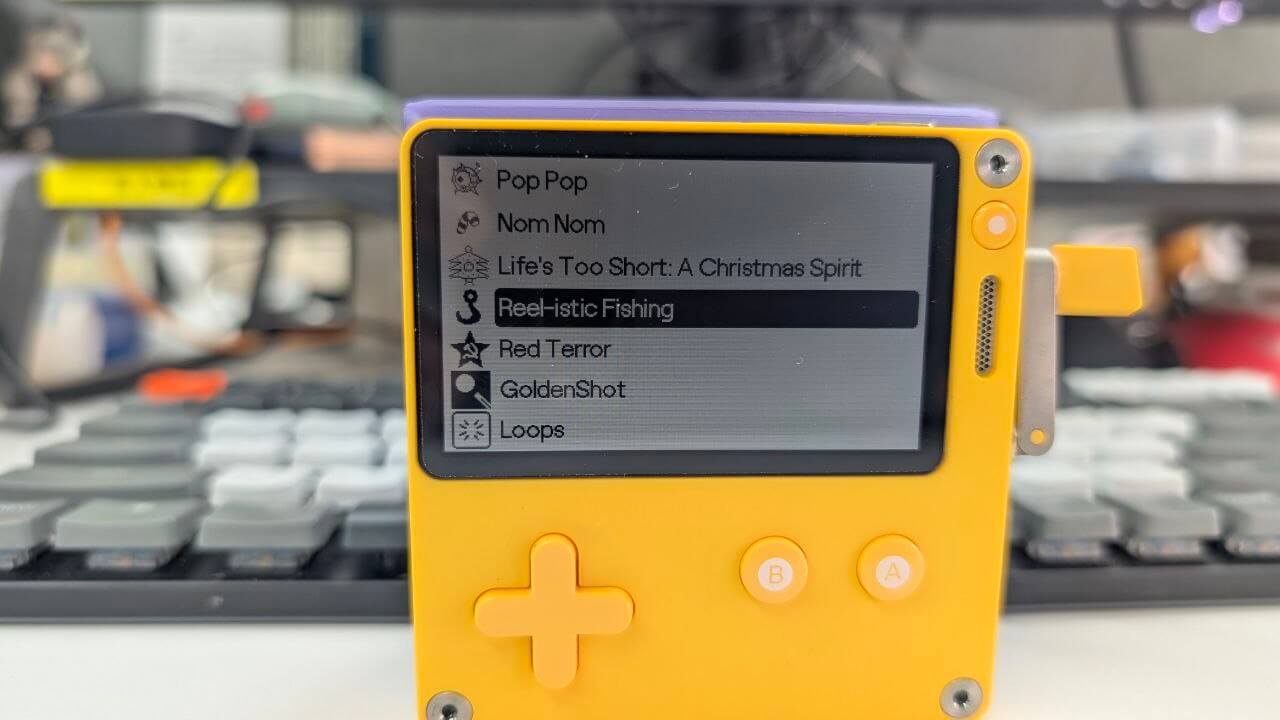
The console itself is tiny, and the buttons are stiff metal domes, so it doesn’t feel great to play. No backlight, no color screen, and certainly no “blockbusters.” For a device that costs nearly 1500 RMB, this thing really gives off “electronic prayer beads” or “idiot tax” vibes.
That’s how I felt at first too, but my view gradually changed — and the more “open-source handhelds” I try, the more positive I feel about this machine.
It may seem overpriced, but it has an advantage no other handheld can match: it has exclusives.
Yes, this handheld has exclusive titles. In fact, the store is full of very creative exclusives, most of which build around that crank, since it’s the biggest thing separating it from other handhelds.
The most famous exclusive is Root Bear. The game is simple: use the crank to pour beer into a glass and match the fill line as closely as possible. It’s just addictive — simple, fun, easy to pick up, and the controls are intuitive. Whether it’s the elderly or kids in my family, or a female teacher who doesn’t play games, everyone finds the fun in it quickly.
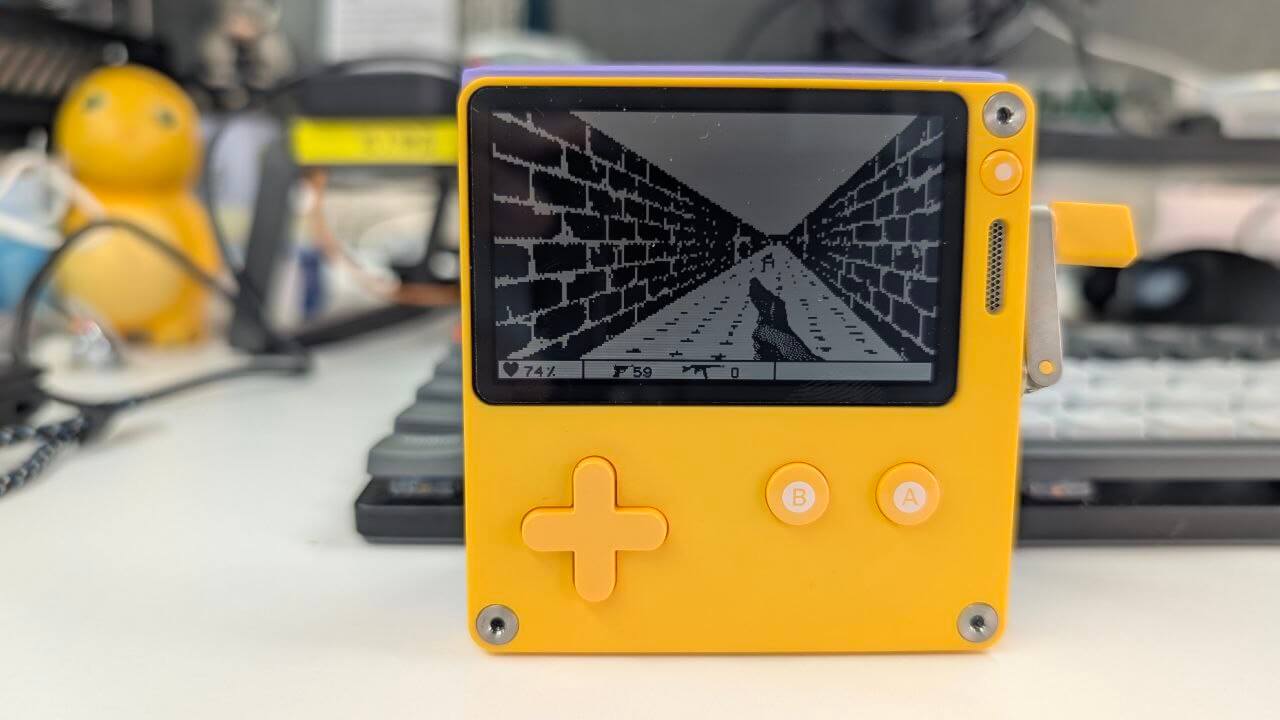
Another strength of the crank is fishing simulation. There are even more of those in the Playdate store, and some games that use the crank for more creative expression made me realize this machine is no simple toy. There are traditional games too — I can even play an FPS on it. Performance is OK; it’s just hard on the eyes without color. And this little machine isn’t great for that genre anyway, so those games don’t sell well. Most games cost money, but they’re cheap — the most expensive is $5, usually $1 or even $0.50 — which has drawn in developers making creative little games, and a Playdate ecosystem is slowly forming.
Another great thing about this machine is how smooth the overall experience is. By linking your account, you can easily buy and install games directly from the official site, and content syncs to the device automatically. There’s also Mirror software that lets you put the game screen on a big display. The official magnetic cover is precise, convenient, and portable, so you can toss this little thing in your bag easily.
So I started rethinking what this machine means. I realized its positioning really is “handheld” — just different from the “handheld” in our traditional sense. It’s not the concept of playing “video games” in your hands; it’s about using this little thing for some “casual games” — pouring beer, fishing, surfing. Open it anytime, play anytime, stop anytime. In a way it replaces mobile games like match-three and match-two, except this thing is more fun than those.
That’s also why I understand why the machine was designed this way: a crank gives it something unique, the small portable form factor lets you carry it anywhere, and the closed system gives it polished exclusives so many developers can make money. For launching a “handheld,” I think this approach is absolutely right. As for the high price, that’s understandable too — it’s a small company, it can’t sell consoles at a loss like the big players, and maintaining the ecosystem and services costs money. You’re paying for the experience.
All in all, I think the Playdate is a very cool “handheld” and genuinely fun. Whether it’s worth $199 depends on your needs. At least I don’t think it’s “e-waste.”
Comments are hosted on the Chinese main site. This mirror is read-only.