Inverted Angel Review
Inverted Angel: A Thousand Angels
I first heard about Inverted Angel because I’m a fan of Nakamura Sanso—she sings the theme song (ED) for it.
At first I figured it was just a simple little romance piece, or maybe one of those indie things with a bit of meta and philosophy tossed in, the usual slightly-deep-bait template. Then I actually played it, and I couldn’t help but say out loud:
“What the hell is this?!”
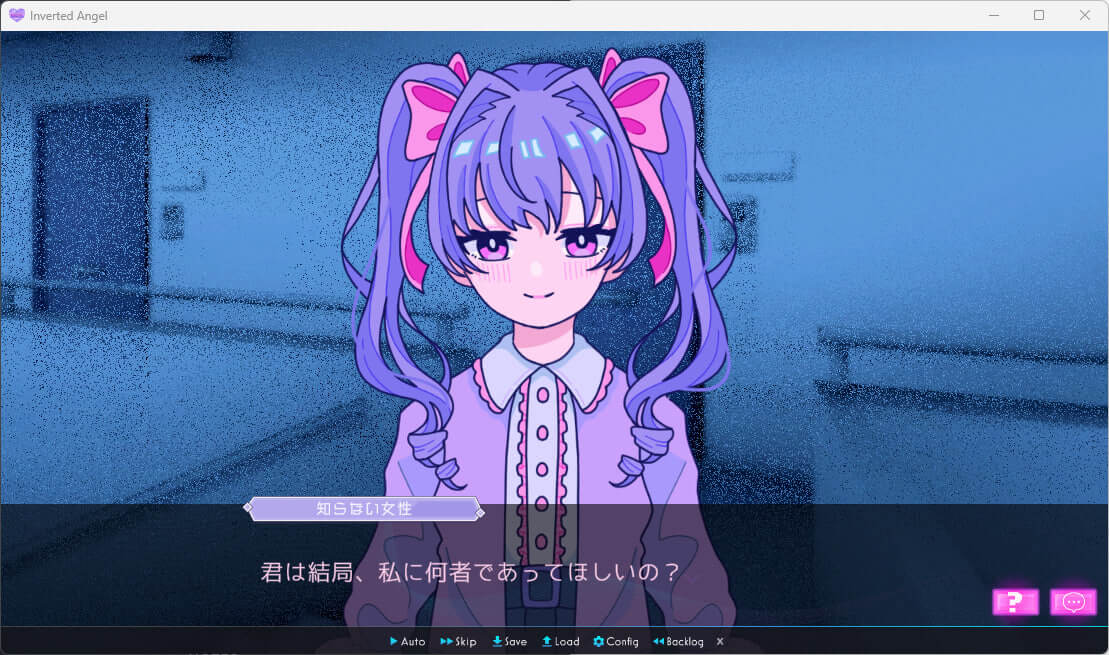
Strictly speaking, this game is more of a “conversation simulator.” You’ve lost your memory, and a girl who claims to be your girlfriend talks to you through the door intercom, and you have to figure out who “she” is from those conversations. No voice acting, no CGs, not even proper choices—what you get is a few text boxes.
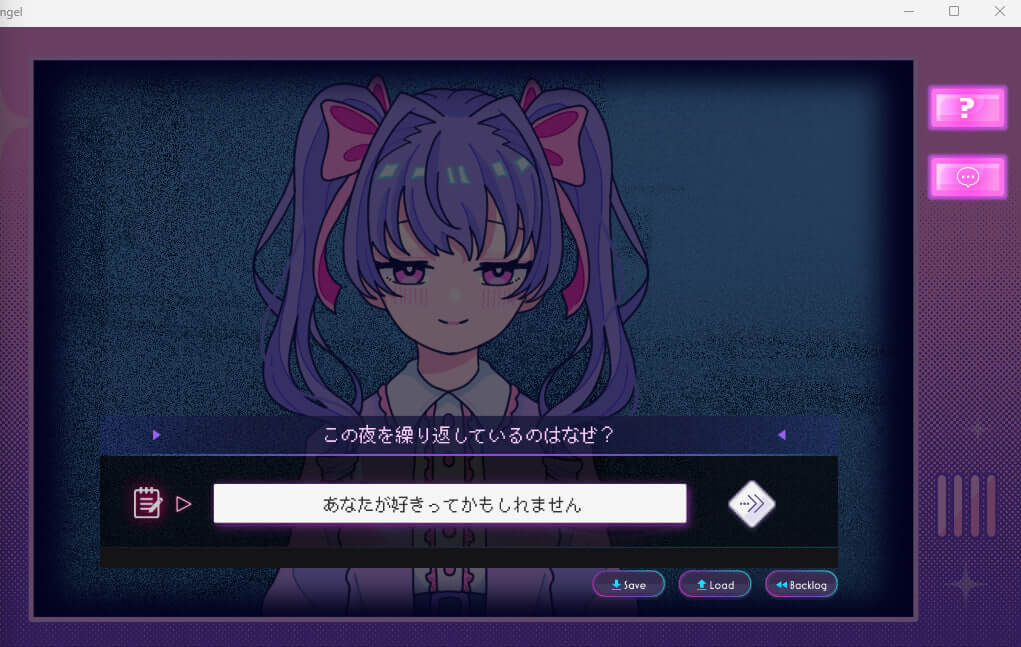
The game keeps asking you things like “Who do you think she is?” and “Find the contradictions in what she says,” and you answer by typing into that box. It doesn’t give you the usual AVG/galgame “pick one of three happy options.” It’s that open.
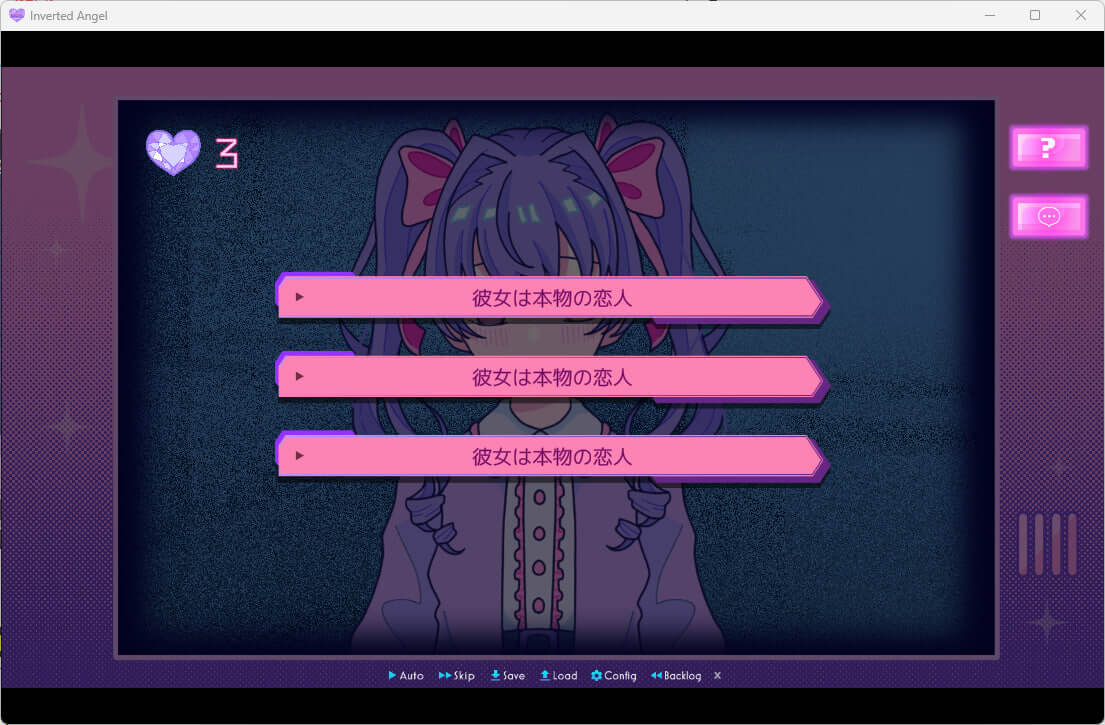
Of course, it’s not actually as free as you’d think—it just uses an LLM to analyze what you type and then jumps to the corresponding option. The game does have choices, they’re just hidden, and you activate them by typing. For example, when it asks you to guess the other person’s identity, if you type “stalker,” “creepy stalker,” “pursuer,” or whatever, it’ll treat them as the same meaning and jump to the same option. That’s also why this game is a nightmare to localize (especially into Chinese): the LLM needs an internet connection and has a specific language background. Never mind the differences in language analysis between Japanese and Chinese—mainland China’s internet is always unpredictable. I saw some fan translation group wanted to move the backend LLM to a domestic platform, and the author refused. The officially announced “English version” is still nowhere in sight, let alone a Chinese one.
Back to the game itself. If it were just “hidden choices, LLM jumps to options,” that wouldn’t be enough to call it “god-tier.” Because this is a work that mixes “mystery” and “philosophy,” and in some ways it doesn’t have much to do with romance at all. Your main thread is figuring out who the “girl” behind the screen really is, and her true identity is never fixed.
The game cites the concept of “actor-network theory”: any event’s causality isn’t caused by a single thing but is a product of tangled associations, and the “girl’s” true identity is the same. Whatever guesses you make about her during the conversation, her identity changes according to those guesses, and your own identity shifts accordingly. The shift is smooth, which is why the game has multiple endings, each more absurd than the last. There’s one where you’re a mad scientist making artificial meat from cells; another where the girl is a time traveler… Trying to pin down her identity through multiple endings is seriously hard work.
That’s also what left me confused at first: what is this game even trying to say?
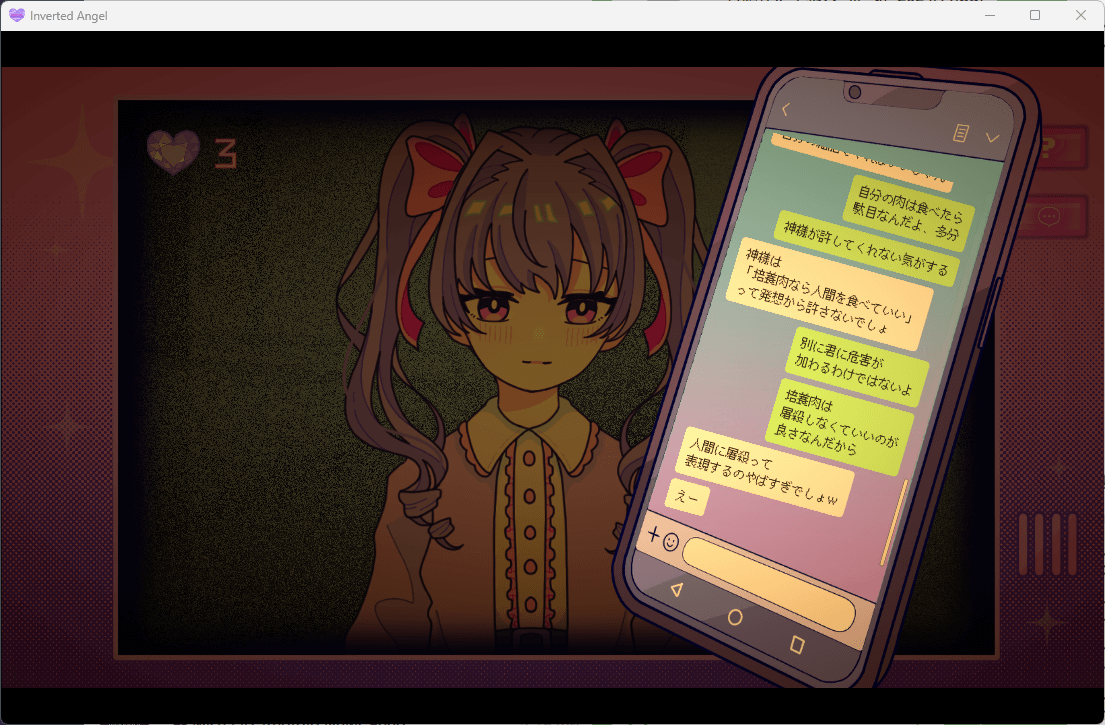
Later, after unlocking several endings, I felt like I’d been underestimating it. It’s not trying to tell you a specific “story”; it’s trying to give you an “abstract concept.” It gives you the setup of a “girl,” and what you do is decrypt, within that framework, the little stories hidden behind it. The connections between those stories don’t matter.
The game even expresses a “philosophical” idea: it lets you type your own input, but the options themselves are already set. You look free, but you’re not. Mapped onto life, it’s the same—sometimes we look free, but a lot of the time life only has a few options, and we spend our whole lives growing up on schedule, rarely escaping that “framework.”
There are plenty more “philosophical” concepts hidden in this game, but my brainpower and time are limited, so I didn’t think about them too much. Still, sometimes when I mull over the story afterward, I find new things. I can’t really say whether the game is genuinely that “deep” or I’m overreading it, but if it makes you think and get something out of it, that’s good either way.
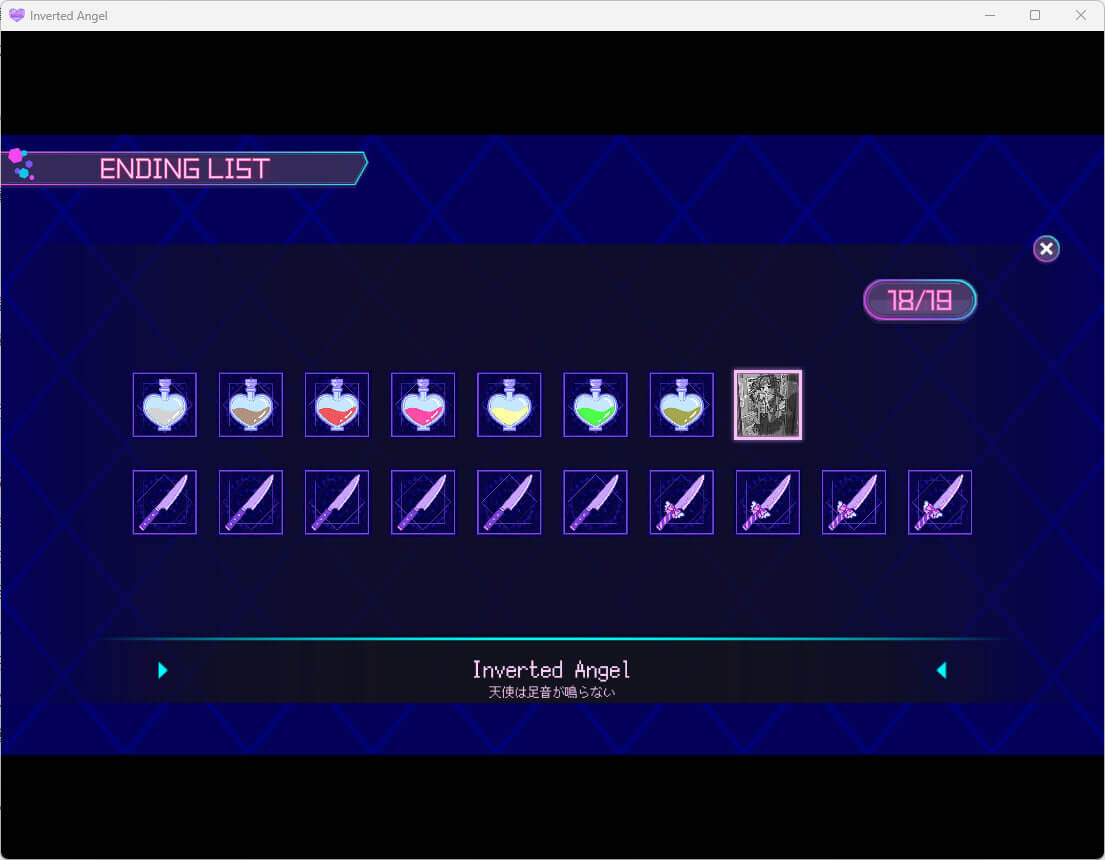
The True End requires unlocking all endings, and it gives you a reasonable explanation for “who the girl is”: she’s an “angel.” As for why she’s an angel and what kind of angel she is, the game doesn’t say outright—it just uses that same dialectical approach to give you the answer: whatever kind of angel you think she is, that’s what she is.
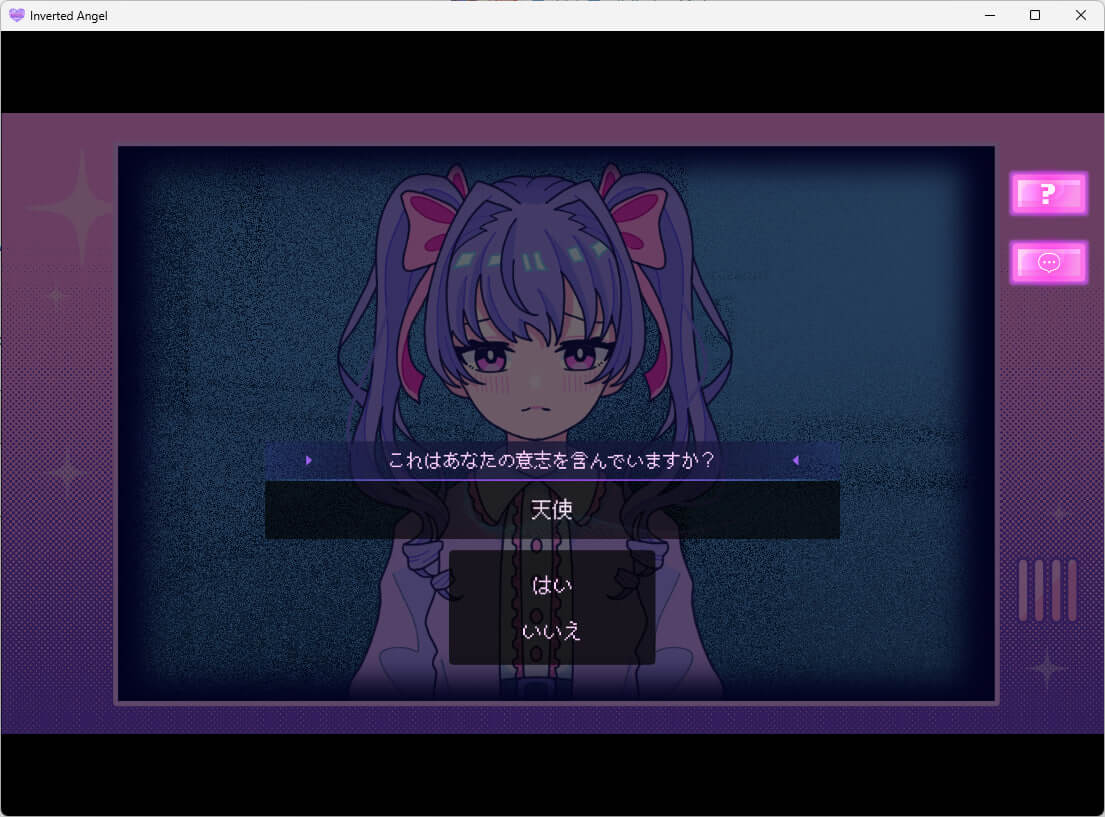
So everyone has their own image of an angel, and by playing this game you’ve formed your own understanding of this “angel,” so she’s the “angel” in your heart. Whatever you think she is, that’s what she is—even if her wings are transparent and invisible, she’s still the angel belonging to each player’s heart.
Like that easy-to-grasp saying: a thousand readers, a thousand Hamlets. A thousand players, a thousand angels of their own.
Comments are hosted on the Chinese main site. This mirror is read-only.