Putorika 1st cut: The Reason She Must Perish (プトリカ 1st cut:The Reason She Must Perish) Review
Ptrica 1st cut: The Reason She Must Perish
I’ve always thought of Lucle as something of an outlier among scenario writers in the visual novel market. While other works were still stuck on surface-level romance full of anime stereotypes, Lucle used theatrical prose and direction to deliver something genuinely different — a dimensional strike against a VN scene already frozen into “chuuni philosophy,” “dark and edgy,” and “cookie-cutter school confessions.”
After Mahou Tsukai no Hako (紙の上の魔法使い), Suisou Ginka no Istoria (水葬銀貨のイストリア), Sora ni Kizanda Parallelogram (空に刻んだパラレログラム), and Meikai no Rupekaria (冥契のルペルカリア), Lucle went quiet for a long stretch with no new work. Some say he got lazy, but I doubt it. If you’ve followed his narratives, or really sat down and experienced them, it’s easy to spot Lucle’s three favorite tricks: a miserable fate built on contradictions, a weak-willed protagonist, and a villain who whispers demonic temptations at him for the long haul — plus a genius character whose presence he uses to show ordinary people their own inferiority. Meikai no Rupekaria was already the culmination, a distillation of everything Lucle could bring. You can see echoes of his earlier works all over it. Sometimes I think Lucle burned himself out finishing Meikai no Rupekaria.
Or, to put it more bluntly: he ran out of material.
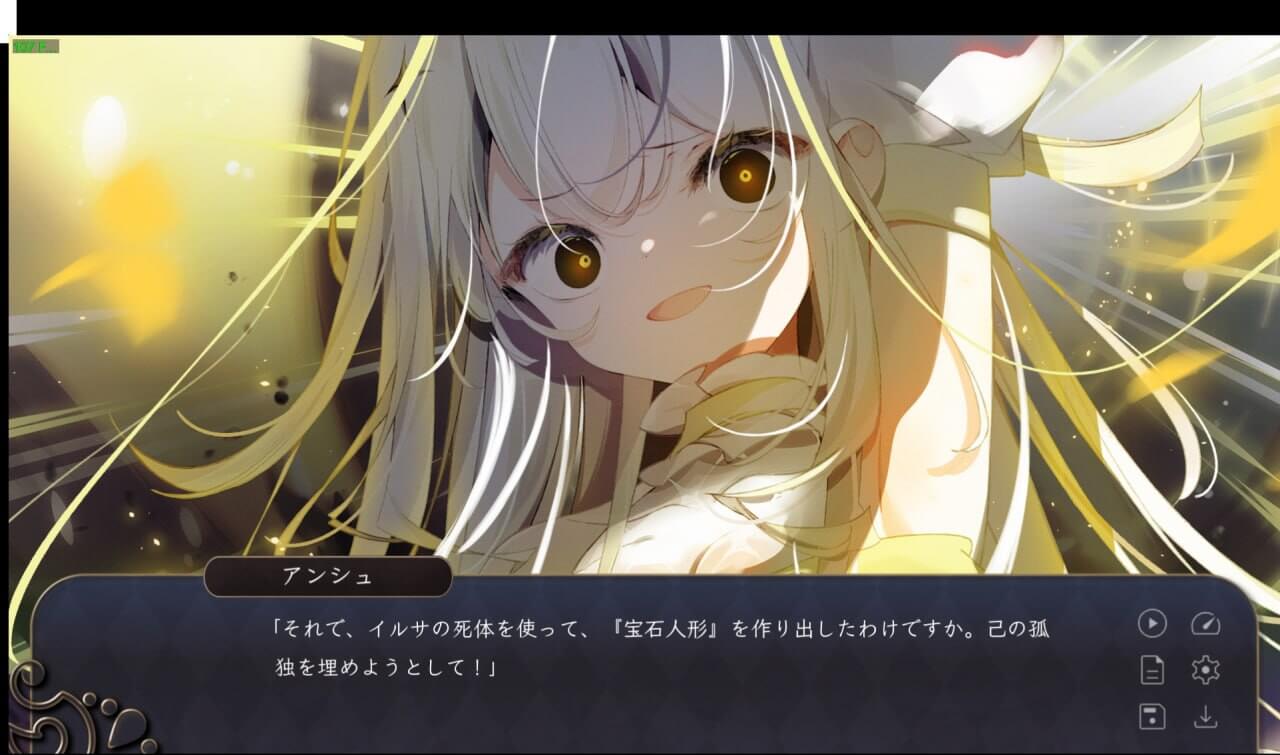
By the First Law of Shenyang Street, a man can be broke, but he can’t be out of material. A good scenario writer shouldn’t be limited like this — he should keep up with the times, bring more ideas and creativity, and dare to break past himself. But clearly, Lucle at this stage doesn’t have that ability. A lot of people say his works draw attention because of his merciless knife twists, or because the collaborating artist’s style keeps drifting further into postmodernism. I think the real driving force is Meto on the music — only her style can push Lucle’s “theatrical” atmosphere to its absolute limit.
Anyway, back to the game at hand.
Ptrica 1st cut: The Reason She Must Perish is a purely commercial work Lucle put out for profit. That’s not to say the earlier visual novels weren’t “products” — those still had some of the writer’s own stubbornness and desire for expression in them. This one, though, exists purely to make money.
Lucle apparently realized he was fairly popular overseas at some point, so when planning a new title he naturally started courting that market, especially mainland China. So we watched him open a Weibo account, open a Bilibili account, then attract the trolls, get the artist harassed into silence, taste the power of the Chinese internet, and go quiet again. The game still launched with Simplified Chinese as a first-run language, at least.
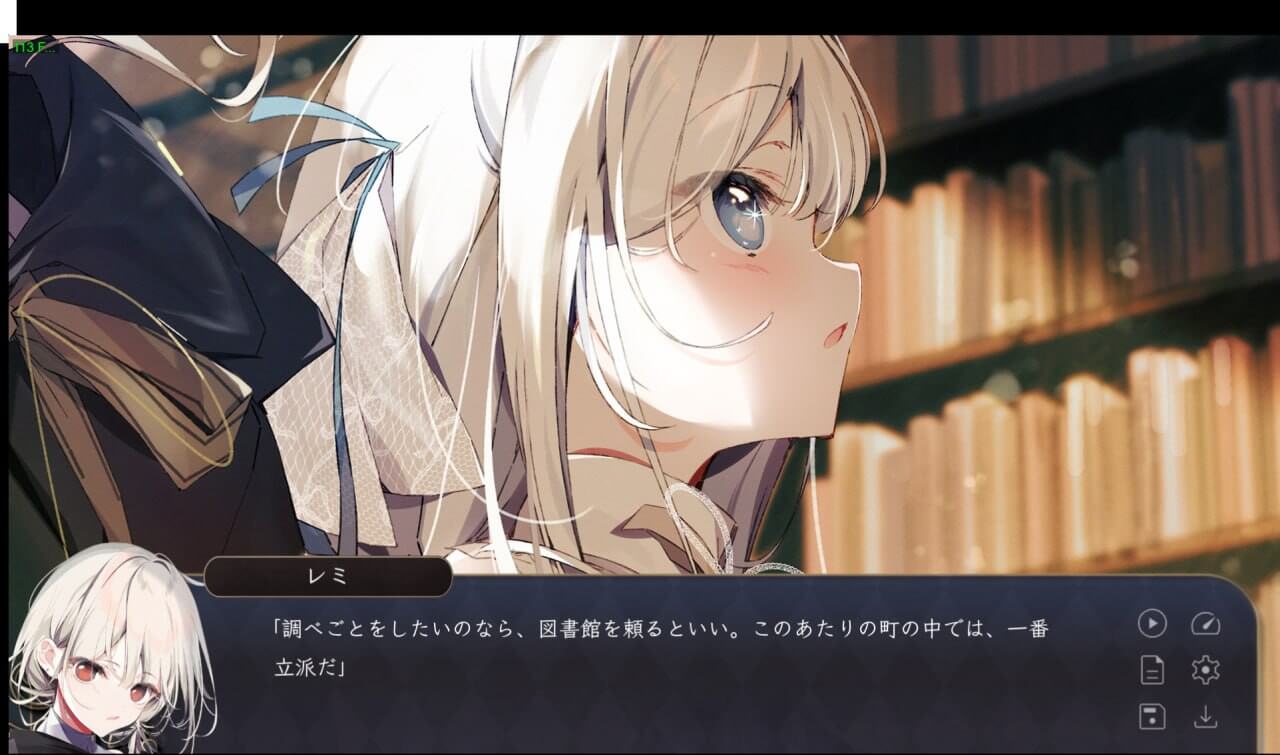
The story here has that familiar flavor. Lucle went back to his oldest comfort zone: the Middle Ages, gems, dolls, fate, tragedy… paired with that theatrical style I’ve seen so many times it’s practically déjà vu. I can only call it “fine.” Add in the “1st cut” in the title and volume-based sales are already a done deal. Who knows when the next volume shows up — or whether I’ll even remember the plot of volume one by then. If you genuinely like this style, I’d rather point you to Lucle’s earlier works; those at least have more complete stories.
The music is still Meto, but it feels noticeably less committed than before. Frankly, it’s more like leftover scraps pieced together. As for the art style everyone loves to argue about, I don’t have a problem with it. The artist went down this road years ago, and whether you like it or not, it’s their own style — better than imitating someone else like they did in the early days. Honestly, the style does match the story reasonably well. They complement each other.
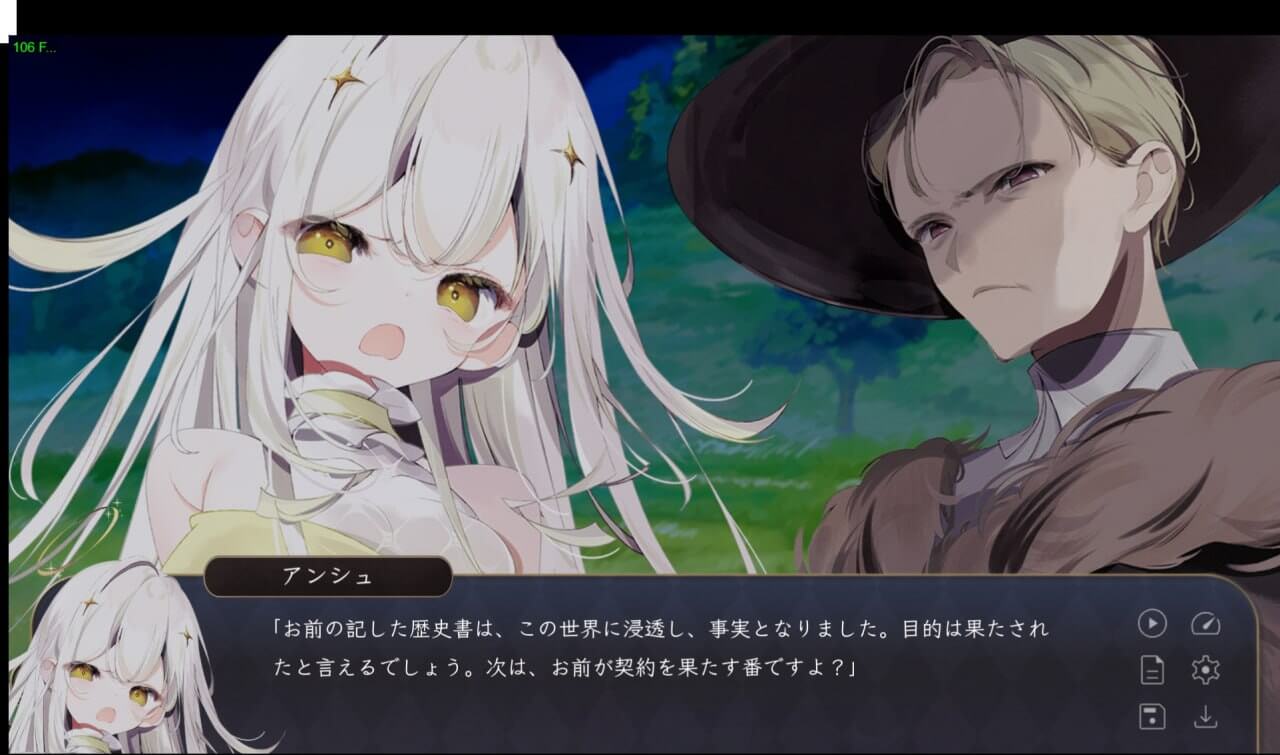
As I said earlier, this one is “out of material.” Put plainly, Ptrica 1st cut is a template story with a strong Lucle flavor — the kind of thing where the fans can imitate him better than he imitates himself, the kind where Lucle himself would place second in a “write like Lucle” contest. Theatrical dialogue, the medieval setting Japanese writers fetishize, elements like “magic” and “witches” — if the witch-hunt backdrop gives you a little shock, well, there’s nothing left after that. Fate, witches, revenge, running amok — nothing beyond the usual. Forget Lucle for a second; setting aside the big studios, a game called 11eyes was already playing with this exact setup over a decade ago. And this game barely gets going. It’s only the 1st cut — there’ll be a 2nd cut and 3rd cut, surely, and how many cuts it takes to reach the final cutscene depends entirely on the project’s plans and the writer’s conscience.
As a pure “commercial” product, honestly, I can’t really fault the story. Surviving by making money, churning out assembly-line stories, fans buying in, the author making a little cash and improving his life — no shame in that. But here I have to bring up the most baffling and unbearable flaw: beyond the audio, visuals, and story, there’s the problem with the game “itself.”
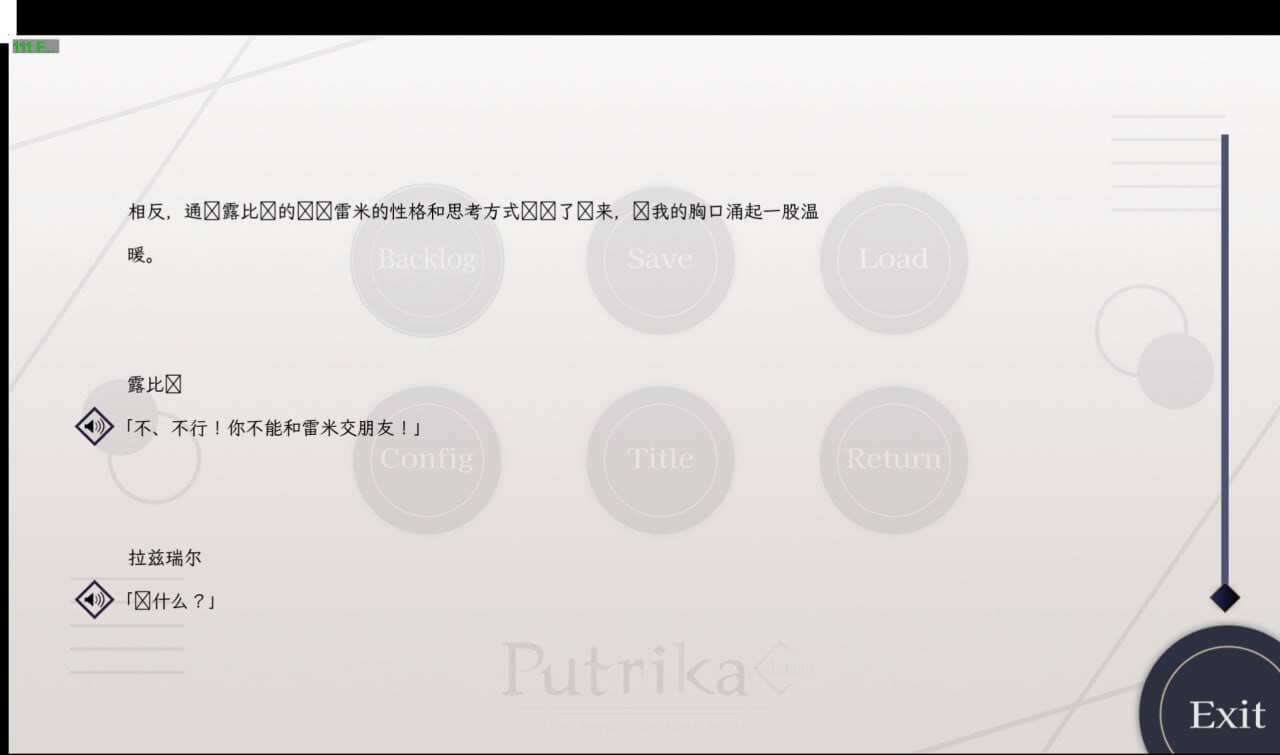
Look, I’m just saying: how the hell is the performance optimization this bad?
Over the course of my visual novel career, I’ve run into my share of buggy VNs. But the ones that stick in my memory for performance problems are few and far between. A few small Japanese studios that rashly used Unity for a VN will send your system usage soaring, but it stays within the acceptable range. There was a game called Haruka Kanata (はるかかなた) that was among the first to use the then-immature Electron as a VN engine years back. The memory leaks were everywhere; the company spent a whole year patching and never finished. The game would reliably blow up its memory and crash after about 20 minutes of running, the version number jumped over a dozen times, and eventually the devs gave up and left it to players to adapt. Comparing it to Haruka Kanata, which simply chose the wrong engine, Ptrica 1st cut’s terrible optimization reaches a whole new level. This game innovatively uses a pure 64-bit new engine, Light.vn, with full GPU acceleration support — which should mean better performance — but because the people making it are so incompetent, it produces worse results. The game ravenously devours your GPU and VRAM while putting huge pressure on your memory. My guess is they never bothered with texture compression for image output, and the developers, trying to boost the game’s presentation, smugly stuffed in a pile of “hillbilly effects”: awkward burning flames, that button on the main menu that spins around several times, and all sorts of ultra-high-resolution image assets.
All of it is “good steel spent on the wrong edge.” Visual effects are supposed to strengthen a game’s presentation, but this one feels like a PowerPoint made by an elementary schooler who just discovered animation effects — fixated on flashy but useless tricks like “individual fade-outs” and “fly in, fly out.” Meanwhile, the character sprites stay static, the dialogue scenes don’t even have proper framing, and it can’t even manage a simple zoom to set the mood. Wasting all those system resources just for spinning buttons in the menu — genuinely baffling.
Later, maybe the devs realized the game’s resource usage was a problem and hastily patched in a “simplified effects” option. The effect is still barely noticeable. That tells you how careless and inexperienced the production was — to say nothing of the multilingual display bugs, or those three “alternative resolutions” I can’t make heads or tails of.
Oh, right — the game did launch with Simplified Chinese as a first-run language, sure, but the translation quality is another story. Never mind the thick translationese, never mind the missing and dropped characters — did that side heroine really go “pick flowers” rather than “use the bathroom”?
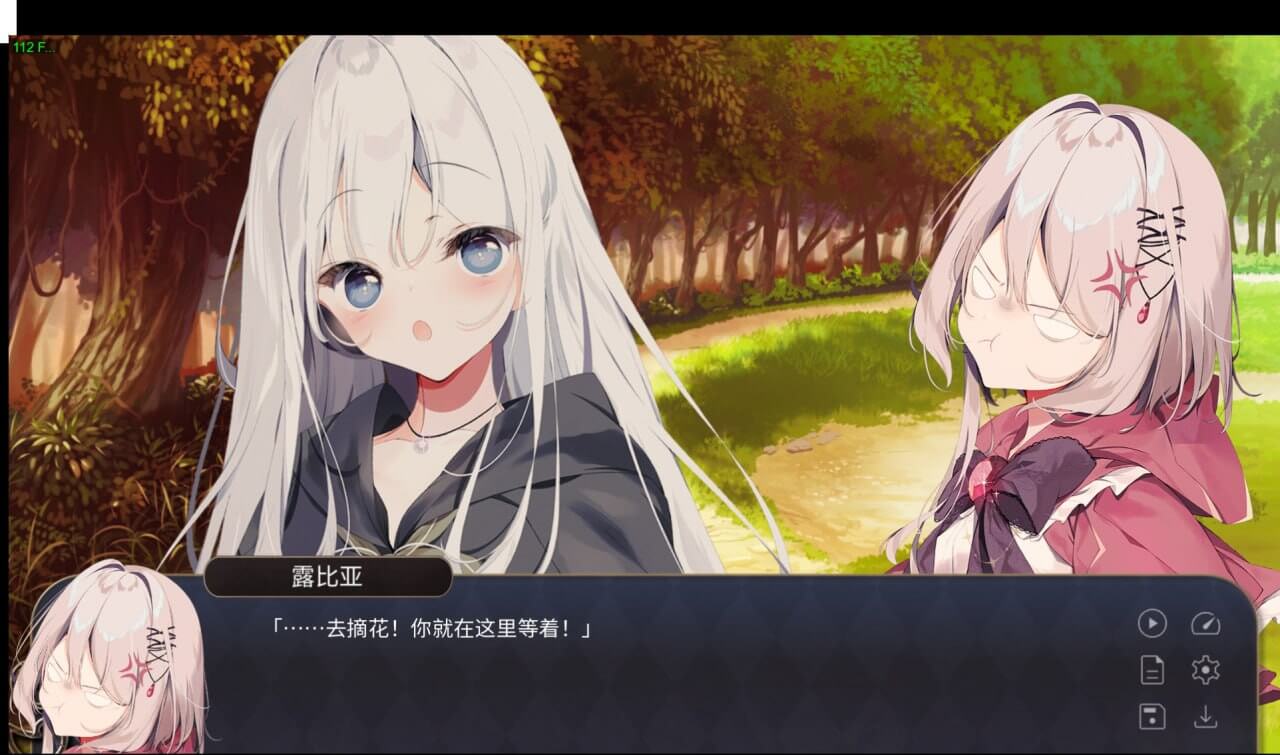
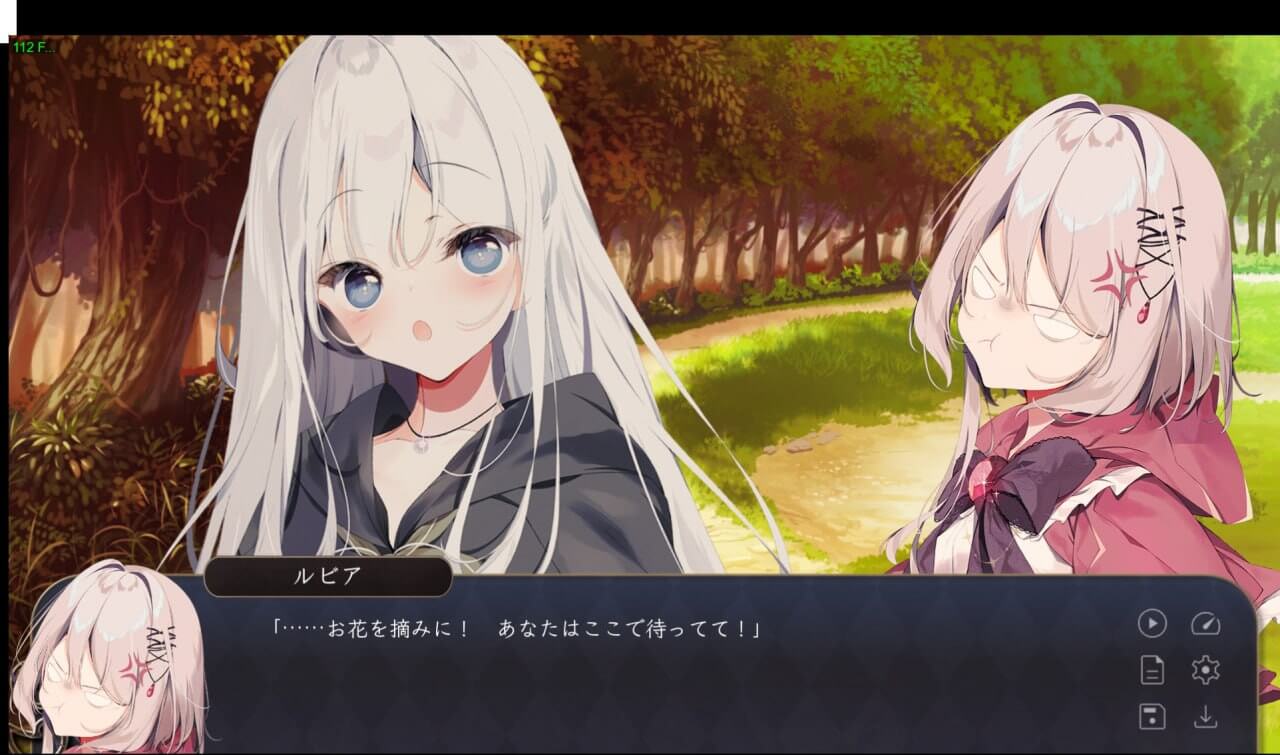
Honestly, Ptrica 1st cut ending up in this state is already a decent outcome. Before release, Lucle briefly put out a limited-time re-release of one of his old doujin games, Clear Rain (クリアレイン) — also known as the prototype of Mahou Tsukai no Hako — on booth, built on an improved version of this same Light.vn engine. You could call it practice. That version wasn’t nearly this baffling because its presentation was plain. Maybe he wanted Ptrica 1st cut to make a splash with the new engine, so he piled on too many unnecessary effects — and got this completely counterproductive result.
All that said, Ptrica 1st cut objectively isn’t a good game. It has a clichéd, incomplete story, average art and music, and performance optimization so bad it’s rare even in the VN space. Considering the price, I can only say: unless you want to throw Lucle some back-payment, it’s not worth buying. If you like this kind of style, another game called The House in Fata Morgana (ファタモルガーナの館) is probably a better use of your time.
Pros:
- Simplified Chinese at launch
- Unconventional narrative style (theatrical), with that Lucle flavor
- Meto and Dongye (if you like them)
Cons:
Terrible performance optimization
Lots of bugs
Story too short and shallower than Lucle’s earlier work
Too expensive
Dongye (if you hate them)
Comments are hosted on the Chinese main site. This mirror is read-only.