Boukyaku no Edisius (望却のエディシウス) Review
Boushitsu no Edicius (望却のエディシウス)
The story opens with the protagonist as a corporate drone, ground down every day by life and his boss, starting to think about ending it all. At the subway station entrance — the Japanese favorite for this sort of thing — he stares at an oncoming train and considers jumping.
One little hop and it’s all over.
Of course, he doesn’t have the guts, so he keeps scraping by. Right when he’s at his lowest, he meets a girl who asks him to help her get into a mixed-bath bathhouse. Her reason is simple: she’s never been in one and wants to see what it’s like.
The girl calls herself Nagisa. She seems cheerful enough, and not only does she drag him into a mixed bath, she hauls him all over the place — eating good food, trying new things, sightseeing by the sea, vacationing on a little island. Maybe it’s some kind of magic spell, but he just lets her pull him along. Total strangers, yet the two of them do couple-ish things together like a string of dates, and eventually they do the thing couples do, too.
Then, right after they’ve finished and he drifts off, he wakes to find she’s quietly gotten up and walked out onto the balcony. She thanks him, says she’s an unforgivable murderer, and that her last wish has been fulfilled. Then she jumps. She hits the ground hard and lies there in a pool of blood.
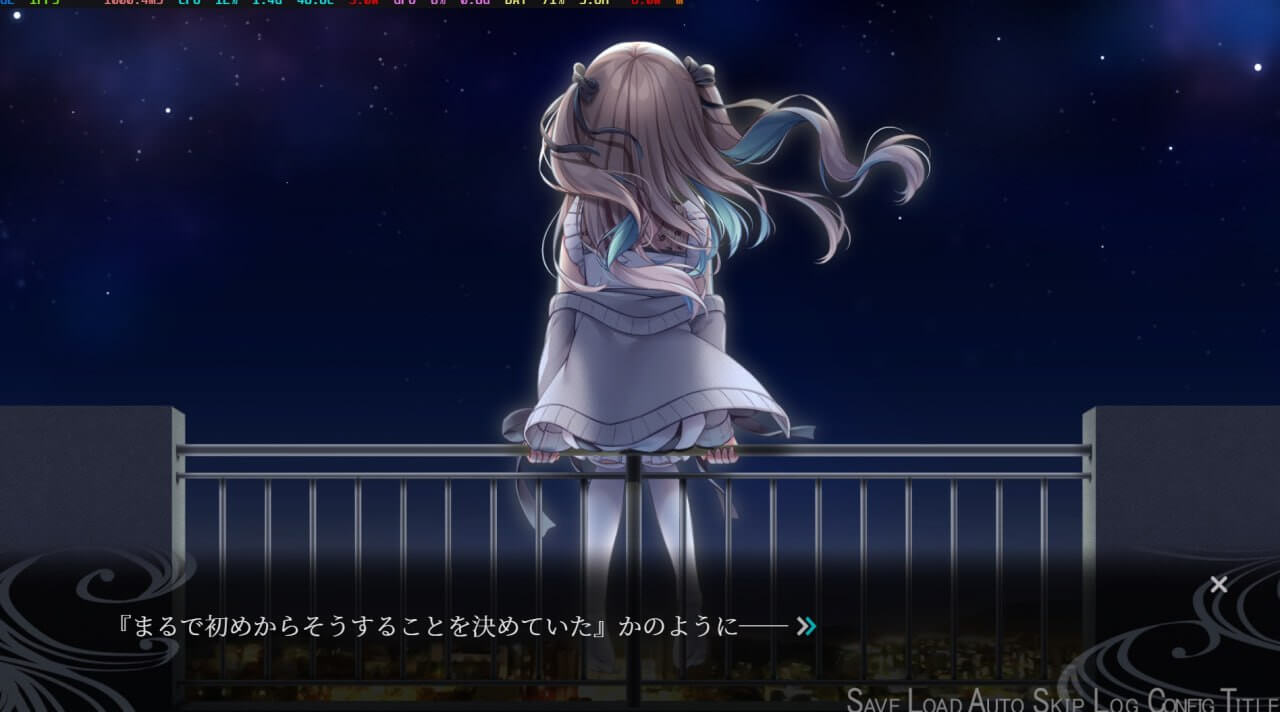
Watching all this, the protagonist blacks out. When he comes to, he’s stuck in a time loop, back to the period when he’d just met Nagisa and they were starting to date. Worse, Nagisa seems to know it too, and the two of them keep dating through the loop — until they both die for various reasons, mostly with Nagisa doing the killing. As the loops pile up, he learns that Nagisa isn’t her real name. She’s probably Katsuragi Nozomi.

Through loop after loop with this yandere girl, Katsuragi Nozomi, he tries every trick he can think of to escape. Most of them fail. Finally he says screw it and buys a train ticket to run away and never see this lunatic again — and the lunatic panics, sobbing that if he won’t play with her anymore she won’t know what to do with herself. It really is a case of “please don’t stop playing.” So Katsuragi Nozomi comes clean about her past, the story of how she’s a “murderer.”
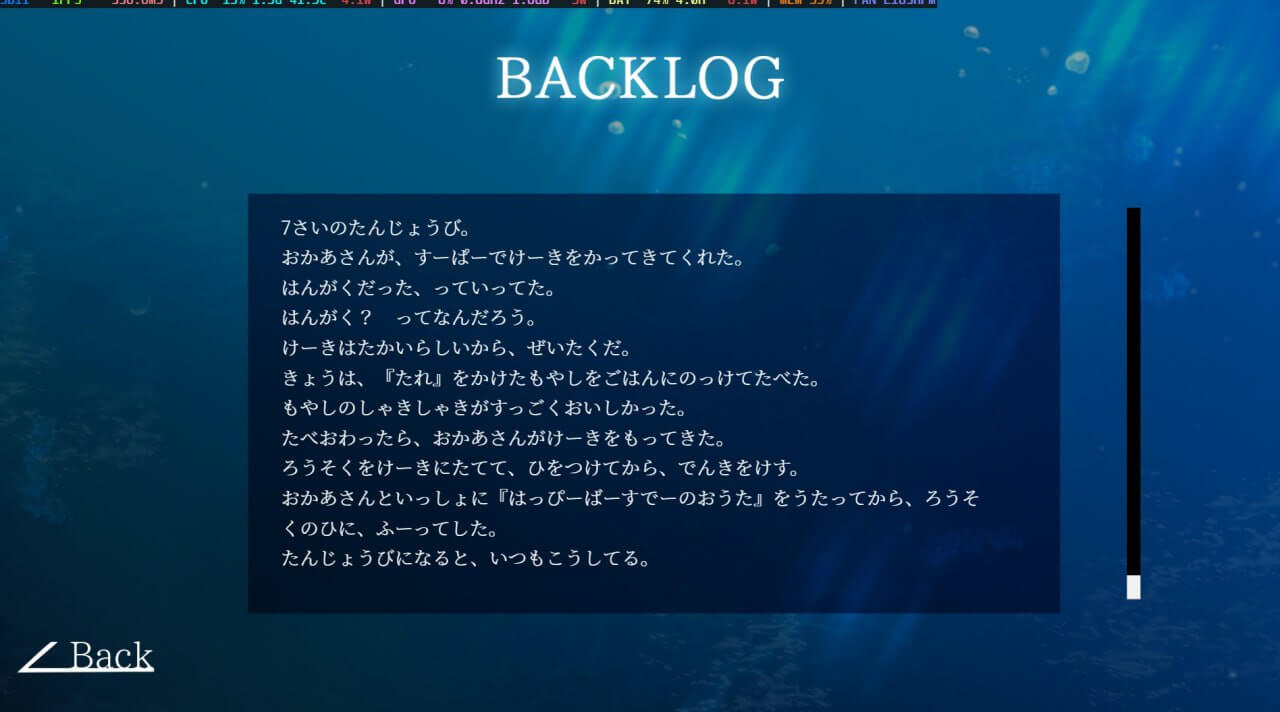
Katsuragi Nozomi grew up in a single-parent home with her mother, who was never kind to her — no cake on her birthday, just cheap emergency rations most of the time. Eventually her mother found her a stepfather, who was decent at first, until it turned out he was a pervert: secretly filming her in the bath, selling the videos alongside her unwashed underwear, and ordering her to steal for him. Her mother wasn’t any better — always out chasing host boys, despising her daughter, and quietly enabling the stepfather’s sick little business. The whole household was rotten to the core, one unhinged mother and one perverted father, until the pair of them turned on each other. The reason was simple: they ran out of money. After a long fight, they pinned the blame on Katsuragi Nozomi, the daughter. She’d had enough, grabbed a knife, and killed them all.
That’s when Katsuragi Nozomi realized that neither her mother nor her stepfather had ever loved her. If no one was going to love her, she’d be good to herself. So she decided to enjoy herself a little before dying — do the things she’d always wanted to do but never had. Travel to the sea, fall in love, visit a mixed bath. Which is how she ended up meeting the protagonist at the start of the story. And for some reason, the more she sought death, the less she could die, until she was trapped in a loop of time.
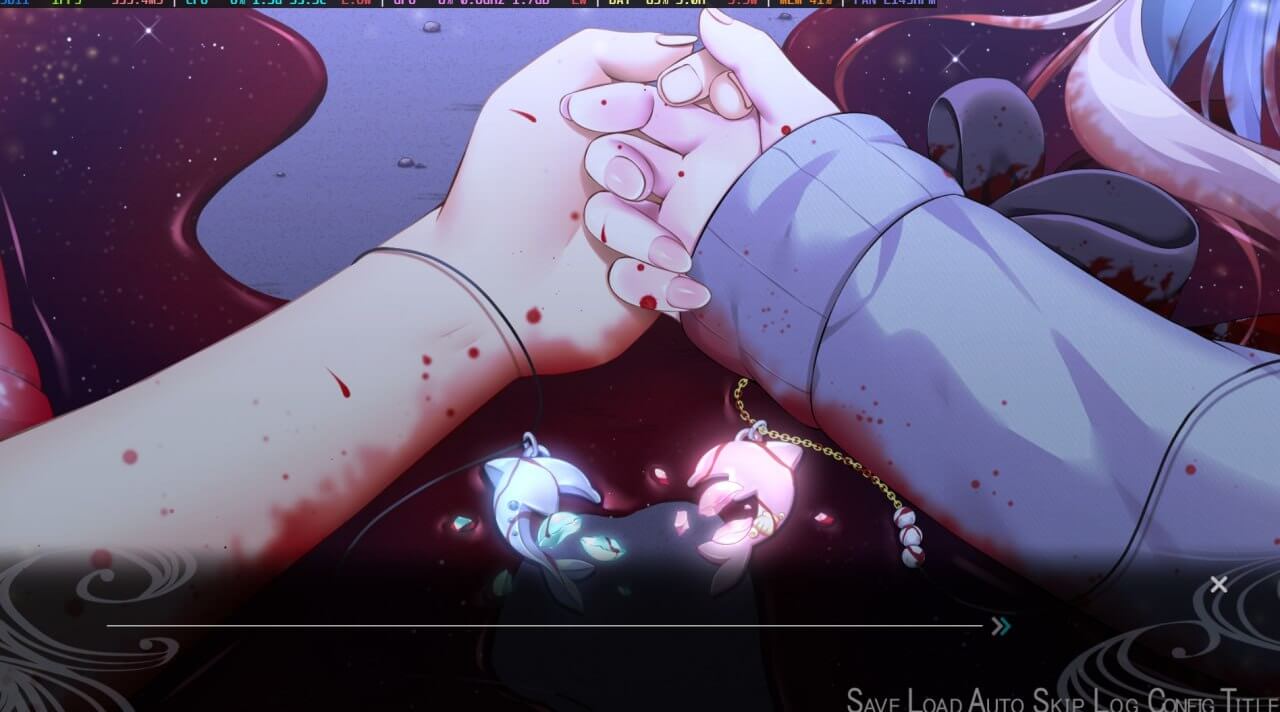
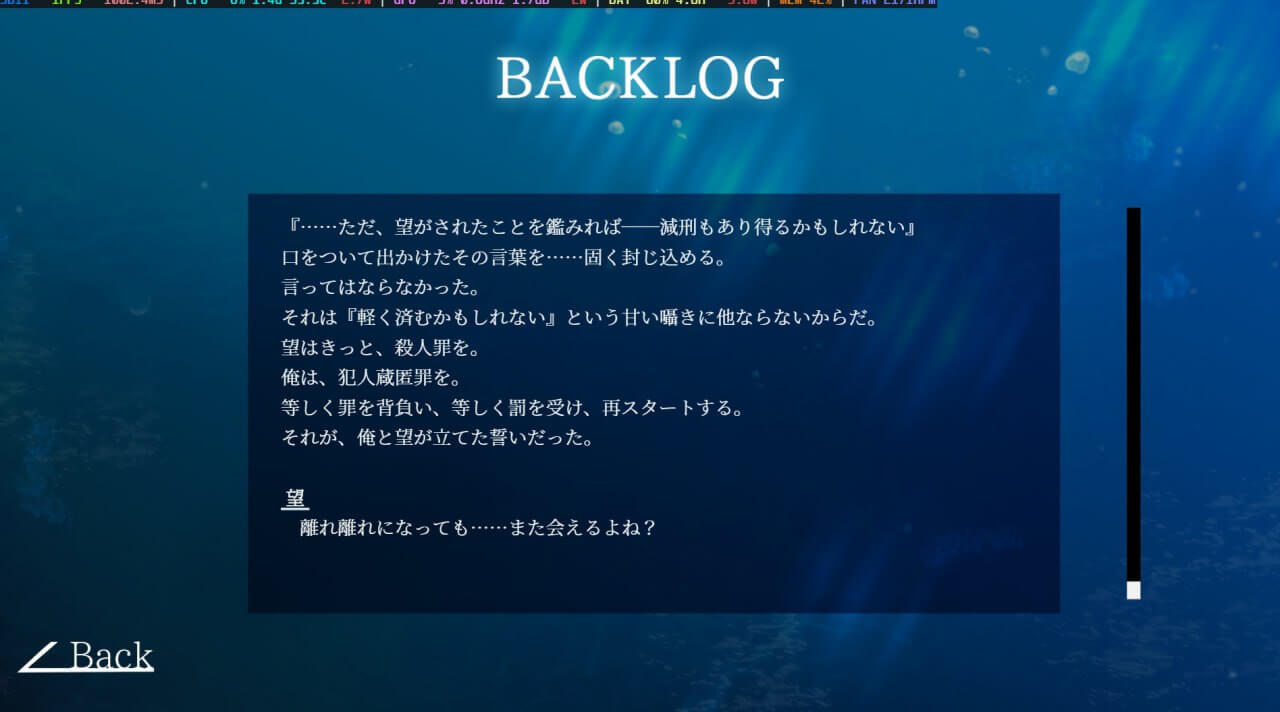
From there it’s straightforward: the protagonist uses his well-practiced technique and heartfelt chicken soup to lighten her guilt, telling her none of it was her fault — she isn’t an unforgivable murderer. The story reaches two endings. In one, the two of them are chased by the police and jump to their deaths together. In the other, they turn themselves in; he gets convicted of harboring a criminal, she of intentional homicide, and both go to prison. Good behavior gets their sentences reduced, and they reunite outside the prison to start a new life.
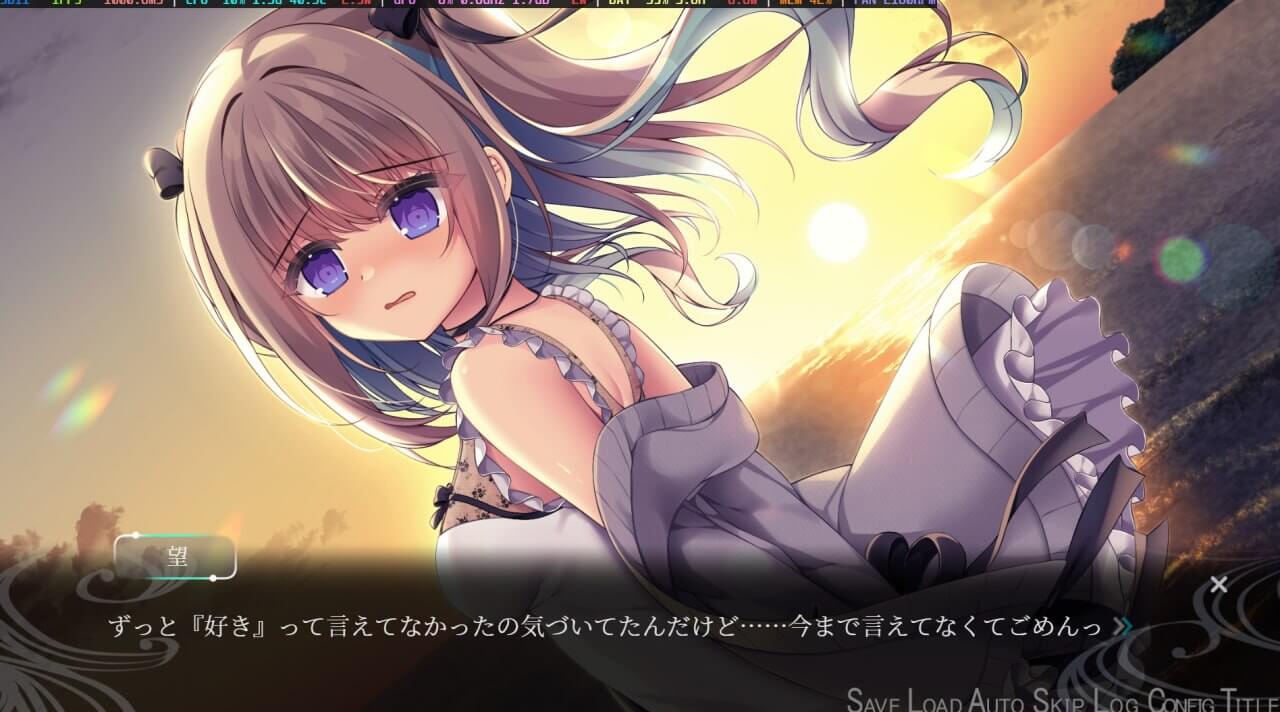
Boushitsu no Edicius isn’t a commercial release. It’s a doujin work spearheaded by the circle Pokapoka Biyori with writer Tomosaka at the helm. One look at the production team tells you it’s non-commercial — a textbook case of cutting costs. The heroine’s VA is Maeda Megumi (Aji Sannyo), who these days you barely hear from at all, and most of the cast isn’t even voiced. The OP and ED were supervised by marketing-type songstress Tsukino and bottom-tier VTuber Shison Soruto, respectively. The whole thing is a ragtag operation. It wasn’t sold through commercial channels either — straight to BOOTH and doujin events — and apparently the sales were surprisingly decent, probably thanks to illustrator Yukimura Usagi and her friends in the scene pushing it…
Though it’s also worth noting that the game’s quality holds up fine.
Yeah — a slapped-together thing that looks like a mess from every angle, yet the quality is surprisingly high. Aside from the R18 artwork, the illustrations almost never break. The backgrounds are obviously real photos run through secondary rendering and touch-ups, but because they’re real, they look remarkably cohesive. The music is sparse, but since it’s by a professional — Tojo Sadao, formerly of MME — it trades blows with commercial releases. Aji Sannyo may be past her prime, but her chops are still top-tier.
As for the story, it’s short but easy to follow and genuinely gripping. At least it doesn’t give you a long-winded opening and slice-of-life section; it gets to the point fast, so you can actually keep reading.

The theme is nothing to write home about — straightforward positive-message storytelling, contrasting death and despair so you can find a reason to keep living. Same old line: the most politically correct way to tell someone to keep going is to find someone who’s worse off than they are. The title Boushitsu no Edicius has meaning too: “Edicius” is a word coined in the internet age, “suicide” written backwards, expressing the exact opposite of suicide. It sets the tone for the whole work and shows a bit of cleverness in the planning.

This is exactly what bothers me about most visual novels lately: the story takes forever to get going, and in a fast-paced society hardly anyone has the patience to sit down and read. You could blame it on short attention spans, but the writing in most visual novels is so dumb that the scenario writers seem more restless than the audience. This game’s biggest strength is how fast you get absorbed — the protagonist goes from self-introduction to wanting to jump in front of a train in under 20 minutes, the heroine shows up quickly, and the dating doesn’t drag; it carries a bit of suspense instead. The heroine’s sudden suicide later lands like a gut punch, and the final flashback to her past is staged extremely well. You can tell the highest-budget CG work went here — no characters drawn, just numbers written on paper, and it’s enough to convey an unbearable past.

So Boushitsu no Edicius isn’t a proper commercial release, yet it reaches heights most commercial releases can’t touch. And it doesn’t use any fancy tricks to do it — it just gathered a bunch of ragtag people who wanted to make a good game. Whether that’s a miracle or a satire, I’m not sure.
Pros:
- Short and sharp, great to play
- Excellent art style
- Cheap
Cons:
Lots of broken R18 CGs
Only one professional VA (i.e., only one voice worth listening to)
Comments are hosted on the Chinese main site. This mirror is read-only.