Otome Sekai no Arukikata (オトメ世界の歩き方) Review
It's feminist, but it's not feminist
I once had an idea I thought was the shit: a visual novel with one of those fiery “feminist warrior” types as the heroine. Talk about a gimmick, and the conflict writes itself.
I’m not against women’s equality. But feminism and what gets called “femcunt-ism” are not the same thing. The former is a demand for equal rights; the latter is extremists wrecking it for everyone. And in an internet that gets more torn apart by the day, the latter’s rise and volume have long since overtaken the former.
Put plainly, the former are normal people and the latter are morons. Putting a moron in a visual novel—ideally a nukige—and giving her a good hard fucking isn’t an unreasonable thought, is it?
Anyway, last year that wish got granted. A game called Otome Sekai no Arukikata (オトメ世界の歩き方) sold itself on exactly that premise. The setting: the future, where women have taken total power and passed a special “Gender Segregation Act.” Women are top-tier humans, men are beasts of burden, and the two sexes are physically separated. So the “New Tokyo City” that symbolizes high society is almost entirely women, while the men are out on the frontier as soldiers and disposable material, fighting off an invading hostile power.

The protagonist is a boy soldier who ran into bad luck in the war. He gets taken in by a family in New Tokyo City, then disguises himself as a girl to attend a famous military academy in the city. Classic crossdressing-infiltration setup—except this world runs on man-hating nationalist vibes.
So once he’s in school, he gets a whole curriculum of man-hatred: women are superior beings, men are trash and garbage and should be dragged off to fill shell craters, and so on. The frontier war is still going, and the women still have to go to the front as commanders, ordering those stinking men to go die faster and the like.
That’s when a pink-haired girl named Himeno Akari steps into the spotlight. She starts showing up everywhere, taking on every position, and dropping hot takes like “all men deserve to die,” “we should have wiped out these stinking men long ago,” “those moron men should’ve been massacred ages ago”—so extreme that the rest of the class looks out of place next to her for not being extreme enough. Eventually the hero learns her mother was the activist leader of some extremist feminist organization. Mom was like that, so of course the daughter got it too.

Here’s where it gets interesting. Himeno Akari and the hero start spending more time together, and as the time piles up, feelings develop. Those feelings heat up fast, to the point of being hard to put into words. It’s yuri, but not yuri. It’s lesbian, but not quite.
And right when the relationship is stuck in that awkward limbo, an accident happens: Himeno Akari discovers the hero’s identity—and that he’s got one extra thing she doesn’t.
The moment the plot got there, I had a bad feeling. “Don’t tell me this is going to go like every other Otome-bu infiltration game: the heroine starts out a man-hater, the hero’s identity gets outed, and she immediately flips, can’t live without his dick, and jumps to his side?”
No way. No way, right? It’s really not going to go down like that, right?
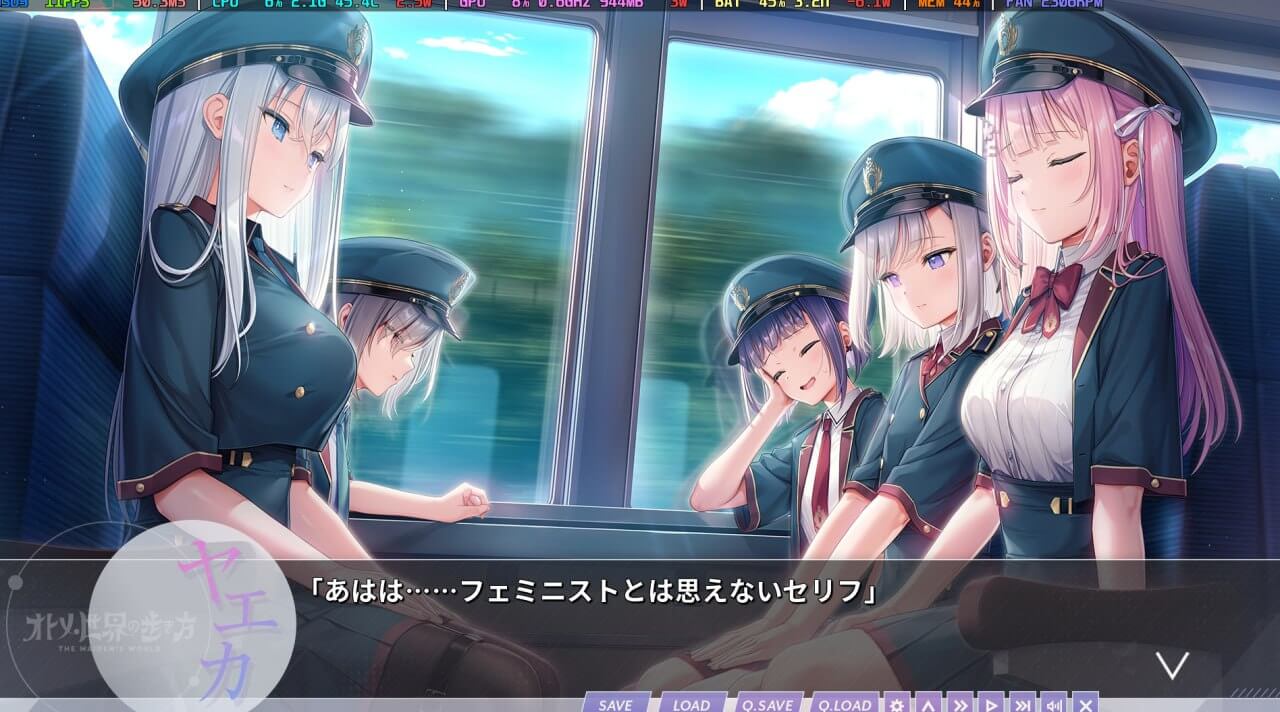
Sorry. It goes exactly like that. After about one minute of Himeno Akari reflecting on the hero’s identity, she yanks his pants down and clamps onto it. Amid a surging flood, from his Weibo to her Douyin, from DingTalk albums all the way to Bilibili, the whole man-hating worldview the game built up collapses right there in front of the heroine.
From there it’s easy to describe. She says she hates men and thinks they should all be massacred, but the hero is such a good person that he has to be an exception—and because he’s so good to use, so satisfying, her old beliefs get shaken. Faced with even more extreme rhetoric, she does a total 180 and turns into a both-sides centrist, flip-flopping harder than Chen Chih-han, and it left me sitting in front of the screen utterly baffled.
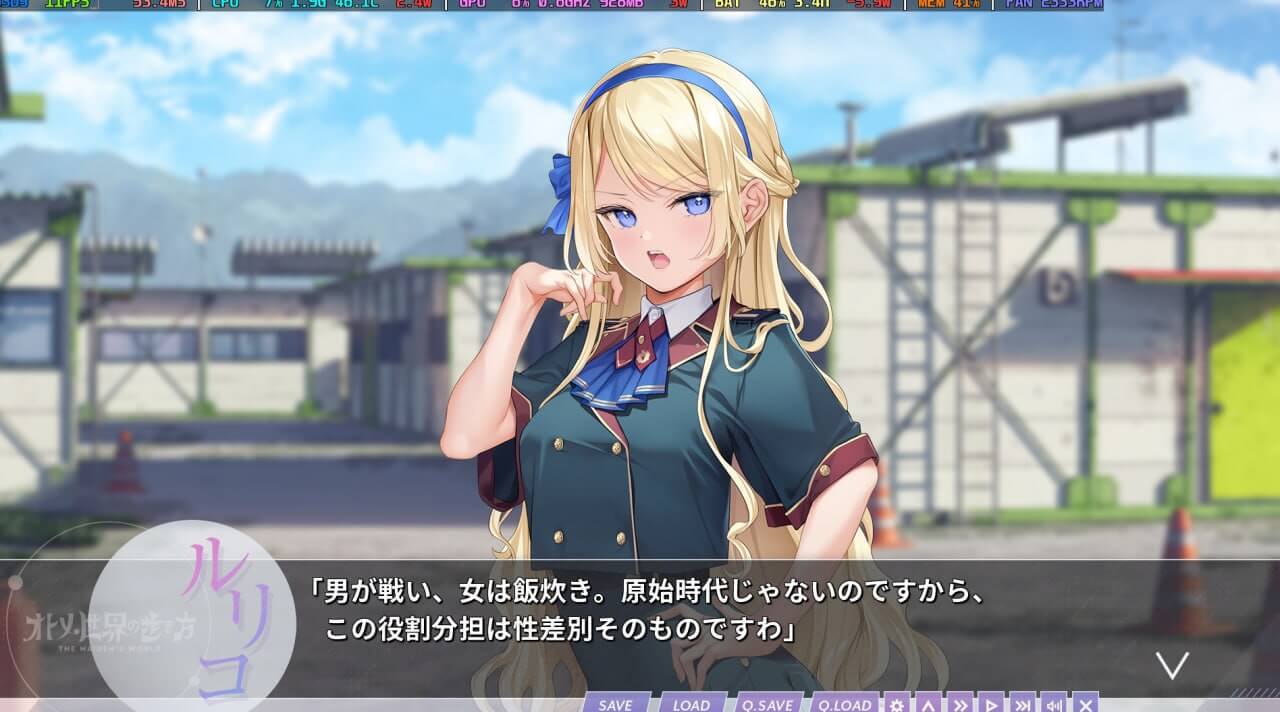
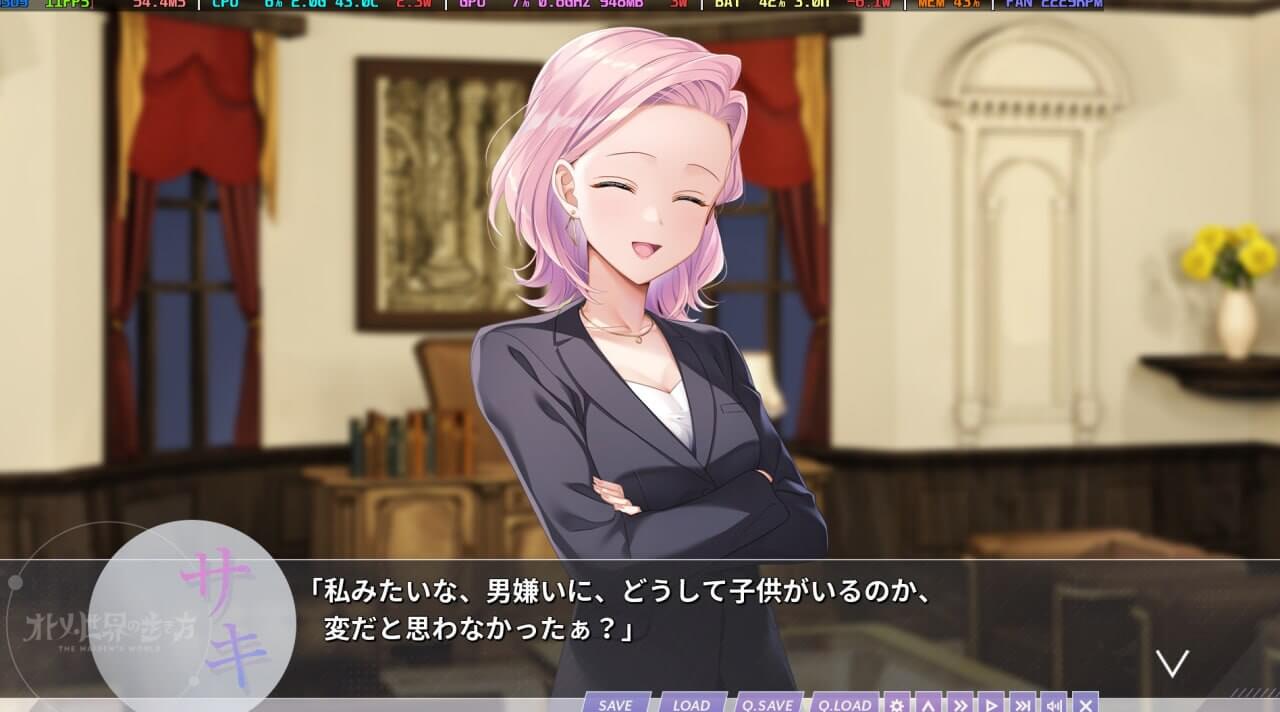
After that the story pivots toward “let’s all get along with men.” Himeno Akari’s mother—the extremist feminist leader set up early on—goes full villain. She blackmails the female president into passing even harsher anti-male laws. The reason isn’t spelled out, but the everyday dialogue makes clear it’s just because she got deceived by a man once, so she’s embarrassed into rage and wants a gender genocide or something. Naturally the law gets questioned—if there are no men, who changes the water cooler jugs, who fertilizes the babies? But her mom actually has a reasoned argument: the future is the age of AI, robots can replace men, women can make test-tube babies from their own cells, we don’t need stinking men, men should be exterminated, etc.
And the hilarious part: the president of New Tokyo City (female), faced with this extremist feminist leader’s blackmail, is completely calm and rational, repeatedly insisting we must promote peace between men and women and avoid gender conflict…
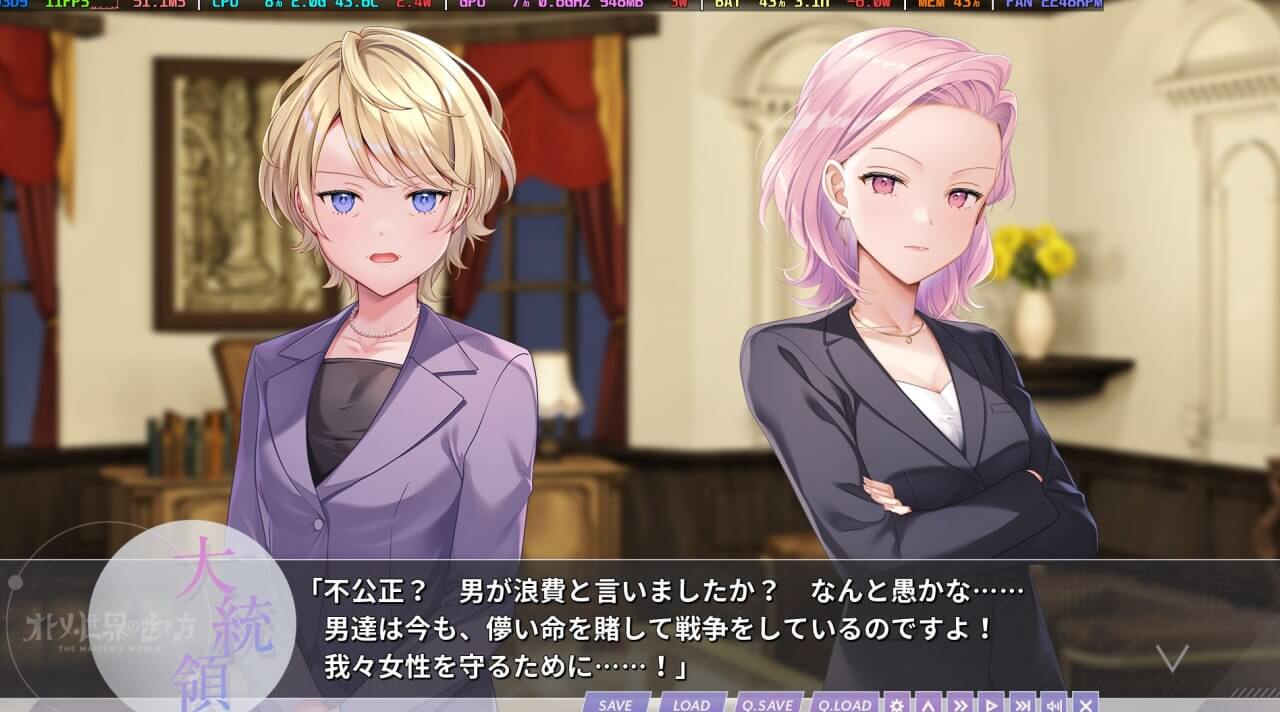
By this point I completely lost it. How do I describe the feeling? It’s like a game builds a highly centralized dictatorship, spends the first half repeatedly telling you how much this country is like North Korea and how the people have been stripped of their freedom. Then, mid-plot, to set up a Happy Ending, the game starts pushing “the leader is good, she was just deceived by bad advisors.” Like this game: you could only have been elected leader of New Tokyo City because you benefited from the feminist wave, because you had the advantage of being a woman—and now that you’re Leader you start playing neutral? What’s that about? And if you really want to promote gender equality, shouldn’t the first thing be abolishing the system that sends men off to die as soldiers on the frontier? Or abolishing this populist mob organization, this Boxer-style movement, that incites social division and instability? You only say you want reform and equality, but when it touches your own interests you don’t want to move at all. That “want it both ways” bitch behavior—should I say it mirrors reality a little too well?
The rest of the plot goes about how you’d expect. Himeno Akari and some other women as leaders go with the hero to the frontier, meet the male soldiers, and their hatred of men eases—they decide not to wipe out all men after all. And the final villain, Himeno Akari’s mother, the extremist feminist leader, ends up leading a robot army in rebellion on the grounds that “not being absolutely anti-man means absolutely not anti-man.” The conspiracy is foiled by the hero, the heroine, and her own daughter Himeno Akari working together, and the world returns to a relatively peaceful state.
After that incident, relations between men and women ease up. Men can gradually appear in New Tokyo City and no longer have to go die on the frontier. Men and women start having normal contact, and society returns to a more or less unsegregated state…
And even better: Himeno Akari says she’s pregnant at the end. The daughter of an extremist feminist leader, the daughter of an organization that said all men should be killed, says she’s carrying a man’s child. Talk about irony.
But even though the ending looks at first glance like “everything’s getting better,” the upper echelons of New Tokyo City are still entirely female. It all looks more like the feminists went a bit too far and are pulling back slightly, that’s all.
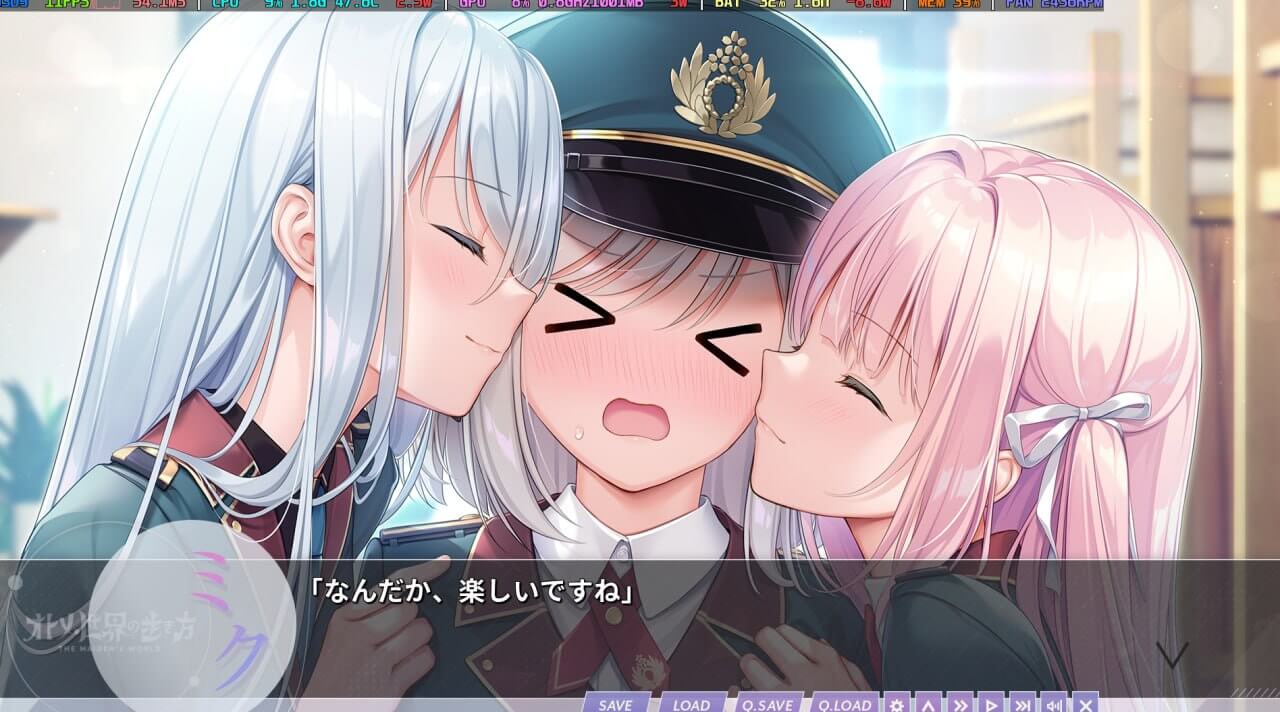
So overall, Otome Sekai no Arukikata is a very “awkward” game. It sells itself on “extreme man-hating feminism,” but the payoff is no different from any other Otome-bu crossdressing school game—and honestly a bit childish. Its supposed worldview is also ridiculous: the tension of “all men must die” established at the start completely evaporates the moment the hero’s identity is exposed. I figured he’d at least be thrown in a cell for a while and then escape, but instead a woman covers for him—the daughter of an extremist feminist leader, no less. That turn is way too fast.
And the game’s political description, from a certain angle, actually comes off as a bit real. That president who plays the bitch while putting up a monument to herself, and that ending that looks like things are getting better but where power is still firmly in women’s hands—it’s realistic enough to make you want to smile bitterly.
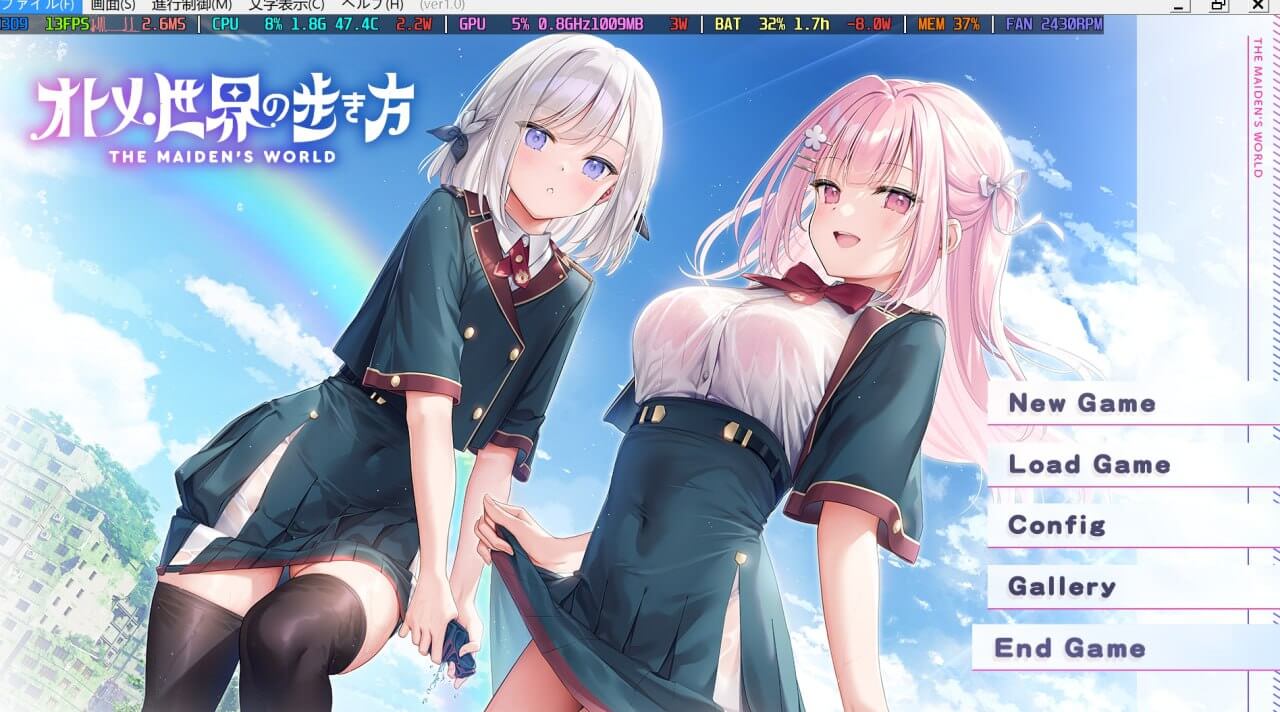
On the whole, Otome Sekai no Arukikata uses “crossdressing” and “man-hating feminism” as selling points, but it doesn’t feel as polished as Otome-bu. The experience is pretty average—the music and HCGs left no particular impression, most characters aren’t routeable, and there’s only one route. And there’s no standout play in the practical department either. It’s all very mid. The only non-mid thing might be the initial premise: it looks feminist, but it isn’t. It looks absurd, but it’s a little real.
Comments are hosted on the Chinese main site. This mirror is read-only.