Renai, Hajimemashite (恋愛、はじめまして) Review
The protagonist, Ogata Iori, is a nothing-special, invisible high schooler living that boring, loser-ish high school life. One morning on his way to school he kicks a wild drunk woman lying by the roadside — weird outfit, wings on her back, a halo on her head (LED-powered). Because he’s an inexperienced Xiao Chun’an type with no street smarts, he blurts out the first thing that comes to mind: “Whoa, are you an angel?”
So this LED-wearing shady woman freezes for a second, then admits it. She’s an angel, sent down here to save him. What does he wish for?
His repressed true nature spills out: he wants the angel to make him happy. The angel freezes — is this a proposition? He corrects himself: he wants a girlfriend, wants to become a normie. The angel figures that’s a piece of cake and agrees.
And so the contract is made. The angel moves into his house and starts living shamelessly off his food and rent.

Of course, if you eat someone’s food and live under their roof, you have to work. To turn this Xiao Chun’an into a normie, the angel assigns him all kinds of “angel missions” — striking up conversations with girls at school, joining clubs and activities, increasing his odds of meeting strangers. Useful methods in theory, and necessary steps for expanding your social circle, but clearly what he needs is something more direct. Still, the angel keeps insisting you eat rice one bite at a time and do things step by step, so he obeys. He starts forcing awkward chats with random girls at school, meets all sorts of weird people, and gets misunderstood for acting like a creep.
But things do get better. By chance he ends up with a few female acquaintances, including the school idol, Aizawa Yukari. In the old days a gloomy otaku like him would never have gotten near her, but now they talk. Quite a bit, actually. You have to admit the “angel” has her uses.
Not that Yukari’s reason for talking to him is anything special — she noticed the “angel.” Says the woman is weird: fake wings on her back, an LED halo on her head. She marvels that cosplayers these days go this hard.
As his female acquaintances multiply, his luck with women starts turning. People come to invite him to things. The school idol among the guys, for instance, asks him to a spring outing — he’s planning to confess to his crush and wants to set the mood, and he’s inviting Iori to pad the numbers. He’s invited others too, including girls Iori recently met, Yukari among them.
So at Iori’s first-ever normie spring outing, he gets blinded by all the flirting, watches the school idol confess to a 7/10 girl, and then — more shocking — he himself, a total loser, receives a confession. From the school idol, Aizawa Yukari.
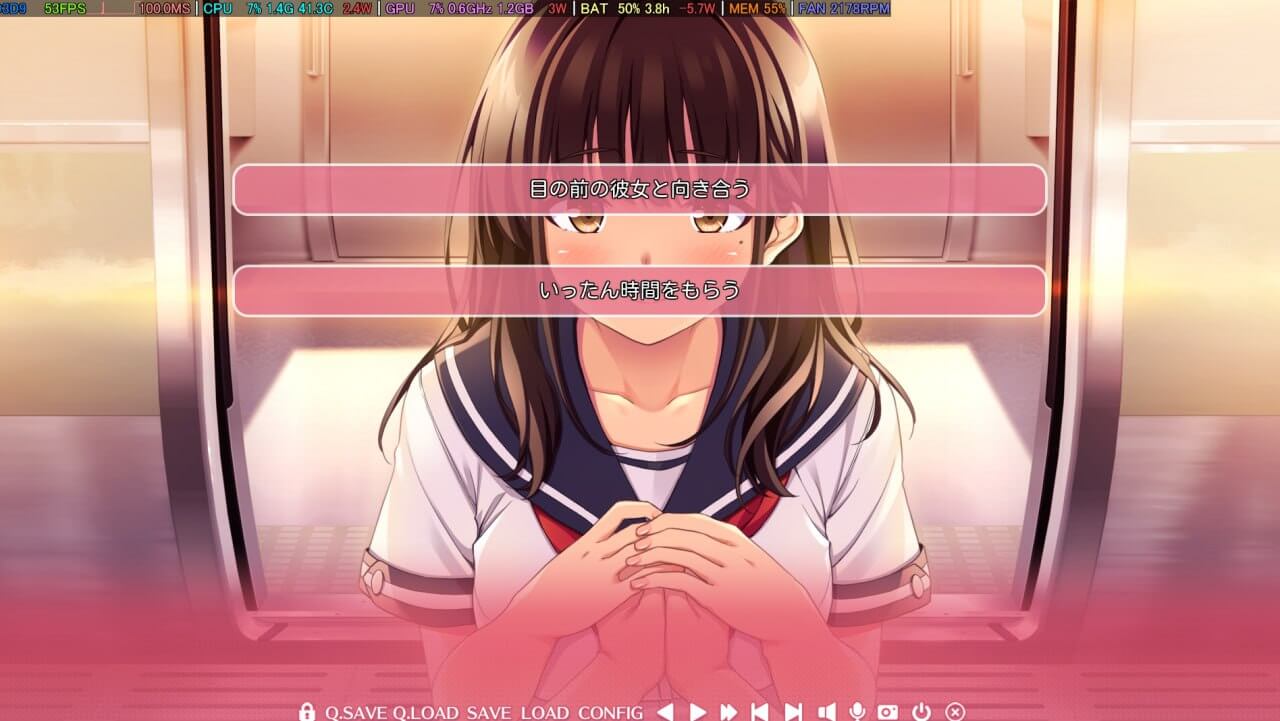
Yes. Yukari likes him. She confessed. It’s not truth-or-dare. It’s real.
He can’t process it. The first thing that pops into his head is the angel — did she actually have divine power? Did she really grant his wish? He’d wanted a girlfriend, wanted to be a normie, and figured a 5/10 girl would be fine. Instead he gets the school idol?
And then another thought creeps in: Yukari may be the school idol, but he barely knows her. His feelings run deeper for the angel, the one he’s spent more time with.
His hesitation is answer enough for her. Rejected, the school idol boards the train home with tears in her eyes. Iori goes home dejected too, and once he sees the angel, he honestly tells her how he feels. The thought is so abstract it breaks her. She’s torn between fury and laughter — she was about to broker a top-tier match, and the duck flew out of her mouth.
The next morning the angel is gone. He searches everywhere, asks at school, and learns most people did see her — they all assumed the wings and LED halo were performance-art cosplay, and nobody knows who she is or where she came from. Maybe she really was an angel, gone back to heaven?
It’s not that simple, of course. Walking down the street he spots another drunk guzzling on a bench, and — oh. Isn’t that the “angel”? No wings, no halo.
“Whoa, aren’t you the angel?” he says, excited.
“Don’t make your Onee-san laugh,” the angel says, suddenly sounding like a middle-aged uncle, and finally lays out who she really is and the truth behind it all.
The “angel” is Amane Kirari. Since childhood she’s loved dressing up as an angel, believing she brings people happiness — the energetic, meddling type (basically the neighborhood auntie who loves setting people up). Adults told her angels don’t exist, but she believed anyway.
Then school, graduation, and becoming a corporate drone crushed the dream. Her naivety earned her confusion and mockery, no friends at school or work, and she became a social loser. As an office worker she got worked like a dog with overtime every day, and then got fired.
Life’s hardships made Amane Kirari remember her childhood self. Why couldn’t she be an angel? Why don’t angels exist? Why is the world so cruel? She could only drink her sorrows away.
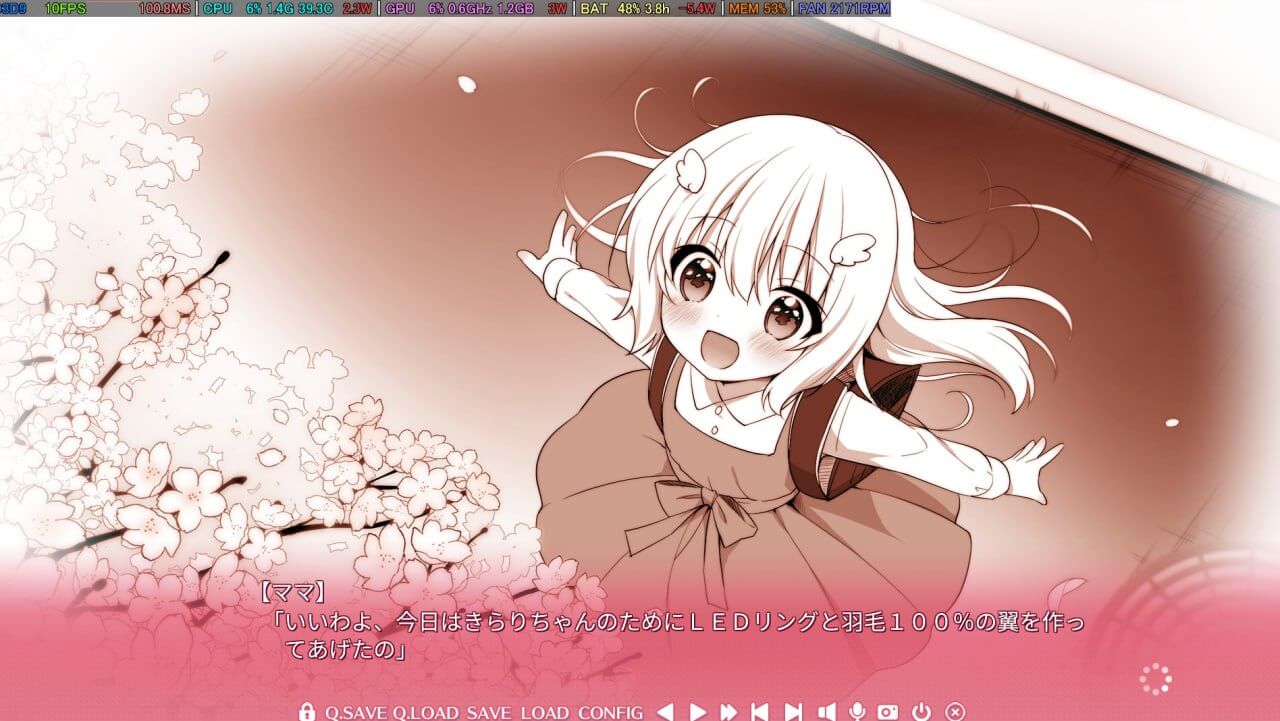
So one day, blind drunk, she ran to the school, grabbed some fake wings, put an LED ring on her head, and started cosplaying an angel. To everyone else it looked like a drunk moron acting out. But she happened to pass out on campus and wake up to the protagonist, who seemed to believe she was an angel. Sobering up, she decided to tease this Xiao Chun’an and went along with it — hence the game’s opening scene, and her life of freeloading and messing with a naive boy.
The “angel missions” and “divine power” were just games to fool a kid. But Kirari never expected her nonsense to actually produce a school-idol confession — or that this Xiao Chun’an would reject the idol for an old lady like her.
Once everything’s out in the open, the protagonist still declares he prefers this washed-up office lady, and goes so far as to help her pretend to be young and return to school to find the youth and romance she never had, even throwing her a graduation ceremony.

The Xiao Chun’an is successfully upgraded to a real man with the old lady’s help, the old lady takes his virginity, and the two become a couple in an age-gap pairing. And the story fucking ends.
What was this Asa Project game called again? Renai, Hajimemashite. Love, nice to meet you. Asa Project titles always feel like fill-in-the-blank exercises: write “love,” then cram in whatever modifier fits, all of it blunt and brainless. If the title says “indirect love,” the whole game is indirect love; if the title says cheating, every heroine cheats. It’s like picking a theme and binding every heroine to it — formulaic as a school essay prompt.
This time Asa Project seems a little different. At least it tells one complete story: a love comedy between an old office lady and a young Xiao Chun’an, enabled by the “angel.” The plot beats feel like a Lunar New Year movie — Richie Jen’s Love Is a Many-Splendored Thing or Contract Lover, or further back, Jimmy Lin’s Shaolin Popey. The same setup: through some mix-up, the protagonist chooses the Cinderella over the goddess. Maybe Asa Project hasn’t written anything proper in so long that the story scores absurdly high; maybe the Xiao Chun’ans playing visual novels have never eaten anything good and think a cup of instant noodles is a delicacy.
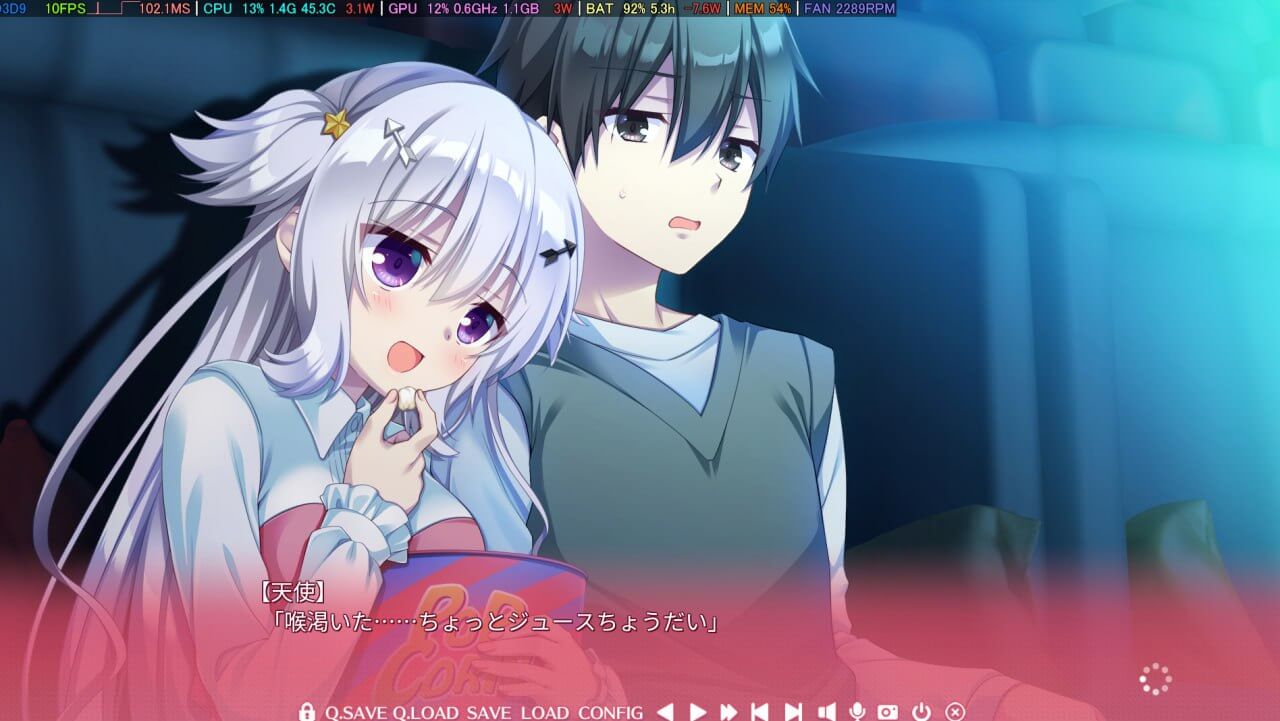
The flaws of Renai, Hajimemashite are obvious. Never mind the extremely cost-saving backgrounds — at least 70% are reused from older games. The main problem is that, as a visual novel, all its effort goes into the “angel” route. Only if you reject the school idol and pursue the angel does the story form a complete chain. Every other heroine is air, a joke. Apart from the invisible female net friend and the abstract “animal-ear girl,” their routes feel like pure perfunctory filler. The funniest is Yukari’s route: she’s fine as an NPC in the angel route, but as a heroine her route is hilarious, and her reason for liking the protagonist is hilarious too — the kind of thing that would give you erectile dysfunction even as a porn plot.

So the game’s sole purpose is to highlight the “angel” story: a naive girl enters society, gets hammered, then gets a chance to relive her youth and enjoy romance — a so-called positive story. Not fresh, not at all; it’s been done to death. There’s no big twist, either. The script is so afraid you’ll miss the foreshadowing that it repeats from the start that the halo is LED and the wings are fake — especially once the angel enters school and everyone sees her and assumes she’s a weird cosplayer. The writer never intended to hide the angel’s identity. Maybe it’s using player expectations to hide the twist in reverse, but man! Asa Project has never had supernatural elements. If you’re a veteran, you never believed the angel was real, so when she turns into Amane Kirari there’s no surprise — just relief that it finally happened.
As a 2025 visual novel, Renai, Hajimemashite is pretty mediocre in production. Compared to games from five years ago, it’s practically bare-bones. The UI and choice boxes are abstract enough that I’d believe it was a crude doujin project. But when the staff roll came up and I saw the scenario writer did all the UI design, system testing, and even part of the programming alone, I felt less shock than resignation.
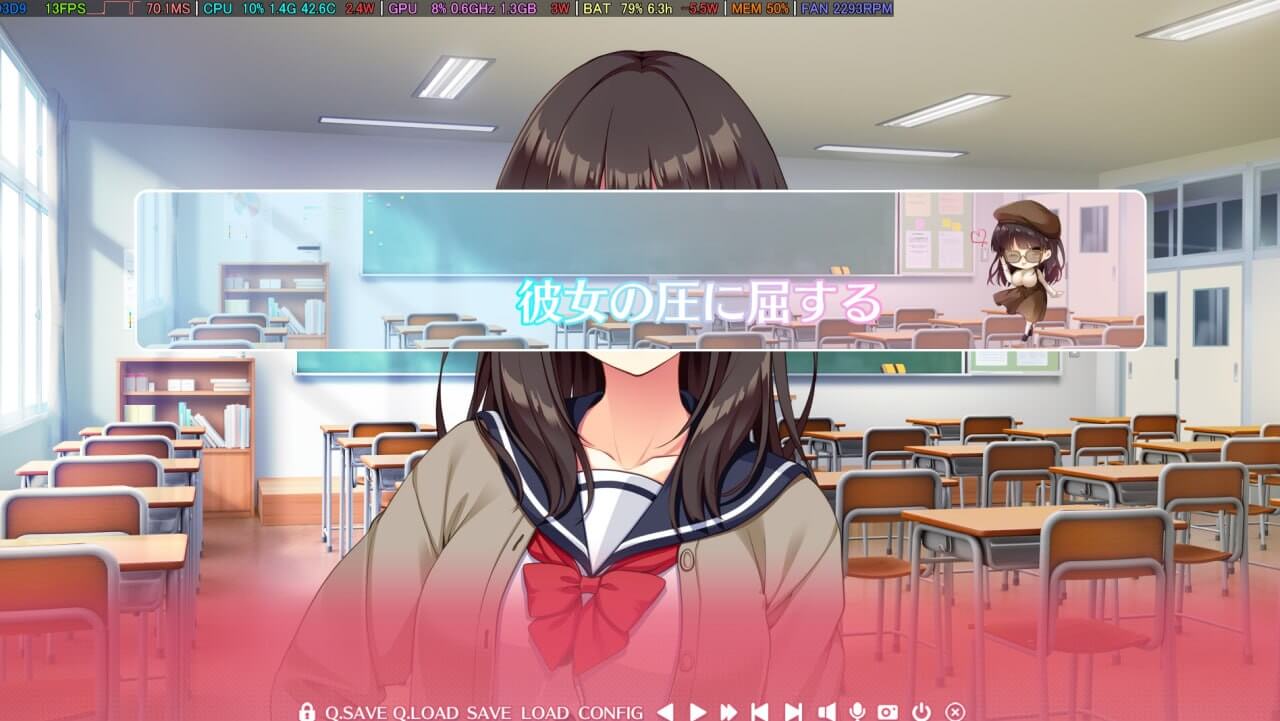
It’s not five years ago anymore. The visual novel industry can’t keep doing things the old way. After the pandemic, new releases delay endlessly — even after the master disc is done, they delay again. Under cost-cutting, ugly UI? Single route? Monotonous music? Flat voice acting? The fact the game got made at all is good enough. At least it tells a passable story, letting every Xiao Chun’an in front of the screen insert himself as the protagonist and enjoy the thrill of being teased by a shady woman.

Because it’s not like the old days. Four or five full-price big releases a month back then; now getting two or three full-price titles in four or five months is an achievement.
Comments are hosted on the Chinese main site. This mirror is read-only.