LimeLight Lemonade Jam (ライムライト・レモネードジャム) Review
A Bass Joke from Yuzusoft
Two years on, after a run of teasers early in the year, Japan’s visual novel powerhouse Yuzusoft has finally put out its full-price R18 proper new release for the year: LimeLight Lemonade Jam (the Chinese title roughly reads as “Spotlight and Lemonade Performance,” since “Jam” can mean fruit jam or a band’s set). And to everyone’s mild surprise, it’s a girl-band story.
From announcement to launch the whole thing ran like classic Yuzusoft: no long gap in between, and they put out a free online demo download well ahead of time — the kind most of today’s so-called “super blockbusters” won’t bother with. Credit where it’s due: no offline demo event, no flying out KOLs on the company dime to say nice things in advance. Just traditional marketing, step by step, and the release didn’t slip. You can smell the mature project management.
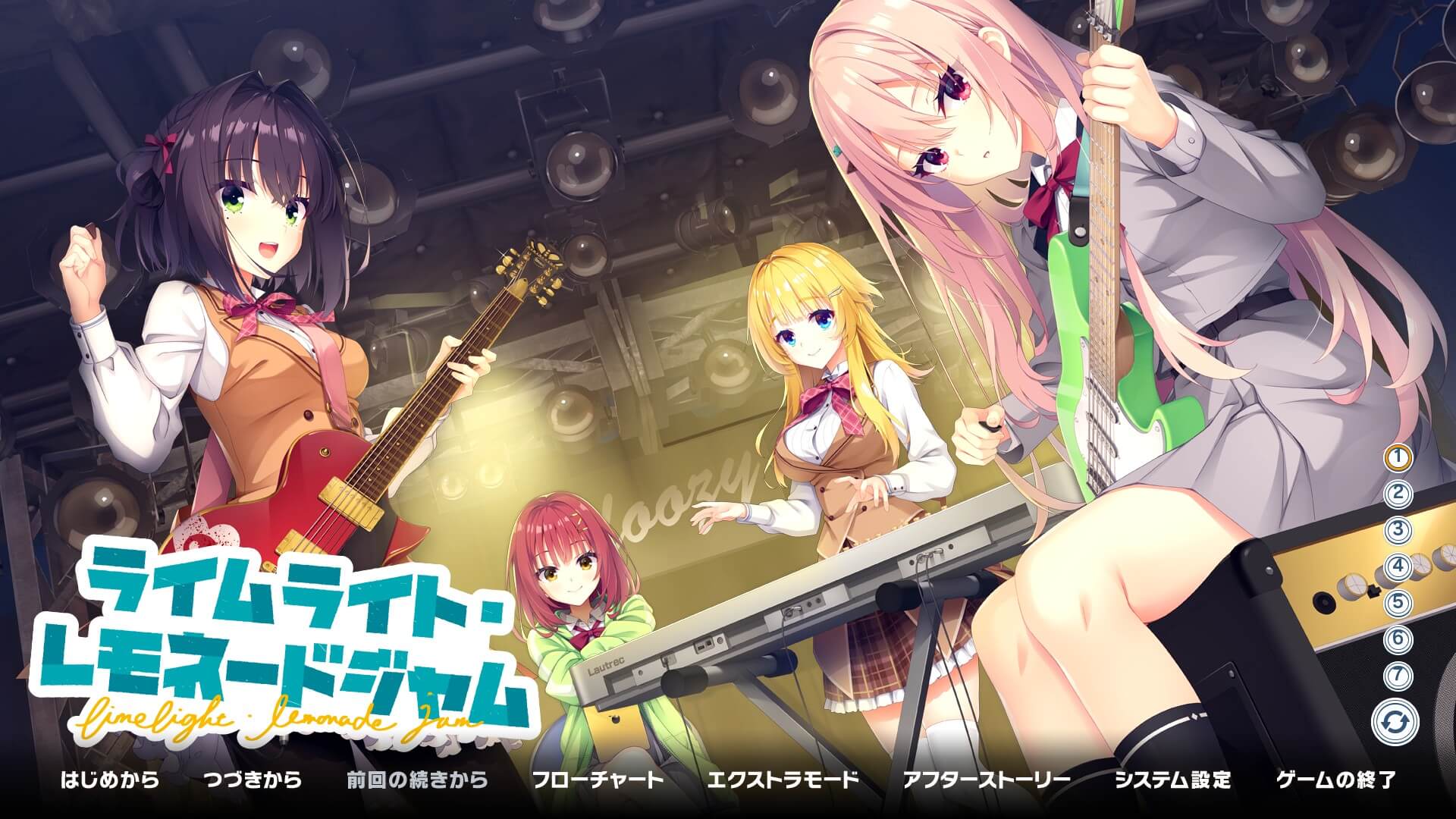
Honestly though, my opinion of the game went through something like a roller coaster while I was actually playing it. At first I thought it was cliché to the bone, that Yuzusoft had finally shit the bed. Then around the middle I was like, huh, this is actually way better than expected — as expected of Yuzusoft. And once I’d cleared everything, I came back down to earth. This new Yuzusoft game brings a lot of evolution in production style and in the product itself, but it’s not perfect, and it drags a fair few new problems along with it.
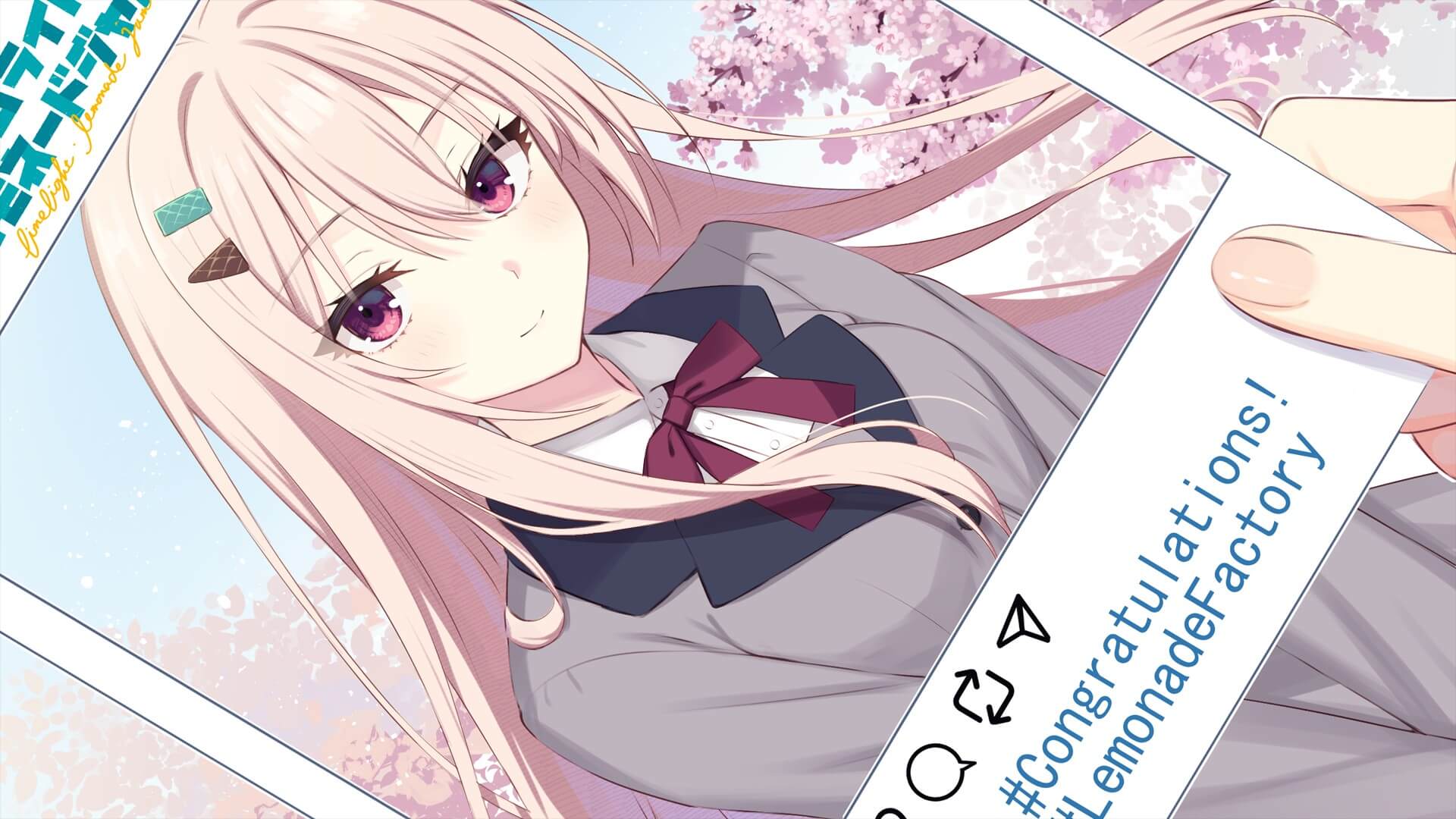
Let’s start with the story everyone’s here for. The protagonist is a guy named Shounami (his name comes from the famous The Great Wave off Kanagawa — yeah, that one, the one that’s been memed to death). As a kid he was influenced by his cousin, who played music, and not only formed a band but became a fairly experienced bassist. Once he got to school he kept playing bass at small live houses, but it was always just for fun — in his heart he’d already given up on the whole music dream. Then one day he sees a girl on the street with a guitar, about to do a street performance. She’s so bad at guitar that the set can’t go on, so he steps in and helps her out, and she’s incredibly grateful. Later it turns out she’s the new transfer student in his class… (You can see why I thought this game was doomed at first. This is a setup that was already worn out last century.)
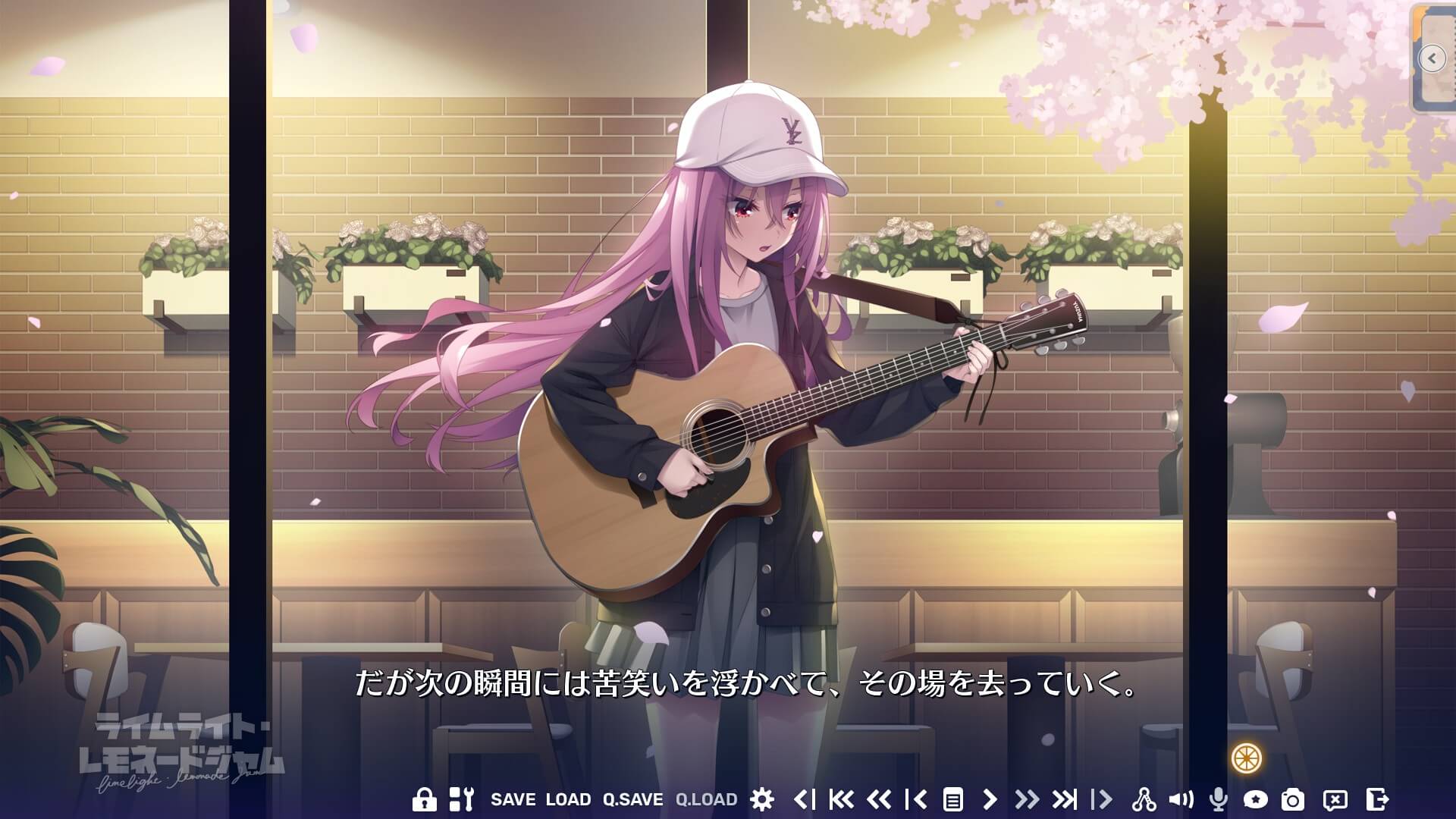
The girl is called ENA, and the moment she arrives at school she’s in a hurry to start a “light music club.” Problem is that requires support from the student council and the teachers, and since Ena is only so-so at playing and also has a few hundred million units of social anxiety, nobody takes her requests seriously. Eventually the protagonist can’t stand watching it anymore and decides to help her again. With his help, and Ena’s own recruiting, the band barely comes together: protagonist on bass, keyboard is Ena’s childhood friend, the blonde Tsukimochi, drums is the buddy the protagonist has always played with, and since Ena’s own guitar skills are genuinely hard to compliment, she’s stuck as rhythm guitar and lead vocals while the lead guitar slot falls to Azumi, a classmate the protagonist knows from his part-time job. At first the protagonist tries to bring in Futamihara Ririko, a guitarist he plays music with, but she absolutely refuses — she’ll only help with promotion, booking shows, that kind of thing, acting as a temporary manager.
Anyway, this ragtag band comes together, they make some waves at school, and as their reputation grows they start playing live houses, eventually working up to their own solo shows — a band hatched on campus that makes it toward independence and the semi-mainstream. When the members are about to graduate, the student council and teachers invite them back to school for a graduation performance.
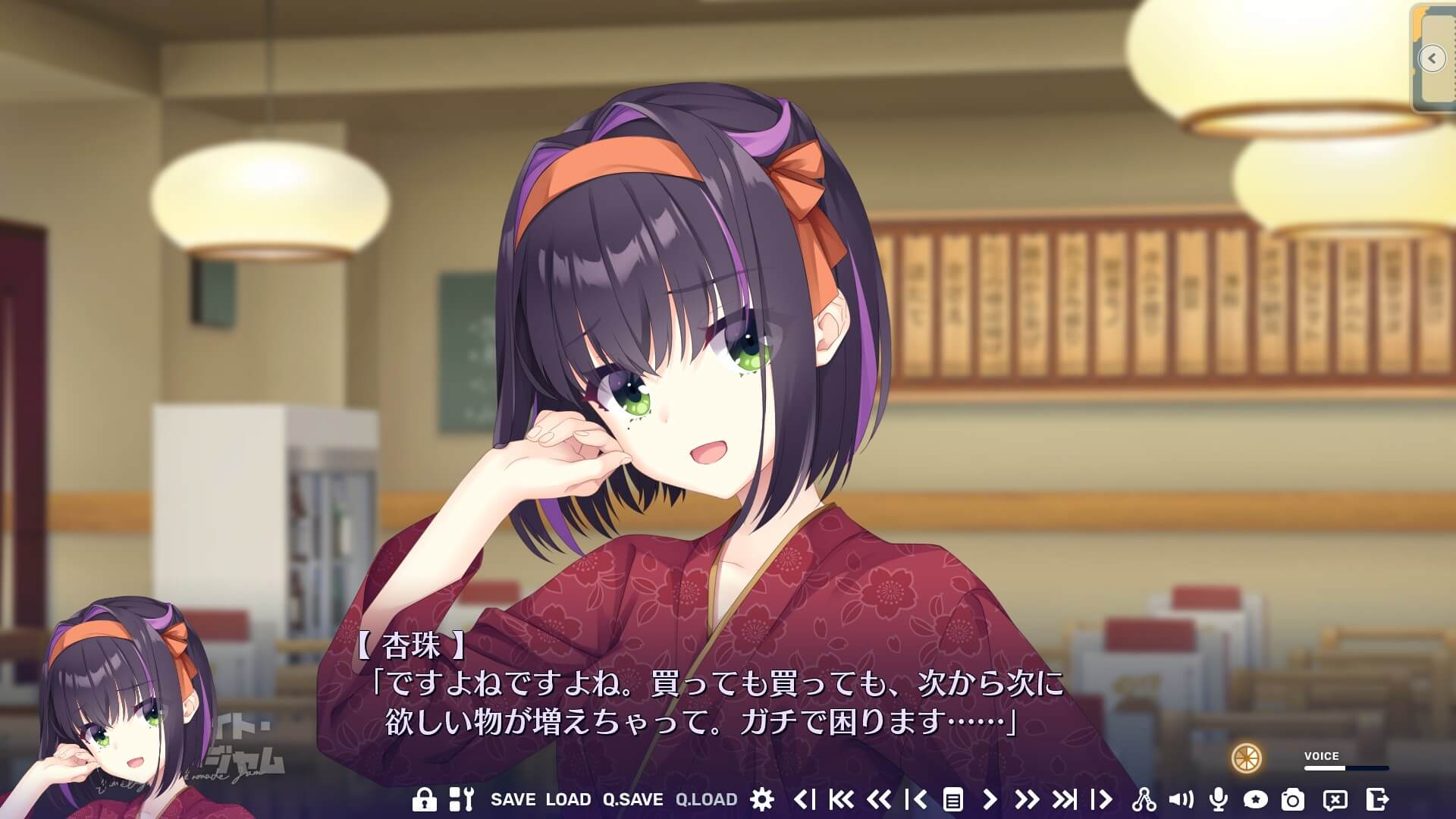
The number of romanceable characters isn’t small: 4+2. There isn’t much to say about the true main heroine Ena’s route. She was sickly as a kid, her mother was sickly too, there’s friction between Ena and her mother, and the father and mother got divorced. Your classic setup: sick mom, divorced dad, vanished dream, broken home. Ena got into music because someone recommended it and she gave it a try; then there’s the protagonist helping her on the street, forming the band, the successful shows, all of which pushes Ena and her mother toward reconciliation. The mother dies in the end, but the story moves into the typical “heroine looks forward” mode full of that Japanese mono no aware stuff.
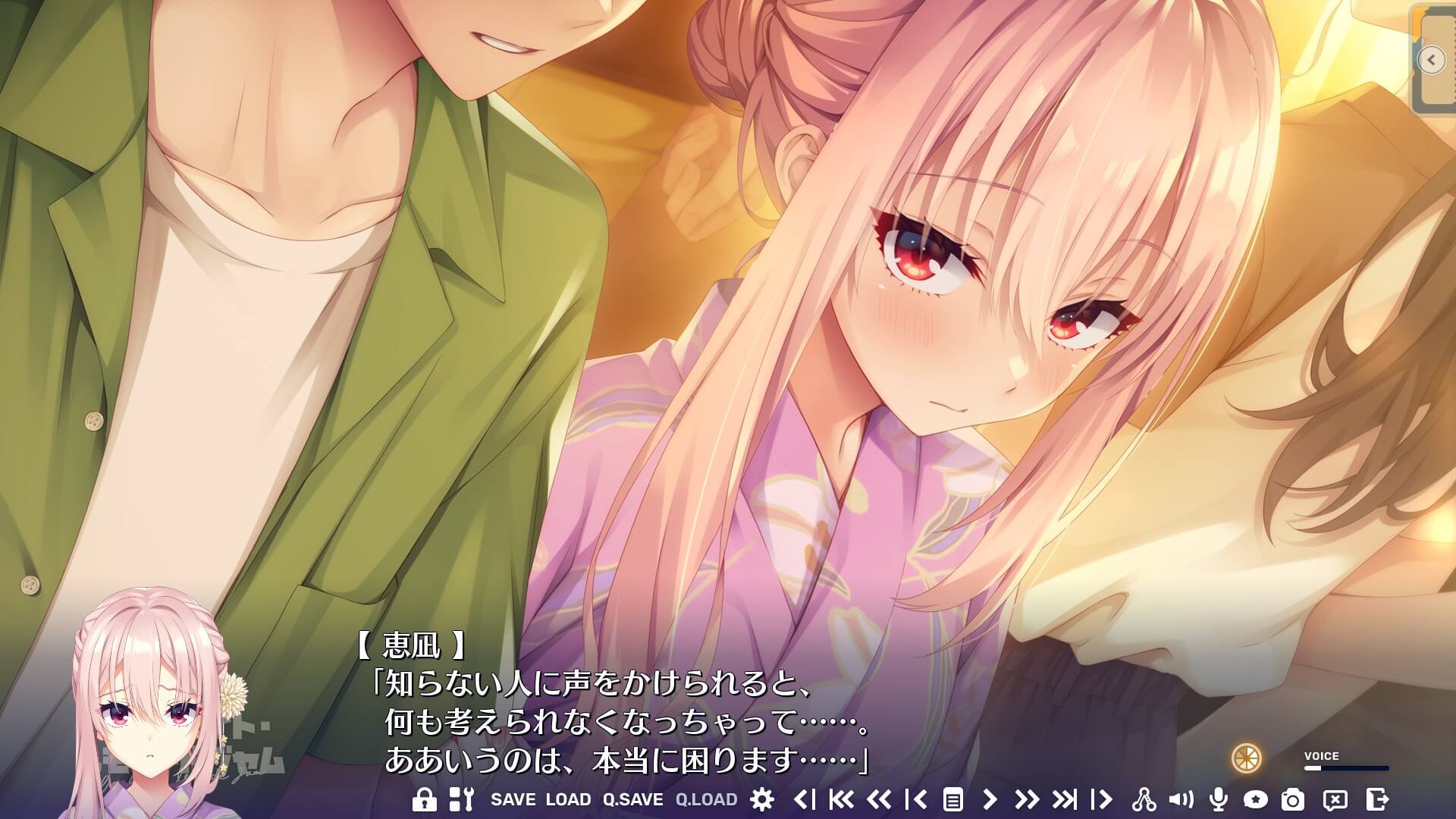
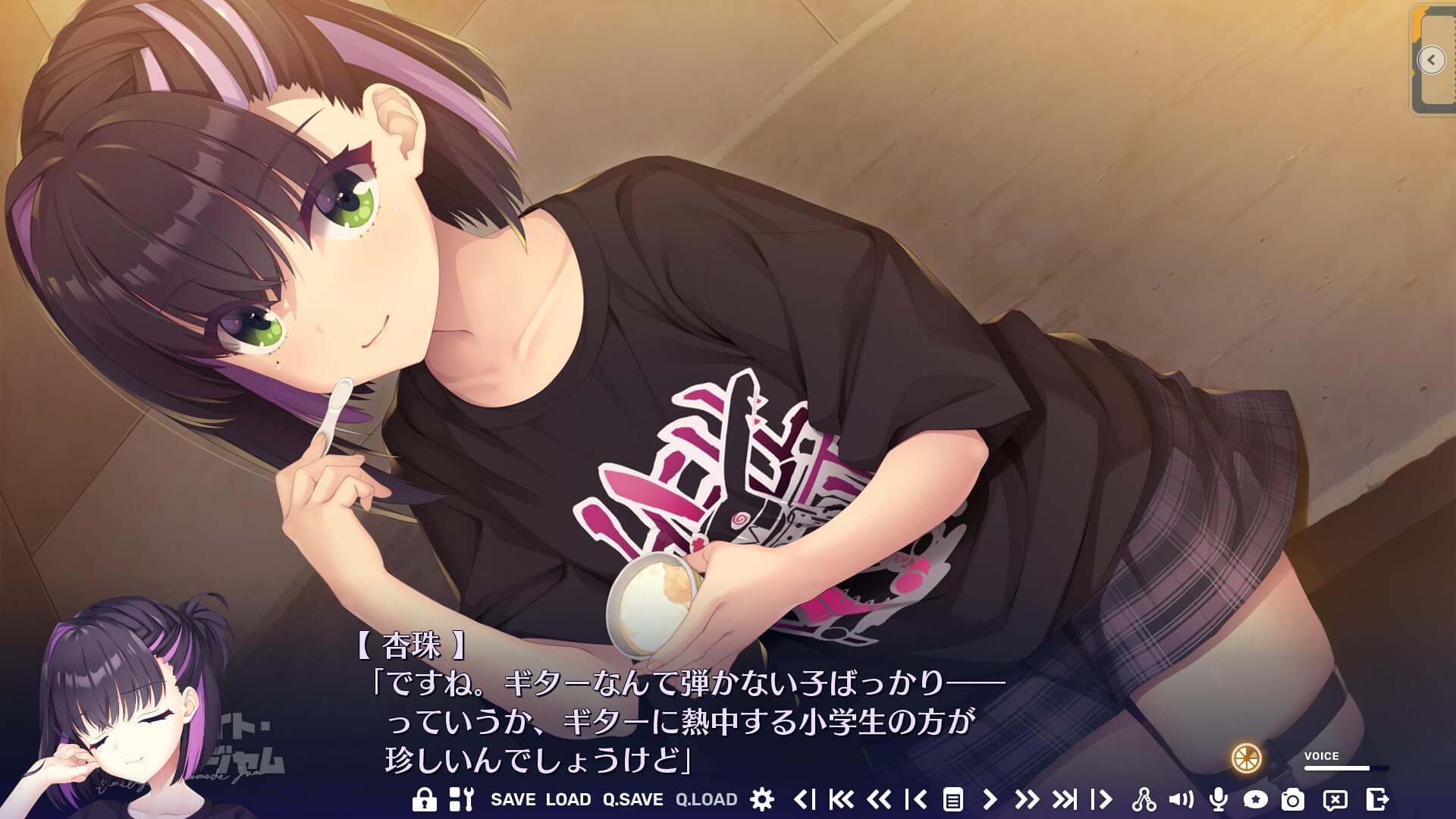
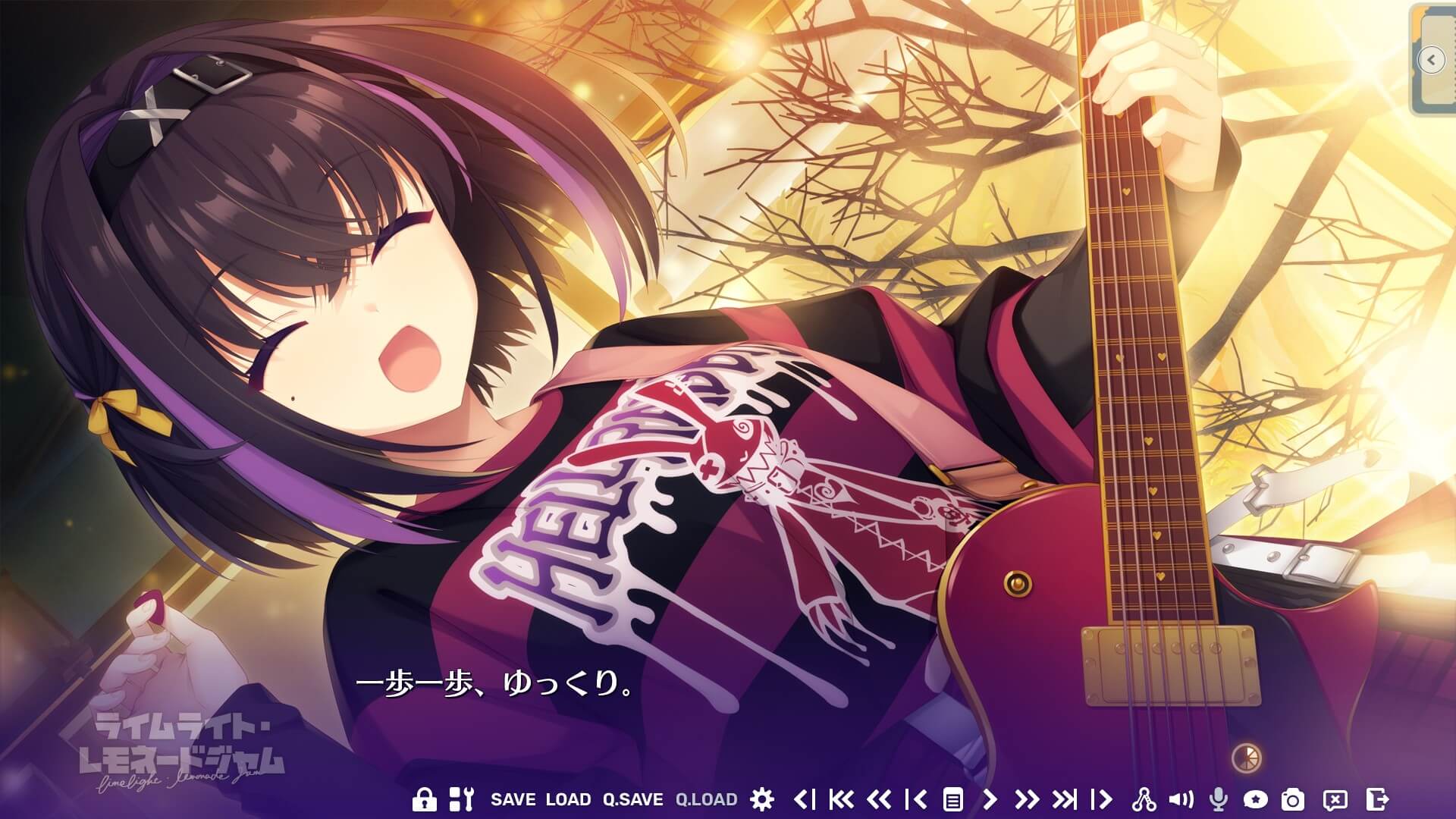
Azumi’s route is actually quite a bit better than Ena’s. At first she’s pulled in because she admires the protagonist’s band; she’s a good student and learns guitar fast — and yeah, top students pick up anything fast, instruments included. But with no experience she still makes mistakes during shows, and every time the protagonist and the others have to cover for her. She feels guilty about it, decides that if she’s bad she should practice more, and starts practicing online while running a social media account on her practice content. It actually gets decent traction — enough that a scout for a commercial band spots her and wants to sign her, for an idol-style development path. In the end, after talking it over with the band, and with the label offering terms she can’t refuse, Azumi agrees. She starts living a double life, one hand commercial and one hand indie, and with that brain of hers she’s clearly going places.
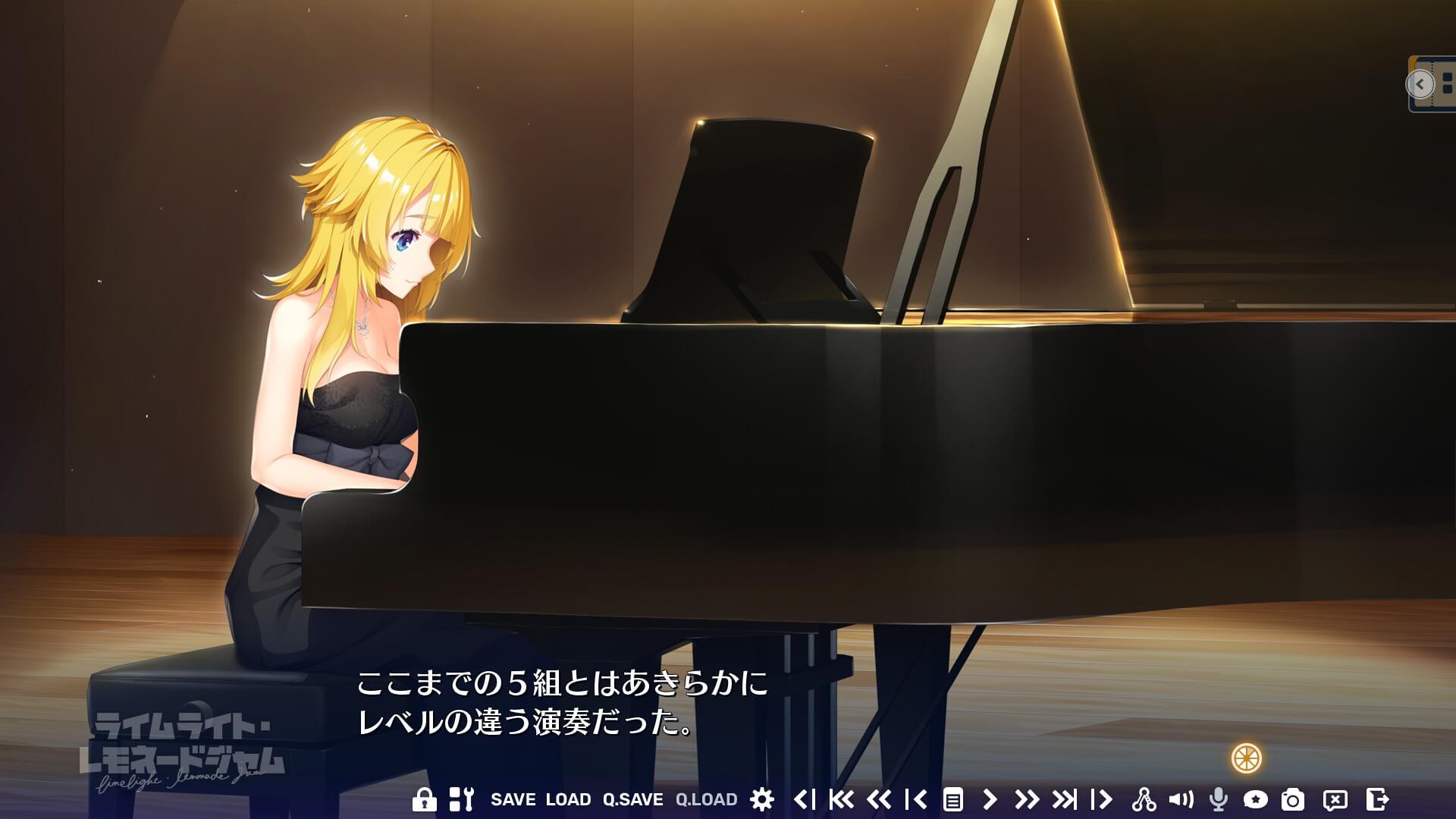
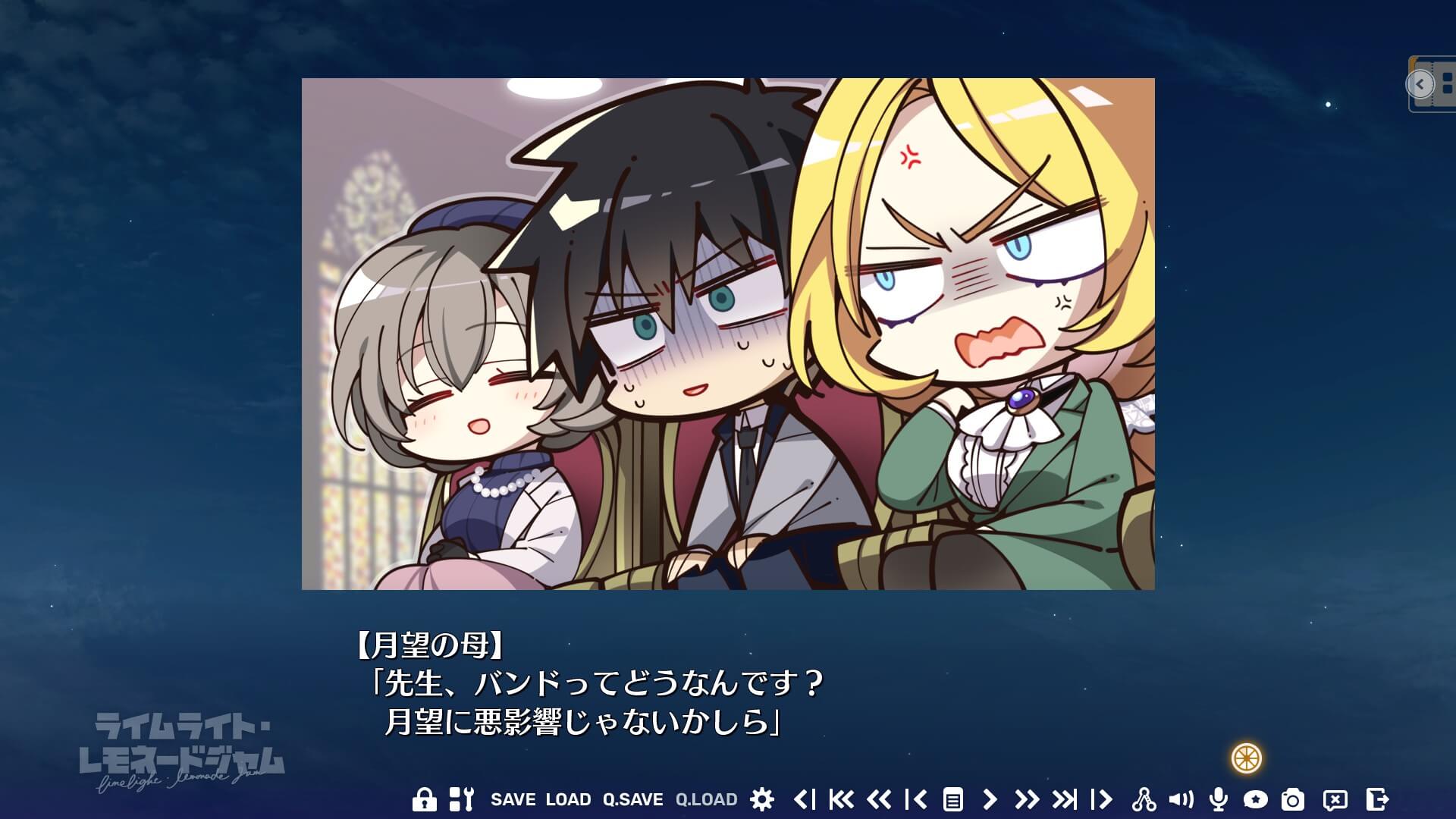
Tsukimochi’s design always makes me think of Tsumugi Kotobuki from K-On!, and her route is roughly that vibe too. Her family is well off, her mother trained her on piano from childhood and absolutely hates rock and pop — she thinks rock is all about people doing orgies, drugs, and smoking. Tsukimochi is plenty rebellious herself, gets interested in rock bands, and asks to join as keyboardist, since she plays piano anyway. When her mother finds out about the band, she argues her case and never gives in, always smiling while she defies her mother — a proper rebellious girl, very rock ’n’ roll in spirit, and in her tastes too. The mother eventually gets talked around by Tsukimochi’s piano teacher, who points out that playing keyboard in a band helps with classical training. In the end Tsukimochi gets a chance to study in Vienna through the band’s activities and takes off in her career.
Ririko’s route is just… boring? It’s barely about the band at all. Basically the standard childhood-friend template: she’s liked the protagonist since they were kids, learned guitar for him, helped him with the band, and then it gradually turns into that worn-out “more than friends, less than lovers” thing. After that it’s a series of clichéd developments to get them to break the ice fast, stuffed with confession scenes and flashbacks, all for the sake of “delivering sugar.” Feels like Yuzusoft decided the game needed one character whose role is pure romance sugar, so they picked Ririko.
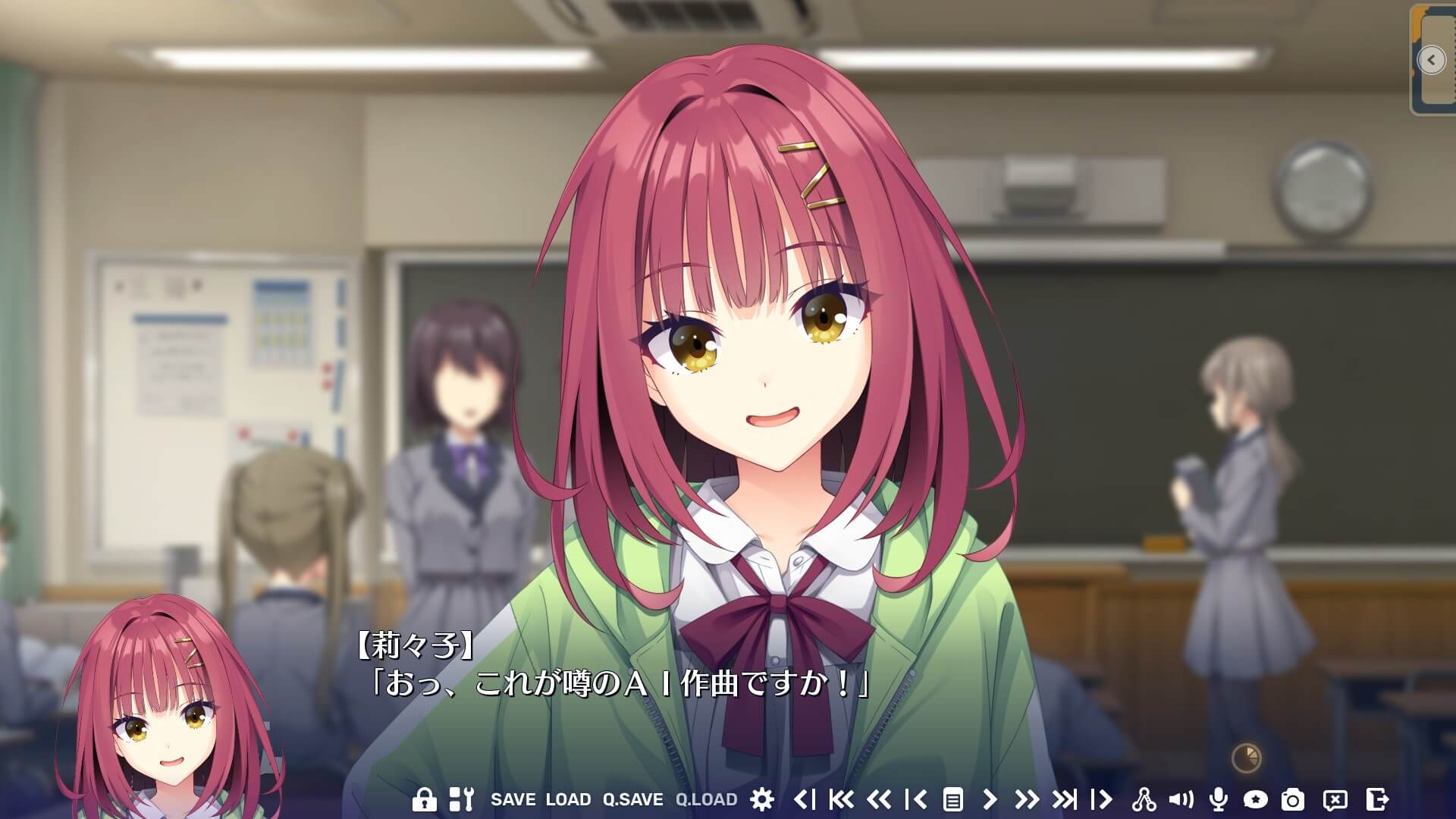
The two side characters don’t have much worth saying. The twintailed white-haired girl, Mekawa Miku, is the bassist of another band and starts out as a “rival” to the protagonist’s band, but then discovers his bass skills are genuinely insane and is deeply impressed. Later, because she has a meal with him and it indirectly leads to him getting injured and unable to perform, she fills in on bass for the band, and then they end up together. She hates the commercial side, fuck capital, and loves the indie band feeling. The main thing is that white-haired Miku’s characterization is very “open” — like someone who plays rock, straight shooter. She’ll openly admit when someone else is good, and she’ll take responsibility when it’s hers, with zero coyness or tsundere nonsense. Completely different from what CV Ishihara Mai usually plays, and honestly it threw me off.
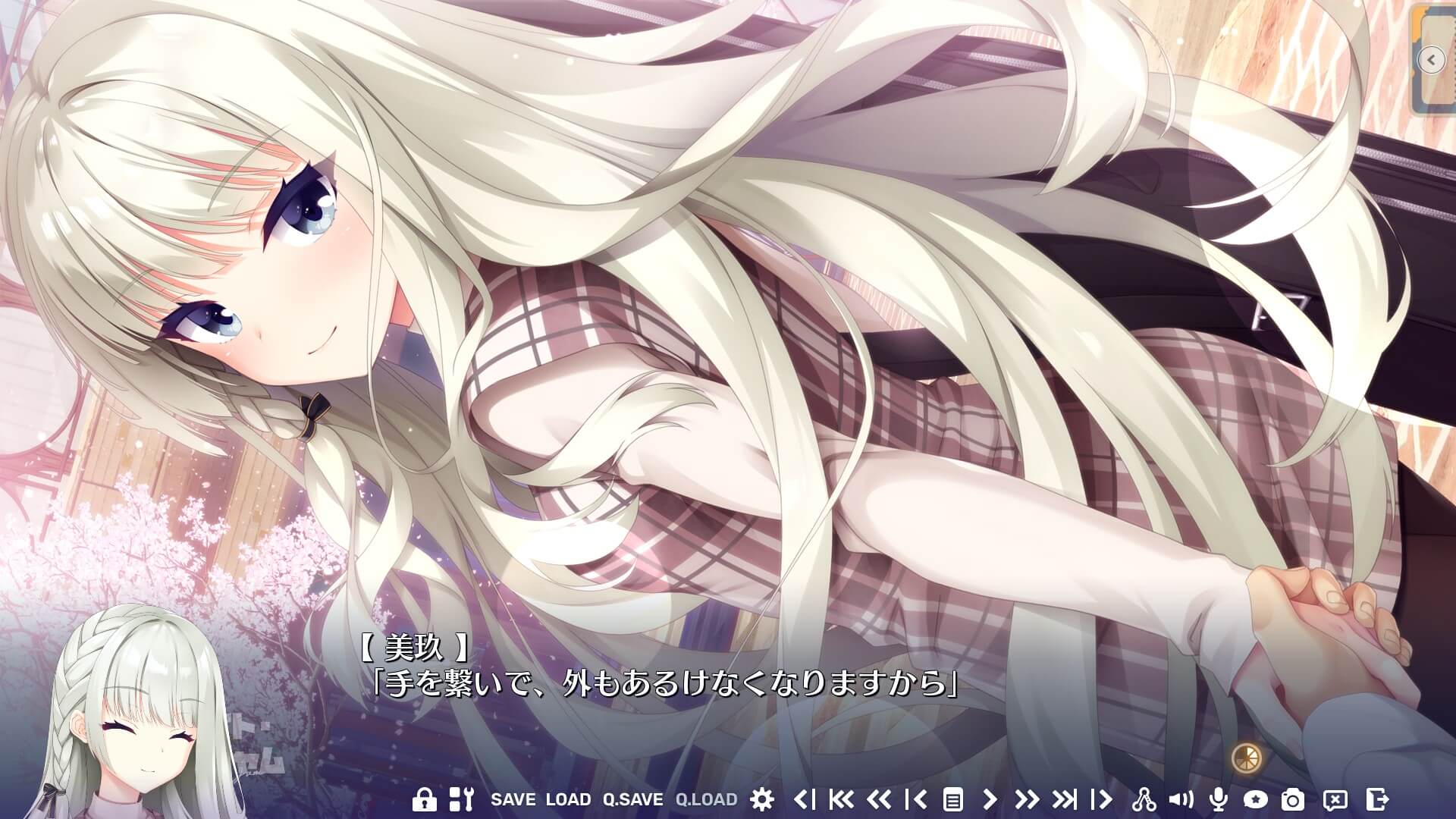
The other side character is Natsuwa Ko’s cousin, and it’s a textbook older woman devouring a naive young man setup. She says she needs inspiration for her music, lacks youth and romance in her life, so she devours the protagonist. Extremely by the numbers — you know the ending from the first scene. I do like Natsuwa Ko, but maybe I’m just old and impotent now, because I didn’t enjoy this route at all. Tsukimochi and Azumi were better.
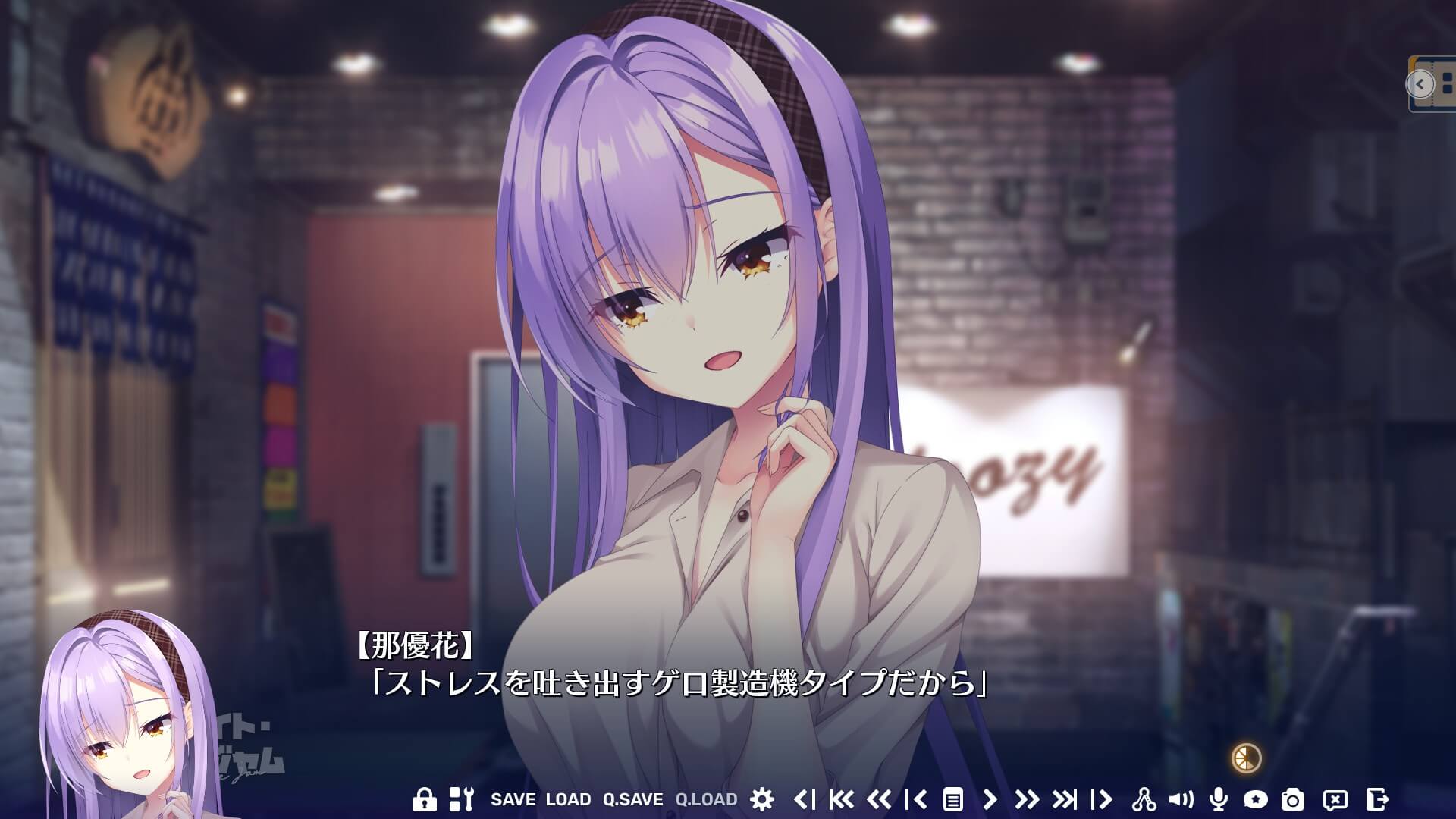
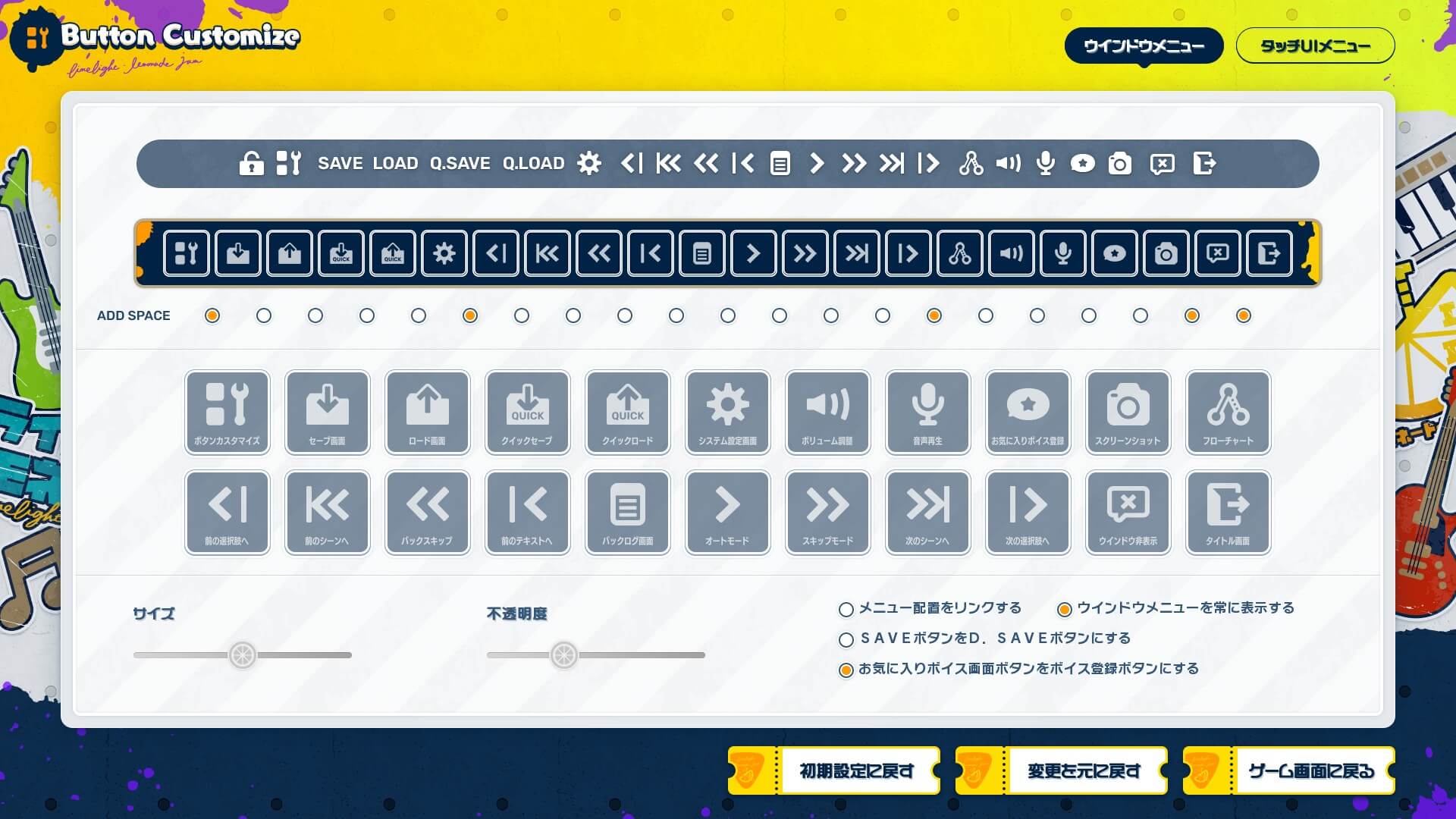
With the stories and characters out of the way, let’s talk about the game itself. First off, production is more polished than the previous game, and in places it’s polished to a deranged degree. Everyone knows Yuzusoft’s game systems have always been solid — it’s based on KiriKiri, but they’ve made massive modifications, so the experience is extremely comfortable. At minimum, any feature you want, they give you. In LimeLight Lemonade Jam they went even further: on top of keeping all the old features (high-res images, gamepad support, touchscreen support, flowchart display, etc.), they added a bunch of features that strike me as extremely niche. You can freely reorder the UI options in the game, you can use mouse gestures to operate it, and you can set mouse gestures to auto-disable when using the touchscreen. Even more absurd, the game has a built-in TTS voice reading feature that supports third-party APIs, and you can modify the pronunciation of each character’s name — you could absolutely make a dub where the characters are called “Handsome Guy” and “Pretty Girl.” The absurdly rich customization options leave me a little baffled: who is this for? Does anyone actually use this?
Maybe some people do, but very few. Still, even the niche demands get met in a Yuzusoft game. Making visual novels can’t get more peak than this. A visual novel with more customization options than Windows 11, coming close to KDE — only Yuzusoft could pull that off. And the flowchart feature deserves more credit: you can see chapters and story branches, click nodes to view the dialogue at that point and thumbnails of the scene, and even change node options on the spot to alter the story’s direction, so you can see exactly which choice you got wrong and missed a route on…
At this point a Yuzusoft game barely needs a walkthrough. Poking at the flowchart options and reasoning out how to unlock different branches is itself part of the fun, and only Yuzusoft can pull that off with such a powerful, complete game system.
Now the story. Like I said at the start, my attitude toward it kept changing. At first this “school light music club” formula felt old-fashioned, clichéd, and kind of dull, but once I got into the individual routes I started seeing it differently. The main reason is that you can feel a distinct “band flavor” in the character writing.
At the end of the last century, the youth literature popular in my country was all about wasting four years of college and starting a band. A lot of the novels I read in high school mentioned this — some of Han Han’s stuff, and Grass Years, which I remember clearly, and We Break Up on Graduation Day. They all wrote about four years of college doing nothing but drifting and dating, and the other thing was starting a band. I’ve never been in a band, but from those books and from really getting into rock in college, I feel like a band carries a kind of rebellion — that straight-shooting, say-it-like-it-is, frank, blunt, untainted-by-the-world passion.
Or, to use the phrase the hip-hop scene was throwing around a while back, “keep it real.”
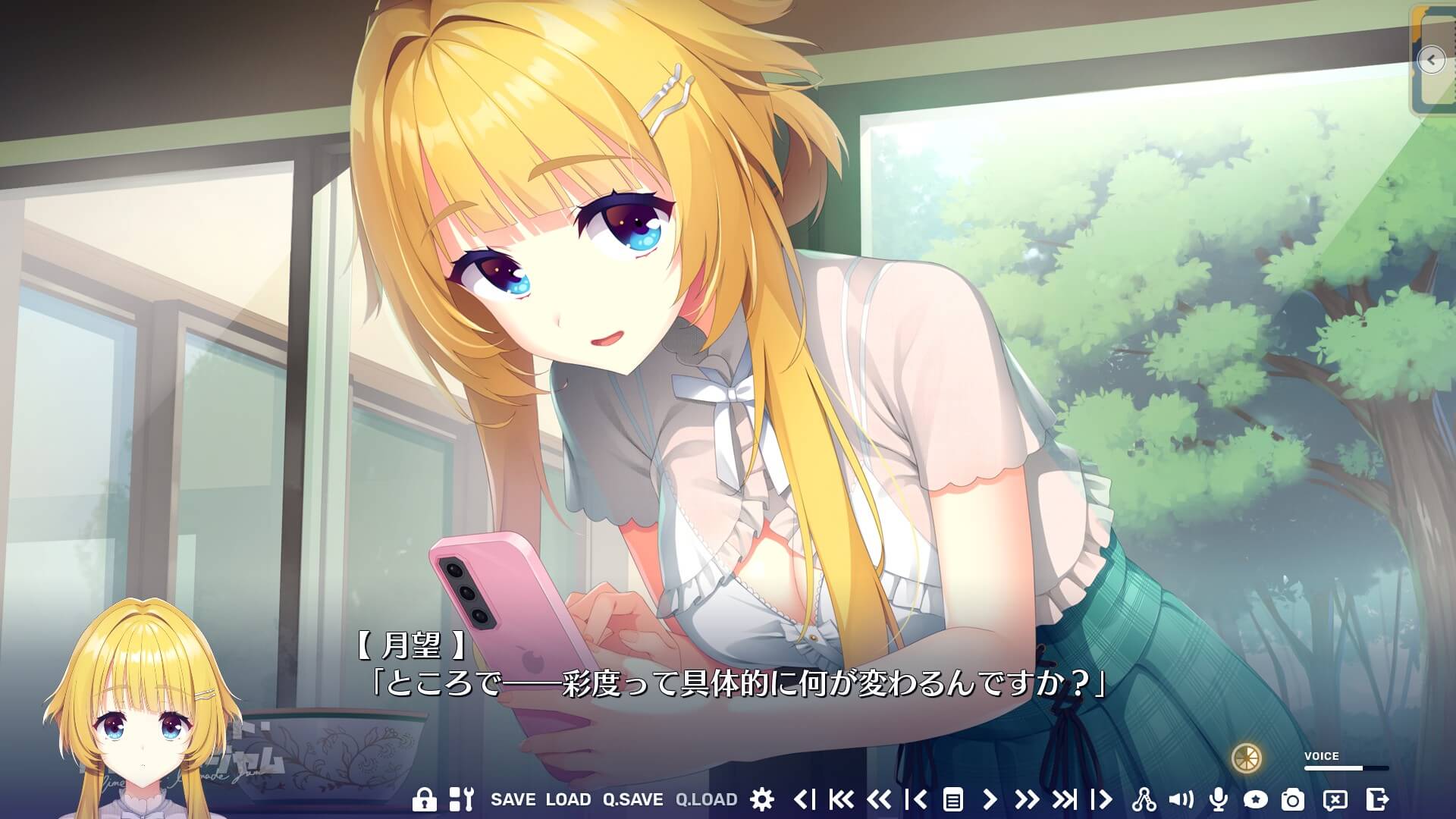
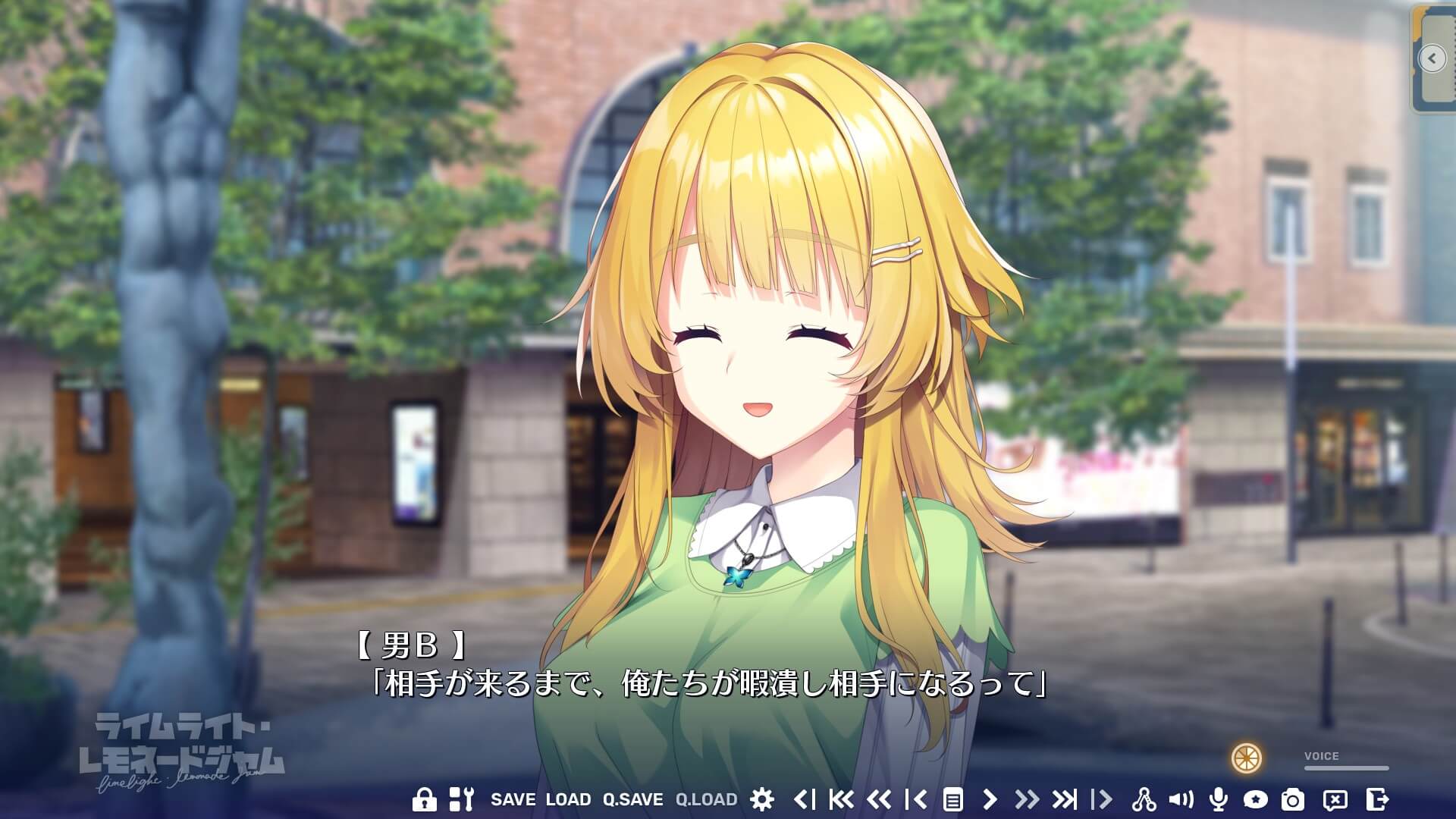
And the funny thing is, in this Yuzusoft game you can clearly feel that “straightforward” soul. Especially in the blonde Tsukimochi’s and white-haired Miku’s routes. Tsukimochi is a rich girl with a rebellious streak — her mother wants her on piano, she longs for a band — which normally means a huge family conflict, a falling out, all that. But she always handles these things calmly. She doesn’t clash head-on with her mother, doesn’t say much, just keeps showing up to band practice and doing what she wants to do. The other one is when the band’s songs “collide” with someone else’s and the internet misreads it as plagiarism. Tsukimochi’s take is worth chewing on: she just asks the protagonist whether he actually plagiarized. He says no, it was a coincidence, the other guy released first and his release afterward just looks like a copy. Everyone else in the band agrees they should just pull the song to avoid the misunderstanding. Only Tsukimochi is dead set against it — if she didn’t plagiarize, why feel guilty? Why take it down? A song is your own hard work; does pulling it respect what you put in? She looks like a fragile girl but she’s incredibly strong inside, and she’ll confront unfairness head-on — and what’s more impressive is that her way of fighting is always practical. She never rages impotently. I have to say, this character completely won me over.
White-haired Miku’s characterization is about staying independent: she has ability and wants to improve, she openly admires others, she’s willing to shoulder responsibility, and she’s strong inside. That’s the standard kit for a “capable woman of the new century,” completely breaking away from the old anime-girlfriend image of “can’t live without a man.” Honestly, apart from some of More’s nukige, I’ve basically never seen a heroine in a visual novel with this kind of inner strength.
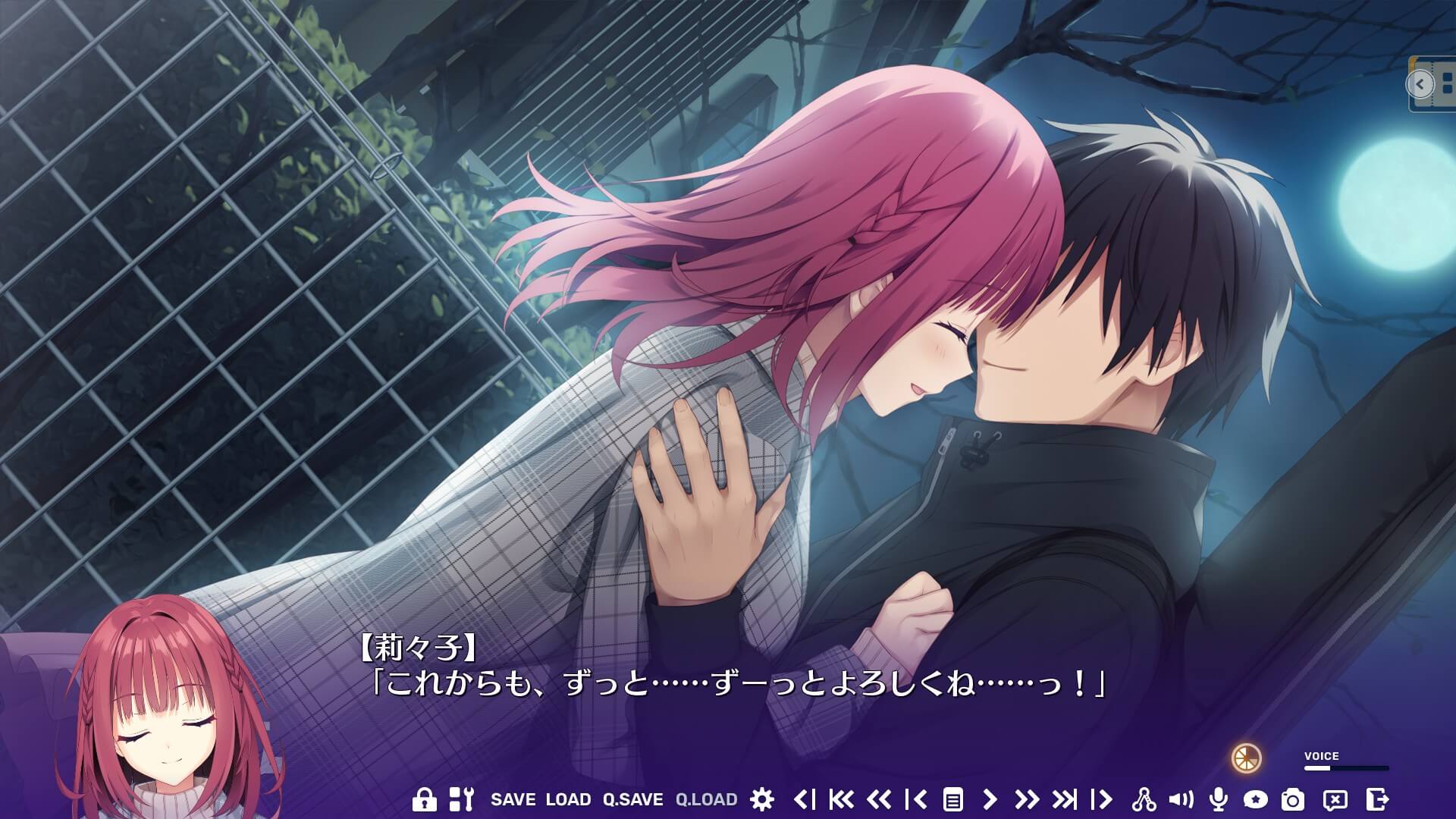
As for the other side characters, they’re back to visual novel tradition. Ririko is there for fanservice, and the true main heroine, center-position Ena, has a deeply clichéd story stuffed with rock-band stereotypes. Azumi’s story is actually written quite well, but I think that’s more about the prose — lots of inner monologue building an emotionally nuanced character, rather than the traditional cute-girl banter. That kind of writing is honestly something I’ve almost never seen in a visual novel; I’ve only caught glimpses of it in stories written by Rukuru. Daring to write like this in a visual novel is a kind of breakthrough in itself.
Of course, this Yuzusoft game isn’t without flaws — they’re pretty obvious. For a game built around a “girl band” premise, the music itself is just terrible. Compared to girl-band tracks from the same period like “Ready to rock” or “KillKISS,” the in-game songs here — apart from one, “RGB,” which is okay — really don’t stand out. The composition is extremely formulaic and the arrangements are dead simple. I don’t know if Yuzusoft knows its music is bad; I suspect they think it’s fine, given they even dropped the traditional “character song” approach in marketing and just put out a band song collection. My guess is they had concerns about real-life live shows — if the songs are too complex, the voice actors who’d perform them probably couldn’t handle it. Yuzusoft isn’t Sony, isn’t Bandai Namco, isn’t Bushiroad. They don’t have the resources to train people for that.
But come on… didn’t you get someone called Bamboo for this game? Why only have him supervise the instrument illustrations? Couldn’t he write a song?
Still, as I said: LimeLight Lemonade Jam is probably the best visual novel of the year. You can hand it the GOTY now (even if there’s no TGA in this scene). The completeness of the systems, the depth and expression of the story, the production level — even if the music doesn’t stand out, it’s not unpleasant to listen to. You can see a lot of clever thought in the production. The characters’ names even come from the Thirty-six Views of Mount Fuji. The game stretches its timeline over a full year and draws at least nine separate outfits for each main character — some of the glasses-wearers get up to 32. That’s more investment than a gacha game, isn’t it? With this much care, Yuzusoft is comfortably number one.
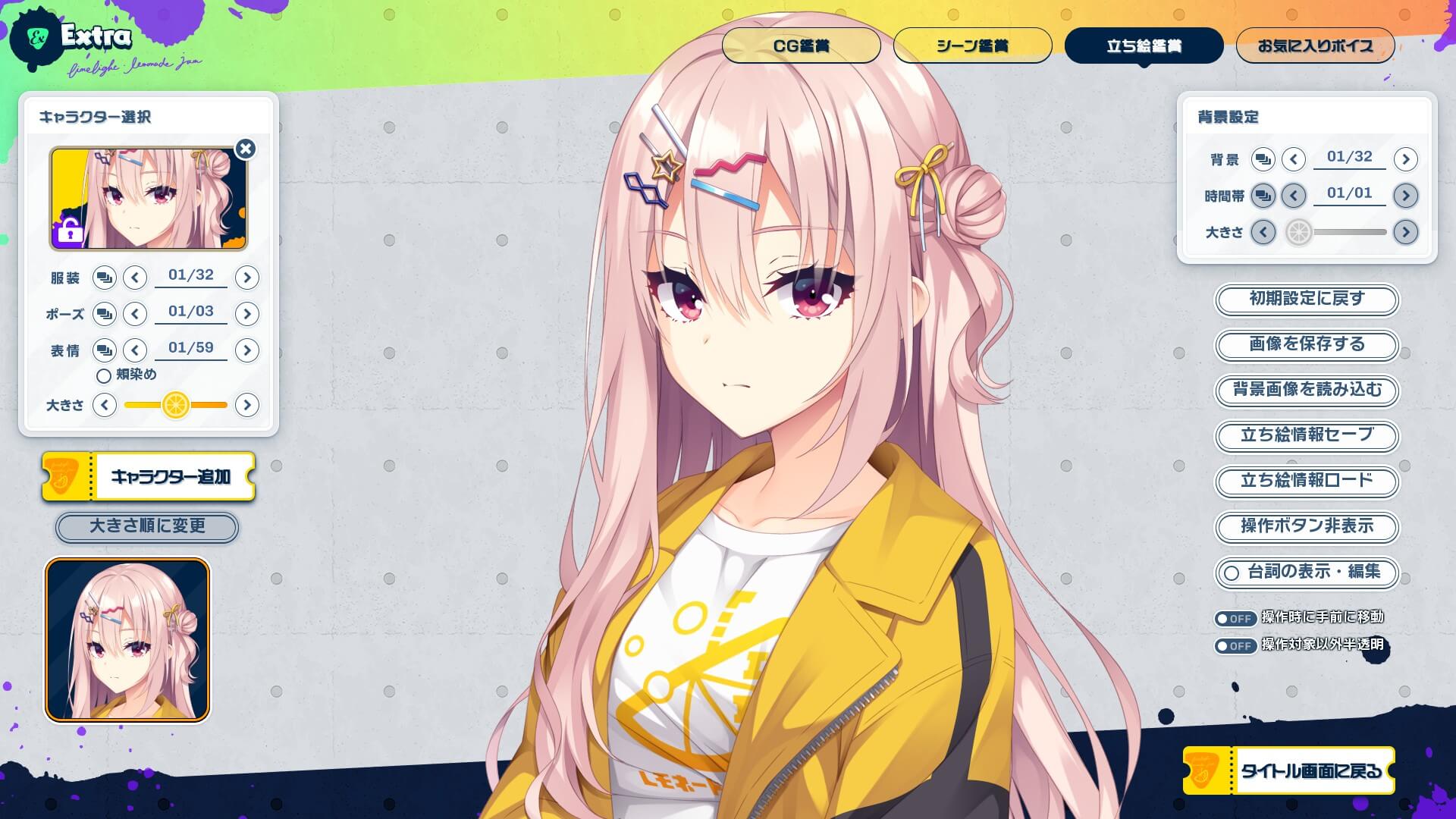
A few personal thoughts to finish. At a time when Japan’s anime “girl band” shows are all trending toward mental illness and total chaos, Yuzusoft’s LimeLight Lemonade Jam feels reassuring and positive. It barely mentions any of the bad elements that can come with forming a band — it just keeps the good parts. Passion, youth, struggle, and commercial success without losing yourself, and then leaving behind good memories at graduation. If the protagonist and heroines’ “Lemonade Factory” band had countless possible futures after forming, Yuzusoft picked the most perfect timeline of all and presented it to you. You could say it’s too idealistic — in reality a band definitely fights, definitely falls apart — but this is a game, and coming away with the courage to keep living is a good thing. You can’t spend every day understanding Sakiko, becoming Sakiko, surpassing Sakiko, right? If that happened, our society (chokes up) would turn into something else entirely…
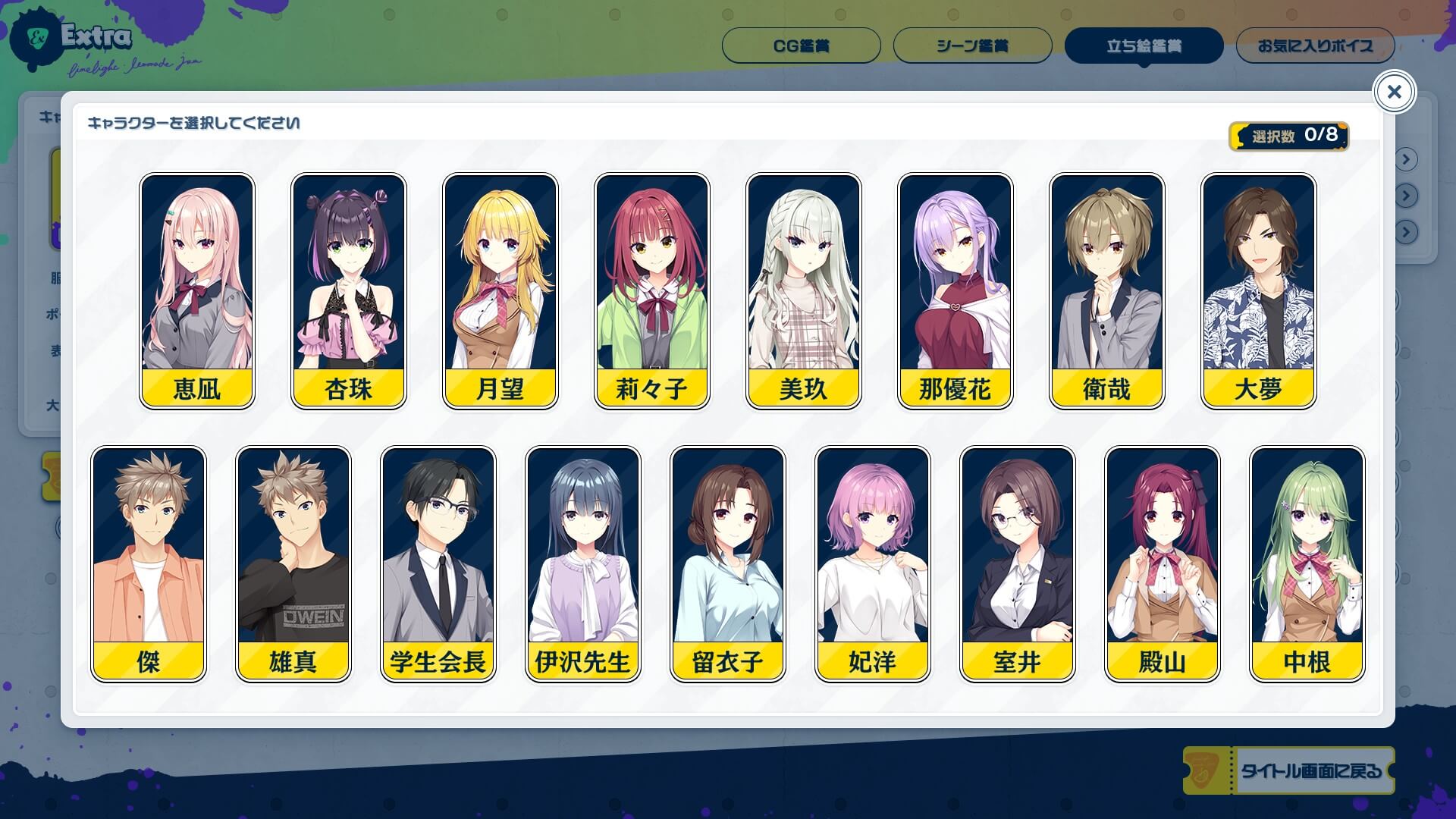
Oh right — when the game starts and says the protagonist is a bassist, I was waiting the whole time for the classic old “bass joke.” I waited and waited, and there’s almost none of it. The heroine says one line about how “the bass is important too.” For a while I figured the writers just don’t know how to play with memes, can’t follow up on a setup. But then in the mid-to-late game, and especially in the band’s various performance CGs, the protagonist is basically nowhere to be seen. Even in the separately released in-game song collection you can barely hear the bass. The band members practically expelled him from the group… and that’s when I realized: as the protagonist of a visual novel, and as the band’s bassist, he’s inherently an air-like, dispensable presence. Maybe that’s the more advanced, more subtle “bass joke” Yuzusoft was giving us all along.
Comments are hosted on the Chinese main site. This mirror is read-only.