Impressions: Saturn Controller
The Saturn Controller: "The Best Fighting Pad Ever"? (Plus Quick Takes on Other Pads)
Back in the handheld emulator scene, a lot of people were obsessed with the idea of a “fighting handheld.” Mostly old-timers grinding KOF 97, pining for a handheld with good feel that could handle fighting games, or side-scrolling beat ’em ups and the like.
And of course the god of the bootleg handheld world, Zhou Ge, answered their prayers with the Anbernic RG-Arc, a machine that’s blatantly modeled on the Saturn, complete with the standard six-button layout and that familiar disc-style D-pad.
But once the thing came out, a bunch of old-timers weren’t happy, saying the design fell way short of the original Saturn, especially the D-pad feel, which was off by more than a little. They all insisted that only the original Saturn pad had that flavor, that perfect balance of firmness and give, that silky-smooth quarter-circle execution…
Really? I didn’t buy it, so I picked up three of them to find out:

Actually, finding an original Saturn pad isn’t hard—there are piles of them on eBay (Mercari in Japan), though most are in rough shape, yellowed and so on. If you’re patient you can wait for a less-yellowed one. Some are even the cut-cord versions, which you can bleach or wipe down yourself once they arrive.
Once you get one, the Saturn plug makes it a pain to use on PC. My advice is to buy the 8BitDo mod kit—it goes on sale often, so you can grab it cheap. Installation is simple: just swap out the original board and your pad becomes a standard PC controller with Bluetooth and USB, and it even supports Switch. The one downside is the port is still MicroUSB, which feels pretty outdated.
While you’re swapping the board, I’d also recommend cleaning up the old pad—wipe off the wear on the buttons, replace the conductive rubber that’s lost its spring, and so on. Make sure to buy conductive rubber labeled “original.” Even if it’s not actually original, the stuff without that label definitely isn’t, and the feel difference is huge. I personally recommend the conductive rubber parts from the seller called “Mo Lang” (魔狼) on Taobao. For the button and D-pad parts, I’d suggest not buying new ones—I’ve tried several versions all labeled “original” that were nowhere close to the real thing. Given how long this pad’s been out of production, genuine parts may really be gone.

A few things to watch for, especially with the D-pad. On most Saturn pads the internal lever mechanism under the D-pad is a bit yellowed, but that shouldn’t affect use. The round cross-shaped pivot inside, however, is directional—the side with the number on it should face “up.” If you get it wrong, you’ll lose diagonal inputs, so pay attention when installing. If the pad is old and the D-pad makes a creaky “squeak-squeak” friction noise when you twist it, put a little mechanical keyboard switch lube on the friction point of the center pivot to lubricate it and cut the noise.

A modded, refurbished Saturn pad works on PC with no trouble at all, including Street Fighter 6 and the like, though you’ll need to remap the two rightmost heavy punch/heavy kick buttons. You can create a separate profile in SF6 for that—just be aware of it.
So here’s the key question: how does this so-called “best fighting game controller in history” actually play?
All I can say is: it’s just okay.
The D-pad is indeed reasonably responsive and precise after the refresh, but it has the same problem most pads have with fighting games: the directions are too soft and prone to misinputs. Especially when you’re doing forward/back footsies, it’s easy to accidentally hit up. Forward and back fireballs still turn into dragon punches easily. So… in a way I think it’s just okay. If you call it “the best”… maybe it’s better suited to KOF-style games that need constant half-circle forward and half-circle back motions?
Also, because the D-pad buttons are too “soft” and “loose,” tactile confirmation is poor—for me it’s even worse than the Anbernic RG-Arc, because on that at least you can feel you’ve pressed the button, that so-called “confirmation.”
I know a lot of people will argue that the pad is old, the feel has degraded, it can’t compare to back in the day, etc. But I actually modded three pads, all with original parts, and the feel was basically consistent across all of them…
So as for that legendary “best fighting pad,” it may have been great back in the Saturn era, but in 2026 modern manufacturing has long since moved on. Times have changed, and the Saturn pad is long outdated. If you happen to have one lying around, or have nostalgia for it, buy one and mod it. Otherwise, skip it.
While we’re on controllers and fighting games, let me go through the fighting pads I’ve used and give some shallow impressions:

8BitDo M30
This is a product that aims to completely replicate the Saturn pad, with plenty of modern features: Bluetooth support, better build quality, a bigger battery than the (8BitDo Bluetooth kit), and a cheaper price, etc.
But its flaws are obvious, mainly that D-pad, which is even looser than the original, making misinputs even easier when you’re doing motions. I’d say it’s not even qualified as a pure Saturn game pad.
The funny part is that when this product launched they got some fighting game players to promote it, saying how great it was, but the promo videos Actually backfired. Still, as the most cost-effective “Saturn-like” pad on the market, there are plenty of post-launch mod options, including improved D-pads and improved feel. If you want to tinker with it yourself, there’s plenty of reference material out there—give it a try.

Retroflag MD Pad
An accessory pad from a DIY maker focused on retro devices, but it’s surprisingly good to use. I think it’s much better than the 8BitDo M30, with more precise motion inputs. Its shortcomings are poor build quality and no Bluetooth—only traditional 2.4G. Worse, this pad doesn’t imitate the Saturn but the Sega MD, so… it’s quite small, and hard to grip for people with big hands.
It’s not expensive, but I’d still recommend it for retro games—even MD Street Fighter 2 is fine. For something more modern like SF6, forget it.

Betop Thorn Shadow (刺影)
A fighting pad that seems to date from the Street Fighter 5 era, still featuring the Saturn six-button layout, but with some improvements—the conductive rubber choice and some detail tuning. I think it’s much better than the later 8BitDo M30. Which is where I have to complain that 8BitDo stuff really only looks good; the rest isn’t much.
Apart from being discontinued—so you can only buy used or leftover stock—this pad has no obvious flaws for fighting games. Its weakness is device support: basically no chance of using it on mainstream PS5 or Xbox, so it’s only good for PC play. For anyone who wants to compete offline or use it long-term, it’s not suitable. After all, once you get used to a fighting game device, switching is awkward. That’s exactly why no pro players use this pad—it’s just for casual players to mess around with.

Hori Octa / Pro
A six-button pad from the well-known Japanese peripheral maker Hori. At a glance you can tell it supports PlayStation, and there are indeed PS4 and PS5 versions at different prices—the PS5 one is expensive, obviously.
This pad’s D-pad uses conductive rubber, but unusually the six punch/kick buttons are the currently trendy microswitch structure—like mouse buttons, the favorite of FPS pad guys. The advantage is fast actuation, though I don’t think fighting game punches and kicks need to be that fast. The small analog stick is also specially customized, using a hexagonal gate, so you can easily confirm directions with the stick and avoid misinputs. Compared to that D-pad, I actually think this little stick is the better design—it keeps the stick’s advantages while compensating for some of its drawbacks. Some Japanese pro players do use this device, like the well-known Momoi, which proves this pad can indeed reach pro level.
Its shortcomings are no rumble—maybe for weight savings—and it being too expensive, even more so if you buy the PS5 version. There’s also an upgraded wireless version that adds a useless right stick (officially to make it easier to play World Tour mode), and the price takes off even more, so… unless you have money to burn and insist on using a pad, this thing isn’t worth considering.
Or you can do what I did and camp Mercari for a mint-condition used one—I got mine in like-new condition for 90 yuan.

PS4/PS5 Controllers
These two are completely different things, but I think they can be discussed together.
If you want to play fighting games with a pad, these two are basically the optimal solution. Not because they’re so great or so excellent, but mainly because so many pros use them—especially the PS5 controller, the absolute pro standard. You can watch pros’ button mappings and techniques to improve, including the genius kid Blaz, who also uses a PS5 controller.
Personally I don’t like the PS5 controller—I bought one and returned it, mainly because it’s a bit too big and even digs into my hand, and it’s heavy. As for the PS4 controller, I quite like it; both grip and feel are top-notch. But there are too many fakes and knockoffs now, and many pros mod them for FPS, which has driven prices up, making it not worth it. If you like the PS4 controller’s feel, there’s a cheaper option.

Zhidong Classic Legend / EasySMX Entry Series
I’m grouping these two because their feel is basically the same—I even suspect they come from the same factory. The layout is the traditional Xbox controller layout, with some screen, Hall effect, or TMR stick tech, dual-stage triggers (though only limited), and so on. It’s what a typical ~100 yuan domestic pad looks like, except the D-pad has some tuning—both use microswitches with strong tactile confirmation, making them quite suitable for fighting games. Especially the Zhidong Classic Legend’s diamond-shaped D-pad, which is a classic—both quarter-circle forward and quarter-circle back are convenient and precise. The Classic Legend also supports buying replacement parts for DIY, which is nice.
What’s more, this pad isn’t expensive—as low as 80-something yuan, which is great value. And it’s not just for fighting games; traditional games are fine too. Very versatile. The downside is that because it’s so cheap, build quality is poor and it’s a bit of a lottery—if your time isn’t valuable, you can exchange it a few times. The EasySMX has better build quality but a higher price.

RetroFighterS D6
A retro brand from overseas—you could call it the foreign version of 8BitDo.
This pad is very interesting. It looks similar to the 8BitDo M30 but is actually quite different. First, the build is very solid, the feel in hand is great, and it feels a bit bigger than a traditional Saturn pad. It has built-in rumble, a very low-latency receiver, and can also be used with old Saturn and Dreamcast consoles—great for nostalgia.
It works with modern machines too, though it doesn’t support Bluetooth; fortunately the receiver can be adapted, making up for that. The pad’s biggest feature is that all buttons are microswitch—not just the D-pad but the six buttons on the back too. At first you might not be used to the D-pad and find it too stiff. But once you adapt, you’ll find its advantages: extremely strong tactile confirmation, and easy operation without much effort.
Right now the price is not friendly—even used on Mercari it’s 399. But considering its “uniqueness”—the only pad you can buy that’s well-built, works with modern games and machines, and is all-microswitch—it’s one of a kind. If money isn’t an issue, I recommend trying it. It’s fine for fighting games too, and it even has rumble.

GameSir Nova / Nine-tailed Fox / Spirit Fox
This pad isn’t expensive, around 99 yuan, and it’s marketed as a fighting pad endorsed by the famous player “Xiaohai” Zeng Zhuojun, who personally participated in tuning it. There’s nothing much to say about the rest of the pad—it has everything a domestic 100-yuan pad should have. The main thing is the D-pad: the so-called Xiaohai tuning means it’s microswitch feel, and diagonals come out easily. But damn, when doing fast forward and back circles, this pad drops the forward direction, so you can’t pull off moves like Lightning Legs or the like—that’s fatal. Not long after launch many people reported this problem, and GameSir never fixed it—maybe it really is a hardware defect.
So I can’t recommend it for fighting games, though you can try it for other games. A fighting pad endorsed by a fighting player that can’t play fighting games—that’s absurd.
Next, the Nine-tailed Fox. This is actually a high-end symmetrical pad, but because the dense buttons on it are so absurd, it’s a classic design failure, and the price has steadily dropped—now you can get a new one on Pinduoduo for around 120. This pad has no obvious flaws and is okay for fighting games; after all, another pro, MenaRD, also endorses it and has started using it. The D-pad also has a microswitch-like design with fairly responsive feedback. But… few people buy it specifically for fighting games, shooter players won’t buy it either, and traditional AAA players prefer the Xbox layout, so they probably won’t buy it either. Plus there were many quality control issues at launch, so over time this seemingly nice high-end pad just went unnoticed.

Finally, the Spirit Fox. This is a low-priced entry-level pad, positioned as a PS4 controller alternative. I said earlier the PS4 controller is actually quite good for fighting games, but there are too many fakes and used assembled ones, so buying a Spirit Fox is a good option—sometimes under 40 yuan. The trade-off is no wireless, but… for fighting games, wireless actually introduces unnecessary instability; wired isn’t bad at all.
 GuliKit KingKong 2 Pro / GuliKit KingKong TT2 Pro (Max)
GuliKit has also made Saturn-layout pads: the KingKong 2 Pro and the newly released KingKong TT Pro (Max).
These need to be discussed separately. The KingKong 2 Pro has no issues in any respect, but its D-pad drops the back direction. Yes, I tested this myself, and many people who bought it online report the same—when doing forward and back circles, the back direction gets lost. That one flaw is a death sentence for fighting games on this pad.
Then there’s the newly released KingKong TT Pro (Max)—the Pro is standard, the Max has many more advanced features. All buttons on this pad are conductive rubber, which has upset many FPS shooter players, but I think for fighting games conductive rubber is far better than microswitches, because motions need some fuzzy tolerance, and conductive rubber provides that. It’s very suitable for beginners.
This new model has basically no weaknesses—it fixes the dropped-direction problem and has two replaceable D-pad buttons. I played with it and it was completely fine, highly recommended. The downside is it’s too damn expensive—266/300 yuan can buy you better pads. I suggest waiting for a price drop; I firmly believe it’ll fall to around 200.

Official Xbox Controller
Although many pro players, like Ending Walker, use this pad competitively, I still don’t recommend it, because the D-pad is too stiff, and pros use the small analog stick anyway. If you don’t use the D-pad and only use the stick, why buy this? Pass.
But if you often play AAA games, I’d still recommend buying an official Xbox controller—it’s the industry standard, you can’t go wrong.
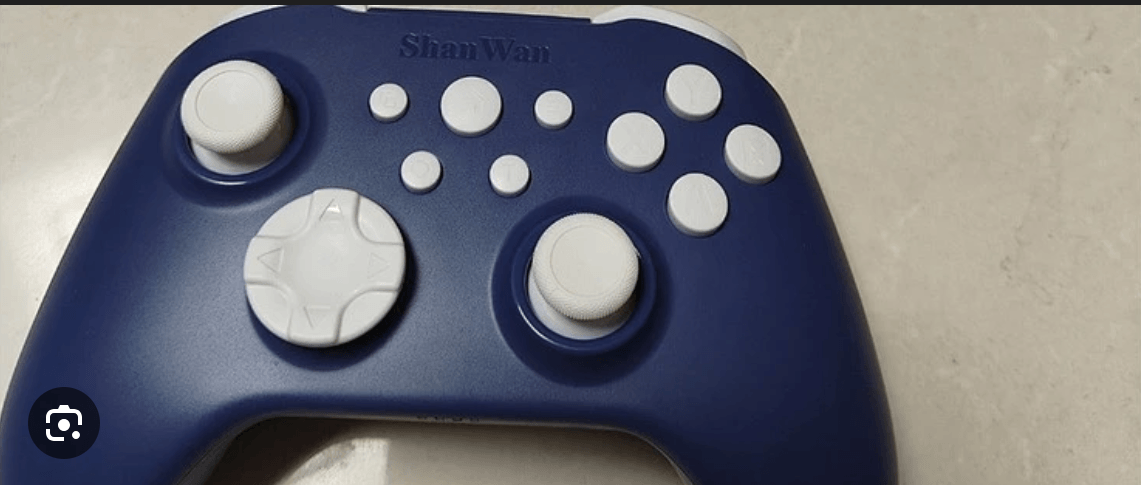
Shanwan Q34U
A very peculiar brand. The pad is extremely cheap and comes standard with every feature you can imagine: TMR sticks, all-microswitch buttons, Hall effect triggers, asymmetric rumble, full platform support… all for under 70 yuan, even less on Pinduoduo.
Turns out Shanwan is actually a solution provider—many cheap or no-name pads use their solutions, so they have core tech and can keep costs very low. Don’t ask about the materials; at least they pile on every feature. The build quality is decent, not high-end, but at least worth the price. And at this price, giving you all the features of a 500-yuan pad, I’d praise it even if it exploded.
Of course what matters is the fighting side. First, this pad’s D-pad uses a so-called floating design meant to help fighting players, similar to the Classic Legend—microswitch plus lever—but it seems too loose, making misinputs easy in fighting games… Simply put, the direction is right but it’s too sensitive.
So it’s basically unusable for fighting games. However, you can use rubber earbud tips to reinforce this stick and make it tighter and less prone to misinputs, making it barely usable.
Still, I don’t recommend this thing for fighting games, but I do recommend it for less demanding players as a backup pad. I had no discomfort playing traditional games with it, and it’s cheap so you don’t feel bad, and it’s even easy to repair—genuinely good and inexpensive.
Comments are hosted on the Chinese main site. This mirror is read-only.