Yosuga no Sora (ヨスガノソラ) Review
On Yosuga no Sora (ヨスガノソラ)
There’s something I’ve never actually admitted: I have never played Yosuga no Sora. I haven’t even finished the anime.
Like most people, I only watched the spiciest episode. It was around 2010, and the final episode was sitting right on the Bilibili anime front page, so I clicked it. No censorship glow or anything. It got boring fast, obviously — the fall season that year was stacked. There was Oreimo, which needs no introduction, and The World God Only Knows, which stuck with me for a long time. Yosuga no Sora felt like just another borderline show.
Later, as I got deeper into otaku circles, I roughly understood what Yosuga no Sora was — a story about twin siblings becoming lovers. I even saved a few wallpapers of Sora. But I still never touched the game, never finished the anime.
There are reasons. The plot is already common knowledge. Is there any point in going back to the game and anime? Isn’t it just the poster child for siscon games?
So I stayed in “cloud player” mode, watching the Yosuga no Sora IP get meme’d year after year, milked year after year, until it became a cash cow that guarantees steady revenue for the company — even though the game itself is ancient.
Which made me a little curious. I mean, is there any chance this game isn’t as simple as I thought? So I decided to play it and shed the “cloud player” label.
1. The sibling romance is actually the smallest problem
Let’s start with the main game, Yosuga no Sora. My initial goal was the route with the story lock — Sora’s. But from the very beginning I realized this game was way more intense than I expected. Most people probably already know the content, but let me recap: the protagonist and his sister are twins. Their parents die in a car crash, the siblings have no one, their relatives are useless, so they decide to move back to the countryside house of their late grandparents. The grandparents were the village doctors. The story starts with the two arriving in the countryside.
At first it feels pretty traditional. There’s the super-friendly older sister type, Nao, greeting you right away, and getting into her route is simple. But soon I noticed something was off — the story started a flashback. Turns out this Nao, back when the protagonist was little, exploited his childish ignorance and tricked him into having sex with her.
“Tricked” is putting it mildly. Going by the game’s own description, this is basically rape. Yes, the very first route in the game is this wild — a teenage girl raping a little boy. So when the protagonist tries to pursue a relationship with Nao again, he has to face her guilt. The result is predictable: he forgives her~ And even more messed up, when Nao raped the young protagonist, the sister saw it. That’s why Sora hisses at Nao and even tries to stop the two from becoming lovers.
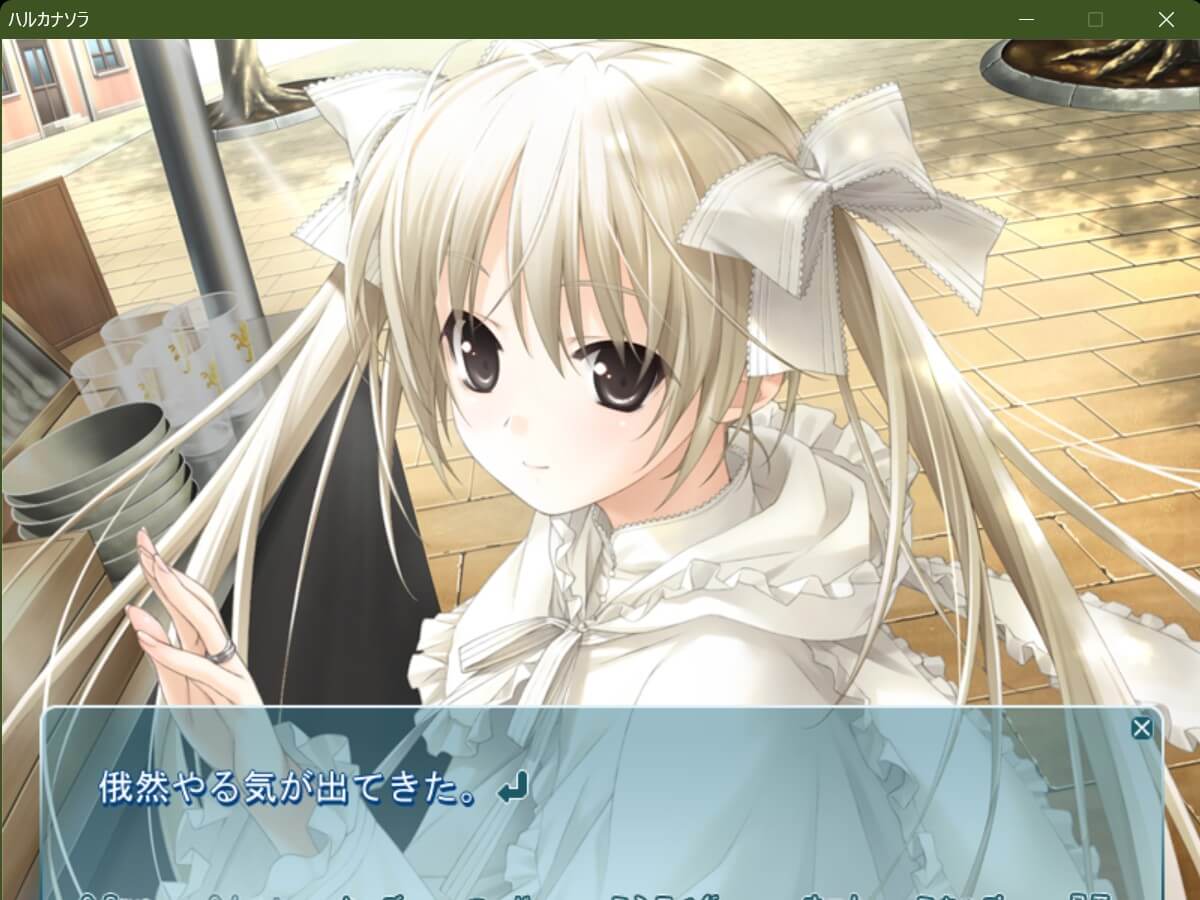
In the end, naturally, the protagonist dumps his sister and chooses the older girl who once raped him. You can clearly see the protagonist completely ignoring Sora and devoting himself to the older girl. I was speechless.
After Nao’s route I already sensed something was off about this game. Not just the “raping a little boy” thing — the whole atmosphere. The game came out in 2007, when the visual novel market already had plenty of excellent moe sister-type works. I also believe Yosuga no Sora wasn’t the industry’s first “real sister route” game. But the music, the narrative, the colors, the presentation — all of it carried an indescribable “creepiness” that quietly planted unease in your heart, nothing like a traditional romance game.
With that unease, I started the other routes. After the first playthrough, Sora was available, but I decided to save her for last and went for the next character: Ama-chan — wait, Akira Amatsume.
In a normal visual novel, Akira Amatsume would be the “natural airhead” type, occasionally with a dark twist. In this game, her characterization keeps oscillating between “natural” and “dark” — you always feel like she’s about to snap, because she’s always smiling that formulaic customer-service smile while saying completely unhinged things, and she barely reacts to anything.
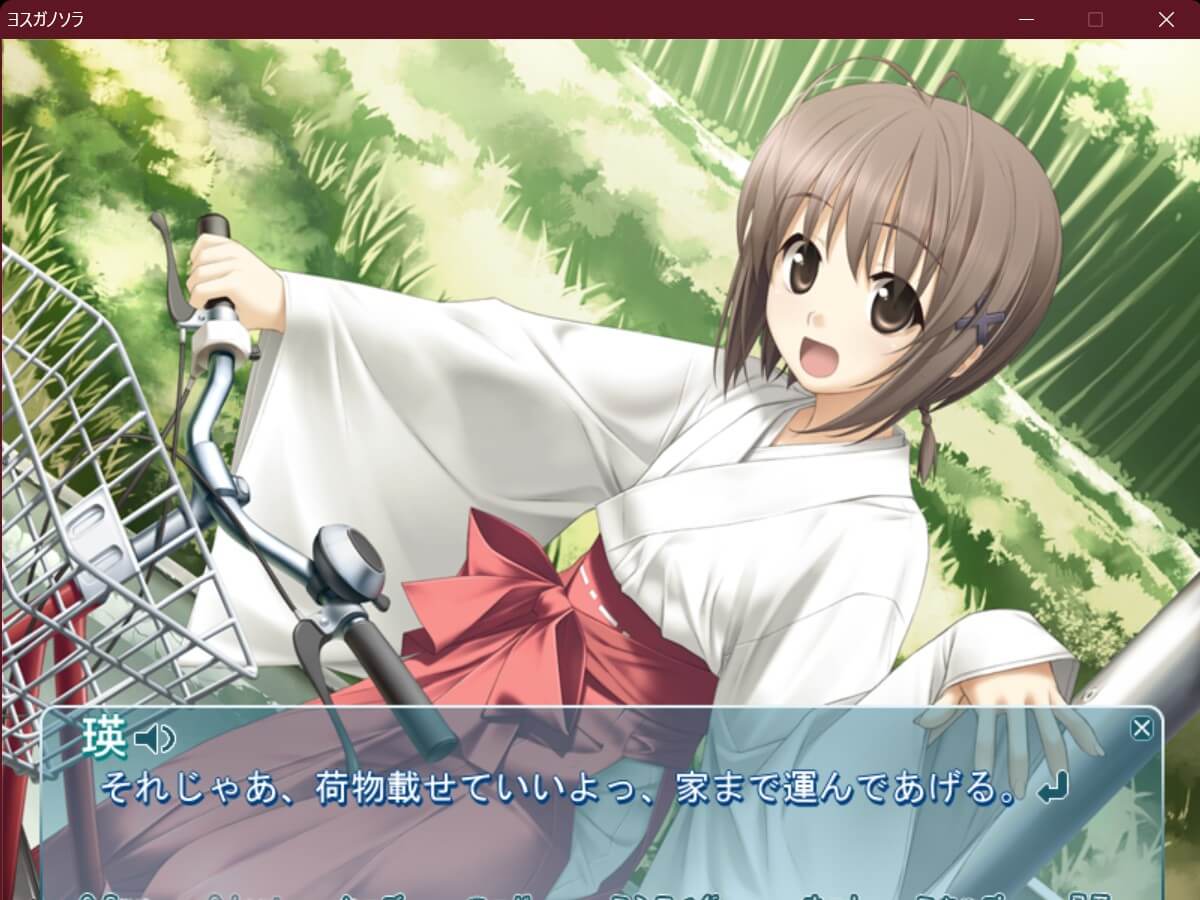
You could say her sprites were lazily done, causing her presentation to suffer, but the other characters have way more expressions than her. Only she has fewer.
Anyway, her personal route starts with her as a shrine maiden whose father died, adopted by a village shopkeeper. Later the protagonist finds his grandmother’s medical records and discovers Akira is actually the illegitimate child of a wealthy household’s master. And then it gets wilder: the mistress and the wife got pregnant at the same time, gave birth on the same day, and were both sent to the same village hospital — where the protagonist’s grandmother delivered them.
Both girls were born one after another, and then both the mistress and the wife fell ill postpartum and were sent to a city hospital with their babies. To avoid a mix-up, they put a token on the wife’s child as a marker. That’s when the affair got exposed. Facing her cheating husband, the wife chose to forgive him, but on the condition that the mistress and her child leave and never be acknowledged.
Later, the mistress’s daughter was adopted by an old shrine caretaker, took his surname, and became Akira Amatsume — naturally, a shrine maiden. Awkwardly, this shrine maiden became best friends with the wife’s daughter, Kazuha Migiwa. As half-sisters, they often played together. Akira’s biological father knew she was at the shrine but never acknowledged her. Akira herself eventually learned her identity from leftover medical records and chose to stay quiet. Fine, the discarded mistress’s daughter thing could have ended there, but then the real bomb drops.
While reading the records, the protagonist spots a blind spot: the wife’s daughter had a token, but that token is now on Akira Amatsume, who says it was left by her mother. Think about how terrifying that is. It means there’s a possibility that Akira and Kazuha’s identities were swapped by the mistress — that the one kicked out was actually the wife’s biological daughter, and the one who stayed in the wealthy house was the mistress’s child.
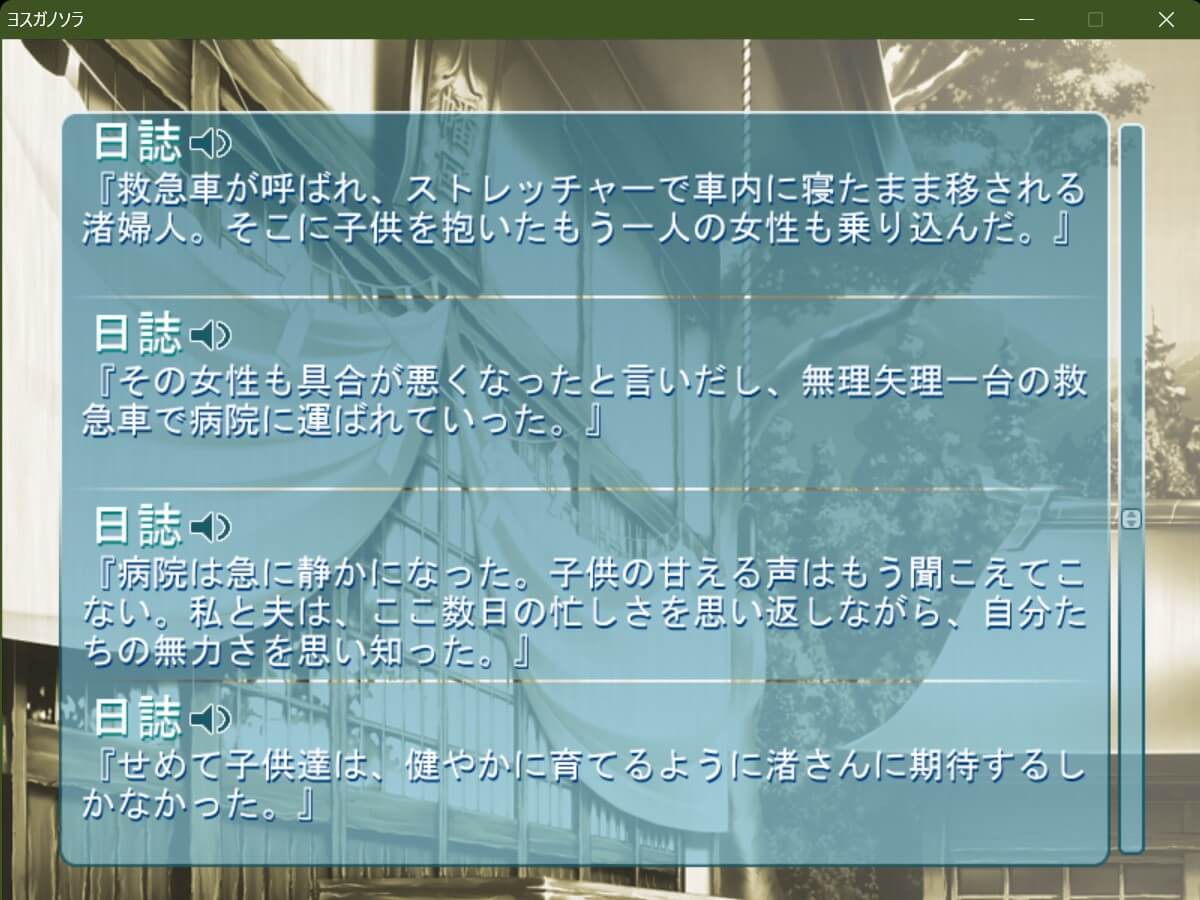
If that were true, it would be brutal. At the end the protagonist secretly does a paternity test for the two sisters. Just as I thought shit was about to go down, the result comes back and their identities weren’t mixed up. The writer had some mercy, I guess. Fortunately Akira is eventually acknowledged by her biological father in another way. Things aren’t that bad — it’s a happy ending.
Kazuha Migiwa’s route has no real bombshells. Most of the explosive stuff was in Akira’s route. Kazuha’s story is at most two half-sisters fighting over the protagonist, which left zero impression on me.
The game also has a maid route, which many walkthroughs don’t even mention. I thought it was just a standard bonus route, but after playing for a bit I realized something was off. The maid loves drinking and parties. When she’s drunk she goes to the protagonist’s house and makes a scene. One time she drinks too much and sleeps with the protagonist, and they become something like a couple.
I figured this was standard nukige territory, but then the story threw in some flashback content that completely floored me.
Turns out the maid once had a boyfriend when she was studying in Tokyo. They had a good relationship, but after graduation she didn’t want to stay in Tokyo and wanted to go back to her hometown. The boyfriend refused to follow her to the countryside, so they broke up. She stayed in the countryside and became a teacher, but while teaching she got involved with one of her students and became a couple. When that was exposed, she couldn’t be a teacher anymore and was taken in by the village’s wealthy family, becoming the maid she is now.
So the reason she became a maid is that she couldn’t do anything else — only this. That explains why her housework is a disaster and why she goes out drinking every day.
So the protagonist becoming her boyfriend technically makes him the third boyfriend we see in the story. And it’s worth mentioning that the maid’s second boyfriend — the student-teacher one — is the protagonist’s best friend…
And from the way the maid is described, she presumably slept with her Tokyo boyfriend, slept with the best-friend student, and now she’s repeated the trick and slept with the current protagonist… ah, what a romantic.
Although in the end the maid chooses the current protagonist as her real boyfriend and says goodbye to her Tokyo ex-ex, I still felt very… uneasy. Because when she was in the student-teacher relationship, she hadn’t broken up with her Tokyo boyfriend yet. That’s basically cheating. And the protagonist and his best friend have essentially become “hole brothers” of a sort, haven’t they?
Finally, the much-anticipated Sora route. Honestly, there’s not much to say about this one, because it was destined from the start. Misunderstood twin siblings, nowhere left to go, so they decide to keep it in the family.
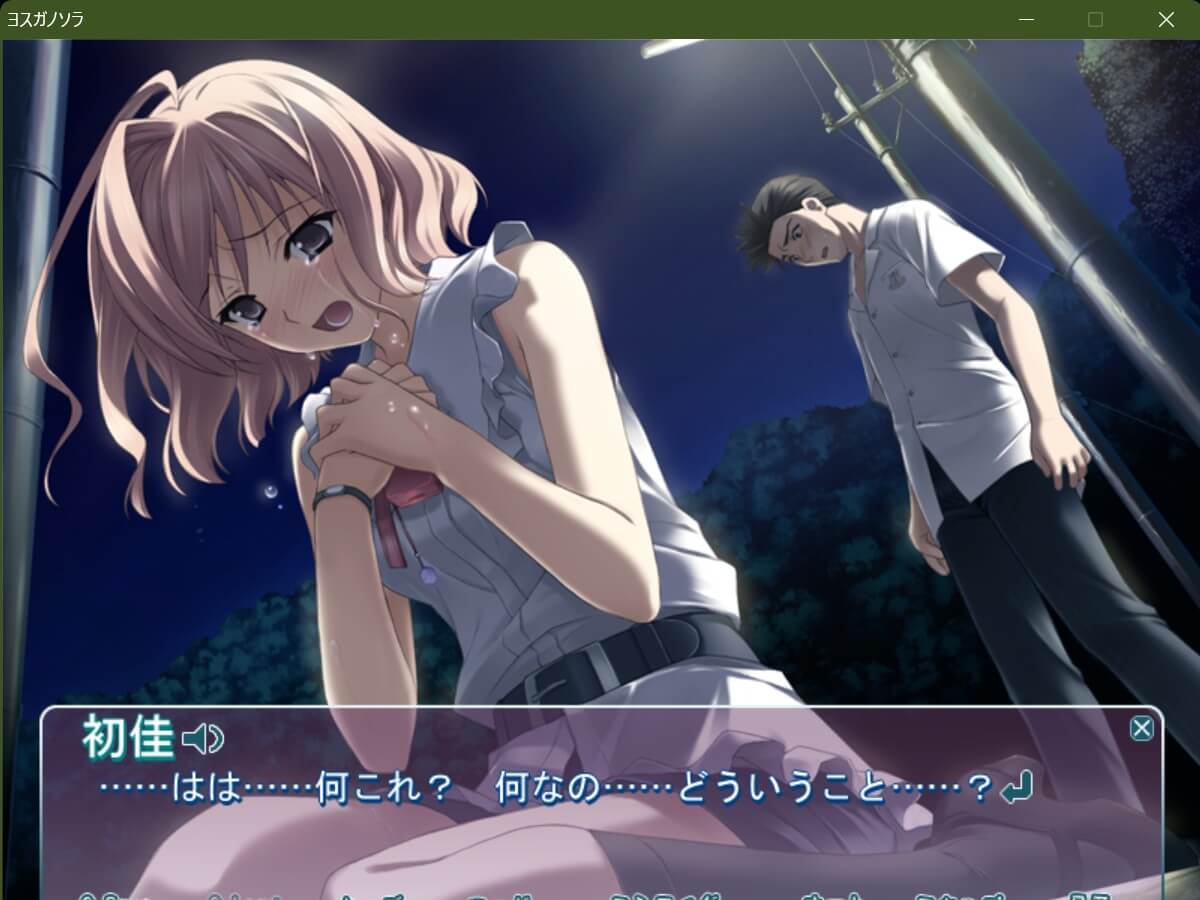
But what’s weird about this route is that after the sister and brother cross the ethical line for the first time, she enters a kind of mental frenzy — something like “sex addiction” — developing a crazy possessiveness toward the protagonist, wanting to do it all the time, even deliberately exposing it to others like she’s desperate for people to know.
There’s one point in the story I absolutely couldn’t handle. By this stage Sora is clearly a bit mentally unwell — always extremely possessive, physically uncomfortable if the protagonist doesn’t do her, showing something like sex addiction symptoms.
And our protagonist, faced with this “broken sister,” starts doubting himself:
“If I hadn’t decided to do it with my sister at the start, she wouldn’t have broken. It’s my fault, all my fault.”
Mental illness really does run in families. Especially between twins.
In the end the protagonist first wants to save his sister, thinking this daily incest can’t continue. Then the sister attempts suicide, completely scaring him. So the two decide they can’t stay in the village and move abroad to Northern Europe together (probably Denmark), living as both siblings and lovers.
That’s not important, though. Going through this route, I didn’t feel much. It’s too common. There are tons of later games where you can pursue a “real sister,” and they basically all follow this formula — it’s gotten predictable. What’s rare is the protagonist’s “moral pressure” part. Later real-sister routes have no moral issues at all; everyone around them is congratulating them. The routes that stuck with me were actually Akira’s, the maid’s, and Nao’s…
Story-wise, Akira and Kazuha are half-sisters who both fall in love with the protagonist, making them “stick sisters” of a sort. Even more messed up, in the maid’s route the protagonist, his best friend… and even the Tokyo pretty boy who barely appears, the three of them become “hole brothers”… But the one that really got me was Nao’s route. That child-rape plot is basically an alternate-universe version of priest-and-altar-boy in Western society. The story downplays it as much as possible, but that’s what it is.
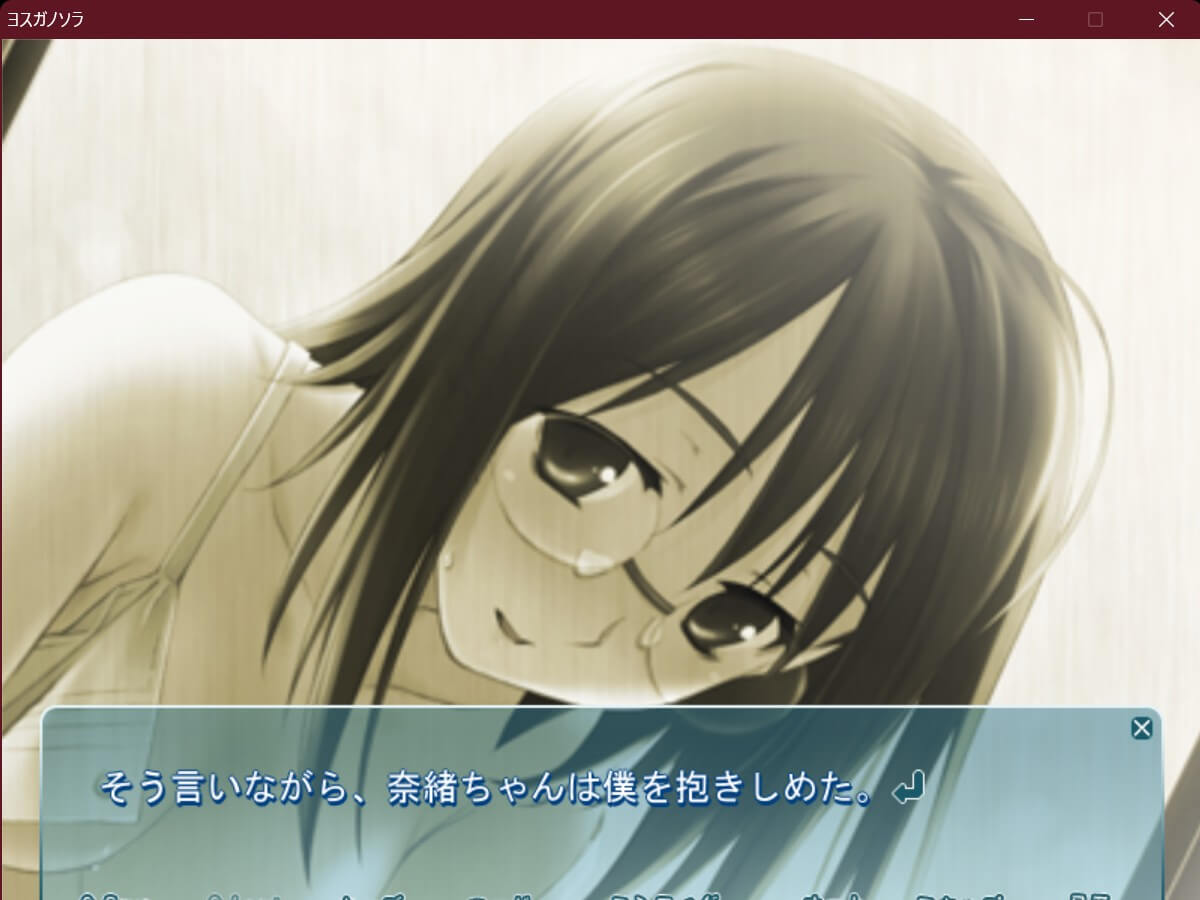
The game was announced for Steam a long time ago, but the date kept getting pushed. At first I thought maybe the incest twin plot was too much for the censors, but now it seems more like the child-rape plot is what the West can’t accept. Whether that’s true, we’ll find out once it’s up.
2. A “sequel” with obvious intent but unclear meaning
In the Japanese visual novel world there’s a tradition: when a game sells well or gets a decent response, they release a fandisc aimed at the fans. Its main purpose is to fill in regrets from the original — extra routes for heroines who weren’t pursuable, bonus fanservice for popular heroines, after stories for the original plot, and so on.
So Yosuga no Sora struck while the iron was hot and released a fandisc called Haruka na Sora. No main story, just a few routes, all very short. It added a route for the committee chairman, who almost nobody cared about in the original, a route for the shopkeeper (Akira’s later guardian), and some after-story content exclusive to Sora.
Let’s start with the most anticipated Sora after-story. It describes a short segment after she attempts suicide in the original — her and her brother pulling themselves together and heading to Northern Europe. It feels like it barely says anything, very much padded out. The other two side-character routes are even worse; they feel like leftover scraps cut from the main game (which seems common for fandiscs).
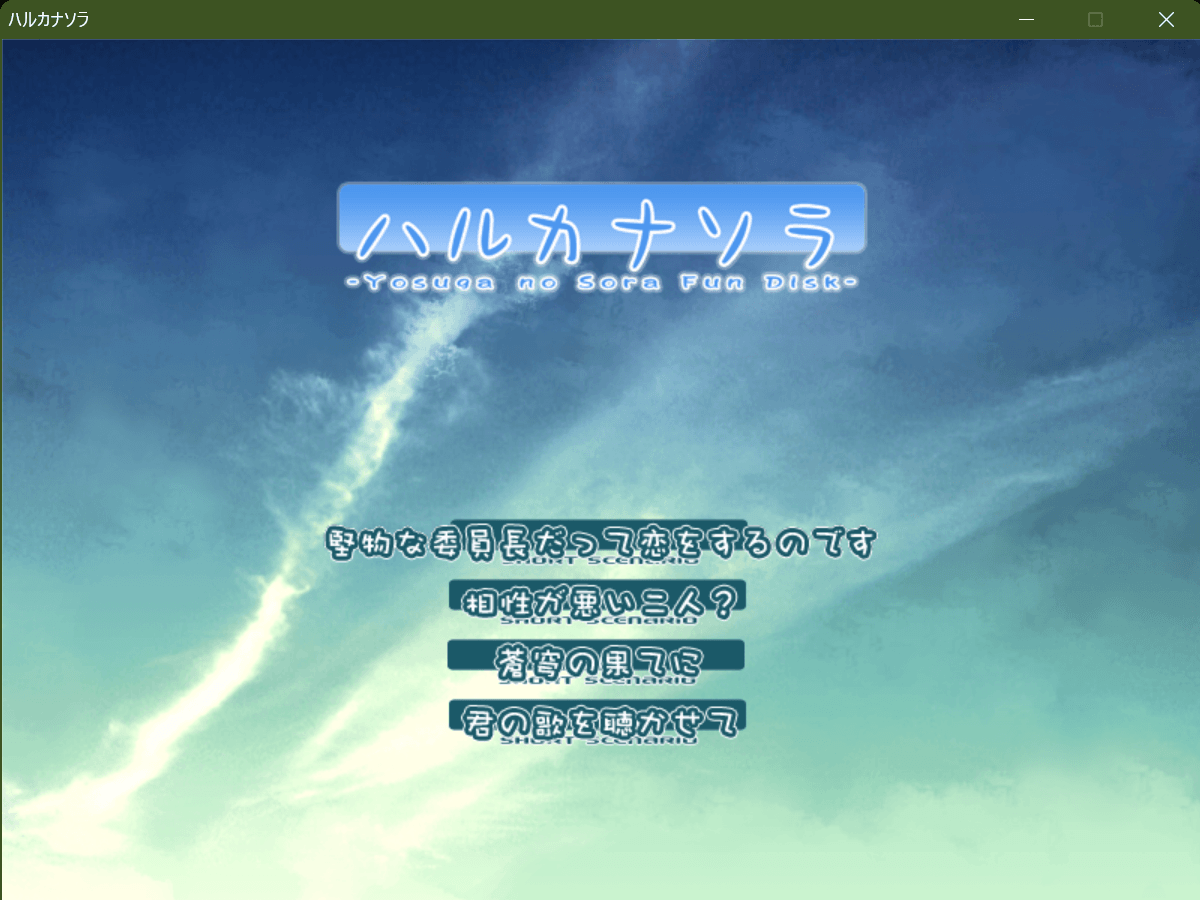
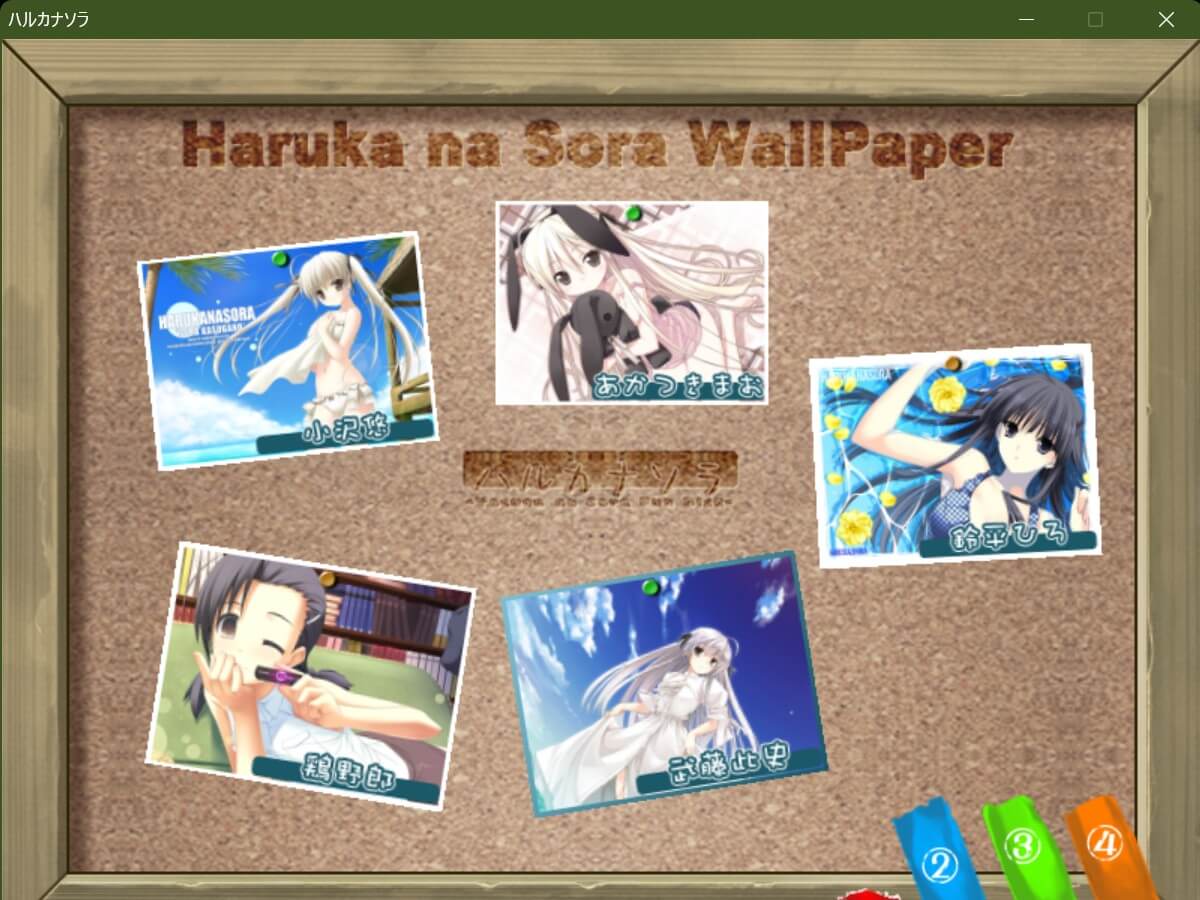
Such a short amount of content obviously can’t fill a fandisc, so Haruka na Sora abstractly adds a bunch of “third-party artist showcases” — basically a wallpaper pack… emmm, I really don’t know what to say about that. But it’s worth noting many works in this wallpaper pack are very “famous.” Like this Sora one — you’ve probably seen it everywhere. Anyone who’s used it as a wallpaper, hit 1.
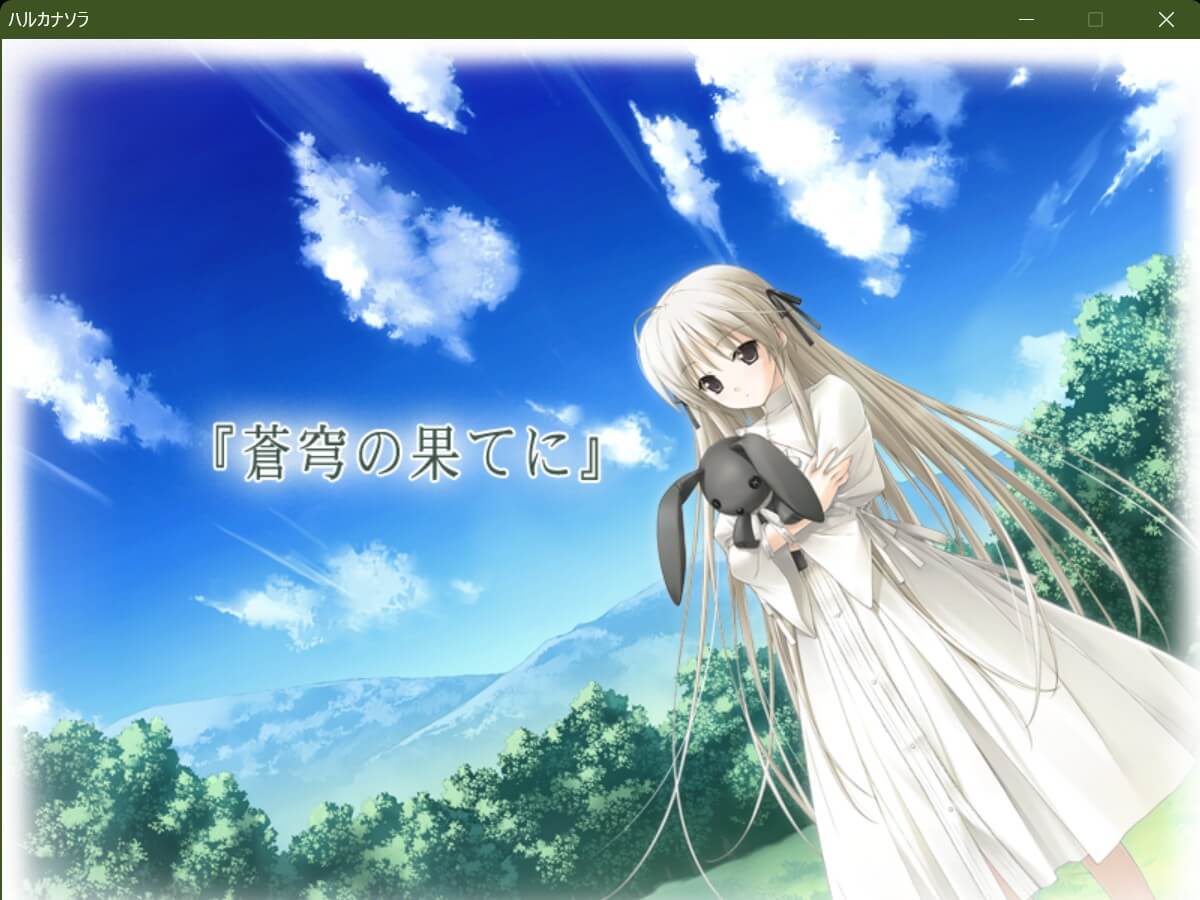
Overall Haruka na Sora feels a bit pointless. There’s not much narrative for the siblings, the added routes have no appeal, and the bonus wallpaper pack is… filler. The fandisc’s greatest significance is probably the new theme song “futari” and the bonus Sora sleeping companion CD. Oh right, as a fandisc, only the theme song is new; the ED song is still the old one. I’d believe it if you told me this game was just a modified demo of the original.
At this point Yosuga no Sora should still just be active in the niche visual novel sphere. What really pushed it to a wider audience was the anime adaptation.
3. A rough but eye-catching anime adaptation
If you follow late-night Japanese anime closely or have been watching for a long time, you can easily spot something about the Yosuga no Sora anime: both the production team and the story adaptation give it a strong “amateur hour” vibe.
Character designs break, coloring is terrible, and the story uses the most blunt “route-by-route” structure. The hardest and most creative part of adapting a visual novel is fusing multiple branching stories into a single more compelling and coherent narrative. But the Yosuga no Sora writers just gave up — completely abandoned the idea of fusion. The diplomatic way to put it is “faithful to the original.”
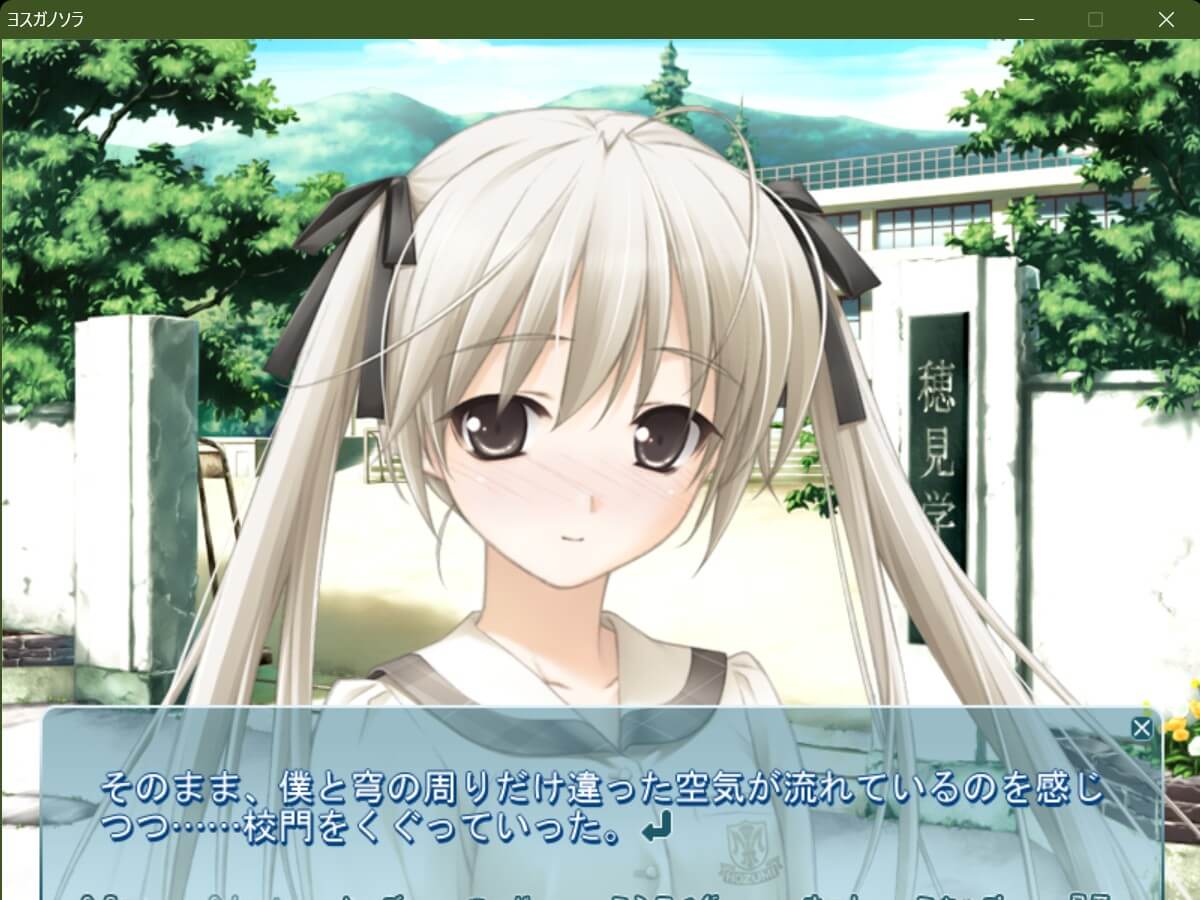
And yet this rough-looking anime became a “masterpiece” for many people. For one reason: the final episode.
As someone who was there, I can tell you how explosive that episode was. First, back when the anime aired, the Bilibili you know still had a “new anime” section entirely run by uploaders — not like now, where it’s all official. Back then, uploaders posted the new episodes. Sure, they had their little management groups, but it was still third-party people handling it.
The upload process was: go to various anime torrent sites, find the fansub release, upload it to Sina Video, then link it to Bilibili.
That’s right — Bilibili didn’t even have its own video servers then, it was all hotlinked from Sina. The so-called Yosuga no Sora episodes were uploaded by an uploader. I can’t remember the name, but it was a well-known uploader in the anime section. Not important. What matters is that the final episode was placed right there in the anime section, and because the content was so wild, it shot to the top of the trending list for a long, long time… so long that you could still see it on the front page half a year later.
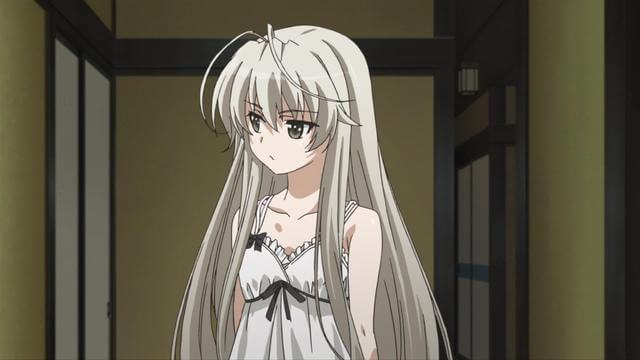
How wild was that final episode? Our Haruka Kasugano (known as Haru-nii back then), voiced by the hottest new male lead VA at the time, Hiro Shimono, had a very intimate encounter with Sora. How intimate? The level of intimate you’re thinking of. And with uncensored nipples.
This is where I have to bring up Japan’s paid AT-X channel. Late-night anime had age ratings back then. Some R15-rated shows allowed nipple exposure, and AT-X, being a paid channel, could broadcast those R15 scenes. Since anime in China was sourced from TV recordings, we naturally got high-definition uncensored resources, and making those downloads was just a matter of course.
As for why paid Japanese TV content could be viewed for free on a Chinese anime site, without even logging in (login verification came later), you can only chalk it up to the power of piracy.
In short, for a long time — even half a year later — you could still see the final episode of Yosuga no Sora pushed to the front page of the anime section. The memes, like “恨妹不成穹” (can’t hate your sister enough to make her Sora — roughly “why can’t my sister be more like Sora”), started rising around that time. Fan art and memes of Sora proliferated. More and more people met Sora and learned about this siscon work. The anime itself was trash, but that didn’t stop most people from becoming fans. The OST especially — even the game’s OST became a popular resource, remixed and covered everywhere. By then Yosuga no Sora had jumped to hot IP status, and Sora merchandise sold like crazy. The game never got a sequel, but the merch has staying power like Hatsune Miku. Even in 2026 it’s still going strong, to the point of opening a pop-up store in China. You have to envy the commercial potential.
And all of it was achieved by the final episode of a poorly made visual novel adaptation. Abstract, when you think about it.
4. Content that doesn’t fit
Many people know Yosuga no Sora came from an indie brand called Sphere. The parent company is Cuffs, which also owns brands like Cube. When the Yosuga no Sora project started, most of the company’s works were still under the Cuffs label, so creating a whole new brand just for this game was puzzling. According to the producer: “This is a game not suitable for release under Cuffs.”
In many people’s minds, Yosuga no Sora is a typical “moe siscon game,” and the biggest selling point is the twin real-sister thing. But after finishing the game and looking back, I realize that perception is wrong. Yosuga no Sora wasn’t planned around a single sister route; it’s more of a cult-style game full of twisted relationships and dissection of human darkness.
Let’s start with the slogan:
In solitude, where we are least alone
And then think about the title “Yosuga no Sora.” It’s not hard to see the game isn’t exclusively about siscon — it wants to express the theme of “fate/connection” by presenting various twisted human relationships. That makes the disturbing “hole brothers” and “stick sisters” developments easier to understand.
This cult element also lives in the game’s overall atmosphere. Sure, visual novels around 2000 all looked a bit off due to rough production and low budgets, but Yosuga no Sora is a 2009 game, and by then there were plenty of more relaxing, higher-quality titles. For example, eden* and Mashiroiro Symphony released around the same time both look “normal,” but this game is full of “abnormal” — the sickly pale art style, the uncanny-valley shrine maiden Akira, and that indescribably creepy “walk to school animation.” Combined with the cold, buzzer-like electronic keyboard BGM, it gave me the vibe of a 2003 Korean twisted-ethics art film. The game also has many things that seem unreasonable. The one I can’t understand most is that it seems to want to depict the siblings’ mutual dependence, the unbreakable bond between Haruka and Sora — yet the brother repeatedly goes out alone, leaving his helpless sister who can’t even take care of herself at home, sometimes not coming back until late at night. It’s like he doesn’t care if she lives or dies. And if you read the brother’s dialogue with his sister carefully, it’s full of impatience. Even in the route, the two act more like mental patients drowning in some unfulfilled desire. The only correct emotional expression is the sister’s hostility toward Nao, since Nao really did molest her brother.
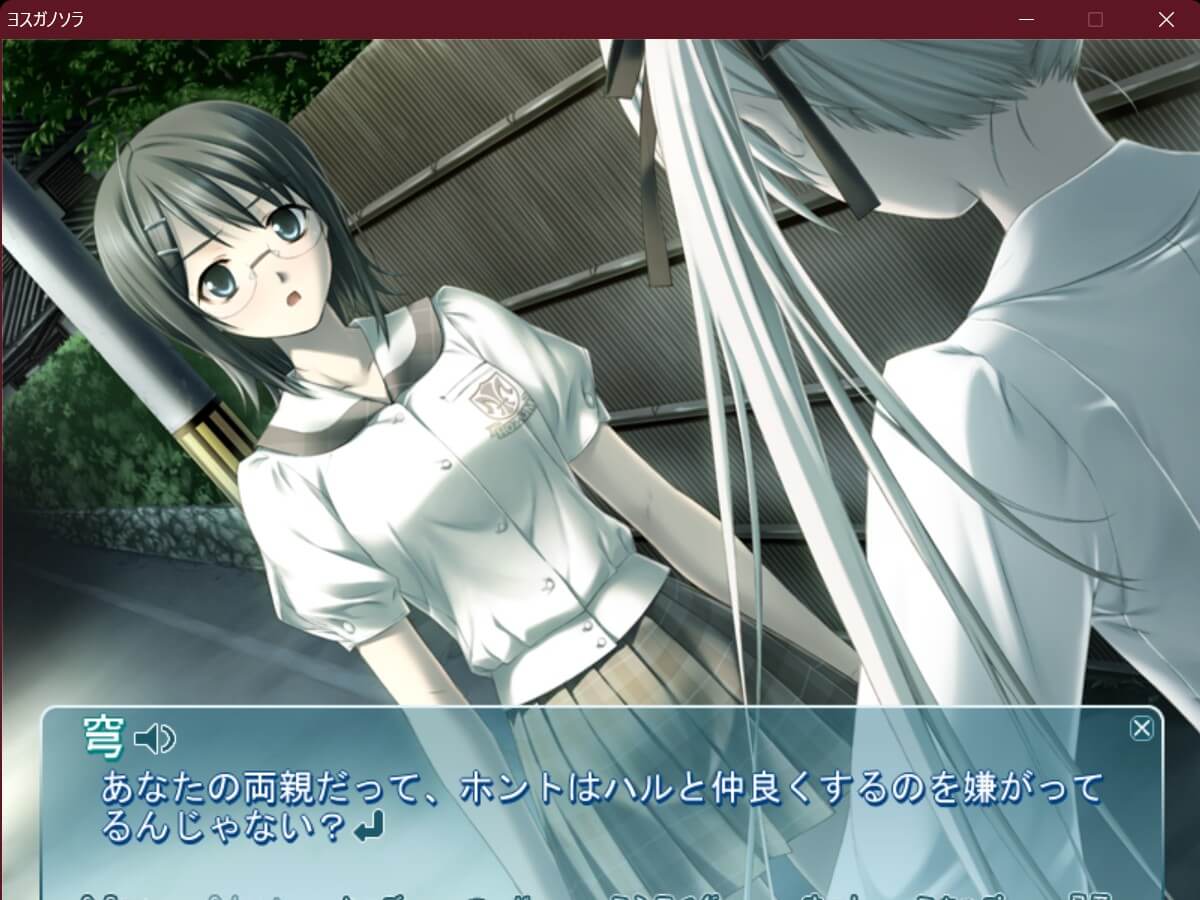
When a game’s presentation is too strange and unclear, it naturally invites theories and speculation. There are many discussions and guesses about the plot now. The most famous is the “siblings died” theory: Sora actually jumped into the river and died, the brother followed, and the happy ending is just fantasy.
I’m not the only one who noticed the weird atmosphere. Online you can find many Japanese analyses of the Yosuga no Sora anime. Most of them have checked out the original and say “the anime and the original are completely different” — not just the art style but the atmosphere.
For example, this guy says the original feels warmer while the anime feels more “lonely,” especially the music. My personal view is that this style isn’t “different” — it’s actually a manifestation of the game’s core. The music for both the anime and the game was done by the same person.
As everyone knows, traditional visual novels have very low budgets, so music production is heavily constrained. The entire Yosuga no Sora OST has that cheap electronic keyboard sound. Many “emotional” visual novels have the same issue — like Hatsuyuki Sakura, which is no exception. It’s hard to say this was the producer’s choice; it’s more like a necessity. In the anime version, the music uses a much more advanced presentation. The most familiar track, “Tooi Sora e,” is exclusive to the anime, with richer arrangement and production, leaving behind an immortal melody.
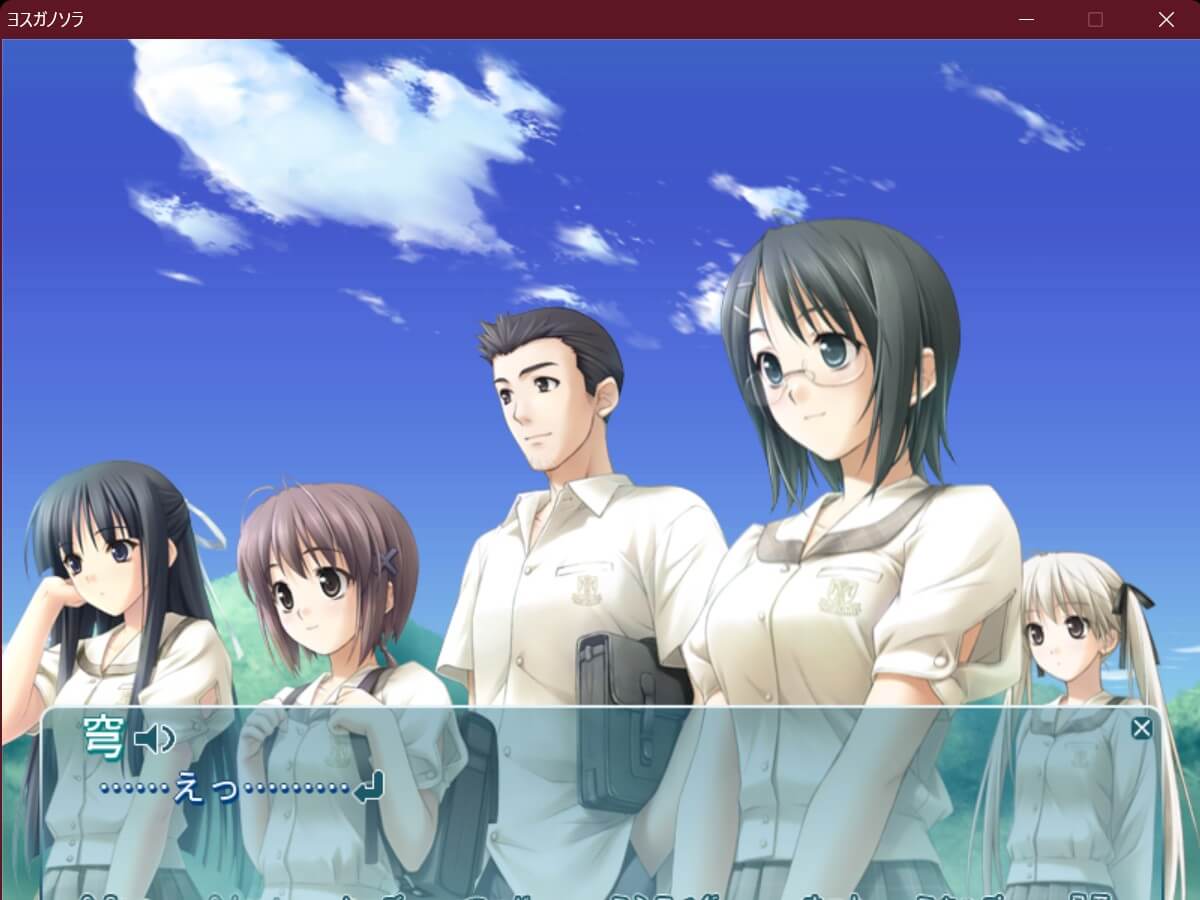
So personally, I think the loneliness the Yosuga no Sora anime was trying to create was deliberate — and it’s also something the game version wanted to achieve but couldn’t because of budget. With the production committee system being what it is these days, the anime also had the job of promoting products for various parties, and the ED and the little end-of-episode skits lean much more toward mainstream record-label fare. As for the main story itself… rather than promoting the game, it ended up becoming the single biggest driver of the “Kasugano Sora” IP. Her figures and merch still sell steadily to this day. Genuinely terrifying.
There are also manga-like tie-in works for Yosuga no Sora, but they’re more like companion products. Some of them partially revise and fill in the story, but for the most part there isn’t much to them, so I won’t go on about them.
5. What Yosuga no Sora actually is
I’ve rambled on for quite a while, so let’s get back to where we started: what kind of game is Yosuga no Sora, really?
I’d call it a special game set in the Japanese countryside, one that focuses on showing people of different personalities confronting slightly warped and peculiar feelings inside themselves, forming bonds that are hard for the world to understand.
Japan often uses “the countryside” to excuse most of its weird and twisted worldview setups. Whether it’s the neighborhood older sister molesting a little boy, the half-sisters sharing a father, the guys orbiting the same promiscuous woman, or the incest between twin siblings — almost every relationship here is twisted, yet it also feels grounded in real emotion.
So the game’s subtitle, “being alone doesn’t mean you’re lonely,” isn’t just about the sibling romance the world won’t accept. It also covers the other warped loves in this country village — and it’s the fundamental reason this game, from the very start of development, didn’t really fit under the Cuffs label.
Of course, with the Yosuga no Sora series taking off, the developers thought about running the same play again with the same staff to build a similar game: Imouto no Katachi, which we know as the “little sister” game. They tried to replicate the success. It failed. After that, the brand hastily put out a debut work by a Sendai grandma under its name, and then there was nothing — it even became the exclusive licensing brand for Kasugano Sora figures.
Yosuga no Sora isn’t a “sister complex” game. It’s just that among its twisted, faintly absurd depictions of multiple relationships, the blood-related sister angle stands out the most.
Comments are hosted on the Chinese main site. This mirror is read-only.